

Introduction
In the preceding chapters, the scientific foundations and conceptual nuances of the capability approach (CA) were explored. This chapter shifts the focus towards practical applications of the CA, offering a closer look at how the approach can be applied in the work context and across different levels within an organisation. By showcasing real-world examples, we aim to provide readers with a tangible sense of how the CA can be implemented in practice and how its flexible framework can be adapted to diverse organisational contexts.
The chapter is structured to guide readers through applications at three key levels:
Individual level (micro level): At this level, the CA is used to enhance individual agency, foster personal growth, and/or support employee well-being in a specific organisational setting.
Team or leadership level (meso level): Here, we examine how the CA can be applied to team dynamics, decision-making, and leadership strategies, highlighting the approach’s ability to empower groups and facilitate collective capability thinking and development.
Organisational level (macro level): On this broader scale, the CA is employed to shape organisational policies and strategies, ensuring that structures and processes foster capability enhancement across all levels within the organisation.
While the examples are structured around these three levels, it is important to note that, in practice, they often overlap. Initiatives aimed at the individual level may also influence team dynamics, and organisational changes may trigger shifts in individual capabilities. Thus, although each example is categorised based on its primary starting point, many of the cases demonstrate how the CA can span multiple levels simultaneously, reinforcing the interconnected nature of capabilities within an organisational context.
Rather than focusing on theoretical validation or scientific justification, the emphasis in this chapter is on providing detailed, concrete examples of how the CA works in practice. These examples demonstrate the profound impact the CA can have on enhancing opportunities and freedoms at each level. While some cases may be supported by empirical evaluation, the primary objective is to immerse the reader in the lived experiences of applying the CA in practical settings around the world, illustrating its transformative potential in diverse organisational environments.
To improve readability, we have structured each of the seven practical applications into the following sections: Background, Intervention/Approach, Case Description/Implementation in Practice, Experienced Outcomes, and Lessons Learned and Discussion. In the subsection ‘A Comprehensive Application of the CA to Effectively Mitigate Work-Related Stress’, Case Description/Implementation in Practice and Experienced Outcomes have been combined into a single section, as the author presents detailed experiences across multiple cases. In the subsection ‘Moral Governance of Organisations: A Corporate Governance Model Based on the Capability Approach and Contributive Justice’ Intervention/Approach is omitted, as the case described in this subsection refers to Chapter 7, in which a specific corporate governance approach is discussed in detail. Experienced outcomes are not available because the corporate governance approach advocated in Chapter 7 has not yet been implemented in practice.
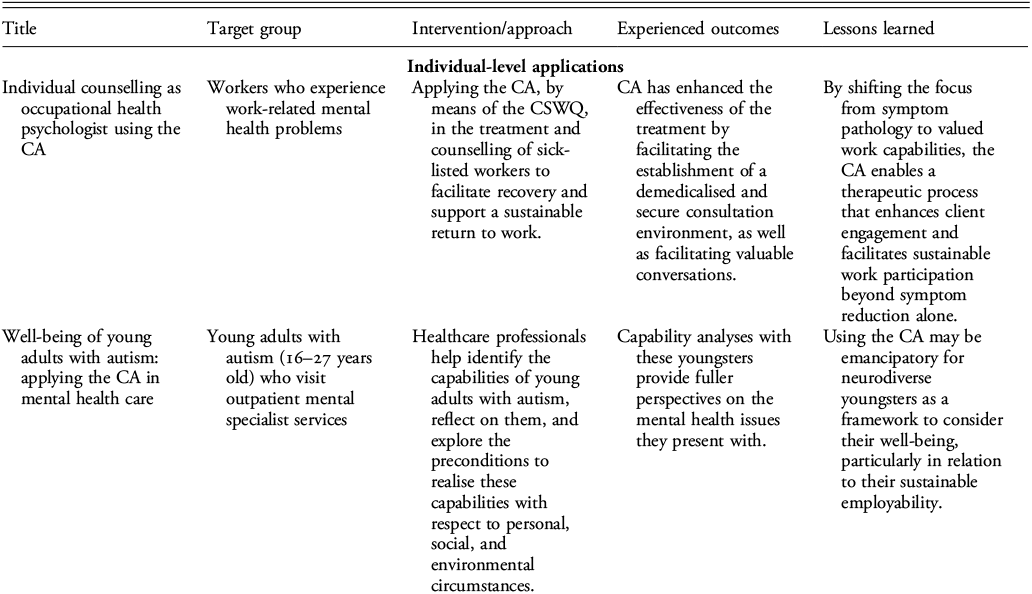
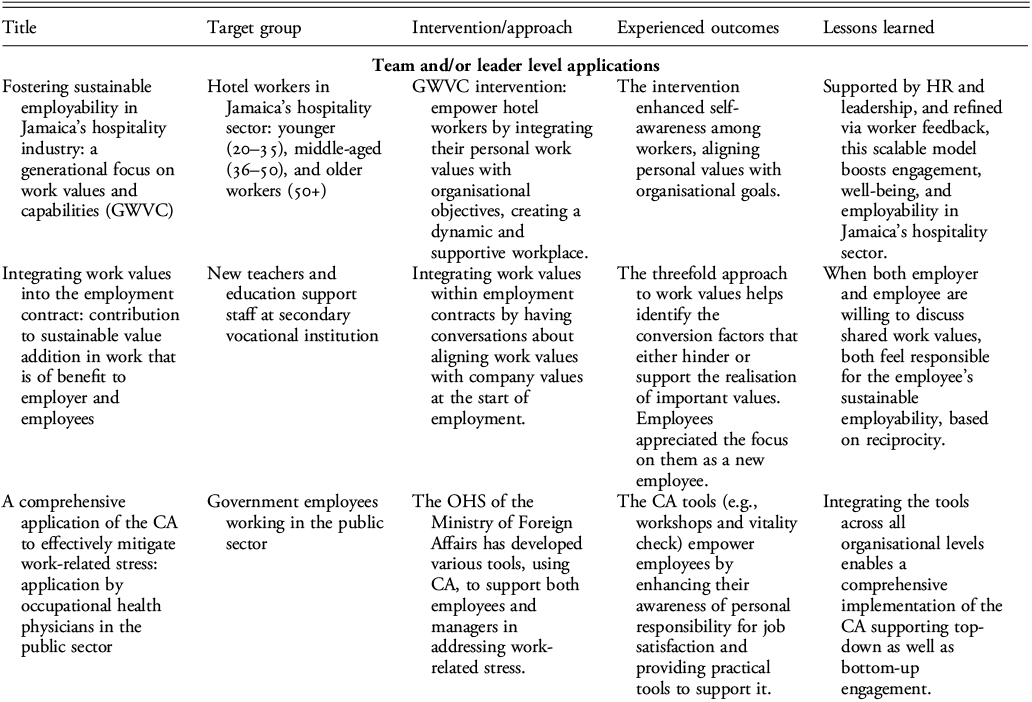
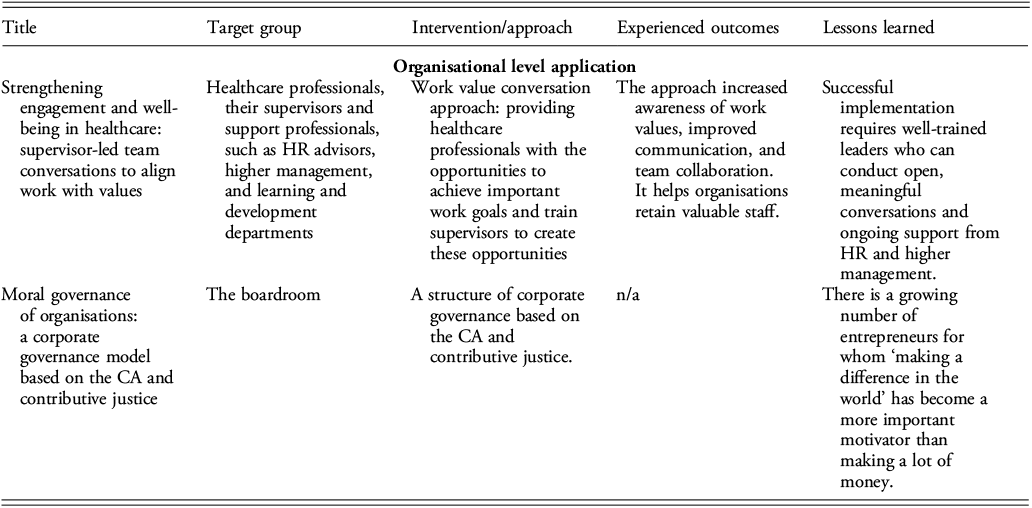
Table 10.1 provides a summary of the cases described in this chapter.

Table 10.1(a) Long description
The data included in the page are as follows.
The table is organized into five columns, labeled Title, Target group, Intervention or Approach, Experienced outcomes, and Lessons learned. The data are as follows.
Individual-level applications (I L A) address individual counselling as occupational health psychologist using the C A. Target groups are the workers who experience work-related mental health problems. Intervention or Approach involves applying the C A, by means of the C S W Q, in the treatment and counselling of sick-listed workers to facilitate recovery and support a sustainable return to work. Experienced outcomes suggest that the C A has enhanced the effectiveness of the treatment by facilitating the establishment of a demedicalised and secure consultation environment, as well as facilitating valuable conversations. The key lesson learned is that by shifting the focus from symptom pathology to valued work capabilities, the C A enables a therapeutic process that enhances client engagement and facilitates sustainable work participation beyond symptom reduction alone.
Individual-level applications (I L A) also address well-being of young adults with autism by applying the C A in mental health care. Target groups are the young adults with autism between 16 and 27 years who visit outpatient mental specialist services. Intervention or Approach helps the healthcare professionals to identify the capabilities of young adults with autism, reflect on them, and explore the preconditions to realize these capabilities with respect to personal, social, and environmental circumstances. Experienced outcomes suggest that the capability analyses with these youngsters provide fuller perspectives on the mental health issues they present with. The key lesson learned is that using the C A may be emancipatory for neurodiverse youngsters as a framework to consider their well-being, particularly in relation to their sustainable employability.

Table 10.1(b) Long description
The data included in the page are as follows.
Team and/or leader level applications (T L A) foster sustainable employability in Jamaica’s hospitality industry, a generational focus on work values and capabilities (G W V C). Target groups are the hotel workers in Jamaica’s hospitality sector, younger between 20 and 35 years, middle-aged between 36 and 50 years, and older workers above 50 years. Intervention or Approach empowers hotel workers by integrating their personal work values with organizational objectives, creating a dynamic and supportive workplace. The intervention enhanced self-awareness among workers, aligning personal values with organisational goals. It is supported by H R and leadership, and refined via worker feedback to boost engagement, well-being, and employability in Jamaica’s hospitality sector.
The application also integrates work values into the employment contract, contributing to sustainable value addition in work that is of benefit to employer and employees. It targets new teachers and education support staff at secondary vocational institution. Intervention or Approach integrates work values within employment contracts by having conversations about aligning work values with company values at the start of employment. The threefold approach to work values helps identify the conversion factors that either hinder or support the realization of important values. Employees appreciated the focus on them as a new employee. The key lesson learned is that when both employer and employee are willing to discuss shared work values, both feel responsible for the employee’s sustainable employability, based on reciprocity.
It is a comprehensive application of the C A to effectively mitigate work-related stress, involving the application by occupational health physicians in the public sector. It targets government employees working in the public sector. Intervention or Approach helps the O H S of the Ministry of Foreign Affairs to develop various tools, using C A, to support both employees and managers in addressing work-related stress. Experienced outcomes suggest that the C A tools such as workshops and vitality check empower employees by enhancing their awareness of personal responsibility for job satisfaction and providing practical tools to support it. The lesson learned is that integrating the tools across all organizational levels enables a comprehensive implementation of the C A supporting top-down as well as bottom-up engagement.

Table 10.1(c) Long description
Organizational level application (O L A) strengthens engagement and well-being in healthcare, supervisor-led team conversations to align work with values. It targets healthcare professionals, their supervisors and support professionals, such as H R advisors, higher management, and learning and development departments. The Work Value Conversation approach provides healthcare professionals with the opportunities to achieve important work goals and train supervisors to create these opportunities. Experienced outcomes suggest that the approach increases awareness of work values, improved communication and team collaboration. It helps organisations retain valuable staff. The key learning is that successful implementation requires well-trained leaders who can conduct open, meaningful conversations and ongoing support from H R and higher management.
Another application is the Moral governance of organizations, which is a corporate governance model based on the C A and contributive justice targeting the boardroom. The key lesson learned is that there is a growing number of entrepreneurs for whom ‘making a difference in the world’ has become a more important motivator than making a lot of money.
Notes: CA – capability approach; CSWQ – Capability Set for Work Questionnaire; HR – human resources; OHS – occupational health services.
Individual-Level Applications
Individual Counselling as an Occupational Health Psychologist via the Capability Approach
Background
Occupational health psychologists counsel clients who experience work-related mental health problems. Oftentimes, clients present with stress and burnout, but psychologists also provide counselling to individuals faced with career decisions, workplace conflict, or the need to adjust to life events. Psychologists not only counsel the client but also support their manager or HR representative in creating the best possible work environment. Over the last ten years, our occupational health psychology service has steadily adopted the CA as the theoretical framework for our interventions.
Intervention/Approach
Our interventions are intended for employees of all ages and levels in a variety of economic sectors in the Netherlands. Clients are referred to our services by the occupational health physician (OHP) or HR. Our goal is to provide treatment to facilitate recovery and support a sustainable return to work. All counsellors are experienced psychologists specialised in occupational health. A typical treatment course consists of five to fifteen sessions, which requires us to use time efficiently and set clear goals. The CA helps us do that in an evidence-based and appealing way. We implement the CA primarily through the CSWQ (see Chapter 2). Our intake has to be concise but still enables the client to share their story and has to be detailed enough to facilitate the development of a preliminary treatment plan. We found that the CSWQ is an effective tool to help achieve these goals.
During intake, the client completed two clinical questionnaires and the online version of the CSWQ. The clinical questionnaires are used to monitor outcomes and to ensure that no severe mental health issues are overlooked. The psychologist conducted the interviews mainly based on the CSWQ. In the CSWQ, clients are presented with seven work values (see Chapter 2).
The psychologist discusses the answers with the client. Values that are rated as important but unachievable indicate a threat to sustainable employability. Conversely, it is a highly encouraging indicator when the client is able to achieve the values that are significant to them.
Case Description/Implementation in Practice
Case 1: Laura
Laura was referred to our practice by her OHP with anxiety and stress-related headaches. She had transitioned from the corporate sector to teaching with the goal of having a positive influence on her students. From day one, she struggled and was very anxious. She had persevered, assuming that she just had to get used to her new surroundings. However, now she has reached a critical juncture, is anxious every day, and finds no joy in her work. The intervention proposed by the OHP was to treat anxiety with cognitive therapy.
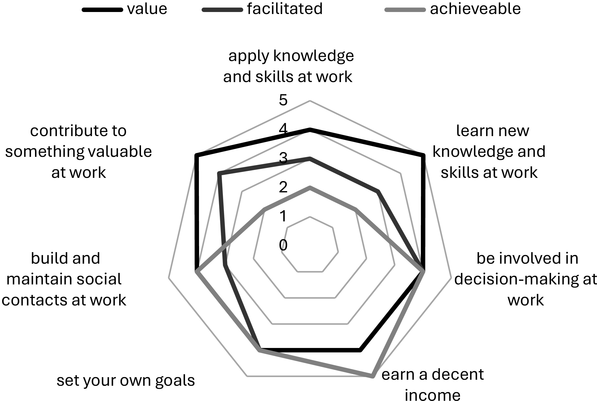
During the initial interview, the psychologist discussed the CSWQ with Laura, and it soon became clear that she was unable to achieve her most important values and that she blamed herself for that (see the diagram of Laura’s CSWQ scores (Figure 10.1)). Instead of focusing on anxiety, the psychologist has focused on this discrepancy between value and achievability. After only one conversation, it became clear that she was very insecure about her teaching skills and spent far too much time (over) preparing her lectures. We helped her initiate a conversation with her manager and request additional training. Within several weeks, she felt more secure and less anxious. Instead of treating anxiety as an isolated disorder, we were able to offer a more sustainable solution.
Laura’s diagram.

Figure 10.1 Long description
Laura's scores out of 5 are as follows.
Apply knowledge and skills at work. Laura values this highly (4), though it is slightly less facilitated (3) but seen as highly achievable (5).
Learn new knowledge and skills at work. This holds the highest personal value (5) and is considered very achievable (5), but the current facilitation is lower (3).
Be involved in decision-making at work. This has moderate value (3) and facilitation (3), with a slightly higher achievability (4).
Earn a decent income. Value is high (4), and it is the most facilitated category (5), but interestingly, Laura rates it slightly lower in achievability (4).
Set your own goals. This shows a significant gap; it is highly achievable (5) but has lower personal value (2) and facilitation (3).
Build and maintain social contacts at work. Value and facilitation are balanced (3), while achievability is high (5).
Contribute to something valuable at work. Laura places high value on this (5) and feels it is very achievable (5), though facilitation sits at a 4.
Case 2: Alex
Alex, a highly intelligent software developer, was referred for counselling by the OHP with stress and anger issues. He had been in therapy several times before and had frequently been in conflict with mental health professionals. He was very suspicious and sceptical and did not want to be treated as a patient. Alex answered all the questions on the CSWQ with a neutral score of 3. The psychologist first discussed the CSWQ, ignoring the remarkable pattern. He managed to engage Alex in conversation by asking for examples. Those examples clearly indicated that the neutral answers were not a good representation of his actual experiences. The psychologist mentioned this observation without attaching any judgement to it and invited Alex to elaborate. He indicated that he believed that his manager felt threatened by him and that this impeded his ability to use his knowledge and skills. He had been through similar situations before, although he had no intention of replacing his manager or climbing the corporate ladder. We aided Alex in developing a method to communicate this clearly to his manager without being overly confrontational, thereby eliminating a significant trigger for his stress and anger.
Experienced Outcomes
The emphasis on values has many advantages:
First and foremost, the procedure becomes less medical. The client’s symptoms are of course addressed, but the majority of the time is dedicated to the discussion of values and work life.
Work is integrated into the discourse from the outset, rather than being treated as an afterthought, as may occur in conventional clinical settings.
There is no absolute right or wrong, which establishes a safer setting. The psychologist maintains an attitude that is non-judgemental and encourages the client to provide examples.
It is a tool that does not employ general reference groups, which is particularly significant for our neurodivergent clients, who frequently do not feel validated by more conventional instruments.
The values are frequently referenced during consultation sessions, and the client is requested to complete the questionnaire once more at the conclusion of the course so that we can compare the before and after situations.
Lessons Learned and Discussion
Based on our experience with the CSWQ over the past decade, the CA has clearly enhanced the effectiveness of our interventions by facilitating the establishment of a de-medicalised and secure consultation environment, as well as facilitating valuable conversations. It is a strength-based approach that makes our clients feel seen and appreciated. Essential elements for the success of the approach are counsellors who are genuinely curious but non-judgemental, who dare to deviate from conventional clinical models and who can encourage clients to share their stories. By shifting the focus from symptom pathology to valued work capabilities, the CA enables a therapeutic process that enhances client engagement and facilitates sustainable work participation beyond symptom reduction alone.
Well-Being of Young Adults with Autism: Applying the Capability Approach in Mental Health Care
Background
In this section, we aim to show how autistic young adults could benefit from integrating a capabilities perspective in mental health care to support their well-being. The way we currently think about good care for young adults with autism has shifted in recent decades from a biomedical focus on autism towards the adoption of neurodiversity thinking. In the biomedical model, autism is perceived as a biological deficit or disease. Consequently, interventions in recent decades have focused mainly on either the curation of core symptoms or adapting behaviour in line with social norms. The main deficit of the biomedical model is that it heavily oversimplifies the concept of well-being by ignoring diversity in personal values on the one hand and the complex interactions between individuals and the context on the other hand. Neurodiversity thinkers state that autism involves a natural variety of neurocognitive functioning, information processing, and interacting with the environment and are careful not to pathologise these variations. One lesson that the neurodiversity thinkers taught us is that societies are often not adequately adapted, organised, and/or designed for neurodiverse people. Mismatches between person and context have led to profound consequences for the well-being of people with autism, such as social exclusion and stigmatisation [Reference Chapman1], including difficulty participating in work sustainably. However, neurodiversity thinking has rarely been translated into clinical practice for young adults with autism who experience mental health problems.
For this reason, we have operationalised the CA to explore its application in clinical practice for young autistic patients. The CA offers a framework for nuanced reflection on the well-being and social justice of people with autism at the group level [Reference Pellicano, Fatima, Hall, Heyworth, Lawson, Lilley, Mahony and Stears2, Reference Robeyns3]. However, at the individual level, it also provides practical tools to discuss capabilities in life domains such as family, work, and participation in the local community.
Intervention/Approach
In our approach, we aim to identify the capabilities of young adults with autism (16–27 years old) that we meet daily across the inpatient and outpatient specialist services of a large mental health organisation in the eastern part of the Netherlands. Health professionals take time to reflect with these young people on these capabilities, weigh and specify capabilities, and explore the preconditions to realise these capabilities with respect to personal, social, and environmental circumstances. They take an open attitude, respecting diversity of any kind and listening to what matters most to these young adults with autism. In this evaluative process, capability goals are formulated, which aim to direct actions to support capability realisation and creation. Consequently, these young people are facilitated to obtain support from their social network of self-chosen important others, including caregivers, health professionals, social workers, and school mentors.
Case Description/Implementation in Practice
Case 1: Peter
Peter, a young autistic adult with mental health issues, received psychoeducation, group psychotherapy, and system therapy via an ambulatory team. Therapy provided insights into how being neurodivergent impacted his life. One of Peter’s identified capability goals was participation in work. Trained as an ICT specialist, he had just acquired a job at the service desk of a large ICT company, where he managed and dealt with direct phone calls from internal and external clients experiencing a variety of problems. To his own satisfaction, Peter was able to handle most problems with the wishes of his clients. However, one month after starting his job, he developed burnout-like symptoms. A capability interview revealed several conversion factors limiting his participation in work: his sensitivity to noise, difficulties in addressing unexpected and unpredictable events in the communication with clients (personal conversion factors), the challenging job demands of multitasking and communicating with multiple clients in a short time frame (social conversion factor), and difficulty concentrating on the bustling and opening work floor of the service centre (environmental conversion factors). Supported by a social psychiatric nurse, Peter was able to argue for minor adaptations such as a quieter workspace and a diminished number of phone calls. In the following months, he was able to participate in his work again happily.
Experienced Outcomes
In our recent study [Reference Meerman, Dewinter, Noot, Boer, Klink and Glas4], we identified eight capability domains relevant for autistic young adults:
Autonomy
Connectedness
Mental rest
Psychological growth
Physical and mental health
Play and pleasure
Work and education
Meaningfulness
We have experienced that capability analyses with these young people provide fuller perspectives on the mental health issues they present with. For numerous young adults with autism, living conditions and social circumstances significantly influence their development and well-being. This influence is sometimes observed in the interaction between being autistic and the social environment, for example, by not feeling understood, experiencing bullying, or lacking acceptance and support. In other instances, the impact seems primarily contextual, such as unsafe home or work environments, supportive families, poverty, and school discontinuation. We have experienced that many of these young people are confronted with limiting social and environmental conversion factors at work, such as coping with periods of organisational unrest, spaces of sensory overload, communication issues with colleagues or supervisors, uncertainty of job tasks, and unexpected changes on the work floor. The reflections of these young people suggest that close collaboration with important others is required to impact and realise sustainable participation at work.
Work has emerged as an important capability for young adults with autism. Young adults with autism appreciate work as a way of finding a place in society, fostering autonomy, becoming self-reliant, and building meaningful relationships with others, such as employers, customers, and colleagues.
In this way, work can be seen as a meta-capability. For these young people, work is described not only as a value in itself but also as a condition for realising those mentioned earlier, more specific individual capabilities.
Lessons Learned and Discussion
We found that participation in education and work is one of the central capabilities for young adults with autism. The combination of many personal, social, and environmental conversation factors may hamper actual participation in work. Health professionals may support participation in work by working together with the autistic young people and their important others to facilitate the realisation of participation in work, for example, by having a sharp view of possible misfits between the young people and the work environment. We conclude that using the CA may work in an emancipatory way for neurodiverse young adults as a frame with which to think about their well-being in relation to their sustainable employability.
Team- and/or Leader-Level Applications
Fostering Sustainable Employability in Jamaica’s Hospitality Industry
Background
The hospitality sector, one of Jamaica’s primary economic drivers, faces significant challenges concerning the well-being, engagement, and sustainable employability of its workforce. High turnover rates, job dissatisfaction, and a lack of opportunities for personal and professional development have been cited as key factors affecting hotel workers across various generational cohorts. Workers in the hospitality industry, particularly in developing countries such as Jamaica, often face precarious employment conditions that hinder their ability to thrive at work and maintain long-term employability. This intervention study is based on Henry Lewis’s generational work values and capabilities (GWVC) approach, which aims to address these challenges by aligning workers’ personal values with their roles in the workplace, fostering a supportive environment that enhances engagement, well-being, and sustainable employability.
Intervention/Approach
The GWVC intervention seeks to empower hotel workers by integrating their personal work values with organisational objectives, creating a dynamic and supportive workplace. The intervention objectives include the following:
encouraging employees to reflect deeply on their core priorities and motivations at work;
addressing generational workplace values to create tailored strategies for younger, middle-aged, and older employees; and
creating a culture that aligns individual aspirations and operational goals to increase workforce resilience and satisfaction.
The intervention targets hotel workers in Jamaica’s hospitality sector, where the workforce is divided into three primary generational cohorts: younger workers (20–35), middle-aged workers (36–50), and older workers (50+). The GWVC intervention is based on the CA [Reference Sen5] and the sustainable employability framework [Reference Van der Klink, Bültmann, Burdorf, Schaufeli, Zijlstra and Abma6], which aims to align personal values with organisational goals to enhance well-being and employability. Initially implemented in four North Coast Jamaican hotels, the diverse workforce enabled the study of generational work value differences. Younger workers prioritised development, autonomy, and financial security; middle-aged workers valued skill application, decision-making, and income stability; and older workers focused on lifelong learning, relationships, and aligning their goals with the organisation.
Intervention Design
The intervention was structured around three core activities, each designed to enhance self-awareness and sustainable employability by focusing on the relationship between personal values and work roles. These activities were interactive and reflective, encouraging workers to engage deeply with their work values and the opportunities provided by their work environment.
Case Description/Implementation in Practice
Reflective Workshops on Work Values
The first activity involved a series of reflective workshops aimed at helping workers identify and articulate their personal work values. In small group settings, participants engaged in discussions guided by the following questions:
What aspects of your work are most important to you?
What gives you a sense of accomplishment and fulfilment at work?
What conditions or opportunities do you need to achieve meaningful work?
Facilitators introduced the concept of the ‘capability set’, helping workers understand that their well-being at work depends on the opportunities they have to realise their personal values. The CSWQ was used to support these reflections, allowing workers to assess whether their work environment enabled them to achieve what they valued most.
Facilitator: “Let’s talk about what you value in your work. Are there aspects of your job that give you a sense of purpose or fulfilment?”
Participant: “For me, it’s knowing that I’ve helped a guest feel at home. That’s what makes me feel like I’m doing something valuable.”
Facilitator: “That’s a great example of how your personal values – making a difference for others – connect to your role. What opportunities at work allow you to do this?”
These conversations helped participants understand how their values aligned (or did not align) with their work roles, offering insights into ways to achieve more meaningful outcomes.
Individual Capability Assessments
In the second phase of the intervention, workers conducted individual assessments to evaluate how well their current job roles allowed them to achieve their personal work values. Using the CSWQ, workers assessed the following:
the opportunities provided by their work environment;
their personal ability to achieve their work values (e.g., using skills, contributing to something valuable); and
the barriers they faced in realising these values.
Facilitators guided participants through this self-assessment, helping them reflect on their scores and identify areas for improvement. For example, if a worker found that they valued decision-making autonomy but had little control over their work tasks, this was identified as a gap that needed to be addressed.Footnote 1
Facilitator: “You’ve mentioned that being involved in decision-making is important to you, but you feel you don’t have enough opportunities to participate in those decisions. How do you think this affects your job satisfaction?”
Participant: “It’s frustrating because I have ideas, but I don’t get to contribute. It makes me feel like my work isn’t as valuable as it could be.”
This assessment helps workers understand the connection between their personal values, the opportunities available in their work environment, and their overall job satisfaction.
Capability Development
The final component of the GWVC intervention focused on capability enhancement, leveraging insights from workshops and individual assessments to empower Jamaican hotel workers. Workers collaborate with line managers to develop action plans tailored to their personal work values, informed by generational data derived from the CA. These plans focus on: 1) identifying opportunities for skill development, decision-making, or other valued activities; 2) addressing barriers such as limited resources, support, or autonomy; and 3) setting goals to achieve meaningful job outcomes. For example:
Manager: “Let’s explore how you can have more input in decision-making. What tasks or projects would allow you to use your strengths and feel more involved?”
Participant: “I’d like to lead guest relations projects. That’s where I feel I can make a real impact.”
By collaborating with line managers, workers develop a clearer path towards achieving work outcomes that are aligned with their personal values, enhancing their overall well-being.
Experienced Outcomes
The capability-based intervention in Jamaica’s hospitality sector enabled workers to reflect on their personal work values and evaluate how well their roles aligned with these values. This process fostered self-awareness and open communication with supervisors, empowering employees to take charge of their professional growth. As a result, workers experienced greater engagement, well-being, and sustainable employability, benefiting both individuals and the overall workforce. The success of the intervention highlights the value of continuous support and suggests the potential for expanding this approach across the service sectors in Jamaica.
Lessons Learned and Discussion
The GWVC intervention enhances self-awareness among Jamaican hotel workers by centring on generational work values; among other things, younger workers (20–35) prioritise career development, middle-aged workers (36–50) value skill utilisation, and older workers (50+) emphasise relationships. Through cohort-specific workshops, assessments, and action plans – such as leadership opportunities for younger employees and skill-enhancing tasks for middle-aged workers – it aligns personal values with organisational goals. Supported by HR and leadership and refined via worker feedback, this scalable model boosts engagement, well-being, and employability in Jamaica’s hospitality sector. Future research is needed to assess its long-term impact on performance and team dynamics.
Integrating Work Values into the Employment Contract
Background
In recent decades, the function and meaning of work have changed enormously. Not only is what someone actually can do important but also what someone wants and can make possible in their work matters. Work is increasingly less about earning money or product output; rather, it has become a key aspect of identity and contributes to belonging. The work context has changed due to the shift towards services, where employee work values play a major role [Reference Dollevoet, Klink and Kooij7].
Viewed through the lens of the CA, it is recommended that work values be included in the process of offering and accepting work. By doing so, an agreement between employers and employees can be achieved based on reciprocity, in which they together give substance to sustainable employability. On the one hand, employees must be aware of the importance of being sustainably employable for current and future work. This assumes that they take conscious responsibility for the ownership of their employable capabilities during their working life, which supports both personal leadership and resilience. On the other hand, employers need to invest in people and resources in a work context where people feel valued and appreciated. Understanding which values employees truly find important is essential to developing ownership over their employability. This leads to mutual responsibility between employers and employees.
Intervention/Approach
Integrating work values within employment contracts is applicable across various sectors. With the start of the school year 2024–5, a group of twenty-seven new teachers and education support staff at a secondary vocational institution in the Netherlands started their employment. Together with their supervisors, they form the research group in a pilot.
Aim of the Intervention
In this pilot study, we investigated the extent to which a conversation at the start of employment about aligning work values with company values can contribute to sustainable employability. The intention is to create a more valuable agreement whereby employees are able to convert their work values to capabilities, facilitated by their employer, mainly in the context of employee onboarding.
The important aspects here are as follows:
creating awareness that work values direct the behaviour of every employee;
creating consciousness among employees and employers that the realisation of work values is not self-evident; and
achieving sustainable employability is the responsibility of both employers and employees.
Context: How It Was Developed
The idea of integrating work values into the employment contract was developed in 2018 in the new concept ‘employability as a service’ [Reference Dollevoet, Klink and Kooij7]. Based on the method of ‘light as a service’ by Thomas Rau and Sabine Oberhuber [Reference Rau and Oberhuber8], the intention is to come to an additional agreement in which the employee commits explicitly to continue employability towards his employer. This requires that supervisors make work values a topic of their conversation with employees, whereas employees articulate their values and needs.
The CA is very suitable for this pilot. Employers and employees must investigate together to what extent work values align with the organisation’s core values. Contracting expectations is very helpful, given changes in life stages, work relationships, and work ability. It promotes sustainable employability and reduces the risk of absenteeism due to illness and unwanted staff turnover.
Case Description/Implementation in Practice
This pilot is structured around four steps:
1. Identifying work values: At the start of their employment, new employees score only the first question of each work value in the CSWQ: “What is important to you in your work?”
2. Dialogue: After approximately four months, employees and supervisors discuss to what extent they have succeeded in realising their work values. Before this conversation, the employees also scored the two additional questions (“Does your work environment support these values?” and “Are you able to achieve them?”). This dialogue aims to clarify whether and why work values are converted into capabilities.
3. Focus groups: After these individual conversations, three focus groups – one for teachers, one for support staff, and one for supervisors – are organised to delve deeper into personal and work conversion factors that play a role in this process (supporting or hindering).
4. Reflection: The outcomes of the three focus groups are summarised in a reflective summary, providing a foundation for further implementation.
Experienced Outcomes
The initial results confirm our expectation that when both employers and employees are willing to discuss shared work values, both feel responsible for employees’ sustainable employability on the basis of reciprocity. This common mindset focuses on realising decent and sustainable work.
Insights from the perspective of supervisors:
The (initial) reflection by employees on what they personally find important to see reflected in their work was an important eye-opener. This seems obvious, but is not necessarily a standard topic of discussion in all recruitment and selection processes.
The threefold approach to work values helps identify the conversion factors that either hinder or support the realisation of important values. When there is a gap, supervisors realise that employees also share the responsibility of finding a solution together.
There is greater awareness of the need to ask follow-up questions and prevent differences in interpretation and expectations. For example, a teacher assumed that “influencing important decisions” referred to decisions regarding business operations, whereas the supervisor clarified that team-level decisions, such as how the examination committee functions, could also be considered important decisions.
Insights from the perspective of employees:
Reflecting on work values was seen as a positive aspect. Employees appreciated the focus on them as new employees, allowing them to express their ambitions and their choice for this specific job. At the same time, it created for them awareness of a reciprocal relationship.
Investigating the conversion factors provided deeper insight into understanding the elements that either enable or hinder the realisation of work values. To date, some employees are still unable to realise their important work values. Their self-reflection made clear why this gap had emerged in their work and to what extent it could be influenced.
The CSWQ was a good starting point for a conversation and gained real significance in an in-depth dialogue between supervisors and employees.
Lessons Learned and Discussion
In retrospect, the target group needed more theoretical context, including an explanation of the CA and the terms used, at the start of this pilot. Employees sometimes struggled to complete the questionnaire because they were unsure about the meaning of certain terms. For example, the concept of “setting one’s own goals” raises the following questions: should these goals be personal goals or organisational goals? On the basis of the positive experiences thus far, the organisation is also considering applying work values to current employees and embedding work values in their performance review circle. The four months between the first and second measurements were perceived as short. A longer period, such as a full school year, is preferred for conducting the dialogue.
A Comprehensive Application of the Capability Approach to Effectively Mitigate Work-Related Stress
Background
In recent years, sickness absenteeism in the Netherlands has steadily increased. Approximately 8 per cent of sickness-related absences are due to common mental health conditions such as stress and burnout [9]. Among the main drivers of work-related absenteeism, excessive workload and job pressure are consistently identified as critical contributors.
The public sector reflects similar trends: in 2024, 38 per cent of government employees reported very high workloads, 14 per cent experienced exhaustion attributed to their work demands, and 34.5 per cent reported “feeling empty” [10]. In this sector, ‘workload’ and ‘work stress’ are often used synonymously, creating a sense of helplessness, as employees struggle to meet the escalating demands of the public sector’s ever-faster-changing political environment nationally and internationally. The job demands-resources (JD-R) model highlights the important distinction: while workload is a significant contributor to work stress, other factors – such as a safe working environment and emotional demands – also play key roles [Reference Bakker, Demerouti and Sanz-Vergel11]. Conversely, job resources such as career growth opportunities, supportive colleagues and supervisors, clear roles, and autonomy can mitigate work stress. Although the JD-R model provides a useful framework for understanding stress dynamics, it lacks specific, actionable solutions.
Intervention/Approach
To address work-related stress more effectively, we introduced the CA, offering a structured approach focused on four main objectives:
1. Empowering employees with practical tools for managing work challenges.
2. Facilitating open communication between employees and managers.
3. The emphasis should be placed on the shared responsibility for sustainable employability.
4. Providing actionable steps for addressing (at least partly) work stress at the individual and team levels.
Case Description/Implementation in Practice and Experience Outcomes
Within this model, the OHP of the Ministry of Foreign Affairs has developed various tools to support both employees and managers with this challenging question.
Vitality Check
The Vitality Check is a questionnaire incorporating elements from validated surveys, including the Need for Recovery Scale [Reference Van Veldhoven, Van den Broeck, Daniels, Bakker, Tavares and Ogbonnaya12], the Work Engagement Scale [Reference Schaufeli, Salanova, González-romá and Bakker13], and the CSWQ [Reference Abma, Brouwer, Vries, Arends, Robroek and Cuijpers14]. It includes additional questions on self-perceived work‒life balance and the level of trust in support and coaching from one’s manager. This tool allows OHPs to provide individualised feedback and support when they are distributed voluntarily to employees on a team basis.
Individual Feedback: The OHP analyses individual responses to evaluate recovery needs, work engagement (the vitality dimension), work‒life balance, and the possibility of achieving work values. Employees with high stress levels are offered consultations with an OHP or social worker trained in the capability framework.
Team-level insights: Aggregated results from team members highlight group stress patterns. For example, the CSWQ identifies values that are important to employees but that they do not feel enabled to achieve, providing managers with actionable insights.
Workshop: Capability for Individual Awareness and Empowerment
This workshop is designed to increase awareness of personal work values within a team. The seven core work values, derived from the CSWQ, are physically represented by seven paper posters in different areas on the wall of the room, with lines extending to the centre.
Participant engagement: Employees select the value they find most important and position themselves along the line based on how enabled and able they are to achieve it.
Shared reflection: Participants discuss their perspectives, examining why some feel supported in certain values while others do not.
The discussion is then led by the workshop trainer with a focus on the following:
differing personal definitions of each value;
reasons for variance in perceived support among colleagues; and
potential advice from those who feel enabled in a value to those who do not.
Workshop: Capability in Teams
This team-centred workshop helps groups identify and support a shared team value. Rather than focusing on individual values, the team collectively selects one or more values to prioritise and assesses its capacity to achieve this goal. The exercise promotes a collaborative approach, allowing team members to identify ways to enable each other and clarify what resources are needed from higher management.
Team building and alignment: This activity enables teams to unify around shared values, fostering alignment with organisational goals and strengthening team cohesion.
Workshop: Capability for Managers
In a similar vein, this workshop encourages reflection from managers not only on their own work values but also on the perspectives of their employees regarding work values.
Managerial self-reflection: Managers begin by identifying their most important personal value and physically move to that location. If applicable, they then move to the value most supported by the organisation and finally to the value they feel most able to achieve.
Employee-centred reflection: In a second round, managers repeat the exercise, this time considering their employees’ perspectives on value importance, organisational support, and achievability.
This exercise often reveals discrepancies on two levels. One level is the discrepancy between what managers think employees find important and what employees actually find important. The second level shows the discrepancy in value achievability between managers and employees, highlighting areas for improved communication and serving as a tool to facilitate dialogue.
Organisational-Level Feedback on Vitality
Through consistent application of the Vitality Check, senior management gains valuable insights into the psychosocial workload across teams within the organisation. This information not only provides an overview of employee well-being but also highlights specific areas where employee enablement needs reinforcement.
Lessons Learned and Discussion
When a team of trainers has the requisite knowledge and expertise, the CA becomes inherently effective, largely owing to its emphasis on concrete, actionable steps. Integrating the workshops we have mentioned and vitality assessments across all organisational levels enables a comprehensive implementation of the CA, supporting top-down as well as bottom-up engagement. This empowers employees by enhancing their awareness of personal responsibility for job satisfaction and providing practical tools to support it. Communication between managers and employees becomes more effective, fostering balanced, solution-oriented dialogues where concrete actions are jointly proposed. Additionally, senior management can develop targeted strategies to help mitigate work-related stress, contributing to a healthier and more resilient organisational environment.
Organisational-Level Application
Strengthening Engagement and Well-Being in Healthcare: Supervisor-Led Team Conversations to Align Work with Values
Background
Mental health challenges, employee absenteeism, and high turnover rates are critical issues in the healthcare sector. However, the well-being, work engagement, and sustainable employability of healthcare professionals often receive insufficient attention. The work values conversation approach is a practical tool designed to help address these issues. It promotes well-being and engagement by:
providing healthcare professionals with opportunities to achieve important work goals (‘work values’); and
training supervisors to create opportunities for these values to be realised;
Adopting an integrative approach involving frontline workers, managers, and supportive professionals aims to support organisational changes and new practices.
Intervention/Approach
Target group and aim: The work value conversation approach is designed for the healthcare sector and specifically targets: 1) healthcare professionals, including nurses and other frontline workers; 2) supervisors, who manage healthcare teams; and 3) support professionals, including HR advisors, higher management, and learning and development (L&D) departments. Its main goal is to enhance sustainable employability by encouraging meaningful conversations between supervisors and their teams about what matters most to them at work and aligning these personal values with organisational goals to foster a healthier and more supportive workplace.
Development of the approach: The approach, developed in 2019, draws from the principles of positive psychology [Reference Seligman and Csikszentmihalyi15] and the CA [Reference Van der Klink, Bültmann, Burdorf, Schaufeli, Zijlstra and Abma6]. Positive psychology emphasises well-being and optimal functioning, whereas the CA focuses on providing the resources and opportunities needed to achieve work values. The approach emphasises the critical role that supervisors play in promoting well-being and sustainable employability, as highlighted by research [Reference Joosen, Lugtenberg and Arends16]. Initially, implemented in one unit at Elisabeth-Twee Steden Hospital in the Netherlands, it expanded across various departments (e.g., neurosurgery, psychiatry, and urology).
Four-step process of work values conversations: The approach is structured around four activities to guide meaningful conversations:
1. Identifying work values: Supervisors initiate small group conversations about what team members (i.e., healthcare professionals) value most in their work. This is guided by three core questions: 1) What is important to you in your work? 2) Does your work environment support these values? 3) Are you able to achieve them? The CSWQ is often used as a tool in these discussions.
Example: The supervisor, Sandra, organises a group session in which Scott mentions that he enjoys technical nursing techniques but feels insecure about his skills. His co-worker, Ellen, likes developing and writing new protocols but does not feel that this is prioritised by Sandra. Jackie, who is passionate about communication with patients and family, feels that time pressure hinders her development.
2. Analysing contextual factors: Team members discuss factors that support or hinder the realisation of their work values.
For example, Sandra carefully listens to the nurses; she asks them to elaborate on what they miss and what would help and does not pass judgement on what they feel and experience. Together, they think of ways to meet individual and team needs; Scott would benefit from a more experienced colleague to help him with difficult procedures; Ellen can help Sandra in a guideline-developing team; and Jackie is encouraged to take a motivational interviewing course, and her help is appreciated by her colleagues in ‘difficult’ communication cases.
3. Creating an action plan: The team develops a plan outlining specific steps, responsibilities, and timelines to help employees achieve their work values.
Example: After the group sessions, Sandra gained an understanding of her team members’ need to stay motivated at work. She evaluates the sessions with HR and a higher manager and drafts a plan with their input.
4. Implementing the action plan: The plan is put into practice, with regular check-ins to monitor progress and make adjustments as needed.
For example, Sandra informs team members, guides their actions, and evaluates the process with the involved members. She also schedules follow-up sessions every six months to continue value-based conversations and to get to know new colleagues.
Team discussions typically take place in small groups (one supervisor with 4–6 team members). By addressing the individual needs of all team members, the supervisor tries to provide equal opportunities (instead of providing equal resources) for engagement and well-being at work (see Figure 10.2).
Equal resources versus equal opportunities.
Note: Artist: Bert Cornelius, © by Jac van der Klink. The image might be inspired by a picture of the Interaction Institute for Social Change, Artist: Angus Maguire.


Case Description/Implementation in Practice
Several strategies supported the implementation of the approach, including the following:
Preparation: A kick-off meeting with supervisors, HR, and project leaders identifies unit needs and explores how the approach can help. This includes planning the necessary training and logistics.
Supervisor training: Supervisors receive training in self-reflection, open communication, and active listening. Tools such as the CSWQ guide discussions.
Ongoing support: Human resources and learning and development professionals provide continuous guidance to supervisors, helping them implement and sustain action plans. The approach is integrated into HR practices such as performance reviews and team meetings.
Experienced Outcomes
Positive outcomes and challenges: The approach has been evaluated through interviews and observations, yielding several positive outcomes:
Increased awareness of work values: Both supervisors and employees gained a clearer understanding of what matters most in their work.
Improved communication: Teams experienced more open conversations, leading to the resolution of long-standing issues and improved relationships.
Enhanced teamwork: This approach fostered a more collaborative environment, with mutual understanding and respect increasing among team members.
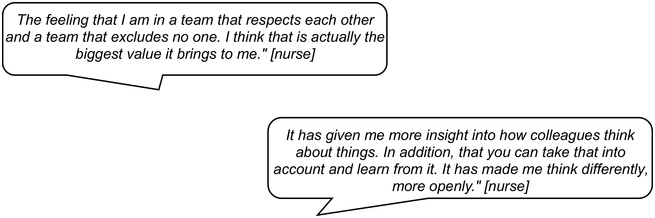
Healthcare professionals reported feeling more heard and supported by their supervisor. They valued that their supervisor dedicated time to listening to them and was sincerely interested in their personal work values. Moreover, they learned about their colleagues’ values and needs. This led to a better understanding of each other and improved team dynamics and mutual respect. Additionally, talking about what thrives you in work, focusing on positive and shared values, was empowering. In addition to the supervisor’s facilitative communication style, this improved collaboration and job satisfaction.

Figure 10.201 Long description
The first speech bubble on the left reads, "The feeling that I am in a team that respects each other
and a team that excludes no one. I think that is actually the biggest value it brings to me." [nurse]. The second one on the right reads, "It has given me more insight into how colleagues think about things. In addition, that you can take that into account and learn from it. It has made me think differently, more openly." [nurse].
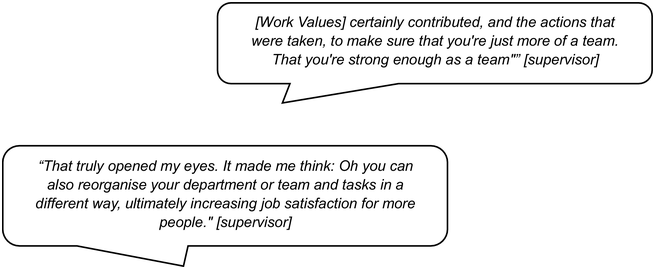
Supervisors also praised the approach. They appreciated the open, non-judgemental conversations, which helped them better understand their team members’ motivations. With a deeper awareness of each employee’s needs, supervisors could offer tailored guidance. Additionally, training sessions with senior management were important for feeling supported in the process of change. Overall, the approach led to better communication within teams, improved collaboration, and greater alignment between personal values and organisational goals. Many supervisors felt that it helped in becoming more effective leaders.

Figure 10.202 Long description
The first speech bubble on the right reads, "[Work Values] certainly contributed, and the actions that were taken, to make sure that you're just more of a team. That you're strong enough as a team"” [supervisor]. The second one on the left reads, “That truly opened my eyes. It made me think: Oh you can also reorganise your department or team and tasks in a different way, ultimately increasing job satisfaction for more people." [supervisor]
However, challenges such as time constraints and uneven participation levels were noted. These factors sometimes limit consistent application across different teams. Ongoing support from supportive professionals and senior management was crucial for ensuring long-term success.
Lessons Learned and Discussion
The work values conversation approach is a practical tool for enhancing well-being and work engagement among healthcare professionals. Aligning personal values with organisational goals promotes stronger team collaboration and helps organisations retain valuable staff. Successful implementation requires well-trained leaders who can conduct open and meaningful conversations, as well as ongoing support from HR and senior management. This is not a one-time intervention but a continuous process that should be integrated into regular HR practices, performance reviews, and leadership development programmes. In addressing high workloads, absenteeism, and staff shortages, this approach contributes to a healthier and more motivated healthcare workforce.
Moral Governance of Organisations: A Corporate Governance Model Based on the Capability Approach and Contributive Justice
Background
The ultimate organisational level is the boardroom, where decisions are made that are driven by corporate governance. In Chapter 7, a structure of corporate governance is proposed that is based on the CA and contributive justice. Contributive justice focuses on contributions and participation and offers an alternative framework for how resources and outcomes can be distributed, with an emphasis not on the question ‘who gets which part of the pie’ but on ‘how can stakeholders contribute to the creation of the pie and the decision-making about its distribution’. It is not about what divides but about what unites, where the purpose of the organisation guides the contributions of stakeholders. The corporate governance model that we advocate in Chapter 7 has not yet been applied in practice. However, there is an increasing number of companies with different visions in which morality, not efficiency, is central. A focus on morality and stakeholder voice is not compatible with profit maximisation in a purely financial sense.
Case Description/Implementation in Practice
Internationally, Patagonia is the best-known example, founded by Chouinard, who led it for several decades as a successful brand for outdoor clothing. At retirement, he decided that Patagonia would be owned and managed by a trust and a foundation. The Trust owns 2 per cent of the company and all the voting stock and secures the company’s values and independence. The foundation owns 98 per cent of the stock and all the non-voting shares, ensuring that profits (approximately $100 million per year) are used to combat climate change.
Chouinard’s decision to make Patagonia steward-owned and to hand his shares ‘to the Earth’ is in line with how he led the company. Patagonia’s social focus is now secured for the long term. Steward ownership is a response to shareholder capitalism that, with a focus on short-term profit maximisation, has enormously destructive consequences for inequality and our planet’s liveability.
For the Netherlands, we focus on Camping Zeeburg. After thirty years, Toon Weijenborg decided not to sell Camping Zeeburg to one of the international tourist chains that has been buying many Dutch campsites in recent years but to a foundation that would preserve its identity. In doing so, he defied the large sums of money involved in selling his campsite: “The real camping feeling is gone if we let chains have their way.” Toon Weijenborg fears that the rise of large investors will make the ‘camping feeling’ disappear. He expresses his concerns: “The only thing those parties want is to maximise profit in a purely financial sense. The colourful wagonettes will be removed and replaced by chalets. The vegetarian menu in the restaurant will be replaced with a standard catering concept. In other words, there will be a uniform look that fits the chain’s concept.” Selling to a chain was also a nightmare for the staff of Camping Zeeburg: “We have been working here in complete freedom, but chains are diametrically opposed to that philosophy.”
Lessons Learned and Discussion
These entrepreneurs’ choices align with surveys of Dutch entrepreneurs that show a trend that ‘making a difference in the world’ is now a more important motivator for many entrepreneurs than earning a large amount of money and becoming rich (www.duurzaam-ondernemen.nl).
Conclusion
This chapter underscores CA as a powerful and adaptable framework for enhancing workplace well-being and sustainable employability across various organisational levels. Through practical applications, ranging from individual counselling sessions to team interventions and organisational-level policy changes, it demonstrates the added value of CA. By prioritising individual freedoms and justice within organisations, the CA facilitates meaningful and lasting change.
A key insight from the chapter is the emphasis on freedom, a core principle of the CA. Encouraging individuals to identify their most significant work values, the conditions needed to achieve them, and directions for capability development promotes autonomy and enables better alignment between work and personal capabilities. This freedom to pursue one’s values enhances both individual and collective well-being, which is shown in several of the real-world examples in this chapter.
The CA’s commitment to justice is equally prominent. Rather than focusing solely on equal resources, it stresses the importance of equal opportunities. With respect to fostering inclusive dialogues and addressing individual and diverse needs, CA-inspired approaches ensure the distribution of equal opportunities to achieve valuable (work) goals, regardless of background, position, or (dis)ability.
This chapter also shows that CA applications are feasible and relevant at multiple levels within organisations and society. Our understanding of mid-range work outcomes, which are important preconditions for sustainable employability, is steadily expanding. As illustrated by the cases presented, CA-based approaches can increase awareness of individual capabilities, foster empowerment, improve communication between employees and supervisors, and promote collaboration, teamwork, and effective job crafting on the basis of shared values. Nonetheless, future research is needed to fully understand the impact of the CA at both the individual level (e.g., sickness absence, performance) and the team and organisational levels (e.g., team performance, turnover, inclusive leadership).
In conclusion, the examples in this chapter illustrate the transformative potential of the CA. By focusing on personal work values and opportunities, it offers a human-centred approach to management, one that recognises the importance of aligning individual and organisational goals. While challenges remain, these applications suggest that with the right support and commitment, the CA can make a significant contribution to healthier, more engaged, and sustainable workforces. Future efforts should continue to explore and expand the reach of CA applications to benefit the well-being of employees across various sectors.



 Open access