


For the construction of a birth cohort of twins, the cooperation of mothers of twins is essential. Participants in twin studies, in most cases the mothers of twins, expect that they can obtain appropriate information from researchers to facilitate the healthy development of their twins. Indeed, the chance to gain useful information for the care of multiples is a strong incentive for the parents to participate in twin studies. The majority of twin registries throughout the world have been constructed primarily for genetic studies. It appears to be very difficult for researchers to achieve a high participation rate and detailed data from families with very young children in Japan if researchers only focus genetic issues without giving helpful advice to the participants. To successfully obtain cooperation from families of multiples, scientific findings from twin studies conducted from various fields should be linked and provided to families of multiples.
Strategies for the Collection of Data on Multiples in Japan
As the frequency of families with multiples is not very high (0.6–1% at most) in Japan, a strategic method of study is crucial if researchers hope to gather sufficient amounts of high-quality data. There are three main types of data included in studies on multiples in Japan (Ooki, Reference Ooki2006). First, data from large hospitals have been used previously in the field of obstetrics. The collection of obstetric data from multiples is relatively easy with the tradeoff of selection bias in favor of high-risk infants and mothers. Second, the Basic Resident Registration of municipalities can be used. This registration reflects the entire population of each administrative area and serves as a possible source for the recruitment of families with multiples. However, the cost-effectiveness of this method is extremely low in Japan in the case of multiple birth families. Third, there is a volunteer-based database of multiples that includes data from mothers who belong to associations for parents of multiples (Ooki & Asaka, Reference Ooki and Asaka2005). This database contains more detailed information from hospital data on the condition of multiples after birth. Although volunteer-based databases may have some selection biases, their cost-effectiveness is very high in Japan.
Basic Idea of the Present Project
The public health problems with multiple birth families cannot be resolved by the efforts of families with multiples alone, even if support groups such as local twins’ clubs are available. Collective efforts from specialists from different domains should be given to families of multiples for their wellbeing and physical and mental health (Ooki, Reference Ooki2006).
A large database of twins, recruited from pregnancy to childhood, was started in 1987 (Ooki & Asaka, Reference Ooki and Asaka2005, Reference Ooki and Asaka2006). The primary purpose of this database was to perform genetic epidemiologic twin research. However, it turned out that the data were also a useful resource for the provision of information on many features specific to twins (e.g., information on their growth and development) and that this information could serve as a valuable feedback to families with multiples and to health professionals.
Thus, the ultimate goal of the present project is to contribute to the development of welfare programs for multiple birth families as well as to coordinate research useful for both human genetics and maternal and child health. The well-established and sophisticated previous strategies used to recruit twin families into the twin registry were very useful for the construction of the human network and the information distribution in this program.
Outline of Japanese Database of Families with Multiple Births in Childhood
Previous Database
Historical cohort data were gathered in diverse ways from 2001 to 2011 (Ooki & Hiko, Reference Ooki, Hiko and Maddock2012). A database was constructed of families with multiple births, consisting of 951 mothers of twins and higher order multiples from several associations for parents of multiples throughout Japan (Ooki & Asaka, Reference Ooki and Asaka2005). The database included about 2400 participants from 951 mothers of twins and higher order multiples (Ooki, Reference Ooki2012).
The Purpose of Present Study
The present study is part of a nationwide study designed to assess the long-term effects of the perinatal conditions of mothers parenting multiples on the growth and development of multiples in childhood and to test the developmental origin of health and disease hypothesis in genetic epidemiology studies. Another aim of the study is to provide evidence-based information on how to raise multiples for families with multiples.
Methods
First, twin mothers’ clubs throughout Japan were found using all possible methods, that is, website information, personal communications, the lists of twin mothers’ clubs in books, and information from all public health centers and local municipalities in Japan (approximately 2000). About 250 twin mothers’ clubs were found. We sent postal mail or emails asking the leader of the clubs the real situation of activity and the intention to participate in the present project. Of these clubs, 207 clubs returned their answers and 143 showed a positive response to the idea of participating in the research project. The final number of twin clubs participating in the research was 123.
We gathered basic data from the members of the twin clubs by mailing questionnaires to the leaders of the clubs, consisting of over 500 question items with free description answers according to the number of the members of the clubs who could participate in the research. The questionnaire items included questions about pregnancy, circumstances of child rearing (especially, the physical, mental and social condition of mothers and fathers), and the physical growth and motor and language development of multiples. The response rate was 38% (566/1478 pairs).
Most medical data in all our databases were obtained from The Maternal and Child Health Handbook, which is presented by the Ministry of Health, Labor and Welfare (to all pregnant women in Japan). The growth data of children based on mass examinations are all recorded in this handbook, and it serves as a valuable source of health information for pregnant women as it contains detailed medical records on pregnancy and delivery as well as childcare for children up to 6 years old (before they enter primary school). The handbook also presents the growth standards of weight and height/recumbent length and motor and language developmental milestones every 10 years, for example, 1980, 1990, 2000, and 2010. The mothers are advised to refer to these records when completing the questionnaire. The highly important characteristics of these data is that estimated intrauterine fetal birth weight is available from the babies born since 2012, as the information was implemented in the handbook starting from 2012. Although using this handbook seemed to be the most effective way to collect large amounts of data on twins after birth, it did not produce perfect longitudinal data. No information on detailed chorionicity could be gathered, for example, Zygosity determination at birth is not common in Japan, and thus, an accurate zygosity assessment by means of DNA markers was not obtained. Thus, zygosity of the subjects was determined by questionnaire (Ooki & Asaka, Reference Ooki and Asaka2004).
Outline of the Study Subjects
The basic characteristics of the Japanese Database of Families with Multiple Births are shown in Table 1. (The answers of the pregnant women were excluded.)
Basic characteristics of Japanese database of families with multiple births in childhood (N = 563 pairs)
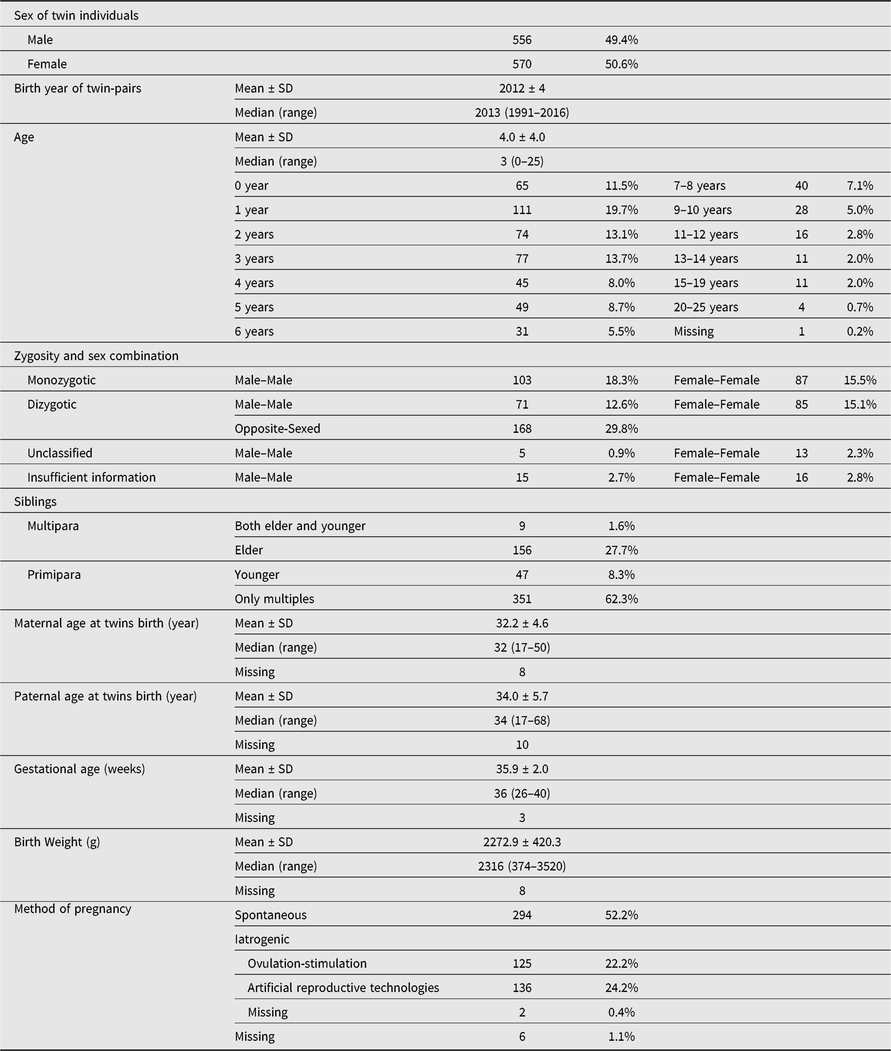
Note: Pregnant women (n = 3) were excluded.
SD = standard deviation.
Ethical Issues
All of the mothers in the maternal associations cooperated voluntarily in this research, mainly through contacts of the presidents of their associations. This study was performed with the approval of the ethical committee of Ishikawa Prefectural Nursing University (No. 1200).
Conclusions and Future Directions
The concept of the community support network seems to be an effective means both for collecting data and providing support for multiple birth families. With a community support network, evidence-based research on multiple birth families can be performed, and the results can be easily disseminated. Longitudinal follow-up is planned every 2 years beginning this year.
Acknowledgements
I gratefully acknowledge the help of research assistant Toshimi Ooma for data management. I would like to thank Dr. Noriko Kato for useful suggestions. I also thank project twins’ family members (Kiyomi Hiko, Kiyomi Kanamori, Yukiko Takayama, Seiko Itoigawa, Kazumi Yamagishi, Chieko Temba, and Yumiko Nakamura).
Conflicts of interest
None.



