

The problem is to avoid the more serious harm … of choosing the appropriate social arrangement for dealing with the harmful effects. All solutions have costs and there is no reason to suppose that government is called for simply because the problem is not well handled by the market … it is likely the extension of Government economic activity will often lead to this protection against the action for nuisance being pushed further than is desirable.
[P]roperty rights develop to internalize externalities when the gains of internalization become larger than the cost of internalization.
[S]ocieties choose different policies, some of which are disastrous for their citizens, because those decisions are made by politicians or politically powerful social groups that are interested in maximizing their own payoffs, not aggregate output or social welfare.
1.1 Overview
Coase or Pigou? Economic property rights and decentralized bargaining or centralized regulation and potential rent-seeking in the political arena in confronting externalities? That is the question for this volume.
Pigou called on government taxes to equate marginal social benefits and costs for externality abatement.Footnote 4 Although such taxes are seldom used, Coase, as shown in Figure 1.1, framed his criticism of government intervention around Pigou’s analysis. His efficiency-based alternative, however, also is seldom used. Prescriptive controls to address environmental externalities dominate. How those controls may facilitate costly rent-seeking in the political process and what that outcome means for broader institutional formation is the focus here.
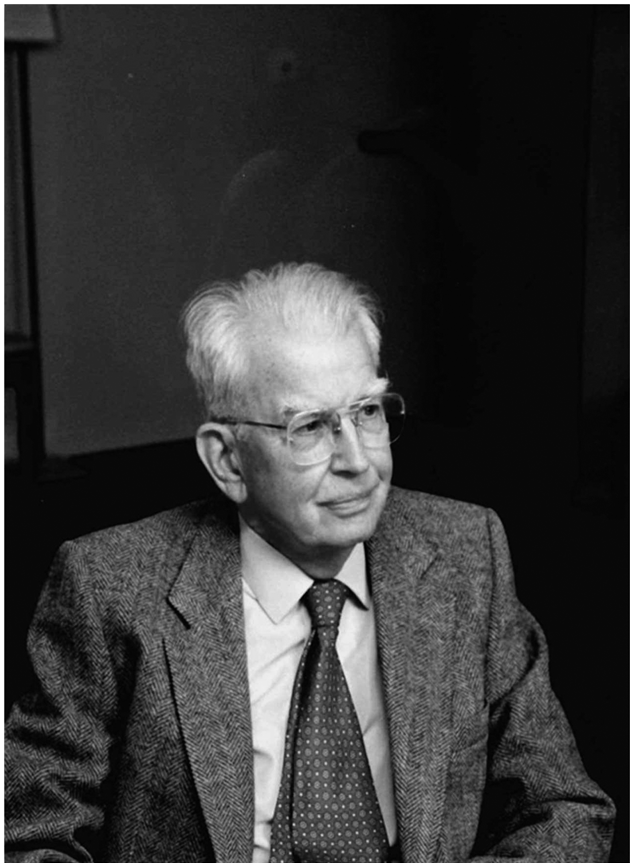
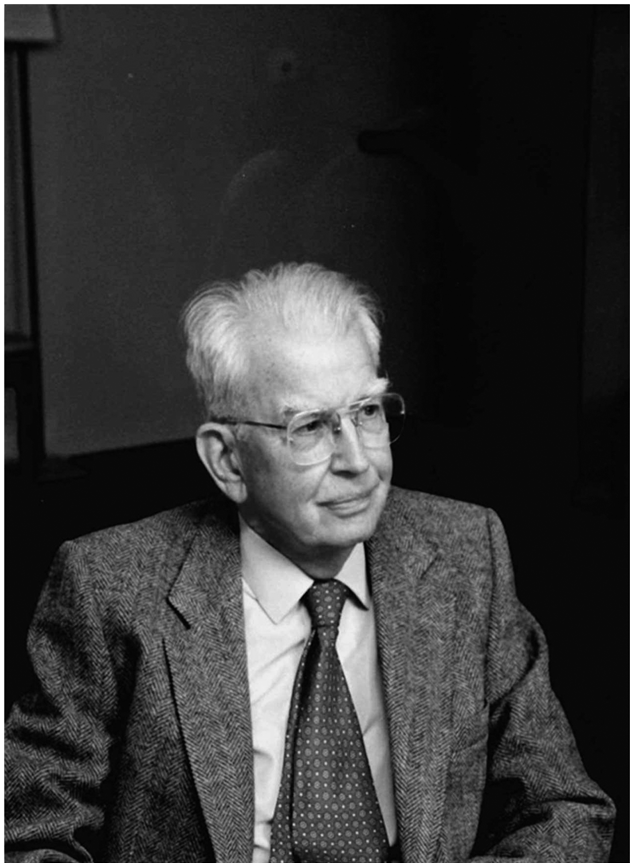
Ronald H. Coase, Nobel photograph, December 1991.
Coase’s 1960 “The problem of social cost” is among the most cited papers in economics and has stimulated extensive academic discussion.Footnote 5 This work and his 1937 path-breaking paper on firm organization were the bases for his 1991 Nobel Prize in Economics.Footnote 6 In 1960, Coase criticized standard prescriptive remedies for externalities as potentially excessively costly relative to the problem at hand. He offered a conceptual framework based on property rights and decentralized negotiation as a substitute.Footnote 7
Despite their potential efficiency attractions, Coasean approaches are not central to any US environmental program as initially enacted. Command and control methods prevail. Incentive mechanisms sometimes are adopted late and in partial ways, especially in US fishery policies and aspects of the Clean Air Act.Footnote 8 The caps themselves are not negotiated by the using parties whereby costs and benefits would be weighed on a marginal basis in deciding upon controls. Further, allocation, durability, and exchange of use rights are restricted, and the rights explicitly are not a formal property right. These are, though, the necessary characteristics of a robust property rights regime. Observed arrangements are not the structures envisioned by Coase. They do not represent major shifts in mitigation efforts.Footnote 9
While there has been plenty of time for his arguments to be incorporated in US policies, that has not occurred. The questions explored here are: Why not decentralized Coase? What are the possible efficiency, equity, and welfare outcomes of his absence? What might we learn from this exercise to better understand the motives for institutional development under different settings?
Is the lack of Coase’s suggestions because the transaction costs are just too high? Are costs prohibitive for defining and enforcing property rights among polluters and pollutees and for their subsequent exchange? Is Coase just impractical? Do decentralized Coasean approaches encourage a competitive race to the bottom across regions? Do local citizens undervalue environmental assets of national concern? Would the assignment of property rights be too inequitable, dispossessing some, and encouraging degraded hot spots?
To address these questions, three US environmental policies are examined: the Clean Air Act Amendments of 1970, 1977, and 1990; the Magnuson-Stevens Fishery Act of 1976; and the Endangered Species Act (ESA) of 1973. The analysis draws upon legislative histories, law reviews, and relevant economics literature. Comparative empirical tests of alternative options across these three laws are not possible because centralized controls are ubiquitous, and we do not observe alternatives whereby property rights are assigned and traded in both setting and administering the cap. Accordingly, actual practices are compared with hypothetical Coasean alternatives. Applying a decentralized Coasean lens to existing legislation provides a metric for assessing what might be lost, if prescriptive regulation is not the low transaction cost, efficient, and more equitable option. It also suggests where Coase’s decentralized approach might have been adopted but was not due to rent-seeking within the political arena.
With prescriptive regulation, the authority of the state is directed to set production, use, or emissions-release caps and to mandate compliance among regulated parties. The caps, individual constraints, and related costs and benefits are determined and allocated following negotiations among politicians, agency officials, and lobby groups. There generally is no direct role in the legislation for localized bargaining to equate marginal costs and benefits.Footnote 10 As political, not economic, distributions, regulatory controls inherently are inflexible and less responsive to new aggregate cost/benefit evidence.Footnote 11 Absent generally tradable property rights, there are no obvious market payment mechanisms to adjust behavior among polluters or pollutees, to redirect costs and benefits, or to better align incentives for compliance. Required behavioral, consumption, or production adjustments are enforced through imposed fines or related penalties for failure to observe regulations. Regulators, those regulated, and beneficiaries do not capture pecuniary efficiency gains. Polluters are motivated by the consequences of noncompliance and pollutees by private net gains delivered in environmental programs. In the absence of productivity motivations, the regulatory constraints may be too extensive or too limited, depending upon lobby influence.
By contrast, under a property rights and decentralized exchange framework, these questions may be settled more effectively in a manner that reduces transaction costs. Where feasible, decentralized exchange may more optimally determine environmental controls and the distribution of costs and benefits involved. Resource use limits are negotiated by property rights holders, and exchange creates production constraints as externality mitigation with payments among the bargaining parties. Property rights could be assigned based on prior possession, the most dominant form of allocation. These issues and their impact on property rights are the thrust of the volume.Footnote 12
Caps and allocations can be adjusted in response to new information through market trade. Negotiators are motivated by monetary gains from exchange to moderate externalities, considering shifting evidence of abatement costs and benefits. Negotiated outcomes are collaborative, with all parties having a stake in the process. Externality reduction is an asset to be exchanged and adjusted. The extent of abatement can be welfare-enhancing because tradeoffs are directly addressed in discussion between polluters and pollutees. In light of these attractions, the challenge is to explain why a Coasean framework was not implemented as the guiding structure of environmental laws.
The analysis presented in this volume outlines the efficiency arguments of Coase and compares them to actual policy operations.Footnote 13 Coase did not provide a blueprint for adoption. His work was part of the general conceptual literature on socially beneficial institutional change described in Chapter 2. Accordingly, the evaluation of hypothetical Coasean exchange and actual environmental policies is not equally balanced. It is not one of apples to apples.
As indicated in the legislative histories of US environmental policies, there is no record of a weighing of relative transaction costs by policy-makers of decentralized versus centralized approaches. Prescriptive controls do not appear to have been politically chosen because of their cost effectiveness. Why then are government-mandated restrictions imposed instead of more localized negotiated solutions in externality control? Can inferences be drawn for the efficiency of more general political responses in the economy, where property rights and markets might instead be chosen rather than government directives?
For externality mitigation, the answer presented in the volume is that rent-seeking in the political process by organized parties and their political and bureaucratic supporters has critically shaped observed regulatory patterns.Footnote 14 It displaces demand for economic property rights and use of markets. Rent-seeking can have a pejorative connotation, but that is not the purpose here. Rather, the concept is used positively to explain why and how parties use the political arena to achieve rents or benefits more extensively and at less cost compared to what they might have had to pay in a market. Moreover, these returns cannot be easily competed away. Overall, rent-seeking can result in inefficient resource allocation and use. It imposes higher aggregate costs and reduced net benefits relative to market outcomes, unless there are significant comparative transaction costs advantages with centralized regulation to alleviate externalities.
Rent-seeking is defined in the volume to include standard pecuniary or commercial returns to designated parties from preferential government policies that cannot be competed away. Rent-seeking is also defined more broadly than is standard to include philosophical values granted by regulation to proponents at low direct cost. Private marginal benefits exceed private costs, and these nonpecuniary benefits or moral profits cannot be diminished by market entry and competition.
Especially in environmental regulation, rent-seeking provides value to some agents through strongly held, normative or philosophically driven objectives imposed by government on others. Advocates bear limited costs, often only lobby expenses. There may be public goods provided along with these personal gains, but the controls likely exceed levels where social marginal benefits and costs are equalized. Indeed, marginal benefit and cost calculations typically are not conducted in regulation, and agents have little incentive to do so. Further, rent-seeking takes place in the political assignment of preferential property rights that includes constraints on any subsequent trade in response to new cost and benefit information. The political objective of agents is to designate a relatively permanent allocation of ownership, production, and employment along with rents associated with it.
Rent-seeking in US environmental policies is associated with public goods provision, but the public goods may be more limited, costly, and controversial than they might have been had Coasean frameworks been central. Rent-seeking is successful because of differential collective action and information costs of externality mitigation between general citizens and more narrowly focused special interest groups, industry, or environmental nongovernmental organizations (NGOs).Footnote 15
This explanation blends with the argument presented by Acemoglu.Footnote 16 He presents a framework and suggestive empirical evidence whereby members in societies are unable to contract to offset the losses imposed by self-interested parties because contractual remedies cannot be written and enforced over time. The transaction costs of doing so are prohibitive. Commitment problems are paramount.
Proponents or opponents of environmental policies are apt to have lower collective action costs in the political arena than those in the general population. The former achieve policies that reflect their private objectives. Public goods may be provided. As a result, the general benefits delivered involve higher aggregate costs than would have been the case in a more openly negotiated Coasean framework. Under Coase, a fuller range of costs would be considered and weighed ex ante in adoption of environmental programs. Benefits would be more tailored to the interests of Coasean negotiators than to those active and proficient in the political process. Accordingly, citizens can be ineffective in moderating the effects of more partisan policies implemented through the efforts of better-organized groups, supportive politicians, and agency officials. Only if the aggregate costs become very high, might these collective action problems be overcome.
1.2 The Efficiency Case for Coase
The quotations from Coase and Demsetz at the start of the chapter emphasize positive, optimistic institutional pathways to address economic issues previously associated in the 1950s with market failure. Their work was part of an emerging literature on the efficacy and welfare advantages of reducing transaction costs and achieving economic opportunities through property rights, markets, and related governance institutions.
In both his 1937 and 1960 papers, Coase outlined an efficiency argument for institutional and policy innovation. Agents adopted new institutions to economize on transaction costs and thereby making newly profitable exchange feasible. Resources could be reallocated; production redirected; and costs and benefits balanced. These motives are implicit in the 1960 article’s parables of a farmer and livestock herder, railway and farmer, and confectioner and physician in describing the advantages of bargaining between polluters and pollutees to mitigate externalities.
Coase recognized that it was costly to devise and trade property rights, but he argued that it was not obvious that these transaction costs were higher than those associated with mandated caps and compliance enforcement. Coase claimed that costs were case dependent and that they ought to be compared in devising externality responses. The driving forces behind this approach were a better balance of net returns across the population, a more efficient level of externality control, and the release of more resources for use elsewhere in the economy. The agents involved were direct beneficiaries of these efficiencies, with broad social spinoffs.
As suggested by Coase, command and control regulations placed all abatement costs on polluters (“polluter pays”), giving them little stake in outcomes, with incentives to evade. It motivated pollutees to demand excessive regulation beyond where marginal social costs and benefits were equal, and for polluters to seek far less. With regulatory costs and benefits differentially distributed and lacking the straightforward trade of regulatory instruments for marginal adjustments of losses or benefits, a political battle for or against centralized controls would ensue. Unlike a market, there were no clearcut reasons for predicting that political exchange would lead to more efficient results and welfare improvements relative to the status quo.
Although Coase did not delve into the matter, government intervention for mitigation involved politics and the specific agendas of multiple interest groups, politicians, and agency officials. Even with the aim of providing broad public goods, there would be numerous interpretations of the externality problem and how to address it, each with different distributions of costs and benefits to the parties directly involved and to the general society. There would be both private and general benefits and costs, but self-interested political agents would be most concerned about and responsive to those costs and benefits they were most likely to bear. Narrow political interests would dominate. Agent objectives may or may not coincide with effective public goods provision.
Centralized regulation requires interest groups to raise alarms and to lobby politicians and agencies for action. Potentially regulated parties also would react to influence policies and reduce any regulatory costs placed upon them. The greater the range and complexity of externality, the more varied the disparate interests would be in promoting specific solutions, costs, and returns. Interest groups would lobby politicians and bureaucratic agencies for their desired policies. Unless there were multiple competitive interests in the political debate over externality control and the attendant release of information on mitigation costs and benefits to general citizens, politicians and bureaucratic agencies would be biased in favor of successful lobbyists. To the extent that marginal regulatory costs were not born by supporters, there would be an inherent push for constraints beyond those needed for efficient externality abatement.
By contrast, Coase argued that if polluters or pollutees held property rights, they could negotiate to mitigate production-imposed losses (or gains) in a decentralized manner. A more optimal externality level would result (generally not zero) with all parties having a tie to negotiated outcomes. It avoided the setting where Coase warned that costs could exceed benefits.Footnote 17 Negotiations required assignment and exchange of property rights, but Coase was agnostic as to whether they went to the polluter or pollutee.
In 1967, Demsetz augmented Coase’s analysis by describing the development of property rights as economic (efficient) institutions and their essential role in market trade and promoting resource values. Together, Coase and Demsetz provided arguments for economic property rights and markets as efficiency-enhancing institutions. As new conditions or opportunities emerged, generating potential positive or negative externalities, parties would bargain for property rights adjustments and negotiate to internalize the externality. There were opportunity costs for not doing so and pecuniary gains (profits) from addressing the problem. The supply of property rights and market solutions depended upon transaction costs that were real resource costs.Footnote 18 As with any costs, agents had incentives to innovate new institutional arrangements to lower transaction costs, engage in expanded trade, and achieve higher economic returns. These same efficiency objectives underlay the firm and market-level governance innovations outlined by Williamson.Footnote 19
Because the benefits of economic property rights and markets seemed so profound, neither Coase nor Demsetz considered the rent-seeking opportunities afforded to some parties in the policy arena or how they might interfere with the emergence of efficient institutions. As argued earlier, rent-seeking reduces demand for economic property rights. Some parties could secure more private net returns through the political process and prescriptive controls than they could through the assignment of property rights and market exchange. These parties are motivated to organize politically to mold regulation along their desired lines and to achieve rents. Their actions, however, raise the transaction costs of mitigation by displacing property rights, market solutions, and their efficiency attributes. This potential challenge was not recognized by Coase or Demsetz.
Similarly, Williamson also did not explore the potential for rent-seeking to undermine the efficient governance responses he described. This threat, however, was far less problematic in his analyses because the private firm and market-level organizational innovations of concern did not invite political entry, rent-seeking, and expensive institutional manipulation.
1.3 Framework: Economic Property Rights and Rent-Seeking
To frame the analysis of economic property rights, markets, externality control, and the competitive influence of rent-seeking, these concepts are now explored here in more detail. With this information, it will be possible to examine the absence of Coase in observed environmental regulation.
Economic Property Rights in Coasean Externality Mitigation
Coase’s approach for negotiated externality mitigation relies upon property rights and decentralized markets. Economic property rights define resource ownership, support trade, and allow for contractual innovation. They determine who has the recognized right to make decisions about asset use; devise organizational and contractual forms; engage in trade; and who captures the resulting net returns. Benefit maximization requires that property rights are exclusive, durable, and exchangeable.Footnote 20 Actual property rights are not ideal types. Their attributes vary due to transaction costs and related local assessments of fairness, openness, and morality.Footnote 21
Demsetz described the development of property rights by agents as an economic institution in response to changing benefit/cost calculations.Footnote 22 His contractual adaptation to transaction costs is like Coase’s and Williamson’s for firm governance: Economic property rights are created or adapted “in response to the desires of the interacting persons for adjustment to new benefit-cost possibilities.”Footnote 23 As with firm organization, property rights are dynamic institutions that vary in completeness and specificity across time and space according to the net returns from adjustment and transaction costs.Footnote 24 Agent efforts in defining and refining property rights not only advance individual welfare, but also generate broader economic well-being through market expansion and resource allocation to new economic activities. As noted above, observed property rights are not idealized institutions, but ones that are adjusted to actual conditions as second-best. Indeed, Demsetz cautioned against nirvana comparisons of transaction cost-free institutions with observed ones.Footnote 25
In the firm level analysis of Coase and Williamson, economic property rights provide tradable rents or pecuniary returns to rights holders as defined and protected within the legal structure. They are implicitly held by agents in devising firm or market-level governance arrangements. Negotiating agents are residual claimants to the efficiencies afforded by institutional change to reduce transaction costs. An astounding array of efficiency-enhancing institutional innovations can be explained by this process. These include firm vertical integration; relational contracts; firm size, organizational hierarchies, and boundaries; as well as team production arrangements; and use of boards of directors.Footnote 26 Critical insights have influenced scholarship, antitrust policies, and the auctioning of the spectrum.Footnote 27
Similarly, the potential monetary gains from cost savings and related efficiencies from the use of property rights and exchange are the bases for Coase’s negotiated alternative to mandated constraints. Even so, in Coase’s policy arena,Footnote 28 the efficiency motives of political agents and related broad welfare outcomes are far less straightforward than in his firm-level analysis of private actors.Footnote 29 Politicians, agency officials, and members of lobby groups, who devise centralized controls, are not obviously motivated to economize on transaction costs in the same manner as in the private sector. They typically are not legally the direct recipients of the net returns of greater efficiencies. Rather, there is more opportunity for political rent-seeking via government intervention on behalf of specific, influential interests. Political assignment of the net returns from regulation involves partisan distribution of resource values, not the efficiencies of providing them.
Rent-Seeking in Externality Mitigation
A dynamic political rent-seeking framework is outlined by Keohane, Revesz, and Stavins, within the context of the Clean Air Act to explore why observed prescriptive policies rely so little on market or incentive-based instruments.Footnote 30 They do not explicitly examine why environmental policies are centralized in federal regulatory controls in the first place. They describe the demand for and supply of specific regulations across firms, individuals, unions, environmental interest groups, and legislators. They also do not explore an independent role for administrative agencies.
Merrill uses a similar rent-seeking approach to address the dominance of command and control and the limited use of incentive systems within them. He also explores why grandfathered permits rather than taxes are used whenever incentive instruments are adopted.Footnote 31 His explanation focuses on the tradeoffs among political agents in weighing wealth maximization versus distributional objectives in regulatory design.
Given command and control, Keohane, Revesz, and Stavins provide rent-seeking explanations for elements of the Clean Air Act, including more stringent regulation of new sources of pollution, than of existing ones, the sparce use of market instruments within prescriptive controls, the adoption of tradable permits not emission taxes, and the free allocation via grandfathering of those permits rather than auction.Footnote 32 Their equilibrium model illustrates the interaction among the agents demanding and supplying environmental policies.
Predictions of a rent-seeking framework include: (a) decentralized Coasean approaches for setting caps, and distributing property rights within it will be absent in policy; (b) the rare use of incentives within prescriptive policies; (c) the support of firms for grandfathered permits rather than taxes; (d) the limitation of the tradability of permits in order to restrict entry and production reallocation; (e) that firms, labor unions, and political supporters will seek to inhibit access, raise competitor costs, and constrain nonunionized operations; and (f) environmental NGOs will oppose markets on philosophical and strategic grounds. Prescription provides certainty of a fixed level of mitigation rather than one adjustable through exchange. (g) Politicians will prefer prescription because it advertises a specific level of environmental quality, and costs may be more hidden than under more transparent market trading.
Lobby groups bear narrow lobbying costs in promoting favored policies, while regulated parties and the general citizenry bear broader programmatic costs. Competitive interest groups, favoring different approaches to externality mitigation, can expose excessive costs or the granting of narrow benefits as rents to specific parties. The potential for such information to be released to general citizens cautions or constrains politicians and agency officials from going too far at the behest of special interests. Although there may be generalized benefits to citizens, the adopted approaches may not be the low cost or general welfare-improving ones.Footnote 33
It is possible that difficulties in estimation might limit cost and benefit analyses in program design and implementation. Nevertheless, it is difficult to see why aggregate ex ante cost and benefit analyses as well as examination of their distributions, along with resulting ex post reassessments, would not be the first order of business for efficient responses to externalities. This is not the case empirically. Proponents have little interest in advertising costs and instead, are motivated to present them as integral in providing public goods. Smaller, well-organized, and more homogeneous interests, such as environmental NGOs or producer interests and labor unions, can promote desired programmatic outcomes. In return, they can promise political and bureaucratic supporters electoral and financial support. Opponents can be presented as thwarting the public interest in behalf of narrow private agendas. When there are few organized advocacy groups with different objectives, rent-seeking is more extensive, costly, and secure across political cycles.Footnote 34
As suggested, rent-seeking controls can be far more static, inflexible, and protective of influential hierarchies. Innovation patterns that are set to meet regulatory approval may neglect more broadly beneficial investments in other new processes or products. Moreover, once in place, the distribution of rents generates entrenched stakeholders, who resist any subsequent redistribution.Footnote 35 Over time, congressional oversight and control of agency actions may become less effective. Remedial legislative actions become more costly.Footnote 36
Coasean market approaches, by contrast, challenge political rents by requiring that they be paid for, devoting actual budget outlays, and advertising policy outcomes. Moreover, decentralized exchange reduces the role of political actors and bureaucratic officials. It is not apparent how they would be made whole. Politicians lose the ability to trade policies for votes, and agencies lose mandates, budgets, and employment. Lobby groups rely upon controls for their preferred policies and specialize in developing additional political links and influence. These human capital skills lose value with market approaches. In his study of resistance to property rights in fisheries, Hannesson commented that inefficiencies create their own constituencies.Footnote 37
1.4 Where Do We See Coasean Bargaining?
Coasean bargaining is observed in smaller-scale settings (Ellickson 1982, Edwards 2016, Mulligan 2023),Footnote 38 which would be consistent with a low transaction cost argument. There are pecuniary benefits to agents in negotiating agreements to avoid neighboring trespass, compliance with homeowners’ association rules, securing environmental easements, protecting groundwater, or the purchase and set aside of local ecologically valuable terrain.
Bargaining is also observed to lower the compliance costs and to encourage efficiencies with existing command and control regulations. Negotiations typically do not involve setting up the cap, which is preset by federal regulation. Deryugina et al. provide examples of polluters purchasing nearby lands as offsets, payments by consumers and government agencies for ecosystem services, and land acquisitions by government bodies and environmental NGOs to guard the supply of drinking water. Costello and Kotchen examine Coasean exchange alongside centralized government restrictions to control externalities.Footnote 39 They argue that property rights of some type and related trade reduce the costs of quantity restrictions in providing public goods.Footnote 40
1.5 Road Map
The timing for and key arguments of the literature on economic institutions and outcomes is summarized in Chapter 2. A brief overview of the contributions of Coase and Demsetz is provided. Chapter 3 confronts the theory with empirical evidence on a general absence of economic property rights and markets worldwide and more specifically, in US environmental and natural resource policies. In such policies, the lessons of Coase and Demsetz ought to be observed, but they are not.
For more microanalysis, Chapter 4 presents the legislative history and costs of the Clean Air Act. The Clean Air Act’s health benefits are commonly emphasized, but there seemingly is less analysis in the literature of costs and tradeoffs and inequities imposed. Chapter 5 provides US fishery policies under the Magnuson-Stevens Act and the slow and abbreviated adoption of economic property rights, the most apparent solutions to open access. Input/output controls prevailed for the first twenty years of US fishery policy, despite evidence of over capitalization and excess harvests in regulated, open-access fisheries. Providing and protecting politically desired property rights to specific groups, along with controlling overfishing, created complicated and measured responses in US fishery externality regulation.
Chapter 6 turns to the poster child of US environmental regulation, the Endangered Species Act (ESA). The law is dominantly prescriptive and is molded by rent-seeking. ESA benefits in terms of actual species recovery appear to be surprisingly small, while its localized costs are high. Even so, it generates ardent support from key political constituencies, who secure at least philosophical rents. The ESA is politically contentious and is opposed by landowners who bear focused costs. These conditions likely explain the law’s relative inflexibility and apparently limited outcomes. It illustrates Coase’s warning that the structure of externality regulation could result in costs that exceed the problem at hand. Indeed, a Coasean approach likely would have been more biologically and economically successful. In fact, virtually all US environmental policies are stalled legislatively (although agency reinterpretations of existing laws remain active).Footnote 41 This is a puzzling outcome for legislation ostensibly aimed at providing public goods. It indicates the costs and their differential distributions across the population.
Chapter 7 provides a summary conclusion of economic property rights as defined in the literature and how their contributions are limited by nonmarket political goals, particularly with environmental policies. The legitimacy of nonpecuniary objectives is not questioned; rather it is argued that they might have been achieved more efficiently through the definition of and adherence to private economic property rights. But they were not. There are important observations. One is that economic property and markets have been restrained in policy choices, and it is likely that total social net benefits were reduced. A second is that local tradeoffs were not considered when centralized state policies were put into place. Accordingly, given political incentives and the distribution of costs and benefits that mold them, environmental policies may be too wide-ranging, too restraining, and too costly to advance total welfare on the margin. Finally, the implications of the absence of Coase in environmental laws, an area of specific focus in his 1960 paper, suggests that transaction cost efficiencies play a limited role in policy development. Although Coase offered an efficiency agenda for institutional formation rather than a blueprint for adoption, his decentralized suggestions have not been followed. Advocates seeking rents instead, have chosen centralized prescriptions.