


1. Introduction
The increasing penetration of automated technology into our daily lives has shifted the use of robots from structured tasks in controlled environments, such as factories or research laboratories, to more complex environments, such as homes and public places (hospitals, parks, museums, shopping malls, etc.). In such environments fully or partially automated social robots appear as technological artefacts with social functionality that operate for and alongside humans. Social robots are designed to perform complex human interactions potentially involving multiple users and stakeholders (Šabanović, 2010; Čaić et al., 2019). The usage areas of social robots are quite diverse, and they are starting to be used almost wherever interaction with humans is necessary. The most common of these areas are services, health, education, entertainment, and research (Reference Mahdi, Akgun, Saleh and DautenhahnMahdi et al., 2022). Since social robots interact with people in different operational environments within daily life (Yan et al., 2014), they should be designed to meet the demands and needs of individual users and/or user groups for various settings. Therefore, methodologically speaking, a customized design approach based on the needs of different users is required for social robots, as opposed to a mass production-oriented design (Reference Gasteiger, Hellou and AhnGasteiger et al., 2021). To this end, it is essential to involve users and relevant stakeholders in social robot design. There are various methods for user/stakeholder participation in design, such as co-design (Reference Jørgensen, Lindegaard and RosenqvistJørgensen et al., 2011), user/human-centered design (Reference Weiss and SpielWillis, 2018) and participatory design (Reference WillisPnevmatikos et al., 2022; Reference Pnevmatikos, Christodoulou and FachantidisWeiss & Spiel, 2022; Reference Rogers, Kadylak and BaylesRogers et al., 2022). Participatory design (PD) gives researchers and designers the chance to involve all stakeholders including users in a variety of design-related phases, such as the preliminary requirements and needs analysis or evaluation of the product prototype. Generally speaking, users/stakeholders are involved in the design process using various ways such as surveys, interviews, workshops, etc. These methods have been used in some studies at the very beginning of the design, in some to test the design, and in some to improve the design according to the feedback. The most important advantages of participatory design are improving product efficiency, effectiveness, safety, and assisting in the management of users’ expectations and improving the levels of product satisfaction. In addition, this involvement develops a sense of psychological ownership, meaning that users feel responsible for and emotionally invested in the quality and outcomes of the designed system, rather than legal or financial ownership.
Since social robots are designed to perform various tasks by interacting with human users in daily life settings, user participation in various forms appears as an important method in the design processes of these robots. In an early study, Reference Marti and GiustiMarti and Giusti (2010) applied the user-centered design method to create a robot called ‘Iromec’, which was capable of meaningfully interacting with several types of disabled children. In a different work, user requirements were collected through focus groups and interviews for a robot named ‘TOOMAS’ developed to help clients in home improvement shops (Reference Doering, Poeschl, Gross, Bley, Martin and BoehmeDoering et al., 2015).
The human-centered design was used in ‘HOBBIT-The Mutual Care Robot’ project, which examined the use of robots to encourage senior adults to live independently (Reference Eftring and FrennertEftring & Frennert, 2016). The Human-Centered Design and Participatory Design method was used in the EMAR project, where the goal was to develop a social robot that would help teenagers with mental health issues by detecting external signs of stress and mood changes and providing a micro-intervention in school settings (Reference Björling and RoseBjörling & Rose, 2019). Reference McGinn, Bourke, Murtagh, Donovan, Lynch, Cullinan and KellyMcGinn et al. (2020) applied user-centered design techniques to create a prototype socially assistive robot (SAR). Reference Giuliani, Szczęśniak-Stańczyk, Mirnig, Stollnberger, Szyszko, Stańczyk and TscheligiGiuliani et al. (2020) used the user-centered design method to develop a robot that would allow physicians to remotely perform auscultation and echocardiography on patients. The Participatory Design method was used in designing a socially assistive robot (SAR) for education that was developed with the participation of stakeholders in different phases of the methodology (Reference Christodoulou, Reid, Pnevmatikos, del Rio and FachantidisChristodoulou et al., 2020). Another study aims to comprehend how people in a public setting perceive robot interactions and behaviour (Reference Tian, Carreno-Medrano, Allen, Sumartojo, Mintrom, Coronado Zuniga, Venture, Croft and KulicTian et al., 2021). The participants in this project study developed robot behaviours for applications in public spaces, later evaluating the designs in an actual robot and a simulator using the participatory design method. A social robot design for teaching mathematics to children was made in the iCETA project, which use the participatory design method (Reference Pires, Bakala, González-Perilli, Sansone, Fleischer, Marichal and GuerreiroPires et al., 2022).
The literature review shows that various methods are applied for user participation in the development of social robots. Participatory design of social robots aims to create technology that better adapts to the expectations and requirements of target users by considering their needs, perspectives and desires. Thus, the active participation of potential users is critical. Beyond end users, other stakeholders who may have an interest or influence on the design process are also identified and included in the process. In the case of social robot design, stakeholders are various professionals/experts selected based on the application area, required functions and features of the robot. These may include caregivers, healthcare professionals, policy makers and others, depending on the context. Participatory design process is further elaborated via workshops, collaborative sessions, interviews, prototyping, and iterative feedback loops such that designers, end users, and stakeholders can work together to generate ideas, define requirements, and outline design concepts. Despite the growing body of work on participatory design of social robots, existing studies primarily focus on the design of a specific robot within a particular context. Stakeholder identification and selection are typically conducted in an ad-hoc manner, relying on the experience and intuition of the design team. To the best of our knowledge, there is no context-independent, systematic framework that supports stakeholder selection based on explicitly defined user requirements. The presented study aims to fill this gap by addressing the following research questions:
RQ1: Can we develop a systematic formalism to identify user needs and demands independent of a specific case and context in the participatory design of social robots?
RQ2: Can we also use this formalism to select stakeholders to be involved in the process?
This paper contributes context-independent participatory design of social robots by proposing a systematic framework to select stakeholders based on user requirements.
The remaining sections of this paper are organized as follows: Section 2 explains the methodology of the developed framework and Section 3 presents its use with a case study. Finally, conclusions and the future research directions are provided in Section 4.
2. Methodology
In this research, a systematic and context-independent framework is developed to select stakeholders for consultation during the participatory design process of social robots. The framework uses systematic matching between ‘Social Robot Dimensions (D-SoBOT)’ and the ‘Stakeholder Fields (F-Stakeholder)’. D-SoBOT is defined based on a conceptual framework for characterizing social robots along 10 dimensions which are adopted from (Reference Baraka, Alves-Oliveira and RibeiroBaraka et al., 2019) and extended in the present research. F-Stakeholder is defined for various domains using the information gathered from the related literature and further elaborated. D-SoBOT and F-Stakeholder are represented in a table as the social robots’ participatory design space, for which a partial view is depicted in Figure 1. Detailed information and taxonomy for D-SoBOT and F-Stakeholder are provided in Section 2.1 and Section 2.2, respectively. The stakeholder selection framework is explained in Section 2.3.
Partial view of participatory design space for social robots (example importance ranking values correspond to the case study presented in Section 3.)

Figure 1 Long description
The table is divided into two main sections: Technical Domain and Healthcare Domain. The Technical Domain includes categories such as Mechanical Engineers, Electrical/Electronics Engineers, Software Engineers, Mechatronics Engineers, Materials Engineers, AI Developers, and Ergonomists. The Healthcare Domain includes categories such as Physicists, Chemists, Biologists, Zoologists, Patients, Surgeons, Psychologists, Physiologists, Human Anatomy Experts, and Hospital Managers. The table has 15 rows and 16 columns, including headers. The rows are grouped under two dimensions: Embodiment (D1) and Interactivity (D2). Each row represents a different scale within these dimensions, such as Minimalist shape, Functional abstract shapes, Artifact-shaped, Bio-inspired (Animal/Plant-inspired), Bio-inspired (Human-inspired), Minimal interaction, Variety in interaction means, Complex multimodal communication, Complex and advanced multimodal interaction, and Complex and advanced multimodal exchanges. Each cell in the table contains an importance ranking value. For example, Row 1: Minimalist shape, simple appearance (D11) has importance ranking values of 3, 1, 0, 3, 3, 0, 9, 0, 0, 0, 0, 0, 0, 0, 0, 0. Row 2: Functional, abstract shapes (D12) has importance ranking values of 3, 1, 0, 3, 3, 0, 9, 0, 0, 0, 0, 0, 0, 0, 0, 0. Row 3: Artifact-shaped (object-inspired, apparatus inspired, imaginary) (D13) has importance ranking values of 3, 1, 0, 3, 3, 0, 9, 0, 0, 0, 0, 0, 0, 0, 0, 0. Row 4: Bio-inspired (Animal/Plant-inspired) (D14) has importance ranking values of 3, 1, 0, 3, 9, 0, 9, 0, 0, 0, 0, 0, 0, 0, 0, 0. Row 5: Bio-inspired (Human-inspired) (D15) has importance ranking values of 3, 1, 0, 3, 9, 0, 9, 0, 0, 0, 0, 0, 0, 0, 0, 0. Row 6: Minimal interaction (pre-programmed commands, responses, answers, etc.), no variety for the interaction means (ex. only voice) (D21) has importance ranking values of 0, 1, 9, 9, 0, 3, 0, 1, 0, 0, 0, 0, 1, 0, 1, 0. Row 7: Variety in interaction means (ex. voice and touch together) (D22) has importance ranking values of 0, 1, 9, 9, 0, 3, 0, 1, 0, 0, 0, 0, 1, 0, 1, 0. Row 8: Complex, multimodal communication (voice, gestures, emotions, etc.) in a standard way (D23) has importance ranking values of 0, 1, 9, 9, 0, 9, 0, 3, 0, 0, 0, 0, 3, 0, 9, 0. Row 9: Complex and advanced multimodal interaction (such as having fluid discussions that incorporate voice, gestures, etc.) (D24) has importance ranking values of 0, 1, 9, 9, 0, 9, 0, 3, 0, 0, 0, 0, 3, 0, 9, 0. Row 10: Complex and advanced multimodal exchanges (such as having fluid discussions that incorporate voice, gestures together with emotional reactions, and non-verbal indicators) (D25) has importance ranking values of 0, 1, 9, 9, 0, 9, 0, 3, 0, 0, 0, 0, 3, 0, 9, 0.
2.1. Social robot dimensions
Social robot dimensions are important design considerations along which social robots and their interactions with humans are described. In this paper, 10 dimensions are adopted from (Reference Baraka, Alves-Oliveira and RibeiroBaraka et al., 2019). They are arranged into axes or categories that frame potential design options in order to define a design space for social robots. Depending on their intended function, environment, and interactions with people, the many sorts of social robots would be developed using this design space as a conceptual map. A description of each dimension is given below:
-
a) Embodiment (Appearance): Robot’s physical embodiment, as distinct from any type of robot behaviour.
-
b) Interactivity (Social capabilities): Robot’s capabilities to engage in and maintain social interactions of varying complexities
-
c) Autonomy (Self-determination): The amount of control the robot has over performing the task(s) and the ability to determine behaviour that will maximize the likelihood of goal satisfaction.
-
d) Social Intelligence (Social Interaction): Social intelligence in robots refers to their ability to understand and respond appropriately to social contexts, including recognizing and interpreting human emotions, communication styles, and social norms.
-
e) Emotional Intelligence: Emotional intelligence in robots refers to their ability to recognize and appropriately respond to human emotions.
-
f) Purpose, Role and Application Area: Types of goals the robot achieves and benefiting application areas.
-
g) Adaptability: Adaptability in social robots refers to their ability to learn from interactions and adjust their behavior over time to better suit individual users or changing contexts.
-
h) Ethical and Cultural Awareness: Ethical and cultural awareness in robots refers to their ability to understand and act in accordance with ethical guidelines and cultural norms.
-
i) Proximity: Spatial features related to the physical distance between the robot and the human during interaction.
-
j) Temporal profile: Time-related aspects (timespan, duration and frequency) of interactions with a social robot.
In order to develop the ‘Design Space for Social Robots (D-SoBOT)’, design considerations for each dimension are analyzed and symbolic values for each dimension are defined using a 5-point scale. An example is given below:
Design Considerations for Embodiment (Appearance): What is the physical form that best suits the social context and function? Is a humanoid form necessary, or is an abstract form sufficient?
-
• The intended social connection: should be reflected in the physical form. In nursing situations, for instance, a humanoid appearance may promote empathy and trust, but in industrial applications, an abstract form might be adequate.
-
• Functionality versus Aesthetics: To guarantee usability and acceptance, designers must strike a balance between technical efficiency and a user-centric look.
Figure 1 illustrates the valuation of embodiment and interactivity dimensions as a partial representation of D-SoBOT.
2.2. Stakeholders for social robot dimensions
The ‘Domain (Field) Space for Stakeholders (F-Stakeholder)’ is a set of different application domains (fields) for stakeholders who can be involved in the participatory design of social robots. In this study, 10 domains are considered and selected stakeholders of each domain are identified based on the information extracted from the literature as given in Table 1. Additional stakeholder categories (e.g., informal caregivers or family members in healthcare scenarios) can be incorporated into the framework without altering its underlying structure.
Representation of F-Stakeholder

2.3. Stakeholder selection framework
The developed framework is based on matching D-SoBOT with F-Stakeholder by adapting and merging two well-known techniques used in product design, namely Quality Function Deployment (QFD) and Design Structure Matrix (DSM). In this study, the QFD methodology (Reference Chan and WuChan & Wu, 2002) with its House of Quality (HoQ) tool (Reference Belhe and KusiakBelhe & Kusiak, 1996) is used to map user requirements formulated via 10 social robot dimensions, with the potential stakeholders to be involved in the participatory design process. Design Structure Matrix (DSM) (Reference BrowningBrowning, 2001) is adapted to identify the dependencies and relationships between different stakeholders. QFD is well suited for translating user requirements into design-relevant entities, as it enables systematic prioritization through weighted relationships. However, QFD alone does not account for interdependencies among stakeholders. DSM complements this limitation by explicitly modeling dependencies and compatibility relationships between actors involved in complex socio-technical systems. By integrating QFD and DSM, the proposed framework captures both requirement–stakeholder relevance and stakeholder–stakeholder interactions, which is essential in participatory design contexts. Merging QFD and DSM methods to match D-SoBOT with F-Stakeholder provides a robust way of aligning user requirements given in terms of social robot dimensions, with relevant stakeholders. The process steps are shown in Figure 2 and explained below:
Overview of the proposed stakeholder selection framework integrating QFD and DSM

-
1) Identifying user requirements: Each requirement is stated as a symbolic value (Dij) of a social robot dimension with a user-defined importance ranking (Wij). Symbolic values for the dimension ‘Embodiment’ and representation of their importance rankings are shown in Figure 1.
-
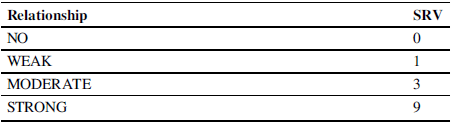
2) Mapping and selection: User requirements are mapped onto stakeholders to be involved in the participatory design of a social robot. During this mapping, the conformity of social robot dimensions on stakeholders is assessed by designers using the “Stakeholder Relationship Value (SRV)” based on the rating scheme given in Table 2. Total SRV for each stakeholder is calculated as the summation of weighted SRVs across all dimensions. Stakeholders with total SRV above a threshold value are selected for the participatory design. In this study, a threshold value of 50 was used. This decision is supported by the following rationale: with ten dimensions, the maximum possible score for a stakeholder is 450 (i.e., 9 points per dimension multiplied by 10 dimensions, each weighted by 5). The threshold of 50 represents a value over 10% of this maximum score and ensures that stakeholders with significant influence across all dimensions are not overlooked.
Relational rating in stakeholder selection (prevents marginal relevance from dominating stakeholder selection)

-
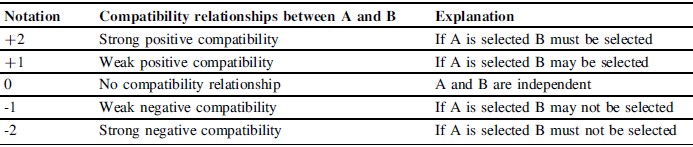
3) Compatibility check: In this step, designers further investigate interdependencies between stakeholders by adopting DSM approach. It is crucial because including one stakeholder could affect others, and these dependencies may have a profound impact on the overall participation of stakeholders in the design process. A modified DSM - called as the “Stakeholder Compatibility Table (SCT)” - is constructed by listing all stakeholders categorized in various domains along both axes of a square matrix. The SCT thus provides a clear view of which stakeholders interact and how they influence one another. Figure 3 depicts a partial view of the SCT for a service robot explained as a case study in Section 4.
In each cell of the SCT, dependencies are marked to indicate how stakeholders affect each other, based on the compatibility relationships listed in Table 3.
Compatibility relationships between any two stakeholders A and B

By adapting and merging Quality Function Deployment (QFD) with Design Structure Matrix (DSM), a systematic method is developed to match social robot dimensions with stakeholders in a participatory design process. QFD ensures that user requirements are associated with the relevant stakeholders, while DSM provides a clear understanding and representation of the interdependencies and interactions between different stakeholders. This combined approach enables design teams to include as many and diverse stakeholders as necessary and sufficient, in order to conduct participatory design of social robots.
Stakeholder Compatibility Table (SCT) for a service robot

3. Case study: service robot
This section presents a case study to explain using the stakeholder selection framework as a structured and repeatable method, thus validating its applicability for social robots in participatory design contexts.
The case study does not represent a new participatory design process conducted by the authors. Instead, it demonstrates a retrospective application of the proposed framework to an existing, well-documented case from the literature, allowing comparison between stakeholders selected ad-hoc and those identified systematically using the developed framework. The selected case study is a humanoid mobile shopping robot named TOOMAS that assists customers in home improvement stores by providing product information, navigation support, and recommendations (Reference Doering, Poeschl, Gross, Bley, Martin and BoehmeDoering et al., 2015). The TOOMAS robot was selected as a case study for several reasons. First, it represents a well-documented service robot developed through a participatory design process, with stakeholder involvement explicitly reported in the literature. Second, its application domain—customer assistance in a home improvement store—is representative of a broad class of service robots operating in public spaces. Third, the published study provides sufficient methodological detail to allow a retrospective application of the proposed framework, enabling a direct comparison between ad-hoc stakeholder selection and the systematic approach introduced in this paper.
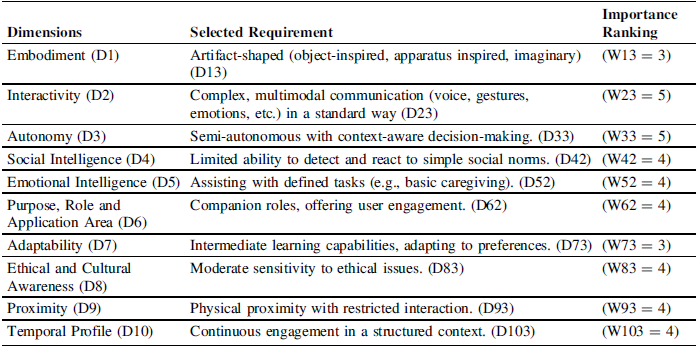
First, valuation and importance rankings are assigned for each social robot dimension as user requirements based on the related literature that provides information on the importance rankings (as symbolic values) regarding 10 social robot dimensions, for 5 social robot categories as educational robots, healthcare robots, service robots, entertainment robots, and special care robots (Reference NormanNorman, 2016; (Reference Tapus, Tapus and MataricTapus et al., 2009; Reference Tanaka and MatsuzoeTanaka & Matsuzoe, 2016; Reference Scheutz and CanningScheutz, 2013). Since TOOMAS is categorized as a service robot, rankings for service robots are used. Importance rankings were derived from prior empirical studies that categorize social robots by application domain and assess the relative importance of design dimensions (e.g., service robots). The values used in the case study are therefore literature-informed rather than arbitrarily assigned.
User requirements for social robot dimensions in the case study

Based on the above requirements, participatory design space and SCT are completed. Then, the SRV values are calculated for all stakeholders, and those exceeding the threshold value of 50 are identified. As a secondary validation, stakeholders are further assessed using SCT to ensure compatibility and consistency within the stakeholder network, resulting in the final selection of stakeholders for this case study. Partial views from the design space and SCT are already illustrated in Figure 1 and Figure 3, respectively.
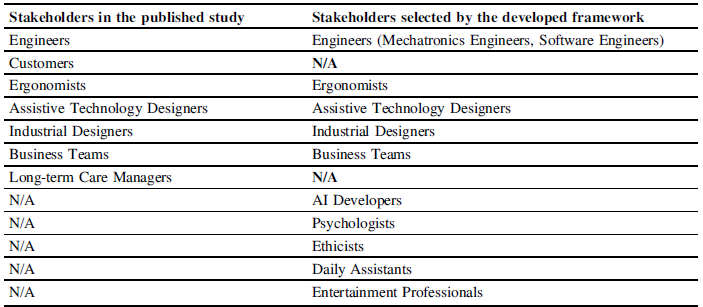
Comparison of stakeholders: The Total Stakeholder Relationship Value (SRV) for all stakeholders is calculated and those with a value greater than 50 are selected. These are engineers (Mechatronics Engineers, Software Engineers), AI developers, ergonomists, industrial designers, psychologists, ethicists, daily assistants, and entertainment professionals. However, to avoid potential omissions, stakeholders whose total SRV value is below 50 are cross-checked for compatibility to ensure no relevant groups were excluded. This comprehensive approach minimized the risk of overlooking key contributors and ensured that a broad range of stakeholders participated in the user-centered design of the robot. As a result of the compatibility check, identified professions deemed necessary for collaboration appeared as assistive technology designers and business teams, which were subsequently added to the list. However, while business teams were considered significant, long-term care managers were assessed to have no substantial influence and were therefore excluded. Table 5 depicts a comparative list of stakeholders selected by the developed formalism and those involved in the published study.
Comparison of the stakeholders for case study

Certain professions, such as psychologists, ethicists, daily assistants, and entertainment professionals, were also deemed critical for the participatory design process of service robots. Including experts from these fields enhances the robot’s ability to meet diverse user needs while ensuring that ethical considerations, emotional engagement, and practical usability are seamlessly integrated into the design. Customers are not explicitly included as stakeholders in the current implementation, as the framework focuses on professional expertise. However, the framework is designed to be extensible, enabling the inclusion of end users in future adaptations.
4. Conclusions, limitations and future work
This paper introduces the first step towards the methodological conceptualization for participatory design of social robots. While acknowledging the diversity of methods available for individual, specific robot designs existing in the literature, the contribution of the paper is the construction of a formal infrastructure that will systematize two important stages in participatory design. The first stage is gathering user needs and preferences, while the second being identifying and selecting stakeholders for further collaboration. The proposed formalism is based on defining and matching a ‘design space for social robots’ and an ‘expertise space for stakeholders’. The former includes features and characteristics of social robots, whereas the latter is used to represent the expertise of potential stakeholders. The main limitations of this study are twofold. First, the weighting scheme and threshold values may affect stakeholder selection, as reflected by the re-inclusion of some expert categories. Second, the framework relies on a predefined rating system and focuses mainly on professional experts, which can be further refined in future work. Future work will be focused on defining both spaces, developing the matching algorithm between them and implementing the methodology.





 Open access

