

The Late Formative (LF) period (250 BC–AD 590) in the southern Lake Titicaca basin has long been recognized as a dynamic time of social and cultural change (Hastorf Reference Hastorf, Stanish, Cohen and Aldenderfer2005; Janusek Reference Janusek2008; Lémuz Aguirre Reference Lémuz Aguirre2012; Stanish Reference Stanish2003). Earlier Middle Formative (MF) period temple centers such as Chiripa were closed by around 250 BC, and by the end of the LF, around ~AD 590, the earliest urban state in the region had developed at the site of Tiwanaku.Footnote 1 Between 250 BC and ~AD 590 new politico-religious centers developed at sites such as Khonkho Wankane, Kala Uyuni, and Tiwanaku (Bandy and Hastorf Reference Bandy and Hastorf2007; Janusek Reference Janusek2008, Reference Janusek2015; Figure 1a). For decades, the social and cultural changes that underwrote these dramatic developments were poorly understood. Extensive projects that began in the early 2000s at the LF centers of Khonkho Wankane and Kala Uyuni have produced excellent, high-resolution data that clarify and illuminate sociocultural dynamics during this time. Additionally, recent work by Marsh and others (Reference Marsh, Roddick, Bruno, Smith, Janusek and Hastorf2019) has helped resolve long-standing debates about the chronology of the LF by focusing on temporal inflection points when diagnostic decorated ceramic types appeared and disappeared in the occupations of LF sites.
(a) Map showing sites and geographic features discussed in text; (b) chronographic showing commonly used chronological schemata (images by Scott C. Smith).

The chronological refinements published by Marsh and others (Reference Marsh, Roddick, Bruno, Smith, Janusek and Hastorf2019) revealed a crucial gap in our understanding of the history of the southern Lake Titicaca basin (Figure 1b). The founding of the LF politico-religious centers and the development of diagnostic LF decorated ceramic styles occurred much later than originally believed, around ~AD 120. Very few excavations have encountered occupations in the southern basin that date to the 15-generation span of time between the closing of MF temple centers around 250 BC and the founding of the new LF centers around ~AD 120. Marsh and others (Reference Marsh, Roddick, Bruno, Smith, Janusek and Hastorf2019) have labeled this 370-year, poorly understood span of time the Initial Late Formative (ILF) period. Virtually no decorated ceramics were produced or imported to the region, and little documented public-scale architecture was built during this period.Footnote 2 This lacuna complicates efforts to understand the social processes driving the transition between the MF and LF periods, which is an undertaking that requires the reconstruction of social dynamics during the ILF period.
In this article, we discuss our recent excavations at the site of Iruhito, located along the east bank of the upper Desaguadero River, which drains Lake Titicaca (see Figure 1a). Iruhito was first occupied during the MF period and continues to be occupied today. Importantly, our work has documented a stratified sequence of occupations that span the ILF, providing a rare opportunity to study cultural change during this enigmatic period. We identify at least three distinct phases of occupation at Iruhito during the ILF, dating from roughly ~190 BC to ~AD 50 (start and end boundaries). This well-dated, stratified sequence allows us to track the pace and timing of cultural changes throughout the period.
Based on our analysis, we advance several arguments. First, the fine-grained sequence allows us to identify a set of material patterns that define the ILF period at Iruhito and to track the rhythms of changes in different domains of social life. We document shifts in the subsistence economy, potting techniques, interregional exchange and interaction, architectural patterns, and ritual. In some cases, we can document the tempo of change between established MF and LF material patterns, whereas in other material domains, the evidence suggests a pattern distinct from either MF or LF lifeways.
Second, the data indicate that, although monumental politico-religious centers throughout the southern Lake Titicaca basin were largely abandoned during this span, the occupation at Iruhito, a smaller settlement peripheral to these centers, expanded. Despite this expansion, there is little emphasis on monumentality, sculpture, or decorated ceramic styles. Rather than wide-scale abandonment of the southern basin during this period, we hypothesize that inhabitants of the southern basin largely rejected the public transcripts of MF monumental centers. We explore the implications of this idea for the founding of LF centers like Khonkho Wankane, suggesting that residents of these centers created a novel politico-religious strategy that cited characteristics from sites abandoned several centuries earlier and those hundreds of kilometers away to the north and south.
Finally, on a broader level, we suggest that this lacuna in our understanding of the southern Lake Titicaca basin has existed, in part, because researchers have tended to build histories by drawing on chronological frameworks and temporal ontologies that homogenize and obscure cultural variability. These conceptual frameworks tend to smooth local historical variability, resulting in an emphasis on regional continuity.
Background
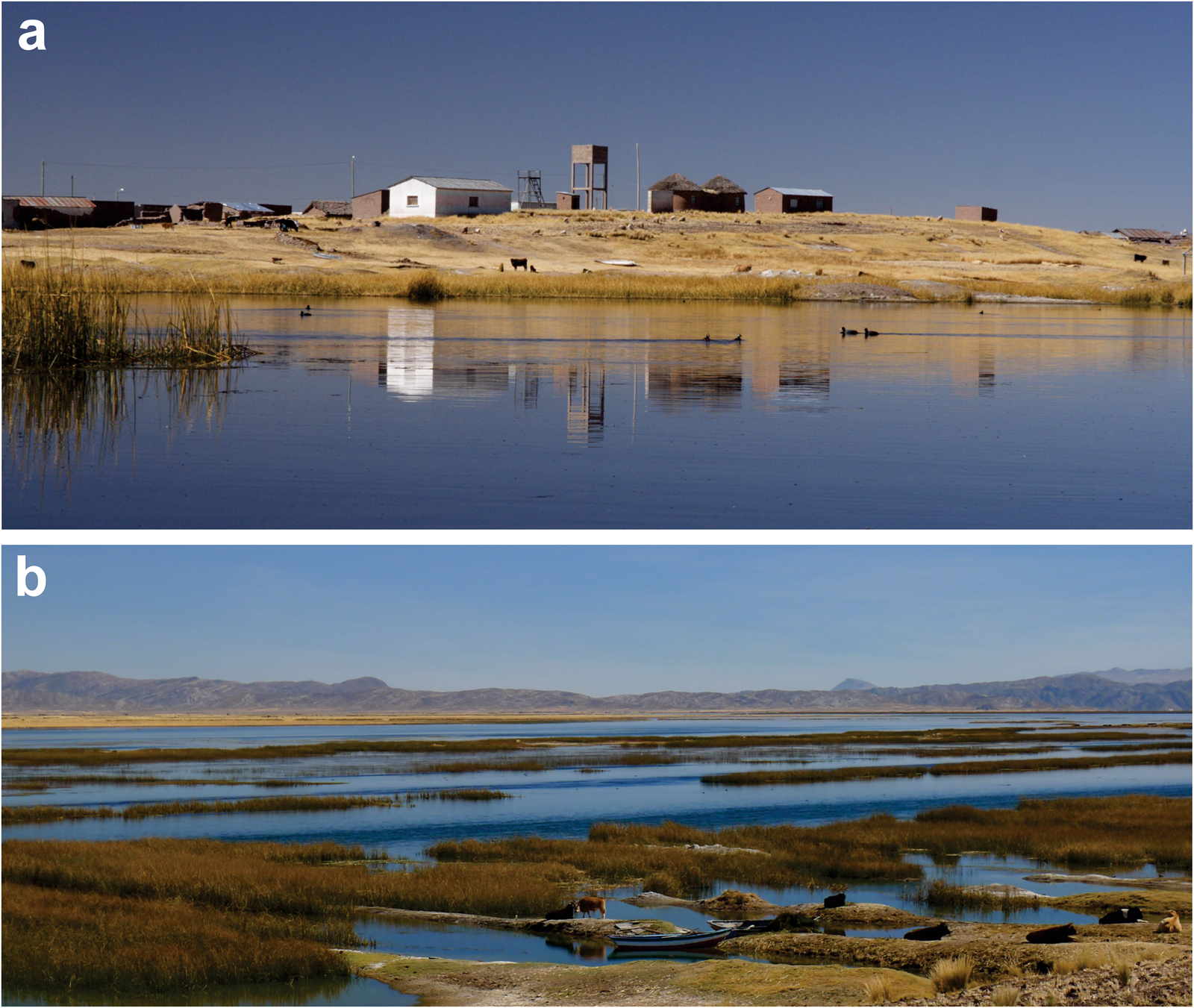
The site of Iruhito is located on the east bank of the Desaguadero River, which drains Lake Titicaca and flows south roughly 390 km to empty into Lake Poopó near the modern city of Oruro, Bolivia (Figure 2). In high-flow years, Lake Poopó overflows into the saline Lake Coipasa, and any remaining water eventually reaches the Uyuni Salt Flats in the central Altiplano. North of the confluence with the Mauri River near Calacoto, the Desaguadero River has a shallow profile, and the gradient is relatively low, which creates wide marshy areas through much of the northern section of the river (Baucom and Rigsby Reference Baucom and Rigsby1999:608).
(a) View of the Sector 4 mound at Iruhito from the river, facing east; (b) view of the Desaguadero River from Iruhito showing totora reed beds, facing west (photos by Scott C. Smith). (Color online)

The Desaguadero River and Lake Titicaca are home to two important genera of native fish, Trichomycterus and Orestias, and to approximately 45 species of aquatic birds (Binford and Kolata Reference Binford, Kolata and Kolata1996). Past and present riverine communities fished, hunted aquatic birds for both food and feathers, and collected bird eggs from nests in the reed beds for food. Two species of domestic camelids, llamas (Lama glama) and alpacas (Lama pacos), were also central to lifeways in the Lake Titicaca basin for millennia, providing meat for consumption, bones to create tools, wool for textile production, and dung for combustible fuel (Lynch Reference Lynch1983; Pérez Arias Reference Pérez Arias2007). Camelids were used as pack animals to transport resources in large caravans connecting different regions of the south-central Andes: they were a central focus of ritual activities at different moments in the past (Browman Reference Browman1974; Capriles and Tripcevich Reference Capriles and Tripcevich2016; Núñez and Dillehay Reference Núñez and Dillehay1995).
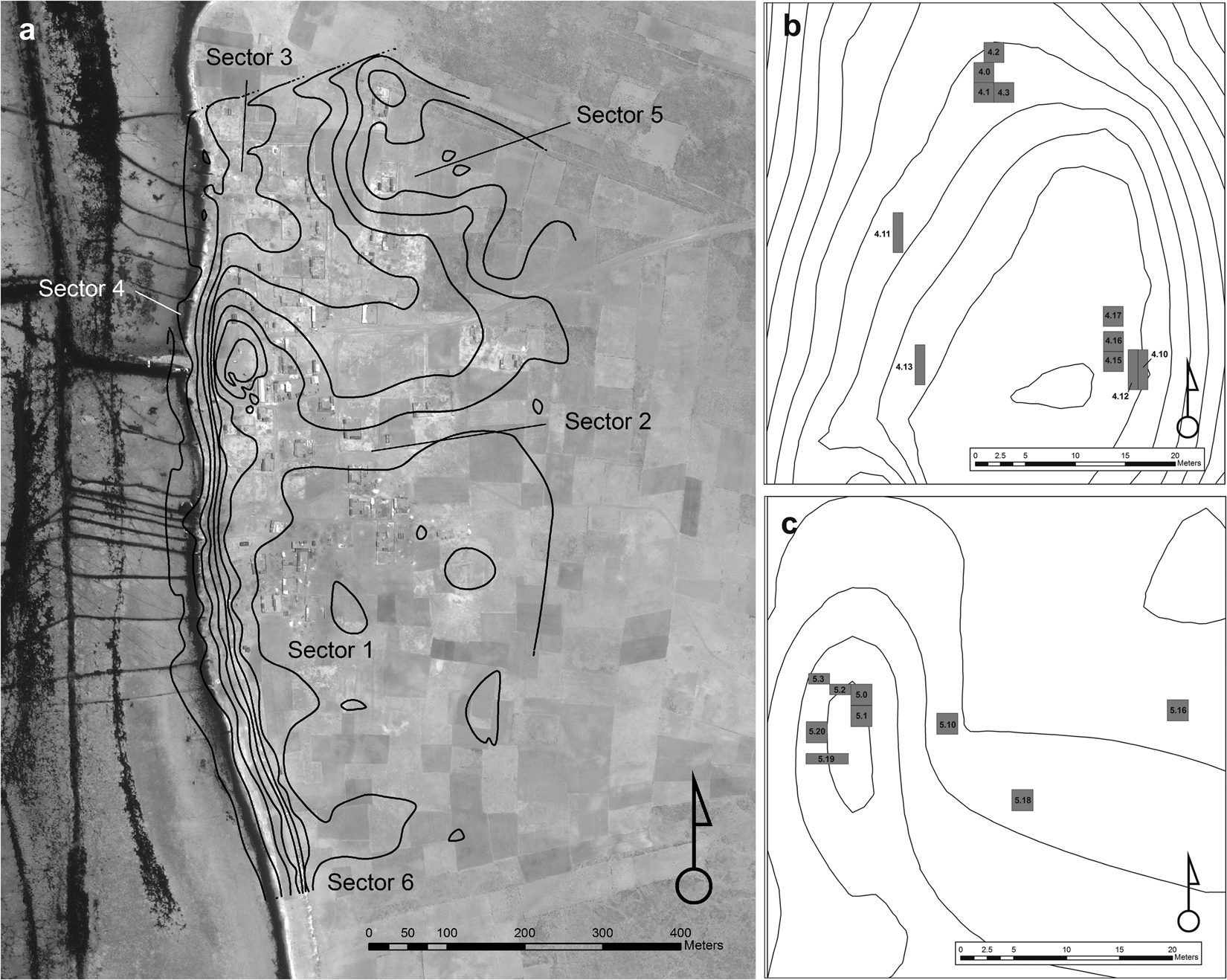
Archaeological deposits at Iruhito are spread across four mounds rising roughly 8 m above the current level of the river and encompassing a total area of about 12 ha (Figure 3a). The site is located within the modern town of Iruhito, which is one of the last remaining communities that identifies as Qut Suñi, or “people of the water.” Historically, these groups—labeled “Uru” by others—occupied lake and river zones in the region; Spanish colonial observers noted that they practiced a fishing, hunting, and gathering economy (Wachtel Reference Wachtel1990).
(a) IKONOS image of Iruhito showing 1 m contour intervals and the location of sectors; (b) select excavation units in Sector 4 and in (c) Sector 5 (maps by Scott C. Smith).

Until relatively recently, Iruhito had seen little formal archaeological investigation. The site was briefly visited in 1895 by Max Uhle and in 1931 by Arturo Posnansky (Janusek Reference Janusek2008:189; Posnansky Reference Posnansky1934). In 1991, Oswaldo Rivera Sundt from the Bolivian Instituto Nacional de Arqueología conducted a brief reconnaissance and excavated one test unit. In 2002, Proyecto Arqueológico Jach'a Machaca (PAJAMA), under the direction of John Janusek, began a systematic program of mapping and excavation. Four test units were excavated in 2002 and another seven in 2006 in areas of very dense ceramics on the ground surface in Sector 4 and Sector 5. In 2009, Proyecto Arqueológico Machaca-Desaguadero (PAMD)—directed by authors Adolfo Pérez Arias, Maribel Pérez Arias, and Scott Smith—conducted a systematic surface survey to register the location, chronological affiliation, size, and density of artifact scatters within the modern community of Iruhito. In 2011 this survey was expanded to an 8 km2 region surrounding the town. In 2012 and 2013, PAMD opened excavations in several sectors of the site (Figure 3b and 3c), excavating 13 units of 4 m2 each.Footnote 3 A. Pérez Arias has directed training excavations for students from the Universidad Mayor de San Andrés at Iruhito since 2010, excavating a total of eight units of 4 m2 (A. Pérez Arias Reference Pérez Arias2005, Reference Pérez Arias2013; M. Pérez Arias Reference Pérez Arias2005, Reference Pérez Arias2007; Smith et al. Reference Smith, Arias, Arias, Clarkson and Santoro2022).
Occupational History
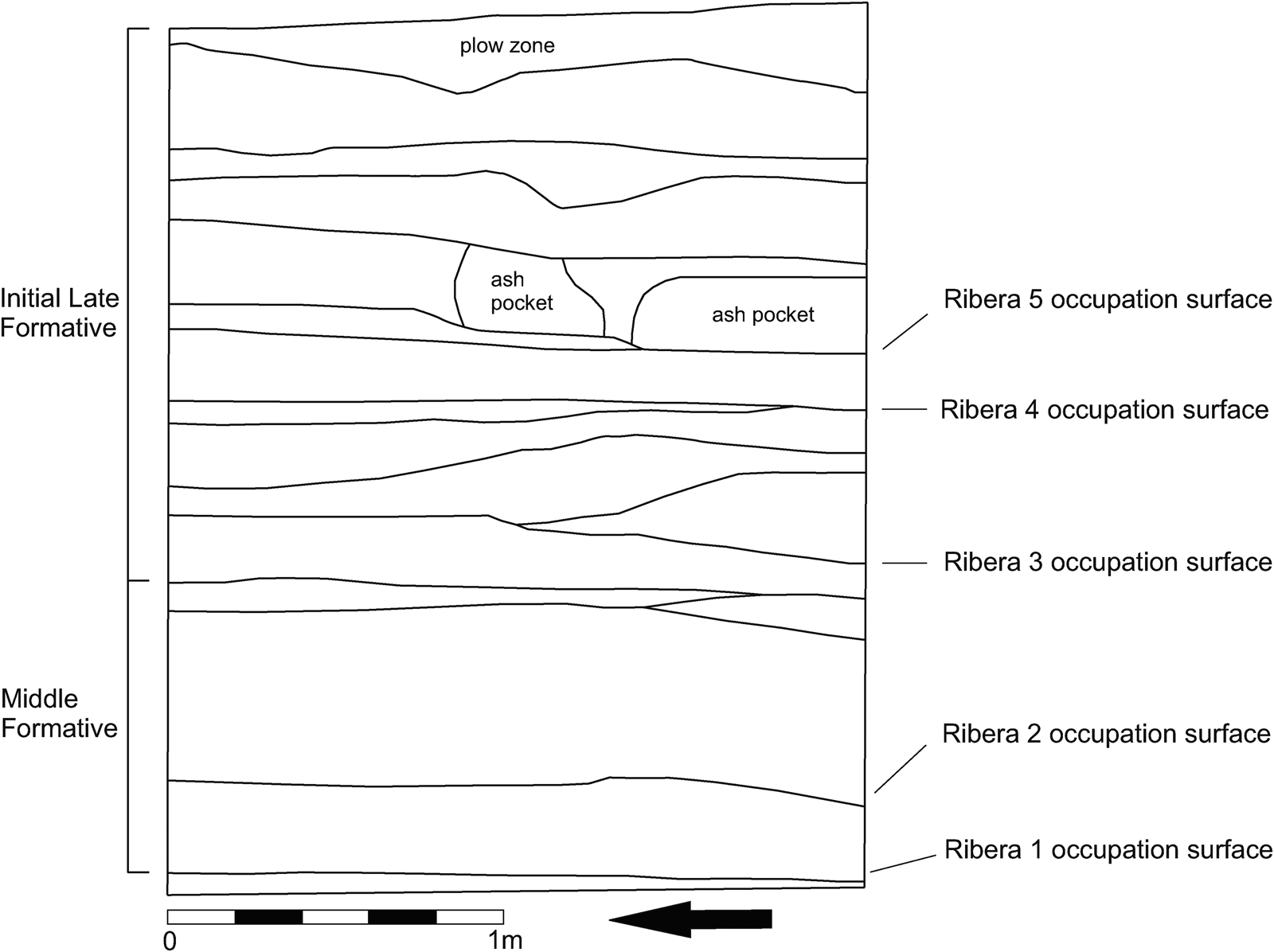
Our investigations of the Formative occupations of Iruhito have centered on the mound in Sector 4 (see Figure 3), which is also referred to as the Ribera Sector. The two deepest stratified occupations were encountered 2.41 m and 2.25 m below ground surface in units excavated in the northern sections of this mound (Figure 4). These two early use surfaces, referred to as the Ribera 1 and 2 occupations, contained relatively high quantities of ceramics that share characteristics with MF assemblages in the region.
Eastern profile of Unit 4.2 showing sequence of Sector 4 occupations, the basis for this part of the Bayesian model. The modeled MF phase has boundaries of ~630 BC (980–410 BC, 95%) and ~440 BC (710–200 BC, 95%). The modeled ILF phase has boundaries of ~190 BC (350–60, 95%) and ~AD 50 (50 BC–AD 230, 95%; image by Scott C. Smith).

Whereas we only encountered MF period occupation in the northern part of the Sector 4 mound, the ILF occupation was significantly larger overall. We documented ILF contexts in all units excavated in this sector and recorded at least three distinct ILF period occupations stretching across the Sector 4 mound. In the northern units, the earliest ILF period surface overlays several strata of fill containing MF-style ceramics. This surface was also detected 30 m to the south in Unit 4.17. Here we refer to this occupation as Ribera 3.
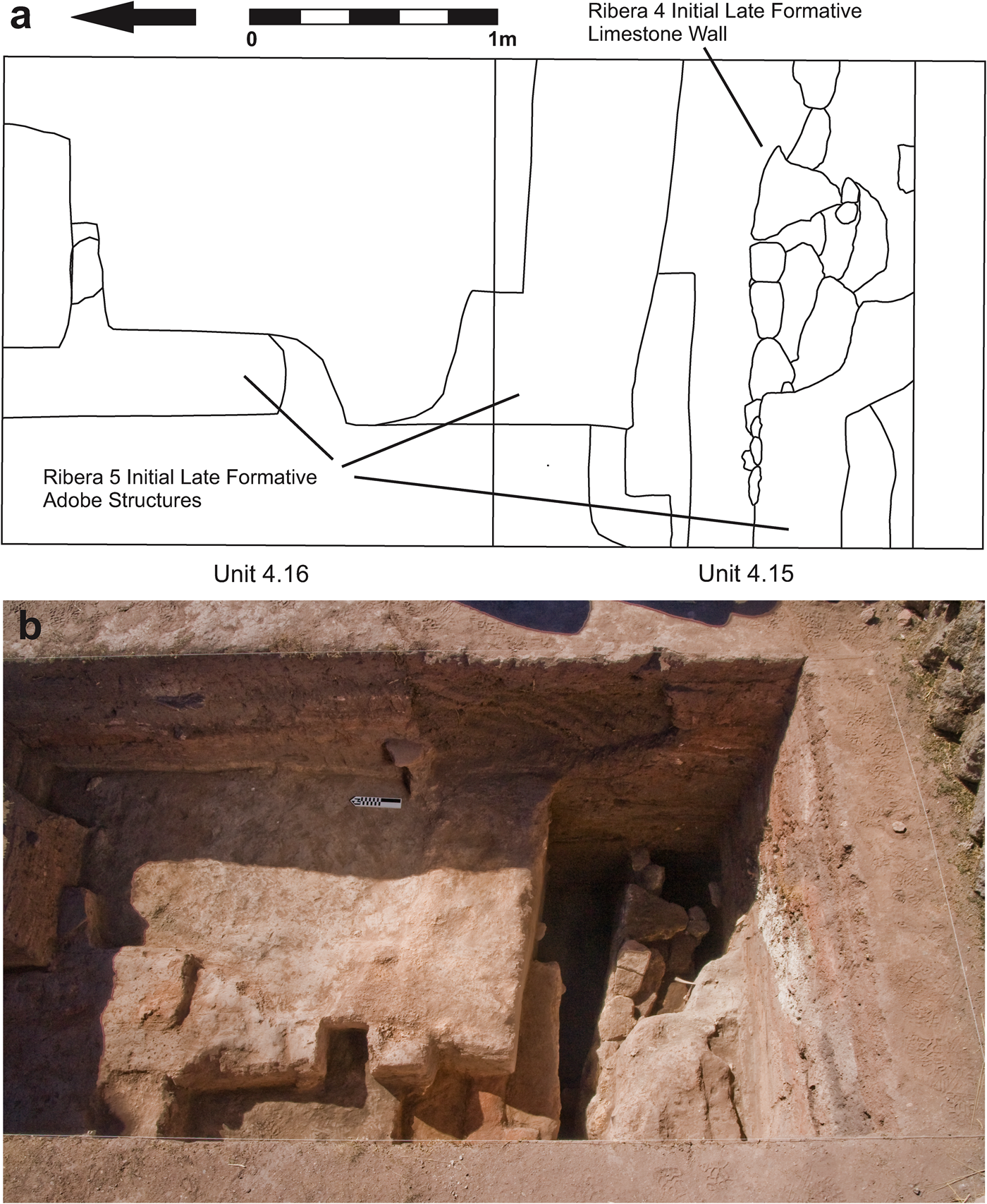
The subsequent Sector 4 occupation surface, referred to as Ribera 4, was encountered in all units excavated on the mound. In Unit 4.15 we exposed a substantial wall foundation of cut limestone blocks associated with this occupation comprising three courses, 30 cm in height and 55 cm in maximum width (Figure 5). We exposed a 2 m section of this wall, which ran west to east, crossing the southern half of the excavation unit oriented roughly 8° south of east.
Plan (a) and photo (b) of excavation Units 4.15 and 4.16, showing Initial Late Formative period architecture (image and photo by Scott C. Smith). (Color online)

This wall was overlain by a third ILF occupation surface, referred to here as Ribera 5, consisting of several adobe structure walls and a burned deposition, which we interpreted as a hearth (see Figure 5). The rectangular structure foundation wall was roughly 50 cm in width, with the western wall stretching at least 2.65 m in length and the southern wall measuring at least 1.95 m long. A small, thin (18 cm) L-shaped section of adobe wall abutted the larger wall foundation to the west. Additionally, the curving corner of a second adobe structure, 40 cm in width, was discovered in the southwestern corner of Unit 4.15. The hearth feature was located between these two structures, abutting both foundation walls. Evidence of a third adobe structure was encountered in Unit 4.12, immediately to the east.
At some point during the Ribera 5 occupation, a prepared clay loam surface was constructed in Sector 4, stretching across much of the mound and overlying the earlier occupations. Although we did not locate the northern and southern edges of this surface, we detected the western edge in Unit 4.11 and the eastern edge in Unit 4.10. The surface seems to have been rectangular in shape, stretching 23 m east to west and at least 35 m north to south. At some point in the first century AD, residents of the area ceased using this area of the site, and Sector 4 was deoccupied.
Bayesian Model of Radiocarbon Dates
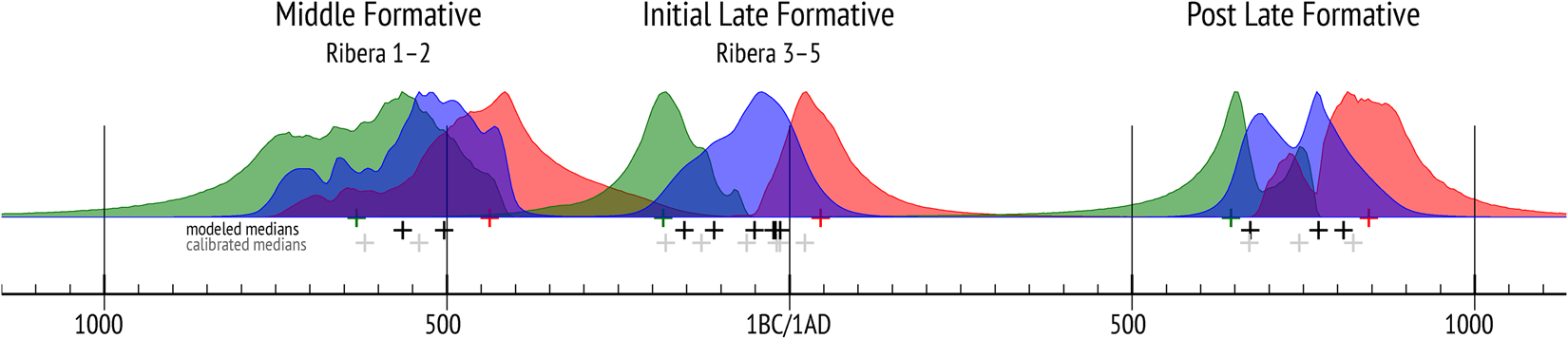
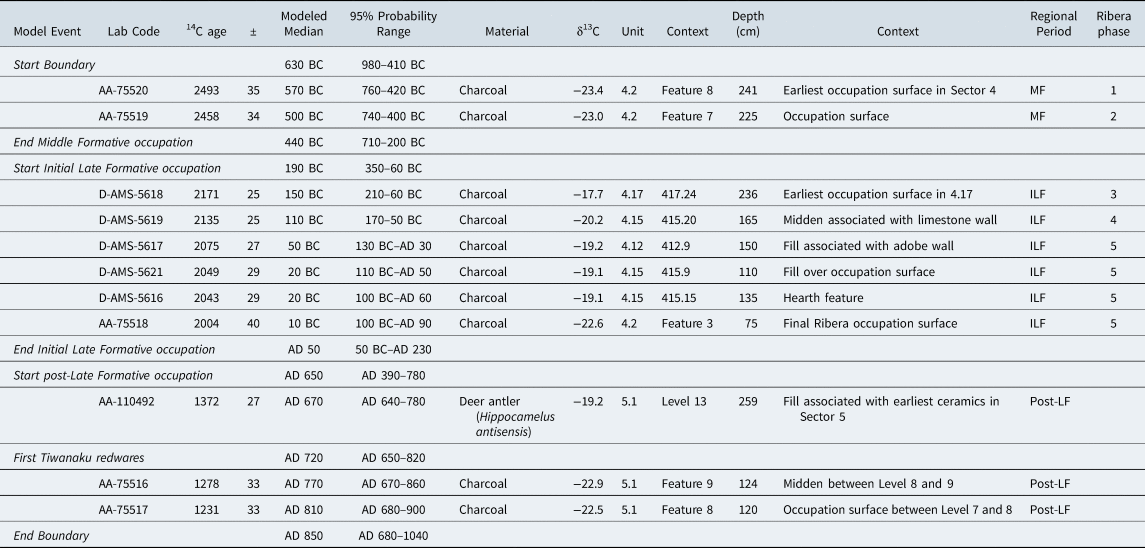
Drawing on the stratigraphic relationships discussed earlier and 11 radiocarbon dates, we built a Bayesian model of the MF, ILF, and post-ILF phases at Iruhito. Kernel density estimates (KDEs) of these phases are presented in Figure 6, results are in Table 1, and the OxCal code is in Supplemental Text 1. We report modeled results in italics with the median (~) and 95% probability ranges rounded by 10 years.
Kernel density estimates (KDEs) of occupation phases at Iruhito (blue) and starting and ending boundaries (green and red, respectively; Bronk Ramsey Reference Bronk Ramsey2017). Medians are shown below curves. Because each phase has few dates (two to four), boundaries are imprecise, and KDEs are only valid as visual guides. Table 1 lists the dates and modeled results. The OxCal code is in Supplemental Text 1 (image by Erik J. Marsh). (Color online)

Bayesian Model for Radiocarbon Dates.

Notes: Data calibrated using a mixed curve (Marsh et al. Reference Marsh, Bruno, Fritz, Baker, Capriles and Hastorf2018) that varies freely between IntCal20 (Reimer et al. Reference Reimer, Austin, Bard, Bayliss, Blackwell, Ramsey and Butzin2020) and SHCal20 (Hogg et al. Reference Hogg, Heaton, Hua, Palmer, Turney, Southon and Bayliss2020) and modeled based on stratigraphic relationships in OxCal 4.4 (Bronk Ramsey Reference Bronk Ramsey2009). Amodel = 100%. The δ13C values from Direct AMS (D-AMS) were measured on the prepared graphite using the AMS spectrometer so they cannot be used to investigate environmental conditions. The Arizona (AA) reports did not specify the method used for δ13C.
The two dates from Ribera 1 and 2 occupations model to ~570 BC (760–420 BC, 95%) and ~500 BC (740–400 BC, 95%), falling in the regional MF period. Above the Ribera 2 occupation there is a fill deposit, which may suggest temporary deoccupation of the site before the first ILF occupation surface. The model is imprecise here, suggesting anywhere from continuous occupation to a lapse of almost five centuries (0–480 years, 95%). The following phase, modeled with its own boundaries, is based on the following depositional sequence and depths: one date from Ribera 3 (236 cm), then one from Ribera 4 (165 cm), and, finally, a phase of four Ribera 5 dates (150 cm, 135 cm, 110 cm, and 75 cm), which overlay all earlier contexts (see Figure 4). We grouped Ribera 3–5 as the site's Initial Late Formative phase, which has boundaries of ~190 BC (350–60, 95%) and ~AD 50 (50 BC–AD 230, 95%).
After the ILF, there was a long gap before the next dated occupation, ~590 years (280–780, 95%). This occupation was in a different part of the site—inland a few hundred meters in Sector 5—which is also referred to as the Montículo Sector. These three samples were deposited in sequence and have medians of ~AD 670–810. The latter two are associated with Tiwanaku redwares. Detailed discussion of these later depositions is beyond the scope of this article.
Tempos of Change
In this section we explore the nature, pace, and timing of changes in different sets of material remains. Although we break the occupational sequence described earlier into distinct occupations using stratigraphy, architectural developments, and radiocarbon dates, it is not our intention to imply hard-and-fast boundaries in social life between these phases. Instead, we use the depositional sequence simply as a tool to explore both continuity and change in sociality over the course of the ILF. For the purposes of this article, we focus on evidence from ceramic, lithic, and faunal analyses. Our discussions for each of these material domains are necessarily brief and limited to patterns relevant to the purposes of this article.
Pottery
Changes in potting practices over the entirety of the Formative period are somewhat subtle in comparison to the more dramatic shift associated with the advent of Tiwanaku-decorated style pottery production in the latter decades of the sixth century AD. Researchers working on the southern Lake Titicaca basin have often used attribute-focused analysis, which we do as well, to track subtle shifts in paste recipes, surface treatment, and decoration over the course of the Formative period (Rivas-Tello Reference Rivas-Tello2016; Roddick Reference Roddick2009; Steadman Reference Steadman and Hastorf1999). Early Formative potters tempered their clays with thick grasses and sand, which often contain rounded, translucent quartz inclusions. Vessels were often thick walled and unslipped. During the MF period, potting practices changed subtly: grasses and sand were still used as a temper for pastes, but many pastes have angular, translucent quartz inclusions. MF pots are often highly burnished and sometimes decorated with slipped geometric, cream-on-red designs (Steadman Reference Steadman and Hastorf1999).
During the LF period, analysts tracked a decrease in the use of grass as a temper for pastes and an increase in the use of sand. Gone from these pastes are the large quartz inclusions characteristic of the MF. Late Formative period potters often added higher quantities of muscovite and biotite to their pastes: some pastes are so micaceous that a reflective effect is evident on the surface of the vessel. Surface treatments also changed between the MF and the LF periods. Rather than burnishing the vessel surface, as was common during the MF, LF period potters chose to quickly wipe the surface of vessels (Janusek Reference Janusek and Kolata2003; Roddick Reference Roddick2009; Roddick and Hastorf Reference Roddick and Hastorf2010). Decoration shifted from the geometric designs of the MF to a solid red band added to the rim of bowls and jars. Occasionally, LF potters decorated highly burnished vessels with a zonally incised, polychrome design (Marsh et al. Reference Marsh, Roddick, Bruno, Smith, Janusek and Hastorf2019). The recent Bayesian analysis of the appearance of these decorative styles reveals that both styles appear for the first time in the region around AD 120. Zonally incised styles were used for around a century, and more common red-rimmed decorative techniques were evident until around AD 420.
Here we present data documenting the changes in the key attributes at Iruhito from the MF period through the ILF period. We also present an analysis of the same variables from Smith's (Reference Smith2009) work at Khonkho Wankane, located 30 km to the east, for comparison. Given that Khonkho Wankane was founded around AD 120, shortly after the Sector 4 use of Iruhito ceased around AD 50, combining the analyses provides a long-term view of changes in potting practices throughout the Formative in the upper Desaguadero Valley.
As expected, fiber-tempered pastes predominated at Iruhito during the MF (Ribera 1 and 2 occupations), comprising 70% of the sample. This pattern continued into the ILF (Table 2). Mineral tempering began to increase during the Ribera 4 occupation, ~150 BC (the median of the associated radiocarbon date), but did not predominate in pastes until the Ribera 5 occupation, ~50–10 BC, when mineral-tempered pastes constituted 70% of the assemblage. By the subsequent LF1 phase at Khonkho Wankane, fiber tempering had largely disappeared from potting practices in the upper Desaguadero Valley. Micaceous pastes, which some consider to be key markers of nondecorated LF-period ceramics, were relatively rare overall during the ILF at Iruhito, but they became more common during the later part of the sequence (increasing from 1% of the assemblage to 19%). These techniques became significantly more prevalent during the LF1 and LF2 phases at Khonkho Wankane, when pastes with mica inclusions constituted almost half of the assemblage during LF1 and the majority of ceramics during LF2. However, it is unclear whether this trend reliably tracks regional changes in all assemblages, as Janusek (Reference Janusek and Kolata2003) suggests, because pastes also vary with vessel form: pastes for LF cooking vessels tend to be micaceous, whereas those of storage vessels tend to be fibrous (Marsh Reference Marsh2012).
Temporal Changes in Ceramic Attributes from the Middle Formative through the Late Formative Periods in the Upper Desaguadero Valley.

Surface treatment is the other important element used to distinguish nondecorated MF and LF assemblages. Although at other sites in the region we see a shift from burnishing to more expedient techniques such as wiping or hand-smoothing, the data from Iruhito reveal a more complex pattern (Supplemental Table 1). The majority of sherds in the MF sample from Iruhito were finished by hand-smoothing (67% exterior and 90% interior). In contrast to MF assemblages from other sites, full burnishes were rare in the Iruhito assemblage. These patterns shifted significantly at the beginning of the ILF when burnishing became a much more common technique. During the Ribera 3 occupation, 39% of exteriors and 18% of interiors were fully burnished, whereas another 17% of exteriors and 18% of interiors were partially burnished. This pattern generally continued through the ILF, but by the Ribera 5 occupation, the proportions of ceramics with full or partial burnishes began to decline. During the LF1–2 phases at Khonkho Wankane, burnishing was exceedingly rare as a surface treatment technique, and most specimens were either hand-smoothed or wiped with a cloth, mirroring patterns evident at other sites in the region. Wiping was relatively uncommon at Iruhito but did increase somewhat in prevalence, especially on vessel interiors, during the Ribera 4 and 5 occupations.
In general, patterned decoration was relatively uncommon during the LF period. However, decorated vessels such as Kalasasaya red-rimmed and zonally incised vessels were temporally diagnostic of the LF period across the region. For example, at Khonkho Wankane, decorated sherds comprised less than 5% of the ceramic assemblage during the LF1–2 phases. However, at Iruhito, we did not encounter any evidence of these decorative designs from the ILF occupations. Decorative additions to vessels at Iruhito during this time were limited to brown or light brown slips on some vessels. These data agree with Marsh and others’ (Reference Marsh, Roddick, Bruno, Smith, Janusek and Hastorf2019:811) generalization that “during this long span [the ILF], there was virtually no decorated pottery made or imported into the region.”
Lithics
A wide range of lithic raw material was evident at Iruhito during the Formative periods, but the most important materials seem to have been andesite, sandstone, quartzite, and chert (Table 3). These four materials comprised at least 88% of the lithic assemblage in both the MF and ILF contexts; andesite was the most prevalent material, comprising just over 30% of the MF assemblage and increasing to more than 60% during the Ribera 4 occupation of the ILF period. Within this broad continuity, we believe there are some important shifts in the relative proportion of the different raw material types over time. The importance of both quartzite and chert decreased strongly from the MF to the ILF, while the relative importance of sandstone and andesite increased.
Lithic Raw Material Data from Iruhito.

We are in the initial stages of geochemical analysis of samples from Iruhito, but we can form a few hypotheses based on published data on raw material sources. Quartzite is locally available at Iruhito, and although there are few documented chert outcrops in the region, the most prominent one is in the Taraco range to the north, which forms the Taraco peninsula and divides the Tiwanaku and Katari Valleys (see Figure 1a; Flores Pérez Reference Flores Pérez2022). The most prominent ancient quarries for andesite are located along the foothills of the volcano Ccapia and on the Copacabana peninsula, both located on the north side of the smaller Lake Wiñaymarka. Sandstone was likely quarried from the Corocoro range, which separates the upper Desaguadero Valley from the Tiwanaku Valley. During the LF1–2 phases, sandstone used to create monoliths at Khonkho Wankane was quarried from a site called Lawakollu (Janusek Reference Janusek, Alt and Pauketat2020), and it is possible the sandstone recovered at Iruhito came from the same quarry.
Although andesite and sandstone were both present at Iruhito during the MF, they were more prominent in lithic assemblages at the beginning of the ILF. In contrast, quartzite and chert decreased at this time, with chert almost vanishing from the sample—suggesting a shift in interaction networks and social relationships between the MF and ILF, with residents of Iruhito deemphasizing both local materials and chert from the Taraco range while intensifying interaction with sites near andesite and sandstone sources. Flores Pérez (Reference Flores Pérez2022) also argues for a shift in interaction networks drawing on her analysis of debitage from the MF and ILF periods at Iruhito.
There are some similarities in these data to patterns at other sites. For example, Browman (Reference Browman1998) documented the presence of andesite and limestone in his analysis of lithic material from the MF occupations at Chiripa on the Taraco peninsula; however, he sees less of a role for local materials than we suggest is the case for Iruhito during the MF. In contrast, the LF1–2 phases, which postdate the Iruhito occupation, seem to exhibit variability. Hu (Reference Hu2011) reports a general continuity in resource utilization during LF1–2 occupations at Kala Uyuni on the Taraco peninsula, as well as a strong emphasis on local materials such as quartzite. However, Smith (Reference Smith2016), drawing on work by Giesso (Reference Giesso, Janusek and Martínez2006), argues that LF period residents at Khonkho Wankane participated in extensive exchange networks which brought obsidian from five different sources, basalt from the central Altiplano, and andesite to the site. All told, it is difficult to see the ILF data from Iruhito as representing a transition between regional MF and LF patterns.
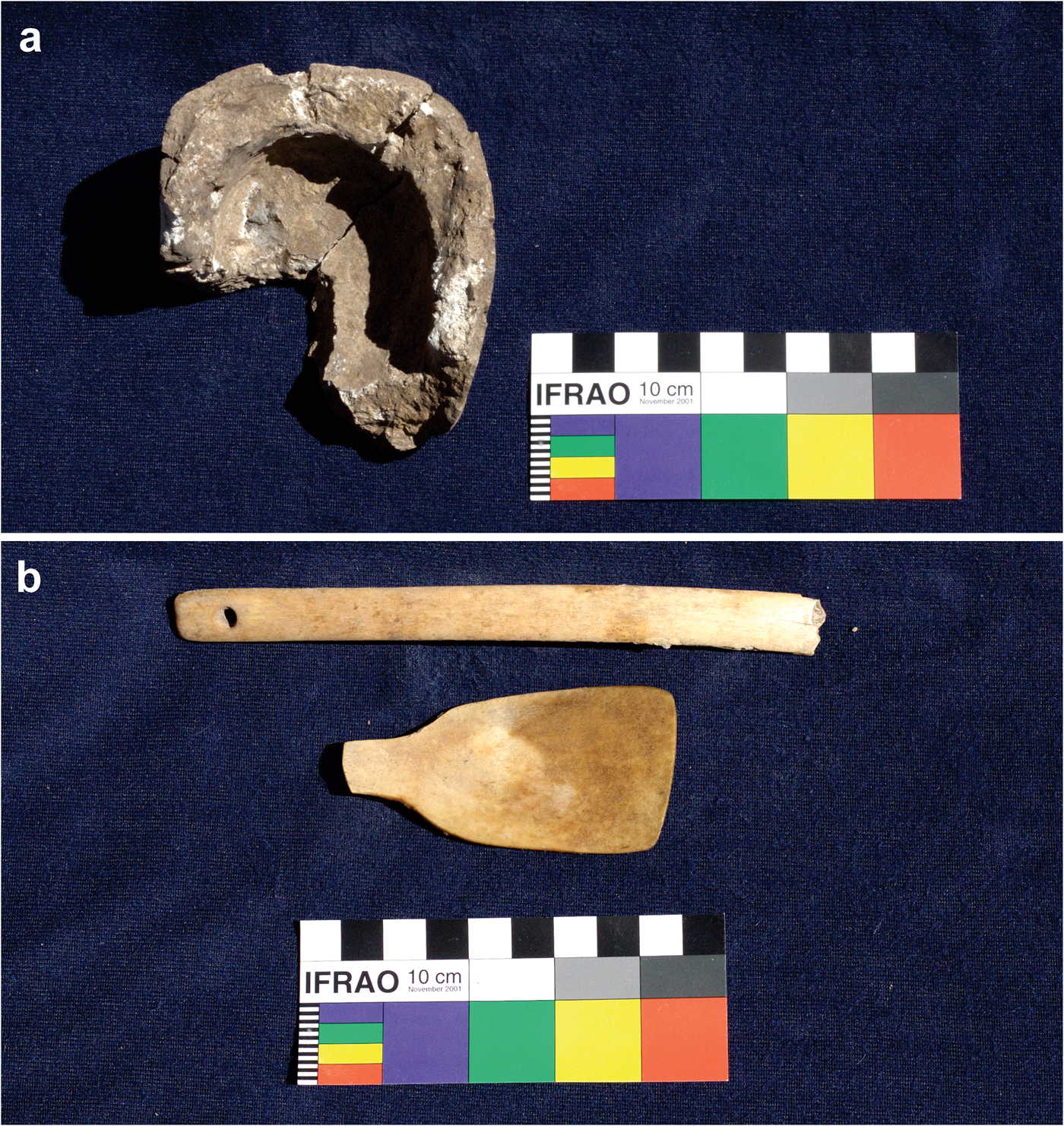
Significantly, we also encountered small limestone blocks in ILF contexts at Iruhito. Blocks like these are fairly common at LF period sites in the southern Lake Titicaca basin, including Tiwanaku, Lukurmata, Kala Uyuni, and Khonkho Wankane. Compositional analyses conducted on samples from Kala Uyuni and Khonkho Wankane reveal that the blocks are calcium oxide, known as quicklime, or cal viva (Hu Reference Hu2011). Elsewhere, we suggest that these blocks played an important role in the processing and curation of human remains, specifically during the LF period, when evidence suggests there was an emphasis on mobility and interregional interaction via camelid caravans (Pérez Arias et al. Reference Pérez Arias, Arias and Smith2017; Smith and Pérez Arias Reference Smith and Arias2015). Human remains were coated with hydrated lime (Ca(OH)2) to help clean the bones and then preserve them when the coated bones were exposed to air, thereby reverting the mixture to lime plaster (CaCO3). The Iruhito data constitute the earliest evidence for this mortuary process yet recovered in the region, predating the evidence at Khonkho Wankane and other sites by some three centuries. We encountered several block fragments, including a nearly complete example (Figure 7) that dates to the Ribera 4 occupation, as well as a worked llama bone spatula that fits neatly into the quicklime block, suggesting it was used to scrape quicklime powder from the block. Whereas at Khonkho Wankane we did not recover any large human bones covered in lime plaster but only small bones (which led us to suggest that the larger bones were being removed from the site), at Iruhito we documented a rib and two femur fragments coated in lime plaster (Pérez Arias et al. Reference Pérez Arias, Arias and Smith2017).Footnote 4
(a) Cal block encountered in Unit 4.15 associated with the Ribera 4 occupation; (b) camelid bone spatula (photos by Scott C. Smith). (Color online)

Fauna
The most detailed comparative analyses of fauna use during the MF and LF periods have been conducted on the Taraco peninsula. Moore (Reference Moore, Miller, Moore and Ryan2011) and Capriles Flores and colleagues (Reference Capriles Flores, Domic and Moore2008) describe in depth the sustained importance of both camelids and fish over the Formative and Tiwanaku periods in assemblages from the Taraco peninsula (Bruno et al. Reference Bruno, Capriles, Hastorf, Fritz, Marie Weide, Domic and Baker2021). Capriles Flores and coworkers (Reference Capriles Flores, Domic and Moore2008) note that, although fish were generally ubiquitous, their importance fluctuated. Particularly relevant for this article, the most significant decrease in the use of fish species by sites on the Taraco peninsula was noted at the beginning of the LF period. For the upper Desaguadero Valley, M. Pérez Arias (Reference Pérez Arias2005, Reference Pérez Arias2007), in an earlier analysis of contexts at Iruhito, documented broad continuity in the presence of camelids between Formative and Tiwanaku periods and a decrease in wild species with the arrival of decorated Tiwanaku redwares at Iruhito ~AD 720 (650–820 AD, 95%; Table 1).
The fine-grained sequence from Iruhito provides an opportunity to refine our understanding of the changes in faunal resource use between the MF and ILF (see also Smith et al. Reference Smith, Arias, Arias, Clarkson and Santoro2022). Broadly, the macrofauna data illustrate the sustained importance of both camelids and fish throughout the Formative period; however, we can begin to track a shift in emphasis from aquatic to terrestrial resources over the course of the sequence (Supplemental Table 2). There was a strong decrease at the beginning of the ILF period in the importance of fish and then another strong decrease at the beginning of the Ribera 5 occupation. As fish decreased, camelid bones increased. The camelid NISP proportion increased between the MF and ILF periods and then rose significantly at the beginning of the Ribera 5 occupation, as did the MNI metric. The increasing importance of camelids accelerated during the LF1–2 periods at Khonkho Wankane, where these remains constituted more than 98% of the macrofauna assemblage. Our efforts to process soil samples are ongoing, but preliminary analysis of microfauna remains from heavy fractions of floated samples lends support to the identified macrofauna patterns (Supplemental Table 3).
In summary, the transition between the MF and LF, at least in the upper Desaguadero Valley, partly reflects a shift in the importance of particular species of animals. Camelids came to play a much more central role in the lifeways of residents of Iruhito in the later part of the sequence, a pattern that continued to intensify during the LF1–2 periods. Although the occupation at Iruhito grew during the ILF as suggested by the architectural patterns, the elevated importance of camelids suggests increased movement and connection with other regions, likely as the role of caravans became more central to social life (Smith et al. Reference Smith, Arias, Arias, Clarkson and Santoro2022). Significantly, osteometric identifications by Gasco and Marsh (Reference Gasco and Marsh2015) of a sample of camelid bones at Khonkho Wankane suggests the presence of castrated llamas, which they hypothesize, drawing on ethnographic analogy, were used for long-distance caravans.
Material and Social Change
Armed with a well-dated stratified occupational sequence spanning the ILF and preliminary analyses of material culture from this period, we can begin to reconstruct the timing and nature of material patterns and social change from the MF through the ILF and into the LF1 and LF2 periods. At Iruhito the beginning of the ILF brought a significant expansion in settlement, with occupation spreading from the northern sections of the mound to encompass the entire hill during the ILF. At the same time, the faunal and lithic data suggest that the onset of the ILF was characterized by much more interaction with other regions and a different arrangement of interaction networks than in the MF. The increase in the relative importance of camelids suggests that caravans and exchange became more central to lifeways at the beginning of the ILF. Similarly, the decrease in the use of quartzite, a locally available raw material, argues for an intensified focus on interaction with other sites in the region. The decrease in relative importance of chert and the increased prevalence of sandstone and andesite suggest a shift in interaction networks from communities near chert sources in the Taraco range to communities near andesite sources in the area of Ccapia and the Copacabana peninsula and communities near sandstone quarries in the Corocoro range. These patterns intensified over the course of the ILF period and into the LF1 period (Smith Reference Smith2016).
Iruhito also provides the earliest example of a set of practices that we suggest are a hallmark of the LF in the southern Lake Titicaca basin: the use of calcium oxide, removed from small blocks and cylinders, in mortuary practices. Elsewhere we argue that the development of these practices is related to the increase in the importance of camelid caravans and mobile populations. It makes sense, then, that we would see the evidence of this practice at Iruhito coinciding with increased indicators of intensified interaction and the increased prevalence of camelids.
Patterns in potting practices were complex and do not fit neatly to expectations for a transitional period between established MF and LF patterns. Fiber-tempered pastes, which were common during MF occupations at Iruhito and other sites in the region, continued to dominate paste recipes through the beginning of the ILF. Mineral tempers, which mark LF assemblages at other sites, began to increase in prevalence during the Ribera 4 occupation but did not become the dominant temper in paste recipes until the Ribera 5 occupation. The highly micaceous pastes, which have often been interpreted as a hallmark of LF undecorated ceramics (Janusek Reference Janusek and Kolata2003), were generally quite rare at Iruhito. They were more prominent in LF assemblages at Khonkho Wankane, especially during LF2. Surface treatment practices were distinct from patterns evident at other Formative sites in the region, suggesting either that these practices were generally quite localized or that, regionally, the ILF period was characterized by distinct trends in surface treatment techniques. In sum, although the analysis of generalized paste recipes seemed to illustrate a transition from the use of fiber to the use of mineral for tempers, which might be expected of a transitional period between the MF and LF, analyses of other ceramic attributes suggest a distinct constellation of potting practices at Iruhito during the ILF.
Conclusions
The recent definition of the ILF forces us to think critically about the models of historical development we commonly use to understand social change in the southern Lake Titicaca basin. This 15-generation gap challenges models that rely on continuity—demographic, cultural, or political—between the two periods. The data from Iruhito begin to shed light on this poorly understood time. At one level, we have been able to reconstruct the tempo of change in material patterns that define the transition between these two well-understood periods. However, the data also suggest to us that modes of sociality during the ILF were distinctly different from earlier MF and later LF patterns and that conceptualizing the ILF as a transitional cultural period or a hiatus would obscure our understanding of these social dynamics.
We believe that it is highly significant that this long period of time is characterized by a marked decrease in known monumental architecture, sculpture, and decorated ceramics in the southern Lake Titicaca basin. This gap coincides with the development, expansion, and subsequent contraction of Pukara in the northern Lake Titicaca basin (Klarich Reference Klarich2005; Klarich and Román Bustinza Reference Klarich, Bustinza, Vranich, Klarich and Stanish2012). Marsh and colleagues (Reference Marsh, Roddick, Klarich and Hastorf2020) have begun exploring several scenarios that may explain these coinciding changes, including migrations to the northern basin at the beginning of the ILF and from Pukara to Tiwanaku at the end of the ILF.Footnote 5 Although at first glance, this gap might prompt us to envision the depopulation of the southern Lake Titicaca basin during the ILF or at least the dissolution of nucleated settlements, Iruhito was a growing settlement. The MF Sector 4 occupation expanded from the northern sections of the riverside hill to encompass the entire hill. At the same time, we see an expansion and realignment in regional and interregional interaction networks and a new emphasis on camelids.
The juxtaposition of these seemingly contradictory scenarios—the absence of monumentality and decorated materials regionally and the expansion of occupation and influence at Iruhito—suggest to us an alternative explanation: during the ILF the people of the southern Lake Titicaca basin rejected the public-oriented practices and displays of the MF and built new modes of sociality that explicitly avoided the earlier focus on public rituals and mortuary cults of powerful ancestral lineages (Hastorf Reference Hastorf2003). The evidence for ritual that we find at Iruhito during the ILF comes in the form of the white calcium oxide cubes used to preserve human remains. This is a much more intimate set of practices than those that characterized MF monumental centers.
After ~AD 120, perhaps coinciding with a drying climate (Bruno et al. Reference Bruno, Capriles, Hastorf, Fritz, Marie Weide, Domic and Baker2021), interaction networks shifted again, and caravan circuits were realigned, opening social space for the development of new settlements at inland locations (Smith Reference Smith2016). In the upper Desaguadero Valley, the most important center was Khonkho Wankane, which was founded 30 km to the east shortly after Iruhito was deoccupied. The definition of the ILF as a period characterized by the rejection of public-oriented construction and art forces us to think about the founding of the LF monumental centers in new ways. The founders of Khonkho Wankane drew on diverse cultural practices in creating a novel set of socio-religious and political relationships. These individuals cited the circular architectural styles of the central Altiplano, the processing of human remains using quicklime from Iruhito, and the monumental sunken court forms that were in use several hundred kilometers to the north at Pukara and several centuries earlier in the southern Titicaca basin at sites like Chiripa and Kala Uyuni (Smith Reference Smith2016). We argue that this practice of citing other traditions, distant in time and space, constituted an adroit politico-religious strategy designed to draw together diverse peoples in the context of a more mobile, highly connected time.
It is quite possible that the data from Iruhito are idiosyncratic, revealing a site that does not fit expectations, rather than a regional pattern. We present the foregoing as a hypothesis awaiting testing through the documentation of other sequences dating to the ILF in the southern Lake Titicaca basin. However, the evidence presented here does illustrate the difficulty created by assumptions embedded in chronological frameworks we commonly use to understand the past. First, our frequent reliance on aesthetics, monumentality, and especially decorated ceramics to establish chronological phases, although productive, runs the risk of obscuring broader social processes (Sayre Reference Sayre, Swenson and Roddick2018). The ILF, spanning almost four centuries, was rendered largely invisible because of the lack of these attributes. Even in the LF, when decorated ceramics are present, they constitute less than 5% of ceramic assemblages. The use of decorated ceramics, then, to create chronological phases, which are often then understood as representing broad patterns in social life, obscures other modes of sociality. Public aesthetics, monumentality, and decorative wares represent the “public transcripts” of life in the Titicaca basin past. Overemphasis of these domains draws us to overlook other forms of interaction and cultural production—the “hidden transcripts” of social life (Scott Reference Scott1990).
This situation is helped somewhat by the creation of nondecorated ceramic sequences, but increasingly these sequences seem to be somewhat fluid and tied to specific regions or potting networks. Indeed, our work at Iruhito has traced the use of paste recipes characteristic of the LF period spanning a millennium and crossing multiple phases in regional chronological frameworks: this analysis suggests that we need to be careful with the use of surface survey alone in the creation of regional histories (see Roddick et al. Reference Roddick, Bruno and Hastorf2014). In the case of Iruhito, however, our consideration of the tempo of change in multiple material domains enables us to reconstruct a more robust view of social life during the ILF (Roddick Reference Roddick, Swenson and Roddick2018; Sayre Reference Sayre, Swenson and Roddick2018). Consideration of only paste recipes might lead us to see the period as “transitional,” but by examining the distinct tempos of change of different ceramic attributes, lithic data, and fauna resource use we are able to detect patterns that seem to distinguish the ILF from the MF and the LF. Thus, our view is that the ILF is neither a “transitional” period between two well-studied periods, nor is it a “hiatus” when people abandoned the region. The evidence here suggests that the ILF was characterized by a distinct mode of sociality wherein decorative aesthetics and monumentality were rejected.
At present, however, there is no place for something like the ILF in our temporal frameworks. The “progression chronotope” (Joyce Reference Joyce2002; Roddick Reference Roddick, Swenson and Roddick2018:66), which orders our narratives of the past around a sense of increasing complexity building toward the florescence of the state, impedes our ability to conceptualize diverse social forms. As Roddick (Reference Roddick, Swenson and Roddick2018:66) puts it, “Drawing all material culture into a directional temporality . . . constrains our explanatory models.” The problems accompanying this temporal framework are widespread. In the Lake Titicaca basin, the progression chronotope has similarly structured evolutionary explanations of the emergence and expansion of Tiwanaku as a highly stratified urban social formation (Smith Reference Smith2016:9–15). In contrast, recent work has demonstrated the highly contingent nature of Tiwanaku formation and political expansion (Smith Reference Smith2016; Smith and Janusek Reference Smith and Janusek2014). Increasingly, scholars working in other regions of the Andes are drawing on refined temporal data to question past chronological assumptions and develop more temporally nuanced understandings of social change (see Sayre [Reference Sayre, Swenson and Roddick2018] for Chavin and the “Early Horizon”).
Acknowledgments
We are indebted to the community of Iruhito for welcoming us and collaborating with us on this research. We thank the Unidad Nacional de Arqueología of Bolivia for their support and facilitation of our research (permit no. 015/2013). We would especially like to thank the late John Janusek, who directed research at Khonkho Wankane and early work at Iruhito. Thanks as well to Víctor Plaza, Carlos Lémuz, Arik Ohnstad, Andrew Roddick, María Bruno, Elizabeth Klarich, Christine Hastorf, Kodiak Aracena, Antonio Pacheco, Ciriaco Inda, and Estela Inda. We are also grateful to four anonymous reviewers for their feedback.
Funding Statement
Work by Smith at Iruhito and Khonkho Wankane was supported by the Curtiss T. & Mary G. Brennan Foundation; Sigma-Xi, The Scientific Research Society (Grants-in-Aid of Research program); the University of California, Riverside (Humanities Research Grant); and Franklin & Marshall College (COG Faculty Research Grant and the Office of College Grants Resource Fund). Work by A. Pérez Arias was supported by the Universidad Mayor de San Andrés. Work by M. Pérez Arias was supported by the University of Pittsburgh. Early work at Iruhito was also supported by a grant from the National Science Foundation to John Janusek (BCS-0514624). Funding for open access was provided by the Franklin & Marshall College Open Access Publishing Fund.
Data Availability Statement
All objects analyzed for this article are stored in the communities of Iruhito and Khonkho Wankane. Data derived from analyses of these objects are available by contacting the corresponding author.
Competing Interests
The authors declare none.
Supplemental Material
For supplemental material accompanying this article, visit https://doi.org/10.1017/laq.2024.26.
Supplemental Text 1. OxCal code for Bayesian model of dates from Iruhito.
Supplemental Table 1. Temporal Changes in Surface Treatment of Ceramics from the Middle Formative through the Late Formative periods.
Supplemental Table 2. Results of Analysis of Macrofauna from Iruhito.
Supplemental Table 3. Preliminary Results of Ongoing Analysis of Microfauna Recovered from Flotation Heavy Fractions.





 Open access

