1 Overview
Motivation for this Element
Informal Digital Learning of English (IDLE) refers to how learners autonomously engage with English across digital spaces, outside of the traditional classroom (Lee, Reference Lee2022a). Coincidentally, the term “IDLE” sounds like aideul, the Korean word for “children,” which captures the spirit of how young learners naturally acquire language – through curiosity, creativity, and playful experimentation in online environments. My own journey with English began in much this way. As a seventh grader, I fell in love with “real” English through music, movies, and sports. By high school, I found myself shedding my anxiety and imagining life in English-speaking settings. In my twenties, IDLE gave me the skills and confidence to explore more than ten different countries, whether studying, backpacking, volunteering, or working abroad.
Seeing the potential of IDLE to spark motivation and growth, I introduced these strategies to my Korean students in my early thirties. Yet, weaving IDLE into classroom life was far from simple. Many students, parents, colleagues, and senior teachers hesitated, their uncertainty rooted in Korea’s strong group-oriented culture and intense focus on exams – especially at my school, where such societal pressures ran deep (Lee, Reference Lee, Dressman and Sadler2020a; Zadorozhnyy et al., Reference Zadorozhnyy, Lai and Lee2025). My perspective widened further when, after four years of teaching in Korea, I encountered Moroccan learners who spoke English with remarkable fluency and confidence – thanks to IDLE (Dressman & Lee, Reference Dressman and Lee2021). Through interviews, observations, and consultations, I witnessed firsthand how powerfully IDLE could shape English learning and use beyond traditional classrooms (Lee & Dressman, Reference Lee and Dressman2018).
Today, IDLE has become a global phenomenon, fueled by affordable smartphones and the widespread reach of platforms, such as Meta (formerly Facebook), Instagram, YouTube, and Netflix (Dressman et al., Reference 61Dressman, Lee and Perrot2023; Soyoof et al., Reference Soyoof, Reynolds, Vazquez-Calvo and McLay2023; Liu et al., Reference Liu, Soyoof, Lee and Zhang2025). This Element explores how changing global trends and rapid technological advancements have made IDLE possible, how it supports language learning, and how partnerships are helping to weave it into schools and communities.
Background and Context
In our rapidly changing, interconnected world, English has become a vital tool for global communication (Graddol, Reference Graddol2006; Crystal, Reference Crystal2010). It brings together people from diverse cultures, fosters international collaboration, and opens doors to global conversations (Warschauer, Reference Warschauer2000; Friedman, Reference Friedman2005). Recent technological breakthroughs – especially in generative Artificial Intelligence – are revolutionizing English learning, making it more accessible, affordable, and adaptable to every learner’s needs (Godwin-Jones, Reference Godwin-Jones2022; Liu et al., Reference 69Liu, Darvin and Ma2024a; Lai & Sundqvist, Reference Lai and Sundqvist2025).
Digital platforms now offer learners vivid, authentic English experiences (Liu & Darvin, Reference Liu and Darvin2023). Interactive apps and vast online courses, alongside dynamic social media, allow users to practice English in real time – participating in discussions, sharing interests, and immersing themselves in multimedia content (Lee, Y.-J., Reference Lee2023). Apps, such as Babbel and Duolingo, use AI to personalize lessons, while communities on Twitter and Reddit let learners converse with people around the world about topics they care about (Chik & Ho, Reference Chik and Ho2017; Isbell, Reference Isbell2018; Godwin-Jones, Reference Godwin-Jones2021; Smith et al., Reference Smith, Jiang and Peters2024).
Within this dynamic landscape, more and more language learners are turning to informal digital methods to strengthen their English (Sockett, Reference Sockett2014; Richards, Reference Richards2015; Sundqvist & Sylvén, Reference Sundqvist and Sylvén2016; Toffoli, Reference Toffoli2020; Toffoli et al., Reference Toffoli, Sockett and Kusyk2023). IDLE marks a shift from traditional, classroom-based learning to a more self-directed, technology-driven approach (Lee, Reference Lee2022a; Dressman et al., Reference 61Dressman, Lee and Perrot2023). Learners take charge, exploring a wealth of online resources – YouTube tutorials, podcasts, language exchanges – at their own pace and according to their unique interests (Rezai & Goodarzi, Reference Rezai and Goodarzi2025).
Similar concepts, such as Extramural English (Sundqvist, Reference Sundqvist2009; Sundqvist & Sylvén, Reference Sundqvist and Sylvén2016) and Online Informal Learning of English (Sockett, Reference Sockett2014; Toffoli & Sockett, Reference Toffoli and Sockett2015), highlight this evolving landscape. Researchers are uncovering how activities such as gaming, social media engagement, and digital content creation effectively support language learning well beyond the classroom (Sundqvist, Reference Sundqvist2009, Reference Sundqvist2019, Reference Sundqvist, Ziegler and González-Lloret2022, Reference Sundqvist2024; Chik, Reference Chik2014; Sockett, Reference Sockett2014; Lai, Reference 65Lai2017; Dressman & Sadler, Reference Dressman and Sadler2020; Reinders et al., Reference Reinders, Lai and Sundqvist2022; Toffoli et al., Reference Toffoli, Sockett and Kusyk2023). Systematic reviews and meta-analyses synthesize these findings, offering a broad view of IDLE’s influence (Dizon, Reference Dizon2023; Guo & Lee, Reference Guo and Lee2023; Soyoof et al., Reference Soyoof, Reynolds, Vazquez-Calvo and McLay2023; Guan et al., Reference Guan, Li and Gu2024; Aiju et al., Reference Aiju, Abdullah and Yufeng2025; Dressman et al., Reference Dressman, Toffoli and Lee2025; Kusyk et al., Reference Kusyk, Arndt, Schwarz, Yibokou, Dressman, Sockett and Toffoli2025). Special journal issues and dedicated symposia further spotlight the latest research and foster a vibrant community of scholars and practitioners (Sylvén & Sundqvist, Reference Sylvén and Sundqvist2017; Arndt & Lyrigkou, Reference Arndt and Lyrigkou2019; Sauro & Zourou, Reference Sauro and Zourou2019; Reynolds & Teng, Reference Reynolds and Teng2021; Lee & Chik, Reference Lee and Chik2025; Lee et al., Reference Lee, Liu and Soyoof2026).
As research increasingly highlights IDLE’s positive effects (e.g., improved proficiency and motivation), researchers are also uncovering the factors that drive learners to embrace these practices (Guan et al., Reference Guan, Li and Gu2024; Zadorozhnyy & Lee, Reference Zadorozhnyy and Lee2024; see Section 3). Understanding what motivates learners and how they interact with technology enables educators to design IDLE activities that blend smoothly with formal curricula (Melnyk & Morrison-Beedy, Reference Melnyk and Morrison-Beedy2012; Lai & Lee, Reference Lai and Lee2024; Lee & Chik, Reference Lee and Chik2025). By aligning IDLE with educational goals, teachers can make learning more engaging, effective, and expansive (Dressman et al., Reference 61Dressman, Lee and Perrot2023; Lee, Reference Lee2024).
Recently, IDLE has moved from theory to practice; it is now used in classrooms, built into curricula, embedded in AI-powered language apps, and woven into community projects (Dressman & Lee, Reference Dressman and Lee2021; Lee et al., Reference Lee, Nesi and Milin2025; Rezai et al., Reference Rezai, Ashkani and Moradian2025). These initiatives thrive on transdisciplinary collaboration, connecting experts in education, technology, linguistics, psychology, and sociology (Melnyk & Morrison-Beedy, Reference Melnyk and Morrison-Beedy2012; Arndt et al., Reference Arndt, Granfeldt and Gullberg2022; Lee, Reference Lee2024). For example, partnerships between researchers and industry have produced AI-mediated IDLE programs that personalize learning beyond the classroom (Lee et al., Reference Lee, Nesi and Milin2025). In line with the UN’s Sustainable Development Goal 4 (lifelong learning), community projects are also using informal strategies to support language learning among marginalized and under-resourced groups, helping them adapt and thrive in new societies (Sundqvist, Reference Sundqvist, Ziegler and González-Lloret2022; Reinders and Lee, Reference Reinders and Lee2023; Lee, Reference Lee2024; see Section 4).
As the field of IDLE continues to expand, this Element looks to the future (see Section 5). Our aim is to explore how IDLE can further enrich language learning – by including more diverse learners and contexts, extending IDLE to languages beyond English, deepening research with new theories and tools, and refining methods to strengthen evidence. Ultimately, we hope to help educators and communities integrate IDLE meaningfully, maximizing its benefits for learners everywhere (Dizon, Reference Dizon2023; Liu et al., Reference Liu, Zhao and Yang2024).
1.1 The Aim and Structure of This Element
This Element unfolds across five sections, each designed to guide readers through the evolving landscape of IDLE:
Section 1: Overview
The opening section lays the foundation for the entire volume. It delves into the motivation behind the Element, provides essential background, and sets the stage for what follows. Readers will find a clear outline of the Element’s overall aims, along with a roadmap previewing Sections 2 through 5.
Section 2: IDLE
This section places IDLE within the sweeping changes brought about by globalization and technological advances from the 1990s to the 2020s. It discusses why IDLE is so relevant today, introducing four core principles – formality, location, pedagogy, and locus of control – that define its character. Further, the section breaks down IDLE into four distinct learning spaces, forming the backbone of the IDLE Continuum Model, a practical framework for teachers aiming to bring IDLE into formal classrooms. The discussion also contrasts IDLE with traditional English education and examines related concepts, such as Extramural English and Online Informal Learning of English. In addition, the section reviews key literature and recent trends, offering a holistic and up-to-date understanding of IDLE’s rapid expansion (Sundqvist, Reference Sundqvist2009; Sockett, Reference Sockett2014; Toffoli & Sockett, Reference Toffoli and Sockett2015; Lee, Reference Lee2022a).
Section 3: Antecedents and Consequences of IDLE
Drawing on a wide array of empirical research, this section maps out both the precursors and outcomes of IDLE engagement. A comprehensive visual model illustrates these relationships, providing researchers and educators with a clear picture of what is already known about IDLE – and what remains to be explored. This section also serves as a practical guide, enabling the design of evidence-based IDLE interventions tailored to the needs of specific schools or communities.
Section 4: Bringing IDLE into Schools and Communities
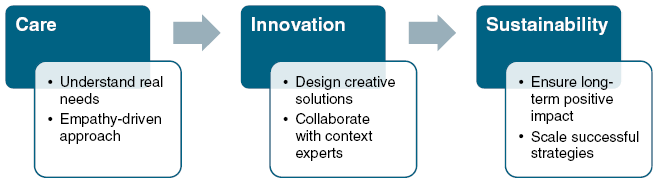
As the evidence base for IDLE grows, so too does the call to embed it in formal education. This section begins with a candid look at the challenges faced in integrating IDLE into school systems in places such as Hong Kong and Indonesia. It introduces the IDLE Continuum Model, which gives educators at every level – K-12 and higher education – a flexible framework for blending IDLE into their curricula, supported by conceptual, empirical, and experimental research. Practical pedagogical strategies are discussed, showing how educators can transition smoothly across different modes of digital learning: from formal and non-formal settings to extracurricular and extramural experiences. The vital role of teachers – as context experts who understand both research and the unique needs of their students and institutions – is underscored. In alignment with the Research Excellence Framework’s emphasis on social impact, the section highlights how IDLE initiatives have reached beyond academia into communities, engaging stakeholders such as teachers, NGOs, government officials, and industry partners. It also introduces the “Care–Innovation–Sustainability Model” and illustrates how multidisciplinary teams have applied this model to IDLE implementation in Indonesian schools and communities.
Section 5: Future Directions for IDLE
Building on the cutting-edge research presented in Sections 1–4, the final section looks ahead to the future of IDLE. It charts pathways for expanding IDLE to more diverse learners and contexts – including young students and those in the Global South – and for embracing Languages Other Than English (LOTE), such as Korean and Chinese. The section explores how IDLE can be deepened by drawing on various theoretical frameworks, including ecological systems theory and the technology acceptance model. It encourages methodological innovation, whether through digital learner analytics or by adopting research approaches from other disciplines, such as experience sampling methods (ESM). Innovative strategies for integrating IDLE into schools are discussed, always with an eye on local contexts. Finally, the section advocates for IDLE as a tool for broader social impact, aiming to reach more learners and communities in alignment with the United Nations Sustainable Development Goals – particularly SDG 3 (health and well-being) and SDG 4 (quality education).
2 Informal Digital Learning of English
2.1 The Rise of Digital Technology and English Learning
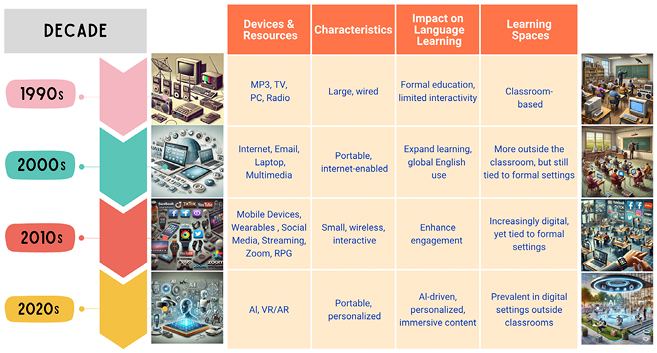
What might be contributing to the global surge in IDLE among young English learners (Guo & Lee, Reference Guo and Lee2023; Guan et al., Reference Guan, Li and Gu2024)? A key factor appears to be the ongoing progression of digital innovation and the increasing accessibility of advanced technologies (Soyoof et al., Reference Soyoof, Reynolds, Vazquez-Calvo and McLay2023). Over time, technological developments have likely reshaped how learners engage with English, as illustrated in Figure 1. Drawing on research that traces the evolution of Computer-Assisted Language Learning (CALL; Warschauer, Reference Warschauer, Fotos and Brown2004; Chun, Reference Chun2016, Reference Chun2019; Sauro & Zourou, Reference Sauro and Zourou2019; Lee, Reference Lee2022a), this section outlines a tentative timeline of digital shifts and their potential influence on English learning, suggesting that technology has, in many cases, extended language learning beyond the traditional classroom. Since the 1990s, each decade seems to have introduced notable changes in language acquisition, gradually lowering barriers and expanding possibilities.
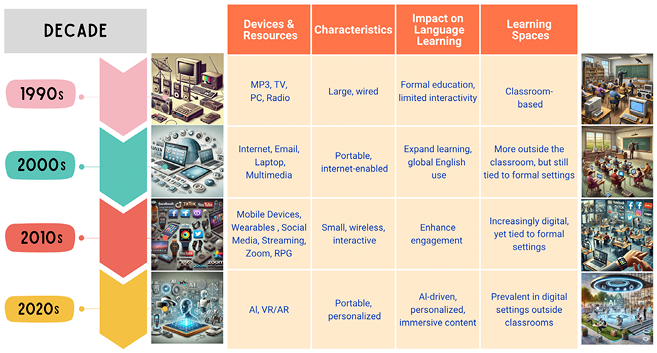
Figure 1 Digital Technology and English Learning: A Chronological Evolution
The 1990s: Wired and Walled in
In the 1990s, learning was often tied to bulky, wired devices – MP3 players, satellite TV boxes, and desktop computers – primarily available in wealthier, developed regions (Stockwell, Reference Stockwell2008). English instruction largely remained within conventional classrooms, shaped by fixed curricula and limited digital tools. Authentic English content – such as podcasts, films, or global media – was not widely accessible outside school, meaning students typically depended on textbooks and teacher guidance (Kim, Reference Kim2015).
The 2000s: Portability and Early Connections
With the turn of the millennium came a wave of educational change. Portable devices such as laptops and early tablets began to loosen the spatial constraints of learning (Kim, Reference Kim2015). The internet and email introduced learners to a broader array of English-language materials and intercultural interactions (Nah et al., Reference Nah, White and Sussex2008). Still, access to these tools was uneven. While some households in affluent areas such as northern Europe came online, the benefits were often limited to those with sufficient resources, reinforcing existing digital divides (McCallum & Tafazoli, Reference McCallum and Tafazoli2024).
The 2010s: On-the-Go Learning and Creative Autonomy
The 2010s marked the proliferation of smartphones, smartwatches, and social media platforms such as YouTube, Instagram, and TikTok, which arguably reduced the constraints of time and place (Chik & Ho, Reference Chik and Ho2017; Godwin-Jones, Reference Godwin-Jones2021). Lightweight, wireless devices enabled learners to turn idle moments – on public transport, in cafés, or at the gym – into potential learning opportunities (Reinders & Benson, Reference Reinders and Benson2017). Learners increasingly moved beyond passive consumption, producing their own content – memes, vlogs, and tutorials – aligned with their interests (Godwin-Jones, Reference Godwin-Jones2016; Chen, Reference Chen2020). This period may have fostered greater learner agency, allowing individuals to shape their English learning paths outside traditional publishing structures (Benson, Reference Benson2011a, Reference Benson, Benson and Reinders2011b).
The 2020s: Immersive and Personalized Experiences
Emerging technologies such as AI, VR, and AR are once again reshaping the landscape of language learning (Lin & Lan, Reference Lin and Lan2015; Kaplan-Rakowski et al., Reference Kaplan-Rakowski, Lin and Wojdynski2021). Generative AI can offer lessons tailored to individual learner profiles, while VR and AR simulate immersive English-speaking environments – virtual cafés, international conferences, or bustling cityscapes (Godwin-Jones, Reference Godwin-Jones2022; Stockwell & Wang, Reference Stockwell and Wang2025). Increasingly affordable and multifunctional devices may be helping to bridge geographic gaps, enabling real-time collaboration across borders (Dooly & Sadler, Reference Dooly and Sadler2013; Lee & Song, Reference Lee and Song2020). These tools appear to blur the line between formal instruction and informal exploration, potentially supporting fluency through experiential learning (Dressman et al., Reference 61Dressman, Lee and Perrot2023).
IDLE’s Bright Future: Learners in Control
This ongoing technological evolution seems to be positioning IDLE as a prominent mode of English learning. As digital tools become more adaptive, accessible, and embedded in daily life, learners may be gaining more autonomy over their language development (Lai, Reference 65Lai2017; Jeon, Reference Jeon2022; Lai & Lee, Reference Lai and Lee2024). IDLE offers alternatives to rigid curricula, suggesting more flexible and personalized pathways to proficiency in a world where English increasingly mediates global communication (Benson, Reference Benson, Benson and Reinders2011b; Reinders & Benson, Reference Reinders and Benson2017; Lee, Reference Lee2022a). Nonetheless, digital inequality continues to constrain access for some. The future of language learning may well unfold not only in classrooms but also across the expansive, digitally connected environments that many learners now navigate daily (Warschauer, Reference Warschauer2000; UNICEF, 2020; Sundqvist, Reference Sundqvist, Ziegler and González-Lloret2022; Lee et al., Reference Lee, Nesi and Milin2025).
2.2 From Classrooms to IDLE: Redefining Language Learning Spaces
For decades, second language acquisition research focused on what happens inside learners’ minds – memory capacity, motivation levels, innate aptitude (Papi & Hiver, Reference Papi and Hiver2025). But this cognitive approach overlooked a crucial element: the real-world actions learners take to master a language. “Proactive Language Learning Theory” changes the game by spotlighting four key behaviors that drive success (Papi & Hiver, Reference Papi and Hiver2025):
1. Input-seeking – Surrounding themselves with English through Netflix binges, podcast commutes, or social media scrolling (Lee, Reference Lee2022a; Peng et al., Reference Peng, Akhter and Hashemifardnia2025)
2. Interaction-seeking – Joining Discord servers, commenting on TikTok videos, or voice-chatting in multiplayer games (Sundqvist, Reference Sundqvist2019; Lee, Y.-J., Reference Lee2023)
3. Information-seeking – Instantaneously consulting DeepL for translations or watching YouTube tutorials on tricky grammar points (Cole & Vanderplank, Reference 60Cole and Vanderplank2016; Arndt & Woore, Reference Arndt and Woore2018)
4. Feedback-seeking – Submitting Reddit posts for native speaker review or using AI writing assistants for real-time corrections (Isbell, Reference Isbell2018; Godwin-Jones, Reference Godwin-Jones2022)
This learner-centered perspective perfectly captures today’s reality – where smartphones have become more powerful than textbooks, and fluency grows through organic digital immersion rather than rigid classroom drills (Godwin-Jones, Reference Godwin-Jones2018, Reference Godwin-Jones2019). The rise of IDLE exemplifies this transformation. Consider how modern learners operate (Reinders et al., Reference Reinders, Lai and Sundqvist2022; Dressman et al., Reference 61Dressman, Lee and Perrot2023; Lee, Reference Lee2024): A teenager absorbs colloquial phrases from Twitch streams (input), debates in Facebook groups (interaction), researches slang on Urban Dictionary (information), and refines pronunciation via speech-recognition apps (feedback). These behaviors do not just supplement formal education – they are becoming the primary drivers of language acquisition for digital natives (Butler, Reference Butler2015; Lee, Reference Lee2022a).
This paradigm shift reflects broader changes in education. As Reinders and Benson (Reference Reinders and Benson2017) demonstrated, effective learning now happens anywhere – during a morning jog (listening to podcasts), in line at Starbucks (flipping through flashcard apps), or between Zoom meetings (chatting with language partners). The four pillars of Language Learning Beyond the Classroom – formality, location, pedagogy, and locus of control – are being supercharged by digital tools that make English acquisition seamless and integrated into daily life (Benson, Reference Benson, Benson and Reinders2011b; Reinders & Benson, Reference Reinders and Benson2017; Lee, Reference 66Lee2019):
Formality: Learners craft their own rhythms, ditching rigid timetables to study when inspiration strikes – whether at dawn, during lunch breaks, or late at night.
Location: Parks, coffee shops, subway cars, or cozy bedrooms transform into vibrant learning hubs, untethered from desks and whiteboards.
Pedagogy: Curricula bend to individual passions – gamers master English through strategy guides, K-pop fans dissect lyrics, and aspiring chefs follow international recipes.
Locus of Control: Learners steer their journeys, choosing apps, media, or peer interactions that resonate with their goals, creating bespoke pathways to fluency.
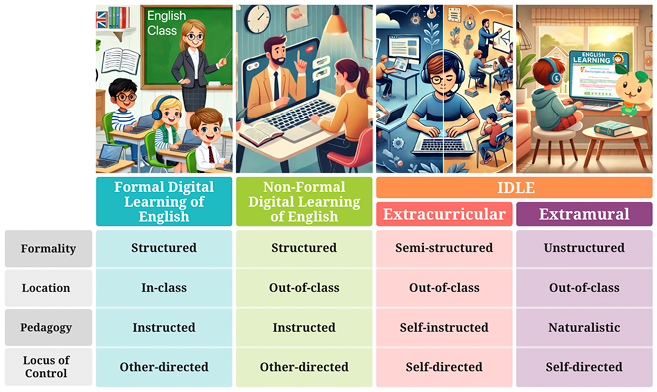
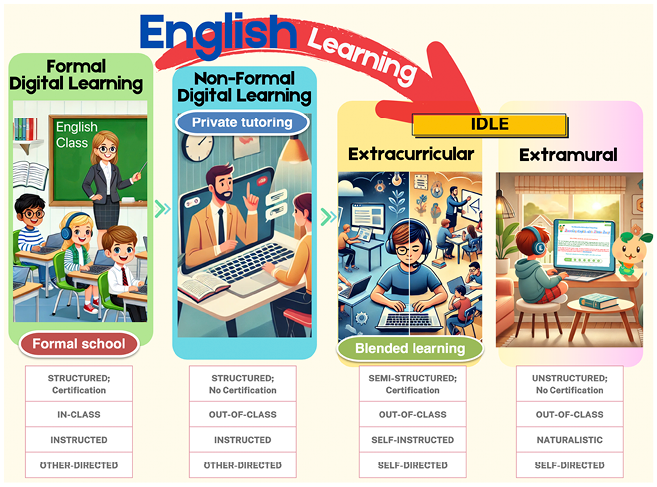
Lee’s (Reference 66Lee2019) IDLE model captures this cultural transformation, showing how digital spaces have evolved into sophisticated learning ecosystems. From algorithm-curated YouTube feeds that teach grammar through pop culture, to AI chatbots offering 24/7 conversation practice, today’s learners are not just studying English – they are ‘living’ it (Lee, Reference Lee2024). As illustrated in Figure 2, these emerging digital learning spaces are not merely alternatives to classrooms; they are becoming the main stage where authentic, motivation-driven language acquisition unfolds (Tsang & Lee, Reference 76Tsang and Lee2023; Rezai et al., Reference Rezai, Ashkani and Moradian2025). This revolution has given rise to four distinct types of digital learning spaces:
1. Formal Digital Learning: The Structured Classroom Goes Digital
Here, technology serves traditional teaching methods. Smartboards display grammar exercises, students watch preselected TED Talks, and computer labs host scripted language software sessions. While these tools modernize the classroom, the teacher remains firmly in control – students might interact with digital content, but within strict curricular boundaries (Kim, Reference Kim2015). Think of a class collectively using Rosetta Stone under teacher supervision, with every click tracked and assessed.
2. Non-Formal Digital Learning: Guided Learning Beyond School Walls
This middle ground offers structured lessons outside institutional settings (e.g., shadow education; Yung, Reference Yung2015). A business professional might take scheduled Zoom lessons with a Cambridge-certified tutor on Italki, or a student could enroll in a self-paced TOEFL prep course on Udemy. While more flexible than classroom learning, these options still follow designed syllabi and measurable outcomes – just without school bells or report cards (Yung, Reference Yung2019).
3. Extracurricular IDLE: The Bridge between Classrooms and Curiosity
Blending formal education with personal exploration, this approach lets learners stretch their wings while maintaining ties to academic goals (Sundqvist & Sylvén, Reference Sundqvist and Sylvén2016; Sylvén & Sundqvist, Reference Sylvén and Sundqvist2017; Lee, Reference 66Lee2019). Imagine high schoolers completing teacher-assigned Netflix viewing logs, university students collaborating on Google Docs for group projects, or language app streaks being counted toward course credit (Li, Reference Li2018). The activities are chosen by educators, but execution relies on students’ independent engagement with digital tools (Hwang & Lai, Reference Hwang and Lai2017).
4. Extramural IDLE: Pure Passion-Driven Learning
This is where magic happens organically – gamers coordinating raids in English on Discord, K-pop fans translating lyrics for their Twitter followers, or binge-watchers absorbing accents from British detective series (Sauro & Zourou, Reference Sauro and Zourou2019; Vazquez-Calvo et al., Reference Vazquez-Calvo, Zhang, Pascual and Cassany2019). Completely divorced from formal education (Sockett, Reference Sockett2014; Sundqvist & Sylvén, Reference Sundqvist and Sylvén2016; Sylvén & Sundqvist, Reference Sylvén and Sundqvist2017; Lee, Reference 66Lee2019), these activities thrive on intrinsic motivation. Unlike extracurricular IDLE, there is no teacher looking over shoulders – just learners diving into digital worlds where English becomes the natural currency of connection and enjoyment (Lee, Reference Lee2022a).
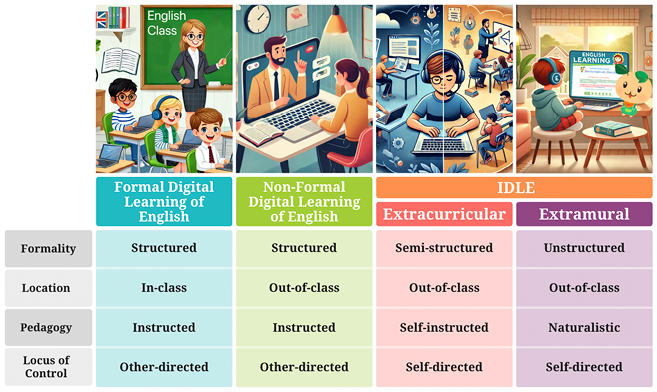
Figure 2 IDLE in Digital Learning Spaces Based on LBC’s Four Dimensions
The boundaries between these spaces are increasingly fluid (Bruen & Erdocia, Reference Bruen and Erdocia2024), with learners often moving seamlessly from textbook exercises (formal) to language exchange apps (non-formal) to meme-sharing with international friends (extramural) in a single day. This ecosystem demonstrates how digital environments have not just expanded learning opportunities – they have fundamentally redefined what it means to “study” a language (Dizon, Reference Dizon2023; Guo & Lee, Reference Guo and Lee2023).
In December 2024, the Hong Kong Education Bureau awarded a one-time grant of HK$400,000 to K-12 schools, aiming to strengthen students’ English abilities through self-directed learning (Yiu, Reference Yiu2024). The Bureau emphasized that “Language acquisition should not be confined to the classroom, and students also learn through various means…it is important to nurture students’ self-directed learning so that they can proactively take charge of their own learning.” This move highlights the Hong Kong government’s recognition of learning environments beyond the classroom, including digital spaces like IDLE. English teachers are thus encouraged to fully harness these online platforms to help students further develop their English skills (Lee et al., Reference Lee2024; Lee & Taylor, Reference 68Lee and Taylor2024).
Lee’s (Reference Lee2022a) IDLE Continuum Model vividly illustrates this evolving landscape, moving beyond rigid labels to present a fluid spectrum of language learning experiences. Earlier researchers (e.g., Sundqvist & Sylvén, Reference Sundqvist and Sylvén2016; Sylvén & Sundqvist, Reference Sylvén and Sundqvist2017; Lee, Reference 66Lee2019) drew sharp lines between extracurricular learning (loosely connected to schools) and extramural learning (completely outside institutional reach). By contrast, the IDLE continuum reveals how students can move along a connected pathway – from structured, teacher-supported activities (“weak IDLE”) to fully independent, student-driven digital learning in authentic contexts (“strong IDLE”; Lee, Reference Lee2022a, Reference Lee2024).
Research highlights this developmental journey. For instance, Zhang and Liu (Reference Zhang and Liu2022) showed that teachers can play an active role in guiding students as they transition from extracurricular to extramural settings, effectively stretching the classroom’s boundaries. Building on this idea, Liu, Guan, Qiu, and Lee (Reference Lee2024) designed a twelve-week IDLE program that carefully increased learner autonomy. The program began with three weeks of teacher-led instruction, then gradually shifted responsibility to students over the following weeks, culminating in high autonomy by the end. Their results revealed that students in the IDLE program grew much more willing to communicate in English than their peers in traditional classes.
Similarly, Rezai et al. (Reference Rezai, Ashkani and Moradian2025) explored the effectiveness of both extracurricular and extramural IDLE for Iranian EFL university students’ reading comprehension. After a four-month intervention, both groups performed significantly better than the control group, with no notable difference between them. These findings suggest that both forms of IDLE provide rich environments for language exposure and reading development. Introducing IDLE even in a classroom-based, teacher-supported format (“weak IDLE”) can yield benefits for EFL learners’ reading skills that are just as substantial as those achieved through completely independent, extramural IDLE (“strong IDLE”).
By reimagining learning spaces in this way, the IDLE model empowers students to take ownership of their language journey. It blends the structure of guided learning with the freedom of personal exploration, allowing learners to engage with English in ways that resonate with their interests and aspirations (Lee, Reference Lee2022a). This shift makes language learning more dynamic, meaningful, and personalized – offering a fresh perspective on how students can build autonomy, motivation, and real-world communication skills, as explored further in Section 4 (Peng et al., Reference Peng, Jager and Lowie2022; Lee et al., Reference Lee, Nesi and Milin2025; Peng et al., Reference Peng, Akhter and Hashemifardnia2025).
2.3 IDLE vs. Formal English Education
The notion of the “prosumer” – someone who is both a producer and a consumer – was first introduced by futurist Alvin Toffler in his 1980 book The Third Wave (Toffler, Reference Toffler1980). Toffler envisioned a future where people would move beyond passive consumption and play an active part in shaping the goods, services, and media they engage with. This vision has become even more relevant in the digital age, as Don Tapscott (Reference Tapscott1996, Reference Tapscott2008) highlight how technology empowers ordinary users to be creators. Today, anyone can upload videos to YouTube, personalize products, or contribute to open-source projects, becoming active participants in digital culture.
This idea closely aligns with the concept of “participatory culture,” where individuals do not just passively consume content, but actively create, share, and interact with media and with each other (Lomicka & Ducate, Reference 70Lomicka and Ducate2021). In participatory culture, creative expression and civic engagement are open to almost everyone, thanks to low barriers that invite widespread involvement (Jenkins et al., Reference Jenkins, Purushotma, Weigel, Clinton and Robison2009). There is strong encouragement for people not only to make things but also to share their creations widely, fostering an environment of collaboration and exchange. Informal mentorship is common, as experienced participants naturally guide newcomers, passing along what they have learned. People are motivated by a feeling that their contributions matter, and they develop a sense of social connection and community, caring about and responding to what others have made (Jenkins et al., Reference Jenkins, Purushotma, Weigel, Clinton and Robison2009; Sauro, Reference Sauro2017).
In this evolving landscape, the prosumer is not just a recipient but a co-architect of their own experiences, blurring the traditional line between audience and author (Sauro, Reference Sauro2017). This dual identity resonates strongly with receptive and productive IDLE (Lee, Reference Lee2022a). In receptive IDLE, learners immerse themselves in English-rich environments – streaming Netflix thrillers, binge-watching sitcoms, or scrolling through global news feeds – soaking up accents, idioms, and cultural cues (Lee, Reference 66Lee2019, Reference Lee2022a). Productive IDLE, on the other hand, sees learners using language for personal expression: tweeting clever remarks, debating on Reddit, writing fanfiction, or coordinating strategies in online games (Lee, Reference 66Lee2019, Reference Lee2022a).
Recent research shows that learners rarely separate receptive and productive IDLE into distinct categories (Lee & Chiu, Reference Lee and Chiu2024). Instead, they blend them effortlessly into a rich, continuous learning experience. For instance, someone might binge-watch Bridgerton to absorb the rhythm and elegance of British English, then jump onto Tumblr to unravel plot twists with fans from around the world – transforming passive viewing into active dialogue (Lee, Reference Lee2024). Likewise, a Minecraft enthusiast might study in-game tutorials to grasp vocabulary and mechanics, then collaborate with Indonesian teammates on Discord to plan elaborate builds, turning comprehension into real-time negotiation.
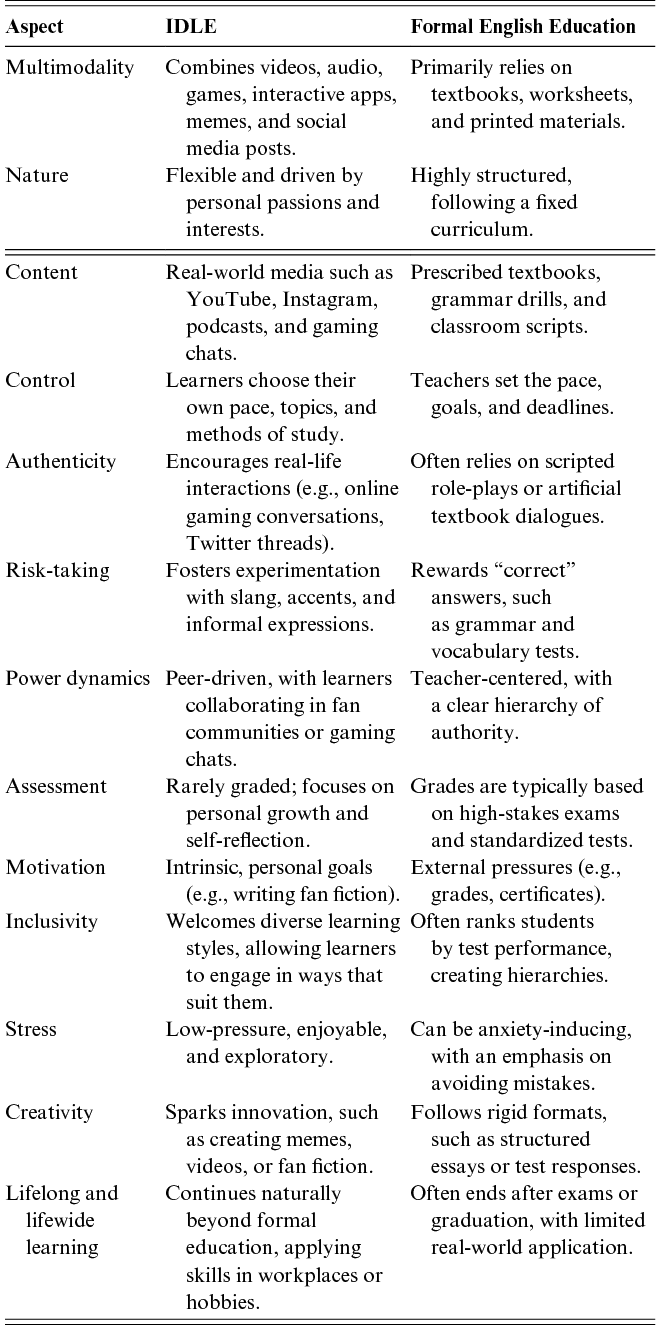
Liu and Lee (Reference Liu, Lee, Toffoli, Sockett and Kusyk2023) also highlight how IDLE offers a unique advantage over conventional classroom methods, which often rely on grammar drills and high-pressure exams. While formal education tends to tether learners to textbooks and rigid assessments, IDLE flourishes in the dynamic terrain of digital culture, where curiosity – not curriculum – fuels engagement. Learners often abandon rote memorization in favor of solving real-world problems, replacing structured lesson plans with spontaneous, self-guided exploration (Soyoof et al., Reference Soyoof, Reynolds, Neumann and Vazquez-Calvo2024). This shift empowers them to use English not just as a subject to study, but as a living tool for creativity, connection, and personal growth (Lee, Reference Lee2022a; Dressman et al., Reference Dressman, Toffoli and Lee2025; see Table 1 for a detailed contrast).
| Aspect | IDLE | Formal English Education |
|---|---|---|
| Multimodality | Combines videos, audio, games, interactive apps, memes, and social media posts. | Primarily relies on textbooks, worksheets, and printed materials. |
| Nature | Flexible and driven by personal passions and interests. | Highly structured, following a fixed curriculum. |
| Content | Real-world media such as YouTube, Instagram, podcasts, and gaming chats. | Prescribed textbooks, grammar drills, and classroom scripts. |
| Control | Learners choose their own pace, topics, and methods of study. | Teachers set the pace, goals, and deadlines. |
| Authenticity | Encourages real-life interactions (e.g., online gaming conversations, Twitter threads). | Often relies on scripted role-plays or artificial textbook dialogues. |
| Risk-taking | Fosters experimentation with slang, accents, and informal expressions. | Rewards “correct” answers, such as grammar and vocabulary tests. |
| Power dynamics | Peer-driven, with learners collaborating in fan communities or gaming chats. | Teacher-centered, with a clear hierarchy of authority. |
| Assessment | Rarely graded; focuses on personal growth and self-reflection. | Grades are typically based on high-stakes exams and standardized tests. |
| Motivation | Intrinsic, personal goals (e.g., writing fan fiction). | External pressures (e.g., grades, certificates). |
| Inclusivity | Welcomes diverse learning styles, allowing learners to engage in ways that suit them. | Often ranks students by test performance, creating hierarchies. |
| Stress | Low-pressure, enjoyable, and exploratory. | Can be anxiety-inducing, with an emphasis on avoiding mistakes. |
| Creativity | Sparks innovation, such as creating memes, videos, or fan fiction. | Follows rigid formats, such as structured essays or test responses. |
| Lifelong and lifewide learning | Continues naturally beyond formal education, applying skills in workplaces or hobbies. | Often ends after exams or graduation, with limited real-world application. |
IDLE stands out because it allows learners to engage with English in authentic, everyday situations (Dressman & Sadler, Reference Dressman and Sadler2020). On platforms such as YouTube, TikTok, Instagram, and online games, learners are driven by personal interests rather than external pressures such as grades or exams (Godwin-Jones, Reference Godwin-Jones2019; Lee et al., Reference Lee2024). For instance, they might analyze their favorite TV shows, join fan forums to discuss plot twists, or debate trending topics on Reddit (Sauro, Reference Sauro2017; Isbell, Reference Isbell2018). This freedom enables learners to choose topics that excite them, explore creative expressions like experimenting with slang or accents, and even create memes (Lee, Reference Lee2024). Without the stress of grades, learners feel safe to take risks, make mistakes, and grow naturally (Lee & Chiu, Reference Lee and Chiu2023; Uztosun & Kök, Reference Uztosun and Kök2023).
IDLE also goes beyond language – it fosters real-world skills that learners can use in their careers, hobbies, and global interactions (Lee & Drajati, Reference 67Lee and Drajati2019a; Rezai et al., Reference Rezai, Soyoof and Reynolds2024a). For example, someone who learns English by gaming might later apply those same communication skills in a virtual work environment or when traveling abroad. In contrast, formal English education provides a structured foundation. Classroom learning focuses on textbooks, grammar drills, and teacher-led lessons to build a strong understanding of grammar, vocabulary, and pronunciation. This approach ensures students develop basic language skills systematically (Dressman et al., Reference 61Dressman, Lee and Perrot2023). However, in exam-driven systems, the emphasis on achieving correctness and high scores could limit creativity and induce anxiety (Lee, Reference Lee, Dressman and Sadler2020a). For example, students might memorize grammar rules for a test but struggle to use them naturally in conversations.
Formal education often lays a solid groundwork for language learning, offering structure and clarity (Dressman & Sadler, Reference Dressman and Sadler2020). Yet, in the updated L2 English learning pyramid, Sundqvist (Reference Sundqvist2024) proposes that Extramural English – language exposure beyond the classroom – has become a key individual difference factor, and for many learners, it now serves as the true starting point for acquiring English. This shift aligns somehow with the IDLE Continuum Model, where IDLE complements the limitations of formal instruction by fostering confidence, fluency, and real-world communication skills (Lee, Reference Lee2022a; Liu et al., Reference Liu, Zhao and Yang2024). Together, formal education and IDLE form a balanced and dynamic learning ecosystem. A student might master grammar rules in class, then apply them organically by posting on social media, chatting with international teammates in online games, or discussing novels in a virtual book club (Lee, Reference Lee2022a; Lee et al., Reference Lee, Nesi and Milin2025). This fusion of structured learning and spontaneous exploration allows learners to build both academic precision and practical fluency – equipping them not only for classroom success but also for meaningful interaction in global, everyday contexts (Sauro & Zourou, Reference Sauro and Zourou2019).
2.4 The Growth of IDLE Research
The past decade has witnessed an explosive surge in IDLE scholarship, marked by empirical studies, seminal books, and systematic reviews that have shaped the field. Sockett (Reference Sockett2014) pioneered work Online Informal Learning of English, which mapped how French learners absorbed English organically through digital media like podcasts and web forums. This foundational study redefined perceptions of informal learning, proving its legitimacy as a research-worthy phenomenon.
Meanwhile, Sundqvist (Reference Sundqvist2009, Reference Sundqvist2019, Reference Sundqvist2024) carved a parallel path in Northern Europe with their concept of Extramural English (also see Sundqvist & Sylvén, Reference Sundqvist and Sylvén2016). By analyzing Swedish gamers who mastered English through World of Warcraft raids and online forums, they revealed how leisure activities could rival – or even surpass – classroom instruction in building fluency. Their work challenged educators to rethink the boundaries between “play” and “learning,” urging schools to harness students’ digital passions.
The field gained global momentum with Dressman and Sadler’s Handbook of Informal Language Learning (Reference Dressman and Sadler2020). This volume wove together historical roots, cultural contexts, and case studies from Asia to the Americas, showcasing IDLE’s universality. Crucially, it proposed frameworks to bridge informal digital practices with formal curricula – for example, suggesting teachers assign TikTok video analyses as homework to validate students’ out-of-class learning.
Reinders, Lai, and Sundqvist’s Language Learning Beyond the Classroom (Reference Reinders, Lai and Sundqvist2022) deepened these insights, offering educators a toolkit of theories, methods, and strategies. The book also demonstrated how to track learners’ informal language learning habits to inform lesson plans or use social media analytics to measure linguistic growth, blending rigor with innovation.
Dressman, Lee, and Perrett (Reference 61Dressman, Lee and Perrot2023) then shifted gears from theory to action. Their work delivered ready-to-use lesson plans, such as having students design social media campaigns to practice writing or analyze movie dialogue to study informal language expressions. These strategies showed teachers how to weave IDLE’s spontaneity into structured classrooms without sacrificing academic goals.
Most recently, Lee, Zou, and Gu (Reference Lee, Zou and Gu2024) have propelled the field forward with a teacher-centric guide. Their edited volume equips educators to craft IDLE-aligned activities – like guiding gamers to write strategy guides in English. By prioritizing student interests, these approaches turn hobbies into learning engines, proving that engagement and rigor need not clash.
Review Papers on IDLE
As IDLE research grew, scholars published several review papers. Zhang et al. (Reference Zhang, Zou, Cheng, Xie, Wang and Au2021) analyzed extramural language learning, highlighting that most activities – such as watching videos, listening to music, and reading blogs – were primarily receptive. Their findings emphasized the positive impact of these activities on both linguistic skills (e.g., vocabulary growth) and psychological factors (e.g., motivation and confidence). Soyoof et al. (Reference Soyoof, Reynolds, Vazquez-Calvo and McLay2023) conducted a scoping review of IDLE, examining its linguistic, cultural, affective, and digital literacy dimensions across Asian and European contexts from 1980 to 2020. They demonstrated how IDLE promotes language learning in a variety of cultural and technological environments.
Lee (Reference Lee, Reinders, Lai and Sundqvist2022b) reviewed seventy-six studies on “language learning and teaching beyond the classroom,” identifying key gaps in the field, including the need for more rigorous methodologies and innovative tools to assess IDLE’s potential. In a related book, Lee (Reference Lee2022a) synthesized findings from multiple studies, showing strong links between IDLE activities and positive outcomes for EFL learners, such as enhanced fluency, motivation, and digital literacy.
Guo and Lee (Reference Guo and Lee2023) applied Bronfenbrenner’s ecological systems theory (Reference Bronfenbrenner1976, Reference 59Bronfenbrenner1979) to explore the factors influencing learners’ IDLE engagement. They found that most critical factors operated at the individual and micro-system levels, such as personal interests, peer interactions, and access to technology. They also called for more research on less-studied levels, such as the meso-system (e.g., school–family relationships), exo-system (e.g., societal influences), macro-system (e.g., cultural norms), and chrono-system (e.g., the effects of technological advancements over time). Inspired by Bronfenbrenner’s ecological systems theory (Reference Bronfenbrenner1976, Reference 59Bronfenbrenner1979), Rezai et al. (Reference Rezai, Soyoof and Reynolds2024b) examined teachers’ perspectives on students’ IDLE engagement, offering strategies to better support learners outside the classroom.
Guan and colleagues (Reference Guan, Li and Gu2024) made a significant contribution to IDLE research with a meta-analysis on AI-driven IDLE. Their study revealed that AI tools – such as language-learning chatbots, adaptive apps, and virtual reality platforms – greatly improved learners’ English proficiency, self-regulation, and engagement.
Kusyk et al. (Reference Kusyk, Arndt, Schwarz, Yibokou, Dressman, Sockett and Toffoli2025) carried out a scoping review exploring trends in informal second language learning, analyzing 206 studies published between 2000 and 2020. Their review highlighted a surge in research beginning in 2011, with peak activity between 2017 and 2019. The three most commonly explored themes were second language development (18.2%), mapping informal learning practices (17.5%), and describing informal learning activities (14.3%). They also uncovered a confusing mix of overlapping terms – such as out-of-class language learning, informal second language learning, Extramural English, online informal English learning, and IDLE – leading to what is known as the “jingle-jangle fallacy.” The “jingle–jangle fallacy” occurs when different constructs are mistakenly considered the same because they have the same name (jingle), or when similar constructs are mistakenly considered different because they have different names (jangle; Kelley, Reference Kelley1927). In language learning research, this fallacy can result in conceptual confusion and hinder the comparison of findings across studies (Kusyk et al., Reference Kusyk, Arndt, Schwarz, Yibokou, Dressman, Sockett and Toffoli2025). A wide range of theoretical frameworks were applied, including sociocultural theory, complex dynamic systems, learner autonomy, and ecological approaches. Quantitative methods dominated (41%), followed by qualitative (33%) and mixed methods (20%), with surveys (35.7%) and interviews (23%) being the most used tools. The research primarily focused on young adults aged 18–25 (54.4%) and adolescents aged 11–17 (21.8%), with recent studies concentrating on Europe and East Asia. English was the target language in most cases (66.4%). Various learner-related variables were examined, such as usage frequency, attitudes, motivation, activity diversity, confidence in using the second language, and willingness to communicate. Although the review concluded before the rise of AI tools, it offers a comprehensive snapshot of the field’s evolution and pinpoints promising directions for future inquiry.
Liu, Soyoof, Lee, and Zhang (Reference Liu, Soyoof, Lee and Zhang2025) conducted a thematic review of IDLE research, analyzing forty-nine empirical studies from Asian EFL contexts published between 2014 and 2024. Echoing the trends identified by Kusyk et al. (Reference Kusyk, Arndt, Schwarz, Yibokou, Dressman, Sockett and Toffoli2025), they found that IDLE has gained substantial attention, especially in the past four years. Their review revealed that IDLE has been examined through various lenses of individual differences – linguistic, emotional, and cultural. Another key insight was the nuanced and sometimes complicated relationship between teachers and IDLE practices. The study also emphasized how unequal access to digital tools and differing levels of digital literacy shaped learners’ participation in IDLE. Drawing from these emerging patterns, the authors proposed several avenues for future research.
Dressman et al. (Reference Dressman, Toffoli and Lee2025) examined forty-seven narratives drawn from fourteen studies focused on informal language learning. These narratives, rich in ethnographic detail, traced how individuals’ language abilities evolved over time in informal settings. By analyzing these stories, the researchers were able to map out seven distinct pathways of language development, shedding light on key factors and circumstances that shape each learner’s experience. Their review makes it clear that IDLE does not follow a single, predictable route; instead, it is a highly individualized process shaped by a range of personal and contextual variables.
Emerging Trends and Expanding Horizons
The field of IDLE is witnessing rapid expansion, sparking a proliferation of research that is reshaping our perspectives on language learning in the digital era. For instance, Rezai (Reference Rezai2024) and Rezai et al. (Reference Rezai, Soyoof and Reynolds2024a) investigated how IDLE influences the professional engagement of EFL teachers. Moving beyond simple observation, they designed a robust instrument to systematically measure teachers’ own involvement in digital informal learning. This innovative scale provides concrete metrics for evaluating educators’ interactions with digital environments, offering valuable insights into the ways these platforms impact teaching practices.
Meanwhile, the infusion of artificial intelligence into IDLE has become a major focal point. Studies by Guan, Zhang, and Gu (Reference Guan, Li and Gu2024), along with Liu, Darvin, and Ma (Reference 69Liu, Darvin and Ma2024a, Reference Liu, Darvin and Ma2024b), have uncovered how AI-driven tools are revolutionizing language learning. Innovative technologies such as chatbots simulate real-life conversations, AI-powered writing assistants provide personalized feedback, and immersive virtual reality platforms create engaging environments for practice (Naghdipour, Reference Naghdipour2022). These tools offer learners tailored, interactive experiences that make practicing English more accessible and enjoyable than ever before.
But the enthusiasm is not confined to English alone. Reflecting our increasingly interconnected world, researchers have begun turning their attention to Languages Other Than English (LOTE). For example, Liu, Zhao, and Yang (Reference Yang, Xu, Liu and Yu2024) explored how learners are informally studying French and German through digital platforms. Using language apps, online communities, and digital media, learners are finding creative and dynamic ways to immerse themselves in new languages. Similarly, Lee et al. (Reference Lee and Chiu2023) examined how multilingual learners are picking up Korean through informal digital means. From diving into Korean drama fan sites to joining German gaming forums, these platforms offer authentic, real-world contexts that foster language exposure and practice. Such informal engagement not only increases learners’ time spent with the language but also boosts their willingness to communicate and may enhance their overall communicative competence.
3 Antecedents and Consequences of IDLE
As IDLE gains recognition as one of the key subfields within CALL research, scholars have increasingly turned their attention to two main questions (Soyoof et al., Reference Soyoof, Reynolds, Vazquez-Calvo and McLay2023; Lee, Reference Lee2024): How does IDLE influence outcomes? And what motivates individuals to engage in it more frequently?
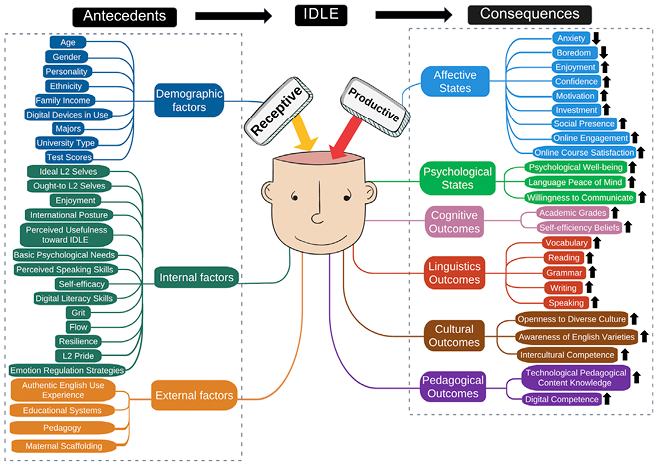
To date, researchers have identified over forty distinct factors – both causes and effects – linked to IDLE. These findings, illustrated in Figure 3, offer rich insights into how IDLE shapes the learning journey and what encourages individuals to participate. For example, those who engage in receptive activities (e.g., watching English YouTube videos) or productive ones (e.g., chatting with English speakers) often report a wide range of benefits. These include emotional gains (e.g., increased enjoyment), psychological boosts (e.g., enhanced psychological well-being), academic improvements (e.g., better grades), linguistic development (e.g., vocabulary growth), cultural awareness (e.g., becoming more tolerant toward varieties of English), and even digital literacy.
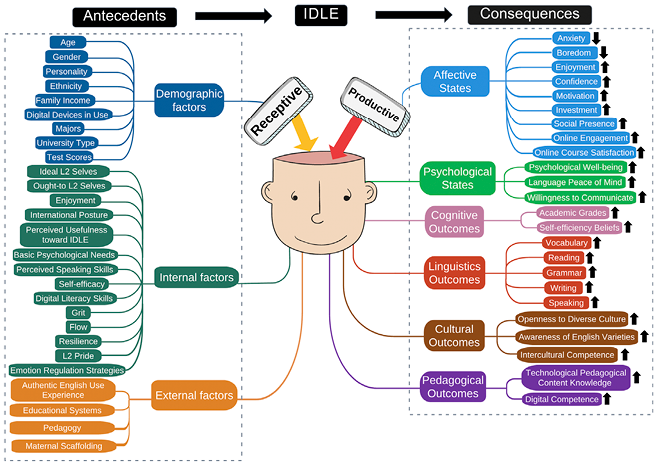
Figure 3 Antecedents and Consequences of IDLE
On the flip side, several factors have been found to influence IDLE participation. These include demographic traits (e.g., age), internal characteristics (e.g., international outlook), and external conditions (e.g., the structure of the education system). Mapping these relationships provides a valuable evidence base for educators and researchers to design, adapt, and implement IDLE activities or intervention programs in ways that are both scientifically grounded and locally relevant (Lee et al., Reference Lee, Nesi and Milin2025).
3.1 Consequences of IDLE
This section explores the wide-ranging benefits of IDLE, focusing on six major areas: emotional, psychological, cognitive, linguistic, cultural, and pedagogical. The first five notably influence learners, while the pedagogical impact is most relevant to educators. Growing research suggests that IDLE holds the potential to reshape how students learn new languages and how teachers design their lessons. Each domain below presents key research findings and the scholars behind them, followed by a discussion of these results. Since most evidence is correlational, it is important to interpret these findings with appropriate caution.
Affective Benefits
Lowered anxiety (Lee & Xie, Reference Lee and Xie2023; Uztosun & Kök, Reference Uztosun and Kök2023; Wouters et al., Reference Wouters, Bollansée, Prophète and Peters2024; Rezai et al., Reference Rezai, Ashkani and Moradian2025)
Less boredom (Taherian et al., Reference Taherian, Shirvan, Yazdanmehr, Kruk and Pawlak2023)
Greater enjoyment (Lai et al., Reference Lai, Zhu and Gong2015; Lee & Lee, Reference Lee and Lee2021; Lee & Xie, Reference Lee and Xie2023; Tsang & Lee, Reference 76Tsang and Lee2023; Lee et al., Reference Lee2024; Liu et al., Reference Liu, Zhao and Yang2024; Fu, Reference Fu2025; Rezai et al., Reference Rezai, Ashkani and Moradian2025)
Increased confidence (Lai et al., Reference Lai, Zhu and Gong2015; Lee & Drajati, Reference Lee and Drajati2019b; Zou et al., Reference Zou, Liu, Li and Chen2025)
Heightened motivation (Lee & Drajati, Reference Lee and Drajati2019b; Tsang & Lee, Reference 76Tsang and Lee2023; Wouters et al., Reference Wouters, Bollansée, Prophète and Peters2024; Rezai et al., Reference Rezai, Ashkani and Moradian2025)
Stronger investment (Liu & Darvin, Reference Liu and Darvin2023)
Enhanced social presence (Wu, Reference Wu2023)
Higher online engagement (Wu, Reference Wu2023)
Higher online course satisfaction (Zheng & Xiao, Reference Zheng and Xiao2024)
Learning and teaching a new language are deeply emotional processes (Richards, Reference 73Richards2020). For teachers, understanding and responding to learners’ emotions is a core professional skill. For students, emotions shape how they approach and absorb new knowledge. In recent years, the field has experienced an “affective turn” (Prior, Reference Prior2019), as researchers increasingly acknowledge the central role of emotions in language learning. Early studies focused mostly on negative emotions – anxiety, fear, or shame – but the rise of positive psychology has ushered in a wave of research on positive experiences in language acquisition (Dewaele & MacIntyre, Reference Dewaele and MacIntyre2014, Reference Dewaele, MacIntyre, MacIntyre, Gregersen and Mercer2016). Positive psychology seeks not just fleeting happiness but authentic well-being, resilience, fulfillment, and a sense of being true to oneself (MacIntyre et al., Reference MacIntyre, Gregersen and Mercer2016). This has shifted scholarly attention toward the power of positive emotions to enhance language learning.
This new focus on emotion and well-being has deeply influenced research on IDLE. Studies now suggest that IDLE significantly shapes learners’ emotions and attitudes, nurturing positive feelings while easing negative ones (Lai et al., Reference Lai, Zhu and Gong2015; Lee & Lee, Reference Lee and Lee2021; Uztosun & Kök, Reference Uztosun and Kök2023). IDLE reduces the anxiety common in language learning by creating a relaxed, low-pressure environment. Digital tools (e.g., language apps and educational games) let students practice English at their own rhythm, free from the scrutiny and stress of the traditional classroom. This sense of autonomy makes learners more comfortable and less afraid of making linguistic mistakes (Uztosun & Kök, Reference Uztosun and Kök2023; Wouters et al., Reference Wouters, Bollansée, Prophète and Peters2024).
Lee and Xie (Reference Lee and Xie2023), using a person-centered approach, found intriguing patterns among 1,265 Korean EFL learners who participated in a variety of IDLE activities. Their findings showed that students who balanced their IDLE time across gaming, entertainment, English learning, and social interaction experienced noticeably less anxiety during face-to-face English conversations than those whose IDLE activities revolved mainly around gaming and entertainment.
But the benefits of IDLE go beyond reducing anxiety – it also injects excitement and genuine interest into language learning (Lee & Lee, Reference Lee and Lee2021; Liu et al., Reference Liu, Zhao and Yang2024). Interactive digital platforms turn what could be a monotonous task into an engaging, playful journey, sparking curiosity and making learning feel meaningful and fun (Taherian et al., Reference Taherian, Shirvan, Yazdanmehr, Kruk and Pawlak2023). Lee and Xie (Reference Lee and Xie2023) further discovered that learners who diversified their IDLE experiences – incorporating English learning and socialization along with entertainment – reported greater enjoyment in studying English than those who stuck only to gaming and entertainment. The hands-on, interactive features of these digital tools keep learners actively involved, boosting both their motivation and enthusiasm.
Learners often discover real enjoyment in self-directed activities tailored to their own interests (Liu et al., Reference Liu, Zhao and Yang2024; Rezai et al., Reference Rezai, Ashkani and Moradian2025). Whether it is watching English-language YouTube videos, joining online communities, or exploring digital content tied to their hobbies, these experiences allow students to connect with English in ways that feel meaningful and fun (Lai et al., Reference Lai, Zhu and Gong2015; Lee & Lee, Reference Lee and Lee2021). Here, learning blends seamlessly with leisure, making progress feel less like work and more like play (Chik & Ho, Reference Chik and Ho2017).
Small wins – such as understanding a movie without subtitles or confidently posting in an online forum – can give learners a powerful boost in self-belief (Zadorozhnyy & Lee, Reference Zadorozhnyy and Lee2023). Each success story strengthens their confidence and encourages them to keep going (Lai et al., Reference Lai, Zhu and Gong2015; Lee & Drajati, Reference Lee and Drajati2019b). This growing self-assurance motivates learners to take on new challenges and fosters a positive image of themselves as capable language users (Lee & Lee, Reference Lee and Lee2021; Liu & Lee, Reference Liu, Lee, Toffoli, Sockett and Kusyk2023; Liu et al., Reference Liu, Zhao and Yang2024; Fu, Reference Fu2025).
IDLE naturally integrates language practice into learners’ daily passions, whether that is gaming, music, or social media (Dressman et al., Reference 61Dressman, Lee and Perrot2023). When learning is woven into activities they already love, motivation and commitment soar (Lee & Lee, Reference Lee and Lee2021; Guan et al., Reference Guan, Li and Gu2024). This relevance inspires learners to invest more time and energy, making English a natural and enjoyable part of everyday life (Liu et al., Reference Liu, Ma, Bao and Liu2023).
Digital platforms also build a strong sense of community, connecting learners with peers around the world (Sauro, Reference Sauro2017; Vazquez-Calvo et al., Reference Vazquez-Calvo, Zhang, Pascual and Cassany2019). Through online discussions, comments, and collaboration, students gain a sense of belonging to a supportive network where they can share, learn, and encourage each other (Wu, Reference Wu2023). Such connections not only increase motivation but also provide the emotional support needed for sustained learning (Zadorozhnyy & Lee, Reference 78Zadorozhnyy and Lee2025).
Zheng and Xiao (Reference Zheng and Xiao2024) explored how engaging in IDLE influences online course satisfaction among 563 Chinese university EFL students. Their findings revealed that students who participated in IDLE activities more often felt more satisfied with their online courses, appreciating both the course design and their teachers’ effectiveness. The study also uncovered that self-regulated learning online played a key mediating role in this relationship. In other words, students who frequently engaged in IDLE tended to develop stronger self-regulation skills, such as setting goals, managing their time, using effective learning strategies, and evaluating their own progress. These enhanced skills, in turn, boosted their satisfaction with online courses.
Psychological Benefits
Better psychological well-being (Lee & Chiu, Reference Lee and Chiu2024)
Greater autonomy and sense of relatedness (Wu & Wang, Reference Wu and Wang2025)
Growth in self-regulated online learning (Rezai & Goodarzi, Reference Rezai and Goodarzi2025)
Flow experiences (Wu & Wang, Reference Wu and Wang2025)
Increased grit (Lee & Lu, Reference Lee and Lu2023; Liu & Lee, Reference Liu, Lee, Toffoli, Sockett and Kusyk2023; Fu, Reference Fu2025)
Greater peace of mind in language learning (Ghasemi & Noughabi, Reference Ghasemi and Noughabi2024)
Higher willingness to communicate (Lee & Drajati, Reference Lee and Drajati2019b; Taherian et al., Reference Taherian, Shirvan, Yazdanmehr, Kruk and Pawlak2023; Zadorozhnyy & Lee, Reference Zadorozhnyy and Lee2023; Lee & Chiu, Reference Lee and Chiu2024; Liu et al., Reference Liu, Zhao and Yang2024; Yang et al., Reference Yang, Xu, Liu and Yu2024; Fu, Reference Fu2025; Guo et al., Reference Guo, Yao and Lee2025; Lee et al., Reference Lee, Nesi and Milin2025)
The psychological rewards of engaging in IDLE reach well beyond simple language gains – they play a powerful role in nurturing learners’ mental health and boosting their openness to communication (Taherian et al., Reference Taherian, Shirvan, Yazdanmehr, Kruk and Pawlak2023; Lee & Chiu, Reference Lee and Chiu2024; Yang et al., Reference Yang, Xu, Liu and Yu2024). By creating a low-stress, supportive learning space, IDLE helps foster a sense of balance and well-being in daily life (Lee & Chiu, Reference Lee and Chiu2024). When students interact with enjoyable digital platforms, language study becomes not just more relaxed, but also more personally satisfying compared to traditional classroom approaches (Liu & Lee, Reference Liu, Lee, Toffoli, Sockett and Kusyk2023; Ghasemi & Noughabi, Reference Ghasemi and Noughabi2024). For instance, Rezai and Goodarzi (Reference Rezai and Goodarzi2025) discovered that among 325 Iranian EFL students, those who used IDLE more frequently displayed stronger skills in self-regulated online learning. These learners excelled at setting goals, organizing their study environment, developing effective strategies, managing their time, seeking help when needed, and evaluating their own progress.
Wu and Wang (Reference Wu and Wang2025) discovered that when 333 Chinese university students used GenAI-supported IDLE, they often entered a state of “flow” – that deep, effortless concentration where learning feels both easy and enjoyable (Csikszentmihalyi, Reference Csikszentmihalyi2014). Importantly, these students also felt a greater sense of independence and a stronger bond with others – two key factors for psychological well-being. This shows that GenAI-powered language activities can help students take charge of their own learning while feeling connected, even in a digital environment.
IDLE also nurtures “grit” – the determination to keep trying and stay interested, even when faced with setbacks (Duckworth, Reference Duckworth2017). By giving learners the chance to repeatedly face new challenges and still enjoy the process, IDLE has the potential for strengthening their grit (Liu & Lee, Reference Liu, Lee, Toffoli, Sockett and Kusyk2023; Fu, Reference Fu2025). Lee and Xie (Reference Lee and Xie2023), using a person-centered approach, found that Korean EFL learners who balanced their IDLE time among gaming, entertainment, English study, and socializing showed much more grit than those who focused mainly on gaming and entertainment.
Another key psychological benefit is what researchers describe as “foreign language peace of mind” – a comforting sense of inner calm and coherence while navigating a new language (Ghasemi & Noughabi, Reference Ghasemi and Noughabi2024). Among 316 Iranian EFL students, those who regularly engaged in IDLE activities – whether listening, reading, writing, or speaking – reported feeling more at ease with English, which in turn boosted their willingness to communicate. Free from the anxiety of being judged or making mistakes, learners can experiment, participate in online conversations, comment on social media, or use language apps without the fear that often shadows classroom settings. This growing sense of ease naturally leads to greater willingness to communicate, even in unfamiliar or real-world situations. As learners become more confident and adept, they are more likely to start conversations, offer opinions, or connect with strangers – actions they might have shied away from before (Ghasemi & Noughabi, Reference Ghasemi and Noughabi2024; Lee et al., Reference Lee2024).
Cognitive Advantages
Improved academic achievement (Lai et al., Reference Lai, Zhu and Gong2015; Sundqvist & Wikström, Reference Sundqvist and Wikström2015)
Stronger performance on standardized English exams (Zou et al., Reference Zou, Liu, Li and Chen2025)
Greater self-efficacy (Zadorozhnyy & Lee, Reference Zadorozhnyy and Lee2023)
IDLE does not just broaden learners’ language skills – it fuels cognitive growth on multiple levels. When students immerse themselves in informal digital activities – like exploring educational apps, watching insightful videos, or joining online discussions – they add meaningful layers to their formal education. Research by Lai et al. (Reference Lai, Zhu and Gong2015) and Sundqvist and Wikström (Reference Sundqvist and Wikström2015) shows that this combination of formal and informal learning often leads to higher grades and better classroom participation. Supporting this, Zou et al. (Reference Zou, Liu, Li and Chen2025) found that Chinese university students who regularly participated in meaning-focused IDLE activities scored higher on the College English Test–Band 4 (CET-4), a rigorous, nationwide exam that measures listening, reading, writing, and translation skills across China. The CET-4, much like academic grades, is designed to assess a wide range of cognitive abilities, from comprehension to language production. In this way, IDLE acts as both a language booster and a cognitive catalyst – helping students achieve more in their studies while strengthening their ability to analyze, understand, and use English in practical contexts.
Beyond academic results, IDLE fosters a stronger sense of self-efficacy – the conviction that one can take charge of their own learning process (Zadorozhnyy & Lee, Reference Zadorozhnyy and Lee2023). When students make choices about what and how to learn, they gain confidence and stay motivated, consistently building their language skills. Zadorozhnyy and Lee (Reference Zadorozhnyy and Lee2023) highlight how this sense of ownership leads to steady progress and personal development.
Linguistic Benefits
Expanded vocabulary (Sundqvist & Wikström, Reference Sundqvist and Wikström2015; Jensen, Reference 64Jensen2017; Sundqvist, Reference Sundqvist2019; Alhaq, Reference Alhaq2022; Lai et al., Reference Lai, Liu, Hu, Benson and Lyu2022; Warnby, Reference Warnby2022; Lai & Wang, Reference Lai and Wang2024, Reference Lai and Wang2025; Rezai et al., Reference Rezai, Soyoof and Reynolds2024c)
Sharper reading comprehension (Cole & Vanderplank, Reference 60Cole and Vanderplank2016; Rezai et al., Reference Rezai, Ashkani and Moradian2025)
Deeper understanding of grammar (Cole & Vanderplank, Reference 60Cole and Vanderplank2016)
Stronger writing skills (Kusyk, Reference Kusyk2017)
Enhanced speaking abilities (Sundqvist, Reference Sundqvist2009; Lee & Dressman, Reference Lee and Dressman2018; Tsang & Lee, Reference 76Tsang and Lee2023)
One of IDLE’s greatest advantages is its ability to boost every aspect of language proficiency. When learners immerse themselves in genuine, everyday situations – such as gaming online, watching streaming videos, or chatting on social media – they naturally pick up fresh vocabulary, including slang and expressions rarely found in traditional textbooks (De Wilde et al., Reference De Wilde, Brysbaert and Eyckmans2022; Lai & Wang, Reference Lai and Wang2024). This natural exposure leads to a richer, more practical command of language (Sundqvist, Reference Sundqvist2009; Lee & Dressman, Reference Lee and Dressman2018). Watching movies or TV with subtitles, browsing blogs, and reading online articles all sharpen reading comprehension skills (Cole & Vanderplank, Reference 60Cole and Vanderplank2016; Rezai et al., Reference Rezai, Ashkani and Moradian2025). For example, Rezai et al. (Reference Rezai, Ashkani and Moradian2025) found that Iranian university students who participated in both extracurricular and informal IDLE activities showed significantly higher reading comprehension scores than those in the control group.
Engaging with a wide range of written texts allows learners to decode meanings, appreciate different writing styles, and handle increasingly complex content (Cole & Vanderplank, Reference 60Cole and Vanderplank2016; Tsang, Reference Tsang2023). Frequent encounters with natural language in context mean learners start to pick up grammar intuitively, without needing to memorize endless rules (Cole & Vanderplank, Reference 60Cole and Vanderplank2016). Observing and hearing correct usage in everyday settings helps them internalize grammatical structures, making their language use more accurate and fluid (Arndt & Woore, Reference Arndt and Woore2018).
Writing skills also get a boost as students engage in real communication – whether it is posting on forums, leaving comments, or keeping online journals (Kusyk, Reference Kusyk2017). These activities sharpen their ability to organize thoughts, express ideas clearly, and tailor their writing for different audiences. Meanwhile, video chats, multiplayer games, and interactive online discussions offer a safe space to practice speaking, improving both fluency and pronunciation by mimicking native speakers and interacting in real time (Lee & Dressman, Reference Lee and Dressman2018; Tsang & Lee, Reference 76Tsang and Lee2023). By combining a range of IDLE activities with targeted classroom support from teachers to address anything not picked up through IDLE, IDLE fosters the development of well-rounded language skills (Schurz & Sundqvist, Reference Schurz and Sundqvist2022).
Cultural Awareness
Openness to diverse cultures (Liu et al., Reference Liu, Ma, Bao and Liu2023)
Awareness of English varieties (Lee & Drajati, Reference 67Lee and Drajati2019a; Lee, Reference Lee2020b; Lee et al., Reference Lee2024)
Development of intercultural competence (Lee, Reference Lee2020b; Liu et al., Reference Liu, Ma, Bao and Liu2023)
IDLE does far more than build language skills – it serves as a powerful gateway to cultural awareness, immersing learners in a tapestry of perspectives and ideas from around the globe (Lee, Reference Lee2020b; Liu et al., Reference Liu, Ma, Bao and Liu2023; Lee et al., Reference Lee2024). When learners dive into international content, they are not simply acquiring new vocabulary or grammar; they are stepping into new worlds, encountering different traditions, beliefs, and viewpoints that expand their understanding of what it means to be part of a global society (Liu et al., Reference Liu, Ma, Bao and Liu2023).
Engaging with authentic materials – whether it is watching foreign films, reading international literature, or joining global online discussions – pushes learners to open their minds and adapt to unfamiliar cultural experiences (Liu et al., Reference Liu, Ma, Bao and Liu2023). This kind of exposure not only nurtures curiosity and appreciation for diversity, but it also breaks down stereotypes, fostering empathy and genuine respect for others (Liu et al., Reference Liu, Ma, Bao and Liu2023). As learners connect with realities beyond their own, they become more inclusive and better equipped to navigate an interconnected world (Lee, Reference Lee2022a).
Through IDLE, learners encounter a rich array of English accents and dialects, deepening their appreciation for the language’s diversity on a global scale (Lee & Drajati, Reference 67Lee and Drajati2019a; Lee, Reference Lee2020b). Hearing English spoken in countless varieties – from British and American to Australian, Indian, or Korean – highlights its role as a living, evolving lingua franca (Graddol, Reference Graddol2006; Crystal, Reference Crystal2010). This awareness encourages learners to become flexible communicators, comfortable with the many ways English is shaped by different cultures and histories (Lee & Drajati, Reference 67Lee and Drajati2019a).
Such wide-ranging exposure naturally builds intercultural competence, arming learners with the confidence and sensitivity needed for effective cross-cultural communication (Lee & Drajati, Reference 67Lee and Drajati2019a). They become skilled at interpreting subtle cultural cues and adjusting their communication styles to bridge differences. True intercultural competence means moving beyond awareness – it is about applying empathy, active listening, and adaptability in real-life interactions across diverse settings. By nurturing cultural awareness, IDLE prepares learners to actively participate in our interconnected world (Lee, Reference Lee2020b; Liu et al., Reference Liu, Ma, Bao and Liu2023). It empowers them to engage in thoughtful conversations, work collaboratively with people from all backgrounds, and make meaningful contributions to global communities. In this way, IDLE not only advances cultural fluency – an invaluable asset in today’s multicultural societies and workplaces – but also supports the lifelong learning journey envisioned by the UN SDGs, ensuring learners are prepared to contribute meaningfully throughout their lives (Sundqvist, Reference Sundqvist, Ziegler and González-Lloret2022).
Pedagogical Enhancements
Stronger technological pedagogical content knowledge (Rezai et al., Reference Rezai, Soyoof and Reynolds2024a)
Greater digital competence (Rezai et al., Reference Rezai, Soyoof and Reynolds2024a)
Job engagement (Rezai et al., Reference Rezai, Soyoof and Reynolds2024a)
The impact of IDLE is not limited to students – it powerfully empowers educators as well, allowing them to elevate their teaching and seamlessly weave technology into their classrooms. For example, Rezai et al. (Reference Rezai, Soyoof and Reynolds2024a) explored how IDLE relates to technological pedagogical content knowledge (TPACK), digital competence, and job engagement among 375 Iranian EFL teachers. Their findings revealed a strong positive connection: teachers who engaged with IDLE displayed higher levels of TPACK and digital competence, which in turn boosted their engagement and enthusiasm for their work. Notably, both TPACK and digital competence served as bridges, linking IDLE involvement to increased job satisfaction and commitment. These results highlight that IDLE not only advances teachers’ technological and pedagogical skills but also fuels their passion for teaching, fostering a more dynamic, innovative, and rewarding classroom environment.
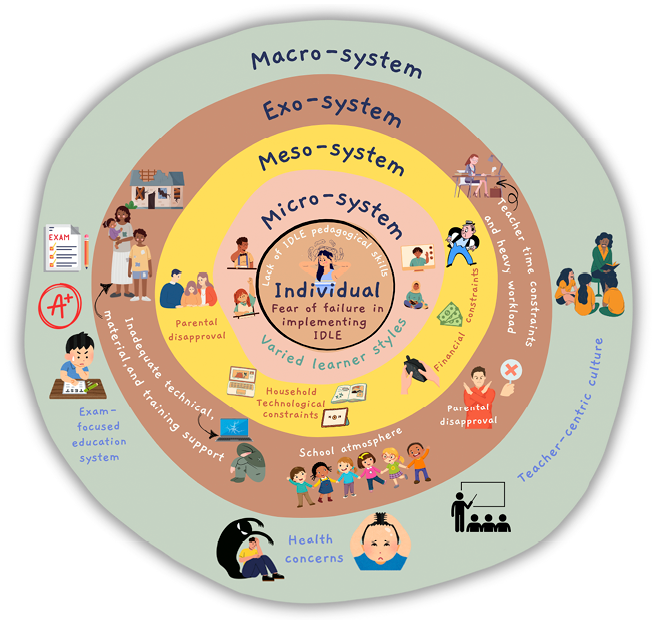
However, it is important to recognize that not every teacher is able to enhance their pedagogical or technological skills. For example, Becker (Reference Becker2022) found that most of the seventy-three EFL teachers surveyed in North Rhine-Westphalia, Germany, had never used video games in their teaching. Many cited a lack of interest in video games, uncertainty about effective methods, and unfamiliarity with the necessary teaching strategies. Similar barriers were reported by Hong Kong EFL teachers in Zadorozhnyy et al. (Reference Zadorozhnyy, Lai and Lee2025). Based on 470 survey responses from 159 teachers collected between 2019 and 2024, the challenges to integrating IDLE stemmed from both internal factors (like insufficient training and familiarity) and external pressures (such as exam-driven curricula and heavy workloads). Therefore, it becomes clear that while individual initiative is important, broader systemic or structural support is also essential to help teachers successfully bring innovative pedagogies like IDLE into schools.
3.2 Antecedents of IDLE
The exploration of IDLE’s benefits has sparked a deep interest in understanding the factors that encourage and sustain learners’ engagement with these digital learning environments. Researchers are eager to uncover what drives individuals to adopt IDLE practices and how these motivators can be nurtured to enhance language learning outcomes. These influential factors are grouped into three main categories: sociobiographic, learner-internal, and learner-external.
Sociobiographic Factors
Gender (Zhang & Liu, Reference Zhang and Liu2023)
Age (Rezai et al., Reference Rezai, Soyoof and Reynolds2024b)
Personality traits (Rezai et al., Reference Rezai, Soyoof and Reynolds2024b)
Family income (Rezai et al., Reference Rezai, Soyoof and Reynolds2024b)
Ethnicity (Zhang & Liu, Reference Zhang and Liu2023; Rezai et al., Reference Rezai, Soyoof and Reynolds2024b)
Number of digital devices in use (Zhang & Liu, Reference Zhang and Liu2023)
Majors (Zhang & Liu, Reference Zhang and Liu2023)
University type (Zhang & Liu, Reference Zhang and Liu2023)
Standardized test results (Zhang & Liu, Reference Zhang and Liu2023)
The demographic and social characteristics of learners significantly influence how they engage with IDLE. Elements, such as gender, age, personality traits, socioeconomic status, cultural background, ethnicity, and academic background, all play crucial roles in shaping their participation.
Gender impacts engagement levels in notable ways (Zhang & Liu, Reference Zhang and Liu2023). Research indicates that males and females often differ not only in how frequently they interact with IDLE but also in the types of activities they prefer (Zhang & Liu, Reference Zhang and Liu2023). For example, male learners might be more drawn to competitive gaming platforms or technology-focused forums, while female learners may gravitate toward collaborative learning apps or social media communities that foster communication and connection.
Age is another important factor influencing engagement with IDLE (Rezai et al., Reference Rezai, Soyoof and Reynolds2024b). Younger learners tend to favor games and entertainment-based methods, finding interactive apps, virtual reality experiences, and gamified learning platforms both engaging and relatable (Butler, Reference Butler2015; Sundqvist & Wikström, Reference Sundqvist and Wikström2015). These tools align with their familiarity with digital entertainment and their desire for immersive experiences. By contrast, older learners often prefer structured or academic content, such as online courses, webinars, and educational websites that provide formal instruction with clear objectives and outcomes (Rezai et al., Reference Rezai, Soyoof and Reynolds2024b). They might appreciate organized content that mirrors traditional educational settings and offers depth in specific subject areas.
Personality traits profoundly shape how learners approach IDLE (Rezai et al., Reference Rezai, Soyoof and Reynolds2024b). Individuals who are open to new experiences may eagerly explore diverse digital resources, experiment with unconventional learning methods, and embrace cutting-edge technologies. Their curiosity drives them to seek out innovative platforms and engage with a variety of content. On the other hand, learners who exhibit conscientiousness might adopt disciplined study schedules, utilize organized apps with progress-tracking features, and prefer platforms that allow them to set goals and monitor achievements (Rezai et al., Reference Rezai, Soyoof and Reynolds2024b). Their methodical nature ensures they make consistent progress and maintain focus on their learning objectives.
Socioeconomic status can greatly shape a learner’s experience with IDLE (Rezai et al., Reference Rezai, Soyoof and Reynolds2024b). Family income, for instance, often determines whether students have easy access to essential technology such as computers, tablets, or stable internet (Rezai et al., Reference Rezai, Soyoof and Reynolds2024b). Students from wealthier households typically enjoy a range of digital devices at their fingertips, allowing them to explore online resources freely and without barriers. In contrast, those from less advantaged backgrounds may struggle with limited or shared devices and unreliable internet, making it harder to fully participate in independent digital learning (Zhang & Liu, Reference Zhang and Liu2023). This gap reflects broader issues of digital inequality, where access, adaptability, and the ability to create knowledge using technology are crucial for inclusion in today’s digital world (Warschauer, Reference Warschauer2003). However, our research also shows that simply having access to devices and resources – which is often the case for students from higher socioeconomic backgrounds – does not automatically guarantee effective learning (Lee, Reference 66Lee2019). What truly matters is how students use these tools to achieve meaningful outcomes. Warschauer (Reference Warschauer2003) highlighted this point by critiquing the “hole-in-the-wall” project in India, where merely installing computer kiosks in communities did not necessarily lead to positive learning experiences, and sometimes even proved harmful. As he aptly put it, “minimally invasive education was, in practice, minimally effective education” (Warschauer, Reference Warschauer2003, p. 2). This underscores the importance of thoughtfully guided use of technology, rather than relying solely on access.
Cultural background and ethnicity significantly influence learners’ attitudes toward IDLE (Zhang & Liu, Reference Zhang and Liu2023; Rezai et al., Reference Rezai, Soyoof and Reynolds2024b). Cultural values and societal norms affect how learners perceive digital learning and the importance they place on acquiring English through digital means. For instance, in some cultures, there may be a strong emphasis on traditional face-to-face instruction, valuing direct interaction with teachers and classmates. In others, there might be widespread encouragement to embrace technology in education, viewing digital tools as essential for advancement and global communication. These cultural differences shape learners’ preferences, the types of content they engage with, and how much value they assign to digital English learning (Zhang & Liu, Reference Zhang and Liu2023; Rezai et al., Reference Rezai, Soyoof and Reynolds2024b). Understanding these nuances is crucial for developing effective and culturally responsive educational strategies.
Academic background is another key factor impacting engagement with IDLE (Zhang & Liu, Reference Zhang and Liu2023). A learner’s field of study, the type of university or educational institution they attend, and their academic performance can influence their participation. Students majoring in English, linguistics, or related disciplines may engage more actively in IDLE because it directly supports their academic and career aspirations (Zhang & Liu, Reference Zhang and Liu2023). For example, a student studying international relations might use language exchange apps to practice English with peers worldwide, enhancing both their language skills and cultural understanding. Similarly, learners with higher test scores or those attending universities that prioritize technology integration may be more inclined to incorporate IDLE into their learning routines (Zhang & Liu, Reference Zhang and Liu2023). Their academic environment fosters an atmosphere where digital learning is encouraged and readily accessible.
Internal Factors
Ideal L2 selves (Lee & Lu, Reference Lee and Lu2023; Liu et al., Reference Liu, Ma, Bao and Liu2023, Reference Liu, Darvin and Ma2024b; Zou et al., Reference Zou, Liu, Li and Chen2025)
Ought-to L2 selves (Liu et al., Reference Liu, Darvin and Ma2024b; Zou et al., Reference Zou, Liu, Li and Chen2025)
Enjoyment (Liu et al., Reference Liu, Darvin and Ma2024b)
International posture (Liu et al., Reference Liu, Ma, Bao and Liu2023)
Perceived usefulness toward IDLE (Zhang & Liu, Reference Zhang and Liu2022; Lee & Chiu, Reference Lee and Chiu2023; Liu et al., Reference Liu, Zhao and Yang2024; Rezai et al., Reference Rezai, Soyoof and Reynolds2024b)
Basic psychological needs (Fathali & Okada, Reference Fathali and Okada2018; Sockett & Toffoli, Reference Sockett, Toffoli, Dressman and Sadler2020; Toffoli, Reference Toffoli2020; Jeon, Reference Jeon2022; Zadorozhnyy & Lee, Reference Zadorozhnyy and Lee2024, Reference Lee, Nesi and Milin2025)
Perceived speaking skills (Zhang & Liu, Reference Zhang and Liu2023)
Self-efficacy (Barkati et al., Reference Barkati, Kiyanfar, Noughabi and Ershadi2024)
Digital literacy skills (Barkati et al., Reference Barkati, Kiyanfar, Noughabi and Ershadi2024; Rezai et al., Reference Rezai, Soyoof and Reynolds2024b)
Grit (Barkati et al., Reference Barkati, Kiyanfar, Noughabi and Ershadi2024)
Pride (Zou et al., Reference Zou, Liu, Li and Chen2025)
Emotion regulation strategies (Guo et al., Reference Guo, Yao and Lee2025)
Learner-internal factors revolve around the personal characteristics and psychological traits that drive individuals to participate in IDLE. These internal motivations are deeply rooted in how learners perceive themselves and their aspirations in mastering the English language.
One key driving force is the idea of the learner’s “ideal L2 self ” – the vision they hold of themselves as confident, capable English speakers in the future (Dörnyei, Reference Dörnyei, Dörnyei and Ushioda2009). This imagined self becomes a powerful source of motivation, pushing learners to immerse themselves in IDLE as they work toward making this vision a reality (Lee & Lu, Reference Lee and Lu2023; Liu et al., Reference Liu, Ma, Bao and Liu2023; Liu et al., Reference Liu, Darvin and Ma2024b; Zou et al., Reference Zou, Liu, Li and Chen2025). For example, Lee and Lu (Reference Lee and Lu2023) interviewed a student named Tim, who shared, “I have a few foreign friends on WeChat [Chinese popular social media]. We have become friends during the overseas music contest. I often talk about the music and musical instruments to them on WeChat [through speaking and typing] in my spare time” (p. 137). Tim’s experience highlights how a vivid ideal L2 self can encourage Chinese EFL students to actively participate in IDLE activities.
Alongside this internal motivation is the notion of the “ought-to L2 self,” which captures the external expectations and pressures learners feel – from academic demands, career ambitions, or broader cultural values that stress the importance of English (Dörnyei, Reference Dörnyei, Dörnyei and Ushioda2009). These outside influences create a sense of duty, further fueling learners’ commitment to mastering the language (Liu et al., Reference Liu, Ma, Bao and Liu2023; Liu et al., Reference Liu, Darvin and Ma2024b; Zou et al., Reference Zou, Liu, Li and Chen2025). These dual motivations – the ideal and ought-to selves – combine to push learners to actively seek out and persist in IDLE activities. The desire to fulfill personal aspirations while meeting societal expectations creates a strong internal drive that sustains their engagement over time.
Enjoyment plays a vital role in shaping learners’ dedication to IDLE (Liu et al., Reference Liu, Darvin and Ma2024b). When students truly find joy and satisfaction in their digital language activities, they are much more likely to stick with them (Liu et al., Reference Liu, Darvin and Ma2024b). This sense of enjoyment often springs from interactive language games, dynamic multimedia content, or meaningful online exchanges with others (Lee, Reference Lee2022a). Such positive experiences not only boost motivation but also transform language learning into a fun, engaging pursuit rather than a tedious obligation (Papi & Hiver, Reference Papi and Hiver2025).
While Lin (Reference Lin2023) did not directly measure enjoyment, the study focused on L2 interest – closely related to pleasure in learning – among 631 university students in the US taking various language courses (Chinese, French, Russian, and Spanish). Using “out-of-class L2 contact” as a variable, Lin tracked how often students used language resources outside the classroom, such as social media, movies, music, news, and emails. The findings revealed that students with higher interest in their new language engaged more frequently with these digital resources, suggesting that genuine curiosity and enjoyment can drive greater involvement in IDLE.
Another important motivator is the learner’s “international posture,” which refers to how they see themselves fitting into the global community (Yashima, Reference Yashima2002; Liu et al., Reference Liu, Ma, Bao and Liu2023). Learners with a strong international posture recognize that English is a global lingua franca and view proficiency in the language as a gateway to connecting with people worldwide. This perspective encourages them to engage with IDLE to enhance their ability to communicate across cultures, participate in international dialogues, and access global opportunities (Dizon, Reference Dizon2023; Lee & Lu, Reference Lee and Lu2023).
Learners’ engagement with IDLE is strongly influenced by how beneficial they perceive it to be for achieving their own educational and career ambitions (Zhang & Liu, Reference Zhang and Liu2022; Lee & Chiu, Reference Lee and Chiu2023; Liu et al., Reference Liu, Zhao and Yang2024; Rezai et al., Reference Rezai, Soyoof and Reynolds2024b). When students believe that IDLE can help them communicate more effectively, excel academically, or advance professionally, they become more willing to invest their time and effort. This practical recognition of IDLE’s value not only strengthens their motivation but also reinforces their commitment. The positive impact of IDLE is not limited to students alone; preservice English teachers benefit as well. Kusuma et al. (Reference Kusuma, Dewi and Paramartha2024) found that when EFL preservice teachers had rewarding experiences with IDLE in high school or through interactions with peers, they gained a deeper appreciation for its advantages and developed more positive attitudes toward its use. These encouraging attitudes could inspire future EFL teachers to incorporate IDLE into their own classrooms, potentially creating a lasting ripple effect on the students they teach. However, to fully understand the long-term impact of this process, further empirical research is needed.
The satisfaction of basic psychological needs, as outlined in self-determination theory, is also crucial in motivating learners (Deci & Ryan, Reference Deci and Ryan1985). This theory emphasizes three fundamental needs: autonomy, competence, and relatedness (Fathali & Okada, Reference Fathali and Okada2018; Sockett & Toffoli, Reference Sockett, Toffoli, Dressman and Sadler2020; Toffoli, Reference Toffoli2020; Jeon, Reference Jeon2022; Zadorozhnyy & Lee, Reference Zadorozhnyy and Lee2024). Learners who feel autonomous experience a sense of control over their learning choices and paths. Those who feel competent believe in their ability to succeed and master the language. The sense of relatedness refers to feeling connected with others – peers, instructors, or online communities – which can provide support and encouragement. When these needs are met, learners are more intrinsically motivated and actively engaged in IDLE. For example, learners who are confident in their speaking skills and possess strong self-efficacy – the belief in their ability to achieve goals – tend to participate more actively and effectively in digital language learning environments (Bandura, Reference Bandura1997; Barkati et al., Reference Barkati, Kiyanfar, Noughabi and Ershadi2024). This confidence allows them to tackle challenging tasks, engage in conversations without excessive fear of making mistakes, and persist despite obstacles.
Additional personal traits such as grit, resilience, and the ability to achieve a state of “flow” also play significant roles (Csikszentmihalyi, Reference Csikszentmihalyi2014; Barkati et al., Reference Barkati, Kiyanfar, Noughabi and Ershadi2024; Gao et al., Reference Gao, Wang and Reynolds2025). Grit involves perseverance and passion for long-term goals, enabling learners to stay committed to language learning even when faced with difficulties (Liu & Lee, Reference Liu, Lee, Toffoli, Sockett and Kusyk2023). Grit allows them to recover quickly from setbacks, maintaining their motivation and drive (Duckworth, Reference Duckworth2017). Achieving a state of flow – a deep immersion and enjoyment in an activity – enhances learning outcomes by fostering intense focus and a sense of fulfillment during IDLE activities (Csikszentmihalyi, Reference Csikszentmihalyi2014; Gao et al., Reference Gao, Wang and Reynolds2025).
Digital literacy is a critical factor influencing learners’ engagement with IDLE (Barkati et al., Reference Barkati, Kiyanfar, Noughabi and Ershadi2024; Rezai et al., Reference Rezai, Soyoof and Reynolds2024b). Learners must possess the necessary skills to navigate digital platforms, utilize online resources, and communicate effectively in virtual environments. Proficiency in using technology enables them to access a wide array of learning materials, participate in online communities, and tailor their learning experiences to their individual needs. Without sufficient digital literacy, learners may struggle to engage fully with IDLE, hindering their ability to benefit from its offerings (Rezai et al., Reference Rezai, Soyoof and Reynolds2024b).
Pride can be seen as a self-aware emotion that arises from achieving something meaningful, rooted in one’s own sense of accomplishment (Buechner et al., Reference Buechner, Pekrun and Lichtenfeld2018). It has two main forms: pride in personal achievement and pride from comparing oneself favorably to others. Zou et al. (Reference Zou, Liu, Li and Chen2025) discovered that feeling proud of one’s second language skills is closely connected to greater involvement in IDLE activities. This connection suggests that experiencing L2 pride gives students valuable chances to display their English abilities, which can boost their confidence and inspire them to engage even more in digital English learning beyond the classroom.
Guo et al. (Reference Guo, Yao and Lee2025) looked at how the ways students manage their emotions – specifically, through cognitive reappraisal and expressive suppression – relate to different styles of IDLE among 829 participants. Cognitive reappraisal is when someone tries to think about a situation differently to change how they feel about it – for example, seeing a tough assignment as a learning opportunity rather than a setback. Expressive suppression, on the other hand, is when someone tries to hide or hold back their emotional reactions, like keeping a straight face even when frustrated. The study found that students who regularly used cognitive reappraisal were much more likely to be in the “Active” group of IDLE learners, meaning they engaged more often and with greater enthusiasm in informal English learning online. In contrast, those who used expressive suppression less frequently tended to be “Passive” learners, participating less actively. In short, students who reframe their feelings in a positive way are more engaged in IDLE, while those who bottle up their emotions are more likely to take a backseat in their learning.
External Factors
Maternal scaffolding (Soyoof et al., Reference Soyoof, Reynolds, Neumann and Vazquez-Calvo2024)
Pedagogy (Peng et al., Reference Peng, Akhter and Hashemifardnia2025)
Authentic English use experience (Zhang & Liu, Reference Zhang and Liu2022; Lee & Chiu, Reference Lee and Chiu2023)
Educational systems (Rezai et al., Reference Rezai, Soyoof and Reynolds2024b)
External factors encompass the social and environmental conditions that shape how learners participate in IDLE. These elements, existing outside the individual, play a significant role in influencing learners’ engagement with informal digital language learning.
Parental support is a significant factor shaping learners’ engagement in IDLE activities (Soyoof et al., Reference Soyoof, Reynolds, Neumann and Vazquez-Calvo2024). When parents actively encourage and assist their children’s language learning, they can create meaningful opportunities for practice and growth (Tao & Xu, Reference Tao and Xu2022; Seo, Reference Seo2025). This support may involve providing technological resources – such as computers, tablets, or smartphones with internet access – and recommending educational websites, language learning apps, or online courses (Seo, Reference Seo2025). For example, parents might introduce interactive English-learning games or encourage watching educational videos in English. However, it is important to acknowledge that not all parents have the same level of resources or digital literacy, which can affect the consistency and effectiveness of their involvement (Guo & Lee, Reference Guo and Lee2023). Additionally, while parental encouragement can be highly beneficial, excessive pressure or unrealistic expectations may sometimes lead to anxiety or reduced motivation for learners (Park, Reference 71Park2009).
With respect to teacher pedagogy, Peng et al. (Reference Peng, Akhter and Hashemifardnia2025) carried out a study with seventy Iranian female EFL learners to explore the impact of innovative teaching methods. Over eight weeks, participants attended seventeen sessions of podcast-enhanced speaking classes, each lasting 90 minutes and held twice a week. The podcasts delved into a wide range of topics, from technology and culture to global issues. To encourage learning beyond the classroom, students were also assigned supplementary activities – reviewing podcasts, joining online discussion forums, and keeping reflective journals – to deepen their experience with IDLE. In this study, IDLE was assessed broadly, covering form-focused, game-based, receptive, and productive activities. The results showed that students who participated in the podcast-integrated speaking sessions demonstrated significantly higher engagement in IDLE than those in the control group.
Exposure to authentic English greatly enhances learners’ motivation and engagement (Zhang & Liu, Reference Zhang and Liu2022; Lee & Chiu, Reference Lee and Chiu2023). Interacting with native speakers provides practical experience that helps learners grasp nuances, idioms, and cultural references inherent in everyday communication. This interaction might occur through language exchange programs, online chat platforms, or international social networks (Lee, Reference Lee2022a). Additionally, consuming real-world English content, such as movies, television shows, music, podcasts, and books, immerses learners in the language in a natural and engaging way. For example, a student who regularly watches English-language films or participates in online communities centered around topics of interest may develop stronger language skills and increased confidence in using English. This authentic exposure makes learning more relevant and enjoyable, reinforcing their commitment to improving their proficiency (Zhang & Liu, Reference Zhang and Liu2022; Lee & Chiu, Reference Lee and Chiu2023).
Educational institutions, including schools and universities, play a crucial role in either promoting or hindering IDLE participation (Rezai et al., Reference Rezai, Soyoof and Reynolds2024b). When these institutions integrate digital tools into their teaching, they provide students with additional avenues to engage with the language outside traditional classroom settings. For instance, a school might incorporate language learning apps into the curriculum, offer access to online English resources, or encourage the use of educational technology in assignments. Teachers can provide guidance on effective practices, such as how to utilize online forums for language exchange or how to critically evaluate digital content. By creating environments that promote independent learning, educational institutions empower students to take control of their language development and explore resources that align with their interests and learning styles. Conversely, if schools neglect to provide technological access or discourage the use of digital platforms, they may unintentionally block students from benefiting from IDLE opportunities (Rezai et al., Reference Rezai, Soyoof and Reynolds2024b).
In the next section, we will delve into practical ways to embed IDLE into educational systems, exploring concrete steps and initiatives that can ensure its long-term success. This includes discussing policy recommendations, curriculum integration, teacher training, and community involvement to create a holistic approach that benefits learners at all levels.
4 Bringing IDLE into Schools and Communities
4.1 Challenges of Bringing IDLE into Formal Education
For a decade or so, researchers and educators have championed the integration of IDLE into formal education (Lee & Chik, Reference Lee and Chik2025). Yet, its adoption has been slow and uneven (Sundqvist & Sylvén, Reference Sundqvist and Sylvén2016; Arndt & Lyrigkou, Reference Arndt and Lyrigkou2019; Hubbard, Reference Hubbard, Dressman and Sadler2020; Lee, Reference Lee, Reinders, Lai and Sundqvist2022b; Dressman et al., Reference 61Dressman, Lee and Perrot2023). A variety of obstacles – ranging from systemic limitations to teacher readiness and local educational conditions – stand in the way of widespread implementation (Zadorozhnyy et al., Reference Zadorozhnyy, Lai and Lee2025).
Take Hong Kong as an example: structural barriers make up 73% of the challenges to IDLE adoption. Among these, two major issues dominate – overburdened teachers (50%) and rigid, exam-focused curricula (23%; Zadorozhnyy et al., Reference Zadorozhnyy, Lai and Lee2024, Reference Zadorozhnyy, Lai and Lee2025). These pressures leave little room for experimenting with innovative methods like IDLE, as the emphasis remains on meeting institutional goals.
By contrast, Indonesian schools face a different set of hurdles, with 64.8% of obstacles stemming from individual and local factors. These include gaps in teacher skills (21.3%), difficulties motivating students (22.2%), and infrastructure problems like unreliable Wi-Fi (10.2%; Lee, Reference Lee2024). These examples illustrate how the challenges of implementing IDLE vary significantly depending on the country’s education policies, resources, and classroom dynamics.
Efforts to introduce IDLE often fail when implemented through top-down directives that ignore local realities (Lee et al., Reference Lee, Nesi and Milin2025; Zadorozhnyy et al., Reference Zadorozhnyy, Lai and Lee2025). While national policies may endorse IDLE in theory, its success depends on how well schools and teachers adapt it to their specific circumstances (Lee et al., Reference Lee, Nesi and Milin2025). Without addressing the unique structural and contextual challenges in each setting, IDLE remains an underused and undervalued teaching approach (see Figure 4).
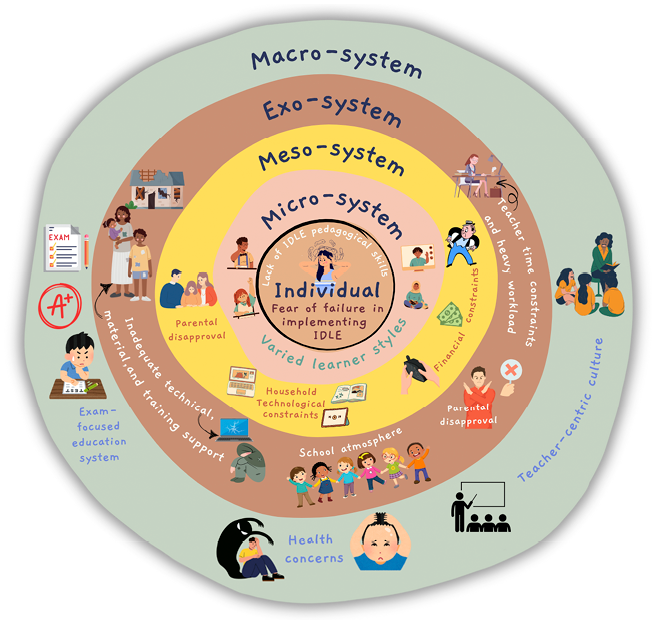
Figure 4 Ecological Factors Affecting Teachers’ IDLE Integration into Practice
4.2 The IDLE Continuum Model
The IDLE Continuum Model offers a practical, adaptable framework for blending informal digital learning with formal education (Lee, Reference Lee2022a). Instead of relying on rigid, top-down methods, this model emphasizes a bottom-up approach, giving teachers the freedom to craft IDLE programs that address their students’ needs and fit their local contexts. By tailoring these programs, IDLE becomes not only more meaningful but also more sustainable over time.
The model organizes learning spaces into four key dimensions using Formality, Location, Pedagogy, and Locus of Control (Benson, Reference Benson, Benson and Reinders2011b; Reinders & Benson, Reference Reinders and Benson2017; Lee, Reference 66Lee2019). As discussed earlier, these dimensions create four distinct types of learning environments (Lee, Reference Lee2024): (a) formal digital learning, (b) nonformal digital learning, (c) extracurricular learning, and (d) extramural learning. This continuum allows teachers to design programs that gradually shift from structured, teacher-controlled environments to more independent, student-driven learning (Liu et al., Reference Liu, Zhao and Yang2024). For example, Lee (Reference Lee2022a) suggests starting with “weak IDLE” approaches, such as guided extracurricular activities, and progressively moving toward “strong IDLE” practices, where students independently explore digital tools to learn languages.
Research supports the effectiveness of this model. Zhang and Liu (Reference Zhang and Liu2022), in a study involving 1,080 Chinese EFL students, used structural equation modeling to show how IDLE can help learners transition from extracurricular to extramural contexts. This shift not only increased students’ engagement but also boosted their autonomy, demonstrating how the IDLE Continuum Model can effectively bridge the gap between formal and informal learning spaces.
The Teacher-Supported IDLE Continuum Model
The Teacher-Supported IDLE Continuum Model marks a notable step forward from Sundqvist and Sylvén’s (Reference Sundqvist and Sylvén2016) influential differentiation between formal and informal language learning. While their foundational research effectively captures the environments and activities – referred to as “extramural” – that foster meaningful informal language development, it does not provide explicit guidance on how educators can systematically cultivate the learner autonomy required for such engagement. Addressing this gap, the Teacher-Supported IDLE Continuum transforms IDLE’s descriptive landscape into a practical, pedagogically grounded model. Through the integration of the Gradual Release of Responsibility framework (Pearson & Gallagher, Reference Pearson and Gallagher1983), this model offers educators a clear, structured trajectory to guide learners from reliance on teacher direction toward independent, self-motivated language learning.
Liu et al. (Reference Liu, Zhao and Yang2024), building on this conceptual foundation and leveraging strong collaborations between schools and universities (Sato et al., Reference Sato, Loewen and Pastushenkov2022), have articulated a model that artfully bridges theory and classroom application. Unlike methods that simply introduce learners to digital language resources in hopes of spontaneous growth, the Teacher-Supported IDLE Continuum deliberately scaffolds learner autonomy, ensuring students progressively take ownership of their language journey.
The model is structured into four sequential stages, each aligning with the dimensions of the IDLE model (Liu et al., Reference Liu, Zhao and Yang2024; see Figure 5):
Stage 1 (Teacher-Controlled): Learning is firmly anchored in traditional classroom dynamics, with teachers curating all materials and directing instruction.
Stage 2 (Joint Responsibility): Responsibility is shared, as learning extends beyond the classroom through collaborative, structured activities that lay the foundations for student autonomy.
Stage 3 (Low Learner-Driven): Students begin to exercise agency, engaging in semi-structured digital activities that encourage exploration and independent decision-making, thus realizing “weak extramural IDLE.”
Stage 4 (High Learner-Driven): Learners achieve full autonomy, leveraging digital resources to pursue self-determined language objectives, embodying “strong extramural IDLE.”
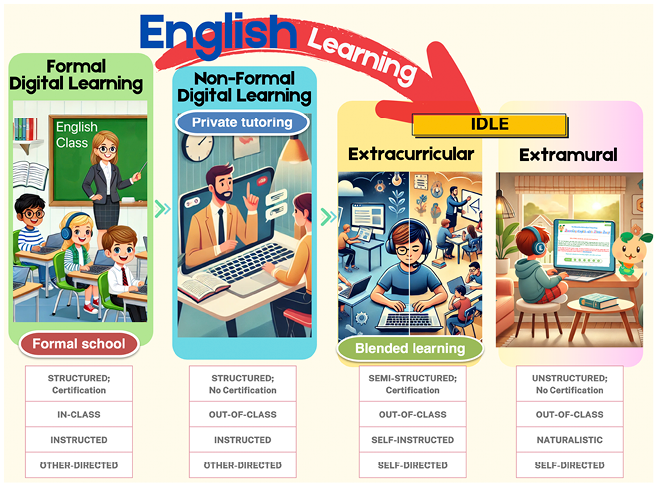
Figure 5 IDLE Continuum Model Pathway
A central strength of the continuum is its adaptability across varied educational contexts. Teachers may select the most appropriate entry stage based on their professional judgment and the realities of their institutional settings. For example, educators in innovative or international schools, endowed with greater autonomy and resources, might initiate the process at Stage 3 and advance quickly to Stage 4. Conversely, teachers in more traditional, resource-limited, or hierarchical school settings may choose to begin at Stage 1, gradually transitioning through subsequent stages and selectively incorporating higher stages as conditions permit.
As learners advance through these stages, the teacher’s role evolves accordingly:
Stage 1: Teachers act as planners and direct instructors, delivering highly structured lessons.
Stages 2 and 3: The teacher transitions to a facilitator, guiding students through authentic, student-centered digital tasks and fostering critical engagement.
Stage 4: The teacher becomes a mentor, supporting students’ reflective practices and helping them continuously refine their strategies for sustained, independent learning.
This phased approach ensures that students are not abruptly thrust into self-directed learning; instead, responsibility is transferred gradually, with continuous support provided as learners build the skills and confidence essential for autonomous, lifelong language learning (Lee, Reference Lee2024). Evidence from Liu et al. (Reference Liu, Zhao and Yang2024) attests to the model’s effectiveness: in a twelve-week intervention involving ninety Chinese EFL university students, those who experienced the full teacher-supported IDLE continuum demonstrated the greatest improvements in willingness to communicate in English, outperforming their peers in both traditional and unsupervised IDLE groups. These findings underscore the indispensable role of educators in scaffolding the path toward learner independence.
In summary, while the IDLE continuum builds on earlier distinctions between extracurricular and extramural learning (Sundqvist, Reference Sundqvist2009; Sundqvist & Sylvén, Reference Sundqvist and Sylvén2016), its contribution is not simply terminological. Rather than presenting parallel categories, the continuum conceptualizes learners’ engagement as a developmental trajectory – moving from teacher-supported, structured activities (“weak IDLE”) toward fully independent, passion-driven practices (“strong IDLE”). This framing highlights IDLE as a dynamic process rather than a fixed state, and it positions the continuum as both a descriptive tool and a practical tool for guiding transitions across contexts. In this sense, the model is distinctive in linking empirical evidence of learner agency with broader questions of educational and social impact.
4.3 From Academic to Social Impact
Traditionally, the measure of success within academia has relied heavily on quantitative tools, such as citation counts, journal impact factors, and the H-index (Lee, Reference Lee, Nesi and Milin2025). The H-index, introduced by Hirsch in 2005, tracks how frequently a researcher’s work is cited by others, serving as a numerical indicator of their influence and productivity within the scholarly community. These metrics have long been considered the benchmarks for academic achievement, reflecting the extent to which one’s work contributes to and is recognized by the field (Lee, Reference Lee, Nesi and Milin2025).
In recent years, alternative metrics known as altmetrics have gained significant traction to gauge a researcher’s influence beyond traditional academic circles (Sugimoto et al., Reference Sugimoto, Work, Larivière and Haustein2017). Altmetrics measure online engagement through social media mentions, blog posts, news coverage, and other digital platforms. By capturing the attention a piece of research garners in the broader public sphere, altmetrics offer a more holistic view of its impact, highlighting how scholarly work resonates with and influences society at large (Sugimoto et al., Reference Sugimoto, Work, Larivière and Haustein2017).
Recognitions, such as inclusion in Stanford/Elsevier’s Top 2% Scientist Rankings, further underscore individual achievements in academia (Ioannidis et al., Reference Ioannidis, Baas, Klavans and Boyack2019). Being listed among the top scientists signifies that a researcher has made substantial contributions to their field, with work that stands out in terms of innovation, relevance, and citation frequency (Lee, Reference Lee, Nesi and Milin2025). Such accolades not only honor personal accomplishments but also enhance the visibility of a researcher’s work on a global scale.
In applied fields such as language teaching and learning, research has been a driving force behind innovation in areas, such as applied linguistics and Teaching English to Speakers of Other Languages (TESOL). Scholarly contributions have led to the development of new methodologies, educational technologies, and instructional approaches that address the evolving needs of learners. Leading journals such as Innovation in Language Learning and Teaching and influential book series such as New Language Learning and Teaching Environments serve as platforms to showcase these advancements. They disseminate cutting-edge research, share best practices, and foster dialogue among educators and researchers dedicated to enhancing language education (Lee, Reference Lee, Nesi and Milin2025).
However, despite these efforts, critics often point out that academic research often falls short of addressing the real-world challenges faced by educators and learners (Fagerberg et al., Reference Fagerberg, Mowery and Nelson2005; Lee et al., Reference Lee, Nesi and Milin2025). There is a growing concern that a disconnect exists between theoretical developments and practical application (Sato et al., Reference Sato, Loewen and Pastushenkov2022). Some common limitations highlighted include (Fagerberg et al., Reference Fagerberg, Mowery and Nelson2005; Sato et al., Reference Sato, Loewen and Pastushenkov2022; Lee, Reference Lee2024, Reference Lee, Nesi and Milin2025):
Lack of connection to real needs: Research often overlooks the specific and unique challenges of local communities. Scholars may focus on global or generalized issues without considering the cultural, economic, or social contexts that affect how educational strategies are received and implemented at the local level.
Issues without relevance and practicality: Innovations proposed in academic studies may appear promising in theory but fail to meet the practical demands of real-world contexts. Educators and learners might find these solutions impractical due to resource constraints, differing priorities, or logistical challenges inherent in their educational environments.
Uncertain long-term impact: Many solutions lack follow-through, with little attention to their sustainability or lasting value after their initial adoption. Without ongoing support, assessment, and adaptation, interventions introduced by research may diminish over time, limiting their effectiveness and the extent of their benefits.
To address this gap between academic research and societal needs, frameworks such as the United Kingdom’s Research Excellence Framework (REF) and Hong Kong’s University Grants Committee (UGC) emphasize the importance of research outcomes that extend “beyond academia.” Both REF and UGC assess not only the scholarly quality of research but also its tangible impact on policies, practices, and public well-being (Research Excellence Framework, 2021; University Grants Committee, 2023). In this book, social impact is defined as “the demonstrable contributions, beneficial effects, valuable changes or advantages that research qualitatively brings to the economy, society, culture, public policy or services, health, the environment or quality of life; and that are beyond the academia” (University Grants Committee, 2023, p. 20). By measuring research according to its real-world effects, REF and UGC encourage academics to consider the broader significance of their work. Both organizations highlight two main criteria:
Reach: This criterion examines how widely the research benefits individuals and organizations across different sectors. It considers the breadth of influence, assessing whether the research positively impacts a diverse range of communities, industries, and societal groups beyond the immediate academic audience.
Significance: This focuses on the depth of the research’s influence on practices, policies, or broader societal understanding. It evaluates the extent to which the research brings about meaningful change, contributes to solving pressing problems, or advances knowledge in a way that has substantial real-world implications.
While the social impact of research is intended to address real-world challenges and improve lives (Smit & Hessels, Reference Smit and Hessels2021), there is still no clear framework for approaching language learning and teaching from this angle. The following section introduces a foundational model built around care, innovation, and sustainability.
4.4 Care–Innovation–Sustainability (CIS) Model
The Care–Innovation–Sustainability (CIS) Model (see Figure 6) presents a dynamic, context-sensitive roadmap for weaving innovation into language education (Lee, Reference Lee, Nesi and Milin2025). It is a holistic and structured approach that champions empathy, school-university collaboration, and long-term impact.
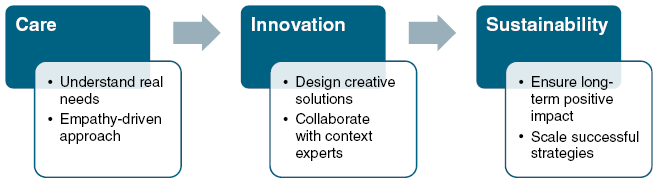
Figure 6 The Care–Innovation–Sustainability Model
Care: Empathy in Action
At the heart of the model is Care, which mirrors the “empathy” phase in design thinking (Brown, Reference Brown2009). This stage is about deeply understanding the unique challenges and needs of beneficiaries (e.g., learners). It goes beyond a simple survey – it demands time, presence, and trust-building (Razzouk & Shute, Reference Razzouk and Shute2012). Educators must observe, engage, and listen actively to uncover the real, lived experiences of students (Gallagher & Thordarson, Reference Gallagher and Thordarson2018). These insights must then be translated into clear, actionable goals. If the problem remains vague or overly complex, it becomes difficult to design meaningful solutions or measure success (Brown, Reference Brown2009; Lee, Reference Lee, Nesi and Milin2025).
Innovation: Purposeful and Contextual
Once the needs are clearly defined, Innovation takes center stage (Rogers, Reference Rogers2003). This phase introduces new methods or technologies tailored to address the identified challenges (Fagerberg et al., Reference Fagerberg, Mowery and Nelson2005). Crucially, innovation thrives when context experts – such as frontline teachers – are involved (Elliott, Reference Elliott1991; Lee et al., Reference Lee, Nesi and Milin2025). Their deep understanding of the local environment (e.g., tech infrastructure and school culture) and commitment to change are vital (Hockly, Reference Hockly2014). These experts not only help implement the innovation but also connect researchers with key stakeholders and provide logistical support (Reinders et al., Reference Reinders, Park and Lee2025). When universities and schools collaborate, they create a powerful synergy: teachers bring real-world insights and support, while researchers contribute theory, design, and tools to evaluate and refine interventions (Hargreaves & Fullan, Reference Hargreaves and Fullan2012; Sato et al., Reference Sato, Loewen and Pastushenkov2022).
Sustainability: Lasting Impact
The final pillar, Sustainability, ensures that innovations endure and evolve (Hargreaves & Fullan, Reference Hargreaves and Fullan2012). It involves rigorous impact assessment, diverse feedback collection, and strategic scaling (Fowler et al., Reference Fowler, Coffey and Dixon-Fowler2019). Unlike academic projects that rely on limited data, social impact initiatives require a rich mix of evidence – testimonials, classroom observations, and more – to truly gauge effectiveness (Research Excellence Framework, 2021; Smit & Hessels, Reference Smit and Hessels2021). Ongoing monitoring helps determine which partnerships to continue and where to focus efforts. This selective approach is key to tracking long-term benefits and refining strategies (Hockly, Reference Hockly2014).
Ultimately, the CIS model aims to transform language education through empathetic, collaborative, and sustainable practices (Fullan, Reference Fullan2007; Lee, Reference Lee, Nesi and Milin2025). This paradigm shift invites scholars to collaborate more closely with practitioners, policymakers, and the communities they aim to serve (Sato et al., Reference Sato, Loewen and Pastushenkov2022; Sato & Cárcamo, Reference Sato and Cárcamo2024). By doing so, they can develop research initiatives that are grounded in real-world contexts, tailored to specific needs, and designed for long-term viability.
4.5 Integrating the CIS into the IDLE Continuum Model
In under-resourced educational contexts such as Indonesia, English language proficiency is closely linked to the availability of learning opportunities both within and beyond formal schooling (Mitra et al., Reference Mitra, Tooley, Inamdar and Dixon2003; Hockly, Reference Hockly2014; Lee et al., Reference Lee, Nesi and Milin2025). The IDLE model offers a conceptual and pedagogical bridge between home and school environments (Soyoof et al., Reference Soyoof, Reynolds, Neumann and Vazquez-Calvo2024; Lee et al., Reference Lee, Nesi and Milin2025). This section illustrates how the CIS model is operationalized within the IDLE continuum, impacting over 2,800 Indonesian students.
Care Phase
Indonesian learners face persistent challenges in acquiring English as a foreign language, particularly in under-resourced settings (Zein, Reference Zein2017; Lee, Reference Lee2024). Outside formal education, opportunities for authentic language use are scarce, and socioeconomic constraints further limit access to supplementary learning resources (Lamb, Reference Lamb2004, Reference Lamb2007, Reference Lamb2013; Lee & Drajati, Reference Lee and Drajati2019b; Lee, Reference Lee2024). With an average household income of approximately Indonesian Rupiah 4.2 million (USD 280) per month, many families are unable to afford private tutoring or extracurricular language programs, resulting in restricted exposure to English beyond the classroom (UNICEF, 2020).
Fieldwork conducted in 2024 revealed that students from low-income backgrounds rarely engaged in speaking English, perpetuating cycles of low self-confidence and impeding the development of communicative fluency (Lee, Reference Lee2024). A comprehensive survey of 2,830 students across more than 20 schools substantiated these observations (Lee, Reference Lee2024). The data indicated that learners spent less than 1 hour per month on fourteen out of sixteen English-related activities, with productive skills – speaking and writing – receiving minimal attention. In contrast, receptive activities such as listening to English music (69 minutes/month) and using language-learning applications (63 minutes/month) were more prevalent. Speaking and writing practice averaged under 20 minutes per month, highlighting a critical gap in skill acquisition (Lee, Reference Lee2024). These findings underscored the urgent need for innovative, scalable, and cost-effective interventions to address the lack of practice and support meaningful improvements in English proficiency (Lee et al., Reference Lee, Nesi and Milin2025).
From 2020 to 2024, our research team – including Lee, colleagues, graduate students, and Indonesian university partners – laid the groundwork to combat these challenges through strategic partnerships (Sulistyawati, Reference Sulistyawati2025). Collaborations with TEFLIN – The Indonesian Association for English Language Teaching – and Universitas Sebelas Maret (UNS) led to the creation of platforms that trained over 5,500 educators in cutting-edge technology and IDLE methodologies. These initiatives equipped teachers to incorporate IDLE strategies into their classrooms effectively (Lee et al., Reference Lee, Nesi and Milin2025; Sulistyawati, Reference Sulistyawati2025). In 2024, a renewed five-year Memorandum of Understanding with UNS solidified this ongoing partnership.
Building on similar research into the challenges faced by EFL teachers in Hong Kong (Zadorozhnyy et al., Reference Zadorozhnyy, Lai and Lee2025), a pilot study was conducted in March 2024 involving fifty-one Indonesian teachers from over forty schools. The initial results highlighted key obstacles to adopting IDLE techniques, such as a lack of familiarity with the pedagogy (21.3%), challenges in motivating disengaged students (22.2%), and systemic issues such as financial struggles at home (11.1%) and insufficient school infrastructure (10.2%). By grounding the intervention design in the real experiences of Indonesian educators and learners, the Care phase ensured that the solutions developed were not only academically robust but also deeply relevant and sustainable within their specific contexts. This approach set the stage for targeted innovations tailored to meet the urgent needs of underserved communities (Brown, Reference Brown2009).
Innovation Phase
To expand the reach and deepen the educational impact of the IDLE initiative, a “train-the-trainer” approach was implemented, allowing expertise to spread systematically across the education sector (Marks et al., Reference Marks, Sisirak and Chang2013; Nexø et al., Reference Nexø, Kingod, Eshøj, Kjærulff, Nørgaard and Andersen2024). In the initial phase, fifteen master educators underwent intensive training in IDLE methodologies (Lee, Reference Lee2024). These master educators then mentored twenty-five frontline teachers from twenty-two schools, who integrated IDLE strategies into their classrooms. Between September and November 2024, this rollout directly impacted 2,820 students (Sulistyawati, Reference Sulistyawati2025). By embedding IDLE activities into everyday lessons, teachers provided students with consistent opportunities to engage with English, significantly increasing language exposure and practice (Lee et al., Reference Lee, Nesi and Milin2025).
The intervention yielded remarkable results (Lee et al., Reference Lee, Nesi and Milin2025). Across participating schools, students demonstrated a substantial increase in English engagement. Monthly time spent on receptive skills such as listening and reading jumped from 261 minutes to 510 minutes. Even more striking, time dedicated to productive skills such as speaking and writing surged by 143%, climbing from 234 to 570 minutes per month. Students also experienced emotional and psychological benefits: enjoyment scores rose from 3.67 to 4.50 (out of 5), emotional well-being improved from 3.55 to 4.12, and feelings of boredom decreased from 2.48 to 2.12. Furthermore, communicative confidence and competence advanced significantly, with willingness to speak English increasing from 3.25 to 3.72 and overall perceived communication proficiency improving by over 10 points (from 40.3 to 50.6 out of 100).
These outcomes underscore the effectiveness of IDLE in fostering a positive emotional environment, breaking down psychological barriers, promoting learner autonomy, and developing essential communication skills. The success of the program spurred institutional adoption, with twelve schools officially integrating IDLE into their English curricula, making it a core component of daily instruction (Sulistyawati, Reference Sulistyawati2025).
Case Illustration: Ms. Kiki’s Webtoon Revolution
Ms. Kiki, a dedicated frontline teacher, pioneered the use of webtoons as an effective tool for language learning. After attending the International Knowledge Transfer Forum, she explored how informal digital resources like webtoons could support English instruction (Lee et al., Reference Lee, Nesi and Milin2025). Her journey gained momentum in August 2024 when she participated in a capacity-building workshop focused on integrating IDLE into technology-enhanced classrooms. The workshop emphasized how students naturally engage with English through digital media, encouraging teachers to design interactive, learner-centered lessons.
During the workshop, Ms. Kiki stood out for her active participation. She asked practical questions, shared detailed lesson plans, and provided examples of her teaching strategies through photos saved on her phone. In a follow-up interview, she described IDLE as a framework that aligned with her teaching goals. Her school’s support for her innovative methods further enabled her to implement these ideas effectively.
Ms. Kiki’s use of webtoons in her classroom had a noticeable impact on her students. Recognizing that many of them spent time reading webtoons after school, she integrated this interest into her lessons. During a site visit, the research team observed how her approach engaged even the quietest students, who enthusiastically discussed their favorite webtoons, using gestures, translanguaging, and peer collaboration to communicate in English.
In one observed lesson:
Warm-Up (5 minutes): Ms. Kiki introduced English-language webtoon platforms and invited students to share their favorite webtoons. One student, with limited English vocabulary, managed to describe her chosen story using gestures and peer support, showing determination to express herself in English.
Group Work (30 minutes): Students worked in teams to debate characters and plot twists, actively exchanging ideas.
Presentation (10 minutes): Groups presented summaries of their favorite webtoons, and for homework, students were asked to write an essay analyzing their chosen webtoon.
Students credited Ms. Kiki’s approach with increasing their motivation and making English learning more relevant to their interests. By incorporating webtoons, she created opportunities for meaningful engagement with the language in a context familiar to her learners. Ms. Kiki’s work demonstrates how educators can use informal digital media to make language learning relatable and effective. Her approach highlights the potential of IDLE to foster engagement, support learner autonomy, and encourage authentic language use.
Sustainability Phase
Between January and May 2025, the IDLE initiative entered its consolidation phase, focusing on eight schools and seven highly committed educators. What began in spring 2024 with training over 100 teachers was narrowed down to 25 by summer 2024 when the program launched, and ultimately to a core group of 7 educators who demonstrated unwavering dedication and were strongly supported by their schools and leadership. This phase marked the introduction of a rigorous experimental research design – developed in collaboration with Indonesian partners – that included control groups to generate robust evidence of the program’s effectiveness. While data analysis is still ongoing, preliminary findings offer valuable insights into the initiative’s sustainability.
The selection of the seven teachers was a deliberate process shaped by real-world constraints. Initially, around 100 teachers expressed interest in the program. However, challenges such as personal health, limited access to technology, and administrative workloads led many to withdraw (Ruspini, Reference Ruspini2002). The remaining seven educators stood out for their high commitment, building strong professional relationships with the research team through ongoing training, informal conversations, and school-based observations. This trust-based collaboration has set the stage for a longitudinal study to assess the program’s sustained impact (Melnyk & Morrison-Beedy, Reference Melnyk and Morrison-Beedy2012).
To enhance the methodological rigor, the team adopted Experience Sampling Method (ESM), allowing real-time data collection on students’ engagement with IDLE activities (Arndt et al., Reference Arndt, Granfeldt and Gullberg2023; Lee & Chiu, Reference Lee and Chiu2024). This approach provided more reliable and detailed insights. Along with pre- and post-surveys, the research team gathered diverse evidence, including classroom observations, teacher interviews, testimonials, and local media coverage. This multidimensional data offers a comprehensive view of the program’s social impact (Sulistyawati, Reference Sulistyawati2025), strengthening the case for scaling IDLE to other regions in Indonesia and similar contexts in the Global South (Research Excellence Framework, 2021).
Capacity building remained central to the initiative. Graduate students from Indonesia and Hong Kong participated actively in the project, gaining hands-on experience in community-based research and collaborative methodologies (Lee, Reference Lee2024). This involvement not only enhanced their academic and research skills but also empowered them to lead future social impact projects. For instance, one doctoral student is currently writing her dissertation based on her work with the initiative. Upon graduation, she is expected to lead similar projects, amplifying the program’s influence and fostering a ripple effect among educators, researchers, and emerging scholars.
A significant lesson learned during this phase was the strategic use of technology. Initially, the team partnered with a commercial AI provider to assess students’ speaking fluency. While this generated excitement at first, both teachers and students faced challenges with the product’s complexity and inaccuracies. For researchers, the high cost of the tool was another barrier. These experiences highlighted the need for affordable, user-friendly, and contextually appropriate technologies (Hockly, Reference Hockly2014; Lee, Reference Lee2024). As a result, the team is now developing AI-mediated IDLE using free, open-source tools in collaboration with an ed-tech company based in the Global South, ensuring greater accessibility and alignment with local needs (Kim, Reference Kim2009).
Institutional engagement played a crucial role in reinforcing the program’s sustainability (Melnyk and Morrison-Beedy, Reference Melnyk and Morrison-Beedy2012). A dedicated forum brought together key stakeholders, including a senior advisor to the Indonesian Minister of Education, the president of TEFLIN, and representatives from an NGO school network (Sulistyawati, Reference Sulistyawati2025). These discussions explored pathways for policy integration, laying the groundwork for governmental endorsement and the potential inclusion of IDLE in the national curriculum. Institutional support not only validates the program’s effectiveness but also paves the way for systemic reform in English language education across Indonesia (Lee, Reference Lee, Nesi and Milin2025).
5 Future Directions for IDLE
This section envisions how IDLE can evolve and flourish in the coming years, driven by new practices, fresh research, and broader community engagement. It highlights five promising pathways for growth: (a) reaching new populations and settings – including those where languages other than English (LOTE) are spoken; (b) exploring a wider range of conceptual frameworks to enrich IDLE; (c) pioneering innovative research methods; (d) weaving IDLE more deeply into school environments; and (e) harnessing IDLE’s potential for meaningful social impact. Each direction aims to broaden, deepen, and elevate IDLE’s role in language education and beyond.
5.1 Expanding Horizons: New Populations and Contexts
IDLE research has gained momentum over the past five years, with studies spanning more than ten regions around the globe – from Hong Kong and Iran to Indonesia and Sweden (Lee, Reference Lee2022a; Dressman et al., Reference 61Dressman, Lee and Perrot2023; Soyoof et al., Reference Soyoof, Reynolds, Vazquez-Calvo and McLay2023). Yet, much of this work zeroes in on university and high school students in European and Asian EFL settings (Soyoof et al., Reference Soyoof, Reynolds, Vazquez-Calvo and McLay2023; Kusyk et al., Reference Kusyk, Arndt, Schwarz, Yibokou, Dressman, Sockett and Toffoli2025). To capture the full landscape of IDLE, future research needs to reach beyond these boundaries, delving into a richer variety of age groups, cultures, and communities whose stories with IDLE have yet to be told.
A significant blind spot remains: the Global South (Lamb, Reference Lamb2004, Reference Lamb2007, Reference Lamb2013; Farid & Lamb, Reference Farid and Lamb2020; Lee et al., Reference Lee, Nesi and Milin2025). The Global South is not just a geographic or economic label – it is a crucial perspective that challenges Western-centric viewpoints and amplifies the voices of communities that have often been overlooked (Pennycook & Makoni, Reference Pennycook and Makoni2019). This includes not only large parts of Africa, Asia, Latin America, and the Middle East, but also marginalized groups within the Global North itself (Dressman et al., Reference Dressman, Lee and Sabaoui2016; Liu & Darvin, Reference Liu and Darvin2023; Lee, Reference Lee2024, Reference Lee, Nesi and Milin2025; Soyoof et al., Reference Soyoof, Reynolds, Neumann and Vazquez-Calvo2024; Rezai et al., Reference Rezai, Ashkani and Moradian2025). Advancing the field means investigating how learners in these regions engage with IDLE, often in the face of limited resources, complex multilingual realities, and deeply rooted heritage languages (Hockly, Reference Hockly2014; Guo & Lee, Reference Guo and Lee2023; McCallum & Tafazoli, Reference McCallum and Tafazoli2024). For many, digital language learning is not just a matter of access – it is a powerful story of resilience and ingenuity, where creative learner strategies turn challenges into opportunities (Dressman et al., Reference Dressman, Lee and Sabaoui2016; Lee & Drajati, Reference 67Lee and Drajati2019a, Reference Lee and Drajati2019b; Liu & Darvin, Reference Liu and Darvin2023; Lee, Reference Lee2024).
While evidence shows that both adolescents and young adults can benefit from digital language learning, we know less about how children and adults uniquely experience and interact with IDLE (Sylvén & Sundqvist, Reference 75Sylvén and Sundqvist2012; Jensen, Reference 64Jensen2017, Reference Jensen2019; Cheung, Reference Cheung2023; Soyoof et al., Reference Soyoof, Reynolds, Neumann and Vazquez-Calvo2024; Kusyk et al., Reference Kusyk, Arndt, Schwarz, Yibokou, Dressman, Sockett and Toffoli2025). Exploring their distinct habits and motivations could unlock a wealth of new insights (Jensen, Reference Jensen2019; Cheung, Reference Cheung2023). Comparative research across different cultures and education systems can further reveal how demographics and local contexts shape IDLE practices, equipping educators to design more relevant and effective approaches (Lee & Sylvén, Reference Lee and Sylvén2021; Guo & Lee, Reference Guo and Lee2023; Rezai et al., Reference Rezai, Ashkani and Moradian2025; Zou et al., Reference Zou, Liu, Li and Chen2025).
The field is also beginning to embrace informal digital language learning for languages beyond English. Recent studies have shown Chinese university students informally learning French and German via digital tools (Liu et al., Reference Liu, Zhao and Yang2024); others have highlighted the role of AI in supporting learners of English and Japanese (Guo & Xia, Reference Guo and Xia2025), and American students using digital means to pick up Chinese, French, Russian, and Spanish (Lin, Reference Lin2023). There is also a surge of interest in learning Korean online around the world (Isbell, Reference Isbell2018; Hiromi, Reference Hiromi2023; Lee, Y.-J., Reference Lee2023; Lee, Kiaer, & Jeong, Reference Lee, Kiaer and Jeong2025). These findings demonstrate IDLE’s flexibility and its growing relevance for LOTE. As digital technologies continue to advance, there will be even more chances to explore how learners skillfully juggle multiple languages in ever-changing online spaces (Liu et al., Reference Liu, Zhao and Yang2024). By welcoming a wider spectrum of learners and contexts, future IDLE research can deepen our understanding of digital language learning everywhere – paving the way for greater innovation, inclusion, and equity (Sundqvist, Reference Sundqvist, Ziegler and González-Lloret2022; Guo & Lee, Reference Guo and Lee2023; Lee, Reference Lee2024; Liu et al., Reference Liu, Soyoof, Lee and Zhang2025).
5.2 Deepening IDLE: Systematic Reviews and Diverse Conceptual Frameworks
As IDLE research has evolved, scholars have adopted a rich array of analytical methods to chart the field’s development. Systematic reviews have been pivotal in this process. For example, Soyoof et al. (Reference Soyoof, Reynolds, Vazquez-Calvo and McLay2023) conducted a scoping review, examining four decades of research into the linguistic, cultural, emotional, and digital literacy dimensions of IDLE across Asia and Europe. Similarly, Kusyk et al. (Reference Kusyk, Arndt, Schwarz, Yibokou, Dressman, Sockett and Toffoli2025) broadened the lens with a scoping review of informal second language learning practices from 2000 to 2020. By contrast, Liu et al. (Reference Liu, Soyoof, Lee and Zhang2025) offered a more focused thematic review, zeroing in on IDLE in Asian EFL contexts, while Aiju et al. (Reference Aiju, Abdullah and Yufeng2025) mapped the growth of IDLE research from 1998 to 2024 through a systematic and bibliometric analysis.
Different perspectives have added further richness. Guo and Lee (Reference Guo and Lee2023), for instance, applied Bronfenbrenner’s ecological framework to explore how personal and environmental factors jointly shape learners’ experiences with IDLE. Lee (Reference Lee, Reinders, Lai and Sundqvist2022b) contributed a systematic methodological review, critiquing seventy-six studies and highlighting opportunities to refine research methods in the field. Dressman et al. (Reference Dressman, Toffoli and Lee2025) used a cross-case analytic approach (Wittgenstein, Reference Wittgenstein1958; Monk, Reference Monk2005), drawing on forty-seven narratives from twenty-nine ethnographic studies of informal language learners between 2000 and 2020. Their findings revealed how time, space, and ongoing formal instruction intertwine with informal language learning, and how ethnographic, multi-case studies can capture both broad patterns and nuanced, deeply contextualized experiences. Other studies, such as Zhang et al. (Reference Zhang, Zou, Cheng, Xie, Wang and Au2021), have mapped the broader landscape of extramural language learning, while Guan et al. (Reference Guan, Li and Gu2024) used meta-analysis to show the positive impact of AI-powered IDLE on learning outcomes. This blend of systematic, scoping, thematic, and meta-analytic reviews demonstrates that IDLE has matured into a vibrant and multifaceted domain.
From these reviews, new directions are taking shape as researchers explore IDLE through a variety of conceptual lenses. They have considered factors such as formality, location, pedagogy, and locus of control (Benson, Reference Benson, Benson and Reinders2011b), each offering unique insights into the complexities of informal digital language learning (Lee, Reference 66Lee2019, Reference Lee2022a). Liu et al. (Reference Liu, Zhao and Yang2024) investigated the intersection of AI and IDLE, introducing the concept of AI-mediated IDLE through the technology acceptance model. This line of inquiry has since grown to include studies on GenAI-IDLE, which use self-determination theory to delve into what motivates learners (Wu & Wang, Reference Wu and Wang2025).
The diversity of IDLE activities has also prompted new ways of categorizing them. Some researchers distinguish between form-focused activities, such as vocabulary and grammar drills, and meaning-focused practices, such as watching videos or joining online conversations (Lee, Reference 66Lee2019; Zou et al., Reference Zou, Liu, Li and Chen2025). More recently, Lee, Xie, and Lee (Reference Lee2024) expanded these categories to include game-based learning and to differentiate between productive (content creation) and receptive (content consumption) engagement.
Looking ahead, as more reviews of IDLE accumulate in the field, researchers can diversify their approaches to systematic analysis. They might consider methodological reviews (Chong & Reinders, Reference Chong and Reinders2021), meta-reviews or umbrella reviews (Chang et al., Reference Chang, Ren, Li, Ai, Kao and Etnier2025), narrative reviews (Peng et al., Reference Peng, Jager and Lowie2021), critical reviews (Credé, Reference Credé2018), and qualitative research syntheses (Chong & Plonsky, Reference Chong and Plonsky2021) to capture different dimensions and nuances of IDLE research. Future studies could also explore emerging forms of IDLE – such as language learning through chatbots, dating apps, mobile games, or even e-commerce platforms – drawing from an array of theoretical perspectives. These innovative directions promise to further enrich our understanding of how digital tools and ever-evolving online spaces are transforming informal language learning around the world.
5.3 Innovating IDLE Methodologies
In contrast to traditional second language acquisition studies – which typically unfold in the controlled confines of classrooms or labs – IDLE research often ventures into the vibrant, unpredictable spaces where language learning naturally happens (Lee, Reference Lee2022a). To truly understand these authentic experiences, researchers are advised to embrace new approaches. However, much of the existing work still relies on retrospective tools, such as surveys and interviews. For instance, Lee (Reference Lee, Reinders, Lai and Sundqvist2022b) analyzed seventy-six studies on Language Learning and Teaching Beyond the Classroom (LBC), which includes IDLE, from 2010 to 2020. The review highlighted a heavy dependence on conventional methods such as questionnaires, interviews, and observations, while richer, more nuanced approaches – such as language logs, group interviews, reflective journals, computer tracking, stimulated recall, and personal learning histories – were rarely used.
Fortunately, as technology advances and the field matures, researchers are increasingly experimenting with innovative, cross-disciplinary methods (Lee, Reference Lee2024). To overcome the challenge of unreliable self-reports and the risk of participants exaggerating their learning behaviors (Mortel, Reference Mortel2008), researchers are increasingly triangulating data sources – combining surveys with interviews, language logs, and computer tracking (Lai & Gu, Reference Lai and Gu2011; Nielson, Reference Nielson2011; Sylvén & Sundqvist, Reference 75Sylvén and Sundqvist2012; Toetenel, Reference Toetenel2014; Sundqvist, Reference Sundqvist2024). Sundqvist (Reference Sundqvist2009), for example, used diary studies across weeks, averaging results for greater accuracy. Vazquez-Calvo et al. (Reference Vazquez-Calvo, Zhang, Pascual and Cassany2019) leveraged screen recordings of IDLE activities, providing vivid, context-rich evidence that can be paired with stimulated recall interviews to offer deeper, real-time insights.
One promising innovation is the tracking app, designed to help learners log informal language activities easily and precisely (Arndt et al., Reference Arndt, Granfeldt and Gullberg2022). Another promising technique is the “ESM,” often used in psychology (Parson & Csikszentmihalyi, Reference Csikszentmihalyi2014), where researchers send multiple daily prompts – sometimes through social media – over a week or two to capture real-time snapshots of learners’ IDLE behaviors (Arndt et al., Reference Arndt, Granfeldt and Gullberg2023; Reinders & Lee, Reference Reinders and Lee2023; Lee & Chiu, Reference Lee and Chiu2024).
When it comes to analyzing data, IDLE research has traditionally leaned on descriptive and correlational statistics, which do not always reveal direct cause-and-effect connections between IDLE and language learning outcomes (Kusyk et al., Reference Kusyk, Arndt, Schwarz, Yibokou, Dressman, Sockett and Toffoli2025). While advanced approaches like “structural equation modeling” help map relationships in large datasets, they still fall short of experimental rigor (Lee & Chiu, Reference Lee and Chiu2023; Kusyk et al., Reference Kusyk, Arndt, Schwarz, Yibokou, Dressman, Sockett and Toffoli2025). To build a stronger evidence base, researchers are encouraged to incorporate quasi-experimental and experimental designs, even though these can be logistically challenging (Kusyk et al., Reference Kusyk, Arndt, Schwarz, Yibokou, Dressman, Sockett and Toffoli2025). Design-based research stands out as a practical way to assess how IDLE initiatives affect both students and educators (Lee et al., Reference Lee, Nesi and Milin2025).
Acknowledging the complexity and individuality of IDLE (Godwin-Jones, Reference Godwin-Jones2018), future studies could take a person-centered approach, using cluster analysis or Q-methodology to unveil unique learner patterns (Peng, Jager, & Lowie, Reference Peng, Lowie and Jager2022; Lee & Xie, Reference Lee and Xie2023; Guo & Xia, Reference Guo and Xia2025; Guo et al., Reference Guo, Yao and Lee2025; Lai & Wang, Reference Lai and Wang2025). For example, Peng, Lowie, and Jager (Reference Peng, Lowie and Jager2022) utilized time-series clustering to follow the evolving IDLE habits of Chinese EFL students, offering a detailed, dynamic perspective on their learning journeys. Similarly, Guo and Xia (Reference Guo and Xia2025) employed Q-methodology to explore students’ attitudes toward AI-driven multilingual learning, highlighting shared beliefs within various groups.
5.4 Integrating IDLE into Education: From K-12 to University
The growth of digital technologies (e.g., GenAI) has transformed the ways EFL learners encounter and use English outside the classroom (Richards, Reference Richards2015; Liu et al., Reference 69Liu, Darvin and Ma2024a; Kusyk et al., Reference Kusyk, Arndt, Schwarz, Yibokou, Dressman, Sockett and Toffoli2025). In response, a surge of research has spotlighted the advantages of IDLE or informal language learning, sparking widespread calls to integrate it into mainstream education. These calls echo across academic articles (Godwin-Jones, Reference Godwin-Jones2019), books (Sundqvist & Sylvén, Reference Sundqvist and Sylvén2016; Dressman & Sadler, Reference Dressman and Sadler2020), book chapters (Hubbard, Reference Hubbard, Dressman and Sadler2020), research agenda papers (Lai & Sundqvist, Reference Lai and Sundqvist2025), practical teacher handbooks (Dressman et al., Reference 61Dressman, Lee and Perrot2023; Lee et al., Reference Lee2024), seminars (Arndt & Lyrigkou, Reference Arndt and Lyrigkou2019), and even international symposiums (Lee & Chik, Reference Lee and Chik2025).
At the university level, some educators have pioneered concrete methods for embedding IDLE into higher education. For instance, Lee (Reference Lee2024) co-created an interdisciplinary course titled ‘Informal Learning of Digital Natives.’ In this course, students tackled a two-week informal learning challenge, setting SMART (Specific, Measurable, Achievable, Relevant, Time-bound) goals and leveraging a variety of digital tools and psychological strategies (Doran, Reference Doran1981). Early results were encouraging: students honed their language skills by analyzing YouTube content or crafting original social media posts. Their progress was captured through reflective videos and detailed essays, where they charted their journey, from initial aims to achievements, setbacks, and plans for the future.
In contrast, K–12 schools – particularly those in exam-driven Asian systems – often face significant hurdles when trying to integrate IDLE into their curricula (Guo & Lee, Reference Guo and Lee2023). Drawing on Bronfenbrenner’s ecological systems theory, Guo and Lee (Reference Guo and Lee2023) revealed how larger systemic pressures shape students’ opportunities for informal learning. Similarly, Zadorozhnyy et al. (Reference Zadorozhnyy, Lai and Lee2025) documented the struggles of Hong Kong teachers, who found it difficult to embed IDLE activities amid rigid syllabi and heavy workloads, even when teacher educators were supportive. To navigate these constraints, Lee (Reference Lee2022a) advocates for a “compromised pedagogy” – a flexible, context-sensitive approach that adapts the frequency and type of IDLE activities to fit the realities of each school. In particularly restrictive environments, this might mean only occasional informal activities; where there is more flexibility, regular integration becomes possible.
Some researchers have demonstrated how this adaptable approach works in practice. Sundqvist and Sylvén (Reference Sundqvist and Sylvén2016) suggested ways to bring “extramural English” into schools, inspiring Lee and a team of Hong Kong secondary teachers to launch a fourteen-day Extramural English challenge using Padlet during the pandemic (Lee, Reference Lee2024). Students set individual learning goals and tracked their progress, which proved especially valuable for shy or introverted learners, nurturing a sense of community, independence, and emotional well-being. The response was highly positive – many students continued their engagement well after the challenge ended. At the primary level, Lee (Reference Lee2024) partnered with teachers to introduce hands-on IDLE strategies, such as using Google Assistant for language practice. In one case, a teacher designed special worksheets and assigned Google Assistant activities as homework to help students master challenging English sounds like /b/ and /p/. This approach empowered students to practice and build confidence on their own, boosting both their skills and motivation.
Looking forward, building strong partnerships between researchers and classroom teachers offers the most promising path (Sato et al., Reference Sato, Loewen and Pastushenkov2022). Teachers bring practical, day-to-day knowledge about what engages students, while researchers provide fresh theories and innovative resources. For instance, digital games have delivered impressive gains in vocabulary and speaking skills in Nordic classrooms (Sundqvist, Reference Sundqvist2009, Reference Sundqvist2019), but these approaches need thoughtful adaptation to fit the exam-driven realities of Asian EFL schools (Lee & Sylvén, Reference Lee and Sylvén2021). By codesigning IDLE strategies tailored to local contexts, educators and researchers can ensure these innovations are not only effective but also relevant and sustainable for their communities.
5.5 Using IDLE for Social Impact
As the field of IDLE continues to grow, its profound influence on lifelong learning (Sundqvist, Reference Sundqvist, Ziegler and González-Lloret2022) and overall well-being (Lee & Chiu, Reference Lee and Chiu2024) is becoming increasingly evident. These positive impacts closely mirror the aims of global initiatives like UNESCO’s Sustainable Development Goals – especially Goal 3 (promoting health and well-being) and Goal 4 (ensuring quality education for all). The capacity of IDLE to drive social transformation unlocks fresh opportunities to tackle global issues and inform more effective policies and educational practices (Lee et al., Reference Lee, Nesi and Milin2025). By embracing IDLE, educators and policymakers could address pressing social needs that extend well beyond traditional academic boundaries.
However, a significant obstacle remains: the growing digital divide – the gap between those with reliable access to up-to-date technologies and those without (Warschauer, Reference Warschauer2003). This divide leads to marked disparities in who can actually participate in and benefit from IDLE (Godwin-Jones, Reference Godwin-Jones2021; Guo & Lee, Reference Guo and Lee2023; McCallum & Tafazoli, Reference McCallum and Tafazoli2024). Students lacking stable internet or digital devices are too often sidelined, missing valuable chances to enhance their language skills and access crucial educational resources (Hockly, Reference Hockly2014; Lee, Reference Lee2024). These inequities only deepen existing divides in education (Sundqvist, Reference Sundqvist, Ziegler and González-Lloret2022). To create a more just learning landscape, researchers are encouraged to investigate these challenges and develop targeted, locally relevant solutions that address the day-to-day realities faced by learners and educators in marginalized and under-resourced communities (Lee et al., Reference Lee, Nesi and Milin2025).
Funding Acknowledgments
This work was supported by the EdUHK–RAE 2026 Development Impact Case Study (Grant #02212). Additional funding was provided partially by the General Research Fund (Grant #18605024) and the Standing Committee on Language Education and Research (SCOLAR) (Grant #1047-2050-8080-9020-00049).
Heath Rose
University of Oxford
Heath Rose is Professor of Applied Linguistics at the University of Oxford and Deputy Director (People) of the Department of Education. Before moving into academia, Heath worked as a language teacher in Australia and Japan in both school and university contexts. He is author of numerous books, such as Introducing Global Englishes, The Japanese Writing System, Data Collection Research Methods in Applied Linguistics, and Global Englishes for Language Teaching.
Jim McKinley
University College London
Jim McKinley is Professor of Applied Linguistics at IOE Faculty of Education and Society, University College London. He has taught in higher education in the UK, Japan, Australia, and Uganda, as well as US schools. His research targets implications of globalization for L2 writing, language education, and higher education studies, particularly the teaching-research nexus and English medium instruction. Jim is co-author and co-editor of several books on research methods in applied linguistics. He is an Editor-in-Chief of the journal System.
Advisory Board
Gary Barkhuizen, University of Auckland
Marta Gonzalez-Lloret, University of Hawaii
Li Wei, UCL Institute of Education
Victoria Murphy, University of Oxford
Brian Paltridge, University of Sydney
Diane Pecorari, Leeds University
Christa Van der Walt, Stellenbosch University
Yongyan Zheng, Fudan University
About the Series
This Elements series aims to close the gap between researchers and practitioners by allying research with language teaching practices, in its exploration of research informed teaching, and teaching-informed research. The series builds upon a rich history of pedagogical research in its exploration of new insights within the field of language teaching.