

Introduction
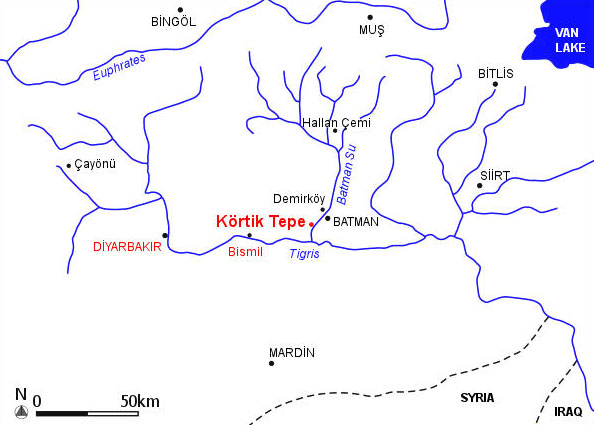
The Upper Tigris Valley, in the Anatolian part of the Fertile Crescent, has indisputable significance for the early Neolithic in terms of the opportunities it provided for the permanent settlement of human communities (Reference HauptmannHauptmann 2002; Reference AurencheAurenche 2007). One of these settlements is Körtik Tepe, located in the province of Diyarbakir, near Pinarbasi, at the hamlet of the village called Agil, close to where the Batman Creek joins the Tigris (Figure 1).
Location map of the site Körtik Tepe, south-eastern Anatolia.

Archaeological excavations at Körtik Tepe
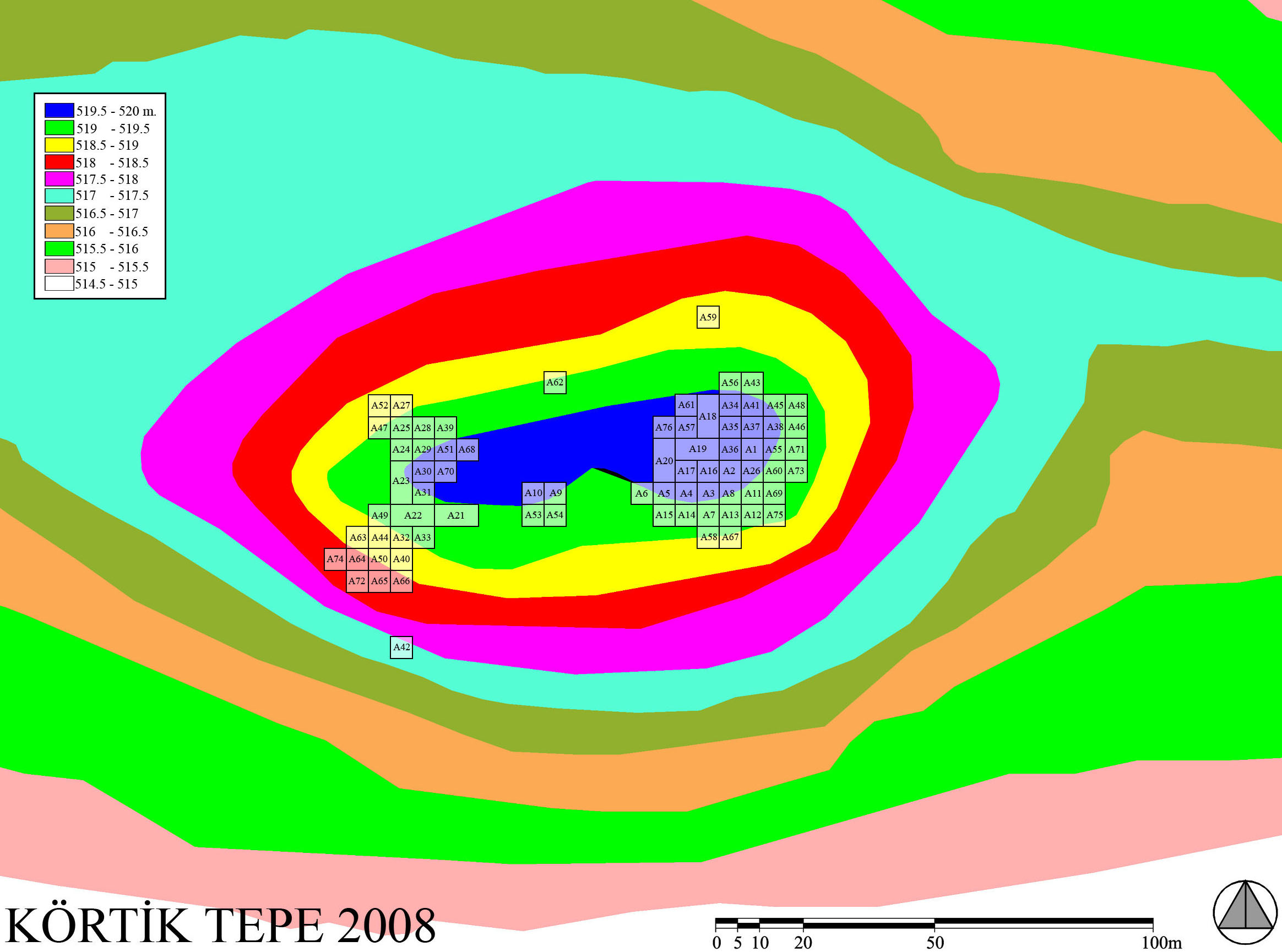
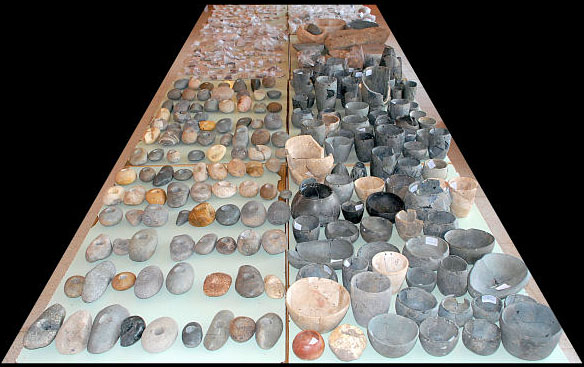
Archaeological excavations in the mound commenced in 2000 and are still ongoing (Özkaya & San 2002; Özkaya et al. 2002; Özkaya 2004) (Figure 2). Each excavated area has revealed that the mound is rich in stratified material and has great significance in terms of cultural history (Figure 3). The data demonstrate that the Upper Tigris Valley was one of the primary regions of the Near East for the establishment of the earliest permanent settlements. In contrast to the communities leading a nomadic lifestyle, in Körtik Tepe food production technologies were developed and fishing was a common activity (Reference ArbuckleArbuckle & Özkaya 2006; Özkaya & San 2007). There is also evidence for weaving and architectural units were clearly built for the purpose of storing food (Özkaya & Coskun 2008).
Topographical plan of site.

PPNA general view of Körtik Tepe finds in 2008.

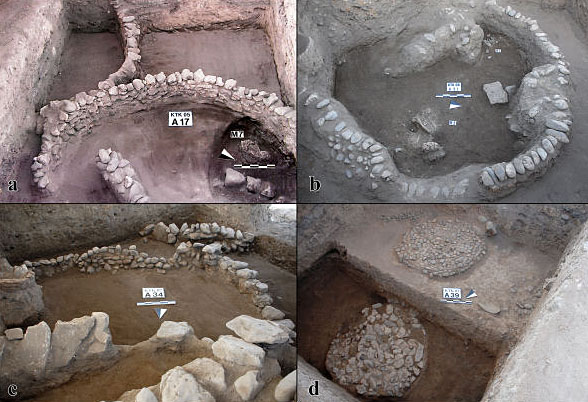
a-c) PPNA circular structures and intramural tombs; d) storage units.

Two main cultural phases have been ascertained. The upper phase is medieval, aspects of which are evident in the present day. The lower phase has been identified as Pre-Pottery Neolithic, represented through the body of the mound by structures, tombs and grave goods. The date is confirmed by burial rites, the style of stone and bone objects and 14C analyses which indicate that the mound was first settled in the tenth millennium BC (Özkaya & Coskun 2007; Özkaya & San 2007).
At least six distinct architectural phases can be determined in a continuous sequence (Özkaya & Coskun 2008). Each phase includes common features in terms of house plans, and reflects differences, particularly in burial rites and grave goods. The houses have earth floors encircled by thin stone walls (Figure 4a-c). Their diameters vary between 2.50-3.50m and may be located in open space or adjacent to each other. Similar structures are known from Hallan Çemi (Rosenberg & Davis 1992; Reference RosenbergRosenberg 1994, Reference Rosenberg1999, Reference Rosenberg2007a), Demirköy (Rosenberg & Peasnall 1998; Reference RosenbergRosenberg 2007b) and the earliest layers of Çayönü (Özdogan & Özdogan 1989; Özdogan 1999, 2007). Other structures, smaller in size, have pebbled floors and are thought to have been used for storage (Özkaya & San 2007; Özkaya & Coskun 2008) (Figure 3d).
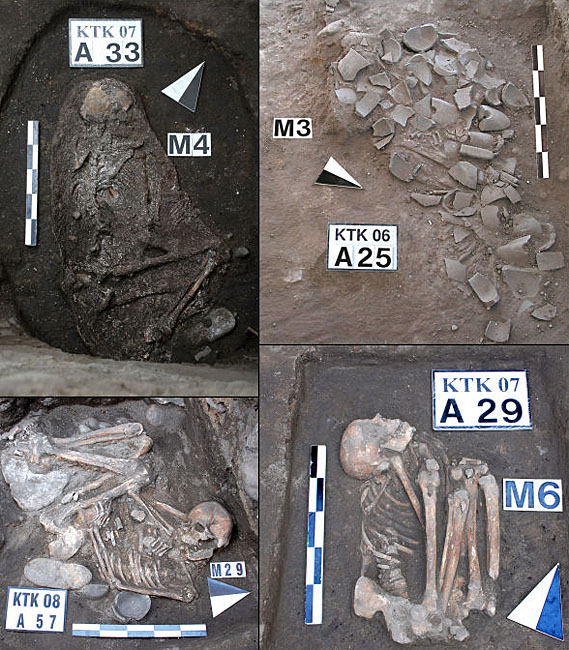
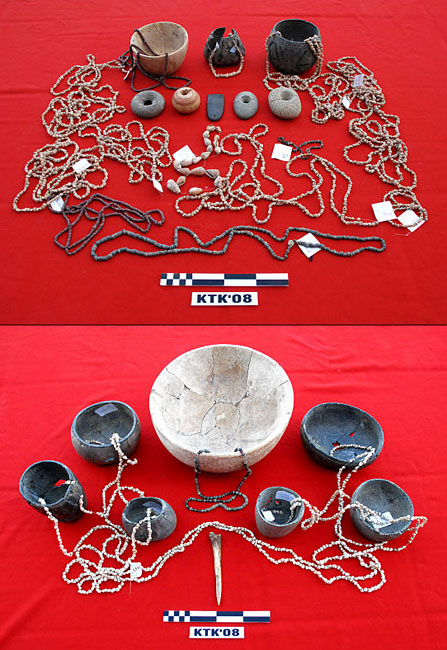
The circular structures are located together, implying a permanently settled centre rather than a temporary camp for hunter-gatherers. The finds, notably from the tombs buried under the floors of the structures (Figure 5), suggest social differences in a socially advanced community. The differences in the quantity and quality of grave goods - such as stone vessels, thousands of stone beads, stone axes, and other tools - show variants of belief and social status among the earliest permanent community (Figure 6).
PPNA tombs.

PPNA tomb contexts.

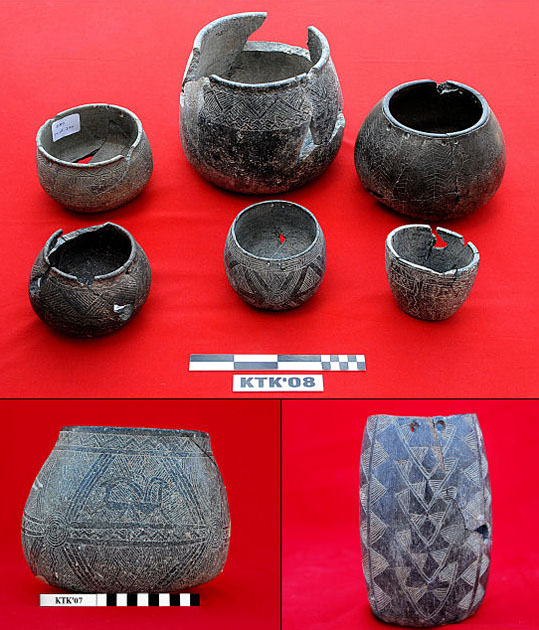
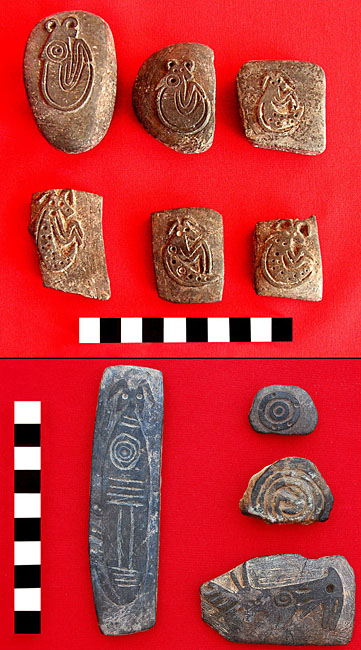
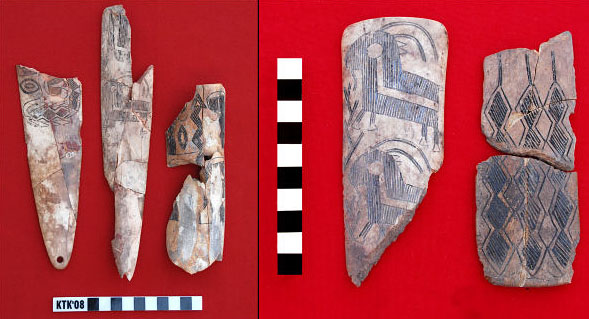
Relations with known centres in the region, such as Hallan Çemi, Demirköy and Çayönü, are noted in ground and chipped stone artefacts, obsidian and decorated and undecorated stone vessels (Figure 7). Some special finds feature images of animate figures in low relief (Figure 8) or incised (Figure 9).
PPNA stone vessels.

PPNA stone ritual objects having figures.

PPNA decorated bone finds.

Tools of flint and obsidian connect the culture at Körtik Tepe with contemporaries among other Near East cultures, and show that it is one of the earliest manifestations of settled life. At the same time the use of obsidian, most likely supplied from eastern Anatolia, points already to the presence of trade in the region.
The project at Körtik Tepe continues. The indications so far are that it is one of the earliest sites in western Asia to develop a permanent settlement, complete with trade, art, food production, religious ritual and social complexity.