





Impact statement
Many communities worldwide lack sufficient resources to support individuals experiencing mental health problems, often due to stigma, low mental health literacy and limited availability of mental health services. Locally and culturally adapted measures are essential to accurately assess the extent of this issue. In this study, the Mental Health Support Scale was translated and culturally adapted for Spanish-speaking communities in Chile and Argentina to effectively evaluate the quality of help provided by community members to individuals experiencing mental health problems or crises, such as those at risk of suicide. This adapted scale can be used to measure the effectiveness of mental health training programs, such as mental health first aid, in Latin America. Gaining a deeper understanding of these factors is a priority for global mental health, as it facilitates better tailoring of interventions in a region where mental health challenges remain largely under-recognised.
Introduction
The Mental Health Support Scale (MHSS) is a specialised instrument designed to capture helping behaviours – actions taken to support someone who is developing a mental health problem, experiencing a worsening condition or facing a crisis (Morgan et al., Reference Morgan, Wright, Mackinnon, Reavley, Rossetto and Jorm2023). These helping behaviours are those that mental health first aid (MHFA) training aims to promote by equipping community members with the knowledge and skills needed to recognise mental health problems, intervene appropriately and encourage professional help-seeking (Jorm and Kitchener, Reference Jorm and Kitchener2011).
Evidence syntheses have shown that MHFA training can improve trainees’ awareness, attitudes and motivation to help (Hadlaczky et al., Reference Hadlaczky, Hökby, Mkrtchian, Carli and Wasserman2014; Maslowski et al., Reference Maslowski, LaCaille, LaCaille, Reich and Klingner2019). However, there is limited research examining whether trained individuals offer higher-quality support in real-life situations, and whether those receiving the support experience measurable benefits (Forthal et al., Reference Forthal, Sadowska, Pike, Balachander, Jacobsson and Hermosilla2022; Richardson et al., Reference Richardson, Dale, Robertson, Meader, Wellby, McMillan and Churchill2023). The MHSS was originally developed to address this knowledge gap by providing a self-report instrument for assessing the quality of mental health support. Its initial evaluation demonstrated strong psychometric properties, including convergent validity, the ability to discriminate between individuals with and without MHFA training, and acceptable measurement precision (Morgan et al., Reference Morgan, Wright, Mackinnon, Reavley, Rossetto and Jorm2023). A subsequent Chinese adaptation also showed encouraging reliability and validity outcomes (Morgan et al., Reference Morgan, Zhang, Lu, Reavley and He2024). Together, these findings suggest that the MHSS is psychometrically robust and adaptable to diverse linguistic and cultural contexts.
MHFA training is now an international program delivered in 29 countries, though most implementations have occurred in high-income, English-speaking contexts (Mental Health First Aid International, 2025). Consequently, evidence on how MHFA translates across diverse cultural settings and income classifications remains limited (Jorm et al., Reference Jorm, Kitchener and Reavley2019). In particular, its implementation in South America remains a notable gap. While Chile and Argentina are classified as high-income and upper-middle-income countries, respectively (The World Bank, 2023), both continue to face significant challenges in addressing mental health needs within the broader regional context. According to the World Health Organization, between 76% and 85% of people with severe mental health conditions in low- and middle-income countries receive no treatment, and even in high-income countries, treatment gaps remain substantial, ranging from 35% to 50% (World Health Organization, 2021). These gaps are further exacerbated by stigma, which can delay help-seeking and limit access to care (Furnham and Swami, Reference Furnham and Swami2018; Fleary et al., Reference Fleary, Joseph, Gonçalves, Somogie and Angeles2022; Thornicroft et al., Reference Thornicroft, Sunkel, Alikhon Aliev, Baker, Brohan, el Chammay, Davies, Demissie, Duncan, Fekadu, Gronholm, Guerrero, Gurung, Habtamu, Hanlon, Heim, Henderson, Hijazi, Hoffman, Hosny, Huang, Kline, Kohrt, Lempp, Li, London, Ma, Mak, Makhmud, Maulik, Milenova, Morales Cano, Ouali, Parry, Rangaswamy, Rüsch, Sabri, Sartorius, Schulze, Stuart, Taylor Salisbury, Vera San Juan, Votruba and Winkler2022). Reducing stigma, especially through culturally relevant, contact-based interventions, is now widely recognised as a public health priority.
Evidence from Latin America underscores the importance of culturally adapted initiatives to reduce stigma and improve access to care. A systematic review of mental ill health stigma in the region, including studies from Argentina and Chile, highlighted the influence of key sociocultural factors such as the central role of traditional gender roles and family in shaping experiences of stigma (Mascayano et al., Reference Mascayano, Tapia, Schilling, Alvarado, Tapia, Lips and Yang2016). Other Latin American reviews have emphasised how stigma interacts with broader forms of marginalisation. For example, Cabieses et al. (Reference Cabieses, Belo, Calderón, Rada, Rojas, Araoz and Knipper2024) found that negative narratives about migrants contribute to their exclusion from mental health care and poorer outcomes, while Paucar-Caceres et al. (Reference Paucar-Caceres, Vílchez-Román and Quispe-Prieto2023) observed that, although interest in health literacy is growing, mental health research in the region remains limited and fragmented. Together, these findings highlight the urgent need for locally grounded, culturally responsive mental health interventions.
In response to these needs, MHFA training is now being adapted for delivery in Chile and Argentina. As a first step, country-specific guidelines for providing mental health first aid have been developed through Delphi expert consensus studies (e.g., Encina-Zúñiga et al. [Reference Encina-Zúñiga, Rodante, Agrest, Tapia-Munoz, Vidal-Zamora, Ardila-Gómez, Alvarado, Leiderman and Reavley2023]). These guidelines, though based on the original English-language versions, incorporate feedback from Argentinian and Chilean mental health professionals, service users and carers, ensuring alignment with each country’s cultural and service-delivery contexts.
Building on this foundation, the MHFA course has been piloted in both countries, with a cluster randomised controlled trial to follow (registration number: ISRCTN63724445). To assess the program’s effectiveness in these settings, a culturally and linguistically adapted version of the MHSS, aligned with the Argentinian and Chilean training content, is now needed.
This study aimed to adapt and validate the MHSS for use in Chile and Argentina. In addition to translating the English-language MHSS into Spanish, the adaptation process incorporated local mental health terminology, cultural beliefs and training content. We evaluated the reliability and validity of the adapted versions by assessing structural validity, correlations with measures of mental health literacy and stigma, and the scale’s ability to distinguish between individuals with and without MHFA training. We hypothesised that the Chilean and Argentinian versions of the MHSS would (a) positively correlate with measures of mental health literacy, (b) negatively correlate with stigma measures and (c) differ significantly based on MHFA training status.
Methods
The English version of MHSS includes both recommended helping actions and not recommended actions (i.e., actions to avoid), based on MHFA guidelines (Morgan et al., Reference Morgan, Wright, Mackinnon, Reavley, Rossetto and Jorm2023). There are two versions of the MHSS: the MHSS-Intended and the MHSS-Provided.
The MHSS-Intended assesses the quality of help a respondent would intend to provide in a mental health crisis, even if they have not yet had the opportunity to help someone. In contrast, the MHSS-Provided measures the quality of actual mental health first aid the respondent has given to someone they know (e.g., a family member, friend or colleague). Respondents are first asked whether anyone they know has experienced a mental health problem, a worsening of an existing issue, or a mental health crisis (e.g., suicidal thoughts) in the past year. If they answer yes, they then complete 12 yes-or-no questions about the actions they took. These include nine recommended actions and three actions that are not recommended.
Both versions use the same core list of actions; however, MHSS-Intended items are scored on a 5-point scale from 1 (very unlikely) to 5 (very likely), whereas MHSS-Provided items are scored either Yes (1) or No (0). The MHSS-Provided version also includes 11 additional items covering situations that only some respondents will have encountered, such as helping a person experiencing suicidality, psychosis or reluctance to seek help.
This study followed guidelines for the cross-cultural adaptation of self-report measures (Gjersing et al., Reference Gjersing, Caplehorn and Clausen2010), including translation and piloting, and validation stages.
Translation and piloting
Items from the English language version of the scale were first examined for appropriate cultural appropriateness within the local context. In addition, items were assessed for consistency with the South American guidelines on providing mental health first aid (see Encina-Zúñiga et al. (Reference Encina-Zúñiga, Rodante, Agrest, Tapia-Munoz, Vidal-Zamora, Ardila-Gómez, Alvarado, Leiderman and Reavley2023), for an example). Items were then translated into Spanish by two native Spanish speakers in Chile and two in Argentina, followed by back-translation into English by two native English speakers.
We aimed to recruit 20 participants to pilot the translated scales. This was considered a balance between feasibility in recruiting sufficient numbers while providing adequate information on respondents’ understanding and acceptability of the items in order to detect confusing or misleading items. Using a snowball recruitment strategy starting with personal contacts, we recruited 17 adults from Chile and Argentina who matched the intended population of our validation study (i.e., adults aged 18+, living in Chile or Argentina, had at least high school education level and were fluent in Spanish). The translated scales were administered using Qualtrics (https://www.qualtrics.com). Participants were asked to evaluate the clarity of instructions and items and were encouraged to flag any words or sentences they found difficult to understand.
Although no formal thematic analysis was conducted, feedback was compiled for each item and reviewed by the Argentinian and Chilean research teams. Participant comments were generally brief and straightforward, but where confusion or ambiguity was identified, alternative phrasings were discussed. Final wording decisions were reached through team consensus and confirmed in collaboration with the Australian research team. No items were added or deleted at this stage; changes involved only rewording existing items based on this feedback.
Validation study
Participants
The translated scale was then tested to evaluate its psychometric properties in a new, larger convenience sample of adults living in Chile or Argentina, distinct from those who participated in the piloting stage. Participants were recruited from two sources: (1) Netquest, an online panel service created specifically for Latin America (https://www.netquest.com/en/panel) and (2) MHFA training courses, adults who participated in the first pilots of the adapted MHFA training in both Chile and Argentina. These latter participants were expected to have higher scores on mental health support after the training. Participants were eligible if they were aged 18 or older, lived in Chile or Argentina, had at least a high school education level and were fluent in Spanish. We aimed for a minimum sample size of 250 in each country, which is consistent with recommendations to recruit at least 10 times as many participants as items (Morgado et al., Reference Morgado, Meireles, Neves, Amaral and Ferreira2017), and with minimum sample size recommendations based on communalities (factor loadings) and the ratio of variables to factors (Mundfrom et al., Reference Mundfrom, Shaw and Ke2005). Online participants were distributed across both countries based on Qualtrics Geo localisation, and no further information on their geographic location was collected beyond their country of residence.
Procedure
Participants recruited from Netquest were asked to complete the MHSS-Intended first and the MHSS-Provided if they had known someone in the past year who developed a mental health problem, experienced a worsening of an existing mental health problem or had a mental health crisis. They also completed the other measures as described later. The Netquest platform enabled access to participants living in various cities across both Argentina and Chile. Participants were reimbursed by Netquest with credits commensurate with an expected time commitment of 15 minutes.
Participants recruited from MHFA training courses were approached by the research team after completing the training and were invited to participate. Some participants from Chile were also invited to participate before the training course commenced and provided both pre- and post-training data. As no reimbursement was offered, they were asked to complete the MHSS-Intended and demographic questions only.
At the conclusion of the survey, participants were provided with contact details for relevant mental health services, including national and regional helplines in Chile and Argentina, to support those who may have experienced distress related to the survey content. Participants were also given the option to contact local members of the research team via email for further information or support.
Ethics approval was granted from the University of Melbourne Human Ethics Committee (approval number 29097), and the study was conducted in accordance with the ethical standards set out in the 1964 Declaration of Helsinki. Although formal ethics approval was not sought from committees in Chile or Argentina, the need for local ethical oversight was carefully considered during study planning. For instance, data for the validation study were collected via an online survey administered by Netquest, a multinational panel provider, with recruitment, consent and data collection occurring entirely online through this third-party platform. In both countries, the research team included registered psychologists who played a central role in adapting participant materials to ensure cultural and contextual appropriateness. Their involvement helped align study procedures with local norms, sensitivities and ethical expectations.
Measures
Measures of stigma, social distance and mental health literacy followed the presentation of a vignette describing a person (Ariel) with early schizophrenia/psychosis. This vignette was translated into Spanish from the English language version, which has been widely used to measure stigma and mental health literacy (Reavley and Jorm, Reference Reavley and Jorm2012a, Reference Reavley and Jorm2012b).
Personal stigma scale
Stigmatising attitudes were assessed with the Personal Stigma Scale (Griffiths et al., Reference Griffiths, Christensen, Jorm, Evans and Groves2004). It includes 9 items that are scored 0 (strongly agree) to 4 (strongly disagree). The English language version of the scale has two factors corresponding to beliefs that people with a mental disorder are ‘weak-not-sick’ and ‘dangerous/unpredictable’ (Yap et al., Reference Yap, Mackinnon, Reavley and Jorm2014). The scale was translated into Spanish by the research team. A previous study with Chilean adolescents using a depression vignette reported an acceptable fit with a one-factor solution when removing items 1 and 7 (Martínez et al., Reference Martínez, Crockett, Jiménez-Molina, Espinosa-Duque, Barrientos and Ordóñez-Carrasco2020). A confirmatory factor analysis of this one-factor solution was conducted, guided by established cut-off values for acceptable model fit of ≥0.90 for comparative fit index (CFI) and Tucker-Lewis fit index (TLI) and values ≤0.08 for root mean square error of approximation (RMSEA) (Hu and Bentler, Reference Hu and Bentler1999). The one-factor solution did not fit our data well (CFI = 0.77, TLI = 0.59, RMSEA = 0.139). Instead, an acceptable fit was achieved with a two-factor structure when allowing for correlated error terms for items 1, 2, 4 and 6 (CFI = 0.94, TLI = 0.90, RMSEA = 0.065), weak-not-sick (1, 2, 3 and 5) and dangerous/unpredictable (4, 6, 8 and 9). This is similar to the structure identified in the English language validation, except that item 7 (‘I would not tell anyone if I had a problem like Ariel’s’) did not load onto either factor, and item 5 loaded only onto the weak-not-sick factor. Internal consistency, as measured by McDonald’s omega (ω), in our sample was 0.76 for the weak-not-sick factor and 0.66 for the dangerous/unpredictable factor. Higher scores indicate greater stigma.
Social distance scale
The desire for social distance from the person in the vignette was measured using the Social Distance Scale (Link et al., Reference Link, Phelan, Bresnahan, Stueve and Pescosolido1999). The scale consists of five items assessing desired social distance, rated on a 4-point Likert scale (e.g., willingness to make friends with or work in close collaboration with Ariel). Mean scores range from 1 to 4, with higher scores indicating greater social distance. We used a Spanish translation of the scale similar to the one previously tested with Chilean adults (Grandón et al., Reference Grandón, Cova, Saldivia and Bustos2015). In our study, internal consistency, as measured by McDonald’s ω, was 0.87.
Mental Health Literacy Scale
Mental health literacy was assessed with a Spanish translation of the scale by Reavley et al. (Reference Reavley, Morgan and Jorm2014), which measures recognition of mental disorder and beliefs about treatment effectiveness. The scale includes an open-ended question on what, if anything, is wrong with the person in a vignette (Ariel), followed by five questions on the helpfulness or harmfulness of different interventions. Scores can range from 0 to 6 with higher scores indicating greater mental health literacy. The benchmark for correct responses was based on an Australian survey of 1,536 health professionals (Morgan et al., Reference Morgan, Jorm and Reavley2013). Higher scores were also associated with exposure to mental disorders in self, friends or family (Reavley et al., Reference Reavley, Morgan and Jorm2014). In this study, McDonald’s ω was 0.64.
Sociodemographics
Data were also collected on participant age, gender, highest level of education, country, occupation, marital status and training in helping someone with a mental health problem (none, professional training, university training, vocational training, other).
Attention check question
We included an attention check question to filter out data from participants who were not attentive to the survey questions (‘If you are paying attention, please select “Very unlikely” to this question’).
Statistical analysis
We first examined responses to identify participants who appeared to provide a poor-quality response. We removed participants who failed the attention check, were identified as duplicates by Qualtrics, or provided the same response to all items on the MHSS-Intended questions. We used exploratory factor analysis and item response theory (IRT) modelling to identify the underlying structure and best performing items. Two parameter IRT models estimate the difficulty of each item and how well each item discriminates between respondents with different skill levels. Items with higher discrimination parameters contribute more to measurement precision than items with lower discrimination.
We investigated the assumption of unidimensionality by graphing a scree plot of the eigenvalues of the polychoric correlation matrix and conducting an exploratory factor analysis with the principal factor extraction method (DeMars, Reference DeMars2010). For the MHSS-Intended, a graded response model for polytomous items (i.e., those with Likert-type response scales) was fitted. Item characteristic curves and item information functions were plotted to examine item performance. We also plotted the test information function.
Convergent validity was evaluated via correlations with related constructs, using Pearson’s correlation coefficient. Independent samples t-tests examined the difference in means between groups, such as participants who had attended MHFA training and those of the general public, with Cohen’s d effect sizes reported. Reliability (internal consistency) was assessed with McDonald’s ω. Analyses were undertaken in Stata 18, and the significance level was set at p < 0.05.
Results
We received 835 responses to the validation questionnaire, including 781 from Netquest (general public) and 54 from participants trained in MHFA. In the general public sample, 80 responses did not provide consent, 68 did not provide data beyond their country of origin, 114 did not pass the attention check, 5 were identified as duplicates, and 10 provided non-differentiated responses, leaving 504 responses. In the MHFA-trained sample, 1 participant listed their age as 17, and 3 provided non-differentiated responses, leaving 50 responses. Of these 50, 25 were matched with responses prior to receiving the MHFA training.
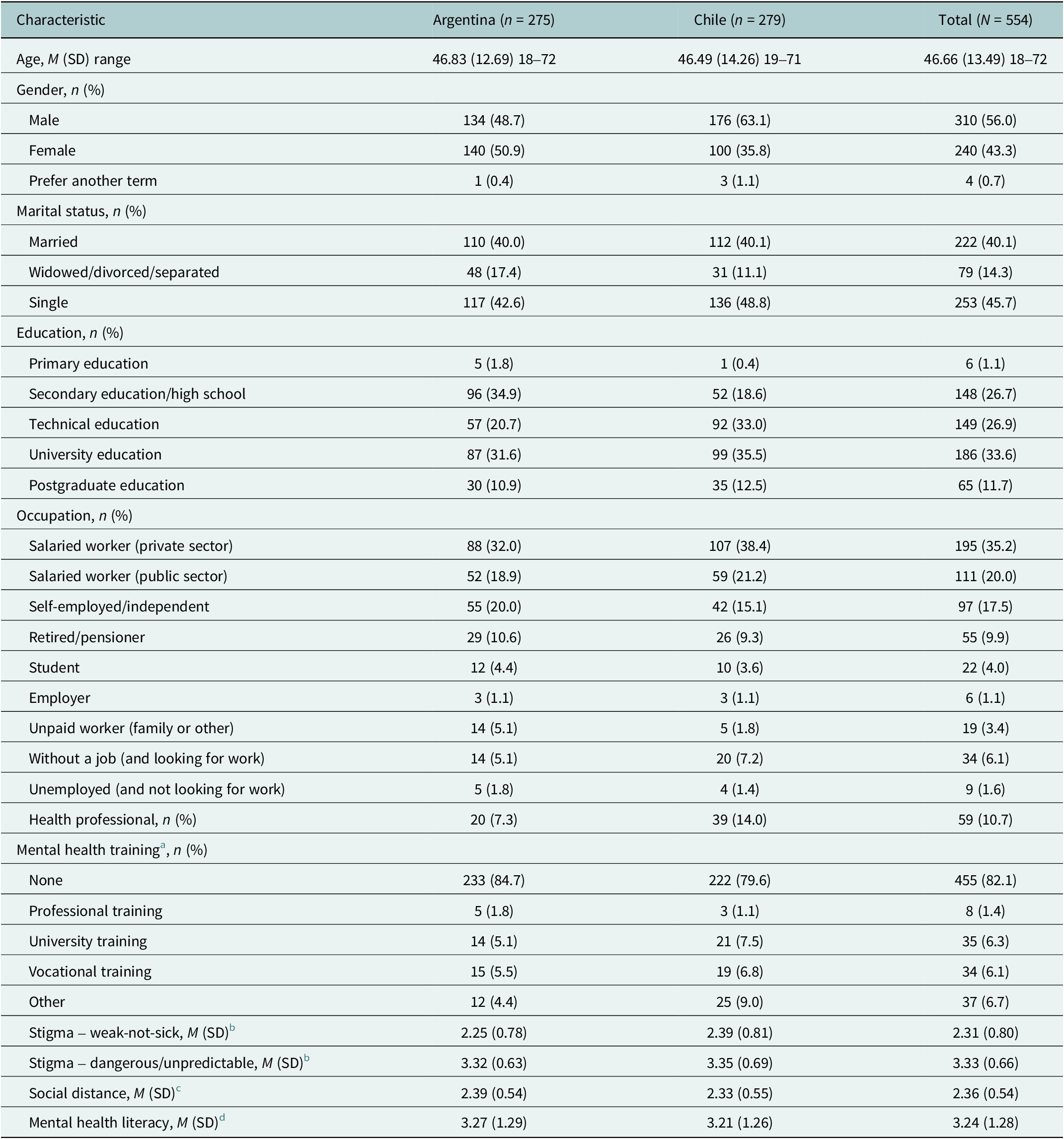
Characteristics of the 554 participants are shown in Table 1. There was a balanced representation from both Chile and Argentina, with a mean age of approximately 47 years (range: 18–72 years). Only a small minority reported being a health professional (10.7%) or having received some form of training in mental health (17.9%). In the general public sample, stigma levels were moderate on average, although somewhat higher for beliefs about dangerousness/unpredictability. Average mental health literacy was also moderate, but only about one-third (35.4%) correctly identified the mental health problem in the vignette.
Participant characteristics

a Numbers do not add to 100% as multiple responses allowed.
b Range 1–5, higher scores indicate greater stigma, completed by 504 general public participants.
c Range 1–4, higher scores indicate greater social distance, completed by 504 general public participants.
d Range 0–6, completed by 504 general public participants.
Of the 504 general public participants, 224 (44.4%) reported knowing someone well who, in the past year, had developed a mental health problem or crisis. These 224 participants subsequently completed the MHSS-Provided version of the Mental Health Support Scale. Several predictors emerged for completing the MHSS-Provided questionnaire: living in Chile (odds ratio [OR] = 1.44; 95% confidence interval [CI] = 1.01, 2.04), gender (male versus female; OR = 0.46; 95% CI = 0.32, 0.66), age (OR = 0.97; 95% CI = 0.96, 0.99), being a health professional (OR = 2.32; 95% CI = 1.20, 4.50), having no mental health training (OR = 0.39; 95% CI = 0.23, 0.65), weak-not-sick stigma (OR = 0.65; 95% CI = 0.52, 0.82), social distance (OR = 0.66; 95% CI = 0.47, 0.92), mental health literacy (OR = 1.33; 95% CI = 1.15, 1.53) and MHSS-Intended recommended (OR = 1.05; 95% CI = 1.02, 1.07).
MHSS-Intended
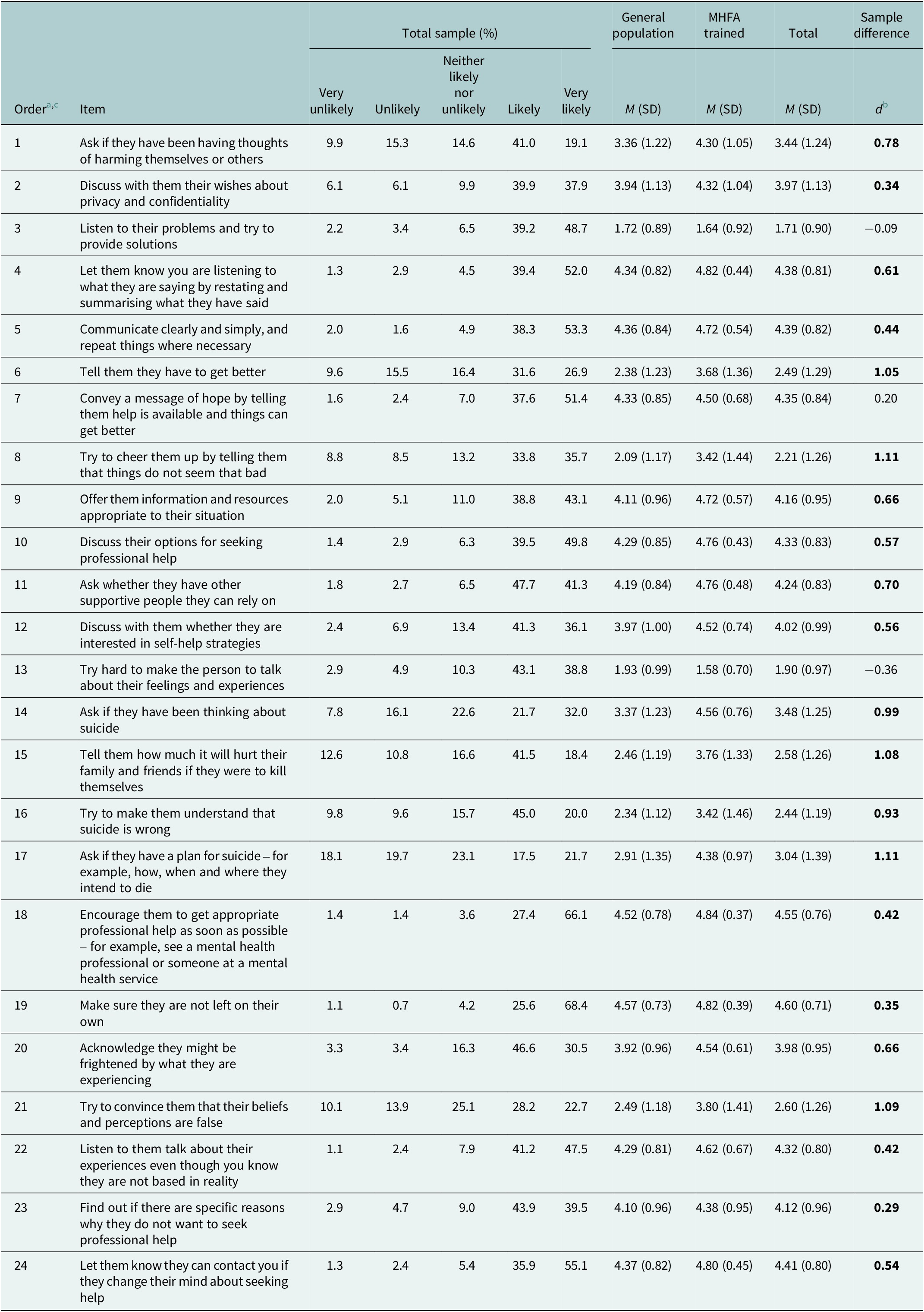
Table 2 shows the responses to all 24 items of the MHSS-Intended scale. Overall, responses tended to be higher for recommended actions, although responses for the suicide-related actions (especially asking about a suicide plan) tended to be lower. As a first step, we examined how each item differentiated two groups with hypothesised differences in mental health support skills (the general population versus those trained in MHFA). As expected, all but three items (3, 7 and 13) showed a significant difference between these two groups. A factor analysis suggested a two-factor solution, with items 1–5, 7, 9–14, 17–20 and 22–24 loading on factor 1, and items 6–8, 15, 16 and 21 loading on factor 2. These loadings broadly corresponding to recommended versus not recommended actions. However, item 7 cross-loaded on both factors, and items 3 and 13 loaded negatively on the recommended factor rather than on the not-recommended factor.
Responses on the Spanish MHSS-Intended scale
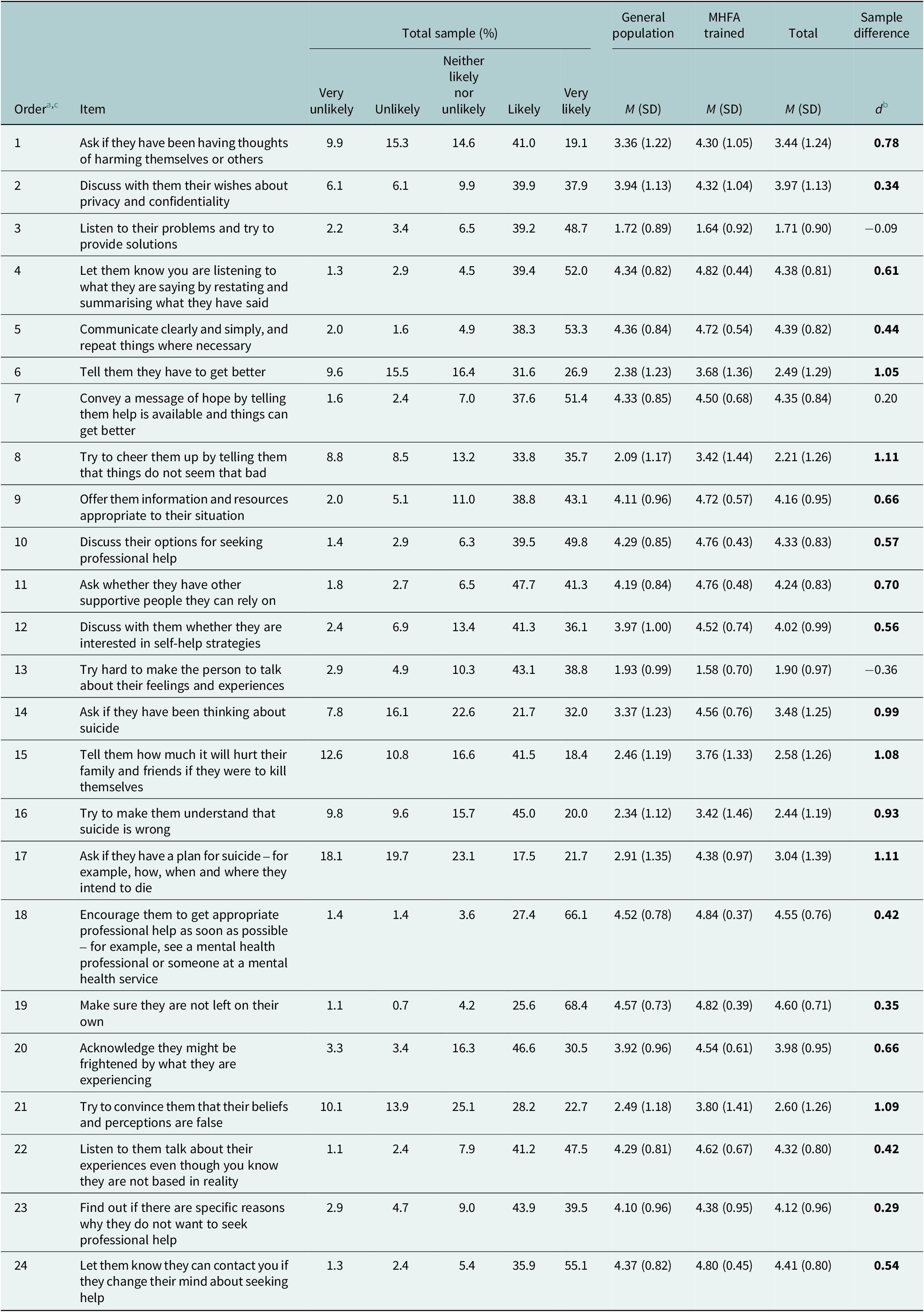
a Items 3, 6, 8, 13, 15, 16 and 21 are not-recommended actions.
b Bold effect sizes are significantly different from zero.
c Items 3, 7 and 13 were not included in the final scale.
For the recommended factor, we removed item 7 because it loaded on both factors and did not discriminate between the two samples. IRT modelling showed that this factor provided the most information at below-average to average skill levels, as shown on page 1 of the Supplementary Appendix. The recommended factor thus comprised 16 items (M = 65.43, SD = 9.75; possible range 16–80).
For the not-recommended factor, the IRT model showed very poor information from items 3 and 13, consistent with the poor fit in the factor analysis. Removing these items improved model fit based on the test characteristic curve. This left five items (reverse scored), with M = 12.32 (SD = 5.04) out of a possible range of 5–25; this factor provided the most information at above-average skill levels (see Figure 1 in the Supplementary Appendix).
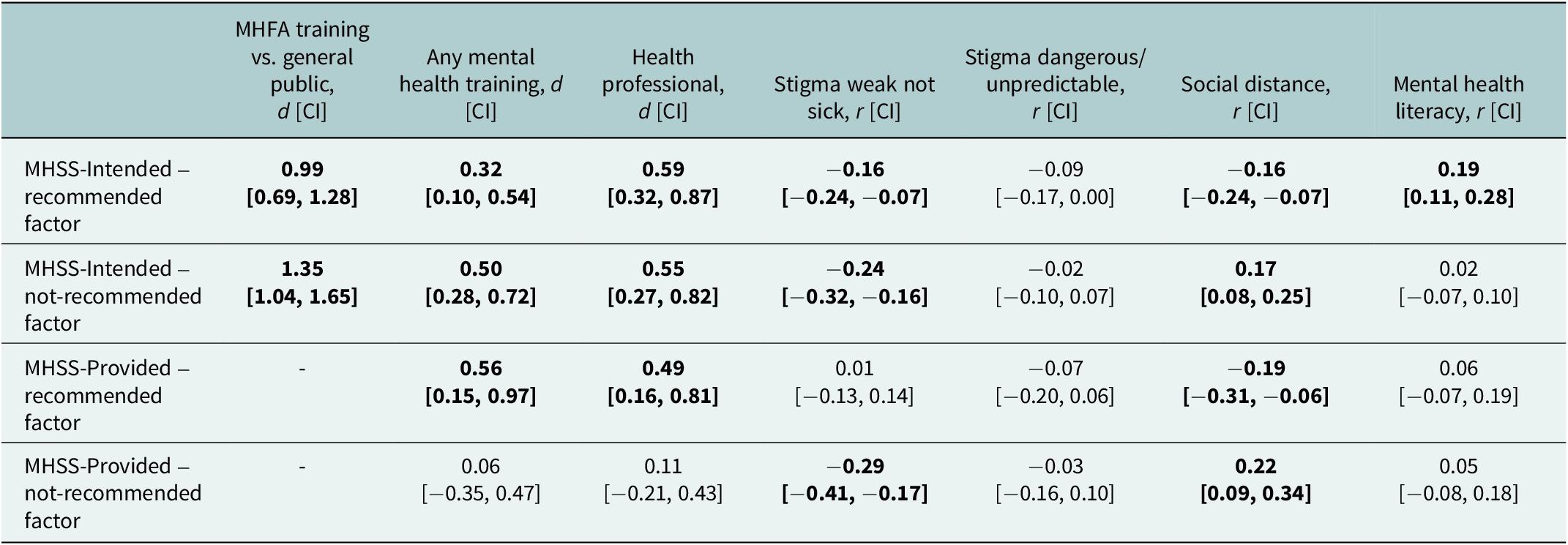
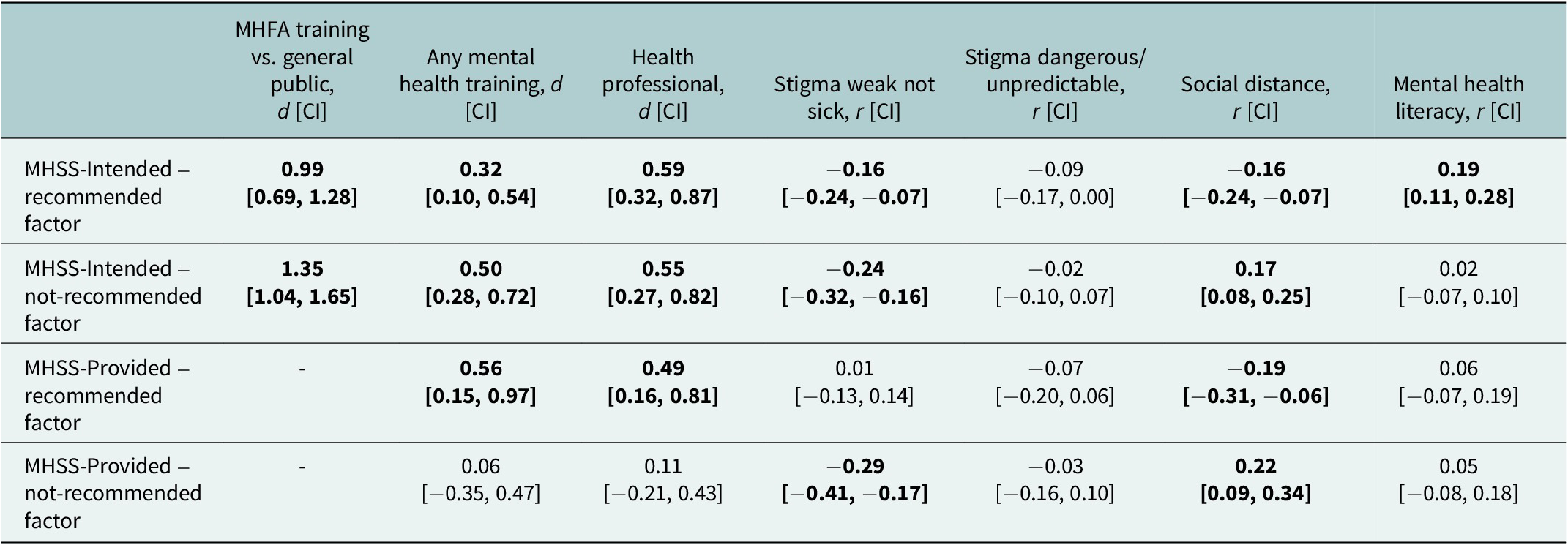
Each factor showed evidence of unidimensionality and excellent internal consistency: ω = 0.93, average inter-item correlation (AIC) = 0.38 for the recommended factor, and ω = 0.88, AIC = 0.56 for the not-recommended factor. The factor loadings are presented on page 2 of the Supplementary Appendix. There was a moderate negative correlation between the two factors (r = −0.26; 95% CI = −0.34, −0.18). There was also a large difference in mean scores on both factors between general population participants and those who had received MHFA training (see Table 3). Mean scores discriminated between those with versus without mental health training and between health professionals and non-professionals (ds = 0.32–0.59).
Evidence for construct validity of the MHSS-Intended and MHSS-Provided versions of the Spanish MHSS
Both factors appeared sensitive to MHFA training effects. Recommended factor scores improved significantly between pre-training (M = 65.28, SD = 7.88) and post-training (M = 72.80, SD = 8.88), t (24) = 5.36, p < .001, showing a large effect (d = 0.90). Likewise, not-recommended factor scores improved from pre-training (M = 14.60, SD = 5.22) to post-training (M = 17.16, SD = 5.69), t (24) = 2.60, p < .001, showing a medium effect (d = 0.47).
Table 3 shows correlations between MHSS-Intended factor scores and related constructs. The recommended factor correlated negatively with weak-not-sick stigma (r = −0.16; 95% CI = −0.24, −0.07) and social distance (r = −0.16; 95% CI = −0.24, −0.07), and positively with mental health literacy (r = 0.19; 95% CI = 0.11, 0.28). It did not correlate with dangerous/unpredictable stigma (r = −0.09; 95% CI = −0.17, 0). The not-recommended factor correlated negatively with weak-not-sick stigma (r = −0.24; 95% CI = −0.32, −0.16) but positively with social distance (r = 0.17; 95% CI = 0.08, 0.25), despite the factor being reverse-scored.
MHSS-Provided
Of the 504 general public participants, 224 (44.4%) had known someone with a mental health problem or crisis in the past year and therefore completed the MHSS-Provided version. The most common relationships were family member (43.3%), friend (28.1%), intimate partner (10.3%), work colleague (7.6%), and other (10.7%).
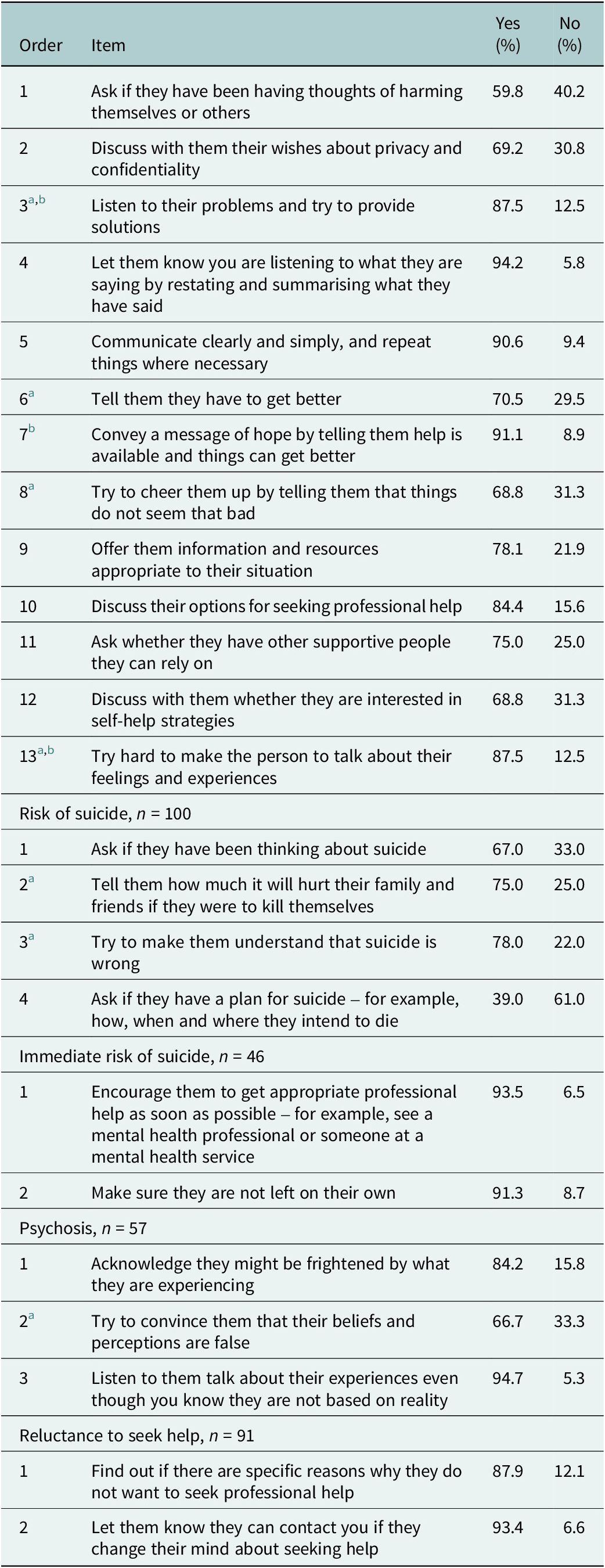
Responses to the MHSS-Provided items are shown in Table 4, including items from the optional subscales. Items 3, 7, and 13 were removed for equivalence with the MHSS-Intended scale, leaving 8 recommended actions and 2 not recommended actions. An exploratory factor analysis (see Table 2 in the Supplementary Appendix) again identified these as separate factors. Mean scores were M = 6.20 (SD = 2.11) out of a possible 0–8 for recommended factor items, and M = 0.61 (SD = 0.83) out of 0–2 for not-recommended factor items. The recommended factor had excellent internal consistency (ω = 0.93, AIC = 0.36). The two not-recommended factor items correlated strongly (r = 0.64), and there was a moderate negative correlation between the recommended and not-recommended factors (r = −0.39).
Items and responses on the Spanish MHSS-Provided
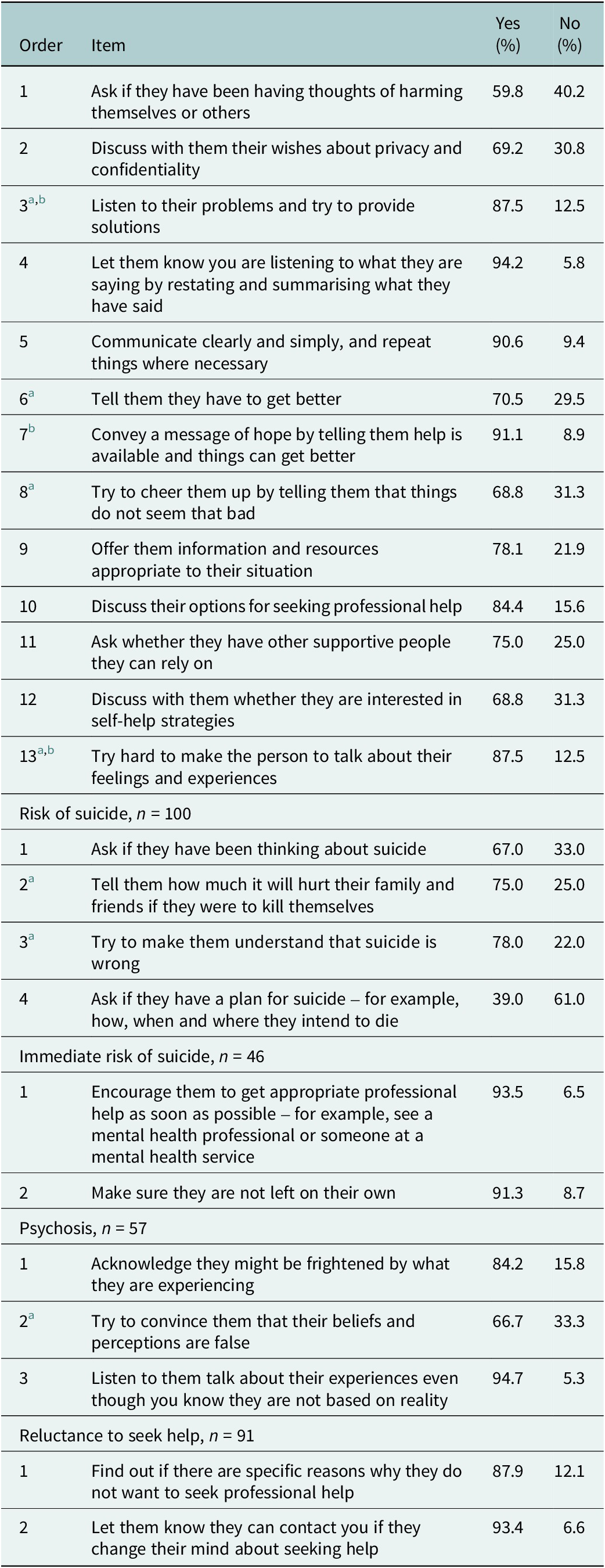
a Not recommended actions.
b Items not included in the final scale.
Table 3 shows how MHSS-Provided factor scores correlated with related constructs and compared across known groups. The recommended factor demonstrated a small-to-moderate negative correlation with social distance (r = −0.19 [−0.31, −0.06]), and a medium-sized difference between those with and without mental health training (d = 0.56 [0.15, 0.97]) and between health professionals and non-professionals (d = 0.49 [0.16, 0.81]). The not-recommended factor correlated moderately and negatively with weak-not-sick stigma (r = −0.29 [−0.41, −0.17]) and showed a small-to-moderate positive correlation with social distance (r = 0.22; 95% CI = 0.09, 0.34), but it did not differentiate people based on any mental health training (d = 0.06; 95% CI = −0.35, 0.47]) or professional background (d = 0.11; 95% CI = −0.21, 0.43), noting that the MHFA-trained participants did not complete the MHSS-Provided version.
Comparisons between the MHSS-Provided and MHSS-Intended versions revealed a moderate correlation for recommended actions (r = 0.34; 95% CI = 0.22, 0.45) and a large correlation for not recommended actions (r = 0.59; 95% CI = 0.50, 0.67).
Discussion
This study aimed to adapt the MHSS for use in Chile and Argentina, providing a culturally and linguistically appropriate tool for evaluating the quality of MHFA-related behaviours. The adaptation involved careful translation and piloting of the original scale, followed by a rigorous validation phase. Although the adapted scale largely retained the original structure, three items were excluded for psychometric reasons or because they did not differentiate well between the general population and MHFA-trained groups. During validation, both the MHSS-Intended (quality of intended help) and MHSS-Provided (quality of actual help) scales showed excellent internal consistency and evidence of construct validity, with the MHSS-Intended scale demonstrating more pronounced effects.
As expected, higher mental health literacy was associated with more helpful intended actions; however, this association was less strongly related to actual helping behaviour. Similar findings have been observed in earlier MHSS studies (Morgan et al., Reference Morgan, Wright, Mackinnon, Reavley, Rossetto and Jorm2023; Morgan et al., Reference Morgan, Zhang, Lu, Reavley and He2024) and other research on suicide literacy and associations with intended and actual help provided to a person experiencing suicidal thinking (Nicholas et al., Reference Nicholas, Niederkrotenthaler, Reavley, Pirkis, Jorm and Spittal2020). This discrepancy aligns with the Theory of Planned Behaviour (Ajzen, Reference Ajzen2011), which posits that behavioural intention alone is not always sufficient to produce action. Real-world helping responses are shaped by additional factors, such as perceived behavioural control, confidence, and contextual barriers. In high-stakes or emotionally charged scenarios (e.g., situations involving suicide), people may hesitate to act despite good intentions due to fear of saying the wrong thing, making the situation worse or being socially judged. Research exploring why individuals experiencing mental illness do not receive enough support found that while fear and anxiety can motivate someone to help, they often lack confidence when the support required involves complex communication skills, such as providing emotional support (Thompson et al., Reference Thompson, Pulido and Caban2022).
Our hypothesis that lower levels of stigma would be linked to more helpful behaviours was broadly confirmed. Participants who held fewer stigmatising views, particularly those who did not regard mental health problems as a sign of weakness and felt comfortable around people with mental health issues, were more likely to report helpful behaviours. These findings align with existing literature emphasising that attitudes of understanding and acceptance play an important role in enabling effective support (Thornicroft et al., Reference Thornicroft, Sunkel, Alikhon Aliev, Baker, Brohan, el Chammay, Davies, Demissie, Duncan, Fekadu, Gronholm, Guerrero, Gurung, Habtamu, Hanlon, Heim, Henderson, Hijazi, Hoffman, Hosny, Huang, Kline, Kohrt, Lempp, Li, London, Ma, Mak, Makhmud, Maulik, Milenova, Morales Cano, Ouali, Parry, Rangaswamy, Rüsch, Sabri, Sartorius, Schulze, Stuart, Taylor Salisbury, Vera San Juan, Votruba and Winkler2022). However, stigma rooted in perceptions of dangerousness or unpredictability appeared less clearly linked to helping behaviours. This may partly reflect lower internal consistency in that subscale, as the size of a correlation is constrained by the reliability of each measure. Alternatively, this may not be replicated in another sample, as the confidence intervals for each association overlapped.
We also found something unexpected; participants who were less likely to endorse not-recommended actions were, at the same time, more likely to prefer greater distance from someone experiencing mental health difficulties. This may suggest that although people have good intentions and recognise actions they should avoid, they might still feel uncertain or uncomfortable when interacting with someone who is struggling. Supporting this idea, Prizeman et al. (Reference Prizeman, Weinstein and McCabe2023) found that young people experiencing depression often felt judged or misunderstood by others, even when those others likely intended to be supportive. This highlights the complexity of providing real-world support, suggesting that even well-intentioned behaviours could be influenced by underlying ambivalence or emotional uncertainty.
Participants with MHFA training reported a considerably higher quality of intended help than the general public. This pattern was also evident among individuals with other forms of mental health training and those showing improvements following MHFA participation. Of particular note, MHFA-trained individuals were more likely to report asking directly about suicide when concerned, whereas the general public tended to endorse moralistic or guilt-based responses (e.g., suggesting suicide is wrong or how much it would hurt their family and friends). This openness toward direct conversations about suicide is important because previous cultural adaptations of MHFA suicide guidelines for Argentina and Chile highlighted the influence of indirect communication norms around this topic (Encina-Zúñiga et al., Reference Encina-Zúñiga, Rodante, Agrest, Tapia-Munoz, Vidal-Zamora, Ardila-Gómez, Alvarado, Leiderman and Reavley2023). Such cultural dynamics can create barriers to open dialogue, shaping not only how people seek help but also how communities respond to those in distress.
Even so, it is important to situate these findings within the broader structural and cultural context of the region. For instance, as Cabrera-Mendoza et al. (Reference Cabrera-Mendoza, Fries and Polimanti2025) emphasise, suicide prevention in Latin America must be approached through a multifaceted lens, addressing stigma, improving access to culturally appropriate mental health services, and strengthening the research base. While MHFA may support more open and informed conversations, its effectiveness is likely to be maximised when implemented as part of coordinated national strategies that respond to the region’s social, cultural and systemic realities.
Taken together, these findings indicate that evidence-based community mental health programs have considerable potential for improving mental health support in Latin American contexts, particularly by boosting helpful forms of support and addressing stigma. However, translating these intentions into real-world action remains a major challenge – one that demands not only community-level training but also a whole-of-society approach to address long-standing structural barriers (Patel et al., Reference Patel, Saxena, Lund, Kohrt, Kieling, Sunkel, Kola, Chang, Charlson, O’Neill and Herrman2023).
Strengths and limitations
A major strength of this study is the comprehensive adaptation process, which incorporated cultural and clinical expertise to ensure item suitability from MHFA guidelines for Chile and Argentina. The use of native Spanish speakers for the translation, followed by a rigorous back-translation into English, helped maintain methodological consistency. Additionally, this study is the first to examine the sensitivity of the MHSS to MHFA training. Unlike previous comparisons between the general public and MHFA instructors, this study evaluates changes in scores among participants before and after MHFA training.
Some limitations should also be acknowledged. The sample was predominantly middle-aged with relatively high educational attainment, which may limit generalisability to populations with lower educational levels. Furthermore, mental health training was self-reported, making it difficult to verify its accuracy. Similarly, all scales used in the study are based on self-report, which may be influenced by the context in which behaviours occur (Van de Mortel, Reference Van de Mortel2008).
Conclusion
Overall, the adapted MHSS for Chile and Argentina shows acceptable psychometric properties, making it a promising tool for evaluating mental health first aid support in these countries. By assessing both intended and actual support behaviours following MHFA training, the scale contributes to global efforts to enhance mental health literacy and reduce stigma. The findings on suicide first aid practices highlight a critical gap, emphasising the need for targeted interventions to improve suicide prevention skills in Chile and Argentina. Strengthening suicide first aid capabilities could be instrumental in reducing suicide rates, reinforcing the urgency of further research and policy initiatives in this area.
Open peer review
To view the open peer review materials for this article, please visit http://doi.org/10.1017/gmh.2025.10054.
Supplementary material
The supplementary material for this article can be found at http://doi.org/10.1017/gmh.2025.10054.
Data availability statement
The data that support the findings of this study are available from the corresponding author, A.J.M., upon reasonable request.
Acknowledgements
We would like to acknowledge the time and effort of the participants, without whom this study would not have been possible. We also would like to thank Jessica Bargamian for her collaboration in translating the measures and assisting with other administrative tasks.
Author contribution
M.A. and E.E.Z. implemented the study, including developing the Spanish version of the scales and recruiting participants. A.J.M. and N.J.R. developed the study methodology, and N.J.R. secured funding. A.J.M. analysed the data. S.S.R. and A.J.M. wrote the manuscript. S.S.R. prepared the manuscript for publication, and A.J.M. reviewed the first draft. All authors read and revised the manuscript for important intellectual content. All authors approved the final version of the manuscript.
Financial support
This project was supported by a National Health and Medical Research Council grant (grant number GNT1142395). A.J.M. is supported by an MHFA International Research Fellowship and Veski FAIR Fellowship. The funders were not involved in the study design, data analysis or interpretation, manuscript preparation, or the decision to submit this paper for publication.
Competing interests
The authors declare none.
Ethics statement
This study received approval from the University of Melbourne Human Ethics Committee (approval number 29097) and was conducted in accordance with the ethical standards involving human participants as set forth in the 1964 Declaration of Helsinki. Written informed consent was obtained from all participants included in the study.


 Open access


Comments
Dear Editors-in-Chief,
We are writing to submit our manuscript, “Cultural Adaptation of the Mental Health Support Scale for Chile and Argentina”, for consideration in Cambridge Prisms: Global Mental Health.
Our study involved a rigorous process of translation, cultural adaptation, pretesting, and validation to produce a Spanish-language version of the Mental Health Support Scale, a measure of mental health first aid behaviours. By tailoring the scale for Spanish-speaking communities in Chile and Argentina, our work addresses an important gap in the assessment of supportive behaviours for people experiencing mental health problems, including those at risk of suicide. This aligns closely with the journal’s mission to advance global mental health research and practice.
Thank you for your time and consideration. We look forward to the possibility of publishing our findings in Cambridge Prisms: Global Mental Health.
Yours sincerely,
The Authors