


Psychodynamic psychotherapy has been beleaguered in recent times. Accusations that it is based on outdated principles of psychoanalysis, that it lacks an empirical research base and that its emphasis on longer-term treatments by highly trained professionals makes it less cost-effective than other psychological treatments have contributed to the dismantling of psychodynamic psychotherapy services within the National Health Service (NHS) in favour of more ‘evidence-based’ interventions. Although the economic recession has been a challenge to all mental health services forced to make financial savings, reports suggest that psychodynamic psychotherapy provision within the public health sector has been disproportionately reduced compared with other treatment modalities (British Psychoanalytic Council 2013).
In this article I will outline recent developments in the field of psychodynamic psychotherapy research that go some way in refuting these criticisms. Contrary to the beliefs of some detractors of psychodynamic psychotherapy, there is now a convincing body of empirical evidence from well-designed outcome studies to support its efficacy. Moreover, process–outcome research linking specific psychodynamic interventions to therapeutic outcomes within a theoretical framework based on attachment has facilitated better understanding of the processes of change and enabled therapeutic technique to be adapted and refined, with the development of tailored psychodynamic psychotherapies for specific conditions.
What is psychodynamic psychotherapy?
Psychodynamic psychotherapy has its historical origins in Freud’s work and is based on the fundamental principles of psychoanalysis. These include the dynamic unconscious, transference, countertransference, resistance, defence, psychic determinism (the notion that our thoughts and actions are determined by unconscious forces and have symbolic meaning), and a developmental perspective, in which childhood experiences are seen as critical in shaping the adult personality. Although the terms ‘psychoanalytic psychotherapy’ and ‘psychodynamic psychotherapy’ are often used interchangeably, psychodynamic psychotherapy may be viewed as encompassing a broader perspective which includes the ‘relational’, i.e. the interpersonal, intersubjective and embodied experience of both the social world and the internal world, in which representations are built up over time and reflect dispositions that arise from innate vulnerability and early childhood experience. It also refers to the dynamic nature of both the internal and external worlds in that they shift and change in the context of social relationships and group settings experienced over a lifetime (Reference Yakeley and AdsheadYakeley 2013).
Free association
Traditional psychodynamic psychotherapy utilises techniques derived from psychoanalysis, but sessions are less frequent, provided once or twice a week over a shorter time span, and ‘face to face’, with the patient sitting up rather than lying on the couch as in psychoanalysis. In contrast to therapies where the therapist sets an agenda or actively structures the session, the patient is encouraged to say whatever is in their mind, following the psychoanalytic technique of ‘free association’. The psychotherapist’s task is to discover the unconscious themes that underlie the patient’s discourse via the patient’s slips of the tongue, associative links and resistances to speaking about certain topics that the patient is unaware of. The psychotherapist intervenes in the form of verbal communications, which can be categorised along a spectrum from the more supportive or empathic, to more challenging and interpretative as the therapy progresses.
Interpretative and supportive interventions
Interpretative interventions enhance the patient’s insight about repetitive conflicts sustaining their problems (Reference GabbardGabbard 2004), and offer a new formulation of unconscious meaning and motivation for the patient. ‘Transference interpretations’, focusing on the relationship between therapist and patient in the ‘here and now’ or affective interchange of the session, are often viewed by contemporary therapists as the most mutative interventions. In practice, the therapist adopts a flexible approach so that any session may include a combination of supportive and interpretative interventions according to the patient’s need and mental state at the time.
The countertransference
Psychodynamic psychotherapists also pay special attention to the therapist’s countertransference, that is, the feelings and emotional reactions that the therapist has towards the patient. These can be a source of useful information about the patient and their internal object relations, which determine their pattern of relating to others.
Core features of contemporary psychodynamic psychotherapy
Although the concepts and techniques of psychodynamic psychotherapy have evolved considerably since Freud and have led to the development of a range of specific psychodynamic therapeutic modalities for different conditions, core features of contemporary psychodynamic psychotherapy may be distinguished that differentiate it from other therapies such as cognitive–behavioural therapy (CBT). Reference Blagys and HilsenrothBlagys & Hilsenroth (2000) conducted a comprehensive literature search to identify empirical studies comparing manualised psychotherapy technique with that of manualised CBT. From empirical examination of recordings and transcripts of actual sessions they identified seven distinctive features concerning process and technique that reliably distinguished psychodynamic psychotherapy from other therapies determined (Box 1).
Seven features that distinguish psychodynamic psychotherapy from other therapies
-
• Focus on affect and expression of emotion
-
• Exploring attempts to avoid distressing thoughts and feelings (defence and resistance)
-
• Identifying recurring themes and patterns
-
• Discussion of past experience (developmental process)
-
• Focus on interpersonal relations
-
• Focus on the therapy relationship (including transference)
-
• Exploration of wishes and fantasies
Specific psychodynamic therapeutic modalities
A number of distinct psychodynamic psychotherapies or modalities have evolved which combine elements from other approaches, including the interpersonal, humanistic and cognitive traditions. These therapies have usually been developed and tailored for a specific disorder, such as depression or borderline personality disorder, but subsequently generalised to treat a wider range of conditions. They tend to be time-limited, have a clear theoretical basis and promote modifications of specific techniques, which are defined and illustrated in manuals. Such manualisation is helpful in communicating and disseminating what exactly occurs in the therapy under question, but is also necessary to ensure consistent training, interrater reliability and adherence to the model in outcome studies of treatment efficacy. Such studies have significantly contributed to the evidence base for psychodynamic psychotherapy in general (see below).
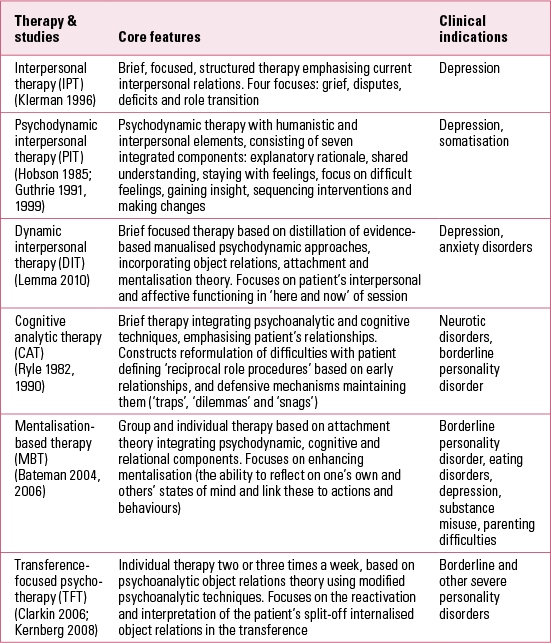
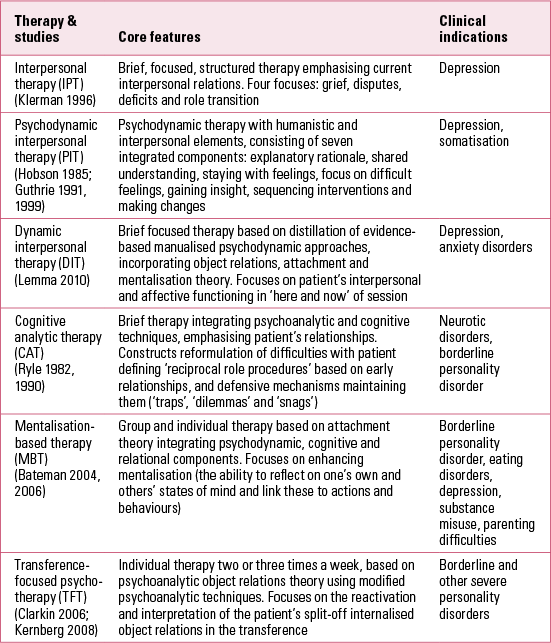
Table 1 lists the main modalities of modified psychodynamic therapies that have been developed and are available to at least some extent within the NHS and public health sector in the UK. Most of these therapies are only available in specialised mental health or psychological services, but dynamic interpersonal therapy is available as one of the brief psychotherapies provided nationally as part of the Increasing Access to Psychological Therapies (IAPT) programme introduced by the Department of Health in 2007 (Department of Health 2007).
Main psychodynamic therapies available in the UK’s National Health Service
The research challenges for psychodynamic psychotherapy
The limitations of the empirical base for psychodynamic psychotherapy have been well rehearsed. First, the psychoanalytic community as a whole has been historically disinterested or resistant to the value of research, which has resulted in the critical scientific evaluation of psychodynamic treatments lagging behind the evaluation of other forms of psychiatric and psychological interventions (Reference Gerber, Kocsis and MilordGerber 2010). This resistance may be due to a variety of reasons, including suspicion of research methods such as manualisation of treatments, randomisation of patients or recording of sessions; viewing narrowly defined trial criteria and research conditions as non-representative of clinical practice (i.e. the gap between clinical efficacy and effectiveness); and a reluctance to give up cherished beliefs about theory and technique based on individual experience and clinical lore rather than a willingness to take on board empirical findings which may challenge established practice.
Second, many of the trials of psychodynamic psychotherapy that have been conducted have lacked sufficient methodological rigour, for example, in unclear definitions of patient characteristics or treatment methods, inadequate sample sizes, poor monitoring of adherence to the treatment model and interrater reliability, and less than optimal control conditions in which treatment as usual is used instead of an alternative potential active treatment. The number of randomised controlled trials (RCTs) of psychodynamic psychotherapy is small compared with those that have been carried out in the evaluation of other forms of psychotherapy, particularly CBT.
Third, many of these studies have focused on brief psychodynamic treatments, whereas many psychodynamic clinicians are interested in elucidating the mechanisms of change of longer-term treatments which aim at deeper structural changes in the patient’s personality organisation rather than solely symptom improvement.
Outcome studies of psychodynamic psychotherapy
Meta-analyses and effect sizes
Despite these challenges in conducting methodologically robust research in the field, in the past two decades there has been an increasing number of high-quality RCTs in psychodynamic psychotherapy. Reference ShedlerShedler (2010) has highlighted the importance of several key meta-analyses published in high-impact journals, which pool the results of these studies and demonstrate that effect sizes (Box 2) for psychodynamic psychotherapies are as large as those reported for other treatments that have been actively promoted as ‘evidence-based’, such as CBT.
Research terminology
Efficacy measures how well an intervention or treatment works in clinical trials designed to show internal validity so that causal inferences may be made.
Clinical effectiveness is the extent to which an intervention or treatment improves the outcome for patients in everyday clinical practice. There is often a gap between efficacy and effectiveness.
Meta-analysis is a widely accepted method used in medicine and psychology to strengthen the evidence about treatment efficacy. It refers to the statistical analysis of a collection of results for the purpose of summarising and integrating the findings of independent studies of a specific treatment, that in themselves are too small or limited in scope, to come to a conclusion about treatment efficacy.
Effect size refers to the difference between treatment and control groups, expressed in standard deviation units. An effect size of 1.0 indicates that the average patient receiving the treatment under consideration is one standard deviation healthier on the normal distribution than the average patient receiving no treatment. An effect size of 0.8 is considered a large effect, 0.5 is considered moderate, 0.2 is small.
For example, a meta-analysis published by the Cochrane Library (Reference Abbass, Hancock and HendersonAbbass 2006) reviewed 23 RCTs comparing short-term psychodynamic psychotherapy for common mental disorders against minimal treatment and non-treatment control interventions, yielding an overall effect size of 0.97 for general symptom improvement, which increased to 1.51 when the patients were assessed at 9-month follow-up. Another meta-analysis, reported in Archives of General Psychiatry, of 17 high-quality RCTs reported an effect size of 1.17 for short-term psychodynamic psychotherapy compared with control interventions (Reference Leichsenring, Rabung and LeibingLeichsenring 2004). Two more recent meta-analyses, published in the JAMA (Reference Leichsenring and RabungLeichsenring 2008, Reference Leichsenring and Rabung2009) and the Harvard Review of Psychiatry (Reference de Maat, de Jonghe and Schoeversde Maat 2009), have examined the efficacy of long-term psychodynamic psychotherapy (1 year or more) for a range of DSM diagnoses and complex mental disorders. These found that the effect sizes for longer-term psychodynamic psychotherapy were not only significantly higher than those for the shorter-term therapies, but that they continued to increase from termination of treatment to long-term follow-up, especially for patients with severe personality pathology.
Outcomes for specific disorders
Many of the studies in these meta-analyses, however, included patients with a range of symptoms and conditions, rather than focusing on specific diagnostic categories. Other recent meta-analyses have focused on the evidence base for psychodynamic psychotherapy for specific disorders.
Thus, Reference Abbass, Kisely and KroenkeAbbass et al (2009), in a meta-analysis of 23 studies examining the efficacy of short-term psychodynamic psychotherapy for somatic disorders, reported an effect size of 0.69 for improvement in general psychiatric symptoms and 0.59 for improvement in somatic symptoms.
A meta-analysis looking at the efficacy of both psychodynamic psychotherapy and CBT for personality disorder published in the American Journal of Psychiatry (Reference Leichsenring and LeibingLeichsenring 2003) showed pre- to post-treatment effect sizes of 1.46 for psychodynamic psychotherapy and 1.0 for CBT.
In a very recent publication, Reference Leichsenring and KleinLeichsenring & Klein (2014) review the empirical evidence for psychodynamic therapy for specific mental disorders in adults. They conducted a computerised search of MEDLINE, PsycINFO and Current Contents, as well as manual searches of articles and textbooks, and communication with authors and experts in the field. The search criteria identified all RCTs published between January 1970 and September 2013 that examined the efficacy of psychodynamic psychotherapy for specific mental disorders using treatment manuals and reliable and valid measures for diagnosis and outcome. Meta-analysis of the 47 RCTs that met these rigorous criteria showed that psychodynamic therapy is efficacious for a range of common mental disorders, including depressive disorders, anxiety disorders, somatoform disorders, personality disorders, eating disorders, complicated grief, post-traumatic stress disorder and substance-related disorders.
The Dodo verdict
This accumulation of empirical evidence convincingly demonstrates that psychodynamic psychotherapy is not inferior in efficacy to other psychological treatments. Moreover, it shows that the benefits of psychodynamic psychotherapy may be long lasting and extend beyond symptom remission. However, perhaps paradoxically, the methodological superiority of more recent trials, which have included active treatments as controls, has highlighted the well-known ‘Dodo verdict’ (Reference RosenzweigRosenzweig 1936; Reference Luborsky, Singer and LuborskyLuborsky 1975), based on the conclusion of the dodo in Alice in Wonderland that ‘Everybody has won and all must have prizes’. This refers to the consistent finding in psychotherapy research of the outcome equivalence of different therapies, in that no specific therapy is shown to have greater efficacy than any other.
This finding is usually interpreted as being due to ‘common factors’, i.e. techniques and mechanisms common to different therapies which constitute the agents of change and are frequently subsumed under the umbrella of the ‘therapeutic alliance’. However, the dodo verdict here might also be due to a failure to measure real differences that exist between different therapies but have eluded detection because our measures are inadequate. In the case of psychodynamic psychotherapy, there may be a fundamental mismatch between what outcome studies tend to measure in improvement or alleviation of symptoms and what psychodynamic psychotherapy aims to achieve in going beyond symptom remission to change deeper personality structures and capacities, enabling the patient to live with greater freedom and possibility (Reference ShedlerShedler 2010).
What works and how?
Such questions have prompted a shift in psychotherapy research from outcome to ‘process–outcome’ research, in which the focus is on elucidating specific processes and mechanisms of therapeutic change, what works for whom and under what conditions. These research efforts aim to more clearly link theories of personality development and the aetiology of specific disorders to the processes of change, and to explicate the corresponding therapeutic techniques necessary to achieve them.
Therapeutic alliance
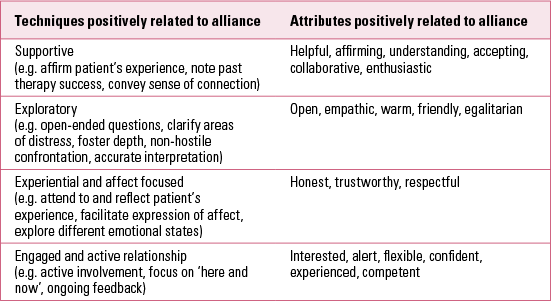
An extensive body of research studies have consistently shown that there is a significant relationship between the therapeutic alliance and the process of therapy, and that the therapeutic relationship is one of the most robust predictors of positive outcome across all modalities, regardless of whether this is measured by the therapist, the patient or an independent observer. In an extensive review of studies of therapeutic alliance research, which included insight-oriented, experiential, humanistic, cognitive–behavioural, interpersonal and relational models of psychotherapy, Reference Hilsenroth, Cromer, Ackerman, Levy, Ablon and KacheleHilsenroth et al (2012) identified four categories of therapist techniques that are found to contribute positively to the alliance and predict better therapeutic outcomes: supportive, exploratory, ‘experiential-affect focused’ and ‘engaged-active relationship’ (Table 2). Box 3 lists the therapist techniques that have been shown to detract from the therapeutic alliance and hinder the therapeutic process.
Summary of techniques and attributes that contribute positively to the therapeutic relationship
Techniques that contribute negatively to the therapeutic relationship
-
• Managing the treatment in an inflexible manner
-
• Failure to structure the therapy
-
• Over-structuring the therapy
-
• Inappropriate self-disclosure
-
• Inappropriate use of silence
-
• Unyielding transference interpretations
-
• Belittling or hostile communications
-
• Superficial interventions
(Reference Hilsenroth, Cromer, Ackerman, Levy, Ablon and KacheleHilsenroth 2012)
One of the key findings in research on the therapeutic alliance is that disruptions or ruptures in the alliance are generated from patients’ negative reactions to the therapist and/or treatment process, and that addressing these within the therapeutic frame is critical to the repair and maintenance of a positive therapeutic alliance with better therapeutic outcome. Careful awareness of the therapeutic relationship is recommended from the start, so that a positive therapeutic relationship can develop as soon as possible.
Do empirical findings support traditional teaching and practice?
It is worth considering the extent to which these empirical findings on aspects of the therapeutic alliance associated with better outcome match the established teaching and practice of psychodynamic psychotherapy. A focus on the patient’s affect and subjective experience within the sessions and in-depth exploration of their problems conveyed by accurate high-quality interpretations would be accepted by most psychoanalytically oriented clinicians as recommended therapeutic technique. However, techniques that openly convey a positive attitude in giving support, affirmation and noting encouraging changes as treatment progresses may be viewed by some therapists as interfering with the emergence and detection of more negative transference reactions which they believe need to be brought into the open and interpreted to facilitate therapeutic progress. Similarly, more traditional psychoanalytic therapists may fear that a more active stance on the part of the therapist may hinder the process of free association and spontaneous emergence of unconscious material in the patient’s discourse. However, the empirical findings on the role of transference interpretations perhaps pose the greatest challenge to contemporary psychoanalytic technique in which the roles of transference and countertransference are deemed central.
Defence, resistance and transference
Process research attempts to examine some of the fundamental principles and techniques of psychoanalytic psychotherapy and their effects by focusing on the microprocesses occurring within the ongoing communications between therapist and patient during the therapy.
Defence and resistance
One of the fundamental techniques of psychoanalytic psychotherapy is the elucidation and interpretation of the patient’s unconscious defences and their resistances to therapeutic change. Defences are automatic mechanisms occurring out of conscious awareness that deal with internal and external anxieties, stresses and conflicts – the unconscious equivalent of ‘coping mechanisms’. We all use an array of defence mechanisms that have evolved from childhood, ranging from the more primitive to the more mature and appropriately adaptive, many of which have become enduring personality traits. However, individuals with personality difficulties or disorders tend to utilise less mature or more primitive defence mechanisms such as projection, splitting or denial, with an adverse impact on their psychological functioning and interpersonal relationships.
Process research into defence interpretation can assess such defences on a moment-to-moment basis, comparing a patient’s defences before and after an intervention. Outcome studies have shown that defences and defensive functioning become more flexible and improve with treatment, so that the person’s responses to conflict and adversity in relation to themselves and others are more appropriate. Such research has also demonstrated the role of defences in mediating treatment by improving symptoms and how therapeutic interventions lead to changes in defensive functioning within and across sessions (Reference Perry, Petraglia, Olson, Levy, Ablon and KachelePerry 2012).
Transference
Another hallmark of psychoanalytic psychotherapy is interpretation of the transference, which, as mentioned earlier, many believe is the most mutative intervention in fostering insight. However, the few studies that have attempted to investigate the relationship between transference interpretations and outcome have produced equivocal results. In an early study reviewing therapist notes recalled by the therapist after sessions, Reference MalanMalan (1976) reported a positive correlation between interpretations that linked the patient’s relationship to the therapist to that of the patient’s parents (‘transference-parent linking interpretations’) and positive outcome, a finding replicated by Reference MarzialiMarziali (1984) in a study of audiotaped sessions. However, Reference Piper, Delbane and BienvenuPiper et al (1986) found that transference interpretations were uncorrelated with outcome. Furthermore, Reference Rosser, Denford and HeslopRosser et al (1983), in a study of 32 patients with respiratory disease randomised to eight sessions of psychoanalytic psychotherapy in which the analyst was instructed either to make free use of transference interpretations or to withhold such interpretations, found that change in psychiatric symptoms was significantly greater in the latter group. Other studies have shown that higher ‘doses’ of transference interpretations (frequency per session) were associated with poorer therapeutic alliance, increased levels of defensiveness in the patients and poorer outcomes (Reference Piper, Azim and JoycePiper 1991; Reference H⊘glendHøglend 1993; Reference Connolly, Crits-Christophe and ShappelConnolly 1999; Reference Ogrodniczuk, Piper and JoyceOgrodniczuk 1999).
These findings have been criticised on the basis that most of these studies involved very brief psychotherapy, were based on naturalistic studies, and showed wide variability in the number of transference interpretations per session, ranging from 5 to over 50% of all interpretative interventions by the therapist (Reference H⊘glend R Gabbard, Levy, Ablon and KacheleHøglend 2012; Reference Luyten, Blatt, Mayes, Levy, Ablon and KacheleLuyten 2012).
In a sophisticated RCT looking at both process and outcome of 100 patients with mixed anxiety and depressive disorders, Reference H⊘glend R B⊘gwald and AmloHøglend and colleagues (2008) looked at the longer-term effects of transference interpretations. The patients were randomised to psychodynamic psychotherapy of 1 year’s duration with transference interpretations or to therapy without such interpretations, with follow-up at 1 and 3 years. The authors found no difference in efficacy between the two treatments either at termination or at long-term follow-up, except in patients who had low levels of personality organisation or object relating as measured on the Quality of Object Relations scale. These patients with more severe personality pathology responded better to treatment containing low levels of transference interpretations (0–3 per session) compared with treatment without such interpretations. Increased insight in these patients mediated the relationship between transference interpretations and improvements in relational functioning.
Interpreting the findings
Caution must be exerted in interpreting these findings. In clinical practice there is a wide variation in content, depth, quality and timing of transference interpretations and in whether care or hostility is communicated, all of which will vary according to the countertransference experiences and subjectivity of the therapist. Moreover, there is a significant difference between a more classic understanding of transference, in which the focus is on linking the patient’s relationship to the therapist to past significant others, and the more contemporary relational perspective, in which the patient’s ‘here and now’ experiences of the therapist are explored with no explicit link to the past. Nevertheless, although the research indicates that a moderate level of transference interpretations may mediate increase in insight, leading to better outcomes in longer-term therapy, a high frequency of transference interpretations may be counterproductive, particularly in more ‘difficult’ patients, as it serves to increase their hostility and resistance by fortifying their defences to ward off perceived attacks.
Attachment theory
Attachment theory is perhaps the most convincing theoretical framework guiding psychodynamic treatment and research today, providing a coherent model in which the findings on the influence of the therapeutic alliance and the effects of other psychotherapeutic techniques may be conceptualised, integrated and further empirically tested. However, although Bowlby was a psychoanalyst, for many years his ideas and empirical findings regarding child development were rejected by many psychoanalysts as being too behavioural and distant from the inner worlds of their patients, so that until relatively recently psychoanalysis and attachment theory developed in parallel (Reference Levy, Meehan, Temes, Levy, Ablon and KacheleLevy 2012).
Bowlby’s hypothesis that the earliest attachment experiences between the child and its caregivers fundamentally shape the personality and have long-lasting effects on adult mental health and psychopathology have been validated by empirical research. Reference BowlbyBowlby (1969, Reference Bowlby1973, Reference Bowlby1977) believed that the child’s primary caregivers’ style of relating and responding lead to the development of different patterns of attachment in the child, which in turn form ‘internal working models’ that guide the child’s perceptions, emotions, thoughts and expectations in later relationships. This hypothesis was initially developed into observational research with Reference Ainsworth, Blehar and WatersAinsworth’s (1978) classification of different infant behavioural attachment patterns in response to the ‘strange situation’. Infants with insecure attachment patterns were found more likely to experience greater psychopathology and difficulties in interpersonal relationships in adulthood (Reference Berlin, Cassidy, Appleyard, Cassidy and ShaverBerlin 2008). Main and others extended Ainsworth’s findings to measuring adult mental representations of attachment with the Adult Attachment Interview (AAI) (Reference Main, Kaplan and CassidyMain 1985). They showed that the representations of an adult parent’s own attachment experiences have significant influence on their children’s development and attachment patterns, which determine the child’s later socioemotional functioning in adulthood.
The therapist as a secure base and temporary attachment figure
Attachment theory has thus provided empirical evidence for certain fundamental psychoanalytic principles, particularly the notion that childhood experiences are critical in shaping the adult character, mental health and pathology, as well as validating key psychoanalytic concepts such as transference and countertransference. The developmental perspective of attachment theory provides a framework for psychotherapy in which the therapist is experienced as a secure base and temporary attachment figure for the patient. This enables the patient to explore past and present relationships, external to and within the therapy, with the opportunity to revise internal working models, leading to better adaptation and interpersonal relating. Transference and countertransference may be used to examine and address the multiple and contradictory internal working models that emerge within the therapeutic relationship and help the patient develop new ways of feeling and behaving based on current rather than past experience.
The influence of attachment style on process and outcome
Furthermore, studies have demonstrated that a patient’s attachment organisation may influence the treatment trajectory by acting as a moderator of both psychotherapy process and outcome, findings which hold prognostic implications for treatment. For example, patients with avoidant attachment status find it more difficult to form a therapeutic alliance, but if they can be engaged tend to benefit from treatment (Reference Fonagy, Leigh and SteeleFonagy 1996). This underscores the importance of actively fostering the treatment alliance as early as possible in the patient’s care. Therapeutic outcome can be measured by observing shifts in the patient’s attachment patterns towards a more secure organisation over the course of psychotherapy (Reference Levy, Meehan and KellyLevy 2006).
Moreover, the therapist’s own attachment organisation has been shown to have a significant impact on the outcome of the patient’s therapy. As one might expect, therapists who are securely attached achieve the best therapeutic results (Reference Dozier, Cue and BarnettDozier 1994), but studies also show that matching of specific attachment styles between therapist and patient predicts psychotherapy process and outcome. For example, patients who have a therapist who is opposite to them on the ‘preoccupying to dismissing’ dimension of attachment on the AAI tend to have better outcomes than patient–therapist pairs who do not (Reference Levy, Meehan, Temes, Levy, Ablon and KacheleLevy 2012). This has implications regarding the selection and assessment of the interpersonal style of therapists for training in psychotherapy.
Attachment theory-based interventions
Certain specific psychodynamic psychotherapies, such as interpersonal therapy (Reference Klerman, Weissma and RounsavilleKlerman 1996), transference-focused psychotherapy (Reference Clarkin, Yeomans and KernbergClarkin 2006; Reference Kernberg, Yeomans and ClarkinKernberg 2008) and mentalisation-based therapy (Reference Bateman and FonagyBateman 2004, Reference Bateman and Fonagy2006), have developed as explicitly attachment theory-based interventions, conceptualising and measuring change in terms of attachment representations and developing specific techniques designed to target the attachment system (Table 1).
However, one could argue that attachment theory implicitly guides all psychotherapies. Fonagy and others suggest that improving the patient’s capacity for mentalisation or self-reflective functioning, which is dependent on the person’s early developmental attachment experiences, is a key component of all psychotherapies. They propose that dysfunctional mentalisation is an essential feature of all psychological disorders, and that psychological therapies improve mentalisation by changing underlying neuronal structures in different parts of the brain that regulate the experience of the self (Reference Fonagy and AdsheadFonagy 2012).
Towards a new paradigm
Reference Luyten, Blatt, Mayes, Levy, Ablon and KacheleLuyten et al (2012) argue for a new paradigm within psychodynamic treatment research, away from assumptions borrowed from pharmaceutical trials in which outcomes are based on simple observable features such as symptom improvement and in which simple linear causal models are used to predict process–outcome relationships, towards a broader paradigm that investigates less observable underlying personality changes and does not assume that such changes occur in a linear fashion. Such a paradigm is better suited to investigating the more fundamental nonlinear processes that may occur in longer-term treatments, such as changes in affect regulation, enhanced capacity for self-reflection, and changes in the representation of self and others. Capturing such intrapsychic changes will necessitate the development and implementation of more sophisticated measures, a number of which have been validated and used to study the process and outcome of psychodynamic psychotherapy (Box 4).
Outcome measures used in psychodynamic psychotherapy research
Adult Attachment Interview (AAI) (Reference George, Kaplan and MainGeorge 1996): a semi-structured interview measuring attachment organisation
Clinical Outcomes in Routine Evaluation Outcome Measure (CORE-OM) (Reference Evans, Mellor-Clark and MargisonEvans 2000): a patient-rated questionnaire of psychological distress
Defense Mechanism Rating Scale (DMRS) (Reference PerryPerry 1990): an observer-rated measure of psychological defences
Reflective Functioning Scale (RFS) (Reference Fonagy, Target and SteeleFonagy 1998): a scale used in conjunction with the AAI to measure reflective or mentalisation capacity
Shedler–Westen Assessment Procedure – 200 (SWAP-200) (Reference Westen and ShedlerWesten 1999): a clinician-rated assessment measure of personality psychopathology and health
Psychodynamic therapy as a developmentally informed dynamic process
In this model, psychodynamic therapy may be viewed as a developmentally informed dynamic process in which the interpersonal interactions that occur in the patient–therapist relationship reactivate attachment processes in the patient, particularly regarding issues of relatedness and self-definition. The therapeutic relationship alternates between cycles of disruption and repair, reactivating experiences of compatibility and incompatibility at various developmental stages. These are gradually explored, using the transference and countertransference as guiding tools, to facilitate their integration into new representations of self and others and the development of more mature mental reflective capacities and differentiated relationships. Although maintaining an overall positive therapeutic alliance with a warm and empathic therapist is essential, negative reactions based on transference-derived distortions of the therapeutic relationship are inevitable, and should be allowed to develop before addressing underlying issues. Premature repair of negative transference experiences has been shown to hamper, rather than facilitate, the therapeutic process (Reference Kachele, Schacter and ThomaKachele 2009).
Although a full discussion is beyond the scope of this article, this model of psychodynamic psychotherapy is supported by a deepening understanding of the neurobiological underpinnings of attachment and interpersonal relationships, as part of a fertile intersection of contemporary neuroscience and psychodynamic psychotherapy research.
Transdiagnostic treatments
Psychotherapy research is moving from single-disorder focused manualised approaches towards ‘transdiagnostic’ and modular treatments. These focus on similarities between disorders, particularly those in a similar diagnosis class which include high rates of comorbidity (e.g. anxiety disorders), so that improvements are seen in the comorbid conditions when treating the principal disorder (Reference Leichsenring and KleinLeichsenring 2014).
Transdiagnostic treatment protocols have been pioneered by researchers in the field of CBT (e.g. Reference Barlow, Allen and ChoateBarlow 2004; Reference Norton and PhillipNorton 2008; Reference McHugh, Murray and BarlowMcHugh 2009), but psychodynamic psychotherapy may be particularly suited to this approach as it is traditionally less tailored to single mental disorders, but focuses on the core underlying processes of mental conditions, including psychotic illnesses. Newer conceptualisations of schizophrenia and other psychoses, and their treatments, are based on attachment theory and mentalising (Reference Lysaker, Buck and FogleyLysaker 2013; Reference Rosenbaum, Martindale and SummersRosenbaum 2013) and although RCTs of psychodynamic psychotherapy in schizophrenia are lacking, promising research by groups such as the Danish National Schizophrenia Project (Reference Rosenbaum, Harder and KnudsenRosenbaum 2012) strengthens the evidence for the effectiveness of psychodynamic treatment in psychosis.
Implications for practice
Psychodynamic psychotherapists themselves, in their failure to fully embrace an evidence-based approach and be open to adaptation of their concepts and techniques in the light of empirical findings, must bear some responsibility for the perception that the therapy they practise is ineffective. Moreover, the expanding array of different therapeutic modalities risks being satirised as a collection of competing brands promoted by their charismatic inventors, which may obscure more serious and collaborative efforts to find common therapeutic techniques and factors, as well as factors more specific to particular psychic processes or pathological conditions.
Nevertheless, the scientific evidence summarised here should dismantle the myth that psychodynamic approaches lack empirical support, a myth that may reflect selective dissemination of robust research findings (Reference ShedlerShedler 2010). These findings provide evidence to show that psychodynamic treatments are effective for a wide range of mental disorders, and challenge the current trend for a psychodynamic approach to be solely located in specialised personality disorder services rather than available in generic mental health or psychological services treating more common mental disorders such as anxiety and depression. This evidence also underscores the importance of experience in psychodynamic psychotherapy as part of the training of all psychiatrists.
It is therefore encouraging that dynamic interpersonal therapy (DIT) (Reference Lemma, Target and FonagyLemma 2012), a simple short-term individual psychodynamic therapy for mood disorders, has been rolled out nationally within IAPT services as the brief psychodynamic model for the treatment of depression. The DIT treatment protocol emerged from the work of an expert reference group on clinical competencies which identified and distilled the key therapeutic components drawn from manualised psychoanalytic/dynamic therapies with the strongest empirical evidence for efficacy, and is therefore an excellent example of an evidence-based, collaboratively designed and tested psychodynamic intervention.
However, the provision of longer-term psychodynamic therapies is becoming increasingly scarce within the public sector, despite evidence that they may provide enduring positive outcomes in both symptom reduction and personality change. It remains our responsibility to ensure that such evidence is fairly and openly communicated to commissioners and policy makers so that psychodynamic psychotherapies retain a legitimate place within the choice of evidence-based treatments available for our patients.
MCQs
Select the single best option for each question stem
-
1 Which of the following features is not characteristic of contemporary psychodynamic psychotherapy technique?
-
a focus on emotion and affect
-
b exploration of significant events in childhood
-
c transference interpretations
-
d setting goals
-
e use of countertransference.
-
-
2 Which of the following is not true regarding outcome studies of psychodynamic psychotherapy?
-
a effect sizes for psychodynamic psychotherapy are as large as those reported for cognitive–behavioural therapy
-
b better designed studies include manualisation of the treatment intervention
-
c process–outcome studies show that the efficacy of psychodynamic psychotherapy is most likely due to ‘common factors’
-
d the number of RCTs of psychodynamic psychotherapy is much smaller than that for cognitive–behavioural therapy
-
e effect sizes for longer-term psychodynamic psychotherapy are higher than those for the shorter-term therapies.
-
-
3 Which therapist techniques are associated with positive outcome?
-
a early repair of negative transference experiences
-
b high rate of transference interpretations
-
c early interpretation of unconscious fantasies
-
d self-disclosure
-
e early fostering of positive therapeutic alliance.
-
-
4 Which of the following is not true of attachment theory?
-
a attachment theory explicitly underpins cognitive analytic therapy
-
b the patients of therapists who are measured as having secure attachments on the AAI tend to have better outcomes
-
c attachment research has provided empirical evidence validating the concept of transference
-
d therapeutic outcome can be measured by observing changes in the patient’s attachment status
-
e attachment theory may provide a framework for non-psychodynamic treatments.
-
-
5 Available evidence suggests that best therapeutic practice involves:
-
a proliferation of new therapeutic modalities
-
b cutting traditional psychodynamic psychotherapy services
-
c receiving treatment from a warm and empathic therapist
-
d shorter-term therapies
-
e the therapist’s self-disclosure.
-
MCQ answers

| 1 | d | 2 | c | 3 | e | 4 | a | 5 | c |




eLetters
No eLetters have been published for this article.