




Introduction
The Institute of Medicine’s 2003 report “Unequal treatment: Confronting racial and ethnic disparities in health care” highlighted how racial and ethnic minorities receive a lower quality of care with poorer outcomes than non-minorities in the United States (Stith et al. Reference Stith, Nelson and Smedle2003). Multiple studies from Western countries have linked religion to health beliefs, behaviors, and outcomes, particularly for minority religious groups (Dilmaghani Reference Dilmaghani2018; Gabbay et al. Reference Gabbay, McCarthy and Fins2017; Karlsen and Nazroo Reference Karlsen and Nazroo2010; Levin Reference Levin1994; Padela and Curlin Reference Padela and Curlin2013). While there have been calls to study provider characteristics as potential mediators of health disparities (Burgess Reference Burgess2011; Fitzgerald and Hurst Reference Fitzgerald and Hurst2017; Griffith et al. Reference Griffith, Bergner and Fair2021), there is only limited research on the attitudes, knowledge, and skills of clinicians who care for Muslims (Gustafson and Lazenby Reference Gustafson and Lazenby2019; Padela and Curlin Reference Padela and Curlin2013).
Most prior research focuses on specific subsets of the Muslim population in predominantly outpatient settings (Amin and Abdelmageed Reference Amin and Abdelmageed2020; Hamodat et al. Reference Hamodat, Syed and Ali2020; Hasnain et al. Reference Hasnain, Connell and Menon2011). These studies do not acknowledge the unique challenges faced in the inpatient setting, during critical illness, or at end-of-life; studies of the pediatric population are even more limited. To our knowledge, only 1 study evaluated the perspective of interdisciplinary health-care providers caring for Muslim children and families in the inpatient setting in the United States (Kolmar et al. Reference Kolmar, Kamal and Steinhauser2022). This study highlighted several themes, including language barriers, difficulty engaging with families, variations in approach to care and communication, discomfort with gender roles, moral distress, and external pressures on patient decision-making. These themes highlight the need to further examine the attitudes, knowledge, and skills of interdisciplinary health-care team members in providing care for the critically ill Muslim child.
We seek to address this gap in the literature by surveying an interdisciplinary group of health-care workers who care for critically ill Muslim children in the pediatric intensive care unit (PICU) of a tertiary care, academic teaching hospital in New York City. We aim to (1) characterize the attitudes, knowledge, and skills of this group of health-care workers in the care of critically ill Muslim children and (2) evaluate these health-care workers’ desire for and acceptance of different educational interventions to enhance their care of critically ill Muslim children and their families with cultural and spiritual humility.
Methods
Study population and data collection
This cross-sectional study surveyed health-care workers in the PICU at New York Presbyterian Morgan Stanley Children’s Hospital. In September 2021, a departmental administrator not involved in the study disseminated an email to departmental listservs to recruit potential participants who likely performed at least some of their work duties in the PICU over the preceding month. Email recipients had the option to electronically consent to participate and complete a survey. A convenience sample of the study population was thus obtained. Two subsequent monthly reminders were disseminated on the same listservs, and data collection was completed in December 2021.
Individuals on the listservs included physicians, including attending physicians in pediatric critical care medicine, pediatric cardiology, and pediatric palliative care; fellowship trainees in pediatric critical care medicine and cardiology; resident trainees in pediatrics, and house physicians/advanced practice providers; pediatric critical care and pediatric palliative care advanced practice providers; registered nurses; respiratory therapists; physical therapists; occupational therapists; child life specialists; registered dietitians; pharmacists; social workers; and case managers. Only 12 of the emailed resident trainees would have rotated through the PICU in the preceding month. All other groups had the potential to work at least 1 shift in the PICU in the preceding month, although we did not confirm whether they completed a PICU shift during that time.
Data collection instrument
We developed an electronic survey (Supplementary Material 1) using Qualtrics (Qualtrics, Provo, Utah) as our data collection tool. The 33-question, anonymized survey included 8 personal demographic questions, including 2 questions about how often the respondent interacts with Muslims both at and outside of work. This was followed by a series of questions to assess the respondent’s knowledge and skills, including 5 multiple-choice background knowledge (BK) questions about Muslims in the United States, 5 multiple-choice clinical case vignette questions related to clinical skills (CS) relevant to the care of Muslim children and their families, and 6 true–false questions about whether specific hospital resources (HR) were available to Muslim patients and families within the study institution.
Multiple-choice questions contained 1 correct answer, which were determined via published studies and reports (Institute for Social Policy and Understanding 2018; Miller et al. Reference Miller, Ziad-Miller and Elamin2014; Mogahed and Ikramullah Reference Mogahed and Ikramullah2020; Padela et al. Reference Padela, Gunter and Killawi2011a, Reference Padela, Shanawani and Arozullah2011b; Pew Research Center 2017), group consensus, and in consultation with religious scholars and hospital clergy during survey formulation. Respondents’ attitudes toward the care of Muslim patients and families were assessed with 5 Likert-scale questions regarding how well respondents believed they, personally, and the study hospital, in general, provided culturally competent care to Muslim patients and families. One question (CS4) involved the question of brain death in a Muslim patient and was therefore shown to only physician and advanced practice provider respondents. The survey ended with 3 multiple-select questions inquiring about the perceived need for additional resources and educational interventions and a free response question to explain any prior responses.
Data analysis
Descriptive statistics were reported for all variables, including mean and standard deviation for normally distributed variables and median and interquartile range for other variables. Based on percent correct, BK and CS questions were respectively compiled into a BK score (Cronbach’s alpha = 0.60) and a CS score (Cronbach’s alpha = 0.74) for each participant. Analyses were conducted in Stata (15.1, StataCorp LLC, College Station, TX). There were too few responses to the free response question at the end of the survey to perform a qualitative analysis.
Ethical considerations
Participants were provided an information sheet via email before completing the electronic survey. Participants could choose to not respond to the survey at all, to skip specific questions, or to stop responding to the survey at any time. Members of the study team, who are also clinical staff at the study hospital, did not directly approach potential participants for participation in the study to avoid coercion.
Results
Demographics
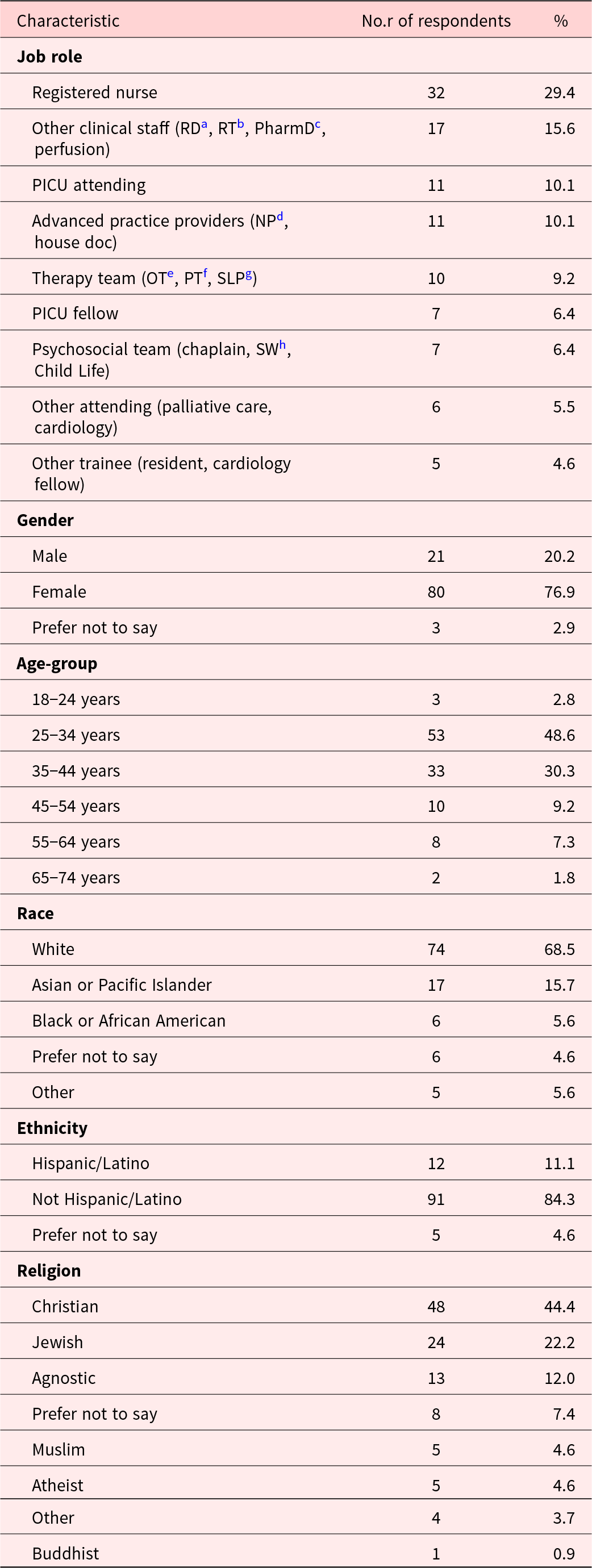
Of the 413 health-care workers approached for recruitment, 109 (26%) responded to the survey. Registered nurses were the most frequent respondents, comprising 29.4% of all respondents, followed by PICU attending physicians (10.1%) and advanced practice providers (10.1%) (Table 1). Almost one-third of respondents were allied health professionals and psychosocial team members not included in prior similar studies. Each clinical role was represented by at least 1 respondent.
Demographic characteristics of survey respondents (n = 109)

a Registered dietician.
b Respiratory therapist.
c Clinical pharmacist.
d Nurse practitioner.
e Occupational therapist.
f Physical therapist.
g Speech and language pathologist.
h Social worker.
Respondents were mostly female (76.9%), between 25 and 44 years of age (78.9%), and White (68.5%). In terms of religious affiliation, most respondents identified as Christian (44.4%) or Jewish (22.2%). Only 4.6% of respondents identified as Muslim.
Interactions with Muslims
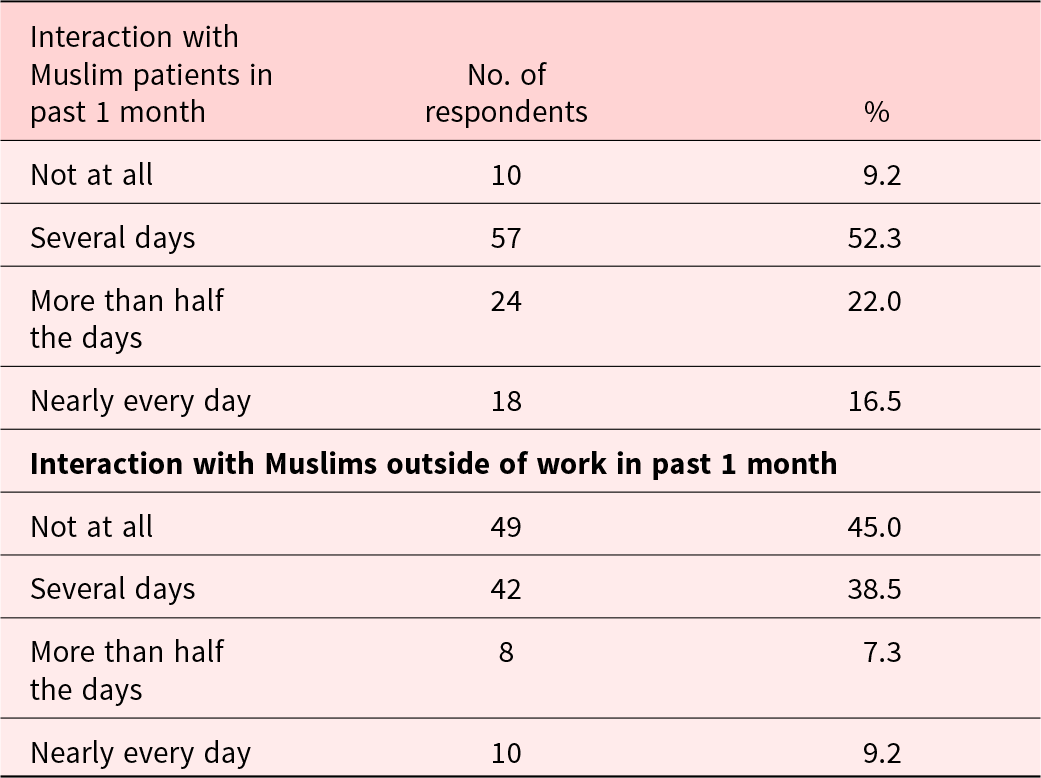
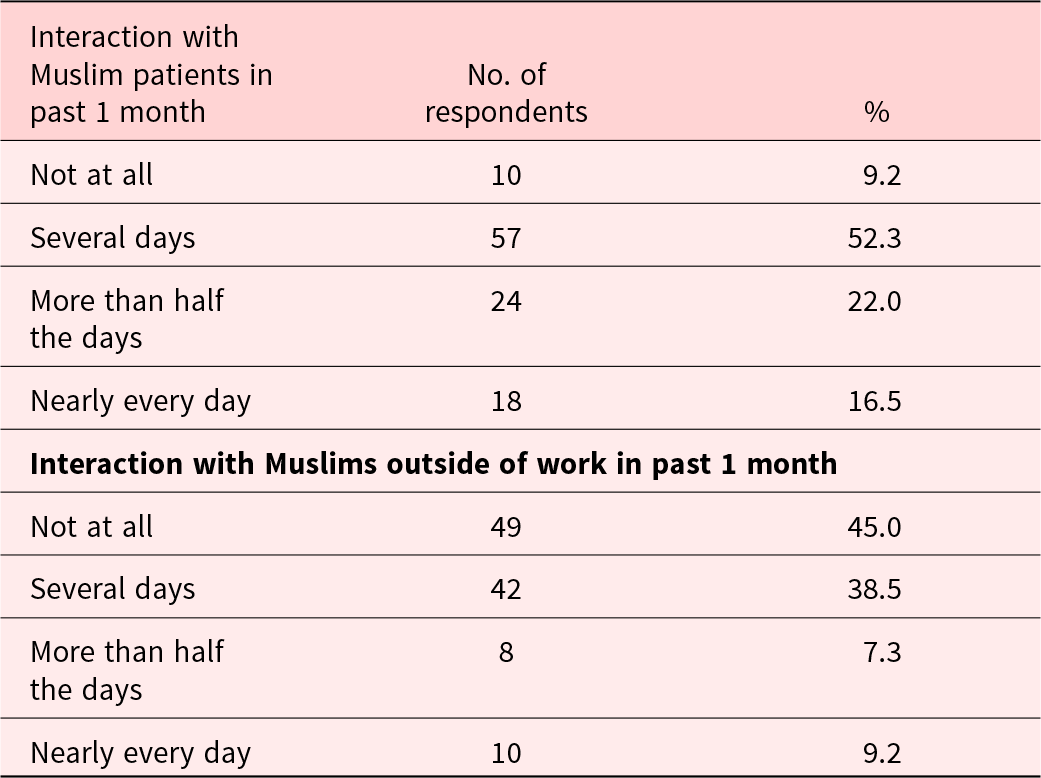
The vast majority of respondents interacted with Muslim patients or families at work at least several days in the preceding month (90.8%) (Table 2). On the other hand, 45.0% of respondents did not interact with Muslims at all outside of work in the preceding month.
Respondent frequency of interactions with Muslim patients at work and Muslims outside of work
BK and CS
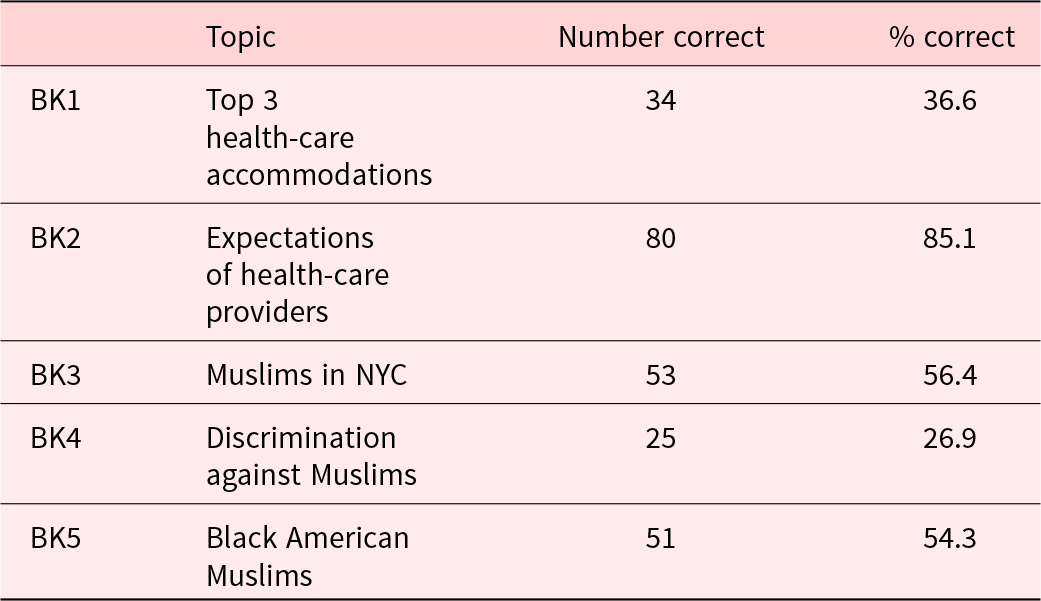
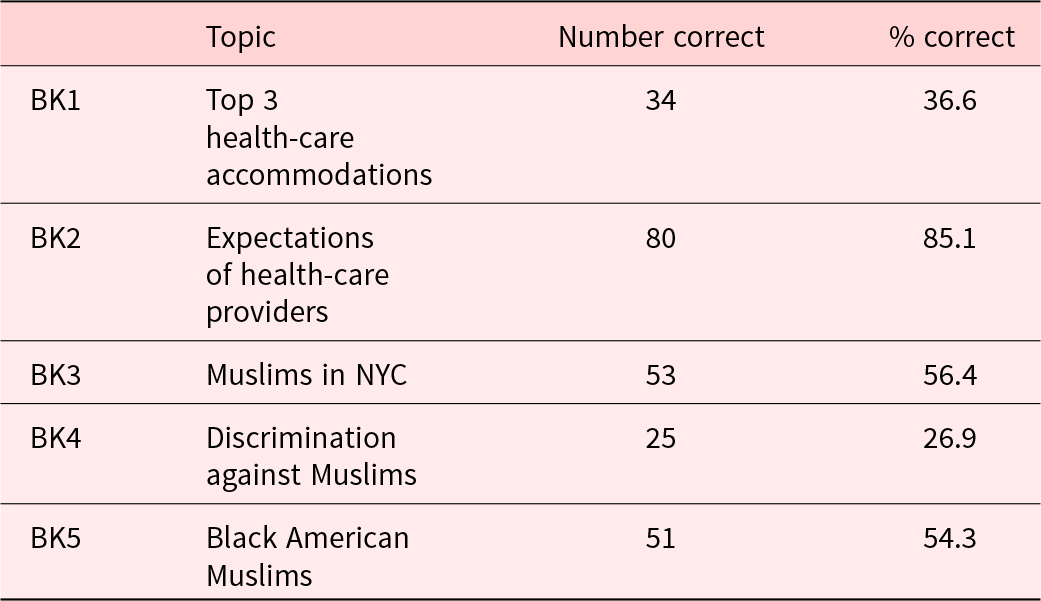
BK question results are shown in Table 3. Participants responded to 51.7 ± 22.2% (mean ± SD) of BK questions correctly. The most incorrectly answered question was about recent trends in discrimination against Muslim Americans compared to other religious minority groups, to which only 26.9% of participants responded correctly.
Number of respondents (n = 94) with correct responses to background knowledge (BK) questions by question topic
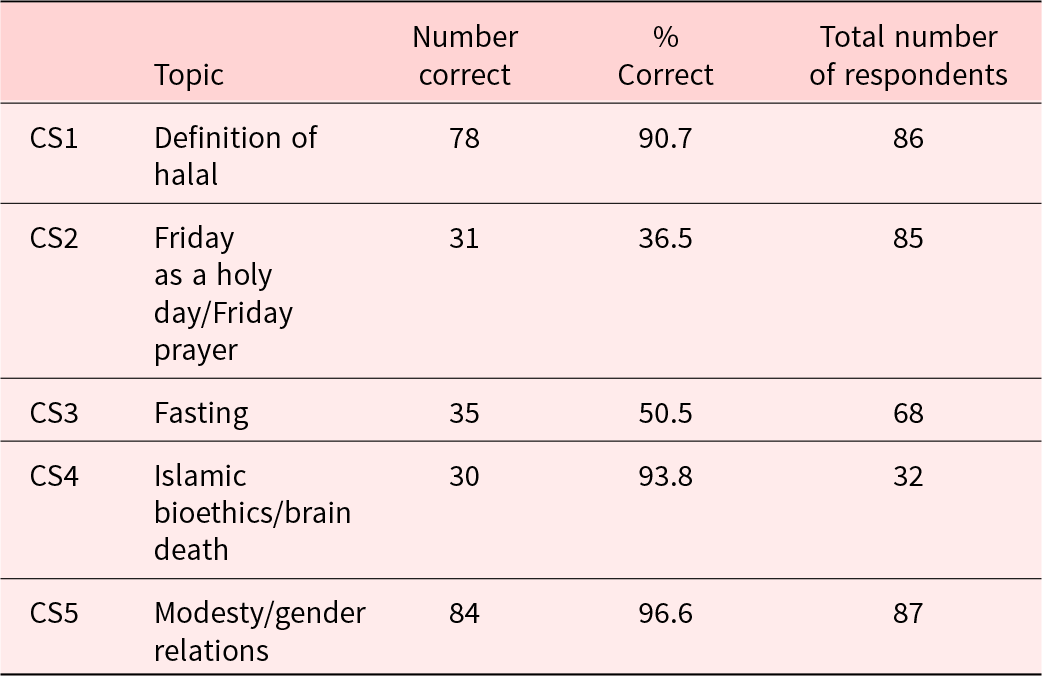
Clinical skills questions results are summarized in Table 4. Only 63 participants responded to all CS questions. These participants responded to 69.2 ± 20.6% (mean ± SD) of CS questions correctly. The most incorrectly answered question required the respondent to recognize that Friday afternoon may be an inappropriate time to schedule a non-urgent meeting with a Muslim patient’s family, as this is the time of the Islamic Friday prayer; only 36.5% of participants responded to this question correctly.
Number of respondents with correct responses to clinical skills (CS) questions by question topic
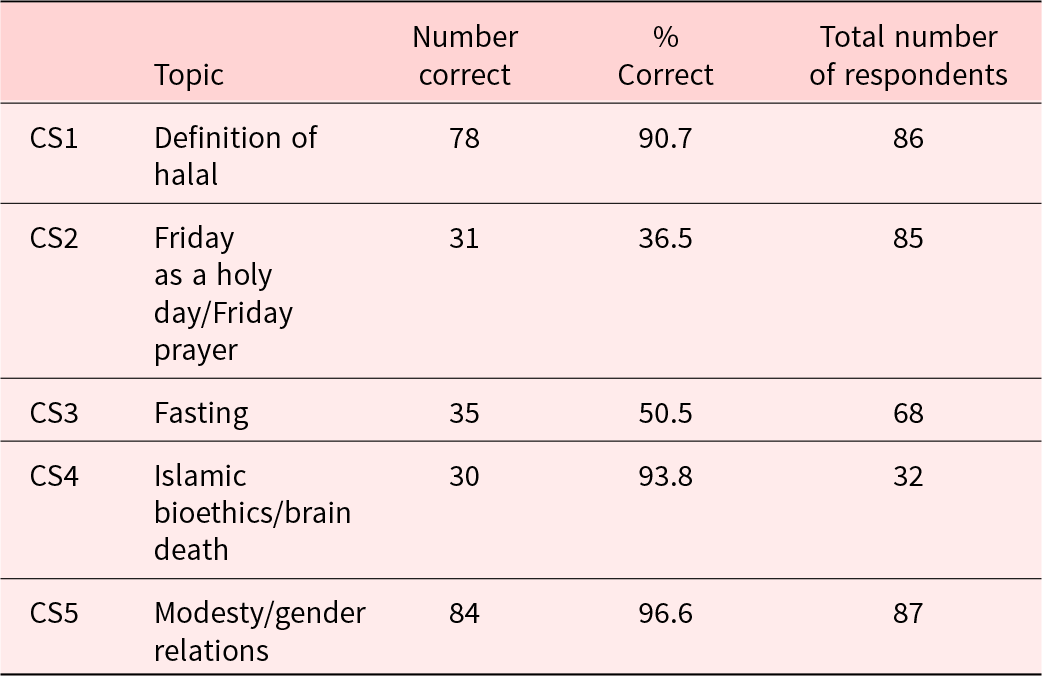
CS4 was a question regarding brain death which was only shown to physicians and advanced practice providers.
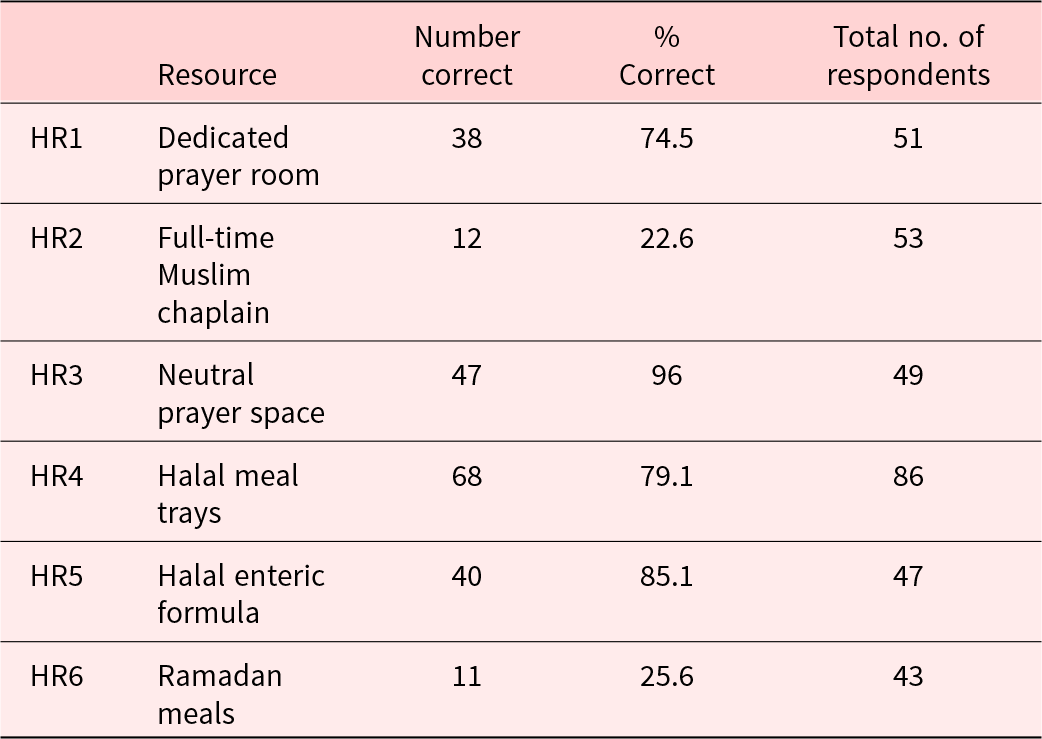
Lastly, Table 5 summarizes the results of the 6 HR questions. Of those who responded to these questions, 77.4% and 74.4% of participants incorrectly believed that there was a full-time Muslim chaplain and that the hospital provided Muslim patients and families meals to break their fast during Ramadan, respectively. Most participants were correctly able to identify that the hospital had a dedicated prayer room for Muslim patients, a neutral prayer space in the form of an interfaith chapel, halal meal tray options, and halal enteric formula for pediatric patients.
Number of respondents with correct responses to hospital resource (HR) questions
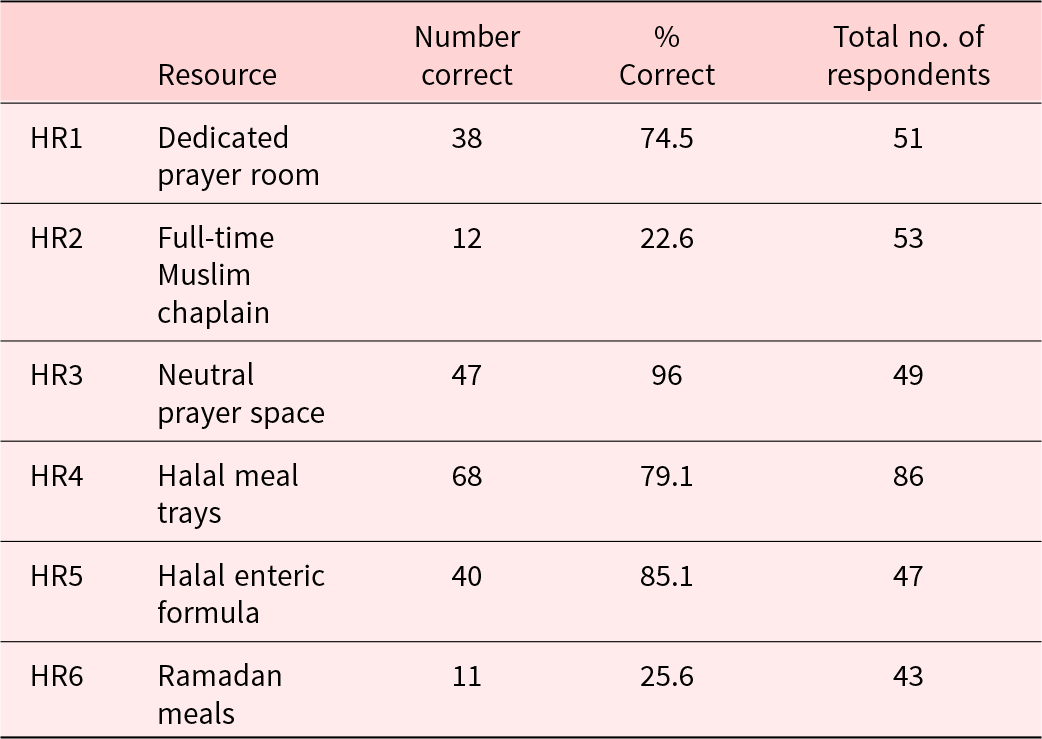
Respondents were asked to identify in a true/false question whether the study hospital made the following resource available to Muslim patients and families.
Attitudes toward the care of Muslim patients
Most participants (63.1%) agreed to the statement “I provide culturally competent care to my Muslim patients and their families.” Almost all participants (94.0%) strongly agreed that they would like to provide culturally competent care to their Muslim patients and families. While 56.1% of participants agreed with “My institution as a whole provides culturally competent care to Muslim patients and their families,” 44.0% did not agree that the quality of care provided to Muslim patients was equal to that of other religious minority groups. Only 29.8% of participants agreed that their institution had provided them with adequate resources to provide culturally competent care to Muslim patients and their families.
Additional resources and educational interventions
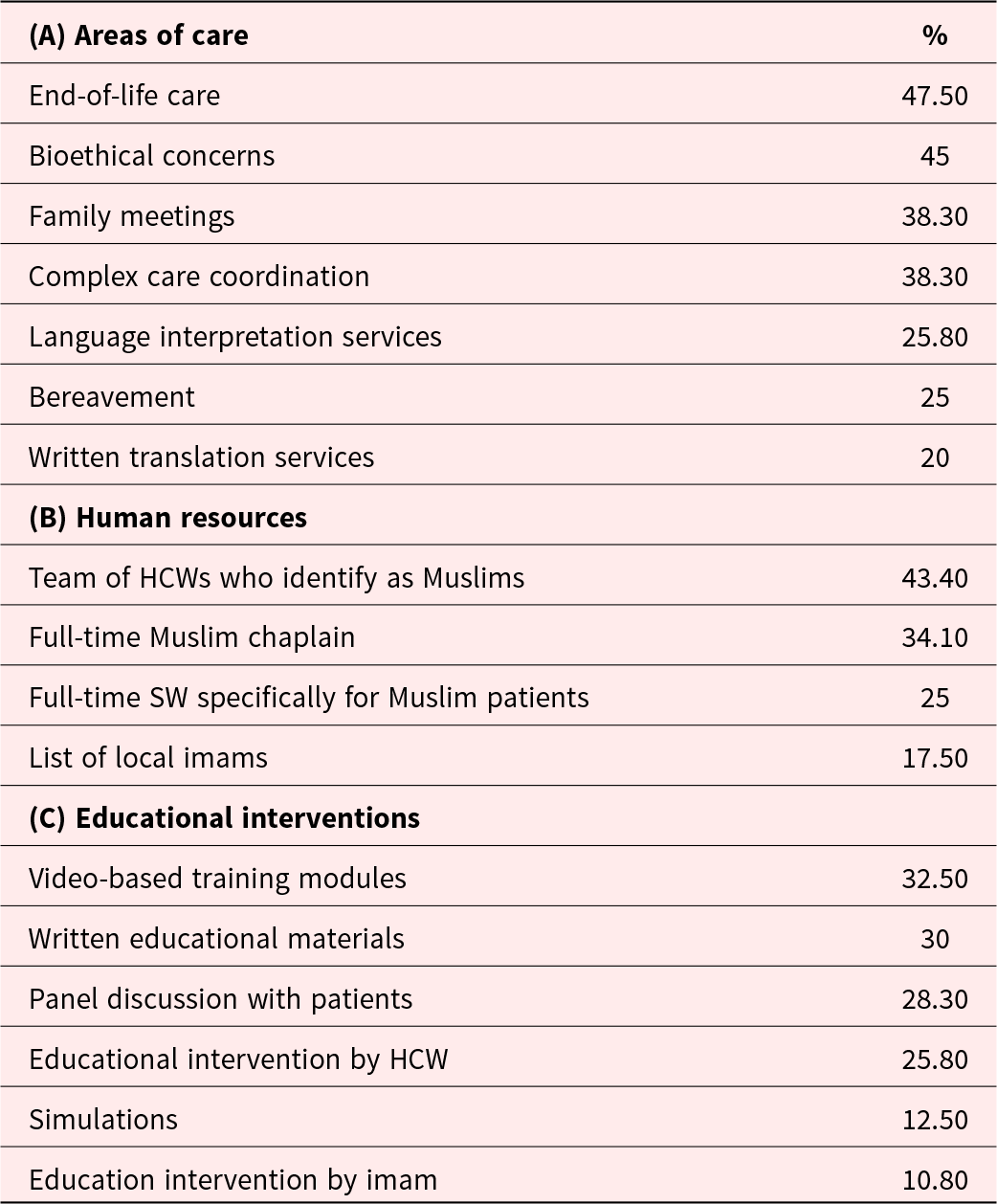
Table 6 summarizes participants’ views on areas of care of the Muslim patient that would benefit from additional resources and human resources and educational interventions that would be most helpful in caring for Muslim patients. End-of-life care (47.5%) and bioethical concerns (45%) were the 2 most cited areas of care requiring additional resources. Human resources in the form of a team of health-care workers who self-identify as Muslim was sought by 43.4% of participants. Fewer participants believed an educational intervention would be beneficial; less than one-third felt a video-based training module would be helpful.
Percentage of respondents identifying (A) areas of care of the Muslim patient requiring additional resources, (B) human resources that would be helpful in caring for Muslim patients, and (C) educational interventions that would be helpful in increasing basic knowledge of Islam and Muslims
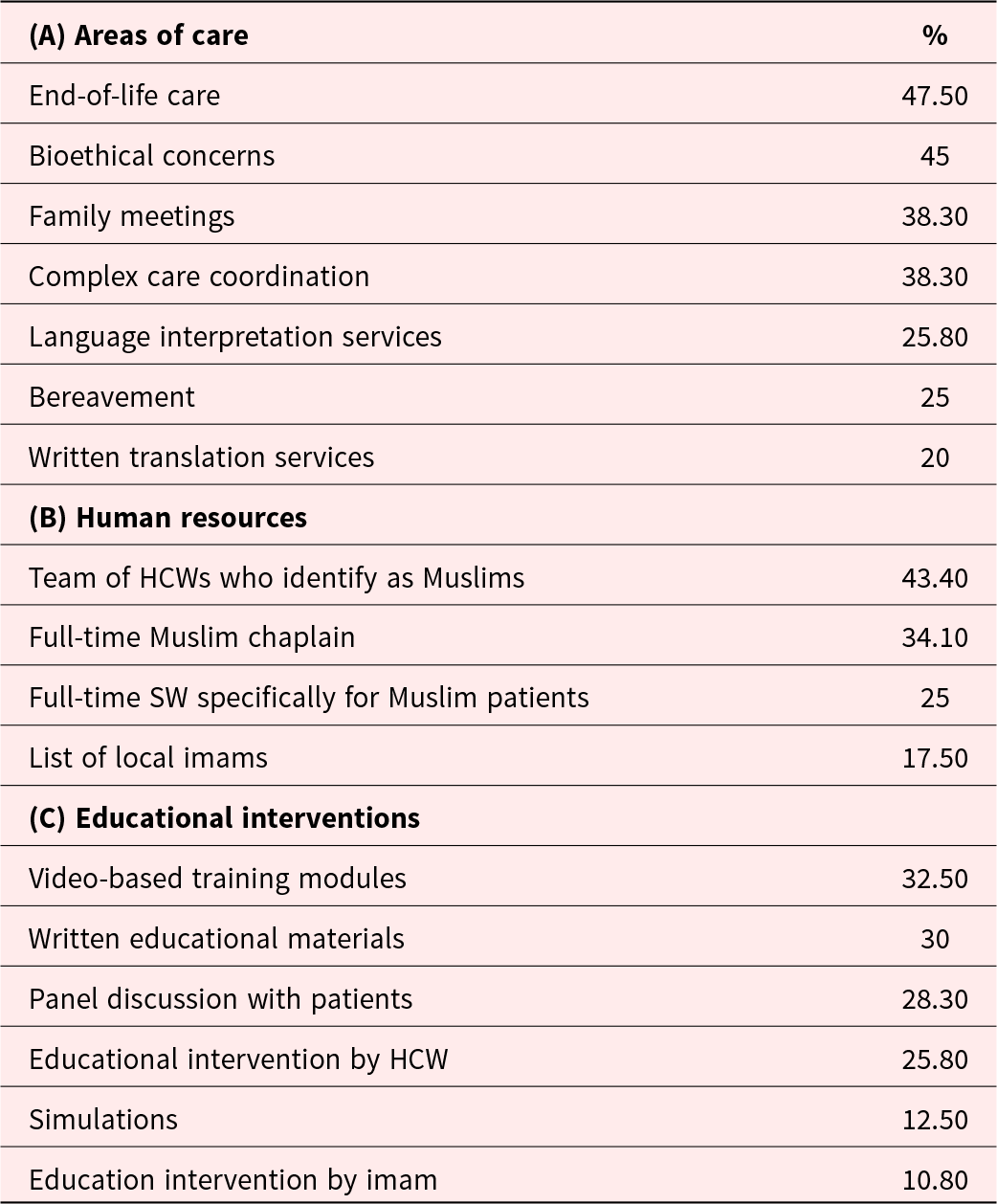
HCW = health-care workers, SW = social workers.
Respondents could choose multiple items in each category.
Discussion
In this first study of multidisciplinary health-care workers’ knowledge, skills, and attitudes regarding the care of Muslim children and their families in a tertiary care PICU in New York, almost all health-care workers interacted with Muslim patients several times at work, while almost half did not interact with any Muslims outside of work in the preceding month. These data suggest that many non-Muslim health-care workers’ only exposure to Muslims may be in clinical settings, which underscores the need for institutional support in providing education and assuring quality care for Muslim patients and their families. Indeed, prior studies of religious and spiritual literacy in health-care and social work have highlighted the need for improved knowledge- and skills-based training (Chan and Sitek Reference Chan and Sitek2021; Oxhandler and Pargament Reference Oxhandler and Pargament2014).
Relatedly, health-care workers generally performed better on skills questions containing realistic clinical vignettes and content similar to what they might encounter in a PICU than on BK questions related to Muslims in the general American population. In some ways, this is appropriate, in that CS are more relevant to patient care than general knowledge about Muslims in the United States. However, health-care workers who interact with Muslims only in clinical settings without any additional institutional or educational support may not develop the “critical consciousness” needed to attain cultural humility, which requires deeper, guided reflection based on clinical experiences (Halman et al. Reference Halman, Baker and Ng2017; Kumagai and Lypson Reference Kumagai and Lypson2009). For example, 2 of the 6 participants who provided free-text comments at the end of the survey wrote exclusively about their experiences caring for Muslim patients referred from abroad, when none of the survey questions specifically identified this subgroup of patients. These findings suggest underlying biases about Muslim patients. Importantly, prior research on the health-care experiences of Muslims identify an association between experienced Islamophobia and poor mental health and suboptimal health behaviors (Samari et al. Reference Samari, Alcalá and Sharif2018; Tackett et al. Reference Tackett, Young and Putman2018). Future work on health-care worker perspectives should more specifically explore to what extent these biases exist in different clinical settings and clinician–patient encounters.
The HR portion of our survey revealed that when resources are present, health-care workers were likely to know about their presence. However, health-care workers were much less likely to know when a resource, such as a full-time Muslim chaplain or meals for fast-breaking during Ramadan, were not present. At the study hospital during the time period of this study, there was a part-time Muslim chaplain who worked 1 day per week and was sometimes available for phone consultation outside of his allotted work hours. A Muslim nurse also founded a nonprofit organization to raise community funds for a Ramadan meal program for Muslim patients and families. Health-care workers may have inappropriately identified the hospital as the sponsor of this program. Health-care workers’ lack of knowledge about these specific resources may limit their ability to empathize with the needs of Muslim patients, families, and coworkers.
While most health-care workers believed their own care and the care provided by their institution to Muslim patients was “culturally competent,” most did not believe the quality of care received by Muslim patients was equal to that received by other religious minority patient groups. This contradictory labeling of inequitable care quality as still “culturally competent” is concerning. It suggests that health-care workers either do not view quality of care and cultural competence as interdependent or that they believe Muslim patients receive worse care quality for reasons other than cultural incompetence. Further research is needed to elucidate the nature of these findings.
Lastly, 42.9% of respondents believed that their institution provided them with inadequate resources to provide culturally competent care to Muslim patients and families. End-of-life care and bioethical concerns were identified as high-need areas of care. The most desired additional resource was a team of health-care workers who self-identify as Muslim. As Muslim health-care workers ourselves, we have anecdotally experienced this expectation of serving as “spiritual ambassadors” in clinical settings. Most of us agree that we are not appropriately trained, allotted time, or compensated for our work in this capacity. Therefore, we caution against the widespread use of this strategy and advocate for alternative resources in the form of a full-time Muslim chaplain (desired by 34.1% of respondents) or innovative educational interventions.
Limitations
First, as a cross-sectional study of a convenience sample with a relatively low response rate, our study was limited by possible selection bias. We used the number of individuals who received our recruitment email as the denominator of our response rate, and we are not certain how many of these individuals had a PICU shift in the preceding month. Therefore, it is likely that we underestimate the true response rate we would calculate if we were to not include individuals who were on leave or did not rotate through the PICU during the time this study was conducted. However, we do anticipate that individuals who were more aware of issues affecting Muslim patients and families were more likely to participate and complete the survey. Therefore, we likely overestimate health-care worker knowledge and skills.
Secondly, of participants who completed the survey, many participants chose to skip certain questions. Our survey did have an “I don’t know” option as an answer choice to several questions, but none of the participants selected this option. Therefore, it is unclear if participants skipped these questions because of survey fatigue or due to perceived lack of knowledge or skills to correctly answer the question.
Conclusions
Our study demonstrates the need for hospitals to recognize that most health-care workers may only interact with Muslim (and other religious minority) persons in a clinical capacity, and that it is therefore an institutional responsibility to ensure that health-care workers are adequately prepared to provide care with cultural humility. This requires not only a consideration of what additional resources and educational interventions may be needed but also ensuring that health-care workers are aware of available interventions. Lastly, institutions should revisit how they frame health equity among various religious minority groups in communication to their staff to ensure equitable care delivery to all.
Supplementary material
The supplementary material for this article can be found at https://doi.org/10.1017/S1478951523001049.
Author contributions
All authors contributed to the study conception and design. Data collection was performed by Nadir Ijaz, Sarah Ghannoum, and Natasha Piracha. Data analysis was performed by Nadir Ijaz. The first draft of the manuscript was written by Nadir Ijaz and Amir Hassan, and all authors commented on previous versions of the manuscript. All authors read and approved the final manuscript.
Funding
The authors declare that no funds, grants, or other support were received during the preparation of this manuscript.
Competing interests
The authors have no relevant financial or non-financial interests to disclose.
Ethical approval
This study was performed in line with the principles of the Declaration of Helsinki. Approval was granted by the Institutional Review Board of Columbia University Medical Center (5/4/2021/Protocol #AAAT6272). Informed consent was obtained from all individual participants included in the study. This manuscript does not contain any individual person’s data in identifiable form.


 Open access

