


Mental health problems, including depression, are major contributors to ill health worldwide, and it has been projected that depression will become the most important cause of morbidity (Reference Murray and LopezMurray & Lopez, 1996). Despite the importance of this disorder, the rates and determinants of depression in many non-Western countries are not well understood. This is particularly so in the case of the former Soviet Union. In the wake of high mortality rates (Reference Shkolnikov, McKee and LeonShkolnikov et al, 2001; Reference Men, Brennan and BoffettaMen et al, 2003), including deaths from suicide (Reference MakinenMakinen, 2000; World Health Organization, 2002), questions were raised about depressive disorders in Russia. There are a few estimates of prevalence of depressive disorders or symptoms in Russia (Reference Charman and PervovaCharman & Pervova, 1996; Reference Jose, D'Anna and CafassoJose et al, 1998; Reference Pakriev, Vasar and AluojaPakriev et al, 1998a ), but the reliability of such estimates is unclear and direct comparison with other countries is difficult. To address this lack of evidence, we examined depressive symptoms in three formerly communist countries: Russia, Poland and the Czech Republic.
METHOD
Participants
The data come from the pilot for the Health, Alcohol and Psychosocial factors In Eastern Europe (HAPIEE) study, a cross-sectional study of urban population samples in Novosibirsk (Russia), Krakow (Poland) and the twin city Karvina-Havirov (Czech Republic) in 1999–2000 (Reference Bobak, Room and KubinovaBobak et al, 2004). In each city a sample of men and women aged 45–64 years, stratified by gender and 5-year age group, was randomly chosen from population registers (Czech Republic and Poland) or the electoral list (Russia), and selected individuals were invited to participate in the study. The study was approved by ethical committees in each country and at University College London. The data analysed in this report were collected by a structured questionnaire. In the Czech Republic and Poland the questionnaires were completed during home visits by trained community nurses. In Russia all questionnaires were completed in a clinic, because home visits to the first 50 participants were not successful (mainly because of fears of crime). The questionnaires were translated from English into each of the three languages, back-translated into English and checked for accuracy. Questionnaires were completed by the participants while a trained field worker was available for assistance. A total of 2185 persons completed the questionnaire; the response rates ranged from 65% in Poland to 71% in the Czech Republic (overall response rate 69%). In all countries, response rate increased with age and it was higher among women. We excluded the 34 respondents with missing data on age, gender or depressive symptoms from this analysis.
Measurements
Depressive symptoms were measured using the Center for Epidemiologic Studies Depression scale (CES–D; Reference RadloffRadloff, 1977). This scale consists of 20 self-reported items (presence of symptoms in the past week) and scores range between 0 and 60. The full scale was used in the analysis. The depression score was calculated if at least 16 out of 20 questions were answered; if fewer than 20 questions were answered, the score was recalculated to have values between 0 and 60. Cronbach's α coefficients of internal consistency were 0.86 in Poland, 0.81 in Russia and 0.86 in the Czech Republic.
Several social characteristics were used as covariates. Participants were grouped into four categories of attained education: primary or less, vocational (apprenticeship), secondary (A-level equivalent) and university degree. An indicator of material deprivation was assessed by questions about how often the person's household had difficulties in buying enough food or clothes and in paying bills for housing, heating and electricity; a deprivation score was calculated based on these questions. Experience of unemployment in the past 12 months was recorded for all respondents. Individuals were categorised by marital status as married/cohabiting, single, divorced or widowed. We also assessed crowding (more than one person per room), ownership of selected household items, self-perceived changes in participants’ income and material conditions since 1989, drinking alcohol at least once a week, mean dose of alcohol consumed per drinking session, and smoking (at least one cigarette a day).
Statistical analysis
Depressive symptoms were analysed initially as both continuous (the CES–D score) and dichotomous variables; in the latter, participants with CES–D scores of 16 and above were considered as having depressive symptoms (Reference Beekman, Deeg and van TilburgBeekman et al, 1995; Reference Ferketich, Schwartzbaum and FridFerketich et al, 2000). Because both analyses produced essentially identical results, findings on the dichotomised outcomes are reported here.
The analytical strategy was as follows. First, all relevant variables were cross-tabulated by country and gender, and descriptive measures were calculated. Second, we used logistic regression to estimate age-adjusted odds ratios of depressive symptoms by socio-economic and demographic variables, for men and women separately. Where continuous scales were used for explanatory variables, the results are reported for an increase by one standard deviation. Finally, the odds ratios of depressive symptoms by socio-demographic variables were adjusted for other social covariates, in order to take into account potential confounding. These final multivariate analyses were initially also conducted separately for each country, but there was no statistically significant interaction between country and the covariates, except that the relation between education and depressive symptoms in Russia was different from that of the other two countries (a model with interaction between education and country explained the data statistically significantly better than a model without such interaction). We therefore pooled the data from all three countries and included an interaction term between country and education. The multivariate results are thus based on data from all three countries. All analyses were performed using STATA version 8 for Windows.
RESULTS
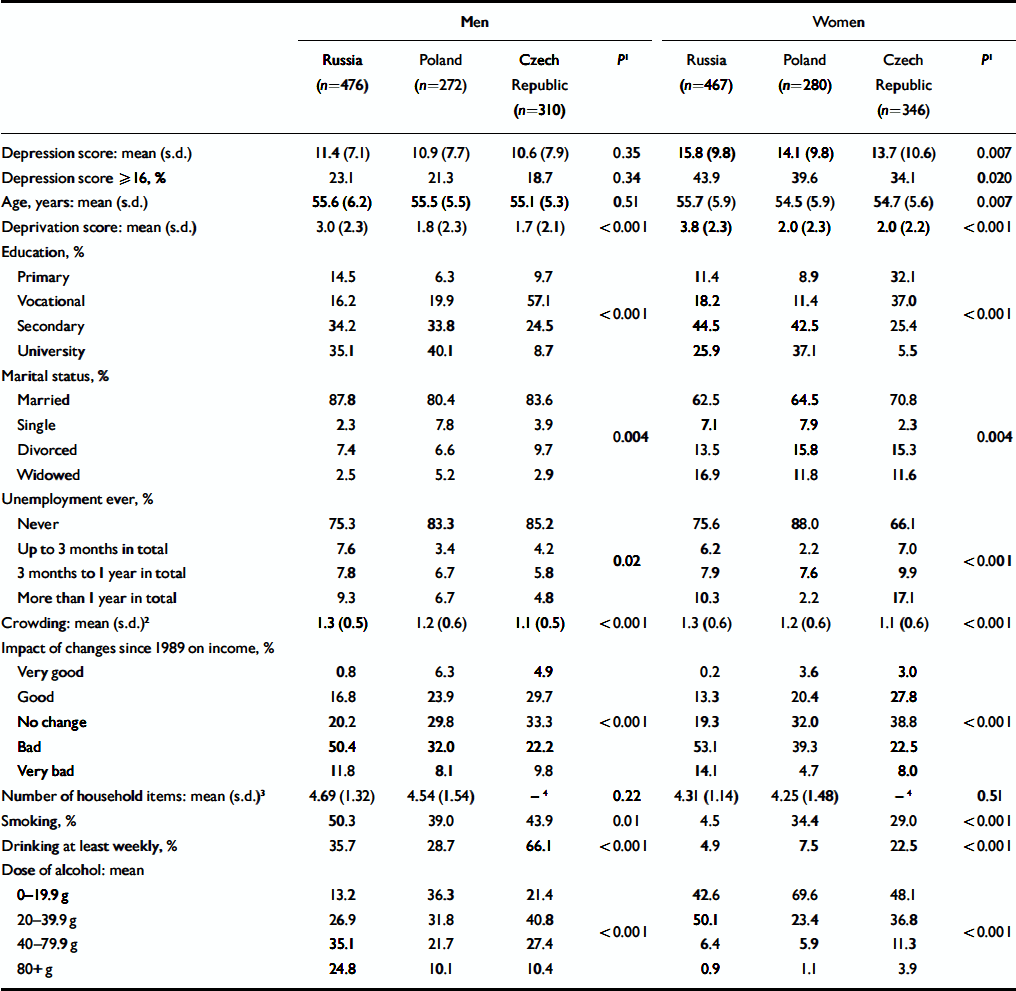
Descriptive characteristics of the 2151 individuals with valid data are shown in Table 1. The mean depression score was higher in women than in men in all centres. The prevalence of depressive symptoms was around 20% in men and around 40% in women; in both genders both the score and prevalence were highest in Novosibirsk. The mean ages were similar in all three centres, but there were differences in socio-demographic characteristics and health behaviours between the centres. Most notably, about 60% of Russians rated the changes in their income and material circumstances after 1989 as ‘bad’ or ‘very bad’; this proportion was substantially lower in Poland and the Czech Republic.
Characteristics of the study participants
| Men | Women | |||||||
|---|---|---|---|---|---|---|---|---|
| Russia (n=476) | Poland (n=272) | Czech Republic (n=310) | P 1 | Russia (n=467) | Poland (n=280) | Czech Republic (n=346) | P 1 | |
| Depression score: mean (s.d.) | 11.4 (7.1) | 10.9 (7.7) | 10.6 (7.9) | 0.35 | 15.8 (9.8) | 14.1 (9.8) | 13.7 (10.6) | 0.007 |
| Depression score ≥ 16, % | 23.1 | 21.3 | 18.7 | 0.34 | 43.9 | 39.6 | 34.1 | 0.020 |
| Age, years: mean (s.d.) | 55.6 (6.2) | 55.5 (5.5) | 55.1 (5.3) | 0.51 | 55.7 (5.9) | 54.5 (5.9) | 54.7 (5.6) | 0.007 |
| Deprivation score: mean (s.d.) | 3.0 (2.3) | 1.8 (2.3) | 1.7 (2.1) | <0.001 | 3.8 (2.3) | 2.0 (2.3) | 2.0 (2.2) | <0.001 |
| Education, % | ||||||||
| Primary | 14.5 | 6.3 | 9.7 | 11.4 | 8.9 | 32.1 | ||
| Vocational | 16.2 | 19.9 | 57.1 | <0.001 | 18.2 | 11.4 | 37.0 | <0.001 |
| Secondary | 34.2 | 33.8 | 24.5 | 44.5 | 42.5 | 25.4 | ||
| University | 35.1 | 40.1 | 8.7 | 25.9 | 37.1 | 5.5 | ||
| Marital status, % | ||||||||
| Married | 87.8 | 80.4 | 83.6 | 62.5 | 64.5 | 70.8 | ||
| Single | 2.3 | 7.8 | 3.9 | 0.004 | 7.1 | 7.9 | 2.3 | 0.004 |
| Divorced | 7.4 | 6.6 | 9.7 | 13.5 | 15.8 | 15.3 | ||
| Widowed | 2.5 | 5.2 | 2.9 | 16.9 | 11.8 | 11.6 | ||
| Unemployment ever, % | ||||||||
| Never | 75.3 | 83.3 | 85.2 | 75.6 | 88.0 | 66.1 | ||
| Up to 3 months in total | 7.6 | 3.4 | 4.2 | 0.02 | 6.2 | 2.2 | 7.0 | <0.001 |
| 3 months to 1 year in total | 7.8 | 6.7 | 5.8 | 7.9 | 7.6 | 9.9 | ||
| More than 1 year in total | 9.3 | 6.7 | 4.8 | 10.3 | 2.2 | 17.1 | ||
| Crowding: mean (s.d.)2 | 1.3 (0.5) | 1.2 (0.6) | 1.1 (0.5) | <0.001 | 1.3 (0.6) | 1.2 (0.6) | 1.1 (0.6) | <0.001 |
| Impact of changes since 1989 on income, % | ||||||||
| Very good | 0.8 | 6.3 | 4.9 | 0.2 | 3.6 | 3.0 | ||
| Good | 16.8 | 23.9 | 29.7 | 13.3 | 20.4 | 27.8 | ||
| No change | 20.2 | 29.8 | 33.3 | <0.001 | 19.3 | 32.0 | 38.8 | <0.001 |
| Bad | 50.4 | 32.0 | 22.2 | 53.1 | 39.3 | 22.5 | ||
| Very bad | 11.8 | 8.1 | 9.8 | 14.1 | 4.7 | 8.0 | ||
| Number of household items: mean (s.d.)3 | 4.69 (1.32) | 4.54 (1.54) | -4 | 0.22 | 4.31 (1.14) | 4.25 (1.48) | -4 | 0.51 |
| Smoking, % | 50.3 | 39.0 | 43.9 | 0.01 | 4.5 | 34.4 | 29.0 | <0.001 |
| Drinking at least weekly, % | 35.7 | 28.7 | 66.1 | <0.001 | 4.9 | 7.5 | 22.5 | <0.001 |
| Dose of alcohol: mean | ||||||||
| 0-19.9 g | 13.2 | 36.3 | 21.4 | 42.6 | 69.6 | 48.1 | ||
| 20-39.9 g | 26.9 | 31.8 | 40.8 | <0.001 | 50.1 | 23.4 | 36.8 | <0.001 |
| 40-79.9 g | 35.1 | 21.7 | 27.4 | 6.4 | 5.9 | 11.3 | ||
| 80+ g | 24.8 | 10.1 | 10.4 | 0.9 | 1.1 | 3.9 | ||
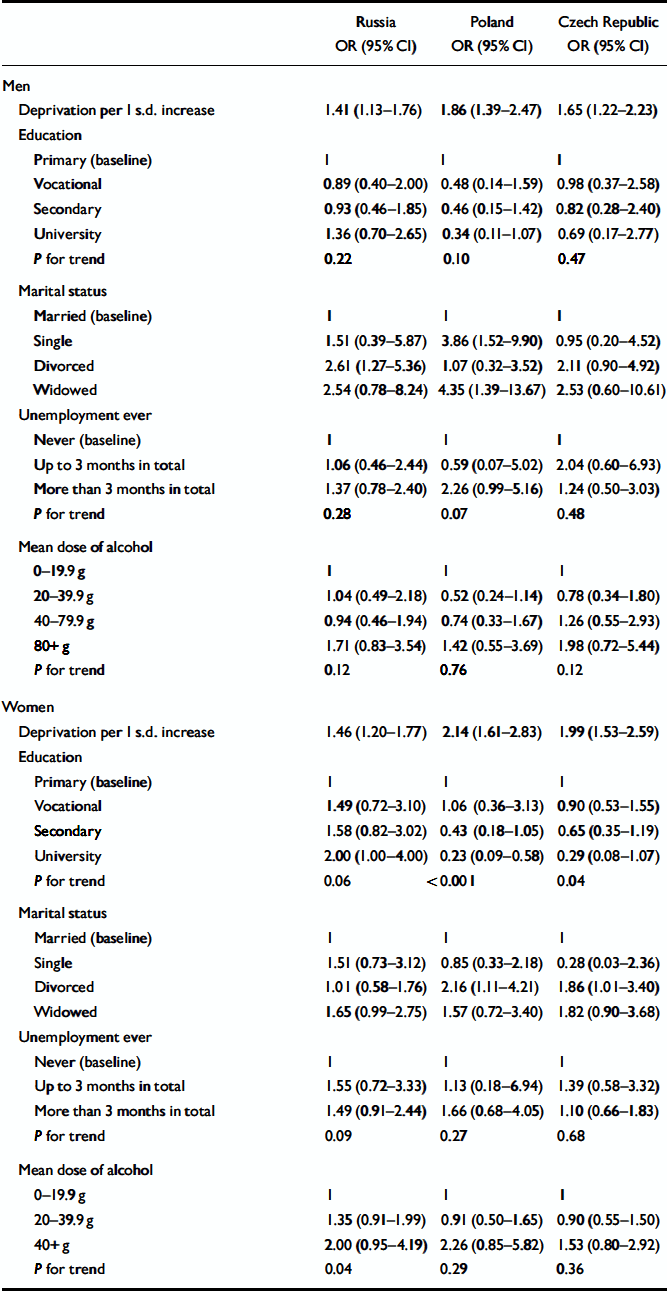
After controlling for age, the presence of depressive symptoms was significantly associated with self-assessed material deprivation in all centres in both genders (Table 2). The association with education differed by country: there was an inverse relationship in Polish and Czech samples (although it did not reach statistical significance in men), but there was no clear association in Russian men and the association in Russian women was positive. Unmarried men, but not women, tended to have higher rates of depressive symptoms, but the pattern and significance differed between countries. There was no clear relationship between depressive symptoms and history of unemployment. People who drank large amounts of alcohol per drinking occasion had higher rates of depressive symptoms, although the country-specific estimates were not statistically significant. Among other variables, not reported in the table, negative rating of the changes after 1989 tended to be related to higher prevalence of depressive symptoms, but the relationship was not statistically significant in Russia or in Czech women. Depressive symptoms were not related to crowding, smoking, or drinking more often than once a week.
Age-adjusted odds ratios for depressive symptoms (score of 16 or over on the Center for Epidemiologic Studies Depression scale)
| Russia OR (95% CI) | Poland OR (95% CI) | Czech Republic OR (95% CI) | |
|---|---|---|---|
| Men | |||
| Deprivation per 1 s.d. increase | 1.41 (1.13-1.76) | 1.86 (1.39-2.47) | 1.65 (1.22-2.23) |
| Education | |||
| Primary (baseline) | 1 | 1 | 1 |
| Vocational | 0.89 (0.40-2.00) | 0.48 (0.14-1.59) | 0.98 (0.37-2.58) |
| Secondary | 0.93 (0.46-1.85) | 0.46 (0.15-1.42) | 0.82 (0.28-2.40) |
| University | 1.36 (0.70-2.65) | 0.34 (0.11-1.07) | 0.69 (0.17-2.77) |
| P for trend | 0.22 | 0.10 | 0.47 |
| Marital status | |||
| Married (baseline) | 1 | 1 | 1 |
| Single | 1.51 (0.39-5.87) | 3.86 (1.52-9.90) | 0.95 (0.20-4.52) |
| Divorced | 2.61 (1.27-5.36) | 1.07 (0.32-3.52) | 2.11 (0.90-4.92) |
| Widowed | 2.54 (0.78-8.24) | 4.35 (1.39-13.67) | 2.53 (0.60-10.61) |
| Unemployment ever | |||
| Never (baseline) | 1 | 1 | 1 |
| Up to 3 months in total | 1.06 (0.46-2.44) | 0.59 (0.07-5.02) | 2.04 (0.60-6.93) |
| More than 3 months in total | 1.37 (0.78-2.40) | 2.26 (0.99-5.16) | 1.24 (0.50-3.03) |
| P for trend | 0.28 | 0.07 | 0.48 |
| Mean dose of alcohol | |||
| 0-19.9 g | 1 | 1 | 1 |
| 20-39.9 g | 1.04 (0.49-2.18) | 0.52 (0.24-1.14) | 0.78 (0.34-1.80) |
| 40-79.9 g | 0.94 (0.46-1.94) | 0.74 (0.33-1.67) | 1.26 (0.55-2.93) |
| 80+ g | 1.71 (0.83-3.54) | 1.42 (0.55-3.69) | 1.98 (0.72-5.44) |
| P for trend | 0.12 | 0.76 | 0.12 |
| Women | |||
| Deprivation per 1 s.d. increase | 1.46 (1.20-1.77) | 2.14 (1.61-2.83) | 1.99 (1.53-2.59) |
| Education | |||
| Primary (baseline) | 1 | 1 | 1 |
| Vocational | 1.49 (0.72-3.10) | 1.06 (0.36-3.13) | 0.90 (0.53-1.55) |
| Secondary | 1.58 (0.82-3.02) | 0.43 (0.18-1.05) | 0.65 (0.35-1.19) |
| University | 2.00 (1.00-4.00) | 0.23 (0.09-0.58) | 0.29 (0.08-1.07) |
| P for trend | 0.06 | <0.001 | 0.04 |
| Marital status | |||
| Married (baseline) | 1 | 1 | 1 |
| Single | 1.51 (0.73-3.12) | 0.85 (0.33-2.18) | 0.28 (0.03-2.36) |
| Divorced | 1.01 (0.58-1.76) | 2.16 (1.11-4.21) | 1.86 (1.01-3.40) |
| Widowed | 1.65 (0.99-2.75) | 1.57 (0.72-3.40) | 1.82 (0.90-3.68) |
| Unemployment ever | |||
| Never (baseline) | 1 | 1 | 1 |
| Up to 3 months in total | 1.55 (0.72-3.33) | 1.13 (0.18-6.94) | 1.39 (0.58-3.32) |
| More than 3 months in total | 1.49 (0.91-2.44) | 1.66 (0.68-4.05) | 1.10 (0.66-1.83) |
| P for trend | 0.09 | 0.27 | 0.68 |
| Mean dose of alcohol | |||
| 0-19.9 g | 1 | 1 | 1 |
| 20-39.9 g | 1.35 (0.91-1.99) | 0.91 (0.50-1.65) | 0.90 (0.55-1.50) |
| 40+ g | 2.00 (0.95-4.19) | 2.26 (0.85-5.82) | 1.53 (0.80-2.92) |
| P for trend | 0.04 | 0.29 | 0.36 |
Since socio-demographic characteristics are mutually correlated, we estimated their independent association with depressive symptoms in the pooled data (Table 3). After controlling for covariates, higher rates of depressive symptoms were found in women, people with higher levels of material deprivation, those divorced or widowed, and in people who consumed high doses of alcohol per drinking session. There was an interaction between education and country: higher education was associated with lower rates of depressive symptoms in the Czech Republic and Poland but with higher rates in Russia (P=0.003 for interaction). Unemployment, crowding and perception of changes in income since 1989 were not associated with depressive symptoms in the pooled data.
Odds ratios of depressive symptoms by socio-demographic variables in the pooled data, adjusted for age, gender, country and all variables in table

| OR (95% Cl) | |
|---|---|
| Gender | |
| Men (baseline) | 1 |
| Women | 2.91 (2.20-3.86) |
| Deprivation per 1 s.d. increase | 1.52 (1.36-1.71) |
| Marital status | |
| Married (baseline) | 1 |
| Single | 1.12 (0.71-1.78) |
| Divorced | 1.40 (1.02-1.91) |
| Widowed | 1.85 (1.30-2.65) |
| Unemployment ever | |
| Never (baseline) | 1 |
| Up to 3 months in total | 1.06 (0.69-1.63) |
| More than 3 months in total | 0.97 (0.73-1.28) |
| P for trend | 0.89 |
| Crowding per 1 s.d. increase | 0.93 (0.83-1.04) |
| Changes in income since 1989 | |
| Very good/good (baseline) | 1 |
| No change | 0.79 (0.58-1.07) |
| Bad/very bad | 1.10 (0.82-1.46) |
| P for trend | 0.33 |
| Smoking | |
| No (baseline) | 1 |
| Yes | 0.99 (0.77-1.26) |
| Mean dose of alcohol per session | |
| 0-19.9 g (baseline) | 1 |
| 20-39.9 g | 1.02 (0.80-1.30) |
| 40-79.9 g | 1.30 (0.93-1.81) |
| 80+ g | 2.01 (1.32-3.05) |
| P for trend | 0.003 |
| Education1 | |
| Russia | |
| Primary (baseline) | 1 |
| Vocational | 1.22 (0.70-2.12) |
| Secondary | 1.27 (0.78-2.06) |
| University | 1.99 (1.20-3.28) |
| P for trend | 0.004 |
| Poland | |
| Primary (baseline) | 1 |
| Vocational | 0.62 (0.22-1.69) |
| Secondary | 0.44 (0.17-1.11) |
| University | 0.36 (0.14-0.92) |
| P for trend | 0.02 |
| Czech Republic | |
| Primary (baseline) | 1 |
| Vocational | 0.82 (0.50-1.33) |
| Secondary | 0.74 (0.43-1.29) |
| University | 0.56 (0.22-1.41) |
| P for trend | 0.16 |
DISCUSSION
To our knowledge, these are the first estimates of the frequency of depressive symptoms in the general population in Russia that have been obtained using an internationally accepted instrument, and they are directly comparable with rates in other countries. We found that the prevalence of depressive symptoms was only marginally higher in Russia than in Poland and the Czech Republic. Depressive symptoms were associated with a number of personal characteristics; the association of depressive symptoms with education differed between countries.
Limitations of the study
Several limitations of the study need to be considered. First, the CES–D scale, like other screening instruments, is not perfect in measuring clinical depression; it has relatively low specificity (Reference Mulrow, Williams and GeretyMulrow et al, 1995), and our definition of depressive symptoms therefore includes mainly minor depression and psychological distress, rather than major or severe depression (Reference Beekman, Deeg and van TilburgBeekman et al, 1995). Although the CES–D is probably the most widely used and extensively validated instrument for the assessment of depressive symptoms in many countries (Reference Beekman, Deeg and van TilburgBeekman et al, 1995; Reference Mulrow, Williams and GeretyMulrow et al, 1995), including Poland (Reference Dojka, Gorkiewicz and PajakDojka et al, 2003) and the Czech Republic (Reference OseckaOsecka, 1999), it has not, to our knowledge, been used or formally validated in Russia. In theory, Russians might report depressive symptoms differently from other nationalities, but given the good internal consistency of the CES–D scale and the similarity of the distribution of depressive symptoms in the three populations, such a bias is unlikely.
Second, both depressive symptoms and the covariates were self-reported. Some of the covariates are subjective, such as the rating of the changes after 1989 and, to a lesser extent, deprivation. It is therefore possible that some cross-contamination between reporting of depressive symptoms and covariates occurred, which might have led to overestimation of the strength of the relationships. For example, depressed people might view the changes over the past 10 years more negatively than those without symptoms of depression. Although the weak association between depression and unemployment argues against a major presence of this bias, the cross-sectional design is certainly vulnerable to it.
Third, it is impossible to ascertain temporality in cross-sectional studies. For example, being divorced can lead to depression, but depression can also lead to marital problems and result in divorce. In our study, this situation could have influenced the relationship between depressive symptoms and marital status and, in theory, with deprivation. However, given that deprivation relates to the whole household, a direct effect of depression on material deprivation is probably limited.
Fourth, non-response bias should also be considered. In general, people who participate in health surveys are healthier than those who do not. Thus, the levels of depressive symptoms in our study are probably underestimated. However, assuming that the differences between respondents and non-respondents were similar in all countries, the comparisons between the populations are valid, even if the absolute prevalence rates were underestimated. The non-response bias should not affect the association between depressive symptoms and socio-demographic factors within the study sample.
Fifth, the sample size was relatively small, particularly for analyses conducted separately by gender and country. Given the numerous comparisons, some of the weaker associations within centres need to be interpreted cautiously. Results of the analyses of the pooled data, however, were based on sufficient numbers of participants, and should be statistically reliable.
Finally, it is possible that the selected urban centres were not entirely representative of the whole countries. Available data suggest that Novosibirsk is fairly typical of Russia in terms of social conditions, health and alcohol intake (Reference Nikitin and GerasimenkoNikitin & Gerasimenko, 1995; Reference NemtsovNemtsov, 2000; Reference Tchernina, Cornia and PanicciaTchernina, 2000). Compared with the national average, rates of ill health and deprivation in Krakow may be somewhat underestimated and in Karvina somewhat overestimated, but overall the health patterns in Novosibirsk, Krakow and Karvina-Havirov probably approximate well those for Russia, Poland and the Czech Republic respectively. It is therefore likely that the differences between the three populations reflect differences between countries.
Differences in depressive symptoms between the three populations
In both genders, the prevalence and mean score of depressive symptoms were somewhat higher in Russia than in the Czech Republic and Poland. The general turmoil associated with the social and economic transition affected Russia considerably more than Poland and the Czech Republic (Reference Klein and PomerKlein & Pomer, 2001; UNICEF, 2003), and such social upheaval can plausibly lead to psychological distress. In the light of the reported high – and increasing – levels of alcohol problems, suicide and poor general health status (Bobak et al, Reference Bobak, Pikhart and Rose2000, Reference Bobak, Room and Kubinova2004; Reference MakinenMakinen, 2000; Reference Shkolnikov, Cornia, Cornia and PanicciaShkolnikov & Cornia, 2000; Reference Shkolnikov, McKee and LeonShkolnikov et al, 2001; World Health Organization, 2002) and the low use of antidepressant treatment in Russia (Reference Simon, Fleck and LucasSimon et al, 2004), we expected to find substantially higher levels of depressive symptoms in Russia than in the other two countries. However, in our data depressive symptoms in Russia were not dramatically more common than in Poland. The CES–D score of 16 or above does not translate into clinical diagnostic criteria and it probably reflects largely psychological distress (Reference Beekman, Deeg and van TilburgBeekman et al, 1995), whereas it is major depression that has an impact on indices such as suicide rate. We therefore urge caution when extrapolating from minor depressive symptoms to all depressive disorders, including major depression.
Comparison of eastern Europe with other populations
Although there have been earlier studies of depression in central and eastern Europe, this report is, to our knowledge, the first that has investigated the prevalence of depressive symptoms in a general population sample in Russia and provided a direct comparison with other parts of the world. Community-based studies in western Europe show a wide range of prevalence rates of depressive symptoms, defined as 16 points or above on the CES–D scale: 39% and 12% in elderly Spanish women and men respectively (Reference Zunzunegui, Beland and OteroZunzunegui et al, 2001); 13% and 9% in older French men and women respectively (Reference Paterniti, Verdier-Taillefer and GenestePaterniti et al, 2000); and 39% in a British study (Reference Weich, Blanchard and PrinceWeich et al, 2002). Prevalence in elderly Europeans is usually between 10% and 15% (reviewed by Reference Beekman, Deeg and van TilburgBeekman et al, 1995). In the USA, studies using the CES–D instrument reported prevalence of depressive symptoms of 18% and 10% in women and men respectively (Reference Ferketich, Schwartzbaum and FridFerketich et al, 2000), but there are pronounced ethnic differences; in females, for example, the prevalence rates range from 14% in Chinese and Japanese Americans to 43% in Hispanic women (Reference Bromberger, Harlow and AvisBromberger et al, 2004). A recent study in Korea found a prevalence of depressive symptoms of 42% in women and 35% in men (Reference Kim, Jo and HwangKim et al, 2005). Several studies of depressive symptoms, not using the CES–D, in adolescents or in women around the time of childbirth reported higher levels of depressive symptoms in Russia than in Britain or the USA (Reference Charman and PervovaCharman & Pervova, 1996; Reference Dragonas, Golding, Greenwood, Dragonas, Golding and IgnatyevaDragonas et al, 1996; Reference Jose, D'Anna and CafassoJose et al, 1998). The differences between men and women were similar to results in other European and North American populations.
In this context, the rates found in Russia, Poland and the Czech Republic are relatively high but within the range reported internationally. As mentioned above, our measurement of outcome also includes a certain amount of general distress, and the relatively high rates of depressive symptoms may partly be due to the widespread dissatisfaction related to the social upheaval during the economic transformation period. A similar explanation has been proposed for the high rates of depressive symptoms in Korea found after the 1997 financial crisis (Reference Kim, Jo and HwangKim et al, 2005). The role of psychological distress, rather than major depression, in the high rates of depressive symptoms in this study is supported by an international study which found that prevalence of mood disorders (including major clinical depression) in Ukraine, a country affected by the transition even more than Russia, was similar to that in other European and North American countries (WHO World Mental Health Survey Consortium, 2005).
Socio-economic differentials within populations
In European and North American societies, depression is typically more common in lower socio-economic groups (Reference Lorant, Deliege and EatonLorant et al, 2003). In the eastern European populations surveyed in the present study, material deprivation was the most consistent predictor of depressive symptoms; the effects were present in all countries in both genders. The higher rates of depressive symptoms in unmarried than married people, particularly in women, are also consistent with studies in other populations (Reference van Grootheest, Beekman and Broese van Groenouvan Grootheest et al, 1999). Interestingly, the influence of education, which was previously found to predict well other outcomes in central and eastern Europe (Reference Bobak, Pikhart and RoseBobak et al, 2000; Reference Plavinski, Plavinskaya and KlimovPlavinski et al, 2003), differed between countries. In the Czech Republic and Poland, the levels of depressive symptoms tended to decline with increasing education, consistent with a previous study in the Czech Republic (Reference Dzurova, Smolova and DragomireckaDzurova et al, 2000). In Russia, however, the association was positive, mainly due to results in women. It is not clear what could explain such a positive association. It could be speculated that women with higher education, especially those who have to look after a family, might have suffered a relatively steeper decline in perceived social status during the societal transformation than men or women with low education. Unfortunately, our sample was too small to conduct more detailed or subgroup analyses within the Russian sample.
Alcohol has long been associated with depression (Reference Edwards, Marshall and CookEdwards et al, 1997; Reference Caan, Caan and De BellerocheCaan, 2002; Reference JenkinsJenkins, 2004). In our study drinking once a week or more often was not related to depressive symptoms, but the consumption of large amounts of alcohol per drinking session showed a strong association with depression. This is consistent with a report from the Udmurtia region of Russia of a strong link between depression and alcohol dependency (Reference Pakriev, Vasar and AluojaPakriev et al, 1998b ). It was suggested that the binge-drinking pattern is a particularly important determinant of health in eastern European populations (Reference Britton and McKeeBritton & McKee, 2000; Reference Bobak, Room and KubinovaBobak et al, 2004), and our results are consistent with this proposition.
In conclusion, our study does not suggest large differences in the rates of depressive symptoms between these eastern European urban populations. Although depression scores were marginally higher in Russia than in the other two countries, depressive symptoms do not seem to explain the high and increasing rates of ill health, mortality and suicide in Russia. Depressive symptoms were associated with binge drinking and a number of socio-demographic characteristics, but the direction of the educational gradient differed between countries. Larger studies would be needed to clarify this paradoxical finding and to provide more reliable estimates of the effects of social and behavioural factors on depression in these countries.
Clinical Implications and Limitations
CLINICAL IMPLICATIONS
-
▪ The prevalence of depressive symptoms in these central and eastern European urban populations was relatively high, but within the ranges reported from other countries.
-
▪ Depressive symptoms were slightly more common in Russia than in Poland and the Czech Republic.
-
▪ Depressive symptoms in all three countries were related to binge drinking, female gender, deprivation and divorced or widowed marital status; the direction of the association with education differed between countries.
LIMITATIONS
-
▪ As our definition of depressive symptoms also included general distress, extrapolation to major clinical depression is not straightforward.
-
▪ Both depressive symptoms and covariates were self-reported; this may lead to overestimation of the strength of the association between depression and some of the socio-demographic variables.
-
▪ The study examined urban population samples and the findings may therefore not be representative of rural areas or whole countries.
Acknowledgements
The study was funded by the Wellcome Trust. The authors’ work in eastern Europe is also supported by the MacArthur Initiative on Social Upheaval and health. M.M. is recipient of the UK Medical Research Council Research Professorship. The authors thank Dr Amanda Nicholson for helpful comments on various drafts of this paper.




eLetters
No eLetters have been published for this article.