




Introduction
International organisations recommend that patients with CHD undergo a structured transition process to prepare for lifelong cardiac care. Reference John1,Reference Moons2 Transition is the process of moving from a paediatric model of health care to an adult model of health care, beginning at around 12–13 years of age and continuing until successful integration into adult care (e.g. transitioning from paediatric cardiology to adult CHD care). Reference John1,Reference Stout3,Reference White4 A formal transition program provides opportunities for youth to increase their knowledge about their condition, increase self-management and advocacy skills, be prepared for the differences between paediatric and adult models of care, and experience a coordinated transfer process and integration into adult CHD programs. Reference John1,Reference White4 Studies show that CHD transition programs play a role in decreasing gaps in care during the transition years, Reference Moons5 decreasing time to transfer to adult CHD programs, Reference Mackie6,Reference Hergenroeder7 and limiting deterioration in New York Heart Association Functional Classification scores during the transfer period. Reference Hergenroeder7 Formal transition programs also increase patient empowerment, Reference Bratt8 cardiac knowledge, Reference Mackie6,Reference Mackie9–Reference Ladouceur13 and readiness for transfer. Reference Mackie6,Reference Uzark14
The presence of transition programs in paediatric cardiology in the United States (U.S.) are more commonplace now. Reference Hilderson15,Reference Basile, Brown Kirschman and Dempster16 It is not clear, however, what type of transition support emerging adults with CHD are currently receiving within adult CHD programs, and if this support meets international recommendations. Reference John1,Reference Moons2 International recommendations include guidance on necessary steps to complete the transition process Reference Moons2 while considering social determinants of health, psychosocial well-being, and neurocognitive status of patients within the transition process. Reference John1 Given healthcare system differences across countries, it is important to understand how these recommendations are being implemented in different countries. Thus, the aim of this study was to characterise adult CHD transition practices across the U.S. By having a better understanding of transition practices offered by adult CHD programs in the U.S., we will have a benchmark of current transition practices, including if practices meet international recommendations, and we can generate appropriate targets for intervention to optimise transition practices across settings.
Methods
We developed a survey (Supplemental Table 1) based on a questionnaire distributed previously in Europe. Reference Thomet17 The content, face validity, and feasibility of the previously employed survey are reported by Hilderson and colleagues (2009). Reference Hilderson15 We adapted questions from the survey related to the adult CHD program structure, adult CHD program staff, formal transition program, and structured transfer to the U.S. context. The survey underwent an initial review by five experts in the field followed by a secondary review and revision by three experts in the field, including a CHD transition program director, an adult CHD transition program director, and an adult CHD nurse-practitioner. The final survey included a total of 51 questions centred on the adult CHD program (including proximity of paediatric cardiology and adult CHD clinics (co-located vs. not)), patient population (13 questions), preparation activities (13 questions), transfer activities (11 questions), integration activities (5 questions), outreach sites and private practice (5 questions), as well as an opportunity to describe barriers. The definitions of transition and transfer were included in the survey (Supplemental Table 1). The Oregon Health & Science University Institutional Review Board approved this study. An informational sheet was sent with the survey, and completion of the survey implied informed consent.
Procedures
We identified adult CHD programs through the Adult Congenital Heart Association clinical directory. The adult CHA directory listed 109 adult CHD programs in the U.S. and 210 satellite sites. Email addresses of adult CHD directors and staff were identified for 103 (95%) of these programs. The first round of surveys was emailed in June 2023 using the Qualtrics platform (Qualtrics, Provo, UT), and weekly reminders were sent thereafter for four weeks. The survey was also distributed via the “PediHeartNet” email list-serve of paediatric and adult CHD cardiologists to capture adult CHD programs not listed in the adult CHA directory, and the survey received a mention in the July 2023 Adult Congenital Heart Association newsletter. The program’s/centre’s clinical director, administrative director, or any adult CHD staff member was asked to complete the survey. All data and results were self-reported by each program. If two or more surveys were returned from the same program, we included the survey with the highest number of completed questions. We removed data that could identify an adult CHD program, such as the program name and location.
Statistical analysis
Descriptive statistics, including measures of central tendency and dispersion, were used to describe the survey results. SPSS version 28 (IBM, Armonk, NY) was used for data analysis. Open-ended responses to transition barriers were manually coded by the first author and then reviewed by the second and senior author for accuracy.
Results
A total of 42 out of 103 surveys (41%) were returned. After four duplicate sites were removed, we evaluated the practice locations of 38 (37%) surveys: 24 adult CHD programs (63%) shared a co-located clinic space, 13 adult CHD programs (34%) were located in separate spaces but within the same health care system, and one (3%) adult CHD program received the majority of their paediatric cardiology patients from a different system.
Program characteristics
We received survey responses from adult CHD programs in 25 states located across the mainland U.S. Of the 38 adult adult CHD program survey responses, 25 (66%) of the programs reported being accredited by the adult CHA and 25 (66%) of the programs reported having a formal transition program in place (Table 1). Of the 25 accredited adult CHD programs 20 (80%) reported the presence of a formal transition program. Over half of the adult CHD programs reported being located within a metro area with a population of > 1.5 million people. Across all surveys, it was estimated that, on average, 50% of patients who receive care at their adult CHD program were insured publicly (such as Medicaid or state sponsored plans) and, on average, 80% are from English-speaking families. The number of years that the adult CHD programs have been in place ranged from 3 to 43 years with a median of 14 years (interquartile range 7–19.5).
ACHD program characteristics (n = 38)

Transition program staffing, models, and practices
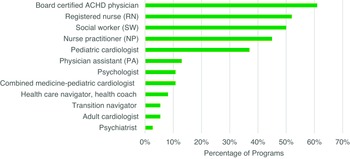
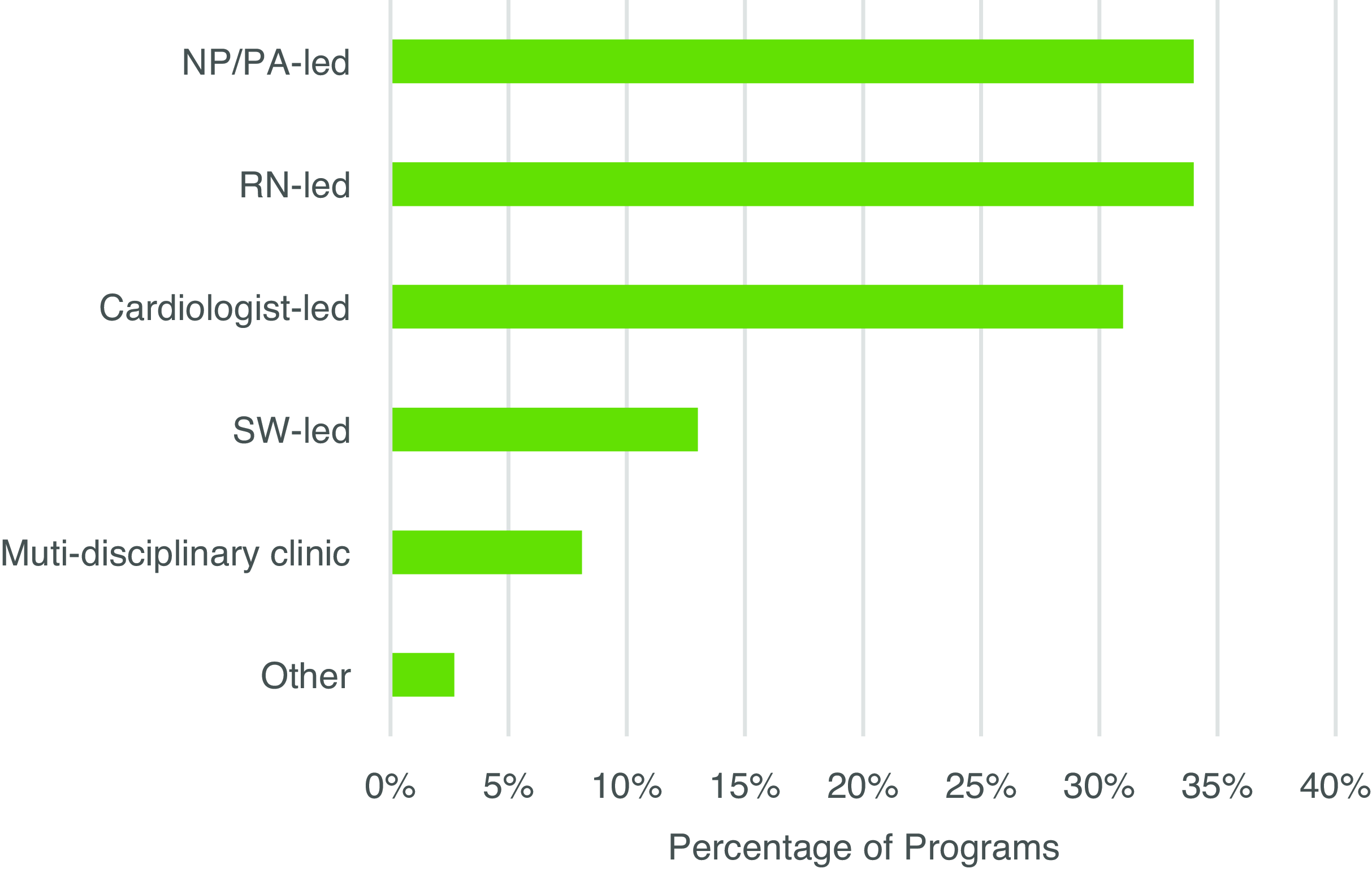
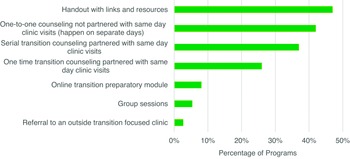
Formal transition programs reported having between two to seven transition specialists on a team (median 4, interquartile range). Reference Stout3–Reference Moons5 Transition specialists included nurse-practitioners, physician assistants, registered nurses, Physicians (Board certified adult CHD physician, adult cardiologists, and combined medicine-paediatric cardiologists), and social workers (Figure 1A). Few programs reported having psychiatrists (3%) and psychologists (11%) on staff. Transition programs reported a variety of models such as registered nurse-led, nurse-practitioner/physician assistants-led and cardiologist-led (Figure 1b) The most frequently reported transition practices offered by programs were handouts with links and resources (47%), followed by one-to-one counseling separate from clinic visits (42%) (Figure 1c). Transition readiness assessments were the most frequently reported assessment tools (63%), followed by measures of CHD knowledge (45%) (Figure 1d). Few programs reported having a transition process for patients with intellectual disability (21%) (Table 1).
Percentage of ACHD Program Transition Specialists.

Transition Program Models.

Transition Practices Offered.

Transition Assessment Tools.

Preparation, transfer, and integration
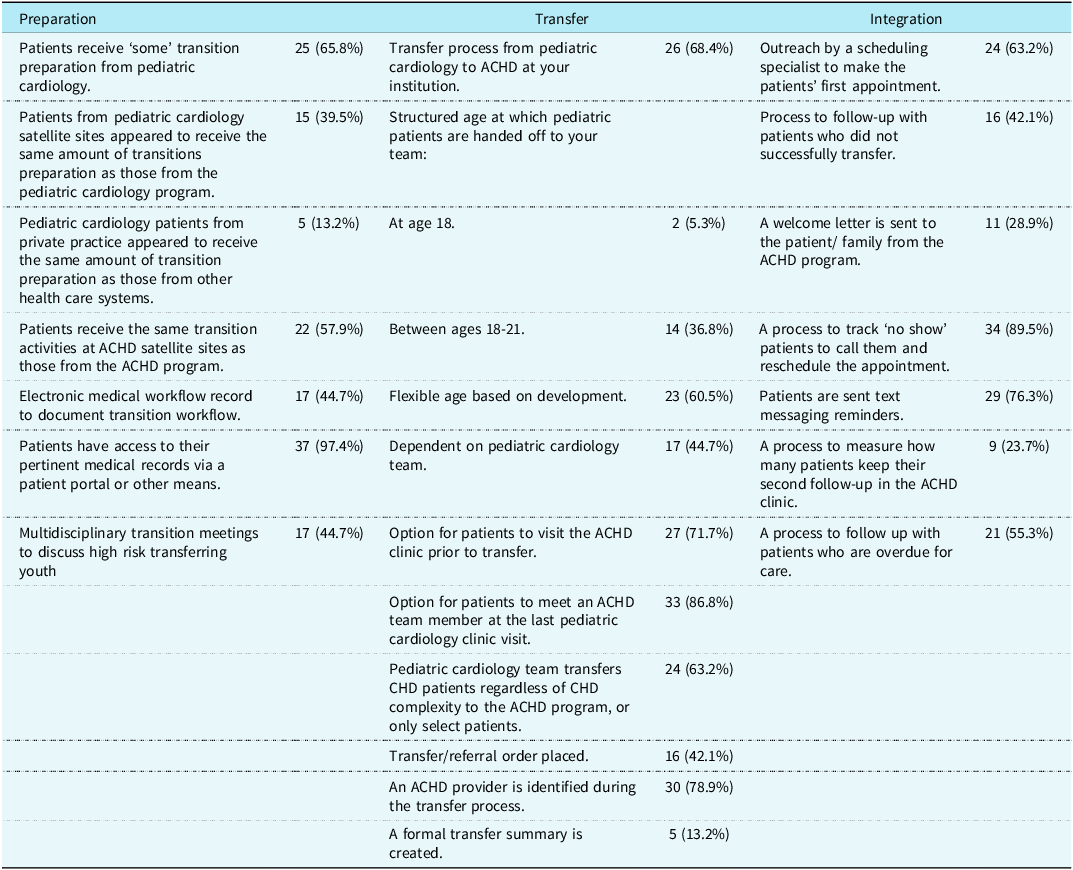
Adult CHD program respondents perceived that most patients (66%) received some transition preparation from the paediatric cardiology program prior to transfer, but preparation was lowest when patients were transferred from private practice paediatric cardiology (13%) (Table 2). Over two-thirds of programs (68%) reported having a transfer process from paediatric cardiology to their adult CHD program. A majority of programs (61%) reported that paediatric patients were handed over to their team at a flexible age based on development. Over two-thirds of programs (72%) reported that patients had an option to visit the adult CHD clinic prior to transfer, and almost all programs (87%) reported that patients had an option to meet with an adult CHD team member prior to transfer. Around a third (37%) of respondents perceived that paediatric cardiology programs did not transfer all patients with CHD at the start of adulthood, possibly related to waiting for transfer until after college, until they are considered too old for paediatric cardiology, or per patient request. Some programs also perceived that patients are more likely to be transferred during an event (such as pregnancy). Almost all (90%) programs reported having a process to track and reschedule patients who did not arrive at their scheduled appointment, and just over half of programs (55%) reported a process to follow-up on patients who are overdue for care. The most frequently reported metric to measure transition program success was successful transfer to adult CHD care (32%) (Figure 2).
Formal metrics measuring transition program success.

ACHD transition program perspectives (n = 38)
Transition barriers
Almost all respondents (95%) reported perceived transition barriers. We classified the top three reported barriers into categories. Half (50%) were perceived barriers related to insurance and the cost of healthcare. For example, one respondent emphasised that some Medicaid and health maintenance organisation plans were not accepted at the adult CHD clinic. Some respondents explained that patients may be financially independent of their parents, and as a result, they may not have health insurance or be able to afford health insurance co-pays. Other reported barriers were that the patient ‘feels good’ and was unaware that they needed lifelong care (29%), and patients had anxiety or experienced an emotional state about moving to another team (26%).
Discussion
In this study, we present data regarding current CHD transition practices in the U.S. from the perspective of 37 adult CHD programs located across 25 states, which ranged from newly formed programs to those well established. We found that around two-thirds of the programs were accredited by the adult CHA, two-thirds had a formal transition program in place, and over two-thirds reported having a transfer process from paediatric cardiology to their adult CHD program. Reported transition program specialists were interdisciplinary, but few programs reported having psychologists and psychiatrists on staff to address patient psychosocial well-being. Also, few programs reported having processes in place to support those with intellectual disability.
Transition practices in comparison with european colleagues
Transition practices vary internationally. We found that 66% of programmes have a formal transition program, which is similar to a 2019 survey of paediatric cardiology programs in North America, Reference Basile, Brown Kirschman and Dempster16 but higher than adult CHD programs in Europe (42%). Reference Thomet17 Transfer, which is the movement of care from a paediatric to an adult health care professional or team, is one component of transition. Reference John1 International recommendations provide guidance for a structured transfer process (e.g. an active referral should be placed, a medical summary should be provided to the adult CHD team). Reference Moons2 In previous survey findings, the presence of structured transfer processes to adult CHD were more common in Europe than the U.S.. Reference Hilderson15 In a 2017 survey of 96 adult CHD centres in Europe, structured transfer processes were reported to be 88.5%. Reference Thomet17 In comparison, 68% of programs in our survey reported an existing transfer process. While still behind our European colleagues, these gains compared with historical trends are encouraging. In our survey findings, transfer outcomes were the most frequently reported metric to measure transition program success. Successful transfer, however, does not guarantee successful transition preparation or integration into adult CHD programs.
In our survey, programs tended to be in favour of a flexible transfer age, which was a similar finding in the European survey. Reference Thomet17 Although in Europe, some centres transfer patients to adult CHD care at around age 16, Reference Goossens18 which is younger than the recommended transfer age in the U.S.. Reference John1 Our findings were similar to our European colleagues with respect to presence of a transition program protocol and the percentage of patients transferred from paediatric cardiology to adult CHD programs. Reference Thomet17,Reference Thomet19 We found that U.S. programs reported more patients had access to their medical records compared to European programs, but our data showed that few U.S. paediatric cardiology programs prepared a transfer summary for the adult CHD program. Reference Thomet17,Reference Thomet19 The European survey showed that the majority of transferring youth are offered joint or overlapping appointments between the paediatric cardiology and adult CHD team. Reference Thomet17,Reference Thomet19 Similarly, we found that the majority of programmes reported that patients had an option to visit the adult CHD clinic prior to transfer, and patients had an option to meet with an adult CHD team member in the paediatric cardiology clinic prior to transfer.
Transition program staff
In our survey, adult CHD transition programs reported a higher absolute number of specialists on a team than our European colleagues. Reference Thomet17 However, this comparison should be interpreted with caution as the European survey explored dedicated hours allotted to transition, but we did not do this in our survey as our model of care is different in the U.S. compared with European countries. For example, U.S. programs often incorporate transition activities into routine care, making it difficult to quantify specific dedicated time. Similar to our European colleagues, Reference Thomet17 we noted that few programs reported the presence of a psychiatrist or psychologist on the transition team. Psychiatric disorders are the most common comorbidity experienced by patients with CHD, and there is critical need to integrate mental health professionals into CHD care. Reference Kovacs20,Reference Miles21 We also noted that only half of respondents reported that their adult CHD program had a SW on their transition team. Social workers play a key role in assessing the need for mental health resources as well as resources to aid in the successful continuity of care, such as maintaining health insurance. Reference John1 Given that the most commonly reported barriers are related to insurance/cost of healthcare, a lack of social workers may exacerbate this situation.
Transition program practices and tools
The most commonly reported transition practices were handouts with links and resources, and the most commonly reported transition tools were measures of cardiac knowledge Reference Mackie6,Reference Mackie9–Reference Ladouceur13 and measures of readiness for transfer. Reference Mackie6,Reference Uzark14 Most respondents perceived that those patients transferred from paediatric cardiology received some transition preparation prior to transfer to the adult CHD program. Transition preparation is important because patients who do not receive adequate preparation may experience gaps in care placing them at risk for complications requiring more frequent visits to the emergency department, hospitalisation, and procedural intervention. Reference Yeung22–Reference Gurvitz26
Referral orders were perceived to take place prior to transfer by less than half of respondents. We previously showed that placement of a referral/transfer order by the paediatric cardiology team is associated with a decreased time to transfer to adult CHD. Reference Burger27 Thus, ensuring that referral orders are placed could be an easy clinical intervention to facilitate transfer. Almost all programmes reported having a process to track and reschedule patients who did not arrive at their scheduled appointment and just over half of programmes reported having a follow-up process in place for patients who are overdue for adult CHD care.
Transition support
Communication between the patient, paediatric cardiology, and adult CHD team members is essential for promoting continuity in care among patients who are transitioning to adult CHD programs. Reference John1 In our survey, many programs reported multiple communication methods between the adult CHD team and patients, such as sending welcome letters to patients who are transferring to adult CHD care and offering outreach by a scheduling specialist for patients to make their first appointment. Text message reminders were frequently reported methods of communication, as well as patient portal access. Areas where communication was less commonplace were the presence of multidisciplinary transition meetings to discuss high-risk youth transferring from paediatric cardiology to adult CHD and the presence of a transfer summary from paediatric cardiology, which could be an opportunity for future research. Lastly, international recommendations suggest consideration for the needs of patients with intellectual disability, such as establishing medical power of attorney for those with severe intellectual disability or a shared decision-making pathway for those with less severe intellectual disability. Reference John1 Few respondents reported having a process to support transition patients with intellectual disability in our survey.
Limitations and future research
While this study had many strengths, including a survey developed by transition experts and obtaining survey responses across 25 U.S. states, there are limitations. First, we had difficulty locating contact details of adult CHD programs listed in the ACHA registry, as well as locating programs not listed in the registry. We attempted to overcome these limitations by incorporating multiple recruitment methods, such as placing the survey on the “PediHeartNet” group and in the adult CHA newsletter. Reference Shiyab28 Second, our data could be limited by response bias as centres that have effective transition programs may be more willing to respond than those that do not. Third, we did not receive sufficient responses from programmes that were located separately and not within the same institution, limiting our ability to benchmark transition activities across all adult CHD settings.
International guidelines provide suggestions for how to establish transition programs, but how programs function and what is currently offered by programs in the U.S. is not clear. Reference John1,Reference Moons2 This survey addressed some of these gaps. Fourth, in efforts to keep the survey length at a minimum there were additional questions that our team were unable to explore such as: data collected on serial visits, tracking of skill or knowledge change over time, change in those over time as a metric to knowing who is ready for transfer, who attended the transition visits (patients and parents, or patients alone), how was transition progress communicated, and how was it determined how many transition visits a patient needed. Future research is needed to address these gaps. Fifth, it would also be useful to know what percentage of patients met an adult CHD team member prior to transfer that could be investigated in future research. Lastly, paediatric cardiology transition practices were not included in this study, and it may be beneficial to add their perspective in future research.
Conclusion
Around two-thirds of adult CHD programs surveyed reported the presence of formal transition programs and transfer processes. Many programs had a process to track and reschedule patients who did not arrive at their scheduled appointment, and over half of programs reported a process to follow-up on patients who are overdue for care. However, more resources are needed to expand transition practices to address patient psychological well-being, barriers related to insurance and health care costs, and to support patients with intellectual disability. These findings supply us with a benchmark so that we can generate amenable targets for intervention to optimise transition practices in the U.S.
Supplementary material
The supplementary material for this article can be found at https://doi.org/10.1017/S1047951125001489.
Acknowledgements
American Association of Critical-Care Nurses Continuing Professional Development Scholarship, Oregon Health and Science University Deans Scholarship, Vivian Gedaly-Duff School of Nursing Scholarship towards tuition for D. Burger. Dr Kelia Lopez, Dr Leigh Reardon, and Patricia Woods (adult CHD CNP) for survey guidance, review, and revisions.
Author contributions
Debora Burger: Conceptualisation, methodology, formal analysis, investigation, original draft preparation, and writing – reviewing and editing. Reem Hasan: Conceptualisation, methodology, formal analysis, supervision, and writing – reviewing and editing. Patrick Evers: Conceptualisation, methodology, formal analysis, supervision, and writing – reviewing and editing. Andrew McHill: Conceptualisation, methodology, formal analysis, supervision, writing- reviewing and editing. Corina Thomet: Conceptualisation, writing – reviewing and editing. Philip Moons: Conceptualisation, and writing – reviewing and editing. Quin Denfeld: Conceptualisation, methodology, formal analysis, supervision, and writing – reviewing and editing.
Financial support
This research did not receive any specific grant from funding agencies in the public, commercial, or not-for-profit sectors.



 Open access

