


Despite the potential for negative consequences, comparatively little is known about the impact on health of specific and multiple forms of substantiated childhood maltreatment.Reference Fry, McCoy and Swales1, Reference Wekerle, Wolfe, Hawkins, Pittman, Glickman and Lovald2 Evidence from cross-sectional studies suggests that children who are exposed to sexual, physical and emotional abuse and/or neglect are more likely to experience mental health problems than those not exposed.Reference Chapman, Whitfield, Felitti, Dube, Edwards and Anda3 However, findings from these studies are limited by the potential for recall bias,Reference Widom, Raphael and DuMont4, Reference Fergusson, Horwood and Woodward5 their focus on a few specific types of childhood maltreatment (despite the fact that most childhood maltreatment experiences co-occur),Reference Arata, Langhinrichsen-Rohling, Bowers and O'Brien6 and the use of clinical rather than population samples. Few previous studies have controlled for factors that may predispose to both child maltreatment and later adverse health outcomes. These include familial sociodemographic characteristics,Reference Thornberry, Matsuda, Greenman, Augustyn, Henry and Smith7 psychopathologiesReference Soares, Howe, Matijasevich, Wehrmeister, Menezes and Goncalves8 and environmental disadvantages.Reference Thornberry, Matsuda, Greenman, Augustyn, Henry and Smith7 Moreover, retrospective reports of life course adverse exposures can change over time depending on resilience, recoveryReference Dekel and Bonanno9 and severity of the exposures. Finally, in cross-sectional studies, childhood maltreatment might be both a cause and an effect.
Longitudinal studies offer evidence that is more robust but they have generally been narrow in focus. This includes participants that are limited to females,Reference Trickett, Noll and Putnam10 or particular types of child maltreatment (for example sexual abuse),Reference Gilbert, Widom, Browne, Fergusson, Webb and Janson11, Reference Spataro, Mullen, Burgess, Wells and Moss12 or people in treatment and/or identified as being at high risk.Reference Baiden, Stewart and Dunnen13–Reference Norman, Byambaa, De, Butchart, Scott and Vos15 In addition, some longitudinal studies have used retrospective recall of abuse rather than prospectively collected data.Reference Doidge, Higgins, Delfabbro and Segal16–Reference Breslau, Koenen, Luo, Agnew-Blais, Swanson and Houts18 Where prospective data have been collected, child maltreatment has been considered as a whole without any comparisons between different types.Reference Breslau, Koenen, Luo, Agnew-Blais, Swanson and Houts18–Reference Scott, Smith and Ellis20 One New Zealand study prospectively collected observations by staff of maternal rejection when the child was 3 years old, as well as parent-reported harsh discipline at ages 7 and 9. Abuse was categorised by severity rather than type and based on a composite measure derived from both retrospective and prospective data.Reference Breslau, Koenen, Luo, Agnew-Blais, Swanson and Houts18 Another relied on whether participants had been entered on to the national electronic database of the New Zealand's Child, Youth and Family agency but, again, did not specify the category of abuse.Reference Scott, Smith and Ellis20 The most consistent prospective results concern adolescents where substantiated cases of neglect, emotional, sexual and physical abuse were associated with internalising and other mental health problems at 14 years old.Reference Mills, Scott, Alati, O'Callaghan, Najman and Strathearn21 The effects on adults were not studied.
Method
This longitudinal birth cohort study investigated the mental health outcomes of young adults who experienced substantiated childhood maltreatment using prospective data from the Mater-University of Queensland Study of Pregnancy (MUSP).Reference Najman, Bor, O'Callaghan, Williams, Aird and Shuttlewood22 MUSP is one of a few longitudinal studies that has investigated the long-term consequences of childhood maltreatment, while controlling for possible postnatal, childhood, adolescent and adult confounders.Reference Mills, Scott, Alati, O'Callaghan, Najman and Strathearn21 The design also permitted the comparison of different types of childhood maltreatment, as well as the frequency and age at which it occurred.Reference Lau, Leeb, English, Graham, Briggs and Brody23 The University of Queensland Behavioural and Social Sciences Ethical Review Committee approved the protocol and we followed STROBE guidelines for the conduct of cohort studies (STrengthening the Reporting of OBservational studies in Epidemiology).Reference Nicholls, Quach, von Elm, Guttmann, Moher and Petersen24
Data sources
Between 1981 and 1983, 8556 consecutive pregnant women attending the Mater Misericordiae Mothers' Hospital for their first prenatal visit were invited to participate.Reference Najman, Bor, O'Callaghan, Williams, Aird and Shuttlewood22 The final cohort numbered 7223 mother and infant pairs, which included only consenting participants who delivered live, singleton infants at the study hospital. Twins (n = 60) and triplets (n = 1) were excluded from the MUSP cohort, as these children shared both a genetic background and multiple social characteristics. Given the small numbers involved and the need to control for multiple factors in any analysis, it was impractical to include them in the overall cohort.
At the first visit, the women completed a detailed questionnaire covering topics such as demographic background, personal health and their feelings about the pregnancy. The mothers and children were further assessed when the children were aged 3–5 days, 6 months, 5 years, 14 years and 21 years. The follow-up rate of the children for the main questionnaire at 21 years was 52.3%.
Child maltreatment measures
We used data on substantiated cases of child maltreatment reported to Queensland's child protection agency, the Department of Families, Youth and Community Care (DFYCC). These data were linked anonymously to the MUSP longitudinal data using an identification number.Reference Strathearn, Mamun, Najman and O'Callaghan25 Each time DFYCC received information about possible child maltreatment, a child protection notification was recorded and an investigation commenced. The exposure to agency-recorded child sexual abuse was defined as one or more reports to DFYCC that were substantiated prior to September 2000, at which time the members of the cohort were approximately 16 years old.
Psychiatric outcome measures
We used three assessment tools. Our primary outcome measure was the Centre for Epidemiological Studies-Depression (CES-D) scale,Reference Lewinsohn, Seeley, Roberts and Allen26 a 20-item measure of depressive symptoms in the previous week. Possible responses range from 0 to 3 for each item (0, rarely or none of the time; 1, some or little of the time; 2, moderately or much of the time; 3, most or almost all the time). A score of 16 or greater shows good sensitivity and specificity, as well high internal consistency, in indicating the possibility of clinical depression.Reference Lewinsohn, Seeley, Roberts and Allen26
We measured internalising and externalising symptoms using scales from the Achenbach Youth Self-Report (YSR) questionnaire.Reference Achenbach27 These scales are widely used in child and adolescent psychological research with most significant adolescent psychological symptoms included in one or the other scale. The internalising scale (31 items) is the total of the subscales of withdrawal, anxious/depressed and somatic symptoms, and the externalising scale (30 items) is the total of aggression and delinquency symptoms.
Finally, the presence of DSM-IV diagnoses28 was measured using the World Health Organization Composite International Diagnostic Interview (CIDI),Reference Peters, Clark and Carroll29 a diagnostic interview schedule based on DSM-IV criteria. We used the CIDI-Auto, a computerised protocol that has been shown to perform satisfactorily when compared with personal interview.Reference Peters, Clark and Carroll29 The outcomes of interest were depression (major depression and dysthymic disorder), anxiety disorders (generalised anxiety disorder, panic disorder, agoraphobia, social phobia and specific phobias), and post-traumatic stress disorder (PTSD). We also looked at a combined outcome of any of the above disorders. We considered both lifetime symptoms, and those within the previous 12 months.
Potential confounding variables
We adjusted for sociodemographic variables that could be potential confounders between child maltreatment and poor psychological outcomes at the 21-year follow-up. These included the following variables that were measured on entry to the study: gender of the child; parental ethnicity; maternal age; mother's relationship status; family income at the time of study entry (first prenatal visit) and maternal education status at study entry.Reference Sidebotham, Heron and Team19 To these, we added the following potential mediating or modifying variables that were collected at the 21-year follow-up: the young person's income, their educational achievement, marital status and characteristics of their neighbourhood. The latter was assessed by asking how much of the following were a problem in the area where they lived using nine items (α = 0.81).Reference Abajobir, Kisely, Scott, Williams, Clavarino and Strathearn30 These items were the presence of vandalism/graffiti, house burglaries, car stealing, violence in the streets, unemployment, noisy and/or reckless driving, alcohol and drug misuse and school truancy. The measure had five scales ranging from 1, do not know to 5, a major problem. The top decile of mean scores was taken to represent a ‘high’ residential problem area, and the variable dichotomised into normal and high.
Statistical analysis
We initially performed a cross-tabulation of the association between agency-substantiated maltreatment and psychiatric outcomes as measured by the CES-D, YSR and CIDI-Auto. We considered the overall category of substantiated abuse, as well as each of the following subtypes: emotional, physical and sexual abuse, as well as neglect. We undertook a sensitivity analysis of the effect of restricting cases to those substantiated by 5 years old. We also used a combined variable of emotional abuse or neglect, given the overlap between the DFYCC definitions of both types. Emotional abuse included acts that led to ‘emotional deprivation’, and the definition of neglect included the failure to provide children with the conditions for ‘healthy…emotional development’. As a result, failure to provide affection and psychological nurturing (emotional neglect) could result in categorisation as either neglect or emotional abuse. In addition, in recognition that types of abuse are rarely exclusive, we also studied the effect of more than one substantiated report, as well as the effect of multiple types of substantiated abuse.
We then used multivariate multiple or logistic regression analysis to control for the known or suspected confounding and moderating variables. Missing data were handled by listwise deletion. We also undertook a propensity analysis of adding a variable representing the baseline confounders across the whole cohort at risk of exposure (n = 7214 for agency-substantiated child maltreatment) to identify possible effects of differential attrition on the association with psychiatric outcomes at 21 years old.Reference Goodman and Blum31 This particularly applied to the results from the CIDI-Auto interview given the instrument was not administered to the entire remaining cohort. Finally, we performed a sensitivity analysis of the effect of adjusting only for baseline characteristics, as some of the variables at the 21-year follow-up could have been associated with both psychiatric outcomes and child maltreatment.
Results
Of the 7223 mother and child dyads in the original cohort, statutory agency child protection history was available for 7214. For eight pairs, there was insufficient demographic data to positively identify the child protection record. One participant was inadvertently omitted from the child protection search. The proportion of children completing the main questionnaire at the 21-year follow-up was 52.4% (3778 of 7214), of whom 1988 (52.6%) were male and 3394 (89.8%) White. Just under 4% were Indigenous Australians. Only 10% were not in a relationship (n = 389). Of this sample, 2508 (67%) completed the CIDI-Auto interview. Loss to follow-up was greater among participants with markers of socioeconomic and other forms of disadvantage.Reference Mills, Kisely, Alati, Strathearn and Najman32 Further, there was increased attrition among families who had been subject to reported child maltreatment.Reference Mills, Kisely, Alati, Strathearn and Najman32
Child maltreatment
Of the 3778 young people at 21-year follow-up, 171 (4.5%) had a history of substantiated maltreatment by the age of 16 years old. Of these, the cases of 61 individuals were notified by 5 years old. The most common was emotional abuse (n = 91), followed by physical abuse (n = 78), neglect (n = 73) and sexual abuse (n = 54). In total 120 had either emotional abuse or neglect (3.2%). A total of 86 (2.3%) had a history of multiple types of substantiated abuse, and 65 more than one substantiated report (1.7%). The rates of any substantiated child maltreatment were associated with measures of social disadvantage. Participants from an Indigenous background (χ2(d.f. = 1) = 9.7, P = 0.002), those who were receiving less than $159 per week (χ2(d.f. = 1) = 29.20, P<0.0001) or had never been married (χ2 (d.f. = 1) = 9.40, P = 0.002) were more likely to have been exposed to child maltreatment. The same applied to participants whose mothers had an incomplete high school education (χ2(d.f. = 1) = 37.42, P<0.0001) or parents were not living together at the time of their birth (χ2 (d.f. = 1) = 42.76, P<0.0001) and/or a low income. By contrast, participants who had reached tertiary education were less likely to have a history of child maltreatment (χ2(d.f. = 1) = 4.23, P = 0.002). These associations were similar across all forms of substantiated child maltreatment.
Depression as measured by the CES-D scale
Just under 24% of the sample had a score of 16 or greater on the CES-D scale. Supplementary Table 1, available at https://doi.org/10.1192/bjp.2018.207, compares the results by a range of sociodemographic and child maltreatment variables adjusted for all the other variables in the table. Women, people on a low income and those who were living in a socially deprived area were more likely to have clinical depression as measured by the CES-D scale. By contrast, those whose parents were living together at birth, or who had reached tertiary level education had reduced odds of depression. After adjusting for all the above sociodemographic factors, we found that young people who had experienced all forms of substantiated abuse, particularly substantiation for two or more subtypes, were 80% more likely to report depression (Supplementary Table 1). The only exception was sexual abuse.
Internalising and externalising
Data from the YASR were available on up to 3725 participants. The mean internalising raw score for the whole cohort was 10.76 (s.d. = 8.29), and the externalising score was 9.49 (s.d. = 6.81). Both before and after adjustment for sociodemographic covariates, substantiated maltreatment was significantly associated with both internalising and externalising behaviour at 21 years of age (Table 1 and Supplementary Table 2). Similarly, physical abuse, neglect and emotional abuse were all associated with internalising and externalising behaviour both before and after adjustment (Table 1 and Supplementary Table 2). The same applied to more than one substantiated event and multiple types of abuse (Table 1 and Supplementary Table 2). Again, the only exception was sexual abuse (Table 1 and Supplementary Table 2). In addition, physical abuse and internalising were not significantly associated after adjustment (Table 1).
Mean Achenbach Youth Self-Report scoresa
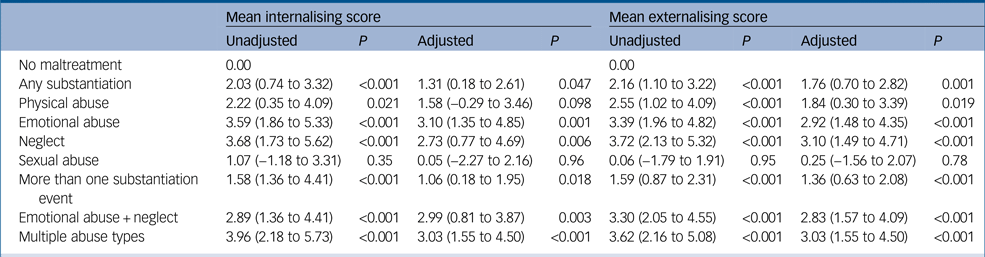
a. Variables used in adjustment: gender; parental ethnicity; maternal age; family income; maternal relationship status; maternal education; youth income level; youth education level; youth marital status.
Common mental disorders as measured by CIDI-Auto
Of the total sample at follow-up, 2508 (67%) completed the CIDI-Auto interview. In the previous 12 months, 273 participants (11%) reported a depressive disorder, 486 (19%) an anxiety disorder and 111 (4%) PTSD. Over their lifetime the respective values were 548 (22%), 637 (25%) and 161 (6%). Substantiated abuse was significantly associated with lifetime depressive disorder, but not depression in the previous 12 months. Of the subtypes, emotional abuse and neglect showed the strongest association with lifetime depression, as well as symptoms over the previous 12 months, as did multiple types of substantiation (Table 2).
Any depressive disorder odds ratios (Composite International Diagnostic Interview-Auto version, DSM-IV) – additional adjustment for 21-year mediating/modifying variablesa
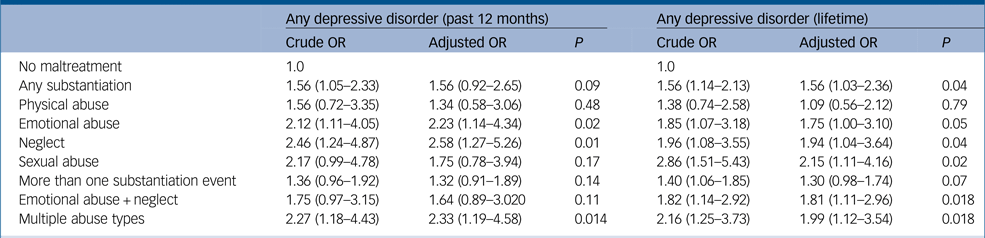
a. Variables used in adjustment: gender; parental ethnicity; maternal age; family income; maternal relationship status; maternal education; youth income level; youth education level; youth marital status.
In terms of anxiety, both 12-month and lifetime prevalence were associated with substantiated abuse (Table 3). In terms of the subtypes, emotional abuse and neglect again showed the strongest association. Here too, multiple types of substantiated abuse, as well as more than one substantiated event were associated with anxiety.
Any anxiety disorder odds ratios (Composite International Diagnostic Interview-Auto version, DSM-IV) – additional adjustment for 21-year mediating/modifying variablesa
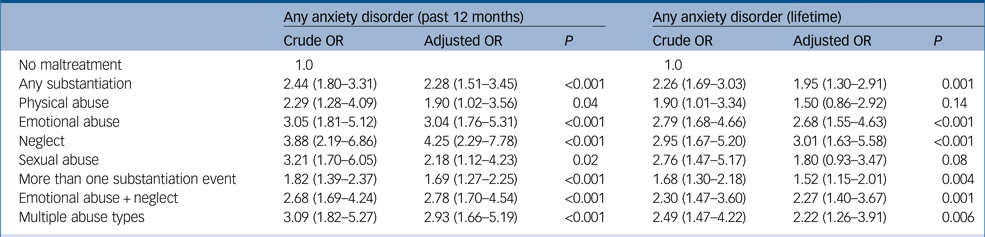
a. Variables used in adjustment: gender; parental ethnicity; maternal age; family income; maternal relationship status; maternal education; youth income level; youth education level; youth marital status.
Of all the disorders, PTSD showed the strongest association with substantiated abuse (Table 4). For this disorder, almost all the subtypes (including sexual abuse), multiple types and more than one event were associated with PTSD. The one exception was physical abuse and PTSD in the previous 12 months.
Any post-traumatic stress disorder odds ratios (Composite International Diagnostic Interview-Auto version, DSM-IV)a
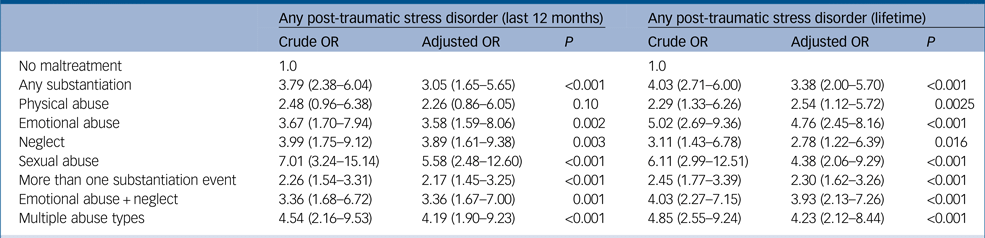
a. Variables used in adjustment: gender; parental ethnicity; maternal age; family income; maternal relationship status; maternal education; youth income level; youth education level; youth marital status.
Sensitivity analyses of the results for any substantiated abuse
The results were no longer significant when restricted to the small number of individuals whose cases were substantiated by 5 years old (n = 61). The only exceptions were for the 12-month prevalence of anxiety (odds ratio (OR) = 2.19, 95% CI 1.07–4.84, P = 0.03) and PTSD (OR = 3.35, 95% CI 1.27–9.16, P = 0.02), as well as the lifetime prevalence of the latter disorder (OR = 3.38, 95% CI 1.39–8.19, P = 0.007).
The addition of a propensity score to the model, taking into consideration baseline covariates across the entire cohort, did not alter our results, with the exception that there was no longer a significant association with internalising behaviour in models with, and without, the 21-year follow-up variables (Supplementary Table 3).
Discussion
Main findings
There is limited population-based research on whether poor health outcomes are more common among those exposed to childhood maltreatment. This study adds to the literature by accessing a population sample, measurement of prospectively substantiated child abuse and consideration of different types of child maltreatment. A further strength is that it controls for a wide range of confounders/covariates concerning both maternal and child sociodemographics. Accordingly, the findings may provide an empirical basis for relevant healthcare policy improvement and for integrated, developmentally appropriate child and adult health services.
We found that depressive symptoms on the CES-D, as well as internalising and externalising behaviour, were strongly associated with substantiated abuse in all forms, except sexual abuse. The results for the subset of the sample who completed the CIDI-Auto were less clear. Anxiety, especially PTSD, showed the strongest association whereas the findings for depressive disorder were equivocal. However, across all diagnostic categories, emotional abuse and neglect, as well as multiple types of abuse, showed a consistent association.
Comparison with findings from other studies
Much research focuses on traumatic childhood experiences such as physical or sexual abuse, rather than emotional abuse and neglect.Reference Dube, Anda, Whitfield, Brown, Felitti and Dong33, Reference Lansford, Dodge, Pettit, Bates, Crozier and Kaplow34 For instance, self-reported physical abuse has been found to predict both depression and anxiety in middle-aged men and women.Reference Springer, Sheridan, Kuo and Carnes17 However, there is now growing evidence of the adverse effects of emotional abuse and neglect. Both can alter neurobiological development in early life, which can in turn negatively affect physical, cognitive, emotional and social growth, leading to psychological, behavioural and learning problems that persist in later life.Reference Norman, Byambaa, De, Butchart, Scott and Vos15 Many adult diseases are related to developmental and biological disruptions in childhood possibly through cumulative damage over time or direct biological effects during sensitive developmental periods.Reference Norman, Byambaa, De, Butchart, Scott and Vos15 For instance emotional abuse and neglect may alter the development of brain reward and oxytocin systems in children leading to impaired parental care giving in the subsequent generation.Reference Strathearn35 In addition, subtle emotional maltreatment because of psychologically unavailable parents may be associated with poor attachment, behavioural problems and academic difficulties.Reference Mills, Scott, Alati, O'Callaghan, Najman and Strathearn21 The situation is aggravated by self-medication of subsequent distress with misuse of alcohol, prescription medication, tobacco or other drugs.Reference Mills, Scott, Alati, O'Callaghan, Najman and Strathearn21
In one review of 124 studies, emotional abuse increased the risk of depression by an odds ratio of 3.06, whereas physical abuse increased the risk of depression by only half that amount.Reference Norman, Byambaa, De, Butchart, Scott and Vos15 Similarly, childhood emotional maltreatment was more closely related to depression severity than sexual or physical abuse.Reference Norman, Byambaa, De, Butchart, Scott and Vos15 These findings were confirmed in a recent systematic review and meta-analysis, although most of the data came from retrospective cross-sectional studies or longitudinal designs that relied on self-reported abuse.Reference Nelson, Klumparendt, Doebler and Ehring36 Our results, based on prospectively gathered substantiated reports, suggest that neglect and emotional abuse needs to be given at least as much attention as physical and sexual abuse as potential sources of long-term psychological dysfunction.
By contrast, sexual abuse showed a far weaker association. There are several possible explanations. Sexual abuse may be underreported because of inconsistent definitions,Reference Martin and Silverstone37 secrecyReference Polonko38 and stigma.Reference Mills, Kisely, Alati, Strathearn and Najman32 Conversely, the nature and severity of sexual abuse,Reference Hahm, Lee, Ozonoff and Van Wert39 may mean that it is more likely to be reported and attract an agency response before leading to long-term disorders. In addition, the incidence of sexual abuse was lower than that of the other maltreatment types, and this may have affected the statistical power to detect significant associations. Importantly, sexual abuse was included in some of the other definitions that did show a significant association.
PTSD was the one disorder that did show an association with sexual abuse. This is consistent with our earlier paper comparing self-reported to agency-notified abuse (as opposed to substantiated abuse as reported in the current paper).Reference Mills, Kisely, Alati, Strathearn and Najman32 It highlights that although PTSD is less common than depression or anxiety, the diagnosis has particular relevance as a relatively specific outcome following childhood sexual abuse. Although this association is widely reported in the literature on PTSD and sexual abuse, findings are again almost completely based on cross-sectional self-report studies,Reference Hetzel and McCanne40 and not on longitudinal follow-up of prospective agency-substantiated abuse.
Limitations
There are several limitations to the study. These findings cannot be generalised to twins and triplets as the small number born to MUSP mothers were excluded from the longitudinal cohort. The overall follow-up rate at 21 years old was 52.4% (3778 participants). Although acceptable for a long-term birth cohort of over 20 years’ duration, only two-thirds of these participants (n = 2508) completed the CIDI-Auto interview. This is why we have highlighted the results from the CES-D and YASR. In addition, attrition was greater among those experiencing social disadvantage. However, our findings were unchanged when we used propensity score analysis that took into consideration baseline covariates across the entire at-risk cohort. Importantly, studies of attrition in other birth cohorts suggest that those lost to follow-up broadly have the outcomes that would be expected given their baseline characteristics.Reference Wolke, Waylen, Samara, Steer, Goodman and Ford41 Analysis of the MUSP cohort over three decades, and with various statistical methods, lends support to this observation.Reference Najman, Bor, O'Callaghan, Williams, Aird and Shuttlewood22
The use of legally defined cases is likely to have underestimated the true prevalence of childhood maltreatment, and may account for the weak associations, particularly for maltreatment substantiation by 5 years old, as well as sexual abuse.Reference Martin and Silverstone37 Our findings are therefore likely to be conservative estimates of the true association between child maltreatment and psychiatric morbidity in early adulthood. In addition, the low numbers necessitated the use of broad definitions for the DSM-IV diagnoses that may have disguised important differences within the categories. Finally, the reasons for reports to agencies reflect a number of factors in addition to whether the child experienced maltreatment.
Implications
In conclusion, our results highlight the importance of emotional abuse and neglect as a cause of a wide range of adverse psychological outcomes in early adulthood. They also suggest variations in the long-term effects of different types of abuse, with both physical and sexual abuse having a stronger association with anxiety, particularly PTSD. Greater awareness of these factors may inform interventions, particularly primary and secondary prevention, with the aim of shifting to a public health approach, rather than one focused solely on immediate safety.
Supplementary material
Supplementary material is available online at https://doi.org/10.1192/bjp.2018.207.




eLetters
No eLetters have been published for this article.