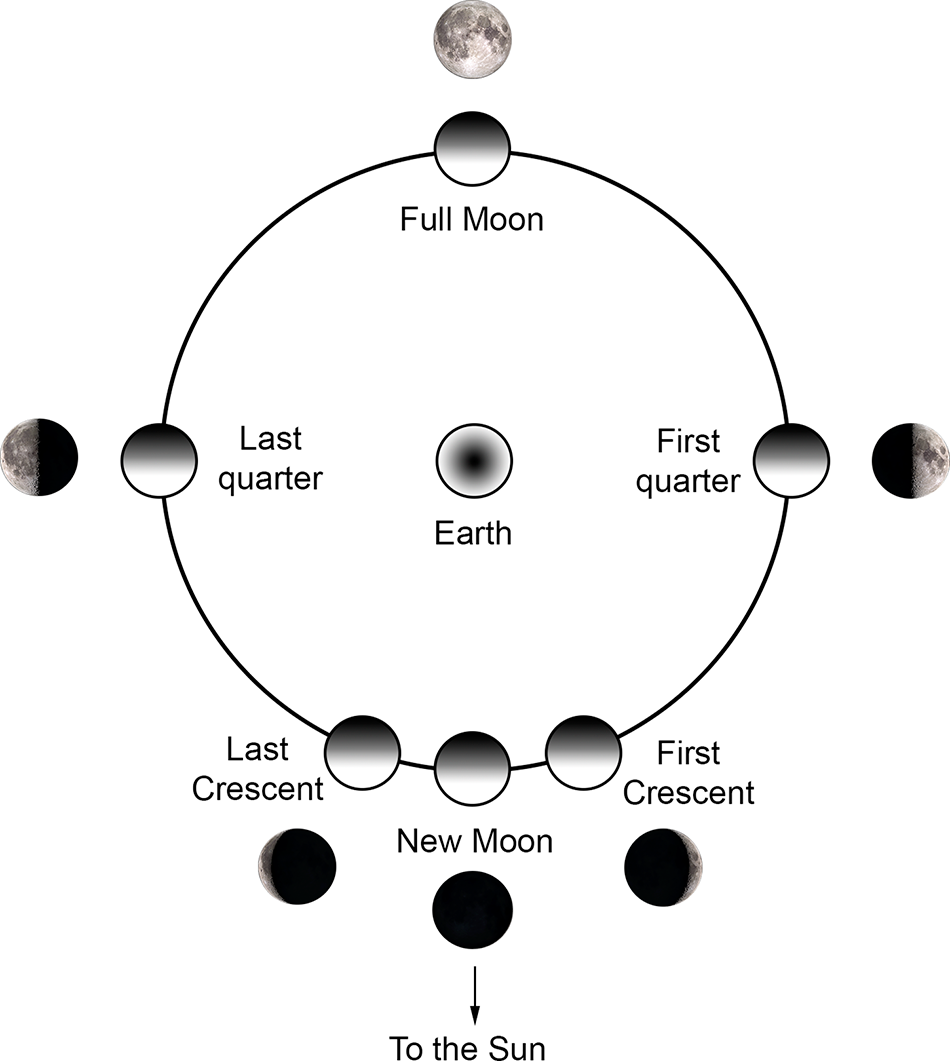



The ancient Maya paid special attention to the movements of the Moon in the sky. Its preeminence, as the largest celestial object visible from Earth, made it the subject of detailed observation by many cultures of the past, and the Maya in particular devoted much effort to recording information about the Earth’s satellite in their hieroglyphic inscriptions. It was not only the size of the Moon that impressed the Maya, but also its peculiar behavior. Due to a phenomenon called synchronous rotation or tidal locking raised on Earth, we can only see one side of the Moon as it rotates on its axis at the same rate as its orbital motion around the Earth. The Moon completes one orbit in between 29.2679 and 29.8376 days (the difference between these two values is approximately 12 hours and 30 minutes), with an average of 29.53059 days (29 days, 12 hours, 44 minutes, and 3 seconds) in what is called a synodic month or lunation (Aveni difference between these two values is approximately 12 hours and 30 minutes), with an average of 29.53059 days (29 days, 12 hours, 44 minutes, and 3 seconds) in what is called a synodic month or lunation (Aveni Reference Aveni2001:72; Bricker and Bricker Reference Bricker and Bricker2020:5). As the Moon rotates around the Earth its angle with respect to the Sun changes—its elongation—so the area of the Moon’s surface that is visible from the Earth receives a different amount of sunlight, going from totally dark to completely visible. We refer to the different illuminated areas of the Moon as its phases (see Figure 1), and the way in which they are characterized is culturally specific.
The Phases of the Moon (adapted from Bricker and Bricker Reference Bricker and Bricker2020:6 Figure 2.1, including an image of each phase of the Moon as seen from Earth, Moon images by NASA. https://www.nasa.gov/nasa-brand-center/images-and-media/.
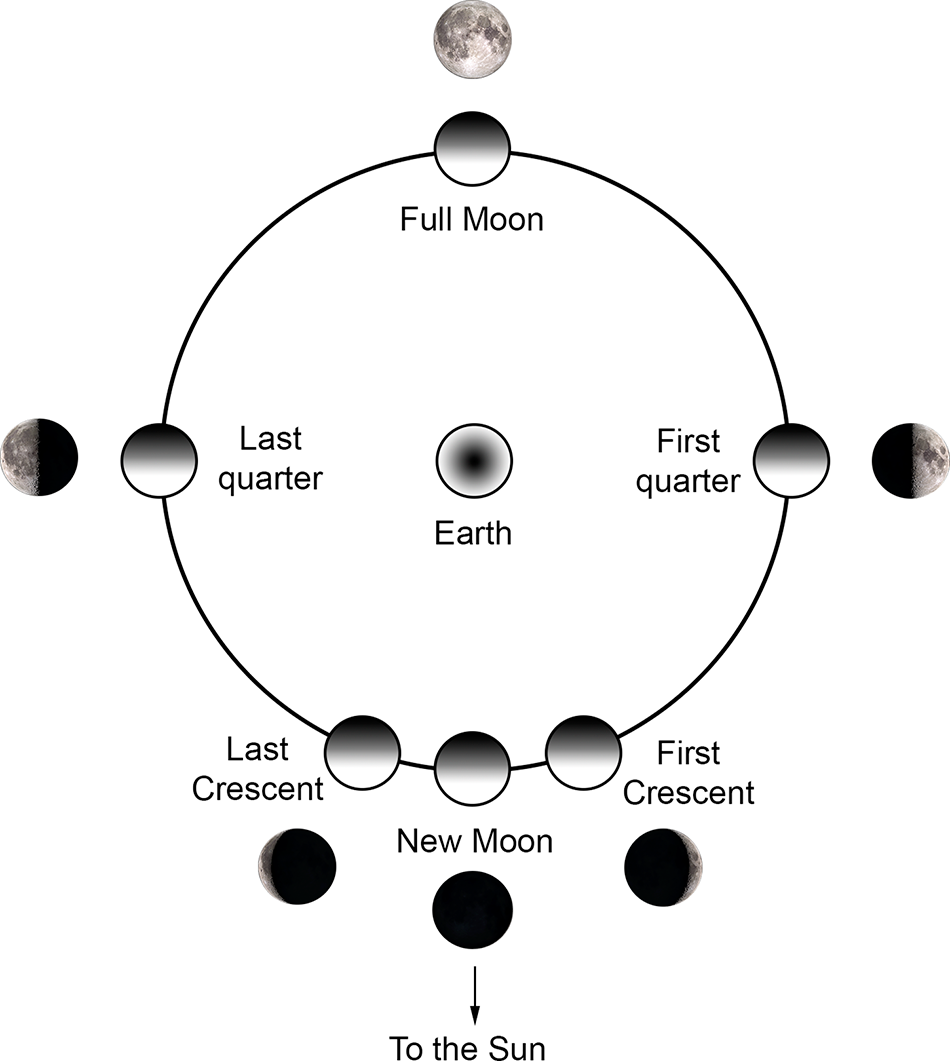
Figure 1 Long description
A diagram illustrating the phases of the Moon as it orbits Earth. The phases include full moon at the top, first quarter to the right, last quarter to the left and new moon at the bottom. Between these are the first crescent and last crescent phases. The Earth is depicted at the center, with the Sun positioned below the new moon phase.
In Western cultures, the new Moon phase marks the beginning of a lunation. During this phase, the Moon is positioned between the Earth and the Sun—it is said to be in conjunction—with the side illuminated by the Sun facing away from the Earth. As a result, the Moon appears completely dark and is not visible to the naked eye. This phase typically lasts for about two to four days and ends when the Moon first becomes visible as a thin crescent. The illuminated portion of the Moon then gradually increases—in a process called waxing—until it reaches the first quarter, about the seventh day after new Moon, when half of the Moon’s face is visible. At this point, the Moon has completed about a quarter of its orbit around the Earth, and the angle of elongation of the Moon from the Sun is 90º. The Moon then continues to wax until it reaches the full Moon phase, which occurs when the Earth, Moon, and Sun are aligned so that the entire surface of the Moon, visible from the Earth, is illuminated as a complete circle. This phase is also known as opposition, and at this point, the angle of elongation of the Moon from the Sun is 180º. The full Moon phase usually begins around the fourteenth or fifteenth day after the new Moon and it is only during this phase that the Moon is visible all night long, rising around sunset and setting around sunrise, behaving exactly like the Sun, but at night; a characteristic that was very important to the Maya. After this phase, the illuminated portion of the Moon starts to decrease—in a process called waning—until it reaches its third quarter, when half of the Moon’s face is again visible, but on the opposite side of the first quarter. This phase occurs around the 22nd day after the new Moon, by which time the Moon has completed three-quarters of its orbit around the Earth and its angle of elongation is 270º. The Moon continues to wane for another seven days until it reaches the new Moon phase again. These four lunar phases cycle continuously, with each phase lasting approximately one week. However, it is important to note that the duration of each phase can vary due to factors such as the Moon’s elliptical orbit, and the Earth’s position in space (Aveni Reference Aveni2001:68–70; Bricker and Bricker Reference Bricker and Bricker2020:6–8). This results in the Moon’s movement becoming nonuniform, which means, for example, that the third quarter will not always occur on the 22nd day of the lunation. As demonstrated by Schaeffer (Reference Schaeffer1992:S36), the Moon’s visibility period can range from 25 to 27 days, implying that its invisibility period can extend from 2.5 to 4.5 days. As the last visible waning Moon appears in the morning and the first visible waxing Moon appears in the evening, the approximate time difference between these two events is half a day. Therefore, it is preferable to refer to the period of invisibility as 2.5, 3.5, or 4.5 days. From an astronomical perspective, the most significant points of every lunation are the opposition and conjunction. The opposition is marked by the full moon, while the conjunction is marked by two events: the last crescent, which precedes the start of the Moon’s invisibility period, and the first visible crescent, which marks the end of the invisibility period. These three key events were of paramount importance to the Maya, as I will explain later.
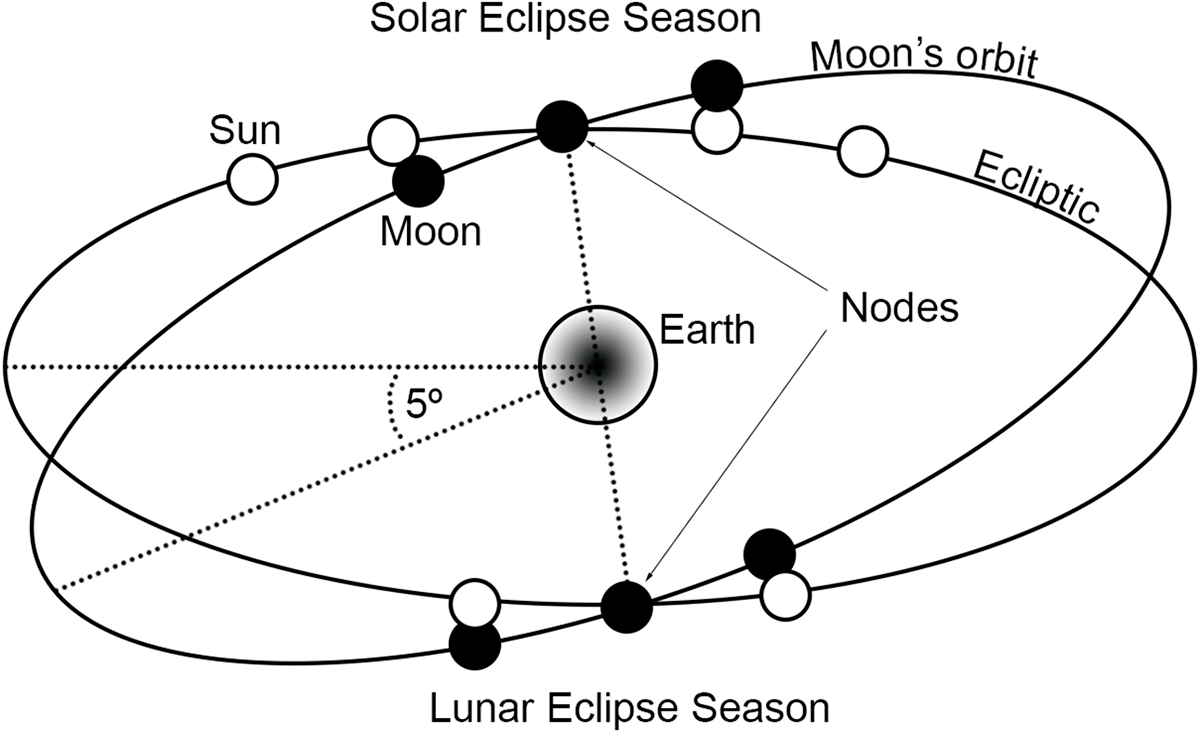
Another interesting astronomical phenomenon involving the moon that was noteworthy to the Maya was eclipses. A lunar eclipse occurs when the Earth’s shadow, as it passes between the Moon and the Sun, covers the visible surface of the Moon, and a solar eclipse occurs when the Moon places itself between the Earth and the Sun, darkening the Sun’s disk. Eclipses occur occasionally because the plane of the Moon around the Earth is tilted approximately five degrees with respect to the plane that the Earth describes as it orbits around the Sun (Figure 2), causing the three celestial objects to coincide in the same plane only at two points, called nodes, where the two orbital planes intersect. If both orbits were perfectly aligned, we would have a lunar eclipse every full Moon and a solar eclipse every new Moon. Nonetheless, eclipses can only occur during these two lunar phases, also called syzygies (Aveni Reference Aveni2001:72; Bricker and Bricker Reference Bricker and Bricker2020:9–10). Consequently, an eclipse can only occur when the Moon is either in conjunction or in opposition to the Sun as it passes through one of the two nodes. On average, such alignments occur every 173.31 days, a period that is called an eclipse half year (Bricker and Bricker Reference Bricker and Bricker2020:10). This period is not an even multiple of the synodic month, being approximately four days short of 6 lunations (29.53059 x 6 = 177.184 days – 173.31 = 3.87 days). The eclipse half-year period is an important astronomical interval because, when an eclipse occurs, there is a very high probability that another eclipse will occur six months later (Aveni Reference Aveni2001:74–75). The time interval between any two successive solar or lunar eclipses can be one, five or six synodic months. However, the number of eclipses that occur within six months accounts for around two-thirds of all eclipses. Although the 3.87-day difference will cause the coincidence with the eclipse node to diverge, there is a temporal zone when an eclipse can occur, called an eclipse season (see Figure 2), which is of 12 or 13 days before and after the node for a lunar eclipse, and 17 or 18 days before and after the node for a solar eclipse, resulting in a lunar eclipse season of 24 to 26 days, and a solar eclipse season of 34 to 36 days (Bricker and Bricker Reference Bricker and Bricker2020:10). As the difference between the eclipse half-year and the six lunations accumulates, the eclipse half-year will occasionally be reduced to a five-month period of 147.65 days (29.53059 x 5 = 147.65 days [Bricker and Bricker Reference Bricker and Bricker2020:10]). Bearing in mind that eclipses can only occur during syzygies and that they likely occur every six months, I will explain how the Maya recorded the Moon’s movements in their hieroglyphic inscriptions.
Configuration of the Moon and the Earth orbits to show the eclipse nodes and eclipse seasons. Drawing by the author.
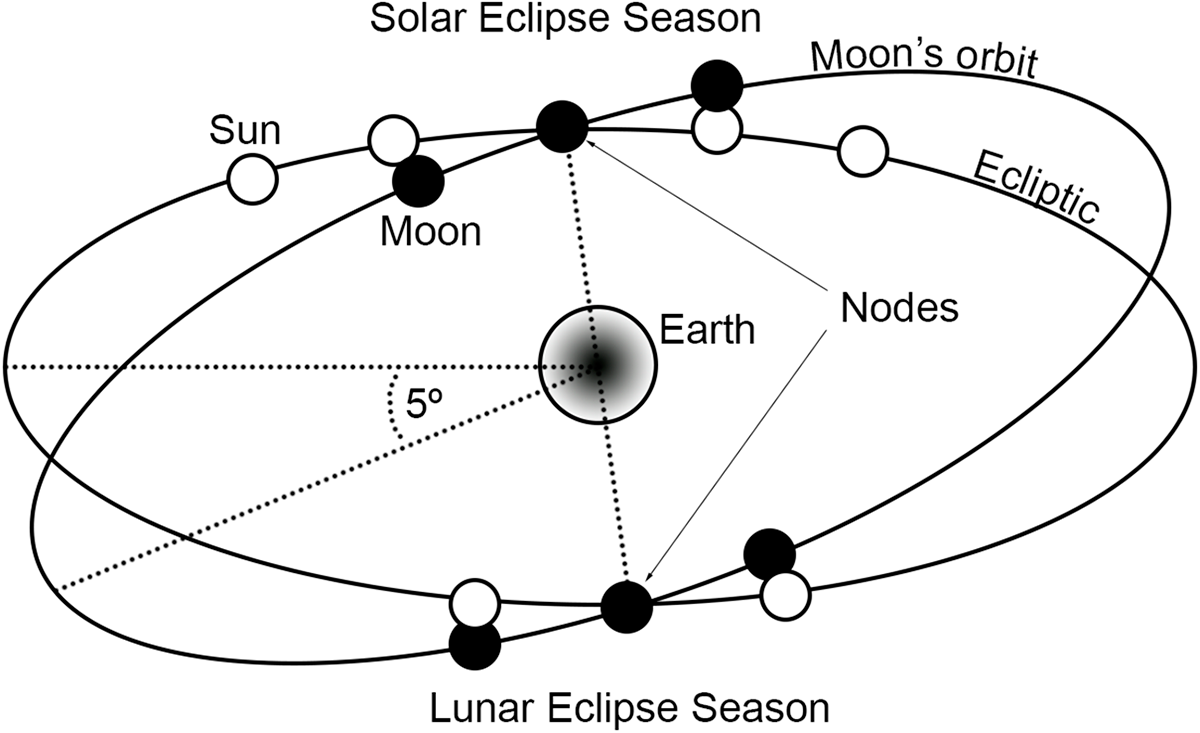
Figure 2 Long description
The diagram illustrates the configuration of the Moon and Earth orbits, highlighting eclipse nodes and seasons. The Earth is positioned at the center, surrounded by the Moon's orbit and the ecliptic. The Moon's orbit is tilted at approximately five degrees relative to the ecliptic. Two nodes are marked where the orbits intersect, indicating points where eclipses can occur. The diagram labels the solar eclipse season and lunar eclipse season, showing the positions of the Sun and Moon during these events.
The Lunar Series
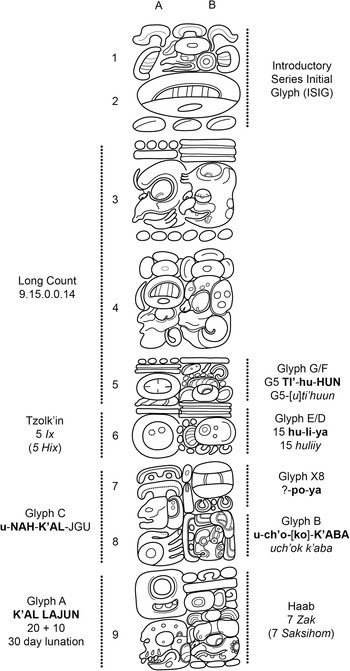
In addition to solar calendrical information, lunar age details occupied a large portion of the space devoted to a Maya inscription (Figure 3). Goodman (1974 [Reference Goodman1897]:117–118) was the first researcher to focus on a particular group of glyphs that were regularly repeated, in the same order, and generally, but with some exceptions, located between the tzolk’in day and the haab month. He recognized only six glyphs as part of this group and was surprised that, although this group was repetitive and presented a very good opportunity for decipherment, he was unable to determine its purpose. Later, Bowditch (Reference Bowditch1903:2) began to use the term “Supplementary Series” to refer to this group of glyphs, on the basis that they were always close to the Initial Series, so they should be complementary to it. Morley (Reference Morley1915:152–153) described the same group of hieroglyphs, indicating that they appeared to be six or seven, and proposed the idea that they were a lunar count, based on the similarity of the last glyph of the series to the lunar sign, calling it a “month indicator,” because it was always followed by the month of the primary date (Morley Reference Morley1915:153, n1). The same researcher, in a later revision of the same group of glyphs, decided to assign a letter of the alphabet to each of them, but because of the primacy he placed on the Month Indicator sign, which is actually an allograph for the number 20 (see Figure 3, upper part of glyph A9, for an example of that glyph), he decided to assign the letters in the reverse order to their normal reading order (Morley Reference Morley and Hodge1916:366–367; Reference Morley1920:552). He named them G, F, E, D, C, X, B, and A, using X for the third glyph from the right, because of its internal variability. A few years later, Andrews (Reference Andrews1938) suggested adding two new letters to the group, since two additional glyphs were occasionally included as part of the Supplementary Series. Named Y and Z, they usually appear between Glyph F and Glyph E/D. There are very few examples of their presence in the inscriptions, appearing mainly at the Maya site of Yaxchilan. After these initial discoveries, more researchers devoted their efforts to explaining how this particular group of glyphs worked (see Bricker and Bricker Reference Bricker and Bricker2020:37–66). From these investigations, we have a very clear idea of how the Lunar Series was used, except for some of its parts.
Calendar Round and Lunar Series from Stela 89 of Calakmul, dated on September 2, a.d. 731 (9.15.0.0.14 5 Ix 7 Zak). Drawing by the author after his own photographs contrasted with photographs taken by the Carnegie expedition (Ruppert and Denison Reference Ruppert and Denison1943:Plate 53).
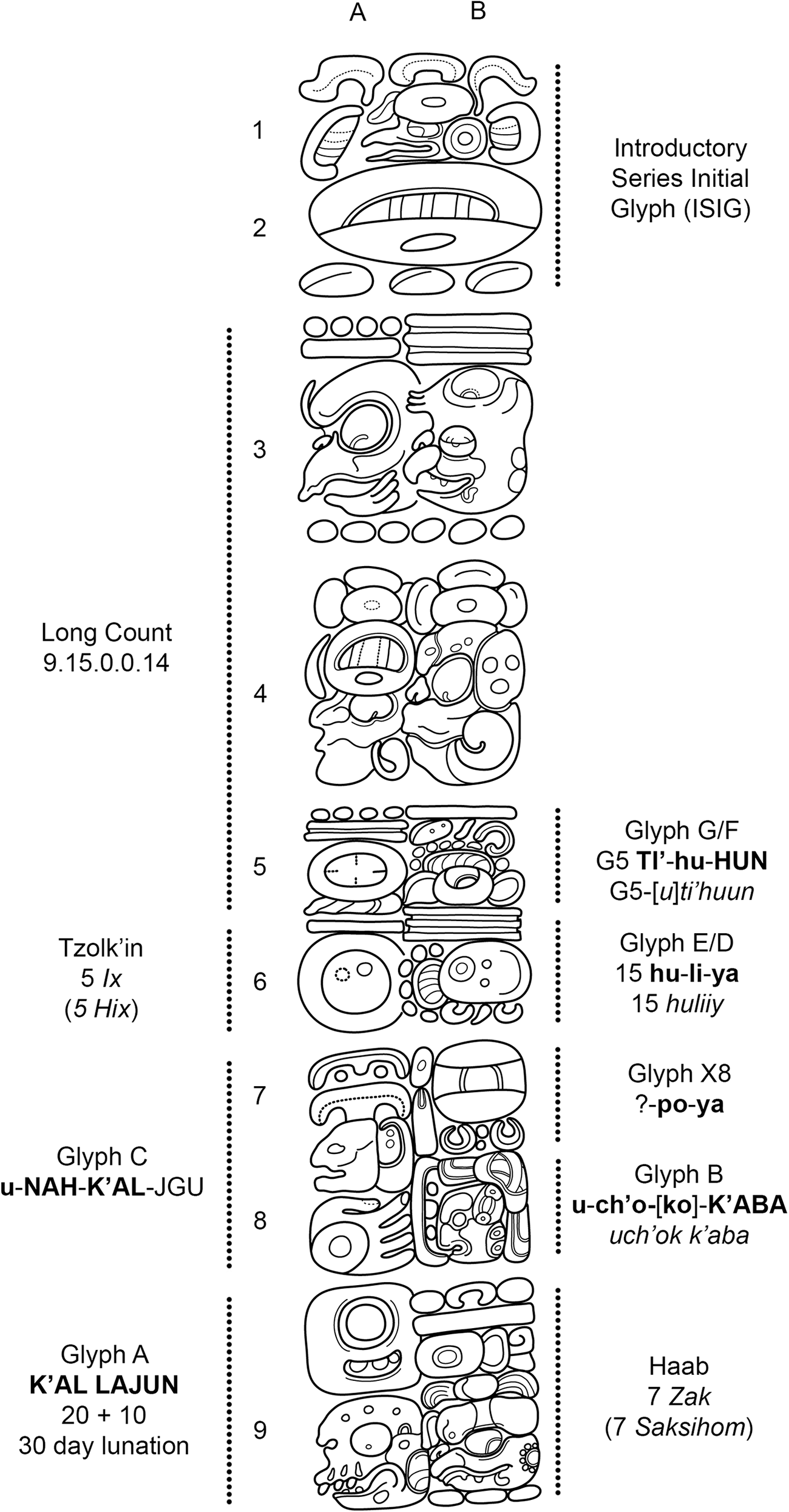
Figure 3 Long description
The illustration shows a series of Maya glyphs from Stela 89 of Calakmul. The glyphs are arranged in two columns labeled A and B. The sequence begins with the Introductory Series Initial Glyph (ISIG) at the top. Below it, the Long Count is marked as 9.15.0.0.14. The Tzolk'in is noted as 5 Ix, followed by Glyph C labeled as u-NAH-K'AL-JGU. Glyph A is marked as K'AL LAJUN, indicating a 30-day lunation. The Haab is noted as 7 Zak (7 Saksihom). Glyphs G/F, E/D, X8 and B are also labeled with their respective names and descriptions, such as TI-hu-HUN and u-ch'o-[ko]-K'ABA. Each glyph is intricately detailed, showcasing the complexity of Maya inscriptions.
I summarize the current knowledge about the Lunar Series here in order to explain how it was used. Usually, after the Long Count is specified (see Figure 3, A3–A5, dated on 9.15.0.0.14 5 Ix 7 Zac, September 2, a.d. 731, using the 584286 correlation with the Julian calendar [Martin and Skidmore Reference Martin and Skidmore2012]), Glyphs G and F are included, either as differentiated elements or combined into a single glyphic unit. These glyphs are usually written after the tzolk’in day (Figure 3, A6, 5 Ix), but in the example shown in Figure 3, they are included before and combined into a single glyph block (Figure 3, B5). In this particular example, Glyph F is combined with the variant of Glyph G called G5 (Gronemeyer Reference Gronemeyer2006:7–8; Thompson Reference Thompson1929:229). Strictly speaking, these two glyphs do not belong to the Lunar Series because they do not convey any useful information related to the Earth’s satellite, but they are grouped together with the lunar information provided by the rest of the glyphs. Glyph G represents a particular instance of a set of nine possible glyphs. Its behavior was first described by Thompson (Reference Thompson1929:224), who associated it with the nine Lords of the Night present in Central Mexican calendars, who ruled over the night preceding the day indicated by the date. Although the relationship to these Central Mexican gods does not seem to exist, he was correct in considering them as gods, as recent research has shown that one of the glyph’s variants—G1—explicitly indicates “nine times the gods were taken or invoked” (Gronemeyer Reference Gronemeyer2006:4–5; Stuart 2005:63), using the same group of verbs associated with the invocation rituals of K’awiil—the Maya god of thunder, abundance, and royalty (Valencia Reference Valencia Rivera2022:48–66; Valencia and García 2010). Glyph G probably represents the names of specific deities, whose exact nature is unknown, although according to Gronemeyer (Reference Gronemeyer2006), they are related to the growing cycle of maize. I will come back to this later. Gronemeyer also suggests that the name indicated by Glyph G, together with Glyph F, forms a stative sentence of the form: G# u ti’ huun, as these glyphs always go together and may even mix in the same glyph block (Gronemeyer Reference Gronemeyer2006:14). The exact nature of the sentence is still debated, as the expression u ti’ huun could have several possible meanings, such as “at the edge of the book,” (Johnson 2010), “at the edge of the headband,” or could indicate something related to Huun, the Maya royal headband deity (Gronemeyer Reference Gronemeyer2006:14–17; Stuart 2005:62, 2012a).
After Glyph G/F, the actual Lunar Series begins with Glyphs E and D (Figure 3, B6). Although Morley defined them as two different glyphs, they actually form a single expression, Glyph E/D, composed of a numerical value and the word huliiy, meaning “arrived/already arrived” (McLeod Reference McLeod and Kerr1990). This expression indicates the number of days that have elapsed since the new Moon at the date indicated by the Long Count date. The suffix -iy/-iiy, which is also occasionally postfixed to the numbers of Glyph E/D, has received multiple interpretations. It has been considered as a suffix for intransitives in the completive aspect (Houston et al. Reference Houston, Stuart, Robertson and Wichmann2004:98), as an adverbial enclitic (Wald Reference Wald and Wichmann2004:216–217), an adverbial deictic suffix marking a point in the past (Stuart 2020)—which is used inconsistently, indicating not only days after the reference date, but also days before—or as an emphatic demonstrative enclitic used to indicate recently performed actions, which could be translated as “already” or as “ya” in Spanish (Sanz Reference Sanz González2007:517–551). The fact is that this statement indicates the number of days that have already passed since the last new Moon.
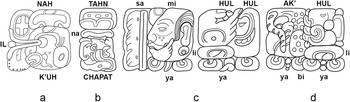
Teeple was the first to describe the behavior of this glyph, indicating that its purpose was to specify the age of the Moon (Teeple Reference Teeple1925a, Reference Teeple1928:394–396, Reference Teeple1931:45–53). When the age is greater than twenty days, a specific logogram is included as part of the glyph (Figure 3, upper part of A9). The possible reading values of this glyph are: WINAL, winal, WINAK, winaak (Bricker Reference Bricker1986:101), K’AL, k’aal (Lounsbury Reference Lounsbury and Gillispie1978:762), and recently Grube (Reference Grube2025) has proposed another reading based on the fact that the logogram is sometimes suffixed by the syllable -wa, proposing the reading UW, uw, “Moon.” In this paper I will use K’AL for simplicity. In the inscription shown in Figure 3, B6, Glyph E/D indicates: 15 huliiy, meaning that 15 days have already elapsed since the arrival of the current Moon to the date of the inscription. In certain cases, when the coefficient of the day was five or seven, a special glyph was used to indicate this fact, which was called Glyph Z when used in conjunction with Glyph Y (Yasugi and Saito Reference Yasugi and Saito1991:2). Glyph Z is in fact a numerical classifier and is read as bix (Stuart 2012b; Thompson Reference Thompson1950:170–171), and appears in colonial dictionaries defined as “the 8th day” (Ciudad Real Reference Ciudad Real2001:85) or as “week” (Andrews Reference Andrews Heath de Zapata1978:81). This classifier usually also includes the -iiy suffix, and, when used with Glyph Y, defines a cycle of seven days (Yasugi and Saito Reference Yasugi and Saito1991:1–7). According to Bricker and Bricker (2020:76), this reference to a week of seven days implies an interest in dividing the lunar month into four parts or phases, a fact that is relevant to this study and that I will discuss in detail later. In one particular example from the Hieroglyphic Stairway 3 from Yaxchilan (Step III, Glyph B6), the glyph hew/heew—which is used as a substitute for k’in, “day,” in Distance Numbers (Lacadena and Wichmann Reference Lacadena, Wichmann, Water-Rist, Cluney, McNamee and Steinbrenner2005:33)—is included as part of Glyph E/D, implying that this glyph is also conceptually a Distance Number (Bricker and Bricker Reference Bricker and Bricker2020:76). When Teeple defined how this glyph worked, he used the GMT—Goodman, Martínez, Thompson—correlation to see where the dates of the Lunar Series fell in the lunar calendar, and they all clustered around the new Moon phase (Teeple Reference Teeple1931:51–52), confirming what Diego de Landa had already indicated in his historical text, that the Maya used the Moon’s first appearance as the starting point for their lunar calendar (Iwaniszewski Reference Iwaniszewski2012:38; Restall et al. Reference Restall, Solari, Chuchiak and Ardren2023:113; Tozzer Reference Tozzer1941:133). Numerically, Glyph E/D could range from one to 28 (Bricker and Bricker Reference Bricker and Bricker2020:76), using special expressions for the first day of the sequence (Figure 4).
Special glyphs used to start the Glyph E/D count. (a) Palenque, Palace Tablet, B15, (b) Quirigua Stela D, C16, (c) Palenque Palace Tablet, Q10-R10, (d) Quirigua Stela F, F6. All drawings by the author.
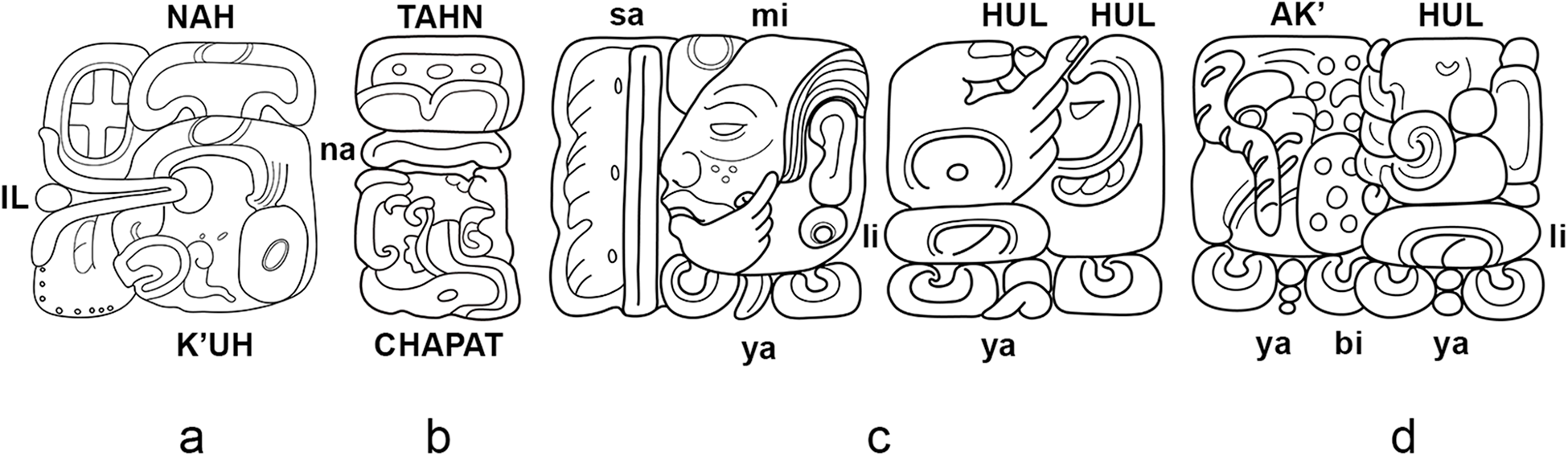
Figure 4 Long description
The image shows four glyph illustrations labeled a, b, c and d. Illustration a features the text 'NAH' and 'K’UH' with intricate patterns. Illustration b includes 'TAHN' and 'CHAPAT' with detailed designs. Illustration c displays 'sa mi ya' and 'HUL ya' with unique symbols. Illustration d contains 'AK’ ya bi' and 'HUL' with complex motifs. Each glyph has distinct visual elements and text annotations.
Some of these expressions are better understood than others, and I will focus only on those that are. The first example appears in two inscriptions from Copan: Stela N, Glyph A10 and Stela 9, B6. It also appears in two other inscriptions from Palenque: Palace Tablet, glyph blocks at B15 (Figure 4a) and N16. It shows the logogram IL, “to see,” sometimes infixed into or followed by the logogram K’UH, “god,” usually preceded by the logogram NAH, nah, “in front, forward, first” (Kaufman with Justeson Reference Kaufman and Justeson2003:279). Although some readings have been proposed for this group of glyphs (Grube Reference Grube2025:7–8; Schele et al. Reference Schele, Grube and Fahsen1992:3; Sheseña Reference Sheseña Hernández, Schele and Mathews2010:10–14), the expression may simply state that the count begins with the first sacred sighting of the Moon, naah k’uh[ul] il. Another interesting expression appears on Quirigua Stela D, Glyph C16 (Figure 4b), where the phrase TAHN-na-CHAPAT, tahn chapaht, meaning “within the centipede,” can be read (Schele et al. Reference Schele, Grube and Fahsen1992:3; Sheseña Reference Sheseña Hernández, Schele and Mathews2010:16; Thompson Reference Thompson1950). This appears to be a reference to the position of the Moon, implying that it is located within a cosmological centipede, whose maws represent the entrance to the Underworld, the place of the dead (Schele and Miller Reference Schele and Miller1986:113; Taube Reference Taube, Ruiz, Sosa and de León2003:411). Two other unusual expressions used to specify the beginning of the Glyph E/D cycle have been recognized as temporal adverbs (Sanz Reference Sanz González2007:502–504; Stuart 2020). These expressions are used to specify the timing of the lunar arrival event within the temporal framework of the text in which they are found. They both replace the number in Glyph E/D and are followed by the verbal expression huliiy, “arrived.” The first is the term sa-mi-ya HUL-HUL-li-ya, sahmiiy huliiy, which is read as “it arrived earlier today” (Sanz Reference Sanz González2007:502–504; Sheseña Reference Sheseña Hernández, Schele and Mathews2010:19; Stuart 2020; Stuart et al. Reference Stuart, Houston and Robertson1999:II-35)—from sahm-i, “earlier today” (Kaufman and Norman Reference Kaufman, Norman, Justeson and Campbell1984:130)—found on Palenque Palace Tablet, Q10-R10 (Figure 4c), and on Palenque Temple XXI Bench. The second expression is AK’[bi]-ya hu-li-ya, ak’biiy huliiy, meaning “arrived yesterday, the night before,”—from ahk’ab, “night,” as ak’b-i, ahk’b-iy, “yesterday” (Kaufman with Justeson 2033:451)—that appears on Quirigua Stela F, F6 (Figure 4d), Zoomorph O’, J1-I2, and on Coba Panel D (Sanz Reference Sanz González2007:257; Stuart 2020). According to Stuart (2020), the use of these temporal adverbs in Glyph E/D strongly suggests that the age of the Moon was counted from the first sighting, because their use indicates that a particular event is being signaled. He also thinks that this idea is reinforced by the fact that the vast majority of the lunar age records use a specific form of the verb HUL (Figure 4c, Figure 6, Figure 8b), the one depicting a finger pointing at the Moon’s crescent. Prager (Reference Prager2020:2) recently found a new example of this logogram depicting the crescent moon sign rising over the sky logogram, which conveys the same idea. This may also support the reading of the first example presented for this group of expressions as naah k’uh[ul] il, as the first sacred sighting.
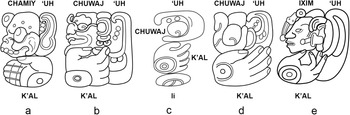
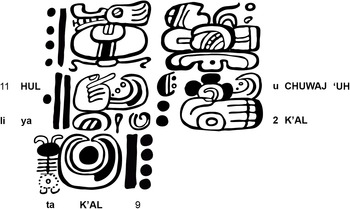
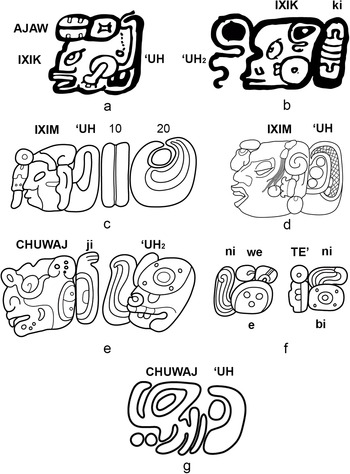
The next element included in the Lunar Series is Glyph C, an example of which can be appreciated in Figure 3, A7/A8. It was again Teeple (Reference Teeple1925a:108–109, Reference Teeple1931:53–61) who discovered what was its purpose: To indicate the position of a given Moon in a group of six Moons. Although Morley predicted that this glyph might indicate the position of the lunar month in some higher period, he was unable to specify how it worked (Bricker and Bricker Reference Bricker and Bricker2020:40; Morley Reference Morley and Hodge1916:378–379). This glyphic compound is formed by a number, ranging from one—usually replaced by the numeral NAH, “in front, forward, first” (Kaufman with Justeson Reference Kaufman and Justeson2003:279), as in the example in Figure 3, A7/A8, but never by the word yax, “first” (Lacadena et al. Reference Lacadena García-Gallo, Matteo, Rodríguez Manjavacas, García Capistrán, Valencia Rivera and Cases Marín2010:73) in this context—to six, followed by the logogram K’AL, represented by a human hand placed horizontally and with the fingers pointing more frequently to the right (Figure 3, A7–A8 and Figure 5b–e) and only occasionally to the left (Figure 5a), that is holding one of three possible deity heads. The logogram functions as the verb k’al, usually written as K’AL-ja, k’ahl-aj, which has been glossed as “to wrap, to bind, to tie, to enclose” (Boot Reference Boot2003a:8–9, Reference Boot2009:105–106; Kaufman with Justeson Reference Kaufman and Justeson2003:1000; Lacadena Reference Lacadena and Wichmann2004:174). This word appears to have a metaphorical meaning of “closing” or “concluding” a cycle or a period of time, particularly when applied to astronomical events. This glyph is sometimes prefixed by one of the possible variants for the vowel u-, as in the example presented in Figure 3, A7–A8 (also present in Figure 6), indicating that its coefficients are ordinal numbers (Bricker Reference Bricker1986:38; Bricker and Bricker Reference Bricker and Bricker2020:79). The identity of the three deity heads has been debated in the past (Bricker and Bricker Reference Bricker and Bricker2020:66, n18, 85; Chinchilla Reference Chinchilla Mazariegos, Magaloni and O’Neil2022a:433; Grube Reference Grube2018:n1; Schele et al. Reference Schele, Grube and Fahsen1992:4; Thompson Reference Thompson1950:241), until Zender and Skidmore (Reference Zender and Skidmore2012:9) proposed that their identities were: The Death God (Figure 5a), the Jaguar God of the Underworld (Figure 5b)—often simplified to a representation of his eye adorned with a cruller (Figure 5c, Figure 5d, Figure 6)—and the Tonsured Maize God (Figure 5e). The name “Jaguar God of the Underworld” was assigned to God M by Thompson (Reference Thompson1950:134), but during the Classic period this deity seems to have been named as Ik’ Chuhwaaj, “the burnt one” (Helmke Reference Helmke, Kettunen, López, Kupprat, Lorenzo, Cosme and de León2018:438; Lopes 2003). Similarly, the Classic period name of the tonsured Maize God was Ixiim (Zender Reference Zender2014:2), and the name of the Death God was Chamiiy (Lacadena et al. Reference Lacadena García-Gallo, Matteo, Rodríguez Manjavacas, García Capistrán, Valencia Rivera and Cases Marín2010:17). There has also been some debate as to whether the Moon being recorded by Glyph C is the current Moon or the completed one (Bricker and Bricker Reference Bricker and Bricker2020:102–103; Bricker et al. Reference Bricker, Aveni and Bricker2014:156). I support the idea that Glyph C specifies the current Moon, since it is never suffixed with the -iiy ending to indicate that it has already passed, as is the case with the verb HUL, that indicates that the Moon has already arrived in Glyph E/D.
Different variants of Glyph C. (a) Death God, Palenque, Olvidado Temple (after Schele and Mathews Reference Schele and Mathews1979:615), (b) Jaguar God of the Underworld, Quirigua, Stela A, A8, (c) Eye of the Jaguar God of the Underworld, Calakmul Stela 51, (d) Eye of the Jaguar God of the Underworld, Palenque, Palace Tablet, Q11, (e) Tonsured Maize God, Copan, Stela P, D5. All drawings by the author.
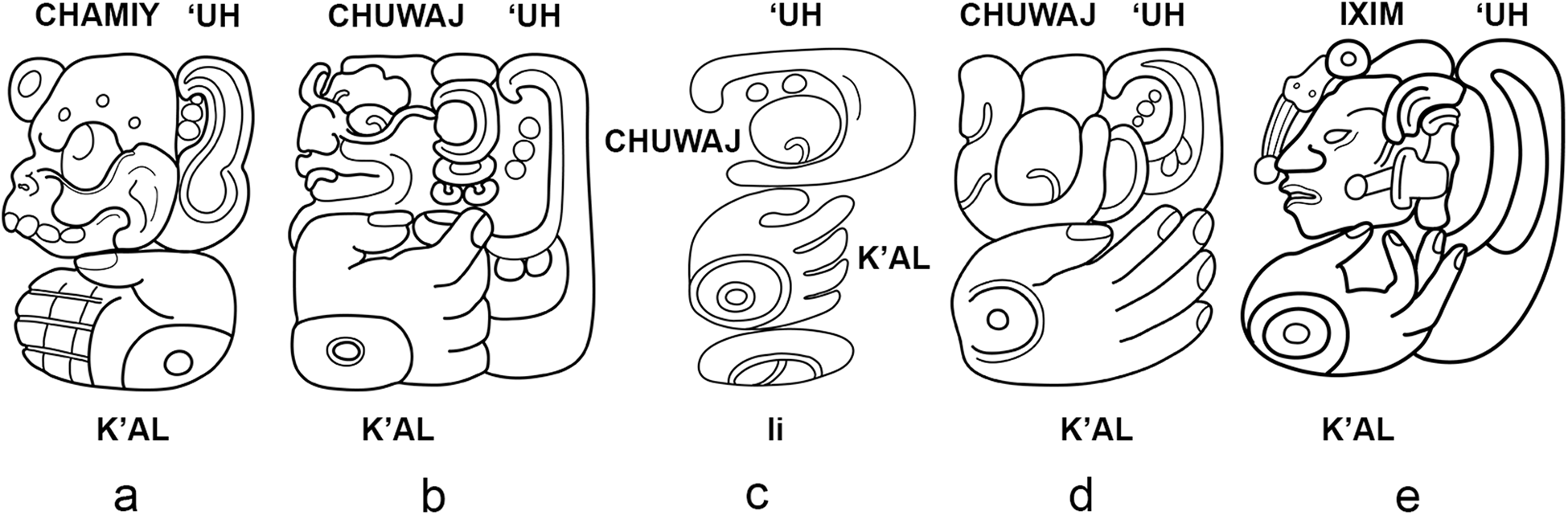
Figure 5 Long description
Five illustrations labeled a to e show different variants of Glyph C. Illustration a depicts the deity head labeled CHAMIY 'UH with the logogram K'AL. Illustration b shows the deity head labeled CHUWAJ 'UH with the logogram K'AL. Illustration c features the text CHUWAJ 'UH and the logogram K'AL, with an additional element labeled II. Illustration d presents the deity head labeled CHUWAJ 'UH with the logogram K'AL. Illustration e displays the deity head labeled IXIM 'UH with the logogram K'AL. Each illustration includes a human hand holding the deity head, symbolizing the verb k’al, meaning to wrap, bind, tie, or enclose.
Lunar Series in the mural painting located in Tomb 1, Rio Azul, Guatemala. Drawing by the author after Adams (Reference Adams1999:plate 3).
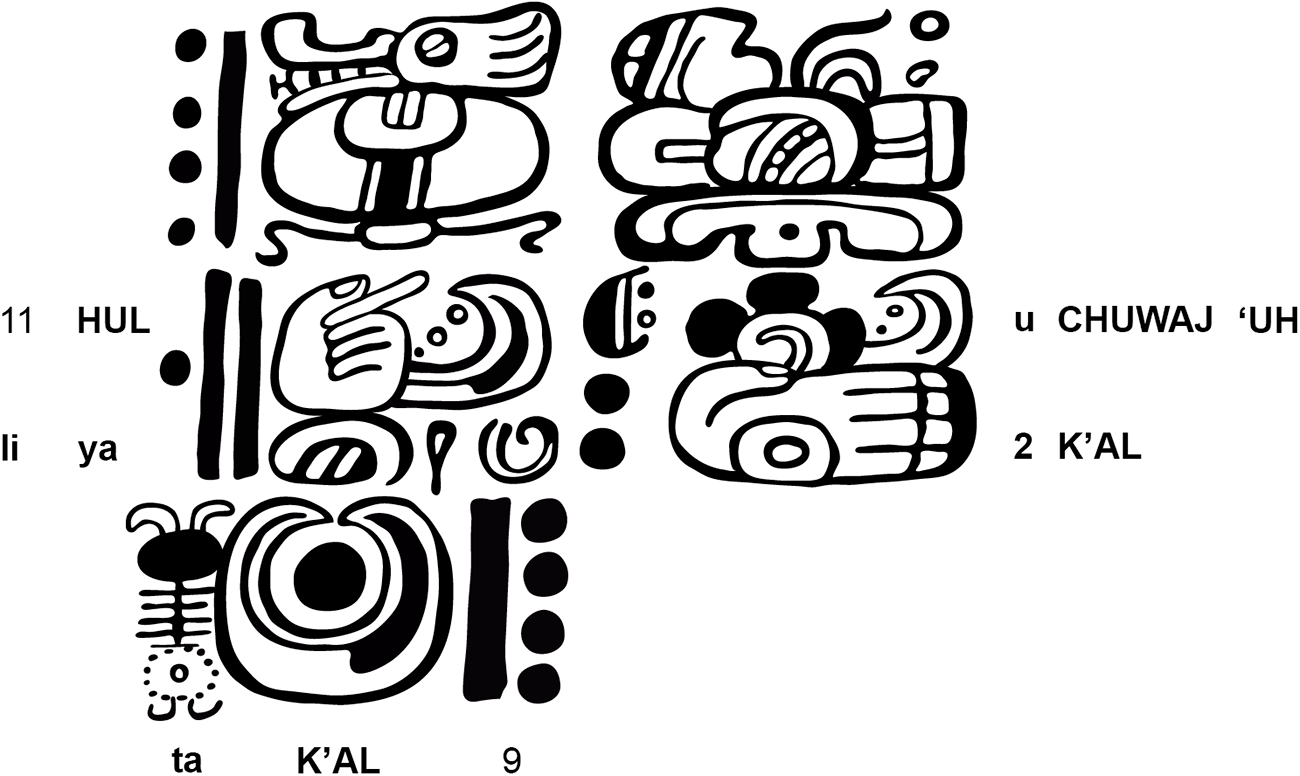
Figure 6 Long description
The image shows a collection of Mayan glyphs with various inscriptions. On the left, the glyphs include the text '11 HUL ii ya ta K'AL 9'. On the right, the glyphs display 'u CHUWAJ 'UH 2 K'AL'. The glyphs are intricately designed with distinct shapes and patterns, characteristic of Mayan script.
The next glyphs in the series are Glyph X (Figure 3, B7) and Glyph B (Figure 3, B8). Glyph B is composed of one of the possible variants for the syllable u as a prefix—used as the third-person singular possessive pronoun—, and the logogram K’ABA’, meaning “name,” which includes one of two possible infixes: the first is the logogram K’UH, k’uh, k’uhul, meaning “god, sacred,” and the second is formed by the phonetic glyphs ch’o-ko, ch’ok, meaning “unripe, young child” (Kaufman and Norman Reference Kaufman, Norman, Justeson and Campbell1984:61). Glyph B then corresponds to the phrase u-ch’ok/k’uh[ul] k’aba’, which could be translated as “its sacred/childhood name” (Cases Reference Cases Martín2013; Grube Reference Grube2018:10–13; Schele et al. Reference Schele, Grube and Fahsen1992:6–7). Glyph X is a set of different glyphs that represent the possible names given to the subject of the phrase expressed by Glyph B. This glyph can appear in an inscription without Glyph B, but Glyph B cannot appear on its own (Grube Reference Grube2018:11; Schele et al. Reference Schele, Grube and Fahsen1992:6). Using the particular version of Glyphs X and B found in Figure 3, B7–B8, the phrase formed by both could be read as: ?-po-ya u-K’ABA’[ch’o-[ko]],…po’ya uch’ok k’aba’, “‘jewel’ Moon is its childhood name”—interestingly enough, po’ya means “Moon” in Mixe-Zoquean languages (Cases Reference Cases Martín2013; Wichmann Reference Wichmann1995:438), and Kaufman with Justeson (Reference Kaufman and Justeson2003:502) reconstruct this word as Mixe-Zoquean poy’a and note its presence as a loan in Poqom as poh, “month;” more recently, Kaufman (2020:143) notes that it was likely borrowed from Mixean, specifically, into Q’eqchi’, Poqomam, and Poqomchi’ as poh, “Moon, month.” I will discuss the relationship of Glyphs C, X, and B in detail in the next section of this paper.
The last glyph in the Lunar Series is Glyph A (Figure 3, A9). This was the glyph that actually indicated that this series of glyphs was related to the Moon, not because of the glyph’s similarity to the Moon glyph (Figure 13a–b), but because of the way it worked. Its character was first signaled by Morley (Reference Morley1920:554), who considered it as the most important of the series because it established the meaning of the series as a lunar count (Reference Morley1920:555). However, as Morley clearly indicates in his work, it was Robert Wilson who suggested in Reference Morley1915 that the numbers nine and ten, always present in Glyph A, be added to the lunar symbol, in order to obtain an alternation of 29 and 30, numbers which Wilson recognized as an average reference to the length of the synodic month when fractions are not present (Morley Reference Morley1915:152). Therefore, this glyph was used by the Maya to indicate the length of the Lunar month, and the alternation between its two possible values, from month to month, allowed the Maya to approximate the length of the month to the actual value of the synodic month. According to Teeple, two different formulas were used during the Classic period to calculate the length of the synodic month. He called the most commonly used as the “Palenque formula,” because it was derived from information from inscriptions at this Maya site, which equated 81 lunations to 2392 days, resulting in a synodic month of 29.53086 days (Bricker and Bricker Reference Bricker and Bricker2020:44; Teeple Reference Teeple1931:65). The second formula was calculated using calendrical information from the monuments at Copan, so he named it the “Copan formula,” and it equated 149 lunations to 4,400 days, resulting in a synodic month of 29.5302 days (Bricker and Bricker Reference Bricker and Bricker2020:44; Teeple Reference Teeple1931:66–67). The use of these formulas was not uniform across different sites and different time periods, suggesting that they were used as a base and then adapted to the particular idiosyncrasies of each Maya site.
Finally, the series is enclosed by the month in the haab calendar, which in Figure 3 is located in B9 to complete the Calendar Round date with 7 Zak. From a logical perspective, the Long Count is incorporated initially in an inscription because it functions as an anchor point for the remaining calendars included in the Supplementary Series. It is plausible that the Maya opted to encompass the entire system utilizing the haab month as a means to denote the termination of the calendrical data.
Glyphs C, B, and X of the Lunar Series
As I have already explained, Teeple discovered that Glyph C specified the order of a lunation in a six-lunation period (Reference Teeple1925a:108–109, 1931:53–61). He also noted that the different variants of Glyph X were associated with different instances of Glyph C, but he was unable to correlate them (Bricker and Bricker Reference Bricker and Bricker2020:45, 56; Linden Reference Linden1986:123–124; Teeple 1930:62). It was Linden who discovered how these six-month periods were correlated with Glyph X (Linden Reference Linden1986:124, Reference Linden, Robertson, Macri and McHargue1996:343). He proposed that there was an 18-month lunar calendar, composed of three distinct six-month Glyph C periods, with Glyph X variants designating positions in it, so that three repetitions of the Glyph C semester would create one cycle of the Glyph X calendar (Linden Reference Linden1986:124). In a later publication, Linden discovered that each of the three deity heads that are part of Glyph C, identified the three different six-lunation periods, which together formed the 18-lunation cycle (Bricker and Bricker Reference Bricker and Bricker2020:79; Linden Reference Linden1986, Reference Linden, Robertson, Macri and McHargue1996; Schele et al. Reference Schele, Grube and Fahsen1992). Each semester was associated with one of the deities, as they ran in an endless sequence, one after the other.
Schele et al. (Reference Schele, Grube and Fahsen1992:4–5) arrived to the same conclusion, that there was an 18-month calendar and that it was formed by three successive semesters of Glyph C, each identified by one of the three different deities that form part of Glyph C (Bricker and Bricker Reference Bricker and Bricker2020:61; Schele et al. Reference Schele, Grube and Fahsen1992:5–6). Also, as part of their work, Schele et al. (Reference Schele, Grube and Fahsen1992:6–7) were able to provide a reading for Glyph B and establish its relationship to Glyph X as the two parts of a nominal expression. These same authors (Grube Reference Grube2018:13; Schele et al. Reference Schele, Grube and Fahsen1992:7) consider that what is being named by Glyph B and Glyph X is the Moon designated by Glyph A. However, there is an example of this glyph from the mural in Tomb 1 at Rio Azul that contradicts this idea, as it clearly shows that Glyph A is preceded by the glyph ta, which is translated as the preposition “in/at” (Figure 6). Prepositions and numerical classifiers are usually omitted in calendar inscriptions, but they were certainly included as part of the structure of the phrases used in this context. The presence of a preposition in this position prevents the name provided by Glyph X from being applied to the Moon indicated by Glyph A, so it must necessarily denote the Moon indicated by Glyph C, something that Bricker and Bricker (Reference Bricker and Bricker2020:85) had already suggested and that Teeple (Reference Teeple1931:62) had anticipated (see also Iwaniszewski Reference Iwaniszewski2012:40).
According to Linden (Reference Linden1986:133–134), the 18-month calendar represented by Glyph X was used to incorporate the extra days necessary to adjust the length of the month to approximate the actual length of the synodic month, something that he demonstrated using the Palenque formula, which seems to have been the most widely used. What Linden was able to find was that the length of the month could get the appropriate values for the formula by adding extra days to the Glyph X calendar. If the length of the month in the 18-month calendar alternates between 30 and 29 days, starting with 30 and ending with 29, the length of the month at the end of the 18 months would be 29.5 days, but if the last day of the eighteenth month is changed to 30, the average length of the month would be 29.5555 days. Applying this procedure to nine repetitions of the Glyph X calendar, five with an eighteenth month having a duration of 30 days and four with 29 days, the total number of days for 162 months would be 4,784, which is exactly the Palenque formula found by Teeple (2,392 days x 2 = 4,784 days [Linden Reference Linden1986:134; Teeple Reference Teeple1931:65]). Confirmation of this use of the Glyph C/X calendar and the validity of Linden’s procedure for adjusting the length of the month appeared archaeologically at the site of Xultun (Saturno et al. Reference Saturno, Stuart, Aveni and Rossi2012). In Structure 10K-2, a text with a series of 27 columns is painted on its east wall, each column with a glyph at the top and a series of bar-and-dot numbers at the bottom (Bricker and Bricker Reference Bricker and Bricker2020:65–66; Saturno et al. Reference Saturno, Stuart, Aveni and Rossi2012:714–715). The glyphs at the top correspond to the images of Glyph C deities, and the numbers below are cumulative quantities for 27 cycles of the Glyph C calendar, which correspond to nine cycles of the Glyph X calendar. To each column are added 177 or 178 days, depending on the algorithm followed by the Maya astronomer to include the necessary days to reach the final sum of 4,784 days, which is the number that appears as a result in the last column, corresponding to 162 lunar months. This is again the ratio required by the Palenque formula found by Teeple and exactly the same number of cycles proposed by Linden (Reference Linden1986:134). Proof that 178 days instead of 177 were added to certain columns can be found in the last two columns, which are very well preserved. The 27th column has a value of 4,784 days and the previous one has a value of 4,606 days, their difference is 178 days (Bricker and Bricker Reference Bricker and Bricker2020:65–66, Saturno et al. Reference Saturno, Stuart, Aveni and Rossi2012:715, Zender and Skidmore Reference Zender and Skidmore2012:6). Iwaniszewski offers an astronomical explanation for the selection of the columns where these extra days were included in the Xultun calendar, indicating that it was caused by the accumulation of one day of error in the previous semester (Iwaniszewski Reference Iwaniszewski2012:42).
Regarding the number of Glyph X variants, Andrews (Reference Andrews1934) identified six. Linden was unable to identify more than twelve, so he assumed that some variants were shared by different Glyph C semesters (Bricker and Bricker Reference Bricker and Bricker2020:56; Linden Reference Linden1986:123–124). Schele et al. also attempted to correlate the Glyph X variants corresponding to each one of the three Glyph C semesters, and found that there were only 13, or possibly 14 (Schele et al. Reference Schele, Grube and Fahsen1992:5–6). In a more recent study, Grube identifies only nine variants (Grube Reference Grube2018:2–3). Rohark (Reference Rohark1996) and Vepretskiy (Reference Vepretskiy2020) believe that the correct number of Glyph X variants is actually 18. Vepretskiy’s proposal is really interesting as he distinguishes some very similar variants by subtle internal differences, and correlates these newly identified variants with the frequency that they occur for the different Glyph C semesters, obtaining a correlation well above the average.
Regarding the reason for grouping lunations into groups of six, and occasionally five moons, Justeson (Reference Justeson and Aveni1989:86) suggests that the Lunar Series was at least loosely based on eclipse seasons (Bricker and Bricker Reference Bricker and Bricker2020:52), although it should be noted that lunar semesters do not always coincide with eclipse seasons. The same author notes that early records at Tikal seem to point in this direction (Justeson Reference Justeson and Aveni1989:86). An important finding by Teeple seems to lend further support to this idea; he noted that the day-keepers at Copan began the incorporation of five-month semesters to adjust the Glyph C calendar for eclipse prediction in Stela M, and more importantly, this stela uses the same base date employed for the Eclipse table in the Dresden Codex, establishing a direct relationship between eclipse recording in this Codex and the Lunar series of the Classic period (Bricker and Bricker Reference Bricker and Bricker2020:45–47; Teeple Reference Teeple1931:59).
Considering all the information about the Lunar Series analyzed so far, this paper proposes that the three deities that are part of the Glyph C calendar are the mythological identities of three of the phases of the Moon, as perceived by the Maya. The lunar phases chosen to name the Glyph C deities were those associated with the new Moon and full Moon phases, as eclipses can only occur during these phases. This emphasizes the Glyph C calendar’s relationship with eclipses. Each deity is associated with an important astronomical event related to the lunar synodic cycle: the first crescent, the full moon, and the last crescent. To validate this proposal, I will present information from Maya dictionaries and ethnological research related to lunar phases, as well as evidence from Maya inscriptions and iconography.
Lunar phases in Maya culture
Lunar phases in the dictionaries
One place where the names of the lunar phases can be found is in the dictionaries of the various Mayan languages. These dictionaries may include those created during the early years following the arrival of Europeans in the Americas, primarily compiled by the friars who sought to Christianize the Maya and other cultural groups, or those produced by modern linguists aiming to better understand these languages. The former are particularly important because the terms included in these dictionaries are closer to those that the ancient Maya may have used. However, we must be careful because these translations are tied to the translators’ conception of the world, which may differ greatly from the way the Maya conceived theirs, causing that some of the terms used by the Maya were forced into foreign categories. The following are the terms used to describe or name the phases of the Moon which have a cosmological significance:
Ch’orti’
• ch’ok e katu’: “New Moon, the Moon is tender” (Hull Reference Hull2000:8), where ch’ok, “young, tender,” katu’, “Moon,” e katu’, “the Moon” (Hull Reference Hull2016:125).
• ne’b’ e katu’: “Full Moon, the Moon is ripe” (Hull Reference Hull2000:8).
• k’in katu’: “Full Moon, Sun-Moon,” where k’in, “sun,” because the shape of the Moon is compared to that of the sun (Hull Reference Hull2000:8).
• ch’okix e katu’: “Waning Moon, the Moon is already tender” (Hull Reference Hull2000:8).
• ch’okto e katu’: “Waning Moon, the Moon is still tender” (Hull Reference Hull2000:8).
• orajix e katu’: “Waning Moon, the Moon is still tender” (Hull Reference Hull2000:8).
The Moon is seen as a ripening fruit and equivalent to the Sun when full. Interestingly, the Ch’orti’ see the Moon as becoming tender again as it wanes.
Chuj
• k’ojan ko chi’ich: “Full Moon; the Moon is shining all night, from dusk till dawn.” Literally, “our aunt (the Moon) is seated” (Hopkins Reference Hopkins2012:162).
• chamelih: “To wane (the Moon),” where chamih, “to die” (Hopkins Reference Hopkins2012:45).
The Moon dies when it enters its waning phase.
Cakchiquel
• mixalax yq: “New Moon” (Guzmán, Reference Guzmán1984[1704]:28), where yq ∼ iq stands for ik’, “Moon,” and mi-x alax iq qo chic, “new Moon” (Coto Reference Coto1983 [ca. 1742]:319), where mi-x alax, “to be born,” and mi-x alax ru vach ticon, “quando nacen las maçorquitas/when the little ears of cacao are born,” where ru vach, “maçorca de cacao/ear of cacao” (Coto Reference Coto1983 [ca. 1742]:326), qu’in alax, “nacer criatura o animal” creature or animal being born (Coto Reference Coto1983 [ca. 1742]:365). Could be translated as “newborn Moon.”
• qa aqual yq: “Waxing of the Moon” (Guzmán, Reference Guzmán1984[1704]:28); “New Moon” (Coto Reference Coto1983 [ca. 1742]:319), where aqual, “child” (Coto Reference Coto1983 [ca. 1742]:369). Could be translated as “child Moon.”
• ru qizic iq: “Waning Moon” (Coto Reference Coto1983 [ca. 1742]:319; Guzmán, Reference Guzmán1984 [1704]:28), where qizic, “to finish” (Coto Reference Coto1983 [ca. 1742]:327). Could be translated as “finishing Moon.”
• rih chic yq: “Old Moon” (Coto Reference Coto1983 [ca. 1742]:319; Guzmán, Reference Guzmán1984 [1704]:28), refers to the waning Moon.
• tanti cam yq: “Waning Moon” (Guzmán, Reference Guzmán1984 [1704]:28), where cam, “fenecer, matar, morir/ to perish, to kill, to die” (Coto Reference Coto1983 [ca. 1742]:XCIX). Could be translated as “dying Moon.”
Again, the Moon is seen as a ripening fruit, passing through a phase where it is compared to a child, until it grows old and finally dies.
Quiche
• u kamibal ik’: “The conjunction of the Moon” (Edmonson Reference Edmonson1965:46), where kamibal, “dying place or thing” (Edmonson Reference Edmonson1965:55). The Quiche expression could be translated as “the Moon in its dying place.”
Again, the Moon dies at the end of its journey.
Tzeltal
• syijil u: “Luna llena/Full Moon)” (Slocum and Gerdel Reference Slocum and Gerdel1976:68), where yij, “macizo/solid,” yijub, “se maduró/it ripened,” syijilix, “macizo, madurez /solid, ripe” (Slocum and Gerdel Reference Slocum and Gerdel1976:206). Also, ‘u ∼ ‘uh, “luna” in contemporary Tzeltal (Polian 2017:627–628). This expression could be translated as “the ripening of the Moon” (Polian 2017:688).
• uhnen uh: “Luna nueva” where uhnen, “tierno, inmaduro, débil/soft, immature, weak” (from Mixe-Zoquean, Polian 2017:629).
Again, the Moon ripens as a fruit and when new is considered a child.
Tzotzil
• yunenal u: “Luna creciente/waxing Moon” (Hurley and Ruíz Reference Hurley and Agustín Ruíz1986:322), where yunenal, unen, “criatura, nene, niño, tierno/baby, child, unripe” (Hurley and Ruíz Reference Hurley and Agustín Ruíz1986:212, 235). This expression could be translated as: “the infancy of the Moon,” considering yunenal as “its infancy.”
• sp’ejel u: “Luna llena/full Moon” (Hurley and Ruíz Reference Hurley and Agustín Ruíz1986:322), where p’ej, p’ejel, “clasificador numeral de cosas redondas, granos, frutos/numeral classifier for round things, such as seeds and fruits” (García de León Reference García de León1971:66). This expression could be translated as “the roundness of Moon.”
Again, the Moon is seen as a ripening fruit and like a child after new Moon.
Yucatec
• yijh u: “El plenilunio (full Moon)” (Ciudad Real Reference Ciudad Real2001 [1578–1617]:296), where yijh, “fruta que está ya de sazón, para cogerla del árbol /ripe fruit, to be harvested from the tree” (Ciudad Real Reference Ciudad Real2001 [1578–1617]:296), and yij, “madurez o sazón del maíz/ripeness of maize” in contemporary Yucatec (Gómez Navarrete Reference Gómez Navarrete2009:190). Note that Colonial <u> is contemporary uj, “bead, Moon” (Bricker et al. Reference Bricker, Poʔot Yah and Dzul de Poʔot1998:20). This could be translated as “ripe Moon.”
• oxlahun caan u: “Luna llena, oposición/Full Moon in opposition” (Ciudad Real Reference Ciudad Real2001 [1578–1617]:465), where oxlahun is number 13, and caan, “cielo/sky” (Ciudad Real Reference Ciudad Real2001 [1578–1617]:100). The number used to name the Moon might imply the age of the Moon, since at this phase it should be of 13 or 14 days old.
• num caan u: “Luna llena, que dura toda la noche/full Moon that lasts all night long” (Ciudad Real Reference Ciudad Real2001 [1578–1617]:444), where num, “mucho, demasiado/much, too much” (Ciudad Real Reference Ciudad Real2001 [1578–1617]:444).
• paal u: “Luna nueva/New Moon” (Ciudad Real Reference Ciudad Real2001 [1578–1617]:481), where paal, “muchacho o muchacha de corta edad/very young boy or girl” (Ciudad Real Reference Ciudad Real2001 [1578–1617]:100). This expression could be translated as “very young Moon.”
• hun balan u: “Conjunçion de luna/New Moon” (Ciudad Real Reference Ciudad Real2001 [1578–1617]:263), where balan, “cosa escondida o encubierta/hidden or concealed thing” (Ciudad Real Reference Ciudad Real2001 [1578–1617]:75). This implies that the Moon is hidden.
• nuc h al (u): “Hazerse gruesso o gordo, crecer el hombre, y qualquier animal y las plantas, el cavello, la barva y la luna/to grow thick or fat, to grow the man, and any animal and plants, the hair, the beard and the Moon” (Ciudad Real Reference Ciudad Real2001 [1578–1617]:441), this refers to the waxing Moon.
• mucul u: “Menguar la luna y el menguante de luna/waning Moon” (Ciudad Real Reference Ciudad Real2001 [1578–1617]:412), where muc, “encubrir, tornar a cubrir, cerrar el hoyo que se había hecho, enterrar difuntos/to cover, to close the hole that has been made to bury the deceased” (Ciudad Real Reference Ciudad Real2001 [1578–1617]:411). This means that the Moon is buried, as if it were dead.
• benel u tu chheen: “Luna menguante, que casi no se aparece/waning Moon, which almost does not appear” (Ciudad Real Reference Ciudad Real2001 [1578–1617]:82), where chheen, “pozo, cisterna o cueva de agua/well, cistern or water cave” (Ciudad Real Reference Ciudad Real2001 [1578–1617]:213), and benel, “faltar o restar o quedar algo por hacerse de lo que se hazía/what remains to be done” (Ciudad Real Reference Ciudad Real2001 [1578–1617]:82) from bin, “irse, ausentarse/to go, to leave” (Swadesh et al. Reference Swadesh, Cristina Álvarez and Bastarrachea1991:36). This could be translated as: “the Moon is going into a well or a cave filled with water.”
For the Yucatec, the Moon is born like a child, ripens like a fruit, and then dies in a well to remain hidden until it is reborn.
From some of these dictionary entries we can infer that the lunar cycle was, and still is, seen by the Maya as a rebirth cycle. The Moon is born as a small, tender child or fruit, and it grows until it becomes full and ripe, at which stage it mimics the Sun, then undergoes a process of decay and aging until it dies and is buried in a well or a cave. Thompson (Reference Thompson1950:236) already indicated that, considering many of the terms used by the Maya to designate the different phases of the Moon, two metaphors can be clearly distinguished: after disappearance, the Moon is said to die, and at reappearance it is reborn as a child.
Lunar phases in ethnography
Strangely enough, the ethnographers who have been working in the Maya area for decades have not paid much attention to how the inhabitants of this region perceive our celestial companion. Only a few, but very valuable references to this particular matter have reached us. I will mention them in this section.
According to Guiteras Holmes (Reference Guiteras Holmes1965:37), the Tzotzil of San Pedro Chenalhó observe four phases of the Moon: its obscurity or new Moon, its first waxing quarter, the full Moon, and its last waning quarter, which brings it back into darkness. Its period of darkness lasts for three nights, when they think, “the Moon is dead.” The full or “ripe” Moon shines for three nights, but this phase also includes the waxing and waning curves, resulting in nine days of high lunar activity (Guiteras Holmes Reference Guiteras Holmes1965:38). Her informants also indicate that their neighbors, the Tzotzil of San Juan Chamula, wait for the Moon to be “dead” and “buried” in order to celebrate their carnival. Otherwise, they will fight and kill each other, because they will get drunk under the influence of the Moon (Guiteras Holmes Reference Guiteras Holmes1965:170). Finally, the Totilme’il and the Poslob are two of their gods who embody the forces of good and evil in the human being, and they lived on Earth in ancient times as the Sun and the Moon. The hummingbird is the animal embodiment of the Totilme’il, a bird associated with the Sun in Mesoamerican mythologies. The jaguar is the alter ego of the Poslob, an animal associated with the night, darkness, and witchcraft (Guiteras Holmes Reference Guiteras Holmes1965:237). The Tzeltal refer to the new Moon as ‘unin, which is also the term for an infant of either sex until approximately eight months of age (see above the term uhnen in Tzeltal and unen in Tzotzil; Nash Reference Nash1970:270). According to Girard, the Ch’orti’s viewed the Moon as a jar filled with water. Depending on the phase, the jar could be full, appearing as the full Moon, or empty, appearing as the new Moon (Girard Reference Girard1949:148–149). They also think that the new Moon is visiting the land of the dead (Girard Reference Girard1949:467–469). Tedlock (Reference Tedlock1992:182) indicates that the people of Momostenago believe that the Moon is reborn each month at new Moon. They use the expression mixalaxic ic’, “the Moon has been reborn,” for this phase. Tedlock (Reference Tedlock1992:182–183) also indicates that they count the lunar month from the first appearance of the crescent after conjunction. As Milbrath (Reference Milbrath1999:34) notes, the Maya terms for the first visible crescent seem to be counterparts to the new Moon. However, in Western cultures, the term “new moon” refers to the period when the moon is invisible. Therefore, it is difficult to know which term corresponds to which in early dictionaries, although, Köhler (Reference Köhler1980:593) maintains that among contemporary Maya the month is usually counted from first visibility. As the Moon approaches full Moon, it is referred to as chak’ajic’, meaning “the maturing or ripening Moon.” During this phase, the Moon is also called setel ic’, “rounded Moon.” On the night of the achronic rising and cosmic setting of the Moon, the people of Momostenago see the movements of the Moon identical to those of the Sun. They believe that on this night, the Moon takes on a male aspect and is considered to be equivalent to the Sun (Tedlock Reference Tedlock1992:183). This last observation may offer a potential explanation for the mention of Xb’alamq’e, a deity associated with jaguars, as rising as the Moon in the Popol Vuh (Braakhuis 2010:28–29), thereby acting as the nocturnal Sun, which would correspond to the full Moon (Tedlock Reference Tedlock1992:184). Analyzing the Q’eqchi’ myth called “The Legend of the Sun and the Moon,” Braakhuis concludes that Xb’alamq’e in the Popol Vuh myth does not act as the future Moon, but rather as the Sun from below, the nocturnal Sun, transforming into the Sun from above, the normal Sun named Sakq’e (Janssens and Akkeren 2003:35; Braakhuis 2010:28). Akkeren (2011:705) also points out that the Q’eqchi’ see a jaguar on the face of the full Moon instead of a rabbit, something that is common in the rest of Mesoamerica, which would fit the feline character of the Moon during opposition.
Glyph C deities as the lunar phases
After reviewing the available evidence from ethnographic sources and from dictionary definitions of the lunar cycle terminology, two distinct mythological narratives associated with the phases of the Moon have been identified. The first narrative associates the waxing and waning of the Moon with a rebirth cycle, while the second establishes a relationship between the full Moon and the nocturnal Sun. The Moon is born after new Moon, starts to grow and ripen, until it becomes full. At this stage, the Moon mutates into an Underworld Sun that behaves exactly like the daylight Sun, but at night. At the same time, during this transformation, the Moon acquires the characteristics of a feline. After its maximum growth, the Moon begins to age and decay, a process that finally ends with the Moon’s death, which takes place during the last crescent, going into a cave, a well, or the maws of a centipede, as indicated in Quirigua, Stela D (Figure 4b).
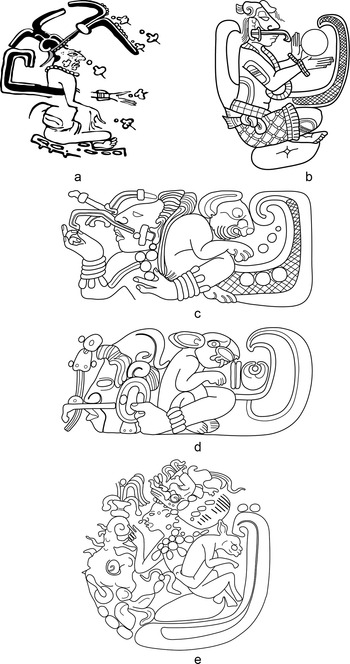
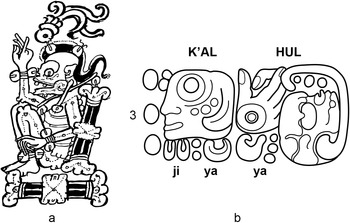
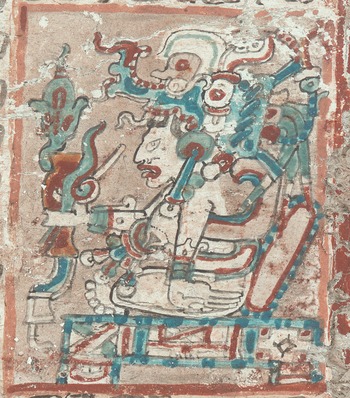
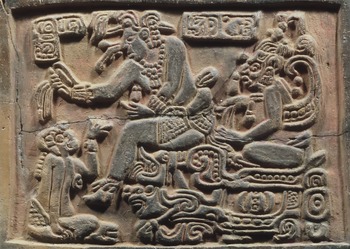
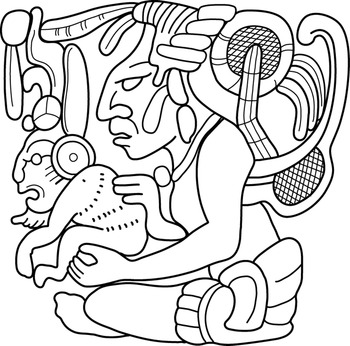
The three deities that are part of Glyph C perfectly represent the two mythological narratives associated with the lunar cycle discussed above. The lunar rebirth cycle is represented by the Maize God as its beginning, and the Death God as its end. Every month the Moon is born with the image of the Maize God, who is the Maya paradigm for rebirth. There is abundant iconographic evidence of the Maize God being reborn after his sojourn in the Underworld. Maya vases depict the different variations and stages of this myth, including: dancing, seduction by beautiful women, his ultimate death, his journey through the Underworld on a canoe in the company of the Paddler Gods along with other characters, and his final rebirth through a cleft in the back of a turtle shell or from a water lily pad located on top of a skull (Chinchilla Reference Chinchilla Mazariegos2017:199–201, 207–223; Quenon and Le Fort Reference Quenon, Le Fort, Kerr and Kerr1997; Salazar Reference Salazar Lama, Mazariegos, Doyle and Pillsbury2022:138). Rebirth necessarily involves a crucial step: death, which is aptly represented by the Maya Death God, who in this case acts as the dying Moon. The particular manifestation of the Maize God involved in this mythological narrative, named as the Lunar Maize God by Chinchilla (Reference Chinchilla Mazariegos2017:203), has been very well documented by this author (Chinchilla Reference Chinchilla Mazariegos2017:202–207, Reference Chinchilla Mazariegos, Moyes, Christenson and Sachse2021:258–261, Reference Chinchilla Mazariegos, Magaloni and O’Neil2022a:434–437, Reference Chinchilla Mazariegos, Mazariegos, Doyle and Pillsbury2022b:78–83). This deity is characterized by his elongated, tonsured head, and his rich attire, consisting of a beaded net skirt, and bracelets, earspools and neckless made out of jade (Figure 7). When the upper part of his body is represented in the iconography, he usually wears a lunar sign emerging from under his armpit (Figure 7a, Figure 11) or close to his body (Figure 7b–d) or he is shown seated inside the Moon sign (Figure 7e). He is sometimes depicted holding the rabbit of the Moon Goddess (Figure 7c–e, Figure 17), and in some of his portraits, he is shown wearing a water lily serpent mask, a trait also associated with the Moon Goddess (Figure 7b–d [Chinchilla Reference Chinchilla Mazariegos2017:202–207, 2022:434, 2022:78]). Note that in Figure 7a, flowers are sprouting from the hands and the head of the Lunar Maize God, a clear sign of growth and ripening, a concept also associated with the K’awiil headdress worn by the deity on Figure 7e, as this deity is usually depicted in the Maize God rebirth scenes (Valencia Reference Valencia Rivera2022:73–78). The Lunar Death God is usually represented as a clean skeleton with a very simple attire (Figure 11), that consists of a loincloth, with his black hair tied back, tightly to his skull, with death eyes used as hairpins. His prototypical image appears on p. 53 of the Dresden Codex, in the Eclipse table pages (Figure 8a). Another possible representation of this deity appears as part of Glyph E/D on Quirigua Zoomorph G (Figure 8b), associated with a Moon age of 23 days, where a skull is represented inside the Moon sign, indicating that the Moon is dead.
Representations of the Lunar Maize God. (a) Dumbarton Oaks photographic collection Plate PC.M.LC.p2.38.1 (Dumbarton Oaks, Trustees for Harvard University, Washington, DC), (b) Perlman Conch Shell (Chrysler Museum of Art), (c) Detail from bench in Structure 8B-11 at Copan, (d) Detail from stone box found in Hun Nal Ye cave, Verapaz, Guatemala (after Woodfill et al. Reference Woodfill, Guenter and Monterroso2012:98–107), (e) Tenam Rosario Stone Throne, Comitán de Domínguez, Chiapas, Mexico. All drawings by the author.
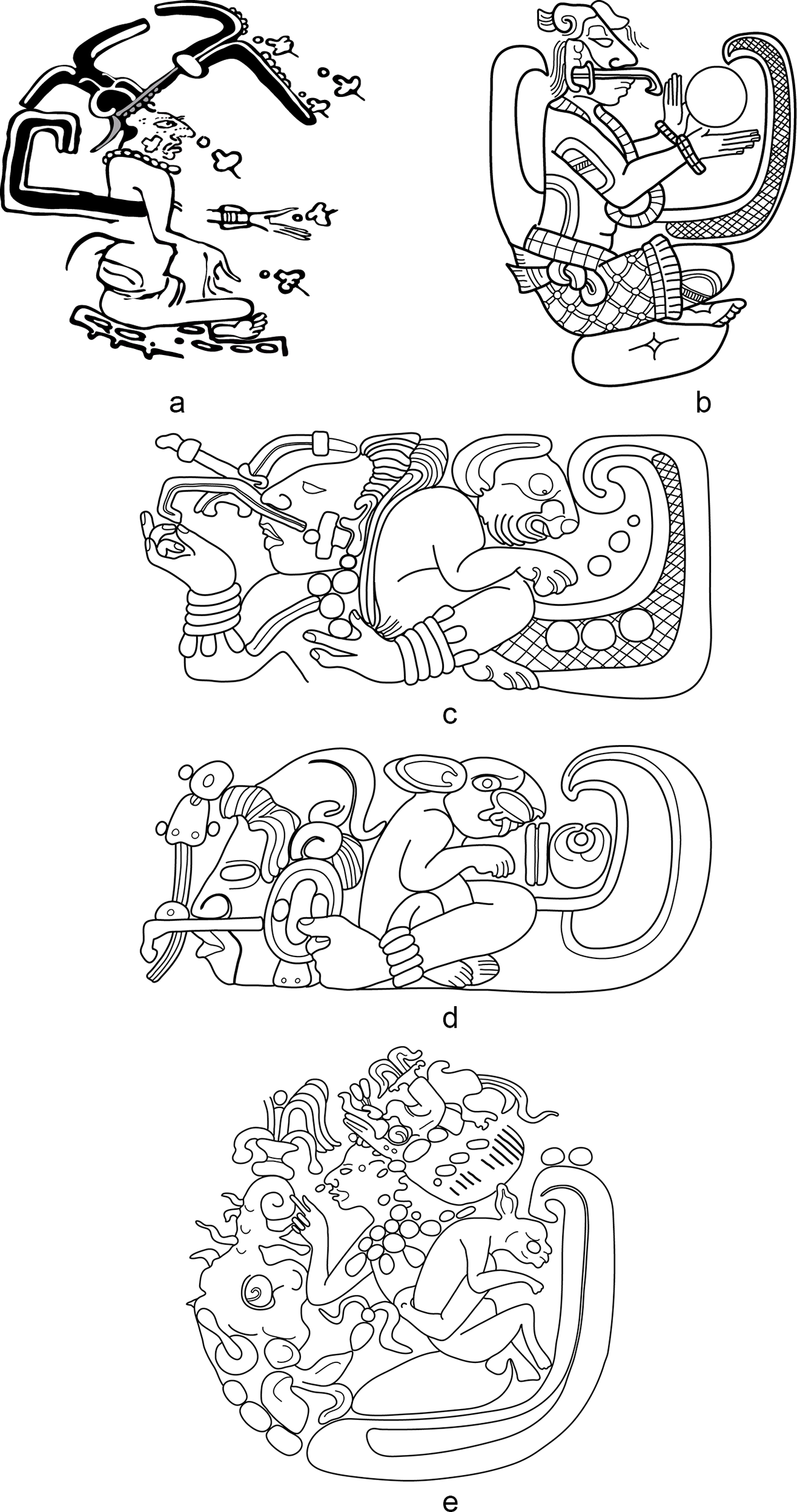
Figure 7 Long description
In illustration a, the deity is shown with flowers sprouting from his hands and head, symbolizing growth. Illustration b features the deity seated, wearing a beaded net skirt and jade accessories. Illustration c shows the deity holding a rabbit, associated with the Moon Goddess. Illustration d depicts the deity with a water lily serpent mask. Illustration e presents the deity seated inside a Moon sign, surrounded by floral elements, indicating rebirth. Each illustration highlights distinct attributes and symbols related to the deity's mythological narrative.
Representations of the Lunar Death God. (a) Dresden Codex p. 53 (Sächsische Landesbibliothek – Staats und Universitätsbibliothek Dresden, Codex Dresdensis – Mscr.Dresd.R.310), (b) Glyph E/D on Quirigua Zoomorph G. All drawings by the author.
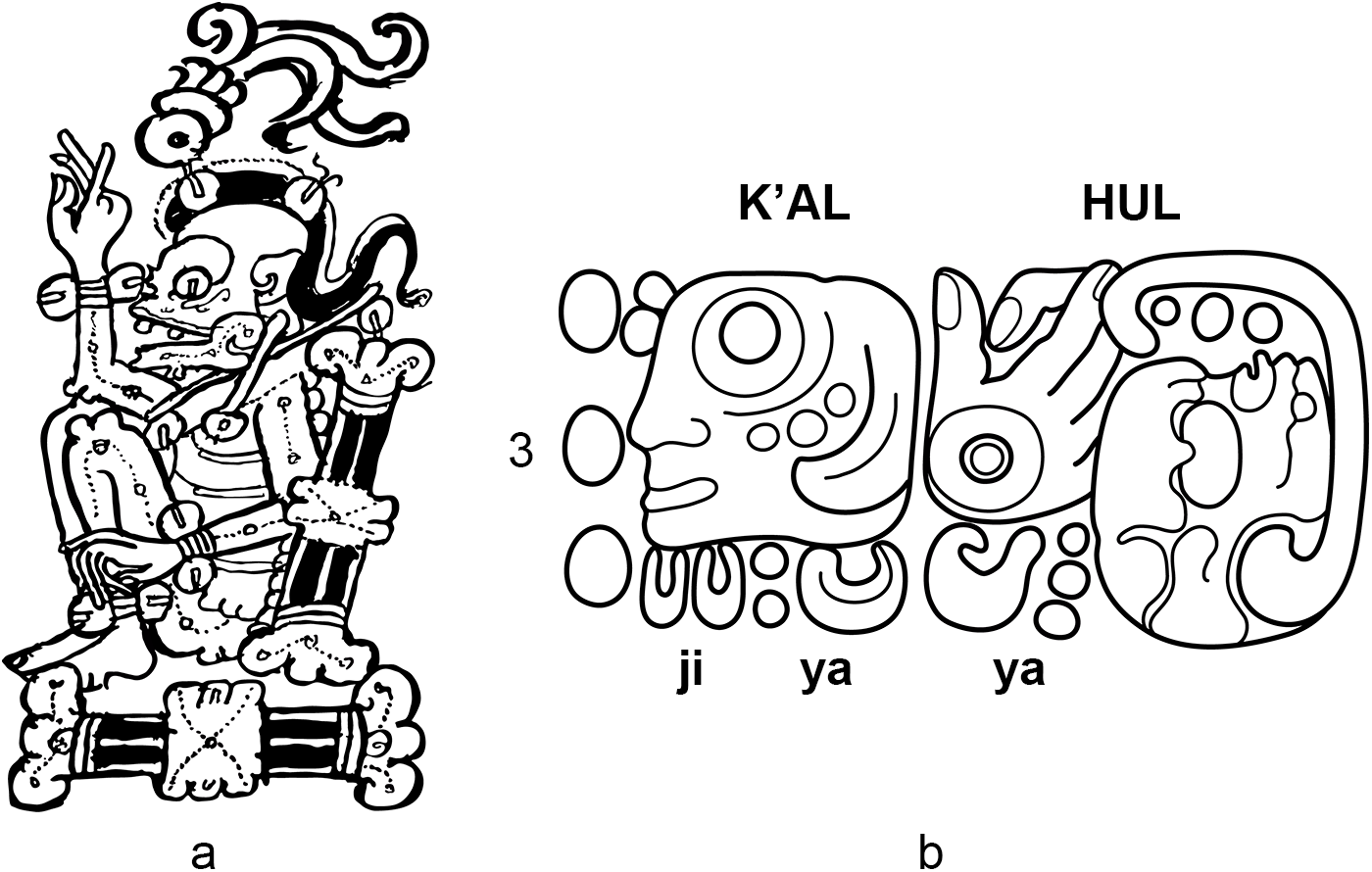
Figure 8 Long description
The image contains two illustrations. The first illustration (a) depicts a seated figure with an elaborate headdress, adorned with intricate patterns and designs. The figure is positioned on a decorated platform, with one hand raised and the other resting on the knee. The second illustration (b) shows a series of glyphs labeled K'AL and HUL. These glyphs are surrounded by additional symbols and text, including 'ji ya ya'. The glyphs and symbols are arranged in a structured format, with distinct shapes and patterns.
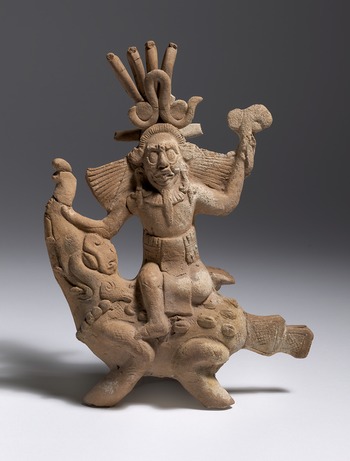
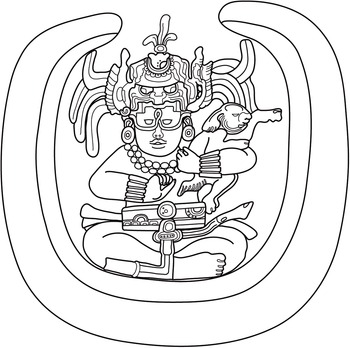
The main character of the other mythological narrative, in which the Moon adopts the characteristics of an Underworld Sun, is the Jaguar God of the Underworld, the third deity associated with Glyph C. This deity is considered by some scholars to be the Classic Maya Fire Deity (Houston Reference Houston, Mazariegos, Doyle and Pillsbury2022:99; Stuart Reference Stuart and Houston1998:408–409; Tokovinine Reference Tokovinine, Pilsbury, Doutriaux, Ishihara-Brito and Tokovinine2012:340), particularly the fire used at night when it substitutes the light of the Sun (Sheseña et al. Reference Hernández, Alejandro, Domínguez and Lozada Toledo2025). He is also considered to be a night aspect of the Sun as it floats in the waters of the Underworld (Houston Reference Houston, Mazariegos, Doyle and Pillsbury2022:99; Stuart Reference Stuart and Houston1998:408–409; Taube Reference Taube and Houston1998:441; Tokovinine Reference Tokovinine, Pilsbury, Doutriaux, Ishihara-Brito and Tokovinine2012:340). This god has facial features similar to those of the Sun God, but his eyes have spiral pupils, which Houston et al. (Reference Houston, Stuart and Karl Taube2006:170) associate with the deities of the watery Underworld. His eyes are always surrounded by a mask that ends in a cruller above his nose, between his eyebrows. He also wears jaguar ears, a loop of hair over his forehead, and a long-pointed beard that resembles a stingray’s spine (Figure 9). This god is a nocturnal aspect of the Sun God, closely associated with darkness and the Underworld (Stuart Reference Stuart and Houston1998:408; Taube Reference Taube, Finamore and Houston2010:281; Taube and Houston Reference Taube, Houston, Houston, Newman, Roman and Garrison2015:213). He is frequently depicted in association with star signs, which symbolize darkness, the night sky, and the realm of the setting Sun. This is exemplified by the image shown in Figure 9, where the deity is shown emerging from a star sign and seated on a crocodile (Taube Reference Taube, Finamore and Houston2010:281). This representation is similar to that depicted in Figure 7d, where the Lunar Maize God is also seated beside a crocodile, which probably represents the Earth’s surface. He also appears associated with stars on Yaxchilan Stela 4, where he emerges from a star sign hanging from a sky band or in the central portion of the Jaguar Stairway on the west side of the East Court at Copan, where a massive head of the deity is flanked by star signs. For all these reasons, the Jaguar God of the Underworld was chosen by the Maya to represent the full Moon syzygy. The lunar version of the deity also appears inside the lunar sign, holding a rabbit (Figure 10) or with the lunar sign emerging from his armpit (Figure 11, Figure 16). In the Bonampak monument, the deity is shown wearing a headdress that seems to represent a solar bird deity, as its squinted eyes suggest, denoting his solar nature.
The Jaguar God of the Underworld seating on the back of a crocodile with a star sign on top of his head. Photograph courtesy of the National Gallery of Australia, Canberra.
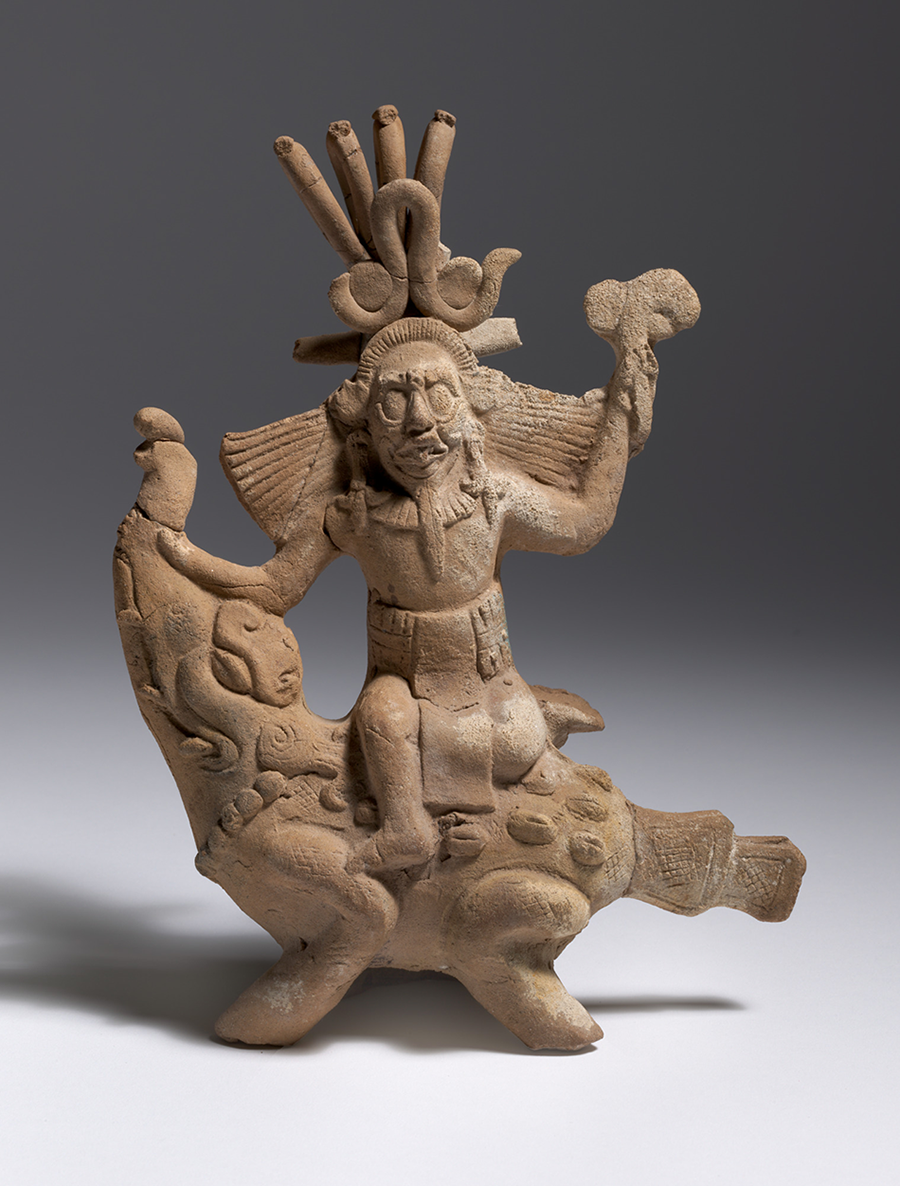
Figure 9 Long description
The sculpture depicts the Jaguar God of the Underworld seated on the back of a crocodile. The figure is holding an object in one hand, which appears to be a stylized representation. The deity is adorned with a headdress that includes multiple elements, adding to the intricate design. The crocodile is detailed with patterns and features that enhance the overall composition of the sculpture. The figure's posture and the arrangement of the headdress suggest a ceremonial or symbolic significance.
Representation of the Lunar Jaguar God of the Underworld. Bonampak Sculpted Stone 2. Drawing by the author.
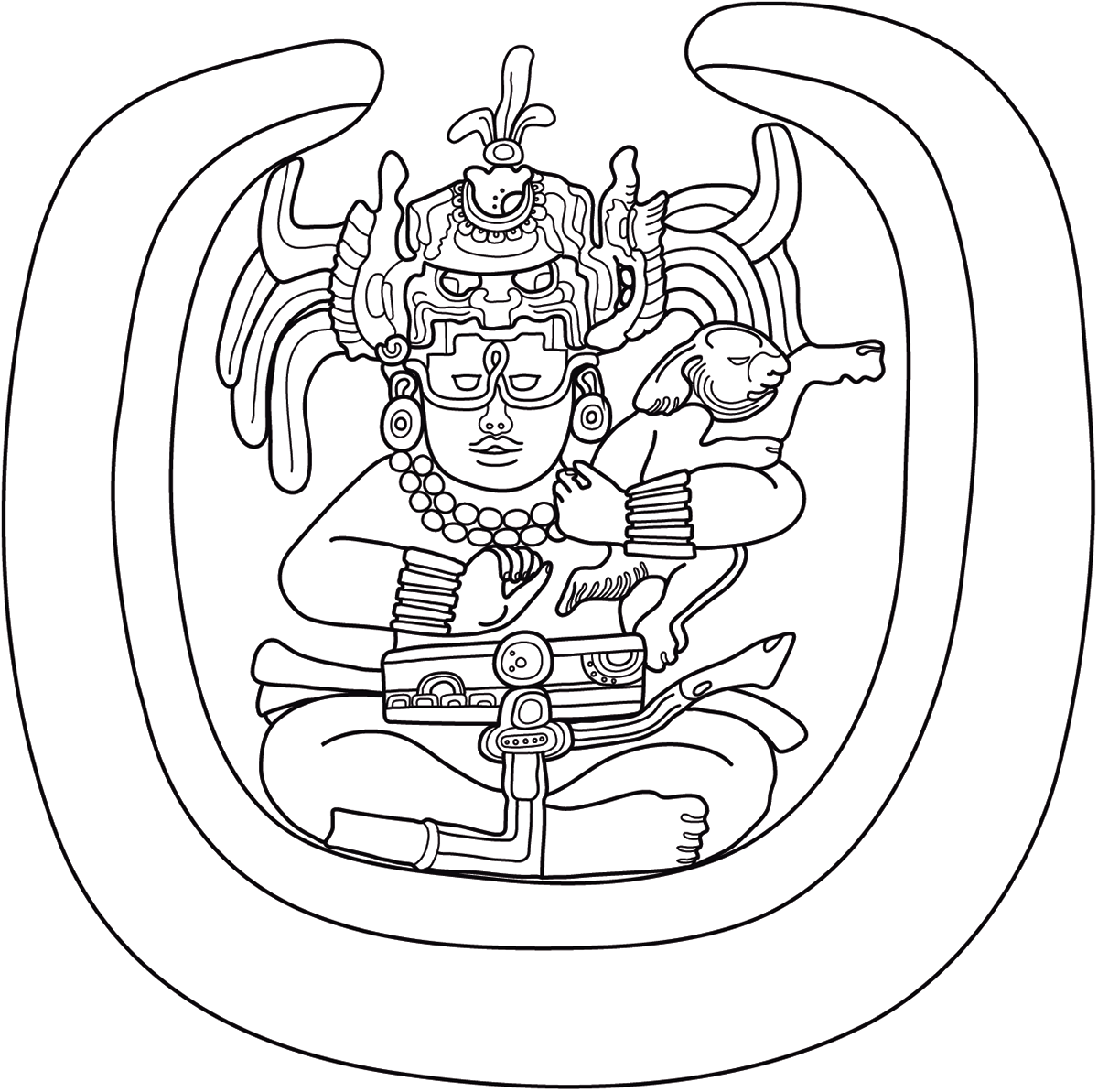
Figure 10 Long description
The illustration depicts a deity adorned with an elaborate headdress featuring various ornamental elements. The figure is wearing detailed jewelry, including a necklace and arm bands. The deity is holding an animal, possibly a rabbit, in its arms. The figure is seated cross-legged within a large, curved frame that surrounds the entire composition. The style is intricate, with emphasis on the decorative aspects of the headdress and attire.
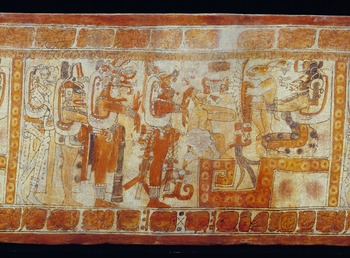
Vase K5166. Photograph by Justin Kerr (Justin Kerr photograph collection, Dumbarton Oaks, Trustees for Harvard University, Washington, DC).
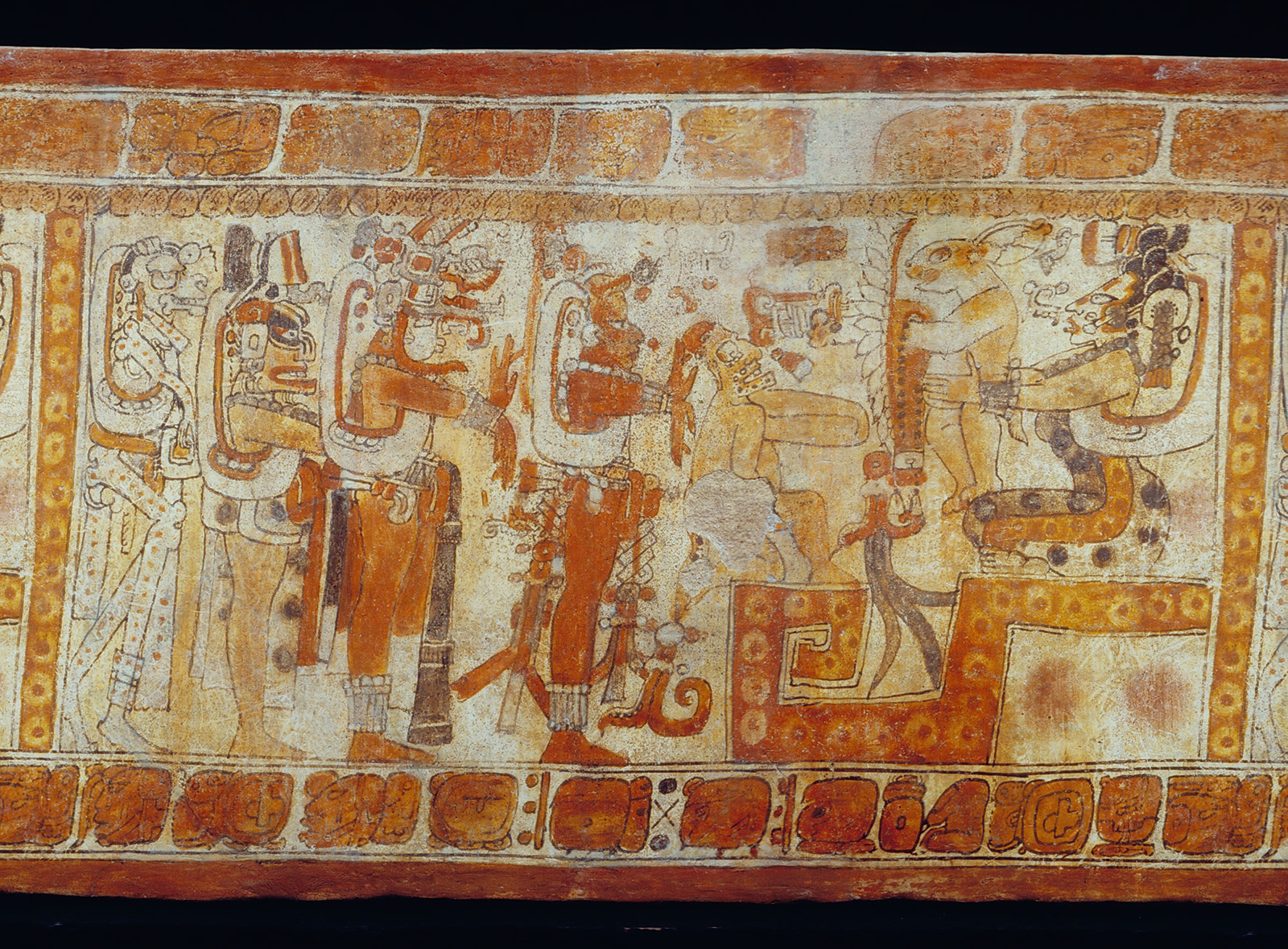
Figure 11 Long description
The image shows a Mayan artwork featuring several deities and figures engaged in a ceremonial scene. The figures are adorned with elaborate headdresses and garments, each holding various objects. The scene is framed by intricate patterns and symbols, typical of Mayan iconography. The background includes geometric designs and motifs, enhancing the ceremonial atmosphere. The figures are positioned in a sequence, suggesting a narrative or ritualistic event. The artwork is rich in detail, reflecting the cultural and religious significance of the depicted scene.
The evidence presented thus far suggests that the three Glyph C deities correspond to three different phases of the Moon: The Maize God would represent the waxing Moon, which is born during the liminal period between the invisibility and the first crescent of the Moon. The Jaguar God of the Underworld would represent the full Moon, and probably a period of some days prior and after this astronomical event. The Death God would represent the waning phase, when the Moon decays and dies during the last crescent of the Moon, and remains dead during the Moon’s invisibility period is over. Each of these three deities is associated with a specific astronomical event linked to the Moon. The Maize God is linked to the first crescent of the Moon, the Jaguar God of the Underworld corresponds to the full Moon, and the Death God is linked to the last crescent of the Moon.
However, according to Bricker and Bricker (2020:76), there should be four lunar phases, and there are only three deities associated with Glyph C. This raises the question if there was another deity that could be associated with the phases of the Moon. To date, there is a single documented instance where four lunar deities are depicted together, in the iconography of Vase K5166 (Figure 11, Chinchilla Reference Chinchilla Mazariegos, Magaloni and O’Neil2022a:431). In this scene, the deity known as God L is shown kneeling, without both his hat and dark robe, before the Lunar Goddess, who is holding her rabbit in her arms. The Lunar Goddess is identified by the presence of a lunar crescent emerging from her armpit, a distinctive feature in her iconography. The rabbit, in turn, holds the regalia of God L, who, according to another mythological narrative, was cheated by the rabbit and lost all of his possessions (Beliaev and Davletshin Reference Beliaev, Davletshin, Valencia and Fort2006; Boot Reference Boot2003b; Carrasco and Wald Reference Carrasco, Wald, Huntington, Arnold and Minich2018:189–196; Chinchilla Reference Chinchilla Mazariegos, Mazariegos, Doyle and Pillsbury2022b:82–83). Behind God L are other four lunar deities, three of which are associated with Glyph C of the Lunar Series. First appears the Lunar Maize God, and behind him is another deity, who has been identified by Chinchilla (Reference Chinchilla Mazariegos2017:206, Reference Chinchilla Mazariegos, Magaloni and O’Neil2022a:434, Reference Chinchilla Mazariegos, Mazariegos, Doyle and Pillsbury2022b:78–79) as the human-bodied Water Lily Serpent—named Wits’ by the Maya (Stuart 2007). Then appears the Lunar Jaguar God of the Underworld and, finally, the Lunar Death God, all wearing the same lunar sign worn by the Lunar Goddess emerging from their armpits. However, there is an absence of epigraphic evidence substantiating the existence of this deity. Its presence is exclusively documented on the vase previously referenced, and no inferences regarding its existence can be derived from either mythological or ethnographic sources. It is important to note that both, the Lunar Maize God, and the Lunar Goddess, are occasionally depicted adorned with the Wits’ mask. It is conceivable that the Lunar Maize God may represent a synthesis of both, with the artist opting to portray them as discrete entities in Vase K5166. The Water Lily Serpent is associated with bodies of water and as already mentioned, for some of the Maya, the Moon is filled with this essential liquid. Certainly, a combination of both gods would enrich the capacities of the Maize God alone as a source of vegetal growth (see Martin Reference Martin, Golden, Houston and Skidmore2015). It is also possible that in a very distant past, there existed four deities associated with the Moon. However, with the utilization of three of these deities in conjunction with Glyph C, the remaining deity became superfluous, and the vestiges of its existence persist only as a component of the seven-day cycle in the Lunar Series. Future research may provide an answer to this riddle.
Assuming the validity of the hypothesis described so far, the lunar phases, as understood by the Maya, would have been conceived as they appear in Figure 12. The crucial astronomical event marking the beginning of the lunar cycle is the appearance of the first crescent of the Moon, as it indicates the exact moment of the birth of the Lunar Maize God. The Lunar Maize God ripens during the waxing period, until at some point he begins to acquire the characteristics of the Lunar Jaguar God of the Underworld. The transformation of the Moon into this deity is completed during the full Moon, when the Moon becomes a nocturnal Sun. The Moon continues to be the Jaguar God of the Underworld for a few days after full Moon until it begins to die, during the waning period. As indicated above, for the Tzotzil of San Pedro Chenalhó, the full Moon lasts for three nights but this period includes some days prior and after the lunar event (Guiteras Holmes Reference Guiteras Holmes1965:38). The Moon then begins a process of decay until it dies. The dead Moon then goes into a well or a cave, and stays dead until it is reborn again during the first crescent, to start the cycle again.
Diagram showing the phases of the Moon and their corresponding deities. All drawings by the author.
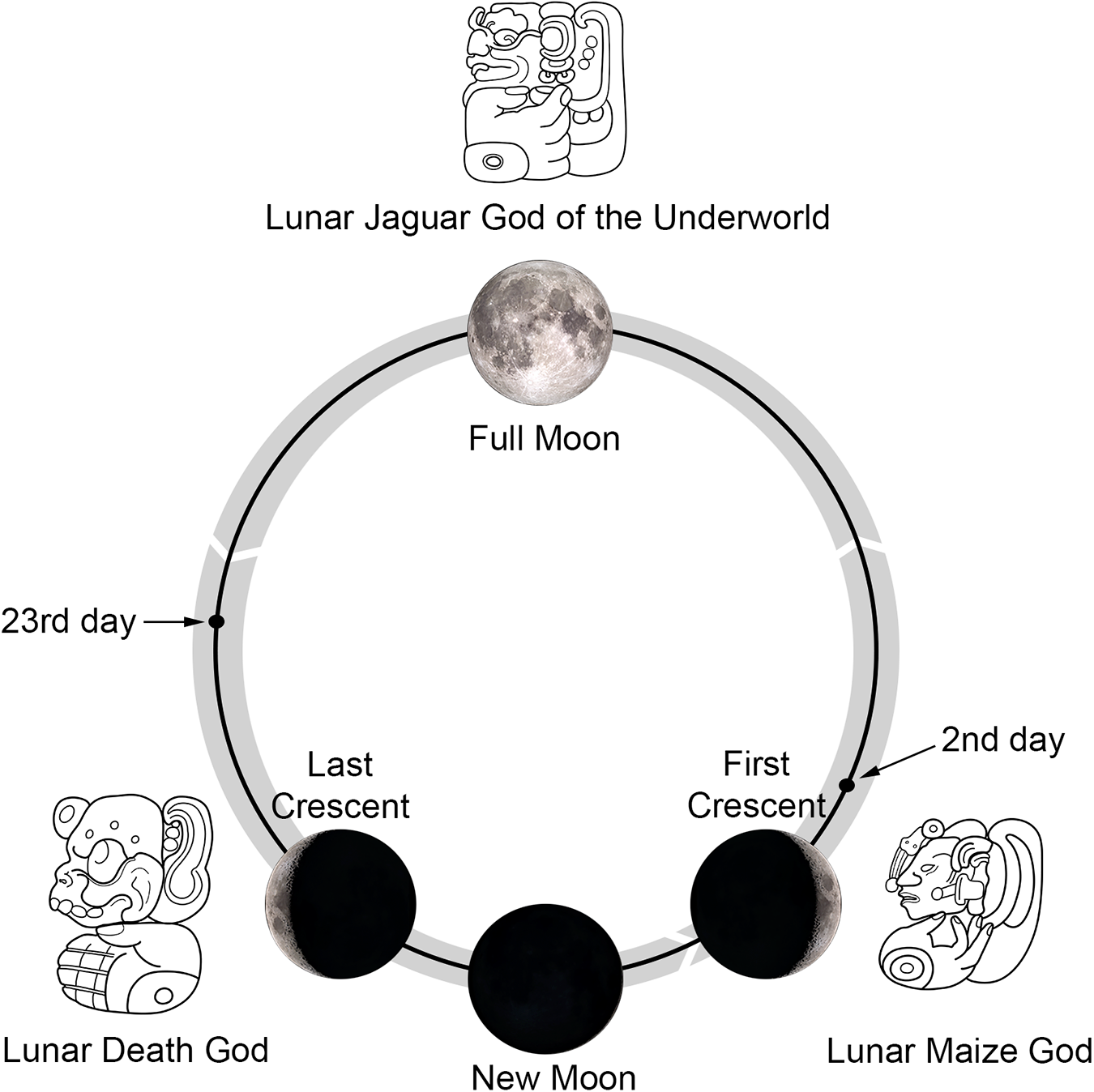
Figure 12 Long description
A circular diagram illustrating the phases of the Moon and their corresponding deities. The Full Moon is associated with the Lunar Jaguar God of the Underworld. The First Crescent, marked as the 2nd day, is linked to the Lunar Maize God. The New Moon is depicted with the Lunar Death God. The Last Crescent, marked as the 23rd day, completes the cycle. Each phase is represented with an image of the Moon and an associated deity illustration.
Regarding the precise starting point for the first lunar phase, the one governed by the Lunar Maize God, some additional information can be obtained from his hieroglyphic name. To better understand the names of the Lunar deities, the different glyphs used to name the Moon in the Maya hieroglyphic writing system are presented first in Figure 13. The first example (Figure 13a) shows the Moon sign on the upper left corner of a sky-band from the site of Moral-Reforma, Tabasco, Mexico. The second example (Figure 13b) is included as part of one of the possible variants of the logogram TZ’AK (Stuart 2003), which means “whole, complete.” The Moon glyph is shown alongside glyph EK’, “star,” as an allograph for TZ’AK, which is included in the clause: u-TZ’AK2-AJ, utz’akaj, “to put in order” (Kettunen and Helmke Reference Kettunen and Helmke2010:157), included in the Panel of the 96 Glyphs from Palenque. The glyph that appears in these two examples would be the first allograph for the logogram to designate the Moon, whose reading is ‘UH, ‘uh, “Moon,” which is polyvalent, as it represents also de syllable -ja, as could be appreciated in the next two examples. The first of these examples (Figure 13c) is part of the expression CHUM-la-ja, chumlaj, “was seated,” and the second one (Figure 13d) is included in the expression ya-AJAW-ja-wa, yajaw, “his/her lord.” The distinction between the two uses of the same sign is significant because in the case of Glyph C, both uses of the sign may be involved in its reading. In the -ja example from the 96 Glyphs Panel, even the rabbit that is usually associated with the sign when it functions as ‘UH is included as part of the glyph. This illustrates the dual usage of the sign and the denotative proximity of both values (see Grube Reference Grube2025). Figures 13e–f show two different examples of another Moon logogram glyph, its second allograph, ‘UH2, which is primarily observed in the Maya codices.
Allographs for the logogram used to name the Moon and the syllable -ja in the Maya hieroglyphic writing system. (a) Moon sign on a sky band from Moral-Reforma, Tabasco, Mexico, signaled by the arrow. Drawing by Daniel Salazar, (b) Moon sign in Palenque Panel of the 96 Glyphs. Drawing by the author, (c) Syllable -ja sign in Palenque Panel of the 96 Glyphs. Drawing by the author, (d) Syllable -ja sign in Element 40 from Calakmul, Campeche, Mexico (drawing by the author), (e) Moon logogram from p. 55 of the Dresden Codex (Sächsische Landesbibliothek – Staats und Universitätsbibliothek Dresden, Codex Dresdensis – Mscr.Dresd–R.310). Drawing by the author, f) Moon logogram from p. 32 of the Dresden Codex (Sächsische Landesbibliothek – Staats und Universitätsbibliothek Dresden, Codex Dresdensis – Mscr.Dresd.R.310). Drawing by the author.
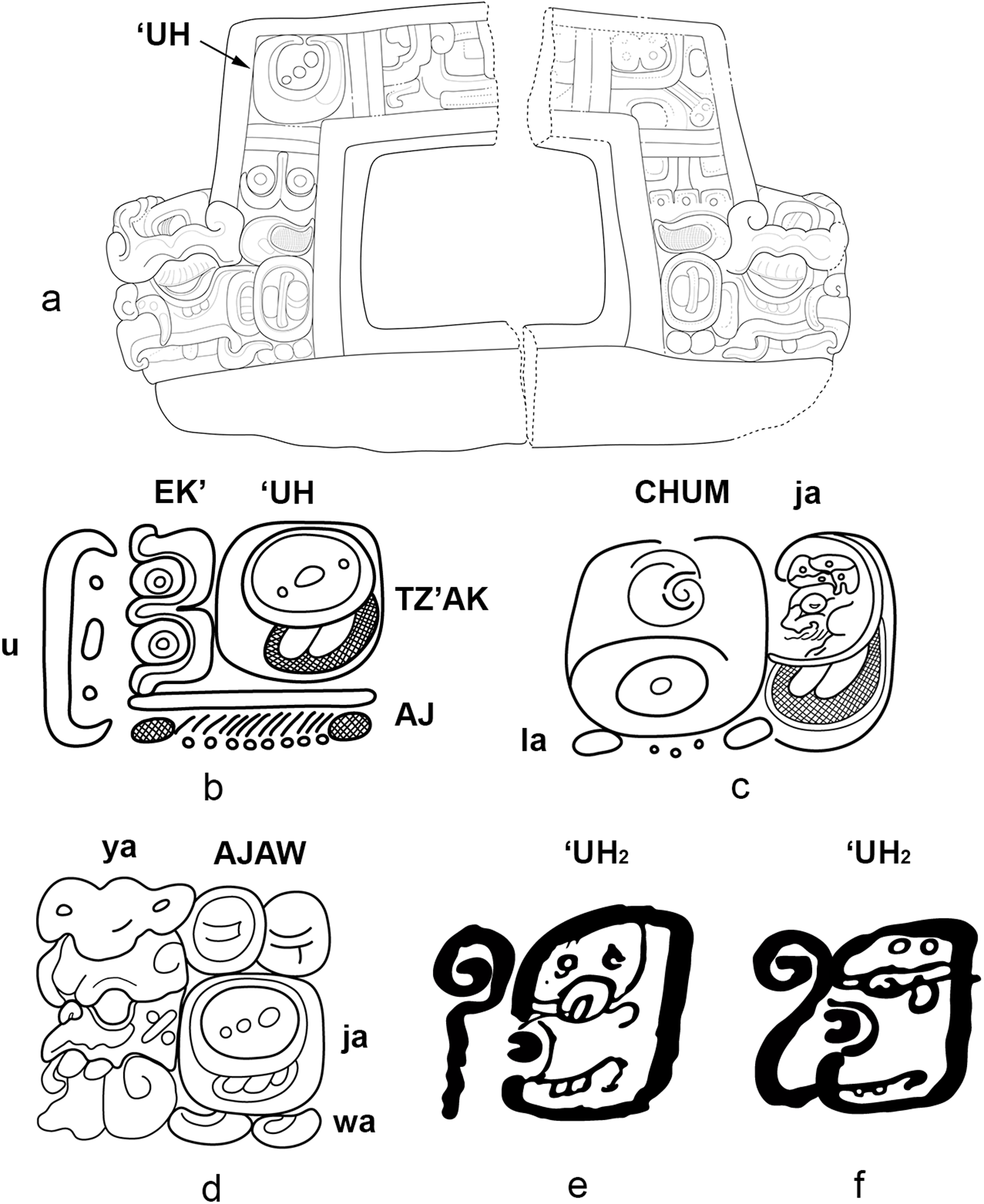
Figure 13 Long description
The image contains six distinct illustrations of Maya hieroglyphs. Illustration a shows a detailed drawing with the label 'UH' indicating a specific part. Illustration b features glyphs labeled EK', UH, TZ'AK and AJ, with intricate designs. Illustration c displays glyphs labeled CHUM and ja, with circular and oval shapes. Illustration d includes glyphs labeled ya, AJAW, ja and wa, with complex patterns. Illustration e shows a glyph labeled 'UH subscript 2' with a stylized face. Illustration f also depicts a glyph labeled 'UH subscript 2' with a similar design to illustration e. Each illustration presents unique elements of Maya hieroglyphic writing, showcasing different glyphs and logograms related to the Moon and syllables.
To facilitate the interpretation of the hieroglyphic names of the lunar deities, the name of the Moon Goddess (Figure 14a–b) is analyzed first in detail. In the first example (Figure 14a), the name of the goddess is written as IXIK-’UH-AJAW, ixik ‘uh ajaw, meaning “Lady Moon Ruler.” This version of the name uses the first Moon glyph allograph. The second example of the hieroglyphic name of this deity (Figure 14b) is written as IXIK-ki-‘UH2, ixik ‘uh, “Lady Moon.” The Moon logogram should be read at the end and not at the beginning, because the IXIK logogram is superimposed on top of the Moon logogram. The same process occurs to the word AJAW in the first example. The hieroglyphic names of the deities associated with the lunar phases are not frequently found outside of Glyph C in the Lunar Series, however, some rare examples do exist. The hieroglyphic name of the Lunar Maize God, using the first allograph for the Moon logogram, ‘UH, appears on the inscription of the stone box found at the Hun Nal Ye cave (Figure 14c; Woodfill et al. Reference Woodfill, Guenter and Monterroso2012), as well as on Palenque Temple XIV Tablet (Figure 14d), where this deity presides over a mythical ceremony (Chinchilla Reference Chinchilla Mazariegos2017:203). As already indicated, the version of the name of the Lunar Maize God that appears as part of the name of the lunar deity is read as Ixim (Zender Reference Zender2014). Therefore, the name inscribed on the Hun Nal Ye stone box would be Ixim ‘uh-10-20, which can be translated as “Thirty [days] Moon of the Maize God.” The addition of a numeral to the name could indicate a specific day within the lunar cycle used to identify this deity—similar to the Yucatec name oxlahun caan u—being 30 the last day of the lunation, suggesting that the Maize God is born during the liminary threshold when the period of invisibility ends and the first crescent appears in the sky. This hypothesis is further substantiated by the presence of a number two on top of the lunar sign of the altar from Tenam Rosario (Figure 7e), which may indicate a very young Maize God, just recently born and being two days old (see Figure 12). The invisibility period of the Moon lasts between two and three days on average, so the number used to designate the Lunar Maize God may indicate that the Moon is born between the last and the first two days of the lunation, to manifest as the Lunar Maize God at first visibility. It is currently impossible to know how long the lunar phases were, or on which day the phases belonging to the Death God or the Jaguar God of the Underworld started, based on the information available from written sources. However, we know that the Lunar Maize God is presiding the waxing phase from first crescent at least to the second day of the phase, and that the Moon was already dead by the 23rd day of the lunation, based on the information in Figure 8b (see Figure 12).
Examples of the glyphic names of the Lunar deities. (a) Name of the Moon Goddess from p. 24 of the Dresden Codex (Sächsische Landesbibliothek – Staats und Universitätsbibliothek Dresden, Codex Dresdensis – Mscr.Dresd.R.310), (b) Name of the Moon Goddess from p. 18 of the Dresden Codex (Sächsische Landesbibliothek – Staats und Universitätsbibliothek Dresden, Codex Dresdensis – Mscr.Dresd.R.310), (c) Detail from the inscription on the stone box located at the Hun Nal Ye cave, Verapaz, Guatemala, (d) Detail of Palenque Temple XIV Tablet, (e) Detail from a pyrite mirror found at the site of Topoxte, after Stefani Teufel (Fialko Reference Fialko and Wurster2000:147), (f) Text caption from vase K9261. All drawings by the author.
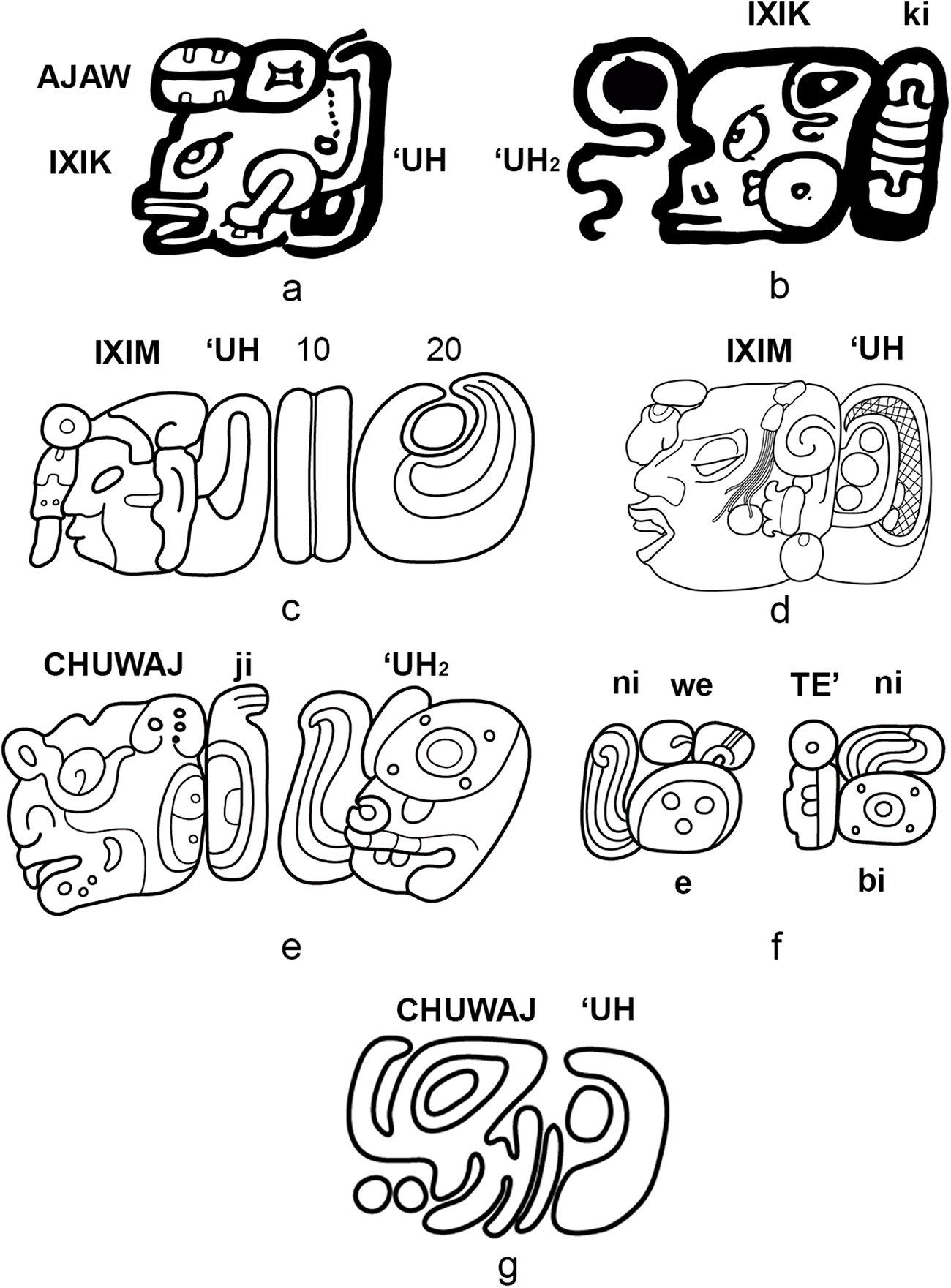
Figure 14 Long description
The image shows illustrations of glyphic names of lunar deities, labeled from a to g. Illustration a depicts the name AJAW IXIK ‘UH, with hieroglyphs arranged in a complex pattern. Illustration b shows IXIK ki ‘UH2, featuring distinct glyphs. Illustration c presents IXIM ‘UH 10 20, with elongated glyphs. Illustration d displays IXIM ‘UH, with a detailed face and glyphs. Illustration e shows CHUWAJ ji ‘UH2, with intricate glyphs. Illustration f features ni we TE’ ni e bi, with circular and linear glyphs. Illustration g depicts CHUWAJ ‘UH, with rounded glyphs. Each illustration represents different hieroglyphic names associated with lunar deities.
Considering that these three deities are associated with specific Moon astronomical events besides governing their respective lunar phases, and that these events—the first visible crescent, the full Moon, and the last visible crescent—are associated with the two lunar syzygies, which in turn are essential for the occurrence of eclipses, it may explain why these same deities were also used by the Maya to govern over the semesters of the Glyph C calendar, as the ultimate goal of this calendar was the prediction of eclipses, at least when the calendar was used in Tikal earliest records (Justeson Reference Justeson and Aveni1989:86–87). The direct relationship of the deities governing the phases of the Moon with the full Moon and the new Moon, which are the two only possible moments during the synodic period when an eclipse can occur, would have been fundamental in the decision to also use them as patrons of the Glyph C semesters. The Maya prioritized the relationship of the lunar deities with the syzygies over using them to actually denote the current phase of the Moon in the Lunar Series, because their association with the eclipse calendar was more important to them.
To finish the analysis of the Glyph C calendar, I will now proceed to describe the names of the rest of the lunar deities. The hieroglyphic name of the Lunar Jaguar God of the Underworld appears on the inscription of a pyrite mirror found at the site of Topoxte (Fialko Reference Fialko and Wurster2000), using the second Moon allograph, ‘UH2 (Figure 14e). Helmke (Reference Helmke, Kettunen, López, Kupprat, Lorenzo, Cosme and de León2018:444–445) has proposed that this glyph is in fact one of the examples of the logogram CHUWAJ with the suffix ni-bi, -nib, which transforms it into the locative chuhwaajnib, “where Chuhwaaj is found.” But I propose that, in this case, the sign in front of the skull is in fact a speech scroll and differs from other -ni examples present in the same inscription, all included in Figure 14f. This glyph, in my opinion, represents ‘UH2 instead. In any case, the same hieroglyphic name is also present on Vase K9661 (Figure 16), using the allograph ‘UH, included in the text caption adjacent to the head to the deity (Figure 14g). Both names should be read as Chuhwaaj’uh, “Moon of Chuhwaaj” There are no examples of the name of the Lunar Death God outside Glyph C. The similarity of the names of the Lunar Goddess, the Lunar Maize God and the Lunar Jaguar God of the Underworld would imply that the names of the lunar deities, when included in Glyph C, would have the same reading, which would be: “Deity Name” + ‘UH, “Moon of the deity.” This also implies that the lunar symbol included in Glyph C would have to be read as ‘UH and not as -ja (see also Stuart 2024:77). Using this logic, the name of the Lunar Death God in Glyph C would be Chamiiy ‘uh, “Moon of the God Chamiiy.” It is important to note that these names refer to the Moon, with each one being governed by one of the three different lunar deities that are part of Glyph C, not to the lunar deity itself.
Using this information, as well as the evidence included previously, I will attempt to establish a reading for Glyph C. This reading would have to consider the fact that this glyph has to be a noun, because a name is assigned to it using Glyph X and Glyph B. The verb K’AL exhibits an interesting behavior because it can form complex nouns by incorporating its object. For instance, when the verb k’al, “to wrap, to bind, to tie, to enclose (see above),” is applied to the noun hu’n, “royal headband,” produces the expression k’alhu’n, which is equivalent to “headband-tying,” an act that represents the accession to power (Stuart 2012a). I suggest the same principle governs this verb when used in Glyph C, so that k’al-name of the lunar deity-’uh, could be translated as “Moon that belongs to that particular deity tied to a certain location or period,” or simply a Moon that is located at a certain place or time, possibly inside the six-month Glyph C calendar. In some cases, this glyph is postfixed with the syllable -li, as in Copan Stela I and J, Tikal Stela 12 and 23, Piedras Negras Stela 14, Stela 36 and Lintel 2, Yaxchilan Lintel 56, and Quirigua Stela E and J, Calakmul Stela 51 (Figure 5e), to name a few (Schele et al. Reference Schele, Grube and Fahsen1992:11–26). This suffix would transform the expression into: k’al-name of the lunar deity-’uhil, where -il would function as an abstractive suffix (Kettunen and Helmke Reference Kettunen and Helmke2010:52). This would transform the noun “Moon” into its abstraction, which would be “lunation.” If this interpretation is correct, the complete reading of the Glyph C included as an example in Figure 3, A7–A8, would be: u-NAH-K’AL-CHUWAJ-‘UH-[li], u naah k’al Chuhwaaj ‘uh[il], “The first lunation of the Jaguar God of the Underworld.”
Having reviewed the different parts that form the Lunar Series, the complete reading for the example presented in Figure 3 could be assembled as follows: 9.15.0.0.14 G5-TI’-hu-HUN 5 Ix 15 hu-li-ya u-NAH-K’AL-CHUWAJ-‘UH ?-po-ya u-ch’o[ko]-K’ABA K’AL LAJUN 7 Zak, 9.15.0.0.14 G5 [u]ti’ huun 5 Ix 15 huliiy unaah k’al Chuhwaaj ‘uh[il] ?poya uch’ok k’aba k’al lajuun 7 Zak, which could be translated as: “On 9.15.0.0.14 5 Ix, 7 Zak, the god G5 was at the edge of Huun, 15 days have already passed since the new Moon was first seen. This is the first lunation of the Jaguar God of the Underworld; the name of this lunation is Jewel? Moon, and this is a 30-day Moon.”
Conclusions
I will summarize what has been presented in this paper so far. In the distant past, the Maya identified three different lunar phases and a god was assigned to each one of them. These phases were associated with the two most significant astronomical events affecting our satellite: the new Moon and the full Moon. The three phases represented the birth of the Moon at the beginning of the monthly lunar cycle, its transformation into a nocturnal Sun at full Moon, and the death of the Moon at the end of the cycle. Although some of the numerical information in the Lunar Series suggests the existence of four lunar phases, each lasting seven days (Bricker and Bricker Reference Bricker and Bricker2020:76), the ethnological and lexicographical information analyzed indicates that only three phases existed. These three lunar deities were later incorporated into Glyph C, as this glyph was associated with eclipse semesters, and eclipses can only occur during the lunar syzygies, which were represented by these three deities. If a fourth phase ever existed, it was neglected and possibly assimilated as a vestigial iconographic trait by the Lunar Maize God and the Lunar Goddess when they wore the Wits’ mask. Alternatively, there may never have been more than three lunar phases, and the Lunar Maize God and the Lunar Goddess may have been associated with the Wits’ deity because the Moon is associated with water. It is important to note that there is no direct relationship between the Moon’s age, as recorded by Glyph E/D and the deities of Glyph C; otherwise, the phase of the Moon could be predicted using the deity heads of Glyph C. By definition, each deity head of Glyph C lasts for 177 or 178 days, the six-month semester of the Glyph C/X calendar. Finally, the exact duration of each phase cannot currently be determined with certainty.
The Maya conceived the Moon primarily as a young female, named Ixik ‘Uh. In Maya iconography, her identifying features are the lunar crescent that projects from under her armpit (Figure 11, Figure 15) and the rabbit she usually carries on her arms (Figure 11). When depicted in full, she is shown wearing a dress or a skirt, adorned with a beaded necklace and bracelets, and her breasts are visible, a feature that helps us to differentiate her from the Lunar Maize God (Figure 11, Figure 15). In some cases, she is represented wearing the same Water Lily Serpent mask worn by the Lunar Maize God (Figure 11). However, as previously observed, the Moon exhibited other three distinct personalities, each corresponding to a specific lunar phase. Each of these deities belonged to one of two fundamental mythological narratives associated with the lunar phases. The first narrative reflects the rebirth cycle of the Moon, represented by the Lunar Maize God and the Lunar Death God. The second represents the transformation of the Moon into a nocturnal Sun that traverses the sky during the full Moon, and whose identity is the Lunar Jaguar God of the Underworld. These three deities were also used by the Maya as the patrons of each of the three semesters that form the Glyph C calendar. These Lunar Gods represent the two syzygies, the full Moon associated with the Jaguar God of the Underworld, and the new Moon, from the last crescent, represented by the Lunar Death God, to the first crescent, associated with the Lunar Maize God.
Moon Goddess, Dresden Codex p. 49 (Sächsische Landesbibliothek – Staats und Universitätsbibliothek Dresden, Codex Dresdensis – Mscr.Dresd.R.310).
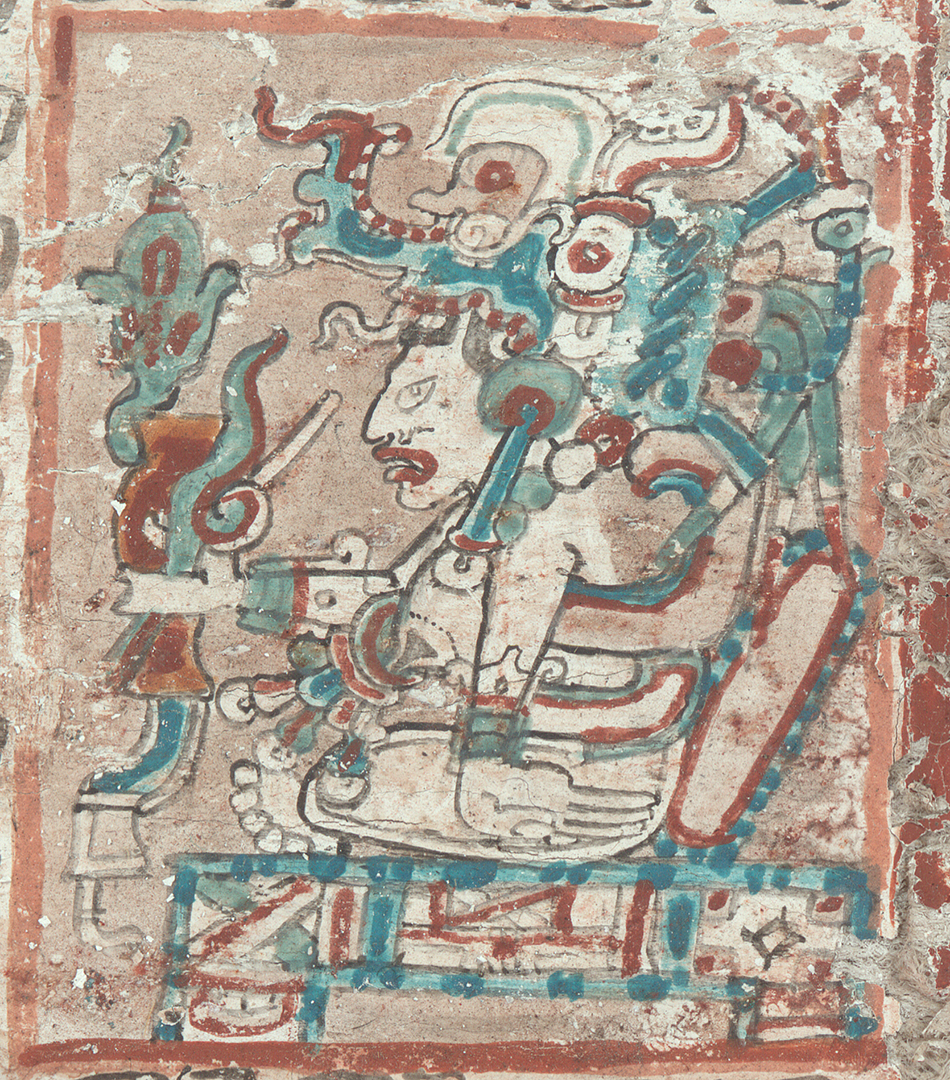
Figure 15 Long description
The illustration depicts a seated figure adorned with an elaborate headdress featuring intricate designs and patterns. The figure is holding an object in one hand, with decorative elements surrounding them. The posture is upright and the figure is positioned on a platform or seat. The background includes additional ornamental details, contributing to the overall complexity of the image.
The direct link between the Glyph C calendar and eclipses, as keeping track of them seems to have been the main purpose of this calendar, the obliged relationship between the syzygies and eclipses, and the direct relationship of the lunar deities to the full Moon and the New Moon, must have motivated the use of the same deities for the lunar phases and for the Glyph C semesters. Another possible explanation for using only three of the hypothetical four deities that governed the lunar phases is that only three semesters were required to incorporate the additional days into the Glyph C/X calendar in order to comply with the Palenque formula, which was necessary to approximate the duration of the lunation to that of the synodic month. Although Teeple also proposed the existence of the Copan formula, the incorporation of the necessary days for this formula could not be achieved using the Glyph C/X calendar. This suggests that the Palenque formula was the more prevalent and probably the first one to be officially established by the Maya to be used in the Lunar Series.
Regarding the mythological aspects of the association of these deities with the Moon, as illustrated in Figure 11, the characters depicted seem to comprise a court of lunar deities presided by the Moon Goddess (Chinchilla 2022:443). However, there is evidence that lunar deities associated with the phases of the Moon could potentially replace the Moon Goddess, as could be appreciated in Figure 16. In this scene, the Lunar Maize God and the Lunar Jaguar God of the Underworld are now attending the claims of God L, who once again appears without his regalia, which is being held by the Lunar Maize God. This deity is again wearing the Water Lily Serpent mask, and the Lunar Jaguar God of the Underworld is seated behind him, with the lunar crescent symbol projecting from under his armpit. Both traits indicate that these are the lunar identities of the two gods. As previously mentioned, these lunar deities represent both syzygies, thereby symbolizing the Moon at its two most extreme positions in the lunar cycle, which translates in a representation of the entire moon. This could be the reason why both deities are dialoging with God L, on behalf of the Moon Goddess; they represent or embody her. This is not the only case in which the Moon Goddess is replaced or substituted by another lunar deity. In a vase excavated at the Maya site of Ucí, the Lunar Maize God is shown holding a rabbit (Figure 17) in a scene that is paired with another showing the god Itzamna on the same vase (Hruby et al. Reference Hruby, Stuart, Vallejo-Cáliz and Hutson2022:157). This pairing is analogous to that depicted on Vase K504, where Itzamna is shown seated on a sky band alongside the Moon Goddess (Hruby et al. Reference Hruby, Stuart, Vallejo-Cáliz and Hutson2022:157). In their analysis, Hruby et al. interpret the character in Figure 17 as the Moon Goddess, recognizing that it shares some iconographic traits with the Maize God. However, this is actually the Lunar Maize God, one of the possible deities that represent the Moon. When analyzing myths involving lunar deities, it is important to consider potential substitutions, as different phases of the moon may be associated with specific actions or events in these myths. The recurrent substitution of the Moon Goddess by the Lunar Maize God could indicate a distinct preference for the new Moon phase in Maya mythology. This preference could also explain the presence of Glyph G in the Lunar Series, as Gronemeyer (Reference Gronemeyer2006) proposed that this glyph is composed by names related to the maize growth cycle. Further research into these relationships will surely offer new insights into the way the Maya conceived our satellite.
Detail of Vase K9261 that shows God L in front of the Lunar Maize God and the Lunar Jaguar God of the Underworld. Photograph by Justin Kerr (Justin Kerr photograph collection, Dumbarton Oaks, Trustees for Harvard University, Washington, DC).
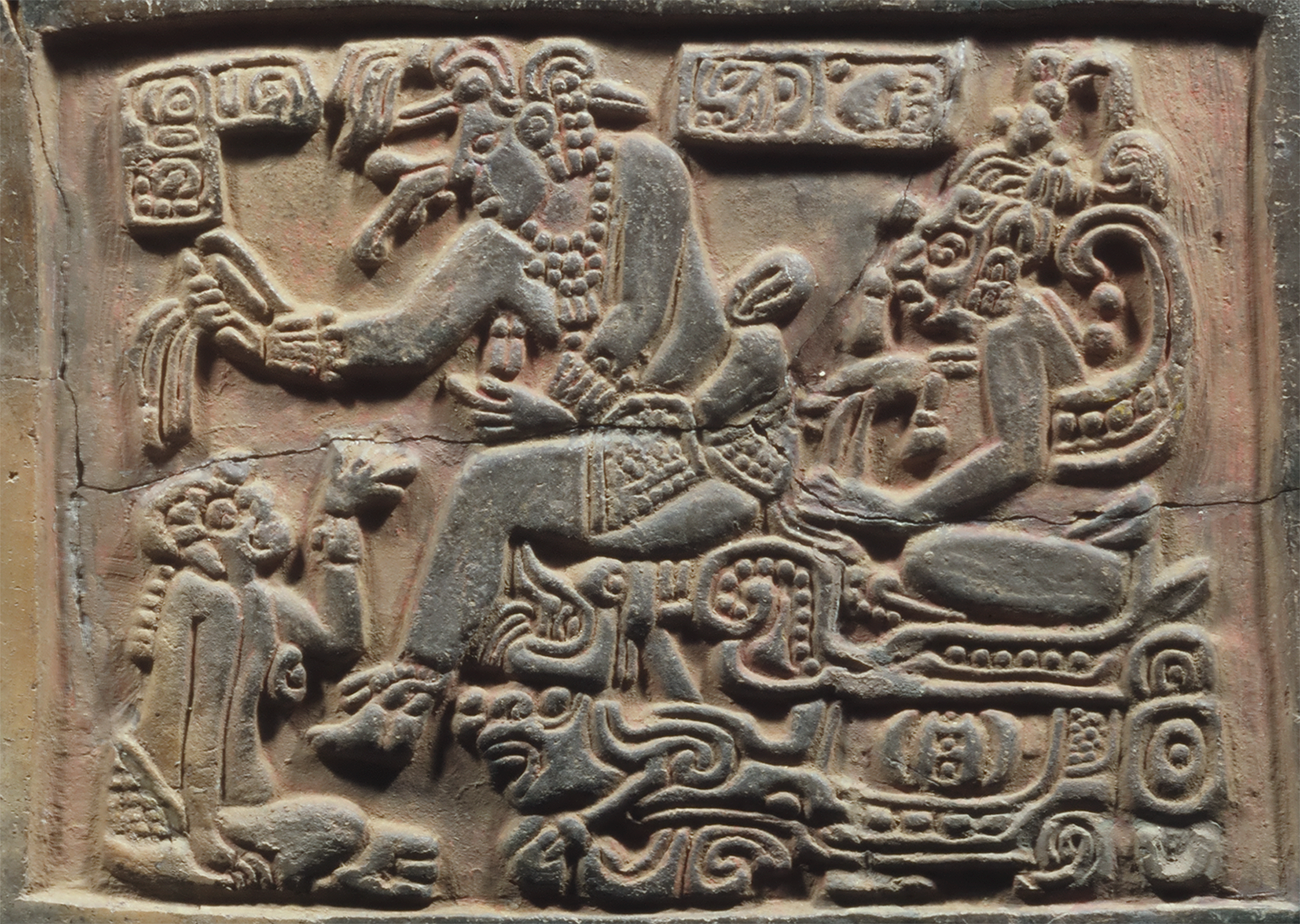
Figure 16 Long description
The image shows a detailed carving on Vase K9261 featuring three mythological figures. God L is positioned prominently, seated in front of the Lunar Maize God and the Lunar Jaguar God of the Underworld. The figures are intricately carved with elaborate headdresses and garments, surrounded by symbolic motifs and glyphs. The scene represents a mythological narrative involving these deities, showcasing their roles and attributes in the context of the Underworld and celestial themes.
Detail of a vase from the site of Ucí, Yucatán, Mexico. Drawing by the author after Hruby (Hruby et al. Reference Hruby, Stuart, Vallejo-Cáliz and Hutson2022:157).
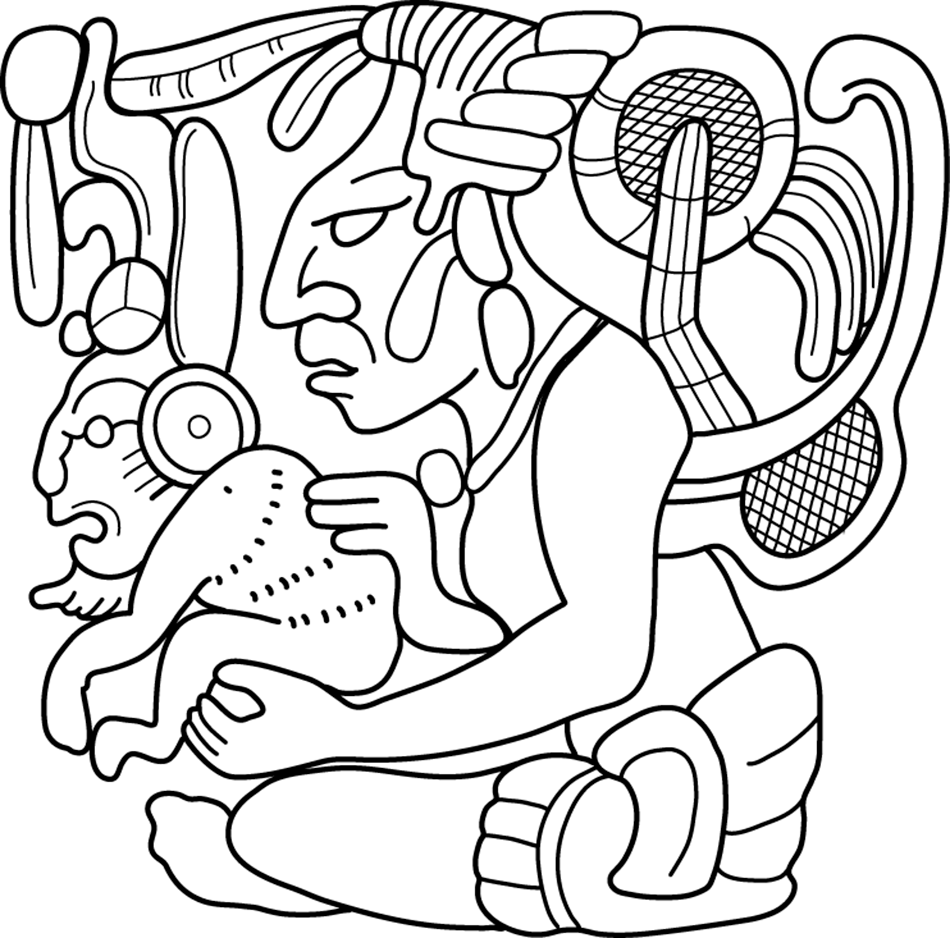
Figure 17 Long description
The illustration depicts a seated figure holding a rabbit. The figure is adorned with an elaborate headdress featuring various elements, including circular shapes and flowing lines. The figure wears jewelry, including large earspools and a beaded net skirt. The posture is relaxed, with one arm supporting the rabbit and the other resting on the knee. The facial features are detailed, with a prominent nose and lips. The overall design is intricate, showcasing a blend of geometric and organic patterns.
Data Availability Statement
No original data was used as part of this research.
Acknowledgements
I would like to thank Elena San Román Martín and Octavio Esparza Olguín for reading a first draft of this paper. I would also like to thank Dumbarton Oaks, Research Library and Collection, for providing me with high-resolution images from the Justin Kerr archive, and the National Gallery of Australia, Canberra for the high-resolution image of the ceramic representation of the Jaguar God of the Underworld. I would also like to express my gratitude to the anonymous reviewers of this paper, whose comments greatly improved this manuscript.
Funding statement
This research was supported by Project PAPIIT IN403823 (DGAPA-Universidad Nacional Autónoma de México).
Competing interests
The author declares none.