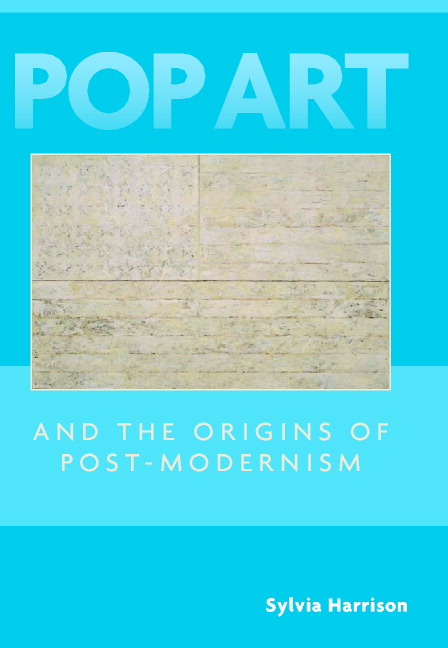

Pop Art and the Origins of Post-Modernism examines the critical reception of Pop Art in America during the 1960s. Comparing the ideas of a group of New York-based critics, including Leo Steinberg, Susan Sontag, and Max Kozloff, among others, Sylvia Harrison demonstrates how their ideas - broadly categorized as either sociological or philosophical - bear a striking similarity to the body of thought and opinion which is now associated with deconstructive post-modernism. Perceived through these disciplinary lenses, Pop Art arises as not only a reflection of the dominance of mass communications and capitalist consumerism in post-war American society, but also a subversive commentary on worldviews and the factors necessary for their formation.
Loading metrics...
* Views captured on Cambridge Core between #date#. This data will be updated every 24 hours.
Usage data cannot currently be displayed.
This section outlines the accessibility features of this content - including support for screen readers, full keyboard navigation and high-contrast display options. This may not be relevant for you.
Accessibility compliance for the PDF of this book is currently unknown and may be updated in the future.
