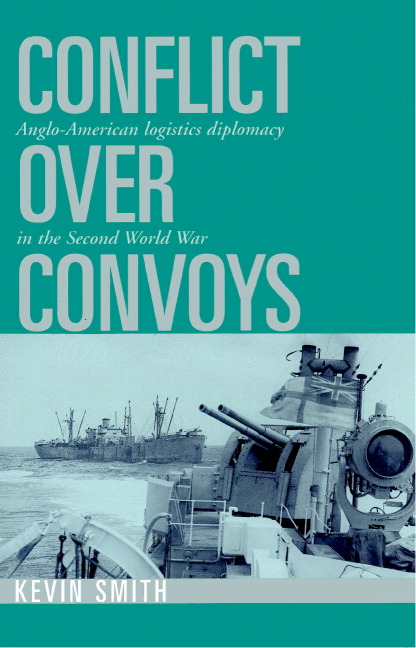

Conflict over Convoys examines the Battle of the Atlantic from the perspective of Anglo-American diplomacy, deepening our understanding of Allied grand strategy, British industrial policy, and operations TORCH and OVERLORD. Failure to build and maintain enough ships to feed the people and wage war made Britain dependent upon American-built merchant ships and American logistical support, yet British strategists aspired to dominate Allied strategy, while Roosevelt mismanaged merchant shipping allocations. The resulting gap between strategic ambition and logistical reality embittered the controversy over the 'Second Front'. Victory in the Atlantic finally led to American dominance of Allied logistics diplomacy and strategy. Conflict over Convoys relates these tensions to the decline of British hegemony and the rise of the USA to global influence.
"...this book is solid and well researched....Smith has used a wealth of private and public sources, mostly British, but many American as well, to buttress his story. He well illustrates the logistical problems of the alliance and the interaction between civilians and the military in achieving hard-fought consensus over military strategy during the war." The Journal of American History
"I highly recommend the book as a significant contribution to both military history and the history of the Second World War, its wide scope highlights a number of subjects....Smith's excellent footnotes and comprehensive bibliography will provide scholars with a valuable guide to future studies." Keith W. Bird, The Journal of Military History
"Overall this book is solid and well researched....Smith has used a wealth of private and public sources, mostly British but many American as well, to buttress his story. He well illustrates the logistical problems of the alliance and the interaction between civilians and the military in acieving hard-fought consensus over military strategy during the war." Richard W. Fanning, Journal of American History
"...Smith has made an important contribution to our knowledge of numerous aspects of the World War II Grand Alliance." Mark A. Stoler, American Historical Review
Loading metrics...
* Views captured on Cambridge Core between #date#. This data will be updated every 24 hours.
Usage data cannot currently be displayed.
This section outlines the accessibility features of this content - including support for screen readers, full keyboard navigation and high-contrast display options. This may not be relevant for you.
Accessibility compliance for the PDF of this book is currently unknown and may be updated in the future.
