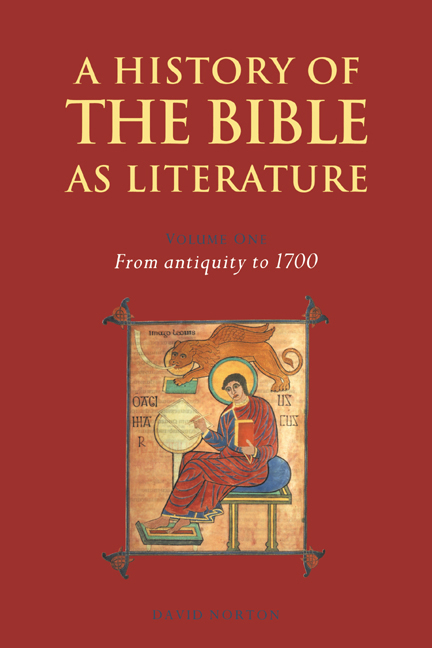

It is regarded as a truism that the King James Bible is one of the finest pieces of English prose. Yet few people are aware that the King James Bible was generally scorned or ignored as English writing for a century and a half after its publication. The reputation of this Bible is the central, most fascinating, element in a larger history, that of literary ideas of the Bible as they have come into and developed in English culture; and the first volume of David Norton's magisterial two-volume work surveys and analyses a comprehensive range of these ideas from biblical times to the end of the seventeenth century, providing a unique view of the Bible and translation.
‘This is a patient, intelligent and enjoyable book. The tone, though always judicious, is never dull. The history of the arguments has never been explored in such interesting and significant detail. Mr Norton’s history has importance not only because he clears away misconceptions about the literary intention and acceptance of the King James Bible, but also in respect of more modern conceptions and misconceptions of literary qualities in the text, after the time when the word “literature” had itself acquired a different sense or set of senses. There is also material for a critique of fundamentalisms. And there are important points about the way translations were judged, from the Septuaging on: the emphasis was for a long time on accuracy, not at all on literary value, which was either not considered or thought of small interest. The whole matter of Reformation and pre-Reformation translations is carefully studied. On the early English translations the book is always direct and discriminating. This careful, deeply researched and readable book is most impressive, and many besides myself will look forward to reading the second part.’
Frank Kermode
Loading metrics...
* Views captured on Cambridge Core between #date#. This data will be updated every 24 hours.
Usage data cannot currently be displayed.
This section outlines the accessibility features of this content - including support for screen readers, full keyboard navigation and high-contrast display options. This may not be relevant for you.
Accessibility compliance for the PDF of this book is currently unknown and may be updated in the future.
