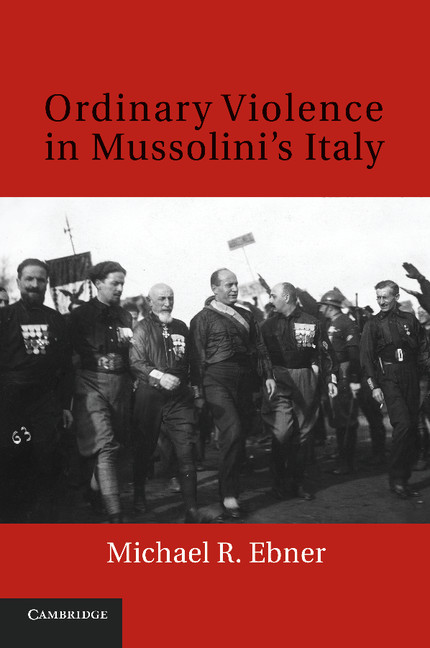

Between 1926 and 1943, the Fascist regime arrested thousands of Italians and deported them to island internment colonies and small villages in southern Italy. Ordinary Violence in Mussolini's Italy analyses this system of political confinement and, more broadly, its effects on Italian society, revealing the centrality of political violence to Fascist rule. In doing so, the book shatters the widely accepted view that the Mussolini regime ruled without a system of mass repression. The Fascist state ruled Italy violently, projecting its coercive power deeply and diffusely into society through confinement, imprisonment, low-level physical assaults, economic deprivations, intimidation, discrimination and other quotidian forms of coercion. Moreover, by promoting denunciatory practices, the regime cemented the loyalties of 'upstanding' citizens while suppressing opponents, dissenters and social outsiders. Fascist repression was thus more intense and ideological than previously thought and even shared some important similarities with Nazi and Soviet terror.
Winner of the 2011 Helen and Howard R. Marraro Prize, American Historical Association
‘Michael Ebner’s excellent study of the Mussolini era gives a convincing account, based on much original research in the archives, of how the dictator and his followers deployed systematic violence over a period of more than 20 years.’
Source: Financial Times
Loading metrics...
* Views captured on Cambridge Core between #date#. This data will be updated every 24 hours.
Usage data cannot currently be displayed.
This section outlines the accessibility features of this content - including support for screen readers, full keyboard navigation and high-contrast display options. This may not be relevant for you.
Accessibility compliance for the PDF of this book is currently unknown and may be updated in the future.
