
Skip to main content Accessibility help
×
  • Cited by 8
    • Show more authors
    • You may already have access via personal or institutional login
    • Select format
    • Publisher:
      Cambridge University Press
      Publication date:
      30 August 2017
      07 August 2017
      ISBN:
      9780511894893
      9781107011304
      9781107648500
      Dimensions:
      (228 x 152 mm)
      Weight & Pages:
      0.52kg, 280 Pages
      Dimensions:
      (229 x 152 mm)
      Weight & Pages:
      0.42kg, 280 Pages
    You may already have access via personal or institutional login
  • Selected: Digital
    Add to cart View cart Buy from Cambridge.org

    Book description

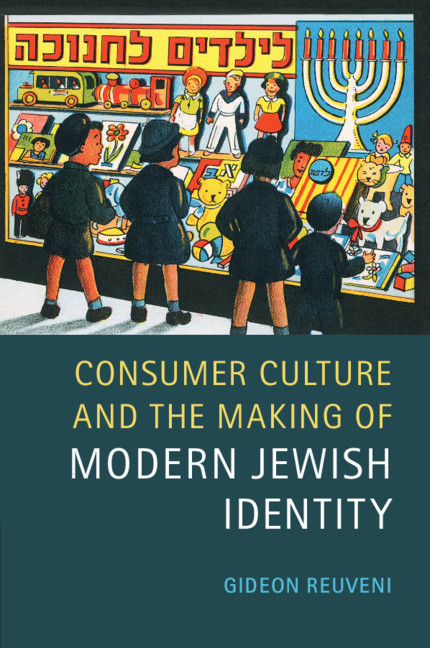
    Antisemitic stereotypes of Jews as capitalists have hindered research into the economic dimension of the Jewish past. The figure of the Jew as trader and financier dominated the nineteenth and twentieth centuries. But the economy has been central to Jewish life and the Jewish image in the world; Jews not only made money but spent money. This book is the first to investigate the intersection between consumption, identity, and Jewish history in Europe. It aims to examine the role and place of consumption within Jewish society and the ways consumerism generated and reinforced Jewish notions of belonging from the end of the eighteenth century to the beginning of the new millennium. It shows how the advances of modernization and secularization in the modern period increased the importance of consumption in Jewish life, making it a significant factor in the process of redefining Jewish identity.

    Awards

    Winner, 2017 Dorot Foundation Award for Modern Jewish Thought and Experience, Jewish Book Council

    Reviews

    ‘Moving beyond the stereotypes, this brilliant, wide-ranging, innovative, meticulously researched and very readable history of how Jews were targeted as consumers and Jewish consumer practices sheds new light on Jews' relation to modernity. Reuveni takes the reader from Europe to the United States and Israel, showing how buying, or refusing to buy, goods had political, social and cultural consequences.'

    Leora Auslander - University of Chicago

    ‘In this pioneering book Gideon Reuveni rereads the history of Jewish life in Weimar Germany from the fresh perspective of consumerism, with an eye toward how daily habits of getting, spending, eating and furnishing were inseparable from larger questions of belonging, integration and exclusion amid the tumultuous conditions of interwar Germany.'

    Paul Betts - St Anthony's College, Oxford

    Refine List

    Actions for selected content:

    Select all | Deselect all
    • View selected items
    • Export citations
    • Download PDF (zip)
    • Save to Kindle
    • Save to Dropbox
    • Save to Google Drive

    Save Search

    You can save your searches here and later view and run them again in "My saved searches".

    Please provide a title, maximum of 40 characters.
    ×

    Contents

    Metrics

    Altmetric attention score

    Full text views

    Total number of HTML views: 0
    Total number of PDF views: 0 *
    Loading metrics...

    Book summary page views

    Total views: 0 *
    Loading metrics...

    * Views captured on Cambridge Core between #date#. This data will be updated every 24 hours.

    Usage data cannot currently be displayed.

    Accessibility standard: Unknown

    Why this information is here

    This section outlines the accessibility features of this content - including support for screen readers, full keyboard navigation and high-contrast display options. This may not be relevant for you.

    Accessibility Information

    Accessibility compliance for the HTML of this book is currently unknown and may be updated in the future.
