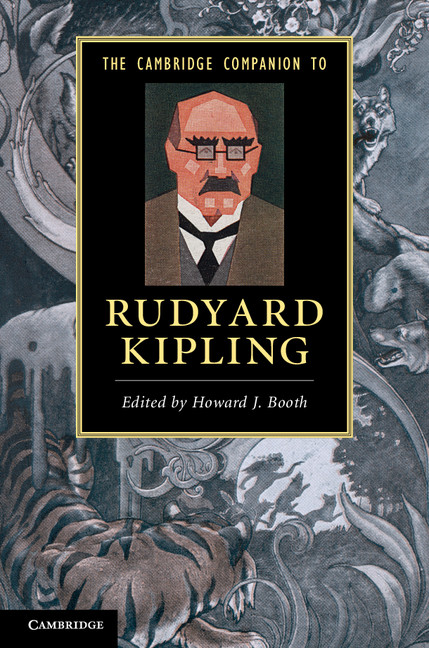

Rudyard Kipling (1865–1936) is among the most popular, acclaimed and controversial of writers in English. His books have sold in great numbers, and he remains the youngest writer to have won the Nobel Prize in Literature. Many associate Kipling with poems such as 'If–', his novel Kim, his pioneering use of the short story form and such works for children as the Just So Stories. For others, though, Kipling is the very symbol of the British Empire and a belligerent approach to other peoples and races. This Companion explores Kipling's main themes and texts, the different genres in which he worked and the various phases of his career. It also examines the 'afterlives' of his texts in postcolonial writing and through adaptations of his work. With a chronology and guide to further reading, this book serves as a useful introduction for students of literature and of Empire and its after effects.
‘Personal read: 5/5 stars - an invaluable contribution to Kipling studies, and as such I heartily recommend it.’
Source: New Books Magazine (newbooksmag.com)
‘If you're an English student or a major Kipling fan … it should make it to the top of your Christmas wish list.’
Source: The Bookbag
‘This is a successful Companion, and may be recommended as the place to start for those wanting a single-volume introduction to Kipling studies. There are no weak chapters, and the thirteen topics are sensibly chosen.’
John Lee Source: Victorian Studies
Loading metrics...
* Views captured on Cambridge Core between #date#. This data will be updated every 24 hours.
Usage data cannot currently be displayed.
This section outlines the accessibility features of this content - including support for screen readers, full keyboard navigation and high-contrast display options. This may not be relevant for you.
Accessibility compliance for the PDF of this book is currently unknown and may be updated in the future.
