

Introduction
Archaeology and literature provide evidence that African wild animals have been live captured for a very long time, at least since the ancient Egyptians (e.g. Trinquier, Reference Trinquier2002; Mark, Reference Mark2016) and Romans (e.g. Bertrandy, Reference Bertrandy1987; Mackinnon, Reference Mackinnon2006; Christesen and Kyle, Reference Christesen and Kyle2014). However, modern wildlife capture methods are only a few decades old, and considerable progress has been achieved recently in innovative chemical and physical restraint techniques for all wildlife species. While these methods are now used all over the continent, southern Africa appears today as the leading region in wildlife capture. In South Africa, the Wildlife Translocation Association’s members annually capture and translocate approximately 130,000 game animals, and the game capture industry now has an annual turnover in excess of €7.4 million (Snyman et al., Reference Snyman, Sumba and Vorhies2021).
As a member of the famous ‘Big Five’, the African buffalo (Syncerus caffer) adds significantly to the value of the wildlife economy everywhere, both for consumptive and non-consumptive use. However, with its historical range severely impacted by human activity, attaining this value today is often dependent upon being able to physically ‘manage’ them. The conservation of buffalo is consequently massively enhanced and facilitated today by being able to capture, handle and move the species. All of these actions are very specialist undertakings because buffalo are large-bodied, live in sizeable herds and can become aggressive and dangerous to humans.
Reasons for Capturing and Moving Buffalo
Buffalo may need to be captured and released on-site for diverse reasons. Depending on the type of management (extensive or intensive; Chapter 13), a manager can request a licensed veterinarian to examine or treat injured or sick individuals. Similarly, buffalo populations at risk of disease outbreaks, posing a sanitary risk to other species (such as livestock or humans) or subject to sanitary regulations may be required to be captured for mass vaccinations to control the targeted diseases. Under extensive management (i.e. natural conditions), contexts necessitating the capture of buffalo may be more restricted (i.e. for a suffering individual).
Disease investigations or pre-movement health checks, notably for foot and mouth disease (FMD – including setting up FMD-free herds), bovine tuberculosis (bTB), tick-borne diseases (especially theileriosis) and other zoonotic or livestock diseases, are additional reasons to sample buffalo populations after immobilization. In addition to sanitary knowledge for production purposes, ecological or ecosystem research, for example collaring individuals with satellite tracking devices, may require captures for a few minutes in order to fit or release the devices.
Finally, buffalo may be captured for translocation for diverse reasons (Box 15.1). These include establishing founder populations, either for reintroduction or introduction purposes; numerically or genetically reinforcing depleted, isolated or small populations; moving vulnerable individuals or populations; and finally moving individuals to mitigate human–wildlife conflicts. Table 15.1 provides a sample of recent translocation events in eastern and southern Africa showcasing these diverse reasons for moving buffalo.

Conservation translocation is the intentional movement and release of a living organism where the primary objective is conservation. This will usually comprise improving the conservation status of the focal species locally or globally, and/or restoring natural ecosystem functions or processes. Conservation translocations are classified according to the intended benefit of the process, entailing releases either within (population restoration) or outside (conservation introduction) the species’ indigenous range.
Population restoration involves:
◦ Reinforcement, which is the intentional movement and release of an organism into an existing population of conspecifics, aiming to enhance population viability.
◦ Reintroduction, which is the intentional movement and release of an organism inside its indigenous range from which it has disappeared, aiming to re-establish a viable population of the focal species.
Conservation introduction involves:
◦ Assisted colonization, which is the intentional movement and release of an organism outside its indigenous range to avoid extinction of populations of the focal species.
◦ Ecological replacement, which is the intentional movement and release of an organism outside its indigenous range to perform a specific ecological function. This is used to re-establish an ecological function lost through extinction and will often involve the most suitable existing subspecies, or a close relative of the extinct species within the same genus.
For whatever reason a capture operation is decided, it should be carefully thought through, and planned with strict adherence to veterinary regulations with respect to disease control, dangerous drugs, etc. The planning exercise should pay particular attention to behavioural characteristics and stress management.
Most of the knowledge and information presented in this chapter is based on massive experience and skills developed after many years of practice by the authors and other colleagues (La Grange, Reference La Grange2005, Reference La Grange, du, Bothma and Du Toit2010).
Behavioural Characteristics to Consider for Capturing Buffalo
Like most bovids, buffalo are herd-orientated animals occupying distinct home ranges (Chapter 6). Therefore, they try to stay with one another while being driven towards the boma (a large funnel-shaped enclosure to physically capture buffalo – see below). Once in the boma, they will continue to follow the lead individual, who is likely to exploit any weakness in the integrity of the boma and try to initiate an escape response. Consequently, identifying and managing the lead individual effectively manages the herd.
Surprisingly, under capture pressure, the individual taking the lead to escape or attack is more often a cow that both defends and leads the way to safety. In the wild, bulls will join and separate depending upon age; subadult males will often leave to form bachelor groups while post-breeding old bulls will separate. These older bulls, often referred to as ‘dagga’ bulls in southern Africa, frequently have impaired eyesight and hearing. They sometimes seek the safety (i.e. from natural predators) of areas surrounding human habitations and can become exceedingly dangerous if stumbled upon.
Mothers are strongly bonded to their calves, recognizing them immediately from the bawling vocalizations of their respective offspring. They will respond aggressively to investigate and retrieve them even under stampede situations. Yearlings are reliant on parent herd knowledge, become lost in unrecognizable environments and need to be close to their mothers and other herd members. The cow–calf bond lasts for longer periods than for many other species (a comparatively long time between birth and puberty).
Home range dispersal is generally forced through large predator interactions or human-induced disturbances. Individual adult animals driven out into surrounding communities because of forced dispersal tend to be harassed and therefore can become exceedingly dangerous and often attack with little provocation. These individuals are unlikely to be returned successfully to the area they originated from.
Behaving in many respects like sable, once cornered and unable to escape in a boma, the buffalo herd will form a tight circular gathering often referred to as ‘laager’ in southern Africa, providing an effective defence strategy, especially against predators such as lions. This strategy prevents losses which likely would occur if the herd panicked and ran in several directions.
However, in a herding situation during capture, depending upon the pressure exerted on them, buffalo will readily attack when deemed threatened. The correct reading of the situation is necessary and relies on experience in order to apply just enough pressure to solicit the required response. It may be necessary to back off before this pressure becomes too much and invokes an attack or unnecessary panic. In this way, the lead cow becomes both ally and foe, and given the opportunity, would prefer to find a way out of the capture boma. She and the herd may be cleverly manipulated through good boma design and management to achieve smooth capture of the herd. Experienced operators and helicopter pilots do make a difference!
Stress Management
Fifty years of capture experience by professional operators have proven that for all species, stress cannot be removed completely, but its intensity can be minimized during every stage of the capture operation. Observations indicate that the main activity compounding stress is uncontrolled panic and running with attempts to attack or to escape. Struggling and overexertion prior to restraint must be quickly brought under control. Uncontrolled running up and down a boma, for example, is sufficient to overexert animals, resulting in potential health complications. Similarly, continued stress observed during physical restraint requires quick, deft action to control and calm animals throughout the operation. Basic application, for example, of a blindfold prior to or during immobilization and tranquillization, will provide a calming effect. Fortunately, buffalo are less prone to panic than many other species, but these principles still apply.
Any capture operation must minimize mortality and stress. Currently, advances in translocation knowledge have resulted in minimal mortalities, even when moving entire herds over long distances. An acceptable mortality rate is considered to be <2 per cent. However, modern capture techniques have been so refined that almost zero or very low mortality is now achievable. A thorough understanding of the subtleties of buffalo herd behaviour is important to overall success. Such knowledge allows potential problems to be anticipated before they occur, providing for timely management decisions that can be corrected and adapted throughout the entire capture process, effectively minimizing stress at all stages with the goal of zero mortality.
Physical Capture/Mass Capture
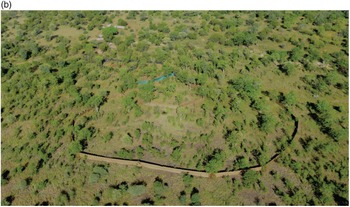
Physical capture is the capture of wild animals without using drugs. Mass capture of herd animals using a temporarily erected boma is a revolutionary technique of physical capture that originated in the 1960s in Namibia (Oelofse, Reference Oelofse1970). In the animals’ natural habitat, opaque or ‘blind’ plastic polyweave sheeting is erected on poles and supported top and bottom by tension cables in the formation of a large funnel-shaped enclosure, usually named mass boma capture, often referred to simply as boma capture (Figure 15.1). The principle employed is that animals are herded into the large open end of the funnel, and while being forced to traverse it to the narrow end, will not challenge the tall, flimsy barrier because they cannot see an escape route to the outside. The funnel ends in a crush in which animals can be individually selected or handled and thereafter either released or loaded onto a custom-made transporter vehicle already situated on an exit road.
Diagram of a temporary mass capture boma constructed out of woven plastic sheeting.

In practice, the boma is camouflaged in the vegetation and the narrow ‘crush’ section curves towards a ramp into transport vehicles on an exit road (transport vehicle on the top).

Using a small, manoeuvrable helicopter is the preferred method of driving animals to a boma (using horses, vehicles or people would be cheaper but is impractical for many reasons). It is absolutely essential that the pilot is not simply a commercially rated licence holder but someone who has experience in both low-level game capture flying and wild animal observation and behaviour. While flying the pilot has to be able to separate a workable number of animals from a herd, move them as calmly as possible in a downwind direction towards the boma, and avoid having them panic, separating far from each other and escaping from the group. At the same time, the pilot must communicate via radio and thus coordinate the activity of members of a ground team strategically positioned in and around the capture boma. The helicopter pilot flies alone to reduce helicopter mass enabling more power for manoeuvring.
The overhead noise and presence of a helicopter provide sufficient stimulus to move most wild animals including buffalo. The disturbance readily groups them while moving them in the required direction. The pilot must vary altitude and position judiciously, strategically moving around the herd, and applying varying levels of pressure to direct and keep the selected herd/group together. Directional pressure is gradually increased (lower altitude, closer distance) as the herd approaches the well-concealed wide boma entrance. Near the mouth of the boma, the helicopter is flying low, and finally activates a loud siren to provide the final stimulus while directing ground staff to close the main gate, with the process repeated to close secondary gates as the herd funnels down through the boma.
Ground teams stationed on the boma partition gates rapidly draw these plastic curtains across in sequence behind the buffalo as the herd progresses forward towards the narrow end of the boma. Employing this strategy, the herd is confined in a manageable sized space (a boma compartment), with individual movement restricted and less chance of escape. It is essential to limit outside stimuli while the boma is occupied to allow buffalo to regain their rest composure following the stressful chase. In large capture operations, the manageable number of animals driven in per helicopter drive is around 30–40 buffalo. This number is considered practical to handle and load, adding further subdrives to fill additional boma compartments if required or carrying out additional drives after the loading of the previous subdrive.
Placing buffalo under stress during mass capture is akin to them being hunted as prey in the wild where they display equivalent behavioural responses. Initially, they bunch into a circular defensive formation to prevent losses that would likely occur from individuals panicking and running in several directions. They often attack under extreme or persistent pressure, with a number of individuals charging in one direction behind a leader.
Pushing captured wild buffalo one by one into a narrow ‘cattle-like crush’ is obviously not easy and cannot be done by people on foot inside the boma. A modified four-wheel drive vehicle with strong front and side protection can be used to achieve this by slow ‘persuasion’ (Figure 15.2). Buffalo will attack the vehicle, especially the front and wheels, rather than target the people inside. Adding a curve to the handling facility, or hanging vegetation at the far end of the boma to camouflage the dead end, leads the herd into thinking that there is an attractive way of escape, and its leaders will eventually move on towards that (Figure 15.1).
Final stage of a buffalo mass capture:
buffalo are chased into the boma by the helicopter;

then pushed into desired sections of the boma or lorry using an adapted vehicle.

All procedures in the capture of wildlife are in effect stress management exercises. Put simply, physical capture without drugs is achieved through a sequence of induced animal behaviours: naturally moving away from the disturbance source, encouraged to take the escape opportunity given, enabled by loss of geo-location and reluctance to challenge the unknown (see some tips in Box 15.2).
The helicopter drive for separating the required number of buffalo is important to avoid driving too many in at once. Too many animals will be difficult to manage in the boma. Instead, position the main herd nearby ±200 m and separate 30–40 animals for each subdrive into the boma, filling the respective boma compartments providing further options. Rather than filling each compartment, more often additional drives are conducted after the loading of the previous subdrive.
Identify and work with the lead cow as discussed. This requires lots of patience – offer a way to escape and capitalize on any advantage emerging.
Provide a suitable boma herding vehicle within the boma as operating on foot would be extremely dangerous. As indicated, prevent direct confrontation, applying targeted pressure, following or backing off, observing the response. Any old 4×4 vehicle will do as buffalo tend to attack the vehicle, especially the front and wheels, rather than the people inside.
The secret is: ‘Give n’take!’ Avoid applying too much pressure and AVOID direct contact!
The boma is flexible in design to provide for a wide range of capture applications, including:
◦ Combining physical and chemical capture to enable the selection of specific animals for testing or capture. Basically, instead of a crush, providing a sufficiently large circular working area at the boma end to drive the herd in and dart individual animals selected from a vehicle. Individual animals can be marked and released back to the herd or following bulk knockdown, for example, veterinary testing, before releasing the herd back to the wild.
◦ Calf removal for FMD-free buffalo breeding programmes is basically a variant of this technique, capturing the entire herd, then employing a vehicle to drive among the herd as they mill around, ‘fishing’ out the calves individually with a rope and pole noose. Male calves are separated from the females into different bulk crates. Finally, the males are released back to the herd before the final herd is released back to the wild.
◦ Conducting large immunizing programmes against diseases such as anthrax. This is done by providing an extended crush at the boma end to hold 30–50 buffalo. These are pole syringed and, importantly, marked for identification before release.
◦ The first gate (Figure 15.1) serves to first contain the driven buffalo herd, aiming to keep the area between it and the main gate pristine for subsequent drives.
Chemical Capture/Individual Capture
Chemical immobilization of buffalo is achieved by darting or injecting drugs. Darting and handling of immobilized wild animals require very comprehensive training in specialized courses that are available in a few selected countries. Even veterinarians are advised to attend these courses because this very detailed and specialist field is usually not fully covered in general veterinary training. Dangerous drugs, especially opioids, fall under very strict veterinary regulations. In cases of accidental exposure to these, such as the potent opioids used for buffalo, humans are unfortunately extremely susceptible to the same effects, which can rapidly be fatal. Safety procedures are paramount and must be thoroughly applied.
Darting on the ground requires approaching a buffalo within close range (maximum about 40 m), which requires knowledge of the behaviour of the species and judgement of each circumstance. It is safest and easier to approach by vehicle if the terrain allows. However, in West and Central Africa where many landscapes do not allow driving off track, and where helicopters are difficult to hire, buffalo darting is often carried out on foot (Figure 15.3). Compared to many other large mammals, buffalo are quite easy to approach on foot provided the stalking is done very strictly against the wind. However, approaching buffalo by foot close enough for darting becomes a difficult exercise in poorly managed areas where harassed buffalo become very shy. Operational success hence may drop from darting a few buffalo each day to just one buffalo every few days, especially if specific individuals are targeted (e.g. an adult female or collared individual for device removal).
Individual darting on foot of a West African savanna buffalo.

Lone males are the easiest to get close to, followed by male coalitions. Herds are more difficult, however, often with males following behind.
Darting from a helicopter requires a pilot with experience in both low-level flying techniques and interpreting animal behaviour (Figure 15.4). The darter and the pilot must have excellent intercom communication in the air. Aircraft reliability and aviation and veterinary safety procedures must be established and adhered to as there is very little margin for error (see tips in Box 15.3).
Chemical capture of a free-ranging herd of Cape buffalo by individual darting from a helicopter.

Capitalize on the ‘window-of-opportunity’ offered by confusion, separating out smaller, manageable subgroups of buffalo, driving them to more accessible open ground away from the principal herd, forcing them to circle on themselves to promote confusion, and quickly darting all the individuals comprising the group. It is important to keep them together in suitable recovery terrain until they all go down. This process requires skill and experience from the helicopter pilot and darter working together with ground teams, who should be directed in to render timely assistance to potentially compromised animals. It is important to minimize the total downtime of the group.
Positive knockdown of the targeted animals is paramount, requiring correct dart placement and the appropriate drug combination. Generally, with free-range darting of wild buffalo, apply the high-dose opioid protocol (Table 15.2), avoiding underdosing that is more problematic with the potential for complications. Buffalo herded by a helicopter are more likely to be stressed and hyperthermia can be a problem, especially with a dark-skinned animal. Consider combining thiafentanyl with etorphine in a 50:50 combination dose, which significantly reduces the excitement phase, reducing time running and therefore distance travelled. Thiafentanyl alone in combination with azaperone provides quick knockdown, but thousands of buffalo in southern Africa have been successfully immobilized with etorphine and azaperone.
It is especially recommended to immediately redart if poor dart placement is suspected rather than waiting for drug sign. Be prepared to manage possible overdose using butorphanol.

Notes:
Azaperone is recommended in all buffalo immobilizing combinations.
Ketamine given intravenously (IV) is effective as a ‘top-up’ drug in animals that are not sufficiently immobilized by the opioid and sedative/tranquillizer mixture. Administer 100–200 mg IV and further doses can be given if required. Doses of 50–100 mg will often be sufficient.
Naltrexone for free release is preferred and for transport a mixture of diprenorphine and naltrexone is useful.
Diprenorphine at 12–18 mg is useful in loading.
In forest buffalo, the same drug combinations can be used but reduce doses accordingly due to smaller size. Carfentanil (4 mg) has been used successfully to immobilize this subspecies – reverse with 200–300 mg naltrexone. The use of carfentanil may result in knuckling problems post-recovery in savanna buffalo and is not recommended for them.
The addition of hyaluronidase to the mixture in the dart is advisable in buffalo, particularly with the high-dose opioid protocol.
Azaperone is the better drug to use. Buffalo are generally sensitive to the effects of the α-2 agonists so take due precautions in free-living animals. When complete reversal of the α-2 agonist is required, use atipamezole.
The darting of individual buffalo or small groups uses combinations of opioid drugs and tranquillizers (Table 15.2). Such combinations are designed to provide synergistic effects; the opioid is the ‘knockdown’ component, inducing a physiological state called ‘narcosis’ which is much different from the deeper unconscious state of ‘anaesthesia’, familiar to most humans. The addition of a tranquillizer reduces stress by smoothing the ‘induction period’ (the time for a drug’s full effect over several minutes), counters muscle rigidity during the immobilization phase, and improves the recovery process.
Historically, the traditional choice of drug combinations has been etorphine hydrochloride (M99, Captivon® Wildlife Pharmaceuticals): 5–8 mg etorphine combined with 40–50 mg azaperone for a free-ranging adult, reducing this marginally (by 20 per cent) for penned and tamer animals (Figure 15.2). With free-range darting of wild buffalo, apply the high-dose opioid protocol. In holding boma situations, pens or where buffalo are calm or habituated, the low-dose opioid protocol can be substituted. Either on the ground or from the air, if poor dart placement occurs or dart failure is suspected, it is generally recommended to redart immediately rather than waiting for signs of drug effect.
Following chemical capture, the recumbent buffalo is given an opioid antagonist, a rapidly acting antidote drug which allows the animal to regain full consciousness to normal mobility with all its vital functions intact. Recovery drugs (variously called ‘antidotes’, ‘reversals’ or ‘antagonists’) and their dosages vary according to what management procedure is required following capture. If a buffalo needs to be moved from an area inaccessible to transport, ‘partial antagonists’ drugs may be used. The remarkable efficacy of these drugs is to allow the buffalo to get to its feet and be slowly physically guided by well-trained handlers. Obviously, this is while it is still blindfolded and well restrained with ropes, but in a heavily tranquilized state and not sufficiently awake to injure the handlers or escape uncontrollably.
It is far easier to manage the effects of ‘overdosage’ of immobilizing drugs on a wild animal than ‘underdosage’. To most people, this would seem counterintuitive. The reason, however, is that if a recumbent animal is physiologically compromised, there are various ways of quickly improving its vital functions to keep it alive while it remains recumbent and manageable. In the worst-case scenario, should the procedure not be able to continue, an intravenous opioid antidote drug can quickly wake the animal up and bring it back to normality. By contrast, if the animal receives an insufficient dose, it will remain ‘half-immobilized’ on its feet and continually try to escape, whereupon its uncontrolled mobility and associated high stress levels can cause it to become rapidly compromised physiologically, which is often fatal (see tips in Box 15.4).
The immobilized animal should be approached slightly from behind. A blindfold should be gently lowered over its eyes, this will significantly reduce stress, effectively assisting in relaxing the animal and protecting the eyes. Earplugs are optional.
Immediately upon approach, the buffalo must be placed and maintained in a sternal recumbency position with the head lowered. Over the years the potential for regurgitation and aspiration of ruminal contents into the lungs has proven an issue, especially with drug combinations using α-2 agonists.
Throughout the whole procedure until the end, respiration must be monitored with a normal rate of 6–8 breaths/minute. Less than this, butorphanol can be injected in increments of 5 mg but beware of complete reversal at doses higher than 30 mg. Doxapram given at 5–15 ml IV also provides respiratory stimulation, but is short-acting and can produce some arousal, so constant monitoring is required. A rate of 10–12 means the animal is light and, depending on the time from darting, may require a top-up of 100–200 mg of ketamine. Avoid adding more opioid into the animal, ketamine is highly effective and safe.
A large buffalo’s limbs folded under a heavy body are very susceptible to lack of blood supply during longer procedures; thus, the body position must be regularly adjusted to maintain adequate circulation to the limbs and to avoid any nerve damage due to pressure.
The drugs to either terminate or prolong immobilization must be on hand and the required procedures known in detail by the operators. For reversal, a combination of naltrexone (25 to 100mg depending on opioid dose) and diprenorphine (12-18mg) can be used IV or IM, especially when more than one animal are woken up at the same time in a recovery crate – the lower dose of naltrexone helps with the recovery of buffalo. A significant cost reduction can be achieved using this in combination with the full diprenorphine dose.
The choice of a commercially available darting system is a matter of personal preference. There are two main types of ‘remote injection devices’, distinguished by the method of dart propulsion from the gun and drug injection from the dart. Powder-charged guns use small blank cartridges while gas-powered guns are fitted with small cylinders containing compressed carbon dioxide (CO2). Drugs are expelled from darts by either small powder charges or the release of compressed air. Two of the most used systems are called ‘Pneudart®’ and ‘DanInject®’. These darting systems are versatile enough that they can be used with darts from different manufacturers (11 mm and 13 mm barrel bore size), such as Palmer Cap-Chur® (0.50 calibre or 13 mm). It is important to select the correct needle size and length (2 × 50 mm) when darting buffalo (Kock and Burroughs, Reference Kock and Burroughs2021).
Transport of Buffalo
Transporting wild animals as large as buffalo by road is a very detailed and specialized undertaking, requiring large amounts of equipment, logistical support and organizational capability. Unless only a few individual buffalo are to be transported a very short distance (which could be done by tranquillizing and transporting them recumbent in a pickup truck), moving buffalo requires experienced ‘capture operators’.
In some African countries, there may be detailed veterinary and other legal requirements for moving buffalo, resulting in extensive prior paperwork. Buffalo can share several diseases and parasites with livestock, so official health requirements can be very stringent, expensive and time-consuming.
Customized crates replicating ‘shipping containers’ are the most used equipment for road transport. Obvious requirements for these containers are non-slip flooring, good ventilation, sliding doors and operator access via the roof for observation or animal behaviour intervention. Buffalo travel well in groups when well-designed crates and good management practices are used, and can travel for up to 36 hours after capture without food and water en route. Watering and feeding can be done at both ends of the journey. Tranquillization using injectable drugs should be limited to bulls and/or truculent animals only. Never tranquillize juveniles or yearlings because there is the risk that they may lie down in transit and be trampled by adults (see tips in Box 15.5).
Buffalo travel well as mixed groups.
Need to employ fully enabled management crates to properly distribute the captured animals – considered essential.
Compartments fitted with fully functional sliding doors – capable of separating buffalo, allowing the movement of animals back and forth between compartments as required.
Cross-loading capabilities – extra truck units may be needed to cross-load as required.
Crates providing full access from the top to inspect, move, sort, tranquillize and operate partition gates.
Watch packing density. Buffalo are prone to hyperthermia, which can be exacerbated by too many animals packed into a compartment.
Not too many animals at one time should be in a crush. It is a good idea to split the load into 20–25 subgroups at the crush (a suitable number for a truck and trailer load). Where large numbers are to be moved, consider cross-loading into additional truck units linked up.
Generally, calves at foot do not load and transport well; therefore, avoid the breeding season.
Bulls tend to be easier to load, but they will occupy a larger space and should be appropriately tranquillized.
Tranquillization of truculent individuals only.
Never tranquillize calves and yearlings that are then prone to be trampled upon!
Buffalo can travel for up to 36 hours after capture without food and water.
Should watering and feeding prove necessary, this may be achieved by moving animals into an adjacent compartment, for example, when undertaking time-consuming cross-border operations.
To transport live animals, drivers of heavy vehicles must be extensively trained and experienced. The best travel route must be researched and planned, and very reliable communications guaranteed between drivers and support staff. The weather en route is often overlooked: in hot daytime conditions buffalo can overheat if too tightly packed; on the other hand, when travelling during the coldest part of the night, a wind chill factor can reduce the ambient temperature by up to 8°C. On long journeys, vehicle stops in quiet locations at a maximum of every 200 km are essential. Extra requirements for unforeseen problems arising are a senior staff member in an accompanying 4WD ‘chase vehicle’ and an empty crate for cross-loading should some animals need to be removed during transit (see checklist in Box 15.6).
Ensure animals are settled before transporting! Unload and reload should animals remain unsettled requiring group resorting.
Tranquillize as required.
Ensure correct paperwork is in hand: wildlife permits, vehicle clearance, border crossing. Experience dictates that it is best to use the services of an experienced clearing agent to facilitate border crossing.
Consider best travel route: terrain, condition and directions.
Weather conditions en route are more often overlooked. Consider potential for chill factor problems en route when travelling through the coldest part of the night. Wherever possible, avoid these situations, remembering the chill factor may often reduce ambient temperatures by a factor of 4–8°C.
Consider GPS track monitoring of the vehicle.
Cell/smartphone–satphone enabled.
Stop and rest frequently, every 200 km. Select quiet stopping places, not near gatherings of people, for example, a village.
Watering and feeding are not normally an issue if delivering within 24 hours. Empty one compartment and place flat troughs and fresh grass should this become necessary.
It is very important to ensure rehydration on final release.
Consider refuelling requirements for the trucks: identify places and the currency required. Think logically through all these requirements, addressing any that have the potential to interrupt smooth passage.
Drivers should be experienced and well briefed.
Long-distance considerations
Use alternate drivers.
Stop and rest frequently, every 200 km.
Emergency tranquillization may be needed (azaperone and diazepam) for particularly truculent individuals.
An accompanying ‘chase’ vehicle is important with a qualified person to assist the animals for cross-border deliveries.
May need to water down animals, drinking considerations become more important with long distances (avoid excessive water in crate, beware of danger of slipping).
Monitor weather en route, especially whether hot or cold spells.
Release at Destination
Herbivores with social behaviour like buffalo are easier to translocate than many other taxa, but a successful capture does not end upon reaching the destination, where much remains to be done. Possibly one of the greatest pitfalls to concluding a successful capture and translocation is the problem of subsequent maladaptation when wild animals are introduced to new surroundings.
If the transport arrives late at night, leave the buffalo inside the crates and unload them early the following day. Allowing buffalo immediate and full rehydration at the destination is essential. Immediate free release (also named ‘hard release’) might be practiced in a fenced environment. However, the construction of an adaptation boma is recommended where the buffalo can settle into new surroundings via an initial captive period. If the new habitat is substantially different from the source area, for example, subtle complications involving rumen microflora adaption can be very important. Dietary maladaptation can seriously impact the animals’ health and future survival.
When boma management is carried out correctly, buffalo do settle down relatively quickly compared to some other wild herbivores (see tips in Box 15.7). A few main points relating to this phase of handling are to allow an area of about 1 ha (100 × 100 m) for up to 25 buffalo and increase accordingly. As in a capture boma, the walls must be opaque or blanked off (e.g. woven plastic sheeting on fences), adequate shade for the entire group should be available, and good-quality grass and/or hay ad libitum should be provided, concentrate supplements can be added but only in small quantities daily. Human activity inside the pen (cleaning/animal sorting) should be kept to a minimum and during the cooler hours of the day and any disturbance, especially from spectators, must be strictly limited and only outside the boma. Domestic dogs should never be allowed anywhere near wildlife-holding bomas or pens. For final release back to the wild, pick a quiet day early in the morning and simply leave the enclosure gate open to allow the buffalo to find their own way out in their own time.
In carrying out the daily chore management of the pens, it is important to establish a routine. Animals are naturally routine-orientated as they go about their daily business of feeding and resting. This should be maintained as much as possible during the penning process.
It is extremely important to respect the midday siesta routine. Naturally, animals rest in shade during the hot part of the day, so pen cleaning, sorting and animal feeding should be limited to early morning before 11h00 and late afternoon from 16h00 onwards.
Move animals to a new pen once a week. This allows for pen cleaning and rotation, which greatly helps when they finally need to be loaded and transported.
Ensure that any disturbances remain on the outside of the pens, never on the inside. The pen attendant and family should be accommodated nearby the pen complex, effectively providing disturbance to the outside but not invading the privacy within. This greatly assists with the taming process; animals realize that the pens represent safety.
For further reading, refer to Raath (Reference Raath and Penzhorn1996).
The Case of Virtual Boundary
The more that wildlife are managed, the more there are indications that a virtual component is playing out. This is particularly noticeable upon releasing animals into a new environment that they do not know; essentially, they are rendered lost. In the wild, animals are fully geo-located to their home ranges and always know accurately where they are. The establishment of ‘remembered’ boundary positions, risky areas and food and water locations is information imprinted virtually in their mindset, logged against time and season. If they are suddenly uplifted and moved in a dramatic fashion to where a new reality is foisted upon them, it renders them rather lost and unable to recognize much of their new surroundings. Experience over the years has demonstrated that release stress is best cushioned by placing animals in a blanked off and confined space (boma or pen) that they cannot see out of. In this, they quickly establish the basic information relating to the whereabouts of food, shelter and most importantly, a refuge. This position becomes ‘virtually logged’, so that release into a new wild area is undertaken from this remembered position as they gradually move away from it, exploring their new surroundings. The virtual boundary concept is interesting for future management in that this virtual knowledge is proving invaluable in developing innovative approaches to mitigate capture complications and human–wildlife conflict (La Grange et al., Reference La Grange, Matema, Nyamukure and Hoare2022).
Conclusion
The cardinal rule of buffalo or any wildlife capture, translocation and release is to regard all human interventions as potentially stressful to the animals, and therefore to strive to conduct them as far as possible as ‘short-term and low-stress management exercises’. Achieving this objective involves well-coordinated teamwork with individual team members practicing an eclectic mixture of activities that add up to ‘an art as much as a science’. However, that said, there is still room for progress. The chemical capture of large mammals remains overly dependent upon opioids, which are problematic for two main reasons: (i) they are extremely dangerous for humans and animals, and (ii) strict procurement protocols have severely hampered access for most countries outside the few with substantial experience in wildlife capture. Hence, there is a real need to actively research non-opioid drugs, especially the alpha-2s (e.g. medetomidine) and combinations thereof. Physical capture methods also could be improved, and maybe even new strategies developed, including for example virtual applications such as a drone capture technique (under review), and applying scent technology through a guided, one-way camouflaged crush arrangement into a compacted mobile crate management arrangement, obviating the necessity for large plastic mass boma equipment, helicopters and expensive labour commitment.




 Open access