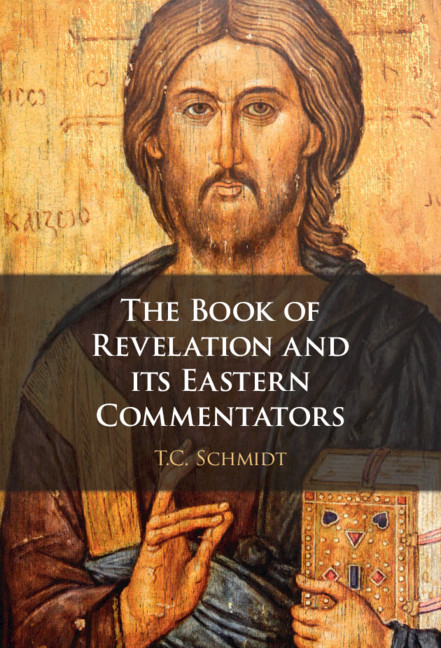

In this volume, T.C. Schmidt offers a new perspective on the formation of the New Testament by examining it simply as a Greco-Roman 'testament', a legal document of great authority in the ancient world. His work considers previously unexamined parallels between Greco-Roman juristic standards and the authorization of Christianity's holy texts. Recapitulating how Greco-Roman testaments were created and certified, he argues that the book of Revelation possessed many testamentary characteristics that were crucial for lending validity to the New Testament. Even so, Schmidt shows how Revelation fell out of favor amongst most Eastern Christian communities for over a thousand years until commentators rehabilitated its status and reintegrated it into the New Testament. Schmidt uncovers why so many Eastern churches neglected Revelation during this period, and then draws from Greco-Roman legal practice to describe how Eastern commentators successfully argued for Revelation's inclusion in the New Testaments of their Churches.
‘… a must-have resource for scholars working on the reception of Revelation.’
Garrett Best Source: Restoration Quarterly
Loading metrics...
* Views captured on Cambridge Core between #date#. This data will be updated every 24 hours.
Usage data cannot currently be displayed.
This section outlines the accessibility features of this content - including support for screen readers, full keyboard navigation and high-contrast display options. This may not be relevant for you.
Accessibility compliance for the HTML of this book is currently unknown and may be updated in the future.
