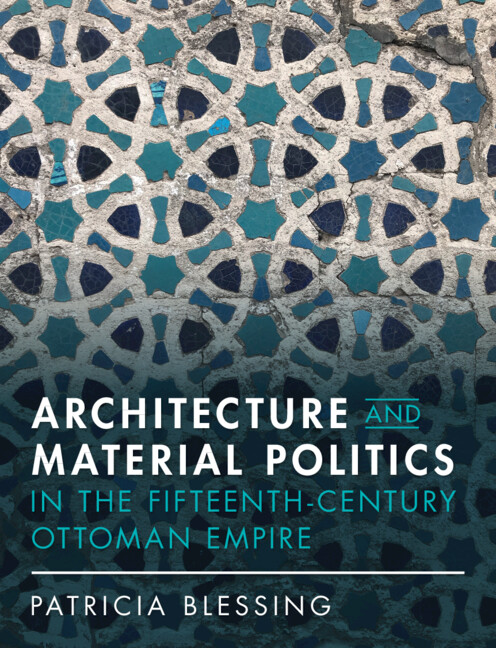

In this book, Patricia Blessing explores the emergence of Ottoman architecture in the fifteenth century and its connection with broader geographical contexts. Analyzing how transregional exchange shaped building practices, she examines how workers from Anatolia, the Mediterranean, the Balkans, and Iran and Central Asia participated in key construction projects. She also demonstrates how drawn, scalable models on paper served as templates for architectural decorations and supplemented collaborations that involved the mobility of workers. Blessing reveals how the creation of centralized workshops led to the emergence of a clearly defined imperial Ottoman style by 1500, when the flexibility and experimentation of the preceding century was levelled. Her book radically transforms our understanding of Ottoman architecture by exposing the diverse and fluid nature of its formative period. It also provides the reader with an understanding of design, planning, and construction processes of a major empire of the Islamic world.
'… extremely learned and scholarly … Recommended.'
J. M. Bloom Source: Choice
Loading metrics...
* Views captured on Cambridge Core between #date#. This data will be updated every 24 hours.
Usage data cannot currently be displayed.
This section outlines the accessibility features of this content - including support for screen readers, full keyboard navigation and high-contrast display options. This may not be relevant for you.
Accessibility compliance for the HTML of this book is currently unknown and may be updated in the future.
