

This part focuses on the principal terms of an intellectual property (IP) licensing agreement. Contrary to popular belief, save for online and “shrinkwrap” agreements (see Chapter 17), no two licensing agreements are exactly the same. Nevertheless, many licensing agreements share the same general layout and structure. Below is a rough summary of the different parts of a licensing agreement, with a few pointers regarding provisions that don’t merit a full discussion in the chapters that follow. In the Online Appendix to this book are samples of several different types of licensing and other transaction agreements, which you may wish to refer to as you use this book.
Introductory Material
The first few paragraphs of the agreement typically include the title of the agreement, the names of the parties, the effective date, and recitals framing the purpose of the agreement (see Section 13.1).
Definitions
Though they may seem routine, the defined terms in an agreement (those Capitalized or ALL CAPS terms that appear throughout the document) are among its most important terms. Many agreements include a section listing defined terms at the beginning (or, less frequently, at the end) of the agreement. The alternative to including a section devoted to defined terms is to define terms throughout the agreement “in line” (e.g., “the Parties shall conduct the research and development activities at 123 South Infinite Loop, Cupertino, California (the ‘Facility’)”). We will discuss important defined terms throughout the following chapters as they arise.
Activities and Deliverables
Many agreements require one or both parties to perform some activity or service – the development of a new technology, the manufacture of a product, the provision of an online service, or any of a thousand other things. The general framework for the performance of these activities is usually laid out in the agreement, along with references to any products, prototypes, plans or designs that are required to be delivered (usually referred to as “Deliverables”). If the services or deliverables are complex, then they may be described in more detail in any number of schedules or exhibits to the main agreement. Services relating to the development of IP are discussed in Section 9.2.
License Grants and Exclusions
The core of any license agreement is the license grant. Chapters 6 and 7 focus on the drafting and issues surrounding this key set of provisions.
IP Ownership and Management
Sometimes each party brings IP to a collaboration; sometimes new IP is developed during the course of a collaboration. These provisions describe which party or parties owns particular categories of IP, and how the parties allocate responsibility for managing that IP (e.g., prosecuting patents). These issues are discussed in Chapter 9.
Payments
Most license agreements involve the payment of funds by one party to the other. Chapter 8 addresses the many different variants by which parties are paid.
Representations, Warranties and Indemnification
By this point in a license agreement, most businesspeople have stopped reading. We are now entering lawyers’ territory, with a set of provisions that is both important and underappreciated. Representations, warranties and indemnification, discussed in Chapter 10, allocate liability among the parties for a host of potential issues.
Term and Termination
It is the rare agreement that lasts forever, so every agreement contains clauses relating to its duration and eventual end. These provisions are discussed in Chapter 12.
The Boilerplate
At the end of every agreement comes a set of terms – often running to several pages – that are seldom negotiated, but can become critically important under the right circumstances. These are covered in Chapter 13.
Signatures
Every agreement must evidence the mutual assent of the parties. Today, assent can be manifested in many ways – through email, text, spoken word or handshake. But by far the most common method used in license agreements, other than consumer clickwrap agreements, is the personal signature of an authorized representative of the signing party. If the identity of the signatory needs to be verified, signatures can be notarized.
Schedules
After the body of the agreement often come a variety of attachments. Schedules often contain lists or descriptions responsive to a particular section of the agreement. For example, if section 2.4 of the agreement requires the licensor to list all employees who are responsible for developing a particular technology, that list could be provided on schedule 2.4. The schedule is part of the agreement, but placed at the end for convenience.
Exhibits
Like schedules, exhibits come after the main body of the agreement. Though these two terms are often used interchangeably, traditionally an “exhibit” is a pre-existing document or item that is appended to the agreement, as opposed to a schedule, which is created specifically for the purposes of the agreement. Thus, exhibits to a license agreement might include a registration document for the licensed IP, a copy of an existing sublicense or a form of document that the parties will sign in conjunction with the license agreement, such as a promissory note, an assignment, a guaranty or a security interest form.
A Few Notes on Contract Drafting
Part II of this book concerns itself with the drafting of contractual clauses, what they mean, how they vary, and how they have been interpreted by the courts over the years. As such, it is worth spending a few words on the process of contract drafting itself.
Forms and Templates
Today, it is seldom the case that one sits before a blank computer screen to begin drafting a new agreement. Almost all agreements are based, at least in part, on forms, templates and precedents, of which there are vast troves to be found in online databases, law firm files and even the publicly searchable EDGAR database maintained by the Securities and Exchange Commission. One would be foolhardy to attempt to reinvent the wheel with each new agreement. Thus, it is both natural and efficient to rely on prior examples when beginning to draft a new agreement.
Yet, it is also important not to rely too heavily on precedent documents. Every IP licensing transaction other than the most routine consumer-facing nonexclusive licenses is different. The parties have different needs, desires and sensitivities. It is a mistake to assume that the current deal will be exactly like the last deal. Thus, the diligent attorney must approach every agreement clause with care and attention to the specific transaction and client at hand.
Rules versus Standards
In terms of specific drafting advice, it is important always to keep in mind the delicate balance between detail and generality. As one set of commentators aptly explains:
In legislation, treaties, private contracts, and many other dealmaking areas, drafters must make a decision between using a rule or a standard to express meaning. Rules—“deliver the goods on October 1, at 7 p.m. Eastern, unless it is already dark, in which case, deliver the next day”—are more time-consuming to negotiate and draft, but easier to enforce. Standards—“deliver the goods at a reasonable time”—are the opposite: they are easier to draft, but harder to enforce.Footnote 1
No matter how detailed a contract may be, it cannot take into account every eventuality that can arise in the complex hurly-burly of modern business and technology. Thus, do not strain to address every possible eventuality, but become comfortable with broader standards of conduct except where specificity is needed to protect the known interests of your client.
Constructive Ambiguity
Some lawyers feel the urge to specify every detail of a commercial transaction to the nth degree. Detail is, of course, critical in complex commercial arrangements. Delivery schedules, payment amounts, acceptance criteria and myriad other details must be negotiated and recorded in an agreement before it is signed. Failing to do so can, and often does, lead to disagreements down the road.
But not every detail needs to be specified in a contract, particularly when the parties already have a good working relationship. The common law provides a number of flexibilities that enable parties to rely on concepts like reasonable efforts, promptness and good faith as default regimes that can fill gaps in detail that the parties did not reduce to writing at the time of execution. Michal Shur-Ofry and Ofer Tur-Sinai refer to this approach as “constructive ambiguity,” and find that in certain contractual areas and transactions a limited degree of flexibility and ambiguity can be more efficient than the often futile and imperfect attempt to predict every detail that will arise in a complex commercial arrangement.Footnote 2 This said, intentional flexibility is not the same as lazy drafting – some obligations do need to be spelled out in detail, and failing to do so is inadvisable.
Balance
When you, as an attorney, draft an agreement, you are usually doing so on behalf of a client. It is thus natural to draft in a manner that is favorable to your client and a bad idea to draft an agreement that disadvantages your client unnecessarily. That being said, the first draft of an agreement should not be viewed as a declaration of total war. Every clause need not favor your client and disfavor the other party. For example, limitations of liability that only benefit one party, confidentiality provisions that only protect information disclosed by your client, indemnification clauses that only run one way. Any competent lawyer representing the other party will markup these clauses to be more balanced, and may even go further than he or she ordinarily would because of your initial aggressive approach. More importantly, such one-sided agreements seldom serve their purpose or facilitate reaching a mutually acceptable deal. Worse still, I have seen instances in which such a one-sided agreement has triggered a phone call by a business executive on the receiving end to the executives of the well-intentioned attorney’s client. Comments like “your lawyer obviously doesn’t understand this business relationship or the way this industry works” do little to further one’s legal career. In sum, drafting a totally one-sided agreement wastes time, money and goodwill on both sides. A much better approach is to draft a balanced agreement that puts your client’s best foot forward, but does not seek to destroy the other party. Doing so will earn you the respect of both your client and the opposing party and its counsel.
Comprehension
There is no excuse for not understanding the agreement that you have drafted. When a law firm partner or an opposing counsel in a negotiation asks, “what does this clause mean?”, there is no situation in which “I don’t know” is an acceptable response. Nor is it acceptable to respond, “because that clause was in the form that I copied from.” One of the goals of this book is to illuminate many of the types of contractual provisions found in IP licensing agreements. But there are many, many more, and it is up to you, as the drafter of an agreement, to take responsibility for understanding everything that is in it and being capable of explaining it to your co-counsel, your client and the opposing parties.Footnote 3
Precision, Simplicity and Clarity
Words matter. An agreement serves many different purposes and has many different audiences. An agreement memorializes the terms pursuant to which a business transaction is carried out. It will often be read by managers and corporate representatives to guide their conduct. An agreement, particularly an IP licensing agreement, also serves as a legal instrument by which particular rights are granted – an adjunct to the formal grant of rights by the Patent and Trademark Office or which otherwise exists under the law. As such, an agreement is like a promissory note or a debenture – it is a document with independent legal effect that defines valuable asset classes held by different entities. Agreements also define the boundaries of permitted conduct by the parties and, too often, become the subject of disputes. When this happens, the words of agreements are parsed carefully by courts and, sometimes, juries to determine the obligations and liability of the parties.
Each of these scenarios argues for the careful drafting of agreements. But more importantly, they suggest that agreements should be written for a broad audience. The best agreement is one that can easily be comprehended by a lay juror who sees its words displayed on a projection screen in a courtroom. Obscurity generally benefits no one (or at least the party who will benefit cannot easily be predicted).
As a result, clarity in drafting is of paramount importance. Below are a few drafting tips that experienced practitioners abide by:
The fewer words, the better. Don’t use five words when you can use two. Instead of saying “any obligation of any type, nature or kind arising under or pursuant to this Agreement,” you can usually just say “any obligation hereunder.” Don’t say “shall mean” when you can just say “means.”
Be consistent. All agreements have defined terms (see above and Section 13.2). Use them, and use them consistently. If you define “Term” to mean the term of the agreement, use “Term” every time you refer to the term of the agreement, and don’t say “the term of this Agreement” when you just mean “Term.”
Be modular. A good agreement, like a good computer program, is modular in nature. This means that concepts, particularly definitions, should be contained in chunks that refer to one another, rather than spun out in huge paragraphs that are difficult for anyone but the drafter to follow. This is not just a stylistic preference. Modular agreements are much easier to change, both during negotiation and later, if they need to be amended.
Avoid legalese. Always remember that the ultimate audience for your agreement may be a jury of non-lawyers. Most jurors don’t speak Latin. There is simply no need to show off your erudition by using terms like “inter alia” when you can just say “among others.”
IP law is not quantum physics. There are few legal concepts or contractual commitments that a lay person cannot understand, so long as they are expressed clearly and concisely. As you draft agreement clauses, imagine that they will be read by your favorite elderly relative. Will he or she understand what you have drafted, given sufficient interest and patience? If not, consider revising your language.
Trust No One, Proofread, and Don’t be Lazy
Lawyers are busy people, and it is often tempting to cut corners. This is human nature. But there are some circumstances under which you, as a lawyer, should never take shortcuts, and these include ensuring that an agreement that you drafted, negotiated or reviewed accurately reflects the deal that was made, and the intentions of your client. Ultimately, your client is paying you to vouch for the agreement. He or she won’t read it in detail – that is your job, and neglecting to do this can be a career-ending mistake. Take, for example, the unfortunate facts in D.E. Shaw Composite Holdings, L.L.C. v. Terraform Power, LLC (N.Y. Sup. Ct., Dec. 22, 2020), in which one extraneous letter “s” among hundreds of pages of complex M&A documents resulted in a $300 million liability for one party, and a malpractice suit against the law firms that made the mistake.Footnote 4 Or consider PBTM LLC v. Football Northwest, LLC (W.D. Wash. 2021), a case involving the proposed sale of PBTM’s VOLUME 12 and LEGION OF BOOM trademarks to the Seattle Seahawks football franchise. Though negotiations stalled over PBTM’s price for the VOLUME 12 mark, the parties reached a deal on the LEGION OF BOOM mark. The court explains what happened next:
General counsel for the Seahawks drafted a purchase agreement for the trademark, which [the] parties signed on August 24, 2014.
PBTM claims that parties did not discuss the VOLUME 12 mark during negotiations and was therefore “surprised to see later drafts” of the LEGION OF BOOM Agreement that included clauses about VOLUME 12. PBTM claims that it specifically objected to paragraphs 21 and 22 and “wanted them deleted,” since they contained language requiring PBTM to obtain the Seahawks’ consent prior to marketing a BOOM or VOLUME 12 product. However, Seahawks management allegedly insisted that paragraphs 21 and 22 remain but promised to modify the language so that PBTM would not be required to obtain the Seahawks’ consent prior to marketing a BOOM or VOLUME 12 product.
PBTM claims that notwithstanding [the] parties’ discussions about paragraphs 21 and 22, the Seahawks did not revise paragraph 22 to remove the mandatory consent provision. PBTM alleges that as a result of pressure from Seahawks management to immediately sign the agreement, and because [the] parties previously had a cordial working relationship, PBTM only gave the execution version a “cursory review.” Consequently, it failed to notice that paragraph 22 was not revised as PBTM requested …
Shortly after signing, PBTM discovered that the Seahawks had omitted the language PBTM requested in paragraph 22 to make the Seahawks’ consent non-mandatory, and PBTM “promptly protested this omission several times.” Although the Seahawks reassured PBTM that its general counsel would add the “not mandatory” language to paragraph 22 to make the consent provision non-obligatory, the language was never added and the Seahawks have since refused to do so.
When PBTM finally brought an action for contract reformation on the basis of unilateral mistake, the statute of limitations had run. And even if it had not, it is not clear that such an action would have been successful.
The moral of this story? Don’t trust opposing counsel to make “agreed” changes to a draft agreement without checking that they were actually made. Better still, don’t trust anyone to do your work without checking that it was done. Ultimately, you, as an attorney, will be held responsible for mistakes such as these, and the facts recited above would not play well in a legal malpractice action or a bar disciplinary proceeding.
Summary Contents
The license grant is the heart of any intellectual property (IP) license. This chapter explores many of the issues that arise in defining what rights are granted under a license agreement.
6.1 Licensed Rights
One of the most fundamental things that every license agreement must define is the set of rights that are being licensed. This definition must answer two related questions: what type of rights are being licensed (e.g., patents, copyrights, trademarks, etc.), and which of those rights are being licensed (e.g., which of the licensor’s patents, copyrights, trademarks, etc.)? Though this exercise may sound straightforward, there are many ways that licensed rights can be identified, with significant ramifications for both the licensor and licensee. (Note that the definition of licensed rights is often tailored to the type of IP being licensed, so that a patent license agreement might refer to “Licensed Patents” instead of “Licensed Rights” and a trademark license may refer to “Licensed Trademarks,” “Licensed Marks,” “Licensed Brands” or some other variant.)
6.1.1 Enumerated Rights
One way to identify licensed rights is by enumerating those rights specifically and individually. Such an enumeration can refer to the governmental registrations for those rights, such as patent, trademark and copyright registrations. If there are too many rights to list conveniently in the text of a definition, a separate list can be attached as an exhibit to the agreement. Here is a simple example involving registered trademarks.
Single Registered Mark
“Licensed Mark” means U.S. Trademark Reg. No. 999,999 “SUPER-BEV”.
Multiple Registered Marks
“Licensed Marks” means those U.S. and foreign trademark registrations listed in Exhibit A to this Agreement.
Unregistered IP can also be enumerated, so long as it can be described in a manner that clearly identifies and distinguishes it. Thus, unregistered (common law) trademarks can be included as part of a license grant, as can unregistered copyrights and even inventions and trade secrets that are not (yet) subject to any patent application. Some examples include the following.
Enumerated Rights Including Unregistered IP
“Licensed Marks” means those Marks that are listed in Exhibit A to this Agreement.
“Marks” means trademarks, service marks and designs, whether or not registered.
“Licensed Rights” means all Authorship Rights throughout the world subsisting in the work THE GREAT AMERICAN NOVEL by Author.
“Authorship Rights” means copyrights and related rights of authors, including moral rights.
“Licensed Rights” means all Know-How in Licensor’s proprietary method for curing rubber utilizing heat modulation calibrated using the Arrhenius equation, as described in the confidential specification delivered by Licensor to Licensee on October 31, 2020.
“Know-How” means all know-how, trade secrets, discoveries, inventions, data, specifications and other information [, including biological, chemical, pharmacological, toxicological, pharmaceutical, analytical, safety, manufacturing and quality control data and information, study designs, protocols, assays and clinical data], whether or not confidential, proprietary or patentable and whether in written, electronic or any other form.Footnote 5
The above definitions include both a generic definition of the category of IP, as well as a definition of the licensed IP that incorporates the generic category. Using this modular structure in all but the simplest licensing agreements is advisable, as the generic IP category may be referred to elsewhere in the agreement (e.g., in the indemnification section) and it is best to use consistent terminology throughout.
Patents pose some additional issues. Like trademarks, patents are registered (and there are no common law patent rights analogous to common law trademarks). Yet many different patents may relate to the same basic invention. That is, during the patent prosecution process, patent applications may be subdivided, amended, continued and extended through a variety of different procedural mechanisms. Thus, one invention can end up being claimed by a dozen different patents that are issued for years following the issuance of the initial patent. Foreign patent applications can also be filed in multiple countries under the Patent Cooperation Treaty (PCT) based on an original application in one country. These groups of related patents are often called a “patent family,” and licensing is often conducted at the family level rather than the level of individual patents. The unifying trait of a patent family is often the ability to trace the origin of a patent to a single “ancestor” application filed on a date that is known as the “priority date” for the family and its other members. Figure 6.1 illustrates the different members of such a patent family. An example of a patent family definition follows.

Figure 6.1 Graphical representation of a patent “family.”
“Licensed Patents” means U.S. Patent No. x,xxx,xxx entitled “Improved Method for Slicing Bread and Apparatus Therefor” (September 9, 1999), together with all Patents claiming the same priority as such patent. [1]
“Patents” means (a) patents and patent applications [4], and all divisional, continuation, and continuation-in-part applications of any such patent applications; (b) all patents issuing from any of the foregoing applications; and (c) all reissues, reexaminations, extensions, foreign counterparts [2] and supplementary protection certificates [3] of any of the patents described in clauses (a) or (b).
[1] Priority – the “priority date” of a patent is the date on which the earliest utility patent application in the “family” of related applications was filed.
[2] Foreign counterparts – this term refers to foreign patents and patent applications, often filed under the Patent Cooperation Treaty, that derive from the same parent application.
[3] Supplementary protection certificates – these are European rights that protect certain pharmaceutical and other regulated compositions after their patent protection has expired.
[4] Applications – even though patent applications convey no enforceable rights, they can, and often are, licensed. Doing so is a convenient way to ensure that any patent rights that eventually emerge from such applications are licensed. The alternative would be to require the licensor to be extremely diligent in adding patents to the license grant as they are issued, a responsibility that benefits neither party.
The following case illustrates the importance of including the “right” rights in a license agreement.
829 F.2d 1075 (Fed. Cir. 1987)
BALDWIN, SENIOR CIRCUIT JUDGE
In 1983, Suessen, brought an action in the district court for infringement of two patents relating to improvements in the technology of open-end spinning devices, U.S. Patent No. 4,059,946 (the ’946 patent) and U.S. Patent No. 4,175,370 (the ’370 patent).
Schubert argues that it has an implied license under the ’946 patent. Its argument involves two agreements.
The first was a license agreement entered in 1982 between Schubert and Murata Machinery, Ltd. (Murata). That agreement, entered into before the filing of this suit in 1983, in pertinent part reads:
Murata hereby grants to Licensee [Schubert] a non-exclusive worldwide license under the Patents to make, use and sell the patented device only as part of the open end spinning machines of the License. The License hereby granted is a limited license, and Murata reserves all rights not expressly granted.
The “Patents” were defined [to] include U.S. Patent No. 4,022,011 (’011 patent) and other patents belonging to Murata in the name of Hironorai Hirai. Schubert asserts that, notwithstanding any infringement of ’946, its accused infringement is merely a practicing of the ’011 invention, which it is licensed to do under the 1982 agreement.
The second agreement, entered in 1984 after this lawsuit began, involved Suessen’s purchase of the ’011 and [other] patents from Murata. The agreement reads, in pertinent part:
Suessen has been advised by Murata that a non-exclusive license of the patents and patent applications mentioned under 1. above had been granted by Murata to [Schubert] (hereinafter called the Licensee). Suessen hereby agrees to purchase the patents and patent applications mentioned under 1. above together with the License Agreement as of 23rd/28th July, 1982, with the said Licensee and agrees that you and your business/license concerns will maintain the licensed rights of the Licensee under the License Agreement as stipulated during the life of the patents and patent applications mentioned under 1. above.
Schubert asserts that, per the 1984 agreement, Suessen “stepped in the shoes of Murata” [and] cannot – just as Murata cannot – sue under the ’946 or any other patent for infringement based on practicing the ’011 invention. To allow such a suit, Schubert argues, would unfairly take away what it paid for in 1982. Schubert labels its argument one of “legal estoppel.”
[Schubert] asserts an implied license based on its theory of legal estoppel. Though we recognize that theory in appropriate circumstances, it does not work for Schubert here. Legal estoppel is merely shorthand for saying that a grantor of a property right or interest cannot derogate from the right granted by his own subsequent acts. The rationale for that is to estop the grantor from taking back that for which he received consideration. Here, however, we have a suit by a third party, Suessen, under a patent owned by Suessen. The license by the grantor, Murata, did not purport to, and indeed could not, protect Schubert from a suit by Suessen under ’946. Hence, Suessen, by filing in 1983 and now maintaining its suit under ’946, does not derogate from the right given by Murata in the 1982 license agreement.

Figure 6.2 Ownership and license of ’011 and ’946 patents in Spindelfabrik.
Schubert nevertheless urges this three prong argument: (1) “legal estoppel” would prevent Murata from suing under the ’946 patent if it were to acquire it; (2) Suessen “stepped into” Murata’s shoes in 1984 when Suessen acquired the Hirai patents and committed to maintain Schubert’s licensed rights; and hence, (3) just as Murata could not, Suessen cannot sue under the ’946 patent. We reject that argument.
As a threshold matter, a patent license agreement is in essence nothing more than a promise by the licensor not to sue the licensee. Even if couched in terms of “[l]icensee is given the right to make, use, or sell X,” the agreement cannot convey that absolute right because not even the patentee of X is given that right. His right is merely one to exclude others from making, using or selling X. Indeed, the patentee of X and his licensee, when making, using, or selling X, can be subject to suit under other patents. In any event, patent license agreements can be written to convey different scopes of promises not to sue, e.g., a promise not to sue under a specific patent or, more broadly, a promise not to sue under any patent the licensor now has or may acquire in the future.
As stated previously, the first prong of Schubert’s three part “stepping in the shoes” argument is that legal estoppel would prevent Murata from suing Schubert under the ’946 patent if Murata were to acquire that patent. However, even assuming, arguendo, that such estoppel against Murata exists, the final two prongs of Schubert’s “stepping in the shoes” argument would fail. Given the assumption of estoppel against Murata, the 1982 license agreement would necessarily be a promise by Murata not to sue under any patent, including those acquired by Murata in the future. In the 1984 agreement, Suessen incurred what Murata promised in 1982. Thus, Suessen would be committed to forebear from suit under (1) the transferred patents and (2) any of Murata’s nontransferred patents (future and present). That commitment does not include a promise not to sue under Suessen’s own ’946 patent.
Schubert’s “standing in the shoes” argument, however, would add to Suessen’s commitment a promise not to sue under Suessen’s separate patents that Murata never owned. On the facts of this case, we cannot interpret the 1984 agreement so broadly, at least not with respect to the ’946 patent.
The district court correctly determined that there is nothing in the 1984 agreement about the ’946 or other Suessen patent rights. Schubert points to no extraneous evidence tending to show any understanding on the part of either contracting party that Suessen was to forego rights under the ’946 or any other patent then owned by Suessen. To the contrary, that a lawsuit under ’946 was ongoing but not mentioned in the 1984 agreement indicates strongly that there was no intent by the parties to have Suessen forfeit its rights under ’946. Furthermore, an implied promise by Suessen to forego its ’946 suit is inconsistent not only with Suessen maintaining its lawsuit after the 1984 agreement but, also, with the course of events leading up to the 1984 contract. In sum, we agree with the district court’s conclusion that the 1984 agreement did not impose on Suessen any obligation to stop its ongoing suit under the ’946 patent.
Schubert argues that not implying a license in this case is unfair because Schubert paid valuable consideration for the right to practice the ’011 invention but is in danger of losing that right as a result of doing no more than that for which it paid. We disagree. The right Schubert paid for in the 1982 agreement was freedom from suit by Murata, not Suessen. Indeed, when Schubert signed the 1982 agreement, it was aware of possible suit by Suessen, who had previously denied Schubert a license under the ’946 patent. Moreover, Schubert has not shown us that it has lost any obligation Murata may still owe it under the 1982 license agreement, e.g., not to sue under any patents Murata still has or may acquire. To rule that the Suessen acquisition of the ’011 patent somehow bestows on Schubert an absolute defense to a suit already filed by Suessen under ’946, would result in an unintended windfall to Schubert that makes no sense under the facts of this case.
AFFIRMED
Notes and Questions
1. Implied licenses. In Chapter 4 we saw several examples in which courts implied licenses based on the conduct of the parties. How is Spindelfabrik different than these cases? If you were the judge, would you have recognized an implied license from Suessen to Schubert?
2. Patent families. How might the patent family definition suggested above have helped the parties in the TransCore and Endo cases discussed in Section 4.3, Notes 3–4?
3. The importance of timing? In Spindelfabrik, under the 1982 agreement, Murata licensed the ’011 patent to Schubert. In 1984, Murata assigned the ’011 patent and Schubert’s license to Suessen. Prior to that, Suessen asserted the ’946 patent against Schubert. The court held that nothing about Suessen’s purchase of the ’011 patent and license committed it to license the ’946 patent to Schubert. But what if Suessen had purchased the ’011 patent and license before it asserted the ’946 patent against Schubert? Would this have changed the outcome? What if the ’946 patent had originally been owned by Murata, but not included in the 1982 agreement, and then assigned to Suessen at the same time as the ’011 patent? Would Schubert’s estoppel argument be stronger?
4. Products versus patents. The Spindelfabrik case is really about product versus rights licenses (see the box “Rights Licenses versus Product Licenses”). Schubert argues that because it licensed the ’011 patent, it had an absolute right to manufacture the product covered by the ’011 patent. But it did not. The licensee of a patent only has the right to operate under the licensed patent and no more. How might the license agreement have been written to achieve what Schubert hoped, or assumed, it had achieved?
6.1.2 Portfolio Rights
Defining licensed rights by reference to a specific registered (or unregistered) IP right and its associated family members is relatively precise and avoids ambiguities regarding what is and is not licensed. Yet enumerating individual licensed rights can be both an administrative burden and a trap for the unwary. Suppose that a licensee wishes to obtain a license not to one, but a thousand different patents covering a complex product such as a smartphone or a computer. If the licensor were required to list every one of the licensed patents, it is possible that one or more patents might be overlooked. And, given cases like Spindelfabrik, it is difficult to argue that a right that is not enumerated in a list of licensed IP should be included in a license.
To get around this problem, parties have developed language under which groups of IP rights can be licensed without enumerating every one of them. Below is an example of such a “portfolio.”
“Licensed Patents” means all Patents throughout the Territory that are Controlled by Licensor or any of its Affiliates at any time during the Term [1] and that (a) claim all or any part of Licensor’s Super-Slicer bread slicing device, or the use thereof [2], and (b) have a priority date earlier than January 1, 2021 [3].
“Control” means with respect to any intellectual property right, possession of the power and right to grant a license, sublicense, or other right to or under such intellectual property right as provided for in this Agreement without violating the terms of any agreement or other arrangement with any third party [4].
[1] Temporal portfolio constraint – this clause applies to every patent that is in the licensor’s portfolio during the term, including patents that the licensor acquires after the effective date of the agreement. If the parties wish to limit the portfolio to patents held as of the effective date, “during the Term” can be changed to “prior to the Effective Date.”
[2] Portfolio scope – the above definition is said to cover the licensor’s portfolio of patents pertaining to a particular device. If the licensor wishes instead to grant a license of its entire patent portfolio, then clause (a) would be eliminated.
[3] Cutoff date – clause (b) serves to exclude new inventions from a portfolio license. This approach can be useful if, for example, the license fee is paid in a lump sum (as it may be in a settlement agreement – see Section 11.6) based on the value of the licensor’s existing patent portfolio. Note that the cutoff date in clause (b) may be prior to or after the effective date of the agreement itself and would not exclude newly acquired patents so long as they meet the cutoff date.
[4] Third-party licenses – the definition of control is intended to encompass rights that the licensor owns or otherwise has the power to license. If it has already granted an exclusive license with respect to a right, then it cannot license it again (see Section 7.2.1), so such rights are not included in the license. Of course, a licensee that is concerned about such exclusions (e.g., the Swiss cheese effect) should insist that the licensor make representations and warranties (see Chapter 10.1) regarding the scope of the portfolio that is licensed and any exclusive licenses that could potentially remove necessary IP from the rights granted.
Notes and Questions
1. Which portfolio? In the patent portfolio definition set forth above, the licensed portfolio is defined by reference to a specific product sold by the licensor. Are there other ways that you could define a licensed portfolio? When might a licensor wish to grant a licensee a license with respect to its entire portfolio of patents?
2. Cutoff date. In the patent portfolio definition, there is a cutoff date beyond which patents controlled by the licensor are not included in the license. Would such a cutoff date ever be useful in a license in which the licensed rights are specifically enumerated? The cutoff date in clause (b) may be prior to or after the date of the agreement itself – when would it be useful to have a cutoff date that is after the date of the license agreement?
3. Control. In order to be licensed, patents (and other IP rights) must be owned or controlled by the licensor. This is the principal reason that Schubert’s claim failed in Spindelfabrik – Murata could not license the ’946 patent to Schubert because Murata did not own that patent. Accordingly, the patent portfolio definition set forth above defines licensed patents as those that are owned or controlled by the licensor or its corporate affiliates (see Note 4). Why is this language not needed when the licensed rights are enumerated specifically?
4. Affiliates. The term “Affiliates” is often used in licensing agreements to signify the other members of a party’s corporate “family” – parent, subsidiary and sibling entities. Including IP held by affiliates in definitions such as the licensed rights is important, as large multinational organizations often hold or exploit IP rights in various entities for tax and accounting purposes. It is common to define “Affiliates” using the definition provided under the Securities Exchange Act of 1934:
An “affiliate” of, or a person “affiliated” with, a specified person, is a person that directly, or indirectly through one or more intermediaries, controls, or is controlled by, or is under common control with, the person specified.
The term “control” (including the terms “controlling,” “controlled by” and “under common control with”) means the possession, direct or indirect, of the power to direct or cause the direction of the management and policies of a person, whether through the ownership of voting securities, by contract, or otherwise.
Under this definition, “control” typically means ownership of at least 50 percent of the voting securities or interests of an entity.Footnote 6 As such, majority-owned subsidiaries of an entity are included within the definition of “Affiliates.” Can you think of any reasons that the parties might prefer to define “control” as the ownership of 100 percent of the voting securities or interests of an entity (e.g., limited to wholly owned subsidiaries only)?

Figure 6.3 Affiliate relationships in a corporate “family.”
There are several contexts in which it is particularly important to pay careful attention to rights and IP held by affiliates:
Alpha grants Beta an exclusive license under “all of Alpha’s and its Affiliates’ IP covering technology x”; Alpha is then acquired by Gamma, a larger company that also works in technology x. Does the license now cover Gamma’s IP as well? What if the license was paid-up at the time of grant?
Instead, assume that Alpha’s subsidiary Delta also holds IP relating to technology x, and Alpha then sells Delta to Epsilon. Is Delta’s IP still licensed to Beta? Is Epsilon’s?
Now suppose that Beta has granted a license under its own IP to Alpha and its affiliates. Alpha sells Delta to Epsilon. Does Beta’s license to Delta continue once it is owned by Epsilon? Does Epsilon now get a license under Beta’s IP? Again, what if all of these licenses were paid-up at the time of grant?
Can you think of more scenarios in which the extent of corporate families can play an important role in IP transactions?
5. IP divestitures. As discussed in Chapter 3.5, licenses of IP rights generally continue even if the underlying IP right is sold by the licensor. Thus, when a licensor grants a portfolio license and then sells some of the IP rights in the portfolio, the licensee can generally rely on the continuation of that license, and the buyer (or even a new exclusive licensee) takes subject to the earlier-granted license. If this is the case, then in Spindelfabrik why did Murata assign the 1982 license agreement with Schubert to Suessen when Murata sold the ’011 patent to Suessen?
6. Copyright (and trademark) portfolios. Portfolio licenses are not limited to patents. In many cases, copyrights are licensed on a portfolio basis as well. For example, a television network may license all of its programming to a cable provider or online streaming service, and a performing rights organization such as ASCAP or BMI routinely licenses thousands of songs to its licensees for particular uses (see Chapter 16). Trademarks, however, are not typically licensed on a portfolio basis, but are usually enumerated, even if a large number of marks are being licensed. Why?
6.1.3 The Puzzle of “Know-How” Licensing
License agreements involving technology often include a grant of rights with respect to “know-how.” What is “know-how”? It is not a recognized form of IP. Though it may encompass trade secrets, know-how is generally understood to be broader than trade secrets alone. Noted organizational theorist Eric von Hippel defines know-how as “the accumulated practical skill or expertise which allows one to do something smoothly and efficiently.”Footnote 7 J. N. Behrman, who conducted some of the first empirical studies of IP licensing in the United States, defines it as:
whatever unpatented or unpatentable information the licensor has developed and which the licensee cannot readily obtain on his own and is willing to pay for under the agreement; such as techniques and processes, the trade secrets necessary to make and sell a patented (or other) item in the most efficient manner, designs, blueprints, plant layouts, engineering specifications, product mixes, secret formulas, etc.Footnote 8
Unlike know-how, trade secrets are recognized IP rights protected in the United States by federal and state statutes as well as common law. As discussed in Chapter 5.2, in order to be considered a trade secret, information must derive independent value from being kept secret and must be the subject of reasonable efforts to maintain confidentiality. These requirements are not always easy to establish, and information that is conveyed during the course of technical training, product demonstrations and support calls may not always qualify as trade secrets, despite its value to the recipient.
The concept of “know-how” has thus evolved to include both trade secrets as well as other information that is conveyed by the licensor to the licensee. So long as information is conveyed – whether orally, visually or in writing – it can be “know-how.” This lower bar is useful primarily to establish a basis for the payment of ongoing royalties with respect to the information conveyed. That is, if a license covered only trade secrets, and the information in question lost trade secret status for some reason, then it is unclear that the license would remain in effect or that the licensee would have a continuing obligation to pay royalties. But if the royalty were payable instead on know-how, then the loss of trade secret status with respect to some or all of that information would not affect the license or the obligation to pay royalties. Thus, know-how is a more flexible concept than trade secrets, supporting a stronger basis for the payment of royalties.
However it is defined, know-how is frequently featured in license agreements. As early as 1959, a study of more than 1,000 IP license agreements found that approximately 39 percent included grants of know-how rights.Footnote 9 More recently, Thomas Varner, in a study of over 1,400 publicly filed patent licenses and assignments, found that 56 percent included know-how.Footnote 10 So we know that know-how is being licensed, but what does this mean in practice?
There are two principal functions that know-how licensing plays in IP transactions. The first is straightforward. If the licensor provides training, support, consultation, expertise or some other technical services to the licensee, then the information and skills conveyed through those services are “licensed” as know-how. Even though most of this intangible knowledge is not protected (or even protectable) by formal IP rights, courts have long recognized that such information can be valuable and thus the subject of compensation.
In many cases, however, no such knowledge transfer is contemplated, yet the license agreement (usually a patent license agreement) still contains a license of know-how. In these cases, the know-how license is included simply as a clever way for the licensor to continue to collect royalties after the relevant patents expire. As we will see in Chapter 24, it is illegal under US law for a patent holder to continue to collect royalties for the use of a patented technology after the patent has expired. To get around this limitation, patent holders can license patents and know-how together, so that even after the patents expire, there is still a valuable asset to support the payment of royalties (albeit at a reduced level). The same logic applies to patents that are invalidated after being licensed, and to sales of products in countries where the patent holder does not seek patent protection. In all of these cases, royalties can be collected with respect to know-how, even though no enforceable patents are licensed.
“Licensed Rights” means the Licensed Patents and all associated Know-How conveyed by the Licensor to the Licensee hereunder.
“Know-How” means trade secrets, knowledge, techniques, methods and other information, whether or not patentable.
Notes and Questions
1. The risks of know-how licensing? In the 1950s and 1960s there was significant concern among scholars and policy makers that the licensing of vaguely defined know-how might run afoul of antitrust laws.Footnote 11 We will study antitrust issues arising in connection with licensing transactions in Chapter 25, but for now it is sufficient to understand that “licenses” of this amorphous set of rights were viewed as a potential cover-up for otherwise anticompetitive arrangements. What kind of anticompetitive behavior do you think a know-how license might conceal?
2. Know-how licensing and patent trolling. Professors Robin Feldman and Mark Lemley have observed that when a patent holder makes an unsolicited licensing proposal to a potential licensee (e.g., as a prelude to an express or tacit threat of litigation), the resulting licenses seldom include a transfer of know-how.Footnote 12 This result held whether the patent holder was a non-practicing entity, a university or a company. Professor Colleen Chien, in contrast, found in a study of publicly filed licenses of software patents that most patent licenses also included a license of know-how or software code.Footnote 13 She explains the difference between her results and those of Feldman and Lemley as follows:
Patent licenses that include knowledge, know-how, personnel, or joint venture relationships are more likely to represent direct transfers of technology, whereas the transfer of “naked” patent rights is more likely to primarily represent a transfer of liability between the parties.Footnote 14
What does Chien mean by a “transfer of liability between the parties”? Why would know-how transfers be more frequent in a broad sampling of licensing transactions than patent-owner-initiated demands for a license?
3. Taxing know-how. In addition to antitrust, early concerns over know-how licensing arose from tax law. Was know-how a taxable asset, or was the transfer of know-how a service? In each case, how was it valued? Together with “goodwill” (see Chapter 2.4), know-how presents one of the more interesting tax issues in the field of IP licensing.Footnote 15
6.1.4 Product Rights
So far, our consideration of licensed rights has focused on specific IP rights or groups of rights that the parties desire to license. This approach is natural when particular patents, copyrights, trademarks or trade secrets are known, or expected, to have value in themselves. However, it is often the case that a licensee is interested in exploiting a product that may be covered by a variety of IP rights held by the licensor, and neither the licensor nor the licensee knows, or particularly cares, which rights those may be.
Software programs often fall into this category. Software can be protected by large numbers of copyrights, patents, trade secrets, trade dress, trademarks and other forms of IP. But if a distributor wishes to resell a software program via an online store, or a consumer wishes to use that software on her laptop computer, it is unlikely that they are aware of, or have any desire to know about, the specific IP rights covering that software. In fact, in many cases, even the owner of the software, particularly if it is a large company, may not be aware of the many different IP rights that protect it. Thus, in software and other industries, the common practice is to license all rights pertaining to a particular product without any attempt to list or even categorize them.
The term “Licensed Software” means the executable object code of the SOFTMICRO application (version 1.0) and all of Licensor’s patent, copyright, trade secret, trade dress and other rights in and to such software application and its operation, but excluding trademarks.
In some cases, a licensor granting a license with respect to a full product, especially a software product, will not even recite the IP rights that are licensed at all, and will simply grant the license in the Grant clause of the agreement (see Section 6.3). Or, if it separately defines the licensed software, it will omit to mention any IP rights.
The term “Licensed Software” means the executable object code of the SOFTMICRO application (version 1.0).
There is a critical difference between licenses of rights and licenses of products. In a license of rights, for example a patent license, the licensee is permitted to create and exploit any product that it wishes within the bounds of the license grant (e.g., within the field of use and scope of license discussed in Section 6.2). Thus, if the licensed patent covers an amplifier, the licensee may make any amplifier that it wishes – large, small, low-power, portable, transistorized, heat-resistant, etc. In short, it may use the patented technology to create a product of its own. In contrast, a product license allows the licensee to make only the exact product that is licensed. Thus, if Microsoft licenses its Windows operating system to a PC manufacturer, the licensee is likely permitted to install Windows on its PCs, but not to create a new, improved version of Windows or any other operating system. This key difference is important to keep in mind when reviewing the many variants of license agreements that will be discussed in this book.
Notes and Questions
1. Code. The sample definition of “Licensed Software” relates to the “object code” version of the software. We will discuss the distinction between object code and source code in more detail in Section 18.2. For now, it is sufficient to understand that the object code version of software is the version that runs on a user’s computer or device, but does not allow the user to understand the internal functions of the software or how it is “written.” Why do you think most software distribution and use licenses are limited to object code?
2. No trademarks. Trademark rights are typically excluded from a product-based license or, if granted, are licensed separately. There are several reasons for this convention. First, a trademark license is not required to use a software program, even if the program displays the vendor’s trademarks (we will discuss trademark licensing in greater detail in Chapter 15). A distributor or reseller may require a license to advertise a software program, but that license will contain numerous qualifications and requirements and is thus best granted separately from the right to distribute the program. Finally, doctrines in trademark law such as “nominative fair use” permit parties to refer to a trademarked term in a factual manner (e.g., “We service BMW vehicles”), without the need for a formal license. As a result, a well-drafted definition of product rights should generally exclude trademarks.
6.1.5 Future Rights
It is a somewhat metaphysical question whether an IP right can actually be “licensed” before it is created. Is the license of a future IP right – a patent claiming an invention not yet made, the copyright in a book not yet written – a property interest that exists independent of the right itself, like a contingent remainder or other future interest in real property, or is it merely a promise to license the IP right once it exists? This is a question that deserves to be debated in the law reviews, but is not one that we will answer here. For all practical purposes, as we saw in Stanford v. Roche (Chapter 2.3), interests in IP that is not yet created can clearly be bought, sold and licensed. Yet, as that case also suggests, there is an important difference between a present license of future inventions and a promise to grant a license in the future (with the former clearly preferable to the latter).
In fact, we have already seen licenses of future rights above, in our example of a patent portfolio license. If, during the term of the license, the licensor comes into possession of a new patent that meets the other criteria for a licensed right, then that new patent is licensed along with the rest. But future rights may be licensed more explicitly, and they often are.
“Licensed Work” means the book that is written and delivered by Author hereunder, currently known under the working title THE GREAT AMERICAN NOVEL.
“Licensed Rights” means all patent, copyright, know-how, trade secret and other rights in all developments, inventions and discoveries in the Field made by Dr. Jekyll and the other members of the Jekyll Lab at Stevenson University during the Term.
Problem 6.1
For each of the following deals, draft a suitable definition of the “Licensed Rights”:
a. Transatlantic Corp. has agreed to sell its fleet of Atlantic fishing vessels to United Fishfry. After the sale, Transatlantic will continue to operate its remaining fleet of seven passenger cruise ships. Several years ago, Transatlantic developed a patented method of radar enhancement that greatly improves navigation at sea. The enhancement is now used on all of Transatlantic’s ships. The parties have agreed that, as part of the fleet sale, Transatlantic will grant an appropriate license to United.
b. Lobrow Corp. sells a popular line of children’s toys in the United States based on the popular YouTube character “Bo Weevil.” Assume that Lobrow owns all rights in and to this character and has protected it around the world. In an effort to go international, Lobrow has agreed to grant Downunder, Inc. the right to distribute Bo Weevil toys in Australia and New Zealand.
c. Don Juan has just published a bestselling memoir of his scandalous career in Hollywood. He was recently approached by RealTV, a producer, to develop the memoir into a Netflix television series.
d. Choco Corp. and PeaNot, Inc. are large snack food manufacturers. They have formed a joint venture (JV) to create and market a candy bar that combines the best features of each of their existing product lines (chocolate bars and synthetic peanuts). Each of them will receive 50 percent of the profits of the JV during its existence and has agreed to grant a license to the JV.
6.2 Scope of the License: Field of Use, Licensed Products, and Territory
Once the licensed IP rights are defined, we must define the markets and applications in which the licensee will be permitted to exploit those rights. In some rare cases, a licensor may wish to cede all potential markets and applications of its IP to the licensee throughout the world. If this is the case, then these concepts can simply be incorporated into the grant clause, discussed in Section 6.3. However, if the licensor wishes to grant the licensee only a subset of the total rights available, then careful attention must be paid to defining the scope of the licensee’s use. Three related definitions are often employed for this purpose: Field of Use, Licensed Products and Territory. While different agreements may combine some or all of these definitions, we will discuss each individually before considering how they can be combined.
6.2.1 Field of Use
The field of use (FOU) is the market segment or product category in which the licensee is authorized to exercise the licensed rights. There is a virtually unlimited range of fields that can be specified in an agreement, from extremely narrow to extremely broad. Following are examples of FOU for three different types of IP.
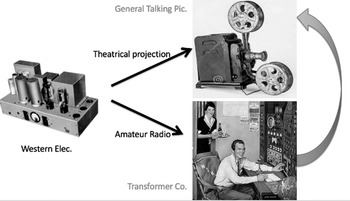
The limitation of a patent licensee’s FOU was validated by the Supreme Court in General Talking Pictures Corp. v. Western Electric, 304 U.S. 175 (1938). In that case, Western Electric, the holder of a patent on electronic amplifiers, licensed the patent to two different licensees: Transformer Co., in the field of amateur radio, and General Talking Pictures, in the field of movie projectors. When Transformer Co. began to sell amplifiers to General Talking Pictures for use in its projectors, Western Electric sued, alleging that Transformer Co. was not licensed to sell amplifiers for use in the theatrical projection market, and was thus infringing Western Electric’s patent. The Supreme Court agreed, holding that “patent owners may grant licenses extending to all uses or limited use in a defined field.”
Fields of use come in two flavors: those that limit the technical application of a licensed right (e.g., “treating emphysema”) and those that limit the customers to which products may be sold (e.g., manufacturers of amateur radio receivers versus movie projectors). In some respects, these two categories can appear to merge, as types of customers are easily defined by different technical applications (and the explicit allocation of customers is a violation of the antitrust laws – see Section 25.3). Nevertheless, analytically it is sometimes convenient to think of FOU as limiting either technical applications or customers.
Some agreements may define multiple fields of use: a licensee may have exclusive rights in some fields and nonexclusive rights in other fields; some fields may be prohibited to it; and it may have the option to acquire rights in still other fields, often upon the payment of a fee.
Biotech (e.g., a new molecule)
Treatment of hereditary breast cancer using a therapeutic agent targeted to variants in the BRCA1 or BRCA2 genes;
treatment of hereditary breast cancer using a therapeutic agent targeted to one or more genetic variants;
treatment of hereditary breast cancer;
treatment of breast cancer;
treatment of cancer;
human therapeutics;
all therapeutic applications, human and veterinary;
all applications, whether therapeutic, diagnostic, agricultural, industrial or military.
Electronics (e.g., part of a 5G telecommunications standard)
Implementation of wideband wireless communication functionality conforming to the 5G standard in a consumer handheld smartphone device;
implementation of wideband wireless communication functionality in a consumer handheld smartphone device;
implementation of wideband wireless communication functionality in a consumer device;
implementation of wideband wireless communication functionality in a communications device;
implementation of wireless communication functionality;
communications applications;
all applications.
Literary (e.g., a popular novel)
English-language print books for the US and Canadian market;
Spanish-language editions;
paperback editions;
ebooks;
magazine serializations;
audiobooks;
stage plays;
television and film adaptations;
action figures and other memorabilia;
T-shirts and other apparel;
theme park attractions.
Notes and Questions
1. Going broad. Generally, a licensee will desire an FOU that is as broad as possible, while the licensor will seek to limit the FOU so that it retains as many rights as possible to grant to others or exploit itself. Under what circumstances might a licensee be concerned about an FOU that is too broad?
2. Biotech FOU. In some industries, particularly biotechnology, there may be multiple potential uses for a licensed compound, such as a molecule, protein or gene. It is thus not uncommon in biotech licenses to see FOU that are limited to specific disease targets (e.g., cancer, cystic fibrosis, diabetes) or delivery mechanisms (e.g., intravenous, oral, topical, gene therapy). In many cases, license grants are exclusive with respect to these narrowly specified FOU. These licenses are typically granted at early stages of product research and development.
However, once a relatively complete drug or therapy is licensed (e.g., from a biotech company to a pharmaceutical manufacturer that will seek regulatory approval and then manufacture and market the drug), it is not typical to limit use by disease indication. The reason is that physicians are generally free to prescribe a medication for any use (i.e., the indicated use as well as “off label” uses), and the distributing company has little means of policing whether those uses fall within the scope of its license.
3. Anticompetitive fields? In General Talking Pictures, discussed above, Justice Black dissented, expressing concern that the allocation of different “fields” to different patent licensees, especially if numerous patents held by different owners were pooled together, could have the effect of creating a series of submonopolies that limited competition. We will discuss antitrust issues in greater detail in Chapter 25, but based on what you now know about FOU, do you agree with Justice Black’s concern?
4. FOU and the lawyer’s role. The FOU definition is one of the few parts of a license agreement that does not depend on legal terminology so much as a deep and accurate understanding of the licensed rights, the market and the potential business relationship between the parties. Clients will often provide their attorneys with a definition of the FOU that they feel is adequate, and that definition may even be embedded in a term sheet or letter of intent before the license drafting begins (see Section 5.3). But the diligent attorney should consider whether there are unanticipated pitfalls in the client’s FOU definition: Is it too broad or too narrow? Will it enable the licensee to carry out the business arrangement that is anticipated? How will it fare in the face of competition from others? Will the licensor have sufficient flexibility to license others in adjacent fields? Will the definition quickly become obsolete as technology advances? Asking questions like these, rather than cutting and pasting an FOU definition from a client’s email or term sheet, will serve the interests of both parties to the transaction.
Problem 6.2
For each of the following IP rights, describe the broadest FOU that you would realistically wish to obtain as the licensee, and the narrowest FOU that you would realistically wish to grant as the licensor:
a. a patented synthetic molecule that converts petroleum products into refined sugar;
b. the #1 R&B hit song “Bag of Fleas” by the megagroup Shag Shaggy Dog;
c. a little-known Bulgarian superhero comic character known as “Tarantula Man”;
d. a patented software encryption methodology that would reduce the effectiveness of cyberattacks by 90 percent;
e. the world-famous “squish” brand/logo that Squish Corp. has popularized through a line of high-end sports footwear;
f. The persona of the recently deceased pop superstar formerly known as Princess.
6.2.2 Licensed Product
The term “Licensed Product” means, essentially, a product made or sold by the licensee that uses or is covered by some or all of the licensed IP rights. The term Licensed Product is important because it often (but not always) defines the licensee’s payment obligation. That is, the licensee often must pay the licensor a royalty based on the licensee’s revenue earned from sales of Licensed Products. So, every Licensed Product triggers a payment. For this reason, the definition of Licensed Product must specify that the product in question is covered by the licensed IP. The licensor is typically not legally entitled to collect royalties on a licensee’s sale of products that are not covered by the licensor’s IP, a practice that is referred to as “misuse” (see Chapter 24).
A basic example of a Licensed Product definition is set forth below. The Cyrix case discussed in Section 6.3 introduces additional complexities to this definition, particularly clause (a).
“Licensed Product” means a product that is (a) manufactured or sold by or for the Licensee or its Affiliates and (b) which is covered by any claim of the Licensed Patents.
Licensed Product (Patent + Know-How)
“Licensed Product” means a product that is (a) manufactured or sold by or for the Licensee or its Affiliates and (b) which is covered by any claim of the Licensed Patents or which embodies, or is manufactured using, any of the Licensed Know-How.
6.2.3 Territory
Every IP license has a territorial scope, whether implicitly through the inherent national character of intellectual property rights or, more typically, as defined in the agreement.
Some licenses are worldwide. That is, they allow the licensee to exercise the licensed rights everywhere in the world. Of course, no license is needed in countries and regions where the licensor does not possess IP protection for the licensed rights. A few countries lack patent laws entirely (e.g., Eritrea, Myanmar, Somalia), and it is only the most determined patentee that seeks and obtains patent protection in every country that does. In terms of copyright, 179 countries are parties to the international Berne Convention for the Protection of Literary and Artistic Works, but Iran, Iraq, Cambodia, Ethiopia and a handful of others are not. Moreover, national IP laws are not recognized in international waters, or in space. Thus, while truly “worldwide” licenses may be overkill, there is little downside in granting worldwide rights when the licensor does not wish to impose any territorial restriction on the licensee’s activities.
Below the global level, parties may subdivide the world largely as they see fit. The territory of a license grant may be a city, state, country or larger region. Parties, however, often run into trouble when they try to define territories beyond national borders. Ill-defined regions such as “Asia Pacific”Footnote 16 the “Middle East” and the “US West Coast” (are Alaska and Hawaii included?) frequently appear in term sheets and letters of intent, but often lead to disagreements regarding the precise countries included within their scope. Even regions that may seem well-understood can harbor traps for the unwary. For example, when asked how many countries are in North America, many people will respond “three – Canada, the USA and Mexico.” But this is incorrect. There are around forty countries that make up the North American continent, including Caribbean nations such as Cuba, Jamaica, Haiti and the Dominican Republic, the Central American countries of Panama, Costa Rica, Nicaragua, Honduras, El Salvador, Guatemala and Belize, as well as Bermuda, off the Atlantic coast of the United States, and the massive territory Greenland (currently held by Denmark).
The territory of “Europe” presents even more complexities. When speaking of Europe, one might mean the European Union (EU) (27 countries), the European Economic Area (the EU plus Iceland, Liechtenstein and Norway), the Eurozone (19 of the EU countries), the European Patent Convention (16 countries), or the traditional “continent” of Europe, which includes Russia, Ukraine and other countries that are not a part of any of the major European trading coalitions. Moreover, even the EU is fluid, as the recent exit of the UK (via Brexit) demonstrates. License agreements that defined the licensee’s territory as spanning the European Union suddenly contracted on January 31, 2020, when the UK exited the EU.

Figure 6.5 The territory of “North America” consists of about forty different countries.
Perhaps the most precise manner of defining the territory of a license agreement is to list the specific countries included in the territory in a schedule or exhibit to the agreement, though this approach can have its hazards as well. Consider, for example, the patent and know-how licenses sponsored by the Medicines Patent Pool (MPP), an arm of the UN’s World Health Organization. The MPP obtains licenses from multinational pharmaceutical companies for the manufacture and distribution of lifesaving drugs in the developing world. A company granting such a license could specifically list the “developing” countries to which the license applied. But countries change status occasionally. India and China are, by some measures, still developing countries, yet many companies would hesitate to lump them together with far poorer countries for essentially philanthropic purposes. Instead of listing countries, a licensor could refer to an external list or index, such as the Organisation for Economic Co-operation and Development (OECD) list of “least developed countries,” a list that changes periodically.
A final note of caution with respect to territory definition is to ensure that the granting of licenses within defined territories is not a cover-up for the allocation of markets among competitors, a violation of the antitrust laws (see Section 25.3). Outside of the United States, competition laws and regional agreements may also limit the ability of parties to divide rights territorially. For example, the EU requires the free movement of goods, services, capital and persons among member states of the Union. Accordingly, agreements that prevent a party in one EU country from shipping goods to, or providing services in, another EU country may be invalid.
There is no foolproof method of correctly defining the territory of a license agreement, other than to draft carefully and thoughtfully with the intentions of the parties in mind and a good atlas at hand.
6.3 Grant Clause
With the nature of the licensed rights, and the markets in which the licensee may operate, established, the “grant” clause of a license agreement sets forth the precise legal rights that are granted to the licensee.
Grant Clause [Patent]
Licensor hereby grants [1] to Licensee a nonexclusive, [nonassignable] [2] license [3] under the Licensed Patent Rights, excluding the right to sublicense [4], to make, use, sell, offer for sale and import Licensed Products throughout the Territory.
Grant Clause [Copyright]
Licensor hereby grants [1] to Licensee a nonexclusive, [nonassignable] [2] license [3], excluding the right to sublicense [4], to reproduce, distribute, publicly perform and make derivative works of the Licensed Works throughout the Territory.
Grant Clause [Trademark]
Licensor hereby grants [1] to Licensee a nonexclusive, [nonassignable] [2] license [3], excluding the right to sublicense [4], to reproduce and display the Licensed Marks, without alteration, on Approved Products throughout the Territory and on advertising and promotional materials, tangible and electronic, promoting the Approved Products in the Territory.
[1] Present grant – although Stanford v. Roche (discussed in Section 2.3, Note 3) involved an assignment of rights rather than a license, its lessons about clear present grants of rights hold equally true in the realm of licensing. Avoid variants in the grant clause such as “shall grant,” “agrees to grant” and the like.
[2] Assignability – many license grants include the term “nonassignable.” Doing so could, however, conflict with the express assignment clause usually contained toward the back of the agreement (see Section 13.3). Rather than attempt to sort out any contradictory language when a merger or other corporate transaction is on the horizon, it is preferable to omit “nonassignable” in the grant clause.
[3] Right and license – the grant is of a “license.” Some agreements state that a “right and license” is granted, but this is unnecessary.
[4] Sublicensing – some licenses may be sublicensed (see Section 6.5), and if so, there will be a separate, often lengthy, section on sublicensing. However, if the intent is to prohibit sublicensing, it is efficient to do so in the grant clause.
Note that with respect to rights that are granted under statutory forms of IP (especially patents and copyrights), it is important to follow the statutory rights that are inherent in the licensed assets. Specifically:
The Patent Act establishes that the owner of a patent has the exclusive right to make, use, sell, offer for sale and import a patented article (35 U.S.C. § 271(a)).
The Copyright Act establishes that the owner of a copyright has the exclusive right to reproduce, prepare derivative works, distribute, perform and display various types of copyrighted works (17 U.S.C. § 106).
The Lanham Act establishes that the registrant of a federal trademark or service mark has the exclusive right to use in commerce, reproduce, copy, and imitate the mark (15 U.S.C. § 1114).
Keeping these distinctions in mind is critical when drafting the grant clause. Thus, if a patent is being licensed, it is nonsensical to grant a licensee the right to “display” the patented article or to “produce derivative works” of it, as these are not rights granted under the Patent Act. Likewise, granting the licensee under a copyright the right to “use” the copyrighted work can cause no end of confusion, as demonstrated by the decision in Kennedy v. NJDA, discussed in Section 9.1 (interpreting the word “use” in a copyright license to encompass the making of derivative works).
It is also important to note that these rights can often be granted separately, and not all rights need be granted to every licensee. For example, some patent licenses permit use of a patented apparatus, but do not grant the licensee the right to make or sell that apparatus. By the same token, some exclusive patent licenses may grant the licensee an exclusive right to sell a licensed product, but do not extend exclusivity to the use of that product. Copyright licenses can be limited to the right to reproduce a work, but not to create derivative works of it.
For IP assets that are not statutorily defined, such as know-how, unregistered trademarks, rights of publicity, database rights and the like, the drafter can be more creative regarding the authority granted to the licensee. Yet this additional flexibility can also lead to disputes, so the drafter must pay particular attention to defining the rights granted as precisely as possible to achieve the client’s objectives.
The Cyrix case excerpted below illustrates the importance of precisely defining the scope of the license granted.
77 F.3d 1381 (Fed. Cir. 1996)
LOURIE, CIRCUIT JUDGE
Intel Corporation appeals from the decision of the United States District Court for the Eastern District of Texas entering judgment in favor of Cyrix Corporation, SGS-Thomson Microelectronics, Inc. (ST), and International Business Machines Corporation (IBM), and holding that IBM and ST acted within the scope of their respective patent license agreements with Intel when IBM made, and ST had made, products for Cyrix. [We] affirm.
Background
Cyrix designed and sold microprocessors. Since it did not have its own facility for manufacturing the microprocessors it designed, it contracted with other companies to act as its foundries. Under such an arrangement, Cyrix provided the foundries with its microprocessor designs, and the foundries manufactured integrated circuit chips containing those microprocessors and sold them to Cyrix. Cyrix then sold the microprocessors in the marketplace under its own brand name.
It was Cyrix’s practice to use manufacturing facilities of companies that were licensed under Intel’s patents. IBM was such a company; it had obtained a license to Intel’s patents in a patent license agreement dated October 1, 1989. The granting clause of the IBM–Intel agreement provided as follows:
2.2 Subject to the provisions of Sections 2.7 and 3.3, INTEL, on behalf of itself and its Subsidiaries, hereby grants to IBM a worldwide, royalty-free, nonexclusive license under the INTEL Licensed Patents:
2.2.1 to make, use, lease, sell and otherwise transfer IBM Licensed Products and to practice any method or process involved in the manufacture or use thereof;
…
2.2.3 to have made IBM Licensed Products … by another manufacturer for the use, lease, sale or other transfer by IBM.
The agreement defined “IBM Licensed Products” as follows:
1.23 “IBM Licensed Products” shall mean IHS Products, … Supplies and any combination of any, some or all of the foregoing …
Cyrix also used ST as a foundry. Initially, ST manufactured the chips, but when ST was unable to meet Cyrix’s demands, ST requested its affiliate in Italy, SGS-Thomson Microelectronics S.r.L. (ST-Italy), to manufacture the needed chips, which ST then sold to Cyrix.
ST was operating under a license agreement between Mostek and Intel, which ST acquired by assignment. The agreement contains the following granting clause:
INTEL grants and agrees to grant to MOSTEK non-exclusive, non-transferrable, world-wide licenses under INTEL PATENTS and INTEL PATENT APPLICATIONS to make, to have made, to use, to sell (either directly or indirectly), to lease and to otherwise dispose of LICENSED PRODUCTS.
The agreement defined “LICENSED PRODUCTS” as follows:
“LICENSED PRODUCTS” shall mean any product manufactured, used or sold by either party covered by patents of the other party.
It is undisputed that ST-Italy is legally not a “subsidiary” of ST and is thus not licensed under the ST–Intel agreement. ST therefore relied upon its “have made” rights to obtain products from ST-Italy, which it then sold to Cyrix to fulfill its contractual obligation.
Cyrix filed a declaratory judgment action against Intel, alleging a “reasonable apprehension” that it would be sued for patent infringement.Footnote 17 Cyrix sought a declaration that it did not infringe the Intel patents, claiming immunity on the ground that IBM and ST were both licensed under the patents. Cyrix’s view was that because IBM and ST acted within the scope of their respective licenses from Intel, its sales of microprocessors were shielded from any holding of infringement, the microprocessors having been obtained from authorized licensees.
IBM and ST intervened, seeking an adjudication of their rights under their respective agreements with Intel. On motions for summary judgment by Intel, IBM, and ST, the district court granted summary judgment for IBM and ST, and denied summary judgment for Intel. The district court also entered judgment for Cyrix.
The district court held that IBM had a right to act as a foundry in supplying microprocessors to Cyrix. It found that the definition of “IBM Licensed Products” in the IBM–Intel agreement did not limit the products it was licensed to sell to those designed by IBM. The district court distinguished Intel Corp. v. U.S. Int’l Trade Comm’n, 946 F.2d 821, 828 (Fed.Cir.1991) (”Atmel”) (construing the term “Sanyo … products” in a license agreement as limiting the grant of rights to Sanyo-designed and Sanyo-manufactured products). The district court concluded that, unlike the situation in Atmel, an internal conflict in the IBM–Intel agreement was not created by construing the license grant to cover products other than IBM-designed products. The court considered the facts to be more analogous to those in ULSI, rather than to those in Atmel.
The district court also held that ST had the right to have microprocessors made for it by any third party, including ST-Italy, and the right to sell those microprocessors to Cyrix. The district court found that the microprocessors were made for ST, not Cyrix, and that the supply agreement between ST and ST-Italy was not a sublicense that exceeded ST’s rights under the ST–Intel agreement. The district court thus distinguished the case that Intel cited in support of its position, E.I. du Pont de Nemours and Co. v. Shell Oil Co., 498 A.2d 1108, 1114–15 (Del. 1985) (holding that a third-party’s manufacturing of a product for itself under a licensee’s “have made” rights was a prohibited sublicense). This appeal followed.
Discussion
IBM–Intel Agreement
Intel argues that the IBM–Intel agreement does not support a grant of foundry rights. Intel relies upon the word “IBM” as modifying the term “licensed products” in arguing that this modifier is a so-called “Sanyo limitation,” limiting the scope of the products licensed and indicating that the parties did not intend to provide foundry rights. Intel also asserts that the “have designed” provision in the license does not provide IBM with the right to act as a foundry in manufacturing products designed by Cyrix.

Figure 6.6 The complex flow of license rights in Cyrix v. Intel.
Cyrix and IBM argue that the plain language of the IBM–Intel agreement grants to IBM the right to make and sell to Cyrix microprocessors that Cyrix designed. They argue that the “IBM” modifier in section 2.2.1 of the agreement was intended to distinguish “IBM Licensed Products” from “Intel Licensed Products,” and that “IBM Licensed Products” as defined in the agreement are not limited to those products specifically designed by IBM and made for itself. They argue that the term “IBM” used in the term “IBM Licensed Products” is not a “Sanyo limitation.”
We agree with the district court. The agreement granted IBM the right to make and sell “IBM Licensed Products,” which are defined elsewhere in the agreement and are not limited to products designed by IBM. Sections 2.2.1, which grants a license to sell “IBM Licensed Products,” and 1.23, which defines “IBM Licensed Products,” must be read together. When this is done, the granting provision essentially reads as follows:
2.2.1 to make, use, lease, sell and otherwise transfer IHS Products, … Supplies and any combination of any, some or all of the foregoing … and to practice any method or process involved in the manufacture or use thereof;
The products so defined are not limited to IBM-designed products. They include categories of products defined without the IBM prefix. The agreement defined these items as follows:
1.1 “Information Handling System” shall mean any instrumentality or aggregate of instrumentalities primarily designed to compute, classify, process, transmit, receive, retrieve, originate, switch, store, display, manifest, measure, detect, record, reproduce, handle or utilize any form of information, intelligence or data for business, scientific, control or other purposes.
1.2 “IHS Product” shall mean an Information Handling System or any instrumentality or aggregate of instrumentalities (including, without limitation, any component or subassembly) designed for incorporation in an Information Handling System;
1.4 “Supply” shall mean, as to each party hereto, any article or matter designed for use in or by, and adapted to be effectively consumed in the course of operation of an IHS Product licensed herein to that party.
Accordingly, we conclude that the district court correctly held that “IBM Licensed Products” are not limited to products designed by IBM.
We also do not agree with Intel that the “IBM” modifier is analogous to the “Sanyo limitation” in Atmel. The agreement in Atmel contained the following provision:
Intel hereby grants and will grant to Sanyo an [sic] non-exclusive, world-wide royalty-free license without the right to sublicense except to its Subsidiaries, under Intel Patents which read on any Sanyo Semiconductor Material, Semiconductor Device, Magnetic Bubble Memory Device, Integrated Circuit and Electronic Circuit products, for the lives of such patents, to make, use and sell such products.
We construed the term “Sanyo” to limit the products listed after that term. Such a construction was required because it gave meaning to the term “Sanyo” which was consistent with other provisions of the contract. Otherwise, the term “Sanyo” would have lacked meaning, and a contract must be construed if possible to give meaning to all its provisions. In contrast, the term “IBM Licensed Products” is thoroughly defined in the IBM–Intel agreement to provide no Sanyo-type limitation. Moreover, as argued by IBM, the “IBM” modifier is readily explained by its being distinguished from “Intel Licensed Products.”
This case is more analogous to ULSI than Atmel. In ULSI, Hewlett-Packard Company (HP) acted as a foundry to make and sell math coprocessor chips to ULSI. HP obtained a license to Intel’s patents under an agreement in which “each granted to the other an ‘irrevocable, retroactive, nonexclusive, world-wide, royalty-free license.’” ULSI sought to be shielded from infringement of Intel’s patents by purchasing the math coprocessor chips from HP, which was acting as an authorized seller. In concluding that HP’s agreement with Intel provided HP with the right to act as a foundry for ULSI, we stated that, in contrast to the “Sanyo limitation” discussed in Atmel, “the licensing agreement between Intel and HP here contains no restriction on HP’s right to sell or serve as a foundry.” There was no “Sanyo limitation” in ULSI. The products that were licensed were defined broadly. Notwithstanding the presence of the modifier “IBM,” the same is true here.
Intel also argues that section 2.2.3, providing a right to “have made” products only when the designs are furnished by IBM, limits IBM’s right to have products designed by Cyrix. IBM did not have the products made for it, and thus this provision does not limit its rights to make and have designed the products it sold to Cyrix. In summary, IBM properly made and sold microprocessors under section 2.2.1; IBM properly had microprocessors designed under section 2.2.2; and IBM did not “have made” microprocessors under the more limited section 2.2.3. Thus, IBM did not act outside the terms of the Intel agreement.
Intel also makes a policy argument premised on a preamble clause in its agreement with IBM in which the parties stated that “each expects to continue a research and development effort which will produce further patents and each may require a nonexclusive license under such patents of the other.” Intel argues that interpreting the agreement in favor of IBM would discourage the research the agreement was intended to foster. That argument totally misses the mark. The meaning of that clause is simply that the parties were entering into the agreement to facilitate their future research, i.e., to provide themselves with patent freedom for the future. Even if Intel never intended IBM to act as a foundry, this vague preamble cannot be interpreted to give effect to that intention if doing so would override clear operative language in the agreement. This agreement clearly gave IBM the right to make and sell to Cyrix microprocessors designed by Cyrix.
ST–Intel Agreement
Intel argues that the arrangement between ST and ST-Italy is in effect a sublicense, which it is clear is not permissible under the ST–Intel agreement. In particular, it argues that under ST’s “have made” rights, ST is only permitted to have products made for itself. Intel posits that the arrangement among ST, ST-Italy, and Cyrix was a mere paper transaction, i.e., a “sham.” See E.I. du Pont, 498 A.2d at 1116 (holding that a third party made a product for itself, not for a licensee, when it made a product and sold it to the licensee, who simultaneously sold it back to the third party).
ST and Cyrix argue that ST was acting within the scope of its “have made” rights. ST denies that its arrangement with ST-Italy was a “sham” and claims that it was using ST-Italy to manufacture products for it in order to meet its obligation to supply microprocessors to Cyrix. They distinguish du Pont on its facts, noting that in du Pont the party manufacturing under the “have made” right was also using the product itself, whereas here the product made under the “have made” right was sent to and eventually sold by the licensee.
We start with the clear proposition that, under its agreement, ST had the right to have the product made for it and to sell that product to third parties. It relied upon that right to have the product made by ST-Italy and to sell it to Cyrix. The district court found that the arrangement was distinguishable from that in du Pont. In du Pont, Carbide sought a license under du Pont’s patent to manufacture a product known as methomyl, but du Pont refused to grant Carbide a license. Carbide then entered into an agreement with Shell, du Pont’s licensee, whereby Carbide would manufacture methomyl for Shell under Shell’s “have made” rights and Shell would sell it back to Carbide. Carbide would then use it (or sell it) as it wished. The Supreme Court of Delaware, whose law governed that agreement, concluded that the two agreements, one to enable Carbide to manufacture methomyl for Shell and the other whereby Shell sold it back to Carbide, were two halves of a single business transaction. The net result was that they enabled Carbide to make and use the patented product. The court held that that was in effect a sublicense, which was prohibited under the Shell–du Pont agreement.
The district court identified several important differences between the situation in du Pont and the arrangement among ST, ST-Italy, and Cyrix, and concluded in its Memorandum Opinion and Order as follows:
The substance of the arrangement between Cyrix and ST and ST and ST-Italy is that when Cyrix needs wafers, it issues a purchase order to ST. ST then either manufactures the wafers itself at its Carrollton, Texas, facility or arranges for ST-Italy to manufacture the wafers at its Italian facility. ST is selling wafers. It is not selling or receiving payment for the use of its license from Intel. It has not authorized ST-Italy to make the wafers for or sell them to anyone other than ST. The production of the wafers is for the use of ST, the original licensee, and not for the use of ST-Italy. This is a valid exercise of the have-made rights granted under the License Agreement and does not constitute a sublicense.
We agree with the district court that the facts here are thoroughly distinguishable from those in du Pont. In du Pont, the arrangement was a sham. The third-party (Carbide) acting under Shell’s “have made” rights was manufacturing and selling the product to Shell and then buying it back in what was only a set of paper transactions. Here, however, the third-party (ST-Italy) properly manufactured microprocessors under ST’s “have made” rights, and ST then properly sold the products to a different entity, Cyrix. The two agreements, one permitting ST-Italy to manufacture microprocessors for ST and the other providing for ST’s sale of microprocessors to Cyrix, were separate business transactions. As the district court found, ST was using both its own facility and ST-Italy’s to satisfy its obligation to provide microprocessors to Cyrix. The products manufactured by ST-Italy were made for ST. If the facts in this case had been that Cyrix made the product for ST under ST’s “have made” rights and then ST sold the product back to Cyrix, then they would have been analogous to those in du Pont, but those are not our facts. We accordingly conclude that the district court did not err in holding that the arrangements among ST, ST-Italy, and Cyrix were a valid exercise of ST’s “have made” rights under its agreement with Intel. The district court thus did not err in granting a declaratory judgment of noninfringement in favor of Cyrix and ST.

Figure 6.7 The “have-made” arrangements in du Pont v. Shell.
AFFIRMED.
Notes and Questions
1. Sublicensing. Sublicenses, which are discussed in greater detail in Section 6.5, play a major role in the court’s analysis in Cyrix. For now, suffice it to say that a sublicense is a grant by a licensee of a portion of the rights that it has received from the licensor. Sublicensing, like subleasing in the context of real property, may be prohibited by the “primary” license between the licensor and the licensee (i.e., the sublicensor). Did Intel’s licensing arrangements with ST and IBM permit them to sublicense rights to Cyrix?
2. Foundry use and the Sanyo limitation. In the microelectronics industry, a “foundry” is a manufacturing facility where integrated circuits are manufactured to the order of a customer, usually using the customer’s specifications. Because Cyrix lacked a license from Intel, Cyrix provided integrated circuit designs to ST and IBM, both Intel licensees, for manufacture. In effect, ST and IBM were acting as foundries for Cyrix. Why was Intel concerned about this arrangement? What is a “Sanyo limitation” and why did Intel argue that the license included one?
3. Generality as permissiveness? The Cyrix court interpreted Intel’s license grant to IBM as including the right to make products designed by other entities. This determination was based in large part on the rather broad and general definitions given to the term “IBM Licensed Products.” The license grant clause reads:
[INTEL] hereby grants to IBM a worldwide, royalty-free, nonexclusive license under the INTEL Licensed Patents … to make, use, lease, sell and otherwise transfer IBM Licensed Products and to practice any method or process involved in the manufacture or use thereof …
If you were to redraft the grant in a manner more favorable to Intel, how would you do so to prevent IBM from acting as a foundry for Cyrix?
4. Have-made and foundry rights. Unlike the right to “make,” “use,” “offer to sell” and “sell” a patented article, the right to have the article made by a third party is not one of the exclusive rights granted to a patent holder under 35 U.S.C. § 271(a). Courts thus have some flexibility in interpreting the have-made right, but have often interpreted it, at least in the electronics industry, as specifically permitting a customer to have products manufactured by a foundry.Footnote 18 The have-made right then immunizes the foundry manufacturer from claims of infringement. Do you think that Intel granted IBM a “have-made right”? If not, would your interpretation change if Intel knew, at the time the license was negotiated, that IBM had all of its products fabricated by third parties? What is the difference between a “have-made” right and a sublicense?
5. More on have-made and foundry rights. If a have-made right has been granted, courts must often determine the limits of permitted foundry activity, and whether it includes the manufacture of products that are not made to the specifications of a particular customer, but are stock or off-the-shelf products. For example, in Thorne EMI N. Am. v. Hyundai Elec. Indus., 1996 U.S. LEXIS 21170 (Dist. Del. 1996), the court held that “a foundry commissioned by IBM to manufacture [Hyundai] products would have the protection of the license agreement, [but] a manufacturer of ‘off the shelf’ products is not a foundry … [and] therefore, whether or not it sold the products to IBM, would not be protected by the agreement.” Assuming that Intel granted a have-made right to IBM, was IBM operating within its scope as a foundry for Cyrix?Footnote 19
6. Have-made under copyright. Have-made rights are usually discussed in the context of patent licensing, but they can arise under copyright law as well. In Great Minds v. Fedex Office & Print Servs., Inc., 886 F.3d 91, 94 (2d Cir. 2018), the court dismissed a copyright infringement action against a commercial printer that copied materials at request of an authorized licensee, noting the “mundane ubiquity of lawful agency relationships.” Where the text of a license “provides no basis for distinguishing between” a licensee that directs its own employees to make copies versus one that “achieves an identical result by enlisting a temporary independent contractor—or a commercial duplication service,” the contractor is not liable for infringement. How does this reasoning work in terms of the exclusive rights granted under the Copyright Act, which do not include a right to “make,” but do include the right to “reproduce”? Does this decision effectively create a right to sublicense under copyright law, or should it be interpreted more narrowly, like the “have-made” right under patent law?
7. Branding as a restriction. Another way that licensors sometimes try to prevent their licensees from acting as third-party foundries is to limit the scope of their licenses to products bearing the licensee’s brands. Thus, Intel could have limited IBM’s license to the manufacture of products “marketed and sold under IBM’s brands.” This certainly would have prevented IBM from manufacturing Cyrix-branded chips. But how might such a restriction be circumvented by a determined licensee? Would such circumvention result in as effective a situation for the third-party customer?
8. Granting what you have the right to grant: the legal authority limitation. Recall the Spindelfabrik case from Section 6.1. Murata licensed the ’011 patent to Schubert, then assigned the patent and the Murata–Schubert license to Suessen. Murata did not own the ’946 patent. Schubert argued that Suessen, which did hold the ’946 patent, should be deemed to have licensed it to Schubert when Suessen acquired the ’011 patent and associated license. But the court disagreed, holding that the license could only convey to Schubert what the original licensor, Murata, could legally convey. Because Murata never held the ’946 patent, Murata could not license it to Schubert, and Suessen, which acquired the Murata–Schubert license, had no obligation to grant Schubert more than Murata did.
We discussed Spindelfabrik in the context of defining licensed rights (via the definition of “Control”). But the idea that a licensor cannot grant more than it holds also finds its way into license grant clauses. Consider the highlighted language in the following license grant.
Licensor hereby grants to Licensee, during the Term of this Agreement, and solely to the extent that Licensor has the authority to do so, a nonexclusive, nonassignable worldwide right and license under the Licensed Rights, excluding the right to sublicense, to make, use, sell, offer for sale and import Licensed Products.
The above clause limits the license grant to rights that the licensor has the legal authority to grant. At first blush, this limitation might seem tautological: of course the licensor can’t grant more rights than it has, as the court in Spindelfabrik emphasized. So is such a clause mere legal surplusage? Not exactly.
Suppose, for example, that “Licensed Rights” encompasses all of the licensor’s worldwide patent rights with respect to a particular technology. Also suppose that the licensor previously granted to Company A an exclusive right to use such technology in France. When the licensor grants further rights to Company B, it cannot grant Company B the right to use the technology in France. So rather than modify the grant to exclude France (and every other country and subfield in which it has granted rights to others), the licensor can simply limit the license to the rights that the licensor has the authority to grant to Company B.
Should Company B, the licensee, be concerned about such a limitation? Absolutely. But it can protect itself by insisting that the licensor list any previous license grants with respect to the licensed rights in a schedule (see Section 10.2.2, Note 6). How might such a disclosure protect the licensee?
9. Use not sell. As noted in the introduction to this part, some nonexclusive patent licenses grant the right to use but not to sell a licensed product, and some exclusive licenses grant exclusivity with respect to the right to sell, but not the right to use. What is the reasoning behind splitting the use and sale rights in this manner? How might the right to make a licensed product be addressed in these scenarios?
6.4 Changes to License Scope
Some IP rights – copyrights, trademarks, trade secrets – can last a very long time, sometimes in excess of a century and sometimes indefinitely. It is not surprising, therefore, that technologies and business practices that were contemplated when license agreements were drafted may change radically during the term of those agreements. How should unanticipated future uses be treated? The following cases explore this important issue.
145 F.3d 481 (2d Cir. 1998)
LEVAL, CIRCUIT JUDGE
Boosey & Hawkes Music Publishers Ltd., an English corporation and the assignee of Igor Stravinsky’s copyrights for “The Rite of Spring,” brought this action alleging that the Walt Disney Company’s foreign distribution in video cassette and laser disc format (”video format”) of the film “Fantasia,” featuring Stravinsky’s work, infringed Boosey’s rights. In 1939 Stravinsky licensed Disney’s distribution of The Rite of Spring in the motion picture. Boosey, which acquired Stravinsky’s copyright in 1947, contends that the license does not authorize distribution in video format … We hold that summary judgment was properly granted to Disney with respect to Boosey’s Lanham Act claims, but that material issues of fact barred the other grants of summary judgment. [We] remand all but the Lanham Act claim for trial.
Background
During 1938, Disney sought Stravinsky’s authorization to use The Rite of Spring (sometimes referred to as the “work” or the “composition”) throughout the world in a motion picture. Because under United States law the work was in the public domain, Disney needed no authorization to record or distribute it in this country, but permission was required for distribution in countries where Stravinsky enjoyed copyright protection. In January 1939 the parties executed an agreement (the “1939 Agreement”) giving Disney rights to use the work in a motion picture in consideration of a fee to Stravinsky of $6000.
The 1939 Agreement provided that:
In consideration of the sum of Six Thousand ($6,000.) Dollars, receipt of which is hereby acknowledged, [Stravinsky] does hereby give and grant unto Walt Disney Enterprises, a California corporation … the nonexclusive, irrevocable right, license, privilege and authority to record in any manner, medium or form, and to license the performance of, the musical composition hereinbelow set out
Under “type of use” in ¶ 3, the Agreement specified that
The music of said musical composition may be used in one motion picture throughout the length thereof or through such portion or portions thereof as the Purchaser shall desire. The said music may be used in whole or in part and may be adapted, changed, added to or subtracted from, all as shall appear desirable to the Purchaser in its uncontrolled discretion.

Figure 6.8 Igor Stravinsky and Walt Disney.
The Agreement went on to specify in ¶ 4 that Disney’s license to the work “is limited to the use of the musical composition in synchronism or timed-relation with the motion picture.”
Finally, ¶ 7 of the Agreement provided that “the licensor reserves to himself all rights and uses in and to the said musical composition not herein specifically granted” (the “reservation clause”).
Disney released Fantasia, starring Mickey Mouse, in 1940. The film contains no dialogue. It matches a pantomime of animated beasts and fantastic creatures to passages of great classical music, creating what critics celebrated as a “partnership between fine music and animated film.” The soundtrack uses compositions of Bach, Beethoven, Dukas, Schubert, Tchaikovsky, and Stravinsky, all performed by the Philadelphia Orchestra under the direction of Leopold Stokowski. As it appears in the film soundtrack, The Rite of Spring was shortened from its original 34 minutes to about 22.5; sections of the score were cut, while other sections were reordered. For more than five decades Disney exhibited The Rite of Spring in Fantasia under the 1939 license. The film has been re-released for theatrical distribution at least seven times since 1940, and although Fantasia has never appeared on television in its entirety, excerpts including portions of The Rite of Spring have been televised occasionally over the years. Neither Stravinsky nor Boosey has ever previously objected to any of the distributions.
In 1991 Disney first released Fantasia in video format. The video has been sold in foreign countries, as well as in the United States. To date, the Fantasia video release has generated more than $360 million in gross revenue for Disney.
Discussion
Boosey’s request for declaratory judgment raises … whether the general grant of permission under the 1939 Agreement licensed Disney to use The Rite of Spring in the video format version of Fantasia (on which the district court found in Disney’s favor) …
Boosey contends that the license to use Stravinsky’s work in a “motion picture” did not authorize distribution of the motion picture in video format, especially in view of the absence of an express provision for “future technologies” and Stravinsky’s reservation of all rights not granted in the Agreement. Disputes about whether licensees may exploit licensed works through new marketing channels made possible by technologies developed after the licensing contract – often called “new-use” problems – have vexed courts since at least the advent of the motion picture.
In Bartsch v. Metro-Goldwyn-Mayer, Inc., [391 F.2d 150 (2d Cir.1968)] we held that “licensees may properly pursue any uses which may reasonably be said to fall within the medium as described in the license.” 391 F.2d at 155. We held in Bartsch that a license of motion picture rights to a play included the right to telecast the motion picture. We observed that “if the words are broad enough to cover the new use, it seems fairer that the burden of framing and negotiating an exception should fall on the grantor,” at least when the new medium is not completely unknown at the time of contracting.

Figure 6.9 The 1991 VHS videotape version of Disney’s Fantasia sparked a dispute with Igor Stravinsky’s estate.
The 1939 Agreement conveys the right “to record [the composition] in any manner, medium or form” for use “in [a] motion picture.” We believe this language is broad enough to include distribution of the motion picture in video format. At a minimum, Bartsch holds that when a license includes a grant of rights that is reasonably read to cover a new use (at least where the new use was foreseeable at the time of contracting), the burden of excluding the right to the new use will rest on the grantor. The license “to record in any manner, medium or form” doubtless extends to videocassette recording and we can see no reason why the grant of “motion picture” reproduction rights should not include the video format, absent any indication in the Agreement to the contrary. If a new-use license hinges on the foreseeability of the new channels of distribution at the time of contracting – a question left open in Bartsch – Disney has proffered unrefuted evidence that a nascent market for home viewing of feature films existed by 1939. The Bartsch analysis thus compels the conclusion that the license for motion picture rights extends to video format distribution.
We recognize that courts and scholars are not in complete accord on the capacity of a broad license to cover future developed markets resulting from new technologies. The Nimmer treatise describes two principal approaches to the problem. According to the first view, advocated here by Boosey, “a license of rights in a given medium (e.g., ‘motion picture rights’) includes only such uses as fall within the unambiguous core meaning of the term (e.g., exhibition of motion picture film in motion picture theaters) and exclude any uses that lie within the ambiguous penumbra (e.g., exhibition of motion picture on television).” Under this approach, a license given in 1939 to “motion picture” rights would include only the core uses of “motion picture” as understood in 1939 – presumably theatrical distribution – and would not include subsequently developed methods of distribution of a motion picture such as television videocassettes or laser discs.
The second position described by Nimmer is “that the licensee may properly pursue any uses that may reasonably be said to fall within the medium as described in the license.” Nimmer expresses clear preferences for the latter approach on the ground that it is “less likely to prove unjust.” As Judge Friendly noted in Bartsch, “So do we.”
We acknowledge that a result which deprives the author-licensor of participation in the profits of new unforeseen channels of distribution is not an altogether happy solution. Nonetheless, we think it more fair and sensible than a result that would deprive a contracting party of the rights reasonably found in the terms of the contract it negotiates. This issue is too often, and improperly, framed as one of favoritism as between licensors and licensees. Because licensors are often authors – whose creativity the copyright laws intend to nurture – and are often impecunious, while licensees are often large business organizations, there is sometimes a tendency in copyright scholarship and adjudication to seek solutions that favor licensors over licensees. Thus in [Cohen v. Paramount Pictures, Inc., 845 F.2d 851 at 854 [(9th Cir. 1988)], the Ninth Circuit wrote that a “license must be construed in accordance with the purpose underlying federal copyright law,” which the court construed as the granting of valuable, enforceable rights to authors and the encouragement of the production of literary works. Asserting that copyright law “is enacted for the benefit of the composer,” the court concluded that it would “frustrate the purposes of the [copyright] Act” to construe the license as encompassing video technology, which did not exist when the license was granted.
In our view, new-use analysis should rely on neutral principles of contract interpretation rather than solicitude for either party. Although Bartsch speaks of placing the “burden of framing and negotiating an exception … on the grantor,” it should not be understood to adopt a default rule in favor of copyright licensees or any default rule whatsoever. What governs under Bartsch is the language of the contract. If the contract is more reasonably read to convey one meaning, the party benefited by that reading should be able to rely on it; the party seeking exception or deviation from the meaning reasonably conveyed by the words of the contract should bear the burden of negotiating for language that would express the limitation or deviation. This principle favors neither licensors nor licensees. It follows simply from the words of the contract.
The words of Disney’s license are more reasonably read to include than to exclude a motion picture distributed in video format. Thus, we conclude that the burden fell on Stravinsky, if he wished to exclude new markets arising from subsequently developed motion picture technology, to insert such language of limitation in the license, rather than on Disney to add language that reiterated what the license already stated.
Other significant jurisprudential and policy considerations confirm our approach to new-use problems. We think that our view is more consistent with the law of contract than the view that would exclude new technologies even when they reasonably fall within the description of what is licensed. Although contract interpretation normally requires inquiry into the intent of the contracting parties, intent is not likely to be helpful when the subject of the inquiry is something the parties were not thinking about. Nor is extrinsic evidence such as past dealings or industry custom likely to illuminate the intent of the parties, because the use in question was, by hypothesis, new, and could not have been the subject of prior negotiations or established practice. Moreover, many years after formation of the contract, it may well be impossible to consult the principals or retrieve documentary evidence to ascertain the parties’ intent, if any, with respect to new uses. On the other hand, the parties or assignees of the contract should be entitled to rely on the words of the contract. Especially where, as here, evidence probative of intent is likely to be both scant and unreliable, the burden of justifying a departure from the most reasonable reading of the contract should fall on the party advocating the departure.
Nor do we believe that our approach disadvantages licensors. By holding contracting parties accountable to the reasonable interpretation of their agreements, we encourage licensors and licensees to anticipate and bargain for the full value of potential future uses. Licensors reluctant to anticipate future developments remain free to negotiate language that clearly reserves the rights to future uses. But the creation of exceptional principles of contract construction that places doubt on the capacity of a license to transfer new technologies is likely to harm licensors together with licensees, by placing a significant percentage of the profits they might have shared in the hands of lawyers instead.
Neither the absence of a future technologies clause in the Agreement nor the presence of the reservation clause alters that analysis. The reservation clause stands for no more than the truism that Stravinsky retained whatever he had not granted. It contributes nothing to the definition of the boundaries of the license. And irrespective of the presence or absence of a clause expressly confirming a license over future technologies, the burden still falls on the party advancing a deviation from the most reasonable reading of the license to insure that the desired deviation is reflected in the final terms of the contract. As we have already stated, if the broad terms of the license are more reasonably read to include the particular future technology in question, then the licensee may rely on that language.
Bartsch therefore continues to articulate our “preferred” approach to new-use questions, and we hold that the district court properly applied it to find that the basic terms of Disney’s license included the right to record and distribute Fantasia in video format.
Notes and Questions
1. Other new uses. In Random House, Inc. v. Rosetta Books, LLC, 150 F. Supp. 2d 613 (S.D.N.Y. 2002), aff’d, 283 F.3d 490 (2d Cir. 2002), the court held that an agreement granting Random House the exclusive right to “print, publish and sell” certain works by William Styron, Kurt Vonnegut and other prominent authors “in book form” did not convey a right to release the works in electronic form as “ebooks.” The court explained,
Manifestly, paragraph #1 of each contract – entitled either “grant of rights” or “exclusive publication right” – conveys certain rights from the author to the publisher. In that paragraph, separate grant language is used to convey the rights to publish book club editions, reprint editions, abridged forms, and editions in Braille. This language would not be necessary if the phrase “in book form” encompassed all types of books. That paragraph specifies exactly which rights were being granted by the author to the publisher. Indeed, many of the rights set forth in the publisher’s form contracts were in fact not granted to the publisher, but rather were reserved by the authors to themselves. For example, each of the authors specifically reserved certain rights for themselves by striking out phrases, sentences, and paragraphs of the publisher’s form contract. This evidences an intent by these authors not to grant the publisher the broadest rights in their works.
The court distinguished Boosey & Hawkes and other early cases by characterizing them as encompassing within the licensed rights “new uses” within the “same medium as the original grant” (i.e., the display of a motion picture, whether on television or a videocassette). Ebooks, on the other hand, are “a separate medium from the original use – printed words on paper.” Do you agree with this distinction? Is the difference between ebooks and printed books very different than the difference between videotapes and cinematic films? Or is it, as the court claims, merely “a determination, relying on neutral principles of contract interpretation”?

Figure 6.10 William Styron’s Sophie’s Choice, one of the titles at issue in Random House v. Rosetta Books.
2. Tasini and database rights. The advent of digital formats such as databases and the Internet complicated the licensing of traditional print works such as newspaper articles. The Supreme Court in New York Times Co., Inc. v. Tasini, 533 U.S. 483 (2001) held that a newspaper that obtained the right to publish stories written by freelance journalists did not automatically obtain the right to place those stories in an online searchable database. After Tasini, a publisher specifically must obtain the right to publish the work both in the original newspaper or other compilation as well as on the Internet, in a database or in other digital formats. How do you think publishers reacted to the Tasini decision? Do you think that they made any changes to their standard agreements with freelance journalists?
Problem 6.3
Scent-o-Matic is a new technology for ebooks that gives users an olfactory overlay, such as providing the fragrance of baking bread in a recipe book or the aroma of a city back alley in a 1930s detective story. Scent-o-Matic is patented and works using software that causes certain scents to be produced when certain keywords are on the page. Scent-o-Matic is owned by Nile Books, a popular ebook publisher with existing licenses to deliver the numerous titles in its library to its ebook readers. The standard ebook publication license grants Nile Books the right to “reproduce and distribute the Work in English as an electronic book of the full-length verbatim text of the Work, including any illustrations, in a digital format. Such digital format may include necessary modifications to allow an end user to access, read, and interact with the Work in digital format.”
Analyze whether the Scent-o-Matic technology would be allowed under the license in the following circumstances.
a. The original ebooks are not altered – the Scent-o-Matic ebook reader contains a program that analyzes words on the screen and produces scents when it recognizes certain keywords.
b. Niles Books edits the original ebook by adding a non-visible notation to certain words such that when those words appear on the screen, Scent-o-Matic produces certain scents.
c. Your client is an established author with a new series of books soon to be published. She does not want Niles Books to deploy its Scent-o-Matic technology with her books. Redraft the language to make it clear that neither Scent-o-Matic nor any other technologies that add sensory inputs can be used with her books without her permission.
6.5 Sublicensing
A sublicense is a grant of rights by a licensee to a third party (the sublicensee) which encompasses some or all of the rights that have been granted to the licensee under a primary license agreement. Unlike an assignment of a license, the licensee that grants a sublicense generally remains bound by the terms of the original license. By the same token, the sublicense only exists so long as the underlying license remains in force.
Generally speaking, nonexclusive licensees may not grant sublicenses unless expressly permitted to do so in the primary license agreement. In some cases, however, exclusive licensees are permitted, under the law, to grant sublicenses without express permission from the licensor.Footnote 20 As a result, it is prudent, whether drafting an exclusive or a nonexclusive license, to specify whether, and to what degree, the licensee may grant sublicenses.Footnote 21
If sublicensing will be permitted under a licensing agreement, the licensor will often seek to impose some degree of control over the nature and identity of sublicensees.

Figure 6.11 Graphical representation of license and sublicense rights.
a. The licenses granted under this Agreement shall include the right to grant sublicenses without the consent of Licensor to any of Licensee’s Affiliates for so long as it remains an Affiliate of Licensee. Except as provided above, Licensee has no right to sublicense any licenses granted under this Agreement without the prior written consent of Licensor [1], which shall not be unreasonably withheld or delayed [2].
b. [Any sublicense granted by Licensee for any in-kind or nonmonetary consideration (including, but not limited to, services, equipment, supplies, usage of facilities, advertising, barter, bandwidth, data, intellectual property of any kind, releases from liability, options, interests in litigation, security interests, loans, debt forgiveness, covenants not to sue or to assert rights, software, technology, know-how, marketing rights, improvements, capital stock, units, partnership interests or other ownership interests in entities of any kind, or rights to receive dividends, revenue, royalties or other monies in the future) may be granted only with Licensor’s express prior written consent.] [3]
c. No sublicense shall relieve Licensee of its obligations under this Agreement, including the obligation to pay Licensor any and all fees, royalties and other amounts due. [4] Any breach of a sublicense agreement by the Sublicensee shall be deemed to constitute a breach of this Agreement by Licensee, and Licensee shall be liable for any action by a Sublicensee that would constitute a breach of this Agreement had it been committed by Licensee. [5]
d. Licensee shall provide a fully executed copy of each agreement pursuant to which it grants sublicense hereunder to Licensor immediately following its execution [6]. Without limiting the generality of the foregoing, each sublicense agreement shall provide that:
(i) Licensor shall have no responsibility, obligation or liability of any kind or manner to any Sublicensee;
(ii) Licensor shall be an express third party beneficiary of such sublicense, entitled to enforce it in accordance with its terms; [7]
(iii) Sublicensees shall have no further right to grant sublicenses of the rights granted under this Agreement; [8]
(iv) in the event of any inconsistency between the terms of a sublicense agreement and this Agreement, this Agreement shall control; [9]
(v) in the event that any Sublicensee (or any entity or person acting on its behalf) initiates any proceeding or otherwise asserts any claim challenging the validity or enforceability of any Licensed Right in any court, administrative agency or other forum, Licensee shall, upon written request by Licensor, terminate forthwith the sublicense agreement with such Sublicensee, and the sublicense agreement shall provide for such right of termination by Licensee; [10]
(vi) such sublicense shall terminate automatically upon the termination of this Agreement. [11]
(vii) the sublicensee shall be bound by provisions equivalent to those found in Sections xxx of this Agreement [e.g., audit, reporting, indemnification, non-competition, confidentiality, etc.]. [12]
[1] Approval rights – the licensor often retains the right to approve sublicensees, though in some cases a licensee’s Affiliates are automatically approved (this is especially the case when it is anticipated that the licensee will distribute a product through an international network of affiliated companies). In approving or rejecting sublicensees, the licensor must be careful to avoid potential antitrust issues that can arise from customer allocation and group boycotts (see Sections 25.3 and 25.7).
[2] Reasonableness – not all licensors will want to prove that their refusal to approve a sublicensee is “reasonable.” Accordingly, “shall not be unreasonably withheld … ” can be replaced by “, which approval licensor may extend or withhold in its sole discretion.” As a compromise, the agreement can specify types of sublicensees that are either prohibited outright, or require approval of the licensor (e.g., competitors in the licensor’s markets). Be careful, though. Naming specific companies to which sublicenses cannot be granted can run afoul of antitrust laws as concerted refusals to deal or group boycotts (see Section 25.7).
[3] Nonmonetary compensation – this clause is necessary to protect the licensor only if the licensee will pay the licensor a running royalty based on net sales or share sublicensing income with the licensor (see Section 8.4).
[4] No release from obligations – it is important that the licensee remain obligated to the licensor for all of its obligations under the prime licensing agreement. A sublicense is not intended to release the licensee from liability. If that were the case, the licensor could enter into a license agreement directly with the proposed sublicensee.
[5] Cross-breach – because the licensor lacks privity of contract with sublicensees, it is useful to attribute breaches by sublicensees to the prime licensee. Without such attribution, the licensor may have limited recourse against breaches by sublicensees (which may, in fact, be preferable to the licensee/sublicensor, who may argue that so long as it complies with its obligations under the prime license, the sublicensor–sublicensee relationship is not the concern of the prime licensor). See Section 12.3, Note 10, further discussing breach and termination by sublicensees.
[6] Copies – it is advisable for the licensor to obtain copies of all sublicenses granted when sublicensees will have substantial rights to exploit the licensed IP. It is unnecessary, for example, in the case of consumer end user sublicense agreements (see Section 17.1, Note 2). Licensees are sometimes reluctant to disclose sublicense agreements, but may agree to disclosure of redacted versions that contain at least the terms necessary to verify compliance with the sublicensing conditions, including financial terms when relevant to the licensor.
[7] Third-party beneficiary – under § 302(1) of the Restatement (Second) of Contracts, a third party’s capacity to sue under a contract depends on whether that party is an intended beneficiary of the contract. If the contracting parties intended that a third party benefit from performance of the contract, then that third party is an intended beneficiary and is entitled to enforce the contract. As a result, a licensor may seek to declare itself a third-party beneficiary of each sublicense agreement.
[8] No further sublicenses – this restriction, like the limitation on the number of sublicensees, seeks to contain the dissemination of the licensed IP and the prime licensor’s control over it.
[9] Precedence – see the discussion of order of precedence in Section 13.10.
[10] No challenge – see the discussion of no-challenge clauses in Section 22.4.
[11] Termination – it is often the case that sublicenses will terminate upon termination of the prime license, though there are exceptions – for example, in the case of software end user sublicenses. See Section 12.5.6 for a discussion.
[12] Pass-down obligations – if the licensor itself has licensed IP rights from a third party, then it may be required to pass down additional obligations to sublicensees.
The Cyrix case discussed in Section 6.1 turns to a great extent on whether or not ST was permitted to grant a sublicense to its affiliate in Italy. ST’s primary license with Intel appears to have prohibited sublicensing. If sublicensing is permitted, however, the sublicensor (the primary licensee) can clearly not grant the sublicensee more rights than the sublicensor obtained from the primary licensor. The following case explores what happens when a sublicensee acquires a sublicense from a licensee/sublicensor that itself may not be in good standing with the primary licensor.
284 F.3d 1323 (Fed. Cir. 2002)
DYK, CIRCUIT JUDGE
Rhône-Poulenc Agro, S.A. (“RPA”) appeals from the decision of the United States District Court for the Middle District of North Carolina granting summary judgment of non-infringement on the ground that Monsanto Co. (“Monsanto”) has a valid license to U.S. Patent No. 5,510,471 (“the ’471 patent”). The issue here is whether a sublicensee (Monsanto) that acquired the sublicense from a licensee (DeKalb Genetics Corp. (“DeKalb”)), that acquired the original license by fraud, may retain the sublicense by establishing that the sublicensee was a bona fide purchaser for value …
We hold that the bona fide purchaser defense is governed by federal law and is not available to non-exclusive licensees in the circumstances of this case. Accordingly, we vacate the decision of the district court and remand for further proceedings consistent with this opinion.
Background
From 1991 through 1994, RPA and DeKalb collaborated on the development of biotechnology related to specific genetic materials. During this time, a scientist at RPA, Dr. DeRose, developed an optimized transit peptide (“OTP”) with a particular maize gene, which proved useful in growing herbicide resistant corn plants. The OTP is covered by the claims of the ’471 patent and is the subject of RPA’s patent infringement claim against Monsanto.
In 1994, RPA, DeKalb, and non-party Calgene, Inc. (“Calgene”) entered into an agreement (the “1994 Agreement”) that provided:
RPA and CALGENE hereby grant to DEKALB the world-wide, paid-up right to use the RPA/CALGENE Technology and RPA/CALGENE Genetic Material in the field of use of corn. DEKALB shall have the right to grant sublicenses to the aforementioned right to use without further payment being made to RPA or CALGENE.
The RPA/CALGENE Technology and RPA/CALGENE Genetic Material included the invention claimed in the ’471 patent. In 1996, DeKalb sublicensed its rights to the RPA/Calgene Technology and Genetic Material to Monsanto. At the same time Monsanto granted to DeKalb licenses to use certain intellectual property related to genetically-engineered corn …
On October 30, 1997, RPA filed suit against DeKalb and Monsanto, seeking, inter alia, to rescind the 1994 Agreement on the ground that DeKalb had procured the license (the “right to use”) by fraud. RPA also alleged that DeKalb and Monsanto were infringing the ’471 patent and had misappropriated RPA’s trade secrets. Monsanto defended, inter alia, on the ground that it had a valid license to practice the invention of the patent and use the trade secrets, based on the rights owned under the 1994 Agreement that were transferred by DeKalb to Monsanto in 1996. At trial, a jury found, inter alia, that DeKalb had fraudulently induced RPA to enter into the 1994 Agreement. The district court ordered rescission of the 1994 Agreement. Nonetheless, Monsanto moved the district court for summary judgment that it had a valid license to the ’471 patent and the right to use RPA’s trade secrets because under the 1996 Agreement Monsanto was a bona fide purchaser for value of the sublicense to the patent and the trade secrets. The district court … granted this motion and dismissed the infringement and misappropriation claims against Monsanto.
The district court found that, as a sublicensee of the ’471 patent and the trade secrets, Monsanto was “entitled to be considered a bona fide purchaser, because it paid value for the right to use the technology without knowledge of any wrongdoing by DeKalb.” Because “Monsanto [was] a bona fide purchaser of the … technology, [it] therefore [could not] be liable as a patent infringer or a trade secret misappropriater.” The district court explicitly did not reach the issues of whether Monsanto’s bona fide purchaser defense would apply to any future licenses of RPA’s technology or whether, in light of the 1994 RPA–DeKalb–Monsanto Agreement granting DeKalb the right to sublicense, the bona fide purchaser defense would benefit sublicensees of Monsanto.
RPA filed this timely appeal, which concerns only the validity of Monsanto’s license to practice the ’471 patent.
Discussion
In Rhône-Poulenc I, we affirmed the judgment of the district court, rescinding the 1994 licensing agreement based on a jury verdict finding that DeKalb acquired its patent license by fraud. RPA asserts that it necessarily follows that the Monsanto sublicense to the ’471 patent is void, and that Monsanto can be sued for patent infringement. We agree …
35 U.S.C. § 261 … provides that a later bona fide purchaser for value without notice (a later assignee) prevails if the earlier assignment was not timely recorded in the patent office.Footnote 22 This case, however, involves a different situation – the circumstance in which the interest in the patent held by the grantor is voidable and the question is whether a grantee may retain its interest even if the grantor’s interest is voided. Section 261 does not directly govern the resolution of this question.
Since section 261 does not apply directly, we must turn to other provisions of the Patent Act. Section 271 of the Act provides: “whoever without authority makes, uses, offers to sell, or sells any patented invention … infringes the patent.” 35 U.S.C. § 271(a). We are charged with the task of determining the meaning of the term “without authority.” Under this provision, as under other provisions of the Patent Act, the courts have developed a federal rule, where appropriate, and have deferred to state law, where that is appropriate. This issue of whether to apply state or federal law has particular importance in this case because North Carolina state law, the law of the forum state, does not recognize a bona fide purchaser defense unless there has been a title transfer.
In general, the Supreme Court and this court have turned to state law to determine whether there is contractual “authority” to practice the invention of a patent. Thus, the interpretation of contracts for rights under patents is generally governed by state law. Aronson v. Quick Point Pencil Co., 440 U.S. 257, 262 (1979); Lear, Inc. v. Adkins, 395 U.S. 653, 661–62 (1969). Just as the interpretation of patent license contracts is generally governed by state law, so too the consequences of fraud in the negotiation of such contracts is a matter generally governed by state law. It may be argued that the impact of fraud upon the validity of a license as against a bona purchaser defense should also be governed by state law. However, we confront here a unique situation in which a federal patent statute explicitly governs the bona fide purchaser rule in some situations but not in all situations. It would be anomalous for federal law to govern that defense in part and for state law to govern in part. There is quite plainly a need for a uniform body of federal law on the bona fide purchaser defense.
On the related question of the transferability of patent licenses, many courts have concluded that federal law must be applied. In so holding, courts generally have acknowledged the need for a uniform national rule that patent licenses are personal and non-transferable in the absence of an agreement authorizing assignment, contrary to the state common law rule that contractual rights are assignable unless forbidden by an agreement.
In short, because of the importance of having a uniform national rule, we hold that the bona fide purchaser defense to patent infringement is a matter of federal law. Because such a federal rule implicates an issue of patent law, the law of this circuit governs the rule. Of course, the creation of a federal rule concerning the bona fide purchaser defense is informed by the various state common law bona fide purchaser rules as they are generally understood.
Congress has specifically provided that patents are to be treated as personal property. 35 U.S.C. § 261. At common law, a bona fide purchaser (also known as a “good faith buyer”) who acquired title to personal property was entitled to retain the property against the real owner who had lost title to the property, for example, by fraud. Generally, a bona fide purchaser is one who purchases legal title to property in good faith for valuable consideration, without notice of any other claim of interest in the property. The bona fide purchaser rule exists to protect innocent purchasers of property from competing equitable interests in the property because “[s]trong as a plaintiff’s equity may be, it can in no case be stronger than that of a purchaser, who has put himself in peril by purchasing a title, and paying a valuable consideration, without notice of any defect in it, or adverse claim to it …. ” Boone v. Chiles, 35 U.S. 177, 210 (1836).
At common law, however, it was quite clear that one who did not acquire title to the property could not assert the protection of the bona fide purchaser rule. Many courts have held that a party to an executory contract to purchase title, the owner of a lease, or a purchaser from a vendor who did not have title cannot benefit from the bona fide purchaser rule. It is clear under the law of North Carolina (the state in which RPA filed suit) that “[i]n the absence of an estoppel, one is not entitled to protection as a bona fide purchaser unless he holds the legal title to the property in dispute.”
Monsanto urges that the cases requiring that one obtain title to benefit from the bona fide purchaser defense are “antiquated,” and the Uniform Commercial Code’s (“U.C.C.”) modern approach has rejected the requirement of title. In fact, the title rule is recognized in modern property law, and has been confirmed by the U.C.C. Under U.C.C. Article 2-403, even “[a] person with voidable title has power to transfer a good title to a good faith purchaser for value.”
Monsanto also relies on statements from various treatises on patent licensing for the proposition that a sublicense continues, even when the principal license is terminated. But the statements address the situation where the original licensee is terminated as a matter of contract law, e.g., for breach of contract. These treatises do not address the operation of the bona fide purchaser rule with respect to sublicenses and do not state or suggest that a sublicense continues even when the principal license is rescinded because it has been obtained by fraud.
Even if the general common law extended the protection of the bona fide purchaser rule to holders of non-exclusive licenses, it would not be appropriate for us to extend such protection to non-exclusive licenses as a matter of federal common law. Section 261 of title 35 reflects a determination by Congress that only those who have obtained an “assignment, grant or conveyance” may benefit from the protection of the statute. This provision thus reflects a congressional judgment that the protections of the bona fide purchaser rule extend only to those who have received an “assignment, grant or conveyance.” Under such circumstances, the Supreme Court has made clear that we must consider the purposes of federal statutes in framing a rule of federal common law, even if the statutes are not directly applicable.
Although our precedent has recognized that in some circumstances an exclusive patent license may be tantamount to an assignment of title to the patent, this is so only when “the licensee holds ‘all substantial rights’ under the patent.” Textile Prods., Inc. v. Mead Corp., 134 F.3d 1481, 1484 (Fed. Cir.), cert. denied, 525 U.S. 826 (1998). Here the license is non-exclusive, and there is no contention that the license agreement transferred “all substantial rights.” Thus, an assignment did not occur, and in the absence of an “assignment, grant or conveyance,” Congress contemplated that there would be no bona fide purchaser defense.
Conclusion
In sum, the bona fide purchaser defense does not apply to non-exclusive licensees. We accordingly vacate the decision of the district court and remand for further proceedings consistent with this opinion.
Notes and Questions
1. Exclusive versus nonexclusive licensee. The Federal Circuit in Rhone-Poulenc v. DeKalb holds that the bona fide purchaser defense does not apply to nonexclusive licensees. Why? Does the court imply that a different result might apply to exclusive licensees? Do you agree?
2. Section 261 and bona fide purchasers. Much like state recording statutes for real property, Section 261 of the Patent Act provides that a purchaser of a patent without notice of a prior sale will prevail over a previous purchaser of the same patent if the prior sale was not recorded at the Patent and Trademark Office within three months of the purchase. Why do you think that Congress enacted this rule? How does this rule differ from a traditional state “race-notice” or “notice” recording statutes for real property?
3. Termination of sublicenses. In arguing that its sublicense should continue notwithstanding DeKalb’s original fraudulent license acquisition, Monsanto relies on treatise authors who suggest that a valid sublicense should continue notwithstanding the termination of the primary license. The Federal Circuit in Rhone-Poulenc sidestepped this issue, noting that the question was not whether Rhône-Poulenc’s sublicense was terminated, but whether it was ever valid in the first place, considering DeKalb’s original fraudulent license. For some time after this decision, it was unclear whether a sublicense would survive the termination of its primary license. In 2018, however, the Federal Circuit clarified its position, holding in Fraunhofer-Gesellschaft v. Sirius XM Radio, 940 F.3d 1372, 1380 (Fed. Cir. 2018) that “our law does not provide for automatic survival of a sublicense” and expressly rejecting any implication to the contrary in Rhone-Poulenc. Which default rule do you find more persuasive: that sublicenses do or do not automatically survive the termination of the primary license?
Of course, the parties themselves provide for the survival of sublicenses by clearly stating in the primary license agreement that all sublicenses will, or will not, terminate upon termination of the primary license. See Section 12.3, Note 9, and Section 12.E.6, which discuss in greater detail issues surrounding the breach and termination of sublicenses.
4. Licensor’s approval of sublicenses. If sublicensing is permitted under a primary license, the parties will sometimes agree to include the template for the sublicensing agreement that the licensee/sublicensor must use as an exhibit to the primary license. This gives the licensor comfort that the terms that its licensee will grant to sublicensees are understood and agreed up-front. In other cases, when a template sublicense agreement is not attached, the licensor may reserve the right to review and approve any sublicense agreements or individual sublicensees. If the primary licensor reserves the right to approve sublicensees, the reasons for rejection should usually be spelled out in the primary agreement so as to avoid allegations of anticompetitive behavior (see Chapter 25 relating to antitrust considerations in license agreements).
5. Sublicensing in the biotech industry. One of the industries in which sublicensing is standard practice is biotechnology. In many cases, a university will grant a license to a biotechnology company, which is sometimes a university spinout or start-up founded by university researchers (see Section 14.3). The scope of this license is often broad and exclusive, covering the entire output of a particular university laboratory. The biotech company will then continue the research begun by the university, often working alongside university researchers. The biotech company’s goal is to develop or discover promising drug or diagnostic candidates that it can then sublicense on an individual basis to a larger pharmaceutical company, which will have the resources to conduct the large-scale clinical trials necessary to secure FDA approval for the product. Sometimes, the pharmaceutical company will license several compounds or drug candidates (each a different FOU) from the biotech company, often on an exclusive basis. The pharmaceutical company may also obtain an option to acquire licenses in additional FOUs, typically upon payment of an option fee. When a biotech company announces that it has signed a large deal with a pharmaceutical company, it is usually counting on the exercise of all such options, the payment of all milestone payments and an estimate of the royalty revenue that it will receive. As a licensee/sublicensor, the biotech company itself will be obligated to pay a portion of its earnings from the pharmaceutical company back to the university holding the patents and the primary license. This business pattern has been used for the last thirty years and has, to a large degree, defined the modern biotechnology industry. Nevertheless, as discussed in Section 14.3, Note 1, universities have been criticized for granting sublicenses of such breadth to for-profit companies that are not obliged to abide by the universities’ public missions. What alternative licensing and sublicensing structures might exist to address these concerns?
Summary Contents
One of the fundamental attributes of any intellectual property (IP) license is whether it is exclusive or nonexclusive. The principal distinction between an exclusive and a nonexclusive license is the extent to which the licensor may grant third parties licenses covering the same scope as the original license. An exclusive licensor relinquishes the right to license its IP again, while a nonexclusive licensor retains it.
Exclusivity need not be absolute. Often, the scope of a licensee’s exclusivity is limited to a particular field of use, territory or time period, and may include any number of qualifications and restrictions. Figure 7.1 illustrates the complex network of exclusive rights that can be granted with respect to subfields within a broadly applicable technology such as CRISPR-Cas9 gene editing.
In addition, if specified in an agreement, a licensor can expressly authorize one or more additional parties to operate in a manner that overlaps with the rights granted to its exclusive licensee (in which case the licensee is termed a “co-exclusive” licensee). In some situations, the licensor itself may wish to continue to operate under the rights granted to an exclusive licensee, though it commits not to grant licenses to others. In these cases, the licensee is often referred to as a “sole” licensee.
Finally, exclusivity need not last forever. In some cases, a limited exclusive “head start” period of six months, one year or some other term can be offered to a licensee. In other cases, exclusivity may be offered initially, but may convert to nonexclusivity if the licensee fails to meet specified “milestone” targets, such as annual sales volume or progress toward regulatory approval. In still other cases, the licensee may be required to make periodic payments to maintain exclusivity.
The samples that follow illustrate some of the permutations that can exist with respect to exclusive, co-exclusive and sole licenses. As you review these samples, consider the business motivations that would drive each party to push for, or resist, such structures.
Licensor hereby grants to Licensee the exclusive right and license:
a. to make, use, sell, have sold and import Licensed Products in the Territory;
b. to translate the Licensed Work into the Portuguese language and to reproduce and distribute such Portuguese translation in the Territory;
c. to reproduce and display the Licensed Mark on Authorized Apparel Products for sale and distribution throughout the world, and in connection with their advertising and marketing;
d. to conduct research, develop and make therapeutic products targeting the XYZ Gene which are covered by the Licensed Patents, expressly excluding the right to sell, have sold or distribute such products on a commercial basis;
e. to operate one or more barbeque restaurants in Harris County, Texas under the Licensed Marks, which exclusivity shall be subject to Licensor’s (or its assignee’s) operation of its original barbeque restaurant on Kirby Drive under the Licensed Marks;
f. to make, have made, use, sell, have sold and import semiconductor chips covered by the Licensed Patents on a worldwide basis for a period of one year, after which such license shall remain exclusive only in countries in which Licensee’s Net Revenues from the sale of such semiconductor chips exceeds $10 million in the immediately preceding calendar year.
7.1 Exclusivity: Rationales and Policy
Why would an IP owner grant a particular licensee exclusive rights with respect to that IP? After all, the IP owner is giving up a lot when it grants an exclusive license. What commercial factors make up for the loss of control ceded by the IP owner granting an exclusive license?
One set of reasons that an IP owner may wish to grant an exclusive license relates to the relationship that the licensor wishes to build with its licensee. A single exclusive licensee can be viewed as a privileged business partner with respect to a particular geographic market or product category, and the existence of only one licensee in this territory/category may enable closer cooperation and knowledge sharing between the licensor and licensees. For example, it is not uncommon for regional distribution relationships to be exclusive, so that an Italian wine producer may appoint different exclusive distributors of its products in the United States, the EU, Australia and South America. In each jurisdiction, a distributor would be chosen based on its skill, experience, commercial network, reputation and relationship with the manufacturer. Granting all rights in a particular jurisdiction to a single exclusive licensee enables that licensee to obtain necessary import clearances, develop distribution channels, produce advertising and the like. Were multiple distributors permitted in each territory, no single distributor would have as great an incentive to produce marketing or advertising to promote the products (as the others would benefit as “free riders”).
Another important consideration in determining whether to grant an exclusive license arises in connection with what the licensee will be expected to do in order to bring the licensed product or technology to market. If the licensee will simply be reselling a packaged commodity product, such as a nationally recognized snack food or software application, then it must make relatively few investments in order to successfully exploit its license rights, and a nonexclusive license may be appropriate. But if the licensee will be expected to make significant investments either in product or market development, then it may be unwilling to make those investments unless it is guaranteed that it will not have competitors in the relevant market, at least for some time period (and at least not authorized by the same licensor). For example, exclusive licensing is common in the biopharmaceutical industry, where universities and biotech companies routinely license early-stage discoveries and technologies to pharmaceutical developers on an exclusive basis, with the understanding that the licensee will be required to devote significant additional effort and resources to finalizing any product suitable for commercial use, and will then be required to conduct costly and time-consuming clinical trials necessary to obtain regulatory approval for the product. Without the promise of exclusive rights to sell the resulting product, and the profit to be earned from being the only firm selling a breakthrough new drug or other product, few firms would invest the hundreds of millions of dollars required to develop a final product in these markets.
Finally, a licensee may simply wish to obtain exclusive rights in a market in which it feels that it can maximize its profits through exclusivity. In such cases, the licensor may be indifferent whether an exclusive or nonexclusive license is granted, and may allow a prospective exclusive licensee to pay some premium in order to obtain exclusive rights, at least for a specified period. From the licensor’s perspective, the additional compensation that it can charge for an exclusive license may make this option attractive.
The granting of exclusive rights is not always a private matter to be negotiated between an IP owner and its licensee. Public policy issues can come into play when a licensed technology has a significant public health or other social benefit. Thus, in 1999, the US National Institutes of Health adopted a policy urging its grant recipients to license patented research tools (technologies that enable the discovery or development of multiple other technologies) on a nonexclusive basis to promote their greatest utilization (Fed. Reg. 64(246): 72090 (1999)). Likewise, in 2007, eleven major US research universities, including the University of California, Berkeley, Harvard, and MIT, committed to a set of core licensing values, known as the “Nine Points,” one of which states that universities should make patented research tools as broadly available as possible through nonexclusive licensing (see Section 14.3.2).
The remainder of this chapter will address the obligations that exclusivity imposes on both licensors and licensees. But before moving to these topics, you should be aware that one of the most important attributes of an exclusive license agreement is the exclusive licensee’s right to bring an action for infringement of the licensed IP rights against third parties. This critical right will be discussed at length in Section 11.2.
7.2 Licensor’s Obligations
While actual agreements vary widely, the defining feature of an exclusive license is a commitment by the licensor that it will not grant further licenses covering the same subject matter and scope or exploit the licensed IP itself. There are, however, potentially significant drafting and policy issues that arise when applying exclusivity to the licensor’s conduct.
7.2.1. Granting Other Licenses in the Exclusive Field
One of the key benefits that a licensee obtains from an exclusive license is the ability to occupy a field to the exclusion of competitors. But exclusivity may not always work out that way, as illustrated by the following case.
343 F.2d 655 (7th Cir. 1965)
MAJOR, CIRCUIT JUDGE
This action was brought by plaintiff [Duncan] against defendants [Royal] for alleged trademark infringement of its registered trademarks, “Yo-Yo,” “Genuine Duncan Yo-Yo” and “Butterfly,” unfair competition, false representation of goods and unauthorized use of plaintiff’s trademarks. Defendants by answer denied all allegations of the complaint relevant to plaintiff’s claim for relief.
Following a lengthy trial, the District Court entered its findings of fact, conclusions of law and a judgment order in favor of plaintiff, from which defendants appeal.
On July 23, 1948, [Duncan] entered into an agreement with Louis Marx & Company, Inc. and Charmore Company, whereby [Duncan] granted them a license to use the trademark “Yo-Yo.” The agreement provided that “should Marx abandon the manufacture or/and sale of the bandalore types of toy spinning tops, manufactured and sold by it, then Duncan shall have the right to cancel the license granted herein upon thirty (30) days’ notice in writing given to Marx.”
In 1951, Royal’s predecessor brought an action for declaratory judgment in the District Court for the Northern District of Illinois, by which it sought a cancellation of plaintiff’s registration, “Yo-Yo,” on the ground that it was the generic or a descriptive name of the article upon which it was used.
On September 14, 1955, plaintiff entered into a license agreement with Royal by which it granted to Royal “an exclusive and non-transferable right to use Licensor’s trade-mark, ‘Yo-Yo,’ on or upon or in association with bandalore tops.” This agreement provided, “The parties hereto agree that they will enter into appropriate papers in the United States District Court in the aforesaid litigation (referring to the action for declaratory judgment) wherein said trade-marks shall be held to be valid and existing.”
On November 21, 1955, a consent judgment was entered which found plaintiff to be the owner of the trademark registrations for “Yo-Yo” and for “Genuine Duncan Yo-Yo.” The judgment recited, “Each of the above trademarks is applied and used in connection with a disc-shaped top manipulated up and down on a string, more commonly known as a bandalore top or quiz.” The judgment determined that the trademarks “are valid.”
On September 6, 1961, plaintiff’s attorney directed a letter of cancellation to the Marx and Charmore Companies, the licensees named in the 1948 license agreement stating, “Please consider this letter as the thirty-days’ written notice.” This notice was given as required by a provision contained in that agreement.
Royal contends that … plaintiff, as an inducement for the 1955 license agreement, fraudulently represented that there was no outstanding license agreement when as a matter of fact it knew or should have known the 1948 agreement with Louis Marx & Company, Inc. and Charmore Company was in force and effect. In any event, Royal argues that the [1955] license agreement was invalid because of a mutual mistake as to a material fact and that the consent decree was entered as a result of and as provided for in the license agreement and was, therefore, tainted with the same fraud or mutual mistake.
Plaintiff’s response to these contentions is based upon a finding by the District Court. “This license (referring to the 1948 license to Marx and Charmore) was cancelled by mutual agreement in 1952,” and “Correspondence between Marx and plaintiff indicates an acknowledgment of the cancellation of 1952.” In our judgment, these findings as well as the argument predicated thereon are clearly erroneous and must be rejected.
Plaintiff in support of its cancellation theory relies upon the testimony of Donald Duncan, Sr., that the license was cancelled in 1952 by mutual agreement in a conversation with Marx. Admittedly he gave no thirty-day written notice of cancellation as required by the Duncan–Marx agreement. Nor was such a notice given until 1961, when it was given by plaintiff’s attorney. Plaintiff attempts to bolster its contention on this score by inferences drawn from correspondence between Duncan and Marx following the alleged oral cancellation. An examination of this correspondence as a whole completely negates the inferences which plaintiff professes to discern. For instance, on July 14, 1961, the attorneys for Marx wrote plaintiff, stating, “Our client is licensed by you to use the name ‘Yo-Yo’ as provided in the 1948 agreement.” On July 26, 1961, Marx wrote plaintiff, “We have an agreement to that effect (our right to use the name ‘Yo-Yo’) giving us full permission to use it.” (This is the same Marx with whom Duncan claimed to have had the oral agreement of cancellation in 1952.)
Even after plaintiff’s counsel gave written notice of cancellation in his letter of September 6, 1961, Marx was still contending that its 1948 agreement with plaintiff was in effect. In response to the written notice of cancellation, the attorneys for Marx wrote that they “… consider this attempted cancellation to be without validity or effect.” It may be that when plaintiff’s counsel gave written notice of cancellation in 1961, he was without knowledge of the alleged oral cancellation in 1952, or if he had such knowledge, recognized it as futile. In this connection it is pertinent to note that Donald F. Duncan, Jr., plaintiff’s president, testified that to his knowledge the 1948 agreement with Marx and Charmore had not been cancelled and was still in full force and effect in 1955, when the license agreement was entered into between plaintiff and Royal.
Thus, the conclusion is inescapable that the 1948 license agreement between plaintiff and Marx and Charmore was in full force and effect at the time plaintiff entered into a license agreement with Royal and granted to it “an exclusive” right. Royal’s president, Joseph T. Radovan, testified that he would not have settled Royal’s suit against plaintiff for declaratory judgment if he had known there was an outstanding license agreement with some other company. The most charitable characterization which can be made of plaintiff’s misrepresentation is that it was a mutual mistake, relied upon by Royal to its prejudice. The [1955] license agreement … is, therefore, invalid.
Notes and Questions
1. When an exclusive licensee wants more. Royal had an exclusive license from Duncan. Even if there was an additional (and presumably nonpracticing) licensee from 1955 to 1961, by the time this case was decided in 1965, Royal was Duncan’s only licensee. Why would Royal argue that its exclusive license should be invalidated?
2. Prior licenses. Can an IP holder grant an “exclusive” license if prior existing licensees already exist in a field? In Mechanical Ice Tray Corp. v. Gen. Motors Corp., 144 F.2d 720 (2d Cir. 1944), the holder of patents covering ice trays granted a license to General Motors (GM) which provided “that the defendant was exclusively licensed under the patents within the United States … with the sole exception of a non-exclusive license which had been granted to Westinghouse Electric & Manufacturing Company. It was agreed that if the Westinghouse license should be terminated the defendant should become the sole licensee.” When the licensor claimed that GM breached the implied duty that an exclusive licensee has to exploit the licensed rights (see Section 7.3), GM argued that it was not an exclusive licensee due to the prior license that had been granted to Westinghouse. The court disagreed, reasoning as follows:
We think this license made the defendant an exclusive licensee though it is true that the non-exclusive license to Westinghouse remained in effect. The argument that the Westinghouse license prevented the defendant from becoming an exclusive licensee does not take wholly into account the legal meaning of that term. [An exclusive license] is not the equivalent of “sole licensee.” A license can have the attributes which make it exclusive in the legal sense though it is not the only license. There may be one or more previous licenses which are non-exclusive and by contrast with the exclusive license are called bare. When this is so the exclusive license does not, of course, cover the entire field but it binds the licensor not to enlarge thereafter the scope of other licenses already granted or increase the number of licenses.
Do you agree with the court’s reasoning? Should the outcome have been different if GM had been unaware of the Westinghouse license? What if the licensor had intentionally withheld the existence of the Westinghouse license from GM?
3. Yo-yo history. The following excerpt from the online Museum of Yo-Yo History (www.yoyomuseum.com) offers additional background:
The modern story of the yo-yo starts with a young gentleman from the Philippines, named Pedro Flores. In the 1920s, he moved to the USA, and worked as a bellhop at a Santa Monica hotel. Carving and playing with wooden yo-yos was a traditional pastime in the Philippines, but Pedro found that his lunch break yo-yo playing drew a crowd at the hotel. He started a company to make the toys, calling it the Flores Yo-Yo Company. This was the first appearance of the name “yo-yo,” which means “come-come” in the native Filipino language of Tagalog.
Donald F. Duncan, an entrepreneur who had already introduced Good Humor Ice Cream and would later popularize the parking meter, first encountered the yo-yo during a business trip to California. A year later, in 1929, he returned and bought the company from Flores, acquiring not only a unique toy, but also the magic name “yo-yo.” About this time, Duncan introduced the looped slip-string, which allows the yo-yo to sleep – a necessity for advanced tricks.
Throughout the 1930s, 40s, and 50s, Duncan promoted yo-yos with innovative programs of demonstrations and contests. All of the classic tricks were developed during this period, as legendary players toured the country teaching kids and carving thousands of yo-yos with pictures of palm trees and birds. During the 1950s, Duncan introduced the first plastic yo-yos and the Butterfly® yo-yo, which is much easier to land on the string for complex tricks. Duncan also began marketing spin tops during this period.
The biggest yo-yo boom in history (until 1995) hit in 1962, following Duncan’s innovative use of TV advertising. Financial losses at the end of the boom, and a costly lawsuit to protect the yo-yo trademark from competitors forced the Duncan family out of business in the late 60s. Flambeau Products, who made Duncan’s plastic models, bought the company and still owns it today.

Figure 7.2 Illustration from one of Duncan’s “Bandalore Toy” patents, U.S. Pat. No. D175,022 (June 28, 1955).
4. Licensees versus infringers. In Duncan and Mechanical Ice Tray, an exclusive licensee alleged that the licensor had breached its obligation to grant it an exclusive license due to the existence of one or more other licensees. What if the licensor has not granted other licenses, but has instead permitted a third party to infringe an exclusively licensed IP right? Should this constitute a breach of the licensor’s obligation to grant its licensee exclusivity? What if both the licensor and the licensee were aware of the infringement at the time the exclusive license was granted?
Consider Ryan Data Exchange v. Graco, 913 F.3d 726 (8th Cir. 2019) (reproduced in Section 11.2). Rydex granted Graco an exclusive patent license in 2005. At that time, both Rydex and Graco were aware that a third party, Badger, was allegedly infringing the patent. Rydex sued Badger for infringement in 2011, but in 2012 settled with Badger in a manner that did not end its infringement. The patent expired in 2015. Graco sued Rydex for breaching its obligation to grant an exclusive license. The district court held, as a matter of law, that Rydex breached its obligation to provide Graco with an exclusive license from 2012, when Rydex settled its suit with Badger, until 2015, when the patent expired. Yet the court allowed the jury to determine, as a question of fact, whether Rydex was in breach of that obligation from 2005, when Rydex granted the exclusive license, until 2011, when it sued Badger for infringement. The jury found that Rydex had not breached its obligation from 2005 to 2011. Why not?
5. Semi-exclusive and sole licenses. In some cases, a licensor will grant a license to more than one licensee, but will expressly limit the number of such licenses. These are called semi-exclusive licenses. Such arrangements sometimes occur when the owner of an IP right has granted a license that cannot be revoked, and a prospective new licensee wishes to be “exclusive” save for that prior license. In other cases, the licensor may wish to exploit the licensed IP itself, concurrently with a licensee, while at the same time committing that it will not grant further licenses to third parties. This is called a “sole license” (and is somewhat distinct from a licensor’s “reserved rights” discussed in the next section, which are generally more limited). If you represented the licensee in these situations, what concerns might they raise?
Problem 7.1
Baker grants Mega an exclusive license to make, offer to sell, and sell patented bread-making machines throughout the United States. The license bears a royalty of 10 percent of Mega’s net sales, with no up-front fee. Several months later, Mega discovers that Baker had previously granted a nonexclusive license to Texibake Corp. to make, offer to sell, and sell the same machines in the state of Texas. Texibake sells approximately 100 machines per year.
a. What remedy, if any, does Mega have?
b. Now suppose that, three years after Baker granted the exclusive license to Mega, Texibake expands its sales force and starts to sell machines throughout the United States in violation of its license. Does Mega’s remedy change?
7.2.2 Licensor’s Reserved Rights
In some cases, a licensor may “reserve” certain rights to itself when granting exclusive rights to a licensee. The following case illustrates a fairly common set of licensor rights reservations for educational purposes.
186 F.3d 283 (2d Cir. 1999)
MOTLEY, DISTRICT JUDGE
This is an appeal of a civil judgment against Professor Victor H. Vroom for breach of contract and copyright infringement relating to an exclusive licensing agreement between Dr. Vroom and Kepner-Tregoe, Inc. (K-T). The licensing agreement provided K-T with the exclusive use of executive leadership training materials co-authored by Dr. Vroom in return for the payment of royalties to Dr. Vroom. The [issue] presented by this appeal [is] whether the district court’s finding of liability against Dr. Vroom for intentional copyright infringement and breach of contract should be upheld. For the reasons discussed below, the decision of the district court is affirmed.
Background
In 1972, Dr. Vroom, a professor at Yale University’s School of Organization and Management, entered into a licensing agreement with K-T, an international management training company. This agreement granted K-T the exclusive worldwide rights to specific copyrighted materials co-authored by Dr. Vroom. These materials, known as the Vroom–Yetton model, were used to teach managers how to make better decisions. In return, K-T agreed to pay Dr. Vroom and his co-author, Dr. Philip W. Yetton, royalties based on its exclusive use of the licensed materials. The licensing agreement also included a teaching clause that allowed Dr. Vroom to retain non-assignable rights to use the licensed materials for his “own teaching and private consultation work.”
In the mid-1980s, Dr. Vroom created a more sophisticated software program, entitled “Managing Participation in Organizations” (MPO), which partially overlapped with the materials licensed to K-T. Dr. Vroom used the MPO program to conduct management training seminars for corporate executives at Yale University and other college campuses. Upon learning of Dr. Vroom’s use of the copyrighted materials, K-T initiated this lawsuit in 1989.
K-T alleges that Dr. Vroom’s use of the MPO program in his teaching of executives in the university setting infringes on its copyrights and constitutes a breach of the licensing agreement. It further alleges that Dr. Vroom breached the licensing agreement by assigning the rights to the MPO program, which infringed K-T’s licensed materials, to Leadership Software Inc. (LSI), a Texas company founded by Dr. Vroom and his colleague, Dr. Arthur Jago. LSI was created to market the MPO program.
In 1990, K-T initiated a separate lawsuit against LSI and Dr. Jago in federal district court in Texas. Dr. Vroom was not a defendant in the suit because personal jurisdiction was unavailable. In that case, K-T alleged copyright infringement based on LSI’s sales of the MPO program, which contained substantial similarities to the Vroom–Yetton model, the copyrighted materials exclusively licensed to K-T. The Texas district court found in favor of K-T and awarded it $46,000 in actual damages as well as injunctive relief.
After a five-day bench trial in April 1997, the district court in the present action held that Dr. Vroom’s use of the licensed materials, including the infringing MPO program, in his teaching of executives in the university setting was not permitted under the teaching clause of the licensing agreement. The trial court found that the teaching clause was ambiguous as written and looked to other contemporaneous documentary evidence for clarification of the parties’ intentions. The lower court interpreted the teaching clause to mean that Dr. Vroom was only allowed to use the copyrighted materials for his teaching of bona fide enrolled graduate and undergraduate students. Moreover, the district court found that Dr. Vroom willfully infringed the copyrighted material licensed to K-T and breached his contract with K-T when he taught the exclusively licensed materials to large groups of executives in the university setting.
Discussion
The central issue in this case involves the proper interpretation of the teaching clause of the licensing agreement, which allows Dr. Vroom to use the licensed materials in the course of his “own teaching and private consultation work.” We find that the district court did not err in finding the teaching clause ambiguous. It properly looked to prior negotiations between the parties to determine the parties’ intentions regarding the interpretation of the clause. Furthermore, credible evidence was presented at trial that supported the lower court’s interpretation of the teaching clause so as to limit Dr. Vroom’s teaching to only bona fide enrolled undergraduate and graduate students.
Dr. Vroom argues that the district court effectively rewrote the clear and unambiguous language of the licensing agreement by restricting his teaching of the licensed materials to only students. Dr. Vroom contends that the parties intended to allow him to retain broad and unlimited rights to use the licensed materials in his teaching, including his teaching of executives in the university setting. Dr. Vroom also claims that the trial court’s decision will virtually deprive him of his right to earn a living because he is enjoined from using the MPO program in his courses for executives at Yale and other colleges.
We review the district court’s construction of the text of the licensing contract de novo. To begin with, we agree with the district court that the teaching clause was ambiguous. K-T contends that this clause was only intended to allow the teaching of undergraduate and graduate students; Dr. Vroom argues that this clause, which also allowed “private consulting,” also permitted him to teach classes to large groups of executives. We hold, as did the district court, that in the context of the agreement the word “teaching” was susceptible to the interpretation advanced by either Dr. Vroom or K-T. Accordingly, the district court was entitled to consider extrinsic evidence to interpret the contractual language.
We also affirm the district court’s holding limiting the clause to the teaching of enrolled graduate and undergraduate students. The communications of the parties during the negotiation of the licensing agreement support this interpretation. K-T wrote a memorandum to Dr. Vroom in January of 1972, stating that it wanted to prevent “mass” teaching of the materials. Dr. Vroom produced no evidence at trial that he ever contradicted K-T’s interpretation of the teaching clause in any communications with K-T throughout the remainder of the negotiations. The district court properly relied on this evidence to conclude that the teaching clause did not extend beyond the teaching of enrolled graduate and undergraduate students.
Notes and Questions
1. Licensor’s reserved rights. The dispute in Vroom centers around the reserved uses that an exclusive licensor retains for itself. There was no question that Dr. Vroom reserved some rights to use the Vroom–Yetton model for his own purposes. The question was how much Dr. Vroom could do. How might Dr. Vroom have improved his case by drafting his reservation of rights more carefully? How would you have advised him in 1972?
2. Drafting of reservations. Another good illustration of an exclusive licensor’s reservation of rights can be found in Macy’s Inc. v Martha Stewart Living Omnimedia, Inc., 127 A.D.3d 48 (N.Y. Sup. 2015), which involved an exclusive licensing agreement between Martha Stewart Living Omnimedia (MSLO) and the Macy’s department store chain, as well as MSLO’s subsequent agreement with J.C. Penney Corp. (JCP).
In 2006, Macy’s and MSLO entered into a licensing agreement granting Macy’s certain exclusive rights with respect to products designed by MSLO. These products were defined in the agreement as “Exclusive Product Categories” and included bedding, bathware, housewares and cookware. In conjunction with Macy’s, MSLO would design goods in those categories, which were branded with the MSLO mark. Macy’s would manufacture the goods and sell them in Macy’s stores. The agreement further provided that Macy’s would be the exclusive outlet for sales of these items and that MSLO would not, without Macy’s consent, enter into any new agreement or extend any existing agreement “with any department store or manufacturer or other retailer of department store merchandise that promotes the sale of any items” in Macy’s Exclusive Product Categories that are branded with a Martha Stewart mark. The agreement further provided that if MSLO ultimately contracted, with Macy’s approval, tacit or otherwise, to sell goods in the Exclusive Product Categories through other outlets, such goods were to be manufactured solely by Macy’s and could not be sold through a downscale retailer. The agreement was subject to several limitations, the key one being MSLO’s reservation of the right to open its own retail stores. These stores were defined as “retail store[s] branded with Martha Stewart Marks or Stewart Property that [are] owned or operated by MSLO or an Affiliate of MSLO or that otherwise prominently feature Martha Stewart Marks or Stewart Property.” Even with respect to those MSLO stores, however, only Macy’s could manufacture and sell products in its Exclusive Product Categories at Macy’s cost plus 20%. This arrangement was designed to prevent MSLO stores from undercutting Macy’s prices on those goods.
In 2011, MSLO [negotiated a retail partnership with JCP]. The evidence in the record clearly shows that JCP executives knew that, in order to obtain this retail partnership, they would have to “break” the exclusivity provisions in the Macy’s contract. In order to evade those provisions, JCP viewed the exemption for MSLO stores as a means to attain its goals of creating a retail partnership with MSLO. It proposed creating a “store-within-a-store.” Under this concept, MSLO retail stores would be set up as a separate “store” within already established JCP stores. Entry to the store would be located wholly within the confines of JCP stores, i.e., it would not be a freestanding store with a separate outside entrance; the MSLO store would only be accessible by entering through the JCP store. MSLO would help design the branded goods and receive a royalty, just as with Macy’s. However, JCP would manufacture the goods, own the inventory, own the retail space, employ the salespeople, book the sales, set the prices, set the promotions and bear all risk of loss.
Macy’s sued MSLO for breach of contract and JCP for tortious interference with contract. The lower court found that
since JCP would manufacture the goods, own the inventory and, in short, control all aspects of the “store,” this would run afoul of the clear language of the contract with MSLO and Macy’s that requires Macy’s to manufacture all MSLO goods in Exclusive Product Categories, even for MSLO stores. It also violated the prohibition on MSLO from entering into any agreement with any department store that promotes the design and sale of items within the Exclusive Product Categories, thus breaching, among other things, the exclusivity provisions of its contract with Macy’s.
The court on appeal agreed, holding that “There are no exceptions to this exclusivity of manufacture, yet JCP’s agreement with MSLO called for JCP to manufacture these products.”
If you had represented MSLO in its negotiation with Macy’s, how would you have drafted the exclusion from Macy’s exclusive license to permit MSLO to enter into the desired arrangement with JCP?

Figure 7.3 Martha Stewart display inside a J.C. Penney’s store.
7.2.3 Licensor’s Duties with Respect to the Licensed IP
When a licensee obtains an exclusive license, it often pays a substantial sum to the licensor in advance and invests significant resources in creating complementary technology, building out physical manufacturing and distribution resources, developing a market for the licensed technology, training technical, sales and marketing personnel, and foregoing other business opportunities. As a result, licensees often expect that the licensor will “do its part” to maintain the value of the licensed IP, either by paying fees and taking routine steps at the Patent and Trademark Office to renew and otherwise maintain the licensed IP in force, or more assertively by enforcing the licensed IP against infringers in the licensee’s exclusive field. Duties such as these can be imposed by contract, and often are (see Sections 9.5 and 11.2). But to what degree does the law impose such duties on an exclusive licensor?
The answer is: very little. Patent and trademark owners have significant latitude to protect, maintain and renew their registrations at their own discretion, and absent contractual requirements to the contrary, courts have been reluctant to recognize any duty that they do so. For example, in Westowne Shoes, Inc. v. Brown Group, Inc., 104 F.3d 994, 997 (7th Cir. 1997), which involved an exclusive license of the Naturalizer trademark on footwear, Judge Richard Posner explained that
The owner [of a trademark] can if he wants, unless contractually committed otherwise, abandon the trademark, dilute it, attach it to goods of inferior quality, attach it to completely different goods – can, in short, take whatever steps he wants to jeopardize or even completely destroy the trademark. When cases speak of the trademark owner’s “duty to ensure the consistency of the trademarked good or service,” they mean that it is a condition of the continued validity of the trademark, or a defense to a consumer’s claim of having been fooled by the substitution of an inferior good, not that it is a ground for a licensee’s being allowed to sue to force the trademark owner to take steps to assure the trademark’s continued validity.
We think that Westowne more or less understands all this, and is making solely a contract claim—that the trademark license obligated Brown to keep the Naturalizer mark up to snuff. A licensor might so promise, but this licensor did not. Westowne is asking us to make such a promise an implied term of every trademark licensing agreement, and that would be absurd. It would give licensees comprehensive power over the licensor’s business … The office of implied contractual terms is to save contracting parties costs of negotiations by interpolating terms that they are pretty sure to have agreed to had they thought about the matter, not terms that they would be almost sure to reject; for the interpolation of such terms would increase rather than decrease the costs of contracting as parties busied themselves contracting around the interpolated terms.
Similar reasoning has been applied to an IP owner’s failure to enforce its IP against infringers. More than 100 years ago, the court held in Martin v. New Trinidad Lake Asphalt Co., 255 F. 93, 96–97 (D.N.J. 1919) that an exclusive licensee had no action against a licensor who allegedly failed to prevent others from infringing the licensed patents. The court reasoned that “[t]he license agreement [contains] no provision that the licensor would protect the licensee from infringements by others. In the absence of such a provision, there was no obligation upon the part of the [licensor] to do so.”
In the end, if an exclusive licensee wishes to ensure that its licensor maintains the licensed IP or enforces it against infringers, it is well advised to insist upon contractual commitments that the licensor do so.
Notes and Questions
1. Why so few licensor obligations? Why don’t courts impose implied obligations on licensors to maintain the value of exclusively licensed IP rights? Compare the unwillingness of courts to extend these obligations to licensors with the implied obligations imposed on licensees in Section 7.3. How do you account for this difference? What language should a licensee seek to include in an agreement if it is concerned about the licensor’s willingness to maintain its IP?
Problem 7.2
Proggo and Curio enter into an agreement whereby Proggo will develop a software program to help Curio forecast global demand for antique furniture. The program will be based on templates that Proggo has created for clients in other industries (e.g., jewelry, paintings, rare books), but Proggo expects to add about 100,000 new lines of customized code (of a total of one million) for Curio. Curio does not want any of its competitors to have access to the functionality that it will receive. How would you draft an exclusive license provision for the software program? How would your result differ if you represented Proggo versus Curio?
7.3 Licensee’s Obligations: Duty to Exploit
7.3.1 Milestone and Diligence Requirements
Because the licensor of an IP right often depends on its licensees for revenue, and because the licensor seldom exercises direct control over its licensees’ activities, license agreements often contain provisions that measure the licensee’s progress against certain commercial or technological goals (milestones). Milestones, sometimes referred to as “diligence requirements,” serve several purposes. First, the achievement of a milestone is often coupled with a payment by the licensee (see Section 8.5). This permits the licensee to stagger payments, usually of increasing size, based on its progress toward full commercialization of the licensed rights. As such, milestone payments align the licensee’s payment obligations with its likelihood of achieving commercial success. From the licensor’s standpoint, milestone payments can provide needed cash before a commercial product is approved and launched – a process that can often take years.
A final reason that diligence requirements appear in license agreements is unrelated to milestone payments. Under the Bayh–Dole Act of 1980 (discussed in Section 14.1), academic institutions that obtain federal funding may patent their federally funded inventions, but are subject to a number of requirements. Among these is the obligation to report to the federal funding agency “on the utilization or efforts at obtaining utilization that are being made” by the institution and its licensees with respect to each federally funded invention (35 U.S.C. § 202(c)(5)). As a result, many licenses in fields that are heavily funded by the federal government (biotechnology, aerospace, agriculture, computer encryption) contain measurable indicia of utilization of the licensed technology.
Milestones are intended to reflect the achievement of defined goals along the road to the full commercial exploitation of a licensed IP right. As such, milestones can reflect steps along the regulatory, technological or commercial pathway to commercialization. In drafting milestones, it is critical that these be specified clearly and based on objective criteria (e.g., not “satisfactory completion of product testing” and other subjective measures).
Common examples of regulatory milestones include:
the licensee files an investigational new drug (IND) application for a licensed product with the FDA;
the licensee administers first dosing of the licensed product to a patient in phase I/II/III clinical trials;
the licensee receives FDA approval to market a licensed product in the United States;
the licensee receives regulatory approval to market a licensed product in a specific country.
Common examples of technological milestones include:
a working licensed product prototype is demonstrated to the licensor;
a specified technical/scientific threshold is met;
the licensed product is certified by a recognized international certification body;
the licensed technology is submitted to a recognized international standards body;
the licensed technology is adopted by a recognized international standards body as an industry standard;
Common examples of commercial milestones include:
the licensed product is announced at a major trade show or event;
the licensee enters into a manufacturing agreement for licensed products;
the licensee completes construction of its manufacturing facility for the licensed products;
the licensee appoints a distributor for the licensed product in a specific country or region;
the licensee sells the first 100 units of the licensed product;
the licensee’s first sale of the licensed products in a specific country or region;
the licensee earns $XXX from sales of the licensed products.
The licensee is often required to submit a periodic (often annual) report to the licensor indicating its progress toward achieving any as-yet-unmet milestones.
Milestones may be structured in a number of ways, and significant legal ramifications flow from the choices that are made:
Milestones may be binding commitments – if the licensee does not achieve a milestone, it is in breach of the contract.
Milestones may be termination triggers – if the licensee does not achieve a milestone, the licensor may have the right to terminate the agreement.
Milestones may be goals – the licensee must expend some degree of effort to meet the milestones, but failing to meet them is not a breach.
Milestones may be payment triggers – a payment is triggered when a milestone is achieved.
Milestones may be requirements for maintaining exclusivity – if the licensee does not achieve a milestone, the licensor may convert some or all of the license (including specified fields of use) from exclusive to nonexclusive.
To make matters more complicated, the consequences of missed milestones are not mutually exclusive. For a discussion of the financial consequences of missed milestones, see Law v. Bioheart, Inc., discussed in Section 8.5, and for a discussion of the licensor’s right to terminate based on milestone failures, see Section 12.3, Note 1.
7.3.2 Best Efforts
Even without contractual milestones, courts often imply duties on exclusive licensees to use a degree of diligence in exploiting rights over which they have exclusive control. These implied obligations can range from duties to attempt to exploit the licensed rights in good faith, to more substantial obligations to employ “best efforts” in this pursuit. The case involving Lucy, Lady Duff Gordon, a classic of the contract law canon, introduces these issues, while Permanence v. Kennametal provides an overview of the recent case law addressing this topic.
222 N.Y. 88 (N.Y. App. 1917)
CARDOZO, JUSTICE
The defendant styles herself “a creator of fashions.” Her favor helps a sale. Manufacturers of dresses, millinery and like articles are glad to pay for a certificate of her approval. The things which she designs, fabrics, parasols and what not, have a new value in the public mind when issued in her name. She employed the plaintiff to help her to turn this vogue into money. He was to have the exclusive right, subject always to her approval, to place her indorsements on the designs of others. He was also to have the exclusive right to place her own designs on sale, or to license others to market them. In return, she was to have one-half of “all profits and revenues” derived from any contracts he might make. The exclusive right was to last at least one year from April 1, 1915, and thereafter from year to year unless terminated by notice of ninety days. The plaintiff says that he kept the contract on his part, and that the defendant broke it. She placed her indorsement on fabrics, dresses and millinery without his knowledge, and withheld the profits. He sues her for the damages, and the case comes here on demurrer.
The agreement of employment is signed by both parties. It has a wealth of recitals. The defendant insists, however, that it lacks the elements of a contract. She says that the plaintiff does not bind himself to anything. It is true that he does not promise in so many words that he will use reasonable efforts to place the defendant’s indorsements and market her designs. We think, however, that such a promise is fairly to be implied. The law has outgrown its primitive stage of formalism when the precise word was the sovereign talisman, and every slip was fatal. It takes a broader view to-day. A promise may be lacking, and yet the whole writing may be “instinct with an obligation,” imperfectly expressed. If that is so, there is a contract.
The implication of a promise here finds support in many circumstances. The defendant gave an exclusive privilege. She was to have no right for at least a year to place her own indorsements or market her own designs except through the agency of the plaintiff. The acceptance of the exclusive agency was an assumption of its duties. We are not to suppose that one party was to be placed at the mercy of the other. Many other terms of the agreement point the same way. We are told at the outset by way of recital that “the said Otis F. Wood possesses a business organization adapted to the placing of such indorsements as the said Lucy, Lady Duff-Gordon has approved.” The implication is that the plaintiff’s business organization will be used for the purpose for which it is adapted. But the terms of the defendant’s compensation are even more significant. Her sole compensation for the grant of an exclusive agency is to be one-half of all the profits resulting from the plaintiff’s efforts. Unless he gave his efforts, she could never get anything. Without an implied promise, the transaction cannot have such business “efficacy as both parties must have intended that at all events it should have”. But the contract does not stop there. The plaintiff goes on to promise that he will account monthly for all moneys received by him, and that he will take out all such patents and copyrights and trademarks as may in his judgment be necessary to protect the rights and articles affected by the agreement. It is true, of course, as the Appellate Division has said, that if he was under no duty to try to market designs or to place certificates of indorsement, his promise to account for profits or take out copyrights would be valueless. But in determining the intention of the parties, the promise has a value. It helps to enforce the conclusion that the plaintiff had some duties. His promise to pay the defendant one-half of the profits and revenues resulting from the exclusive agency and to render accounts monthly, was a promise to use reasonable efforts to bring profits and revenues into existence. For this conclusion, the authorities are ample.
The judgment of the Appellate Division should be reversed, and the order of the Special Term affirmed, with costs in the Appellate Division and in this court.

FREEMAN, JUSTICE
In this diversity action, plaintiff seeks damages for the breach of an implied obligation of a licensing agreement. [Defendant, Kennametal, Inc.] obtained a non-exclusive license to manufacture and sell products “made from and pursuant to” certain listed patents. Two years later, Kennametal exercised a contractual option to convert the license to an exclusive license to manufacture and sell. Plaintiff alleges that Kennametal breached and continues to breach to date, its obligations under the aforementioned written agreement between the parties [to exercise its best efforts]. Defendant argues that “[a] best efforts clause will not be implied in a patent license agreement where (i) the agreement is adequately supported by consideration, (ii) the plaintiff was represented by counsel, and (iii) the agreement is expressly an integrated agreement.”
In Vacuum Concrete Corp v. American Machine & Foundry Co., 321 F. Supp. 771, 772–73 (S.D.N.Y. 1971), the court adequately summarized the competing interests in determining whether to infer an obligation of best efforts:
It is settled law that the court will imply a duty on the part of an exclusive licensee to exploit the subject matter of the license with due diligence, where such a covenant is essential as a matter of equity to give meaning and effect to the contract as a whole.
The reasoning [is that] it would be unfair to place the productiveness of the licensed property solely within the control of the licensee, thereby putting the licensor at his mercy, without imposing an obligation to exploit upon the licensee. In effect the court is merely enforcing an obligation which the parties overlooked expressing in their contract or which they considered unnecessary to be expressed. In such circumstances the implied obligation “must conform to what the court may assume would have been the agreement of the parties, if the situation had been anticipated and provided for. Thus whatever obligation is sought to be raised by legal implication, must be of such a character as the court will assume would have been made by the parties if their attention had been called to the subject, and their conduct inspired by principles of justice.”
A typical example of an implied covenant to exploit is found in a leading case in New York on the subject, Wood v. Lucy, Lady Duff-Gordon. There the defendant, a fashion designer, gave the plaintiff the exclusive privilege of marketing defendant’s design. Although the plaintiff did not expressly agree to exploit the design, the court implied such an obligation, since defendant’s sole revenue was to be derived from plaintiff’s sale of clothes designed by defendant and defendant was thus at the plaintiff’s mercy. In this and in similar cases the circumstances revealed that such an obligation was essential to give effect to the contract between the parties and was in accord with their intent. On the other hand, where the parties have considered the matter and deliberately omitted any such obligation, or where it is unnecessary to imply such an obligation in order to give effect to the terms of their contract, it will not be implied.
[Our] starting point, of course, must be the terms of the written contract between the parties. Although the Agreement purported to grant an exclusive license to AMF, obligating it to pay royalties to Vacuum, it is readily apparent that Vacuum, unlike the licensors in those cases where an obligation to exploit has been implied, did not depend for its revenue solely upon sales of the licensed devices (Octopus Lifters) by AMF. In the first place according to the terms of the Agreement Vacuum retained the right itself to manufacture and sell up to $300,000 annually of Octopus Lifters within the licensed territory. The significance of this reservation as a factor negating an implied covenant to exploit is apparent from the undisputed fact that up to the date of the Agreement between the parties Vacuum’s maximum gross annual income from sales or licensing of the lifting device in the licensed territory (U.S.) was $63,771 received in 1964, of which $47,939 represented income from the sale of a total of eight machines, parts, and services.
The decision in each case in which a party asserts an implied obligation of best efforts turns upon the circumstances of each case, although certain factors can be distilled from an evaluation of the reported cases. In the Wood case, for example, the most important factor in the decision was that the fashion designer would not receive any revenue unless the plaintiff sold the designer’s clothes. As a matter of equity, Justice Cardozo held that the contract was “instinct with obligation” on the plaintiff to use reasonable efforts to sell the clothes.
In Havel v. Kelsey-Hayes Co., 83 A.D.2d 380 (N.Y. App. Div. 1981), the agreement in issue provided as follows:
By agreement dated January 30, 1973, plaintiff granted to defendant an exclusive license for the use and dissemination of the patented process. Defendant agreed to pay plaintiff a percentage of the cost of super alloy powders used in the process and further agreed that plaintiff would receive 25% of all lump sum payments and 40% of all royalties paid to defendant by sublicensees. The agreement also provided for payment by defendant of minimum royalties of $20,000 per year. The minimum payment was not guaranteed, however, because plaintiff’s sole right was to terminate the license on defendant’s failure to make up the deficiency if plaintiff’s share of the lump sum payments and royalties did not amount to $20,000 in any calendar year.
The court held that the contract, when read as a whole, was instinct with an obligation to use reasonable efforts to exploit the process. Of primary importance to the court was the provision for an exclusive license; of further importance was that the minimum royalty provision was not guaranteed and that public policy supports the use of patents, not their suppression.
In Willis Bros., Inc. v. Ocean Scallops, Inc., 356 F. Supp. 1151 (E.D.N.C. 1972), the license agreement granted to the defendant,
an exclusive, world wide right for the life of the patent to manufacture, use and sell a certain scallop shucking process on which plaintiffs had pending an application for letters patent. The plaintiffs agreed not to manufacture, use, or sell the equipment except as to commitments made prior to the agreement. In consideration for this exclusive licensing, the defendant agreed to pay plaintiffs an amount determined on a basis of three cents per net pound of product processed by use of the equipment and/or the processes. There is no minimum royalty provision in the contract. Although the Agency Agreement provides that Willis Brothers will serve as a nonexclusive agent for the defendant in the sale of scallop meat, there is no reservation of rights in the License Agreement permitting the plaintiffs to compete with the license. The Employment Contract provided that Willis was to receive consultant’s fees. This agreement was cancelled by the defendant after one year. In order to enable the plaintiffs to pay the debts incurred by the development of the patent, the defendant loaned Willis Brothers seventy thousand dollars. Prepayment of the loan was to be made by application to the principal the royalties under the License Agreement and percentages of the amount payable to Willis Brothers under the Agency Agreement. The prepayment provision providing for payment of the loan from the royalties indicates that a “best efforts” provision is essential to give effect to the agreements between the parties.
Of importance to the court was that the agreement was for an exclusive license to work the patent and that the defendant must use due diligence in working the patent to allow plaintiff to repay the loan defendant made to it as part of the agreement.
In Bellows v. E.R. Squibb & Sons, Inc., 184 U.S.P.Q. 473 (N.D. Ill. 1974), the agreement in issue provided in pertinent part:
4.01 Concurrently with the execution of this Agreement [Squibb] shall pay to [Bellows] the sum of … ($50,000.00), which shall represent a credit against future royalties, but shall not be refundable in whole or part in the event no royalties [accrue] to Bellows
8.02 [Squibb] may terminate this Agreement in its entirety … by giving [Bellows] written notice at least six (6) months prior to such termination.
8.03 In the event of any of the following, [Bellows] may, at his option, terminate this Agreement:
a) [Squibb] elects not to exploit the license granted hereunder, … and [Squibb] shall have so notified [Bellows]…
d) [Squibb] … has failed to market the Licensed Product … within eighteen (18) months of the date of this Agreement.
e) [Squibb] does not pay to [Bellows] a minimum royalty of ($50,000) for each year after 1974 and during the life of this Agreement.
The court held as a matter of law that there could be no implied duty of best efforts in the exploitation of the invention. The crucial factors in the case are that the agreement specifically recognized that Squibb might decide not to exploit the patent and provided for that contingency. The court also noted that the agreement was the result of arm’s length bargaining with both parties assisted by counsel and that “no obligation should be implied to merely cure an unsatisfactory bargain.”
Looking at the agreement in this case, the court notes several important factors. First, the defendant exercised its option to obtain the exclusive rights to exploit plaintiff’s patents.
Second, plaintiff could only terminate the agreement upon a breach of the agreement by defendant; defendant, however, could terminate the agreement upon 90 days notice provided that it pay the royalties due up to the effective date of the cancellation. Unlike Bellows, this agreement does not contain any provision allowing plaintiff to terminate the agreement if best efforts were not used or if certain minimum royalties were not paid. This factor further supports plaintiff’s position.
Third, the agreement contained an integration clause:
This Agreement supersedes all other agreements, oral or written, heretofore made with respect to the subject matter hereof and the transactions contemplated hereby and contains the entire agreement of the parties.
Defendant relies upon this provision in arguing against any implied obligation of best efforts. In Vacuum Concrete, 321 F. Supp. at 773–74, the court stated:
Other provisions of the Agreement which militate against implying a covenant to exploit with due diligence are … the stipulation that the Agreement constituted “the entire agreement between the parties.” … For instance, the merger or integration clause …, by emphasizing that the formal contract, which contained no undertaking by AMF to exploit the device, constituted the “entire” Agreement between the parties, negates the thought that they intended to impose such a duty upon AMF.
Fourth, the parties have submitted contradictory affidavits regarding the drafting of the agreement and what was negotiated. See McKenna Affidavit para. 9 (“Kennametal responded in a letter dated March 11, 1985, pointing out that Permanence and Kennametal had discussed ‘best efforts’ during the negotiation and that the parties had agreed to prepaid royalties instead …”); Krass Affidavit para. 4 (“Neither the completed agreement nor any of the draft agreements contained a ‘best efforts’ clause and, to the best of my knowledge, there were not negotiations with respect to the inclusion of such a clause”).
Fifth, on February 8, 1979, defendant pursuant to the agreement paid to plaintiff $250,000, $100,000 of which was an advance payment of royalties. On February 5, 1981, defendant paid plaintiff a second up-front fee of $250,000, $100,000 of which was an advance payment of royalties. The agreement also contained royalty rates on the net sales price of products made by defendant using processes that fall under valid claims of the patents. This factor sways decidedly in defendant’s favor.
Finally, there is no dispute that the agreement has no express reference to “best efforts” with regard to the use of the patent, although the court notes that in another portion of the agreement the parties agreed that “Kennametal shall use reasonable efforts to guard against the unauthorized use or disclosure of such technology and technical assistance.” The inclusion of the phrase “reasonable efforts” in paragraph 6.4 and the absence of that phrase in any other section of the agreement militates against inferring an implied promise to use best efforts to exploit the patents. This agreement was negotiated at arm’s length by competent counsel.
After considering these factors, the court holds that there is no implied obligation of best efforts. Of primary importance is that the defendant paid up-front over $500,000 in fees and advance royalties. Thus, unlike the seminal Wood case, plaintiff’s sole revenue was not subject to the whim of defendant in exploiting the patents – plaintiff had money in hand and was to receive further royalties under the agreement. While the Masco case upon which defendant relies can be distinguished because it involved a nonexclusive license, the Michigan Court of Appeals in that case stated:
There is no showing by the parties that Masco Corporation ordinarily supplied best effort clauses to licensing agreements. The circumstances surrounding this agreement also do not support the contention that the best efforts clause was so clearly within the contemplation of the parties that they deemed it unnecessary to expressly stipulate it. The record discloses a dispute between the parties as to whether a best efforts clause was considered during negotiation of this agreement. This is not a dispute of fact which would preclude summary judgment. This dispute shows that the parties did not feel that a best efforts clause was so clearly implied that it was unnecessary to include it in the contract.
Similarly, in the instant case, the only disputed factual issue is what occurred during the negotiation of the agreement. The court has carefully read the agreement and holds that no best efforts clause can be implied to it.
Notes and Questions
1. What standard? Although the Kennametal court states that Vacuum Concrete “adequately summarized” the law regarding “best efforts,” the quoted language refers to a duty of “due diligence” rather than best efforts. Do these standards differ? A review of the case law quickly reveals that a range of different standards are used to describe the implied obligations of exclusive licensees. For example, courts refer to “reasonable efforts,” “best efforts for a reasonable time,” “good faith efforts,” “active exploitation in good faith,” and many other formulations of this concept. Are these courts all attempting to describe the same nebulous standard of conduct, or are there dozens of different shades of effort that may be imposed on a licensee depending on the circumstances?
2. How good are best efforts? Many transactional lawyers will tell you that “best efforts” is a very high standard of performance, requiring a party to take extreme measures, even risking financial ruin, to achieve the desired end. There is even an oft-repeated hierarchy of efforts, running from best efforts, at the top, to reasonable best efforts to reasonable efforts to commercially reasonable efforts to good-faith efforts, at the bottom.
But the case law belies this folk wisdom. Clearly, “best efforts” require more than “mere” good faith, but cases routinely hold that “best efforts” do not require a licensee to take measures that are unreasonable or destructive. For example, in Perma Research & Dev. Co. v. Singer Co., 402 F. Supp. 881, 896, aff’d, 542 F.2d 111, 113 (2d Cir. 1976), a party agreed to “use its best efforts for a reasonable time” to perfect a particular product for commercial purposes. The court held only that the party was required to undertake research and development necessary to bring the product to market without unreasonable effort. Thus, even under a “best efforts” requirement, the case law generally allows a licensee to make a reasoned business decision to take, or omit to take, actions dictated by reasonable judgment in light of market realities and circumstances. In other words, “best efforts” are “reasonable efforts.”
Parties that do not wish to throw the dice in court sometimes try to define the level of efforts required under an agreement with a greater degree of specificity. For example, in Elorac, Inc. v. Sanofi-Aventis Can., Inc., 343 F. Supp. 3d 789, 794 (N.D. Ill. 2018), the license agreement defined “Commercially Reasonable Efforts” as:
efforts consistent with those generally utilized by companies of a similar size for their own internally developed pharmaceutical products of similar market potential, at a similar stage of their product life taking into account the existence of other competitive products in the marketplace or under development, the proprietary position of the product, the regulatory structure involved, the anticipated profitability of the product and other relevant factors. It is understood that such product potential may change from time to time based upon changing scientific, business and marketing and return on investment considerations.
Does this definition give the licensor more comfort than a simple obligation that the licensee use “reasonable efforts” to commercialize the product? Why? What specific aspects of this definition do you find the most helpful? To what degree is it still vulnerable to subjective interpretation?
3. Good faith. In general, an obligation of good faith is less stringent than a best efforts, negligence or reasonable care standard. Good faith is primarily concerned with whether conduct is fair and undertaken honestly, rather than the particular degree of care with which an act is performed. For example, UCC § 2-103(b) defines good faith as honesty in fact and conformance to commercial standards of fair dealing. In view of this distinction, what standard of conduct would you prefer to be held to as an exclusive licensee? What would you prefer as a licensor who has granted an exclusive license?
4. Enumeration of obligations. If a licensor wants to be sure that its exclusive licensee will take certain actions to promote a particular product or business, it can list those specific obligations in the agreement. For example, a licensee can be required to meet minimum annual sales or development milestones, achieve certain regulatory approvals, open a certain number of sales offices around the world, devote a certain number of full-time personnel to promotional activities, etc. Why don’t all license agreement contain such specific lists of licensee actions? When might a general “best efforts” or “good faith” obligation be preferable? Absent a list of specific milestones or requirements, would you prefer that an exclusive licensing agreement state a general level of obligation such as “best efforts” or “good faith,” or that it remain silent on this issue, allowing a court to determine the appropriate degree of effort depending on the facts and circumstances?
5. Effect of advance payments. Why does the court in Permanence emphasize the fact that the licensee made an advance payment to the licensor? What effect should advance payments have on an exclusive licensee’s obligations?
6. Merger clause. The court in Permanence also gives weight to the presence of a “merger” or “integration” clause in the agreement between Permanence and Kennametal. This clause is typically considered part of the “boilerplate” that comes at the end of every agreement. Is it meaningful? Should the court give significant weight to standard clauses such as this, particularly if there is evidence that the parties had a different understanding? See Section 13.7 for a discussion of these standard clauses in licensing agreements.
7. Remedies. What is a licensor’s remedy if its exclusive licensee fails to meet its standard of performance? If such a failure can be characterized as a breach of contract, then the licensor may have the right to terminate the agreement, either under the terms of the agreement or under the common law (see Chapter 12). But there are less severe remedies, as well. One of these is releasing the licensor from certain milestone or progress payments to the licensee (see Chapter 8.5). Another effective remedy is the licensor’s ability to terminate the licensee’s exclusivity, but otherwise to keep the license agreement in force. In effect, this remedy converts the exclusive license to a nonexclusive license. Depending on the agreement, such a conversion may also reduce the royalty rate payable by the licensee, eliminate further milestone payments by the licensor, and otherwise transform the financial profile of the agreement from an exclusive to a nonexclusive agreement. Both a release from payments and conversion to nonexclusivity are generally implemented through express contractual language rather than operation of law. Which remedy do you think is the most effective for an exclusive licensee’s failure to meet its commercialization obligations? Does your answer depend on whether you represent the licensor or the licensee?
Problem 7.3
Kitchen Corp. grants Garden Italiano, a national restaurant chain, a five-year exclusive license under Kitchen Corp.’s patented process for sharpening kitchen knives. Under the agreement, Garden Italiano is required to make an up-front payment of $75,000 and to pay running royalties of 15 percent on income that it obtains from sublicensing the process to others, and 0.25 percent of net sales from all Garden Italiano restaurants. A year after the agreement is executed, Garden Italiano determines that it would be more economical to subscribe to a national knife rental program that delivers newly sharpened knives to its outlets every week. Garden Italiano discontinues use of Kitchen Corp.’s sharpening process and makes no further effort to market the process to others. Three months later, Kitchen Corp, notices that Garden Italiano has stopped making payments under the licensing agreement. What legal actions, if any, would you advise Kitchen Corp. to take in response?
Problem 7.4
Big Film USA is a major motion picture producer and distributor. Its inventory includes thousands of motion picture scripts, many of which were created by independent screenwriters. In most cases, the screenwriter has granted Big Film USA all rights to exploit the script under a worldwide, perpetual, exclusive license agreement in exchange for an advance payment of a few thousand dollars plus a 5 percent running royalty on net profits from any motion picture based on the script. Five years ago, Hank Toms licensed Big Film USA the script for a film titled Citizen Jane, a darkly comedic look at the rise of a plucky young newspaper reporter. Upon signing the licensing agreement, Big Film USA’s acquisitions manager told Hank that the script was a “masterpiece of modern cinema.” Nevertheless, during the past five years, Big Film USA has made no progress toward producing a film based on the script, though it has produced at least ten other motion pictures in the same genre as Citizen Jane. One of these other films won two Academy Awards, but the other nine ranged from modest commercial successes to flops. None of the other films infringes Hank’s copyright in Citizen Jane. Does Hank have a legal claim against Big Film USA? What arguments might you make on behalf of Big Film USA to contest Hank’s claims? How might you draft future exclusive script licenses to avoid such claims from other screenwriters?
Summary Contents
While lawyers often obsess over the “legal” terms of an agreement, it is likely that the most important contractual language from the parties’ perspective – at least the business representatives of the parties – is that describing their financial obligations to one another. Attorneys often give far too little time and attention to these financial clauses, assuming that the parties and their accountants, bankers and financial advisors will work out the “numbers” to their satisfaction. This assumption, however, is grossly inaccurate. The financial clauses of an agreement are rife with legal details that can have an inordinate impact on the deal. Thus, while attorneys need not opine as to the market value of a particular technology, they must be prepared to draft and negotiate language that gives effect to the business and financial assumptions of their clients.
This being said, there is a virtually unlimited array of financial clauses that can be deployed in a licensing agreement. Save for limited antitrust considerations (see Chapter 25) and voluntary restraints (e.g., the FRAND licensing commitments described in Chapter 20), there are few legal constraints on the form or amount of compensation that an intellectual property (IP) holder may charge for its IP. Accordingly, parties are relatively free to formulate whatever business arrangement they wish.
This chapter summarizes the most common forms of financial clauses that appear in IP and technology licensing agreements and illustrates how they are used in typical transactions.
8.1 Fixed Payments
Fixed payments are amounts that are predetermined and specified in a contract, usually without reference to the licensee’s revenue or use of the licensed rights. Such payments can be due upon contract signing (or within a short period thereafter), in which case they are called up-front payments.
8.1.1 Up-Front and Lump-Sum Payments
Up-front payments are not uncommon in many types of licensing agreements. Often, privately held biotech companies require up-front payments from their licensees in order to fund their operations prior to the development, approval and marketing of a product. These up-front payments are often made in exchange for exclusive license rights in a particular field or fields of use and are often paid in addition to running royalties on products that are eventually created under the license.
Licensee shall pay Licensor a nonrefundable, up-front fee of $1,000,000 within ten (10) business days from the Effective Date.
If an up-front payment represents the entire consideration for the license, and no further payments or royalties are due, then it is also referred to as a lump-sum payment. When you pay $1.99 for a new app at the Apple AppStore, you have paid a lump-sum fee for a nonexclusive license.
One of the best-known lump-sum license fees was that paid by Microsoft to Spyglass, Inc., the start-up that licensed the original “Mosaic” web browser from the University of Illinois. In the early 1990s, Microsoft realized that the WorldWide Web had significant commercial potential, yet Marc Andressen’s Netscape Communications seemed to have a corner on the market for web browser technology with its then-ubiquitous Netscape Navigator program. To jump-start its own entry into the web browser market, Microsoft sought rights to distribute Mosaic from Spyglass. Microsoft’s first offer was $100,000. As the CEO of Spyglass explained to the New York Times, “the first offer from Microsoft on licensing deals is always $100,000.”Footnote 1 By December 1994, Spyglass negotiated Microsoft’s lump-sum license fee up to $2 million, which entitled Microsoft to distribute Mosaic with its Windows 95 operating system. Microsoft renamed the browser “Internet Explorer” and began to give it away for free, a business model with which Netscape simply could not compete.

Figure 8.1 Spyglass, Inc. licensed its Mosaic web browser code to Microsoft for $2 million. Mosaic became the basis for Internet Explorer.
Depending on the industry, up-front fees in license agreements can be quite large. One recent study of more than 1,000 biopharmaceutical licenses entered into between 1998 and 2018 found that average up-front fees paid were $11.5 million, with a high of $240 million (for a tumor therapeutic licensed by Exelixis to Bristol-Myers Squibb).Footnote 2
8.1.2 Option Fees
Option fees are also typically one-time payments of a fixed amount. Thus, if a company – often in the biotech or entertainment industries – grants another company an option to acquire exclusive license rights to IP at some time in the future, the option fee will be paid as a one-time fixed fee, and the purchase price or license fee payable upon exercise of the option will be a (usually larger) fixed fee.
Licensee shall pay Licensor a one-time, nonrefundable option fee of $1,000,000 within three (3) days of the Effective Date (the “Option Fee”).
Licensee shall have the option (“Option”) to elect to obtain an exclusive license to the Optioned Rights on the terms set forth in Section [x], which Option Licensee may exercise at any time prior to the fifth (5th) anniversary of the Effective Date by paying to Licensor the amount of $25,000,000 (the “Exercise Price”).
Fixed payments need not be made in a single installment. In many cases, such payments can be due periodically – monthly, quarterly, annually or on some other schedule. Fixed annual license fees are not uncommon in some industries, such as enterprise software. Likewise, such arrangements often include charges for related services, such as software maintenance, support and updating, which is charged periodically (often annually) as a percentage of the annual license fee (often in the range of 15–25 percent of the annual license fee).
Licensee shall pay Licensor a nonrefundable license fee of $1,000,000 no later than sixty (60) days prior to the beginning of each Contract Year hereunder.
8.1.3 Nonrefundable Fees
One question that is often raised in the context of fixed fees is the degree to which such fees are refundable if some future event, such as regulatory approval of a drug, does not occur. In general, up-front fees are nonrefundable (see the above drafting examples). They thus represent a risk to the licensee, which must pay whether or not the acquired rights turn out to be as valuable as promised. Yet, absent outright fraud by the licensor, there is little that a licensee can do to recover nonrefundable up-front fees once they have been paid.
In the summer of 2008, Myriad [Genetics, Inc.] announced the results of its eighteen-month clinical trial for Flurizan. It was a failure. The drug provided no significant benefit in treating Alzheimer’s disease over the standard treatment regimen. Without further ado, the company discontinued its Flurizan development program.
Despite this blow to Myriad, Flurizan represented a personal victory for [CEO Pete] Meldrum. A little over a month before the clinical trial results were released, Meldrum had negotiated a deal with the CEO of Danish pharmaceutical manufacturer Lundbeck. Myriad granted Lundbeck the exclusive European marketing rights for Flurizan in exchange for an up-front, nonrefundable payment of $100 million. Lundbeck made the payment promptly. Forty days later, the clinical trial announcement was made and Flurizan was dead. Lundbeck’s CEO balked, but the contract was airtight – the payment was nonrefundable. Meldrum walked away from the Flurizan fiasco with a cool $100 million and turned Lundbeck into an industry laughingstock. Biotech journalist Adam Feurstein called Meldrum’s coup “one of the smartest drug licensing deals of all time.” To recognize his achievement, TheStreet.com named Meldrum “Best Biotech CEO of the Year.”
8.1.4 Advances and Applicable Fees
In some cases, up-front fees are characterized as advances against future payment obligations such as royalties. Such advances are common in the publishing, music and entertainment industries. In this model, authors and composers often receive an advance upon licensing their rights to a publisher. An advance can be paid before a work is delivered (common for nonfiction books) or upon the licensing of a manuscript (works of fiction) or sound recording.
The term “advance” indicates that such a payment is really a prepayment of applicable royalties that may be due during the life of an agreement. Yet, in many cases, authors and other rights licensors receive only their advance, as earned royalties never exceed the amount of the advance.
In some cases, an up-front payment will be referred to not as an advance, but as “applicable” to a future payment obligation. This is sometimes the case with option fees. For example, a $5,000 option fee may be described as “applicable to” the purchase price of the relevant right if the option is exercised. If the option fee is not applicable to the purchase price, then it is referred to as “nonapplicable.”
8.2 Running Royalties: the Royalty Rate
For many types of IP the most common form of payment is the royalty. A royalty is a periodic payment that is typically based on the licensee’s manufacture, use or sale of a licensed product or service, whether a new drug, a book or an action figure. These payments are often referred to as “running” royalties because they are paid over the course of the agreement term. The term “earned” royalty is commonly used to refer to royalties based on the licensee’s revenue, usually from sales of licensed products.
Royalties are typically calculated and paid periodically over the course of an agreement – monthly, quarterly, annually or over some other fixed interval. Quarterly royalty payments are the norm in patent licensing agreements, though semi-annual payments are common in literary rights agreements. In general, royalties with respect to a particular period will be due and payable within some reasonable time after the end of the period (e.g., thirty days after the end of the relevant calendar quarter). A royalty report showing the basis for royalties paid is often required to accompany each royalty payment, and in Section 8.9 we will discuss audit and other mechanisms used by licensors to check the accuracy of these reports.

Figure 8.2 Former President Barack Obama received a $20 million advance in 2017 for his memoir Dreams from My Father, the largest single-book advance on record, though some argue that Bill Clinton’s $15 million advance for his 2001 memoir My Life was larger in inflation-adjusted dollars.
Royalties are popular forms of compensation because they tend to align the interests of the licensor and licensee. That is, they typically increase in proportion to increases in the licensee’s own profits attributable to the licensed rights. Thus, if the licensee does well, so does the licensor. But while this general principle sounds straightforward, the calculation of royalties in licensing agreements can become devilishly complex, filled with room for interpretation and opportunistic behavior. This section addresses some of the basic concepts necessary to understand royalty calculations, and Section 8.3 addresses additional clauses used by parties when structuring their royalty arrangements.
8.2.1 Per-Unit Royalties
8.2.1.1 Flat-Rate Royalties
The simplest form of running royalty is one that sets a fixed charge for each unit of a licensed product sold or distributed by the licensee. An example of such a royalty provision follows.
Licensee shall pay to Licensor earned royalties at the rate of $x.xx per unit of Licensed Product sold [alternative: manufactured].
Thus, if the royalty rate is $0.10 per unit, and the licensee sells 500,000 units during a particular calendar quarter, then the licensee will owe the licensor a royalty of $50,000 for that quarter. With a per-unit royalty, it does not matter how much the licensee earns from its sale of licensed products, whether it offers discounts or even whether it makes a profit (or loss) on those sales.
Examples of per-unit royalties abound. As discussed in Section 16.2.2, the US Copyright Royalty Board established a flat rate of 24¢ for every downloaded ringtone that includes a copyrighted musical work, whether composed by the Rolling Stones or your brother’s weekend garage band. And, at its peak, the well-known DVDC6 patent pool charged disc manufacturers a flat rate of 7.5¢ per DVD disc. Because these per-unit rates are often denominated in cents on the dollar, they are sometimes referred to as “penny rates.”
In some cases involving manufactured products, a licensor may not wish to wait to see whether a licensee sells the licensed products that it manufactures, and may require a per-unit royalty to be paid with respect to every licensed product that the licensee manufactures (or has manufactured on its behalf). This formulation tends to get the licensor paid earlier, and insulates the licensor from the vagaries of the licensee’s sales efforts. Naturally, licensees will resist the manufacture of a product, rather than its sale, as the event triggering a royalty payment. After all, the licensee itself earns nothing when a product is manufactured but not sold, so the alignment of the parties’ interests is weaker with such an arrangement. Nevertheless, licensors may find it easier to monitor or audit the output of a production line than dispersed sales across a wide geographic region, so there may be valid reasons that licensors insist on such provisions.
8.2.1.2 Tiered Royalty Schedules
Like percentage royalties (discussed in Section 8.2.2), per-unit royalties may be “flat” or “tiered.” Flat royalties are the same no matter how many units of the licensed product are manufactured or sold, as illustrated in the example above. Tiered royalties, on the other hand, take volume into account, and usually decrease as the licensee’s volume increases. For example, a tiered royalty schedule might look like that shown in Table 8.1.
Table 8.1 A tiered royalty schedule
| Units sold during quarter | Royalty per unit |
|---|---|
| 0–5,000 | $1.00 |
| 5,001–50,000 | $0.85 |
| 50,001–100,000 | $0.75 |
| 100,000+ | $0.65 |
Using this tiered royalty schedule, if, during the first quarter of the year, the licensee sold 60,000 units of the licensed product, it would owe the licensor $1.00 for each of the first 5,000 units (or $5,000), $0.85 for the next 45,000 units ($38,250) and $0.75 for the next 10,000 units ($7,500) for a total quarterly royalty payment of $50,750. In the second quarter, the count would begin again from zero. Thus, if the licensee sold 100,000 units during the second quarter, it would owe $5,000 + $38,250 + $37,500, or a total of $80,750.
In some cases the parties may not wish to reset the volume counter at the beginning of each royalty period, and may instead wish the licensee’s volume tiers to continue to accumulate over the full year or the entire term of the agreement. For example, suppose that the volume tiers continued to accumulate during the full term of the agreement above instead of resetting each quarter. During the first quarter the licensee would pay $50,750, as above. However, if the licensee sold 100,000 units during the second quarter, it would begin with the benefit of the third-tier royalty. Its second quarter royalty payment would be $0.75 for the first 40,000 units ($30,000) and $0.65 for the next 60,000 units ($39,000), for a total of $69,000, which is significantly less than what it would have paid had the tiers reset at the beginning of the second quarter.
8.2.2 Percentage Royalties: The Royalty Rate
For all of their advantages, per-unit royalties do not closely link the licensee’s royalty obligation to its actual revenue from licensed product sales. As a result, many parties to licensing agreements choose to specify royalties in terms of a percentage rather than a fixed rate per product.
8.2.2.1 The Basics
A percentage royalty has two key components: the royalty rate and the royalty base. The royalty base is the amount of licensee revenue that is multiplied by the royalty rate to yield the royalty owed. In other words,
Royalty ($) = rate (%) × base ($).
The royalty base is often expressed in terms of the licensee’s “net sales” of licensed products. The definition of net sales is often one of the most complex and most contentious in a licensing agreement, and is discussed in greater detail in the next subsection.
Licensee shall pay to Licensor earned royalties at the rate of x percent on Net Sales of Licensed Products.
8.2.2.2 Tiered Royalties
Like per-unit royalties, percentage royalties may be flat or tiered. An example of a volume-based tiered percentage royalty schedule is given in Table 8.2:
Table 8.2 A volume-based tiered percentage royalty schedule
| Units sold during quarter | Royalty rate (%) |
|---|---|
| 0–5,000 | 2.5 |
| 5,001–50,000 | 2.0 |
| 50,001–100,000 | 1.5 |
| 100,000+ | 1.0 |
These royalty rates are incremental quarterly sales tiers. Thus, if the licensee sells 75,000 units in the quarter, and each unit results in net sales of $100, the licensee will pay:
Units 1–5,000: $100 × 0.025 × 5,000 = $12,500
Units 5,001–50,000: $100 × 0.02 × 45,000 = $90,000
Units 50,001–75,000: $100 × 0.015 × 25,000 = $37,500
Total $140,000
But tiered royalty schedules need not be based only on sales volume. For example, different royalty rates and rate schedules may be based on:
the geographic market in which a licensed product is sold – for example, many pharmaceutical products are priced differently in different geographic markets, with rates in low-income countries only a fraction of what they are in high-income countries;
the type of licensed product sold – for example, the DVD patent pools charged very different royalty rates depending on whether the licensee manufactured a DVD player or a DVD disc;
the date on which the license is granted – for example, licensors sometimes seek to incentivize early adoption of their technology by offering rates that are determined based on when the license agreement was signed.
Finally, tiered royalty schedules may combine all of these, as well as percentage and per-unit royalty rates, in any number of variations.
8.2.2.3 Royalty Rate Levels
One thing that attorneys advising clients in licensing transactions are typically not called upon to do is determine the royalty rate at which the licensed rights will be licensed. The determination of royalty rates, just as the selling price of a product or service, is typically a decision left to business and financial experts. This being said, licensing attorneys should understand the general landscape of royalty rate determination, both to assist their clients during negotiations, and because the framework for negotiating royalty rates often becomes a key factor in IP infringement litigation.Footnote 4
In truth, the establishment of a royalty rate in a licensing agreement depends to a large degree on custom and practice in the relevant industry, as well as the negotiation leverage of the parties.Footnote 5 For example, patent royalty rates in the semiconductor and electronics industries are often in the low single digits, while software licenses often carry a royalty of 40–50 percent. And even within these general categories there can be significant variation depending on the strength and desirability of the licensed IP, the size and reputation of the licensee, the type of licensed product being authorized, the exclusivity of the license and numerous other factors. For example, according to one industry source, the average royalty rate for licensing a brand or character for use in toys and games is approximately 8 percent.Footnote 6 Yet it has also been reported that Disney charges Hasbro between 20 and 25 percent for its exclusive toy/merchandise license of its Star Wars and Marvel Comics properties.Footnote 7

Figure 8.3 The Walt Disney Company owns some of the world’s most valuable brands and is reported to earn 15.5 percent of all IP licensing revenue in the United States (IBISWorld, Intell. Prop. Licensing in the US p.35 (March 2020)).
Book publishing agreements contain a range of royalty rates for different outlets and forms of publication. Below is a sample of the rates charged by a US publisher for a novel by a non-celebrity author:
US hardcover retail sales 10–15 percent of retail price
Export hardcover sales 6 percent of retail price
US paperback retail sales 7.5 percent of retail price
Export paperback sales 5 percent of retail price
Foreign-language editions 75 percent of publisher’s royalty received
Electronic editions 25 percent of publisher’s royalty received
Serialization 50 percent of publisher’s royalty received
In an effort to analyze patent royalty rates more systematically, economists beginning in the 1970s postulated that a licensee should pay a royalty equivalent to 25 percent of its anticipated profit from sales of the licensed product. Thus, if the licensee’s profit margin on sales of a licensed product were 16 percent, an appropriate royalty to the licensor would be 4 percent.

As explained by the rule’s leading proponent, Robert Goldscheider, the 25 percent rule is based on the “assumption [that] the licensee should retain a majority (i.e. 75 percent) of the profits, because it has undertaken substantial development, operational and commercialization risks, contributed other technology/IP and/or brought to bear its own development, operational and commercialization contributions.”Footnote 8 Empirical work by Goldscheider and others seemed to corroborate the use of the 25 percent rule in a variety of licensing transactions.
Yet the 25 percent rule has its detractors, who charge that it fails to account for both the importance of the licensed patents to the product sold and the relationship of the parties. In 2011, the Federal Circuit rejected use of the 25 percent rule in reasonable royalty patent damages calculations, calling it “fundamentally flawed” and holding that “there must be a basis in fact to associate the royalty rates used in prior licenses to the particular hypothetical negotiation at issue in the case. The 25 percent rule of thumb as an abstract and largely theoretical construct fails to satisfy this fundamental requirement.”Footnote 9 The court also held that evidence of the reasonableness of a royalty rate based on the 25 percent rule failed to satisfy the minimum threshold for admissible “scientific, technical, or other specialized knowledge” under Federal Rule of Evidence 702, as interpreted under Daubert v. Merrell Dow, 509 U.S. 589 (1993). To illustrate the absurdity of the 25 percent rule in practice, the court hypothesized that it “would predict that the same 25%/75% royalty split would begin royalty discussions between, for example, (a) TinyCo and IBM over a strong patent portfolio of twelve patents covering various aspects of a pioneering hard drive, and (b) Kodak and Fuji over a single patent to a tiny improvement in a specialty film emulsion.” From the court’s standpoint, the 25 percent rule was dead.Footnote 10

8.2.2.4 Hybrid Royalty Rates
As we will discuss in greater detail in Section 24.3, US law does not permit a patent holder to charge a royalty with respect to a patent that is expired, or in a jurisdiction where the patent is not in force. Doing so is said to extend the temporal or geographic scope of the patent grant impermissibly, and is prohibited as patent “misuse.”
As a result, patent licensors often combine licenses of patents with licenses of know-how or trade secrets.Footnote 11 Because trade secret rights have no natural expiration, a trade secret license may technically last in perpetuity.Footnote 12 Under such a structure, one royalty is charged when and where patent claims remain in effect, and a lower royalty is charged when/where no patent claims are in effect (i.e., the royalty is consideration only for the know-how). As the Ninth Circuit held in Chromalloy Am. Corp. v. Fischmann, 716 F.2d 683 (9th Cir. 1983), when a licensed patent is found to be invalid,
while the licensor is not entitled to recover royalties as such under the patent license, compensation must be allowed to the extent that non-patent assets, such as know-how, are transferred to the licensee in the patent agreement.
But as the court went on to emphasize, it is important that the distinction between royalties for the patent rights and nonpatent rights be clearly delineated in the agreement and not blended in a single rate.
The key question, then, becomes how to allocate royalty payments between patents and know-how. One common approach is to set the know-how-only royalty at 50 percent of the patent + know-how royalty, but there is no precise formula for making this determination. One leading treatise notes that “[t]he prospect of long or perpetual royalties may create the temptation to skew the allocation in favor of the trade secret component” in such a hybrid license.Footnote 13 The author warns, however, that such gamesmanship (e.g., allocating 75 percent of the royalty to trade secrets when they represent only 25 percent of the value of the combined patent plus trade secret package) could backfire on the licensor:
Suppose, for example, that a reasonable economic analysis of a bundle of patent and trade secret rights would require payment of 75% of the running royalty for the patents and only 25% for the trade secrets. Suppose further that a “clever” licensor, intent upon maximizing an entitlement to long term royalty and avoiding the risk of loss of royalty due to a finding of invalidity (or, for that matter, to expiration) of the patent, decides to shape the royalty allocation so that only 25% is allocated to the patents and 75% to the technology. The licensor may then, as a patentee, encounter a problem with other prospective licensees. Those licensees, interested in the patents, may not have any interest in the secret but unpatented technology, either because they have their own or believe they can develop it more cheaply than they can purchase it from the licensor … And if the patent-only licensees insist upon most-favored licensee treatment, the prior license arrangement and its artificially low patent rate will haunt the licensor.
Another risk is that the licensor, by deflating the contractual consideration for the patent license may be creating an evidentiary pitfall for the future. Suppose the licensor must establish the value of those patents in patent infringement litigation against third parties. Say that the total “package” rate for licensed patented and trade secret technology is 5%, of which 4% would have been fairly attributable to the patent component, but the licensor has adopted the practice of charging only 1% for the patents and 4% for the trade secret technology. A third party … defendant in an infringement action, [could] argue that the licensor’s licensing practices have established the true value of the licensed patents and hence supply the “reasonable royalty” measure of damages to which the licensor is entitled if it prevails in the patent infringement action.Footnote 14
While courts have not analyzed the question of an appropriate split between patent and know-how royalties in a hybrid license, one data point of interest appears in Justice Kagan’s opinion in Kimble v. Marvel Entertainment, LLC, 576 U.S. 446 (2015) (reproduced in Section 24.3):
[P]ost-expiration royalties are allowable so long as tied to a non-patent right—even when closely related to a patent. That means, for example, that a license involving both a patent and a trade secret can set a 5% royalty during the patent period (as compensation for the two combined) and a 4% royalty afterward (as payment for the trade secret alone).
Another useful data point is the 50 percent royalty rate reduction seen in Aronson v. Quick Point Pencil Co., 440 U.S. 257 (1979), which was triggered when Aronson failed to obtain a patent on her keyring design (see Section 24.3, Note 10).
Notes and Questions
1. Fixed fees versus running royalties. What are the comparative advantages and disadvantages of fixed fees versus running royalties? When would you advise a client to seek one over the other? Are there any circumstances under which you would advise your client to reject either of these options entirely?
2. Royalty versus royalty share. In the sample list of book publishing rates reproduced above, you will see that there are two ways in which a publisher calculates royalties due to an author: as a percentage of the retail price of the book, and as a percentage of the publisher’s royalty received from a third party. What accounts for this difference in treatment? For additional thoughts on this approach, see Section 8.4 relating to sublicensing income.
3. More rules of thumb. In addition to the 25 percent rule, parties litigating the reasonableness of patent royalty rates have also drawn upon the work of Nobel laureate John Nash, whose work predicted that parties bargaining over a matter would reach agreement when they evenly split the profits attributable to the patented technology.Footnote 15 This 50–50 profit split became known as the Nash Bargaining Solution, and was frequently introduced in royalty rate cases. But in VirnetX, Inc. v. Cisco Systems, Inc., 767 F. 3d 1308, 1333 (Fed. Cir. 2014), the Federal Circuit rejected the Nash 50–50 rule of thumb as well, on grounds similar to those that it cited in the earlier Uniloc case. Though the Federal Circuit rejected both of these rules of thumb on evidentiary grounds, economists and damages experts continue to employ them when advising clients regarding royalty rates. Is this continuing reliance on these rejected rules of thumb justified? Why or why not?
4. Not too high. Is it always in the licensor’s interest to charge a royalty that is as high as possible? Consider the following assessment:
Perhaps counterintuitively, maximizing the royalty rate may not always be in the best interests of the licensor. If the royalty rate is exceptionally high, it may serve as a disincentive to the licensee because the profit associated with the commercial product will be negatively affected by the royalty. An exceptionally high royalty rate may also incentivize a licensee to develop technology that works around the IP defined in the license agreement.Footnote 16
Do you agree? How might you advise your licensor client to approach the delicate issue of royalty rate determination?
Problem 8.1
Consider this clause from a license agreement between the University of Texas and IDEXX Laboratories for a veterinary (canine) diagnostic test reagent:
5.1.b [Upon University’s receipt of a notice of allowance of the Patent, Licensee will pay University] a running royalty as follows:
i. Four percent (4.0%) of Net Sales for all Licensed Products Sold to detect Lyme disease alone.
ii. One percent (1.0%) of Net Sales of all License Products Sold to detect Lyme disease in combination with one other veterinary diagnostic test or service (for example, but not limited to, a canine heartworm diagnostic test or service) …
iii. Two and one-half percent (2.5%) of Net Sales for all Licensed Products Sold as a product or service to detect Lyme disease in combination with one or more veterinary diagnostic products or services to detect tick-borne disease(s).
IDEXX sells a combined canine diagnostic test that detects Lyme disease, heartworm and at least one other tick-borne disease. What royalty rate should IDEXX pay with respect to this test? Is there an ambiguity in the agreement? How would you resolve it?Footnote 17
Problem 8.2
Suppose that you represent Sy Scientific, an inventor who has just filed a patent covering a new polymer-rubber compound that has amazing tensile properties that it retains even at ultra-high temperatures. Sy anticipates applications of this substance, which he has named “slubber,” in markets from space exploration to nuclear power to cooking utensils. Sy has also developed a novel technique for determining the length of time that a batch of slubber must be heated in order to give it optimal tensile properties. How would you go about advising Sy to develop a royalty program for slubber?
8.2.3 Percentage Royalties: Royalty Base
As noted above, the amount that the licensee must pay when a percentage royalty is charged depends both on the royalty rate, discussed above, and the royalty base.
8.2.3.1 Net Sales
In an agreement, the royalty base is often expressed in terms of the licensee’s “net sales” of licensed products or services. Definitions of net sales are often highly contested and heavily negotiated. A simplified version might read as follows.
“Net Sales” means the actual amounts received by Licensee with respect to sales of Licensed Products.
As with many clauses involving payment, there are numerous variations on the themes set out above. For example, the licensee will generally favor defining Net Sales with reference to “actual amounts received by Licensee,” as this is a reflection of the licensee’s actual revenue from the licensed products. The licensor, on the other hand, may prefer a definition based on “amounts invoiced by Licensee,” as this reflects the amounts that should have been paid for the licensed products, and is not dependent on the licensee’s collection efforts or the compliance of the licensee’s customers.
Likewise, it is not uncommon to define net sales with reference to amounts received or invoiced by “Licensee and its Affiliates,” particularly if the licensee will be selling or distributing licensed products through its own foreign subsidiaries. Without this addition, net sales could be construed to mean the intercompany transfer prices that the licensee receives from its affiliates, which could be far below market rates.
“Net Sales” means the actual amounts invoiced by Licensee and its Affiliates with respect to sales of Licensed Products.
8.2.3.2 Licensed Products
Mathematically speaking, an infinite number of royalty rate and base combinations will yield the same per-unit royalty in any given situation. For example, a royalty rate of 1 percent charged on a $100 base yields a royalty payment of $1.00, as does a rate of 10 percent on a $10 base and a rate of 0.01 percent on a base of $10,000.
Yet, for many reasons, it is important to get the royalty base “right,” particularly when royalty rates are based on general benchmarks in the industry. Thus, if an apparel manufacturer licenses a popular cartoon character for use on children’s pajamas at a royalty rate of 5 percent, and then prints the character only on the pajama tops, must it also pay the 5 percent royalty on the matching pajama bottoms that do not display the character? What about a smartphone manufacturer that licenses a patented film that eliminates scratches on a smartphone screen – must the manufacturer pay the agreed royalty only on the price of the film, or on the entire smartphone? This detail is critical to define, either in the definition of net sales or, preferably, the definition of licensed products as to which net sales are calculated. Consider the following case in which this issue was raised.
865 F.2d 896 (7th Cir. 1989)
WOOD, JR., CIRCUIT JUDGE
This is a contract case arising out of a patent license granted by plaintiff-appellee Allen Archery, Inc. (“Allen”) to defendant-appellant Precision Shooting Equipment (“Precision”) and defendant Paul E. Shepley. The parties dispute the amount of royalties due Allen for the use by Precision of Allen’s invention.
Factual Background
On December 30, 1969, United States patent No. 3,486,495 entitled “Archery Bow with Draw Force Multiplying Attachments” was issued to Holless W. Allen. The patent was assigned to plaintiff-appellant Allen Archery, Inc. in 1973 and it expired in 1986. The patent relates to an archery bow known commonly to archers and the archery industry as the “compound bow.”
The longbow or straight bow has been in existence for centuries and consists of a single piece of material with a single bowstring attached to the ends of the limbs. Another traditional bow, the recurve bow, is similar to the longbow, but its limbs curve forward at the tips where the bowstring is attached. The crossbow is a weapon having a short bow known as a “prod.” The prod is mounted crosswise at the end of a stock.
The compound bow system covered by Allen’s patent employs rotatable pulleys or cams and multiple-line lacing of the bowstring or cable to create compound leverage. The important advantage of the compound bow, as opposed to more conventional bows, is that the compound bow casts an arrow at greater speed with increased striking power while reducing the amount of force needed to draw the bow … A compound bow comprises a handle section and a pair of limbs secured to the handle section. An eccentric wheel or cam is mounted on the end of each limb. A bowstring is trained around the wheels to present a central stretch and two end stretches. The central stretch includes a nocking point for receiving the nock or slotted tail of an arrow. The pulley wheels may be round or oval-shaped and are referred to as eccentrics since they are mounted off center in either case.
The compound bow quickly became popular in archery circles. Within eight years of obtaining a patent, Allen had licensed virtually the entire archery industry. When the compound bow first appeared, all of the compound bows built under the licenses were modifications of the longbow or straight bow. Not until 1982 was a crossbow developed that used a compound bow prod.

Figure 8.4 H.W. Allen (1909–1979) with a prototype of his compound bow invention.
Pursuant to an agreement dated July 1, 1973, Shepley became a licensee under the patent. Precision … is a sublicensee under the patent pursuant to a sublicensing agreement with Shepley dated November 1, 1975.
[The] disputes between Allen and Precision center on their differing interpretations of the licensing agreement. The agreement basically gives Precision a license to manufacture, use, and sell “bows embodying the inventions covered” by the compound bow patent held by Allen. Precision had to pay royalties to Allen during the life of the agreement on each bow sold and on replacement parts. The royalty schedule provided that Precision pay a royalty of 5 1/2 percent of the net selling price on the first 31,000 bows sold during a one-year period and a 5 percent royalty on any other bows sold during that same one-year period. The agreement stipulates that:
Licensor agrees that royalties are not to be paid on accessories such as stabilizers and sights and their mountings, bow quivers and fish reels, which are invoiced, billed or sold as separate items from the complete basic operable bow.
Precision began manufacturing crossbows embodying the compound bow principle in 1982. Allen contends that the “complete basic operable bow” described in the licensing agreement includes both the stock and the prod of the crossbow. The Crossfire, Foxfire, and Spitfire crossbows, all manufactured and sold by Precision, utilize the compound principle. Precision argues that the “complete basic operable bow” is provided by the prod alone and that Allen is entitled to no royalties on the value of the stock. Precision notes that when a crossbow is shipped, the prod is not attached to the stock. Precision claims that the prod of the crossbow could be used as an operable bow. Precision values the prod alone at $75, an amount arrived at through a comparison with its regular bow line and also based on the manufacturing cost of the product.
The parties also dispute the definition of accessories that are exempted from the royalty obligation. Allen contends that the overdraw mechanism which is standard equipment on the Mach II model bow is not an accessory. An overdraw is a device that enables a bow to shoot a shorter-than-normal arrow. The overdraw uses a ledge mounted on the side of the bow handle to support the tip of the arrow. The tip of the arrow can then be supported behind the handle of the bow and does not need to project forward from the front of the bow as is usually the case. Precision claims that the overdraw is an accessory since the Mach II could be a “complete basic operable bow” without it. Allen also asserts that the special camouflage paint applied to some bows is part of the basic bow since it is invoiced and billed as part of the basic bow price. Precision states that the special paint is in reality sold separately and the royalty obligation does not apply.
Discussion
[The issues] revolve around the proper construction of the licensing agreement as it relates to crossbows and “accessories.” Richards v. Liquid Controls Corp., 26 Ill. App. 3d 111, 325 N.E.2d 775 (1975), sets out the method for construing contracts in Illinois:
The primary objective is to give effect to the intention of the parties. This is to be determined solely from the language used in the executed agreement when there is not ambiguity, but a strict construction which reaches a different result from that intended by the parties should not be adopted. Previous agreements, negotiations and circumstances may be considered in finding the meaning of the words used and when there is an ambiguity, or when the language used is susceptible of more than one meaning, extrinsic evidence is admissible to show the meaning of the words used.
Precision asserts that the language of the licensing agreement is ambiguous and it disputes the meaning of such terms as “complete basic operable bow,” “bows embodying the inventions covered by said patent,” and “accessories … invoiced, billed, or sold as separate items.” The district court found that the language used in the agreement was not ambiguous. The court stated that there was no evidence before it concerning prior negotiations or agreements that could be considered in determining the meaning of the terms.
Examining the issue of how crossbows fit under the term “complete basic operable bow,” the district court found that Precision was obligated to pay royalties on the full sale price of any crossbow embodying the Allen compound bow invention. The court rejected Precision’s contention that the prod and the stock could be separated for the purposes of computing royalties. Finding that the agreement was meant to cover all bows embodying the inventions, the court stated that the stock of a crossbow was an integral part of the bow, not a mere accessory.
A review of the record indicates that the district court was correct in its determination that the entire sale price of a crossbow was subject to the royalty payment set forth in the licensing agreement. Precision, in paying royalties to Allen on its compound crossbow sales, had only paid royalties on the supposed value of the prod minus the stock. It unilaterally set this price at $75 per compound crossbow. Precision sold a large number of these compound crossbows, far more than its sales of conventional or noncompound crossbows. Each of these compound bows sold is marked with the Allen patent number.
It is strained logic to argue that because the prod can be separated from the stock, it can qualify as a “complete basic operable bow.” In attempting to define those terms, we must find the “ordinary and usual connotation attributable to those words.” While it may be possible for some people to fire an arrow from the prod minus the stock, it is clear that an ordinary user would not consider the prod on its own to be a complete bow. The owner’s manual shipped with every crossbow clearly explains how the prod is to be mounted on the stock and drawn and shot only after it has been secured to the stock; nowhere is it suggested that the prod is operable as a separate unit. It is of no consequence that Precision did not manufacture crossbows at the time it obtained the license, since the agreement covers all bows embodying the patented principles, including those bows not yet designed or built. The district court’s conclusion that royalties must be paid on the full sale price of the crossbows was correct.
Precision … argues that since the licensing agreement does not specifically detail how royalties should be apportioned for crossbows, overdraw mechanisms, and paint, the court should not include nonpatented elements in the determination of royalty obligations. Precision points to the case of Velsicol Chemical Corp. v. Hooker Chemical Corp., 230 F. Supp. 998 (N.D. Ill. 1964), for the proposition that royalties should be computed in proportion to the use of the patented device. However, the Velsicol case involves a situation that in many ways is unique to the chemical industry. In Velsicol, the defendant’s patented end product used the plaintiff’s patented chlorendic as an ingredient. Unlike the present case, Velsicol concerns products where both the component and the end product are patented by the respective parties. The proportionate use argument does not apply here where there is no issue of relative contribution between the parties.
[We also] consider the question of whether the overdraw mechanism on the Mach II bow and the camouflage paint found on some bows qualify as accessories under the agreement. The district court found that they were not accessories within the meaning of the agreement and ordered that royalty payments be made on the full sale price of the bow including the overdraw and the camouflage paint. The district court emphasized the testimony of a Precision manager who stated that no accessories are attached to a bow when a bow is shipped. Working from that premise, the court determined that, since the overdraw mechanism and the camouflage paint were both attached to the bow when shipped, they could not be accessories.
While this proposition at first may seem to be an over-simplification, by looking closely at the licensing agreement, we conclude that the district court’s finding that items attached to a bow cannot be accessories is correct. The licensing agreement provides that accessories will be excluded from royalty calculations if they are invoiced separately. Precision did not choose to invoice the paint jobs or the overdraw devices separately. It included them, as well as the crossbow stocks, in the invoice prices of the respective bows. This leads to the conclusion that they are part of the complete bow. Also, the agreement names items that it considers accessories, such as “stabilizers, sights, and their mountings, bow quivers, and fish reels.” These items are all clearly separable from the “complete basic operable bow.” Camouflage paint and overdraw mechanisms are not separable items and should not be considered as accessories.

Figure 8.5 The court in Allen Archery held that a crossbow’s stock, overdraw mechanism and camouflage paint were not “accessories” excluded from the royalty calculation, even if they were not covered by the patent claims and could be purchased separately.
Notes and Questions
1. EMVR versus SSPPU. The dispute in Allen Archery required the court to interpret the scope of the royalty base defined in the licensing agreement between Allen and Shepley. A similar analysis is often conducted in patent infringement cases in which no agreement exists between the patent holder and the infringer. In these cases, if infringement is proven, the court must determine both an appropriate royalty rate and a royalty base. When patents cover a single component of a multi-component product, such as the crossbow in Allen Archery, a smartphone or a computer, the court must decide whether the royalty base should be the price of the component covered by the patent or the larger product in which the component is used.
The court considered this issue in Cornell University v. Hewlett-Packard Co., 609 F. Supp. 2d 279 (N.D.N.Y. 2009). In that case, Cornell obtained a patent covering one component of an instruction buffer that could be embodied in a computer processor chip used in computer servers and workstations. Cornell sued Hewlett-Packard for infringement and was awarded damages at a royalty rate of 0.8 percent. The court then had to determine the base to which this royalty should be applied: H-P’s sales of computer servers and workstations, CPU “bricks” including processors, coolant, external memory and power converters, or processors alone. Cornell argued that it was entitled to royalties on the $23 billion that H-P would have made if it had sold the infringing processors as bricks. The court disagreed, holding that Cornell was entitled to royalties only on a base that represented the “smallest salable patent practicing unit” or SSPPU. Though H-P primarily sold computer servers and workstations, it had in the past sold individual processors. Thus, the processor, and not the CPU brick, was the SSPPU that formed the base on which Cornell was entitled to royalties (still a substantial $8 billion sum).
The court in Cornell also held that in order for the holder of a patent covering a component of an end product to receive royalties on the basis of the sale price of an end product (the so-called “entire market value rule” or EMVR), three conditions must be met: (1) the infringing component must be the basis for customer demand for the entire product; (2) individual infringing and noninfringing components must be sold together to form a functional unit; and (3) individual infringing and noninfringing components must be analogous to a single functioning unit, not sold together for mere business advantage.
2. Process royalties. Not all patents relate to products that can be sold. Some patents cover processes or methods for performing services, for manufacturing goods, for improving efficiency, and for many other purposes. In these cases, the royalty base is often expressed in terms of the revenue that the licensee earns from using the patented process. For example, a license of patents covering an automated system for operating a customer service call center might bear royalties based on a percentage of the licensee’s call center revenue, and a patented process for improving the efficiency of an assembly line might bear royalties based on the licensee’s sales of products manufactured on that line. While such arrangements are not uncommon, they require significant analysis and negotiation in order to give the licensor a fair share of revenue derived from its licensed process without capturing value arising from the licensee’s own know-how, techniques and other licensed technology.
3. Reach-through royalties. If a patent covers a research method or tool, it may not be practical for the patent holder to charge a royalty on the “sale” of products covered by that patent. Indeed, there may be no products sold at all. Rather, the research tool may be used to discover new compounds or drug targets, to locate subterranean oil reserves or to predict stock market movements. In each of these cases, use of the tool could result in the discovery or development of something hugely profitable – a new drug, an oil reservoir or a market windfall. On what basis should the patent holder charge a user for the use of the patented research tool? Traditionally, the developer of such a research tool – say, a microscope, chemical reagent or DNA sequencing technique – would charge a one-time fee for the use of the tool, either through the sale of a product such as a microscope or reagent, or as an up-front license fee for the use of a patented method. Some developers of research tools, however, have sought to collect royalties not only on the sale or use of their patented tool, but on the licensee’s revenue derived from products discovered or developed using the research tool.Footnote 18 These royalties on downstream products are referred to as “reach-through” royalties.
Reach-through royalties have been highly controversial. The National Institutes of Health discourages the use of reach-through royalties with respect to federally funded discoveries, stating that:
[NIH grant] Recipients are expected to ensure that unique research resources arising from NIH-funded research are made available to the scientific research community … If the materials are patented or licensed to an exclusive provider, … royalty reach-through, or product reach-through rights back to the provider are inappropriate.Footnote 19
In addition, many corporations disfavor the use of reach-through royalties by their potential licensors.Footnote 20 What justification can you see for charging reach-through royalties? Why might a licensee object to the payment of such royalties?Footnote 21
4. Including unlicensed products in the royalty base. In Automatic Radio Co. v. Hazeltine Research, Inc., 339 U.S. 827 (1950), Automatic Radio licensed a portfolio of more than 500 radio broadcasting patents from Hazeltine (an early patent assertion entity) in exchange for a royalty based on Automatic Radio’s total sales of radio broadcasting receivers, whether or not they practiced the licensed patents. Four years into the agreement, Automatic Radio objected to paying the minimum royalty required under the license agreement, arguing that none of its products infringed the patents and that requiring it to pay a royalty amounted to patent misuse (discussed in greater detail in Section 24.4). The Court disagreed, holding that the royalty base established under the agreement was “a convenient mode of operation designed by the parties to avoid the necessity of determining whether each type of petitioner’s product embodies any of the numerous Hazeltine patents.”Footnote 22 How does the Court’s reasoning in Automatic Radio compare to that of Allen Archery, in which the licensor was permitted to include the price of unpatented crossbow components in its royalty base?
5. Allocation and copyright. Royalty base issues also arise in copyright licenses. Consider a class action complaint filed by various textbook authors against McGraw Hill. The publication agreement between McGraw Hill and each author requires McGraw Hill to pay the author a percentage of the “selling price” of the book, whether in print or electronic form, less customary deductions. Beginning in 2009, McGraw Hill transitioned many of its textbooks to an electronic platform called Connect. At first, McGraw Hill paid the required royalty based on its sale price of each electronic book on Connect. But in 2020, McGraw Hill announced that it would pay royalties based only on “revenue attributed to the ebook component.” In other words, it would allocate revenue from selling an ebook between the book and the Connect platform itself. The result was a reduction in author royalties of 25–35 percent. What result? See Flynn v. McGraw Hill LLC, Case 1:21-cv-00614-LGS (S.D.N.Y., filed Jan. 22, 2021).
8.2.3.3 Exclusions from Net Sales
As most percentage-based running royalties are expressed in terms of the licensee’s “net sales” of licensed products, the definition of net sales is often negotiated heavily. In addition to the scoping described above, there are a range of exclusions from net sales that often appear in licensing agreements. These generally permit the licensee to exclude from its royalty calculation “pass through” costs that, though billed to customers, do not contribute to the licensee’s bottom line. An example of these follows.
“Net Sales” means the actual amounts [invoiced/received] by Licensee and its Affiliates with respect to sales of Licensed Products, less (a) shipping, packaging, delivery and freight insurance costs to the extent separately stated on the invoice; (b) standard quantity discounts, rebates and credits for returned goods; (c) applicable taxes and other duties assessed directly on sales of the Licensed Products; (d) bad debt; and (e) amounts received for training, technical assistance, maintenance, service and support.
Shipping and Packaging.
Fees received by the licensee for shipping, packaging and delivery are often excluded from net sales because these fees are usually paid by the licensee to third-party fulfillment and shipping firms without markup and do not represent actual revenue to the licensee. If the licensee handles its own fulfillment, then this provision may be less appropriate.
Discounts.
This exclusion is important if net sales are based on the amounts that the licensee invoices for licensed products. If the licensee invoices the customer $100 for a product but then extends a $10 discount to the customer, so that the licensee only receives $90, then it is fair for the licensee’s royalty to be based on the invoiced price less the discount. Even so, the licensor may insist that net sales be reduced only for discounts that are “standard” and which relate to the quantity of products ordered, as the licensee should not be permitted to reduce its royalty base.
Rebates.
In some cases the licensee will receive payment for a licensed product and then refund part of that payment to its customer in the form of a rebate. As the licensee does not retain those funds, it will often seek to exclude rebates paid from net sales. The licensor’s response to this request could be that rebates should be considered promotional expenses paid by the licensee, similar to advertising, which are not appropriate reductions to the royalty due.
Returns.
If the licensee sells 100 products but 5 are returned by customers for a refund, then the licensee may argue that its royalty obligation should only be with respect to the 95 products that were not returned. The licensor may respond that its royalties should not be reduced on account of the licensee’s poor product quality. Depending on the industry, this exclusion can be heavily negotiated and may allow deductions from net sales up to an expected return rate (say 5 percent) or may simply adjust the royalty rate to take that return rate into account.
Taxes.
If the licensee collects sales, use or value-added taxes from its customers in connection with the sale of licensed products or services (as it is often legally required to do), and then remits those amounts to the appropriate taxing authority, then it is customary to allow the licensee to deduct those amounts from the definition of net sales.
Bad Debt.
Though the licensee may invoice a customer for a product, there is no assurance that the licensee will be paid. Thus, depending on the industry, the licensee may be allowed a credit for average bad debt (possibly in the 1–2 percent range) on invoiced amounts.
Licensee Services.
If the licensee charges its customers for services (training, maintenance, etc.) as part of its sale of licensed products, then the licensee will often argue that such amounts (which are not paid with respect to the licensed products themselves) should not be used to calculate the royalty payable to the licensor. Licensors may disagree, arguing that such add-on services are enabled only because the licensed products are being sold, and may wish to prevent the licensee from shifting large amounts of revenue from the licensed product price to these services simply to reduce the royalty owed.
Notes and Questions
1. In-kind compensation. The typical percentage royalty arrangement is based on the licensee’s net sales of licensed products or services. But what if some or all of the licensee’s compensation is in the form of noncash consideration? Some noncash consideration – equity securities, marketed products, commodity services and even advertising space/time – is relatively easy to value and a net sales definition can be adjusted to reflect the cash-equivalent market value of such consideration on the date paid. Other noncash compensation – IP licenses, noncompetition covenants, technical assistance – may be more difficult to value, and the licensor will seek to ensure that the licensee is not circumventing its royalty obligations by accepting unreported noncash compensation in exchange for licensed products or services. By the same token, agreements normally contain a range of obligations in addition to payment (confidentiality, indemnification, etc.), and it would be unreasonable for a licensor to insist that each of these obligations be converted to a cash value for the purposes of royalty calculation. If you were a licensor, how might you seek to prevent your licensee from avoiding its royalty obligations through accepting noncash consideration?
8.3 Running Royalties: Adjustments and Limitations
Section 8.2 discusses the basic framework for defining and calculating running royalties. In this section we will discuss some additional provisions that are used in licensing agreements to modify and limit running royalties.
8.3.1 Minimum Royalties
It is sometimes the case that a licensor will require its licensee to pay a minimum level of royalties, whether or not those royalties are actually earned under the applicable royalty calculation formulas. Royalty minimums are often required if (a) the licensor has fixed cost commitments, such as facility and personnel costs, and few sources of income other than royalties, and (b) the licensee’s income is seasonal, with significant variation among calendar quarters (e.g., toys, retail, vacation travel, etc.).
Minimum royalties may be structured in a variety of ways. The most straightforward method is to specify a minimum dollar amount that the licensee will pay during defined periods (e.g., every calendar quarter or year) during the term of the agreement.
In the event that the total earned royalties payable by Licensee to Licensor hereunder during any calendar quarter during the Term of this Agreement is less than $250,000 (the “Quarterly Minimum”), then concurrently with Licensee’s payment of earned royalties to Licensor hereunder for such quarter, Licensee shall, in addition, pay to Licensor an amount (the “Make-Up Amount”) equal to the difference between the Quarterly Minimum and the amount of earned royalties payable with respect to such quarter, such that the total amount payable by Licensee with respect to such quarter is the Quarterly Minimum.
If minimum royalties will be due on an annual basis instead of a quarterly basis, then the relevant provision must speak to the total earned royalties paid and payable over the course of the year, with the make-up payment being made with the fourth quarterly payment for the year.
But what happens if the licensee exceeds the quarterly (or annual) minimum during a particular calendar quarter (or year), but then falls short in a future quarter (or year)? May the licensee credit its overage against satisfaction of the minimum in a future period? This is often a topic of some negotiation. A licensor that is looking for an assured quarterly or annual payment is unlikely to wish to agree to crediting of prior overages against future minimum royalty commitments, even though it will, over the course of both periods in question, satisfy the minimum. If crediting of overages is allowed, another question to be answered is how long such credits can be applied: in the next quarter, the next x quarters or any time during the term of the agreement.
The following language addresses some of the issues arising from crediting overages against prior period minimums.
In the event that the total earned royalties payable by Licensee to Licensor hereunder during any calendar quarter during the Term of this Agreement is less than $250,000 (the “Quarterly Minimum”), then concurrently with Licensee’s payment of earned royalties to Licensor hereunder for such quarter, Licensee shall, in addition, pay to Licensor an amount (the “Make-Up Amount”) equal to the difference between the Quarterly Minimum and the amount of earned royalties payable with respect to such quarter, such that the total amount payable by Licensee with respect to such quarter is the Quarterly Minimum. Licensee [shall/shall not] have the right to credit any overage of earned Royalties above the Quarterly Minimum in a given calendar quarter against any shortfall of earned Royalties below the calendar quarter Minimum during [any future/the next] calendar quarter.
8.3.2 Royalty Caps
The converse of a minimum royalty is a maximum royalty or royalty “cap.” Royalty caps may be applied to any given period under the agreement (e.g., quarter or year), or may be aggregated over the entire term of the agreement.
Example 1
In no event shall Licensee be required to pay earned royalties hereunder during any calendar quarter in excess of $1,000,000.
Example 2
In no event shall Licensee be required to pay earned royalties hereunder in excess of a total of $10,000,000 during the Term of this Agreement.
In the case of a royalty cap that applies across the entire term of the agreement (example 2 above), once the licensee pays earned royalties equal to the cap, the license is typically considered to be paid-up.
Problem 8.3
LocCo has licensed FashO’s famous “WOOSH” brand for use on apparel in the United States for a period of three years. The licensing agreement contains the following provision:
LocCo will pay minimum earned royalties of $500,000 during each calendar quarter hereunder, with any overage carried forward one calendar quarter and no more, and provided that under no circumstances shall LocCo be required to pay earned royalties during the term of this Agreement in excess of $7,000,000.
Earned royalties under the Agreement are calculated at the following levels during each year.
| Year | Q1 | Q2 | Q3 | Q4 |
|---|---|---|---|---|
| 1 | $350,000 | $450,000 | $500,000 | $650,000 |
| 2 | $400,000 | $450,000 | $550,000 | $600,000 |
| 3 | $650,000 | $750,000 | $850,000 | $1,000,000 |
What payments is LocCo required to make with respect to each quarter during the term of the agreement?
8.3.3 Royalty Buyouts
Some license agreements permit the licensee to pay a lump sum in order to “buy out” its remaining running royalty obligation. This buyout option usually becomes available at some defined point during the term of the agreement, often when some milestone is achieved.
The buyout price should fairly compensate the licensor for its lost potential royalty revenue, though some licensors may accept a discount from the projected present value of the remaining royalty stream given the certainty of the lump-sum payment versus the inherent uncertainty of royalty income. The amount of the buyout can be specified in absolute terms (i.e., a fixed dollar figure) or, more often, as a multiple of prior quarterly royalty payments (assuming that royalty payments have commenced at the time of exercise).
From the licensee’s standpoint, a one-time cash payment, even if greater than the expected royalty stream, may be more desirable from a revenue reporting and profitability perspective than a running royalty that must be paid every quarter.
8.3.4 Royalty Escalation Clauses
Generally, the payment provisions of licensing agreements are not subject to change unless changes are expressly provided for. Thus, even in the presence of changed circumstances or incorrect assumptions, unless there was fraud on the part of one of the parties or events rise to the level of force majeure (see Section 13.6), the parties must live with the deal that they have made.
Nevertheless, some agreements do permit changes to royalty rates and other financial terms under certain conditions. The following case illustrates these issues.
400 F.3d 130 (2d Cir. 2005)
CALABRESI, Circuit Judge.
This breach of contract dispute raises the question of whether, under New York law, two parties entering into a licensing agreement for radio ratings and data may authorize one party to adjust the price of that data unilaterally at some point in the future. [W]e conclude that the contract before us delegated, with unmistakable clarity, price-setting authority to a single party, and that New York law does not invalidate such contracts. We therefore vacate the district court’s order of summary judgment and remand for reconsideration.
Background
Plaintiff-appellant Arbitron, Inc. (“Arbitron”), a Delaware corporation, is a popular listener-demographics data provider for North American radio stations. Arbitron licenses its copyrighted listener data to regional AM and FM stations, which then use the demographic profiles of station listeners to attract advertisers. In 1997, Arbitron entered into one such license – a “Station License Agreement to Receive and Use Arbitron Radio Listening Estimates” (the “License Agreement”) with defendant Tralyn Broadcasting, Inc. (“Tralyn”), a Mississippi corporation. The License Agreement permitted Tralyn’s only radio station (WLUN-FM in the Gulfport, Mississippi area, later known as WLNF-FM) to use Arbitron listening data reports. Over its five-year term, the License Agreement charged Tralyn a monthly rate of $1,729.57 for the use of Arbitron’s listening data reports by this single station.
Were this monthly license fee the only pricing portion of the License Agreement, this case would present an extremely simple contract dispute. But another clause of the agreement – which we shall call the “escalation clause” – provided that, were Tralyn or its successor to acquire additional radio stations in the same or adjacent regional markets, a new license fee would be charged. Upon acquiring such stations, Tralyn was required to notify Arbitron so that Arbitron could determine a new license fee, and, if necessary, approve the assignment of the licensing agreement to a new party in interest. Any new licensing fee would be set, according to the escalation clause, at Arbitron’s discretion. The clause provided:
In the event that Arbitron consents to the assignment of this Agreement, Arbitron reserves the right to redetermine the rate to be charged to the assignee … Station agrees that … if it is or was purchased or controlled by an entity owning or otherwise controlling other radio stations in this Market or an adjacent Market … Station … will report the change and the effective date thereof to Arbitron within 30 days of such change. In the event of such occurrence, Station further agrees that Arbitron may redetermine its Gross Annual Rate for the Data, Reports and Services licensed hereunder, as well as any Supplementary Services, effective the first month following the date of the occurrence. Notwithstanding Station’s failure to notify Arbitron, pursuant to provisions of this paragraph, Arbitron may redetermine the Station’s Gross Annual Rate for all Data, Reports and Services, as well as any Supplementary Services, based on the foregoing, effective the first month following the date of the occurrence.
Pursuant to this “escalation clause,” Arbitron was given the right to increase the license fee as Tralyn purchased additional stations (or as entities owning additional stations purchased Tralyn). Thus, the escalation clause assumed that, as Tralyn acquired additional regional stations, it would share listener data among each of these stations, and, by allowing Arbitron to increase Tralyn’s fees, the clause provided Arbitron with a mechanism to reflect this additional use.
On October 31, 1999, Tralyn was purchased by defendant-appellant JMD, Inc. (“JMD”) a Mississippi corporation. At the time JMD acquired Tralyn and WLNF-FM, JMD also controlled at least four other stations in the Gulfport, Mississippi market (WROA-AM, WZKX-FM, WGCM-AM, and WGCM-FM). The purchase agreement between JMD and Tralyn assigned to JMD the License Agreement; JMD thereby assumed responsibility for paying Arbitron, and implicitly, for notifying Arbitron of the additional radio stations now operated by Tralyn’s successor. But in violation of Paragraph 11 of the License Agreement, neither JMD nor Tralyn obtained Arbitron’s prior written consent to the License Agreement’s assignment. Nor did they provide Arbitron with notice of a change in ownership of WLNF-FM. Instead, from November 1999 until June 2002, JMD simply paid the original single-station monthly license fee ($1,729.57) directly to Arbitron. In return, Arbitron provided WLNF-FM with updated listening data (specifically, the Fall 1999 Ratings Book and Research Data – referred to by the parties as the “Fall Book” – which was published in February 2000).
In June 2000, Arbitron discovered, through its own diligence, that JMD had purchased Tralyn and that the terms of the License Agreement had been breached. Arbitron thereupon notified JMD by letter that it was exercising its right to increase the monthly licensing fee under the escalation clause of the License Agreement. Arbitron determined JMD’s new annual license fee by multiplying the single-station license fee ($1,779.57) by five ($8,897.85) to reflect the five JMD stations that could now share Arbitron’s listener data. It then reduced that figure by 35% to reflect the typical volume discount for licenses covering five or more stations. The result was a revised monthly charge of $5,784.93. Based on this new licensing fee, which Arbitron claimed should have been paid since the October 1999 purchase, Arbitron sent JMD an invoice for “incomplete” payments made between October 1999 and June 2000. It also sent an invoice indicating the additional payments that would be due for the next quarter’s listening reports.
JMD never paid these invoices, and subsequently refused to pay anything – even the $1,779.57 due each month under the original one-station License Agreement. Arbitron therefore stopped sending JMD its listening data reports, as it was permitted to do under the License Agreement upon the licensee’s nonpayment of the monthly licensing fee.
Arbitron filed the instant suit against Tralyn and JMD on November 1, 2001. Its complaint for breach of contract sought $172,394.22, representing all moneys due under the Licensing Agreement (plus interest) from June 1999 to the end of the contract’s five-year term.
On June 5, 2003, the district court … granted summary judgment – but not monetary damages – to JMD. The district court concluded that because “[n]either the escalation clause in ¶ 11, nor any other section of the Agreement, contains any basis for determining the new rate to be paid Arbitron in the event changes in ownership occur,” the License Agreement’s escalation clause was unenforceably vague under New York law. Arbitron now challenges the district court’s decision.
Discussion
The district court based its decision on three New York cases, each dealing with contracts for the sale or lease of real property. Upon review of these same cases, we conclude that the escalation clause is enforceable under the common law of New York. This is so because the clause before us is not an “agreement to agree,” under which future negations between the parties must occur, but is instead an acknowledgment that, if certain conditions arise in the future, no new agreement is required before Arbitron may set new license terms. Such an agreement is not unenforceably vague under New York’s common law.
The seminal New York precedent on unenforceably indefinite contracts is [Joseph Martin, Jr., Delicatessen, Inc. v. Schumacher, 52 N.Y.2d 105, 417 N.E.2d 541 (1981)]. There, the Court of Appeals was faced with an agreement between a landlord and a tenant to lease a commercial space for five years at a monthly rate beginning at $500 and escalating over five years to $650, with the option to renew the lease for another five-year term at a rent to be determined by the parties. At the close of the lease’s five-year term, the landlord sought to increase the rent from $650 to $900 monthly. Surprised, the tenant employed an assessor, who appraised the market value of the premises at no more than $550 per month. The tenant sued for specific performance, seeking a new five-year lease at the fair market rate of $550. In resolving the case, the Delicatessen majority recognized that the U.C.C., as implemented by the New York legislature, counseled in favor of supplying missing price terms to save and enforce the agreement, and that the terms supplied by a court under the U.C.C. would correspond to a good’s fair market value. Nevertheless, because the New York statute’s terms made clear that leases or contracts for the sale of real property were not covered by the U.C.C., the Court of Appeals refused to enforce the agreement. It concluded that
it is rightfully well settled in the common law of contracts in this State that a mere agreement to agree, in which a material term is left for future negotiations, is unenforceable. This is especially true of the amount to be paid for the sale or lease of real property. The rule applies all the more, and not the less, when, as here, the extraordinary remedy of specific performance is sought.
Upon review of Delicatessen [and other cases], we conclude that the License Agreement’s escalation clause is indeed enforceable under the common law of New York. The escalation clause, unlike the promise to set a future rent rate collectively in Delicatessen, does not require the parties to reach an “agreement” on price at some point in the future. That is, the escalation clause is not an “agreement to agree.” Instead … it is a mechanism for objectively setting material terms in the future without further negotiations between both parties. It does so, moreover, with sufficient evidence that both parties intended that [pricing] arrangement. The escalation clause clearly and unambiguously states that, in the event that Tralyn or its successors acquired new radio stations in the same (or an adjacent) geographic market, “Arbitron may redetermine its Gross Annual Rate for the Data, Reports and Services licensed hereunder … effective the first of the month following [the acquisition].” The escalation clause further provides, in unambiguous language, that Arbitron may exercise this power to “redetermine” the license fee “[n]otwithstanding Station’s failure to notify Arbitron” that an acquisition had occurred.
The intent of the parties is manifest in the language of the agreement. Both Arbitron and Tralyn explicitly agreed that Arbitron was authorized to adjust the license fee in the event that Tralyn or its successors began to operate additional stations. This fact makes the instant case very different from those disputes in which courts are faced with “no objective evidence” of a shared intent to permit one party to set prices in the future. And it in no way leads a court enforcing the contract to “impos[e] its own conception of what the parties should or might have undertaken.” Accordingly, we conclude that the district court erred in holding the License Agreement’s escalation clause “impenetrably vague” under New York law.
Because we believe that the License Agreement’s escalation clause is not inconsistent with New York law, we conclude that the district court erred in granting summary judgment to JMD. We therefore vacate the district court’s order and remand the case for further proceedings.
Notes and Questions
1. The sky’s the limit? The Second Circuit in Arbitron holds that ¶ 11 of the license agreement gives Arbitron the right to increase the royalty payable by JMD following an assignment of the agreement. As the court explains,
Arbitron determined JMD’s new annual license fee by multiplying the single-station license fee ($1,779.57) by five ($8,897.85) to reflect the five JMD stations that could now share Arbitron’s listener data. It then reduced that figure by 35% to reflect the typical volume discount for licenses covering five or more stations. The result was a revised monthly charge of $5,784.93.
Arbitron’s recalculation seems reasonable, or at least grounded in the facts of the case. But the Court says that Arbitron has “complete discretion” to increase its rates. Does that mean that Arbitron, if it so chose, could have raised its rate to $10,000? $100,000? $1,000,000? Is there any cap on Arbitron’s seemingly unfettered discretion?
2. A drafting lapse? As we will discuss in Chapter 17, an increasing number of online license agreements give the licensor the unilateral right to amend the agreement, subject only to contractual limitations on unconscionable behavior. Usually, consumers acceding to these terms have little knowledge or understanding of what they are agreeing to. But what about a commercial entity such as Tralyn? Why would it agree to give Arbitron seemingly unfettered discretion to raise its rates? Do you think that Tralyn and JMD made any mistakes in handling this transaction?
3. A trade secret license. Arbitron’s license agreement covers “radio ratings and data” – factual information that is not covered by copyright, but which may qualify as a trade secret. Do trade secret licensors need to be particularly careful about the parties that are entitled to access licensed data – more so than licensors of other forms of IP? Why or why not?
4. Royalty term. Under some licensing agreements, the period during which royalties are payable (the “Royalty Term”) is shorter than the full term of the agreement or the life of the licensed IP rights. Under what circumstances might such an arrangement be desired?
8.3.5 Royalty Stacking and Bundling
8.3.5.1 Royalty Stacking Clauses
Many products are covered by multiple IP rights. One industry group estimated in 2011 that a typical smartphone was covered by approximately 250,000 different patents.Footnote 23 A motion picture or video game often embodies rights from an adapted book, personal rights of publicity, fictional characters, original artwork and set designs, multiple musical works, the film’s cinematography and choreography, as well as distinctive buildings, product designs and logos that are shown. Even biotechnology products can be subject to multiple patent claims – one analysis estimated that the vitamin A-rich genetically engineered product known as golden rice was covered by forty-five patents or patent families held by more than twenty different entities.Footnote 24 New vaccine products may be subject to patents covering research tools, recombinant techniques, cell lines, DNA sequences, transformation vectors, adjuvants and delivery means.
As a result of the proliferation of IP in many fields, a licensee seeking to commercialize such a product or work must obtain licenses from a number of separate rights holders. And if each, or some portion, of these rights holders demands a royalty, then the royalties will add up, possibly to a sizable sum. This phenomenon is known as royalty “stacking.”
In most cases, royalty stacking is simply a cost of doing business in a rights-centric world. While there have been some attempts in particularly patent-heavy industries to coordinate and limit aggregate royalties charged by patent holders for a single product (see Chapter 20 relating to so-called FRAND licensing commitments for standardized products), and to aggregate both patents and copyrights in pools (see Chapter 26), such industry-wide efforts are uncommon.
As noted in Section 26.1, Note 6, patent pools are rare in the biopharmaceutical field. However, licensing practices have developed in the industry to account, at least partially, for royalty stacking concerns.
In the event that Licensee, in connection with exercising the rights licensed to it under Section x, is required to pay license fees, royalties or similar amounts to a third party in addition to Licensor in respect of patents covering the manufacture, use or sale of the Licensed Products in any country solely by reason of the incorporation of Licensed Technology therein or the implementation of any of the claims of the Patent Rights (“Third Party Payments”), and such Third Party Payments exceed [25% of the Royalties payable to Licensor hereunder], then the Royalties payable hereunder with respect to the country as to which such Third Party Payments are made shall be reduced by [50% of] the amount of such Third Party Payments actually paid by Licensee with respect to Net Sales of Licensed Products during the same calendar quarter [, provided, however, that the amount of such reduction shall in no event exceed fifty percent (50%) of the Royalties otherwise due hereunder].
The above clause allows the licensee to reduce its royalty payments to the licensor if it is required to make patent-related payments to another party. In response, the licensor may seek various limitations, including (a) a threshold that must be met before any adjustment is made; (b) a discount on the amount of the third-party payment to be applied against royalties due to the licensor; and (c) a limit on the overall reduction of such royalties.
Royalty stacking clauses are most common in the biotechnology sector, though they do appear occasionally in licenses relating to semiconductors and other patented technologies. They are not widely used in connection with copyright licenses.
8.3.5.2 Royalties for Bundled Rights
A licensor will sometimes license a bundle of IP rights as a single package. In these cases, it usually charges a single royalty that does not differentiate among the multiple rights included in the bundle. In these arrangements, the royalty typically remains constant, whether or not individual rights (typically patents or copyrights) are added or subtracted from the bundle.
As discussed in Section 8.2.3, Note 4, bundled royalty arrangements were validated by the Supreme Court in Automatic Radio Co. v. Hazeltine Research, Inc., 339 U.S. 827 (1950) (reproduced in Section 24.4), where a fixed royalty was charged for a portfolio of more than 500 patents, some of which would expire during the term of the agreement. The Court held that the bundled royalty was “a convenient mode of operation designed by the parties to avoid the necessity of determining whether each type of petitioner’s product embodies any of the numerous Hazeltine patents.”Footnote 25
Since Automatic Radio, the pricing of bundled rights at a fixed rate has been further validated, including by a national review committee convened by the Attorney General in 1955:
Package licensing should be prohibited only where there is refusal, after a request, to license less than a complete package. Additionally, the licensor should not be required to justify on any proportional basis the royalty rate for less than the complete package, so long as the rate set is not so disproportionate as to amount to a refusal to license less than the complete package. For example, where a substantial group of patents are offered at a flat royalty rate, the deletion of one or several specified patents need not affect the rate.Footnote 26
Nevertheless, the Supreme Court’s 1964 decision in Brulotte v. Thys, 379 U.S. 29 (1964) (discussed in Section 24.3) established that post-expiration royalties are not permissible and constitute a form of patent misuse. However, Brulotte involved a portfolio of twelve patents, all of which had expired by the time of the royalty dispute. Cases following Brulotte indicate that so long as a single patent in a licensed portfolio remains in effect, the licensor need not decrease the portfolio royalty.Footnote 27
This being said, some licensors have adopted the practice of adjusting bundled royalty rates downward as patents in the bundle begin to expire. One of the most notable of these was the DVD6C patent pool, which decreased its royalty for DVD players and discs every two years as patents in the portfolio began to expire.Footnote 28
Notes and Questions
1. The licensor’s perspective. It is clear why a licensee would wish to reduce the royalty payable to a licensor based on royalties payable to third parties, but why would a licensor accept a royalty stacking clause? In other words, why should a licensor of a valid IP right be penalized because the licensee’s product will include IP owned by others?
2. Bundling for convenience. In Automatic Radio, the Supreme Court held that charging a single rate for a bundle of IP rights does not constitute patent misuse if agreed for the parties’ mutual convenience. Conversely, in Zenith Radio Corp. v. Hazeltine Research, Inc., 395 U.S. 100 (1969), the Court held that patent use may be found when “the patentee directly or indirectly ‘conditions’ his license upon the payment of royalties on unpatented products – that is, where the patentee refuses to license on any other basis and leaves the licensee with the choice between a license so providing and no license at all.” How should a patentee thread the needle between these two cases? May it offer a “standard” licensing program for its portfolio which includes all patents for a single rate, or must it honor every licensee’s request for a more limited license at a reduced rate?
8.4 Sublicensing Income
Running royalties are usually based on the licensee’s (and its affiliates’) revenue from the sale of licensed products. But what if the licensee does not itself sell licensed products, but instead sublicenses its rights to another party who distributes or sells those products? Such arrangements are common in a number of industries, including biotechnology, branded goods and literary works. If a sublicensee is in the picture, what should the licensee be required to pay the licensor? The answer to this question can have significant financial implications for the parties.
There are three general options that can be used to allocate sublicensing income between the licensor and the licensee:
1. Include sublicensee’s revenue in licensee’s net sales: “net sales” on which the licensee’s royalty is based can include revenue received by the licensee, its affiliates and their sublicensees.
2. Include licensee’s sublicensing income in licensee’s net sales: “net sales” on which the licensee’s royalty is based can include all amounts that the licensee receives from its sublicensees, including sublicensing fees, royalties and milestone payments.
3. Share licensee’s sublicensing income: the licensee can pay the licensor a specified percentage of all amounts that the licensee receives from its sublicensees, including sublicensing fees, royalties and milestone payments, which is at a different (and usually higher) rate than the running royalties that the licensee pays on its own net sales (e.g., 50 percent).Footnote 29
The financial effects of these different payment structures can be illustrated by the below example.
a. The brand owner grants a US manufacturer (USM) the worldwide right to use a particular brand on apparel at a royalty rate of 25 percent.
b. The USM grants a Korean manufacturer (KM) the right to use the brand on apparel in South Korea.
c. The USM, knowing that profit margins on Korean branded apparel are very high, charges KM a royalty of 40 percent.
d. During a particular quarter, the USM earns $100,000 from sales of branded shirts, and KM earns $500,000.

Figure 8.6 Sales illustrating the importance of carefully allocating sublicensing income.
The USM’s royalty obligation to the brand owner for its US sales is 25 percent of $100,000 or $25,000.
The KM’s royalty obligation to the USM is 40 percent of $500,000 or $200,000.
What, then, must the USM pay the brand owner with respect to KM’s sales? This depends on the payment structure agreed by the owner and the USM.
If they chose Option 1, in which the USM’s net sales are deemed to include the KM’s sales revenue, then the KM’s entire $500,000 revenue is counted in the USM’s net sales, and the USM must pay 25 percent to the brand owner, a royalty of $125,000.
If they chose Option 2, in which the royalty income received by the USM from the KM is included in the USM’s net sales, then the USM must pay the owner 25 percent of the $200,000 royalty paid by the KM to the USM, or a royalty of $50,000.
If they chose Option 3, assuming that the USM and the owner have agreed to split the USM’s sublicensing revenue 50–50, then the USM must pay the owner 50 percent of the $200,000 royalty paid by the KM to the USM, or $100,000.
This example demonstrates the significant financial effect that the treatment of sublicensing income can have. But the effect can be even more stark. Suppose that Korean margins on apparel are much lower than they are in the United States, and the KM can only pay the USM a royalty of 10 percent. In this case, the KM pays the USM a royalty of $50,000 on its revenue of $500,000, and the USM’s payment to the owner is:
Option 1: 25 percent × $500,000 = $125,000
Option 2: 25 percent × $50,000 = $12,500
Option 3: 50 percent × $50,000 = $25,000
Note that under Option 1, the USM earns only $50,000 from the KM but pays $125,000 to the owner, resulting in a net loss to the USM of $75,000. Under this scenario, the individual who drafted the owner–USM license agreement would likely be out of a job.
In reality, Option 3 is the most common method for handling sublicensing income, with a split negotiated at, above or below the 50–50 level. However, attorneys should be vigilant to ensure that definitions of net sales do not inadvertently include sublicensing income in a manner that would distort the financial deal reached by the parties.
8.5 Milestone Payments
In Section 7.3.1 we discussed “milestone” or “diligence” obligations of exclusive licensees. In this section we will cover the financial obligations (i.e., payments by the licensor) that arise in connection with the licensee’s achievement of successive milestones. Just as with up-front payments and royalties, there is no uniform methodology for determining the size of milestone payments. To some degree, these payments can be dictated by the licensee’s anticipated cash needs as its commercialization program for the licensed IP progresses. For example, as a drug candidate advances along the development pathway, the scope and cost of human clinical trials increases dramatically.
Despite this variation, one thing that can generally be said about milestone payments is that the achievement of successive milestones usually triggers increasingly large payments. The following example illustrates this principle.
Licensee shall pay Licensor a nonrefundable, noncreditable milestone payment upon the satisfaction of the following diligence milestones within thirty (30) days following Licensee’s written certification thereof:
| Diligence milestone | Milestone payment | To be achieved by |
|---|---|---|
| First dosing of a patient in US Phase II clinical trial of Licensed Product | $15,000,000 | March 1, 2022 |
| First dosing of a patient in US Phase III clinical trial of Licensed Product | $25,000,000 | January 1, 2024 |
| US FDA grants marketing approval of Licensed Product | $50,000,000 | January 1, 2026 |
| First US sales of Licensed Product | $100,000,000 | June 30, 2026 |
One study of more than 1,000 biopharma licensing deals signed between 1998 and 2018 found that average total milestone payments were approximately $31 million, with a high of $800 million (in a 2001 deal between Eli Lilly/ImClone and Bristol-Myers Squibb for the tumor drug Erbitux).Footnote 30
In the biopharmaceutical sector, licensing and development deals valued in excess of $1 billion are regularly announced in the press. But upon closer inspection, it turns out that few of these deals actually result in the advertised payments being made. For example, in 2016, Novartis and Xencor announced a $2.4 billion deal for two drugs targeted at acute myeloid leukemia and B-cell malignancies. But only $150 million was paid up-front, with the rest payable upon the achievement of regulatory and commercial milestones.Footnote 31 In an analysis of 700 biotech deals, STAT found that, on average, only 14 percent of the announced deal value was paid upon signing.Footnote 32 Another recent study of 100 biotech deals found that, on average, only about one-third of potential milestone payments were actually paid out over the term of the agreement.Footnote 33 So how can companies announce billion dollar deals when only a fraction of the stated amount is likely to be paid? Behold the magic of “BioBucks” – inflated dollar amounts that are useful for press releases, but little else.
2009 U.S. Dist. LEXIS 21464 (W.D. Tenn. 2009)
DONALD, DISTRICT JUDGE
Findings of Fact
Plaintiffs
In 1991, Dr. [Peter K.] Law resigned his professorship at the University of Tennessee to launch the Cell Therapy Research Foundation (CTRF), a non-profit organization dedicated to developing cellular treatments for muscular dystrophy, particularly Duchenne muscular dystrophy. At the time Dr. Law separated from employment with the University of Tennessee, the University of Tennessee Research Foundation—the owner of patents developed by Dr. Law while in the university’s employ—granted to Dr. Law … rights to the patent application that eventually, through Dr. Law’s efforts, became U.S. Patent No. 5,130,141 (’141 patent). In addition to the ’141 patent, Dr. Law has also developed other technologies that have been patented.
Beginning in 1991 with the founding of CTRF, Dr. Law concentrated his scientific work on treating sufferers of muscular dystrophy both in the United States and abroad by means of “Myoblast Transfer Therapy” (MTT). MTT involves the transfer of a normal human genome to a genetically abnormal patient through the injection of cultured myoblasts. A myoblast, sometimes called a satellite cell, is an immature skeletal muscle cell. In the treatment of muscular dystrophy by MTT, a small number of cells are taken from a genetically normal donor. Those cells are then cultivated into billions of additional cells over several weeks, and the cultivated cells are injected into the patient. The implanting of cells from one person into another, such as in MTT, is known as an allogenic process. By contrast, in an autologous process, the cells implanted are derived from cells extracted from the patient’s own body.
[In 1997], Dr. Law formed Cell Transplants International, LLC (CTI), a Tennessee limited liability company, in order to commercialize his patents. In 2004, Dr. Law allowed the Tennessee Secretary of State to administratively dissolve CTI. CTI had become financially unsound and left numerous creditors at its dissolution.
In 1999, Dr. Law and CTRF became the subject of an investigation by the Food and Drug Administration (“FDA”) after an inspection of CTRF’s laboratory revealed a number of deficiencies. The FDA placed the MTT program, which at the time was in trials pursuant to an “investigational new drug” application (IND application), on clinical hold in October 1999, thereby precluding further trials and treatment. In the summer of 2000, the FDA seized Dr. Law’s supply of myoblasts and notified Dr. Law that he had been disqualified as an FDA-approved clinical researcher. Dr. Law’s myoblasts were destroyed by the FDA in February 2001. In November 2002, the FDA notified him that it intended to conduct a hearing on his qualifications. Dr. Law failed to appear at the FDA’s hearing and did not otherwise contest the charges against him. Finally, in October 2006, the FDA officially disqualified Dr. Law from serving as an investigator in clinical trials.
Bioheart
Bioheart, a Florida corporation, maintains its principal place of business in Sunrise, Florida. In 1999, Howard Leonhardt, a businessman with many years of experience in the biotechnology sector, formed Bioheart with the goal of developing and commercializing cellular therapies designed to repair or regenerate damaged human heart muscle. After some initial research, Bioheart decided that it would utilize myoblasts, as opposed to other types of cells, in this process.
“MyoCell” is the trade name of the product Bioheart ultimately developed. MyoCell treatment involves first taking a skeletal muscle biopsy from the thigh of a patient who has suffered heart failure. Myoblasts are then removed from the biopsied muscle tissue. These myoblasts are isolated and cultured in a proprietary growth media, which causes the myoblasts to grow into millions or even billions of cells. Finally, the cultured myoblasts are implanted into the damaged heart muscle by means of a catheter. Bioheart’s original plan did not call for Bioheart to culture myoblasts itself. Bioheart instead planned to contract this responsibility to outside manufacturers—namely Dr. Law and his facility.
As part of developing MyoCell, Bioheart sought out and acquired patents and other intellectual property that potentially possessed utility for its purposes … Mr. Leonhardt concluded that Dr. Law’s ’141 patent might cover at least part of the process being developed by Bioheart. Bioheart, therefore, decided to contact Dr. Law in order to obtain rights to his ’141 patent.
The License Agreement
In early 2000, Dr. Law and Bioheart exchanged draft proposals for an agreement by which Bioheart would acquire a license to practice the ’141 patent. At this time, Bioheart and Mr. Leonhardt were operating under the impression that Dr. Law’s procedures were FDA-compliant and that he was in the process of conducting human clinical trials; in reality, this was precisely when Dr. Law’s problems with the FDA were escalating. Dr. Law represented that he could greatly assist Bioheart in the development of its product, including by becoming Bioheart’s supplier of cultured myoblasts. Reliance upon Dr. Law would, Bioheart believed, enable it to progress quickly into clinical studies and then to commercialization of MyoCell. Ultimately, both sides reached an agreement, producing the first contract (“License Agreement”) at issue in this case.
Mr. Leonhardt executed the License Agreement on behalf of Bioheart on February 7, 2000, and Dr. Law executed the License Agreement on February 9, 2000. Dr. Law repeatedly made representations to Mr. Leonhardt that he and CTI/CTAL could be Bioheart’s supplier of cultured myoblasts, and Bioheart anticipated that they would act as its supplier.
The Addendum
Shortly after execution of the License Agreement, the parties recognized the need for revisions and modifications to its terms as well as the need to enter into additional agreements.
Consequently, the parties undertook discussions lasting from approximately February to July 2000 aimed at altering their original agreement. [O]n July 21, 2000, Dr. Law executed the Addendum (“Addendum”) amending the License Agreement.
The Court summarizes the terms of the Addendum as follows:
Section 1. Dr. Law and CTI agree to sign four separate agreements along with the Addendum: (a) a Scientific Advisory Board Consultation Agreement (“Advisory Board Agreement”); (b) a Supply Agreement (“Supply Agreement”) related to supplying cultured myoblasts; (c) an Inventions and Proprietary Rights Assignment and Confidentiality Agreement (“Inventions and Proprietary Rights Agreement”); and (d) a Warrant Certificate (“Warrant Certificate”) related to obtaining stock in Bioheart …
Section 2(a). … Dr. Law and/or CTI shall provide Bioheart with “all pertinent and critical information” needed to obtain FDA approval of an IND application for the processes being developed by Bioheart.
Section 2(c). Bioheart agrees to make a $3 million milestone payment to CTI upon commencement of a “bona fide Phase II human clinical trial study that utilizes technology claimed under [the ’141 patent] with [FDA] approval in the United States[.]” …
Subsequent Relations Between Plaintiffs and Bioheart
In the period following execution of the Addendum, Bioheart was still preparing for the filing of its initial IND application with the FDA, but Dr. Law’s operations in Memphis were already the subject of an ongoing FDA investigation into his practices. The parties had entered into the Supply Agreement on the premise that CTI would be Bioheart’s primary, if not sole, supplier of cultured myoblast, but CTI was never able to perform the Supply Agreement in spite of Bioheart’s repeated insistence that its performance was needed. Ultimately, Bioheart began seeking other suppliers, which had the effect of delaying its IND application.
As indicated above, Section 2(a) of the Addendum obligated Dr. Law and/or CTI to provide Bioheart with “all pertinent and critical information” needed “to file an IND with the FDA and to have [the IND application] approved by the FDA.” Providing this information was a vital part of facilitating Bioheart’s submission of an IND application. Dr. Law, however, never discharged this obligation as Bioheart had envisioned. Dr. Law failed to provide Bioheart with his complete standard operating procedures (“SOP’s”) for culturing myoblasts even though Bioheart needed them in order to file its IND application, and the SOP’s Dr. Law did provide were either redacted or so vague as to be unhelpful. Declaring it to be proprietary information, Dr. Law also withheld information from Bioheart regarding the formulation of the culturing media employed in his processes, which was likewise required for the IND application. Similarly, Dr. Law never gave Bioheart all the information needed regarding the source of his media’s ingredients, nor did he ever furnish the necessary certificates of analysis for these ingredients. Although Bioheart requested it, Dr. Law and CTI also refused Bioheart even limited access to their “drug master file” in relation to certifying the safety of Dr. Law’s cell culturing media. Additionally, Dr. Law did not make available to Bioheart information on shipping and transporting cultured myoblasts.
Determining that Dr. Law’s SOP’s did not comply with the FDA’s cGMP standards and facing a lack of necessary information about Dr. Law’s processes and media, Bioheart elected to develop its own SOP’s and culturing media rather than rely upon Dr. Law and CTI. Dr. Law insisted at trial that he only withheld the SOP’s for yielding the billions of cells that he would produce in MTT because that number of cells would be too great for Bioheart’s needs. The Court finds, however, that Dr. Law’s failure to provide information was not as harmless as he contends.
After developing its own SOP’s and culturing media, Bioheart filed an IND application in 2002. Bioheart also built a cGMP-compliant cell culturing facility. Subsequent attempts to consult with Dr. Law did not result in meaningful assistance, and Dr. Law continued to withhold information. At trial, Bioheart submitted that Dr. Law’s failures severely hindered its IND application and forced it to develop SOP’s and culturing media at a cost of $3,737,657.19.
MyoCell now depends upon processes and media that differ substantially in several significant ways from those developed by Dr. Law. Bioheart’s first trial of MyoCell in the United States occurred in April 2003. The next significant step in the development process, FDA-approved Phase II/III human clinical trials, commenced in October 2007. No commercialization of MyoCell has yet occurred, although Bioheart has received partial reimbursement of certain expenses in relation to its clinical trials.
Conclusions of Law
Plaintiffs’ Claim for the $3 Million Milestone Payment
Plaintiffs contend that they are entitled to the milestone payment under the Addendum because the conditions described in Section 2(c) of the Addendum have now occurred. Specifically, Plaintiffs argue that Bioheart has commenced a bona fide Phase II human clinical trial study in the United States utilizing technology claimed under the ’141 patent with FDA approval. Bioheart makes several independent arguments in response. The Court concludes that Bioheart is entitled to judgment on Count Four of Plaintiffs’ amended complaint.
Existence and Satisfaction of Condition Precedent
Bioheart [argues] that the milestone payment under Section 2(c) is subject to a condition precedent which neither Dr. Law nor CTI has satisfied. According to Bioheart’s interpretation, Section 2 of the Addendum creates a condition precedent when it prefaces the terms of the new agreement with a recital stating that the contract is “[i]n consideration of Dr. Law’s and CTI’s execution, delivery and performance of the above-identified agreements … ” In the provisions that followed, Bioheart agreed, among other things, to make the milestone payment upon “commencement of a bona fide Phase II human clinical trial study that utilizes technology claimed under [the ’141 patent] with [FDA] approval in the United States.” Bioheart now cites four ways in which, it says, the condition precedent has not been satisfied: (1) CTI never performed and never was able to perform the Supply Agreement under which CTI was to furnish Bioheart with FDA-quality myoblasts; (2) Dr. Law failed to comply with his obligation under the Inventions and Proprietary Rights Agreement to give Bioheart access to his information—including his formulae, processes, manufacturing techniques, and trade secrets—related to heart muscle regeneration and angiogenesis; (3) Dr. Law did not conduct research of “mutual interest” in exchange for receiving the $500,000 payment; and (4) Dr. Law did not provide Bioheart “with all pertinent and critical information in order to file an IND with the FDA and to have it approved by the FDA” as he was obligated to do by Section 2(a) of the Addendum. Plaintiffs’ principal argument in response is that these are not part of a condition precedent to the milestone payment. Rather, they urge that the only condition to payment of the milestone is Bioheart’s initiation of the Phase II human clinical study, an event that has occurred.
“A condition precedent generally is defined as ‘an act or event, other than a lapse of time, which must exist or occur before a duty of immediate performance of a promise arises’” [citation omitted]. A condition precedent may be a prerequisite to the coming into existence of a binding contract, or it may be what causes a duty in an existing contract to arise. If it is subject to a condition precedent, a duty need not be performed until the condition occurs or the nonoccurrence of the condition is excused.
Plaintiffs correctly note that Tennessee law, like the law in other jurisdictions, does not favor contractual conditions precedent. Generally, where it is fairly debatable whether particular language in a contract creates a condition precedent, the language will be interpreted in favor of creating only a covenant or promise. Where, however, it is the parties’ intention, as gleaned from the language of the contract and the surrounding circumstances, to create a condition precedent, it will be upheld. Although it does not require the use of any particular language, “[t]he presence of a condition is usually signaled by a conditional word or phrase such as ‘if,’ ‘provided that,’ ‘when,’ ‘after,’ ‘as soon as,’ and ‘subject to.’”
Considering the Addendum as a whole, the Court concludes that the preface in Section 2 does not create a condition precedent to the $3 million milestone payment. First, Section 2 does not employ any of the terms or phrases usually associated with creation of a condition precedent. While the specific language of Section 2(c) does signal a condition by making Bioheart’s payment due only “upon commencement” of a Phase II human clinical study “utilizing technology claimed” under the ’141 patent, no reference is made within Section 2(c) to any other condition. And, as Plaintiffs note, in Section 1 of the Addendum, the parties indisputably set up a condition precedent to the Addendum’s becoming an enforceable contract. There the Addendum reads, “It shall be an express condition precedent to the effectiveness of this Addendum that … [the four described agreements] … be executed and delivered by the parties hereto.” Thus, Section 1 is compelling evidence to indicate that, when these parties unmistakably intended a condition precedent, they knew how to express their wish clearly. Presumably then, if the parties had intended Section 2 to also contain a condition precedent, they would have been just as explicit … Taking all of these factors along with the legal presumption against finding conditions precedent, the Court finds that Bioheart’s $3 million milestone payment is not subject to a condition precedent other than commencement of the clinical study described in Section 2(c). A party’s failure to perform the duties Bioheart references could constitute a breach and be the basis of an independent claim for damages, but it would not amount to a failure of a condition precedent.
Notes and Questions
1. Rationales for milestones. What rationale do licensors typically have for including milestones in licensing agreements? What about licensees? What do you think are the typical points of contention in formulating milestones?
2. Satisfaction of milestones. In Law v. Bioheart, Dr. Law failed to fulfill several of his contractual obligations, yet the court was still willing to uphold his right to receive the $3 million milestone payment. On what ground did the court eventually reject his claim to the milestone?
3. Conditions precedent. What is the significance of determining whether or not certain obligations of Dr. Law constituted conditions precedent to Bioheart’s payment of the $3 million milestone? What was the only condition that the court did recognize with respect to the milestone payment? Why does the court say that conditions precedent are disfavored under the law?
4. Election of remedies. The court notes that despite Dr. Law’s breaches, “Bioheart chooses to embrace the Addendum rather than to have the Addendum rescinded.” Why do you think Bioheart made this choice? What would have been the effect on the parties’ obligations of rescinding the Addendum?
5. The rest of the story. Bioheart’s business is commonly referred to as “stem cell therapy,” a controversial and largely unregulated process that one Harvard stem cell biologist refers to as “the modern equivalent of snake oil.”Footnote 34 Bioheart, whose investors included Dan Marino, former quarterback of the Miami Dolphins, changed its name to US Stem Cell in 2016. As noted by the court, beginning in 1999 the FDA investigated Dr. Law, seized and destroyed his stock of myoblasts and disqualified him as a clinical investigator in 2006. In 2017, Dr. Law, writing from his position at the Cell Therapy Institute in Wuhan, China, struck back. He published an article in which he accused the FDA of “character assassination,” “non-scientific, unjust and possibly illegal practices” and “crime[s] against humanity,” and insisted that his myoblast therapy for Duchenne muscular dystrophy is both safe and effective.Footnote 35
6. Licensor milestones versus options. Throughout this section we have discussed milestone and diligence requirements imposed on licensees. But what about licensors? There are often obligations that licensors must fulfill, including the development and regulatory approval of products, before a product can be commercialized. Would it be possible to structure milestone payments by the licensee based on the licensor’s achievement of concrete progress toward commercialization? How would you draft such a clause?
As it turns out, industry practice does not typically characterize licensor steps toward commercialization as milestones. If a licensed right, such as a patent claiming a new drug candidate, requires significant development or regulatory approval that will be undertaken by the licensor, then the licensee is often granted an option to obtain a license once those steps have been successfully completed. That is, at the outset, when the technology still requires further licensor development/approval, the licensee will pay a modest “option fee,” which gives it the exclusive right to obtain a full license once the development is completed or the approvals have been obtained. Upon exercise of the option, the licensee will pay a much larger “purchase price” to obtain an exclusive license.
Problem 8.4
You represent Western University, which has patented a promising new process for curing cheese. You are negotiating an exclusive license agreement with Cheesy Co., a small, local company that produces artisanal cheeses. The parties have agreed that Cheesy will pay up to $5 million in milestone payments to WU. Draft a “Milestones” section of the agreement that includes five reasonable milestones and accompanying payments, and that describes the schedule for milestone achievement and the consequences for nonachievement of milestones.
8.6 Equity Compensation
When a licensee is a start-up company without substantial financial resources, a licensor may accept shares of the licensee’s capital stock as full or partial compensation for a license. While this arrangement is most common in university spinout licenses (see Chapter 14), it occurs elsewhere as well.

Figure 8.7 Stanford University is reported to have earned $336 million by selling shares of Google stock in the company’s 2004 IPO and subsequent offerings.
The issuance of stock involves corporate and securities laws that are beyond the scope of this book. However, even noncorporate attorneys should be familiar with the basic contractual terms surrounding the issuance of equity securities in licensing agreements.Footnote 36
Licensee will grant to Licensor _____ shares of the Licensee’s common stock (the “Shares”), which represents ___ percent (____%) of the issued and outstanding equity securities of Licensee, calculated on a fully diluted, as converted basis, as of the Effective Date, after giving effect to the issuance of the Shares.
The Shares are fully paid as partial consideration for the license of certain intellectual property rights granted by Licensor to Licensee under this Agreement.
Such Shares shall be issued to Licensor and evidenced by a stock certificate, registered in the name of Licensor, that is delivered to Licensor within thirty (30) days following the Effective Date.
US universities generally seek equity compensation from start-up licensees in the range of 5–10 percent of the company shares. UK universities are known to seek higher equity shares, in the range of 50 percent.
But what does this percentage actually mean? Usually it refers to a percentage of the total outstanding company stock, including both common and preferred stock,Footnote 37 as of the effective date of the agreement. Unexercised options and warrants to acquire shares of the licensee’s stock are usually not included in this calculation.
For example, suppose that the licensor wants equity compensation equal to 5 percent of the licensee’s equity. Suppose that the licensee has a total of 50,000 shares of common stock issued to its founders, and 10,000 shares of preferred stock, which converts to common stock at a ratio of 1:5. The total outstanding shares, on an as-converted basis, at the effective date is thus 100,000. The licensor’s share will be 5 percent of the total, taking into account the issuance of the licensor’s shares. Thus, the licensor will receive 5,263 shares, as this equals 5 percent of 105,263.Footnote 38
The term “fully diluted” in the above example refers to so-called “anti-dilution” provisions that are often contained in preferred stock terms. In short, these provisions result in the issuance of more shares of preferred stock if additional stock is issued to someone else. So the issuance of stock to the licensor itself could trigger an anti-dilution adjustment for the preferred stockholders, which would result in their having more stock, which would result in the licensor’s share having to increase to reach the required level, and so on. The calculation can be done, but it is a bit complex.
These days, university licensors can ask for a range of additional equity-based protections and rights, including anti-dilution, the right to participate in future stock issuances, board observer rights and the like. The provisions are beyond the scope of most typical licensing agreements and generally require the involvement of attorneys familiar with capital markets and equity issuance laws.
8.7 Cost Reimbursement
When universities and small companies license patents, they often require that the licensee reimburse them for patent prosecution costs incurred prior to the execution of the agreement. If a license is exclusive, then the licensee often covers the entirety of these costs. If the license is co-exclusive, or if it is exclusive only in a particular field, then the cost is often split among licensees. Nonexclusive licensees typically do not reimburse the licensor for prosecution costs (or, if they do, that cost is built into their nonexclusive licensing fees).
The level of patent prosecution costs will vary depending on the complexity of the technology, the developmental stage of the technology, the stage of prosecution (e.g., provisional application, utility application, examination, issuance, post-grant opposition), how many applications and patents have been filed, whether foreign protection has been sought and whether competitors have, or are likely to, opposed the patent(s) at the Patent Trial and Appeals Board (PTAB). For “mature” patents, maintenance fees may also have been paid to the PTO. These costs, when aggregated across jurisdictions, can range from as little as $10,000 to several hundred thousand dollars or more per patent.
Of course, prosecution activity often continues after a license agreement is signed, and maintenance fees will continue to become due with respect to issued patents and trademarks.Footnote 39 In the United States, Europe and other countries, proceedings of various types (inter partes review, oppositions, etc.) can be initiated at patent offices to invalidate issued patents. Because these proceedings are semi-administrative in nature, and are not part of court-based litigation, they are sometimes treated as part of the patent prosecution process. This being said, the costs of these proceedings, while substantially lower than litigation, far surpass typical patent prosecution charges. As a result, parties should be careful about allocating the costs of these proceedings.
If the licensee has agreed to assume responsibility for prosecution matters (see Section 9.5), then the licensee will usually cover ongoing prosecution and maintenance costs. If the licensor retains this responsibility (e.g., if it has granted several exclusive licenses in different fields and has not granted prosecution responsibility to any one licensee), then the licensor may seek periodic reimbursement of at least a portion of its prosecution and maintenance costs. In some cases, these costs may be split evenly among all licensees.
Licensor shall provide Licensee with a quarterly statement of its out-of-pocket costs and expenses [1] incurred in prosecuting and maintaining the Licensed IP, including filing, correction and issuance fees, maintenance payments, and the associated fees of external attorneys, experts, translators and illustrators (“Prosecution Costs”) [2]. For the avoidance of doubt, Prosecution Costs shall include costs and expenses associated with defending the Licensed IP against invalidity and reexamination proceedings, oppositions, inter partes review and similar proceedings brought in any patent office or other administrative body, but excluding litigation proceedings brought in any court [3].
[1] Out-of-pocket costs – it is typical to reimburse an IP holder for its costs and expenses paid to third parties and governmental agencies, but not for the time of its internal personnel. Some organizations that handle a large amount of prosecution internally may wish to charge a reasonable rate for the time of in-house personnel.
[2] Illustrators – patent drawings and figures are sometimes created by professional illustrators and drafters.
[3] Validity proceedings – as noted above, the cost of defending issued patents against invalidity proceedings can be high, so the parties should be careful to allocate these expenses.
8.8 Most-Favored Clauses
“Most-favored” licensee clauses find their roots in the world of international statecraft, in which the most favorable trade status that can be afforded to another country is that of a “most-favored nation” or MFN. Most-favored clauses are not uncommon in licensing agreements, and often retain the label “MFN” even when used in this private law context.
Most-favored clauses protect the licensee against competitive disadvantage arising from the licensor’s later grant of more favorable contractual terms to a competitor of the licensee. But with this type of clause, more than many others, the devil is in the details. Two examples of MFN clauses are provided here.
Example 1
If during the term of the Agreement the Licensor grants to any unaffiliated third party licensee (“Third Party”) [that is of a similar size and geographic focus as Licensee] a license to the Licensed Patent in the Field of Use on financial terms that are [substantially] more favorable than those granted herein [for similar quantity and kind of Licensed Products], then Licensor shall promptly notify Licensee of such license, describing the Third Party’s more favorable terms in reasonable detail, though the identity of the Third Party need not be revealed.
Licensee shall then have a period of [60 days] in which to consider whether to exercise its rights under this Section. If it so elects, it shall notify Licensor in writing, and thereupon this Agreement shall automatically be amended to provide for such more favorable terms. Such amendment shall be retroactively effective to the date on which the more favorable terms were granted to the Third Party. In the event that such amendment requires the parties to make any adjusting payments, these shall be made within sixty (60) days following Licensee’s exercise of its rights hereunder.
Example 2
The aggregate Fees charged to Customer for [the Services/Software] during the term of this Agreement shall not exceed [ninety-five percent (95%) of] the aggregate fees contemporaneously charged by Licensor to any other [non-Affiliate customer/Competitor of Customer] for comparable services and software (taking into account product mix, term of use, number of seats/copies, and corresponding nonmonetary benefits received by Licensor). Licensor shall adjust the Fees charged to Customer on a going-forward basis so that such Fees do not exceed such threshold; provided that if Licensor reduces the Fees charged to Customer to comply with such requirement and then subsequently ceases to charge Licensor’s [other customers/such Competitor] at or above the price that triggered such reduction, Licensor shall thereafter be entitled to increase the Fees charged to Customer to levels consistent with such pricing requirement, but in no case to levels above those originally charged under this Agreement. Notwithstanding the foregoing, under no circumstances shall Licensor be required to provide any refund, rebate or credit to Customer in respect of Fees paid prior to the charging of such lower fees to such other customer/Competitor.
The first question to ask when drafting (and negotiating) an MFN clause is how broad its scope should be in terms of agreement coverage. That is, what types of later agreements will need to be compared to the agreement with MFN treatment to determine whether their terms are more favorable? Should a patent license agreement be compared only to other patent license agreements? Or should other types of agreements, such as merger agreements, supply agreements and settlement agreements, also be subject to MFN comparison? This issue, which parties often fail to address in their drafting, is the subject of the Kohle case excerpted below.
The second issue of this nature concerns which future licensees and fields of use are subject to comparison under an MFN clause. That is, should the first licensee be entitled to terms as favorable as those granted by the licensor to entities of all descriptions or only entities that can reasonably be viewed as competing with the first licensee (it is generally accepted that MFN clauses do not apply to intercompany transactions between a licensor and its affiliated companies)? For example, suppose that a patent covers a method for rapidly recharging a lithium-ion battery, and it is licensed to an electric vehicle manufacturer at a flat rate of $7.50 per car. If the licensee has MFN protection, should that protection extend to licenses that the patent holder grants to manufacturers of smartphones at $1.00 per phone? Considering that the price of a smartphone is far less than that of a car, it might seem unreasonable to compare these two licenses. Likewise, a pharmaceutical manufacturer that is licensed to sell a patented drug in the United States should probably not be automatically entitled to the same rates as a manufacturer distributing the drug in the developing world. Finally, a trademark licensor might be reluctant to grant a small, specialty business – say, a producer of hand-crafted porcelain dolls – MFN protection against lower rates that it extends to a large multinational toy manufacturer that will produce far larger quantities of licensed goods at lower price points.
Once these initial scoping questions are decided, the parties must agree which contractual terms are subject to MFN treatment. Suppose that the first licensee pays a running royalty rate of 5 percent to manufacture and sell widgets covered by the licensor’s patents. If the licensor grants a license to a second licensee at a royalty rate of 3 percent, the first licensee’s MFN clause would be triggered. But what if the second licensee pays a large up-front fee in order to secure this lower royalty rate (like prepaying “points” on a mortgage in order to secure a lower monthly interest rate)? Should the first licensee be entitled to the benefit of the 3 percent rate if it made no up-front payment? Or should it be given the option to make a similar up-front payment in order to gain the advantage of the lower running royalty rate? Likewise, what if one licensee purchases equity of the licensor? Should the first licensee be required to make such a purchase in order to enjoy the lower royalty rates enjoyed by the second?
With respect to the comparison of financial terms, some MFN clauses contain a materiality or substantiality qualifier. Licensors will argue that an MFN adjustment should not be triggered based on trivial differences among licenses (e.g., slightly different interest rates for late payments, payment terms or foreign exchange rates). But once such a qualifier is introduced, there will always be an issue of what constitutes a “material” difference. When large amounts are at stake, the parties are well advised to be as specific as possible in this regard, perhaps specifying that any difference in royalty rates or total compensation of more than x percent will trigger an MFN adjustment.
Most MFN protection is limited to protection against more favorable financial terms, as there are hundreds of other contractual provisions – notice periods, warranties, indemnities, etc. – that will vary from agreement to agreement. If a later agreement gives a second licensee forty-five days to cure a breach rather than thirty days, should the first licensee’s MFN clause give it the benefit of that longer cure period? What if the second license also has a less favorable confidentiality clause? Must the first licensee accept the bad terms of the second agreement in addition to the good? And what if some terms in the second license are entirely inapplicable to the first license – how would the electric vehicle manufacturer’s license for battery charging technology be adjusted if a smartphone manufacturer received a large milestone payment upon approval by the Federal Communications Commission? The above example contains some possible limitations on the type, size and field of use of later licenses that are subject to MFN treatment, but additional language may be necessary, depending on the specifics of the parties’ transaction.
Once these terms are decided, the process for implementing MFN treatment must be specified in some detail. This necessarily includes a notification by the licensor of the more favorable terms, a period during which the licensee may consider them, and some mechanism for the licensee to gain the benefit of the more favorable terms. In some cases, an agreement may specify that more favorable terms are automatically extended to the licensee. However, if the licensee would be required to make an up-front payment or the licensor would be required to refund amounts previously paid by the licensee, the parties should have a reasonable period of time in which to calculate and effect such reconciliation. This being said, some MFN clauses (such as example 2 above) specifically exclude any refund of prior amounts paid by the licensee.
Finally, the retroactive effect of an MFN adjustment must be considered. One approach is to make the more favorable terms apply retroactively to the date on which they were first granted to the second licensee. This eliminates any advantage that the licensor may gain by delaying its notification to the licensee. However, retroactive adjustments can have significant accounting and financial implications, which should encourage the licensor to notify the licensee as promptly as possible of the more favorable terms.
105 F.3d 629 (Fed. Cir. 1997)
MAYER, JUSTICE
In 1986, Studiengesellschaft Kohle m.b.H. (SGK) sued Hercules, Inc.; Himont U.S.A., Inc.; and Himont, Inc. (collectively “Hercules”) for patent infringement. Hercules counterclaimed, alleging that SGK had breached the most favored licensee provision of their license agreement by failing to offer Hercules a license with the same terms it offered other licensees. But for the breach, Hercules argued, it would have been licensed under the patents at issue during the period in question, thereby insulating it from infringement. The district court agreed and entered judgment for Hercules. Because SGK has not established that the court made any clearly erroneous findings of fact or error of law, we affirm.
Background
SGK is the licensing arm of the Max Planck Institute for Coal Research in Germany. In the early 1950s, SGK invented a catalyst that could be used to make plastics, such as polyethylene and polypropylene. In 1954, SGK and Hercules entered a “polyolefin contract” (the “1954 contract”) granting Hercules a nonexclusive license under SGK’s “Patent Applications and Patents Issued Thereon.” Although the United States had not issued SGK any patents at that time, the contract contemplated that Hercules would be licensed under any SGK patent issued in the future in the plastics field. The contract included a most favored licensee provision, set forth in pertinent part:
If a license shall hereafter be granted by [SGK] to any other licensee in the United States or Canada to practice the Process or to use and sell the products of the Process under [SGK’s] inventions, Patent Applications or Patents or any of them, then [SGK] shall notify Hercules promptly of the terms of such other license and if so requested by Hercules, shall make available to Hercules a copy of such other license and Hercules shall be entitled, upon demand if made three (3) months after receiving the aforementioned notice, to the benefit of any lower royalty rate or rates for its operations hereunder in the country or countries (US and Canada) in which such rates are effective, as of and after the date such more favorable rate or rates became effective under such other license but only for so long as and to the same extent and subject to the same conditions that such … lower royalty rate or rates shall be available to such other licensee; provided, however, that Hercules shall not be entitled to such more favorable rate or rates without accepting any less favorable terms that may have accompanied such more favorable rate or rates.
The contract also contained a termination clause, which granted SGK the right to terminate the agreement and the licenses upon sixty days written notice if Hercules failed to make royalty payments when due. However, Hercules had the right to cure its default by paying SGK “all sums then due under [the] Agreement,” in which case the licenses would remain in full force and effect.
The parties amended the contract [in 1972] by granting Hercules “a fully paid-up” license through December 3, 1980, the date the ’115 patent expired, under SGK’s “U.S. Patent rights with respect to polypropylene … up to a limit of six hundred million pounds (600,000,000) per year sales.” For sales exceeding that amount, Hercules was obligated to pay SGK royalties of one percent of its “Net Sales Price.” As to SGK’s patents expiring after December 3, 1980, Hercules possessed the right, upon request, to obtain “a license on terms no worse than the most favored other paying licensee of [SGK].” SGK concedes that this provision granted Hercules the “right to the most favored paying licensee’s terms regardless of whether those terms had been granted before or after 1972.” The amendment also provided that the terms and conditions of the 1954 contract remained in “full force and effect except as modified by, or inconsistent with, this amendment.” SGK concedes that “the notice provision, indeed the whole [most-favored licensee] clause, ‘survived the 1972 Agreement.’”
On November 14, 1978, SGK was issued U.S. Patent No. 4,125,698 (’698 patent) for the “Polymerization of Ethylenically Unsaturated Hydrocarbons.” The parties agree that under the 1972 amendment Hercules was licensed under the ’698 patent, without any additional payment, through December 3, 1980. It is also undisputed that this patent is covered by the 1954 agreement, as amended.
In March 1979, SGK sent Hercules a letter terminating the 1954 contract and the licenses granted under it “for failure to account and make royalty payments” when due. In accordance with the agreement, the letter stated that the termination would become effective in sixty days unless the “breach” had been corrected and the payments made. Hercules paid SGK $339,032 within the sixty-day period, which SGK accepted. Although SGK possessed the right to question any royalty statement made by Hercules, and to have a certified public accountant audit Hercules’ books to verify or determine royalties paid or payable, it did not do so.
On May 1, 1980, more than seven months before the expiration of Hercules’ “paid-up” license, SGK granted Amoco Chemicals Corporation (Amoco) a nonexclusive “paid-up” license to make, use, and sell products covered by SGK’s polypropylene patents in the United States. In exchange, Amoco paid SGK $1.2 million. SGK does not dispute that the ’698 patent is covered by this license or that it failed to apprise Hercules of the license at the time it was granted. Hercules first learned of Amoco’s license in 1987, after SGK commenced this action. It demanded an equivalent license retroactive to December 3, 1980. SGK refused, contending that (1) Amoco was not a “paying licensee,” as contemplated by the 1972 amendment; (2) Hercules’ request was too late; and (3) Amoco’s license was granted as part of a settlement agreement.

Figure 8.8 The SGK–Hercules agreement concerned patent rights in polypropylene, a plastic used to make a wide range of products from Tic-Tac containers to furniture.
On December 3, 1986, SGK filed suit in the United States District Court for the District of Delaware, charging Hercules with infringement of the ’698 patent. Hercules counterclaimed, alleging that the 1954 license, as amended, required SGK to notify it of the Amoco agreement in 1980, the terms of which it was entitled to obtain via the most favored licensee provision of the 1954 contract, as amended. Hercules argued that it would have exercised its right to obtain a license on Amoco’s terms had SGK not breached that provision. It claimed, therefore, that it was entitled to such license, retroactive to December 3, 1980, upon paying SGK $1.2 million. The court agreed and entered judgment for Hercules. This appeal followed.
Discussion
SGK concedes that the notice provision was effective but argues that it was only obligated to provide Hercules with notice of any license with terms more favorable than Hercules’ license. In 1972, Hercules obtained a “paid-up” license under SGK’s patents through December 3, 1980. In 1978, the ’698 patent issued. Hercules was licensed under that patent, without additional cost, by virtue of the 1972 license. Because Hercules obtained a “free” license under the ’698 patent for the first 600 million pounds, no terms could be more favorable, according to SGK. So, it had no duty to apprise Hercules of the Amoco license.
SGK’s interpretation does violence to the plain language of the 1954 contract. The notice clause did not condition SGK’s obligation to inform Hercules of other licenses on whether such licenses were more favorable. It required SGK to notify Hercules promptly of the terms of a license granted “to any other licensee.” Under SGK’s construction, the power to determine whether another license was more favorable resided not with Hercules, but with SGK. That simply was not what the agreement provided. It is true that the 1954 contract granted Hercules the right, upon demand, to the benefit of any “more favorable rate or rates.” However, that clause signified nothing more than the commercial reality that Hercules would opt only for a license whose terms it thought were more favorable than its own. It did not divest Hercules of the right to decide which terms were more favorable. Indeed, such a decision will not always be apparent when one considers the myriad combinations of royalty payments, lump-sum payments, and technology transfers a license can effect. Consequently, the court was correct that SGK’s failure to provide notice constituted a breach of the license agreement.
SGK next says that it had no obligation to grant Hercules a license with terms equivalent to those in the Amoco license because Amoco was not a “paying licensee” within the meaning of the 1972 amendment. Again, we turn to the plain language of the license and interpret it anew. The 1972 amendment provided that for any of SGK’s patents expiring after December 3, 1980, including the ’698 patent, SGK would “grant Hercules, upon request, a license on terms no worse than the most favored other paying licensee of [SGK].” SGK contends that Amoco was not a “paying licensee” because it made just one lump-sum payment and no royalty payments; only licensees that make ongoing royalty payments are “paying licensee[s].”
In construing the term “paying licensee,” we must give the words their ordinary meaning unless a contrary intent appears. The ordinary meaning of the term “paying licensee” is one who gives money for a license. See Webster’s II New Riverside University Dictionary 863 (1984) (defining “pay” as “[t]o give money to in return for goods or services rendered”). SGK has not established that the parties intended that the term should mean something else. We see no distinction between one who makes an up-front, lump-sum payment and one who makes continuing royalty payments. Indeed, such a distinction would be doubly doubtful because a “paid-up” license presumably includes potential future royalty payments discounted to their net present value.
SGK also argues that the $1.2 million payment was in settlement of litigation; Amoco was not intended to be a “paying licensee.” But the court found that Amoco paid SGK $1.2 million for a paid-up license for unlimited production under, inter alia, the ’698 patent. SGK has not shown how this finding is clearly erroneous: Amoco was a “paying licensee.”
Even were we to accept SGK’s interpretation as reasonable, however, the provision would be ambiguous because Hercules’ construction is also reasonable. Under such circumstances, and in the absence of any extrinsic evidence clearly establishing the parties’ intent, we construe the term “paying licensee” against the drafter of the language – SGK – under the doctrine of contra proferentem. So, Hercules’ interpretation would still prevail.
According to SGK, even if Hercules is entitled to terms equivalent to those in the Amoco license, it exercised its option too late to be effective. This argument fails because the only requirement in the 1954 contract or its amendments that limits the time in which Hercules must request a license is that it be within three months of receiving the required notice. Because SGK failed to notify Hercules of the Amoco license, that time limitation never began. The court found that Hercules first became aware of the Amoco license in 1987 through discovery in this case. Hercules demanded an equivalent license on or about March 16, 1987, so even if constructive notice could trigger the three-month limitation, Hercules met it.
SGK also contends that the court erred in concluding that Hercules was entitled to a license retroactive to December 3, 1980. It argues that for six years Hercules intentionally manufactured products covered by the ’698 patent, which it thought was invalid, without a license. Only after this court ruled that the patent had not been proven invalid, did Hercules become interested in obtaining a license. It requested a license retroactive to the date its allegedly infringing activities began, thereby insulating itself from any infringement claim. SGK argues that “nothing in Hercules’ option provides for such a right.”
To be sure, neither we nor the parties can know with certainty whether Hercules would have exercised its right to a license on Amoco’s terms in 1980, had it received the required notice. To that extent the prospect of absolving six years of alleged infringement via a retroactive license is troubling. But the uncertainty was caused by SGK’s breach, the consequences of which it must bear. The 1954 contract expressly and unambiguously provides Hercules with the right to obtain the terms of another license “effective, as of and after the date such more favorable rate or rates became effective under such other license.” The agreement must stand as written. Hercules is entitled to the terms of the Amoco license effective May 1980, when the Amoco license became effective.
Notes and Questions
1. Different approaches to MFN. Compare the example MFN clauses provided above. How do they differ? Which would you prefer if you were the licensee? The licensor?
2. Dispute resolutions. A surprising number of litigated cases in addition to Kohle involve disputes over the applicability of MFN clauses to settlement agreements, arbitral awards and other agreements arising from the resolution of disputes between the licensor and other licensees.Footnote 40 How might you draft an MFN clause to avoid this potential issue? What factors might complicate any blanket exclusion of dispute resolution agreements from MFN comparisons?
3. Exclusivity and MFN. MFN clauses are typically granted in nonexclusive license agreements. Do you see why? What protection does an exclusive licensee have against future competitive licenses by the licensor?
4. Favorable terms. In Kohle, the MFN clause in the 1972 amendment required SGK to grant Hercules a license on terms no worse that the most favored other paying licensee. Amoco, which paid SGK $1.2 million, was found to be a paying licensee. But Hercules paid nothing for the right to operate under the patent through December 1980. Was Amoco’s license truly “more favorable” than Hercules’?
5. Timing. What if a more favorable license is granted years after a license with an MFN clause, when the licensed patents are closer to expiration? The Fifth Circuit in JP Morgan Chase Bank, N.A. v. DataTreasury Corp., 823 F.3d 1006 (5th Cir. 2016) held that the passage of time was not a factor in assessing the effect of an MFN clause. In that case, DataTreasury settled patent infringement litigation with JP Morgan Chase in 2005 pursuant to an agreement that required JP Morgan to pay $70 million over a seven-year period, and which contained an MFN clause. JP Morgan made the final payment in 2012, shortly before DataTreasury licensed the same patents to a third party for only $250,000. The licensed patents were scheduled to expire in 2016 and 2017. JP Morgan then sued DataTreasury for breach of the MFN clause. The court ruled in JP Morgan’s favor, holding that it was entitled under the MFN clause to a refund of $69 million,Footnote 41 given that the scope of the license granted to the third party was essentially the same as that granted to JP Morgan.
Judge Higginson dissented in part, arguing that JP Morgan paid for the right to operate under DataTreasury’s patents for a full seven years longer than the third party, making the grants dissimilar enough to avoid applying the MFN clause. Judge Higginson further argued that under the majority’s reasoning, JP Morgan would be entitled to its $69 million refund even if DataTreasury had granted the third-party license “just a month before the licensed patents expired.” Which view do you think is the sounder one? Should the amount of time before a patent expires factor into the application of the MFN clause? If so, how, and would an MFN clause be applicable to any license other than one granted on the very same day?
8.9 Audit Clauses
In many licensing agreements, the licensee’s payments are based on information solely in the licensee’s possession: its revenue and sales figures, its achievement of certain technical and commercial milestones and the like. As a result, the licensee is usually required to submit periodic reports to the licensor informing it of the facts underlying the payments due during the period. These are often referred to as royalty reports or statements.
In most agreements, the licensor has the right to “audit” the licensee’s records in order to verify the information stated in its royalty reports. Many of the cases involving royalty disputes originated with a royalty audit. Such audit provisions are complex to negotiate, however, as the information that they seek is often confidential to the licensee, and of significant commercial and competitive value. Below are two examples of financial audit clauses, illustrating provisions that are favorable to the licensor and the licensee, respectively.
Licensor-Favorable
Licensor may cause an audit to be made of the applicable Licensee records and facilities (including those of Licensee’s Affiliates) in order to verify statements issued by Licensee and Licensee’s compliance with the terms of this Agreement. Any such audit may be conducted by Licensor or its independent accountants or consultants during regular business hours at Licensee and/or Customer’s facilities, with one (1) week’s notice, unless Licensor has reason to believe that Section x or y has been breached, in which case Licensor may audit Licensee and/or Customer’s activities upon 24 hours’ notice. Licensee agrees to provide Licensor’s designated audit team prompt access to the relevant records and facilities. Licensor will pay for any such audit, unless the amount of any underpayment is greater than [5 percent] of the amount due, or if the audit reveals a material breach of any provision of this Agreement. In this case, Licensee shall reimburse Licensor for such audit costs in addition to the underpaid amounts and applicable interest charges. Licensor reserves the right to disclose the results of any audit conducted under Section x to its own licensors that have a need to know.
Licensee-Favorable
Licensor will have the right, no more than once during any twelve-month period, to engage an independent certified public accounting firm reasonably acceptable to Licensee to audit the books and records of Licensee for the sole purpose of confirming the accuracy of Royalty Statements provided hereunder. The auditor shall be required to enter into a nondisclosure agreement with Licensee covering all information learned or derived during such audit, and shall not be permitted to disclose to Licensor any such information other than its determination that an underpayment may have occurred, and in what amount. All costs and expenses of such audit shall be borne by Licensor unless such audit reveals any previously undisclosed underpayment in excess of [10 percent] of the total amount due during any calendar year and such underpayment is confirmed in writing by Licensee or by a court of competent jurisdiction in a final judgment from which no appeal may be taken, in which case Licensee shall reimburse Licensor for the reasonable and customary fees of its external auditing firm.
As you can see, audit provisions can vary substantially based on which party drafts them. Below are some of the more contentious issues that are usually negotiated in such clauses:
Who Conducts the Audit?
Perhaps the most controversial issue in an audit clause is who is authorized to conduct the audit. The licensor will prefer to inspect the licensee’s book and records itself – this is cheaper than hiring an external firm and will also give the licensor insight into the licensee’s internal accounting practices, sales figures and the like. The licensor’s personnel may also be more attuned to the industry and be better able to recognize inconsistencies or suspicious entries. The licensee, on the other hand, will be concerned about the disclosure of its confidential business records to the licensor, which may compete with the licensee or deal with the licensee’s competitors. As a result, the licensee usually prefers that the audit be conducted by an external auditing firm and that records disclosed to the auditor be subject to a confidentiality agreement. Using an external auditor increases the cost and hassle for the licensor, making an audit less likely, and also makes it easier for the licensee to conceal information that the auditors may not know to ask for. If the licensor agrees to hire an external audit firm, it may also insist that its own financial personnel be permitted to participate in the audit, or at least to view the records provided to the auditors.
What Records Are Subject to Audit?
In an audit, the licensor will seek access to as many records of the licensee as possible – computer files, databases, sales receipts, invoices and the like. The licensee will seek to confine the subject of the audit to specific records supporting its royalty reports. A key question is whether the licensee will give the auditor the right to search records as it wishes, or whether records for review will be provided by the licensee.
Cost Shifting.
Usually the licensor is responsible for the costs of conducting the audit, though there is a trigger for shifting that cost to the licensee. The trigger is usually an underpayment by the licensee, though the amount of the triggering underpayment can range from 0 to upwards of 10 percent. There is also a question of which costs are shifted – should the licensee cover only the licensor’s out-of-pocket fees paid to an external audit firm, or should it also pay for the time and effort expended by licensor’s internal personnel?
Disputing Audit Results.
It is inevitable that in some cases the licensee will dispute the findings of the audit. If this happens, a path for resolution must be specified. If the agreement contains a general dispute resolution clause (see Section 11.4), then that mechanism may be used. If a dispute resolution clause is not included in the agreement, then the audit clause should include language specifying the mechanisms used to resolve disputes over the audit results (e.g., mediation and arbitration). If such mechanisms are not specified, then the licensee’s only option may be to refuse to pay the underpayment detected by the auditor and allow the licensor to sue for breach (nonpayment), at which time a court will resolve the dispute.
Summary Contents
In previous chapters we have largely focused on the licensing of existing intellectual property (IP) by a licensor to a licensee. But in many cases significant bodies of IP may be created by the parties during the term of the agreement. This IP may be created by a licensor who contracts to undertake technology development services for its licensee, or by a licensee that is given the right to make its own modifications and improvements to the licensed IP. Or, in some cases, IP may be developed jointly by the parties. In each of these cases, the parties must agree which of them will own the newly developed IP, and whether any licenses will be granted to the non-owning party, and how they will manage and prosecute that IP.
9.1 Licensee Developments: Derivatives, Improvements and Grantbacks
When a licensor provides IP to a licensee, the licensee is sometimes permitted to develop its own IP based on the licensed IP. This section discusses some of the legal issues surrounding those licensee-developed works, and how they are handled in IP licensing agreements.
9.1.1 Derivative Works and Improvements
Section 101 of the Copyright Act defines a “derivative work” as
a work based upon one or more preexisting works, such as a translation, musical arrangement, dramatization, fictionalization, motion picture version, sound recording, art reproduction, abridgment, condensation, or any other form in which a work may be recast, transformed, or adapted. A work consisting of editorial revisions, annotations, elaborations, or other modifications which, as a whole, represent an original work of authorship, is a “derivative work”.
Under Section 106 of the Copyright Act, the owner of a copyright has the exclusive right to prepare derivative works based upon a copyrighted work. Derivative works that are made without the licensor’s authorization have no copyright protection at all. Thus, if a licensee wishes to prepare derivatives of any kind based on a licensed copyrighted work, it must be very sure to obtain the right to make those derivatives under its license to the original work.
The following case considers the degree to which a licensee obtains the right to prepare derivative works absent clear permission to do so.
187 F.3d 690 (7th Cir. 1999)
BAUER, CIRCUIT JUDGE
Background
On October 30, 1995, [Edwin] Kennedy and the [National Juvenile Detention Association (“NJDA”)] entered into an agreement for Kennedy to provide consulting services, to conduct a study of the juvenile justice requirements of the Seventh Judicial Circuit of Illinois (the “circuit”), and to submit a written report of his findings. The study was funded by the [Illinois Juvenile Justice Commission (“IJJC”)]. The goals of the study were to collect data regarding current juvenile detention practices, to recommend improvements in the juvenile detention process, and to estimate future juvenile detention requirements within the circuit. The contract was to run until September 30, 1996.
On September 20, 1996, Kennedy submitted a draft of his report to the NJDA. At the behest of the NJDA and IJJC, Kennedy made minor revisions to his report for no additional compensation. A few months later, the NJDA requested that Kennedy, in exchange for an additional $10,000, make more revisions to his report because the original changes were not as extensive as they had hoped. Kennedy refused to make the revisions because he was concerned about compromising the integrity of his work, and he subsequently applied to register a copyright in his work. The copyright was effectively registered on January 13, 1997. In the meantime, the NJDA requested that Kennedy provide a disk with his copy of the final report. Thinking this was a condition for payment according to the agreement, Kennedy supplied the NJDA with the disk. When the contract had expired and Kennedy had refused to make further revisions to his report, the NJDA hired Craig Boersema to supervise the completion of the report. Kennedy was fully compensated for his completed work.
On January 17, 1997, Anne Studzinski, administrator of the IJJC, hosted a meeting in Chicago, attended by the NJDA’s Executive Director Earl Dunlap, and Boersema, for the purpose of altering Kennedy’s report; Kennedy neither knew of nor assented to the revision. Studzinski defended her revision of the report based on a clause in the contract which states:
Where activities supported by this contract produce original computer programs … writing, sound recordings, pictorial reproductions, drawing or other graphical representations and works of any similar nature, the government has the right to use, duplicate and disclose, in whole or in part, such materials in any manner for any purpose whatsoever and have others do so. If the material is copyrightable, Edwin Kennedy may copyright such, but the government reserves a royalty-free non-exclusive and irreversible license to reproduce, publish, and use such materials in whole or in part and to authorize others to do so.
In March of 1997, Kennedy released his version of the report, and on April 1, 1997, Dunlap issued a press release discrediting Kennedy and his work in order to promote the revised version of the work. The NJDA published the official report in August of 1997.
Kennedy filed suit against the NJDA and IJJC for copyright infringement. The NJDA and IJJC filed motions to dismiss the claim based on lack of subject matter jurisdiction, lack of personal jurisdiction, improper venue, and failure to state a claim. The district court [granted] defendants’ motions to dismiss for failure to state a claim, rejecting the other theories as well as the request for sanctions. [Kennedy appeals.] The NJDA re-asserts its contention that it had the right to produce derivative works from Kennedy’s report or, in the alternative, that it had a right, as a joint author of the study, to publish its version of the report.
Analysis
Kennedy concedes that the contractual agreement conferred upon the NJDA the right to reproduce and publish his report, however he argues that it did not grant either the NJDA or IJJC the right to create derivative works from it.
[The] district court found, and we agree, that the consulting agreement granted the NJDA a nonexclusive license to reproduce, publish, and use Kennedy’s copyrighted report. The court also found that the term “use” must give the defendants rights beyond those of reproduction and publication. Moreover, it found that, considering the broad, comprehensive grant of authority given to the NJDA and IJJC, it was irrelevant that the agreement did not specifically refer to the defendants’ right to create derivative works from Kennedy’s copyrighted materials. Therefore, the district court found that the agreement gave the defendants permission to alter Kennedy’s report and create a derivative work from it.
The NJDA suggests in its brief that the word “use” in this case is synonymous with “prepare derivative works.” While we will not go so far as to agree with this interpretation, in the context of the consulting agreement between Kennedy and the NJDA, the term “use” does encompass the act of creating derivative works. To read the agreement any other way would render the term “use” superfluous. [A]s the contract stands, it grants the defendants the right to use Kennedy’s report for any purpose whatsoever.
[AFFIRMED.]
MANION, CIRCUIT JUDGE, concurring in part and dissenting in part.
[T]he issue is whether “use,” the third verb in the clause, unambiguously grants to the defendants the right to prepare derivative works. The other two verbs in this clause are unambiguous because they are statutory terms of art. But the drafters of the contract (the defendants) chose not to use the third term of art – “prepare derivative works.” Instead they used the vague term “use.” This suggests that the parties intended “use” to mean something other than simply “prepare derivative works.” They may have intended it to mean something more than prepare derivative works or perhaps something less. It is very possible that they intended it to mean only prepare derivative works. But their intention is not clear from the contract’s text, and so this term is “ambiguous.” Thus the parties should be given the opportunity to create a record to show what meaning was intended, and doubts should be construed against the drafters to the extent doing so does not otherwise frustrate the intentions of the parties. Thus I would reverse the district court’s dismissal.
Notes and Questions
1. “Use.” In the Patent Act, “use” is one of the statutory exclusive rights granted to a patentee, but the term is not defined in the Copyright Act. Should copyright law look to patent law when the word “use” is employed in a copyright license? Or should general dictionary definitions apply? For example, Webster’s New Collegiate Dictionary defines the word “use” as “legal enjoyment of property that consists in its employment, occupation, exercise or practice.” Should a dictionary definition be controlling? What about normal usage of the term within the trade? What might “use” mean if not “prepare derivative works”?
2. Derivative works and trade usage. Though the parties in Kennedy may not have been very precise about the right to make derivative works, parties in industries that depend on the making of derivatives as their life’s blood (such as the literary and entertainment industries) are careful to delineate this right extremely carefully. How do you think that an agreement relating to the publication of a book, the translation of the book into another language, or the adaptation of a book for a film might address the issue of derivative works? Do you think that such agreements would simply grant a publisher or production company the right to “use” the licensed book?
3. Improvements beyond copyright. Questions regarding a licensee’s right to produce modified versions of a licensed work are not exclusive to the copyright licenses. Though the term “derivative work” is unique to the Copyright Act, patent and know-how licenses often address similar issues using the terminology of “improvements.” Thus, a licensee may be granted the right to make improvements to a licensed technology or may be expressly prohibited from doing so (though such a prohibition could run afoul of misuse and other rules, as we will see in Chapter 24). Trademark licensees are generally not permitted to create derivatives, modifications or improvements of the marks they are licensed. Why do you think this is the case?
4. Ownership of improvements and derivatives. Assuming that a licensee makes derivative works or improvements of a licensed work or technology, who owns such new works? Under US law there is a significant split between patent and copyright law in this regard. Under patent law, the inventor of an improvement to a patented invention will own that improvement, even though the improver may not be able to exploit that improvement without a license from the owner of the underlying (improved) invention. By the same token, the owner of the improved invention will have no right to use the patented improvement without a license from the improver. The patent on the improvement is thus called a “blocking patent.” Copyright law is different. Under Section 106 of the Copyright Act, a derivative of a copyrighted work may not be made without the authorization of the copyright owner. There is no copyright at all in an unauthorized derivative work – the derivative is simply in the public domain. Does this divergence between patent and copyright law make sense?Footnote 1 Which approach do you prefer?
9.1.2 Grantbacks
If a licensee of an IP right creates an authorized derivative or improvement based on that IP right, it will generally be owned by the licensee – its creator. But an IP licensing agreement can attach requirements to the ownership or licensing of that derivative work. At one extreme, the licensor of the original IP right can require that the licensee assign back to it all derivatives and improvements based on the originally licensed IP. Short of an assignment of ownership, a licensor can require that the licensee grant it a license to use and otherwise exploit such derivative works. Such a license running from a licensee back to the licensor is often called a “grantback” license.
In some cases, grantbacks can be royalty-free – simply treated as part of the consideration paid by the licensee for the original license grant from the licensor. In other cases, the grantback license may be subject to royalties at a rate negotiated at the time of the original grant or which will be negotiated once the derivative or improvement is made.
The following discussion of grantback clauses dates to 1975, but is still relevant today.
There are two principal reasons for the inclusion of grant-back clauses in patent licensing agreements. First, licensors who produce under their own patents or consider doing so may insist on a grantback clause to assure future access to improvement patents developed by their licensees. If the licensee develops a patentable improvement to the licensor’s patent and becomes the sole patentee under that improvement patent, he alone will be able to exploit the improved technology while the licensor may be left with an obsolete and useless process. A grant-back provision in the licensing agreement protects the licensor from this result. A patentee may prefer not to sell rights to his patent without the assurance that he will not be forced to compete with his licensees at a disadvantage.
Second, the parties may negotiate a grant-back arrangement to ensure unified control over an entire process. Just as a large undeveloped tract of urban land is more valuable than the sum of its constituent parts, an entire patented process is more valuable than the aggregate value of the component patents. The parties may, therefore, use grant-backs to maximize the overall efficiency of their relationship.Footnote 2
Licensee hereby grants to Licensor a nonexclusive [1], worldwide, royalty-free, paid-up, irrevocable, fully sublicensable right and license to [exploit all rights [2]] in and to any derivative works, modifications and improvements made by or for the Licensee that include or are based upon the Licensed IP (“Improvements”). Licensee shall notify Licensor of each such Improvement and shall deliver all such Improvements to Licensor within [three (3) business days] after they are made [3].
[1] Exclusivity – a grantback license may be exclusive or nonexclusive. An exclusive grantback requires the licensee to cede all rights in its improvements to the original licensor, a somewhat harsh requirement that would likely disincentivize the licensee from making any improvements at all. If the licensor wishes to obtain exclusive rights to improvements, perhaps because it desires to incorporate all such improvements into later versions of its own products, the licensee could be permitted to retain a license to use its improvements internally, without the right to distribute them to others.
[2] Rights granted – like any license, a grantback license must specify what rights are being granted. When considering this question, ask what the purpose of the grantback license is. Is it intended to enable the original licensor to incorporate the licensee’s work into its own products? If so, the grantback license should be quite broad. Is it to enable the licensor to use the licensee’s work in its own enterprise? If so, then the grantback license can be limited to internal use, and exclude the right to distribute further.
[3] Delivery – a delivery obligation is often overlooked in grantback clauses, but it is important if the licensor has no way to know what developments the licensee is making with respect to the licensed IP. The timing of delivery may vary based on the type of technology or work being developed. A three-day delivery requirement is stringent, but could be important, for example, if the licensed IP relates to a vaccine technology that the licensee is testing for immediate use. If, on the other hand, the agreement relates to a film script or novel being translated into a foreign language, then delivery of the derivative work may be appropriate once completed, or a specified number of months after the license is granted.
Notes and Questions
1. Why grantbacks? Why do you think that a licensor might insist on a grantback clause in an IP licensing agreement? What concerns might a licensee have with respect to agreeing to such a term?
2. Grantbacks and antitrust. Grantback licenses can be used by licensors to extend the scope of their IP rights, thereby stifling competition, and have thus been subject to scrutiny by antitrust enforcement agencies (see Chapter 25). In their 2017 Antitrust Guidelines for the Licensing of Intellectual Property, the US Department of Justice and Federal Trade Commission make the following observations about grantbacks:
Grantbacks can have procompetitive effects, especially if they are nonexclusive. Such arrangements provide a means for the licensee and the licensor to share risks and reward the licensor for making possible further innovation based on or informed by the licensed technology, and both of these benefits promote innovation in the first place and promote the subsequent licensing of the results of the innovation. Grantbacks may adversely affect competition, however, if they substantially reduce the licensee’s incentives to engage in research and development and thereby limit rivalry.
A non-exclusive grantback allows the licensee to practice its technology and license it to others. Such a grantback provision may be necessary to ensure that the licensor is not prevented from effectively competing because it is denied access to improvements developed with the aid of its own technology. Compared with an exclusive grantback, a non-exclusive grantback, which leaves the licensee free to license improvements technology to others, is less likely to harm competition.
Why do the antitrust agencies express concern with exclusive grantback licenses? How might the use of grantback licenses impact innovation?
3. Share-alike and copyleft. Grantback clauses typically require a licensee to grant a license to its licensor. In some cases, however, a license agreement will require the licensee to grant rights in its derivative works to a broad category of users or to the public at large. These provisions often occur in open source software licenses and Creative Commons online content licenses and are referred to as “share-alike” or “copyleft” licenses, and are discussed in greater detail in Section 19.2.
4. Consumer grantbacks. Below is a clause from an end user license agreement for a 3D printer:
Customer hereby grants to Stratasys a fully paid-up, royalty-free, worldwide, non-exclusive, irrevocable, transferable right and license in, under, and to any patents and copyrights enforceable in any country, issued to, obtained by, developed by or acquired by Customer that are directed to 3D printing equipment, the use or functionality of 3D printing equipment, and/or compositions used or created during the functioning of 3D printing equipment … that is developed using the Products and that incorporates, is derived from and/or improves upon the Intellectual Property and/or trade secrets of Stratasys. Such license shall also extend to Stratasys’ customers, licensors and other authorized users of Stratasys products in connection with their use of Stratasys products.Footnote 3
This license grants the printer manufacturer an irrevocable, royalty-free license to any IP pertaining to 3D printers that is created by a user while using the printer. Is this clause reasonable? How far can such grantback clauses go? Could the manufacturer also seek a royalty-free copyright or design patent license covering anything that the user prints on the printer? Keep these questions in mind when you read Chapter 24 covering IP misuse.
Problem 9.1
OverView Systems is the developer of the widely used “FloorMaster” software system for managing factory automation. Malden Robotics has developed a new humanoid robot, the “T-1000,” that accurately mimics human motions. Malden Robotics would like to adapt the T-1000 for use in automotive plants and other factory settings. To do so, Malden Robotics needs to develop a software module that makes the T-1000 compatible with FloorMaster. Assume that you represent OverView, which is willing to grant Malden Robotics a license to “use” FloorMaster internally solely for the purposes of developing the T-1000 compatibility module. Should OverView insist on a grantback clause in this license? If so, draft the terms of the grantback and explain why you have requested them.
9.2 Licensor Developments: Commissioned Works
In Section 2.2 we discussed the work made for hire doctrine under copyright law, which establishes when the copyright in a commissioned work is owned by the commissioning party, as opposed to the creator. Yet there are many issues beyond the default rules for ownership that arise in the context of commissioned works and technology development.
9.2.1 Allocation of IP for Commissioned Works
When a work – whether it is a public sculpture, a screenplay or a software system – is commissioned, it is usually in the parties’ interest to specify who will own the work that is produced and delivered, rather than relying on the default legal rules of ownership.
In the simplest cases this is merely a question of whether the developer or the customer will own the work, the answer to which is often dictated by industry norms and practices. For example, when a magazine or website commissions a freelance photographer to shoot a celebrity wedding, the copyright in the resulting photos is often retained by the photographer, while the magazine obtains a license to print one or more selected photos. But when a business hires a web designer to create a new corporate website, the copyright in the site is usually transferred to the business upon payment of the design fee. Complications arise, however, in more involved transactions.
9.2.1.1 Customizations
In some cases a customer may engage a developer not to create a new software system from scratch, but to modify an existing platform to work in the customer’s environment. For example, a software vendor may have a system that manages logistics for the shipment of products around the world. A distributor in the wine and spirits business may wish to use the platform, but requires modifications to account for specific alcohol excise taxes and transport restrictions that are imposed by different US states and countries. In this case, the vendor is unlikely to assign the customer the copyright in the basic software system. However, the vendor may be willing to transfer copyright in the alcohol-specific customizations to the customer. On the other hand, the vendor may predict that the customizations that it develops relating to the wine and spirits trade may translate to other regulated industries, such as pharmaceuticals (not to mention other wine and spirits distributors). The vendor may thus be reluctant to assign copyright in those customizations to its customer. At this point, the parties must work out a mutually satisfactory business solution. Among the almost limitless possibilities are the following:
The vendor retains copyright in the customizations, but agrees that it will not license them to any other wine or spirits distributor for a period of five years.
The vendor retains copyright in the customizations, but agrees to pay the customer a royalty of 5 percent if it licenses them to any other wine or spirits distributor and a royalty of 2 percent if it licenses them to a customer in any other industry, which royalty obligation will expire ten years after delivery of the original customizations to the customer.
The vendor transfers copyright to the customer, but retains a license authorizing it to create derivative works of the customizations for use in industries other than wine and spirits.

Figure 9.1 To what degree might a software logistics system customized for the wine and spirits market be useful in the pharmaceuticals market? The answer will dictate the degree to which the vendor wishes to retain rights to those customizations.
9.2.1.2 Third-Party Components
Many complex software systems, electronic devices and pieces of industrial equipment include technology and IP that are not originated by the vendor that makes delivery to a customer. As a result, a variety of third-party IP must be sublicensed by the vendor to its customer. In some cases the vendor’s licensing terms may be sufficiently broad to encompass the rights extended by the third parties whose technology is included in its delivery. For example, the license agreement for Apple’s Big Sur version of its MacOS operating system contains the following language:
A. The Apple software (including Boot ROM code), any third party software, documentation, interfaces, content, fonts and any data accompanying this License whether preinstalled on Apple-branded hardware, on internal storage, on removable media, on disk, in read only memory, on any other media or in any other form (collectively the “Apple Software”) are licensed, not sold, to you by Apple Inc. (“Apple”) for use only under the terms of this License. Apple and/or Apple’s licensors retain ownership of the Apple Software itself and reserve all rights not expressly granted to you. You agree that the terms of this License will apply to any Apple-branded application software product that may be preinstalled on your Apple-branded hardware, unless such product is accompanied by a separate license, in which case you agree that the terms of that license will govern your use of that product (emphasis added).
…
P. Third Party Software. Apple has provided as part of the Apple Software package, and may provide as an upgrade, update or supplement to the Apple Software, access to certain third party software or services as a convenience. To the extent that the Apple Software contains or provides access to any third party software or services, Apple has no express or implied obligation to provide any technical or other support for such software or services. Please contact the appropriate software vendor, manufacturer or service provider directly for technical support and customer service related to its software, service and/or products.Footnote 4
In some cases, however, third-party licensors may insist on including their own terms in the license granted by the vendor. For example, the Apple BigSur license also contains the following clause (and several more like it):
This product is licensed under the MPEG-4 Visual Patent Portfolio License for the personal and non-commercial use of a consumer for (i) encoding video in compliance with the MPEG-4 Visual Standard (“MPEG-4 Video”) and/or (ii) decoding MPEG-4 video that was encoded by a consumer engaged in a personal and non-commercial activity and/or was obtained from a video provider licensed by MPEG LA to provide MPEG-4 video. No license is granted or shall be implied for any other use. Additional information including that relating to promotional, internal and commercial uses and licensing may be obtained from MPEG LA, LLC. See https://www.mpegla.com.
If a customer is concerned about the inclusion of third-party software or components in a deliverable that it is paying a vendor to develop for it, it may request that the vendor list all third-party components in a schedule and seek the customer’s approval to include further third-party components in the system.
In addition to potential licensing issues, third-party components can present issues relating to performance, repair, maintenance, security and IP indemnification. As a result, customers are often justifiably wary of the inclusion of large numbers of third-party components in systems that are allegedly being developed to their specifications.
9.2.1.3 Customer Materials
In many cases, such as the wine and spirits customization project described above, the vendor/developer will require information, data or even designs from its customer. The treatment of these “customer materials” is often a sensitive topic in licensing negotiations. On one hand, parties generally agree that the customer should retain ownership of such customer materials and that they should be treated as confidential information of the customer. However, disagreement can arise with respect to the ownership or use of customizations based on those customer materials.
9.2.2 Technology Development Obligations
Depending on the complexity and cost of a development project, the vendor’s obligations may be spelled out in exceptional detail, including week-by-week tasks, deliverables, charges, required approvals and acceptance criteria.Footnote 5 The specifics of a development project are often listed in a “statement of work” or SOW – a document that is often created by technical and business personnel with minimal input from legal. It is a mistake, however, to assume that an SOW does not require careful legal review. Many SOWs, whether intentionally or not, contain significant legal obligations that can lead to disputes and eventual collapse of a relationship (see the case of iXL, below).
Depending on the generality of the services described in an SOW, many agreements also provide for individual projects to be authorized pursuant to work orders (also known as work releases and other variants). These documents, like SOWs, form part of the legally binding agreement between the developer and the customer, and are usually signed and appended to the agreement.
In addition to the documents detailing what work the developer must perform, many development agreements contain a document referred to as a specification (“spec”). The specification is generally a technical requirements document jointly developed by the parties which outlines the functionality, performance, reliability and other technical criteria for the system being developed.
In most complex development projects, issues are discovered during the course of development – either additional resources that are required by the developer, or additional requirements that the customer realizes that it has. When this happens, the parties may agree on one or more “change orders” to modify aspects of the then-current SOW or work orders. It is important to remember that change orders must be agreed by both parties – it is the rare agreement that allows one party alone to modify the performance obligations under an agreement.
Neither this Agreement, nor any Work Order, may be modified or amended except via written Change Order signed by an authorized representative of both parties. If Client requests or Developer recommends changes during performance of a Work Order, Developer will provide Client with a written Change Order Proposal setting forth (a) a description of the proposed change(s), (b) impact on price, (c) impact on the production schedule and (d) a revised Statement of Work. Client may, at its discretion, accept or reject any Change Order Proposal. A Change Order Proposal will be considered rejected if Client does not respond to the proposal within ten business days. If accepted, Change Orders will be effective upon execution by both parties. If rejected, Developer will be required to perform in accordance with any then-outstanding Work Orders according to their terms.
Notwithstanding the foregoing, Developer may make minor modifications to software design specifications if such modifications do not limit, diminish or affect the functional operation or use of the software or its output.
The following case illustrates some of the issues that can arise when a development agreement goes sour.
2001 U.S. Dist. LEXIS 3784 (N.D. Ill. 2001)
SCHENKIER, MAGISTRATE JUDGE
At its core, this case presents a basic contract dispute between iXL, Inc. (“iXL”) and AdOutlet.Com, Inc. (“AdOutlet”). In its amended complaint, iXL claims that it entered into a contract with AdOutlet to provide consulting and web design services for a fee; that iXL provided the services; that iXL billed AdOutlet $2,913,708 for the work and expenses associated with those services; but that AdOutlet has paid only $1,195,505 of the billed amount, leaving a substantial shortfall that iXL now seeks to collect under theories of breach of contract, accounts stated, open book account, and quantum meruit. AdOutlet denies that it owes iXL anything beyond what AdOutlet already has paid; indeed, AdOutlet complains it has paid too much, and has asserted a breach of contract counterclaim seeking recovery of an unspecified amount for “significant costs and expenses” that AdOutlet allegedly has incurred because AdOutlet had to correct short-comings in iXL’s performance.
iXL claims that AdOutlet is using computer source code property that iXL created, but for which AdOutlet has not paid, and that AdOutlet thus has committed misappropriation, conversion and unauthorized use of intellectual property in violation of common law, and copyright infringement … iXL has moved for a preliminary injunction, seeking to bar AdOutlet from using the computer code and intellectual property allegedly supplied by iXL on AdOutlet’s web site.
On March 22, 2000, iXL and AdOutlet entered into a Master Service Agreement (“the Agreement”), pursuant to which iXL agreed to provide AdOutlet with consulting and web design services on an hourly fee and expense basis. As a substantial part of those services, iXL was to create computer “source code” to assist in the operation of AdOutlet’s web site.
The Agreement contemplated that the specific tasks that iXL would perform, and the price for those tasks, would be set forth in separate Statements of Work (“S.O.W.”), which would incorporate the terms of the Agreement.
Under the Agreement, iXL possessed the authority to “determine the method, details, and means of performing the services to be performed hereunder, subject to the standards set forth in the Statement of Work and the approval of Client, which shall not be unreasonably withheld.” iXL warranted that it would perform services for AdOutlet “in material conformity to the specifications set forth in a Statement of Work contemplated hereunder in a professional and workmanlike manner.” At the same time, the Agreement contained a disclaimer by iXL, stating that it did not warrant that its services would be “error free,” or that AdOutlet would be able to obtain certain results due to the services provided by iXL, or that iXL was providing any warranty of merchantability, title, or fitness for a particular purpose.
The Agreement specified that for the services provided under the Agreement, AdOutlet “shall pay to iXL the fees in the amount and manner set forth in the Statement of Work,” as well as expenses. The Agreement also set forth the remedies that iXL could pursue in the event of nonpayment by AdOutlet. If AdOutlet failed to pay for sixty days after the date of the invoice, the Agreement authorized iXL’s “suspension of the performance of the services.” The Agreement further provided that if iXL pursued legal action to recover on unpaid invoices, AdOutlet would be liable to pay “in addition to any amount past due, plus interest accrued thereon, all reasonable expenses incurred by iXL in enforcing this Agreement, including, but not limited to, all expenses of any legal proceeding related thereto and all reasonable attorneys’ fees incurred in connection therewith.”
The Agreement provided for various circumstances under which the Agreement could be terminated. For example, the Agreement provided that upon a default of payment by AdOutlet, which had not been cured within thirty days, iXL could terminate the Agreement upon written notice. The Agreement stated that upon termination of the Agreement for any of the specified reasons, AdOutlet “shall be obligated to pay iXL for all services rendered pursuant to any outstanding Statements of Work through the effective date of such termination.”
Pursuant to the Agreement, the parties entered into six separate Statements of Work. The Statements of Work defined the “Services” that iXL would perform as those set forth in the Statement of Work, and “Works” as “all deliverables developed or prepared by iXL in the performance of Services hereunder.” The Statements of Work contemplated that in performing Services and Works for AdOutlet, iXL would use certain “Pre-Existing Works” that already had been developed by iXL; that iXL also would use certain “Client Materials” obtained from AdOutlet, such as information and ideas; and that iXL would create certain new material for AdOutlet. Paragraph 3 of the consulting terms and conditions set forth the ownership rights in these three different categories of materials. Because it is central to the present motion, we set forth below that provision in its entirety:
3. “Work for Hire.” Client shall retain all title to Client Materials, including all copies thereof and all rights to patents, copyrights, trademarks, trade secrets and other intellectual property rights inherent in such Client Materials. iXL shall not, by virtue of this Statement or otherwise, acquire any proprietary rights whatsoever in the Client Materials, which shall be the sole and exclusive property of Client. With the exception of Pre-Existing Works, the Services provided by iXL and the Works shall constitute “work made for hire” for Client … and Client shall be considered the author and shall be the copyright owner of the Works. If and to the extent that the foregoing provisions do not operate to vest fully and effectively in Client such rights, iXL hereby grants and assigns to Client all rights which may not have so vested, (except for rights in the Pre-Existing Works)
AdOutlet does not dispute that iXL actually worked the hours for which it billed AdOutlet.
During the summer of 2000, iXL sent portions of the source code to AdOutlet by e-mail. On or about October 1, 2000, iXL delivered to AdOutlet two compact discs containing the source code iXL created for the web site. As it was delivered to AdOutlet, the source code provided by iXL bore a legend stating that AdOutlet owns the copyright.
The payment disputes between the parties reflect the ongoing disagreements between the parties during iXL’s performance of work … AdOutlet claims that the source code prepared by iXL was fraught with defects, which over a period of several months iXL had difficulty in correcting and that, as a result, AdOutlet personnel had to fix. AdOutlet claims that the vast majority of the source code used for the AdOutlet web site thus was developed by AdOutlet, and not iXL.
While iXL does not directly dispute that it encountered some difficulties in supplying code and other information that met AdOutlet’s requirements, iXL contends that iXL ultimately provided satisfactory code and other information – which iXL contends AdOutlet is using without paying for it.
Despite its criticisms about the quality of the code iXL supplied, AdOutlet admits that it has not exercised its option under paragraph 2.3 of the terms and conditions to the Statements of Work to reject the source code, to return it to iXL, and to terminate the Agreement. Rather, AdOutlet has installed the source code and continues to use it on its web site.
The difficulty that iXL confronts is in establishing a likelihood of success on the proposition that iXL, rather than AdOutlet, is the owner of a copyright in the source code. On this point, iXL runs headlong into the language of the Agreement that iXL itself drafted. The Statements of Work specifically state that the Works and Services provided by iXL (which include the source code) are works made for hire for AdOutlet, and that AdOutlet “shall be considered the author and shall be the copyright owner of the works.” This language plainly constitutes an express agreement that the source code is work made for hire, as required by 17 U.S.C. § 101. Under 17 U.S.C. § 201(b), the “person for whom the work was prepared [here, AdOutlet] is considered the author for purposes of this title, and, unless the parties have expressly agreed otherwise in a written instrument signed by them, owns all of the rights comprised in the copyright.”
iXL contends that taken together, the Agreement and the Statements of Work show that the parties have “expressly agreed otherwise,” by making full payment of the invoices a condition precedent to AdOutlet’s ownership of the source code. In order for iXL to demonstrate likelihood of succeeding on this point, iXL must show both (1) that it is likely to succeed on its claim that AdOutlet breached the contract by nonpayment, and (2) that such a breach deprives iXL of ownership of the source code.
iXL has shown some likelihood of success on this first point. There is nothing here to suggest that the Agreement and the Statements of Work, signed by both parties, are not valid and enforceable. Nor is there any dispute that iXL has billed AdOutlet for some $2.9 million of time and expense that iXL actually incurred in providing services to AdOutlet, that AdOutlet has not paid nearly that full amount, and that as a result iXL has suffered injury – iXL admittedly has received some $1.7 million less than it billed AdOutlet. While AdOutlet asserts that iXL failed to perform adequately under the Agreement and that AdOutlet’s failure to pay the full amount is thus not a breach, there is evidence that could establish AdOutlet has accepted iXL’s work. The evidence shows that AdOutlet has not returned the source code submitted by iXL, and has not exercised the procedure set forth in the contract for termination upon iXL’s failure to timely correct non-conforming works. To the contrary, the evidence shows that AdOutlet is using the source code developed by iXL on the web site, and that the source code developed by iXL is a critical component to the operation of AdOutlet’s web site. Given these circumstances, the Court finds that iXL has established some likelihood of success on its claim of breach of contract.
However, iXL has not established a likelihood of success on the proposition that a breach of contract results in AdOutlet being deprived of ownership of the source code. The Statements of Work provide that the Services provided by iXL are “works made for hire” for AdOutlet. The Copyright Act provides that the person for whom the work was prepared is considered the author and owns the rights comprised in the copyright “unless the parties have expressly agreed otherwise in a written instrument signed by them.” The Agreement and the Statements of Work contain no express agreement that AdOutlet will be considered the author of the source code and the owner of its copyright only after full payment of the invoices. Nor do these agreements state that AdOutlet is barred from using the source code in its web site if AdOutlet has failed to pay the full invoice amount. Indeed, when iXL delivered the CD ROMs containing the source code on or about October 1, 2000 – by which time AdOutlet already was nearly $900,000 in arrears in payment for more than 60 days – iXL nonetheless affixed to the code a legend identifying AdOutlet as the holder of the copyright.
In the absence of an express agreement, iXL attempts to cobble together an implied condition that AdOutlet cannot own (or use) the source code until it has made full payment of the invoice price to iXL. iXL points to two provisions in particular, neither of which bears the weight that iXL seeks to place on it.
First, iXL points to paragraph 2.2 of the terms and conditions of the Statements of Work, which state that AdOutlet “shall perform the tasks set forth in the Statement as a condition to iXL’s obligations to perform hereunder.” iXL claims that this language establishes that full payment by AdOutlet is a condition precedent to AdOutlet being deemed the author and copyright holder of the source code. iXL certainly could have made full payment by AdOutlet a condition precedent. But it is hard to read paragraph 2.2 as doing so. The word “tasks” is not defined in the Agreement or in the Statements of Work. The Court finds it plausible that paragraph 2.2 is to be read in conjunction with paragraph 2.4, which provides that iXL’s obligation to meet contractual deadlines is contingent upon AdOutlet complying “in a timely manner, with all reasonable requests of iXL.” But to construe “task” to mean “full payment” by AdOutlet, as iXL argues, would make no sense. Read that way, under paragraph 2.2 iXL would have absolutely no “obligations to perform” until AdOutlet first had paid the full contract price – which is clearly not what the parties intended, as measured both by the wording of the contract and the actual course of performance by the parties.
In this case, iXL drafted the Agreement and the Statements of Work, and negotiated it at arms length with AdOutlet. iXL had every opportunity, and presumably every incentive, to provide in the Agreement and the Statements of Work for adequate safeguards to insure payment – including a provision that conditioned AdOutlet’s right of ownership in use of the copyrighted information upon payment of the full invoice price. Now that the contract has gone sour, iXL asks the Court to step in and provide it with a remedy (and with leverage) that iXL did not bargain for. The Court does not believe that iXL has shown some likelihood of succeeding in that effort.
Notes and Questions
1. Third-party component anxiety. Why might a customer be concerned about the inclusion of third-party components in a system that is being developed for it? What contractual provisions can the customer include in an agreement to mitigate the risk of these third-party components? To what degree would it be appropriate for the developer of a large enterprise software system to utilize the language about third-party components utilized by Apple in its Big Sur licensing agreement?
2. Acceptance by use. In iXL, the court makes note of the fact that AdOutlet did not reject the software delivered by iXL, but instead elected to use it to run its website. If AdOutlet were truly dissatisfied with the result of iXL’s development project, what would you have advised AdOutlet to do?
3. Conditions on use. The court in iXL notes that “In the absence of an express agreement, iXL attempts to cobble together an implied condition that AdOutlet cannot own (or use) the source code until it has made full payment of the invoice price to iXL.” Not surprisingly (given this lead-in), the court does not recognize the condition that iXL seeks to impose on AdOutlet’s use of the software. If you had represented iXL, how would you have drafted the relevant contractual clauses to reflect your client’s needs?
Problem 9.2
We-R-Toyz (WRT) is a national toy retailer that, in addition to selling products offered by Mattel, Hasbro and other leading manufacturers, has its own line of WRT toys. WRT’s chief product designer, Max Headroom, has conceptualized a new baby doll that includes sophisticated software that can teach children up to five different languages (English, Spanish, Mandarin, Japanese and Swahili). He calls it “Baby Lingua.” WRT’s in-house design team has developed the plastic “shell” for the doll, as well as the software and hardware used to move its limbs and head. However, WRT lacks the in-house expertise to develop the language-teaching module.
As a result, Max wishes to contract with Dr. Beatrice Skinner, a world-renowned linguistic software expert and artificial intelligence designer, to develop the language-teaching module for Baby Lingua. Dr. Skinner is interested in the project, and has previously developed software that teaches English and Spanish that could easily be ported into Baby Lingua’s computer processor. She will require help, however, to adapt her software to teach Mandarin, Japanese and Swahili. She thinks that she can identify experts in Beijing, Tokyo and Nairobi to perform the necessary work. Given that the holiday season is only eight months away, and sufficient quantities of Baby Lingua will require at least two months to produce, time is of the essence.
As the attorney for WRT, create a prioritized list of the seven most important contractual provisions that will need to be included in any contract with Dr. Skinner for the Baby Lingua project. What concessions do you think Dr. Skinner will request with respect to these provisions, and how would you respond?
9.3 Joint Developments: Foreground and Background IP
It is often beneficial for independent parties to cooperate on the development of IP. Such cooperative projects exist in all fields of IP development, from film production to pharmaceutical research to software coding to product design. And while industry-specific norms and customs often dictate many of the aspects of these relationships, they share a number of common features and considerations regarding IP ownership and licensing.
9.3.1 Foreground and Background IP
Joint development projects often involve both pre-existing and newly developed IP. Intellectual property that one party controlled prior to the commencement of the joint development project is often referred to as that party’s “background IP.” Background IP can also include IP that is developed by a party after the commencement of the joint development project, but outside the context of the project (e.g., within a different company business unit). This newly developed, but unrelated, IP is sometimes referred to as “sideground IP,” but is also commonly grouped together with background IP.
Background IP is often licensed by the party that owns it to the other party for use solely in connection with the joint development project. This license is typically nonexclusive and will last only as long as the project continues.
Intellectual property that is developed as part of the joint project is called “foreground IP.” Foreground IP can be developed by one party or by both parties together. The legal rules regarding joint ownership of patents, copyrights and trade secrets, as well as works made for hire and employment agreements, will play a role in determining how foreground IP is owned (see Chapter 2). For the purposes of this analysis, assume that some IP developed during a joint development program will be solely owned by one party or the other, and some will be jointly owned by both parties.
As discussed in Section 2.5, joint ownership of IP is often inconvenient, as it requires coordination of the prosecution, maintenance, licensing and enforcement of such IP. As a result, parties in joint development arrangements often agree to divide ownership of jointly developed IP so that only one party owns any given item of jointly developed IP. This division is usually accomplished by a simple assignment of rights by the party that wishes to transfer its joint ownership interest to the other party. Following this transfer, ownership of the jointly developed IP resides in only one party, which can then grant a license to the other party in appropriate fields (see Section 9.3.2). In many cases this license will be irrevocable to ensure that a party is not divested of its right to ongoing use of IP that it helped to develop.
9.3.2 Joint and Reserved Fields
Most joint development agreements include a definition of the “joint field” in which the parties will conduct joint IP development. It is important to define this joint field carefully, as the parties often grant each other rights in their valuable background IP that they use or have licensed in other fields.
In addition to the joint field, each party often stakes out a “reserved field” of use that is core to its own business. A party’s reserved field is often designated as a “no-fly zone” for the other party, at least with respect to jointly developed IP. That is, while the parties cooperate on the development of IP for use in the joint field, each may also agree not to tread on the other party’s reserved field. For example, licenses of foreground IP often exclude the developing party’s reserved field, and when joint IP is assigned to the other party, the developing party may retain a license in its own reserved field.
9.3.3 Payments
It is not typical for parties to pay royalties with respect to IP licenses granted in connection with joint development projects, with a few exceptions. First, when a party solely develops IP, or jointly developed IP is based on a party’s solely owned IP, it may be appropriate for the other party to pay a royalty for the use of that IP outside of the joint field (i.e., in the nondeveloping party’s reserved field).
Table 9.1 illustrates how parties may allocate IP ownership and licenses with respect to IP that they bring to a project and develop during the course of a project. For example, Party A would grant Party B a nonexclusive license to use Party A’s background IP, and any foreground IP that is derivative of Party A’s owned IP, solely in the joint field. But with respect to Party A’s foreground IP that is derivative of Party B’s owned IP, Party A would grant Party B an exclusive license (or assignment), retaining only a license to use that IP in the joint field and Party A’s field. These allocations are merely examples; actual IP allocations will vary based on the nature of the collaboration and negotiation leverage of the parties.Footnote 6
Table 9.1 Sample allocation of joint development IP rights
| Type of IP | Developer of IP | |
|---|---|---|
| Party A | Party B | |
| Background | Nonexclusive license to B in joint field | Nonexclusive license to A in joint field |
| Sole foreground (developer derivative) | Nonexclusive license to B in joint field | Nonexclusive license to A in joint field |
| Sole foreground (new) | Nonexclusive license to B in joint field and B’s field (royalty-bearing) | Nonexclusive license to A in joint field and A’s field (royalty-bearing) |
| Sole foreground (partner derivative) | Exclusive license to B for all purposes (or assigned to B), with nonexclusive retained license for joint field and in A’s field | Exclusive license to A for all purposes (or assigned to A), with nonexclusive retained license for joint field and in B’s field |
| Joint foreground (developer derivative) | B assigns ownership to A; A grants B nonexclusive license in B’s field | A assigns ownership to B; B grants A nonexclusive license in A’s field |
| Joint foreground (partner derivative) | A assigns ownership to B; B grants A nonexclusive license in joint field and A’s field | B assigns ownership to A; A grants B nonexclusive license in joint field and B’s field |
| Joint foreground (new) | Jointly owned; A grants B exclusive license in B’s field | Jointly owned; B grants A exclusive license in A’s field |
Notes and Questions
1. Joint ownership. As noted above, and as detailed in Section 2.5, the joint ownership of IP requires coordination of the prosecution, maintenance, licensing and enforcement of such IP, which can be costly and time-consuming. As a result, many attorneys shy away from joint ownership of IP and seek to achieve similar results using a combination of sole ownership and exclusive licenses. But a large number of joint development agreements nevertheless provide for joint ownership of jointly developed IP. Why?
2. Reserved fields. Why do you think that parties tend to seek exclusive rights to jointly developed IP in their reserved fields? What happens if IP has application both in the joint field and a party’s reserved field?
Problem 9.3
American Livery Vehicle (ALV), a large but sagging Detroit manufacturer of light trucks and vans, wants to get into the electric vehicle market. DuraVac is a Japanese consumer battery manufacturer that wishes to enter the market for high-voltage electric vehicle batteries. ALV and DuraVac wish to collaborate to develop a new automotive battery that will meet both of their business needs. Develop a table modeled on Table 9.1 that outlines how the IP brought to the collaboration, and any IP developed during the collaboration, would be allocated between the parties.
9.4 IP in Joint Ventures
A joint venture (JV) is a business arrangement in which two or more independent parties contribute resources (e.g., technology, capital, labor, expertise, manufacturing or distribution channels) to pursue a specific business goal. The joint venturers then share risks, rewards and control of the JV. There are many possible forms of JV, but the two most common are (1) a contractual arrangement that assigns each JV party specified rights and responsibilities in pursuing the JV’s business goals (“contractual JV”); and (2) the formation of a new entity to pursue the JV’s business goals (“entity JV”). A contractual JV is no more than a contractual arrangement specifying a set of rights and obligations of the parties; as such, it is no different than many of the contractual relationships that we have already studied.
In an entity JV, each of the forming parties typically holds an ownership or control interest in the new entity (which is often a limited liability company or limited partnership) and contributes some assets to the JV entity, whether cash, IP, equipment, facilities, services or some combination thereof. The JV operates semi-independently, often hiring its own employees, producing whatever product or service it is formed to pursue, and earning revenue from the sale of that product or service to customers. It may then retain its profits to further invest in the JV business, or distribute some of its earnings to the member parties. An entity JV often has independent management, though the members exercise oversight through their seats on a board of directors or direct voting on the JV’s activities. Figure 9.2 illustrates the two principal JV structures.

Figure 9.2 The two principal JV structures.
9.4.1 IP Contributions
The contribution that each JV member makes to an entity determines the size of that member’s ownership share in the JV. In the simplest case, each member would contribute an amount of cash to the JV and would receive a proportional share of the JV’s ownership interests. However, it is often the case that JV members bring different assets to the JV: some have the necessary financial resources to fund the JV’s activities, some have know-how and expert personnel, some have technology and IP rights. All of these contributions may be necessary to ensure the success of the JV, though valuing them appropriately may be difficult.
Contributions of technology and associated IP to a JV can be conceptualized in terms of background IP and foreground IP, as discussed in Section 9.3. The presence of the entity JV itself, however, complicates the picture, as the JV, in addition to each of the members, may either own or license the foreground IP developed by the JV or its members.
Much of the discussion of IP allocation in JVs relates to patents, but significant copyright, trademark and trade secret IP are also contributed to JVs.
9.4.2 IP Allocations
Unlike joint development projects and contractual JVs (discussed in Section 9.3), the development of IP within an entity JV focuses most development activity within the entity JV itself. Thus, licenses to the parties’ background IP are granted not to the JV member parties, but to the entity JV. Likewise, one of the advantages of creating a JV is to localize development work in the joint field within the JV. Thus, it is likely that the JV members themselves will not be engaged in the development of foreground IP within the JV field. As a result, the various assignments and licenses by the parties contemplated by joint development projects (per Table 9.1) are often absent in an entity JV arrangement.
When the JV itself develops new IP in the joint field, it usually retains such IP with no licenses to its members, on the theory that the entity JV was formed to commercialize IP in the joint field to the exclusion of its members. But when the JV develops IP that is outside the joint field, the members may wish to exploit that IP, at least in their respective reserved fields. As a result, the JV may be required to assign or exclusively license this IP to the members in their reserved fields. Depending on the negotiation leverage of the JV, it may also require that these licenses be royalty-bearing. A slightly different approach may be appropriate when the JV develops IP that is a derivative of background IP licensed to it by a member. In this case, the JV may assign that IP to the member that owns the underlying background IP, while retaining an exclusive license in the joint field.
Table 9.2 Sample allocation of JV IP rights
| Type of IP | Developer of IP | ||
|---|---|---|---|
| Member A | Member B | Joint venture | |
| Background | Exclusive license to JV in joint field | Exclusive license to JV in joint field | N/A |
| Sole foreground (developer derivative) | N/A | N/A | Exclusive (royalty-bearing) licenses to members in their respective reserved fields |
| Sole foreground (new) | N/A | N/A | Exclusive (royalty-bearing) licenses to members in their respective reserved fields |
| Sole foreground (member derivative) | N/A | N/A | Assigned to member that owns underlying IP, with exclusive reserved license in the joint field |
| Joint foreground | None | None | N/A |
9.4.3 Exit
One of the most important things to plan when forming an entity JV is how it will end, and what happens to the JV’s assets and liabilities when it ends. Unlike a simple contract, which can generally be terminated by either party for various causes or without cause (see Chapter 12), an entity JV has separate legal existence, and its termination and dissolution are often more complex. Events triggering a termination of a JV include mutual agreement of the JV members, the withdrawal of a JV member or the sale of the JV, either to a third party or to one of the members. Upon the dissolution of an entity JV, the ownership of the JV’s assets, including IP, must be disentangled, with attention to the rights that each member will acquire and responsibility for the JV’s liabilities.
The following case illustrates the issues that can arise when the agreements constituting a JV inadequately address issues of IP ownership and the effects of the JV’s termination.
493 N.E.2d 423 (Ill. App., 3d Dist., 1986)
BARRY, JUSTICE
This matter before us arises out of the dissolution of the parties’ partnership, the Pav-Saver Manufacturing Company.
Plaintiff, Pav-Saver Corporation (PSC), is the owner of the Pav-Saver trademark and certain patents for the design and marketing of concrete paving machines. Harry Dale is the inventor of the Pav-Saver “slip-form” paver and the majority shareholder of PSC, located in Moline. H. Moss Meersman is an attorney who is also the owner and sole shareholder of Vasso Corporation. In 1974 Dale, individually, together with PSC and Meersman, formed Pav-Saver Manufacturing Company for the manufacture and sale of Pav-Saver machines. Dale agreed to contribute his services, PSC contributed the patents and trademark necessary to the proposed operation, and Meersman agreed to obtain financing for it. The partnership agreement was drafted by Meersman and approved by attorney Charles Peart, president of PSC. The agreement contained two paragraphs which lie at the heart of the appeal and cross-appeal before us:
3. The duties, obligations and functions of the respective partners shall be:
A. Meersman shall provide whatever financing is necessary for the joint venture, as required.
B. (1) PAV-SAVER shall grant to the partnership without charge the exclusive right to use on all machines manufactured and sold, its trademark “PAV-SAVER” during the term of this Agreement. In order to preserve and maintain the good will and other values of the trademark PAV-SAVER, it is agreed between the parties that PAV-SAVER Corporation shall have the right to inspect from time to time the quality of machines upon which the licensed trademark PAV-SAVER is used or applied on machines for laying concrete pavement where such machines are manufactured and/or sold. Any significant changes in structure, materials or components shall be disclosed in writing or by drawings to PAV-SAVER Corporation.
(2) PAV-SAVER grants to the partnership exclusive license without charge for its patent rights in and to its Patent No. 3,377,933 for the term of this agreement and exclusive license to use its specifications and drawings for the Slip-form paving machine known as Model MX 6 – 33, plus any specifications and drawings for any extensions, additions and attachments for said machine for said term. It being understood and agreed that same shall remain the property of PAV-SAVER and all copies shall be returned to PAV-SAVER at the expiration of this partnership. Further, PAV-SAVER, so long as this agreement is honored and is in force, grants a license under any patents of PAV-SAVER granted in the United States and/or other countries applicable to the Slip-Form paving machine.
…
11. It is contemplated that this joint venture partnership shall be permanent, and same shall not be terminated or dissolved by either party except upon mutual approval of both parties. If, however, either party shall terminate or dissolve said relationship, the terminating party shall pay to the other party, as liquidated damages, a sum equal to four (4) times the gross royalties received by PAV-SAVER Corporation in the fiscal year ending July 31, 1973, as shown by their corporate financial statement. Said liquidated damages to be paid over a ten (10) year period next immediately following the termination, payable in equal installments.

Figure 9.3 U.S. Patent No. 3,377,933 was assigned to Pav-Saver Corp. and licensed exclusively to the PSMC joint venture.
In 1976, upon mutual consent, the PSC/Dale/Meersman partnership was dissolved and replaced with an identical one between PSC and Vasso, so as to eliminate the individual partners.
It appears that the Pav-Saver Manufacturing Company operated and thrived according to the parties’ expectations until around 1981, when the economy slumped, sales of the heavy machines dropped off significantly, and the principals could not agree on the direction that the partnership should take to survive. On March 17, 1983, attorney Charles Peart, on behalf of PSC, wrote a letter to Meersman terminating the partnership and invoking the provisions of paragraph 11 of the parties’ agreement.
In response, Meersman moved into an office on the business premises of the Pav-Saver Manufacturing Company, physically ousted Dale, and assumed a position as the day-to-day manager of the business. PSC then sued in the circuit court of Rock Island County for a court-ordered dissolution of the partnership, return of its patents and trademark, and an accounting. Vasso counter-claimed for declaratory judgment that PSC had wrongfully terminated the partnership and that Vasso was entitled to continue the partnership business, and other relief pursuant to the Uniform Partnership Act. Other related suits were filed, but need not be described as they are not relevant to the matters before us. After protracted litigation, the trial court ruled that PSC had wrongfully terminated the partnership; that Vasso was entitled to continue the partnership business and to possess the partnership assets, including PSC’s trademark and patents; that PSC’s interest in the partnership was $165,000, based on a $330,000 valuation for the business; and that Vasso was entitled to liquidated damages in the amount of $384,612, payable pursuant to paragraph 11 of the partnership agreement. Judgment was entered accordingly.
Both parties appealed. PSC takes issue with the trial court’s failure to order the return of its patents and trademark or, in the alternative, to assign a value to them in determining the value of the partnership assets. Further, neither party agrees with the trial court’s enforcement of their agreement for liquidated damages. In its cross-appeal, PSC argues that the amount determined by the formula in paragraph 11 is a penalty. Vasso, on the other hand, contends in its appeal that the amount is unobjectionable, but the installment method of payout should not be enforced.
In addition to the aforecited paragraphs of the parties’ partnership agreement, the resolution of this case is controlled by the dissolution provision of the Uniform Partnership Act (Ill. Rev. Stat. 1983, ch. 106 1/2, pars. 29 through 43). The Act provides:
(2). When dissolution is caused in contravention of the partnership agreement the rights of the partners shall be as follows:
(a) Each partner who has not caused dissolution wrongfully shall have,
…
II. The right, as against each partner who has caused the dissolution wrongfully, to damages for breach of the agreement.
(b) The partners who have not caused the dissolution wrongfully, if they all desire to continue the business in the same name, either by themselves or jointly with others, may do so, during the agreed term for the partnership and for that purpose may possess the partnership property, provided they secure the payment by bond approved by the court, or pay to any partner who has caused the dissolution wrongfully, the value of his interest in the partnership at the dissolution, less any damages recoverable under clause (2a II) of this section, and in like manner indemnify him against all present or future partnership liabilities.
(c) A partner who has caused the dissolution wrongfully shall have:
…
II. If the business is continued under paragraph (2b) of this section the right as against his co-partners and all claiming through them in respect of their interests in the partnership, to have the value of his interest in the partnership, less any damages caused to his co-partners by the dissolution, ascertained and paid to him in cash, or the payment secured by bond approved by the court and to be released from all existing liabilities of the partnership; but in ascertaining the value of the partner’s interest the value of the good will of the business shall not be considered.
Initially we must reject PSC’s argument that the trial court erred in refusing to return Pav-Saver’s patents and trademark pursuant to paragraph 3 of the partnership agreement, or in the alternative that the court erred in refusing to assign a value to PSC’s property in valuing the partnership assets. The partnership agreement on its face contemplated a “permanent” partnership, terminable only upon mutual approval of the parties (paragraph 11). It is undisputed that PSC’s unilateral termination was in contravention of the agreement. The wrongful termination necessarily invokes the provisions of the Uniform Partnership Act so far as they concern the rights of the partners. Upon PSC’s notice terminating the partnership, Vasso elected to continue the business pursuant to section 38(2)(b) of the Uniform Partnership Act. As correctly noted by Vasso, the statute was enacted “to cover comprehensively the problem of dissolution … [and] to stabilize business.” Ergo, despite the parties contractual direction that PSC’s patents would be returned to it upon the mutually approved expiration of the partnership (paragraph 3), the right to possess the partnership property and continue in business upon a wrongful termination must be derived from and is controlled by the statute. Evidence at trial clearly established that the Pav-Saver machines being manufactured by the partnership could not be produced or marketed without PSC’s patents and trademark. Thus, to continue in business pursuant to the statutorily granted right of the party not causing the wrongful dissolution, it is essential that paragraph 3 of the parties’ agreement – the return to PSC of its patents – not be honored.
Similarly, we find no merit in PSC’s argument that the trial court erred in not assigning a value to the patents and trademark. The only evidence adduced at trial to show value of this property was testimony relating to good will. It was unrefuted that the name Pav-Saver enjoys a good reputation for a good product and reliable service. However, inasmuch as the Uniform Partnership Act specifically states that “the value of the good will of the business shall not be considered”, we find that the trial court properly rejected PSC’s good-will evidence of the value of its patents and trademark in valuing its interest in the partnership business.
Next, we find no support for PSC’s argument that the amount of liquidated damages awarded to Vasso pursuant to the formula contained in paragraph 11 of the parties’ agreement is a “penalty.” [T]he test for determining whether a liquidated damages clause is valid as such or void as a penalty is stated in section 356 of the Restatement (Second) of Contracts:
Damages for breach by either party may be liquidated in the agreement but only at an amount that is reasonable in the light of the anticipated or actual loss caused by the breach and the difficulties of proof of loss. A term fixing unreasonably large liquidated damages is unenforceable on grounds of public policy as a penalty.
The burden of proving that a liquidated damages clause is void as a penalty rests with the party resisting its enforcement.
PSC has not and does not argue that the amount of liquidated damages was unreasonable. (Significantly, neither party purported to establish that actual damages suffered by Vasso were either more or less than $384,612.) PSC now urges, however, that “[t]he ascertainment of the value of the Pav Saver partnership for purposes of an accounting are [sic] easily ascertained. The accountants maintain detailed records of accounts payable and receivable and all equipment.” In advancing this argument, PSC misconstrues the two-part test of a penalty: (1) whether the amount fixed is reasonable in light of the anticipated or actual loss caused by the breach; and (2) the difficulty of proving a loss has occurred, or establishing its amount with reasonable certainty. The difficulty or ease of proof of loss is a matter to be determined at the time of contracting – not, as PSC suggests, at the time of the breach.
It appears clear from the record that Meersman, with some insecurity about his partner’s long-term loyalty to the newly formed partnership, insisted on a liquidated damages provision to protect his financial interests. Nonetheless the record discloses that the agreement was reviewed by Peart and not signed until it was acceptable to both parties. As of December 31, 1982, the date of its last financial statement prior to trial, Pav-Saver Manufacturing Company carried liability on notes owed to various banks amounting to $269,060. As of December 31, 1981, the loans outstanding amounted to $347,487. These loans, the record shows, were obtained primarily on the basis of Meersman’s financial ability to repay and over his signature individually. The amount of liquidated damages computed according to the formula in the parties agreement – $384,612 – does not appear to be greatly disproportionate to the amount of Meersman’s personal financial liability. As earlier stated, the slip-form Pav-Saver machines could not be manufactured and marketed as such without the patents and trademark contributed by Pav-Saver Corporation. Likewise, the services of Dale were of considerable value to the business.
In sum, we find there is no evidence tending to prove that the amount of liquidated damages as determined by the formula was unreasonable. Nor can we say based on the evidence of record that actual damages (as distinguished from a mere accounting) were readily susceptible to proof at the time the parties entered into their agreement. Suffice it to say, the liquidated damages clause in the parties’ agreement appears to have been a legitimate matter bargained for between parties on equal footing and enforceable upon a unilateral termination of the partnership. We will not disturb the trial court’s award of damages to Vasso pursuant to the liquidated damages formula.
We turn next to Vasso’s arguments urging reversal of the trial court’s decision to enforce paragraph 11 of the parties’ agreement with respect to the manner of paying out the amount of damages determined by the formula. The paragraph provides for the liquidated sum to be paid out in equal installments over a 10-year period. The trial court held that the $384,612 owed by PSC should be paid in 120 monthly installments of $3205.10 each commencing with March 17, 1983. In support of its argument that it was entitled to a setoff of the full amount of liquidated damages, including the unaccrued balance, Vasso argues that the doctrine of equitable setoff should apply on these facts and further urges that such setoff is required by statute.
In considering whether the liquidated damages formula contained in paragraph 11 of the partnership agreement was enforceable, we necessarily scrutinized the totality of the agreement – not merely the dollar figure so determined. Certainly at first blush the formula appears to yield a suspiciously high amount that is not directly related to any anticipated damages that either party might incur upon a wrongful termination of the agreement by the other. The manner of payout however – equal installments over a 10-year period – appears to temper the effect that the amount of liquidated damages so determined would have on the party who breached the agreement. In our opinion, the validity of the clause is greatly influenced by the payout provision. What might have been a penalty appears to be a fairly bargained-for, judicially enforceable, liquidated damages provision. While, in hindsight, Vasso may sense the same insecurity in enforcement of the paragraph in toto that Meersman had hoped to avoid by insisting on the provision in 1974 and 1976, Vasso’s concerns of PSC’s potential insolvency are neither concrete nor sufficiently persuasive to entitle it to a right of setoff.
The primary authority cited in support of Vasso’s equitable setoff argument is inapposite. There, the debtor was insolvent. In this case, PSC has been shown to have relatively little in operating finances, but has not been proved incapable of paying its creditors. Were PSC obliged to pay out the full amount of liquidated damages at this point, PSC’s insolvency would be a certainty. However, PSC’s assets and financial condition were known to Vasso at the time the parties agreed to become partners. Vasso cannot contend that its partner’s potential insolvency in the event of a wrongful termination by it was unforeseeable at the time of contracting. We do not find that the equities so clearly favor Vasso as to require application of the doctrine of equitable setoff in disregard of the parties’ agreement for installment payments.
Further, our reading of section 38(2) of the Uniform Partnership Act fails to persuade us that the statute requires a setoff of the liquidated damages. That section permits the partner causing the dissolution (PSC) to have the value of its interest in the partnership, less “any damages recoverable [by Vasso]” (subparagraph (b)) or “any damages caused [by PSC]” (subparagraph (c)), paid in cash. It does not require a cash setoff, however, in the unusual event (this case) wherein damages exceed the value of the terminating partner’s interest.
Where, as here, a valid liquidated damages clause is enforceable, that clause may be implied into the statute to the extent that it does not violate the legislative intent of the Act. We do not believe that the legislative purpose of stabilizing business is frustrated by limiting Vasso’s statutory setoff to past accrued damages and enforcing the payout terms of the parties’ agreement. Under the circumstances, we perceive of no compelling grounds, legal or equitable, for ignoring or rewriting paragraph 11 of the parties’ agreement. Therefore, all statutory references to “damages” recoverable by Vasso are supplanted by the parties’ agreement for liquidated damages. As the trial court properly ruled, enforcement of the agreement results in a judgment for PSC in the amount of its share of the value of the partnership assets ($165,000) set off by past due installments of liquidated damages accrued from the date of the partnership’s termination (March 17, 1983), and an ongoing obligation to pay out the balance monthly during the 10-year period which would end in March of 1993.
For the foregoing reasons, we affirm the judgment of the circuit court of Rock Island County.
Affirmed.
JUSTICE STOUDER, concurring in part and dissenting in part:
I generally agree with the result of the majority. I cannot, however, accept the majority’s conclusion the defendant is entitled to retention of the patents.
The Uniform Partnership Act (UPA) is the result of an attempt to codify and make uniform the common law. Partners must act pursuant to the provisions of the Act which apply when partners have not agreed how they will organize and govern their ventures. These UPA provisions are best viewed as “default” standards because they apply in the absence of contrary agreements. The scope of the Act is to be determined by its provisions and is not to be construed to extend beyond its own proper boundaries. When the partnership contract contains provisions, imposing on one or more of the partners obligations differing from those which the law ordinarily infers from the partnership relation, the courts should strive to construe these provisions so as to give effect to the honest intentions of the partners as shown by the language of the contract and their conduct under it.
The plaintiff (PSC) brought this action at law seeking dissolution of the partnership before expiration of the agreed term of its existence. Under the Uniform Partnership Act where dissolution is caused by an act in violation of the partnership agreement, the other partners are accorded certain rights. The partnership agreement is a contract, and even though a partner may have the power to dissolve, he does not necessarily have the right to do so. Therefore, if the dissolution he causes is a violation of the agreement, he is liable for any damages sustained by the innocent partners as a result thereof. The innocent partners also have the option to continue the business in the firm name provided they pay the partner causing the dissolution the value of his interest in the partnership.
The duties and obligations of partners arising from a partnership relation are regulated by the express contract as far as they are covered thereby. A written agreement is not necessary but where it does exist it constitutes the measure of the partners’ rights and obligations. While the rights and duties of the partners in relation to the partnership are governed by the Uniform Partnership Act, the Uniform Act also provides that such rules are subject to any agreement between the parties. It is where the express contract does not cover the situation or question which arises that they are determined under the applicable law, the Uniform Partnership Act.
The partnership agreement entered into by PSC and Vasso, in pertinent part, provides: 3.B.(2) [PSC] grants to the partnership exclusive license without charge for its patent rights … for the term of this agreement … [I]t being understood and agreed that same shall remain the property of [PSC] … and shall be returned to [PSC] at the expiration of this partnership … The majority holds this provision in the contract is unenforceable. The only apparent reason for such holding is that its enforcement would affect defendant’s option to continue the business. No authority is cited to support such a rule.
The partnership agreement further provides:
11. … If either party shall terminate or dissolve said [partnership], the terminating party shall pay to the other party as liquidated damages [$ 384,612].
This provision becomes operative at the same time as the provision relating to the return of the patents.
Partnership agreements are governed by the same general rules of construction as are other written agreements. If their provisions are explicit and unambiguous and do not violate the duty of good faith which each partner owed his copartners, the courts should carry out the intention of the parties. The Uniform Partnership Act should not be construed to invalidate an otherwise enforceable partnership agreement entered into for a legitimate purpose.
Here, express terms of the partnership agreement deal with the status of the patents and measure of damages, the question is settled thereby. I think it clear the parties agreed the partnership only be allowed the use of the patents during the term of the agreement. The agreement having been terminated, the right to use the patents is terminated. The provisions in the contract do not conflict with the statutory option to continue the business and even if there were a conflict the provisions of the contract should prevail. The option to continue the business does not carry with it any guarantee or assurance of success and it may often well be that liquidation rather than continuation would be the better option for a partner not at fault.
As additional support for my conclusion, it appears the liquidated damages clause was insisted upon by the defendant because of earlier conduct of the plaintiff withdrawing from a former partnership. Thus, the existence of the liquidated damages clause recognizes the right of plaintiff to withdraw the use of his patents in accordance with the specific terms of the partnership agreement. Since liquidated damages depends on return of the patents, I would vacate that part of the judgment providing defendant is entitled to continue use of the patents and provide that use shall remain with plaintiff.

Figure 9.4 A Pav-Saver road-paving machine.
Notes and Questions
1. JV allocations. Table 9.2, illustrating a typical allocation of IP in an entity JV, differs substantially from Table 9.1, illustrating IP allocations in a typical two-party joint development arrangement or contractual JV. How do you explain the significant differences between these two frameworks for allocating IP?
2. JV-developed IP. If a JV develops IP outside of the joint field, it will often license that IP to its members in their respective reserved fields on an exclusive basis. Sometimes, the JV will charge the members royalties for these licenses. What justifies the granting of these exclusive licenses and the charging of royalties for them? Why is the situation different when the JV develops IP that is a derivative of the background IP licensed to it by a member?
3. The Pav-Saver contributions. In 1974, the Pav-Saver Manufacturing Co. (PSMC) was a classic three-party JV in which Dale contributed services, Meersman contributed capital and PSC contributed IP. Why do you think the JV was formed? Do these initial contributions seem reasonable to accomplish the JV’s goals? Why do you think the JV was restructured in 1976 to combine the interests of Dale and PSC?
4. A conflict of terms. The PSMC JV agreement clearly contained drafting flaws, including the facially contradictory statements that the JV was intended to be “permanent” and could not be dissolved or terminated without the approval of both parties, and the statement that if either party terminated or dissolved the JV it would pay liquidated damages to the other. Is there any way to reconcile these statements? What do you think the parties intended when they drafted this language?
5. The Pav-Saver result. Following the dissolution of the PSMC JV, Vasso, as the party continuing to run the PSMC business, was entitled to retain the exclusive patent and trademark license originally contributed by PSC in exchange for a payment to PSC of $165,000 (the value of 50 percent of the business). PSC, on the other hand, was required to pay Vasso liquidated damages of $384,000 with no entitlement to the patent or trademark license. PSC thus emerged from the JV with a net cash loss of $219,000 as well as the inability to use its own patent and trademark in the business that it created. Is this result sensible? How could PSC have avoided this seemingly inequitable result?
6. Another way? In his dissent, Justice Souder argued that Vasso should not get the benefit of the exclusive patent license. Why not? How would Vasso operate the PSMC business without the benefit of the patent license?
7. Trademarks and JVs. Much of the discussion surrounding JV IP often centers on patents, but trademarks can be as, or more, important than patent rights in many JVs. In Pav-Saver, PSC granted the PSMC JV an exclusive license not only to its patents, but to the PAV-SAVER mark. Why did it do this?
Unlike PSC, in many cases the members of a JV are not willing to allow the JV to use their proprietary marks to market or produce a new product. Why not? If this is the case, a new name is often devised for the JV and its product lines. The trademark rights in these names are often held by the JV itself. But what happens to those rights when the JV dissolves? As demonstrated by Pav-Saver, the parties should be careful to specify the fate of all JV-related IP upon a termination or dissolution of the JV.
Problem 9.4
Refer to the case Pav-Saver v. Vasso. You have been assigned to represent Pav-Saver Corp. (PSC) at the outset of the transactions described in the case. Draft a set of IP ownership/licensing (foreground and background) and termination provisions for the JV agreement that avoids the problems that arose in the case.
9.5 IP Maintenance and Prosecution
Patents and trademarks must be “prosecuted” through an examination process at the Patent and Trademark Office before they are issued as registered IP rights. After issuance, registrants must pay periodic maintenance fees and file required documentation in order to maintain these rights.Footnote 7 But, as discussed in Section 7.2.3, patent and trademark owners have significant latitude to protect, maintain and renew their registrations at their own discretion, and absent contractual requirements to the contrary courts have been reluctant to recognize any duty that they do so. Likewise, joint owners of IP generally have no duty to one another to maintain their jointly owned IP.
As a result, there are many circumstances under which it is necessary for the parties to an IP licensing agreement to specify which party will bear the responsibility for prosecuting and maintaining licensed IP rights, and how the parties will interact with respect to such matters.Footnote 8 Rights prosecution and maintenance are usually not a concern for nonexclusive licensees, but can be of significant importance to exclusive licensees as well as parties to joint development agreements and joint venture members.
9.5.1 Responsibility for Prosecution and Maintenance
Below are three different examples of clauses allocating responsibility for patent prosecution and maintenance. As you review these, consider how they differ and under what circumstances each would be most appropriate.
Licensor shall have the sole right, in its reasonable discretion, to prosecute and maintain the patent applications and patents included in the Licensed Patents [, including defense of the patents against invalidity and opposition proceedings [1]], subject to Licensee’s obligation to reimburse Licensor set forth in Section __ above [2].
Licensor shall have the sole right to prosecute and maintain the patent applications and patents included in the Licensed Patents, provided that for so long as Licensee retains exclusive rights under this Agreement, Licensor shall:
(a) notify Licensee of the status of the prosecution of all of the applications included in the Licensed Patents;
(b) consult with, and reasonably consider all suggestions made by Licensee in prosecuting the applications, and maintaining all issued patents, included in the Licensed Patents, including the countries in which to file and maintain applications and issued patents [3];
(c) notify Licensee of any intent, with respect to any country [3], to abandon or allow the lapse of any patent application or patent included within the Licensed Patents or not to oppose any action or opposition seeking to invalidate any patent [1]. Upon receipt of such notice, Licensee shall have the right, in its own name, to assume maintenance and prosecution of such patent application or patent in such country; and, in such event, Licensor shall execute such documents and provide such other documentation, data or assistance as shall be reasonably requested by Licensee to maintain or prosecute such rights, provided that upon the termination of the license(s) with respect to such Licensed IP, Licensee shall, at Licensor’s request and expense, promptly assign to Licensor all of its rights in such foreign registrations and file all documentation necessary to transfer authority for such prosecution to Licensor or its designated agent [4].
Following the Effective Date, Licensee shall assume control, in its own name, over the prosecution and maintenance of the patent applications and patents included in the Licensed Patents at its sole expense, using counsel of its selection which are reasonably acceptable to Licensor. Licensee shall promptly provide to Licensor copies of all correspondence, applications, amendments, office actions, decisions and other materials relating to the prosecution and maintenance of the Licensed Patents. Licensor shall make its technical personnel reasonably available to Licensee, at Licensee’s expense, to provide any technical or scientific information required in connection with the prosecution and maintenance of the Licensed Patents.
Upon the termination of the license(s) with respect to such Licensed IP, Licensee shall, at Licensor’s request and expense, promptly assign to Licensor all of its rights in such foreign registrations and file all documentation necessary to transfer authority for such prosecution to Licensor or its designated agent [4].
[1] Invalidity proceedings – in the United States, Europe and other countries, proceedings of various types (inter partes review, oppositions, etc.) can be initiated at patent offices to invalidate issued patents and trademarks. Because these proceedings are semi-administrative in nature, and are not part of court-based litigation, they are sometimes treated as part of the prosecution process.
[2] Cost reimbursement – as noted above, some licensors, particularly academic institutions, require that their exclusive licensees reimburse them for the costs of patent prosecution and maintenance. See Section 8.7 for a discussion of these provisions.
[3] Countries – some licensors will be accustomed to filing for protection only in the United States or a handful of major jurisdictions. A licensee that has global aspirations, however, may wish to secure protection in additional jurisdictions. Foreign filings can quickly become costly, however, so some licensors may not be willing to file in all countries desired by their licensees. Provisions such as these enable a licensee to assume control over foreign filings that the licensor is not willing to pursue.
[4] Transfer back – if the licensee is given the authority to prosecute patents in its own name in foreign jurisdictions, such rights must be transferred back to the licensor upon termination of the license. Otherwise, the licensor may be unable to grant worldwide rights to future licensees or exploit the rights in those jurisdictions itself. However, if the licensed IP is close to expiration, or of little value in a particular country, the licensor may not wish to assume such expenses. For this reason, a transfer back of prosecution authority should occur only if requested by the licensor.
9.5.2 IP Management
In some cases, such as joint development programs, joint ventures and large technology collaborations, the parties wish to make decisions regarding IP management collaboratively, rather than ceding this right to a single party, whether the licensor or the licensee. To do this, the agreement often calls for the formation of an IP management committee with a range of duties and responsibilities relating to IP management, prosecution and oversight. There are countless ways to organize such a committee, with one example set forth below.
Promptly following the Effective Date, the Parties shall form an IP Management Committee consisting of each Party’s Project Manager, a representative of each Party’s intellectual property office, and one other representative appointed by each Party. The Project Managers shall act as co-chairs of the Committee.
The Committee shall meet at least quarterly in person or via video conference. At least two representatives of each Party must be present in order for the Committee to conduct business. Decisions will be taken on the basis of majority vote.
The Committee shall have responsibility for the following functions connected with the IP generated by the Project:
a. evaluation of invention disclosures and decisions regarding which to advance to patent application drafting,
b. decisions regarding patent prosecution strategy, including jurisdictions in which to pursue protection,
c. selection of counsel and patent agents in various jurisdictions where protection is sought,
d. decisions regarding defense of oppositions and other challenges to patents,
e. decisions regarding licensing of project IP to third parties,
f. assessment of infringement threats and making recommendations to the Parties’ management regarding enforcement of project IP against alleged infringers, it being understood that no litigation shall be commenced without the mutual written agreement of each Party [1],
g. development of an annual IP budget to be presented for review and approval by the Finance Department of each Party [2].
[1] Authority to litigate – in general, an organization’s upper management will need to be involved in any decision to initiate litigation. Thus, while an IP management committee can make recommendations, the final decision will usually rest with a party’s management.
[2] Budget – this provision assumes that the parties will generally split the cost of IP management and prosecution. If one party will bear these costs alone, then a committee may have less authority over budgetary (and most other) matters.
Notes and Questions
1. Nonexclusive licensees. Why do you think that nonexclusive licensees are rarely given any authority over IP prosecution and maintenance? Are there arguments that a nonexclusive licensee could make to exercise greater control over the prosecution and maintenance of licensed rights?
2. The impact of fields. Examples 2 and 3 above assume that the licensee has an exclusive license in all fields of use. How should these clauses change, if at all, if the licensor has, instead, granted multiple licensees exclusive rights in different fields? Should each field-exclusive licensee have the right to dictate how the licensed rights are prosecuted and maintained?
3. Countries. Why might a licensee wish to protect licensed IP in more countries than the licensor? How might this strategy differ with respect to patents and trademarks?
4. IP management. Why do many joint projects have an IP management committee rather than a simple requirement that the parties mutually agree on decisions regarding IP management?
Summary Contents
In the preceding chapters we discussed a number of affirmative obligations and restrictions imposed on the parties under an intellectual property (IP) agreement. In this chapter we shift to consideration of representations and warranties – statements made by one party as of the time the agreement is executed that are intended to depict the state of the world (or at least the relevant IP) at such time. In many cases, representations and warranties are intended to induce the other party to enter into the agreement, and as such may be relied upon.Footnote 1 We next address a series of typical disclaimers of warranty and limitations on liability that are intended to allocate liability among the parties to an agreement. Further allocation of liability, usually for IP infringement, is addressed by the indemnification clauses of agreements, viewed by nonspecialists as particularly dense and impenetrable legal text that is best glossed over quickly – often to their later chagrin. This chapter concludes with a discussion of insurance requirements in license agreements, which further refine the liability exposure of the parties.
10.1 Representations and Warranties
Consider the following case as you think about the types of warranties that a licensee of IP may wish to obtain from its licensor.
10.1.1 Warranty of Title
101 F. Supp. 981 (S.D. Cal. 1951)
CARTER, DISTRICT JUDGE
This case raises novel questions concerning literary property and warranties, express and implied, in the sale thereof. On March 21, 1949, defendants, Victoria Wolf and Erich Wolff, sold to the plaintiff, Loew’s Inc., a story in manuscript form entitled, “Case History.” On that date, a regular form contract used by plaintiff was executed by the defendants. The present action is based upon alleged violations of certain provisions of this contract.
Erich Wolff, a doctor, specializing in cardiology, had met his former wife, Cathy, during chemistry lectures where she was a laboratory assistant at the institute at which he studied. Following their marriage, she later became subject to spells of extreme melancholia and attempted suicide. He investigated shock treatment and radium treatment for ovarian glands. Following her second suicide attempt, she submitted to radium treatment. A third suicide attempt followed and she died on May 22, 1942. A year and a half later, Doctor Wolff read articles in medical journals describing a pre-frontal lobotomy operation for melancholia and the marked change it produced in a patient’s personality. [All of these events], as testified to by Dr. Wolff, were factual matters and in the public domain.
Victoria Wolf, a short story writer and novelist met Erich Wolff in 1943. Late that year, he first discussed with her the operation on the brain, known as a prefrontal lobotomy, as the basis of a story. She knew, and Erich Wolff told her of the tragic experiences of Wolff and his former wife. Wolff told her of the lobotomy operation; its cure of melancholia, and its transformation of the character of the patient. Due to other commitments, [however,] Victoria Wolf was unable to write the story for Erich Wolff at that time.
After his discussion with Victoria Wolf, he then contacted Elsie Foulstone, also a writer, and discussed the possibility of her aiding him in preparing a draft of the story for motion picture purposes. He told her of the facts above and she wrote a synopsis of a story entitled, “Swear Not by the Moon,” based on those facts, plus additional fictional matter. The end product did not please Erich Wolff and he relieved her of any further duties.
Nothing further was done about the story until some time in 1945, when Erich Wolff again contacted Victoria Wolf and prevailed upon her to work on the story. In that year Victoria Wolf wrote a synopsis of a story entitled, “Through Narrow Streets,” which was based upon the doctor’s former wife’s experiences, the doctor’s description of a lobotomy operation and her own research concerning it, and additional fictional matter. Dissatisfied, she next wrote a revision entitled, “Brain Storm” and late in 1948 or early 1949, wrote a second revision entitled, “Case History,” the story in suit. It was a combination of fact and fiction. As stated above, this story was sold to the plaintiff in March 1949 for $15,000.
The document executed by the parties was entitled “Assignment of All Rights.” By its language, (Sec. 1) defendants Erich Wolff and Victoria Wolf transferred and sold to plaintiff all rights of every kind in and to the story and “the complete, unconditional and unencumbered title” thereto. Section 4 of the assignment provided that defendants represented and warranted that each was the “sole author and owner of said work, together with the title thereof”; and “the sole owner of all rights of any and all kinds whatsoever in and to said work, throughout the world”; that each had “the sole and exclusive right to dispose of each and every right herein granted”; that “neither said work nor any part thereof is in the public domain”; that “said work is original with me in all respects”; that “no incident therein contained and no part thereof is taken from or based upon any other literary or dramatic work or any photoplay, or in any way infringes upon the copyright or any other right of any individual, firm, person or corporation.” …
By Section 6, the defendants guarantee and warrant that they will “indemnify, make good, and hold harmless the purchaser of, from and against any and all loss, damage, costs, charges, legal fees, recoveries, judgments, penalties, and expenses which may be obtained against, imposed upon or suffered by the purchaser by reason of any infringement or violation or alleged violation of any copyright or any other right of any person, firm or corporation, or by reason of or from any use which may be made of said work by the purchaser, or by reason of any term, covenant, representation, or warranty herein contained, or by reason of anything whatsoever which might prejudice the securing to the purchaser of the full benefit of the rights herein granted and/or purported to be granted.”
Section 7 provides that the sellers “agree duly to execute, acknowledge and deliver, and/or to procure the due execution, acknowledgment and delivery to the purchaser of any and all further assignments and/or other instruments which in the sole judgment and discretion of the purchaser may be deemed necessary or expedient to carry out or effectuate the purposes or intent of these present instruments.”
About three months after the execution of this instrument and the sale, Elsie Foulstone discovered that Erich Wolff had sold his story, and on July 1, 1949, plaintiff was notified that she claimed a portion of the proceeds of the sale because of the work she had done in 1944. On July 30, 1949, plaintiff made a demand on defendants that they obtain a quitclaim and release from Foulstone within a reasonable time or they would be compelled to rescind their agreement of March 21st. On September 21, 1949, Elsie Foulstone filed action in the Superior Court of the State of California, County of Los Angeles, naming Erich Wolff, Victoria Wolf and Metro-Goldwyn-Mayer Pictures as defendants.
[On] February 28, 1950, the Superior Court rendered a judgment in favor of defendants finding that Elsie Foulstone had no valid claim or interest in or to the story, “Case History” which was sold to the plaintiff. The present action was filed on November 2, 1949, prior to the above mentioned judgment.
At the conclusion of the trial, the court found:
1. That “Case History” was a different story from “Swear Not By the Moon,” and that the only points of similarity were factual matters from the public domain.
2. That Erich Wolff collaborated with Elsie Foulstone on the story, “Swear Not By the Moon.”
3. That there had been proved no fraud or fraudulent representations on the part of the defendants, Erich Wolff and Victoria Wolf.
The second cause of action, in addition to setting forth express warranties which we have found were not breached rests on plaintiff’s claim to a “marketable and perfect” title, free from reasonable doubt. This raises the question of the existence and validity of what will hereafter be referred to as “implied warranties.”
The plaintiff argues that an express warranty of “marketable and perfect” title, free from reasonable doubt, arose by the use of the words, “complete, unconditional and unencumbered title”; “sole author and owner of said work”; “sole owner of all rights of any and all kinds whatsoever in and to said work, throughout the world”; and “I have the sole and exclusive right to dispose of each and every right herein granted.” Nowhere in this most comprehensive instrument can be found the words “marketable, perfect or free from reasonable doubt.” Thus, in order to find such an express warranty it must be found that the words actually used in the “Assignment of Rights” were or are synonymous with “marketable and perfect” title.
No case has been cited by counsel nor can any be found by this court which holds that the phrase “complete, unconditional and unencumbered title” is synonymous with “marketable and perfect” title. The common meaning of the word “complete” is “Filled up, with no part, item, or element lacking.” It means that the “whole” title has been given and that no part or portion of it has been kept by the seller or sold to any other person. In two cases involving the sale of real estate, the words “complete title” were found to mean the instruments which constitute the evidence of title, and not to mean the estate or interest conveyed.
The warranty of “marketability of title” is a warranty found almost exclusively in connection with the sale of real property. Such words as “merchantable title,” “clear title,” “good title” and “perfect title” have been held in cases involving the sale of land to mean the same as “marketable title.” None of these words can be found in the present instrument. As used in this assignment the word “complete” was not meant to be synonymous with the word “marketable or perfect.” It was used to mean just what the word indicated, i.e. “whole title,” that is, that no other person owned any interest in the property nor was any kept by the sellers. In this respect, the plaintiffs got what they bargained for. It seems evident that the remaining words used in the assignment are not synonymous with “marketable or perfect” title.
Plaintiff argues that the law implies the warranty of marketable title in the sale of literary property. There are more than mere historical reasons for concluding that the doctrine of “marketable title” should be limited to cases involving the sale of real property. This doctrine has a basis in the traditional concepts of judicial fair play. Briefly, the doctrine developed because the courts at common law believed, and rightly so, that since the law required there be a recorded title in the sale of real estate, then that record title should be clear and free from reasonable doubt. A buyer, desiring to purchase the seller’s land, would request that the seller deliver to him a “marketable” record of title to the property. If by searching the record, the title was free from reasonable doubt, it was proclaimed that the buyer had a “marketable” title and could not avoid the enforcement of the contract. If on the other hand, a defect appeared in the record title, then the common law courts felt that justice demanded that the seller either clear the record title or they would allow the buyer to avoid the contract. But the doctrine was not applied to the sale of personal property. At common law and with few exceptions the law as it exists today, there was no requirement that the sale of personal property be recorded. The doctrine of caveat emptor therefore prevailed. Without the application of this latter doctrine, it is highly doubtful that any sale of personal property would ever become final. There are no records to search. There is no way to ascertain that a cloud exists on the title. It is not a requirement that a record title be produced before a purchaser will buy the article in question. Thus, because of these differences between the sale of real and personal property, the courts neither then nor now could imply by law into a contract of sale of personal property the doctrine of “marketable” title. If they did so, then there would be no case in which the seller could rest in ease, for if any third person asserted a claim to the property the courts would be compelled to avoid the contract between the parties. To do this would be to place upon the seller an unsurmountable burden, and would leave the door open to allow a discontented purchaser to avoid any contract involving the sale of personal property.
For these reasons, in adopting the Uniform Sales Act the warranty of “marketable” title was conspicuously excluded. [It] is obvious that sales involving literary property are different in some respects from the sale of ordinary goods. The sale of literary property is more analogous to the sale of patents and patent rights. Both literary properties and patents are products of the mind, plus skill. Both utilize matters in the public domain. A review of patent cases confirms the position taken by this court.
The rule has been well put in the case of Computing Scales Co. v. Long, 66 S.C. 379. There the court said: “If, however, the vendor at the time of the sale knew of a valid outstanding title or encumbrance, and failed to give notice to the vendee, the element of fraud is introduced, and the vendee may rescind without waiting for actual loss to come to him. But mere dispute about the title, or the contingency of future loss, does not warrant a rescission, and, where the buyer returns the goods, and refuses to pay the purchase money, it is incumbent on him to show that there is a valid adverse claim, from which loss to him would inevitably occur. The application of the rule may sometimes result in hardship, but to adopt any other would make it possible for a purchaser to escape from his contract upon any claim coming to his notice, however, baseless or absurd it might be.”
The above rules should be even more strictly applied in the sale of literary property. [In] Golding v. R.K.O. Pictures, Inc., 1950, 221 P.2d 95, Justice Schauer of the Supreme Court of California refers to the fact that there are approximately thirty-six basic plots in all writing. Consequently, assertions of similarity and of plagiarism are practically a concomitant of all story writing. To establish then, a rule permitting the purchaser of literary property to return the property and demand back the purchase price upon a mere assertion of similarity or plagiarism is to create a right without the support of reason or principle, the exercise of which would result in untold hardship. There can be no other conclusion but that the law will not imply a warranty of “marketable” title in the sale of literary property.
Notes and Questions
1. Recourse when defense is successful. Under Wolff, are there any circumstances in which a licensee would have a claim under the licensor’s warranty even though the licensee successfully defended against a third party? What injury would the licensee suffer under these circumstances?
2. Comparison to leases. Article 2A of the UCC, which relates to leases of personal property, contains the following warranty: “(a) There is in a lease contract a warranty that for the lease term no person holds a claim to or interest in the goods that arose from an act or omission of the lessor other than a claim by way of infringement or the like, which will interfere with the lessee’s enjoyment of its leasehold interest” (UCC § 2A-211(a)). Is this warranty consistent with the result in Wolff? Should such a warranty be implied in license agreements, or is it peculiar to leases?
3. Sole ownership. Suppose that a license contains an express warranty that the licensor is the “sole owner” of a patent. A court then finds that another individual contributed to the invention and is a co-owner of the patent. Does this revelation constitute a breach of the warranty? What harm does the licensee suffer? Does it matter whether the license is excusive or nonexclusive? See Prudential Insurance Co. of America v. Premit Group, 704 N.Y.S.2d 253 (N.Y.S.Ct. A.D. 2000) (discovery of the second co-owner was “an incurable material breach of defendants’ warranty of sole ownership … and properly released plaintiff from any obligation to make further royalty payments thereunder”).
4. Likelihood of invalidity. What if the licensor is aware of facts that would likely make a licensed right invalid if challenged, such as prior art pertaining to a patent? In Schlaifer Nance & Company v. Estate of Andy Warhol, 119 F.3d 91 (2d Cir. 1997), the estate of Andy Warhol granted SNC a license to reproduce and market certain Warhol artworks, as well as his name and likeness, in the fashion, home decorating, gift, toy and entertainment industries. The license contained the following representations and warranties:
(ii) the Artist is the sole creator and the Estate is the sole owner of the copyrights … although certain elements of the Existing Artworks may involve or incorporate concepts in the public domain;
(iv) except as noted on the Exhibit, the Estate has and will continue to have the sole and exclusive right to transfer to [SNC] all rights to the … Works …;
(v) the … Works [do not] infringe the rights of any third parties;
(vi) neither the Artist nor the Estate has granted and the Estate will not grant any right, license or privilege for Licensed Products with respect to the … Works or any portion thereof to any person or entity other than [SNC].
The exhibit contained no exceptions (see Section 10.1.2, Note 6). Shortly after the license was granted, issues emerged regarding the estate’s title and control over many of the works. Accordingly, SNC claimed that the estate’s license of the works to SNC was fraudulent. The court rejected SNC’s claim of fraud, holding that the circumstances of the transaction, including the disclaimers in the agreement, would have convinced any reasonable person that title in the works was uncertain. Do you agree? Are the considerations different for artistic works and technologies?
5. Quitclaim. In real estate transactions a transferor can transfer property without any warranty at all – a quitclaim transfer. Do such quitclaims exist with respect to IP transfers or licenses? Is this the effect of a license that lacks a warranty of validity and noninfringement?

Figure 10.1 After the Warhol estate granted rights in many of Andy Warhol’s works to SNC, other deals began to emerge, including an exclusive license of Warhol’s prints to a watchmaker.
6. Industry-specific considerations. In Wolff, the court concludes that “[t]he above rule [rejecting an implied warranty of “marketable” title] should be even more strictly applied in the sale of literary property,” citing Golding v. R.K.O. Pictures, Inc., 221 P.2d 95 (Cal. 1950). Do you agree? Are there other industries in which such a rule should be stringently applied? Are there any industries in which this rule should not be applied?
10.1.2 Corporate Warranties
The sample representations and warranties below are typical of a large IP licensing transaction between two sophisticated parties.
Each Party hereby represents and warrants to the other that [except as expressly set forth in the Disclosure Schedule attached hereto]:
A. Due Organization. It is a corporation duly organized, validly existing and in good standing under the laws of its jurisdiction of incorporation.
B. Due Authority. It has all necessary power and authority to execute and deliver this Agreement, and to perform its obligations hereunder.
C. No Conflict. The execution, delivery and performance of this Agreement and its compliance with the terms and provisions hereof does not and will not conflict with or result in a breach of any of the terms and provisions of, or constitute a default under or a violation of (i) any agreement where such conflict, breach or default would impair in any material respect the ability of such Party to perform its obligations hereunder; (ii) the provisions of its charter document or bylaws; or (iii) any Applicable Law, but, with respect to this clause (iii), only where such violation could reasonably be expected to have a material adverse effect on the ability of such Party to perform its obligations hereunder.
D. Binding Obligation. This Agreement has been duly authorized, executed and delivered by it and constitutes its legal, valid and binding obligation enforceable against it in accordance with its terms subject, as to enforcement, to bankruptcy, insolvency, reorganization and other laws of general applicability relating to or affecting creditors’ rights and to the availability of particular remedies under general equitable principles.
E. No Actions. There are no actions, suits or proceedings pending or, to its knowledge, threatened against it or its Affiliates, which affect its ability to carry out its obligations under this Agreement or which challenge the validity or enforceability of the Licensed Rights.
F. Ownership. It is the record owner or registrant of the Licensed Rights in all relevant patent and trademark offices around the world, and there is no action currently pending or threatened challenging its ownership of such Licensed Rights.
G. No Infringement. [To its knowledge], as of the Effective Date, the practice of the Licensed Technology as contemplated by this Agreement will not constitute infringement or an unauthorized use of any patent, copyright, trade secret, proprietary information, license or right therein belonging to or enforceable by any Third Party.
H. No Known Infringers. It is not aware of any third parties that are practicing or infringing any of the Licensed Rights [other than parties to those licensing agreements listed in Exhibit H].
I. No Other Licensees. [used only if license is exclusive] As of the Effective Date, Licensor has not expressly or implicitly granted any right, title or interest in or to the Licensed Rights to any third party, nor permitted any third party to practice any of the Licensed Rights, whether with or without compensation.
Notes and Questions
1. Corporate warranties. Clauses A–E in the above example generally relate to the corporate good standing and authorization of a party to enter into the contemplated transaction. Most of these warranties should be expected of any reputable company doing business. Why are they expressly stated in an agreement?
2. Material adverse effect. In Clause C there is a qualification at the end to the effect that a failure of a party’s performance to comply with applicable law will constitute a violation of the warranty only if it “could reasonably be expected to have a material adverse effect on the ability of such Party to perform its obligations.” Why would the parties agree to excuse some forms of legal noncompliance in this manner? What is “material”? What kind of legal noncompliance might not have a material adverse effect (often referred to as an “MAE”) on a party’s performance?
3. Intellectual property. Clauses F and G pertain to IP. Not all agreements relating to IP have an express warranty concerning IP. Rather, many of them address IP issues through the indemnification clause discussed in Section 10.3. What are pros and cons of addressing IP issues in representations and warranties versus indemnity?
4. Knowledge. Clause G begins with the qualifier “To its knowledge.” This is a common qualifier in representations and warranties and limits the scope of the representation to things known to the party. Just as in a contract for the sale of residential real estate, the seller is required to disclose all known defects in the property; an IP licensor will often argue that it cannot make any representation regarding potential IP infringements of which it is not aware. However, knowledge qualifiers in representations and warranties in IP licenses are generally more contentious and complex than they are in real estate purchase agreements. For example, whose knowledge is being assessed? That of the members of a party’s engineering department? Its legal department? The executive who signed the agreement? Is knowledge “actual” or “constructive” (i.e., is there some duty of due inquiry or investigation)? What argument might a licensee make to eliminate the knowledge qualifier from the representation in Clause G? When would such an argument be successful?
5. No other licensees. The representation in Clause I is appropriate when an exclusive license has been granted. It assures the licensee that no other licenses, express or implicit, have previously been granted by the licensor. In considering why such a representation is not applicable to a nonexclusive license, see Western Electric Co. v. Pacent Reproducer Corporation, 42 F.2d 116, 116 (2d Cir. 1930), cert. denied, 282 U.S. 873 (1930), in which the court commented: “the patent owner may freely license others, or may tolerate infringers, and in either case no right of the [nonexclusive] patent licensee is violated. Practice of the invention by others may indeed cause him pecuniary losses, but it does him no legal injury … Infringement of the patent can no more be a legal injury to a bare licensee than a trespass upon Blackacre could be an injury to one having a nonexclusive right of way across Blackacre.” Do you see any value in a nonexclusive licensee’s learning about prior licensees of the licensed rights?
6. The disclosure schedule. In some cases a licensor cannot honestly make the statement that is set forth in a representation or warranty. The licensed IP may, in fact, be infringed by others, an allegation of infringement may have been made against the licensor, or a third party may have a previously granted right thereto. If this is the case, and the licensor cannot give a “clean” representation or warranty, the agreement often permits the licensor to disclose these facts in a separate disclosure schedule that is delivered prior to executing the agreement and which becomes integrated into the agreement. If the licensor discloses a “breach” of a representation or warranty in the disclosure schedule, then the licensor is not liable for that breach on the theory that the licensee entered into the agreement with full knowledge. If the licensee does not wish to relieve the licensor of that particular liability, or to enter into the agreement knowing of the risk disclosed in the schedule, then the licensee may decline to execute the agreement, complete the transaction without penalizing the licensor for the disclosed matter, negotiate a reduction in the consideration, or include a specific indemnification by the licensor pertaining to the disclosed matter.
10.1.3 Performance Warranties
When the licensor provides the license with software, equipment, chemical reagents or other materials in addition to intangible IP rights, then the licensor will sometimes provide warranties regarding the operation or performance of those materials.
10.1.3.1 Compliance with Specifications
The most common formulation for such performance warranties is that these materials will operate “[substantially] in accordance with their Specifications and Documentation.” “Specifications” are written technical documents that are agreed by the parties and appended to the agreement as an exhibit or appendix. They generally detail the technical features, dimensions and capabilities of the licensed product or materials. Documentation, on the other hand, generally refers to the standard descriptive documentation produced by the licensor and describing the licensed product or materials. It is typically less detailed than specifications. The licensee should try to ensure that such documents are as detailed and complete as possible, and that they describe every element of the licensed materials that are important to it. If a licensed product received regulatory approval, then reference may also be made to the licensor’s disclosures to the relevant regulatory agency.
Licensees should also take careful note of “wiggle words” like “substantially” in performance warranties. What does it mean to operate “substantially” in accordance with specifications? Are insubstantial malfunctions acceptable? And how bad does an error need to be before it is substantial? Unfortunately, there are no clear legal rules that answer these questions, which are matters of fact unique to each specific case. If the licensee is concerned about such debates, then it should seek to eliminate from the performance warranty qualifiers such as “substantially,” “materially” and the like.
10.1.3.2 Reliable Performance
In addition to compliance with specifications and documentation, a licensee may wish to ensure that a product will operate in a reliable and uninterrupted manner. Most specifications that describe the operation of a product do not include general reliability parameters, so these must often be added by attorneys to the warranties.Footnote 2 Licensors will argue against the inclusion of such general and open-ended warranties, which suggests that licensees should ensure that specifications contain as much detail as possible regarding the expected performance of licensed products.
10.1.3.3 Malicious Code
Recent reports of computer viruses and ransomware abound. Thus, when computer software will be delivered or provided, the licensee should consider requesting a warranty from the licensor that the code does not contain any computer viruses or other harmful code. This warranty is necessary in addition to typical warranties regarding software performance because harmful code need not impair the performance of the licensed software itself, but may instead give malicious parties access to the licensee’s data or systems, or disrupt the operation of other software or systems.
[To the knowledge of Licensor,][1] the Licensed Software, at the time of delivery [2], does not contain any disabling device, virus, worm, back door, Trojan horse, time bomb, ransomware, malware or other disruptive or malicious code that may or is intended to impair, disrupt or block their intended performance or otherwise permit unauthorized access to, hamper, delete, hijack or damage any computer system, software, network or data.
[1] Knowledge – the licensor will usually request a “knowledge qualifier” in the warranty regarding malicious code, arguing that it should not be held liable for harmful code introduced without its knowledge by third parties (e.g., over the Internet). The licensee will respond that, as between the two parties, the licensor is in a better position to scan for and detect harmful code in its software, and to impose strict security controls on its employees who have access to it. The licensor may counter that it is nearly impossible to determine when, precisely, a virus has infected a software program, and the licensee should implement adequate scanning and security measures in all of its systems as a matter of routine. An even more licensor-protective version of the knowledge qualifier is a statement to the effect that licensor has not intentionally included any such malicious code in the licensed software.
[2] Timing – the licensor will likely insist that this warranty be limited to the time at which software was delivered to the licensee, as infection is more likely to occur once software is in general use than at licensor’s production facility. With such a qualification, the licensee will have to prove that an infection occurred prior to installation of the software on licensee’s system, which could be a difficult task.

Figure 10.2 The 1993 film Jurassic Park introduced many viewers to the dangers of malicious computer code. In this classic scene, rogue computer programmer Dennis Nedry sabotages the theme park’s computer system to draw attention away from his theft of dinosaur DNA.
10.1.3.4 Exclusions
As with many consumer products, a licensee’s alteration of, tampering with or damage to a licensed product may void the relevant warranties. If the product is chemical or biological in nature, the licensor should also ensure that warranties are void if the product is not stored or handled in accordance with its written instructions. Examples of typical warranty exclusions are illustrated below.
Licensor shall have no obligation to correct or provide services in connection with any Errors that arise in connection with (i) any modification to the Software not made by Licensor, (ii) use of the Software in a manner, or in conjunction with software or equipment, not described in the Materials, or in any way not permitted under this Agreement, (iii) use of a superseded or obsolete version of the Software, (iv) the negligence or intentional misconduct of any user of the Software, (v) errors or defects in Third Party Software, Accessory Software, Hardware, communications equipment, peripherals or other equipment or software not provided by Licensor, or the failure by Customer to provide for regular maintenance of such Hardware and/or Software or (vi) input errors or errors associated with Customer’s data. Licensor, at its option, may offer to perform troubleshooting, error correction, diagnostic or other programming services relating to the matters listed in Sections (i) to (vi) above for Customer at the Professional Services Rate.
10.1.3.5 Service Warranties
If a party provides services under an agreement, it will often warrant that those services will be provided “in a professional and workmanlike manner, in accordance with prevailing industry standards.” While this recitation is fairly common, it is also notoriously imprecise. As one commentator noted nearly thirty years ago,
Despite virtual universal adoption of the warranty of workmanlike performance by English and American jurisprudence, it remains an amorphous concept avoiding precise conceptualization. The absence of a precise formulation has created uncertainty as to the warranty’s doctrinal dimensions. This in turn has produced unpredictable and uneven judicial application of the doctrine.Footnote 3
The warranty of “professional” conduct suffers from the same lack of clarity, and “prevailing industry standards” are little better. Yet, taken together these three terms do offer the recipient of services some comfort, and a hope that truly substandard performance will convince a jury that a breach has occurred.
10.1.3.6 Duration
Many consumer products come with a warranty of thirty days, and the best will last for one year. Time periods of this duration may not be appropriate for sophisticated software systems or industrial equipment. In these cases, warranty terms may last for many years.
10.1.3.7 Remedies
Closely tied to the duration of performance warranties is the licensee’s remedy if they are breached. Specifically, what happens if the licensee’s multi-million-dollar inventory management system suddenly stops working, bringing its entire production line to a screeching halt? Even if the licensee has a potential monetary remedy for breach of contract and possibly a right to terminate the agreement (after a thirty-day cure period), these remedies are hardly what the licensee most wants, which is the prompt repair or replacement of the defective system. Thus, unlike “legal” warranty clauses, performance warranty clauses generally describe the specific actions that the licensor must take if the licensed products fail to comply with their warranty. These actions often include intake of the issue, problem diagnosis, initial response (sometimes a workaround) and permanent solution. As shown in the following example, many agreements classify problems as “low,” “medium” or “high” priority, then assign different time requirements for each stage of response based on the severity level of the problem.
For purposes of Licensor’s obligations under this Section, Errors in the Licensed Products shall be classified as follows:
Severity 1 – Critical problem. Application or significant module unavailable or the results produced by application are erroneous as result of error in the application. No acceptable workaround available.
Severity 2 – High Impact. Function limited or workaround difficult to implement.
Severity 3 – Low Impact. Cosmetic change such as screen wording or a typographical error.
| Response | Severity | ||
|---|---|---|---|
| 1 | 2 | 3 | |
| Problem logged | Immediate | Immediate | Immediate |
| Initial response from Licensor Customer Support | 10 min. | 60 min. | 24 hours |
| Progress updates | Every hour | Every 6 hours | None |
| Temporary fix, patch or workaround | 12 hours | 48 hours | Next minor release |
| Permanent solution | 3 business days | 7 business days | Next major release |
In addition to specifying specific remedial actions that the licensor must take upon the occurrence of an error in the licensed software, many software licensing agreements also limit the licensor’s liability to the performance of such remedial actions or, if the software is not, or cannot be, repaired, to replacement of the software or, barring that, a refund of the purchase price. Such limitations, which have generally been upheld by courts, prevent the licensee from recovering damages for the harm caused by the malfunctioning software, and even from declaring a contractual breach.
In the event that Licensee identifies an Error in the Licensed Software, Licensee shall report such Error to Licensor’s Level 1 Support Desk in accordance with the reporting procedures set forth in Appendix __.
Following receipt of an Error report, Licensor shall classify the Error as Severity 1, 2 or 3 in accordance with the guidelines set forth in Appendix __ and shall [use its reasonable or best efforts to] respond to such Error within the timeframes set forth in Appendix __ commensurate with the Severity of the Error.
In the event that Licensor is unable to remedy the Error within such time frames, then at Licensee’s option, Licensor shall have the option either to (a) replace the Licensed Software with a new product that does not contain the Error, or (b) terminate this Agreement and Licensee’s right to use the Licensed Software and refund to Licensee the license fee paid therefor [depreciated on a 5-year straight-line basis.]
This Section sets forth Licensor’s sole and exclusive liability, and Licensee’s sole and exclusive remedy, for any Error in the Licensed Software.
10.1.3.8 Maintenance in Lieu of Warranty
In some cases, a licensor will refuse to offer any performance warranty on products or services that it provides. Instead, it will offer a paid maintenance program under which it agrees to provide correction and repair services, as well as regular product updates and upgrades. Maintenance programs for software are discussed in more detail in Section 18.2.4.
Notes and Questions
1. Performance warranties. Performance warranties are typically given in software and similar licensing agreements, but not patent licenses. Why? Would you recommend that performance warranties be given more or less frequently? What purpose do they serve?
2. Remedy. The software remediation process described in Section 10.1.3.7 is often specified as the licensee’s “sole and exclusive” remedy for failures of licensed software, with an ultimate remedy being refund of the purchase price (often on a pro-rated or depreciated basis). Is this fair? What if faulty software causes the licensee significant injury, as it did in Mortenson v. Timberline (reproduced in Section 17.1).
3. Who’s drafting? Performance warranties include many components that really must be drafted (or at least outlined) by the parties’ business and technical personnel. The specifications for a software program are critical to allocating the risk and responsibility for malfunctions (and no software works perfectly all the time), and severity levels and response times can mean the difference between a licensor’s prioritizing one licensee’s issues over another’s. As an attorney, how would you seek to persuade business and technical personnel to engage with these contractual provisions? How much would you feel comfortable drafting and negotiating yourself?
Problem 10.1
Your client, Microware, plans to obtain an exclusive license to a software system created by DevelopIT. Microware asks you to draft a reasonable set of warranties (including remedies) to be included in the software licensing agreement, assuming the following scenarios:
a. Microware intends to distribute the software via the Apple App Store for consumer download and use.
b. Microware intends to use the software to run its own inventory-planning operation and expects to achieve significant competitive benefits using the software.
10.2 Disclaimers, Exclusions and Limitations of Liability
The court in Loew’s v. Wolff considered whether an assignment agreement created an implied warranty of marketable title. To avoid questions like these, most IP agreements today expressly seek to disclaim and exclude all implied warranties of every kind.
EXCEPT AS EXPRESSLY STATED ABOVE, THE LICENSED RIGHTS ARE PROVIDED “AS IS” WITH NO WARRANTY WHATSOEVER, WHETHER EXPRESS OR IMPLIED, WRITTEN OR ORAL (INCLUDING ANY WARRANTY OF MERCHANTABILITY, FITNESS FOR A PARTICULAR PURPOSE, TITLE OR NON-INFRINGEMENT, OR ARISING FROM A COURSE OF DEALING).
You may recognize many of these implied warranties as deriving from Article 2 of the Uniform Commercial Code (UCC), which pertains to sales of goods. But while the UCC does not apply to licensing transactions (see Section 2.1), attorneys drafting IP agreements have become accustomed to excluding any warranties that might arise by analogy to sales of goods.
10.2.1 Implied Warranty of Merchantability
An implied warranty of merchantability is created under UCC § 2-314(1). To be “merchantable,” goods must (a) pass without objection in the trade under the contract description; (b) in the case of fungible goods, be of fair average quality within the description; (c) be fit for the ordinary purposes for which such goods are used; (d) run, within the variations permitted by the agreement, of even kind, quality and quantity within each unit and among all units involved; (e) be adequately contained, packaged and labeled as the agreement may require; and (f) conform to the promise or affirmations of fact made on the container or label if any.
10.2.2 Implied Warranty of Fitness for a Particular Purpose
An implied warranty of fitness for a particular purpose is created under UCC § 2-315. It provides that “Where the seller at the time of contracting has reason to know any particular purpose for which the goods are required and that the buyer is relying on the seller’s skill or judgment to select or furnish suitable goods, there is unless excluded or modified under the next section an implied warranty that the goods shall be fit for such purpose.”
10.2.3 Implied Warranty of Title and Noninfringement
An implied warranty of title and noninfringement is created under UCC § 2-312. The implied warranty of title provides that the title conveyed in purchased goods shall be good, and its transfer rightful; and that the goods shall be delivered free from any security interest or other lien or encumbrance of which the buyer at the time of contracting has no knowledge. The implied warranty of noninfringement provides that “goods shall be delivered free of the rightful claim of any third person by way of infringement or the like but a buyer who furnishes specifications to the seller must hold the seller harmless against any such claim which arises out of compliance with the specifications” (UCC § 2-312(3)).
10.2.4 Course of Dealing
Under UCC § 2-314(3), “other implied warranties may arise from course of dealing or usage of trade.” Accordingly, many disclaimer clauses seek to exclude these implied warranties.
10.2.5 Disclaiming Implied Warranties under the UCC
Under UCC § 2-316 there are three general methods by which implied warranties may be disclaimed: (a) specific disclaimers; (b) use of general exclusionary language such as “AS IS,” “with all faults” or other language which in common understanding calls the buyer’s attention to the exclusion of warranties and makes plain that there is no implied warranty; and (c) a course of dealing or course of performance or usage of trade.
Non-lawyers (and many lawyers) sometimes wonder why so many “boilerplate” contractual provisions are written in ALL CAPS. Part of the reason stems from the UCC. Section 2-316(2) states that in order to exclude or modify the implied warranty of merchantability, the text must be conspicuous. Likewise, to exclude or modify the implied warranty of fitness, the exclusion must be in writing and conspicuous.
Helpfully, the UCC also defines conspicuous for these purposes (§ 1-201(10)):
“Conspicuous,” with reference to a term, means so written, displayed, or presented that a reasonable person against which it is to operate ought to have noticed it. Whether a term is “conspicuous” or not is a decision for the court. Conspicuous terms include the following: (A) a heading in capitals equal to or greater in size than the surrounding text, or in contrasting type, font, or color to the surrounding text of the same or lesser size; and (B) language in the body of a record or display in larger type than the surrounding text, or in contrasting type, font, or color to the surrounding text of the same size, or set off from surrounding text of the same size by symbols or other marks that call attention to the language.
From these humble origins, we get contracts that are laden with ALL CAPS or, better still, BOLD ALL CAPS.
In a recent law review article, Professor Yonathan Arbel and Andrew Toler conducted an empirical study of consumer comprehension of material written in ALL CAPS. They found that “[c]onsumers could identify their obligations no better under all-caps than under normal print—and older readers did much worse. In light of this, it is not surprising to find a consumer dislike of all-caps. Our evaluation of subjective sense of difficulty, shows that individuals rank reading as much harder when presented with text in all-caps.” Accordingly, Arbel and Toler argue that “Courts should abandon their reliance on all-caps as a proxy for quality consumer consent and consider other, perhaps more contextual factors.”Footnote 4
Do you agree?
In addition to disclaimers of implied warranties, many IP agreements contain limitations on the types of monetary damages that may be available following a breach of the agreement (also frequently in ALL CAPS).
EXCEPT WITH RESPECT TO (i) PERSONAL INJURY, DEATH OR PROPERTY DAMAGE, (ii) A PARTY’S THIRD PARTY INDEMNIFICATION OBLIGATIONS UNDER SECTION __, OR (iii) A PARTY’S BREACH OF ITS CONFIDENTIALITY OBLIGATIONS, IN NO EVENT SHALL EITHER PARTY BE LIABLE TO THE OTHER FOR SPECIAL, INCIDENTAL, CONSEQUENTIAL, EXEMPLARY, PUNITIVE, MULTIPLE OR OTHER INDIRECT DAMAGES, OR FOR LOSS OF PROFITS, LOSS OF DATA OR LOSS OF USE DAMAGES, ARISING OUT OF ANY ACTION OR OMISSION HEREUNDER, WHETHER BASED UPON WARRANTY, CONTRACT, TORT, STATUTE, STRICT LIABILITY OR OTHERWISE, EVEN IF REASONABLY FORESEEABLE OR IF SUCH PARTY HAS BEEN ADVISED OF THE POSSIBILITY OF SUCH DAMAGES OR LOSSES.
10.2.6 Special Damages
The types of damages that are typically excluded in clauses like this fall into the general category of “special” damages – those beyond the nonbreaching party’s direct damages under the agreement (e.g., the price paid for goods or services). “Incidental” damages, defined in UCC §§ 2-710 and 2-715, include additional costs incurred by the nonbreaching party as a result of a breach, such as storage, inspection and transport charges arising in connection with effecting cover and otherwise incident to the breach. “Consequential” damages, in contrast, are losses and injuries suffered by the nonbreaching party of which the breaching party had reason to know (UCC § 2-715(2)). Despite these seemingly clear distinctions under the UCC, the common law is not so clear regarding the distinction between incidental and consequential damages. As noted by the Restatement (Second) of Contracts, “The damages recoverable for loss that results other than in the ordinary course of events are sometimes called ‘special’ or ‘consequential’ damages” (§ 351, comment b). In fact, as recently reported by Professor Victor Goldberg, numerous judicial decisions treat these terms as synonymous.Footnote 5
Whatever they are, incidental and consequential damages can typically be excluded both under the UCC and common law unless the exclusion is deemed unconscionable. Under UCC § 2-719(3), the “limitation of consequential damages for injury to the person in the case of consumer goods is prima facie unconscionable.”
As shown in the example above, some parties also seek to limit exemplary, punitive and multiple damages. These types of damages are typically imposed by a court at its discretion. Examples include treble damages for “willful” patent infringement under 35 U.S.C. § 284 and certain antitrust claims under 15 U.S.C. § 15(a). It is less clear that contractual waivers of these types of damages will be enforceable.Footnote 6
10.2.7 Exceptions to Exclusions
It may seem odd to begin a section that seeks to exclude certain types of monetary damages with exceptions to that exclusion. Nevertheless, well-drafted damages exclusions typically include at least some exceptions. In the example above, exception (i) relates to damages arising from personal injury, death or physical property damage. In many cases, waivers of such damages, at least with respect to individual persons, will be deemed unconscionable or otherwise contrary to law, so this exclusion is not particularly aggressive.
Exception (ii) clarifies that a party’s indemnification obligation (see Section 10.3) extends to indirect damages that may be claimed against the other party by a third-party plaintiff. In general, this exception is fair, as the indemnified party has no control over the types of damages that an aggrieved third party will seek against it, and the indemnifiability of a claim should not depend on the pleading strategy of the third-party plaintiff. This being said, are there reasons that a party might have for seeking to exclude this exception from the exclusion of indirect damages?
Exception (iii) relates to breaches of the confidentiality provisions of an agreement. The common rationale for the exclusion is that injuries arising from the disclosure of confidential information are, by their nature, speculative and in the nature of consequential and similar damages. Without the exception, the injured party would have no practical way to be compensated for its injuries.
Except with respect to (i) personal injury, death or property damage, or (ii) a party’s indemnification obligations under Section __, in no event shall either Party’s aggregate liability under this Agreement or for any matter or cause of action arising in connection herewith exceed [$_____] or [__ times the highest/lowest amount paid or payable by one Party to the other during [any [12-month] period during] the term hereof].
In addition to limiting the types of damages to which a party may be subject under an agreement, parties may also wish to limit their absolute financial exposure under the agreement.
10.2.8 How Much is Enough?
The amount of a contractual damages cap is subject to negotiation of the parties, and is sometimes one of the most contentious issues in a transaction. The cap can be an absolute dollar amount or based on the amounts due or payable under the contract, either in the aggregate or over a specified period. For large, complex transactions, different caps can be applied to different categories of potential liability under the agreement.
10.2.9 Exceptions to the Cap
As with the exclusions from liability, this section begins with some exceptions to the cap on liability. For reasons similar to those discussed above, the limitation of damages for personal injury and death is likely to be unenforceable (though less so for physical property damage). The exception for indemnification liability is sometimes more controversial. In most cases, a licensor that agrees to indemnify its licensee will also agree that its obligation to cover damages payable to a third party should not be subject to the contractual liability cap. In rare cases, however, a licensor may insist that its indemnity obligation be subject to a damages cap (which could be lower than the overall contractual damages cap). See Section 10.3 for a discussion.
Notes and Questions
1. UCITA redux? As discussed in Section 2.1 (Note 1), Article 2 of the UCC (Sales of Goods) does not apply to IP licenses. Yet, as demonstrated by the many references to the UCC above, it seems that a general set of rules relating to license agreements would be useful. This, of course, was behind the effort to create UCC Article 2B, which eventually failed and resulted in the Uniform Computer Information Transactions Act (UCITA). Yet, as noted in Chapter 2, UCITA was adopted in only two states. Does the material in this chapter make you more or less inclined to support a national code relating to IP licensing? With this in mind, would you recommend that your state adopt (or repeal) UCITA?
2. Enforcement. As Professor Nimmer has observed, the disclaimers, exclusions and limitations described in this chapter “are routinely enforced.”Footnote 7 Should they be? Are there reasons to rethink allowing parties to limit their liability via contractual mechanisms like these? Are IP agreements different than other types of agreements in this respect?
3. Classifying damages. Exclusions of damages are generally viewed as contractual boilerplate, seldom warranting serious consideration or negotiation. As the Delaware Chancery Court has wryly noted with respect to one such clause, “the laundry list of precluded damages might have been put in the … Agreement by lawyers who themselves were unclear on what those terms actually mean.”Footnote 8 Nevertheless, the fine distinctions among direct, indirect, consequential, special and other forms of monetary damages can become important once a contract is breached. Consider this hypothetical posed by Professor Goldberg:
Suppose … that a licensee were to breach a patent license. If the license called for annual payments, the damages would be direct—the present value of the future stream of payments offset by any mitigation. No one questions that. What if the payments were a royalty based on sales? If the licensee were to breach, the future stream of payments would be the royalty on the future sales—losses on collateral business. Would the change in the form of compensation convert the damages from direct to consequential?Footnote 9
4. Lost profits. Why do parties often try to exclude lost profits as allowable damages under their agreements?Footnote 10 Consider the characterization of lost profits by the court in Imaging Systems Intern., Inc. v. Magnetic Resonance Plus, Inc., 227 Ga.App. 641, 642 (1997):
there are two types of lost profits: (1) lost profits which are direct damages and represent the benefit of the bargain (such as a general contractor suing for the remainder of the contract price less his saved expenses), and (2) lost profits which are indirect or consequential damages such as what the user of the MRI would lose if the machine were not working and he was unable to perform diagnostic services for several patients.
Given this analysis, would a contractual exclusion of lost profits damages exclude lost profits even if they were “direct” damages? The court addressed this question in Elorac, Inc. v. Sanofi-Aventis Can., Inc., 343 F. Supp. 3d 789 (N.D. Ill. 2018). The agreement in that case included the following exclusion:
IN NO EVENT SHALL EITHER PARTY BE LIABLE TO THE OTHER PARTY FOR LOSS OF PROFITS, SPECIAL, INDIRECT, INCIDENTAL, PUNITIVE OR CONSEQUENTIAL DAMAGES ARISING OUT OF ANY BREACH OF THIS AGREEMENT
The licensor, Elorac, accused the licensee, Sanofi, of failing to use the required commercially reasonable efforts to commercialize the licensed product. Sanofi responded that even if it had breached this obligation, Elorac’s only damages would be lost profits, which were expressly barred by the exclusion clause. The court disagreed. It reasoned that “loss of profits” in the exclusion clause must refer to consequential-type damages rather than “the value of the promised performance.” To hold otherwise, it reasoned, would give the damages exclusion clause “unintended breadth.” Rather, the court held, “a contract must be read as a whole, with effect and meaning given to every term and a reasonable effort made to harmonize the terms, so as to give effect to—not nullify—its general or primary purpose” (Id. at 805). Accordingly, Elorac’s claim for monetary damages arising from Sanofi’s alleged failure to commercialize survived Sanofi’s motion for summary judgment. Do you concur with the court’s reasoning? Are there any circumstances under which a party would rationally agree, as Sanofi argued, to exclude all damages, even for direct breach by the other party?
10.3 Intellectual Property Indemnification
As discussed in Section 10.1, IP licensees cannot assume that the rights that they license will permit them to practice a particular technology, or that they will not later become subject to infringement claims by third parties. To address this issue, most sophisticated IP transactions include provisions by which the parties seek to allocate the risk of third-party infringement among themselves.
As Jay Dratler explains:
Once a licensing agreement has been consummated, the licensee would like to have the absolute right to use the licensed intellectual property in accordance with the terms of the agreement. Yet reality may intervene … [A] third party may claim rights in the licensed intellectual property superior to those of licensor or licensee. Based on that claim, the third party may sue the licensee for infringement solely for exercising [its] purported rights under the licensing agreement. [Licensees] try to protect themselves against the risk of claims of this sort by asking licensors for warranties of noninfringement. They may also ask the licensor to agree, at its expense, to indemnify or defend the licensee against those claims. This sort of … covenant to indemnify or defend is generally enforceable, subject to certain rules of interpretation.Footnote 11

Figure 10.3 Illustration of the basic structure for IP indemnification.
Professor Michael Meurer describes a common scenario in which IP indemnity is typically required – an agreement between parties in a vertical supply chain:
[M]uch economic activity is conducted collaboratively by a supply chain of vertically disintegrated firms, in which multiple firms are sometimes implicated in infringing activities, by making, selling, or using patented technology, or by contributing to or inducing another firm’s infringement. Often patent owners have the option of suing some or all of the members of a supply chain who contribute to the design, creation, and marketing of a new technology.
To illustrate, a firm named NorthPeak launched a patent enforcement campaign against supply chains active in the market for office building security technology. In 2008, the patent owner “alleged infringement by computers, routers and adapters made by 3Com Corp., Dell Inc. and 25 other manufacturers. Intel intervened in 2009 on behalf of the nine defendants that used its chips.” Intel challenged the validity of claims in two patents asserted by NorthPeak in reexamination proceedings at the USPTO. The agency invalidated the relevant claims in one patent but not the other. Following a five year stay of the district court proceedings, litigation resumed and the trial judge used NorthPeak testimony in the reexaminations to construe the remaining claims narrowly, which led NorthPeak to stipulate non-infringement. NorthPeak appealed to the Federal Circuit, which affirmed the claim construction, presumably ending the lawsuit in late 2016.
Because of patent assertions like this, businesses increasingly contemplate the risk of patent infringement when they negotiate contractual relations to form a supply chain. Upstream and downstream firms recognize they may be jointly liable for patent infringement because of their relationship to each other and their connection to the new product. An interesting and difficult question is: how should they manage infringement risk to maximize their joint profit? Which firm should control litigation? Or should they plan for joint control? Should they share responsibility for damages and litigation expenses? If yes, what determines each party’s share?
The traditional and simple answer to these questions is that the upstream firm should bear the risk of infringement because it is best able to avoid infringement. Imposing the risk of infringement on the vendor appropriately penalizes a vendor guilty of piracy. More importantly, imposing the risk on the vendor induces non-piratical vendors to make careful design and manufacturing choices, and obtain patent licenses when the risk of infringement is substantial.Footnote 12
Notes and Questions
1. Litigation risk. What point does Meurer’s example of the NorthPeak proceedings illustrate? Why does Meurer say that the upstream firm typically bears the risk of infringement? Are there reasons that a downstream firm (licensee/customer) should instead bear this risk?
2. Intervention. Why do you think that Intel intervened in the various lawsuits brought by NorthPeak against computer and router manufacturers? Was this a wise business strategy for Intel?
3. Common law indemnity. Meurer discusses the allocation of liability among sophisticated parties through contractual instruments. But indemnity also exists under the common law, even if no contractual provisions require it. Consider the following explanation by Cynthia Cannady: Indemnity has three forms, common law implied contractual indemnity, equitable indemnity among concurrent tortfeasors, and contractual indemnity. The first occurs if there is a contract between the two parties, but the indemnity is not explicit. The second indemnity arises if there is no contract but there is a relationship between the two parties and a duty to a third party that makes it equitable to share the indemnity obligation. The third type of indemnity is based on the terms set forth in the contract. Whatever the type of indemnity, state contract and tort law (not IP law) govern indemnity, and federal courts will apply state law.
If no indemnity terms are set forth in the licensing or development agreement, one of the common law indemnities will apply. The common law of joint and several liability in the context of equitable indemnity is “fairly expansive.” Implied contractual indemnity is unpredictable in result. For the reasons, from the licensor’s point of view, it is essential to include a contractual indemnity that explicitly defines and hopefully limits the indemnity. From the licensee’s perspective, a good contractual indemnity may make it easier to litigate if necessary because of attorney’s fees provisions and statutes of limitations.Footnote 13
* * *
Contractual indemnification provisions are among the most complex provisions in IP agreements. They appear in all forms of IP transactions, whether involving patents, copyrights, trademarks, trade secrets or some combination of the above. Though often allocating significant financial responsibilities among the parties, business negotiators’ eyes often glaze over when it comes time to discuss the indemnification clauses. They are viewed as “lawyers” language, but don’t let the complexity and seeming uniformity of these clauses fool you. Indemnification provisions are sometimes the most heavily negotiated provisions of an IP agreement, and woe be unto the junior associate who fails to address some clause that could open his or her client up to significant liability.
Read the following example of an IP indemnification clause and then consider the questions that follow.
(a) Indemnity Obligation. Licensor shall indemnify, defend and hold harmless [1] Licensee and its Affiliates and their respective officers, directors, employees, and agents (the “Indemnified Parties”) from and against any and all third party [2] claims, demands, costs, damages, settlements and liabilities (including all reasonable attorneys’ fees and court costs) of any kind whatsoever, directly and to the extent arising out of claims that Licensee’s manufacture, use or sale of the Licensed Product in accordance with this Agreement infringes the U.S. patent, copyright, or trademark rights of a third party or constitutes a misappropriation of the trade secrets of a third party; provided, however, that this indemnification is conditioned [3] upon: (i) Licensee providing Licensor with prompt written notice of any such claim; (ii) Licensor having sole control and authority with respect to the defense and settlement of any such claim; and (iii) Licensee cooperating fully with Licensor, at Licensor’s sole cost and expense, in the defense of any such claim. Licensor shall not, without the prior written consent of Licensee, agree to any settlement of any such claim that does not include a complete release of Licensee from all liability with respect thereto or that imposes any liability, obligation or restriction on Licensee. Licensee may participate in the defense of any claim through its own counsel, at its own expense.
(b) Abatement of Infringement. In the event that any Licensed Product is held in a suit or proceeding to infringe any patent, copyright, or trademark rights of a third party (or constitute the misappropriation of a trade secret of a third party) and the use of such Product is enjoined, or Licensor reasonably believes that it is likely to be found to infringe or constitute a misappropriation, or is likely to be enjoined, then Licensor shall, at its sole cost and expense, and at its option, either (i) procure for Licensee the right to continue manufacturing, using and selling such Licensed Product, (ii) modify such Licensed Product so that it becomes non-infringing or no longer constitutes a misappropriation, without affecting the basic functionality of such Licensed Product; provided, however, that if (i) and (ii) are not reasonably practicable, Licensor shall have the right, in its sole discretion, to terminate this Agreement with respect to such Licensed Product by giving Licensee 30 days prior written notice, upon which termination Licensor shall refund to Licensee the License Fee paid by Licensee in accordance with Section x above, depreciated on a straight-line basis over the 5-year period commencing on the Effective Date.
(c) Exclusions. Licensor shall have no obligation for any claim of infringement arising from: (i) any combination of the Licensed Product with products not supplied by Licensor, where such infringement would not have occurred but for such combination; (ii) the adaptation or modification of the Licensed Product, where such infringement would not have occurred but for such adaptation or modification; (iii) the use of the Licensed Product in an application for which it was not designed or intended, where such infringement would not have occurred but for such use; (iv) Licensee’s continued use of a version of the Product other than the most recently released version, where such infringement would not have occurred if such most recently released version had been used; or (v) a claim based on intellectual property rights owned by Licensee or any of its Affiliates. In the event that Licensor is not required to indemnify Licensee for a claim pursuant to subsections (i), (ii), (iii) or (iv) above, Licensee agrees to indemnify, defend and hold harmless Licensor and its officers, directors, employees, and agents from and against claims, demands, costs and liabilities (including all reasonable attorneys’ fees and court costs) of any kind whatsoever, arising directly or indirectly out of such claims.
(d) Apportionment. In the event a claim is based partially on an indemnified claim described in Section (a) above and partially on a non-indemnified claim, any payments and reasonable attorney fees incurred in connection with such claims are to be apportioned between the parties in accordance with the degree of cause attributable to each party.
(e) Sole Remedy. This Section X states Licensee’s sole remedy and Licensor’s exclusive liability in the event that the Licensed Product infringes on or misappropriates the intellectual property rights of any third party.
(f) Cap on Liability. Notwithstanding anything to the contrary in the foregoing, Licensor’s maximum total liability under this Section X shall be [the total amount paid by Licensee under this Agreement during the immediately preceding three contract years].
[1] Hold harmless – the term “hold harmless” is often used in conjunction with the obligation to indemnify. But what does it mean? As one court has noted,
The terms “indemnify” and “hold harmless” have a long history of joint use throughout the lexicon of Anglo-American legal practice. The phrase “indemnify and hold harmless” appears in countless types of contracts in varying contexts. The plain fact is that lawyers have become so accustomed to using the phrase “indemnify and hold harmless” that it is often almost second nature for the drafter of a contract to include both phrases in referring to a single indemnification right … As a result of its traditional usage, the phrase “indemnify and hold harmless” just naturally rolls off the tongue (and out of the word processors) of American commercial lawyers. The two terms almost always go together. Indeed, modern authorities confirm that “hold harmless” has little, if any, different meaning than the word “indemnify.”Footnote 14
As a result, one may probably omit this term without significantly affecting the parties’ rights and obligations.
[2] Third-party claims – see Note 3, below.
[3] Condition versus covenant – see Note 5, below.
Notes and Questions
1. Indemnity versus warranty. In the discussion of representations and warranties in Section 10.1 we mentioned that some parties forego IP representations and warranties in lieu of indemnification. Now that you have studied an IP indemnity clause, why do you think parties might prefer indemnification over warranties in this area? Think about the results that flow from a third-party infringement in either case. What happens when an unqualified warranty is breached? Does the triggering of an indemnification represent a breach of contract?
2. Indemnification by licensor. The above example describes the indemnification obligations of an IP licensor. IP licensees also often have indemnification obligations of their own. Considering the licensor’s indemnification obligations in clause (a), against what sort of risks might the licensee be required to indemnify the licensor? Why might the licensee resist indemnifying the licensor for IP-related liabilities?
3. Third-party claims. Most IP indemnity clauses offer the licensee protection against third-party claims – that is, claims that the licensee, when using the licensed IP in the manner intended, infringes a third party’s IP. In some indemnity clauses, however (particularly in the biopharma industry), the licensee may also seek indemnification from the licensor against its own internal losses and costs, in addition to damages that may be due to a third party. Why is this form of indemnification desirable for the licensee? On what grounds might the licensor object?
4. Scope of IP covered. In clause (a) the licensor only indemnifies against infringement of US IP rights. Is this reasonable? What if a worldwide license has been granted? Parties will often debate heavily the scope of coverage of an indemnity, sometimes listing specific countries (e.g., the United States, Canada, EU countries, Japan, Korea and China), or identifying countries where the licensed products are anticipated to be manufactured, sold or used. A licensee would, of course, prefer a worldwide indemnity with no qualifications whatsoever. What reasonable objections could a licensor make to such a request?
5. Conditions versus covenants. Most indemnity clauses contain a set of actions that the indemnitee must take once it is notified of a claim for which it intends to seek indemnity. Thus, just as the holder of an automobile insurance policy must notify the insurer within a certain number of days if an accident occurs, the indemnitee must notify the licensor and turn over control of the claim. In clause (a) the language states that “indemnification is conditioned upon” the indemnitee taking these actions. Why are these conditions to the indemnification, rather than simple obligations of the indemnitee? What could be the different result if these actions were simply stated as obligations of the indemnitee?
6. Control of litigation. One of the key elements of indemnification is the licensor’s (indemnitor’s) ability to control the defense of any third-party claim for which indemnification is sought. In return, the indemnitor pays all costs of this defense. Why is it important for the indemnitor to control the defense? Are there situations in which an indemnitee might wish to control, or participate in, the defense of such a claim? Why does the last sentence of clause (a) give it the right to do so, but only at its expense?
7. Abatement of infringement. Clause (b) is what is often referred to as an “abatement” clause. Contrary to the first impression that many readers have, the abatement clause is intended to protect the licensor, not the licensee. It allows the licensor, if an injunction preventing the licensee’s use of the licensed product is issued or likely, to terminate the applicable license. This termination avoids the licensor’s potential breach of the license agreement by failing to enable the licensee to use the licensed IP and by curtailing any potential claim of inducement to infringe that may be brought against the licensor by the third-party claimant. Usually, however, the licensor is not permitted to terminate the license without compensating the licensee in some manner. The compensation structure set forth in clause (b) contemplates that the licensed product is a system that the licensee would likely have used for a five-year period. Thus, in order to terminate the license and abate the infringement, the licensor is obligated to refund to the licensee a portion of the initial license fee, pro-rated over a five-year term. Needless to say, the details of this compensatory scheme will vary dramatically based on the kind of IP being licensed and the payment structure for the original license. What complications can you see arising if (a) the injunction affects only one of several licensed technologies, and (b) the license authorized the licensee to manufacture and sell products in exchange for a running royalty?
8. Exclusions. Clause (c) enumerates situations in which actions of the licensee may relieve the licensor of its obligation to indemnify. This clause lists the typical exclusions that one encounters: the licensee has combined the licensed product with other, unlicensed, products; the licensee has altered or modified the licensed products or used them in a manner not intended.Footnote 15 Why is it appropriate to relieve the licensor of its indemnification obligation in these cases? Note the last part of clause (c), which requires the licensee to indemnify the licensor if an infringement arises from any of these situations. Is this always appropriate?
9. Sole remedy. Clause (e) provides that the indemnification provisions set out above are the licensor’s sole liability, and the licensee’s sole remedy, in the event that the licensed products infringe a third party’s IP. What other kinds of liability is the licensor seeking to avoid here?
10. Apportionment. Clause (d) provides an apportionment rule similar to that which exists for joint tortfeasors. How easy do you think it is to determine which portions of a claim are, and are not, subject to an indemnification obligation? Read the following case, which tackles this issue in greater detail.
11. Limitations on indemnification liability. Refer to the discussion of liability caps in Note 6 of Section 10.2. As noted there, a licensor that agrees to indemnify its licensee will often agree that its obligation to cover damages payable to a third party should not be subject to the contractual liability cap. In rare cases, however, a licensor may insist that its indemnity obligation be subject to a cap (which could be lower than the overall contractual damages cap). Why? Consider a chip designer that licenses IP relating to a particular circuit to the manufacturer of a much larger product, such as a television. In this transaction, the chip designer may receive a small amount, say $0.50, per $500 television sold. Yet if that television, by virtue of including the circuit, infringes a patent held by a competing television manufacturer, the court in awarding “reasonable royalty” damagesFootnote 16 may base those damages on the price of the $500 television. Even at a relatively modest royalty rate of 0.5 percent, the damages would be $2.50 per infringing television, five times more than the chip designer received per television. In this circumstance, the chip designer may wish to limit its indemnification exposure to the $0.50 that it received, with the balance to be covered by the licensee. But what arguments would the television vendor make in response to the licensor to avoid imposing such a cap on its liability?
This book focuses on IP transactions, and this section covers IP indemnification clauses. This being said, there are many other types of liability for which parties seek indemnification, and many contracts include indemnification for liability involving taxes, environmental contamination, underfunded pension plans and the like, not to mention general acts of negligence and willful misconduct by employees and agents working on the other party’s premises.
But beyond these general liabilities, one type of liability, and indemnification, that is very common in biopharma licensing agreements relates to product liability. Specifically, a licensee that has the right to develop and market a drug, vaccine or medical device covered by a licensor’s patents will often be required to indemnify the licensor against any third-party claims arising from death or injury caused by the licensed product. The theory is that, while the licensor may have discovered the biochemical agent comprising the active ingredient of a drug, the licensee is responsible for the development, manufacture, testing and regulatory approval of the drug – all of which are usually beyond the control of the licensor. Thus, if a drug causes adverse reactions in patients or a manufacturing lot is contaminated, the licensor will wish to avoid any associated liability and be indemnified by its licensee.
By the same token, trademark licensors typically wish to limit their liability, and receive indemnification from licensees, for injury caused by products bearing licensed marks, whether they are action figures, backpacks, athletic shoes or candy bars.
Case No. 08-CV-941-BEN (MDD) (S.D. Cal. 2014)
BENITEZ, DISTRICT JUDGE
This case arises out of […] SoCal Gas’s purchase of an automated interactive system for handling incoming telephone calls made by Syntellect, Inc. (Syntellect). The Syntellect System is one component in SoCal Gas’s system for handling customer phone calls. Among other functions, the System allowed SoCal Gas to tie an incoming call to customer information from SoCal Gas’s computers. For instance, the System could obtain account records from a computer database based on the incoming phone number. Syntellect’s custom application programs provided decision trees for handling calls based on the caller’s inputs, enabling call flows that would allow the customer to either complete their task in the automated system, or speak to a live operator.
The purchase agreement for the Syntellect System contained a broad indemnity provision:
[Syntellect] shall indemnify, defend and hold [SoCal Gas] … harmless from and against any and all claims, actions, suits, proceedings, losses, liabilities, penalties, damages, costs or expenses (including attorney’s fees and disbursements) of any kind whatsoever arising from (1) actual or alleged infringement or misappropriation by Syntellect or any subcontractor of any patent, copyright, trade secret, trademark, service mark, trade name or other intellectual property right in connection with the System, including without limitation, any deliverable (2) [Syntellect’s] violation of any third party license to use intellectual property in connection with the System, including, without limitation, any deliverable.
The “System” includes the Vista Interactive Voice Response System, custom application programs developed by Syntellect specifically to SoCal Gas’s application specifications, and all specifications and requirements included in the Request for Proposal.
SoCal Gas was sued by a third party, Ronald A. Katz Technology Licensing, L.P. (Katz), which alleged that SoCal Gas’s system violated patents held by Katz. SoCal Gas asked Syntellect to defend the suit, but Syntellect refused to defend or indemnify SoCal Gas. SoCal Gas reached a settlement with Katz by entering a licensing agreement granting SoCal Gas a license to use the patents, and releasing them from liability for past use. SoCal Gas agreed to pay a licensing fee to Katz based upon past calls that had used the automated system. There were two categories of calls for which Katz demanded payment and which had actually occurred in the SoCal Gas system: 1) calls which were resolved entirely in the automated system, and 2) calls that were in the automated system, then transferred to a live customer service representative. For each minute of the entire duration of both categories of calls, SoCal Gas agreed to pay $0.011.

Figure 10.4 The parties and dispute in SoCal Gas v. Syntellect.
On March 28, 2011, this Court granted SoCal Gas’s motion for partial summary adjudication on the question of whether Syntellect breached the indemnity provision by failing to defend and indemnify SoCal Gas in the Katz infringement case. Syntellect appealed to the Ninth Circuit. In a memorandum disposition, the Ninth Circuit affirmed this Court’s grant of summary adjudication on the question of liability. The Ninth Circuit noted the broad language of the indemnity provision, and that California law interpreted language such as “arising from” to mean that liability will attach if the indemnitor’s performance under the contract is “causally related in some manner to the injury for which indemnity is claimed.” The Court found that each of the “accused services” in the Katz complaint was “enabled by Syntellect’s performance of its contractual duties.” It concluded that the allegations of patent infringement were causally related to Syntellect’s provision of the System, and that Syntellect was therefore liable for “damages stemming from utilization of the System.”
The Ninth Circuit also found that SoCal Gas’s own liability was reflected in the “presumptively reasonable amount of the settlement.” However, the Ninth Circuit found that SoCal Gas must still demonstrate that the entire liability should be allocated to Syntellect. When there is a dispute over allocation, the plaintiff is required to prove the reasonableness of the proposed allocation by ordinary means, and a district court may not exclude all evidence relevant to the allocation of damages. As this Court excluded such evidence, the case was remanded for this Court to undertake this inquiry “in the first instance.”
The Ninth Circuit clearly stated that it was not holding that apportionment was required, or that Syntellect could not be held responsible for the entire amount. Rather, this Court must consider evidence to determine if apportionment is necessary. To determine if apportionment is required, this Court is directed to consider the “nature of the Katz claims as they apply to the indemnity provision and to other potentially liable parties.” The Ninth Circuit stated that when an indemnity obligation is “limited under the contract, an allocation of liability between culpable parties is appropriate.” Apportionment is appropriate where “some portion of the liability for the alleged infringement is not embraced by Syntellect’s indemnity obligation.”
Discussion
As directed by the Ninth Circuit, apportionment is appropriate when the indemnity obligation is limited and “some portion of the liability for the alleged infringement is not embraced by Syntellect’s indemnity obligation.” The critical question is thus whether the scope of the liability provision, as determined by this Court and the Ninth Circuit, covers the entire amount of the settlement, or whether some portion of the settlement amount is not covered by the indemnity obligation and allocation is required. The parties agree that Syntellect is liable for “damages stemming from utilization of the system.” SoCal Gas contends that the undisputed facts and legal conclusions demonstrate that no apportionment of liability is required. It argues that the entire amount stems from the utilization of the System, and is covered by the indemnity obligation as interpreted by the Court. Syntellect contends that part of the settlement amount exceeds the scope of the indemnity obligation. Specifically, it claims that 1) the indemnity obligation does not cover damages paid for portions of calls not conducted within the System, and 2) the indemnity obligation does not cover damages to the extent that other components of the automated call system are necessary to provide the allegedly infringing services. It argues that these categories of damages do not “[stem] from the utilization of the System.”
The arguments between the parties are essentially based on the interpretation of the Ninth Circuit’s language stating Syntellect is liable for damages “stemming from the utilization of the Syntellect system.” It is therefore necessary for this Court to examine the indemnity provision to determine what kind of relationship the damages must have to the utilization of the System, and how the obligation is affected by the presence of other parties.
The Necessary Relationship Exists Between the Use of the Syntellect System and Damages Paid for Minutes Spent Waiting for an Operator or Speaking to an Operator
Syntellect argues that it should not be required to pay the portion of the licensing fee attributable to the 63% of minutes where a caller was either waiting for a live operator, or speaking to a live operator. It argues that apportionment is appropriate because such damages do not stem from the utilization of Syntellect’s System. SoCal Gas contends that such minutes do stem from the utilization of the System. The factual relationship between the use of the System and the minutes spent waiting for an operator or talking to an operator is sufficient for damages for those minutes to fall within the indemnity obligation.
Syntellect essentially admitted that each of the accused services from the Katz complaint was enabled by its performance of its contractual duties. Examination of the Katz complaint confirms that all claims against SoCal Gas were based on services enabled by Syntellect’s system, including the partially automated calls. It stated that Katz’s inventions were “directed to the integration of telephonic systems with computer databases and live operator call centers to provide interactive call processing services.” SoCal Gas was accused of using infringing call processing systems to offer automated customer services, “in some instances in connection with operators.” Katz listed accused services, some of which required live operators. Katz clearly alleged that SoCal Gas violated its patents not only when a caller exclusively operated in the automated system, but when SoCal Gas provided services using the System and live operators.
It is also undisputed that the payment of the licensing fee was for the “sole purpose” of settling the patent infringement lawsuit. As SoCal Gas paid the licensing fee to settle the claims, and all claims were based on services enabled by Syntellect’s System, then the entire amount of damages was paid to settle claims enabled by the System.
The contract requires Syntellect to indemnify SoCal Gas against “any and all” damages “of any kind whatsoever” arising from actual or alleged infringement of intellectual property rights, including patents, “in connection with the System.” Significantly, this language is not requiring Syntellect to pay for damages “arising from” the use of the System, it requires the payment of damages “arising from” allegations of infringement in connection with the System. It is apparent that Katz’s claim that the partially automated calls infringed the patent is an allegation of infringement of property rights in connection with the System. The licensing fee arose from that infringement claim. The clear terms of the contract therefore require Syntellect to pay for “any and all” damages arising from that allegation. Nothing in the contract requires a particular unit of damages to itself be traceable to the System.
Even if one were to read the Ninth Circuit’s opinion to impose an additional requirement that a particular unit of damages must stem from the utilization of the system, the minutes in question meet this requirement. The licensing agreement required SoCal Gas to pay for every minute spent waiting for an operator or speaking to a live operator, if the call spent time in the automated system. If the call did not pass through the system, then no damages would be paid for those minutes. SoCal Gas argues that the damages thus stem from use of the System. SoCal Gas also asserts that it benefits from the use of the Syntellect System even after the customer is no longer actively engaging with the System. For instance, the call is tagged with relevant information, and the System could be used to help properly route a call or give information to a live operator about the call to use during the live portion of the call.
Each minute for which a licensing fee was paid was part of an allegedly infringing service enabled by the System. Syntellect’s effort to isolate the minutes spent outside the system is artificial. The damages for minutes spent talking to a live operator or waiting for a live operator during a partly automated call were paid only because the minutes in question were part of an infringing service. The Syntellect System was not merely an incidental presence during those minutes. Its role was not limited to something that the callers passed through, and it was not simply present in the call system while entirely independent acts of alleged infringement took place. The System played an important role in the alleged infringement of patents by providing automation during the call and by allowing SoCal Gas to benefit from the System’s ability to tag calls and help access information, even after the customer had left the system. Syntellect cannot avoid liability because the customer was not actively engaging with the System for part of the service. Apportionment of the waiting time and live operator minutes is appropriate if they are “not embraced by Syntellect’s indemnity provision.” As these minutes clearly are embraced by the provision, no apportionment is required on that basis.
Syntellect Cannot Allocate Liability to Other Components
Syntellect argues that liability must be apportioned between it and other components of the call system. It argues that because other components were required, not all of the damages stem from the use of the System. The Ninth Circuit expressly directed this Court to apportion damages if liability was not embraced by the indemnity provision. The text of the provision requires Syntellect to pay “any and all claims, actions, suits, proceedings, losses, liabilities, penalties, damages, costs or expenses of any kind whatsoever” arising from patent infringement allegations in connection with the System. This language is expansive. It makes no provision for allocation and does not purport to limit Syntellect to damages for which Syntellect is at fault. Instead, it clearly envisions that damages paid for patent allegations in connection with the Syntellect system will “all” be paid by Syntellect. Neither the text, nor the Ninth Circuit’s opinion requires that the damages stem solely or primarily from the utilization of the system. Syntellect is essentially arguing that the multiple components are causally related to the damages, but the contract provides no basis for Syntellect to avoid paying the entire amount. The entire settlement amount was used to settle infringement claims in connection with the System, and Syntellect bound itself to pay “any and all” such damages.
California precedent makes clear that where a party promises to pay the damages “arising from” an activity and the party does not impose other limitations on that liability, the indemnitor must pay the full amount, even if another party’s actions are casually related, or even primarily to blame for the injury.
Syntellect argues that the Ninth Circuit directed this court to consider the nature of the Katz claims as they apply to the indemnity provision “and to other potentially liable parties.” However, examination of the indemnity provision in the first instance demonstrates that the existence of other potentially liable parties is immaterial in determining Syntellect’s obligations. The Ninth Circuit held that “[w]here a party’s indemnity obligation is limited under the contract, an allocation of liability between culpable parties is appropriate.” Allocation would be necessary if Syntellect’s indemnity obligation was limited in such a way that the entire award was not clearly covered. However, this Court has determined that there is no such limitation here. The only relevant limitation found in the contract is that the “claims, actions, suits, proceedings, losses, liabilities, penalties, damages, costs or expenses” arise from actual or alleged infringement or misappropriation “in connection with the System.” The entire Katz settlement licensing fee fits within that requirement.
The indemnity obligation at hand makes no effort to allocate damages. Instead Syntellect agreed to indemnify SoCal Gas for “any and all” damages “of any kind whatsoever” arising from infringement claims in connection with the System. As all of the damages paid arose from infringement claims for services enabled by the use of the System, Syntellect must pay them in their entirety. It is therefore irrelevant whether other components or actions by SoCal Gas were necessary for infringement or contributed to infringement. To the extent facts related to the contributions of other parties are in dispute, they are not material, and they will not defeat summary judgment.
Conclusion
Based on the scope of the indemnity provision and the nature of the Katz claims, this Court determines that the entire Katz settlement licensing fee is within the scope of the indemnity provision, and that allocation is not appropriate.
SoCal Gas’s Motion for Partial Summary Judgement is GRANTED.
Notes and Questions
1. Patent troll defense? The third party that sued SoCal Gas was Ronald A. Katz Technology Licensing, L.P., a well-known patent assertion entity (PAE), sometimes known as a “patent troll.” Like the firm NorthPeak, mentioned in the excerpt by Meurer above, Katz’s organization has sued hundreds of companies for patent infringement. As one commentator described it several years before the Syntellect litigation:
Ronald A. Katz once predicted that he would someday become the wealthiest patent holder ever. By most estimates, he has achieved that goal – or will soon.
A search of federal district court filings shows that just since 2004, his company, Ronald A. Katz Technology Licensing (RAKTL), has filed more than 100 lawsuits against defendants as diverse as New York Life, General Motors and United Airlines. One report said that RAKTL had initiated more than 3,000 claims for patent violations over the last 15 years.
So who is Ronald Katz and how has he come to be such a potent force in the world of patenting?
Now in his early 70’s, Katz was a cofounder in 1961 of Telecredit Inc., said to be the first company that enabled merchants to verify consumer checks by phone without the assistance of a live operator. He was awarded a patent as co-inventor of that technology.
In the 1980’s, he was awarded a number of patents related to his work involving interactive telephone services. His inventions relate to toll-free numbers, automated attendants, automated call distribution, voice-response units, computer telephone integration and speech recognition …
In the late 1990’s, Katz set up RAKTL to license his portfolio to companies using automated call centers. Unlike many patent holders who shy away from litigation due to its high costs and uncertainty, RAKTL has been aggressive in filing lawsuits against companies that refuse to take a license.
With several of his patents already expired and most due to end in 2009, Katz is keeping up the pace. A 2005 Forbes magazine article estimated that he had already earned $750 million in licensing fees at that time and would bring in $2 billion in fees by 2009. That would put him above the man long known as the country’s most aggressive patent enforcer, Jerome Lemelson, who earned more than $1 billion in fees before his death in 1997.Footnote 17
Given the notoriety of Katz in the telephone services sector, do you think that Syntellect and/or SoCal Gas should have known that a suit by Katz was likely? Do you think that their indemnification agreement reflected this likelihood?
2. Refusal to defend. Syntellect initially refused to defend or indemnify SoCal Gas after it was sued by Katz. Why might Syntellect have done so? What risks does a licensor like Syntellect run if it declines to defend a suit against one of its customers, and the customer defends and settles the suit itself?
3. Contractual versus legal apportionment. In Syntellect, the indemnification section of the purchase agreement does not contain an express apportionment clause. Rather, Syntellect argues that damages should be apportioned as a matter of law between its system and other components of SoCal Gas’s call center operation (phone units, switches, etc.). The court disagrees, noting that the contractual indemnity provision “makes no effort to allocate damages,” and instead requires Syntellect to pay “any and all damages of any kind whatsoever” arising from infringement by the system. Should Syntellect have included apportionment language, such as that included in sample clause (d) above, into the purchase agreement? What should such language have said? How easy or difficult would it be to allocate damages to an indemnitor when a settlement is structured in the manner that Katz offered?
10.4 Insurance
In order to ensure that one party (the obligor) will be able to fulfill its financial obligations under an agreement, particularly those relating to liability and indemnification, the other party (the obligee) will sometimes insist that the obligor, at its expense, procure and maintain insurance specifically covering those obligations. In many cases, the obligee will request that it be listed as a “named insured” under the obligor’s relevant insurance policy, which will enable the insurance carrier to disburse funds directly to the obligee.
Depending on the nature of the products and services covered by the agreement, as well as the size of any potential financial liability, insurance clauses can range from simple (see the example below) to very complex. In general, an obligee will be more likely to insist upon insurance coverage if the obligor is a small entity or if the potential financial exposure is very large. Thus, when a university licenses patents to a start-up company, the university will often require the start-up company to indemnify it against any and all injury and liability that may arise from the start-up’s products, services and operations (particularly if it is in the biomedical field), and that this obligation be secured by a reputable third-party insurance carrier.
Notwithstanding anything to the contrary contained herein, and without limiting or relieving Licensor from its indemnification obligations pursuant to Section __ above, Licensee shall obtain and maintain in full force and effect for the duration of this Agreement general liability insurance underwritten by a national insurance carrier that is reasonably acceptable to Licensor in the minimum amount of $5,000,000 per occurrence, naming Licensor as an intended beneficiary, in order to protect Licensor against any and all damages, losses, obligations and liabilities against which Licensor is indemnified pursuant to Section __ above.
Upon reasonable request by Licensor, Licensee will promptly furnish evidence of the maintenance of such insurance policy, including but not limited to originals of policies and proof of premium payments and other evidence that the policy is current and in force. In case Licensee receives notice of cancellation of the policy, it shall immediately furnish such notice to Licensor along with a written explanation of what measures it will take to reinstate the policy or obtain a replacement policy so that there is no period of lapse in insurance coverage. No insurance hereunder shall be cancelable upon less than 10 days prior written notice to Licensor.
Summary Contents
It is a truism of legal practice that license agreements are negotiated in the shadow of litigation. If a prospective licensee does not enter into a license agreement for an item of intellectual property (IP), then it is liable to suit for infringement. Every prospective licensor and licensee knows this from the moment that a negotiation begins, and the (sometimes not very) tacit threat of litigation underlies every license negotiation.
In many licensing agreements, matters relating to litigation are addressed explicitly. One frequent issue is which party is permitted, or required, to bring suit to enforce licensed IP against a third-party infringer. Section 11.1 discusses the legal rules that govern an exclusive licensee’s ability to bring suit against an infringer, and Section 11.2 covers contractual provisions that allocate the responsibility for enforcing licensed IP rights against infringing third parties. Sections 11.3–11.5 then turn to contractual mechanisms for resolving disputes between the parties themselves, including choice of law, forum and alternative dispute resolution mechanisms. Section 11.7 concludes by discussing contractual clauses that are unique to the settlement of IP litigation between the parties.
11.1 Licensee Standing and Joinder
When a licensee receives an exclusive license to exploit an item of IP in a particular field, the responsibility for maximizing the economic return from that right is placed on the licensee’s shoulders. Under most of the compensation mechanisms discussed in Chapter 8, the greater the revenue from exploitation of the licensed rights, the greater the licensee’s profit. The licensor, who also benefits from the licensee’s exploitation of the licensed rights, usually participates in these gains to a lesser degree (e.g., through a running royalty or milestone payments).
Given the financial stake that the licensee has in the licensed rights in an exclusive field, it is in the licensee’s interest to ensure that no third parties are infringing the licensed rights and thereby diverting revenue from the licensee’s own efforts. But what can an exclusive licensee do if a third-party infringer emerges? Does a licensee have the right to sue an infringer under licensed IP?
As you may recall from civil procedure, this question is one of standing or locus standi – a doctrine established under the “case or controversy” clause of Article III of the US Constitution. Standing signifies a party’s ability to participate in a legal action because it bears some relation to the action. Most importantly, standing depends on whether a prospective litigant can show that it has suffered a legally redressable injury in fact arising from the matter being litigated. The Federal Circuit has recognized that those who possess “exclusionary rights” in a patent suffer an injury when their rights are infringed, giving them standing to sue (WiAV Sols. LLC v. Motorola, Inc., 631 F.3d 1257, 1264–65 (Fed. Cir. 2010)).
What, specifically, must a licensee demonstrate in order to establish standing to sue a third-party infringer? This question, it turns out, is complicated and varies depending on the type of IP involved.
11.1.1 Copyright Licensee Standing
Let’s begin with copyrights. Below are relevant portions of the Copyright Act.
17 U.S.C. 501: Infringement of Copyright
(b) The legal or beneficial owner of an exclusive right under a copyright is entitled … to institute an action for any infringement … while he or she is the owner of it … The court may require the joinder, and shall permit the intervention, of any person having or claiming an interest in the copyright.
17 U.S.C. 101: Definitions
A “transfer of copyright ownership” is an assignment, mortgage, exclusive license, or any other conveyance, alienation, or hypothecation of a copyright or of any of the exclusive rights comprised in a copyright, whether or not it is limited in time or place of effect, but not including a nonexclusive license.
A common theme in standing cases (under copyright, as well as patent and trademark law) is whether a legal instrument purporting to “transfer” ownership of a right for standing purposes is actually a transfer. The Ninth Circuit focuses the issue in the following colorful anecdote:
Abraham Lincoln told a story about a lawyer who tried to establish that a calf had five legs by calling its tail a leg. But the calf had only four legs, Lincoln observed, because calling a tail a leg does not make it so. Before us is a case about a lawyer who tried to establish that a company owned a copyright by drafting a contract calling the company the copyright owner, even though the company lacked the rights associated with copyright ownership. Heeding Lincoln’s wisdom, and the requirements of the Copyright Act, we conclude that merely calling someone a copyright owner does not make it so.
The following case builds on the Ninth Circuit’s reasoning in examining whether the original copyright holder has retained sufficient rights to be considered the owner for purposes of standing.
284 F. Supp. 3d 1160 (D. Or. 2018)
MICHAEL H. SIMON, DISTRICT JUDGE
Plaintiff Fathers & Daughters Nevada, LLC (“F&D”) brings this action against Defendant Lingfu Zhang. F&D alleges that Defendant copied and distributed F&D’s motion picture Fathers & Daughters through a public BitTorrent network in violation of F&D’s exclusive rights under the Copyright Act. Before the Court is Defendant’s motion for summary judgment. Defendant argues that F&D is not the legal or beneficial owner of the relevant exclusive rights under the Copyright Act and thus does not have standing to bring this lawsuit. For the following reasons, the Court grants Defendant’s motion.
Background
Sales Agency Agreement
F&D is the author and registered the copyright for the screenplay and motion picture Fathers & Daughters. On December 20, 2013, with an effective date of April 1, 2013, F&D entered into a sales agency agreement with Goldenrod Holdings (“Goldenrod”) and its sub-sales agent Voltage Pictures, LLC (“Voltage”). Under this agreement, F&D authorized Goldenrod and Voltage as “Sales Agent” to license most of the exclusive rights of Fathers & Daughters, including rights to license, rent, and display the motion picture in theaters, on television, in airplanes, on ships, in hotels and motels, through all forms of home video and on demand services, through cable and satellite services, and via wireless, the internet, or streaming. F&D reserved all other rights, including merchandising, novelization, print publishing, music publishing, soundtrack album, live performance, and video game rights.

Figure 11.1 The 2016 film Fathers and Daughters starring Russell Crowe and Amanda Seyfried was the subject of the copyright dispute in Fathers & Daughters Nevada, LLC v. Zhang.
F&D further authorized Goldenrod and Voltage to execute agreements in their own name with third parties for the “exploitation” of the exclusive rights of Fathers & Daughters and agreed that Goldenrod and Voltage had “the sole and exclusive right of all benefits and privileges of [F&D] in the Territory, including the exclusive right to collect (in Sales Agent’s own name or in the name of [F&D] …), receive, and retain as Gross Receipts any and all royalties, benefits, and other proceeds derived from the ownership and/or the use, reuse, and exploitation of the Picture …” The “Territory” is defined as the “universe.”
Distribution Agreement with Vertical
On October 2, 2015, Goldenrod entered into a distribution agreement with Vertical Entertainment, LLC (“Vertical”). Under this agreement, Goldenrod granted to Vertical a license in the motion picture Fathers & Daughters in the United States and its territories for the:
sole and exclusive right, license, and privilege … under copyright, including all extensions and renewal terms of copyright, in any and all media, and in all versions, to exploit the Rights and the Picture, including, without limitation, to manufacture, reproduce, sell, rent, exhibit, broadcast, transmit, stream, download, license, sub-license, distribute, sub-distribute, advertise, market, promote, publicize and exploit the Rights and the Picture and all elements thereof and excerpts therefrom, by any and every means, methods, forms and processes or devices, now known or hereafter devised, in the following Rights only, under copyright and otherwise.
The “rights” enumerated include … digital rights, meaning the exclusive right “in connection with any and all means of dissemination to members of the public via the internet, ‘World Wide Web’ or any other form of digital, wireless and/or Electronic Transmission … including, without limitation, streaming, downloadable and/or other non-tangible delivery to fixed and mobile devices,” which includes “transmissions or downloads via IP protocol, computerized or computer-assisted media” and “all other technologies” … The rights granted also include the right to assign, license, or sublicense any of these rights.
The distribution agreement also purports to retain to Goldenrod the right to pursue for damages, royalties, and costs actions against those unlawfully downloading and distributing Fathers & Daughters via the internet, including using peer-to-peer or BitTorrent software. This clause purports to retain “the right to pursue copyright infringers in relation to works created or derived from the rights licensed pursuant to this Agreement.” Shortly thereafter, however, Goldenrod and Vertical confirm and agree that “Internet and ClosedNet Rights (and all related types of transmissions) (e.g., Wireless/Mobile Rights) shall be included in the Rights licensed herein)” as long as Vertical uses commercially reasonable efforts to ensure security. Vertical was required to use commercially reasonable efforts to ensure that Vertical’s internet distribution and streaming could only be received within its contract territory, was made available over a closed network where the movie could be accessed by only authorized persons, and could only be accessed in a manner that prohibited circumvention of digital security or digital rights management security features. F&D does not assert that Vertical breached this provision of the agreement or did not use commercially reasonable efforts to ensure digital security or its territorial limitations.
Discussion
F&D asserts that it is both the legal owner and the beneficial owner of the copyright to Fathers & Daughters, which would give F&D standing to bring this infringement suit against Defendant. F&D misstates the law of legal ownership of copyright exclusive rights and thus its argument that it is the legal owner of the exclusive rights at issue in this lawsuit is rejected. F&D also fails to present evidence that create a genuine dispute of material fact that F&D is the beneficial owner of the relevant exclusive right. Thus, that argument is similarly rejected. F&D also argues that based on a reservation of rights in the distribution agreement with Vertical and in a separate addendum to the agreements, F&D has standing. This argument also is without merit.
Standing as the Legal Owner
The legal owner of a copyright has standing. F&D argues that it is the legal owner because it registered the copyright and the copyright remains registered in its name. This simplistic view of ownership of a copyright misunderstands that copyright “ownership” can be transferred through an exclusive license (or otherwise), and can be transferred in pieces.
In the sales agency agreement, F&D authorized Goldenrod to license F&D’s exclusive rights in Fathers & Daughters. In the distribution agreement, Goldenrod granted to Vertical a license in many of the exclusive rights of Fathers & Daughters as enumerated under copyright law. The first question is whether F&D, through Goldenrod, granted Vertical an exclusive license, which is a transfer of ownership, or a nonexclusive license, which is not a transfer of ownership.
The agreement is clear that Vertical was granted an exclusive license for the rights that were transferred. It is true that not all rights were transferred to Vertical, but under the Copyright Act of 1976, a copyright owner need not transfer all rights. The copyright owner may also “subdivide his or her interest” in an exclusive right by transferring his or her share “in whole or in part” to someone else.
The critical inquiry is to consider whether the substance of the rights or portions of rights that were licensed were exclusive or nonexclusive. Vertical plainly received exclusive rights. Vertical received the exclusive right to “manufacture, reproduce, sell, rent, exhibit, broadcast, transmit, stream, download, license, sub-license, distribute, sub-distribute, advertise, market, promote, publicize and exploit the Rights and the Picture and all elements thereof and excerpts therefrom” in the United States and its territories for almost all distribution outlets, except airlines and ships. This constitutes an exclusive license.
An exclusive license serves to transfer “ownership” of a copyright during the term of the license. Thus, for the exclusive rights licensed to Vertical, Vertical is the “legal owner” for standing under the Copyright Act, and not F&D. F&D argues that because it did not license to Vertical all of its rights in Fathers & Daughters, including rights to display the movie on airlines and ships, rights to the movie clips, and rights to stock footage, F&D remains the legal owner of the copyright with standing to bring this infringement claim. F&D misunderstands Section 501(b) of the Copyright Act.
As Section 501(b) states, and the Ninth Circuit has made clear, after a copyright owner has fully transferred an exclusive right, it is the transferee who has standing to sue for that particular exclusive right. The copyright owner need not transfer all of his or her exclusive rights, and will still have standing to sue as the legal owner of the rights that were not transferred. But the copyright owner no longer has standing to sue for the rights that have been transferred.
F&D also argues that because Paragraph 7(d) of the distribution agreement requires Vertical to use commercially reasonable efforts to ensure that its internet distribution and streaming were limited to the contract territory (the United States and its territories), were on a closed network, and were only accessible to networks prohibiting circumvention of digital rights management security and other digital security, this means that the contract reserved BitTorrent rights to Goldenrod. That is not, however, what Paragraph 7(d) provides. Paragraph 7(a) of the distribution agreement grants Vertical extremely broad rights, including comprehensive digital rights. Paragraph 7(b) grants Vertical the right to authorize others to the rights of Fathers and Daughters. Paragraph 7(c) reserves certain rights to Goldenrod, not relevant here. Finally, Paragraph 7(d) merely reaffirms that certain digital rights belong to Vertical and then applies commercially reasonable requirements to Vertical’s exercise of those rights, primarily security terms. Paragraph 7(d) does not reserve any exclusive copyright digital rights to Goldenrod.
Under the Copyright Act, F&D is not the “legal owner” with standing to sue for infringement relating to the rights that were transferred to Vertical through its exclusive license granted in the distribution agreement. These rights include displaying or distributing copies of Fathers & Daughters in the United States and its territories. They further include displaying or distributing via the internet, using IP protocol, using computers, and using “all other technologies, both now or hereafter known or devised,” which includes using BitTorrent protocol. In the distribution agreement Goldenrod (and therefore F&D) did not retain any fraction or portion of these digital rights. Because the infringement in this case relates to rights transferred to Vertical and there is no alleged infringement relating to display on airlines, display on ships, movie clips, stock footage, or any other rights that F&D retained, F&D does not have standing as the legal owner to bring the claims alleged.
Standing as the Beneficial Owner
A beneficial owner of a copyright may also have standing. F&D argues that it has standing as the beneficial owner of the copyright because it receives royalties for the licensing of the movie to Vertical. In support, F&D summarily asserts that the distribution agreement with Vertical states that F&D is entitled to “Licensor Net Receipts” from Vertical. The problem with this argument is that the “Licensor” in the distribution agreement is Goldenrod, not F&D. So it is Goldenrod who is entitled to those net receipts from the distribution agreement. F&D offers no argument or evidence of how the money Goldenrod receives from Vertical qualifies as royalties payable to F&D.
[T]he Court has reviewed the sales agency agreement to see if it elucidates how Goldenrod’s receipts from Vertical might be payable as royalties to F&D. The sales agency agreement provides that Goldenrod may enter into license agreements and collect monies in its own name. Thus, Goldenrod may collect the monies from Vertical in Goldenrod’s name. The sales agency agreement also provides, however, that monies obtained from licensing the movie shall be deemed “Gross Receipts.” As described in the factual background section, the first eight steps in distributing Gross Receipts could not be considered royalties to F&D.
It is conceivable that in the final step, after the monies become “adjusted gross receipts,” there may be some type of distribution that might be considered royalties to F&D. That entire section, however, is redacted in the copy provided to the Court. Thus, there is no way for the Court to know whether the adjusted gross receipts are divided in such a manner that could be considered royalties to F&D. F&D did not provide the Court with an unredacted copy or any evidence showing how F&D can be deemed to be receiving royalties. The Court would have to engage in pure speculation as to how adjusted gross receipts are divided, and the Court will not do so. Accordingly, there is no evidence before the Court that F&D receives anything from the sales agency agreement that looks like royalties, let alone that F&D receives royalties from the distribution agreement with Vertical. F&D therefore fails to show a genuine dispute that it is the beneficial owner with respect to the exclusive rights licensed to Vertical.
Contractual Reservation of Right to Sue Clause
F&D also argues that because the distribution agreement between Goldenrod and Vertical contained a reservation of the right to sue for infringement via BitTorrent and other illegal downloading via the internet, F&D has standing to sue. This argument fails for two reasons. First, the reservation of rights was to Goldenrod and not to F&D. Thus, even if the clause could convey standing, it does not convey standing to F&D.
Second, the Ninth Circuit has repeatedly held that agreements and assignments cannot convey simply a right to sue, because a right to sue is not an exclusive right under the Copyright Act. If a party cannot transfer a simple right to sue, the Court finds that a party similarly cannot retain a simple right to sue. Just as Goldenrod (or F&D) could not assign or license to Vertical or anyone else no more than the right to sue for infringement, it cannot transfer the substantive Section 501(b) rights for display and distribution in the United States and its territories, including digital rights, but retain only the right to sue for one type of infringement of those transferred rights (illegal display and distribution over the internet).
Anti-Piracy Addendum
F&D also relies on an undated “Anti-Piracy and Rights Enforcement Reservation of Rights Addendum.” This document provides that “all peer-to-peer digital rights (BitTorrent, etc.) in the Picture, including international rights, are reserved to [F&D],” that F&D shall be authorized to issue Digital Millennium Copyright Act take down notices against any infringer, that F&D shall be authorized to “enforce copyrights against Internet infringers including those that use peer-to-peer technologies in violation of U.S. Copyright law,” and that there shall be no cost to Vertical with regards to these enforcement actions. This document does not provide F&D with standing for two reasons.
First, the Ninth Circuit instructs courts in considering copyright assignments and agreements to consider substance over form. From the context of this document, it is clear that the peer-to-peer and BitTorrent rights being reserved to F&D are infringing rights. The substance of this Addendum is to confer no more than the right to issue take down notices and sue for copyright infringement for infringing peer-to-peer use through illegal downloading via the internet. The rights to digital display and distribution, which are exclusive rights under the Copyright Act, remain with Vertical. Accordingly, these “reserved” rights are not exclusive rights under the Copyright Act and thus do not confer standing.
Second, F&D provides no evidence in the record that this document was executed before this lawsuit was filed. As discussed above, F&D did not have any digital rights in Fathers & Daughters in the United States and its territories and thus did not have standing. Even if this document could provide F&D with rights that would confer standing upon F&D, standing is considered at the time a lawsuit is filed. Although there are a few exceptions to this rule, as the Ninth Circuit noted in Righthaven LLC v. Hoehn, 716 F.3d 1166, 1171 (9th Cir. 2013), “permitting standing based on a property interest acquired after filing is not one of them.” In Righthaven, the Ninth Circuit declined to decide whether a late contractual addendum to “clarify” copyright assignments “call[ed] for a new exception to the general rule.” Instead, the court found that the plaintiff lacked standing either way. Under existing Ninth Circuit precedent, there is no such additional exception to the general rule.
In his motion, Defendant expressly noted that the anti-piracy addendum was undated, produced near the end of discovery, and “upon information and belief” was created after this lawsuit was filed. Notably, no other agreement in the record is undated. Additionally, in April 2015, several months before the distribution agreement was executed in October 2015, an anti-piracy agreement that was signed and dated authorized Voltage to investigate and pursue infringers, not F&D.
In its response, F&D did not dispute that the undated anti-piracy addendum was created after this lawsuit was filed, or otherwise respond to Defendant’s standing argument relating to the untimeliness of this document. Nor did F&D provide any evidence as to the date this document was created. Therefore, the only reasonable inference is that this document was created after this lawsuit was filed. Accordingly, because the only reasonable inference supported by the evidence is that this document was created after the filing of this lawsuit, it is not appropriate to consider for purposes of standing.
Conclusion
Defendant’s Motion for Summary Judgment is GRANTED. Plaintiff’s claims are dismissed for lack of standing.
Notes and Questions
1. The five-legged cow. What lesson should be taken from the Ninth Circuit’s discussion of Abraham Lincoln’s five-legged cow in Righthaven v. Hoehn? How does it apply to Fathers & Daughters Nevada?
2. Who should sue? The facts of Fathers & Daughters Nevada reflect a fairly typical film deal: In exchange for ongoing payments, the producer of the film (F&D) exclusively licenses the distribution and commercialization rights to the film, including electronic distribution rights, to an agent (Vertical/Goldenrod). The facts recited by the court further suggest that Zhang is an internet pirate who illegally downloaded and distributed the film via the BitTorrent file-sharing system. Is there any debate regarding Zhang’s infringement? Why didn’t Vertical or Goldenrod sue Zhang?
3. Legal versus beneficial ownership. The court in Fathers & Daughters Nevada analyzes F&D’s standing to sue in terms of both legal ownership and beneficial ownership. What is the difference between these two concepts? Why should beneficial ownership, which does not include title, convey standing to a party?
4. Retaining the right to sue. In Fathers & Daughters Nevada, F&D produced an undated addendum that allegedly demonstrated that F&D retained the right to sue online infringers. Why do you think the parties executed this addendum? The court ruled that there was insufficient evidence to show that the addendum had been executed before suit was filed, thereby eliminating its evidentiary value. But what if the addendum had clearly been executed prior to F&D filing the suit? Would that have changed the court’s view? What other problem did the court find with the addendum?
5. Copyright trolls. Righthaven LLC v. Hoehn, 716 F.3d 1166, 1171 (9th Cir. 2013), raised the issue of standing to sue in the context of a “copyright assertion entity” (sometimes referred to as a copyright “troll”). The Ninth Circuit described Righthaven’s business model as follows:
Righthaven LLC was founded, according to its charter, to identify copyright infringements on behalf of third parties, receive “limited, revocable assignment[s]” of those copyrights, and then sue the infringers. Righthaven filed separate suits against defendants Hoehn and DiBiase for displaying copyrighted Las Vegas Review–Journal articles without authorization on different websites. Hoehn, who frequently commented in discussion boards at MadJackSports.com, had pasted an opinion piece about public pensions into one of his comments on the site. DiBiase, a former Assistant United States Attorney who maintained a blog about murder cases in which the victim’s body was never found, reproduced an article about one of these “no body” cases on his blog.
Righthaven was not the original owner of the copyrights in these articles. Stephens Media LLC, the company that owns the Las Vegas Review–Journal, held them at the time defendants posted the articles. After the alleged infringements occurred, but before Righthaven filed these suits, Stephens Media and Righthaven executed a copyright assignment agreement for each article. Each copyright assignment provided that, “subject to [Stephens Media’s] rights of reversion,” Stephens Media granted to Righthaven “all copyrights requisite to have Righthaven recognized as the copyright owner of the Work for purposes of Righthaven being able to claim ownership as well as the right to seek redress for past, present, and future infringements of the copyright … in and to the Work.”
The court held that Righthaven lacked standing to sue, observing that,
Stephens Media retained “the unfettered and exclusive ability” to exploit the copyrights. Righthaven, on the other hand, had “no right or license” to exploit the work or participate in any royalties associated with the exploitation of the work. The contracts left Righthaven without any ability to reproduce the works, distribute them, or exploit any other exclusive right under the Copyright Act. Without any of those rights, Righthaven was left only with the bare right to sue, which is insufficient for standing under the Copyright Act.
Following this holding, how do you think that copyright trolls have adjusted the language of their agreements with copyright owners in order to overcome standing issues?
11.1.2 Patent Licensee Standing
Under Section 281 of the Patent Act, the right to bring an action for infringement is reserved to the patentee. The patentee includes both the original assignee of a patented invention from the inventor(s), as well as its successors in interest. It also includes each joint owner of a patent, as discussed in Section 2.6.1.
Courts have interpreted the definition of “patentee” for purposes of standing as designating whichever entity holds “all substantial rights” to the patent. As the Federal Circuit explained in Alfred E. Mann Found. for Sci. Research v. Cochlear Corp., 604 F.3d 1354, 1359–60 (Fed. Cir. 2010),
[A] patent may not have multiple separate owners for purposes of determining standing to sue. Either the licensor did not transfer “all substantial rights” to the exclusive licensee, in which case the licensor remains the owner of the patent and retains the right to sue for infringement, or the licensor did transfer “all substantial rights” to the exclusive licensee, in which case the licensee becomes the owner of the patent for standing purposes and gains the right to sue on its own. In either case, the question is whether the license agreement transferred sufficient rights to the exclusive licensee to make the licensee the owner of the patents in question. If so, the licensee may sue but the licensor may not. If not, the licensor may sue, but the licensee alone may not. When there is an exclusive license agreement, as opposed to a nonexclusive license agreement, but the exclusive license does not transfer enough rights to make the licensee the patent owner, either the licensee or the licensor may sue, but both of them generally must be joined as parties to the litigation.
We will discuss joinder in Section 11.1.5. For now, we will focus on the requirement that in order for a licensee to have standing to sue, it must have an exclusive license, and that exclusive license must convey “all substantial rights” to the licensee.
925 F.3d 1225 (Fed. Cir. 2019)
O’MALLEY, CIRCUIT JUDGE
Lone Star Silicon Innovations LLC (“Lone Star”) sued Appellees for infringing various patents. The district court concluded that Lone Star does not own these patents and therefore lacks the ability to assert them. We agree with the district court that Lone Star cannot assert these patents on its own.
Background
The asserted patents were originally assigned to AMD, which later executed an agreement purporting to transfer “all right, title and interest” in the patents to Lone Star. The transfer agreement, however, imposes several limits on Lone Star. For example, Lone Star agreed to only assert the covered patents against “Unlicensed Third Party Entit[ies]” specifically listed in the agreement. New entities can only be added if Lone Star and AMD both agree to add them. If Lone Star sues an unlisted entity, AMD has the right—without Lone Star’s approval—to sublicense the covered patents to the unlisted target. AMD can also prevent Lone Star from assigning the patents or allowing them to enter the public domain. AMD and its customers can also continue to practice the patents, and AMD shares in any revenue Lone Star generates from the patents through “monetization efforts.”
Lone Star sued Appellees, who are all listed as Unlicensed Third Party Entities in the transfer agreement, in successive infringement actions filed between October 2016 and December 2016. In each case, Lone Star alleged, among other things, that AMD transferred “all right, title, and interest” in the asserted patents to Lone Star.
The district court granted Appellees’ motions. As the district court correctly explained, we have recognized three categories of plaintiffs in patent infringement cases. First, a patentee, i.e., one with “all rights or all substantial rights” in a patent, can sue in its own name. Second, a licensee with “exclusionary rights” can sue along with the patentee. And, finally, a licensee who lacks exclusionary rights has no authority to assert a patent (even along with the patentee). The district court concluded that it only needed to address this first category “since Lone Star claims to be an ‘assignee’ and ‘sole owner’ of the patents-in-suit.”
In determining whether the agreement between AMD and Lone Star transferred “all substantial rights” to the asserted patents, the district court examined the rights transferred to Lone Star and those retained by AMD. The district court focused on three aspects of the transfer agreement in particular: (1) AMD’s ability to control how Lone Star asserts or transfers the patents, (2) Lone Star’s inability to practice the patents, and (3) AMD’s right to share in “monetization efforts.” The district court then compared the balance of rights here to previous cases where we have said agreements did or did not transfer all substantial rights. Ultimately, the district court concluded that AMD did not transfer all substantial rights in the patents to Lone Star.
After it concluded that Lone Star could not sue in its own name, the district court dismissed the case. Lone Star timely appealed.
Discussion
Lone Star argues that it possesses all substantial rights in the asserted patents and therefore can assert them in its own name. Appellees argue that Lone Star does not possess all substantial rights and therefore lacks standing to bring suit … We address these arguments below.
All Substantial Rights
Title 35 allows a “patentee” to bring a civil action for patent infringement. 35 U.S.C. § 281. The term patentee includes the original patentee (whether the inventor or original assignee) and “successors in title.” 35 U.S.C. § 100(d). But it does not include mere licensees.
If the party asserting infringement is not the patent’s original patentee, “the critical determination regarding a party’s ability to sue in its own name is whether an agreement transferring patent rights to that party is, in effect, an assignment or a mere license.” In distinguishing between “an assignment” and a “mere license,” we “examine whether the agreement transferred all substantial rights to the patents.” This inquiry depends on the substance of what was granted rather than formalities or magic words. For example, in previous cases we have reviewed how an agreement affected who could use, assert, license, or transfer the covered patents. We have also considered whether the transferor retained reversionary rights in or ongoing control over the patents. But our ultimate task is not to tally the number of rights retained against those transferred. Instead, we examine the “totality” of the agreement to determine whether a party other than the original patentee has established that it obtained all substantial rights in the patent.
Against this backdrop, Lone Star asserts two reasons why it believes it may sue in its own name. First, it argues that the transfer agreement was a complete assignment because a single provision in the agreement conveyed “all right, title and interest” in the patents to Lone Star. Second, Lone Star argues that, even if we look beyond this provision, the transfer agreement gave it all substantial rights in the patents, at least with respect to these alleged infringers. The district court rejected both arguments. We agree with the district court that, while Lone Star was given a number of rights in the transfer agreement, it was not given all substantial rights in the asserted patents.
“All Right, Title and Interest”
Lone Star argues that our analysis begins and ends with the transfer agreement’s broad conveyance of “all right, title and interest” in the covered patents. But, as the district court correctly recognized, the rest of the agreement “substantially curtail[s] Lone Star’s rights.” To say that this amounts to an assignment because of the initial, broad grant ignores the total effect of the agreement.
Indeed, the Supreme Court cautioned … in Waterman that “[w]hether a transfer of a particular right or interest under a patent is an assignment or a license does not depend upon the name by which it calls itself, but upon the legal effect of its provisions.” That is consistent with our analysis here.
The Totality of the Transfer Agreement
We turn next to whether the “totality” of the transfer agreement reflects a transfer of all substantial rights in the asserted patents to Lone Star. We conclude that it does not.
In considering this question, we have often focused on two salient rights: enforcement and alienation. For example, in Intellectual Property Development, Inc. v. TCI Cablevision of California, Inc., 248 F.3d 1333 (Fed. Cir. 2001), we noted that the transferee could only bring suit, at least in some cases, with consent from the transferor. But, as we explained, “a transferee that receives all substantial patent rights from a transferor would never need consent from the transferor to file suit.” The transferor also retained the right to prevent the transferee from assigning the patents at issue without prior consent. Again, we explained, this sort of restriction on alienation “weigh[ed] in favor of finding a transfer of fewer than all substantial rights.” Taken together, these facts indicated that the transferor retained substantial rights in the patents. The extent of Lone Star’s ability to enforce and alienate the asserted patents is also instructive.
As to enforcement, Lone Star needs AMD’s consent to file suit against unlisted entities. For example, if Lone Star asserts the patents against a target that is not listed in the transfer agreement, then AMD can grant a sublicense and negate the lawsuit. AMD can also negate any effort to add new targets to the agreement. Lone Star’s enforcement rights are, thus, illusory, at least in part. Lone Star therefore does not possess the right to sue for “all infringement.” See Sicom Sys., Ltd. v. Agilent Techs., Inc., 427 F.3d 971, 979 (Fed. Cir. 2005) (concluding that the right to sue for commercial infringement, but not non-commercial infringement, signified that the transferee lacked “the exclusive right to sue for all infringement”). This suggests that Lone Star therefore lacks all substantial rights in the asserted patents. See Diamond Coating, 823 F.3d at 621 (agreeing with a district court’s conclusion that a transferee’s exclusionary rights were not “unfettered” because the transferor enumerated who it wanted the transferee to sue).
Lone Star emphasizes that it possesses the right to initiate lawsuits and the right to indulge infringement (by not initiating a lawsuit) at least as to unlicensed entities, which includes Appellees. It is true that we have treated the exclusive right to sue as significant. But, as explained above, it is AMD who decides whether Lone Star can challenge or indulge infringement with respect to unlisted targets. For example, if an unlisted entity begins practicing the patents, AMD—without Lone Star’s consent—can indulge that infringement by refusing to add that party to the list of approved targets. AMD could even withhold its consent conditional on payments from the unlisted target.
Lone Star insists that restrictions on suing unlisted targets are irrelevant here because Appellees are all Unlicensed Third Party Entities. But we rejected this same argument in Sicom:
We find unpersuasive Sicom’s response that it is not suing Appellees’ customers, nor suing for non-commercial infringement, and that this court should not consider risks that are outside the scope of the facts in this case. Sicom’s focus on the parties in suit is misplaced where this court has established that the intention of the parties to the Agreement and the substance of what was granted are relevant factors in determining whether all substantial rights in a patent were conveyed.
Sicom, 427 F.3d at 979. The fact that the transfer agreement allows Lone Star to assert the patents against Appellees is important, but it is the effect of the agreement on the respective rights of the patentee and the transferee that controls. And the effect of this agreement is that AMD did not fully transfer the right to enforce its patents. The fact that AMD may have transferred some rights, with respect to certain unlisted entities, does not mean it transferred all substantial rights in the full scope of the patent.
As to alienation, the agreement restricts Lone Star’s ability to transfer the asserted patents. In particular, Lone Star cannot transfer the patents to a buyer unless that buyer agrees to be bound by the same restrictions as Lone Star. Otherwise, AMD can withhold its required consent and halt the sale. While Lone Star argues that this restriction is insignificant because AMD cannot “unreasonably” withhold its consent, Lone Star concedes that it would be reasonable, indeed expected, for AMD to withhold consent if the prospective transferee refuses to be bound by the transfer agreement. Not only does this substantially restrict Lone Star’s ability to transfer the patents, it ensures that AMD will always control how the patents are asserted. This is fundamentally inconsistent with a transfer of all substantial rights. Requiring Lone Star to assign the patents back to AMD, or an agent of its choice, before abandoning the patents has a similar effect.
In addition to these restrictions on enforcement and alienation, several other aspects of the agreement further support our conclusion. For example, the agreement secures a share of Lone Star’s “monetization efforts” for AMD. And the agreement allows AMD and its affiliates to make, use, and sell products practicing the patents. While these facts may not be dispositive alone, together they suggest that AMD did not transfer all substantial rights in its patents to Lone Star.
Lone Star argues that the policy underpinning our “all substantial rights” test, the danger of multiple litigations against the same defendant by multiple plaintiffs, is not present here because AMD cannot sue Appellees. But we have also recognized a danger in allowing patentees to award a “hunting license” to third-parties. This additional policy concern lends support to our conclusion here.
In sum, we agree with the district court that AMD did not transfer all substantial rights in the asserted patents. Lone Star is therefore not the relevant patentee and cannot assert these patents in its own name under § 281.
Accordingly, we agree with the district court that Lone Star cannot bring suit in its own name because it does not possess all substantial rights in the asserted patents.
Notes and Questions
1. Nonexclusive licensees. The question of licensee standing only arises in the context of exclusive licensees. Why don’t nonexclusive licensees ever get standing to sue third-party infringers? Aren’t nonexclusive licensees also injured by infringing conduct in their respective fields?
2. The question of exclusivity. A licensee only has standing to sue an infringer if its license is exclusive. But what does “exclusive” mean in this context? Rite-Hite Corp. v. Kelly Co. Inc., 56 F.3d 1538 (Fed. Cir. 1995) is best known for authorizing the recovery of certain “lost profits” damages under patent law. But Rite-Hite also addresses the issue of exclusivity for the purposes of establishing standing for patent licensees. In that case, Rite-Hite, the manufacturer of a patented device for securing a trailer to a loading dock, distributed its products both through its own direct sales organization and through a group of independent sales organizations (ISOs), each granted an exclusive sales territory. The Rite-Hite direct sales organization accounted for approximately 30 percent of product sales, with the ISOs accounting for the remaining 70 percent. When Rite-Hite sued Kelley for patent infringement, the ISOs sought to join the lawsuit as co-plaintiffs. The Federal Circuit rejected the ISOs’ claims, holding that their sales contracts were not exclusive patent licenses. It reasoned as follows:
[The contracts] did not mention the word “patent” until the eve of this lawsuit. The ISO contracts permitted the ISOs only to solicit and make sales of products made by Rite-Hite in a particular “exclusive” sales territory. While the agreements conveyed the right to sell [products] covered by the patent, any “exclusivity” related only to sales territories, not to patent rights. Even this sales exclusivity was conditional on Rite-Hite’s judgment that the ISOs were doing an “adequate job.”
Most particularly, the ISOs had no right under the agreements to exclude anyone from making, using, or selling the claimed invention. The ISOs could not exclude from their respective territories other ISOs, third parties, or even Rite-Hite itself. Any remedy an ISO might have had for violation of its rights would lie in a breach of contract action against Rite-Hite, if the agreement was breached, not in a patent infringement action against infringers. Rite-Hite had no obligation to file infringement suits at the request of an ISO and the ISOs had no right to share in any recovery from litigation. Moreover, appellees have not contended that such obligations and rights are to be implied. Nor do appellees even argue that the ISOs had the right under their contracts to bring suit for infringement against another ISO or a third party, making Rite-Hite an involuntary plaintiff. To the contrary, under their agreement, if an ISO sold in another’s territory, the profits were shared according to Rite-Hite’s “split commission” rules.
These agreements were simply sales contracts between Rite-Hite and its independent distributors. They did not transfer any proprietary interest in the ’847 patent and they did not give the ISOs the right to sue. If the ISOs lack a remedy in this case, it is because their agreements with Rite-Hite failed to make provisions for the contingency that the granted sales exclusivity would not be maintained. The ISOs could have required Rite-Hite to sue infringers and arrangements could have been agreed upon concerning splitting any damage award. Apparently, this was not done.
How does the court’s analysis in Rite-Hite compare to the more recent “all substantial rights” analysis under Lone Star? Which analytical framework is more likely to result in a finding of standing?
3. The missing damages. Judge Pauline Newman dissented from the court’s decision in Rite-Hite. Among other things, she argued that by failing to recognize the ISOs’ standing to sue, the majority allowed Kelley, the infringer, to avoid paying 70 percent of the damages it otherwise would have had to pay. That is, it should have paid damages attributable to the 70 percent of sales made by the ISOs either to the ISOs themselves or to Rite-Hite. Do you agree? Does the failure to grant standing to the ISOs represent a windfall to the infringer?
4. Negotiating for fewer than all substantial rights. In Lone Star, the court found that Lone Star lacked “all substantial rights” to the patent in question, even though the agreement purported to assign the patent to Lone Star. In particular, the court focused on a number of limitations on Lone Star’s ability to exploit the patent rights to their fullest degree:
Lone Star agreed to only assert the covered patents against “Unlicensed Third Party Entit[ies]” specifically listed in the agreement. New entities can only be added if Lone Star and AMD both agree to add them. If Lone Star sues an unlisted entity, AMD has the right—without Lone Star’s approval—to sublicense the covered patents to the unlisted target. AMD can also prevent Lone Star from assigning the patents or allowing them to enter the public domain. AMD and its customers can also continue to practice the patents, and AMD shares in any revenue Lone Star generates from the patents through “monetization efforts.”
Why do you think that the parties structured their agreement in this manner? What advantages would AMD obtain from appearing to assign a patent but retaining rights such as these?
5. All of the substantial rights. In Alfred E. Mann Found. for Sci. Research v. Cochlear Corp., 604 F.3d 1354, 1360–61 (Fed. Cir. 2010), the Federal Circuit listed a number of factors that it would consider when determining whether all substantial rights had been transferred to an exclusive licensee for standing purposes. These included:
transfer of the exclusive right to make, use, and sell products or services under the patent
the scope of the licensee’s right to sublicense,
the nature of license provisions regarding the reversion of rights to the licensor following breaches of the license agreement,
the right of the licensor to receive a portion of the recovery in infringement suits brought by the licensee,
the duration of the license rights granted to the licensee,
the ability of the licensor to supervise and control the licensee’s activities,
the obligation of the licensor to continue paying patent maintenance fees,
the nature of any limits on the licensee’s right to assign its interests in the patent, and
the nature and scope of the exclusive licensee’s purported right to bring suit, together with the nature and scope of any right to sue purportedly retained by the licensor.
Of these, however, the court states that the licensor’s right to sue accused infringers is the most important factor in determining whether an exclusive license transfers sufficient rights to render the licensee the owner of the patent. Why is this right so much more important than all the others? If none of the other factors listed above weighed in favor of a transfer of all substantial rights, but the licensor retained the right to sue infringers, what should a court conclude about the licensee’s standing to sue?
6. More substantial rights. Does the court in Lone Star add any new factors to the list started by the court in Alfred E. Mann? Create an updated, comprehensive list of factors that a court should consider when analyzing whether a patent licensee should have standing to enforce a licensed patent against an infringer.
7. Standing and exclusive fields. Should a patent licensee have standing to sue an infringer if it has an exclusive license that is limited to a specific field of use? See Intellectual Prop. Dev., Inc. v. TCI Cablevision of Cal., Inc., 248 F.3d 1333, 1342 (9th Cir. 2001) (holding that a licensee that is exclusive in a field does have standing to sue an infringer in that field).
8. A troll with horns. Lone Star Silicon Innovations, the plaintiff in Lone Star, is a patent assertion entity (PAE) controlled by Texas-based Longhorn IP. It “acquired” a portfolio of patents from AMD in 2016 and promptly filed several lawsuits against semiconductor manufacturers including Nanya and United Microelectronics. In fact, the rise of PAE litigation has sparked a resurgence of interest in licensee standing doctrines, and several recent cases analyze whether PAEs that acquire some, but not all, rights to patent portfolios have standing to sue.
The facts that the Federal Circuit recites, as well as those in the opinion that follows, shed light on PAE licensing practices. For example, when AMD divested its patents to Lone Star, it specifically designated competitors that Lone Star was authorized to sue, while retaining the right to veto suits against other companies. What kinds of companies might AMD have wished to prevent Lone Star from suing?
11.1.3 Trademark Licensee Standing
If the rules that have been developed for patent licensee standing seem confusing, then those involving trademark law are even more so, as they vary even within different sections of the Lanham Act. The below case illustrates this problem.
955 F. Supp. 979 (N.D. Ill. 1997)
HART, DISTRICT JUDGE
Gruen Marketing Corporation (“Gruen”) brings this action against defendants Benrus Watch Company, Inc. (“Benrus”), Hampden Watch Co., Inc. (“Hampden”), Irving Wein, Joseph Wein and Jim Herbert. [Defendants] move to dismiss Gruen’s complaint.
Alleged Factual Background
Gruen, a Delaware corporation, is in the business of merchandising various products, such as watches, to major retailers and others. Benrus, a Delaware corporation, also sells watches and is the registrant for the trademark BENRUS. Hampden, a U.S. Virgin Islands corporation, assembles and sells watches for Benrus. Irving Wein controls Hampden and his son, Joseph Wein is a shareholder and officer of Benrus. Jim Herbert is a former Benrus employee.
Until June 1995, Benrus had sold its watches both with and without the BENRUS trademark. The watches not bearing the BENRUS trademark were sold as either personalized watches or private label watches. Personalized watches are sold by retailers with custom changes to the watch dial. Private label watches bear trademarks or logos of third parties, such as retailers.
In June 1995, Gruen and Benrus entered into three agreements, a License Agreement, Purchase Agreement and a Letter Agreement, each relating to Benrus’ BENRUS line of watches. Pursuant to these agreements, Gruen acquired Benrus’ business in BENRUS watches, including a master customer list, inventory, components and raw materials, intellectual property and a sales force to carry on the business. The License Agreement granted an exclusive license to Gruen for all uses of the BENRUS mark worldwide, except in Japan. Under the License Agreement, Benrus was not permitted to use the BENRUS mark without the prior written consent of Gruen. In addition, defendants Joseph Wein and Jim Herbert became Gruen sales agents. Gruen has paid $722,727.30 to Benrus under the License Agreement. Pursuant to the Purchase Agreement, Gruen paid $4,360,000 for all of Benrus’ inventory, components and raw materials.
Despite its contractual obligations, Benrus did not discontinue using the BENRUS mark. Benrus and Irving Wein continued to use the BENRUS mark on Benrus letterhead and in other written materials. Benrus has sold watches bearing the BENRUS mark after the effective date of the License Agreement.
At a watch industry trade show in Hong Kong in September 1996, Joseph Wein stated to vendors and actual and potential customers of Gruen that Gruen was insolvent and unable to fulfill orders for BENRUS watches. Irving Wein has also made these representations, as well as stated that, in the future, Benrus will continue to sell BENRUS watches. In fact, Gruen is not insolvent and has substantial financial backing. Gruen’s representatives have spent considerable time and effort to correct Irving and Joseph Wein’s representations. In October 1996, Benrus diverted a shipment of watch cases from Gruen to itself. Benrus was able accomplish the diversion by using information learned as a result of its position as licensor of the BENRUS mark.
Irving Wein and Jim Herbert are former Benrus employees who became Gruen sales agents after the execution of the agreements between Benrus and Gruen. Benrus owed one of its customers a credit for returned BENRUS watches sold prior to the execution of the agreements. Joseph Wein directed the customer to apply the credit against invoices for watches purchased from Gruen. Jim Herbert persuaded certain Gruen customers to purchase Benrus’ private label watches, although Herbert was working for Gruen at the time.
On November 12, 1996, Gruen filed its seven-count complaint …
Discussion
Count I: Trademark Infringement
In Count I, Gruen alleges that defendants are liable for trademark infringement because they used the BENRUS mark after the effective date of the License Agreement. Defendants argue that Gruen, as a licensee of Benrus, lacks standing to assert a claim under the Lanham Act. Gruen responds that it has standing because the License Agreement assigned, rather than merely licensed, the BENRUS trademark to Gruen.
Section 32 of the Lanham Act, 15 U.S.C. § 1114(1), grants standing to assert a claim for trademark infringement only to the “registrant” of the trademark. The term “registrant” includes the registrant and its “legal representatives, predecessors, successors and assigns.” Several courts have held that a licensee has no right to sue a licensor under the Lanham Act, even where the licensee has been granted an exclusive right to use the trademark. Gruen, therefore, has standing to assert a trademark infringement claim only if the rights granted to Gruen by the License Agreement amount to an assignment, as contemplated by the statute. An “assignment” of a mark is “an outright sale of all rights in that mark,” whereas a license is “a limited permit to another to use the mark.”

Figure 11.2 A 1995 stainless steel Benrus “Men’s Modern” watch issued to commemorate the fiftieth anniversary of D-Day.
Benrus argues that the terms of the License Agreement demonstrate that Gruen is a licensee and not an assignee of the BENRUS mark. Benrus asserts that the License Agreement unequivocally reserved numerous rights in the BENRUS mark indicating that the BENRUS mark was not assigned to Gruen. For example, the License Agreement excludes Gruen from using the BENRUS mark in Japan and requires Gruen to obtain Benrus’ approval for certain uses of the mark, such as advertising. In addition, Benrus reserved the right to sell BENRUS-marked goods to Jan Bell Marketing, Inc. and to use the mark on certain products sold through catalogs and direct mailings. Gruen was required to obtain Benrus’ approval before assigning Gruen’s rights under the License Agreement. Finally, the License Agreement contained the following provision:
[Gruen] acknowledges that, as between [Gruen] and [Benrus], [Benrus] is the owner of all right, title and interest in and to the Licensed Mark in any form or embodiment thereof.
For its part, Gruen argues that it was assigned the BENRUS mark because “[n]otwithstanding the use of the term ‘license’ in an agreement, if a contract gives a party an exclusive license to use a trademark and otherwise discloses a purpose to transfer the rights in the trademark, the transfer is an assignment for purposes of the federal trademark laws.” Gruen asserts that this is the case since it received the exclusive right to exploit the BENRUS mark, the right to sue for infringement, and the executory right to secure permanent transfer of the mark to Gruen. Gruen argues that its agreements with Benrus were akin to a mortgage or installment sale where Gruen’s rights did not become final until future payment of funds.
Gruen’s argument, however, does not overcome the express language of the License Agreement that Benrus retained ownership of the BENRUS mark. A licensee lacks standing where the agreement indicates that the licensor retains exclusive ownership of the mark. Other provisions of the agreement also support the conclusion that Gruen received only a license to use the BENRUS mark. For example, the License Agreement provides that Benrus “grants an exclusive license” to Gruen. Gruen was obligated to make royalty payments to Benrus and failure to do so terminated the license. Benrus retained the power to assure that Gruen maintained the quality of the BENRUS mark, a requirement consistent with a trademark license but not an assignment. That the License Agreement contemplated that Gruen one day would have the right to acquire title in the BENRUS mark does not mean Gruen was assigned the mark from the outset of the parties’ relationship. Thus, title in the BENRUS mark did not pass to Gruen and Gruen does not have standing under 15 U.S.C. § 1114.
Count II: Section 43(a) of the Lanham ActFootnote 1
Benrus moves to dismiss Count II, Gruen’s Section 43(a) claim, on the same standing grounds as Gruen’s trademark infringement claim. Under Section 43(a), however, a plaintiff need not be the owner of a registered trademark in order to have standing to sue. Although a few cases have treated standing under Section 43(a) as interchangeable with standing under 15 U.S.C. § 1114, the better rule is that a licensee may assert a Section 43(a) claim against its licensor and third parties. Section 43(a) states that a person who violates its prohibitions shall be liable in a civil action “by any person who believes that he or she is likely to be damaged” by a prohibited act. 15 U.S.C. § 1125(a). This language is broader than the language of 15 U.S.C. § 1114(1), which states that trademark infringers “shall be liable in a civil action by the registrant.” Consistent with the language of the statute, a plaintiff will be required to show “the proof of ownership of a proprietary right” or that it has “a reasonable interest to protect, which some courts have characterized as a commercial interest.” Because Gruen possesses a license to use the BENRUS mark, Gruen has standing under Section 43(a) to bring an action against Benrus and the other defendants.
Benrus contends, however, that even if Gruen has standing to raise a Section 43(a) claim, Gruen has failed to state a claim beyond a breach by Benrus of the License Agreement. Because this argument is not a jurisdictional challenge, the allegations of the complaint will be taken as true and all disputed facts will be resolved in favor of the plaintiff. In Count II, Gruen alleges that Benrus’ use of the BENRUS trademark constitutes false designation of origin and constitutes “passing off” of its watches as Gruen’s BENRUS watches. In order to prove a claim pursuant to Section 43(a), a plaintiff must show “(1) that its trademark may be protected and (2) that the relevant group of buyers is likely to confuse the alleged infringer’s products or services with those of plaintiff.”
Gruen’s right to relief hinges on its ability to enforce the exclusivity provision of the License Agreement. Gruen has not alleged anything beyond Benrus’ alleged breach of the License Agreement. As one court has noted in considering an exclusive licensee’s claim against its licensor …
[T]his case is essentially a contract dispute between an exclusive licensee and a licensor over the right to use the trademark MEAT LOAF. Silverstar’s dispute should be determined by the principles of contract law, as it is the contract that defines the parties’ relationship and provides mechanisms to redress alleged breaches thereto. The Lanham Act, in contrast, establishes marketplace rules governing the conduct of parties not otherwise limited. This is not a case of either the licensee or licensor attempting to protect a trademark from unscrupulous use in the marketplace by third parties. Rather, this case involves the alleged breach of a license agreement.
[Silverstar Enterprises, Inc. v. Aday, 537 F. Supp. 236, 242 (S.D.N.Y. 1982)]. Silverstar’s reasoning applies in this case. Moreover, the principle that a contractual dispute concerning a license will not give rise to a federal cause of action has been recognized in this circuit. Contract law, not the Lanham Act, governs the parties’ dispute. Count II will be dismissed.
Notes and Questions
1. Vive la différence. Section 32 of the Lanham Act permits only the “registrant” of a trademark to bring a suit for infringement, while Section 43(a) allows “any person” who has been injured to bring a suit for false designation of goods. Is this difference justified? What would be the effect of expanding the scope of standing for trademark infringement, or narrowing the scope of standing for false designation claims?
2. What about licensees? Under both copyright and patent law, an exclusive licensee has standing to bring suit against an infringer. But the term “registrant” under Section 32 of the Lanham Act has not been interpreted to include licensees. Why not? Would you extend standing to exclusive trademark licensees?
11.1.4 Trade Secret Licensee Standing
Because many trade secret cases are brought under state law, standing rules vary among the states. Nevertheless, it is generally understood that trade secret licensees, even nonexclusive licensees, have standing to bring claims for trade secret misappropriation.Footnote 2 This principle is embodied in the Uniform Trade Secrets Act (USTA), which has been adopted in most states, as well as the federal Defend Trade Secrets Act.Footnote 3 In fact, courts have even held that the mere lawful possession of a trade secret entitles the possessor to maintain a claim of trade secret misappropriation.Footnote 4
The rationale for this departure from the standing rules for other forms of IP is not well articulated. One pair of practitioners suggests that “the harm suffered by a victim of trade secret misappropriation does not emanate solely from a violation of property rights, but also from a violation of confidence and fair and ethical business practices. Thus, anyone who possesses a trade secret, whether an exclusive licensee or not, can theoretically suffer harm via a violation of confidence.”Footnote 5
11.1.5 Joinder
Further complicating the question of licensee standing is the procedural issue of joinder. As discussed above, a party must have standing in order to participate in a lawsuit. But for a suit to be maintained and heard by a court, all necessary parties must participate in that suit. Otherwise, the resolution reached by the court may not actually dispose of the matter and, if fewer than all required plaintiffs are not joined in the suit, the defendant may be subjected to multiple liability for the same wrong. For example, suppose that a copyright is jointly owned by three co-authors. One of them sues an infringer and the court renders a judgment against the infringer, who pays damages to the asserting co-author. Can the other two co-authors now bring suit separately against the infringer? If they are successful, the infringer could end up paying the same damages three times. But if they cannot bring suit, they are deprived of an important legal right. More importantly, what if the first co-author handled the suit poorly and failed to prove infringement? Does that finding have res judicata effect on the other co-authors?
To avoid these and many other difficult questions, the Federal Rules of Civil Procedure (FRCP) require that all necessary parties to a suit be joined in the suit. FRCP 20 addresses voluntary joinder (who may join a suit), while FRCP 19 address mandatory joinder (who must join in order for the suit to move forward).
Rule 19: Required Joinder of Parties
(a) Persons Required to be Joined if Feasible.
(1 )Required Party. A person who is subject to service of process and whose joinder will not deprive the court of subject-matter jurisdiction must be joined as a party if:
(A) in that person’s absence, the court cannot accord complete relief among existing parties; or
(B) that person claims an interest relating to the subject of the action and is so situated that disposing of the action in the person’s absence may:
(i) as a practical matter impair or impede the person’s ability to protect the interest; or
(ii) leave an existing party subject to a substantial risk of incurring double, multiple, or otherwise inconsistent obligations because of the interest.
(2) Joinder by Court Order. If a person has not been joined as required, the court must order that the person be made a party. A person who refuses to join as a plaintiff may be made either a defendant or, in a proper case, an involuntary plaintiff.
(b) When Joinder Is Not Feasible. If a person who is required to be joined if feasible cannot be joined, the court must determine whether, in equity and good conscience, the action should proceed among the existing parties or should be dismissed. The factors for the court to consider include:
(1) the extent to which a judgment rendered in the person’s absence might prejudice that person or the existing parties;
(2) the extent to which any prejudice could be lessened or avoided by:
(A) protective provisions in the judgment;
(B) shaping the relief; or
(C) other measures;
(3) whether a judgment rendered in the person’s absence would be adequate; and
(4) whether the plaintiff would have an adequate remedy if the action were dismissed for nonjoinder.
In patent cases, courts have generally held that all co-owners of a patent must join in a suit for the suit to proceed.Footnote 6 But what if a co-owner, for any of a number of reasons, is not willing to join a suit to enforce a co-owned patent? Can it be compelled to join pursuant to FRCP 19? In STC.UNM v. Intel Corp., 767 F.3d 1351 (Fed. Cir. 2014), the Federal Circuit said no, holding that
the right of a patent co-owner to impede an infringement suit brought by another co-owner is a substantive right that trumps the procedural rule for involuntary joinder under Rule 19(a).
In STC.UNM, the fact that Sandia National Laboratory, the co-owner of the asserted patent, refused to join an infringement suit brought against Intel by STC.UNM (the licensing arm of the University of New Mexico) led the district court to dismiss the suit for failure to join all necessary parties. In affirming the district court’s decision, the Federal Circuit recognized the hardship caused to STC.UNM, the co-owner who asserted the patent:
This court is, of course, conscious of the equities at play in this case. Unless STC can secure Sandia’s voluntary joinder … STC cannot enforce the ’998 patent in court. STC is certainly still free to enjoy all the rights a co-owner enjoys, such as commercializing or exploiting the ’998 patent through licensing without consent of the other co-owners. Admittedly, a license demand may have less bite if STC cannot sue potential licensees if they refuse (and if Sandia would not voluntarily join the suit). However, this limit on a co-owner’s right to enforce a patent is one effect of the reality that each co-owner is “at the mercy” of its other co-owners.
Importantly, this limit protects, inter alia, a co-owner’s right to not be thrust into costly litigation where its patent is subject to potential invalidation. Furthermore, the rule requiring in general the participation of all co-owners safeguards against the possibility that each co-owner would subject an accused infringer to a different infringement suit on the same patent. Both concerns underpin this court’s joinder requirement for patent owners.
Despite this unfortunate result for STC.UNM, the Federal Circuit did recognize two exceptions to the rule against using FRCP 19 to compel a patent co-owner to join a suit to enforce the patent:
First, when any patent owner has granted an exclusive license, he stands in a relationship of trust to his licensee and can be involuntarily joined as a plaintiff in the licensee’s infringement suit; second, if, by agreement, a co-owner waives his right to refuse to join suit, his co-owners may subsequently force him to join in a suit against infringers. [citations omitted]
Thus, unlike a co-owner of a patent, an exclusive licensee can require its licensor to join a suit as a necessary party under Rule 19. This “exception” to the rule against compelling joinder of co-owners of patents arose before the adoption of the FRCP. In Independent Wireless Telegraph Co v. Radio Corp of America, 269 US 459 (1926), the Supreme Court recognized that licensees cannot generally bring suit in their own name, but also concluded that an exclusive licensee should be able to join the patent owner, involuntarily if need be, to maintain suit. Otherwise, the licensee possesses a right without a remedy. Joinder “secur[es] justice to the exclusive licensee.” It also honors “the obligation the [patent] owner is under to allow the use of his name and title to protect all lawful exclusive licensees and sublicensees against infringers.” The joinder rule outlined in Independent Wireless was eventually incorporated into FRCP 19, and is generally viewed as applying both to exclusive licensees of patents and copyrights.
If a party whose joinder is required by FRCP 19(a) cannot be feasibly joined, part (b) allows a court to consider whether the case should proceed anyway or be dismissed because that party is indispensable. In A123 Sys., Inc. v. Hydro-Quebec, 626 F.3d 1213, 1222 (Fed. Cir. 2010), the Federal Circuit held that dismissal was appropriate because the absent patent owner, who could not be joined because it had not waived sovereign immunity, “was not only a necessary party but also an indispensable party.”
Notes and Questions
1. Rationales for refusal. A patent holder stands to collect damages and eliminate a potential competitor by enforcing its patent in court. What reasons might the co-owner of a patent have for declining to join a suit to enforce its co-owned patent?
2. Licensees are special. As discussed by the Federal Circuit in STC.UNM, while a co-owner of a patent cannot utilize Rule 19 to require the joinder of another co-owner in an infringement suit, an exclusive licensee can. Why does a licensee have the ability to drag its licensor into litigation against its will when the co-owner of a patent does not?
3. Joinder of whom? Suppose a patent is jointly owned by two parties. One of the co-owners grants an exclusive license to a licensee. The licensee wishes to sue a third party for infringement. Under the rule articulated in STC.UNM, the licensee may involuntarily join the licensor under FRCP 19. But what about the other co-owner? The exception stated by the court in STC.UNM only relates to the licensor. But without the joinder of both co-owners, the suit may not be able to proceed. Should an exclusive licensee be able to involuntarily join its licensor’s co-owners?
4. Joinder as a remedy for lack of standing. In Lone Star (discussed in Section 11.1.2), the district court found, and the Federal Circuit affirmed, that because Lone Star lacked “all substantial rights” in the asserted patent, it lacked standing to bring suit. However, the Federal Circuit also held that “the district court should not have dismissed this case without considering whether Advanced Micro Devices, Inc. (‘AMD’), the relevant patentee, should have been joined.” The Federal Circuit further explained,
If AMD is the patentee, as the district court correctly concluded, then AMD’s joinder would ordinarily be “required.” And since Lone Star agreed that AMD should be joined, assuming it retained substantial rights in the asserted patents, Lone Star essentially conceded that AMD is a necessary party. The district court therefore should have considered whether AMD’s joinder was feasible. If so, then AMD must be joined—involuntarily if need be. If not, then the district court should consider whether AMD is indispensable. Rather than engaging in this analysis, however, the district court declined to join AMD … But the application of Rule 19 is mandatory, not discretionary.
What could be the result if AMD did not wish to be joined in the suit? Given the context discussed in Note 8 of Section 11.1.2, how likely do you think it is that AMD would join Lone Star’s suit?
5. Joinder and copyright. Section 501(b) of the Copyright Act provides that when a joint owner of a copyright brings an action to enforce its copyright against an infringer,
the court may require such owner to serve written notice of the action with a copy of the complaint upon any person shown, by the records of the Copyright Office or otherwise, to have or claim an interest in the copyright, and shall require that such notice be served upon any person whose interest is likely to be affected by a decision in the case. The court may require the joinder, and shall permit the intervention, of any person having or claiming an interest in the copyright.
Unfortunately, the Act is not clear about when a court that “may” require notice to or joinder of co-owners should do so. Is the standard for joinder the same as it is under FRCP 19? Should it be? Should the Patent Act be amended to be more consistent with the Copyright Act in this regard? When might a court be justified in not exercising its discretion to order such co-owner notice or joinder in a copyright infringement suit?
6. International complications. As you have doubtless concluded by now, the rules regarding licensee standing to sue are convoluted, inconsistent and difficult to reconcile. Yet imagine the added complexity when the laws of multiple countries are involved. As described by Professor Jacques de Werra,
A review of case law shows that local courts take very different factors into account when they assess whether a license is exclusive and whether an exclusive licensee has the right to sue. Under certain legal systems, courts can admit exclusivity despite the fact that the IP owner retains certain rights. Similarly, certain courts have deemed a patent license to be exclusive even though other licenses had previously been granted to third parties, i.e. before the license agreement at issue was executed. Other courts, however, have rejected such a conclusion. For certain courts, a short contractual term of an exclusive license constitutes a reason to refuse the licensee a right to sue, while other courts consider this factor to be irrelevant. This could mean that, based on the same license agreement, which would provide for a relatively short term, the licensee could be permitted to sue in one country but be refused standing to sue in another country. The question whether a licensee can grant sublicenses can also be relevant for the courts’ determinations as to whether or not a licensee has the right to sue third-party infringers.Footnote 7
Given all this, how would you advise a client seeking to exploit its IP rights around the world, yet wishing to retain the right to enforce its IP?
11.2 Agreements to Enforce
In Section 11.1 we considered when an exclusive licensee of an IP right has legal standing to bring suit to enforce that IP right, and when the IP owner must be joined in that suit in order for it to proceed. In this section we shift to a related question: How is the responsibility for pursuing infringers of a licensed IP right contractually allocated among a licensor and its exclusive licensee?
As discussed in Section 7.2.3, a licensor has no implied obligation to pursue infringers in an exclusive licensee’s field. Thus, if a licensee wishes to require the licensor to pursue infringers, or to pursue infringers itself (with the consent and joinder of the licensor), these obligations must be specified in the agreement. As noted by the Federal Circuit in Ethicon v. United States Surgical Corp., 135 F.3d 1456, 1465 (Fed. Cir. 1998), “A patent license agreement that binds the inventor to participate in subsequent litigation is very common.”
1. Notification of Third Party Infringement. When information comes to the attention of Licensor or Licensee to the effect that any of the Licensed Rights in the Field have been or are threatened to be infringed by a third party (“Third Party Infringement”), such party shall notify the other party in writing of such Third Party Infringement.
2. Enforcement by Licensor. Licensor shall have the initial right, but not the obligation, to take any action to stop such Third Party Infringement [1] and Licensee shall, at Licensor’s expense, cooperate with Licensor in any such action.
3. Enforcement by Licensee. In the event that Licensor takes no action to stop such infringement within ninety (90) days of receipt of notice from Licensee, Licensee shall have the right to commence an action against the alleged infringer, at its own expense and in its own name [2].
3. Control of Litigation. The party that initiates suit hereunder with respect to a Third Party Infringement (the “Litigating Party”) shall have sole control of that proceeding and the exclusive right to employ counsel of its own selection and to direct and control the litigation. The Non-Litigating Party shall have, at its own expense, the right to participate in such action through counsel of its own selection.
4. Settlement. The Litigating Party shall have the sole right to settle any litigation brought hereunder, provided that if such Litigating Party is the Licensor and it desires to settle such litigation by granting a third party a license in the exclusive field of the Licensee, the Licensor shall first give the Licensee written notice of the terms of the proposed settlement, and the Licensee shall have the right to approve or reject such proposed settlement in its reasonable discretion. The failure of the Licensee to respond to such notice of settlement within ten (10) business days shall automatically constitute an approval of the terms of the proposed settlement by the Licensee.
5. Allocation of Recoveries. Any recovery, whether by way of settlement or judgment, from a Third Party pursuant to a legal proceeding initiated in accordance with this Section shall first be used to reimburse the Litigating Party for its actual fees, costs and expenses incurred in connection with such proceeding. The balance of such recovery shall be divided in the ratio of [__% to Licensor/Litigating Party and __% to Licensee/Non-Litigating Party] [3].
6. Cooperation; Joinder. The Non-Litigating Party shall cooperate fully with and supply all assistance reasonably requested by the Litigating Party in connection with any action brough hereunder, including without limitation, joining the proceeding as a party if requested [4].
[1] First right to sue – this clause gives the licensor the first right to sue a third-party infringer, but does not require the licensor to sue. Clauses with a strict requirement to sue are rare.
[2] Licensee’s right to sue – the above example gives the exclusive licensee the second right to sue a third-party infringer if the licensor declines to exercise its right to sue. Not all licensing agreements give the licensee the right to sue if the licensor declines to do so. Not giving this right to the licensee effectively places full control over the right to sue in the hands of the licensor, which might be appropriate if the licensee’s exclusivity is only in one narrow field or if the licensor has extensive business arrangements that it does not wish a licensee to disrupt through litigation.
[3] Split of recoveries – if the licensor/licensee are successful in pursuing a claim of infringement against a third party and thereby receive a monetary award, they must decide how to split that award after the litigating party is reimbursed for its costs of litigation. There are many theories regarding the appropriate split of these proceeds. At one extreme, the party that litigated the claim may wish to retain all of the proceeds, given the risk it incurred in bringing the litigation. The parties may also determine a fixed formula for splitting proceeds, such as 50 percent to each party, or 75 percent to the litigating party and 25 percent to the other. Or the parties may treat such litigation proceeds as “net sales” subject to whatever royalty obligation otherwise exists under the agreement (e.g., if the licensee pays a 10 percent royalty to the licensor, then the licensor would receive 10 percent of the litigation recovery and the licensee would retain the remaining 90 percent). Of course, in the case of an infringement, the licensee has incurred no costs of manufacturing or distributing the products triggering the payment, so permitting it to retain all but the original royalty percentage may overcompensate the licensee. Some agreements are drafted more vaguely, providing that the proceeds be divided “in proportion to the loss incurred by each party,” which introduces its own evidentiary burdens. In reality, such a clause will likely require the parties to agree on a split of proceeds as part of their discussion of which of them will initiate litigation against the third-party infringer.
[4] Agreement to join – as discussed in Section 11.1.4, the IP owner or exclusive licensee may be required to join an infringement suit in order for the suit to proceed. Yet there are circumstances under which a party may be reluctant to join such a suit voluntarily, and the court may lack the jurisdiction to compel such party to join under FRCP 19. This provision contractually obligates a party to join a suit initiated by the other party when necessary to maintain the suit. The parties should consider carefully whether there are any exceptions to this mandatory joinder requirement that they wish to reflect in the agreement (e.g., a university may not wish to be required to sue one of its major donors).
913 F.3d 726 (8th Cir. 2019)
BEAM, CIRCUIT JUDGE
On September 13, 2005, [Ryan Data Exchange (Rydex)] and Graco entered into a Settlement and License Agreement (Agreement) in which Rydex granted Graco a patent license. In the instant action, the parties litigated three provisions of the Agreement at trial: (1) the provision wherein Rydex granted Graco an exclusive license to make, have made, use, and sell articles covered by the patent (§ 3.0); (2) the Agreement’s provision that if a third party were to infringe the patent, Rydex would have the initial choice and obligation to prosecute the infringement (§ 11);Footnote 8 and (3) a provision stating that Graco would pay Rydex royalties of 5% of the net selling price of its product using the patent (§ 4.1).
Relevant to the instant litigation, in 2011, years after the parties entered into the Agreement, Rydex initiated a lawsuit alleging patent infringement against Badger Meter, Inc., Balcrank Corp., and Lincoln Industrial Corp. (collectively, Badger). The district court found, and the trial evidence revealed, a unique set of circumstances regarding Badger’s infringement, in that at the time Rydex and Graco entered into the 2005 Agreement, both parties were aware that Badger was allegedly already infringing the patent, and yet the Agreement purported to give Graco an exclusive right to the patent. In 2012 Rydex and Badger filed a stipulation of dismissal and agreed that Rydex’s claims and Badger’s counterclaims in the matter would be dismissed with prejudice.Footnote 9 This dismissal between Rydex and Badger is the source of Graco’s claim against Rydex for failure to prosecute infringement under the Agreement.
Graco stopped paying royalties to Rydex as of December 31, 2013, as Graco believed that Rydex had breached the Agreement’s exclusivity provision and the patent infringement prosecution provision (§§ 3 and 11) by allowing Badger to continue its infringement and by failing to fully prosecute the infringement claim against Badger. In May 2014, Rydex filed the instant complaint alleging breach of contract and patent infringement by Graco. Graco countersued, also alleging breach of contract and seeking declaratory judgments that the patent was invalid and that Rydex had lost its right to receive royalty payments under the Agreement due to its alleged breaches.
A jury trial was held in November 2016 on all of the contract claims then pending. During trial Graco moved pursuant to Rule 50(a) for judgment as a matter of law at the close of Rydex’s case-in-chief, claiming in part that it had established through cross-examination that Rydex had breached its duty under the Agreement to prosecute the Badger litigation, and that Rydex had breached the exclusivity provision of the Agreement. In ruling on Graco’s motions from the bench, the district court held as a matter of law that Rydex had breached its duty to prosecute infringement as of the date of the dismissal of the Badger litigation in 2012, and that Rydex was in breach of the exclusivity provision of the Agreement from the date of the dismissal of the Badger litigation until the expiration of the patent on March 10, 2015. Accordingly, the court granted Graco’s Rule 50 motion to that extent. There was no ruling by the court as to whether Rydex breached the Agreement by failing to provide Graco an exclusive license from the date the parties entered into the Agreement in 2005 until the dismissal of the Badger litigation in 2012.
The parties discussed throughout, and after trial, how to “package” this case for the jury in light of the court’s Rule 50 rulings. Accordingly, the case was presented to the jury for very particular determinations with a verdict form consisting of five narrow questions for the jury. Instruction 7, titled “Elements of Breach of Contract,” stated the elements required to prove a breach of contract under Iowa law, and also instructed the jury regarding the district court’s prior grant of judgment as a matter of law in favor of Graco:
Regarding the Rydex Parties’ breach of contract claim, it is for you to decide whether Graco breached the License Agreement by failing to pay royalties to the Rydex Parties for the period ending December 31, 2013, through the date of the expiration of the ’180 patent on March 10, 2015.
Regarding Graco’s breach of contract claim, the Court has found as a matter of law that the Rydex Parties were not required to commence an infringement action prior to the filing of the Badger Litigation. The Court has also found as a matter of law that the Rydex Parties were in breach of the duty to prosecute infringement as of the date of the dismissal of the Badger Litigation on August 15, 2012. The Court has further found as a matter of law that the Rydex Parties were in breach of the exclusivity provision of the License Agreement from the date of the dismissal of the Badger Litigation on August 15, 2012, until the expiration of the ’180 patent on March 10, 2015. You must accept these facts as having been proved. It is for you to decide whether the Rydex Parties were in breach of the exclusivity provision of the License Agreement from the date the parties entered into that license agreement on September 13, 2005, through the dismissal of the Badger Litigation on August 15, 2012.
Upon deliberation, the jury found, first, that Rydex proved at trial that Graco breached the Agreement by failing to pay royalties to Rydex from December 31, 2013, through the date of the expiration of the patent on March 10, 2015; and awarded Rydex $313,000 in damages. Next, in response to the query regarding the amount of damages due Graco as a result of Rydex’s breaches already determined by the court as a matter of law and laid out for the jury in Instruction 7 (i.e., its breach of duty to prosecute infringement and the breach of the exclusivity provision of the Agreement at the time of the Badger litigation dismissal), the jury answered “$0.00.” As to the question to the jury as to whether Graco proved that Rydex breached the Agreement by failing to provide Graco an exclusive license from the date the parties entered into the Agreement on September 13, 2005, until the dismissal of the Badger litigation on August 15, 2012, the jury answered “no.”
Notes and Questions
1. Declining the first right to sue. Under what circumstances might a licensor legitimately not wish to bring suit against an alleged infringer? In these circumstances, should the licensor retain the right to veto any suit by the licensee?
2. Contract versus standing. Suppose that a licensing agreement gives the licensor the right to sue infringers, but is silent as to the licensee’s right. Should the licensee be permitted to sue if it otherwise has standing? What if the licensing agreement expressly prohibits the licensee from bringing suit? Should this contractual prohibition be disregarded if the licensee otherwise has standing?
3. Consent to settlement. In clause 4 of the example, the licensee is given the right to consent to a settlement proposed by the licensor, but the reverse is not true (i.e., the licensee may settle litigation without the licensor’s consent). Why?
4. Remedies. What is the appropriate remedy when a party breaches its contractual obligation to join a lawsuit brought by the other party? A court cannot generally compel a party over which it lacks jurisdiction to join a lawsuit; can a party be compelled by contract to join a suit? What amount of monetary damages? Why do you think the jury in Ryan Data awarded Graco $0.00 with respect to Rydex’s failure to enforce the licensed patent after 2012?
5. Timing of enforcement. Why do you think the jury in Ryan Data found that Rydex had not breached its contractual obligation to enforce the patent against Badger from 2005 through 2011? Would the result have been different if Graco had asserted this breach in 2010 instead of 2014? Why did the court hold, as a matter of law, that Rydex breached this obligation from 2012 through 2015?
Problem 11.1
Draft an enforcement clause that reflects the perspective and likely requirements of each of the following clients:
a. A small US liberal arts college that has exclusively licensed a set of educational videos to a large online learning company for distribution via the Internet.
b. A United States-based manufacturer of decorative license plates that has exclusively licensed a well-known brand from an Italian luxury goods maker in the US market.
c. A large US aircraft manufacturer that has exclusively licensed a system for onboard entertainment from a German software company.
11.3 Contractual Choice of Law
It is not unlikely that disagreements over the terms of licensing agreements and disputes over compliance with those terms will arise, and parties are well-advised to plan in advance how they would like to resolve those disagreements. There are several types of contractual clauses that are used in this regard – those that specify which jurisdiction’s substantive laws will govern an agreement (Choice of Law), those that specify which court(s) are designated to resolve disputes (Choice of Forum or Venue, discussed in Section 11.4), and those that establish alternative dispute resolution procedures (discussed in Section 11.5).
The interpretation and enforcement of every contract is conducted through the medium of a particular jurisdiction’s laws. The meanings of terms such as “best efforts,” “prompt response” and “reasonable notice” may differ substantially from one state to another, not to mention from one country to another. Some jurisdictions may impose implicit duties of good faith and fair dealing that color the parties’ actions, and others may permit parties to rely entirely on the four corners of their contract. Some jurisdictions have more stringent data protection, personal privacy and risk disclosure rules than others, all of which could affect a party’s liability for inadequate performance. And, as discussed in Section 3.3.3, Virginia and Maryland are the only two states that have enacted the Uniform Computer Information Transactions Act (UCITA), which could have a material effect on some licensing transactions. Thus, the particular body of legal rules governing the performance and interpretation of an agreement may have a substantive impact on the parties’ duties and liability.
In addition to these substantive concerns, parties may wish to select a particular jurisdiction’s laws in order to ensure consistency of interpretation across disputes concerning the same contract. For example, a multiparty international license agreement could be enforced in any of the countries in which a party is based or where the agreement is performed, and could be interpreted quite differently depending on the law governing the agreement. For the sake of consistency and stability, it is advisable to have all disputes arising under a single agreement or set of agreements governed by the same set of laws.
Along the same lines, it is useful to operate under the laws of a jurisdiction in which the courts have considered the issues that are likely to arise under the agreement in question. For example, the courts of Southern California have probably considered far more agreements relating to film production that the courts of, say, North Dakota. The body of case law in a particular area makes it more likely that binding precedent will exist to guide the parties’ planning and behavior. This observation applies even in areas that are principally governed by federal law, such as patents, copyrights and trademarks, as the relevant federal district courts hearing such cases will necessarily draw upon local contract law in order to guide their resolution of nonfederal issues.
Finally, and perhaps most importantly, attorneys drafting, negotiating and interpreting agreements generally derive a degree of comfort from knowing that an agreement will be governed by a set of laws with which they are familiar. In some cases, this desire for familiarity is more than just a matter of comfort. The bar overseers of certain US states, particularly California, have taken a strict view of out-of-state attorneys providing advice regarding contracts governed by California law, an activity that could constitute the unauthorized practice of law.Footnote 10
For all of these reasons, it behooves parties to select the body of substantive lawFootnote 11 that will govern the interpretation of their agreement and any disputes arising out of it. And, in fact, most parties to substantial agreements today attempt to do so.Footnote 12
This Agreement and its interpretation, and all disputes between the parties arising in any manner hereunder, shall be governed by and construed in accordance with the internal laws of [STATE/COUNTRY] [1] [without giving effect to any choice or conflict of law provision or rule (whether of [STATE/COUNTRY] or any other jurisdiction) that would cause the application of laws of any jurisdictions other than those of [STATE/COUNTRY]] [2].
The Parties hereby unconditionally waive their respective rights to a jury trial of any claim or cause of action arising directly or indirectly out of, related to, or in any way connected with the performance or breach of this Agreement, and/or the relationship that is being established among them [3].
[1] Which state(s)? – the typical governing law clause specifies the laws of a single state or other jurisdiction, but it is also possible to choose the laws of multiple jurisdictions to govern different aspects of a complex transaction.Footnote 13
[2] Excluding conflicts principles – suppose that a contract specifies that it will be governed by the laws of State X, but because the parties have no contacts with State X, and the performance of the contract does not affect State X, the conflicts of laws rules of State X may hold that the laws of State X should not apply to the contract. This clause seeks to avoid that outcome by overriding the conflicts rules of State X and providing that the laws of State X will apply, even if the laws of State X themselves would not apply State X’s laws to the agreement. As you can imagine, the courts of many jurisdictions will not enforce such an override clause.Footnote 14 Nevertheless, attorneys often include it in their agreements.
[3] Waiver of jury trial – in the United States (alone among nations), jury trials are still guaranteed under the Seventh Amendment of the Constitution in all civil cases. This clause, which sometimes appears in a standalone section of an agreement, is a voluntary waiver of the parties’ right to a trial by jury. It is generally considered to be enforceable. Waiving this right may or may not be advisable. Juries often sympathize with injured parties (including IP holders), and sometimes award astronomical damages in IP cases. Thus, an IP holder may be better off with a jury trial than a bench trial, in which factual matters, including monetary damages, are decided by a judge.
11.3.1 Jurisdictional Requirements for Domestic (US) Choice of Law
For the reasons set forth above, the parties to an agreement may find it advantageous to choose the set of laws under which their agreement will be governed. But parties do not have unlimited discretion in this regard. Within the United States, the law governing an agreement must bear some relationship to the parties or the subject matter of the agreement. As explained by § 187(2) of the Restatement (Second) of Conflict of Laws (1971),
The law of the state chosen by the parties to govern their contractual rights and duties will be applied, even if the particular issue is one which the parties could not have resolved by an explicit provision in their agreement directed to that issue, unless either
(a) the chosen state has no substantial relationship to the parties or the transaction and there is no other reasonable basis for the parties’ choice, or
(b) application of the law of the chosen state would be contrary to a fundamental policy of a state which has a materially greater interest than the chosen state in the determination of the particular issue and which … would be the state of the applicable law in the absence of an effective choice of law by the parties.
Thus, it is unlikely that a contractual choice of Utah law would be enforced with respect to an agreement between a Massachusetts-based licensor and a Texas-based manufacturer for the distribution of products in Kansas.
Notwithstanding this general rule, beginning in the 1980s a number of states enacted statutory provisions expressly permitting contracting parties to select their laws, notwithstanding the lack of any connection to the state. As Professor John Coyle explains,
In 1984, for example, New York enacted [N.Y. Gen. Oblig. L. § 5-1401(1)] directing its courts to enforce choice-of-law clauses selecting New York law in commercial contracts for more than $250,000 even when the parties and the transaction lacked a “reasonable relation” to New York. The legislature was transparent about its motivation in passing this law—it hoped to divert legal business to New York and away from other jurisdictions, thereby generating more business for New York lawyers. The practical effect of this statute was to encourage companies with no other connection to New York to select that state’s law to govern their agreements, without any concern that the choice-of-law clause would be in-validated for the lack of any “substantial relationship” to New York.
In the years that followed, a number of other states followed New York in requiring their courts to enforce choice-of-law clauses selecting their law even where the transaction lacked a substantial relationship to the state …
A statute enacted by North Carolina in 2017 goes even further. This statute stipulates that a choice-of-law clause selecting North Carolina law in a business contract is enforceable even when the parties and the transaction lack a “reasonable relation” to the state. The statute then goes on to provide that the same result should be obtained even when the contract contained a provision that was “contrary to the fundamental policy of the jurisdiction whose law would apply in the absence of the parties’ choice of North Carolina law.” The end result is a legal regime in which the North Carolina courts will apply that state’s law to any business contract selecting the law of North Carolina, even when the transaction lacks a reasonable relation to the state and even when its law is contrary to a fundamental policy of a jurisdiction with a closer connection to the dispute.Footnote 15
Despite the efforts of other states, New York law is by far the most popular choice of law in domestic commercial contracts due to the perceived sophistication of its courts, the enormous body of New York precedent in many areas of commercial law and the familiarity of many commercial practitioners with New York law.Footnote 16 Delaware runs a respectable but distant second.
11.3.2 International Choice of Law
Choice of law clauses are even more popular in international agreements than domestic agreements, with one recent study finding that 99 percent of international supply agreements filed with the US Securities and Exchange Commission contained choice of law clauses.Footnote 17 At the international level one influential convention expresses the fundamental principal governing international choice of law as “freedom of choice,” a concept that is borrowed from the European Union.Footnote 18
Principles on Choice of Law in International Commercial Contracts (2015)
Article 2
Freedom of Choice
1. A contract is governed by the law chosen by the parties.
2. The parties may choose –
(a )the law applicable to the whole contract or to only part of it; and
(b) different laws for different parts of the contract.
3. The choice may be made or modified at any time. A choice or modification made after the contract has been concluded shall not prejudice its formal validity or the rights of third parties.
4. No connection is required between the law chosen and the parties or their transaction.

Figure 11.3 According to its website, the North Carolina Coalition for Global Competitiveness “wants people all around the world to recognize and know North Carolina as a great place to invest, work, study, visit, partner, and live.”
Given this freedom, which laws should parties choose to govern their international contracts? One recent study of more than 4,400 international contracts finds that the most popular choices of governing law are EnglishFootnote 19 and Swiss law, followed by US (generally New YorkFootnote 20), French and German law.Footnote 21
In Asia, Western firms often gravitate to the laws of Singapore, given its British common law heritage and the prevalence of English. Hong Kong was once the preferred choice of law in Asia, especially in the financial sector, but its gradual absorption by the People’s Republic of China, along with recent political unrest, has caused it to decline in popularity. Due to their proximity to the Asia Pacific region, their English language usage and their common law heritage, Australia and New Zealand have become increasingly attractive legal systems for the resolution of disputes between North American and Asian parties.
Negotiation experts often encourage attorneys to “meet in the middle” when confronted by seemingly intractable issues. Choice of law is often one of those issues: Each party wants its own law to govern. As a result, parties negotiating choice of law clauses sometimes try to compromise in a way that, to the naïve observer, seems fair and equitable, but in reality is an invitation to disaster.
Consider a licensing agreement between a Canadian university and a Japanese manufacturer. The university would strongly prefer that the agreement be governed by Canadian law, while the manufacturer would strongly prefer Japanese law. Rather than flipping a coin, the parties could try to be clever: If one party initiates litigation over the agreement, choose the law of the other party. Thus, if the university initiates a lawsuit, Japanese law will apply, and if the manufacturer initiates a lawsuit, Canadian law will apply. Voila! Not only is the result fair, but it also deters litigation, as the aggressor must deal with the law of the non-aggressor party. This Solomonic solution is actually embodied in many international agreements, but when a dispute arises it often leads to trouble.
What is wrong with this compromise? A lot! First, it provides no baseline governing law before litigation is initiated. If a party wants to assess the scope of its obligations and remedies under the agreement, it must consider both sets of laws, and a party will not know whether to plan its actions based on one set of laws or the other. Second, it is often unclear what happens if each party initiates litigation in a different jurisdiction, as often happens. Will a different set of laws govern the agreement in each proceeding? That makes little sense. Third, once a court hands down an interpretation of the agreement under one set of laws, will that interpretation be valid if the agreement is later interpreted under the other set of laws? Thus, while choosing the non-aggressor’s law seems like a fair and reasonable compromise, it generally results in more conflict and uncertainty than it solves.
So, what are parties to do when they cannot agree that one or other’s laws should govern their agreement? They can always choose the laws of a neutral third jurisdiction, subject to the constraints mentioned in the text. Or, if that fails, they can flip a coin.
Note: While adopting a non-aggressor choice of law provision can be inadvisable, this approach is not unreasonable when it comes to selecting a forum for litigation (see Section 11.4).
11.3.3 International Contractual Conventions
Responding to concerns about jurisdictional differences in the treatment of commercial issues, the United Nations Commission on International Trade Law drafted an international treaty known as the United Nations Convention on Contracts for the International Sale of Goods (UNCISG), which was first adopted in 1980. Today, there are ninety-four signatories to the Convention, including the United States and most other industrialized nations other than Iran, South Africa, Great Britain and Ireland.Footnote 22 Unless the parties expressly exclude application of the UNCISG, it will apply automatically to eligible transactions involving parties with a presence in, or doing business in, such countries. In addition, parties can voluntarily elect to apply the UNCISG to a transaction even if they do not have places of business in a ratifying country.
The UNCISG applies to contracts for the sale of goods between parties whose places of business are in ratifying countries.Footnote 23 But unlike the Uniform Commercial Code, the interpretation of “goods” for the purposes of the UNCISG can vary by country, and could, in some countries, include software and other intangibles. The most recent digest of judicial interpretations of the UNCISG explains:
28. According to case law, “goods” in the sense of the Convention are items that are, at the moment of delivery, “moveable and tangible”, regardless of their shape and whether they are solid, used or new, inanimate or alive. It does not matter that the contract obliges the seller to install such goods on land unless the supply of labour or services is the preponderant part (article 3 (2)). Intangibles, such as intellectual property rights, goodwill, an interest in a limited liability company, or an assigned debt, have been considered not to fall within the Convention’s concept of “goods”. The same is true for a market research study. According to one court, however, the concept of “goods” is to be interpreted “extensively,” perhaps suggesting that the Convention might apply to goods that are not tangible.
29. Whereas the sale of computer hardware clearly falls within the sphere of application of the Convention, the issue is not so clear when it comes to software. Some courts consider only standard software to be “goods” under the Convention; another court concluded that any kind of software, including custom-made software, should be considered “goods.”Footnote 24
As of 2016, over 4,500 cases had been decided under the UNCISG, building a growing body of decisions.Footnote 25 It should be remembered, however, that there is no single tribunal charged with adjudicating cases brought under the UNCISG. It is therefore interpreted by national courts whose interpretation of its various clauses may vary or even conflict, and which have no binding precedential effect on courts in other jurisdictions.
Many international practitioners routinely exclude application of the UNCISG due to a lack of familiarity with its provisions and because it imposes a number of unfamiliar (and possibly unwelcome) obligations on the parties. For example, Article 42(1) of the UNCISG provides that a seller “must deliver goods which are free from any right or claim of a third party based on industrial property or other intellectual property, of which at the time of the conclusion of the contract the seller knew or could not have been unaware.” This type of warranty against IP infringement is often disclaimed by parties in licensing agreements (see Section 10.1.2).
In addition to the UNCISG, thirty countries, including the United States, have ratified the UN’s 1974 Convention on the Limitation Period in the International Sale of Goods. This Convention establishes an automatic four-year statute of limitations on disputes arising from the sale of goods. It applies in virtually the same situations as the UNCISG. Depending on the expectations and requirements of the parties, it may also be advisable to disclaim application of this Convention.
11.3.4 Choice of Language
It is fortunate for the American-trained attorney that the English language had, by the late twentieth century, become the global lingua franca for international business transactions. Examples abound of agreements between parties from countries in which English is not an official language that are drafted, negotiated and enforced entirely in English.
Nevertheless, agreements among international parties are often translated into other languages, both for the convenience of non-English-speaking personnel and for filing with governmental agencies, lenders and other third parties. Some agreements are prepared in parallel versions, with translations being made with each revision. Thus, it is sometimes important to specify the “official” language of an agreement.
The parties hereto have required that this Agreement and all documents relating thereto be drawn in the English language, and that the English language version shall control over all translations thereof.
Even with such a clause, some jurisdictions require more. For example, the laws of the province of Quebec, Canada, require a specific notification in French if the English version of an agreement will control. Thus, if an agreement will be governed by the laws of Quebec, or involves parties or performance in Quebec, the following text should be appended to the end of the official language clause: “Les parties conviennent que cette entente ainsi que tout document accessoire soient rediges en anglais.”
Notes and Questions
1. The long history of choice of law. Professor John Coyle traces the first express choice of law clause in the United States to a loan agreement executed in 1869, and finds a motion picture licensing agreement in existence as early as 1917.Footnote 26 Yet the 1934 Restatement (First) of Conflict of Laws does not recognize them, and, according to Professor Coyle, it was not until the early 1960s that choice of law clauses became part of mainstream contract drafting practice.Footnote 27 In your opinion, are such clauses beneficial, and should they be encouraged or discouraged in IP licensing agreements?
2. Nonwaivable provisions of law. If parties are operating in a country, then there are likely to be legal restrictions and requirements of local law that simply cannot be waived or overridden by selecting the law of a different jurisdiction to govern the arrangement. Obvious examples of nonwaivable legal provisions include employee protections, privacy regulations, tax laws, currency controls, anti-bribery and export control laws, and the underlying rules of IP protection and infringement.Footnote 28 Other, less common, legal provisions can act as traps for the unwary. For example, the 1986 EU Agency Directive (Council Directive 86/653/EEC) requires that a licensor or manufacturer that terminates a sales agent in the EU must pay the terminated agent an indemnity or compensation in the range of one year’s full compensation. This requirement cannot be waived by contract, and has caught many non-EU principals unawares.
Problem 11.2
Assume that you are negotiating an IP licensing agreement with a large Chinese industrial firm on behalf of a California-based licensor. What would you propose as an appropriate choice of law for the agreement? What arguments would you make to persuade the other party to accept your proposal? Would it matter if the IP in question were a motion picture, a new drug or a sportswear brand?
11.4 Forum Selection Clauses
Whereas choice of law clauses specify which body of substantive law the parties wish to govern their agreement, forum selection clauses specify the jurisdiction or physical location where they wish disputes arising under an agreement to be adjudicated.Footnote 29 Forum selection clauses often go hand in hand with dispute resolution clauses. Though there is no strict requirement that the law chosen to govern an agreement be the law of the jurisdiction in which a dispute will be resolved, it is worth remembering that judges, and the attorneys arguing before them, are most comfortable and most adept at applying the laws of their own jurisdictions.Footnote 30
The parties irrevocably submit to the [exclusive/nonexclusive [1]] jurisdiction of the [federal and state] [2] courts sitting in [CITY/STATE/COUNTRY] for the resolution of any action or proceeding arising out of or relating to this Agreement [; provided, however, that each party shall have the right to institute judicial proceedings against the other party or anyone acting by, through or under such other party, in order to enforce the instituting party’s rights hereunder through injunctive or similar equitable relief or to enforce the terms of a judgment or order issued by the court designated above [3]].
Each Party agrees that all claims in respect of such action or proceeding may be heard and determined in any such court, irrevocably waives any claim of inconvenient forum or other challenge to venue in such court, and agrees not to bring any action or proceeding arising out of or relating to this Agreement in any other court or tribunal.
[1] Exclusivity – the selected forum need not be the exclusive venue for adjudicating disputes. Rather, it can be established as a forum where a party may bring suit, but would not preclude a party from bringing suit elsewhere. Choosing a nonexclusive forum effectively gives the parties a safe haven for suit, but does not mandate where their dispute must be heard. This being said, the large majority of forum selection clauses are exclusive.
[2] Federal and state – in the United States, parties must remember that the federal and state courts have different jurisdictional rules. Certain matters, such as patent and copyright cases, can only be heard in federal court. Some matters, such as contractual disputes between parties that do business in the same state, must be heard in state court. Thus, forum selection clauses designating a US forum usually specify that the forum for litigation will be the federal and/or state courts sitting in a particular location (e.g., New York City).
[3] Injunctive relief – even if the parties agree to litigate their disputes in a particular forum, it may be necessary to bring a legal action in another jurisdiction in order to enjoin infringement in that other jurisdiction (something that the selected court might not be authorized to do) or to enforce the judgment of the selected court.
Many of the same issues arising in the context of choice of law also arise in the context of choice of forum, but even more so, as the selection of a forum necessarily utilizes the limited judicial resources of the forum jurisdiction. Thus, courts generally do not hear cases over which they cannot establish both personal and subject matter jurisdiction. For example, the parties could not validly select the state courts of South Carolina to hear a patent or copyright infringement dispute, as the federal courts have exclusive subject matter jurisdiction over patent and copyright matters. Likewise, a state court in Alabama is probably unlikely to adjudicate a dispute between a Japanese and a German party over a European licensing agreement unless either party has some connection with the state of Alabama.
As with choice of law, however, some US states have deliberately opened their courts to litigation involving foreign parties. As a companion to the choice of law statute discussed above, New York General Laws § 5-1402 allows contracting parties to choose to resolve their disputes in the courts of New York, so long as their agreement is governed by New York law, the parties have contractually submitted to the jurisdiction of the New York courts and, most importantly, the dispute involves “a contract, agreement or undertaking, contingent or otherwise, in consideration of, or relating to any obligation arising out of a transaction covering in the aggregate, not less than one million dollars.”
Internationally, many of the factors motivating choice of law also affect choice of forum. London, Geneva and Zurich are popular venues for international commercial litigation. Within the European Union, Ireland is a popular choice (given that English is an official language of the country), as is the Netherlands, which permits a growing number of international commercial and IP matters to be conducted in English. Similar considerations apply in Asia with respect to Singapore and Hong Kong, as well as Australia and New Zealand. For geographical (and sometimes aesthetic) reasons, Hawaii is often selected as a forum for adjudication of disputes between North American and Asian parties.
Notes and Questions
1. Forum selection and the PTAB. What if the parties to a patent licensing agreement select the federal and state courts of New York as the exclusive venue for the resolution of disputes relating to the agreement, and the licensee then challenges one of the licensor’s patents at the Patent Trial and Appeals Board (PTAB)? Does the forum selection clause bar its PTAB action? See Kannuu Pty Ltd., v. Samsung Electronics Co., Ltd. (Fed. Cir. 2021).
11.5 Alternative Dispute Resolution
While the courts are available to resolve disputes arising in IP licensing transactions, litigation is not always an efficient or desirable mechanism for dispute resolution. Parties often wish to implement less adversarial and costly procedures for dealing with disagreements. These procedures can involve pre-litigation dispute resolution steps, such as escalation and mediation, as well as arbitration as an alternative to litigation. In this section we will discuss each of these mechanisms and the contractual terms that enable them.
11.5.1 Escalation
Many dispute resolution clauses establish a tiered or stepped process for resolving disputes between the parties. The first step in this process is often internal to the parties, and involves escalating a dispute from the project team, committee or managers directly involved in the project to upper-level managers or executives. This process can include one or more steps, and generally requires that the individuals to whom a dispute is escalated spend some minimum amount of time and good-faith effort toward resolution of the dispute. This route is also preferable for resolving disputes about pure business or technical decisions that professional arbitrators are ill-suited to decide.
X. In the event of any dispute, controversy or claim of any kind or nature arising under or in connection with this Agreement (a “Dispute”), then upon the written request of either Party, each of the Parties will appoint a designated senior business executive whose task it will be to meet for the purpose of endeavoring to resolve the Dispute. The designated executives will meet as often as the Parties reasonably deem necessary in order to gather and furnish to the other all information with respect to the matter in issue which the Parties believe to be appropriate and germane in connection with its resolution. Such executives will discuss the Dispute and will negotiate in good faith to resolve the Dispute without the necessity of any formal proceeding relating thereto. The specific format for such discussions will be left to the discretion of the designated executives but may include the preparation of agreed upon statements of fact or written statements of position furnished to the other Party. No formal proceedings for the resolution of the Dispute under Sections Y or Z may be commenced until the earlier to occur of (a) a good faith conclusion by the designated executives that amicable resolution through continued negotiation of the matter in issue does not appear likely or (b) the 30th day after the initial request to negotiate the Dispute.
11.5.2 Mediation
Mediation involves further attempts to resolve a dispute among the parties guided by an impartial third party known as a mediator. The mediator typically has no authority to resolve a dispute or order the parties to take any action, but plays the role of a facilitator who can structure discussions and help the parties to find a pathway to resolution. In order to be effective, mediators should have the respect and trust of both parties, and are thus often selected from pools of retired judges, government officials and academics. If a mediation does not successfully resolve the parties’ dispute, then a more formal adjudicatory mechanism – arbitration or litigation – is usually authorized.
Y. Any Dispute that the Parties are unable to resolve through informal discussions or negotiations pursuant to Section X will be submitted to nonbinding mediation. The parties will mutually determine who the mediator will be from a list of mediators obtained from the American Arbitration Association office located in [CITY] (the “AAA”). If the Parties are unable to agree on the mediator, the mediator will be selected by the AAA, and will be an individual who has had both training and experience as a mediator of international commercial and intellectual property matters. Within thirty days after the selection of the mediator, the parties and their respective attorneys will meet with the mediator for one mediation session of at least four hours.
If the Dispute cannot be settled during such mediation session or during any mutually agreed continuation of such session, any party to this Agreement may give to the mediator and the other party to this Agreement written notice declaring the mediation process at an end, and such dispute will be resolved by arbitration pursuant to Section Z hereof. All discussions pursuant to this section will be confidential and will be treated as compromise and settlement discussions. Nothing said or disclosed, and no document produced, in the course of such discussions which is not independently discoverable may be offered or received as evidence or used for impeachment or for any other purpose in any arbitration or litigation. The costs of any mediation pursuant to this section will be shared equally by the parties to this Agreement.
The use of mediation will not be construed under the doctrines of laches, waiver or estoppel to affect adversely the rights of either party, and in particular either party may seek a preliminary injunction or other interim judicial relief at any time if in its judgment such action is necessary to avoid irreparable harm.
11.5.3 Arbitration
Arbitration is a form of private dispute resolution that serves as an alternative to judicial resolution. Arbitration is typically voluntary, so all parties to a dispute must consent to resolve the dispute by arbitration. If arbitration is selected to resolve disputes, the parties may also specify that arbitration will be the exclusive mechanism for dispute resolution, and thus eliminate their ability to bring suit in court.
Many volumes have been written about arbitral dispute resolution, and the relative advantages and disadvantages of arbitration versus judicial dispute resolution.Footnote 31 Below are a few of the factors that parties often consider when deciding whether to resolve disputes arising under an agreement by arbitration.
11.5.3.1 Speed
It is generally believed that arbitration proceedings are completed more quickly than judicial proceedings. The arbitrator(s) are engaged for a particular case and do not have to juggle competing case schedules as judges do. Likewise, many of the procedural steps that exist in litigation – lengthy discovery, motions, witness testimony – are eliminated or significantly curtailed in arbitration. Of course, while the elimination of these procedures may accelerate the dispute resolution process, it also results in a less comprehensive record.
11.5.3.2 Institutional versus Ad Hoc Arbitration
Various institutions around the world have created arbitration rules and procedures tailored to the adjudication of commercial and IP disputes. These include the American Arbitration Association (AAA) and its International Center for Dispute Resolution (ICDR), the United Nations Commission on International Trade Law (UNCITRAL), the International Court of Arbitration of the International Chamber of Commerce (ICC), the London Court of International Arbitration and the Singapore International Arbitration Centre. The World Intellectual Property Organization (WIPO), a UN agency that oversees international IP treaties, established an Arbitration and Mediation Center in 1995, and has developed arbitral rules specifically for IP disputes. The choice of an arbitral institution and rules can have a significant impact on arbitration procedure, the composition of the arbitral tribunal and the cost of the proceeding. The most important decision in this regard, however, is whether the parties wish to appoint an arbitral institution to organize and manage their arbitration (“institutional arbitration”) or to manage the arbitration themselves using an existing set of arbitral rules (“ad hoc arbitration”). While ad hoc arbitration can be less costly than institutional arbitration, it places significantly greater administrative burdens on the parties and can require more frequent recourse to the courts.
11.5.3.3 Cost
Just as arbitration is typically viewed as faster than litigation, it also has the reputation of being less costly (mostly due to the streamlining of procedures noted above). This being said, the costs of the judicial system and its employees are largely borne by taxpayers, while arbitration tribunals charge the parties for their services. In some cases, arbitration fees are based on the arbitrators’ hourly rates plus a surcharge for the institution that manages the arbitration, but some institutions such as the WIPO Arbitration and Mediation Center and the ICC generally charge the parties a percentage of the amount in dispute.
11.5.3.4 Case or Controversy
Courts are generally unwilling or unable to hear cases unless a genuine case or controversy between the parties exists (see Section 22.3). As such, courts seldom render advisory opinions that resolve questions about agreement interpretation or a party’s duties unless one party has sued the other for breach. Arbitrators, however, will hear any matter brought before them by the parties.
11.5.3.5 Confidentiality
As a general rule, arbitration proceedings are conducted privately and all parties, including the arbitrators, are required, whether by law, ethical canon or contract, to maintain the confidentiality of the evidence presented, the parties’ arguments and the arbitral award. As Sir George Jessel, Master of the Rolls, observed of arbitration agreements in 1880, “persons enter into these contracts with the express view of keeping their quarrels from the public eyes, and of avoiding that discussion in public, which must be a painful one.”Footnote 32 In fact, it is this very confidentiality that often makes arbitration more attractive than litigation, in which most of the proceedings become matters of public record.
11.5.3.6 Enforceability
Because arbitration tribunals are privately convened bodies, they have no authority to enforce their awards under pain of contempt. However, in most countries arbitral awards can be enforced by the courts. In the United States, for example, the Federal Arbitration Act, 9 U.S.C. §§ 1–14 (“FAA”), enacted in 1925, ensures that all agreements to arbitrate matters involving interstate commerce are “valid, irrevocable and enforceable” in both state and federal courts. And in 1982 the US Patent Act was amended to recognize voluntary arbitration as a valid means for adjudicating disputes relating to the validity and infringement of patents (35 U.S.C. § 294).
But unlike judicial awards, which are generally enforceable only in the jurisdiction in which they were issued,Footnote 33 arbitral awards are enforceable internationally. Under the United Nations Convention on the Recognition and Enforcement of Foreign Arbitral Awards (New York, 1958), most arbitral awards rendered in accordance with a customary set of due process procedures are recognized and enforceable in all countries that are members of the Convention (166 countries as of this writing).
(a) Should the parties fail to reach agreement with respect to a Dispute [1], through the aforesaid mediation or otherwise, then the Dispute will be resolved by final and binding arbitration conducted in the English language in accordance with the [ARBITRAL RULES] of the [ARBITRAL INSTITUTE] [3] by a tribunal comprised of three independent and impartial arbitrators [4], one of which will be appointed by each of the parties, and the third of which shall have at least twenty years’ experience in the field of [intellectual property licensing]. If the parties to this Agreement cannot agree on the third arbitrator, then the third arbitrator will be selected by the [ARBITRAL INSTITUTE] in accordance with the criteria set forth in the preceding sentence; provided that no person who served as a mediator pursuant to Section Y hereof with respect to such dispute may be selected as an arbitrator pursuant to this section. The seat of the arbitration shall be deemed to be [CITY] and all hearings and physical proceedings shall be held in [CITY] [2].
(b) Disputes about arbitration procedure shall be resolved by the arbitrators or, failing agreement, by the [ARBITRAL INSTITUTE]. The arbitrators may proceed to an award notwithstanding the failure of a party to participate in the proceedings.
(c) The tribunal will allow such discovery as is appropriate, consistent with the purposes of arbitration in accomplishing fair, speedy and cost effective resolution of disputes. Such discovery shall be limited to mutual exchange of documents relevant to the Dispute and depositions shall not be permitted unless agreed to by both parties. The tribunal will reference the rules of evidence of the Federal Rules of Civil Procedure then in effect in setting the scope of discovery.
(d) The tribunal may decide any issue as to whether, or as to the extent to which, any Dispute is subject to the arbitration and other dispute resolution provisions in this Agreement. The tribunal must base its award on the provisions of this Agreement and must render its award in writing, which must include a reasoned explanation of the basis for such award [5].
(e) Any arbitration pursuant to this section will be governed by the substantive laws specified in Section __ of this Agreement, and by the arbitration law of the Federal Arbitration Act.
(f) The award of the arbitrator[s] shall be the sole and exclusive remedy of the parties and shall be enforceable in any court of competent jurisdiction, subject only to revocation on grounds of fraud or clear bias on the part of the arbitrator.
(g) All fees, costs and expenses of the arbitrators, and all other costs and expenses of the arbitration, will be shared equally by the parties to this Agreement unless such parties agree otherwise or unless the tribunal assesses such costs and expenses against one of such parties or allocates such costs and expenses other than equally between such parties.
(h) Notwithstanding the foregoing, either party may seek a temporary restraining order and/or a preliminary injunction from a court of competent jurisdiction, to be effective pending the institution of the arbitration process and the deliberation and award of the arbitration tribunal.
(i) The limitations on liability set out in Section __ of this Agreement shall apply to an award of the arbitrators. Specifically, but without limitation, under no circumstances shall the arbitrators be authorized to award punitive or multiple damages. Any purported award of punitive or multiple damages or of other damages not permitted under Section __ hereof shall be beyond the arbitrator’s authority, void, and unenforceable.
[1] Which disputes? – Not all disputes arising under an agreement must be resolved using the same dispute resolution mechanism. Some agreements specify particular tribunals – whether arbitral or judicial – for the resolution of certain types of disputes.Footnote 34 For example, royalty calculation disputes may be referred to a neutral accounting firm, while other disputes may be referred to a more general arbitral institution. In some cases, the parties may wish to exclude an entire category of disputes (e.g., patent validity or other IP issuesFootnote 35) from arbitration, preferring instead that these be resolved through litigation.
[2] Location and “seat” of arbitration – the parties must specify the physical location of the arbitration, which can be almost anywhere in the world (bearing in mind that the parties must pay the travel expenses of the arbitrators). A neutral location is often preferred, generally in a large commercial center. Note, however, that in addition to the physical location of the hearings, every arbitral proceeding must have a “seat” – the location that defines the “nationality” of the arbitration and of the award and defines the local law that will apply to the arbitration proceedings, which may or may not match the actual location of the hearings.
[3] Arbitral institute and rules – the parties must specify which, if any, arbitral institution will manage the arbitration or whether the parties choose ad hoc arbitration under a specified set of rules, such as the UNCITRAL Arbitration Rules.
[4] Number of arbitrators – most arbitral rules permit tribunals of varying sizes, the most common being a single arbitrator or a panel of three. A single arbitrator is both easier to schedule and less costly than a three-person panel. Some attorneys favor a three-person panel to avoid the risk of a single, erratic individual making all decisions. Others find that three-arbitrator tribunals add little value over a single arbitrator: The two arbitrators appointed by the parties often advocate on behalf of the parties who appointed them, leaving the deciding vote to the neutral third arbitrator – the same effect as a single arbitrator but at three times the cost.
[5] Reasoned decision – in an arbitration proceeding, the parties may specify whether or not the arbitrators must issue a written opinion supporting their decision and informing the parties of the grounds on which the ruling was based (a “reasoned decision”). While many institutional arbitration rules provide that the arbitrators will render a reasoned decision, this requirement may be waived by the parties, who may specify that the arbitrators simply issue an award without explanation. This approach may be desirable when parties are concerned with protecting confidential information or having the weaknesses of a patent discussed in an opinion that could be leaked to third parties or produced in discovery in another proceeding. Parties should be aware, however, that an unreasoned arbitral award is more vulnerable to subsequent judicial challenge on grounds of public policy.
Notes and Questions
1. Dispute escalation. Escalation of disputes is often a multi-tier process, but not all such processes include mediation or arbitration. Why might parties elect to forego either mediation or arbitration when determining how disputes will be resolved?
2. Arbitration location. What practical issues can arise in selecting a location for arbitration? Do you think that Zoom and other online video services will soon supplant physical hearings for international commercial arbitration?
3. Confidentiality. As noted in Section 11.5.3.5, the confidentiality of arbitral proceedings makes them more attractive to some parties than judicial proceedings that are conducted in the public eye. Others, however, have criticized the use of confidential arbitration proceedings because they cannot be used as precedent or to guide the conduct of other participants in the market.Footnote 36 Which view do you find more persuasive and why?
4. IP carve-outs. As noted in Drafting Note [1], some parties choose to exclude certain types of disputes, including IP-related disputes, from arbitration. What considerations might motivate parties to exclude IP disputes, in particular, from an arbitration clause? Would you recommend this approach to your clients?
Problem 11.3
Draft a reasonable set of dispute clauses for a licensing agreement (governing law, forum selection and dispute resolution) that takes into account the likely perspectives and preferences of the following clients:
a. A Missouri-based author of a popular series of children’s books who is entering into an agreement to adapt her books for a Polish television series.
b. A California-based private university that is licensing a patented vaccine technology to a New Jersey-based multinational pharmaceutical company.
c. A multinational fast-food conglomerate incorporated in Bermuda that is licensing its brand to a Taiwanese manufacturer of plush dolls for sale worldwide.
11.6 Fee Shifting
In many countries the losing party in litigation is required to pay the legal fees of the winner. That is not the rule in the United States, however, and awards of legal fees in IP licensing disputes litigated in the United States are rare. As a result, some licensing agreements contain express fee shifting clauses along the lines of the following example.
For purposes of this Agreement, “Prevailing Party” [1] means the party to this Agreement that, in a final and unappealable decision in a litigation or arbitration initiated under this Agreement (an “Action”), (a) is awarded monetary damages in excess of the monetary damages awarded to the other Party, or (b) if no monetary damages are awarded in such Action, prevails in its claim for substantial nonmonetary relief such as a permanent injunction, specific performance or declaration in its favor to the exclusion of the other party, provided that if each party prevails on one or more substantial nonmonetary claims in such Action, then neither party shall be considered the “Prevailing Party” [2].
The Prevailing Party in any such Action, if any, shall be entitled to recover from the other party (the “Non-Prevailing Party”) all [out-of-pocket] [3] costs and expenses incurred by the Prevailing Party in such Action, including court costs, experts and attorneys’ fees, and reasonable travel and other expenses, upon delivery to the Non-Prevailing Party a statement enumerating each of these costs and expenses in reasonable detail no later than ninety (90) days following the conclusion of such Action.
[1] Prevailing Party – the crux of a fee shifting clause is the award of legal expenses to the prevailing party in a dispute. It is thus essential to define “prevailing party” with specificity and to avoid ambiguity when, for example, each party prevails on some of its claims or counterclaims. The above example defines prevailing in terms of the relative size of the parties’ monetary damages awards, with the important caveat that if no monetary damages are awarded, the party that prevails on its claim for nonmonetary relief will be considered prevailing.
[2] No prevailing party – it is sometimes the case that each party “wins” some aspect of an action. If this happens, then neither party should be considered the prevailing party for the purposes of fee shifting.
[3] Expenses – when discussing legal costs and expenses, it is important to clarify whether the cost of a party’s in-house legal team (e.g., a pro-rated share of salary and benefit costs) should be included, or whether only out-of-pocket costs paid to external counsel and experts should be covered.
11.7 Settlement License Agreements
In many cases, licensing agreements are entered in connection with the settlement of IP infringement litigation. In this scenario, the defendant infringer usually enters into a nonexclusive license agreement with the plaintiff IP owner under which ongoing use of the asserted IP is authorized. The defendant/licensee typically agrees to pay both a lump sum in consideration of past infringement, as well as an ongoing royalty for future use of the licensed IP. These payment provisions are comparable to those discussed in Chapter 8.
However, because a settlement agreement is not a normal commercial arrangement, it often lacks many of the features typically found in commercial licensing agreements such as milestones, warranties, technical assistance, support and ongoing technical cooperation.
By the same token, settlement agreements contain provisions not found in ordinary licensing agreements. Some of these are discussed below.
11.7.1 Dismissals
The main point of a settlement agreement is to resolve litigation between the parties. Thus, the settlement agreement usually contains a provision stipulating that this litigation will be dismissed, usually with prejudice (meaning that it cannot be brought again).
No later than one (1) business day following the Effective Date, Defendant shall complete, execute and deliver to Plaintiff stipulated worldwide dismissals and withdrawals, as applicable, of the Litigation in the forms attached hereto as Exhibits ___. Plaintiff shall thereafter promptly file with the applicable courts and other governmental authorities the fully executed stipulated dismissals and withdrawals. Any dismissals of court proceedings shall be with prejudice.
11.7.2 Release and Covenant
In addition to granting licenses relating to future use of IP, a settlement agreement usually includes a release of claims for past unauthorized use of that IP (infringement). Such a release exonerates the infringer (now the licensee) from its past infringing activity. Generally, a release from liability is preferred to a retroactive license, which is generally discouraged for tax, accounting and other reasons.
In addition to a release from liability, the party asserting its IP often covenants that it will not sue the alleged infringer or others (e.g., the infringer’s customers and suppliers) for use of infringing products prior to the date of the settlement. Such a covenant is desirable from the defendant’s standpoint, as it is often not possible to release unspecified and unnamed parties from liability, and a release does not itself exhaust the infringed patents vis-à-vis customers and other third parties. The covenant, however, can be enforced with respect to any user of an infringing product, whether specified or not.
1. Upon receipt of the Settlement Payment, Plaintiff, on behalf of itself and its Affiliates, hereby unconditionally and irrevocably releases, remises, acquits and forever discharges Defendant and its present or former employees, directors, officers, shareholders, agents, successors, assigns, heirs, executors and administrators, in their capacities as such, from any and all debts, demands, actions, causes of action, suits, dues, sum and sums of money, accounts, reckonings, bonds, specialties, covenants, contracts, controversies, agreements, promises, doings, omissions, variances, damages, extents, executions, and liabilities of every kind and nature, at law, in equity or otherwise, liquidated or indefinite, known or unknown, suspected or unsuspected, fixed or contingent, and whether direct or indirect, hidden or concealed, arising out of or related in any way (directly, indirectly, factually, logically or legally) to the IP Rights from the beginning of time until the Effective Date.
2. Plaintiff, on behalf of itself and its Affiliates, agrees not to bring any claim of infringement (whether direct, contributory or inducement to infringe) of the IP Rights against Defendant or any of its customers, distributors, resellers or users based upon the use, sale or import of, or the practice of any method or process using or in connection with, any product manufactured, sold or imported by Defendant prior to the Effective Date.
In addition to the standard release language, if a settlement agreement implicates parties or rights in California, the parties must include a statutorily required warning pertaining to the release of unknown claims:
Unknown Claims. Plaintiff, on behalf of itself and its Affiliates, hereby irrevocably and forever expressly waives all rights that Plaintiff and/or its Affiliates may have arising under California Civil Code Section 1542 and all similar rights under the Laws of any other applicable jurisdictions with respect to the release granted by Plaintiff under Section __, above. Each Party understands that California Civil Code Section 1542 provides that:
A general release does not extend to claims which the creditor does not know or suspect to exist in his favor at the time of executing the release, which if known by him must have materially affected his settlement with the debtor.
Each Party acknowledges that it has been fully informed by its counsel concerning the effect and import of this Agreement under California Civil Code Section 1542 and similar Laws of any other applicable jurisdictions.
Given the size and market influence of California, many settlement agreements include this language even when there is no clear-cut relation to the state.
11.7.3 Licensed Rights
Typically, a settlement agreement following an IP dispute contains a license of the disputed IP and only the licensed IP. Unlike a commercial arrangement in which the licensor wishes to grant the licensee sufficient rights to develop or manufacture a particular product or carry on a particular business, a settlement license is intended to do no more than settle a dispute over IP that has been asserted. The restricted nature of the licensed IP in settlement agreements can, however, lead to problems, as illustrated in TransCore, LP v. Elec. Transaction Consultants Corp., 563 F.3d 1271 (Fed. Cir. 2009) and Endo Pharms., Inc. v. Actavis, Inc., 746 F.3d 1371 (Fed. Cir. 2014). In these cases (discussed in Section 4.4, Notes 3–4), settlement licenses were granted covering patents that were asserted, but the patent holder later obtained additional patents that covered the same products. In TransCore, the court held that the new patent, which was a continuation of one of the licensed patents, was subject to an implied license, but in Endo, in which the new patent was not a continuation of a licensed patent, no implied license was found. These cases illustrate the need for parties to consider carefully the scope of settlement licenses and to consider including at least other members of the same patent family in the licensed rights.
11.7.4 No Admissions
Even though an alleged infringer may agree to settle litigation by taking a license to the asserted IP and paying royalties for past and future use of the asserted IP, it is generally loathe to admit any wrongdoing or even that it was infringing (among other things, to avoid prejudicing itself with respect to other claims by other IP owners). Accordingly, most settlement agreements contain a “no admissions” clause along the following lines.
This Agreement is entered into in order to compromise and settle disputed claims and proceedings, without any concession or admission of validity or invalidity or enforceability or non-enforceability of any IP Rights by any Party, and without any acquiescence on the part of either Party as to the merit of any claim, defense, affirmative defense, counterclaim, liabilities or damages related to any IP Rights or the Litigation. Neither this Agreement nor any part hereof shall be, or be used as, an admission of infringement, liability, validity or enforceability by either Party or its Affiliates, at any time for any purpose.
11.7.5 Warranty
A settlement agreement typically contains no warranties regarding the quality, validity or coverage of the asserted IP rights. However, it is important to the defendant that the plaintiff represent and warrant that entering into the settlement will actually dispose of all potential claims under the relevant IP. Accordingly, the plaintiff is often required to warrant both that it is the sole owner of the asserted IP and that it has not assigned any of its litigation claims to others who are not parties to the settlement agreement.
Plaintiff represents and warrants to Defendant that, as of the Effective Date,
(a) Plaintiff is the exclusive owner of all right, title and interest in, to and under the IP Rights,
(b) Plaintiff has the right to grant the licenses granted hereunder,
(c) to Plaintiff’s knowledge, no third party has any enforceable right of ownership with respect to the IP Rights that may be asserted following the Effective Date, and
(d) Plaintiff has not assigned, sold, or otherwise transferred any legal claim that it has or may have against Defendant or its Affiliates to any third party (including any Affiliate) or otherwise structured its affairs in a manner so as to avoid the release of all such claims pursuant to Section __ above.
11.7.6 No Challenge
If a settlement agreement resolves patent or other IP litigation between the parties, then it is not uncommon for the agreement to contain a clause prohibiting the alleged infringer from later challenging the validity of the asserted IP rights. The enforceability of such no-challenge clauses is discussed in Section 22.4.
Notes and Questions
1. Settlement licenses. As noted above, a settlement license agreement often lacks many of the features typically found in commercial licensing agreements such as milestones, warranties, technical assistance, support and ongoing technical cooperation. Why are these features absent from settlement licenses?
2. Release and covenant. What would be the consequence of granting a release of claims for past infringement without a corresponding covenant not to sue? Explain using a concrete example.
3. Plaintiff’s warranties. Why are each of the suggested warranties made by the plaintiff in a settlement agreement important? How would you advise your client, the defendant, if the plaintiff claims that it is unable to make one or more of these warranties?
Summary Contents
12.1 Term of Agreement
Every agreement has a term – the period of time during which the agreement is in effect. This section discusses some of the basic features that define an agreement’s term, following which Section 12.2 addresses issues relating to the duration of IP licenses that are granted under an agreement. The remainder of this chapter then discusses the ways that agreements and licenses can be terminated, and what effect that termination has.
Unless earlier terminated as provided in Section __ below, the Term of this Agreement shall run from the Effective Date until the third (3rd) anniversary thereof [, provided, however, that the Term shall automatically renew for additional one-year periods unless either party gives the other party written notice that it does not wish the Agreement to so renew at least sixty (60) days prior to the scheduled end of the then-current Term].
12.1.1 Beginning of the Term
The term of an agreement often begins when the agreement is signed by all parties or “fully executed.” If an agreement does not specify another date, this is when the agreement would generally be considered effective. However, many agreements do specify a particular date after signing for effectiveness (the “Effective Date”). Sometimes a condition precedent other than execution must be met before an agreement becomes effective, such as obtaining a governmental permit or approval.
In some cases, parties wish to make their agreements effective retroactively (i.e., the agreement is effective as of January 1, even though it is not fully executed until February 20). Sometimes retroactivity of this nature is not problematic, particularly if it is just a matter of days. But if parties attempt to make an agreement retroactive over a longer period of time, unintended consequences can arise. For example, obligations triggered by the effective date of the agreement, such as up-front payments, may be overdue as soon as the agreement is signed. Likewise, obligations relating to confidentiality, noncompetition and the like could be deemed to be violated if an agreement is suddenly effective retroactively to a time before the parties were aware of the obligations that would be imposed on them. Parties should be especially wary of retroactivity that can affect tax or financial reporting obligations – it can be illegal to “shift” revenue from one quarter to another through retroactive contract dating.
12.1.2 End of the Term: Expiration
Most agreements have a natural ending point. The end of the term of an agreement can be specified in terms of a certain date (“the Term of this Agreement shall continue until December 31, 2025”) or a defined period of time (“the Term of this Agreement shall continue until the fifth (5th) anniversary of the Effective Date”).
An agreement term can also end upon the occurrence of some defined event – the sale of a company, the completion of a project or the resignation or death of an individual, for example. There are few legal constraints on the types of events that can trigger the end of an agreement term (though see Section 21.5 regarding the illegality of “ipso facto” bankruptcy termination clauses).
When the term of an agreement expires, the rights and obligations of the parties, including all licenses granted, typically end, subject to certain terms that may survive (see Section 12.5).
12.1.3 Renewals and Extensions
The term of an agreement can always be extended by mutual consent of the parties, and many agreements are extended via a series of written extensions and amendments. These are generally enforceable without additional consideration, so long as both parties agree and validly document their agreement.
Nevertheless, some parties wish to avoid the repeated need for contract extensions and instead provide for automatic renewal of their agreements at the end of their term. The above example illustrates a common formulation: The agreement will automatically renew for renewal terms of one year each unless one of the parties notifies the other, with sufficient lead time, that it does not wish the agreement to renew. Automatic renewals are useful because they eliminate the risk that the parties, years into a fruitful relationship, will forget that their agreement is about to expire. There are many examples of parties continuing to cooperate, sell products and pay royalties years after their original agreement has expired. This informal type of extension is often fine, until a dispute arises over the agreement. Then the parties must contend with the formal lack of any agreement at all or try to persuade a court of the terms on which they tacitly “renewed” their relationship.
Sometimes there is an absolute limit on automatic agreement renewals (e.g., “further provided that there shall be no more than seven (7) automatic renewals under this Agreement”). However, such limitations are uncommon in IP licensing agreements.
A key term in automatic renewals is how much notice one party must give the other of its intention not to renew the agreement. Especially if performance under an agreement requires a party to retain staff, make capital investments and conduct business with third parties, it would be unreasonable to pull the rug out from under that party with no notice at the end of the then-current term. Thus, nonrenewal notice periods are often lengthy (six months would not be unusual), depending on the level of inconvenience that the other party will suffer when the agreement ends. But no matter how generous the nonrenewal notice period may be, once it is embodied in the agreement, a party must comply with it in order to prevent the automatic renewal of the agreement from occurring. See, e.g., Otis Elevator Co. v. George Washington Hotel Corp., 27 F.3d 903, 909 (3d Cir. 1994) (under Pennsylvania law, failure to comply with a ninety-day deadline for providing notice of nonrenewal prior to automatic renewal of an agreement renders termination ineffective even without a showing of prejudice by the nonterminating party).
Another issue that arises in the context of agreement renewals is the degree to which a licensor can increase its fees when the agreement is renewed. Some agreements include a cap on such increases, though it is unclear how enforceable such caps are, as the licensor may simply elect not to renew the agreement under those terms, leaving the licensee with no choice but to renegotiate at a higher rate. See SEI Global Svcs. v. SS&C Advent, No. 20-1148 (E.D. Pa., Oct. 23, 2020) (a software license agreement with annual renewals imposed a cap of 3 percent on fee increases, but the licensor allegedly refused to renew unless the licensee accepted a 40 percent fee increase).
Notes and Questions
1. Numerus clausus need not apply. As students of real property law will recall, the ancient numerus clausus principle provides for legal recognition of a finite set of defined forms of the estates in land: fee simple absolute, fee simple determinable, life estate, etc. The leasehold is another form of estate – one that has a defined term. With respect to leaseholds, it is not permissible to define the term except through one of the recognized forms. Thus, a leasehold may have a term of years (a fixed number of hours, days, weeks, months, years or other measurable period), or may be periodic – existing period to period until terminated. But a lease may not be for a duration that is measured by external events, such as “for the duration of the war” or “until my spouse remarries.” The numerus clausus principle does not, however, apply to licensing agreements, which may be structured in any manner desired by the parties (within the bounds of antitrust and other legal rules). Thus, a license agreement could be terminated upon a cessation of military hostilities, a marriage or any other event that the parties desire. Is this degree of flexibility a good thing, or should licensing agreements be treated more akin to leaseholds, with fixed and invariable forms?
2. Extension versus longer term. If you were negotiating an agreement, would you prefer a longer term (say, ten years) or a shorter term with automatic renewals (say, five years with up to five one-year renewals)? What advantages and disadvantages are inherent in each approach?
12.2 Duration of Licenses
Recall our discussion in Chapter 2 of the difference between a licensing agreement and an IP license. A license is a set of rights that is conveyed by one party to another, usually through the vehicle of a licensing agreement. Yet licensing agreements often contain many additional rights and obligations beyond the bare license grant. These include payment and milestone obligations, services, confidentiality, indemnification, warranties and a host of others. Accordingly, it is useful to think about the duration of particular licenses that are granted under a licensing agreement separately from the term of the licensing agreement itself.
12.2.1 Duration Coincident with Agreement Term
In many cases, the duration of a license will be identical to the term of the agreement under which it is granted. This duration is often explicit in the grant clause of the agreement (“Licensor hereby grants Licensee a nonexclusive license … during the Term of this Agreement”). However, if the grant clause is silent as to the duration of a license, it will typically be interpreted to run concurrently with the term of the agreement.
12.2.2 Duration When an Agreement States No Term
In some cases, an agreement will state no defined term, nor will the license grant clause include any temporal limitation. In these cases (which should be avoided by careful contract drafters), courts have held that the duration of the license in question is the remaining term of protection of the licensed IP rights.Footnote 1 Thus, if a license is granted in 2020 under a patent that expires in 2031, the license will last so long as the patent remains valid and enforceable – which may occur at the expiration of the patent, an earlier date if required maintenance fees are not paid or a different earlier date if the patent is invalidated or rendered unenforceable in a legal action.
12.2.3 “Perpetual” and IP-Duration Licenses
A number of license grant clauses provide that the license will be “perpetual.” As the court in Warner-Lambert (reproduced below) aptly points out, “The word ‘perpetuity’ is often applied very loosely to contractual obligations. Indiscriminate application of the term serves only to confuse.”
Technically, a perpetual license is one that remains in effect for so long as the licensed IP right remains in force, because an IP holder is generally not permitted to control or charge for the use of an IP right after its expiration (see Chapter 24 discussing IP misuse). Thus, a “perpetual” license of patents or copyrights will last only so long as the underlying IP rights remain in effect, and must thereafter end. This occurrence is called “failure” of the licensed IP, and is most often seen in the case of patent licensing. Whether a license is perpetual, lasts for the duration of the IP right or has a defined term of years, the license ends with the failure of the underlying IP right.
This being said, if a portfolio of such rights is licensed, then the license (and royalty obligation) may continue until the last-to-expire of such rights (see Section 24.4, discussing package licensing).
Licensor hereby grants to Licensee a perpetual royalty-bearing right and license under the Licensed Patents to make, use, sell, offer for sale and import Licensed Products in the Territory in the Field of Use.
Licensor hereby grants to Licensee a royalty-bearing right and license under the Licensed Patents and Licensed Know-How to make, use, sell, offer for sale and import Licensed Products in the Territory in the Field of Use until the later of (a) the expiration of the last-to-expire Licensed Patent, or (b) the Licensed Know-How is no longer used in any Licensed Product.
A perpetual license (and an accompanying perpetual obligation to pay royalties) is perhaps the most potent when trademarks, trade secrets or know-how are licensed. Unlike patents and copyrights, these IP rights have no scheduled expiration, and their licenses may continue for so long as the rights are maintained (e.g., for so long as a trademark is renewed by the owner, and for so long as a trade secret retains its trade secret status).
An important caveat, however, is that the duration of the license itself need not coincide with the duration of the licensee’s obligation to pay royalties. That is, even after a trade secret becomes known to the public, thereby destroying its status as a trade secret, a royalty obligation may continue, as illustrated by the following case involving the famous Listerine formulation.Footnote 2
178 F. Supp. 655 (S.D.N.Y. 1959)
BRYAN, DISTRICT JUDGE
Plaintiff sues under the Federal Declaratory Judgment Act, 28 U.S.C. §§ 2201 and 2202, for a judgment declaring that it is no longer obligated to make periodic payments to defendants based on its manufacture or sale of the well known product “Listerine”, under agreements made between Dr. J. J. Lawrence and J. W. Lambert in 1881, and between Dr. Lawrence and Lambert Pharmacal Company in 1885.
Plaintiff is a Delaware corporation which manufactures and sells Listerine, among other pharmaceutical products. It is the successor in interest to Lambert and Lambert Pharmacal Company which acquired the formula for Listerine from Dr. Lawrence under the agreements in question. Defendants are the successors in interest to Dr. Lawrence.
For some seventy-five years plaintiff and its predecessors have been making the periodic payments based on the quantity of Listerine manufactured or sold which are called for by the agreements in suit. The payments have totaled more than twenty-two million dollars and are presently in excess of one million five hundred thousand dollars yearly.
In the early 1880’s Dr. Lawrence, a physician and editor of a medical journal in St. Louis, Missouri, devised a formula for an antiseptic liquid compound which was given the name “Listerine”. The agreement between Lawrence and J. W. Lambert made in 1881, and that between Lawrence and Lambert Pharmacal Company made in 1885, providing for the sale of the Lawrence formula, were entered into in that city. Lambert, and thereafter his corporation, originally engaged in the manufacture and sale of Listerine and other pharmaceutical preparations on a modest scale there. Through the years the business prospered and grew fantastically and Listerine became a widely sold and nationally known product. The Lambert Pharmacal Company, with various changes in corporate structure and name which are not material here, continued the manufacture and sale of Listerine and other preparations until March 31, 1955, when it was merged into Warner-Hudnut, Inc., a Delaware corporation, and the name of the merged corporation was changed to Warner-Lambert Pharmaceutical Company, Inc. The plaintiff in this action is the merged corporation which continues the manufacture and sale of Listerine.
Plaintiff’s second amended complaint in substance alleges the following:
Prior to April 20, 1881 Dr. Lawrence furnished Lambert with an unnamed secret formula for the antiseptic compound which came to be known as “Listerine”, and on or about that date Lambert executed the first of the documents with which we are concerned here. This document, in its entirety, reads as follows:
Know all men by these presents, that for and in consideration of the fact, that Dr. J. J. Lawrence of the city of St Louis Mo has furnished me with the formula of a medicine called Listerine to be manufactured by me, that I, Jordan W Lambert, also of the city of St Louis Mo, hereby agree for myself, my heirs, executors and assigns to pay monthly to the said Dr. J. J. Lawrence his heirs, executors or assigns, the sum of twenty dollars for each and every gross of said Listerine hereafter sold by myself, my heirs, executors or assigns.
On or about May 2, 1881 Lambert began the manufacture of the formula and adopted the trademark “Listerine.” The agreed payments under the 1881 agreement were reduced on October 21, 1881 by the following letter addressed to Lambert by Lawrence:
I hereby reduce my royalty on Listerine from twenty dollars pr gross to twelve dollars pr gross on the condition that a statement of your sales made each preceding month be rendered to me promptly on or before the 10th of each month, and payment of the amount due me on said royalty be made to me or my heirs at the same time. I also hereby waive any demands of royalty on you preceding the 1st of October 1881.
They were again reduced on March 23, 1883 by a similar letter reading as follows:
I hereby reduce my royalty on Listerine from ten pr cent on gross amount of sales to six dollars pr gross, the same reduction is hereby made on my royalty on Renalia. Wishing you great prosperity.
Thereafter Lambert assigned his rights to Listerine and other Lawrence compounds to the Lambert Pharmacal Company and this company on January 2, 1885 executed an instrument assuming Lambert’s obligations under these agreements with Lawrence and other obligations on account of other formulas which Lawrence had furnished, in the following language:
J. J. Lawrence of St Louis Mo, having originated & heretofore sold to J W Lambert, the formulae & processes for the manufacture of … Listerine … with all the rights & benefits accruing therefrom and has received therefor a monthly royalty from J. W. Lambert, and J. W. Lambert having sold said formulae of Listerine … to the Lambert Pharmacal Company …, therefore know all men by these presents that for & in consideration of these facts, the said Lambert Pharmacal Co. hereby agrees and contracts for itself & assigns to pay to the said J. J. Lawrence, his heirs, executors & assigns, six dollars on each & every gross of Listerine … manufactured or sold by the said Lambert Pharmacal Co. or its assigns …
The agreements between the parties contemplated, it is alleged, “the periodic payment of royalties to Lawrence for the use of a trade secret, to wit, the secret formula for” Listerine. After some modifications made with Lawrence’s knowledge and approval, the formula was introduced on the market. The composition of the compound has remained the same since then and it is still being manufactured and sold by the plaintiff.
It is then alleged that the “trade secret” (the formula for Listerine) has gradually become a matter of public knowledge through the years following 1881 and prior to 1949, and has been published in the United States Pharmacopoia, the National Formulary and the Journal of the American Medical Association, and also as a result of proceedings brought against plaintiff’s predecessor by the Federal Trade Commission. Such publications were not the fault of plaintiff or its predecessors. The complaint recites the chains of interest running respectively from Lambert to the present plaintiff and from Lawrence to the defendants, and concludes with a prayer for a declaration that plaintiff is “no longer liable to the defendants” for any further “royalties”.
Despite the mass of material before me the basic issue between the parties is narrow. The plaintiff claims that its obligation to make payments to the defendants under the Lawrence–Lambert agreements was terminated by the public disclosure of the Listerine formula in various medical publications. The defendants assert that the obligation continued and has not been terminated.
The plaintiff seems to feel that the 1881 and 1885 agreements are indefinite and unclear, at least as to the length of time during which they would continue in effect. I do not find them to be so. These agreements seem to me to be plain and unambiguous.
The payments to Lawrence and his successors are conditioned upon the sale (in the 1881 agreement) and the manufacture or sale (in the 1885 agreement) of the medical preparation known as Listerine which Lawrence conveyed to Lambert. The obligation to pay on each and every gross of Listerine continues as long as this preparation is manufactured or sold by Lambert and his successors. It comes to an end when they cease to manufacture or sell the preparation. There is nothing which compels the plaintiff to continue such manufacture and sale. No doubt Lambert and his successors have been and still are free at any time, in good faith and in the exercise of sound business discretion, to stop manufacturing and selling Listerine. The plain meaning of the language used in these agreements is simply that Lambert’s obligation to pay is co-extensive with manufacture or sale of Listerine by him and his successors.
The plaintiff, however, claims that despite the plain language of the agreement it may continue to manufacture and sell without making the payments required by the agreements because the formula which its predecessors acquired is no longer secret. To sustain this position plaintiff invokes the shade, if not the substance, of the traditional common law distaste for contractual rights and duties unbounded by definite limitations of time and argues that absent a construction that the obligation to pay is co-extensive only with the secrecy of the formula, it must be a forbidden “perpetuity” which the law will not enforce. I find no support for the plaintiff’s theory either in the cases which it cites or elsewhere.
The word “perpetuity” is often applied very loosely to contractual obligations. Indiscriminate application of the term serves only to confuse. The mere fact that an obligation under a contract may continue for a very long time is no reason in itself for declaring the contract to exist in perpetuity or for giving it a construction which would do violence to the expressed intent of the parties.
There are contracts in which the promisor’s obligation has been expressly fixed to last forever. Such cases mainly arise in the field of real property and are governed by various considerations of public policy which have no pertinence here.
Contracts which omit any point of time or any condition which would terminate the promisor’s liability are somewhat different. Where it appears that the parties did in fact intend that the obligation terminate at an ascertainable time, the courts, in effect, will supply the missing clause and construe the contract accordingly.
On the other hand, if it appears that no termination date was within the contemplation of the parties, or that their intention with respect thereto cannot be ascertained, the contract will be held to be terminable within a reasonable time or revocable at will, dependent upon the circumstances.
In such cases the courts are loathe to find that the absence of a terminal point indicates an intention to contract for the indefinite future, and a perpetual obligation will not usually be inferred from the absence of a terminating date or condition. While there is no hard and fast rule, the terminal date or condition of termination will be that to be ascertained from the actual though unexpressed intention of the parties or as a remedy for their neglect. If the parties intend that the obligation be perpetual they must expressly say so.
Contracts which provide no fixed date for the termination of the promisor’s obligation but condition the obligation upon an event which would necessarily terminate the contract are in quite a different category and it is in this category that the 1881 and 1885 Lambert Lawrence agreements fall. On the face of the agreements the obligation of Lambert and its successors to pay is conditioned upon the continued manufacture or sale of Listerine. When they cease manufacturing or selling Listerine the condition for continued payment comes to an end and the obligation to pay terminates. This is the plain meaning of the language which the parties used.
Moreover, this is not a case in which the promisor’s obligation will cease only on the occurrence of some fortuitous event unrelated to the subject matter of the contract. The obligation here is conditioned upon an event arising out of the very arrangement between the parties which is the subject matter of the contract.
In Cammack v. J. B. Slattery & Bros., 241 N.Y. 39, plaintiff had furnished defendant with a secret process. Defendant’s liability to make payments therefor depended upon use. There was held to be no uncertainty as to the term of the contract nor any perpetuity of obligation, but that the obligation to pay continued as long as the defendant used the secret process which it had acquired. The court expressly rejected the defendant’s contention that the contract was terminable at will because it provided no fixed termination date.
Nor is there any need to resort to extrinsic evidence in order to ascertain what the intention of the parties was, or what the termination date of the obligation to pay would be, for the agreements themselves indicate the condition upon which the obligation terminates.
There is nothing unreasonable or irrational about imposing such an obligation. It is entirely rational and sensible that the obligation to make payments should be based upon the business which flows from the formula conveyed. Whether or not the obligation continues is in the control of the plaintiff itself. For the plaintiff has the right to terminate its obligation to pay whenever in good faith it desires to cease the manufacture or sale of Listerine. This would seem to end the matter.
However, plaintiff urges with vigor that the agreement must be differently construed because it involved the conveyance of a secret formula. The main thrust of its argument is that despite the language which the parties used, the court must imply a limitation upon Lambert’s obligation to pay measured by the length of time that the Listerine formula remained secret.
To sustain this theory plaintiff relies upon a number of cases involving the obligations of licensees of copyrights or patents to make continuing payments to the owner or licensor, and argues that these cases are controlling here. [But all that these cases hold] is that when parties agree upon a license under a patent or copyright the court will assume, in the absence of express language to the contrary, that their actual intention as to the term is measured by the definite term of the underlying grant fixed by statute. It is quite plain that were it not for the patent and copyright features of such license agreements the term would be measured by use.
Paralleling the concept that the licensing of a patent or copyright contracts only for the statutory monopoly granted in such cases is the concept not so frequently expressed that public policy may require a termination of the obligation to pay when the patent or copyright term is ended.
I see nothing in any of the cases which the plaintiff cites dealing with patents and copyrights which supports the theory which plaintiff advances here. Plaintiff has not cited a single case in which the rules of these cases have been applied to a contract involving the conveyance of a secret formula or a trade secret.
In the patent and copyright cases the parties are dealing with a fixed statutory term and the monopoly granted by that term. This monopoly, created by Congress, is designed to preserve exclusivity in the grantee during the statutory term and to release the patented or copyrighted material to the general public for general use thereafter. This is the public policy of the statutes in reference to which such contracts are made and it is against this background that the parties to patent and copyright license agreements contract.
Here, however, there is no such public policy. The parties are free to contract with respect to a secret formula or trade secret in any manner which they determine for their own best interests. A secret formula or trade secret may remain secret indefinitely. It may be discovered by someone else almost immediately after the agreement is entered into. Whoever discovers it for himself by legitimate means is entitled to its use.
But that does not mean that one who acquires a secret formula or a trade secret through a valid and binding contract is then enabled to escape from an obligation to which he bound himself simply because the secret is discovered by a third party or by the general public. I see no reason why the court should imply such a term or condition in a contract providing on its face that payment shall be co-extensive with use. To do so here would be to rewrite the contract for the parties without any indication that they intended such a result.
It may be noted that here the parties themselves made no reference to secrecy in either the 1881 or the 1885 agreements. The word “secret” is not used anywhere in either of them. It is true that I have assumed during this discussion that the plaintiff is correct in its contention that what Lambert bargained for was a “secret” formula. But that in no way justifies the further assumption that he also bargained for continuing secrecy or that there would be failure of consideration if secrecy did not continue.
One who acquires a trade secret or secret formula takes it subject to the risk that there be a disclosure. The inventor makes no representation that the secret is non-discoverable. All the inventor does is to convey the knowledge of the formula or process which is unknown to the purchaser and which in so far as both parties then know is unknown to any one else. The terms upon which they contract with reference to this subject matter are purely up to them and are governed by what the contract they enter into provides.
If they desire the payments or royalties should continue only until the secret is disclosed to the public it is easy enough for them to say so. But there is no justification for implying such a provision if the parties do not include it in their contract, particularly where the language which they use by fair intendment provides otherwise.
The case at bar illustrates what may occur in such cases. As the undisputed facts show, the acquisition of the Lawrence formula was the base on which plaintiff’s predecessors built up a very large and successful business in the antiseptic or germicide field. Even now, twenty-five or more years after it is claimed that the trade secret was disclosed to the public, plaintiff retains more than 50% of the national market in these products.
At the very least plaintiff’s predecessors, through the acquisition of the Lawrence formula under this contract, obtained a head start in the field of liquid antiseptics which has proved of incalculable value through the years. There is nothing novel about business being transacted only in a small way at the outset of a contract relationship and thereafter growing far beyond what was anticipated when the contract was made. Because the business has prospered far beyond anticipations affords no basis for changing the terms of the contract the parties agreed upon when the volume was small.
There is nothing in this contract to indicate that plaintiff’s predecessors bargained for more than the disclosure of the Lawrence formula which was then unknown to it. Plaintiff has pointed to no principle of law or equity which would require or permit the court gratuitously to rewrite the contract which its predecessors made for these considerations.

Figure 12.1 A 1915 advertisement for Listerine.
If plaintiff wishes to avoid its obligations under the contract it is free to do so, and, indeed, the contract itself indicates how this may be done. The fact that neither the plaintiff nor its predecessors have done so, and that the plaintiff continues to manufacture and sell Listerine under the Lawrence formula with great success, indicates how valuable the rights under the contract are and how unjust it would be to permit it to have its cake and eat it too.
Thus, I hold that under the agreements in suit plaintiff is obligated to make the periodic payments called for by them as long as it continues to manufacture and sell the preparation described in them as Listerine.
Notes and Questions
1. No termination date. The court in Warner-Lambert reasons “if it appears that no termination date was within the contemplation of the parties, or that their intention with respect thereto cannot be ascertained, the contract will be held to be terminable within a reasonable time or revocable at will, dependent upon the circumstances.” Why wasn’t Warner-Lambert permitted to terminate its royalty payments on Listerine?
2. Perpetual profit. In Warner-Lambert, the court distinguishes the original license of the secret Listerine formula from licenses of patents and copyrights. Yet the Listerine formula became public years before the case was brought. How does the court justify the ongoing royalty obligation when there is no apparent IP right remaining in effect? How does the court distinguish Warner-Lambert’s license from a typical patent or copyright license? Keep this case in mind when you read Aronson v. Quick Point Pencil in Chapter 24.
3. The rest of the Listerine story. The court’s 1956 decision in Warner-Lambert created a perpetual income stream for those entitled to a share of Dr. Lawrence’s original Listerine royalties. John J. Reynolds, the defendant and holder of the royalty interest at suit, was a New York real estate broker who purchased the royalty interest from Dr. Lawrence’s heirs for $4 million. As reported in a recent news story:
Reynolds in turn split up the shares and sold them to entities including the Roman Catholic Archdiocese of New York, the Salvation Army, the American Bible Society and Wellesley College. Among those who eventually acquired a stake was former New Jersey Gov. Chris Christie, whose unusual disclosure of nearly $24,000 in annual Listerine royalty income was a minor news item during his presidential campaign four years ago.Footnote 3
One of the slices of Reynolds’ original royalty interest currently earns $32,000 per year. That slice was sold at auction in July 2020 to an anonymous bidder for $560,000. While it will take almost eighteen years for the royalty interest to pay for itself, the prospect of a perpetual payment stream, and the enduring human malady for which Listerine is one of the key antidotes, apparently made the purchase attractive.
4. Patterns of conduct. The court in Warner-Lambert notes that “where there is doubt or ambiguity as to the meaning of a contract … the courts will follow the interpretation placed upon the contract by the parties themselves as shown by their acts and conduct.” In this case, Warner-Lambert and its predecessors paid royalties for the use of Listerine for at least twenty-five years before suit was brought, substantially weakening Warner-Lambert’s argument that royalties should not be due. But how seriously should courts take the parties’ own actions if they are mistaken or contrary to the terms of a written agreement, especially if the time periods involved are substantially less than twenty-five years? In other words, how long should a party continue to profit from the other party’s mistakes after it becomes aware of them?
5. The Listerine name. Dr. Joseph Lawrence, the inventor of Listerine, named his formulation in honor of Dr. Joseph Lister, the English physician who pioneered the use of antiseptics in surgical procedures.Footnote 4 Interestingly, the name Listerine was not registered as a trademark until 1912. The original registrant was not Dr. Lawrence, but his licensee, Lambert Pharamcal Corp., the predecessor to Warner-Lambert. Thus, the license at issue in Warner-Lambert was not a trademark license, as the Listerine trademark was, and still is, owned by the licensee of the formula.
6. Rights reversions. In 1958, Truman Capote granted Paramount Pictures the exclusive right to produce a film based on his novella Breakfast at Tiffany’s. The 1961 film starring Audrey Hepburn and featuring the iconic song “Moon River” became a classic. In 1991, Paramount was forced to negotiate a new license with Capote’s estate due to its earlier failure to obtain rights during the renewal term of the novella’s copyright. The new agreement provided that if Paramount did not produce a new version of Breakfast at Tiffany’s by 2003, then all rights in the work (other than Paramount’s right to continue to distribute its original 1961 film) would revert to the estate. In 2020, when the estate sought to license the work for a television series, Paramount intervened, claiming that it possessed the television rights to Breakfast at Tiffany’s. The estate sued, seeking a declaration that Paramount forfeited its rights under the reversion clause of the 1991 contract. Schwartz v. Paramount Pictures Corp. (filed Nov. 4, 2020, Cal. Sup. Ct. for Los Angeles Co.).Such reversions are not uncommon in copyright agreements in the entertainment industry. Below is typical wording for such a clause.
If principal photography of the Production (which commencement of principal photography Producer does not undertake, and shall not be obligated, to do) does not commence by the date (“Reversion Date”) which is [seven (7)] years after the date of Producer’s exercise of the Option, then all of the Rights granted to Producer hereunder shall revert to Grantor, provided, however, that Grantor shall have no right, title or interest in or to any screenplays, treatments, outlines or other material created or developed by or for Producer based on the Rights.
Why do you think that licensees and assignees of copyright interests agree to such reversionary clauses? In some cases, the licensor to whom rights revert must repay any purchase price that the licensee has made in order to obtain the reversion. Do you think that this repayment obligation is fair? How might it be adjusted to accommodate the interests of the licensor?
7. Perpetual conflicts. All too often, the language of license grants is unclear or contradictory, especially when perpetual rights are purported to be granted. Consider, for example, the enterprise software license in SEI Global Svcs. v. SS&C Advent, No. 20-1148 (E.D. Pa., Oct. 23, 2020). On one hand, the license granted purported to be “perpetual.” On the other hand, the agreement required annual renewals with fees established every year. When the licensor increased its renewal fee by 40 percent one year and the licensee refused to pay, what result?
8. Irrevocable licenses. In some cases the license grant clause specifies that a license is both perpetual and “irrevocable.” Irrevocability is a powerful concept and indicates not only that a license has no natural end date, but also that it cannot be terminated for any cause, even breach by the licensee (see Section 12.3). For this reason, irrevocable license grants are relatively rare, but can be appropriate, for example, when a license is fully paid-up (i.e., there is no ongoing royalty obligation). When a license is fully paid, the licensee may argue that it should not be at risk of losing the license, for example, due to a breach of a confidentiality or service commitment under the agreement. Those breaches, it could argue, are addressable through monetary remedies, but loss of the license after it has been paid for is too harsh a remedy.
Consider, however, the (not uncommon) situation in which a license is designated as irrevocable, but other provisions of the agreement suggest that it is not. For example, the court in Fraunhofer-Gesellschaft v. Sirius XM, 940 F.3d 1372, 1381 (Fed. Cir. 2019), describes the following contractual terms:
Section 3.1 provides that the Master Agreement license is “irrevocable,” stating that “[Fraunhofer] grants to [WorldSpace] and its Affiliates a worldwide, exclusive, irrevocable license, with the right to sublicense, under the MCM Intellectual Property Rights to make, have made, use, have used, sell, or have sold MCM Technology (and products and services incorporating or utilizing the MCM Technology) in connection with WorldSpace Business.”
On the other hand, section 7.4 states that “[n]o termination or expiration of this Agreement shall effect [sic] the rights and licenses granted to [WorldSpace] under [section 3], provided that [WorldSpace] has paid (or has agreed in writing to pay) all of the amounts specified in [section 4] as of the date of termination or expiration.” Fraunhofer argues that WorldSpace has not made the required payments …
Assuming that Fraunhofer’s representation about WorldSpace’s failure to pay is accurate, how would you rule regarding the survival of WorldSpace’s license after the Master Agreement is terminated?
12.3 Breach and Termination for Cause
Most licensing agreements provide for early termination before the natural expiration of the agreement. The most common cause for termination is breach of the agreement by the other party (a party cannot generally terminate for its own breach).
A breach of contract is broadly defined under Section 235(2) of the Restatement (Second) of Contracts as “The failure to perform at the time stated in the contract.” The apparent simplicity of this definition does a disservice to the many complex obligations and requirements of IP licensing agreements, and breaches of such agreements can include not only failures to perform affirmative obligations (e.g., providing services, delivering products or paying royalties) but also violations of covenants such as the obligation to maintain information in confidence or the making of a representation or warranty that proves to be false.
Under common law, a party’s breach of an agreement can give the nonbreaching party various rights and remedies including excuse of its own performance, monetary damages, injunctive relief, the right to cover and the right to terminate the agreement. These remedies are covered extensively in most first-year Contracts courses, and we will not dwell on them here, as most licensing agreements expressly call out the remedies available for breach of contract. The most common of these is termination.
This Agreement may be terminated prior to the expiration of its Term by either party in the event of the material breach by the other party of any provision of this Agreement, provided that the terminating party shall have notified the other party of the alleged breach and such other party shall have failed to cure such breach within thirty (30) days of the giving of such notice.
12.3.1 Materiality
Most clauses permitting termination of an agreement for breach require that the triggering breach be “material.” In some cases, breaches of particularly important obligations (e.g., major payments or delivery of a critical deliverable such as a prototype or a manuscript) may be called out as material. However, most agreements do not specify the types of breaches that will be considered material.
If a dispute over the materiality of a breach arises, guidance can be found in a variety of sources. Nimmer and Dodd suggest that a “material” breach be defined as any breach other than an “immaterial” one, such that “materiality could simply be used to preclude a party from canceling a contract for small problems of performance.”Footnote 5 Corbin, on the other hand, offers a contextual analysis:
Whether or not a breach is … material and important is a question of degree; and it must be answered by weighing the consequences in the light of the actual custom of parties in the performance of contracts similar to the one that is involved in the specific case.Footnote 6
Below is a more detailed analytical framework provided by the Restatement.
In determining whether a failure to render or to offer performance is material, the following circumstances are significant:
(a) the extent to which the injured party will be deprived of the benefit which he reasonably expected;
(b) the extent to which the injured party can be adequately compensated for the part of that benefit of which he will be deprived;
(c) the extent to which the party failing to perform or to offer to perform will suffer forfeiture;
(d) the likelihood that the party failing to perform or to offer to perform will cure his failure, taking account of all the circumstances including any reasonable assurances;
(e) the extent to which the behavior of the party failing to perform or to offer to perform comports with standards of good faith and fair dealing.
Not surprisingly, courts applying these various legal standards reach inconsistent results when assessing the materiality of contractual breaches in the IP licensing context. Even nonpayment of royalties can be deemed to be material or immaterial, depending on the circumstances.Footnote 7 Accordingly, if there are key obligations under a licensing agreement, the parties should specify that, without limiting the generality of the material breach clause, a party’s failure to perform those particular obligations will be deemed to constitute a material breach.
As an illustration of the difficulty that parties and courts often have with the question of materiality, consider the following passage from a recent decision:
it is ultimately the materiality of the breaches that was determinative of the issue and, indeed, is necessarily the reason the matters were presented to the jury despite the district court’s previous rulings. Although the jury was not presented with an instruction on materiality, given the parties’ discussions throughout the trial, the district court’s rulings on the various motions throughout these proceedings, the evidence presented, the arguments made to the jury, and the jury instructions read in their entirety, the verdict can be characterized as one determining materiality. The materiality concept was front and center in Rydex’s closing arguments; and in fact, the parties discussed issues obviously addressing materiality throughout trial and submitted the district court’s holdings regarding Rydex’s breaches to the jury, indicating in fact that those holdings did not carry the day in the contract dispute. The jury’s conclusion that Graco be awarded $0.00 in damages as a result of Rydex’s breaches, viewed under our favorable standard of review lens, indicates the jury did not find a material failing on the part of Rydex.Footnote 8
12.3.2 Notice
Most termination for breach clauses require that the terminating party give written notice of the breach to the party that is allegedly in breach. This notice allows the breaching party to contest the characterization of its performance as a breach. More importantly, notice usually triggers a breaching party’s right to cure the breach (see Section 12.3.3).
As noted in Corbin on Contracts, “Notice within the designed time period is the condition precedent to the effective exercise of the power reserved. If a party who has a power of termination by notice fails to give the notice in the form and at the time required by the Agreement, it is ineffective as a termination.”Footnote 9 Accordingly, a party that fails to give a notice of breach/termination following the occurrence of such a breach waives its right to terminate for the breach, though it may retain other remedies, such as a claim for damages, with respect to the breach.Footnote 10
Notice of termination must be clear and unambiguous. “[W]here the conduct of one having the right to terminate is ambiguous, he will be deemed not to have terminated the contract” (Maloney v. Madrid Motor Corp., 122 A.2d 694, 696 (Pa. 1956)). The need for clarity is often defeated by a party’s misplaced desire not to appear too confrontational or aggressive. For example, in Mextel, Inc. v. Air-Shields, Inc., 2005 U.S. Dist. LEXIS 1281 at *65–66, Mextel allegedly failed to comply with its contractual design and development obligations relating to an electronic controller. The customer sent Mextel a letter purporting to terminate the agreement. According to the court,
The letter listed various problems with Mextel’s design and development of the controllers, including a failure to maintain good design controls and quality work standards, and then threatened that if Mextel “continues to conduct business in this manner, we will have to take appropriate action, which could include termination of Mextel as a developer/supplier as provided under the contract.”
The court held that this letter did not provide adequate notice of termination, as “[a] threat of possible termination in the future does not constitute clear and unambiguous notice.” Accordingly, attorneys should resist the desire of their clients to be overly polite or indirect in their communications when those communications are intended to have legal effect.
One question that is often left unanswered in the termination for breach clause is how soon after the terminating party becomes aware of the breach it must notify the breaching party. In other words, can the terminating party wait for months or years after a breach occurs before notifying the breaching party that it wishes to terminate the agreement? In effect, this would allow the nonbreaching party to hold the threat of termination over the breaching party like a trump card which it could play at any moment.
Another issue that arises is how much, if any, notice the nonbreaching party must give to the breaching party of termination. Suppose that the nonbreaching party notifies the breaching party of a breach and the breaching party fails to cure the breach within the allowed thirty- or sixty-day cure period. Is the agreement automatically terminated, or must the nonbreaching party then notify the breaching party of the termination of the agreement?
The answer depends on the wording of the termination for breach clause. It may provide for automatic termination if the breaching party does not cure within the designated cure period. If this is the case, then the nonbreaching party’s initial notice of breach should also be drafted as a notice of termination.
But if, as in the example provided above, the clause gives the nonbreaching party the right to terminate if the breach is not cured, then we must ask how long the nonbreaching party has to issue notice of termination? If the agreement does not specify a time period (and most do not), then the common law must be consulted. As observed by the Federal Circuit in Fraunhofer-Gesellschaft v. Sirius XM Radio, 940 F.3d 1372, 1379 (Fed. Cir. 2018), “it is a general rule of contract law that a party exercising the right to terminate [a] contract must give notice within a reasonable time.” This result is sensible, otherwise the nonbreaching party would hold a sword of Damocles over the head of the breaching party for the duration of the contract term.
12.3.3 Cure
Most licensing agreements allow a breaching party to cure the breach before the other party is permitted to terminate. The cure period is often thirty days, though thoughtful drafters may establish different cure periods for different types of breaches. For example, payment errors may be quicker to cure than failures to achieve technical results.
Some types of licensing agreements, usually online and consumer licenses (see Chapter 17), do not give the licensee an opportunity to cure its breach. Rather, these agreements purport to be terminated automatically upon the licensee’s breach. Though draconian, courts seem to view these automatic termination clauses as enforceable.
In addition, some agreements classify some types of breaches as “uncurable.” For example, the public disclosure of a trade secret or the exposure of customer data to a hacker might not be capable of cure. As a result, some agreements qualify the cure language in their termination for breach clauses as follows:
The breaching party shall have a period of thirty (30) days to cure any such breach that is susceptible of cure; breaches that are not susceptible of cure shall give rise to an immediate right to terminate this Agreement.
Another question that arises in the context of breach is when a breach is considered to be cured, and who decides whether the cure is adequate. Must the nonbreaching party be satisfied with the cure in order for it to eliminate the right to terminate? If so, the following language is often used:
The breaching party shall have a period of thirty (30) days to cure any such breach to the reasonable satisfaction of the nonbreaching party.
Of course, this qualification gives the nonbreaching party a degree of discretion whether or not to accept a cure. For example, suppose that a biotech firm breaches its obligation to deliver a vaccine to a public health authority because the oral form of the vaccine proves to be ineffective in humans. Can the firm cure the breach by delivering an intravenous form of the vaccine instead? Can the public health authority reject this cure on the basis that its pediatric patient population is terrified of needles?
But if the nonbreaching party does not get to decide whether or not the cure is adequate, then who does? In the end, this question may have to be answered pursuant to the dispute resolution procedures of the agreement or, absent those, by a court.
12.3.4 Excuse of Performance: Dependencies
In addition to giving the nonbreaching party the right to terminate an agreement, a party’s breach also provides grounds to excuse the nonbreaching party’s performance under the agreement. For example, if one party fails to deliver a technical design or specification to the other, then the other party’s obligation to pay for it or to implement that design in a product may be postponed or excused.
This principle has longstanding roots in the common law,Footnote 11 but parties that are particularly concerned about so-called “dependencies” sometimes adopt express contractual language to reflect the effect on the nonbreaching party.
Licensor’s obligation to deliver the Deliverables specified in Schedule X shall be dependent upon Licensee’s provision of the materials and authorizations specified in Schedule Y, and any delay or failure by Licensee to provide such materials and authorizations at the times specified in Schedule Y shall postpone or excuse, as the case may be, Licensee’s corresponding obligation to deliver the associated Deliverables.
Notwithstanding the foregoing, any delay by Licensee in providing the required materials and authorizations of more than 30 days beyond the date specified in Schedule Y shall constitute a material breach of this Agreement by Licensee.
Notes and Questions
1. Milestone failures as breach and termination events. As discussed in Section 8.5, many exclusive licensing agreements include milestones that the licensee is expected to achieve on its path toward commercialization of an invention. Often, the failure to meet a milestone results in the licensee’s ineligibility for a payment tied to the achievement of that milestone. But under some agreements, milestone requirements are not only payment triggers, but affirmative obligations. In these cases, failure to meet a milestone could constitute a breach of the agreement and supply grounds for termination. Under what circumstances might this approach to milestones be appropriate? An alternative approach treats the failure to meet an important milestone as grounds for termination of the agreement, but does not classify such failure as a breach. What are the relative advantages and drawbacks of this approach?
2. Materiality. Most licensing agreements do not specify what types of breaches rise to the level of materiality necessary to trigger a termination right. Why not? List five types of contractual breaches in an IP licensing agreement that would almost always be material, and five that would almost always be immaterial.
3. Breach of a material term versus material breach of a term. The example above gives a party the right to terminate the agreement upon the other party’s uncured material breach of the agreement, which is the most common formulation of the termination for cause clause. But some licensing agreements formulate this clause in terms of a “breach of a material obligation under the agreement.” What is the practical difference between these two formulations? Which one would be preferable in your view? See IGEN Intl. v. Roche Diagnostics, 335 F.3d 303 (4th Cir. 2003) (upholding the jury verdict finding that Roche’s underpayment of royalties and violation of field of use restrictions were breaches of material obligations). But see Septembertide Publishing v. Stein & Day, 884 F.2d 675 (2nd Cir. 1989) (publisher’s failure to pay one-third of required amounts did not amount to a material breach giving rise to a termination right).
4. Incurable breaches. As noted above, the public release of a trade secret is often considered an incurable breach. What other types of breaches of an IP licensing agreement might be considered incurable?
5. Cure and dependencies. Suppose that the licensor in the above example fails to deliver materials required by the licensee for its performance within thirty days of the due date. Under the language in the example, this failure constitutes a breach by the licensor. But under the termination for breach clause, each party is given thirty days to cure breaches. Does the licensor thus get an additional thirty days to deliver the required materials? What is the reason that this additional cure period may be allowed?
6. The limits of dependencies. Dependencies are generally effective to postpone a party’s delivery obligations if the other party has delayed necessary precursor tasks. But parties should not try to expand the scope of dependencies to cover obligations that are not genuinely requirements for the other party to perform. For example, in iXL, Inc. v. AdOutlet.Com, Inc., 2001 U.S. Dist. LEXIS 3784 (N.D. Ill. 2001) (discussed in Section 9.2), the court chastises a developer for attempting to broaden its customer’s dependencies beyond their reasonable meaning:
iXL points to paragraph 2.2 of the terms and conditions of the Statements of Work, which state that AdOutlet “shall perform the tasks set forth in the Statement as a condition to iXL’s obligations to perform hereunder.” iXL claims that this language establishes that full payment by AdOutlet is a condition precedent to AdOutlet being deemed the author and copyright holder of the source code. iXL certainly could have made full payment by AdOutlet a condition precedent. But it is hard to read paragraph 2.2 as doing so. The word “tasks” is not defined in the Agreement or in the Statements of Work. The Court finds it plausible that paragraph 2.2 is to be read in conjunction with paragraph 2.4, which provides that iXL’s obligation to meet contractual deadlines is contingent upon AdOutlet complying “in a timely manner, with all reasonable requests of iXL.”
How does the example dependencies clause above avoid the problem introduced by paragraph 2.2 in the agreement between iXL and AdOutlet?
7. Escrow of disputed sums. If the parties disagree over the amounts due under a licensing agreement, it is sometimes advisable for the licensee to pay the disputed amounts into an escrow account administered by a neutral party (e.g., an attorney or accountant). The escrow agent is then instructed to disburse to the licensor the amount that a court or arbitrator determines to be owed. This approach demonstrates the licensee’s good faith and its willingness and ability to pay the disputed amount. In Fantasy, Inc. v. Fogerty, 984 F.2d 1524 (9th Cir. 1993), the Ninth Circuit held that a licensee who followed this approach did not materially breach a publishing agreement. When would you recommend that a licensee establish such an escrow account? Are there any circumstances when this approach would not be desirable?
8. Other termination events. In addition to breach, licensing agreements often contain other events that trigger one or both parties’ right to terminate. These include events of force majeure (see Section 13.6), bankruptcy or insolvency of a party (see Chapter 21), the merger or change in control of a party (see Section 13.3), the failure of a party to achieve a milestone payment (see Note 1 above) and the licensee’s challenge to the validity of the licensed IP rights (see Chapter 22). The value of listing these events of termination separately is that they can trigger termination without the need to prove breach of contract. In these cases, a party may terminate without the ability to recover damages for breach. What other nonbreach events of termination might you recommend including in an IP licensing agreement?
9. Contractual and common law termination. With or without a contractual termination clause, a party may still have a right to terminate a contract under the common law following the other party’s breach. Thus, if the parties wish to eliminate entirely one party’s ability to terminate the agreement, they must do more than simply omit that party from a termination for cause clause or omit the clause entirely. Rather, the party must expressly waive its right to terminate, a legal act that may or may not be recognized by a court.
10. Breaches by sublicensees. What happens when a sublicensee breaches its sublicense agreement? Clearly, the sublicensor has remedies against the breaching sublicensee, including termination. But does the primary licensor have a remedy against the breaching sublicensee? Should the primary licensor have the ability to terminate a sublicense for breach without the sublicensor’s consent? And should the sublicensee’s breach constitute a breach by the licensee of the primary license (i.e., the sublicensor)? Why or why not?
The law is not entirely clear or consistent on these points so, not surprisingly, parties sometimes attempt to address them contractually. How would you respond, as the licensee, to this proposed language in an IP licensing agreement:
Licensee shall have the right to grant sublicenses to one or more sublicensees who have been approved in writing by Licensor in advance, provided, however, that any breach of the terms of any such sublicense by a sublicensee shall be deemed to constitute a material breach of this Agreement by Licensee, as to which Licensor shall have all of its available remedies, including the right of termination.
11. Licensor’s self-help remedies. In addition to monetary damages, specific performance and termination, licensors of software and other technology products often have recourse to technical measures to address breaches of their licensing agreements. This is the technological equivalent of shutting off a customer’s water or electricity for nonpayment of bills. Licensors can embed kill switches, throttles or other electronic disabling devices into their products for activation upon a licensee’s breach.
Not surprisingly, licensees have objected to the use of such mechanisms, particularly when the licensor’s self-help actions block access to, damage or destroy the licensee’s data. Claims have been brought against licensors exercising self-help remedies under a variety of legal theories, including trespass, private nuisance and violations of the Computer Fraud and Abuse Act, 18 U.S.C. § 1030, the Electronic Communications Privacy Act, 18 U.S.C. §§ 2701-10 and other state and federal statutes. In general, courts have upheld a licensor’s ability to resort to self-help measures, particularly when the licensee has consented to the use of such measures in its licensing agreement. See Am. Computer Trust Leasing v. Jack Farrell Implement Co., 763 F. Supp. 1473 (D. Minn. 1991) (permitting remote deactivation of software system following licensee’s failure to pay required licensing fees).Footnote 12
If you were representing the licensee of a critical enterprise software system, what protections might you include in your licensing agreement with the software vendor to prevent a potentially catastrophic loss of data or interruption of your business?
12.4 Termination Without Cause
In Section 12.3 we considered the conditions under which a party may terminate an agreement “for cause,” namely following the other party’s uncured material breach. In this section we address contractual provisions that permit parties to terminate their agreements without cause, also referred to as “at will” termination and termination “for convenience” clauses.
[Either party] [1] shall have the right to terminate this Agreement without cause upon 30 days prior written notice to the other party.
[1] Parties – it is not always the case that both parties are given the right to terminate an agreement without cause. This right is often heavily negotiated.
In general, termination without cause provisions allow one or both parties to terminate an agreement on a no-fault basis. Some agreements require that a party exercising its right to terminate without cause pay a termination or “break-up” fee to the other party. The amount of this fee is entirely subject to negotiation, but is often based on the nonterminating party’s loss of anticipated profits due to the termination of the relationship.
In some cases a party subjected to termination by the other party without cause has challenged the validity of the termination without cause provision of the agreement. In Intergraph v. Intel, 1995 F.3d 1346 (Fed. Cir. 1999), Intergraph was a member of Intel’s “strategic customer” program, under which Intel provided Intergraph with various special benefits, including advance design information and samples of new versions of Intel’s chips. Intergraph then sued Intel and other Intel customers for patent infringement. In response, Intel exercised its contractual right under the strategic customer program to terminate Intergraph’s participation in the strategic customer program without cause. Intergraph challenged Intel’s termination, alleging, among other things, that the clause was unconscionable and thus unenforceable. In rejecting Intergraph’s claim, the Federal Circuit reasoned as follows:
The district court also ruled that the at-will termination clause was “unconscionable” … The district court rejected the argument that unconscionability as a ground of contract illegality was intended for consumer protection, and held that “the principle applies with equal force in the commercial field.” We observe, however, that the Alabama courts, like others, have emphasized that “[r]ecission of a contract for unconscionability is an extraordinary remedy usually reserved for the protection of the unsophisticated and the uneducated.” Although Intergraph is a much smaller company than Intel, it is one of the Fortune 1000, and does not plead inadequate legal advice in its commercial dealings. The Alabama Code comments that “The principle is one of the prevention of oppression and unfair surprise and not of disturbance of allocation of risks because of superior bargaining power.” Applying this state law, the Alabama courts have recognized that “it is not the province of the court to make or remake a contract for the parties.”
Trade secrets and other proprietary information and products including pre-release samples of chips are commercial property, and the terms of their disclosure and use are traditional matters of commercial contract. Intergraph does not state that it objected to the mutual at-will termination provision when the contract was entered. Indeed, the district court found that when Intergraph switched [to Intel’s technology, Intel] did not commit … to provide [Intergraph] a perpetual supply of chips, pre-released chips, or confidential information [and] did not commit … to any continued or “perpetual business relationship” with Intergraph.
In an agreement relating to confidential information, negotiated between commercial entities, it is not the judicial role to rewrite the contract and impose terms that these parties did not make. Such intrusion into the integrity of contracts requires more than changed relationships. No fraud or deception is here alleged.
Notes and Questions
1. Who can terminate for convenience? As noted above, there are situations in which one, but not both, parties to an agreement are given the right to terminate for convenience. What circumstances might justify giving this powerful right to one party but not the other?
2. Better than breach? Some licensing agreements may give a party the right to terminate if certain milestones are not met. Yet terminating on that basis and admitting that a milestone was not met could have negative implications for one or both parties. In this case, it might be preferable for a party to have the right to terminate without cause, so that it does not have to publicly disclose a milestone failure. For example, in 2015 Lexicon and Sanofi-Aventis entered into a licensing agreement for worldwide development and commercialization of Lexicon’s diabetes drug candidate sotagliflozin. The agreement gave Sanofi-Aventis the right to terminate if “positive results” were not achieved at certain stages of drug development and approval. When Sanofi-Aventis, citing the drug’s failure in a clinical trial, exercised its right to terminate in 2019, Lexicon’s stock value dropped by 70 percent.Footnote 13 Would Lexicon have been better off by giving Sanofi-Aventis the right to terminate without cause? What limitations might it have wished to put on this right?
3. Termination payments. Should all agreements that allow termination without cause include termination payments? Should termination payments be different depending on whether termination is triggered by the licensor or the licensee?
4. Termination of franchisees. Section 1-208 of the Uniform Commercial Code provides that “at will” termination of a contract may be permitted only if a party “in good faith believes that the prospect of payment or performance is impaired.” The parties’ freedom to contract into such a termination at will scenario is thus limited. Likewise, both federal and state laws prohibit franchisors from terminating many franchise agreements (see Section 15.5) except with “good cause.” See, e.g., New Jersey Franchise Practices Act, N.J. Stat. § 56:10-5 (franchise may not be terminated, canceled or nonrenewed “without good cause”).Footnote 14 Are such protections justified? Why? For more insight into the bargaining dynamics and leverage in the franchise industry, see Section 15.5. Should this type of statutory protection be advisable for other types of IP licensing agreements? Under what circumstances?
5. Statutory termination. As discussed in Section 2.2, Note 5, Sections 203 and 304 of the Copyright Act permit an assignor or licensor of a copyright to terminate most copyright assignments and licenses between thirty-five and forty years after they were made. Since its enactment, this statutory termination right has been exercised many times, often by musicians, authors and artists whose works are still popular decades after rights were initially signed away.
12.5 Effects of Termination and Survival
Under the common law, when an agreement is terminated, all executory rights and obligations of the parties end, while the parties’ rights and obligations incurred prior to termination may, depending on the circumstances, continue (e.g., the obligation to pay for goods and services delivered prior to the termination).Footnote 15 Rather than rely upon the application of such rules, however, most parties to IP licensing agreements prefer to specify the precise effects of a termination. A number of these effects of termination are discussed below.
12.5.1 Payments
Generally, a party will be required to pay for services performed and goods delivered in compliance with an agreement prior to its termination.
Licensor’s right to receive all payments accrued and unpaid on the effective date of such termination shall survive the termination or expiration of this Agreement.
12.5.2 Return of Materials
There is no inherent obligation on parties to return confidential or proprietary materials after the termination of an agreement. Thus, this requirement must be included expressly if the parties are concerned about post-termination possession and use of such materials.
Upon any expiration or termination of this Agreement, Licensee shall immediately (A) return to Licensor (or, at Licensor’s option, destroy and certify in writing to Licensor that it has destroyed) the original and all copies of the Licensor Products, including compilations, translations, partial copies, archival copies, upgrades, updates, release notes and training materials relating to the Licensor Products, in Licensee’s control or possession, (B) remove all Licensor Products from Licensee Offerings, (C) erase or destroy all such materials that are contained in computer memory or data storage apparatus of Licensee or under the control of Licensee or its agents, (D) return to Licensor any advertising and other materials furnished to it by Licensor, (E) remove and not thereafter use any signs containing the name or trademarks of Licensor, and (F) destroy all of its advertising matter and other preprinted matter remaining in its possession or under its control containing Licensor trade names or trademarks.
12.5.3 Transitional Licenses
Upon termination of a licensing agreement, unless otherwise specified, all licenses under the agreement automatically terminate. Sometimes, however, there are reasons that licenses should survive for a limited period following termination. One such reason is to give the licensee the right to sell off inventory of licensed products that were manufactured prior to the termination.Footnote 16 Sometimes, in order to sell such inventory, it is also necessary to allow the licensee to continue to use any licensed marks and brands in connection with its sales and promotion activities. Finally, particularly in the context of software licensing, it may be advisable to permit the licensee to continue to use the licensed products in order to provide support and maintenance to end user customers. All of these temporary licenses, however, should end within a reasonable period following termination.
Upon any expiration or termination of this Agreement, Licensee shall immediately cease all manufacture, use, sale, import, distribution and promotion of the Licensed Products, except that
a. Licensee may sell, offer to sell, advertise and promote its existing inventory of Licensed Products (“Post-Termination Sales”) on a nonexclusive basis for a period not to exceed sixty (60) days following the effective date of termination (the “Post-Termination Period”); provided, however, that Royalties shall be due and payable on all Post-Termination Sales within thirty (30) days following the end of the Post-Termination Period and shall be accompanied by the report required in Section __.
b. Licensee may continue to use labeling and promotional literature bearing the Licensed Marks during the Post-Termination Period only in conjunction with the Post-Termination Sales set forth in subsection (b) above. Upon the expiration of the Post-Termination Period, all use of the Licensed Marks shall cease; all sales and offers to sell, advertising and promotion of the Licensed Products shall immediately cease; and all remaining labeling and promotional literature bearing the Licensed Marks shall be destroyed and its destruction certified by an officer of Licensee.
c. Licensee shall have the right to retain one copy of and to continue to use the Licensor Products in Object Code Form internally for a period of one year in order to support End User customers who have valid Software License Agreements in effect on the effective date of the termination or expiration of the Agreement.
12.5.4 Transition Assistance
In addition to the continuation of licenses, some licensees, particularly users of large enterprise software systems, may require the licensor’s assistance in transitioning to a replacement system if their license terminates prior to the end of its scheduled term. A “transition assistance” clause provides this support.
If the term of this Agreement or any Order Schedule is not renewed or is terminated by Licensor other than for Licensee’s breach, Licensor shall, upon Licensee’s written request, continue to make the Software under such a nonrenewed or terminated Order Schedule available to Licensee and shall provide transitional assistance (“Transition Services”) to Licensee to the extent reasonably requested by Licensee to facilitate Licensee’s smooth migration from the Software to that of a replacement supplier. Such Transition Services shall include the delivery to Licensee of all Licensee data in Licensor’s custody or control, provision of historical records of Licensee’s use of the Software, and other services as Licensee shall reasonably request and Licensor shall reasonably agree to provide. Licensee shall pay Licensor an hourly rate of $___ for the provision of Transition Services hereunder. In no event shall Licensor be required to provide more than ___ person-hours of Transition Services.
12.5.5 Statutory Indemnities
Under the laws of some countries, the termination of an agreement may trigger a payment or other obligation imposed by law. An example arises under the 1986 EU Agency Directive (Council Directive 86/653/EEC), which requires that a licensor or manufacturer that terminates a sales agent in the EU must pay the terminated agent an indemnity or compensation in the range of one year’s full compensation. This requirement cannot be waived by contract, and has caught many non-EU principals unawares.
12.5.6 Effect on Sublicenses
As discussed in Section 6.5, a sublicense conveys to the sublicensee a set of rights that a licensee has received from a prime licensor. Unless otherwise agreed by the licensee (sublicensor) and its prime licensor, a sublicense only exists while the underlying prime license remains in force. Thus, absent a special arrangement, when the prime license is terminated, all of its dependent sublicenses also terminate automatically.Footnote 17
The automatic termination of sublicenses can be particularly harsh for sublicensees who have no control over, or visibility into, the relationship between the sublicensor and its prime licensor. Thus, when sublicenses under a prime license are anticipated, the licensee sometimes negotiates to protect its prospective sublicensees from a sudden and unexpected termination.
The most common scenario in which this occurs involves software. Consider a firm that provides a large enterprise software package that includes subsystems created by several different vendors. Each of these vendors licenses the software provider to incorporate a subsystem into the software package and to sublicense the subsystem to end users as part of the overall software package. If the license agreement between the subsystem vendor (licensor) and the software provider (licensee) terminates, it would be particularly harsh to terminate each end user’s (sublicensee’s) license to the entire software package, or even to the subsystem that is embedded inside of it. Thus, software licenses often permit end user sublicenses to continue following a termination of the prime license, provided that the sublicensor assigns those sublicenses to the prime licensor.
Following any termination or expiration of this Agreement, each sublicense granted by the Licensee to an End User with respect to the Licensed Software shall survive in accordance with its terms, provided that End User is not in breach of its End User License Agreement and such End User agrees to owe all further obligations thereunder directly to Licensor.
In the above scenario, complications arise if the terminated licensee owes obligations such as support and maintenance to its sublicensees. Then, it may be necessary for the prime licensor to permit the terminated licensee to continue to use the licensed software for purposes of continuing to provide such support and maintenance to sublicensees, as contemplated by clause (c) of the above example.
Things also become more complex when sublicensees are more than passive software end users. For example, in biotechnology commercialization arrangements, a biotech company often sublicenses significant rights that it has received from a university to a large pharmaceutical company. Such sublicense agreements often contain numerous obligations of each party, significant milestone and royalty payments and complex allocations of IP. As such, the prime licensor may not wish to assume these arrangements, but instead may prefer to allow a new licensee to forge its own commercial arrangements with sublicensees. Thus, the licensor in such situations often retains the right to decide whether or not to assume particular sublicenses following the termination of the prime license.
No later than ten days following the termination or expiration of this Agreement, each sublicense that was granted by the Licensee under this Agreement and that is so designated by Licensor shall be assigned by Licensee to Licensor, and Licensor shall assume each of Licensee’s rights, duties and obligations thereunder, provided that Licensor’s obligations under such sublicense shall be consistent with and not exceed Licensor’s obligations to Licensee under this Agreement and provided that such Sublicensee agrees in writing to owe all obligations thereunder directly to Licensor. All sublicenses that are not thus assumed by Licensor shall be terminated automatically.
On the other hand, the pharmaceutical sublicensee may not be willing to enter into a proposed sublicensing agreement unless its sublicensor obtains a commitment from the upstream IP owner to grant it a direct license in the event that the prime license is terminated (Figure 12.2). Such an agreement is called a “nondisturbance agreement” (a mechanism borrowed from the world of commercial real estate).

Figure 12.2 Operation of a nondisturbance agreement.
12.5.7 Termination of Less than the Full Agreement
In addition to termination of the entire agreement, some agreements provide for the termination of specific portions of an agreement. These portions generally represent large or significant sets of related rights and obligations, such as a project described in a particular statement of work, or a set of licenses relating to a particular field of use. The conditions triggering termination of a portion of an agreement are often similar to the conditions triggering termination of the entire agreement.
Agreements that permit the termination of portions of the agreement must be drafted carefully to indicate what happens to the rest of the agreement once the portion is terminated. In some cases this may be straightforward. For example, a license agreement may grant the licensee exclusive rights in three discrete fields of use. If the portion of the agreement associated with one of those fields is terminated, then the others may continue independently, unaffected by the partial termination. But in many cases there are linkages among portions of an agreement that can become incoherent if attention is not paid to the effect of such partial terminations.
12.5.8 Sole Remedy
Some agreements will specify that termination of the agreement is the “sole and exclusive remedy” for certain events. This type of limitation is particularly risky if it encompasses breaches of the agreement, as it is difficult to predict what damages may arise from any given breach, and termination of the agreement may not make the injured party whole following such a breach. Such sole remedy clauses are more appropriate with respect to termination without cause clauses or terminations based on failure to meet milestones, where there is less likelihood that other damages may flow from the event giving rise to termination.
12.5.9 Survival
In addition to the foregoing, there are a number of standard contractual terms that are routinely designated as surviving the termination of an agreement. These are typically listed in a “survival” section without much elaboration.
In addition to the foregoing, the following provisions of this Agreement shall survive any termination or expiration hereof in accordance with their terms: Section __ (Confidentiality), __ (Indemnification), __ (Warranties), __ (Limitations of Liability), __ (Compliance with Laws), __ (Dispute Resolution) and __ (Choice of Law).
Notes and Questions
1. Survival. Why do you think each of the provisions listed in the survival clause above would survive the termination of the agreement? What does it mean for each of these provisions to survive?
2. The termination prenup. Given multiple methods of terminating an agreement and the many ramifications of different types of termination, it is often useful when drafting and negotiating an agreement to map the different obligations and rights of the parties under different termination scenarios in a large matrix. While this exercise may seem overly negative at the outset, and business representatives often shy away from discussing how their new business relationship may end, as with a good prenuptial agreement, many parties have saved significant headaches by planning the end of their relationship before it begins.
Summary Contents
13.1 Front Matter 391
13.2 Definitions 394
13.3 Assignment 394
13.4 Patent Marking 406
13.5 Compliance with Laws 408
13.6 Force Majeure 409
13.7 Merger and Entire Agreement 411
13.8 No Waiver 412
13.9 Severability 413
13.10 Order of Precedence and Amendment 414
13.11 Mutual Negotiation 416
13.12 Notices 416
13.13 Interpretation 418
In the late nineteenth century, publishing syndicates like the Western Newspaper Union began to distribute news stories, editorials and advertisements to local newspapers on prefabricated steel plates – a convenience that eliminated the papers’ need to typeset this text manually. The plates were nicknamed “boilerplate” because they resembled the pressed steel plates that adorned boilers and pressure vessels. Gradually, the term boilerplate came to represent any text that is intended to be used without change. Today, it is used to refer to contractual terms, often appearing at the end of an agreement, that are viewed as standardized and routine.Footnote 1 Very few non-lawyers bother to read the boilerplate in an agreement, and its drafting and review are often delegated to junior lawyers or to nobody at all.Footnote 2
Yet the “boilerplate” clauses in an agreement can become critical, and sometimes make the difference between breach and compliance with the more “interesting” provisions of the agreement. In this chapter we will explore some of the boilerplate clauses in a typical intellectual property (IP) licensing agreement and their variants and implications.
13.1 Front Matter
Every agreement begins with a formulaic recitation of some key information. Below, we briefly review these seemingly routine but important features of agreements.
13.1.1 Title
Every agreement needs a title so that it can be referenced and understood in context. Agreement titles may be long or short, but it is best to choose one that is descriptive of the agreement’s content and purpose. That is, avoid calling every agreement “Agreement.”
13.1.2 Parties
Every party to the agreement should be named and identified by its full corporate name and jurisdiction of organization. A physical headquarters address is often included as well, but this can present issues if/when the parties relocate. Notification of location changes are typically dealt with in the notices clause (see Section 13.12).
Sometimes a party is tempted to try to include all of its corporate affiliates and subsidiaries as parties to an agreement (e.g., by referring to “Party X and all of its Affiliates” as “Party X”), but this is an unwise practice when it comes to enforcement and breach of the agreement, and even understanding who the other party should look to for performance. If it is desirable to extend rights throughout a corporate family, it is preferable to name only one party to the agreement (usually the parent company), and then permit it to grant sublicenses and subcontract some of its obligations to its affiliates. Of course, if multiple members of a corporate family will have discrete, defined roles in a transaction (e.g., a manufacturing affiliate and an IP-holding affiliate), then they can and should be named separately as parties (and referred to collectively as the “X Company Parties”).
This Software Licensing Agreement (“Agreement”) is made this Fifth day of May, 2020 (the “Effective Date”), by and between [1] A-Team Corporation, a Delaware corporation having its principal place of business at 123 Evergreen Terrace, Springfield, Illinois, USA 65432 (“Licensor”) and B-List, LLC, a Massachusetts limited liability company having its principal place of business at 60 State Street, Boston, Massachusetts, USA 02158 (“Licensee”), each individually a “Party” and collectively the “Parties.”
[1] Between and among – the drafting convention is to say that an agreement is between two parties, and among three or more parties.
13.1.3 Effective Date
Every agreement comes into effect on a particular date (the “Effective Date”), whether it is the date that the agreement is fully executed, or some other date selected by the parties. Considerations regarding the choice of effective date are discussed in greater detail in Section 12.1.1. For drafting purposes, the main consideration is to specify the effective date clearly (e.g., December 1, 2020 (the “Effective Date”)), and not to rely on vague descriptors such as “the date on which the last party executes this Agreement,” especially if dates are not provided below signature lines at the end of the agreement.
13.1.4 Recitals
After the introductory paragraph listing the parties, their addresses and the effective date of the agreement, many agreements contain one or more paragraphs beginning with “Whereas, … ” These “whereas clauses” are known as the recitals of an agreement. Recitals are nonoperative text – they do not (or should not) create contractual obligations. Rather, they set the stage for the agreement that is to come. As Cynthia Cannady explains, recitals “serve the purpose of helping a reader get oriented before plunging into the material terms of the agreement” and “provide background information that makes it easier to read and understand the material terms of the agreement.”Footnote 3
Because recitals are not intended to create binding contractual obligations, drafters should be careful to avoid the explicit or implicit inclusion of obligations, representations or warranties in the recitals. For example, statements like this should be avoided:
WHEREAS, Licensor owns all right, title and interest in and to the cartoon character Dizzy Duck; and
WHEREAS, Licensee wishes to obtain an exclusive license to reproduce and display Dizzy Duck on school supplies;
The above recital could cause problems for both the licensor and the licensee. Why? Because it could be interpreted as a representation by the licensor that it actually does own these rights (without the knowledge-based and other limitations contained in the actual representations and warranties later in the agreement), and because it could be interpreted as an acknowledgment by the licensee that the licensor actually does own these rights – a fact that the licensee may wish to challenge later. Below is a preferable set of recitals that frames the proposed transaction between the parties:
WHEREAS, Licensor conducts an active licensing program for rights in the cartoon character Dizzy Duck; and
WHEREAS, Licensee wishes to obtain an exclusive license to reproduce and display Dizzy Duck on school supplies; …
Or consider the equipment leasing agreement litigated in Thomson Electric Welding Co. v. Peerless Wire Fence Co., 190 Mich. 496 (1916). The agreement related to the lease of electric welding machines for a term lasting “until the expiration of all the letters patent of the United States now or hereafter owned by the lessor, the inventions of which are or shall be embodied in said apparatus, or at any time involved in the use thereof.” The recitals listed 111 of the lessor’s patents covering the leased equipment. When the lessee returned the equipment after the expiration of the last of these 111 patents, the lessor claimed that it held additional patents covering the leased equipment, and that the lease was not yet expired. Accordingly, the lessor sued for remaining lease payments through the expiration of the last of these other, unlisted patents. The Michigan Supreme Court, reviewing the recital in question, considered the doctrine of “estoppel by recital” and held that “general and unlimited terms are restrained and limited by particular recitals when used in connection with them, and recitals, as well as operative clauses, should be considered as a part of the whole.” As a result, the licensor was estopped from claiming that the lease ran beyond the expiration of the 111 patents listed in the recital.

Figure 13.1 Elihu Thomson, founder of the Thomson Electric Welding Co., was one of the late nineteenth century’s greatest inventors, with nearly 700 patents to his name. In addition to arc welding, he developed important advances in the fields of arc lighting. Another company founded by Thomson eventually merged with Edison Electric to become the General Electric Company.
13.1.5 Acknowledgment of Consideration
Traditionally, after the recitals there is a transitional paragraph that leads into the main body of the agreement. The putative purpose of this paragraph is to explicitly state that the agreement is made for valid consideration, fulfilling the formal contractual requirement that consideration be exchanged in order for a promise to be binding. This paragraph typically reads as follows.
NOW THEREFORE, for good and valuable consideration, the receipt of which is hereby acknowledged, the Parties hereby agree and covenant as follows:
13.2 Definitions
Every agreement contains a number of defined terms, capitalized words that, when used throughout the agreement, have the meanings ascribed specifically to them, rather than definitions that might arise from common usage or dictionaries. The definitions are among the most important elements of any agreement. As we have seen in the preceding chapters, terms such as “Licensed Rights,” “Net Sales” and “Field of Use” define the very nature of the legal and financial arrangement between the parties.
Definitions may be scattered throughout the text and defined “inline” or “in context,” as they are in the example of the introductory clause above. Or they may be listed – usually alphabetically – in a separate section of the agreement that appears at the beginning or end of the operative text of the agreement.Footnote 4 The placement and style of the definitions is a matter of drafting preference, but wherever they are located, definitions should be as clear and unambiguous as possible.
Use Initial Caps and never hard-to-read and distracting FULL CAPS.
Place most definitions in one section in the beginning or end of the agreement.
List definitions in alphabetical order.
If there are multiple related agreements, define each term once and cross-reference it in the other agreements; be sure to avoid inconsistent definitions within the same set of agreements.
If the term is better defined in context (e.g., defined by reference to adjacent text) or is used only in one section, then define it inline, set off in parentheses and quotation marks, and preferably boldface and/or italics (“Definition”).
If you define terms inline, then include an index table at the end of the other definitions referencing where these definitions can be found.
Avoid “nested” definitions (i.e., definitions that contain other defined terms that, in turn, are defined by reference to other defined terms that … ”).
There is no need to define everything: some terms are commonly understood in the relevant industry (e.g., FDA or SEC); don’t waste time and paper defining other commonly used terms (e.g., Calendar Year) unless an unconventional meaning is intended (e.g., some companies adapt a fiscal year in which quarters end on Fridays).
Never include affirmative obligations, covenants, representations, warranties or disclaimers in definitions.
13.3 Assignment
At the end of each agreement is often a section labeled “General Terms” or “Miscellaneous.” These are the true “boilerplate” terms that cause eyes to glaze over. Or are they? Some provisions in this Miscellaneous section often get significant attention. One of the most prominent of these is the assignment clause.
13.3.1 The Right to Assign, Generally
Parties generally have the right to assign their rights and duties under an agreement, as described in the Restatement (Second) of Contracts:
§ 317(2) A contractual right can be assigned unless
(a) the substitution of a right of the assignee for the right of the assignor would materially change the duty of the obligor, or materially increase the burden or risk imposed on him by his contract, or materially impair his chance of obtaining return performance, or materially reduce its value to him, or (b) the assignment is forbidden by statute or is otherwise inoperative on grounds of public policy, or (c) assignment is validly precluded by contract.
§ 318(1) An obligor can properly delegate the performance of his duty to another unless the delegation is contrary to public policy or the terms of his promise.
Thus, parties that wish to prevent their counterparties from assigning rights and duties under the agreement must expressly restrict this right in their agreement.
13.3.2 The Right to Assign IP Licenses
Notwithstanding the general rules of contract assignment noted in Section 13.3.1, IP licenses have long been treated as special cases under federal common law. As early as 1852, the Supreme Court recognized the rule that patent licensing agreements are personal and not assignable unless expressly made so (Troy Iron & Nail Factory v. Corning, 55 U.S. (14 How.) 193, 14 L. Ed. 383 (1852)).
Over the years this rule has evolved to differentiate between exclusive and nonexclusive IP licenses. In general, “It is well settled that a non-exclusive licensee of a patent has only a personal and not a property interest in the patent and that this personal right cannot be assigned unless the patent owner authorizes the assignment or the license itself permits assignment” (Gilson v. Republic of Ireland, 787 F.2d 655, 658 (D.C.Cir.1986)).
The Ninth Circuit in Everex Systems, Inc. v. Cadtrak Corp., 89 F.3d 673 (9th Cir. 1996) explains the policy rationale for this rule as follows:
Allowing free assignability … of nonexclusive patent licenses would undermine the reward that encourages invention because a party seeking to use the patented invention could either seek a license from the patent holder or seek an assignment of an existing patent license from a licensee. In essence, every licensee would become a potential competitor with the licensor-patent holder in the market for licenses under the patents. And while the patent holder could presumably control the absolute number of licenses in existence under a free-assignability regime, it would lose the very important ability to control the identity of its licensees. Thus, any license a patent holder granted – even to the smallest firm in the product market most remote from its own – would be fraught with the danger that the licensee would assign it to the patent holder’s most serious competitor, a party whom the patent holder itself might be absolutely unwilling to license. As a practical matter, free assignability of patent licenses might spell the end to paid-up licenses … Few patent holders would be willing to grant a license in return for a one-time lump-sum payment, rather than for per-use royalties, if the license could be assigned to a completely different company which might make far greater use of the patented invention than could the original licensee.

Figure 13.2 The Supreme Court’s 1852 decision in Troy Iron & Nail first established that patent licensing agreements are not assignable.
For similar reasons, the rule against assignment of nonexclusive patent licenses has also been applied to nonexclusive copyright licensesFootnote 5 and trademark licenses.Footnote 6
But exclusive licenses, at least in some cases, have been treated differently, as they have been construed as conveyances of IP ownership – a right that is generally amenable to free alienability by its holder.Footnote 7
13.3.3 Assignment of Licenses in M&A Transactions
One of the most contentious issues relating to the assignment of IP licensing agreements arises in the context of corporate acquisitions. Specifically, what is the effect of an acquisition of a company (often called the “target” company) on licensing agreements to which it is a party? Does a corporate acquisition constitute an assignment of the target company’s IP licenses? And, if so, is such an assignment prohibited under applicable law?
The answer depends, in large part, on the structure through which an acquisition is effected. There are three basic forms of corporate acquisition: asset acquisitions, stock acquisitions and mergers. Parties choose the form of an acquisition for a range of tax, accounting, liability and other reasons. Treatment of IP licensing agreements is rarely an overriding consideration in choosing the form of such a transaction. Nevertheless, the choice of acquisition structure can have a significant effect on IP licensing agreements, which must often (unfortunately) be sorted out after the acquisition takes place.
In asset acquisitions, the acquiring company purchases some or all of the target company’s assets and properties, including agreements and other IP rights, directly from the target company. In this case, the target company expressly assigns these licensing agreements to the acquirer along with its other assets. To the extent that applicable law prohibits such assignments, and they are not expressly permitted under the terms of the agreements themselves, then the target company must obtain the permission of the licensor in order to make such assignments.
Stock acquisitions involve an acquirer’s purchase of a target company’s stock from its prior owners. In this model, the corporate identity of the target company is unaffected by the acquisition; it remains a party to whatever agreements were in place prior to the acquisition. Thus, no assignment is generally recognized, and no consent is required from the licensor.
Mergers are statutory devices that enable an acquiror to absorb a target company into itself or into a subsidiary. After the merger, the target company no longer exists in its prior form, which is where things get complicated in terms of agreement assignment. There are three general types of merger transactions: direct mergers, forward triangular mergers and reverse triangular mergers. In a direct merger, the acquiror merges the target company directly into itself. In a forward triangular merger, the acquiror forms a wholly owned subsidiary into which it merges the target company. In a reverse triangular merger, the acquiror forms a wholly owned subsidiary that merges into the target company. After a direct merger and a forward triangular merger, the target company no longer exists. All of its assets and liabilities are absorbed, respectively, into the acquiror or its wholly owned subsidiary. In a reverse triangular merger, the target survives the merger as a wholly owned subsidiary of the acquirer. These three transaction types are illustrated in Figure 13.3.

Figure 13.3 Asset acquisitions, stock acquisitions and mergers.
Given these different structural outcomes, there is some debate, and inconsistency in the case law, regarding whether an IP licensing agreement can be assumed by the “surviving” company following the merger without the consent of the licensor.Footnote 8 In both a direct and a forward triangular merger the target company (licensee) is no longer in existence, so there is considerable doubt whether its licenses can be assigned to the surviving company without the licensor’s consent. The best structure for allowing the assumption is the reverse triangular merger, in which the target company (the licensee) remains intact, though with a new owner. At least in Delaware, where many important mergers and acquisitions (M&A) decisions are reached, the courts have found that a reverse triangular merger does not result in an assignment of the target company’s IP licenses.Footnote 9
13.3.4 Anti-Assignment Clauses
Given the uncertain treatment of IP licensing agreement following the various types of transactions discussed above, parties often seek to define contractually the precise terms on which such agreements may be assigned.
a. This Agreement shall be binding upon and inure to the benefit of the Parties and their respective successors and permitted assigns. Neither party may assign or transfer this Agreement in whole or in part, nor any of its rights or delegate any of its duties or obligations hereunder, without the prior written consent of the other party [which shall not be unreasonably withheld, conditioned or delayed] [except that either party may assign this Agreement in full to a successor to its business in connection with a merger or sale of all or substantially all its assets [1] [relating to the subject matter hereof] [2]].
b. For purposes of this Section, a change in the persons or entities who control 50% or more of the equity securities or voting interest of a Party in a single transaction or set of related transactions shall be considered a prohibited assignment of such Party’s rights [3].
c. Any assignment made in violation of this Section shall be void, the assignee shall acquire no rights whatsoever, and the non-assigning party shall not recognize, nor shall it be required to recognize, the assignment. This provision limits both the right and the power to assign this Agreement, and the rights hereunder [3].
d. Any assignment permitted hereunder shall be evidenced by a writing executed by the assigning party and the assignee, under which the assignee expressly assumes all obligations [and liability] [4] of the assigning party. Such executed assignment document shall be provided to the non-assigning party contemporaneously with the assignment.
[1] Acquisitions – in order to avoid the variability that often accompanies M&A transactions, parties often wish to specify that IP licensing agreements may be assigned in connection with a merger or sale of assets. This being said, not all licensors may be comfortable with a licensee’s assignment of a license agreement to an acquirer that is a competitor of the licensor, or to an acquirer that is substantially larger than the original licensee (especially if an up-front fee or royalties were calculated based on estimates of the original licensee’s market). In these cases, substantial negotiation often occurs around limitations on the use of the assigned license agreement by the acquirer.
[2] Partial divestiture – in some cases, a party may divest the division or business unit that is most related to a licensing agreement. If this is the case, the other party may wish to permit assignment of the agreement to the acquirer of that division or unit. Be aware, however, that this language can become problematic if a party simply wishes to “sell” the agreement as a freestanding asset.
[3] Change in control – as noted in Section 13.3.3, some types of M&A transactions (e.g., a sale of stock or a forward triangular merger) do not involve an assignment of rights to a new entity, but merely a change in ownership of an existing licensee. Nevertheless, for the reasons set forth in Item [1], a licensor may not wish to permit a license to continue if the licensee undergoes a significant “change in control.” Clause (b) characterizes such changes as prohibited assignments requiring the licensor’s consent. Of course, if the optional language permitting assignment in a merger is selected in clause (a), then clause (b) is unnecessary. Alternately, a change in control may be prohibited only if it involves a competitor of the other party.
[4] The right and the power to assign – even creating an express prohibition against assignment may not actually prevent an assignment from occurring. Restatement § 322(2)(b) provides that a “contract term prohibiting assignment of rights under the contract … gives the obligor a right to damages for breach of the terms forbidding assignment but does not render the assignment ineffective.”Footnote 10 In order to prevent assignment, the agreement must eliminate both a party’s power to assign, as well as its right to assign.Footnote 11
13.3.5 Transfers of Rights
Most of the above considerations relating to assignments concern the licensee and whether it may pass on to an acquiring entity the rights that it has received from the licensor. But a related topic concerns the licensor. Specifically, if a licensor assigns or transfers IP rights that it has previously licensed, what is the effect on existing licensees? As discussed in Section 3.5, an IP license generally runs with the underlying IP.
But what about the multitude of other contractual obligations contained in a licensing agreement? Licensor obligations relating to service, maintenance, technical assistance, indemnification and confidentiality are not likely to constitute part of the core license property interest, so what happens to them when the licensor transfers the underlying IP to a new owner?
One theory is that the original licensor remains obligated to perform its contractual obligations so long as they have not been assigned to someone else. Thus, if the original licensor does not assign a licensing agreement to the acquirer of the underlying IP, the original licensor is still required to perform these obligations. But this requirement may be cold comfort to the licensee, as the original licensor may have few remaining assets with which to perform those obligations. The licensee might prefer that the new owner of the underlying IP be obligated to perform the original licensor’s commitments. To that end, a clause is sometimes included in the assignment section relating to transfer.
Each party shall ensure that any purchaser, assignee, transferee or exclusive licensee of any of the intellectual property rights underlying the licenses and covenants granted herein (“Transferee”) shall be bound by all terms and conditions contained in this Agreement, and shall require that such Transferee confirm in writing prior to any such sale, assignment, transfer or exclusive license (“Transfer”), as a condition thereof, that the licenses and other rights granted hereunder shall not be affected or diminished in any manner by such Transfer nor subject to any increased or payment or other obligation.
The following case brings together many of the issues and themes discussed above with regard to the assignment of IP licensing agreements and anti-assignment clauses.
597 F.2d 1090 (6th Cir. 1979)
LIVELY, CIRCUIT JUDGE
The question in this case is whether the surviving or resultant corporation in a statutory merger acquires patent license rights of the constituent corporations.
Prior to 1964 both PPG and Permaglass, Inc., were engaged in fabrication of glass products which required that sheets of glass be shaped for particular uses. Independently of each other the two fabricators developed similar processes which involved “floating glass on a bed of gas, while it was being heated and bent.” This process is known in the industry as “gas hearth technology” and “air float technology”; the two terms are interchangeable. After a period of negotiations PPG and Permaglass entered into an agreement on January 1, 1964 whereby each granted rights to the other under “gas hearth system” patents already issued and in the process of prosecution. The purpose of the agreement was set forth in the preamble as follows:
WHEREAS, PPG is desirous of acquiring from PERMAGLASS a world-wide exclusive license with right to sublicense others under PERMAGLASS Technical Data and PERMAGLASS Patent Rights, subject only to reservation by PERMAGLASS of non-exclusive rights thereunder; and
WHEREAS, PERMAGLASS is desirous of obtaining a nonexclusive license to use Gas Hearth Systems under PPG Patent Rights, excepting in the Dominion of Canada.
This purpose was accomplished in the two sections of the agreement quoted below:
Section 3. Grant from Permaglass to PPG
3.1 Subject to the reservation set forth in Subsection 3.3 below, PERMAGLASS hereby grants to PPG an exclusive license, with right of sublicense, to use PERMAGLASS Technical Data in Gas Hearth Systems throughout the United States of America, its territories and possessions, and all countries of the world foreign thereto.
3.2 Subject to the reservation set forth in Subsection 3.3 below, PERMAGLASS hereby grants to PPG an unlimited exclusive license, with right of sublicense, under PERMAGLASS Patent Rights.
3.3 The licenses granted to PPG under Subsections 3.1 and 3.2 above shall be subject to the reservation of a non-exclusive, non-transferable, royalty-free, world-wide right and license for the benefit and use of PERMAGLASS.
Section 4. Grant from PPG to Permaglass
4.1 PPG hereby grants to PERMAGLASS a non-exclusive, non-transferable, royalty-free right and license to heat, bend, thermally temper and/or anneal glass using Gas Hearth Systems under PPG Patent Rights, excepting in the Dominion of Canada, and to use or sell glass articles produced thereby, but no license, express or implied, is hereby granted to PERMAGLASS under any claim of any PPG patent expressly covering any coating method, coating composition, or coated article.
Assignability of the agreement and of the license granted to Permaglass and termination of the license granted to Permaglass were covered in the following language:
Section 9. Assignability
9.1 This Agreement shall be assignable by PPG to any successor of the entire flat glass business of PPG but shall otherwise be non-assignable except with the consent of PERMAGLASS first obtained in writing.
9.2 This Agreement and the license granted by PPG to PERMAGLASS hereunder shall be personal to PERMAGLASS and non-assignable except with the consent of PPG first obtained in writing.
Section 11. Termination
11.2 In the event that a majority of the voting stock of PERMAGLASS shall at any time become owned or controlled directly or indirectly by a manufacturer of automobiles or a manufacturer or fabricator of glass other than the present owners, the license granted to PERMAGLASS under Subsection 4.1 shall terminate forthwith.
Eleven patents are involved in this suit. In Section 9.1 and 9.2 assignability was treated somewhat differently as between the parties, and the Section 11.2 provisions with regard to termination apply only to the license granted to Permaglass.
As of December 1969 Permaglass was merged into Guardian … Guardian was engaged primarily in the business of fabricating and distributing windshields for automobiles and trucks. It had decided to construct a facility to manufacture raw glass and the capacity of that facility would be greater than its own requirements. Permaglass had no glass manufacturing capability and it was contemplated that its operations would utilize a large part of the excess output of the proposed Guardian facility.

Figure 13.4 Guardian Glass got its start as a manufacturer of automotive windshields.
Shortly after the merger was consummated PPG filed the present action, claiming infringement by Guardian in the use of apparatus and processes described and claimed in eleven patents which were identified by number and origin. The eleven patents were covered by the terms of the 1964 agreement. PPG asserted that it became the exclusive licensee of the nine patents which originated with Permaglass under the 1964 agreement and that the rights reserved by Permaglass were personal to it and non-transferable and non-assignable. PPG also claimed that Guardian had no rights with respect to the two patents which had originated with PPG because the license under these patents was personal to Permaglass and non-transferable and non-assignable except with the permission of PPG. In addition it claimed that the license with respect to these two patents had terminated under the provisions of Section 11.2 by reason of the merger.
One of the defenses pled by Guardian … was that it was a licensee of the patents in suit. It described the merger with Permaglass and claimed it “had succeeded to all rights, powers, ownerships, etc., of Permaglass, and as Permaglass’ successor, defendant is legally entitled to operate in place of Permaglass under the January 1, 1964 agreement between Permaglass and plaintiff, free of any claim of infringement of the patents …”
After holding an evidentiary hearing the district court concluded that the parties to the 1964 agreement did not intend that the rights reserved by Permaglass in its nine patents or the rights assigned to Permaglass in the two PPG patents would not pass to a successor corporation by way of merger. The court held that there had been no assignment or transfer of the rights by Permaglass, but rather that Guardian acquired these rights by operation of law under the merger statutes of Ohio and Delaware. The provisions of the 1964 agreement making the license rights of Permaglass non-assignable and non-transferable were held not to apply because of the “continuity of interest inherent in a statutory merger that distinguishes it from the ordinary assignment or transfer case.”
Questions with respect to the assignability of a patent license are controlled by federal law. It has long been held by federal courts that agreements granting patent licenses are personal and not assignable unless expressly made so. This has been the rule at least since 1852 when the Supreme Court decided Troy Iron & Nail v. Corning, 14 L. Ed. 383 (1852). The district court recognized this rule in the present case, but concluded that where patent licenses are claimed to pass by operation of law to the resultant or surviving corporation in a statutory merger there has been no assignment or transfer.
There appear to be no reported cases where the precise issue in this case has been decided. At least two treatises contain the statement that rights under a patent license owned by a constituent corporation pass to the consolidated corporation in the case of a consolidation, W. Fletcher, Cyclopedia of the Law of Corporations § 7089 (revised ed. 1973); and to the new or resultant corporation in the case of a merger, A. Deller, Walker on Patents § 409 (2d ed. 1965). However, the cases cited in support of these statements by the commentators do not actually provide such support because their facts take them outside the general rule of non-assignability. Both texts rely on the decision in Hartford-Empire Co. v. Demuth Glass Works, Inc., 19 F. Supp. 626 (E.D.N.Y.1937). The agreement involved in that case specified that the patent license was assignable and its assignability was not an issue. Clearly the statement in the Hartford-Empire opinion that the merger conveyed to the new corporation the patent licenses owned by the old corporation results from the fact that the licenses in question were expressly made assignable, not from any general principle that such licenses pass to the resultant corporation where there is a merger. It is also noteworthy that the surviving corporation following the merger in Hartford-Empire was the original licensee, whereas in the present case the original licensee was merged into Guardian, which was the survivor.
Guardian relies on two classes of cases where rights of a constituent corporation have been held to pass by merger to the resultant corporation even though such rights are not otherwise assignable or transferable. It points out that the courts have consistently held that “shop rights” do pass in a statutory merger. A shop right is an implied license which accrues to an employer in cases where an employee has perfected a patentable device while working for the employer. Though the employee is the owner of the patent he is estopped from claiming infringement by the employer. This estoppel arises from the fact that the patent work has been done on the employer’s time and that the employer has furnished materials for the experiments and financial backing to the employee.
The rule that prevents an employee-inventor from claiming infringement against a successor to the entire business and good will of his employer is but one feature of the broad doctrine of estoppel which underlies the shop right cases. No element of estoppel exists in the present case. The license rights of Permaglass did not arise by implication. They were bargained for at arms length and the agreement which defines the rights of the parties provides that Permaglass received non-transferable, non-assignable personal licenses. We do not believe that the express prohibition against assignment and transfer in a written instrument may be held ineffective by analogy to a rule based on estoppel in situations where there is no written contract and the rights of the parties have arisen by implication because of their past relationship.
The other group of cases which the district court and Guardian found to be analogous hold that the resultant corporation in a merger succeeds to the rights of the constituent corporations under real estate leases. The most obvious difficulty in drawing an analogy between the lease cases and those concerning patent licenses is that a lease is an interest in real property. As such, it is subject to the deep-rooted policy against restraints on alienation. [There] is no similar policy which is offended by the decision of a patent owner to make a license under his patent personal to the licensee, and non-assignable and non-transferable. In fact the law treats a license as if it contained these restrictions in the absence of express provisions to the contrary.
We conclude that the district court misconceived the intent of the parties to the 1964 agreement. We believe the district court put the burden on the wrong party in stating:
Because the parties failed to provide that Permaglass’ rights under the 1964 license agreement would not pass to the corporation surviving a merger, the Court finds that Guardian succeeded to Permaglass’ license
The agreement provides with respect to the license which Permaglass granted to PPG that Permaglass reserved “a non-exclusive, non-transferable, royalty-free, world-wide right and license for the benefit and use of Permaglass.” Similarly, with respect to its own two patents, PPG granted to Permaglass “a non-exclusive, non-transferable, royalty-free right and license …” Further, the agreement provides that both it and the license granted to Permaglass “shall be personal to PERMAGLASS and non-assignable except with the consent of PPG first obtained in writing.”
The quoted language from Sections 3, 4 and 9 of the 1964 agreement evinces an intent that only Permaglass was to enjoy the privileges of licensee. If the parties had intended an exception in the event of a merger, it would have been a simple matter to have so provided in the agreement. Guardian contends such an exception is not necessary since it is universally recognized that patent licenses pass from a licensee to the resultant corporation in case of a merger. This does not appear to be the case. We conclude that if the parties had intended an exception in case of a merger to the provisions against assignment and transfer they would have included it in the agreement.
Thus, Sections 3, 4 and 9 of the 1964 agreement between PPG and Permaglass show an intent that the licenses held by Permaglass in the eleven patents in suit not be transferable. While this conclusion disposes of the license defense as to all eleven patents, it should be noted that Guardian’s claim to licenses under the two patents which originated with PPG is also defeated by Section 11.2 of the 1964 agreement. This section addresses a different concern from that addressed in Sections 3, 4 and 9. The restrictions on transferability and assignability in those sections prevent the patent licenses from becoming the property of third parties. The termination clause, however, provides that Permaglass’ license with respect to the two PPG patents will terminate if the ownership of a majority of the voting stock of Permaglass passes from the 1964 stockholders to designated classes of persons, even though the licenses themselves might never have changed hands.
Apparently PPG was willing for Permaglass to continue as licensee under the nine patents even though ownership of its stock might change. These patents originated with Permaglass and so long as Permaglass continued to use the licenses for its own benefit a mere change in ownership of Permaglass stock would not nullify the licenses. Only a transfer or assignment would cause a termination. However, the agreement provides for termination with respect to the two original PPG patents in the event of an indirect takeover of Permaglass by a change in the ownership of a majority of its stock. The fact that PPG sought and obtained a stricter provision with respect to the two patents which it originally owned in no way indicates an intention to permit transfer of licenses under the other nine in case of a merger. None of the eleven licenses was transferable; but two of them, those involving PPG’s own development in the field of gas hearth technology, were not to continue even for the benefit of the licensee if it came under the control of a manufacturer of automobiles or a competitor of PPG in the glass industry “other than the present owners” of Permaglass. A consistency among the provisions of the agreement is discernible when the different origins of the various patents are considered.
Notes and Questions
1. The federal common law of IP licenses. As noted above, courts have long held that questions of assignability of copyright and patent licenses are matters of federal law rather than state contract law. Is there a federal law of contract? Why don’t federal courts defer to the state contract laws that otherwise govern copyright and patent licensing agreements?
Contrast this approach with trademark licenses, which have generally been treated as governed by state contract law, notwithstanding the presence of federally registered trademarks. Tap Publications, Inc. v. Chinese Yellowpages (New York), Inc., 925 F. Supp. 212 (S.D.N.Y. 1996) (“The mere fact that a trademark was the subject of the contract does not convert a state-law breach of contract issue into a federal Lanham Act claim”). What might account for this difference in treatment?
2. Exclusive vs. nonexclusive. As discussed in Everex (Section 13.3.1), the general rule permits exclusive licensees to assign their rights under an IP license, but prohibits nonexclusive licensees from doing so. Do you agree with the rationale for making this distinction? Why isn’t a nonexclusive licensee treated like the holder of the copyright in a book? The owner of a copy of the book may freely sell it in competition with the copyright holder’s ability to sell a new copy. Why should a nonexclusive licensee’s ability to compete with the granting of new licensees by the rights holder prevent its assignment of a nonexclusive license?
3. Remedies. In PPG, did Permaglass’s violation of the anti-assignment clause mean that the transfer to Guardian was ineffective, or simply that Permaglass breached the contract, giving PPG a right to seek damages and/or terminate for breach?
As noted in Drafting Note 3 of Section 13.3.4, § 322(2)(b) of the Restatement (Second) of Contracts provides that a “contract term prohibiting assignment of rights under the contract … gives the obligor a right to damages for breach of the terms forbidding assignment but does not render the assignment ineffective.” Is this rule sensible? What are the implications of prohibiting assignments outright? Consider the potential impact on M&A transactions.
If the Restatement rule had applied in PPG, how would PPG’s infringement claim have been affected?
4. Change of control. PPG also illustrates the operation of a change of control clause. How is such a clause different than an anti-assignment clause? In PPG, Permaglass underwent a forward merger after which it was subsumed into Guardian. Would the result have been different if Guardian acquired Permaglass through a reverse triangular merger? Why? Isn’t this merely form over substance?
An alternative approach was proposed in Section 503(2)(3) of UCITA. It provided that the prohibited assignment would be ineffective. This addresses some of the concerns with the Restatement approach, but introduces issues of its own. For example, if the assignment of a license is ineffective, who is left with the license after the transaction? One might assume it is the original licensee, but what if that entity is merged out of existence or exists only as a shell?
In First Nationwide Bank v. Florida Software Services, 770 F. Supp. 1537 (M.D. Fla. 1991), a software licensing agreement contained a clause that deemed the transfer of more than 60 percent of the stock of the licensee to constitute an attempted transfer of the agreement, giving FSS, the licensor, a right to terminate the license. During the Savings and Loan Crisis of 1988, two licensee banks were put into receivership and then acquired by First Nationwide under a federal bailout program. In response, FSS threatened to terminate the licensing agreements unless First Nationwide paid it new license fees amounting to nearly $2 million. Though the change in control clause was clear, the court declined to enforce it, reasoning that doing so would be against public policy, and going so far as to call FSS’s approach “extortion.” Is this a fair characterization? Should courts have the discretion to disregard such provisions? If so, under what circumstances?
13.4 Patent Marking
Section 237(a) of the U.S. Patent Act provides that if a patent owner wishes to recover damages for infringing activity before it formally notifies the infringer, it must mark each patented article with the relevant patent number:
Patentees, and persons making, offering for sale, or selling within the United States any patented article for or under them, or importing any patented article into the United States, may give notice to the public that the same is patented, either by fixing thereon the word “patent” or the abbreviation “pat.”, together with the number of the patent … In the event of failure so to mark, no damages shall be recovered by the patentee in any action for infringement, except on proof that the infringer was notified of the infringement and continued to infringe thereafter …
Today, Section 237(a) has been amended to provide for “marking” via product packaging, documentation or internet site. But for some products, physical stamping of patent numbers on metal or plastic is still done. Accordingly, patent licensing agreements that involve the sale of products often require the licensee to mark all licensed products with the licensed patent numbers. Below is an example of such a clause.
Licensee shall, and shall require its Affiliates and Sublicensees to, mark all Licensed Products sold or otherwise disposed of by it in the United States in a manner consistent with the marking provisions of 35 U.S.C. § 287(a). All Licensed Products shipped or sold in other countries shall be marked in such a manner as to conform with the patent laws and practice of the country to which such products are shipped or in which such products are sold.
Trademark licenses often contain similar provisions, along with detailed requirements for the size, placement and color of a licensed mark. These requirements are discussed in Section 15.4. Affixing a copyright notice to a copyrighted work is not legally required, but also often required in licensing agreements (see, e.g., Sections 19.1 and Sections 19.2 regarding required contractual notices for online content and software).

Figure 13.5 Historically, patented articles were marked with applicable patent numbers.
Notes and Questions
1. Marking logic. What kind of products do you think originally gave rise to the marking requirement? Why might such a requirement have been imposed? Does it serve any useful purpose today?
Before the enactment of the America Invents Act in 2011, 35 U.S.C. § 292(a) allowed any person (a “qui tam” plaintiff) to bring a suit for “false marking” of a patented article. False marking included marking a product with a patent that does not cover the product or with an expired patent. The penalty for false marking was a fine up to $500 for each such product, of which a qui tam plaintiff was entitled to keep half.
In 2007 an enterprising patent attorney named Matthew Pequignot noticed that the iconic Solo plastic cups used at dormitory parties and backyard barbeques around the country were marked with one or more expired patent numbers. He initiated a qui tam suit against Solo Cup Co., seeking $500 for each of the approximately 21 billion cups that it sold after its patents expired. For good measure, Pequignot also sued Gillette and Proctor & Gamble for falsely marking billions of razors, razor blade cartridges, antiperspirants and deodorants.
It was an inspired plan, but the courts did not play along. The district courts found, and the Federal Circuit affirmed, that there was no evidence that the product manufacturers intended to deceive the public, and hence no violation of law. Pequignot v. Solo Cup Co., 608 F.3d 1356 (Fed. Cir. 2010). A year later, Congress amended § 292(a) to provide that only persons who have suffered a competitive injury as a result of the false marking may bring a qui tam suit, and eliminating from false marking claims products that are marked with expired patent numbers, so long as the patents once covered the products.
13.5 Compliance with Laws
Different attorneys take different positions about the compliance with laws clause that appears in almost every agreement. In its most basic form, the provision can be stated in a single sentence.
Each party agrees that it shall comply with all applicable federal, state and local statutes, rules, regulations, judicial orders and decrees, administrative rulings, executive orders and other legal and regulatory instruments (“Laws”) with respect to its conduct, the products that it provides and the performance of its obligations under this Agreement. [Each party shall indemnify and defend the other party with respect to its failure to comply with any applicable Laws in accordance with the requirements of Section __.]
While a contractual commitment such as the one above does not make compliance with applicable laws any more or less mandatory, it does establish that a party that fails to comply with applicable laws can be found to be in breach of contract, in addition to any liability that the noncomplying party may have to regulatory or enforcement authorities. Without such an obligation, it is not at all clear that a party’s violation of local health or safety regulations, tax withholding requirements, import duties, data privacy requirements or any of a thousand other legal and regulatory requirements would constitute a breach, or that the other party would have any contractual recourse for such a violation. In fact, the other party might even be implicated in the violation. Thus, the compliance with laws clause is both a useful statement of the parties’ mutual intention to abide by the law, and their expectation that the other party will do so as well.
Some contract drafters, however, feel the need to explicitly enumerate a long string of laws, rules and regulations with which the parties will comply. Typical areas recited in this manner include anti-bribery regulations, export restrictions, currency controls, anti-money-laundering rules, antidiscrimination laws, and data security and privacy rules. Strictly speaking, it is not necessary to enumerate any particular area of legal compliance unless one party wishes to receive notifications or otherwise to be involved in the other party’s compliance efforts (as is sometimes the case with regulatory approvals sought for food and drug products), or if one party requires the assistance of the other party to achieve compliance (which is sometimes the case with respect to international payments).
In addition to legal requirements, the parties may wish to require compliance with extralegal best practices, licensure requirements, accounting and other professional standards, conflicts of interest rules, sustainability certifications, diversity goals, codes of conduct and codes of ethics. For example, firms such as Walmart have adopted strict standards for their supply chain partners that prohibit a range of practices, whether or not illegal in the partner’s country, including prohibitions on forced and child labor, unsafe working conditions and excessive working hours and assurances of fair compensation, environmentally sustainable practices and the availability of collective bargaining.Footnote 12
Because one party may be implicated in the violation of law by the other party, it is prudent to ensure that the violating party indemnifies the other for such violations. Assuming that an agreement contains a general indemnification provision (see Section 10.3), the compliance with law provision may simply reference the general indemnification provision of the agreement.
13.6 Force Majeure
The concept of force majeure – literally “superior force” – has its origins in Roman law. It refers to an event beyond the control of a party that prevents that party from performing its contractual obligations. The doctrine is recognized under both the civil law and the common law, and is related to other doctrines that excuse contractual performance including impossibility, impracticability and frustration of purpose. Nevertheless, force majeure today is largely a contractual construct that is defined by the language of the agreement.
Force majeure is typically defined as an event that is beyond reasonable control of the affected party, was not reasonably foreseeable, has an impact that cannot be avoided through the exercise of reasonable efforts, and materially impedes a party’s ability to perform its contractual obligations. Performance must typically be impossible or impractical in light of the event, not simply more burdensome. For example, an increase in the price of supplies or labor, by itself, would generally not qualify as an event of force majeure, as parties are expected to take price fluctuations into account when negotiating contractual commitments.
In addition to establishing the characteristics of a force majeure event, many force majeure clauses provide a list of force majeure events (see the example below). Depending on the language of the clause, the list may be exhaustive or nonexhaustive. Some clauses also include a generic “catch-all” phrase such as “any other events or circumstances beyond the reasonable control of the parties.” Other clauses may include a list of excluded events that do not constitute force majeure, such as financial hardship.
In some jurisdictions, including New York, courts will excuse performance on the basis of force majeure only if the force majeure clause specifically names the type of event that prevented a party from performing, even if the clause otherwise contains an expansive catch-all phrase.Footnote 13 Courts may also refuse to excuse a party’s performance on the basis of force majeure if an event was foreseeable or known at the time that the agreement was executed, especially if the event is not specifically listed in the force majeure clause.
If a force majeure event has occurred within the meaning of the contractual definition, and a party cannot perform its obligations, a typical force majeure clause excuses that party’s performance for the duration of the force majeure event. Some clauses set forth additional requirements on the party whose performance is excused, such as a duty to mitigate damages or to resume performance as soon as possible.
[Except for the obligation to make payments as required under this Agreement] [1], neither Party will be liable for any failure or delay in its performance under this Agreement due to any cause beyond its reasonable control and which was not foreseeable [2], including, without limitation, acts of war, acts of God [2], earthquakes, floods, fires, embargos, riots, terrorism, sabotage [, strikes and other labor disputes] [3], [extraordinary governmental acts] [4], pandemic, quarantine or other public health emergency, [5] or failure of third party power, telecommunications or computer networks (each, a “Force Majeure Event”), provided that the affected Party: (a) gives the other Party [6] prompt notice of such Force Majeure Event and its likely impact on such Party’s performance, and (b) uses its reasonable efforts to resume performance as required hereunder.
Notwithstanding the foregoing, if such Force Majeure Event causes a delay in performance of more than thirty (30) days, the unaffected Party shall have the right to terminate this Agreement without penalty upon written notice at any time prior to the affected Party’s resumption of performance. [7]
[1] Exclusion of payment obligations – some force majeure clauses do not allow the excuse or delay of payment obligations on the basis of force majeure, on the theory that it is always possible to make a payment through some mechanism.
[2] Catch-all language – as noted above, catch-all language is often not recognized by courts interpreting force majeure clauses, so an effort to list as many specific force majeure events as possible is recommended.
[3] Labor issues – some force majeure clauses seek to excuse performance if a party suffers a labor strike, lockout or other labor dispute. Yet this type of event is often viewed as within the control of the affected party (e.g., if it had paid its employees a reasonable wage, they would not have gone on strike).
[4] Governmental acts – some force majeure clauses seek to excuse performance on the basis of “governmental acts,” a broad description that could be interpreted to include ordinary health and safety regulations, taxes, tariffs and other regulatory measures that generally should not excuse performance under a contract. The intent of the “governmental acts” exclusion is to excuse performance based on unforeseen and extraordinary governmental actions such as nationalization of an industry, expropriation of private property, trade embargoes, etc.
[5] Public health emergencies – the COVID-19 pandemic has resulted in renewed interest in force majeure clauses, and will generate significant amounts of contractual litigation.
[6] Other party – some force majeure clauses refer to the other party as the “unaffected party.” This terminology should be avoided, as both parties could be affected by an event of force majeure, though only one seeks to excuse its performance under the agreement.
[7] Outside date – most force majeure clauses require that performance be resumed within some reasonable period, often thirty days. If not, then the other party may have the right to terminate the agreement or the affected party’s nonperformance may be considered a breach. While such a cutoff date may seem harsh to the affected party, it recognizes that the other party may require the flexibility to seek an alternate supplier or partner if the affected party’s nonperformance will be long term.
13.7 Merger and Entire Agreement
As discussed in Section 7.3, the court in Permanence Corp. v. Kennametal, Inc., 725 F. Supp. 907 (E.D. Mich. 1989) partially based its refusal to imply an obligation of best efforts on the licensee on the fact that the licensing agreement in question contained a “merger” or “integration” clause, which stated that the written agreement “contains the entire agreement of the parties.” Such clauses are practically de rigueur in agreements today, but that does not reduce their value.
This Agreement (including the documents referred to herein) constitutes the entire agreement between the Parties and supersedes any prior understandings, agreements, or representations by or between the Parties, written or oral, with respect to the subject matter hereof, including, without limitation, the [letter of intent/memorandum of understanding dated _________] [2].
[1] Merger – the term “merger” in this context derives from the idea that the written agreement merges all prior understandings into itself. It has nothing to do with “mergers and acquisitions” (see Section 13.3.3).
[2] Exclusion of pre-contract documents – the terms of such preliminary documents such as letters of intent or memoranda of understanding (see Section 5.3) often differ from the terms of the final, negotiated agreements (the so-called “definitive agreements”). Thus, it is advisable that any such preliminary documents be expressly called out and superseded, so as to avoid interpretive conflicts.
13.8 No Waiver
The equitable doctrine of waiver is an affirmative defense whereby a party accused of a wrong may claim that it should not be held liable for that wrong because the accusing party has previously failed to seek redress for the same wrong, effectively waiving its right to do so. The waiver defense arises in connection with IP licensing agreements when one party has neglected to declare a breach of the agreement after repeated failures of performance by the other party. For example, if a licensee repeatedly pays its quarterly royalties more than sixty days after the date due, and the licensor fails to assert a breach, then the licensor may inadvertently waive its right to assert a breach for late payment.
To avoid this result, parties have taken to including “no waiver” clauses in their agreements along the following lines.
No waiver by either Party of any right or remedy hereunder shall be valid unless the same shall be in writing and signed by the Party giving such waiver. No waiver by either Party with respect to any default, misrepresentation, or breach of warranty or covenant hereunder shall be deemed to extend to any prior or subsequent default, misrepresentation, or breach of warranty or covenant hereunder or affect in any way any rights arising by virtue of any prior or subsequent such occurrence.
Notwithstanding the inclusion of such a clause, a court might still recognize a breaching party’s waiver defense based on applicable precedent. The issue was addressed by the Eighth Circuit in Klipsch Inc. v. WWR Technology Inc., 127 F.3d 729 (8th Cir. 1997):
The District Court … granted summary judgment to WWR based on the affirmative defense of waiver… The court found that Klipsch waived its right to enforce the automatic termination provision of the License Agreement by its prior acceptances of defective performance.
Klipsch advances various arguments as to why the District Court erred in granting summary judgment to WWR based on the affirmative defense of waiver. First, Klipsch contends that the agreements’ non-waiver clauses prevented it from waiving the right to enforce the termination provision.
Non-waiver provisions exist in or are incorporated into each of the relevant agreements. As re executed.More importantly, parties writing online or clickwrap agreements m an example, the non-waiver provision in the License Agreement provides:
“The waiver by either party of any breach of this Agreement by the other party in a particular instance shall not operate as a waiver of subsequent breaches of the same or different kind. The failure of either party to exercise any rights under this Agreement in a particular instance shall not operate as a waiver of such party’s right to exercise the same or different rights in subsequent instances.”
The District Court found that under Indiana law the existence of the non-waiver provisions does not prohibit WWR from asserting the defense of waiver…
Klipsch relies upon the Indiana Supreme Court’s decision in Van Bibber v. Norris, 419 N.E.2d 115 (Ind. 1981), to support its argument that the non-waiver provision in the License Agreement prevents WWR from asserting the defense of waiver. In Van Bibber, the parties entered into an installment sale security agreement, which provided for debtor’s purchase of a mobile home from seller. During the course of the agreement, seller’s bank accepted numerous late payments from debtor, without declaring a default. In the sixth year of the security agreement, however, after an untimely payment, the bank declared a default and repossessed the mobile home. The trial court found that the bank, through its pattern of accepting late payments, had waived its right to enforce strict compliance with the terms of the security agreement. The Indiana Supreme Court reversed, holding that the trial court improperly had ignored the security agreement’s non-waiver clause, which prevented the acceptance of late payments from acting as a waiver of the bank’s right to strictly enforce the terms of the agreement.
We hold that Van Bibber does prevent WWR from successfully asserting its waiver defense. The District Court noted that “[a] broad interpretation of Van Bibber would bar WWR’s waiver argument,” but found “that such a broad interpretation would be improper.” The District Court reasoned that language in Van Bibber strongly indicated that the Indiana Commercial Code compelled that court’s holding, and that Indiana cases decided since Van Bibber extend its holding only to cases involving non-waiver clauses in the mortgage context. We believe that the language in Van Bibber is sufficiently expansive to apply to this case. The specific purpose of the non-waiver clause as stated in Van Bibber, “avoiding the risk of waiver by notifying the debtor in a contract term that the secured party’s acceptance of late payments cannot be relied on as treating the time provisions as modified or waived,” seems equally germane to the present case. If the parties’ License Agreement “is to be truly effective according to its terms, we must conclude that [Klipsch] did not waive its rights to demand strict compliance and to pursue its contract and statutory remedies.”
13.9 Severability
Despite, or sometimes because of, the best efforts of contract attorneys, courts may sometimes find certain provisions of an agreement to be invalid. The invalidity of agreement terms can, as we will see, arise from bankruptcy law, antitrust law, the laws surrounding IP misuse and various other theories.
If an agreement provision is found by a court to be invalid, a question arises regarding the effect of that invalid clause on the rest of the agreement. Does one bad apple spoil the barrel? Or should the invalid clause be surgically excised from the agreement, so that its remaining, inoffensive provisions continue in effect? Courts have wrestled with this question over the years, and in many cases have come up with answers (e.g., patent or copyright misuse generally invalidates the entire agreement – see Chapter 24).
But in an effort to avoid the uncertainty of judicial determinations, attorneys have developed contractual mechanisms to save the rest of their agreements after one provision is found to be invalid. This is known as the severability clause.
a. Any term or provision of this Agreement that is invalid or unenforceable in any situation in any jurisdiction shall not affect the validity or enforceability of the remaining terms and provisions hereof or the validity or enforceability of the offending term or provision in any other situation or in any other jurisdiction.
b. If the final judgment of a court of competent jurisdiction declares that any term or provision hereof is invalid or unenforceable, the Parties agree that the court making the determination of invalidity or unenforceability shall have the power to limit the term or provision, to delete specific words or phrases, or to replace any invalid or unenforceable term or provision with a term or provision that is valid and enforceable and that comes closest to expressing the intention of the invalid or unenforceable term or provision, and this Agreement shall be enforceable as so modified.
In the above example, clause (a) seeks to save other terms of the Agreement when one term is found invalid. Clause (b) seeks to reform the offending clause itself to make it as enforceable as possible. For example, a court might find that the parties’ ten-year noncompetition covenant is unreasonably lengthy. Instead of deleting the noncompetition covenant entirely, the parties here invite the court to substitute the original ten-year term with a shorter, more reasonable, one.
One relatively uncommon twist on the severability clause is the so-called essentiality clause. If a particular clause of an agreement is considered to be essential to the parties’ bargain, then the invalidation of that clause could disrupt the commercial value of the agreement to one or both parties. Thus, the agreement may specify that if the essential clause is found to be invalid or unenforceable, then the entire agreement will terminate at the option of one or both of the parties.
Such clauses are rare,Footnote 14 probably for a number of reasons. For one, they draw attention to a potentially invalid or illegal clause. Second, they provide an incentive for a party wishing to terminate the agreement to challenge the legality of the essential clause.
13.10 Order of Precedence and Amendment
In some cases parties will execute a variety of documents in connection with a single large transaction or series of related transactions. In addition to one or more IP licensing agreements, parties may execute service, consulting, supply, manufacturing, sponsored research, distribution, resale, agency, marketing, advertising, employment, investment and a range of other agreements, as well as multiple statements of work, service orders, purchase orders, affidavits and the like. Not surprisingly, this barrage of documents sometimes includes conflicting and contradictory terms. For example, an IP licensing agreement may call for indemnification for patent claims up to certain limits, while a related statement of work may include an uncapped indemnity and a purchase order may disclaim any responsibility for IP infringement at all. This situation resembles the classic contractual “battle of the forms,” with the added twist that many of the contradictory documents are signed and negotiated agreements, rather than preprinted stock forms.
To address this problem, parties often include a clause relating to the order of precedence of the many different agreements included in their transaction. That is, in the event of a conflict, they specify which document takes precedence over the others.
In the event of any conflict or inconsistency between the terms of this Agreement and any statement of work, work order, purchase order, invoice, correspondence or other writing issued by a party hereto, the terms of this Agreement shall control and supersede, followed by the terms of any mutually-signed statement of work, followed by any work order issued under that statement of work, followed by any written and signed correspondence, followed by any pre-printed form or clickwrap, browsewrap or similar electronic indication of assent [1], in each case whenever issued or signed [2].
The terms of a work order issued under one statement of work shall have no effect on the rights or obligations of the parties under any other statement of work or work order issued under any other statement of work.
Purchase orders shall be effective solely with respect to specifying the number and kind of products being ordered. Invoices shall be effective solely with respect to specifying the charges for products shipped and services rendered. All other terms and conditions printed or included on such purchase orders, invoices and other correspondence shall be of no effect or force.
The terms of this Agreement may be amended, modified and waived solely in a written instrument executed and dated by both parties which specifically references this Agreement and states that it is thereby being amended, and electronic means shall not suffice to evidence assent to any amendment, modification or waiver of the terms of this Agreement [1].
[1] Clickwraps – as discussed in Chapter 17, clickwrap agreements can under many circumstances be treated as binding agreements of equal stature with negotiated and signed agreements. As a result, it is particularly important to supersede such electronic instruments, whenever they are executed.
More importantly, parties writing online or clickwrap agreements may wish to include language in those agreements that specifically prevents them from superseding the terms of prior written agreements. For example,
This Online Agreement does not affect any existing written agreement between Licensee and Licensor and may be superseded by a subsequent written agreement signed by both Licensee and Licensor. Except as indicated in the prior sentence, this Online Agreement constitutes the entire agreement between the parties with respect to the use and license of the Licensed Products, and hereby supersedes and terminates any prior agreements or understandings relating to such subject matter …Footnote 15
[2] Subsequent writings – because contract law generally permits a later writing to amend or supersede an earlier one, it is important to specify that the above order of precedence applies even to later-executed writings of lower precedence.
13.11 Mutual Negotiation
There is an ancient rule of contract interpretation – contra proferentem – that states that ambiguities in a contract are resolved in favor of the nondrafting party. That is, if a contractual clause is ambiguous or incomplete, the fault lies with the drafter, and the drafter should not get the benefit of an ambiguity or omission that it could have avoided. As succinctly put by Henry Smith, “The drafter is presumed to be the cheapest cost avoider.”Footnote 16
But even if one party produces the first draft, most complex agreements today are reviewed and negotiated by counsel for both parties. Should the party that produced the first draft be placed at a perpetual disadvantage when a contract is interpreted? Or should careful records be kept of who drafted the final version of each provision in the agreement? To avoid these headaches, many agreements contain a short clause that places responsibility for drafting the agreement on both parties.
The Parties agree that the terms and conditions of this Agreement (including any perceived ambiguity herein) shall not be construed in favor of or against any Party by reason of the extent to which any Party or its professional advisors participated in the preparation of the original or any further drafts of this Agreement, as each Party has been represented by counsel in the drafting and negotiation of this Agreement and it represents their mutual efforts.
13.12 Notices
Much of the day-to-day management of contracts occurs via telephone, email or in-person meetings. But when official notification is required under an agreement – notice of breach, termination, achievement of milestones, etc. – the only prudent practice is to require that such notices be in writing and physically delivered.
All notices, requests, demands, claims, and other communications hereunder (“Notices”) shall be in writing and shall be deemed duly delivered three (3) business days after it is sent by registered or certified mail, return receipt requested, postage prepaid, or one business day after it is sent for next business day delivery via a reputable nationwide/international overnight courier service, in each case to the designated recipient set forth below:If to Licensor:
NAME/POSITION OF LICENSOR REPRESENTATIVE [1]
DELIVERY ADDRESS
With a copy to:
LICENSOR COUNSEL [2]
If to Licensee:
NAME/POSITION OF LICENSEE REPRESENTATIVE [1]
DELIVERY ADDRESS
With a copy to:
LICENSEE COUNSEL [2]
[Also consider special telephonic/email “expedited” notice instructions for specified events requiring immediate actions, such as data breaches (see Section 18.1)]
Either Party may give any Notice using any other means (including personal delivery, messenger service, telecopy, ordinary mail, or electronic mail [3]), but no such Notice shall be deemed to have been duly given unless and until it actually is received by the party for whom it is intended [4].
Either Party may change the address to which Notices hereunder are to be delivered by giving the other Party notice in the manner herein set forth [5].
[1] Designated recipient – bearing in mind that many IP licensing agreements continue for years, it is useful to identify the recipient of legal notice by position rather than name. For example, “Chief Financial Officer,” “Project X Contract Manager,” “General Counsel,” rather than “Jane Smith,” who may have left the company the year before notice was sent.
[2] Counsel copy – whether or not justified, there is a general belief that law firm partners are more likely to remain in their positions than corporate executives. As a result, external counsel are often listed as “copy to” addressees of formal legal notices. Another reason to include counsel (external or internal) on official notices is to ensure that someone who understands the meaning of the notice will receive and act on it in a timely fashion. In many cases the “copy to” notice does not constitute official Notice under an agreement.
[3] Electronic mail – in today’s connected world it seems quaintly archaic to require that formal legal notice be given by certified mail or FedEx. Why not email, which is the main means of business communication today? There are many reasons. First, email is linked to an individual. If that individual leaves the employ of the relevant company, odds are good that the notice will never be delivered. Second, email is not always reliable. It can be filtered and redirected to spam folders. It can also be deleted inadvertently far more easily than a FedEx package. Third, a physical, signed document carries more weight and draws more attention than yet another email, which can get lost in the inbox of a busy executive. Finally, email can easily be misaddressed. Thus, the requirement to send a physical letter serves to protect the sender as well as the recipient.
[4] Effective upon receipt – if electronic or other means are accepted as suitable for delivering official notice, then notice should be effective at the time that the message was received (i.e., there is little need for a delay, as there is for a mailed copy).
[5] Changing notice addresses – every agreement should contain some provision for changing or updating the individuals and addresses to be used for notice, but regrettably few parties avail themselves of the opportunity to make such updates.
Finally, for transactions involving multiple documents (e.g., license agreements, maintenance agreements, services agreements), it is useful to ensure that all notice provisions are consistent. This is particularly important when drafting has been split up among different counsel. Consider stating the notice provision in the main transaction agreement and incorporating it by reference elsewhere.

13.13 Interpretation
Some agreements set forth a set of rules by which the contractual language will be interpreted, should the need for interpretation arise. While these rules may seem obvious or trivial, each is the result of actual disputes between parties over the years.
(a) the use of any gender will be applicable to all genders;
(b) the word “or” is used in the inclusive sense to mean one or more of the listed words or phrases;
(c) the term “including” means including, without limiting the generality of any description preceding such term;
(d) any definition of or reference to any agreement or other document refers to such agreement or other document as from time to time amended or otherwise modified;
(e) any reference to any laws refer to such laws as are from time to time enacted, repealed or amended;
(f) the words “herein,” “hereof” and “hereunder”, and words of similar import, refer to this Agreement in its entirety and not to any particular provision hereof; and
(g) all references herein to Sections and Schedules, refer to the Sections of and Schedules to this Agreement.
Notes and Questions
1. Giving the boilerplate its due. As noted in this chapter, there is a lot embodied in the boilerplate clauses at the end of an agreement. Why do so few people, even attorneys, read the boilerplate, let alone negotiate it? Is this inattention to the boilerplate efficient (see the quote from Henry Smith in footnote 1)? How can you give your clients an advantage by being more attentive to these seemingly standardized clauses?
2. Making the cut. Attorneys are sometimes put into the awkward position of limiting the number of pages or words that their clients will tolerate in an agreement. Once the operative agreement terms are finalized, there is seldom much space for the boilerplate. How would you prioritize the different provisions discussed in this chapter? Which would you insist on including, and which would you cut?
3. Predicting the unpredictable. The COVID-19 pandemic of 2020 drew renewed attention to the force majeure clauses of agreements of all kinds. COVID-19 was unexpected, not only by public health officials, but by contract drafters. It did not manifest as an acute event, such as a hurricane or Ebola outbreak, but as a long, slow process that fundamentally altered business and economic norms over a lengthy period. Was (is) COVID-19 an event of force majeure? How would such a pandemic potentially affect an IP licensing agreement? Under what circumstances do you think a pandemic would excuse performance under such an agreement? How can force majeure clauses be drafted to take unexpected events into account while remaining enforceable?
4. Protecting parties from themselves. Many of the boilerplate clauses discussed in this chapter are intended to protect the parties to a contract from the unanticipated or adverse effects of their own errors, omissions and misjudgments. Which clauses are most directed to this purpose and how?
Problem 13.1
Draft the “general provisions” section of an IP licensing agreement including versions of the clauses discussed in Sections 13.3–13.13, assuming that you represent:
a. BioWhiz, a San Jose, California, biotech start-up that is in discussions with Stanford University to obtain an exclusive patent license to a groundbreaking new cancer therapy target discovered by the university.
b. Consolidated Edibles, a Minnesota-based agricultural products conglomerate that wishes to obtain exclusive rights to distribute and sell coffee grown on the Café Dulce plantation in Costa Rica.
c. SoftAsia, a medium-sized Korean video game developer that acquires the rights to video game ideas, characters and artwork from individuals located around the world.
To what degree should the boilerplate clauses be adjusted to address the likely needs of these different clients, and to what degree should they remain the same across all of the agreements?




 Open access