

Abandoned mines are everywhere. Around the world, thousands of them are left behind where mining has ceased. Abandoned mines are not just spots made of holes in the ground. They can be open pits of immense proportions, with waste deposits on such a scale that new landforms emerge and with associated remains of derelict buildings and disused infrastructures. Mines affect entire regions. Communities have formed around them. Abandoning a mine often means emptying a village or a town.
Leaving extraction is a process worthy of study in its own right. Still, we know comparatively little about it. We know that mining is a huge planetary activity, and every new mine is prepared for years with prospecting, planning, anticipation, investment, and building, followed by the period of production. We also know that mining in the Anthropocene is a massive, geo-anthropological and geo-social undertaking, a formidable network of mines and supply chains and financial institutions, indeed a “planetary mine” (Arboleda, Reference Arboleda2020; Sörlin, Reference Sörlin and Sörlin2023, see Chapter 1). Extractive industries massively affect geopolitics and global sustainability. They are a super emitter and – polluter. Abandoning mines is, consequently, an equally vast enterprise, albeit much less known. If the goal is sustainability, the process of re-purposing and re-orienting mining geographies should be a priority for further reflection and research. The Arctic is no exception.
Much of the impact that mines have is environmental, which is the focus of this chapter. Over the last hundred years, mining has left increasingly large-scale wounds in the landscape, with polluted soil, water, and air, and affected plant and animal life. The mining industry is one of the largest producers of industrial waste in the world. In Sweden, the sector produced between 77 percent and 82 percent of all industrial waste in the country in the period 2010–2016 (Naturvårdsverket, 2018). Large socio-technical systems for mining, not least infrastructures for transport and energy, may affect other land users negatively (Avango, Reference Avango2020). Environmental impacts of mining have been at the center of a critical debate about metal demand in society and the interests of the mining industry, pitted against the goal of protecting natural environments (e.g., Müller, Reference Müller2014). To reverse the amount of degraded land, ecosystem restoration has been acknowledged as an important and necessary activity over the last decade (Benayas et al., Reference Benayas, Newton, Diaz and Bullock2009; CBD, 2010; Comín, Reference Comín and Comín2010; Bullock et al., Reference Bullock, Aronson, Newton, Pywell and Rey Benayas2011; Aasetre, Hagen, & Bye, Reference Aasetre, Hagen and Bye2021). In general rewilding, large-scale ecosystems are restored (Houlston & Shepherd, Reference Houlston and Shepherd2016), returning a landscape to the condition it was in before humans modified it. However, rewilding projects have different goals, tools, and methods depending on starting points and angles of approach (Jørgensen, Reference Jørgensen2015; Aasetre et al., Reference Aasetre, Hagen and Bye2021). This is underlined by a large and diverse body of literature dealing with adaptive reuse of brownfield sites, including political and economic issues (Hula, Reese, & Jackson-Elmoore, Reference Hula, Reese and Jackson-Elmoore2016), contamination (e.g., Hollander, Kirkwood, & Gold, Reference Hollander, Kirkwood and Gold2010), social aspects (Kühne, Reference Kühne and Kühne2019), legal issues (e.g., Guariglia, Ford, & Darosa, Reference Guariglia, Ford and Darosa2002; Thornton et al., Reference Thornton, Franz, Edwards, Phalen and Nathanail2007), and questions of historic preservation (e.g., Baker, Moncaster, & Al-Tabbaa, Reference Avango, Lépy, Brännström, Heikkinen, Komu, Pashkevich, Österlin and Sörlin2017).
Research in the hard sciences is of utmost importance for tackling environmental impacts from the extractive industries that are rapidly expanding the “planetary mine.” In this chapter, however, we will argue that the scope of environmental remediation research should be widened beyond the confines of the engineering- and natural sciences, to encompass the humanities and social sciences. The aim of the chapter is to show that environmental remediation is not only a matter of finding effective technologies for dealing with toxic waste. The success or failure of environmental remediation of former mines can be just as much a societal issue as a technological one. The European Arctic serves in fact as an excellent lens for exploring societal dimensions of environmental remediation processes, because of relatively dense population and the wide range of societal actors and interests in the region, and the severity of the impacts.
We will home in on the social and environmental history of two restoration projects – the former mines in Nautanen in Norrbotten, Sweden, and the Lunckefjell and Sveagruva mines on Svalbard. Environmental remediation on these sites has taken shape in very different contexts. At Lunckefjell it was initiated in accordance with the environmental law for Svalbard, with a mining concession that required the complete removal of all traces of the mining past. When the mine closed in 2016 the owner – the Norwegian government – not only remediated Lunckefjell but it also decided to eradicate all remnants of a much larger mining system of which Lunckefjell was part – the Sveagruva mine. The clean-up- and transformation project was launched as one of the most ambitious environmental projects ever to happen in Norway, already selling itself as a global environmental leader (Anker, Reference Anker2020). The industrial landscape was to be restored into a natural landscape, leaving only a few traces from the former industrial activity, legally protected as cultural heritage (Hagen et al., Reference Hagen, Erikstad, Flyen, Hanssen, Moe, Lie Olsen and Veiberg2018) and incorporated into an existing National Park surrounding the site. What were the Norwegian motives? To protect the environment but also to safeguard Norwegian sovereignty at Svalbard.
The second mine, at Nautanen, was closed in 1908 after having been in operation for only a few years. At the time of closure there were no laws requiring environmental remediation of former mining sites. Nautanen was simply abandoned, although not forgotten. Unknown to most people, the remains of the mine continuously polluted the environment through the release of heavy metals into the water system. This became clear only in 1993 and triggered a number of investigations and environmental remediation efforts extending over more than two decades. Both state and corporate actors were involved. After millions in state investments and large-scale removal of waste rocks from the area, the environmental remediation of Nautanen came to a halt in 2017. The residues from mining and smelting remained, however, and still pollute the environment today.
Why did these two environmental remediation projects turn out so differently? Why has it been possible to remove every trace of former mining at the extremely remote Lunckefjell-Sveagruva location in the high Arctic (Figures 9.1 and 9.2), while it has proven impossible to do the same at the much more accessible site in Nautanen? Our answer to those questions will rest on the archives of actors who were involved, as well as from interviews and industrial-archaeological fieldwork. We need to know: Who held a stake in the future of the former mines at Lunckefjell-Sveagruvan and Nautanen? What were their interests? How did they realize them and what was the outcome? By answering these questions, we will show that environmental remediation is a game set to satisfy the interests of actors competing over the future of the region. The stories we tell are also about the wider question: Who can determine the post-extraction future of Arctic mines and why?
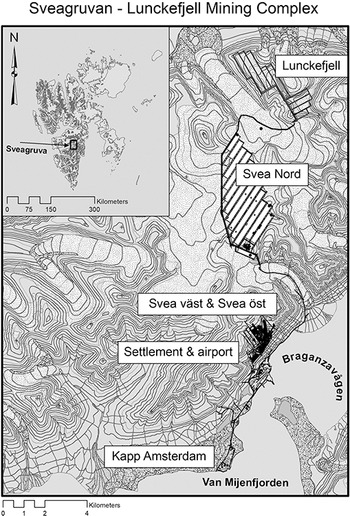

Figure 9.2 The Lunckefjell mine with its access road in August 2016. The mine and the road have since then been removed, as part of the environmental remediation.
Previous Research on Environmental Remediation
Despite a huge body of literature from different disciplines dealing with adaptive reuse of brownfield sites, a focus on potential, emerging, and ongoing mining industries is the general tendency in existing academic literature. The closure of mines and their transformation and afterlives has been less described and discussed (Hojem, Reference Hojem2014). Mining in the European Arctic has been going on since at least the seventeenth century, and the majority of the mining sites from this history have already been abandoned, some with significant amounts of toxic waste deposited in the environment (Avango & Rosqvist, Reference Avango, Rosqvist and Nord2021). Most of these sites do not create new detectable industrial values. Environmental historians Arn Keeling and John Sandlos have named them “zombie mines” – dead, but continuing to affect the environment with their toxic legacy (Keeling & Sandlos, Reference Keeling, Sandlos, Martin and Bocking2017).
Techniques for remediation of mine waste span a wide range depending on, for example, the type of polluting substance and environmental setting. For instance, acid mine drainage is formed from sulfidic mine waste exposed to air and water and is usually spread through hydrological pathways. Combustion fumes from processing the ore can also contain high levels of sulfur dioxide that later falls as atmospheric deposition and acidifies soils and freshwater systems. Depending on proximity to settlements or sensitive environments (a drinking water supply resource, nature reserve etc.) and economic capacity, the remediation strategy might differ substantially. Research on remediation strategies has included costly and monitoring-heavy active treatment (e.g., liming the water, adding chemicals) but also passive and semi-passive treatment (e.g., utilizing natural microorganisms in wetlands or bioreactors) with the goal to reduce the mobility of metals and keep them from spreading to the surrounding environment (Gong, Zhao, & Wang, Reference Gong, Zhao and Wang2018). Mine waste remediation in colder climates has to consider lower temperatures (i.e., substance degradation is low) and a strong seasonal variability in spreading pathways. Most passive (and more sustainable) remediation techniques for colder climates are still only at the laboratory scale, although some studies show successful metal retention even at temperatures down to 3°C (e.g., Nielsen et al., Reference Nielsen, Janin, Coudert, Blais and Mercier2018).
Within landscape- and natural science, restoration and rewilding involves contributing to the restoration of an area that has been destroyed or disturbed, so that nature values and ecosystems can be preserved (Lammerant et al., Reference Lammerant, Peters, Snethlage, Delbaere, Dickie and Whiteley2013). In the past, restoration projects tried to recreate “original” nature. Recent projects instead respond to the fact that nature is dynamic, and that climate and other conditions affect the landscape. Today’s focus in restoration projects is therefore restoring or facilitating ecological processes and functions enabling ecosystem services and habitats for species to remain resilient in the long term (Hagen et al., Reference Hagen, Erikstad, Flyen, Hanssen, Moe, Lie Olsen and Veiberg2018). According to Díaz et al. (Reference Díaz, Settele, Brondízio, Ngo, Agard, Arneth, Balvanera, Brauman, Butchart, Chan, Garibaldi, Ichii, Liu, Subramanian, Midgley, Miloslavich, Molnár, Obura, Pfaff and Zayas2019) the largest global threats to biodiversity and ecosystems are caused by anthropogenic degradation of landscapes. Presently, a substantial amount of scientific literature on restoring landscapes and nature exists (e.g., Dilly et al., Reference Dilly, Nii-Annang, Schrautzer, Schwartze, Breuer, Pfeiffer, Gerwin, Schaaf, Freese, Veste, Hüttl, Müller, Baessler, Schubert and Klotz2010; Borišev et al., Reference Borišev, Pajević, Nikolić, Pilipović, Arsenov, Župunski, Prasad and de Campos Favas2018; Díaz et al., Reference Díaz, Settele, Brondízio, Ngo, Agard, Arneth, Balvanera, Brauman, Butchart, Chan, Garibaldi, Ichii, Liu, Subramanian, Midgley, Miloslavich, Molnár, Obura, Pfaff and Zayas2019; Evju et al., Reference Evju, Hagen, Kyrkjeeide and Köhler2020; Hancock et al., Reference Hancock, Martín Duque and Willgoose2020). Also, the European Commission is currently working on a new legally binding restoration law as part of the Biodiversity Strategy for 2030 and the European Green Deal (SER Europe, 2021). Golub, Mahoney, and Harlow (Reference Golub, Mahoney and Harlow2013) maintain that the emerging science of sustainability emphasizes interdisciplinary understandings and solutions of complex problems that are challenging human-ecological systems. According to Lorimer et al. (Reference Lorimer, Sandom, Jepson, Doughty, Barua and Kirby2015), rewilding projects also raise a series of political, social, and ethical concerns, conflicting with more established forms of environmental management, and requiring a rich conversation across the various disciplines of both the natural and social sciences. Restoration of industrial landscapes respecting pollution, natural, and cultural heritage aspects is nevertheless sparsely reported.
Sveagruva-Lunckefjell, Svalbard
Our first case, Sveagruva, has a long history characterized by two drivers of change – on the one hand fluctuations in the world market, and on the other changing geopolitical priorities, both triggering closures and reopenings. A British company were first to claim the area for coal mining in 1906, but it was Swedish companies, financed by the Swedish iron and steel industry, that from 1910 developed coal mining there – AB Isfjorden-Belsund. The steel industry had economic interests in Spitsbergen coal, but the company was also acting on behalf of the Swedish government to strengthen Sweden’s influence on the legal status of Spitsbergen, which Sweden, Russia, Norway, the United States, and other states were negotiating at the time. During the First World War, when prices of coal ran high, Swedish investors formed a new company – AB Spetsbergens Svenska Kolfält – which constructed and started the mine and the mining town Sveagruvan in the summer of 1917. In 1921, a severe international economic recession led to sharp price drops for coal. Consequently, the owners restructured the mining company, while the Swedish state financed investments in more effective production systems. These efforts eventually failed when the mine caught fire in 1925. The company decided to stop mining operations, and nine years later sold it to the Norwegian company Store Norske Spitsbergen Kulkompani A/S (SNSK), in which the Norwegian State was the largest owner. SNSK wanted to buy it for geopolitical reasons – to ensure that the Swedish company would not sell it to the Soviet Union (Avango, Reference Avango2005).
SNSK did not open any mining operations at the site until after the Second World War, however. Starting in 1946, the company constructed an entirely new mining town – now named Sveagruva – since the German military had leveled the old Swedish mining settlement in 1944. SNSK did not mine for long, however, closing it down again after only five years. The company started operations again in 1970, with the intent to eventually scale up production at the site. In 1987, however, after a decline in world market coal prices, they closed Sveagruva again (Avango & Brugmans, Reference Avango and Brugmans2018).
In the late 1990s, after the Norwegian state had made it possible for SNSK to produce at a much larger scale than before, SNSK again developed plans to re-open Sveagruva. In 2001, the company opened a new coal mine they named Svea nord – the largest coal deposit operated on Svalbard to date. To enable it, the company greatly expanded the infrastructure by building a road across a glacier and a conveyor belt tunnel through an entire mountain. The company also increased the capacity of the Sveagruva settlement. The re-opening coincided with rising world market prices for coal, and when SNSK reached full production capacity at Svea nord, the company was able to make real economic profits for the first time in its history.
Building on this success, in 2013, SNSK opened yet another mine – Lunckefjell – which they connected to Sveagruva by new tunnels and a second glacier road through high alpine environments. By this time, however, world market prices for coal started to drop at a rapid pace, and in April 2016, SNSK placed mining operations on hold to avoid further economic loss. When coal prices eventually started to rise again, SNSK applied for permission to re-start the mine. By this time, however, political forces put a stop to further mining. In 2017, the Norwegian Storting decided to shut down all mining activity in Svea, and the mines were permanently closed in 2018 (Avango & Brugmans, Reference Avango and Brugmans2018). With this a 100-year mining history ended (Figure 9.3).

With the closure of the Svea mine, Store Norske was obliged to remove all traces of modern mining operations. This was anchored in the start-up permission of the Lunckefjell mines and in the Svalbard Environmental Act. An enormous clean-up and transformation project was launched, aiming to be fulfilled in 2023. After the Norwegian government placed the Lunckefjell coal mine on hold, a two-year period followed during which the future of the Lunckefjell-Sveagruva mine was up for discussion. Different actors envisioned different futures for the former mining area. Many people, typically current and former employees of SNSK, hoped that the government would decide to re-start mining at Lunckefjell and thereby save the massive investment the mining company had made in preparing it for extraction. Others ascribed additional values to the area – values that could be realized with or without re-starting the Lunckefjell mine. Actors within SNSK saw possibilities to re-use the mining settlement and infrastructure for industrial-related research, for example, developing cold climate technology for shipping and mining, and for practicing environmental cleanup operations such as oil spills on ice.
By offering the Sveagruva-Lunckefjell system to companies interested in conducting such research, SNSK would be able to generate new income. The idea of making Sveagruva-Lunckefjell into a research site was also shared by actors at the University center of Svalbard and Norsk Polarinstitutt, but they held other visions about the purpose of the research. They envisioned that Sveagruva could become a hub for geological research in an area of Svalbard that geologists tend to visit more seldom because of the distance from the university, which is located in Longyearbyen. In addition to research, Sveagruva could be used to house students and labs during field-based courses in various disciplines at the University Centre in Svalbard (Anonymous, interview by Avango in Longyearbyen, August, 2016). There was also considerable interest in Sveagruva among tourism companies active on Svalbard. Tour operators based in Longyearbyen saw the mining settlement as a potential hub for snowmobile-based groups, which could use the housing available there to stay for a couple of days, making excursions into spectacular surrounding landscapes that are difficult to access from Longyearbyen. There were also entrepreneurs who saw the possibility of opening a guest house with a restaurant at Sveagruva on a seasonal basis. All tourism companies also saw potential in the material remains from the history of Sveagruva, which they could use as anchor points for narrating the dramatic history of the mine to tourists (Anonymous, interview by Avango in Longyearbyen, August, 2016).
The Governor of Svalbard’s department for environmental protection, tasked with cultural heritage protection of the islands, shared the tourism entrepreneurs’ evaluation of the remains from mining, but from a legal perspective. According to environmental law on Svalbard, all remains from human activity that pre-date 1946 are automatically defined as cultural heritage and protected as such for posterity (Marstrander, Reference Marstrander and Wråkberg1999). None of these ideas for repurposing were new on Svalbard, where several former mining towns and prospecting camps had been successfully repurposed for tourism, research, and education. Despite this fact, the Norwegian government decided in 2018 to remove all traces of the Lunckefjell-Sveagruva mining system. This included remains of all mines, the entire settlement with housing and service buildings, technical service facilities, an airport, roads and conveyor belts, washing and dressing plants, and an entire export harbor facility at Kap Amsterdam. Sveagruvan-Lunckefjell was to be literally wiped out, with the exception of a few remains from the Swedish mining period and the early Norwegian period prior to 1946, which are legally protected as cultural heritage.
The Environmental Remediation of Sveagruva-Lunckefjell
The overall goal of Norway’s Svalbard policy has been to maintain sovereignty. This has required Norwegian presence on the archipelago. No other industry has delivered as much Norwegian presence on Svalbard as mining over the last 100 years (Pedersen, Reference Pedersen2016). Pedersen (Reference Pedersen2017) argues that the closure of the mines at Svalbard will mean fewer Norwegian inhabitants and ultimately lead to misperceptions about the legal status of Svalbard. Further, this may pose new foreign and security policy challenges to Norway.
The Norwegian Parliament decision to terminate the mining activity in Svea and Lunckefjell (Ministry of Trade, Industry and Fisheries, 2017) must be understood against this background but also in the context of the Svalbard Environmental Protection Act (Ministry of Climate and Environment, 2001). The act states, in §64, that when industry or other activity at Svalbard ends, the owner is responsible for removing remaining installations and infrastructure and restoring the area to its original appearance. The Ministry of Justice further specified that infrastructure and buildings should be removed. With this decision, the range of different visions on how to reuse the Sveagruva-Lunckefjell system became impossible to consider. They all ultimately depended on a functional settlement with infrastructure and buildings, which would instead be removed.
On behalf of the Ministry of Trade, Industry and Fisheries, Store Norske launched a thorough process planning the transformation of Svea. Their point of departure was clear. Unlike other closed mining sites at Svalbard, Sveagruva should be transformed into a place that as much as possible resembles the original state of the landscape, with the remains older than 1946 being the only exception. Environmental toxins were assumed to be the overarching problem in the transformation process. However, transforming the industrial landscape into nature and upholding heritage values in the remaining historic structures proved to be far more complex and intricate processes. The time schedule given by the Ministry was tight, and the planning process concerning the physical transformation started long before all decisions relating to the process were taken.
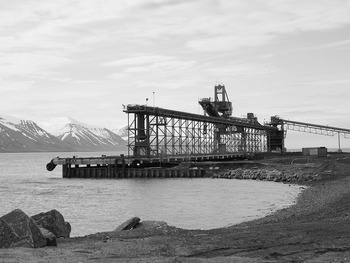
The remediation work started with the Lunckefjell mine in 2018 and has proceeded at a rapid pace since then, with the successive removal of the rest of the mines, the airport, the power plant, the deep-water quay, the mining settlement with over sixty buildings, huge industrial structures, and many kilometers of road (Figure 9.4). Tons of pulp will be removed and rearranged, while toxic spills will be removed or encapsulated. The reason why the Sveagruva-Lunckefjell mining area became subject to such a radical environmental remediation, despite the unprecedented high costs, was the need to fulfill the requirements of the Svalbard Environmental Act. There are, however, reasons to also consider other driving forces behind this huge and costly project – the geopolitics of mining at Svalbard.
The Norwegian government and SNSK have a history of proactively supporting Norwegian state influence that extends back to the formation of the company in 1916 and its active involvement in securing Norwegian sovereignty over Svalbard through the Treaty concerning Spitsbergen in 1920 (Mathisen, Reference Mathisen1954; Østreng, Reference Østreng1971). Until the mid-1920s, the Norwegian government supported even highly unprofitable mining operations at Svalbard (Johannessen, Reference Johannessen1996). After the Soviet Union had established several mining towns on Svalbard in the late 1920s and early 1930s, SNSK and the Norwegian state bought up mining properties from foreign companies that had seized their operations. The purpose was to ensure that Norway and Norwegian actors would control most of the lands on the archipelago and avoid increased Soviet presence on the islands (Avango & Roberts, Reference Avango, Roberts, Körber, MacKenzie and Westerståhl Stenport2017).
Sveagruva was a part of this geopolitics of mining right from the beginning, when SNSK bought the mine from Swedes to make sure that the newly formed Soviet company Trust Arktikugol would not be able to acquire it (Avango, Reference Avango2005). Since the 1930s, the mines in Svea have hardly been economically sustainable, except during the recent global mining boom after the millennium. Supporting Longyearbyen, with more than 400 jobs at its peak, Svea was the most important tool for maintaining Norwegian settlement – and sovereignty. To close the mine obviously posed some security policy challenges (Pedersen, Reference Pedersen2016). In 2016, the state bought the 218 square meters privately owned former coal mine of Hiorthhamn for 300 million Norwegian krone (35 million US Dollar) to avoid the risk that state-supported foreign actors, including China, would acquire it. Against this background, it is not far-fetched to consider the possibility that the removal of infrastructure and buildings would dramatically increase the cost for a company from China or Russia to restart mining at Sveagruva-Lunckefjell. Moreover, the Norwegian authorities plan to include the Sveagruva-Lunckefjell area in the Nordenskjöld land national park after the environmental remediation is finalized, which would make it very difficult to gain a concession for mining there.
Nautanen, Norrbotten
The Nautanen copper mine was established in 1902. The company, Nautanens Kopparfält AB, established it in order to profit from an increasing demand for copper, driven by industrialization in general and electrification, in particular. Another context working in favor of the mine was the expanding large-scale sociotechnical system for mining in the Swedish Arctic, built for mining iron ore at Malmberget and Kiruna. The company connected its copper mines and settlement to this system through an aerial ropeway, connecting the mine with the railway system at Koskuskulle (Avango & Rosqvist, Reference Avango, Rosqvist and Nord2021).
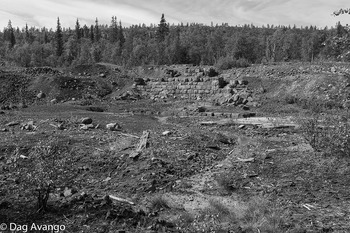
Nautanen became short-lived. In 1908, the company shut it down. During its six years of operation, the company had mined 72,000 tons of ore, or 2,000 tons of copper. After closing their mines and clearing the settlement of its more than 400 inhabitants, the bankrupt company sold off the buildings and infrastructures (Ollikainen, Reference Ollikainen2002). With the exception of one building, the only visible traces of Nautanen were the remains of house foundations, roads, mines, waste rock piles, tailings, and metallurgical slags. The latter contained sulfidic materials and were spread out across the landscape around the former processing plants and mines, on the ground and in lakes (Figure 9.5).

Over much of the twentieth century, Nautanen was an abandoned mining site. In the decades following closure, former workers and their labor organizations organized excursions to the site, using it for political mobilization against the capitalist system and for social reforms. From the 1970s, the site was reinterpreted as a cultural heritage site, in the beginning an unofficial cultural heritage defined by actors in the labor movement, and from the 1990s an official cultural heritage with a basic level of protection under Swedish heritage institutions.
From 1993, Nautanen became an object for concern regarding the state of the local environment at the site. In that year the County Administrative Board of Norrbotten, Sweden’s northernmost county, issued an inventory of abandoned mine waste. The inventory, performed with Luleå Technical University, found Nautanen, the second largest historical sulfide mine in Norrbotten, to have high copper concentrations in its discharging surface water (Larborn, Reference Larborn1993). A year later, further investigations detailed the findings (Länsstyrelsen i Norrbotten, 2002). The issue of toxic waste at Nautanen remained dormant for years. In 1999, the Swedish government implemented a new Environmental Code (Ebbesson, Reference Ebbesson2015: 52) and set aside funds for environmental remediation of polluted areas. From the early 2000s, the funding was put to use in Nautanen. The Swedish Environmental Protection Agency granted the funding to the County Administrative Board as part of its regional program for polluted areas (Doc. 1). The challenge for the environmental remediation effort was not only about determining the extent of the contamination but also the responsibility for carrying out the remediation. The County Administrative Board examined this issue in 2002, concluding that no active party could be held responsible for the pollution, since mining company Nautanen Kopparfält AB had ceased to exist (Bothniakonsult, 2002).
With funding from the environmental protection agency, Gällivare Municipality launched a comprehensive investigation at Nautanen, including waste characterization, surface and groundwater samples, lake sediment records, and biological investigations. The final report was completed in 2002 with a risk assessment concluding that Nautanen reached the second highest risk class (MIFO risk class 2) of contaminated sites in Sweden, posing a substantial threat to aquatic ecosystems. The metal leakage mostly originated from concentration plant sands and waste rock piles that were in contact with surface water (Figure 9.6). The report recommended remediation by assembling and covering waste, and installing technology picking up toxic substances downstream from Nautanen (Botniakonsult, 2002).
Another suggestion was to re-process some of the waste rock with the highest ore grade at the mining company Boliden’s nearby copper mine Aitik and overrule the protection they had as cultural heritage. In 2005 and 2008, the company transported the waste rock by trucks and fed it into their concentration plant at Aitik, extracting copper, gold, and zinc (Botniakonsult, 2002). This project was not purely motivated by environmental considerations. Boliden had the resources and the economic incentive to do it. In 2009, the consultancy Hifab conducted an environmental impact assessment on behalf of Gällivare municipality, planning for removal of the contaminants remaining after Boliden’s removal of waste rock. The main plan was to redirect water streams running through the former concentration plant and smelter area, where tailings leached out metals (Hifab, 2009). Gällivare Municipality also launched an investigation examining whether Boliden’s removal of waste rock had any effect on water quality, which found little or no effect from this effort (Golder Associates AB, 2015).
Simultaneously with the planning for a continuation of the environmental remediation, a new challenge for the project appeared – a conflict with the landowner. The forest company Sveaskog had entered a formal agreement with the municipality back in 2006 to take on some of the remediation work, provided that the state would fund it. When the funding eventually came through, the agreement had already ceased. Now, Sveaskog no longer agreed to take responsibility for maintaining and monitoring the re-directed water streams at the site. They wanted to strictly limit their commitment to managing environmental data collecting devices and keep entrances to water tunnels free. For this reason, Gällivare municipality decided in 2014 to cancel the entire environmental remediation project at Nautanen, citing the excessive costs, and the fact that Gällivare municipality did not own the land – Sveaskog did (Doc. 2; Golder Associates AB, 2015).
In 2017, researchers from REXSAC conducted field research at Nautanen. Hydrological sampling in the area (Fischer et al., Reference Fischer, Rosqvist, Chalov and Jarsjö2020) revealed that the surface water system remains highly polluted. Synthesizing the available water quality measurements at Nautanen during the previous twenty-five-year period shows that Nautanen has reached a “steady-state” in terms of metal leakage: it will likely not decrease or increase in the future but has enough waste to keep polluting the area for centuries to come.
Extracted Places with Contested Futures
Different institutional framings explain the ways the two remediation projects developed. In Sveagruva-Lunckefjell, the mining company SNSK acted in accordance with the environmental law of Svalbard, which requires companies to restore the environment to its pre-mining state. In Sweden there are similar legal requirements, but those were not in place when AB Nautanens kopparfält closed their mine in the early 1900s. Although the responsibility for remediating mining sites can be transferred to new landowners under current Swedish environmental law, the present landowner, Sveaskog, managed to avoid that by buying the forest land one day before this environmental law came into effect. Therefore, the lack of legal tools is an important part of the explanation as to why the remediation of Nautanen has failed so far, while the remediation of Sveagruva has not.
A second important difference is ownership. SNSK is still an active mining company, with a physical presence in Svalbard and a wide portfolio of economic activities in Svalbard, while AB Nautanens Kopparfält has been gone since 1908. In the Nautanen case, there is no company around to cover the costs and the hard work of remediation. The history of Arctic mining is full of similar examples, for example, the Giant mine in the Northwest Territories in Canada, where gold mining between 1948 and 2004 generated employment and wealth but also a toxic legacy consisting of more than 200,000 tons of arsenic. The mining company has seized to exist, leaving Canadian taxpayers to cover the costs of remediating the mining site (Sandlos & Keeling, Reference Sandlos and Keeling2016). There are similar examples from the recent history of mining in the Swedish north (Müller, Reference Müller2014).
A third difference that also put the spotlight on the societal dimension of environmental remediation are the importance of interests of the actors involved for the outcome of the remediation process. In Svalbard, environmental remediation happened because a powerful actor – the Norwegian state – wanted it to happen. The state, owner of SNSK, acted in accordance with the law but also had geopolitical interests that are likely to have played a contributing role to the decision to order the complete eradication of the largest system for mining on the entire archipelago, for a price that by far exceeds any of the original estimations of the costs for remediation. It is most probable that an ambition to hinder agents of foreign powers from acquiring new land for mining in Svalbard, contributed to the willingness of the Norwegian government to act in this way, no matter the costs. In the future, when all that remains of Sveagruva-Lunckefjell are house foundations and shabby barracks protected as cultural heritage, the investment costs for starting a new mine are likely so high that it would be difficult, if not impossible, to acquire economic returns that would justify investment – at least for a company that needs to make a profit. Moreover, a company wanting to re-open mining at Sveagruva-Lunckefjell in the future would need to acquire a permit for mining in a national park. The chances that the Norwegian authorities would approve such an application seem slim.
The Norwegian policy on this matter can be interpreted in the context of Norwegian Svalbard policy over the last decade. Grydehøj et al. (Reference Grydehøj, Grydehøj and Ackrén2012) has pointed out that Norway’s top-down governance of Svalbard through the Governor of Svalbard and by supporting unprofitable mining companies for the sake of maintaining active populated settlement has been complicated in recent years. Growing economic diversity in the wake of mine closures and a growing tourism sector has brought multinationalism and local democracy to the archipelago. At the same time a new competing power on Svalbard and in the Arctic at large has emerged beside Russia – China. The Norwegian policy on the Sveagruva-Lunckefjell environmental remediation can be interpreted as a response to this new situation. Norway’s policy on climate change also contributes – large scale coal mining in a sensitive environment in the Arctic is an increasingly hard sell to voters in Norway.
In the case of Nautanen, it was the conflicting interests between the actors involved that stopped environmental remediation from happening – despite the relatively low costs involved (compared to the Svalbard case). On one side was the Swedish Environmental Protection Agency, the County administrative board of Norrbotten, and the Gällivare municipality, who all wanted the remediation project to happen. Their interest, and ultimately the Swedish government’s, was to serve public interest and to meet policy goals for environmental protection and restoration of contaminated environments. The mining company Boliden also took responsibility for restoring the environment. Their interest was to create goodwill in a municipality where their company has large-scale mining operations running. Boliden’s interest was probably also to make a profit from re-mining the waste. The company had no legal responsibility to restore the environment as a whole, and therefore took out only what they wanted and left the rest for others to take care of.
What stopped the environmental remediation project from materializing was the fact that the landowner – the state-owned forest company Sveaskog – expressed no interest in contributing to stopping the leakage of substantial amounts of heavy metals and other toxic substances from their lands into the ecosystems in their forests. The forest company had found a way to avoid taking responsibility for toxic waste on their lands and utilized it, leaving the costs for environmental remediation of their lands to an economically weak municipality with no ownership responsibility for the land at all.
Conclusions
The cases indicate that it may be difficult to predict what post-extraction histories we can expect in current and future Arctic mines, which calls for caution when planning and giving permission to extractive mega-projects. Even if it is possible to mitigate and even undo environmental damage from a technological point of view, it may be hindered by unfavorable societal contexts and actors with competing interests.
Closed mines are a challenge, not only from an environmental point of view but also from a social one. When mines are closed, settlements, towns, and regions that depended on them are in need of new income opportunities, as well as opportunities enabling the preservation of societal services and quality of life that can disappear with the mine. Social challenges post-extraction can be particularly severe in sparsely populated areas. Nautanen and Laver (Avango et al., Reference Baker, Moncaster and Al-Tabbaa2023, see Chapter 10) are instructive examples. As we show elsewhere in this volume (Avango et al., Reference Baker, Moncaster and Al-Tabbaa2023, see Chapter 10; Malmgren et al., Reference Malmgren, Avango, Persson, Nilsson, Rodon and Sörlin2023, see Chapter 11), de-industrialized mining settlements can gain new values that sustain them beyond the end of extraction, through new economic activities, heritage making, or by reopening mining. At Sveagruva, actors in the mining industry, tourism, and science envisioned such futures but were unable to realize them. The same is true in Nautanen, where local actors in Gällivare as well as official Swedish heritage protection wanted to protect remains of mining as heritage. Unfavorable institutions, the interests of powerful actors, and global economic and political trends stood in their way.
A challenge to take on for research and development on environmental remediation in the future is to find ways to harmonize needs for remediation with possibilities to create new values. In recent years, companies in the mining sector and associated research environments have worked on this issue. How can processes for mine decommissioning and rehabilitation be designed in a way that allows for the creation of new values? How can the ambitions and voices of local communities in the vicinity of the former mines be taken into account when the future of their local environments is to be determined? To consider value creation in the decommissioning process of mines, in close dialogue with affected communities, may provide tools to harmonize sustainability goals that may otherwise be in conflict.
Introduction: Making Heritage and History
The increasing interest in mineral resources in Arctic Fennoscandia has been triggered by rising global demand and based on the prior existence of large socio-technical systems for extraction, energy, and transport. In public debates, there has been talk of a “mining boom” (Dale, Bay-Larsen, & Skorstad, Reference Dale, Bay-Larsen and Skorstad2018). Public statistics show the growth in numbers of exploration licenses and applications for mining concessions (SGU, 2012, 2018, 2020). On the ground, it is expressed in prospecting activities, test mining, and consultation meetings with land users and local communities whose future will be affected if new mining commences.
To many residents in the inland communities of the region, future visions of mining may be a promise of employment opportunities and revitalization of settlements otherwise subject to depopulation. To others it may represent a risk for local livelihoods and lifestyles, and a threat of environmental degradation. Social resistance movements, opposing mining projects, have been growing across northern Fennoscandia, organized by a variety of actors from local concerned residents and entrepreneurs to Indigenous and non-Indigenous reindeer herding communities (Mononen & Suopajärvi, Reference Mononen and Suopajärvi2016; Lépy et al., Reference Lépy, Heikkinen, Komu and Sarkki2018; Beland Lindahl et al., Reference Beland Lindahl, Johansson, Zachrisson and Viklund2018; Zachrisson et al., Reference Zachrisson and Beland Lindahl2019). In the public debate, such conflicts have been pointed out as an important factor explaining what the mining industry considers to be too slow permission processes for prospecting and mining, at a time when more minerals are needed to facilitate a global transition to green energy.
A recurring feature in the discourse of competing actors in mining conflicts in the Fennoscandian Arctic is the use of narratives. These are typically about the past and of historical remains, and their purpose is to support competing visions of the future. In this chapter we analyze such practices using the concepts of history making and heritage making. The history and heritage making we analyze concern industrial society. In research and in cultural heritage practice, this field emerged in Britain in the 1950s and developed in the western world in the decades that followed. In Sweden, industrial heritage has increasingly become part of cultural heritage practice since the 1980s. Industrial heritage has been regarded as a tool to bring new life to de-industrializing industrial towns and to support local identity – in other words, to provide societal values out of legacies from the past (Nisser, Reference Nisser1996; Isacson, Reference Isacson2013). In this chapter we will nuance this altruistic understanding of industrial heritage by exploring how actors with competing interests use the industrial past and its remains to build the futures they desire. The aim of the chapter is to understand the role of history and heritage making in conflicts regarding new mining projects. How do competing actors in conflicts connected to mining construct heritage and narratives about history, and why? What are the outcomes of such practices?
We try to answer these questions by comparing history- and heritage making in two mining regions that have undergone de-industrialization and are subject to re-industrialization: Laver in the Pite river valley in Sweden, and Hannukainen in Kolari municipality in Finland (Figure 10.1). Laver, in Älvsbyn municipality, was a mining settlement. The Swedish mining company Boliden built and operated it between 1936 and 1946. After closure in 1946, the company dismantled the town. When global demand for metals began to surge in the early 2000s, Boliden developed plans to start a new mine at Laver on a fairly large scale. The new project has generated hope for regional economic growth as well as concern for environmental degradation and disruption of Indigenous reindeer herding (Lawrence & Kløcker Larsen, Reference Lawrence and Kløcker Larsen2019).
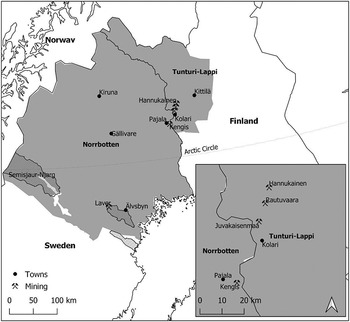
In Kolari municipality in Arctic Finland, the mining company Rautaruukki Oy first started mining in the underground Rautuvaara mine in 1962 and then in the nearby Hannukainen open pit mine in 1978. Outokumpu Oy owned the mine until mining ceased in 1990. A concentrator plant was kept in operation until 1996 (Pelkonen Reference Pelkonen2018). At the beginning of the 2000s a European exploration and mining company, Northland Resources S.A., planned to re-open the Hannukainen open pit mine, just as in Laver but on a remarkably bigger scale. This became the subject of fierce controversy with local opponents as well as advocates of mining.
Actors on both sides in the controversies have constructed narratives about mining history and connected them with material remains in order to strengthen their positions. In this chapter we will analyze the controversies using concepts from the field of critical heritage studies. We will use the term heritagization, or heritage making, to describe the practice of ascribing historical values to a region, a place, and remains from the past – material and immaterial. We will pay attention to different forms of heritage making. One is official heritagization, meaning processes in which state agencies ascribe heritage values to historical remains and protect them by law. Another is unofficial, when non-state actors, often representatives of local communities, ascribe heritage values to remains and protect them by other means (Harrison, Reference Harrison2013; Sjöholm, Reference Sjöholm2016). A third category is corporate heritage making, when companies ascribe heritage values to their own past (Avango & Rosqvist, Reference Avango, Rosqvist and Nord2021). We will also use the concept of history making, when we can identify the wider process of establishing a particular understanding of the past, often as part of heritage making.
Laver: The Rise and Fall
The Laver area has been inhabited for thousands of years, since the inland ice retreated. The moorlands there are rich in lichen resources. For this reason, the area in and around Laver has been important for Sámi herders whose reindeer graze there during the winter. Archaeological remains reveal that Sámi, now organized in the Semisjaur Njarg Sámi reindeer herding community (RHC), have been part of the region for hundreds of years, and that the area has been used for small-scale farming and forestry for a very long time. Thus, the Laver area forms an important part of the cultural heritage of the Sámi people and of the historical small-scale use of resources that was carried out before industrialization.
There are several factors explaining why Boliden established the copper mine and mining settlement Laver in 1936. The first were concerns within Swedish industry and politics regarding access to metals after the First World War, which had disrupted imports of metals from abroad, causing disruption of production in several branches of industry (Vikström, Reference Vikström2017). To improve access to key metals necessary for Swedish industry, the Swedish state and corporate actors conducted surveys for minerals, particularly in inland areas of the north. The mining company Boliden was formed in the wake of these prospecting activities, and in 1929, Boliden surveyors found copper at Laver. In the early 1930s, the company mapped the mineralization and test mined it. The company was at first hesitant about starting up a mining operation. The size of the rich part of the mineralization was unknown and the cost of establishing a mine was high. The company leadership eventually decided to establish the mine, due to a lack of copper ore at the company’s large smelter facility at Rönnskär. With larger volumes of copper ore available, Boliden would be able to extract more gold from combined gold-copper ores from its other mines in the north (Alerby, Reference Alerby1994).
The mine and settlement were established on a forested hillside and valley floor. The production line for mineral extraction consisted of an open pit mine and an underground mine. The above-ground production line consisted of a hoisting tower, an ore crushing plant, and a concentration plant. Beyond this complex was a large tailing pond in which the company dumped sand from the concentration plant. In other segments of the landscape the company accumulated piles of waste rock (Figure 10.2).

The settlement was built with a high standard of living in order to attract miners to move there for work. The design was commissioned to John Åkerlund, the architect who had designed Boliden’s mining towns in other parts of the Swedish north. The Laver settlement consisted of buildings for housing, one to four stories high, all with central heating. It had shops, hairdressers, a community house with cinema, café and a library, a post office, dance arena, restaurant, and a fire station. When fully built the settlement consisted of thirty-one buildings out of which twenty-three were housing units, home to more than 200 inhabitants.
Mining operations at Laver became short-lived, however, due to several reasons. First, from the beginning of the 1940s the mining operations revealed that the body of relatively rich copper ore became thinner the further and deeper the mining operations advanced. For this reason, the company was unable to mine at the same speed as before. At the same time, from 1941 to 1946, the world market prices for copper decreased, particularly after the end of the Second World War. For these reasons, in 1945, the company reported a 500,000 Swedish Krona deficit and decided to close Laver the following year (Alerby, Reference Alerby1994).
Laver: The Afterlife
Without the mine, Boliden had no intention to maintain their settlement at Laver, and the inhabitants needed to find other jobs. The company dismantled all buildings, moving some of them to new locations. By May 1947, Boliden had finished this process. Up until today the remains from the mining past at Laver have lingered on – foundations from buildings and production facilities, as well as waste. Boliden had extracted 1,573 million tons of copper ore and generated waste rock piles as well as a dam containing 1,2 million tons of tailings, located in a valley downhill south of the former mine, covering an area of 12,2 ha. The tailing impoundment contained several toxic materials (Ljungberg & Öhlander, Reference Ljungberg and Öhlander2001; Alakangas, Öhlander, & Lundberg, Reference Alakangas, Öhlander and Lundberg2010). These, as well as the former settlement, slowly fell out of attention in the years following the closure of Laver. The forces of nature continued to interact with the remains from the former mining operations. During the spring melting seasons in 1951 and 1952, the walls of the impoundment eroded away and as much as a quarter of the tailings (Ljungberg & Öhlander, Reference Ljungberg and Öhlander2001) floated out into the water system downstream. According to Alakangas et al. (Reference Alakangas, Öhlander and Lundberg2010), water running through the tailings was led into a former clarification pond. It took another twenty years before any attempts were made to deal with the toxic waste at the site. Over this period, erosion had dug deep ravines into the released waste. In 1974, bulldozers were used to smooth these out. The tailings were covered with lime and fertilizer and seeded with grass (Ljungberg & Öhlander, Reference Ljungberg and Öhlander2001), and a new wall was constructed three kilometers downstream from the dam that broke (Bast & Schück, Reference Bast and Schück2019). Despite these efforts to contain the tailings, substantial amounts of toxic waste continued to be released annually into the waters: cadmium, copper, sulphur, and zinc (Alakangas et al., Reference Alakangas, Öhlander and Lundberg2010). Even into the 2020s, Boliden conducts work to contain and monitor the waste in the valley south of Laver.
While the residues from the mining process at Laver have remained a challenge for Boliden and responsible state agencies, the remains of the former settlement became subject to official heritage making. This was a result of a growing interest in industrial history from the late 1960s in Sweden, in particular working-class history, and in preserving built environments of industrial society as cultural heritage. Through the 1990s and early 2000s, this interest was institutionalized when the National Heritage Board of Sweden launched programs to include industry in the sphere of heritage protection (Isacson, Reference Isacson2013).
In 2004, this program reached Laver, when the cultural heritage department of the Norrbotten County Administrative Board, together with Norrbotten county museum, placed signboards there. The signboards contained photos of the buildings that used to stand on the house foundations, together with texts about the history of the settlement and the buildings. The texts contained a mix of historical facts and narratives about work, everyday life, and production at Laver. The narratives were about pioneering, welfare, quality of life, and faith in the future. The phrase “Welcome to Laver! Walk through Sweden’s most modern society” captures the nostalgia and communicates a sense of pride over a short-lived industrial wonder. The signboard text highlights how the mineworkers and their families had a strong sense of community and how Boliden provided workers with the possibility to have their own community house with the space for clubs, cinema, dance poll, coffee shop, and library. Only one signboard, located by the edge of the open pit mine, focuses on the history of the mining operations. None of the signboards narrate the history of the environmental consequences of the mine and its afterlife.
So, when Boliden re-established its interest in copper mineralization at Laver, the site was a concern for several categories of actors. On the one hand, there was the mining company and the environmental department of the Norrbotten County Administrative Board, who were responsible for dealing with the toxic legacies of the former mine. On the other was the cultural heritage department of the same county administrative board and the Norrbotten county museum who worked with the site and valued it as cultural heritage. Another central actor in the area was Semisjaur Njarg RHC. The Sámi reindeer herders had continued to use lands in the Laver area for winter grazing through the decades after Boliden closed. Another major land user has been the forestry companies. Since the 1950s the forests around Laver have been significantly affected by industrial logging. At the beginning of the 2000s, Pite river was pointed out as a Natura 2000 area. In the management plan it has been concluded that the environmentally harmful leakage from the old Laver mine needs to be minimized to prevent further damage to the sensitive aquatic environment (Länsstyrelsen i Norrbottens län, 2018).
Laver: The Re-birth
In addition to environmental remediation work, Boliden carried out explorations of mineral resources in the Laver area during the 1970s and the 1990s. Driven by the increasing demand for minerals, Boliden restarted exploration in 2008, and in 2014 the company submitted an application for a mining concession for Laver to the Mining Inspectorate. In their environmental impact assessment (EIA), the company described the planned mining activities and their consequences for the environment. The full extent of the proposed mining project would cover an area of approximately 46 square kilometers, including an open pit mine and all installations (Eriksson & Lindström, Reference Eriksson, Lindström, Hämäläinen and Michaelson2014). If the project is realized to the extent described in the application, it would become the largest mining site in Sweden and one of the largest in Europe. The main reason for this is the relatively low mineral concentration, approximately 0.21 percent, which means that relatively large amounts of ore need to be extracted, most of it ending up as waste rock and concentration plant sand. Figure 10.3 compares the extent of the old Laver mine, which closed in 1946, with the new mine Boliden applied for, which is significantly larger.

Boliden has incorporated the history of Laver to become part of the efforts to gain permission and acceptance for their new mine. In public information about the project, Boliden has described the company’s long history of involvement in the area and underlined its historical record of taking social, environmental, and economic responsibilities. Boliden has described their model society with state-of-the-art housing and central heating as the most modern industrial settlement in Sweden. Boliden has also described how their dam broke in the 1950s, and how the company handled this situation (Boliden 1 and 2). The narratives convey the image of a company that took responsibility in the past and thereby can be expected to do so in the future. Boliden has also declared its intention to preserve the material remains of their former mine as a cultural heritage site – a site to bring visitors to, in order to learn about the history and the future of Laver (Anonymous, interview by Pashkevich, Älvsbyn, October, 2019). This is an example of corporate heritage making, which together with Boliden’s use of history is part of the company’s effort to gain social acceptance and permissions for a new mine.
Besides Boliden, there are also other actors who have used the history and material remains of Laver to build support for a new mine, in particular actors within Älvsbyn municipality to whom the potential economic and social spin-offs of Boliden’s project, including job promises, are values of utmost importance. To these actors, old Laver represents a period in the past when the region prospered, a period that Boliden will bring back to life, a reawakening of the phoenix. Although recognizing the environmental impacts from the historic mine, they argue that the dam break never led to any serious poisoning of the ecosystem. Instead, they place the environmental impacts of the historic mine in a narrative working in favor of the new mine, the argument being that the area has already been heavily affected by mining and forestry. In other words, the new mine will not impact any pristine environment (Anonymous, interview by Pashkevich, Älvsbyn, October, 2019).
Municipal actors have also argued that Boliden has a history of maintaining a trustful relation with Sámi reindeer herders, which will contribute to solving land use conflicts between the reindeer herders and the mining company. Boliden’s long history of presence as a mining company in the region means that the company already knows how to “treat these questions with respect and also in connection to the Indigenous issues.” The continuity and good will of the company also promises a good future relation to workers and local inhabitants. To these supporters of the new mine, history holds promises for Älvsbyn to become the next “mining municipality” of Sweden (Anonymous, interview by Pashkevich, Älvsbyn, October, 2019).
The opponents of Boliden’s proposed mining project, including Sámi reindeer herders and environmental groups, also relate to history and heritage. The proposed Laver mine would be located within a winter grazing area used by the family group of Tjidjack. According to Boliden’s EIA, their planned mine would result in the loss of that grazing area. However, Semisjaur Njarg RHC has argued that the company has underestimated the impacts on reindeer herding, because of shortcomings in the process of developing the EIA. A community-based impact assessment, in which Semisjaur Njarg participated, concluded that the mine would have major impacts on their reindeer herding, which is why the RHC oppose Boliden’s plan (Lawrence & Kløcker Larsen, Reference Lawrence and Kløcker Larsen2019). In their argument against a new mine, Semisjaur Njarg has used land use history and its material representations in the landscape. They highlight how their ancestors have utilized the landscape through history, to substantiate their deep relation to the land. They also point out that there are cultural-historical remains that give evidence to longstanding Sámi use of the area, such as old huts and dwelling hearths, and emphasize how these remains remind today’s reindeer herders in Laver that their family and relatives “have been here for hundreds of years.” In other words, to the reindeer herders, they have a heritage in this area that should be preserved and managed for the benefit of future generations. This is an example of an unofficial heritage making, providing building blocks of a longer and substantially different narrative about the past, an understanding of the region’s history that is hard to harmonize with a future in which these lands would become one of the largest industry areas in Sweden. It should be noted that the material remains that the RHC refer to are also an official heritage site, defined as remains of Sámi land use by heritage expertise and protected by Swedish heritage legislation.
Semisjaur Njarg’s line of reasoning is an example of a broader use of historic arguments by RHCs in ongoing debates in Sweden concerning Sámi land rights. It relates to the historical land use of Indigenous peoples. The Swedish Supreme Court has elucidated that Sámi land rights are based on the long-time use of land, and that these rights therefore should be protected as property rights within the Swedish legal system (Swedish Supreme Court, 1981, 2011, 2020). However, even if the character of Sámi land rights has been elucidated through case law, Sweden has regularly been criticized by international human rights institutions that the Sámi people have too little influence over the issues directly involving them, and that their land rights have not been implemented adequately in the Swedish legal system (CERD, 2018, 2020). The Sámi reindeer herders argue that their long-time use of land needs to be accepted and implemented in the Mineral Act and other legislation. Thus, history and cultural heritage, as described by Semisjaur Njarg in the Laver case, are also central aspects of this ongoing debate about Sámi land rights in Sweden (Allard & Brännström, Reference Allard and Brännström2021).
In addition to the RHC, there is a growing movement in Älvsbyn municipality engaging in ongoing discussions regarding the future of mining in Laver. Pite Älvräddare (in English: Saviors of Pite river) is an organization that is part of the national NGO “Swedish Society for Nature Conservation.” The group was formed in 2015 in response to Boliden’s mining plans. As they are concerned about potential environmental risks, they have worked to build opposition to the new mine, also by history and heritage making. To the River saviors, Boliden’s efforts to deal with the environmental impacts of their historic mine, that is, the tailings outwash from the 1950s, is an act of “greenwashing,” meant to pave the way for gaining the necessary permits for their new mine. They argue that the environmental impacts from the historic mine provide evidence that the new mining operations could have catastrophic consequences for water quality, not only for the surrounding territory of the mine, but for the whole Pite river basin downstream from the mine, including drinking water for the town of Piteå with a population of more than 40,000 inhabitants (Anonymous, interview by Avango, Pashkevich & Rosqvist, Älvsbyn, October, 2019). The risk, they argue, will increase with climate change-induced increase of precipitation, which could force a release of toxic water from the tailings of a future mine.
The group also brings local and regional politicians to the historical remains of the old Laver mining area, along with groups of allied environmentalists, to show material evidence of negative environmental impacts of mining operations. To them, the historical remains of Laver prove that even after almost seventy years, the consequences of mining remain and will remain for many centuries to come. Their strategy can be seen as another example of unofficial heritage making, serving as a resource for building counternarratives about the relation between past and future mining. Interestingly enough, the river saviors do not focus their visits on the remains of the mining settlement, but instead on the remains of the tailing dams that collapsed in the 1950s (Anonymous, interview by Avango, Pashkevich & Rosqvist, Älvsbyn, October, 2019). In other words, they utilize another part of the story of the industrial past and a different material representation of that history – a history and heritage that official and corporate heritage makers have chosen to leave undercommunicated.
Hannukainen: The Rise and Fall of Mining
Kolari municipality is in the Swedish-Finnish cross border region at the Torne River Valley. This region formed a historically and culturally uniform area belonging to the Kingdom of Sweden until the formation of the Grand Duchy of Finland, an autonomous part of the Russian Empire in 1809. Due to this, Finland shares its early mining history with Sweden. Quarrying of iron ore began in Finnish Lapland in 1662 with the exploitation of Juvakaisenmaa along the river Niessajoki in the current municipality of Kolari. Here, small-scale mining continued sporadically until 1917, the same year Finland declared independence. The ore was processed mostly in the ironworks of Kengis (Köngäs) in the current municipality of Pajala in Sweden. Kengis operated until 1879 (Puustinen, Reference Puustinen2003; Finnish Heritage Agency, 2021; GTK Finland, 2021). Furthermore, the Kolari area provided charcoal for Kengis (Kerola et al., Reference Kerola, Heiskari, Koskela and Mansikka2010). The burning of coal is depicted on the current coat of arms of Kolari, recalling the municipality’s long history of mining.
In the second half of the twentieth century, more deposits of iron were discovered in Kolari, and a new mining era began in Finnish Lapland. The most notable mining development was the ironworks and underground mine of Rautuvaara (1962–1988), as well as a concentrator plant for the nearby Hannukainen open pit mine (1978–1990). Both mines were operated by a state-led mining company, Rautaruukki Oy. Mining had considerable local economic, social, and environmental impacts in Kolari. Both mines had an important role for local employment by generating 250 well-paid jobs (Alajärvi et al., Reference Alajärvi, Suikkanen, Viinamäki and Ainonen1990) with at most 143 workers in 1976 (Figure 10.4). In addition, a wide road and the northernmost train station in Finland was built with a railroad connection to Kolari and finally to Rautuvaara ironworks in 1973 (Alajärvi et al., Reference Alajärvi, Suikkanen, Viinamäki and Ainonen1990). The nearby Äkäslompolo village in Kolari, near the mining area, got its first streetlights.

Figure 10.4 Number of workers in Rautuvaara (from 1961) and Hannukainen (from 1978) mining sites and number of nights spent in accommodation facilities (excluding camping sites) in the province of Lapland and the municipality of Kolari. Tourism in Kolari began before 1993 but data was published only from 1993.
The time when the mines operated was described by locals as a time of prosperity, especially for the municipal center of Kolari (Komu, Reference Komu2019). The mining company offered housing, public services, and arranged social activities (Alajärvi et al., Reference Alajärvi, Suikkanen, Viinamäki and Ainonen1990), as was the custom at the time among big industrial companies in Finland (Hentilä & Lindborg, Reference Hentilä, Lindborg, Hentilä and Ihatsu2009). Most of the local people working in the Hannukainen and Rautuvaara mines were from the southern part of the municipality, even though the mines were in its northern part. While the northern villages could attract tourists with their fells, the southern villages were left with hard work in forestry and agriculture, hardly ideal for their northern climate, which could explain why the mine attracted workers mainly from the south (Komu, Reference Komu2019). By 1990, both mines were closed due to poor profitability, even though the Rautuvaara mine had received financial support from the Finnish state. To object to the closing of the mine, a petition with over 5,000 names was collected in Kolari (Alajärvi et al., Reference Alajärvi, Suikkanen, Viinamäki and Ainonen1990). The southern part of Kolari took the hardest hit and was left with nothing to replace the loss of an income from industry. As it was described by the locals, shops were closed, apartments left empty, and people moved out.
Hannukainen: The Rise of Nature-Based Tourism
After the closing of Rautuvaara mine in 1988 and Hannukainen mine in 1990, the sites were only lightly restored. Locally, it was wondered why the company Rautaruukki Oy wanted to maintain the sites in good condition, and it was rumoured that plenty of ore was left unextracted. After closure, the open pits in Hannukainen and shafts of Rautuvaara were left to become filled with water, and both sites included waste rock storage. The Rautuvaara mining site also consists of an underground mine, tailings, a settling pond, and a reservoir (Kivinen, Vartiainen, & Kumpula, Reference Kivinen, Vartiainen and Kumpula2018). While in operation, mining activities created disturbance to reindeer herding (Bungard, 2021) and often caused the death of reindeer in train and truck accidents during the transportation of the ore to the processing facilities (Heikkinen, Reference Heikkinen2002: 181–182). According to local herders, reindeer also drowned in tailing ponds that were not fenced. However, after the closure of mining operations, the former mining areas remained deteriorating in the landscape, but there are speculations of potential impacts on nature from the waste rock and tailings of the Rautuvaara mine (Närhi et al., Reference Närhi, Räisänen, Sutinen and Sutinen2012; Pelkonen, Reference Pelkonen2018).
In the 1990s and early 2000s, the Hannukainen site was mostly used for small-scale gravel extraction for construction needs and the old mining infrastructure for small-scale businesses. However, the contributions to local infrastructure by the mines facilitated the growth of nature-based tourism in the northern part of the municipality, which saw the emergence of tourism activities as early as the 1930s, making it a “traditional” livelihood in its own right in the region. The first tourists arrived in the northern fell area and in the Äkäslompolo village in Kolari to enjoy local skiing. The interest of tourists for this region also grew with the creation of the Pallas-Ounastunturi National Park in 1938. The residents in northern villages slowly began to switch from agriculture, fishing, and reindeer herding to small-scale homesteads. While tourism continued to be a small business in the Kolari municipality, the first transitions to full-time tourism happened in 1966 (Niskakoski & Taskinen, Reference Niskakoski and Taskinen2012). From the 1980s, tourism in the area started to noticeably grow, and Äkäslompolo began its development into a tourism village, rarely found in Finland. Along with the big tourism companies, there are still many small homestays in Äkäslompolo, often run by the third generation of tourism entrepreneurs (Komu, Reference Komu2019).
Nowadays, tourism is the most important and growing livelihood in Kolari (3,931 inhabitants in 2021, Statistics Finland, 2021), and the municipality’s public image and economy rely heavily on nature-based tourism. As an example, 48 percent of the municipality’s economy and 40 percent of employment came from tourism in 2011 (Matkailun tutkimus- ja koulutusinstituutti, 2013). Ylläs ski resort center has the fourth biggest annual revenue of all ski resorts in Finland (Jänkälä, Reference Jänkälä2019). Pallas-Yllästunturi National Park2 is the third biggest and the most popular national park in Finland with 563,100 visitors in 2020 (Metsähallitus, n.d.). The critical starting point here is that the Hannukainen mine is located 25 kilometers northeast of the municipal center of Kolari, but only 8 kilometers from heartlands of local nature-based tourism locations and the tourism center of Ylläs and the village of Äkäslompolo.
Re-opening Hannukainen: Mobilizing the past
During the 2000s, there have been two efforts made by two different companies to begin mining in the Hannukainen site. However, both efforts are related to and were built from the arguments that refer to a continuity of local mining heritage. In 2005, the European exploration and development company Northland Resources S.A. began exploring the Kaunisvaara area in Sweden, and the Hannukainen site in Finland, for the purpose of re-opening the mine. However, this effort came to an end in 2014, when Northland Resources S.A. declared bankruptcy. However, in 2015, a new company titled Hannukainen mining Oy was established, and it essentially builds its rhetoric from the ground “of being local.” The founder of the mother company Tapojärvi has its roots in the region in a namesake village and a lake close by. Their plans regarding Hannukainen continue to this day, even though locally there are suspicions that question the company’s ability to finance and operate a mine. In addition, processing the ore and tailings at the Rautuvaara site is a part of the mining plans of Hannukainen Oy, and this sets the current “reopening” plans in another kind of historical continuum: locally feared cumulative legacies of several previous mining cycles (Närhi et al., Reference Närhi, Räisänen, Sutinen and Sutinen2012; Howett et al., Reference Howett, Salonen, Hyttinen, Korkka-Niemi and Moreau2015; Pelkonen, Reference Pelkonen2018).
Due to the impacts of the first mining period in terms of employment and other societal values, many locals consider mining as a cultural heritage: an old and valuable part of local identity and history. The traces and memories of rising living standards regarding previous mining cycles are widely recognized in the municipality, but so are the values of tourism and reindeer herding, and of nature preservation in general. In that regard, Komu (Reference Komu2020) stated that the dilemma is about conflicting visions of how to “pursue the good life in the North.” It can be claimed that the battle is also between reclaiming, understanding, and defining which cultural heritage of the region should be prioritized and secured for local wellbeing. The question is: How can the continuity of nature-based tourism, reindeer herding, nature conservation (especially salmon spawning rivers), Sámi heritage sites (Kirkkopahta, Pakasaivo), and industrial development be reconciled for the future (Northland Mines Oy, 2013)?
The point of view of the Municipality administrations is clear, and they continue to be supportive of the mining plans (Sivula, Reference Sivula2021). In the previous municipal strategy, Kolari was characterized as a “mining and tourism municipality” (Municipality of Kolari, 2012). However, tensions between all local livelihoods, reindeer herding, tourism, and mining, have a long temporal continuum and have reflected even political leanings within the municipality. Tourism entrepreneurs feel that their livelihood never gained much respect from the southern part of the municipality or from the local government compared to the prestige given to mining. An opposition alliance against “reopening” the Hannukainen mine has been formed around the village of Äkäslompolo in recent years and especially a party of local tourism entrepreneurs and second-home owners. Finally, also Muonio Reindeer Herding Cooperative (RHC Paliskunta) joined the alliance, even though in previous years they had preferred to negotiate for better terms to keep up good relations with the other people trying to earn their living in the municipality (Komu, Reference Komu2020). In 2017, the herding community gave a public announcement on a Facebook group Pro Ylläs, where they expressed their opposition toward the planned mine. Their public announcement stated that the land use planning decisions made by the local government would designate an area for mining that is currently being utilized by reindeer herding but the decision was made without negotiating with the herding community (Pro Ylläs, 2017). In addition, a petition against the project has been established that has garnered over 50,000 names (Pikkarainen, Reference Pikkarainen2019), along with another Facebook group “Ylläs ilman kaivoksia” (Ylläs without mines) and a webpage “Pro Ylläs – Ylläs ilman kaivoksia” (www.proyllas.fi), and the tourism entrepreneurs took part in a fund-raising campaign to hire experts for the planning process (Similä & Jokinen, Reference Similä and Jokinen2018).
In the discourses of both parties, one element is common: the utilization of the past to point out their respective arguments. The representatives of the Hannukainen Mining Oy emphasize that the new plan for the Hannukainen mine is located on the old and already altered industrial area. They reason that the open pit already exists as well as the tailing ponds and that the mining area will be just expanded. One of the key arguments of pro-mining people is the economic benefits for the municipality and the expected high rate of employment in the mining industry. Representatives of the mining company like to remind people how many good memories and benefits the previous mines brought to the local population. For that matter, it is interesting to see how Hannukainen Mining Oy refers to the past and to the golden era of mining, for example in their advertising brochures. There are many images and newspaper articles to demonstrate how Rautuvaara and Hannukainen mines were economically valuable for the local community (Hannukainen Mining Oy brochure).
They also advertise Hannukainen Mining Oy as part of the local heritage. In fact, even the company logo resembles the official symbol of heritage sites, that is, the looped square/Saint John’s Arms (Hannunvaakuna) (Hannukainen Mining Oy, 2021). However, the company was established for the purpose of the Hannukainen mine, but it is a subsidiary of Tapojärvi Oy that was established in the village of Tapojärvi near Kolari. The owners of Tapojärvi Oy worked as truck drivers for Rautuvaara mine. The key argument on reconciling possibilities of tourism, reindeer herding, and mining is that they all existed side by side in the past and that they, especially tourism, will benefit from forthcoming new income opportunities due to mining. On the contrary, while the attitude toward tourism has been steadily improving, the plans to re-open the Hannukainen mine have brought back all the old juxtapositions between the north and south of the municipality.
The southern part embraces the opportunity to go back to the “good old days.” They need and would benefit from the jobs and economic activity that would arrive with the mine, but the northern part would have no need nor time for mining-related activities due to their own traditional engagements, tourism and reindeer herding, which both rely on renewable nature: the natural heritage of the region (Komu, Reference Komu2019, Reference Komu2020). However, key here is that in the northern fell area people feel that they would have to bear the environmental consequences of mining, such as ruining of near-by waters and salmon spawning sites, and salmon is one of the local attractions. It is feared that the dust, noise, and lights coming from the mine would repel tourists from coming to the area. The people in tourism feel that their livelihood has never been taken as a serious part of local traditions and as a business that generates considerable revenue for the municipality. The employment in tourism is negatively compared to jobs provided by the mining industry, and the development of tourism in the area was described as a constant battle between the conflicting visions of the northern tourism entrepreneurs and the local government, whose members often came from the southern part of the municipality (Komu, Reference Komu2019).
Reindeer herders have highlighted that reindeer herding has been there from time immemorial, and before herding, reindeer hunting, which can be read from the names of places that are still in use in herding, such as the reindeer work fence in Hangasmaa, a name that originally meant deer trap land (Heikkinen, Reference Heikkinen2002). Herders have also pointed out that the negative legacies from previous mines have already spoiled the environment and natural pastures used by reindeer, and these pastures have not yet fully recovered even from the previous mining cycles. In addition, the Rautuvaara tailing ponds are often visited by reindeer, since one major work fence system for reindeer herding is located nearby, and the new mine would severely disturb the utilizations of another traditional work fence system, the main round-up corral in Lamumaa. One of the key arguments of the opponents of mining is that the size and impacts of the suggested new mine are so different, and that local tourism and reindeer herding has changed as well, so the past successes in reconciling with mining are not comparative. For example, while in the past the tourists were domestic, now a large number of tourists come from abroad and are increasingly environmentally conscious. These changes are due to, for example, other cumulative environmental impacts (Österlin et al., Reference Österlin, Heikkinen, Fohringer, Lépy, Rosqvist and Sörlin2023, see Chapter 5). The argument is that mining belongs to the past, and livelihoods that are based on renewable nature are the future.
Conclusion: Narrating Extracted Places with Contested Futures
There are several similarities between the two cases. Especially in the ways stakeholders with different positions on the future of mining construct and relate to the past. In both Älvsbyn and Kolari, pro- and anti-mining activists have built historical narratives to support their positions and have constructed material remains as a cultural heritage representing their versions of history and how it relates to the present and the future.
The histories they construct differ greatly, however, and so does their choice of objects for heritagization. In both cases, the mining companies and their supporters in the local municipalities of Älvsbyn and Kolari produced historical narratives focusing on aspects of local mining history with positive connotations. In Laver, actors in favor of new mining focused on the history of the settlement, emphasizing the material values created by mining operations at the time. These narratives concern the settlement, the high quality of the housing, the high standard of living, the social cohesion and strong sense of community, and how all of that was lost when the company had to close the mine in 1946. When organizing visits to the area, the company and its allies have also taken visitors to the remains of the former settlement, narrating its history on site and presenting their plans for the future mine. In this way, they have constructed a history and heritage representing a lost utopia, serving as a point of departure for a new narrative about rebirth and a bright future to come.
In Kolari, Hannukainen Mining Oy and municipality politicians who were in favor of a new mine also constructed a historical narrative about the values produced during former mining activities. Their story was different, however, because of the differences in context. Kolari was a settlement before the mine and remained a settlement after the mine. Kolari was not abandoned like Laver but remains, with an economy based on other economic activities such as tourism. Therefore, their narrative was not about a lost utopia, but of a time when life in Kolari was good – people had jobs, a sense of security, and the municipality was bustling with activity. That narrative served as a promise of what a new mine would bring to Kolari, if permitted. Another difference is the fact that neither the mining company nor municipality representatives in Kolari seem to have actively used the remains of the former mines to support their story. Moreover, yet another difference is that at Kolari the Hannukainen Mining Oy has pitched itself as a local player, part of the community and its history, and therefore also honestly committed to its welfare in the future. Boliden has not emphasized their local connections as a company, most likely because there is no need for it. It is common knowledge, from the local level to the national level, that Boliden has been operating mining sites on the territory of the Swedish north since the 1920s. Moreover, it is the same company that operated the historic mine at Laver. Boliden has instead emphasized their local connections by describing a close and respectful relation to the Sámi reindeer herding communities that a future mining operation will affect.
Another feature visible in both the Swedish and Finnish cases is the way the companies deprioritized the environmental impacts of their mines from the historical narratives about utopia and the epoch of mining-generated welfare. This does not mean that the companies have tried to cover up this side of the story. To the contrary, both Boliden and Hannukainen Mining Oy have used the history of environmental impacts as part of a narrative with two major conclusions.
First, the mining companies of today have learned from the experiences of the past, are intent on not repeating them, and are equipped with new knowledge on how to minimize impacts, as well as new technology that reduces environmental risk. It’s a story where learning from the mistakes of the past works as a warranty, which makes the sustainability standards of the present stand out in contrast in a positive way for the companies and their supporters. “In the past we made mistakes, today we do it in a sustainable way.” Mining companies also claim that the mining of the future will be closed systems that would never lead to the contamination of the surrounding environment.
Second, the companies and their supporters use the environmental impacts of the past to argue that their new mines will not damage any pristine environments. The historical remains from mining operations in the past represent an actual environmental starting point, an existing footprint, and the companies will establish their new mines inside of these footprints, affecting a landscape already transformed by industrial exploitation.
Another element of this narrative is that the mining companies will remedy the damage that their predecessors made to the environment. Historic waste rock and tailings will be re-processed in the new concentration plants. In this way, the new mining operations will not only reduce ongoing environmental impacts from past mining but will also make it possible to extract more metals out of the historical remains. In these cases, although the companies are relating to and using historical remains from mining, they are not in the business of heritage making. They are, however, in the business of narrative and physical representation. Old tailings and waste rocks are historical remains that the actors in favor of new mining operations want to get rid of, as they represent an understanding of mining as environmental damage. By transforming these historical remains into metal and re-depositing them in new state of the art sand deposits they also transform this understanding of mining. It is a use of history and historical remains, but it is not heritage making. It is not about preserving remains of history; it’s about transforming them.
It is interesting to note that this practice of excluding the more uncomfortable elements of history from corporate heritage making has its similarity in the way the Norrbotten County Administrative Board has narrated Laver. Only one of their historic sign boards at Laver from 2004 concerns the history of mining. The rest narrate the story of the almost utopian settlement, among the house foundations remaining from the former Laver settlement. None of them contains the history of the catastrophic events from the environmental damage caused by dam breaks in 1951 and 1952.
Those opposed to the new mining operations at Laver and Hannukainen have also produced historical narratives of past mining operations and used the material remains from those activities in their strategies to build opposition. At Laver, only the environmentalists, the River Saviours, have focused on the environmental history of Laver. While being largely non-interested in the history of the settlement and the values it created, the organization focuses on the release of toxic waste in the 1950s. Just like the mining company and its supporters, they brought actors they wanted to convince to the remains of the toxic outwash from the old Laver tailing pond. In this way, the organization has produced a history emphasizing events in the past that are easy to use as an argument for caution regarding the potential environmental impacts of a new mine, the potential release of toxic waste from eroded tailings storage, this time with biblical proportions. They connected this history to physical remains of the mining operations in Laver, providing a physical anchor point for their narrative. At Kolari, the mining opposition follows at times a similar line of argumentation, but focusing more on potential dangers, as there has not been a similar kind of major leakage of tailing ponds comparable to Laver, for example.
The opponents of mining in both cases have also emphasized the difference in size between the historic mines and the new mines the companies want to start there. At Kolari, opponents emphasize that Hannukainen Mining Oy’s is planning a new mine that will be significantly larger compared to the old mine. The two Hannukainen water-filled old open pits, Laurinoja (16 ha) and Kuervaara (5 ha) (Kivinen et al., Reference Kivinen, Vartiainen and Kumpula2018), are together 21 ha, but the current plan for Hannukainen mining site will be approximately 200 ha (Hannukainen Mining Oy magazine). So, it will be a roughly ten times bigger project than the historical one. At Laver, the opposition emphasize that Boliden plans a mine that will be nothing like the old one in size. It will be, if permitted, the largest mine and industrial site in Sweden, covering an area of 46 square kilometers. At Laver, concerns about risk pertaining to toxic waste are central in the comparisons the opposition makes with mining in the past. The tailing pond break at the historic Laver mine released extraordinary amounts of heavy metals and sulphur. The risks connected to the new dam breaks jeopardize water quality and the state of the ecosystems of the Pite river. The concerns expressed by Sámi reindeer herders are not even mentioned and taken as an actual concern by local politicians and municipal officials. At Kolari mine, opponents express similar worries, which are connected with perceived risks for release of mine waste, and especially into the Natura 2000-protected Tornio-Muonio River system. In other words, both the proponents and opponents of mining are producing historical narratives, closely connected to historical remains of former mining, when arguing about the future of mining, but they draw very different conclusions.
In this chapter we have shown that history and heritage making may be a starting point for conflicting narratives connected to the results and effects that mining operations bring to the Arctic. The most prominent of them is the promise of a better future and high incomes for Arctic mining towns in transition (Malmgren et al., Reference Malmgren, Avango, Persson, Nilsson, Rodon and Sörlin2023, see Chapter 11). Another one states that the past can also be a source of conflict, based on irreconcilable narratives connecting the past and the future, creating obstacles to a sustainable future. Both cases, and their narratives, have generated not only an infected debate over the future of the region but also tension regarding the history of modern mining operations and the heritage of the regions. In other words, industrial history and heritage are not neutral entities and do not necessarily contribute to bringing new life to de-industrialized settlements nor any shared local identities.
Towns built around mining operations in the Arctic tend to be vulnerable during de-industrialization as most jobs are in a single industry. This one-sided labor market, along with substantial distances to other employers or business opportunities entails very limited access to alternative sources of income. Therefore, when a crisis hits, the challenges of sustaining former mining towns are particularly severe. Another challenge is the legacy of the mining past that the companies leave behind.
In this chapter, we use a broad definition of the concept of legacies: It will signify anything handed down from the past, material and immaterial. To define what mining legacies may consist of, we will apply a socio-technical systems perspective, incorporating all social and physical components needed for mining (Hansson, Reference Hansson, Blomkvist and Kajser1998; Avango et al., Reference Avango, Kunnas, Pettersson, Pettersson, Roberts, Solbär, Warde, Wråkberg and Keskitalo2019). Thus, material legacies of mining are artefacts and structures constructed and used in mining systems, such as mines and processing plants, infrastructure for transport and energy, waste and morphologically transformed landscapes, as well as built environments for housing, services, and sociocultural activities such as sports, entertainment, culture, and religious practice. Immaterial legacies of mining can be entities such as skills, identities, and memories.
Research on the role of such legacies in post-industrial transitions has shown that they can be used for supporting the sustainability of industrial settlements beyond the end of the industries supporting them (Isacson, Reference Harrison2013; Orre, Reference Orre2016; Kempinsky, Reference Kempinsky2017). This can take different forms. One is by re-using and re-purposing material legacies, for example, running a workshop in a former generator building or using a mining road as a tourist trail. Another is by heritagization, which we here define as a process in which actors define and ascribe particular and exclusive historical values to selected legacies and protect them for posterity (Harrison, Reference Harrison2013). Heritagization can generate new economic values but also other values, such as quality of living. Can legacies from the past also help Arctic mining towns in transition to survive?
Under what circumstances can legacies of a mining past contribute to the long-term sustainability of Arctic mining towns subject to economic crisis and de-industrialization? To answer this question, this chapter explores different ways in which actors who own, live in, manage, and govern mining towns have dealt with such challenges. In particular, we will explore the roles that legacies of the mining past may have played.
The chapter draws on cases from two mining towns in the Arctic that are economically dependent on large socio-technical systems (Avango et al., Reference Avango, Kunnas, Pettersson, Pettersson, Roberts, Solbär, Warde, Wråkberg and Keskitalo2019) for iron ore extraction and steelmaking – Kiruna in Sweden and Schefferville in Canada (Figures 2.2 and 2.3). Both towns were hit heavily by the economic recession in the western world from the middle of the 1970s. As the economic crisis for the industry deepened in the early 1980s, the history of large-scale mining in the iron ore deposits of the Swedish and Canadian north appeared to have come to an end. The chapter explores how different actors in those mining towns envisioned a future beyond mining, how they eventually dealt with the crisis, with what outcomes and why.
Steel and Mining Crises Hit the Arctic
The postwar decades were a golden age for industrial growth. Between 1950 and 1974, the global demand for steel products increased by an average of nearly 5 percent per year (Warren, Reference Warren1985; Magnusson, Reference Magnusson1996; Cameron et al., Reference Cameron, Neal, Schön and Sandin2006). Settlements based on iron ore mining were established in different parts of the world while already existing ones expanded their production capacity. The economies of these settlements were predominantly related to mining, with a one-sided industrial base and labor market, and when the oil crisis of 1973 hit, the vulnerability of these became evident. Substantial parts of the energy that the companies used to power processing plants, transports, and mining came from oil. As energy prices rose, the demand for steel in turn stagnated, which eventually resulted in a steel crisis, first and foremost affecting the western world. At the same time, western steel production was further challenged when Asia became the main steel producer on the world market. Asia had both an internal market for steel and could in addition export steel products to the western world at a significantly lower price. Western iron ore export and steel production also faced competition from, for example, Africa and South America. To handle the competition, western governments and companies designed and implemented large rationalization schemes for the steel- and mining sector, often resulting in shutdowns (Warren, Reference Warren1985; Eriksson, Reference Eriksson1991; Larsson, Reference Larsson1993; Magnusson, Reference Magnusson1996; Cameron et al., Reference Cameron, Neal, Schön and Sandin2006).
For Sweden, the general economic crisis in the iron ore mining and steel sector resulted in extensive redundancies. In an attempt to save some mining and steel industries, state and corporate actors concentrated the steel production to a few places in Sweden, a pattern similar to other steel-producing countries in the western world. To save the Swedish steel industry, a comprehensive restructuring of the steel and mining industry was implemented, with, for example, the merger of several large steel producers (Eriksson, Reference Eriksson1991; Magnusson, Reference Magnusson1996). The Swedish steel industry was reduced by over 30 percent, and the crisis also led to a sharp decline in demand for iron ore.
Consequently, the mining industry too went through an extensive structural transformation. Most iron ore mines in Sweden were shut down. The mine in Kiruna was also hit hard by the crisis. In 1981, the state-owned mining company Luossavaara-Kiirunavaara AB (LKAB) was very close to bankruptcy, large parts of the employees in the Kiruna mine were laid off, and the Swedish government started to prepare a decommissioning of LKAB’s mining operations there. However, the crisis averted shortly thereafter and the Kiruna mine survived (Eriksson, Reference Eriksson1991; Myhr Jansson, Reference Myhr Jansson2015). The economic crisis also hit Canada, where the Schefferville mine was closed in 1983. Only the mines of the Fermont/Labrador City region maintained production (Bradbury, Reference Bradbury1982; Thistle & Langston, Reference Thistle and Langston2016).
Kiruna
Kiruna, located in Norrbotten county in northernmost Sweden, is the most significant mining town in the European Arctic, with the largest underground mine for iron ore in the world – a mine that together with nearby iron ore mines produces approximately 80 percent of the iron ore in the European Union (LKAB, 2019).
The iron ore bodies in Kiruna that were found in the seventeenth century were prospected and test-mined in the eighteenth century. At this time, the Indigenous Sámi and Tornedalians1 inhabited the area. They were mainly using the land for hunting, fishing, cattle-based agriculture, and reindeer herding. LKAB started the first permanent mining operations in Kiruna at the turn of the twentieth century, establishing the mine and the mining town. The Swedish state established a railway to facilitate transport of ore, goods, and people, connecting the mines with shipping harbors in Luleå at the Gulf of Bothnia and Narvik on the Norwegian north Atlantic coast. The mine and the railway, which were both in operation from the early years of the twentieth century, created difficulties for Kiruna’s Sámi population who were using the lands for, for example, reindeer herding. The railway was drawn directly over reindeer migration routes, and the mining facilities and the town of Kiruna were built within essential reindeer migration and grazing lands (Persson, Reference Persson2013; Österlin et al., Reference Österlin, Heikkinen, Fohringer, Lépy, Rosqvist and Sörlin2023, see Chapter 5).
Throughout the twentieth century, LKAB expanded their mining activities in Kiruna, in particular during the decades following the Second World War. Growing infrastructure such as new roads, the expansion of residential areas, and associated increased pressure from other types of land use hampered the Sámi reindeer herders’ ability to conduct traditional reindeer husbandry, as well as the Tornedalians’ ability to fish, hunt, and use bogs to harvest hay, infringing on their traditional livelihoods (Persson, Reference Persson2018). In the first two decades of mining in Kiruna, in the early twentieth century, the LKAB did not employ either Sámi or Tornedalians. It was not until after the First World War that the mining company employed the first Tornedalian workers to carry out traditional mining work (Persson, Reference Persson2015), and the company did not employ Sámi until after the Second World War (Persson, Reference Persson2013).
Coping with Crisis: Using the Built Past in Kiruna
The steel crisis in the late 1970s had severe consequences for Kiruna. During the period 1976–1980, the town’s population decreased by nearly 5 percent, and in the period between 1980–1987, the population decrease exceeded 10 percent. It was primarily young adults who left the city due to lack of jobs, as the labor market was largely concentrated on the downscaling mining and associated businesses. Another effect of the population decline was that Kiruna now developed a large housing surplus. This brought costs for the Kiruna municipality,2 since all empty buildings had to be kept warm in order to avoid rapid decline, which in turn led to general cuts in municipal services. The decrease in population naturally led to a decrease in tax revenues, and municipal services were further weakened. Poor services, in turn, meant that even more people left the town at the same time as the inflow of new citizens was insignificant (Eriksson, Reference Eriksson1991; Doc. 1; Doc. 2.). Under the imminent threat that the mine in central Kiruna might have to be shut down, LKAB decided to close its mining operations in Tuolluvaara, located about 4 kilometers east of central Kiruna. Accordingly, many jobs either ceased or ran the risk of ceasing in the near future (Eriksson, Reference Eriksson1991; Törmä, Reference Törmä1996). This gave rise to a diminished belief in Kiruna as a place with a prosperous future (Doc. 2).
To curb the decline in population, the municipal government worked with a variety of initiatives to create alternative employment opportunities in other industries. At the same time, the municipal government decided to reduce the housing stock to better match the decreased population. This decision was further substantiated by a measure initiated by the Swedish government, which provided financial compensation to municipalities that demolished unused housing to attain a balanced economy. Accordingly, the municipality of Kiruna formed a demolition committee led by the municipal council. The target in their plan for demolition was primarily older housing stock (Doc. 2; Hedborg, Reference Hedborg2021).
In connection with the extensive steel crisis, the state, as owner of LKAB, worked toward cutting costs within the company. As mentioned previously, voices within the Swedish government argued in favor of completely shutting down the company’s mining operations for good. The Swedish government set aside hundreds of millions of Swedish kronor (1 Euro is approx. 10 Swedish kronor) in anticipation of such a decision. Another cost-cutting measure was to demolish most of LKAB’s housing stock. Money for a project that would, among other things, be used for demolition and remediation activities was also set aside from the Swedish government (Doc. 3).
However, LKAB’s and the municipality’s plans for demolishing older housing units were formed at a time when a new interest in historic buildings in the mining town grew. The interest was part of a larger ideological trend in Sweden, favoring the preservation of historic built environments. This trend was a reaction to a large-scale re-development of Swedish town centers from the 1950s through the 1970s, in which municipalities demolished over 40 percent of the oldest housing stock to make way for new, more functional housing, shopping centers, and parking garages. In the prevailing future-optimistic spirit of the times, no buildings were safe. Everything from workers’ quarters, decorated wooden houses, and city center nobility palaces were inexorably demolished. This version of urban transformation began to be criticized, and counter-movements resulted in a new type of cultural policy, favoring protection of cultural heritage. A new awareness grew in broad layers of the Swedish population. The immense demolitions were strongly questioned, and cultural heritage protection was significantly strengthened (Johansson, Reference Johansson1997). A part of this movement was increasingly concerned with the demolition of built environments from industrial society (Isacson, Reference Harrison2013), with the last-minute rescue of the textile industry quarters of the south Swedish town of Norrköping in the late 1970s as an important event, paving the way for later preservation actions (Alzén, Reference Alzén1996).
The growing interest in preserving what remained of older Swedish town centers also reached Kiruna, where it was boosted by local developments in culture and politics. The first signal of the change was a doctoral dissertation in art history focusing on how the founders of Kiruna designed the town and its architecture (Brunnström, Reference Brunnström1980). The dissertation, which featured a generous selection of photographs of Kiruna’s historic built environments, received much attention and was printed in a popular science version, which became widespread (Brunnström, Reference Brunnström1981). It contributed to a growing awareness among Kiruna’s residents about the history of their own mining town, its buildings and landscapes, and the appreciation of it as a cultural heritage. The second development was a project led by the County Administrative Board of Norrbotten. The project aimed to preserve the oldest buildings in an area of Kiruna known as the company area (Bolagsområdet in Swedish) – buildings that LKAB had planned to demolish. The county and Kiruna municipality implemented a conservation plan for the area, and in 1986 set up a trust with the task of conducting conservation there (Kiruna municipality, 1986; Hedborg, Reference Hedborg2021).
Another factor that worked in favor of preserving instead of demolishing was an enduring idea about Kiruna as a site of cultural significance. The founders of Kiruna supported public education, art, and other forms of culture, and as a result, early Kiruna had high-quality art exhibitions, open to the public. The mining company invited the best-known Swedish artists of the time to perform their art and purchased substantial quantities of artworks that are still present in public and LKAB buildings (Andrén, Reference Andrén1989). Together with elaborate architecture and planning, this contributed to the idea that the town itself embedded cultural values. The municipality’s decision to enroll famous architect Ralph Erskine in the re-design of central Kiruna in the 1960s can be considered a continuation of this self-understanding (Egelius, Reference Egelius1990; Sörlin, Reference Sörlin, Brummer and Brunnström1993).
Triggered by this growing interest in preserving older buildings in Kiruna, local politicians formed a conservation committee, which created a plan for conservation of the oldest housing areas. There were now two different committees in the municipal administration, which worked with two opposite objectives – one for demolishing redundant housing, one for preserving built cultural heritage. The municipality bridged this contradiction by deciding to demolish the newest housing stock instead of the oldest, while providing LKAB with financial support to renovate the company’s old housing stock. Funds that were meant to function as means to pay the redundant LKAB-workers during the crisis instead went to preservation work (Eriksson, Reference Eriksson1991; Hedborg, Reference Hedborg2021). The investments in preserving and renovating historic buildings became a successful contribution to the efforts of sustaining Kiruna through the crisis. Once renovated, the apartments became immensely popular. Kiruna residents queued for these apartments, which is a situation that prevails today. Art and cultural heritage together with a broad popular participation in social organizations became cornerstones of a humanistic way of sustaining the town of Kiruna (Hedborg, Reference Hedborg2021).
Post-extraction Future Visions during the Mining Boom
In the early 2000s, prices for metals on global markets started to rise dramatically, driven by demand in growing economies in the global South and East Asia, China in particular. Consequently, companies launched prospecting campaigns, opened new mines, re-opened old mines, and expanded production in existing mines. This mining boom was global, but in Europe and North America it had a northern direction. The largest untapped mineralizations were located in the Arctic, and prices were high enough to guarantee profits despite high investment and operational costs (Bay-Larsen, Skorstad, & Dale, Reference Bay-Larsen, Skorstad, Dale, Dale, Bay-Larsen and Skorstad2018).
In Kiruna, LKAB responded by deciding to open a new level in the ore body. Unlike previous decisions to open new levels, this meant that the company would have to perform the immense project of relocating the entire town because of land deformations that the underground mining operations would now cause. The expanding mining operations and the construction work in the town contributed to a diversification of the local economy, as well as a growing optimism in the town. Lately, this optimism has grown even further, in the wake of LKAB plans to invest in steelmaking processes emitting less greenhouse gas (Myhr Jansson, Reference Myhr Jansson2015; LKAB, 2020). In this way, Swedish iron would become even more attractive on the international market and thus pave the way for expanded mining, new job opportunities, and regional economic growth. Expectations of increasing demand for copper and rare earth minerals, along with efforts to increase energy production from wind power, are at the same time increasing the competition for land. As a result, conflicts over what could be considered a sustainable local future are escalating, particularly in relation to reindeer herding but also regarding the consequences of the large-scale transformation of the town because of land deformations (Österlin et al., Reference Österlin, Heikkinen, Fohringer, Lépy, Rosqvist and Sörlin2023, see Chapter 5; Rosqvist et al., Reference Rosqvist, Heikkinen, Suopajärvi, Österlin and Sörlin2023, see Chapter 6).
The mining boom and the future visions about green steel have not entirely taken planning for a post-mining Kiruna off the agenda. Substantial price falls of iron ore in 2014 and 2015 resulted in economic losses. As prices rose again, other challenges appeared. In 2018, when planning for opening yet another level in the mine, LKAB discovered that the ore body was substantially smaller at greater depths, making mining unprofitable. Therefore, the company launched new intensive prospecting campaigns in the vicinity and eventually identified new ore bodies to extract. These events were a reminder that no ore body and no mining boom lasts forever. Clearly, LKAB is also considering this, as demonstrated by the company’s recent investment plan for the environmental remediation of its mining area at Kiirunavaara (LKAB & Ecogain AB, 2019).
At a workshop in Kiruna in 2019, possible future scenarios in connection with the mine’s eventual closure were discussed, which resulted in five key themes: demography, jobs, heritage, diversity, and political influence (Nilsson, Reference Nilsson2020; Nilsson & Sarkki, Reference Nilsson, Sarkki and Sörlin2023, see Chapter 4).
The demographic challenges concerned outmigration that would lead to an aging population and a town lacking necessary commercial and social services, where buildings would be torn down and that the new town center that is currently under construction would never develop to its potential. Making the town’s economy more diverse with a focus on other businesses than those related to mining could be a possible antidote to this, according to workshop participants, and ideas of alternative jobs, where the legacies of Kiruna’s mining past would be of central value, were formulated. Legacies such as skills and knowledge from mining and mining-related professions that could be used elsewhere, perhaps to remotely operate mines elsewhere in the world, or in a tourism sector that uses mining history and the built environments and landscapes it has left as a resource. Other post-extraction businesses envisioned were a continued expansion of Kiruna’s space sector, mining for other resources, and automation research.
To ensure sustainable local development, Kiruna must remain an attractive place in which to live and work, and heritage could clearly contribute to this. Kiruna could also become a model for sustainability, in terms of efforts to better manage the mine’s impact on the environment. Workshop participants also mentioned areas in which local perspectives could be better integrated into the decision-making process.
In other words, actors in Kiruna still view the legacies from 120 years of mining operations as a resource for building a future beyond the end of extraction. The values of these legacies are multifaceted, and heritage values are only part of it. They have economic value because entrepreneurs can use them for new businesses, material legacies as well as immaterial in the form of knowledge, while municipalities can use them to create attractive settlements (Figures 11.1 and 11.2).


Schefferville
The Establishment of Schefferville The Creation of Schefferville
The iron ore deposits in the Schefferville region have been known since 1870. However, the need for steel to reconstruct Europe after the Second World War provided the incentive to, in 1949, create the Iron Ore Company of Canada (IOC), an US company created by the steel industry to open a mine in the region. Before this, there was no permanent settlement in the region. In order to exploit the iron ore deposit, a railway had to be built to bring supplies for the construction of a new town and to bring the ore to the Sept-Îles port for shipping to the Midwest steel industry. The 578-kilometer railway through sparsely populated forest lands was completed in 1954, and the town of Schefferville was established the same year. A hydroelectric power station was also built to supply the town and mine. At its peak in 1976, Schefferville had more than 3,400 inhabitants (Rodon, Keeling, & Boutet, Reference Rodon, Keeling and Boutet2021).
However, the region was inhabited by two Indigenous nations, the Innu and the Naskapi, who lived in the area well before the establishment of the mine. With the opening of the mine and the establishment of Schefferville, the Innu were settled in two reserves on a piece of land surrounded by Schefferville: Lac-John established in 1960 and Matimekush established in 1968. The Innu worked at the mine, but they continued to hunt, fish, and gather on their territories since they were only employed for seasonal and unskilled jobs (Boutet, Reference Boutet, Keeling and Sandlos2015).
The situation was even more complicated for the Naskapi since they were convinced in the early 1950s by federal government representatives to move from Fort Mckenzie, 300 kilometers north, to relocate in Schefferville to participate in the new mining economy. The whole Naskapi community travelled by foot to Schefferville only to find that nobody was expecting them. They had to find lodging among the Innu community until the creation of Kawawachikamach in 1981, a new village located 45 kilometers from Schefferville.3
The Closure of Schefferville
In 1982, the IOC suddenly announced that the company would close the mine and the town of Schefferville. This came as a shock for the inhabitants of what had become a thriving town. IOC was planning to destroy the town, and all the inhabitants were advised to relocate to other mining towns in the region. Many workers moved with their families to Labrador City or Fermont, two mining towns located 300 kilometers south of Schefferville (Bradbury & St-Martin, Reference Bradbury and St-Martin1983; Wolfe, Reference Wolfe, Neil, Tykkläinen and Bradbury1992). The closure was also a shock for the Innu communities situated near Schefferville, who had no intention to leave their ancestral territory. The destruction started despite the protest of the Innu, who lived in overcrowded housing and were hoping to use the abandoned bungalows (Vakil, Reference Vakil, Bradbury and Wolfe1983). The Innu and the Naskapi are still resentful about the destruction of the hospital, the swimming pool, the movie theatre, the bank, restaurants and bars, churches, the bowling alley, the town gymnasium, the ski hill infrastructure, and the asphalted roads and sidewalks.
Only the hockey arena was left because the Innu mothers made a human chain around the equipment to prevent the bulldozer from destroying it (Wolfe, Reference Wolfe, Neil, Tykkläinen and Bradbury1992; Boutet, Reference Boutet, Keeling and Sandlos2015). In addition to the destruction of most of the town, IOC left a pervasive environmental legacy, leaving massive tailing mounts and open pits around the town. The Innu also managed to save the train by buying the equipment and the railway from IOC and now an Innu company, Tshiuetin, is running a passenger train between Sept-Îles and Schefferville. The train stops on demand along the line, allowing the Innu to access their hunting camp and thus practice their ancestral activities. The town that had 3,400 inhabitants in 1976, had only 155 in 2016, of which 40 percent are Innu (Rodon et al., Reference Rodon, Keeling and Boutet2021).
Post-extraction Future Visions during the Mining Boom
With the sharp increase of iron ore prices in the early 2000s, Schefferville has witnessed a revival of mining activity. Many new mining projects were announced, although only one mine, owned by Tata Steel, opened in 2012 near the former IOC mine. Tata Steel succeeded in keeping the mine open, despite a drop in iron prices caused by an economic slowdown in China, the same year that the mine opened. In 2016 prices started to rise again.
Due to jurisdictional issues and changes in human resource management, the new mine had minimal positive impacts on Schefferville and many negative ones. First, all the workers at the new mine are on a fly-in fly-out (FIFO) schedule, and during their shifts, they reside in a camp located at the entrance of the mine and not in Schefferville. Second, the new mine is located in Newfoundland and Labrador, while Schefferville is in Québec, even if the mine is only 20 kilometers from the town. This means that Tata Steel pays taxes to Labrador/Newfoundland, but since the only access to the mine is through Schefferville airport, all the workers transit through it, and since there are very few services in town, they usually drive directly to their compounds. The town has now a ghost town feel, due to the markedly reduced population. Only one restaurant and a general store serve Schefferville and Matimekush, and some sections of the town are derelict. On the other hand, Matimekush is a growing settlement, but there are few services, wide roads, and empty lots separating each house, and very few people in the streets (Figures 11.3 and 11.4). For the Innu, real-life is not in the remains of Schefferville but in the Nutshimit – the forests, lakes, and rivers surrounding the town. By contrast, Kawawachikamach, the Naskapi settlement, 45 kilometers from Schefferville, has lots of new buildings and a large school. The town resembles many other Canadian Indigenous communities. Here, mining is less present in the community space, but it is still in people’s minds (Rodon et al., Reference Rodon, Keeling and Boutet2021).

Figure 11.3 Schefferville and Matimekush, Québec: the empty lots to the right are where the houses were destroyed.

Schefferville does not seem to have a thriving future. Even with the opening of the Tata Steel mine in 2011, the town has not been able to benefit much from this development. The population has failed to increase, as the mining is based on FIFO workers who only cross Schefferville on their way from the airport to buildings located near the mine, where Tata Steel provides food and lodging. In fact, with the opening of the mine, Schefferville mainly collects iron-red dust and mud, brought in by mining trucks and workers, which is ubiquitous in town.
The two Indigenous communities of Matimekush and Kawawachikamach that now constitute most of the population in the region have a high rate of fertility, and to them, the region is not about mining but is their home, with multiple lakes and rivers, holding other values than those related to mining. The two Indigenous communities are also better able to benefit from mining since their rights are now recognized by the Canadian court and the government. Those rights might include ancestral title to the land, and this makes it impossible to open a mine without first signing an impact and benefit agreement (IBA) with the Indigenous communities concerned (Southcott et al., Reference Southcott, Abele, Natcher and Parlee2018; Rodon et al., Reference Rodon, Keeling and Boutet2021). These agreements present a form of consent, offering legal protection for the company. IBAs usually provide a share of the mine’s benefit, a share of mining contracts for Indigenous contractors, and employment for Indigenous workers. Tata Steel has signed an IBA with both Matimekush and Kawawachikamach.
This constitutes an interesting turn of fate, where the Indigenous people that were totally ignored during the early mining operation in the 1950s are now the only communities able to benefit from mining. Finally, an Innu entrepreneur has bought the Hotel Royal in Schefferville and plans to fully renovate it to be able to accommodate visitors. Matimekush has also managed to create a future by negotiating a reconciliation agreement with the mining company Rio Tinto, who have purchased IOC. This agreement is in fact an out of court settlement between the Innu communities of Matimekush and Uashat Mak Mani-Utenam that were demanding 9 billion Canadian dollars for past impacts. The agreement aims to compensate for past environmental damage left by IOC by investing in housing, roads, community equipment, and railways, the only terrestrial transport that links Matimekush to Sept-Îles and the rest of Québec. The agreement amounts to a total of 6 billion Canadian dollars (Rodon et al., Reference Rodon, Keeling and Boutet2021). The future of Schefferville is clearly in its Indigenous communities that were here before the mine.
Comparing and Concluding Discussion
The fates of Kiruna and Schefferville have differed greatly and so have the roles of legacies from the past during the dramatic transformations these towns underwent when hit by the 1970s economic crisis and the early twenty-first century mining boom.
In Kiruna, a broad societal movement aiming to stop the demolition of older buildings in Swedish towns fed into local campaigns to preserve historic built environments. This is an example of what Rodney Harrison (Reference Harrison2013) defines as unofficial heritagization, which in this case led to official heritagization, when state and municipality provided the legal and financial means to save a historic built environment from demolition. This process made it possible to not only preserve and reuse buildings from Kiruna’s history as a mining town but also to boost non-mining segments of the local economy, support local identity, and thereby contribute to the sustainability of Kiruna through this time of crisis.
In Schefferville, there was also a social movement growing to preserve the mining town after the company closed its operations. However, this movement gained momentum too late, managing to save only some of the buildings. Moreover, in Schefferville there were no state actors present as in Kiruna, with the financial means and political will to save the built environment from demolition. In other words, no official heritigization took place. Instead, the company was able to realize most of its plan – to empty the town of its workers and demolish houses.
These differences are explained by several factors. First, the most important is the difference of ownership and governance of mining settlements in Sweden and Canada, during the period analyzed in this chapter. In the Canadian Arctic, most mining towns were company towns in which the companies owned the infrastructure, housing, and all recreational services. The companies could do whatever they liked with their property and generally destroyed towns when closing the mine to avoid liabilities – which happened to, for example, Gagnon in 1985 (Wolfe, Reference Wolfe, Neil, Tykkläinen and Bradbury1992), or Nanisivik, which was destroyed despite efforts of the local Inuit population to reclaim the housing (Bowes-Lyon, Richard, & McGee, Reference Bowes-Lyon, Richard, McGee and Richards2009). This set-up is a result of how mining settlements have been conceived in Canada historically, operated on the assumption that the mine is a temporary operation with temporary workers (recently often as FIFO operations). Even when a town was built, as in Schefferville, the underlying assumption was that it should not survive the economic life of the mine.
In the history of the Swedish Arctic, there have also been several company towns, which companies dismantled after ending their operations. Examples are settlements built for the construction of hydro power stations, such as Messaure and Harsprånget, but also mining towns such as Laver and Nautanen (Hallin, Reference Hallin2003; Sundin, Reference Sundin, Avango and Lundström2003; Avango et al., Reference Avango, Lépy, Brännström, Heikkinen, Komu, Pashkevich, Österlin and Sörlin2023, see Chapter 10). Kiruna in the context of the 1980s steel crisis, however, was governed in the same way as any town in the country at that time, as integrated parts of the Swedish state and welfare society. Even though LKAB owned – and still owns – substantial parts of the land, infrastructure, and built environments, the company did not own all of it. Just like any municipalities in Sweden, an elected municipality government governs Kiruna. The municipality oversees urban planning, which includes decisions on how to deal with historic built environments. Unlike the IOC and Tata Steel in Schefferville, the politics in Kiruna municipality include planning for the long-term future, and the future beyond mining. Conceptions inherited from the past were also at play in Kiruna at the time when the settlement was founded, here with an idea that Kiruna was there to stay, with a long-term role in large-scale industrialization of the Swedish Arctic and because the company estimated that the ore body would last forever.
The differences in ownership and governance are the most important reasons why Kiruna municipality and the Swedish state tried to develop different alternative economies during the crisis in the 1980s – including preserving historic buildings to create new economic opportunities. They were responsible for doing so. The difference in size should also be considered. Kiruna was roughly ten times the size of Schefferville in terms of population, which worked in favor of making an effort to sustain the town beyond the end of mining. In the case of Schefferville, the IOC did not have any responsibilities to maintain the town beyond the end of their mining operation and no reason to think of long-term sustainability for the town, based on heritagization, re-use of built environments, or any other activity.
Furthermore, the growth of a broad popular engagement for heritage protection in Sweden, including industrial heritage, and the progressively stronger institutionalization of heritage protection did not happen in the same way in Canada. Canadian legislation for urban planning contained tools for protecting heritage in the 1980s, but these institutions had no influence on company towns such as Schefferville. When the Innu residents of Schefferville wanted to bring an end to the demolition of the town after closure, there was no municipal government that could intervene and provide an alternative. The residents’ only tool to protect buildings was to do it with their own bodies.
The differences between Kiruna and Schefferville must also be understood in the broader context of the two different socio-technical systems for mining. The system of which Kiruna and LKAB’s mines are part is interconnected by a vast railway system transporting people and ore concentrates. It includes hydro-power stations, military infrastructures, shipping harbors at the North Atlantic, 200 kilometers west of Kiruna in Narvik, and at Luleå, 400 kilometers to the east at the Gulf of Bothnia. In Luleå, a major steel work is located, and there are several towns that, just like Kiruna, cater to the needs of those places. Since state and corporate actors built this system in the early 1900s, it has provided an opportunity for others to begin extracting other ore bodies in its vicinity, and for other economic activities such as forestry, steel manufacturing, wind energy, and tourism. The socio-technical system itself, a product of human efforts over a century, is a legacy that paved the way for diversification and the rise of new economic activities.
The system of which Schefferville was part was also made up of a railway connecting it to Sept-Îles on the Gulf of St. Lawrence. With this, however, the similarities end. The steelmaking process took place far away in the Great Lakes region of the United States, and no one established any new industries or towns along the railway line to Schefferville. Therefore, when IOC shut down their mines in Schefferville, there were no other economic actors using the system. Today, instead of primarily relating to a socio-technical system of mining that no longer provided for them, the Indigenous people who remained on their territory when the company departed returned to a mixed economy with a blend of land-based activities and mostly government transfer payment or some employment to cover the expenses of going on the land (Natcher, Reference Natcher2009). A precondition for such a transition was that the ecosystem was relatively intact, for example, that the mine had left no permanent toxic legacy, but also that the socio-cultural context and the knowledge of living off the land had not eroded.
Conclusions
We have shown in this chapter that the possibilities to sustain Arctic mining towns undergoing crisis, by creating new values out of legacies from the past, is dependent on several factors. First, there must be institutional frameworks providing possibilities for preserving and re-using historic built environments. Second, there must be a perception that legacies of closed industries can have values, either as cultural heritage or as resources for new economic activities. Third, the socio-technical systems for mining need to gain a momentum of their own.
Finally, we also conclude that both the Kiruna and Schefferville cases show the importance of local initiatives for sustaining the life of Arctic mining towns beyond the end of extraction. In both Kiruna and Schefferville, local actors envisioned ways of re-using legacies of mining for sustaining their towns and in several cases also realized those future visions. In Kiruna this entailed material legacies such as the built environment but also immaterial legacies such as know-how and perceptions of cultural values. In Schefferville, Innu entrepreneurs are re-economizing the railway system, once built for ore trains, for transporting people between coast and inland, and have re-opened the former company hotel, which brings new income, services, and diversification to their community.


 Open access