

Introduction
Scholars have focused increasing attention to the discursive aspects of strategizing (Reference Balogun, Jacobs, Jarzabkowski, Mantere and VaaraBalogun et al. 2014; Reference Knights and MorganKnights and Morgan 1991; Reference SeidlSeidl 2007; Reference Vaara and Fritsch.Vaara and Fritsch 2022). These studies have highlighted the underlying assumptions of strategy as a body of knowledge (Reference Knights and MorganKnights and Morgan 1991), the central role of narratives and other discourse forms in organizations (Reference Barry and ElmesBarry and Elmes 1997; Reference Fenton and LangleyFenton and Langley 2011), the importance of rhetorical skills in strategizing (Reference Samra-FredericksSamra-Fredericks 2005; Reference Sorsa and VaaraSorsa and Vaara 2020) and the implications that specific conceptions of strategy have on identity and power (Reference Ezzamel and WillmottEzzamel and Willmott 2008; Reference Mantere and VaaraMantere and Vaara 2008; Reference McCabeMcCabe 2016). This stream of research can be understood as part of the more general interest in the social and organization practices around strategy, although some scholars have argued that the strategy-as-practice (SAP) movement has not been able to incorporate or develop original critical discursive perspectives on strategy (Reference Carter, Clegg and KornbergerCarter, Clegg and Kornberger 2008; Reference Clegg, Carter and KornbergerClegg, Carter and Kornberger 2004; see also Clegg and Kornberger, Chapter 24 in this volume). In the following I take a broad perspective and focus on the issue of how we can better understand the discursive aspects of strategy and strategizing from a critical angle. My intention is to try to refrain from constructing barriers between SAP studies and critical discursive studies (CDS), as such barriers would do a disservice both to the development of SAP and to the promotion of critical analysis of strategy as discourse and practice.
The purpose of this chapter is to explain how a critical discursive perspective can serve to further our understanding of strategy and strategizing. This kind of a methodological approach – which nowadays would be best described as CDS – allows one to examine the constitutive role that discourses play in contemporary society. It can more specifically be linked with CDA (critical discourse analysis) (Reference FaircloughFairclough 2003; Reference Wodak and MeyerWodak and Meyer 2015), but I will in this chapter underscore the plurality of approaches and methods that may not all be seen as CDA; hence I will use CDS instead of CDA.
The origins of this critical discursive approach lie in applied linguistics (Reference FaircloughFairclough 2010; Reference van Dijkvan Dijk 1998; Reference Wodak and MeyerWodak and Meyer 2015), and this is why it emphasizes the central role of texts and their analysis more than other approaches – such as Foucauldian and other poststructuralist methodologies – in discourse analysis. Unlike some other linguistic methods, however, this approach underlines the linkage between discursive and other social practices, thus not reducing everything to discourse, as is the danger with some relativist forms of discourse analysis. In brief, I argue that it is precisely through such an approach that we can better map out and understand the role of discursive practices in the micro-level processes and activities constituting strategies and strategizing in contemporary organizations. This is not to say that a critical discursive approach would be the only fruitful methodology but to try to explain how it can be used in the analysis of some of the most central but still poorly understood issues in strategizing.
Lately, we have seen examples of SAP studies applying discursive perspectives (Reference Balogun, Jarzabkowski and VaaraBalogun, Jarzabkowski and Vaara 2011; Reference Hardy, Palmer and PhillipsHardy, Palmer and Phillips 2000; Reference Hodge and CoronadoHodge and Coronado 2006; Reference Kwon, Clarke and WodakKwon, Clarke and Wodak 2009; Reference Kwon, Clarke and Wodak2014; Reference Kwon, Clarke, Vaara, Mackay and WodakKwon et al. 2020a; Reference Laine and VaaraLaine and Vaara 2007; Reference Mantere and VaaraMantere and Vaara 2008). We have also seen methodological reflections on the use of critical discursive analysis in strategic management research (Reference Phillips, Sewell and JaynesPhillips, Sewell and Jaynes 2008; Reference VaaraVaara 2010). Nevertheless, there is a need to spell out in a concrete manner what exactly a critical discursive perspective can mean and tease out in terms of a better understanding of social and discursive practices constituting strategy and strategizing in and around contemporary organizations. In particular, I argue that a critical discursive approach can advance our understanding of: (1) the central role of formal strategy texts; (2) the use of discursive practices in strategy conversations; (3) the discursive construction of conceptions of strategy and subjectivity in organizational strategizing; (4) the processes of legitimization in and through strategy discourse; and (5) the ideological underpinnings of strategy discourse as a body of knowledge and praxis. At the same time, attention must be focused on the methods used in such analysis. My position here is that critical discursive analysis can be conducted in various ways but that a close reading of specific texts is a crucial requirement of such analysis.
The rest of this chapter is organized as follows. I next provide an outline of critical discursive analysis as a methodological approach to studying SAP. Then I explain how it can help to better understand the central role of formal strategy texts with selected examples of studies applying discursive approaches in various ways. This is followed by an example of the close reading of specific texts that is a crucial distinctive feature of such research. The conclusion summarizes the main points and emphasizes key issues in the application of CDS in SAP.
Critical Discourse studies Analysis: An Overview
A critical discursive approach allows one to examine the constitutive role that discourses play in contemporary society. Its origins lie in applied linguistics, and it has been developed by scholars such as Norman Fairclough, Teun van Dijk, Theo van Leeuwen and Ruth Wodak. In recent years it has been applied in various ways across the social and human sciences. Foucauldian and other post-structuralist approaches are at times also considered critical discursive analyses, though their epistemological assumptions are distinctively different. While these differences should be underlined, there is a linkage between the approaches, as, for example, Fairclough’s work draws on Foucault’s ideas. Rather than forming one coherent whole, however, there are different traditions in CDS. For example, Reference Fairclough, Wodak and van DijkFairclough and Wodak (1997: 262–8) distinguish between French discourse analysis, critical linguistics, social semiotics, socio-cultural change and change in discourse, socio-cognitive studies, the discourse-historical method, reading analysis and the Duisburg school.
Like all discursive approaches, CDS see discourse as both socially conditioned and socially constitutive. It is this latter ‘constructive’ or ‘performative’ effect of discourse that makes it a central object of study for social science. Accordingly, language not only reflects ‘reality’ but is the very means of constructing and reproducing the world as we experience it.
A critical discursive approach implies seeing discourses as part of social practice, however. This means that, unlike some more relativist approaches, CDS scholars share a viewpoint according to which not everything is reducible to discourse. In a sense, discourses are particular ‘moments’ among others in the complex social processes constituting the world. Accordingly, scholars usually emphasize the dialectics of (social) structure and discourse; discourses are, in this sense, both the products of structures and the producers of structures. These dialectics are especially salient in Fairclough’s work, in which discourse is seen to have effects on social structures, as well as being determined by them, and so contributes to social continuity and social change (Reference FaircloughFairclough 2003; Reference Fairclough2010).
What is most distinctive in such analysis is its in-built critical stance. In simple terms, a critical discursive perspective aims at revealing taken-for-granted assumptions in social, societal, political and economic spheres, and examines power relationships between various kinds of discourses and actors (Reference FaircloughFairclough 1989; Reference van Dijkvan Dijk 1998; Reference Wodak and MeyerWodak and Meyer 2015). In a sense, CDS attempt to make visible social phenomena that often pass unnoticed. Importantly, in CDS, discourses are not seen as neutral in terms of their ideological content but a major locus of ideology. Fairclough goes as far as stating that ‘ideology is pervasively present in language’ and ‘that fact ought to mean that the ideological nature of language should be one of the major themes of modern social science’ (Reference FaircloughFairclough 1989: 2). In discourse analysis of this kind, the concept of ideology is usually a broad one. Reference FaircloughFairclough (1989) sees ideologies as ‘common-sense’ assumptions that treat specific ideas and power relations as natural. Van Dijk views ideology as the ‘basis of the social representations shared by members of a group’ (Reference van Dijkvan Dijk 1998: 8). This view is different from the classical Marxian emphasis on ‘false consciousness’ and closer to poststructuralist (Reference Laclau and MouffeLaclau and Mouffe 1985) or culturalist (e.g., Reference ChiapelloChiapello 2003) conceptions of ideology. In this view, rather than one ‘ideology’, the focus is on alternative or competing ideologies linked with or mediated by specific discourses.
Methodologically, CDS scholars point out that one cannot understand specific texts and discourses without considering the social context in question. Reference FaircloughFairclough (2003) argues that discourses should, ideally, be analysed simultaneously at textual (micro-level textual elements), discursive practice (the production and interpretation of texts) and social practice (the situational and institutional context) levels, which is theoretically helpful but empirically very difficult to achieve. The discourse-historical method of Wodak (Reference Wodak and MeyerWodak and Meyer 2015), in turn, emphasizes the importance of the historical dimension in such analysis by maintaining that the emergence of specific discourses always takes place in a particular socio-historical context.
Most if not all CDS scholars also underline the importance of intertextuality – that is, seeing specific texts or communications as parts of longer chains of texts. In simple terms, this means that the meaning created in a particular discursive act can hardly be understood without a consideration of what is ‘common knowledge’ or what has been said beforehand. This issue of intertextuality is also related to the broader question of interdiscursivity – that is, how specific discourse and genres are interlinked and constitute particular ‘orders-of-discourse’ – ensembles of relationships between discourses in particular social contexts. These orders-of-discourse can be seen as the discursive reflections of social order, and thus help us to understand the discursive aspects of social structures (Reference FaircloughFairclough 1989; Reference Chiapello2003).
Overall, organizational discourse analysis – including its more critical versions – has focused less on the textual micro-elements and more on the linkages between discourse use and organizational action (e.g., Reference Mumby, Grant, Hardy, Oswick and PutnamMumby 2004; Reference Phillips and HardyPhillips and Hardy 2002). This is an understandable perspective, given the underlying interest in organizational processes; yet it is important to analyse textual elements in sufficient detail to be able to understand their subtle effects in the broader context (see also Reference FaircloughFairclough 2005). In fact, a particularly appealing, but at the same time challenging, goal in CDS is to be able to place a specific discursive event into the broader interdiscursive context, and thus be able to exemplify more general tendencies through specific texts. The level of analysis must obviously depend on the research question and design, however.
What, then, are suitable empirical materials for CDS? In principle, any kind of textual material (documents, speeches, conversations, media texts, etc.) is useful for critical discursive inquiry. Such analysis can also include other modes of semiosis, however. Thus, for instance, visual representations in the form of pictures, symbols, and so forth can turn out to be important in the critical analysis of discourses in particular contexts.
In-built in CDS is the idea that its nature depends on the application, and that particular ideas have to be refined according to the context. Furthermore, such an analysis therefore often becomes interdisciplinary. In fact, some CDS scholars argue that the essence of CDS is to combine methods of linguistic analysis with social theories and subject-specific understanding (Reference FaircloughFairclough 2005).
How can CDS be used to advance our knowledge of the discursive and other social practices constituting strategy and strategizing in contemporary organizations? In the following I argue that CDS can advance our understanding of the central role of formal strategy texts, the use of discursive practices in strategy conversations, the discursive construction of conceptions of strategy and subjectivity in organizational strategizing, the processes of legitimization in and through strategy discourse, and the ideological underpinnings of strategy discourse as a body of knowledge and praxis. This is not intended as an exclusive list of important topics but a serious attempt to spell out important research topics that can be elucidated by CDS.
A Critical Discursive Approach to Strategy and Strategizing
The Central Role of Formal Strategy Texts
From a critical discursive perspective, it is natural to start with the central role of strategy documents in strategizing. Such texts are crystallizations of strategic thought and often play a crucial role as ‘official’ strategies legitimizing or delegitimizing specific actions. Further, strategy documents are a genre of their own, reproducing specific kinds of practices in and around organizational decision-making. With some notable exceptions (Reference Cornut, Giroux and LangleyCornut, Giroux and Langley 2012; Reference Eriksson and LehtimäkiEriksson and Lehtimäki 2001; Reference Hodge and CoronadoHodge and Coronado 2006; Reference Kornberger and CleggKornberger and Clegg 2011; Reference Vaara, Sorsa and PälliVaara, Sorsa and Pälli 2010), this topic has received little attention, however, which may be partially explained by a deficiency of useful methods such as CDS.
Hodge and Coronado (2006) provide a rare example using a critical discursive angle. They studied the Mexican government’s Plan-Puebla-Panama, which is a historically significant policy document dealing with the south-east region of the country. They analysed the various discursive and ideological elements of this document, and illustrate how discourse on economic reform involved a ‘complex’ of global capitalist and nationalist discourses and ideologies that was used to promote the opening up of Mexican markets to multinational companies (MNCs) based outside Mexico. Their analysis also shows that the form and vocabulary of the document reproduced corporate rhetoric, and thus had a fundamental impact on the discursive and ideological struggles in Mexican society.
Another example comes from my own research (Reference Pälli, Vaara and SorsaPälli, Vaara and Sorsa 2009; Reference Vaara, Sorsa and PälliVaara, Sorsa and Pälli 2010), examining the role of strategy documents in the city of Lahti. In our analysis, we focus on the city’s official strategy document of 2005. The document is in many ways a typical strategic plan comprising a SWOT analysis, mission and vision statements, strategic objectives, critical success factors and scorecards that examine the operation of the city organization and its development. This strategic plan was the first of its kind, however, and it had a fundamental impact on decision-making in this city organization, and on crucial choices concerning its services and management. Our analysis shows that a proper understanding of the effects of strategy texts requires an analysis of the more general characteristics of strategy as genre as well as the specific discursive choices in the text in question. As a result of our own inductive analysis, we have identified five central discursive features of this plan: self-authorization (representing the document as a discursive text with frequent explicit references to its importance); special terminology (shared and specified lexicon known by strategy specialists); discursive innovation (new articulations that crystallized key strategic ideas); forced consensus (an expressed need to reach some degree of unanimity or alignment for the strategic plan); and deonticity (the obligatory and imperative nature of the plan). We argue that these discursive features are not trivial characteristics; they have important implications for the textual agency of strategic plans, their performative effects and their impact on power relations, and they have ideological implications. While the specific characteristics and effects are likely to vary depending on the context, we maintain that these features can, with due caution, be generalized and conceived as distinctive features of strategy as genre.
Although not explicitly drawing on the linguistic traditions, other scholars have significantly added to this stream of research. In particular, Reference Kornberger and CleggKornberger and Clegg (2011) studied strategic planning in Sydney, and elucidate the power dynamics in the production of the strategic plan and its performative effects. Reference Cornut, Giroux and LangleyCornut, Giroux and Langley (2012) have in turn further elaborated on the genre of strategy text, and highlight their characteristic features, as well as the implications for the production and consumption of texts. While these examples illuminate some of the most important features of strategy documents as well as their effects, more work is required to better understand the role of individual strategy texts and, more generally, the genre of strategy texts. Such analysis should, ideally, combine detailed examination of the linguistic features of these texts with a social analysis of the processes of production and consumption in the specific setting in question. Such analysis would also be needed to update our understanding of the use of multimodality in strategic communication and to better comprehend how key themes such as sustainability may be tackled in these communications.
The Use of Discursive Practices and Strategies in Strategy Conversations
Apart from specific strategy texts, CDS can be applied to analyses of strategy conversations in organizations. Such an analysis can focus on the content on strategy discourse and various kinds of struggles around specific strategies. For instance, Samra-Fredericks has drawn from ethnomethodology and conversation analysis and highlighted key rhetorical and discursive aspects of strategy-making (Reference Samra-FredericksSamra-Fredericks 2003; Reference Samra-Fredericks2004a; Reference Samra-Fredericks2005). Reference Aggerholm, Asmuß and ThomsenAggerholm, Asmuß and Thomsen (2012) have focused on ambiguity and multivocality in strategy conversations.
Reference Kwon, Clarke and WodakKwon, Clarke and Wodak (2009: Reference Kwon, Clarke and Wodak2014; Reference Wodak, Kwon and ClarkeWodak, Kwon and Clarke 2011) have, in turn, explicitly used CDS in their studies of strategy meetings. In particular, Reference Wodak, Kwon and ClarkeWodak, Kwon and Clarke (2011) identify five discursive strategies – bonding, encouraging, directing, modulating and re/committing – that were used by a chair to create consensus around a strategic idea. Bonding serves the discursive construction of the group identity needed to achieve consensus; encouraging stimulates the participation of others to be active and creative; directing means bringing the discussion towards closure and resolution by reducing the equivocality of ideas; regulating focuses attention on specific external environmental issues; and re/committing implies moving from a consensual understanding towards a commitment to action. In another paper (Reference Kwon, Clarke and WodakKwon, Clarke and Wodak 2014), the same authors explore the more general discursive strategies that team members use to create shared views. These include re/defining, equalizing, simplifying, legitimizing and reconciling. Re/defining means developing and expressing relevant new information and viewpoints on the issue at hand; equalizing involves encouraging participation by relaxing protocols and power structures; simplifying means reducing the complexity of competing definitions by narrowing down understanding; legitimizing implies justifying underlying assumptions and building up the credibility of particular views; and reconciling means enabling alignment by different means.
In yet another paper, where I was also involved, Reference Kwon, Clarke, Vaara, Mackay and WodakKwon et al. (2020a) explain how verbal irony can be used to move on with controversial issues. We identify and elaborate on four distinctively different pathways of how irony helps participants to move on: ‘acquiescing’ (framing understanding as having no alternative because of environmental constraints), ‘empowering’ (synthesizing a view through broad inputs from different individuals), ‘channelling’ (subsuming other interpretations under a single and often dominant view) and ‘dismissing’ (rejecting alternative interpretations and often reinforcing the status quo). In a ‘sister’ paper of the same project (Reference Kwon, Mackay, Clarke, Wodak and Vaara2020b), we in turn focus on how participants may construct ‘ironic personae’ as subject positions in conversation to deal with complex issues. These studies not only elaborate on the use of specific discursive strategies but also provide rich examples of the linguistic devices used with these strategies, such as narratives, metaphors or irony.
On the whole, however, there is a need to go further in the analysis of strategy meetings, the conversations in them, the discursive practices and strategies used and, in particular, the linguistic micro-level processes and functions involved. It is also important to examine how these discursive practices are linked with emotional expressions, bodily gestures and other social and socio-material practices (see also Seidl, Guérard and Räcker, Chapter 34 in this volume).
The Construction of Strategy and Subjectivity in Organizational Discourse
A critical discursive approach can also be used to examine underlying issues, such as conceptions of strategy and their implications for subjectivity and the identity of various organizational actors. Critical discursive analysis of this kind can thus elucidate the construction of organizational power relationships and more general power structures in organizational strategizing.
Some prior studies on strategy discourse have highlighted these issues. In particular, Reference Samra-FredericksSamra-Fredericks (2003; Reference Samra-Fredericks2004a; Reference Samra-Fredericks2004b) has taken a conversation analysis perspective on strategy talk. Although her work has been distinctively ethnographic in orientation and used methods such as conversation analysis, this research can also have implications for the critical analysis of subjectivity in strategy talk. Central in this approach that she calls ‘lived experience’ are the constant micro-level processes, practices and functions that constitute conceptions of strategy and organizational relationships in social interaction. In her analysis, she focuses on the specific rhetorical skills that strategists use to persuade and convince others – and to construct a subjectivity as strategists. These include the ability to speak forms of knowledge, mitigate and observe the protocols of human interaction, question and query, display appropriate emotion, deploy metaphors and put history to ‘work’. The essential point in such analysis is that it is through mundane speech acts and various micro-level practices that particular ideas are promoted and others downplayed, and specific voices heard or marginalized. She (Reference Samra-FredericksSamra-Fredericks 2005) has later shown that Habermas’s theory of communicative action and ethnomethodological theories can pave the way for fine-grained analysis of the everyday interactional constitution of organizational power relations in strategizing.
Explicit critical discursive analyses have been rare, however. An exception is provided by Reference Laine and VaaraLaine and Vaara (2007). In brief, our analysis shows how subjectivity and power relations are constructed in an engineering organization. We report three examples of competing ways of making sense of and giving sense to strategic development, with specific subjectification tendencies. First, we demonstrate how corporate management can mobilize and appropriate a specific kind of strategy discourse to attempt to gain control of the organization, which tends to reproduce managerial hegemony, but also to trigger discursive and other forms of resistance. Second, we illustrate how middle managers resist this hegemony by initiating a strategy discourse of their own to create room for manoeuvre in controversial situations. Third, we show how project engineers can distance themselves from management-initiated strategy discourses to maintain a viable identity despite all kinds of pressures.
Another example of CDS focusing on subjectivity and power is provided by Reference Mantere and VaaraMantere and Vaara (2008) (see also Mantere, Chapter 9 in this volume). Our analysis focuses on the discursive construction of strategizing in twelve Nordic-based professional organizations to better understand the problem of participation – or, more accurately, the lack of it – in contemporary organizations. In our analysis, we followed a critical discursive approach to examine how managers and other organizational members made sense of and gave sense to strategy work. We concentrated on interviews, but also used other sources of data to map out discursive practices that characterized strategizing in these organizations. We distinguish three central discourses that seemed to systematically reproduce non-participatory approaches: mystification (the obfuscation of organizational decisions through various discursive means); disciplining (the use of disciplinary techniques to constrain action); and technologization (the imposition of a technological system to govern the activities of individuals as resources). We also identify three discourses that explicitly promote participation, however: self-actualization (discourse that focuses attention on the ability of people as individuals to outline and define objectives for themselves in strategy processes); dialogization (discourse integrating top-down and bottom-up approaches to strategizing); and concretization (discourse that seeks to establish clear processes and practices in and through strategizing). This analysis has helped us to understand how non-participatory approaches are legitimized and naturalized in organizational contexts, and also how alternative discourses may be mobilized to promote participation.
Although not explicitly using linguistic methods, other studies have thereafter advanced our understanding of subjectivity and power in strategy. By drawing on Foucauldian discourse analysis, Reference Ezzamel and WillmottEzzamel and Willmott (2008) have shown how top managers and organizational members alike use strategy discourses to resist the change imposed upon them. Reference McCabeMcCabe (2010; Reference McCabe2016) has elaborated on various forms of discursive resistance and the implications on subjectivity and power. Reference Dameron and TorsetDameron and Torset (2014) have, in turn, focused on the tensions in strategy work, and they distinguish between three forms of strategists’ subjectivities: mystifying subjectivity, technical subjectivity and social subjectivity. By drawing on Foucauldian ideas, Reference Hardy and ThomasHardy and Thomas (2014) focus on the intensification of power in strategy work – involving both the promotion of specific ideas and resistance to them. They identify and elaborate on discourses that employ specific socio-material and discursive intensification practices. These include tailoring, packaging, scheduling, bulking up, holding to account and associating. Reference Mantere and WhittingtonMantere and Whittington (2021) have in turn explored what becoming a ‘strategist’ means in terms of identity work and illuminated the discursive tactics that managers use in such reflection. A key point that they make is that strategy discourse can play both disciplinary and emancipatory roles in such identity work. Finally, in a rare in-depth analysis of conversations and participation, Reference TavellaTavella (2021) has illuminated how assigning and justifying responsibility takes place in management meetings.
These and other studies provide examples of the various kinds of discursive constructions and their implications for strategizing and, more generally, for the subjectivity and power relations of organizational actors. They show how a careful analysis of specific interview and other texts can be combined with other methods of data. They also highlight the difficulties of having to select specific textual examples among many others, however, and the challenges in reporting only glimpses of detailed analyses in articles of tight space constraints.
The Discursive Legitimation of Strategies
A critical discursive approach can also be used in the analysis of the legitimizing and naturalizing effects of particular strategy discourses. This means focusing attention on the discursive practices and strategies that legitimize and naturalize specific social practices, but not others. It is important to emphasize that legitimization not only deals with the specific phenomenon, action or practice in question but is also linked with the power position of the actors (Reference van Leeuwen and Wodakvan Leeuwen and Wodak 1999). For example, the legitimation of specific strategic ideas taken by a corporation also legitimizes the power position and leadership of the corporate management and the strategists in question.
Reference Hardy, Palmer and PhillipsHardy, Palmer and Phillips (2000) provide an example of how a critical discursive perspective can be applied to better understand such legitimization processes in particular organizational contexts. They illustrate how the use of specific strategic statements involves circuits of activity, performativity and connectivity. First, in circuits of activity, specific discursive statements are introduced to evoke particular meanings. Second, such discursive actions must intersect with circuits of performativity. This happens when the discourses make sense to other actors. Third, when these two circuits intersect, connectivity occurs. This means that specific ‘discursive statements’ ‘take’. They illustrate this process by a study of a Palestinian NGO in which a specific kind of discourse finally ‘took’ and legitimized particular organizational changes.
Reference Vaara, Kleymann and SeristöVaara, Kleymann and Seristö (2004), in turn, studied the discursive practices through which specific strategies such as airline alliances are legitimized and naturalized. By drawing on CDA (Reference FaircloughFairclough 2003), we focus on the discursive practices involved in the legitimization and naturalization of specific kinds of strategies in an industrial field. The case in point was the emergence and institutionalization of ‘strategic alliances’ as the appropriate strategies in the airline industry. The analysis reveals specific discursive practices that seem to be often used when legitimizing specific strategies such as airline alliances. These discursive practices included the problematization of traditional strategies, rationalization, the objectification and factualization of alliance benefits, the fixation of ambiguous independence concerns, the reframing of cooperation problems as ‘implementation’ issues and the normalization of alliance strategies.
Despite these analyses, it seems that we have only begun to map out and understand the myriad processes through which specific strategies are legitimated and naturalized. What these examples illustrate is that such legitimization analysis needs to take into consideration both the production and consumption of discourses, which is not easy to tackle in any empirical research project (Reference Hardy, Phillips, Grant, Hardy, Oswick and PutnamHardy and Phillips 2004). The example of Reference Hardy, Palmer and PhillipsHardy, Palmer and Phillips (2000) shows how the tracking down of discursive statements can be combined with contextual analysis focusing on the actions of specific individuals and groups. The study of Reference Vaara, Kleymann and SeristöVaara, Kleymann and Seristö (2004) in turn demonstrates how the analysis of legitimization can comprise various types of textual data, including company documents, interviews and media texts. Future studies of organizational strategizing could also focus on media texts, which appears to be a particularly fruitful way to make use of CDA (Reference Vaara and TienariVaara and Tienari 2008). I will come back to this issue in the example of an application of a critical discursive approach below.
The Ideological Underpinnings of Strategy Discourse
Prior studies have helped us to better understand strategy as a body of knowledge and its ideological underpinnings. Such analysis covers the discipline of strategy, including not just its academic (spread, for example, by business schools) but also professional (spread, for instance, by consultants) and popular (spread, for example, by the media) versions (Reference WhittingtonWhittington 2006). Reference ShrivastavaShrivastava (1986) provided one of the first critical analyses of strategy as a body of knowledge. Although not focusing on the discursive aspects, his Giddens-inspired analysis highlights specific problematic features that seem to characterize strategy as a discipline. In particular, he distinguishes and elaborates on in-built ideological elements such as the undetermination of action norms, the universalization of specific (sectional) interests, the denial of conflict and contradiction, the idealization of specific sectional interests, and the naturalization of the status quo. The major difficulty with such tendencies is that they are an inherent part of this body of knowledge – so much so, in fact, that they most often pass unnoticed.
To uncover these ideological elements, others have then worked on specific theoretical perspectives. Most notably, by drawing on Reference FoucaultFoucault (1973; Reference Foucault and Gordon1980), Reference Knights and MorganKnights and Morgan (1991) took a genealogical perspective to strategy discourse (as a body of knowledge). They trace the roots of this discourse in post-war American capitalism and emphasize that the advance of this discourse was not a ‘necessity’ but a result of a number of specific developments. In their analysis, Knights and Morgan focus on ‘the way in which individuals are transformed into subjects whose sense of meaning and reality becomes tied to their participation in the discourse and practice of strategy’ (Reference Knights and MorganKnights and Morgan 1991: 252). They specifically argue that strategy discourse provides managers with a rationalization of their successes and failures, that it sustains and enhances the prerogatives of management and negates alternative perspectives on organizations, that it generates a sense of security for managers, that it sustains gendered masculinity, that it demonstrates managerial rationality, that it facilitates and legitimizes the exercise of power and that it constitutes subjectivities for organizational members, who secure their sense of reality by participation in this discourse.
Their analysis has inspired others to engage in critical reflection on strategy discourse. For example, Reference Levy, Alvesson, Willmott, Alvesson and WillmottLevy, Alvesson and Willmott (2003) propose a critical-theory-inspired perspective to go further in the exploration and analysis of the hegemonic nature of strategy discourse and associated practices. In particular, they draw on Reference Gramsci, Nowell Smith and HoareGramsci’s (1971) analysis of hegemony. In this view, organizational structures and management practices are inherently political. Ideology then ‘works as a force that stabilizes and reproduces social relations while masking and distorting these same structures and processes’ (Reference Levy, Alvesson, Willmott, Alvesson and WillmottLevy, Alvesson and Willmott 2003: 93). This view implies that strategy discourse is part of the continuous reconstruction of the hegemonic relationships in contemporary organizations, particularly in corporations. The important insight here is that, by believing in and adopting the strategy discourse, the disadvantaged actors accept and reproduce their subordination – without being aware of it.
Others have taken specific kinds of post-structuralist perspective on strategy discourse. Reference Lilley, Westwood and LinsteadLilley (2001) has provided a Deleuzian analysis of strategy discourse. He argues that we can only identify ‘strategy’ when we see it, and speak of it when we seek to create or transform it, because we can draw upon a specific set of techniques that allows us to turn the concept of strategy into a ‘thing’ that we can represent in words and/or pictures. As a result, what we nowadays see or construct as strategy is not something natural but rather particular, resulting from the specific historically determined practices and techniques that govern our cognition and discourse. Reference Grandy and MillsGrandy and Mills (2004) offer another interesting analysis of strategy discourse. By drawing on Baudrillard’s ideas, they argue that we have reached a stage of third-order simulacra – that is, our strategy discourse has attained a level of presentation that is hyper-real. In a sense, the strategy discipline and its various models and practices have started to live a life of their own that is disconnected from the (other) reality. Still others have thereafter focused attention on the academic discourse itself. In particular, Reference Thomas, Wilson and LeedsThomas, Wilson and Leeds (2013) have argued that we have only started to understand the historical canonization and institutionalization of strategic management as a discipline and practice.
Although these analyses have greatly advanced our understanding of the ideological underpinnings and power implications of strategy discourse, they can be complemented with CDS. In other words, CDS can assist in systematic analyses of how strategy discourse has evolved, how it has been spread, what kinds of underlying assumptions are ingrained in specific strategy texts and how these texts and discourses have constructed and reproduced specific kinds of ideological assumptions, identities and power relations. The methodological point is that the prior studies have remained at an abstract level and not provided clear textual examples of the discourses analysed. To be clear, this is not a problem from the point of view of the specific tradition in question, but it does mean that there is a great deal of room for more text-oriented micro-level analyses that could, on the one hand, illustrate and validate the insights of prior analyses of this body of knowledge and, on the other, make use of established methods and examples of conducting similar kinds of analysis in other areas (e.g., Reference FaircloughFairclough 2003).
How to Conduct Critical Discursive Analysis? An Example of a Media Text
As should be clear by now, a critical discursive approach can be applied in various ways. The tradition in applied linguistics has been to focus on the close reading of specific texts. In the context of strategy research, however, critical discursive analysis is likely to raise more questions concerning the selection of texts and the generalizability of findings than when applied in linguistics. Consequently, there is a need to proceed in stages such as the following (see also Reference Vaara, Tienari, Piekkari and WelchVaara and Tienari 2004).
Definition of the research questions that reflect the critical orientation. As exemplified in the previous sections, critical discursive analysis focuses on issues and concerns of social and societal importance that require critical scrutiny.
Overall analysis of the textual material leading to a selection of ‘samples’ of texts. CDA can focus on a larger number of texts or only on one text, but the selection of the sample needs to be made very carefully.
Close reading of specific texts. This phase is crucial in critical discursive analysis, as the objective is to provide concrete illustrations at the textual micro level.
Elaboration on findings and their generalizability. After a close reading of a text, the key findings should be elaborated on and placed in their wider context.
It should be emphasized, however, that such analysis is in its very nature ‘abductive’ – that is, the research involves constant refinement of theoretical ideas with an increasingly accurate understanding of the empirical phenomena (Reference Locke, Golden-Biddle and FeldmanLocke, Golden-Biddle and Feldman 2008). As Wodak puts it: ‘A constant movement back and forth between theory and empirical data is necessary’ (Reference Wodak, Seale, Gubrium and SilvermanWodak 2004: 200). Figure 30.1 provides a simplified view of the typical stages in CDA research.
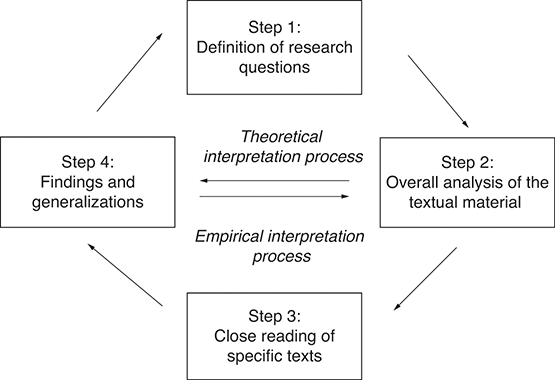
Figure 30.1 Critical discourse analysis as abduction
The close reading of texts is the crucial distinctive feature of critical discursive research. In the following I exemplify this close reading by an analysis of a media text that was originally published by Reference Vaara and TienariVaara and Tienari (2008). In our analysis, we focus on the discursive legitimation of a shutdown decision in the media. As discussed above, the discursive legitimation of specific strategies is an important but still under-researched area in SAP. Although such close reading can be conducted in various ways, it is important to focus attention on the representativeness of the text in terms of its genre and particular characteristics. Our analysis focuses on a typical media text that helped us to uncover and exemplify how the media make sense of such strategic decisions.
In such close reading, it is also vital to employ specific theoretical models and ideas as guiding principles in the analysis. We used the theoretical model developed by Reference van Leeuwen and Wodakvan Leeuwen and Wodak (1999), in which they distinguish authorization, rationalization, moral evaluation and mythopoesis as typical discursive legitimization strategies.1 While such close reading is, by its very nature, interpretive and subjective, specified theoretical starting points help to structure the analysis and ascertain that the analysis captures essential aspects of the phenomenon in question. This is not to say that all critical discursive applications in SAP research should use specific linguistic theories, but that it is important to be able to move beyond the most apparent surface level of the texts, to be able to identify and elaborate on the key discursive and social practices in question.
The case in question is the shutdown of a long-standing marine engine factory in the city of Turku, Finland, carried out by Wärtsilä Group in 2004 and 2005. The company’s decision created a huge debate in Finland around their strategy and the overall legitimacy of such decisions. The following text illustrates how the shutdown was initially presented in the leading Finnish daily newspaper, Helsingin Sanomat, which can be seen as an opinion leader in the Finnish media. This reporting created a specific sense of legitimacy around the controversial decision and set the tone for the subsequent public discussion (Helsingin Sanomat, 15 January 2004).
Wärtsilä moves its engine manufacturing to Italy
480 people lose their jobs, 200 maintenance men remain in Turku
Capacity is cut to improve profitability
The engine manufacturer Wärtsilä will shut down its long-standing factory in Turku and move its production to Trieste, Italy. Of the 680 employees in Turku, 480 will lose their jobs. A couple of hundred people will retain their jobs in diesel engine maintenance service. About 130 of those who are going to lose their jobs will have an opportunity for early retirement; 350 employees will be dismissed. Production will be transferred to Italy in the fall.
The CEO of Wärtsilä, Ole Johansson, says that engine production in Vaasa [another Finnish city] will continue as before. There are 1,600 employees in Vaasa and about 1,200 in Trieste. Vaasa is the technology and R&D center for the entire Wärtsilä Group.
According to Johansson, the shutdown is not due to a lack of competitiveness in Turku. He says that the multinational has only bad alternatives since overcapacity has to be cut because of weak demand. This shutdown will, according to Johansson, secure full employment in Vaasa and Trieste.
The shutdown is part of Wärtsilä’s restructuring program, which was started last September. The group will reduce its workforce by a total of 1,100 people. On Wednesday it was announced that a total of 70 people would be made redundant in Norway and Holland. Johansson shutdown of the Turku factory would affect ‘a few dozen jobs’ with subcontractors in the Turku region.
Johansson argues that concentration of large engine production at Trieste is justified because the factory is Wärtsilä’s largest. Concentration will create flexibility for changes in demand. While two different engine types are manufactured in Turku, several are made in Trieste, including those made in Turku.
When demand is strong, a factory like Turku is effective, but it becomes problematic when the market slows down. Last year people in Turku faced temporary layoffs. Trieste does not require large investments, as is the case in Turku, where more production capacity is needed. Trieste also has direct access to natural gas, which is needed for testing gas engines.
This solution will significantly increase the profitability of the ‘multinational corporation’, Johansson estimates. The share price of the corporation increased after the shutdown news. According to Johansson, restructuring production will generate annual savings of approximately 60 million euros, which will affect earnings from 2005 onwards.
This news report is a typical example of a discursive struggle over shutdowns. The genre of the focal text is business news, but the text is also an approving commentary on the ‘official’ information given by Wärtsilä’s corporate communications. The text thus represents a hybrid genre, typical of contemporary media (Reference FaircloughFairclough 1995; Reference van Dijkvan Dijk 1990). On the whole, global capitalist discourse is the dominant discourse used; it provides the primary framework to make sense of the controversial decision. Several legitimization strategies are used. To a large extent, the text rests on the authorization provided by CEO Ole Johansson. The involvement of the CEO lends credibility to the evidence provided, most clearly shown in his speech acts. The journalist composing and editing the text also uses other means of authorization, however. Importantly, the reference to the increase in share price serves as a particularly powerful legitimization strategy. In a sense, the ‘market’ acts as the ultimate authority in contemporary global capitalism.
Various rationalization strategies are also used. Financial rationalization plays an accentuated role: the shutdown is legitimized by references to profitability improvement and annual savings. This is the case even though the CEO admits that the ‘competitiveness’ of the unit is not a problem per se. This is one of the most striking features of this text: the improvement of future profitability, rather than current problems, is the main reason given for the shutdown. In this sense the text deals with ‘imaginaries’ (Reference Fairclough, Thomas, Grant, Hardy, Oswick and PutnamFairclough and Thomas 2004) or ‘futurological prediction’ (Reference FaircloughFairclough 2003). The modality of the text is a significant part of the rationalization. For example, the claim that ‘overcapacity has to be cut’ is portrayed as an obligation in terms of the future success of the MNC, leaving no room for alternative scenarios.
Defining the Wärtsilä Group as an MNC makes all the difference in the text. This framing legitimizes the shutdown by appealing to the effect it will have on the overall profitability of the corporation. This is a key theme in the text, and it is explicitly spelled out in the final comment of the CEO: ‘This solution will significantly increase the profitability of the multinational corporation.’ From other media texts published – for example, in the local newspaper – we learn that this is in stark contrast to the view held by people in Turku, who saw the factory (and the company itself) as an integral part of the shipbuilding tradition in the Turku region from the late eighteenth century. From this perspective, shutting down the unit – especially since it was profitable – did not make any sense. ‘Overcapacity’ is a particularly interesting rationalization theme in the text. It nominalizes a state of affairs accepted as fact. It also involves discursive ‘technologization’ (Reference FaircloughFairclough 1995: 91–111), in the sense that grasping the issue at hand (‘overcapacity’) is difficult without detailed knowledge of the industry dynamics. What happened in the previous year – the ‘temporary layoffs’ – is also used as evidence here. Other rationalizations include pointing out that the unit in Trieste is larger than the one in Turku, that the Trieste unit allows for a better concentration of production and that it provides more access to necessary natural resources. ‘Concentration’ and ‘flexibility’ are interesting themes in this respect. They are often used by decision-makers in MNCs to create a positive sense of the prospects for reorganizing production across national borders.
Moralization strategies are also used in the text. While the beginning of the text effectively raises doubts concerning the moral basis of the shutdown decision by pointing to dramatic job losses, the latter part of the text echoes the official corporate view. An important part of legitimization is that the eventual unemployment of the workers in Turku is necessary so that workers in Vaasa and Trieste will have ‘full employment’. As a linguistic detail, the verb ‘secure’ is used as a particularly forceful confirmation. The reference to Vaasa is crucial from a nationalistic Finnish perspective, since it justifies the layoffs in one location by the ‘fact’ that this will allow the other unit in Finland to survive. Taking up the layoffs in other countries (Norway and the Netherlands) then serves as a justification of processual fairness. The significance of job losses elsewhere in the Turku region, for example, in relation to the MNC’s subcontractors is played down (only ‘a few dozen jobs’ will be lost). It is the apparent inevitability of the situation, however (‘[we have] only bad alternatives’), that serves as the overarching moralization strategy in the text.
Finally, there are interesting mythopoetical elements in the text. There is a restructuring programme already under way in the MNC, and the shutdown decision is an essential part of this programme. The restructuring programme can be seen as a euphemism for layoffs, and its narrative construction makes it a self-justifying structure. The shutdown becomes a strategic – not a haphazard – one-off decision. This attaches an additional sense of inevitability to this particular decision.
We can thus see how particular discursive legitimization strategies are used to legitimize a specific organizational strategy with significant social and material consequences: the transfer of production and loss of jobs. The point is that media texts such as this one are a key part of complex discursive processes through which particular organizational strategies – and not others – are legitimized.
Methodologically, such close reading of a specific text can be the essence of the analysis. Depending on the empirical research design, however, it might also be useful to combine examples from multiple texts and other observations to provide a more complete analysis of the phenomenon in question.
Conclusion
I have argued in this chapter that a critical discursive approach has a great deal to offer to SAP research because it provides means to critically analyse contemporary social problems by targeted linguistic analysis (Reference FaircloughFairclough 2010; Reference Wodak and MeyerWodak and Meyer 2015). This is why it can and should be applied to SAP research to deepen our understanding of key issues and to open up new research avenues. Although the discursive aspects of strategy have received increasing attention in prior studies (Reference Balogun, Jacobs, Jarzabkowski, Mantere and VaaraBalogun et al. 2014; Reference Vaara and Fritsch.Vaara and Fritsch 2022), there are still many issues that have remained undertheorized and underexplored. A critical discursive approach is one, though not of course the only, methodology that can assist in developing better understanding of the central discursive processes and practices as well as their implications. Moreover, strategy research in general and SAP studies in particular have been criticized for a lack of critical analyses (Reference Carter, Clegg and KornbergerCarter, Clegg and Kornberger 2008). A critical discursive perspective can partly help to remedy this state of affairs.
A critical discursive approach is no panacea, however. The applications of CDS in general and in management research in particular have been criticized for a lack of rigour and detail in the actual linguistic analyses. Moreover, students of CDS have at times been accused of making self-serving selections of texts and distorted interpretations. CDS invites the researcher to take a stand on issues – more so than in conventional analyses. This should not be misinterpreted as an opportunity to produce any kind of critical comment based on one’s convictions or general observations. On the contrary, it is necessary to make sure that one’s own interpretations are based on careful textual evidence and logical argumentation.
This chapter has provided some ideas as to what such analysis can entail. I have outlined particularly important topics that deserve special attention. These include the central role of formal strategy texts, the use of discursive practices in strategy conversations, the discursive construction of conceptions of strategy and subjectivity in organizational strategizing, legitimization in and through strategy discourse and the ideological underpinnings of strategy discourse as a body of knowledge and praxis. What I have sketched here can be seen as a preliminary research agenda that, it is to be hoped, will inspire more fine-grained empirical analyses. This list of topics is by no means exhaustive, however, and there are many other questions that warrant attention in the future. These comprise for instance the role of discourse in ongoing strategic sensemaking (Reference 556Vaara and WhittleVaara and Whittle 2022; see also Schildt and Cornelissen, Chapter 19 in this volume) or identity politics including links to themes such as nationalism (Reference Vaara, Tienari and KoveshnikovVaara, Tienari and Koveshnikov 2021). As to methods, future studies can take many directions, ranging from detailed linguistic analysis of the features of strategy texts to a broader analysis of the production and consumption of strategy research.
While a critical discursive analysis methodology can accommodate various theoretical perspectives and empirical methods, I wish to conclude by emphasizing its three key requirements. First, the critical orientation must be taken seriously, which should be shown throughout the analysis from the initial formulation of the research questions to the final conclusions. The point is to focus on issues and concerns that require critical analysis in the strategy domain. Not all discourse analysis is or needs to be critical, but then it should not be called CDS. Second, a critical discursive approach must include a detailed analysis of texts that provide the empirical basis for the key arguments to be made. This most often requires the close reading of specific texts that can provide concrete illustrations of the focal phenomena at the textual micro level. Third, these texts must then also be placed in their social contexts. I believe that it is through such analysis that we can best understand the linkage between discursive and other organizational practices in strategizing and the social and societal consequences of strategy discourse.

