

The Awami National Party (ANP) conjures up very different images depending on where in Pakistan the party is operating. Among residents of Karachi, the ANP was for a period of time yet another example of an ethnic political party that frequently engaged in violence to threaten and intimidate its opponents and to challenge opposition parties for valuable turf. Between 2008 and 2013, the ANP held two provincial assembly seats in the city and its activists were routinely involved in violent and coercive activities. Indeed, tit-for-tat violence between ANP and Muttahida Qaumi Movement (MQM) cadres was an almost daily occurrence. In Khyber Pakhtunkhwa (KP) province, however, the primary region of the country where it has been competitive, the ANP has a different reputation. The party’s ideological origins lie in the nonviolent movement of Khan Abdul Ghaffar Khan – known to many as “Frontier Gandhi” – and it is in KP where the ANP aims to live up to this legacy. In 2008, it controlled the provincial government here, until it lost dismally to the Pakistan Tehreek-e-Insaaf (PTI) five years later. While struggling with allegations of involvement in widespread corruption, party members are generally thought to have taken a firm stance against extremism. In recent years, they have also been victims of a targeted campaign by the Tehreek-e-Taliban Pakistan (TTP) – a militant group based primarily in the northwest of the country – but have largely not retaliated with violence.
These two differing images of the party can be seen in popular press coverage, international and domestic. For example, the Christian Science Monitor described the ANP in 2008 as “uniquely qualified to attempt peacemaking” in KP due to its nonviolent origins and branding (Sappenfield Reference Sappenfield2008). By contrast, in a 2011 report, Caravan Magazine could write that “violence is used as a political tool in Karachi” where both the ANP and MQM “take advantage of, and sustain, ethnic tensions between the communities to exploit the public’s vote in exchange for security” (Mirza Reference Mirza2011). The image of the ANP in Karachi isn’t of the “Frontier Gandhi,” but rather armed ANP workers, “like crows perched along telephone wires strung through the hills on the outskirts of Orangi Town…, crouched over and looking through the crosshairs of their rifles at homes near the bottom of the hill in Qasba Colony” (Mirza Reference Mirza2011). A United States Institute of Peace (USIP) report agreed that violence in Karachi was inextricably tied to party activity: “The armed wings of major political parties, including the MQM, PPP, and ANP, are the main perpetrators of urban violence” (Yusuf Reference Yusuf2012, 3).
This chapter will examine why the ANP refrained from employing violence in KP province at the same time as it engaged in violence through party cadres as one strategy in its repertoire of electoral strategies in Karachi. The answer lies in the varying incentives for violence that the party perceived in each set of constituencies vis-à-vis both voters and state institutions. The nature of competition in Karachi, ordered as it was by the presence of ethnically polarized political parties, incentivized the ANP to present itself as the primary and sole option available to Karachi’s growing migrant Pashtun population. By sustaining and exacerbating ethnic tensions before the 2008 elections, the ANP was able to maintain support among its core Pashtun constituency by exploiting its need for security and the promise of provision of resources to co-ethnics. Alongside these diminished costs for violence, the party benefited economically from violence by engaging in turf wars with the MQM and Pakistan Peoples Party (PPP) in the Hobbesian political landscape of Karachi, where access to state resources and the informal economy were both up for grabs and overlapped with ethnicity. In districts in KP province, by contrast, the potential cost to the ANP of engaging in violence in a security environment heavily managed by the military was greater, as was the benefit from campaigning on a pro-peace platform. In this environment, ethnicity also played a different role; while certainly relevant to the party’s overall ethos, it was not a locally salient cleavage differentiating between electoral candidates and it was not a significant ordering principle of political or economic life. As such, the ANP was less likely to find a captive support base among KP’s Pashtun population. Finally, because the ANP has a relatively strong party apparatus at the local level, it did not have to rely on vote banks operated by local violence specialists external to the party.
To support my argument, I use a combination of qualitative interviews with party officials, party members, journalists, and law enforcement officials in Peshawar, Islamabad, and Karachi, coupled with suggestive data from a survey of elected legislators and survey of voters in Karachi and KP. I also rely on news accounts and secondary sources, including existing studies of voting determinants in KP province. Due to a confluence of factors – some discussed later in this chapter – the ANP lost most of its seats in KP and in Karachi in the 2013 elections. This chapter focuses on ANP strategy in Karachi starting from around 2007, when its presence in Karachi increased, till the 2013 elections and through approximately 2018 nationally. In 2021, a new political party, the National Democratic Movement (NDM), was launched by Pashtun leaders, including some former ANP leaders and activists.
The chapter proceeds as follows. First, I outline the theoretical basis for when organizationally strong parties are unlikely to engage in violence as an electoral strategy and explore alternative explanations for variation in ANP’s strategy. Then, I provide a brief background to electoral and local power politics as well as the nature of violence in KP province. Next, I attribute differences in party behavior and strategy across KP and Karachi to the diverse set of electoral incentives for violence in the two locales, especially the absence of a penalty from core voters and the active polarizing benefit gained from violence in Karachi. Finally, I describe the ANP’s efforts to socialize its members, the presence of the party at the local level, and the nature of the party’s electoral candidates to demonstrate its organizational strength. I show that the party is in charge of its own microlevel clientelistic structures, such that most local elites or notables on party tickets are also long-standing party members. This party strength allowed the party both to engage directly in violence in Karachi when desired and to refrain from forming electoral alliances with external local patrons, including violence specialists, in KP.
7.1 What Explains Nonviolence? Exploring Alternative Explanations
Thus far, this book has explored why parties partake in violence and the manner in which that violence is most likely to be employed. In this chapter, I investigate why a party would choose to refrain from violence as an electoral strategy. Explaining a nonevent such as nonviolence is a challenging endeavor. Indeed, one could ask why a party does not practice one of any number of tactics and strategies; yet, this discussion won’t always be analytically useful. However, when a particular party utilizes violence in one electoral arena but refrains from it in another, we are left with the important task of explaining this variation. The question motivating this chapter is therefore: Why does the ANP largely refrain from engaging in violence in KP but did utilize violence in Karachi?
There are many plausible explanations for this incongruence. First, electoral competitiveness could be greater in one region than the other. Electoral competition changes the risk-to-reward ratio of violence for parties and politicians, such that coercion or violence may be deemed worthwhile by reducing valuable voter turnout on election day. If this is the case, we would expect competition in Karachi to be fiercer than that in KP, explaining why the ANP resorts to violence only in the former locale. Alternatively, if competition is intense and politicians rely on the support of minority voters, parties may step in to stop ethnic violence or riots (Wilkinson Reference Wilkinson2004). However, there is little empirical evidence in favor of either hypothesis involving electoral competition in Pakistan. Individual seats were not particularly close in constituencies in either KP or Karachi in the years under consideration. While KP has seen high electoral turnover, with few examples of “safe seats” across election years and a general anti-incumbent trend, there have not been the sort of close elections that scholars have hypothesized might be associated with violence seeking to polarize the electorate and dissuade opposition voters from going to the polls. Additionally, much of the violence between the MQM, ANP, and PPP in Karachi took place in between these election years and much of it was criminal or economic in nature, which electoral competition-focused explanations cannot fully account for.
Second, a party may have the capacity for violence in one location but not in another. This argument would suggest that while it had the incentives to carry out violence in all electoral arenas, the ANP was only able to do so in those places where it had the ability to do so. ANP’s organizational structure between Karachi and KP was certainly not identical during the time period being discussed, and the level of factionalism within the ANP in the last 20 years has been considerable. However, the party’s capacity for violence was not significantly different between the distinct arenas in which it operated, as this chapter will describe. Importantly, even if the party lacked the capacity for violence in KP, it could still outsource violence if it had the incentives to do so, but we see the ANP refraining from this strategy as well.
Third, ideological explanations seem incomplete at best. ANP members and supporters often highlight their party’s legacy and commitment to nonviolence. That its members appear committed to nonviolence in some locations but not in others, however, suggests that ideology alone cannot be driving the divergence between the ANP and other political parties that utilize violence or ally with militant actors. A related alternative explanation is that the different branches of the ANP have different ideologies. Indeed, it is not unusual for discussion in Pakistan to suggest that the ANP in Karachi is simply a “different kind of party” than the parent party, long motivated by the personal goals of its provincial leader, Shahi Syed, and linked by name only to the ANP. This is, in itself, however, an insufficient explanation for why a party for whom nonviolence is key to its branding would allow this brand to be sullied by association with a violent offshoot. Indeed, billboards and posters of the ANP that adorned Pashtun-majority neighborhoods in Karachi displayed portraits not only of Shahi Syed but also those of ANP founders and leaders, Ghaffar Khan, Wali Khan, and Asfandyar Wali Khan (Arqam Reference Arqam2013). Given that the ANP is an organizationally strong party, provincial party offices must also follow the general party constitution and are not permitted to carry out acts that fall outside of it, a considerable degree of provincial autonomy notwithstanding. “We can do whatever we want as long as it agrees with the constitution,” explained a senior party member.Footnote 1 If provincial activity is in contradistinction to the party mandate, the central executive committee intervenes. For example, following the 2013 elections, the central and provincial councils decided that they would sit in the opposition at all levels. However, the ANP Member of Provincial Assembly (MPA) in Balochistan announced instead that he would join the government in that province. This was considered against the policy of the party and “taken care of immediately” as the MPA “had to withdraw.”Footnote 2 If the ANP prized nonviolence as central to their mandate and party platform, we would not expect the type of violence linked to the ANP that we saw in Karachi. KP is itself hardly a peaceful province – it is heavily armed and has seen large-scale violence in the form of militant acts mostly carried out by Islamist groups and often targeted at ANP members and supporters. Indeed, Peshawar – an urban center – suffers from criminal activity, land-grabbing, and extortion, not unlike Karachi.
I posit a distinct explanation to account for party divergence in violence strategy, one in keeping with the overall argument of this book. Whether an organizationally strong party utilizes violence or not depends on the combination of benefits it receives for violence and the costs it incurs for its use. In Karachi, the incentives for violence were much greater than in KP and the costs to engaging in it much lower. In the megacity, the relative lack of complete sovereignty by any individual actor ensured that resources and valuable land, assembled into ethnic enclaves, were up for grabs by political parties, with political success allowing for greater control of the informal economy. With the MQM representing Muhajirs and the PPP representing Sindhi and Baloch communities, it left the field open for the ANP, a Pashtun nationalist party, to seek to represent the increasing Pashtun migrant population in Karachi. In doing so, the ANP was less likely to incur a cost among its core co-ethnic voters for utilizing violence for coercive or economic gain – at least for the short-term – and it was also able to benefit from violence’s polarizing potential. By contrast, in the heavily garrisoned and less ethnically polarized environment of KP, the ANP was more likely to incur costs from both state institutions and voters in KP for any use of violence. The benefits to be gleaned from violence in this arena of shared sovereignty, where different state, quasi-state, and tribal institutions and actors hold influence and share control over governance, are relatively muted for political parties. The ANP could also not rely on shared ethnicity resulting in a captive support base in KP since such voters have an array of other ethnic Pashtun politicians to which they could, and do, turn. Section 7.2 outlines KP’s political landscape, describing the nature of political representation and mobilization in this province.
7.2 The Political Landscape of Khyber Pakhtunkhwa Province
KP, known until 2010 as the North West Frontier Province (NWFP), is the country’s third most populous province behind Punjab and Sindh. According to the 2017 census, its population of 35 million is composed primarily of Pashtuns (77%), followed by Hindko-speakers (11.5%). KP is still heavily rural, although like all of Pakistan it is urbanizing. More than 80 percent of the population lives in rural areas, with the vast majority of the urban population in KP’s largest city of Peshawar. Until 2018, KP shared a border with FATA, a semiautonomous region of Pakistan which borders Afghanistan and where the state explicitly shared coercive capacity and governance duties with long-standing tribal maliks and state-appointed actors (Naseemullah Reference Naseemullah2014). KP itself had been divided into both “settled” and “tribal” areas with the former subscribing to Pakistani civil law, and the latter – the Provincially Administered Tribal Areas (PATA) – maintaining some aspects of regular Pakistan law and some of tribal or shariah systems of governance (White Reference White2008). PATA has seen a series of changes in governance over the years since independence. Malakand district in KP, for example, moved from initially being governed by the Frontier Crimes Regulation (a British-era law that long governed FATA) to a provincially administered area with a state-appointed, powerful political agent alongside courts and local elected institutions (see White Reference White2008). In 2001, when devolution reforms altered this arrangement once again, the position of the political agent was replaced by a less powerful district coordination officer, but the “question of who exercises final authority over police forces” was left ambiguous (White Reference White2008, 234). Through the 25th Amendment in 2018, FATA was merged into KP province, changing the province’s boundaries, and PATA’s governance structure was brought into the KP mainstream. Because much of my research focuses on the period before this amendment, my discussion here centers on KP rather than on FATA where political parties have played a qualitatively different role for much of Pakistan’s existence. Of course, the nature of state capacity varies between different parts of the province, but for my purposes, the key aspect of state capacity in KP is to note that, to varying degrees until 2018, it remained shared through explicit and formal arrangements with tribal maliks and state-appointed officials, as well as informal arrangements with local elites all of whom existed alongside elected officials and political parties.
Electoral politics in KP has been characterized by high levels of volatility. The ANP’s electoral history in the province reflects these ups-and-downs. In 2002, a six-party religious coalition (the Muttahida Majlis-e Amal) won elections and the ANP was in opposition.Footnote 3 In 2008, the ANP swept to victory, with a plurality 48 (out of 124) provincial assembly seats, significantly more than any other major party.Footnote 4 In 2013, however, the party only secured five MPA spots, with the relative newcomer PTI winning a plurality. The 2018 election was one of the first times in recent history that the incumbent party, the PTI, won reelection convincingly. This high level of turnover at the party level is associated with substantial politician turnover as well. Because KP has not been a stronghold of either of the two primary parties in Pakistan, the PPP or the Pakistan Muslim League-Nawaz (PML-N), this has made for a more unpredictable playing field for the parties.
Nonetheless, KP politics, as in much of rural Sindh and Punjab, is dominated by the power of electables and local notables affiliated with influential families. Of the 40 members of national and provincial assembly elected from KP that I surveyed in 2020, 20 (50%) were landed elite and 12 (30%) were businessmen/industrialists. Personalistic ties between voters and politicians are paramount. Constituency service, whereby voters make direct requests and seek face-to-face assistance from elected representatives regardless of partisanship (Bussell Reference Bussell2019), is necessary to the electoral success of individual candidates (Golden et al. Reference Golden, Gulzar and Sonnet2020). Interviews with KP-based politicians repeatedly emphasized the electoral importance of partaking in constituents’ khushi aur ghum (sorrows and joys), such as attending weddings and funerals.
Local kinship ties are also central to politician–voter relations. However, which local identity is salient depends on the distribution of identities in a particular constituency. Nelson (Reference Nelson2002, 313–4) writes about a village in KP, for example, that “because only one tribe dominates the entire region, tribal identity cannot be described as a ‘statistically significant’ factor on election day” and rather local factions are defined in terms of cleavages within the dominant biradari. A party worker in KP also emphasized the role played by individual personalities, rather than broader identity groups, in affecting voting behavior.Footnote 5 Another scholar explained that “landownership, tribal kinship, and family reputation remain political prerequisites” for electoral candidates (Farmanullah Reference Farmanullah2014). As in other parts of the country, party affiliation is also becoming important in KP province such that the relative importance placed on the “party vote” is increasing in many constituencies.
Electoral politics from KP can also not be removed from the fact that the province is heavily militarized. Both KP and FATA saw very high levels of violence as a result of armed conflict between the state and militant groups starting in FATA around 2004. The conflict carried clear overtures of the US-led War on Terror, as drone strikes targeted the leaders of the Afghan Taliban and al Qaeda who reportedly sought sanctuary in FATA. Many local militant groups also had strong connections with these groups. In part due to this proximity to FATA, KP has suffered a large amount of violence in recent years, recording nearly 12,000 deaths between 2005 and 2012 due to terrorist-related activity and military operations (Yamin & Malik Reference Yamin and Malik2014). The ANP, considered a secular party, has been a particular target of the TTP, suffering hundreds of deaths at their hands. While terrorist violence has decreased in recent years, high profile attacks have nonetheless continued to take place, most infamously the tragic 2014 Peshawar school massacre in which gunmen associated with the TTP stormed an army public school and killed 149 people, including 132 children.
Even before the scourge of militancy wrecked the region following the events of 9/11 and the resultant War on Terror, KP was heavily armed. During the Afghan War, Pakistan was used as a staging area from which to send weapons to the Mujahideen that were fighting the Soviets. The Pakistan army also set up training camps for the Mujahideen within the country and sent fighters to assist in the war. The effects of this involvement continue to be felt today, with a large informal economy and parts of KP teeming with illegal and unregistered weapons and narcotics – an important source of income for jihadi fighters (International Crisis Group 2014). Dara Adam Khel, on the outskirts of the provincial capital of Peshawar, is one such black market for weapons. “Kalashnikovs welded from scrap metal are cheaper than smartphones and sold on an industrial scale” in this town (AFP 2016).
Sectarian violence between the majority Sunni and the minority Shia community has also been prevalent in the province, focused in the cities of Peshawar, Dera Ismail Khan, and Hangu, and overlaps with the Islamist violence of the TTP. Even though the Lashkar-e-Jhangvi (LeJ) and the Ahle Sunnat Wal Jamaat (ASWJ) are based primarily in Punjab, they are “a major player in and around Peshawar” with Dara Adam Khel an LeJ “stronghold” (International Crisis Group 2014, 9). Sunni extremists are known to maintain hit lists of prominent Shias in Peshawar and have established their presence in many parts of the city.
Sectarian and Islamist violence aside, however, unlike in Karachi, violence between the country’s ethnic groups is rare in Peshawar: An International Crisis Group report states, for example, that “the majority Pashtu and minority Hindko speakers have seldom competed over resources, and there is no Hindkowan political party” (2014, 3). While the report acknowledges that the ANP’s focus on changing the province’s name – from NWFP to KP – did lead to some disillusionment among Hindko-speakers, this has not translated to the creation of an ethnic Hindko party. Nonetheless, criminal violence in the urban city centers of KP is common. Many so-called “no-go areas” on the outskirts of Peshawar have numerous criminal gangs, trading in drugs and guns with close links to militant groups. Like Karachi, Peshawar suffers from the presence of a land mafia competing over valuable real estate, and many of these criminals have links to Sunni extremist groups. Kidnappings-for-ransom and similar lucrative crimes are also common (International Crisis Group Reference Shapiro and Gulzar2014). Rather than have political parties directly involved in such acts as they are in Karachi, however, criminal activity tends to be the purview of militant groups and criminal gangs, of which there are many in the region. However, weakly organized parties do form electoral alliances with elite patrons as and where they are influential, even if they are violent or engaged in criminal activity. For example, a Member of National Assembly (MNA) from Dara Adam Khel, Haji Baz Gul, is an arms dealer in the region who, while normally contesting elections as an independent, campaigned on a PML-N party ticket in 2013. Religious political parties, some violent themselves and some with links to extremist actors, are also common (Siddiqui Reference Siddiqui2019). Why does the ANP refrain from violent tactics in KP? Section 7.3 turns to outlining the party’s differing approaches to violence in KP province as well as in Karachi.
7.3 The Anp and Violence in Khyber Pakhtunkhwa and Karachi
As the earlier vignette of armed ANP men on the rooftops of Orangi Town relates, the ANP utilized violence directly in Karachi. It shared similar incentives for violence as did the PPP and MQM discussed in Chapters 4 and 5 – electoral coercion, land-grabbing, extortion, and ethnic polarization. While the political landscape of Karachi has been explained in detail earlier, here I want to reiterate a few points that are of note in comparison to the landscape in which parties compete in KP. While both KP and Karachi are characterized by weak state capacity, the presence of many potential competing sovereigns in Karachi – rather than the clear sovereigns with whom parties have to negotiate and accommodate to operate in KP – has ensured that the provision of security, access to the (formal and informal) economy, and state resources are up for grabs by political parties. Consequently, many actors, including political parties, have operated both within the general framework of state institutions as well as outside. Importantly, access to the state is strongly organized along ethnic lines. As explained in Chapters 4 and 5, much of the violence between political parties or their affiliated gangs has come in the form of conflict over territorial control – locally referred to as “turf” wars – which has enabled politicians to raise funds through extortion; “disputes over which political party or criminal entity can collect funds from a particular area often spark violent clashes” (Yusuf Reference Yusuf2012, 13). Party members have engaged in tit-for-tat violence with members of opposition parties, ethnic riots have led to numerous injuries and death, and violence has also sought to alter ethnic geography for purposes of electoral gain and economic profit.
Like the MQM, the ANP used its party cadres and activists to target opposition party members and rival ethnic groups. Many of the violent militants in the ANP were affiliated with its student wing, the Pashtun Student’s Federation (PSF), and entered city politics through these violent campus politics. A senior ANP party member admitted to me the PSF’s involvement in such activities, referring to them as “complete filth.”Footnote 6 A news piece wrote in 2013, “Lower cadres of ANP have employed almost all the tactics familiar in Karachi politics” (Arqam Reference Arqam2013). Another ANP member admitted that the party was “really uneasy” with the number of violent actors found to be associated with the party in Karachi, even though “officially, the central party is not violent. Even with the Taliban, we haven’t retaliated.”Footnote 7 Indeed, while some ANP members recognized that armed militants did exist within the party in Karachi, they nonetheless argued that not every Pashtun found to be involved in violence in the city was an ANP party member. They also asserted that while there may be a handful of “bad seeds” in the party, violence was not party policy in Karachi. The aforementioned senior party leader told me, for example, that he would support police or military operations against the party if they were truly aimed at ridding the party of criminal elements:
If there is a smell in the house, and a person from next door comes and asks me what it is, and I agreed that there is a smell. We look around for the source and find a dead mouse. The neighbor then takes away the dead mouse. I should be happy [that it is gone] even if it was from my house. So if a criminal is taken out of my organization, I will be happy.Footnote 8
However, ANP leaders, including provincial leader Shahi Syed, also themselves instigated violence against non-Pashtun groups in Karachi by using the “Pashtun card.” In a speech to a large gathering of Pashtuns in 2010, Syed said, for example, that if he so desired, “I could have appealed to my ethnic group (quom), and all the Pashtuns would have come out” and created havoc on the streets of Karachi. He added, “Just like Pakistan created the atom bomb and strengthened itself, so too I have brought together our quom.… I have made a missile and the missile’s name is Pakhtun” (video clip from TV show Point Blank with Mubashir Lucman). For a period of time, then, the ANP had the incentives for violence in the megacity, and, as will be discussed, the organizational capacity for violence – though certainly not at the levels maintained by the MQM.
In contrast to Karachi, access to the informal economy and state resources is not organized along ethnic lines in KP, and parties also operate in a landscape dominated by local elites and other social institutions, such as tribal structures, that wield coercive control throughout much of the province. Further, to the extent that party ideology, branding, or identity politics matter for voting dynamics in KP, the ANP’s image as a nonviolent, secular party allows it to present itself as an alternative to those groups affiliated with the predominant forms of violence in KP, particularly Islamist violence. The nature of the insurgency in FATA, the presence of the TTP, as well as other localized militant groups, means that the ANP is an alternative to the religious parties that often support or are linked to these entities. Finally, the heavily militarized nature of KP and the relationship of the military to the ANP over the years all suggest that state-imposed costs would likely be high in the event of ANP violence. Not unlike other political parties in Pakistan, the ANP and the military have long had a contentious relationship. However, perhaps more than most, due to its perceived antinational history – and the fact that the party has been both vocal about its opposition to army intervention in politics and has also called for a reduction in military expenditure (Dawn 2018) – the ANP has faced greater suspicion and scrutiny from the establishment. The likelihood of pressure from the military or central government in such an environment thus serves as a further disincentive to the ANP for engaging in violence in KP. Finally and importantly, the voter-imposed costs of violence in Karachi were different among Pashtuns in Karachi than in KP. Why was this the case? Section 7.4 turns to exploring the nature of the ANP’s support base in these two locales.
7.4 The Anp’s Support Base and the Costs of Violence
The ANP has fashioned itself into a party representing Pashtun nationalism and defending the ideals of secularism. One of the party’s central policy goals when it was in power in KP (then NWFP) between 2008 and 2013 was to change the name of the province to better reflect the ethnic group that dominates it – which it achieved through the 18th Amendment to the constitution. A member of the party explained that the province’s new name was not dissimilar to the names of other provinces in the country (Punjab for the Punjabi ethnic group, Sindh for the Sindhis, and Balochistan for the Baloch) and hence, accusations of anti-state ideology and activity were unwarranted. He stated, “We don’t want to create a separate country for Pashtuns. [We are just] trying to stake our claim in the Pakistan federal republic, as per the constitution.”Footnote 9 Indeed, the party claims to be demanding provincial autonomy for all ethnic groups, not just Pashtuns. Since around 2010, the ANP has also portrayed itself as a more progressive alternative to the PTI. The ANP differs from the PTI most vociferously in its approach to the Taliban and the rising influence of militant Islamist groups in the country, with the ANP generally adopting a more aggressive stance toward curbing extremism in Pakistan, some exceptions – most notably the manner in which it dealt with an Islamist insurgency in Swat in 2009 – notwithstanding.
The ethnic composition of the ANP’s support base, its membership, and its policy agenda all suggest that the ANP is an ethnic political party, by most definitions. Nonetheless, I suggest that the ANP lacks a captive support base in KP. By contrast, it did, for a time being, have a captive support base in Karachi that did not hold it accountable for its use of violence. The work that “being Pashtun” is doing in Karachi relative to districts in KP in determining the ANP’s vote varies considerably, as does the possibility of exit for Pashtun voters in the two localities. In the remainder of this section, I outline the nature of the party’s support base in KP and how it differs from that in Karachi.
7.4.1 The Anp’s Support Base in Khyber Pakhtunkhwa
There is little doubt that the ANP fits many definitions of an ethnic party. First, its core constituency is composed of Pashtuns. According to survey data from 2015, 94 percent of respondents in the sample (89 of 95) who ever voted for the ANP or planned to do so in the future were Pashtun. These individuals were restricted to Karachi (27 respondents) and KP (68 respondents). Second, the ANP’s mandate focuses on provincial autonomy and in 2008, as noted, its primary goal was to change the name of the province to reflect the aspirations of this ethnic group. In numerous interviews, party members referred to the success of this policy agenda as an indication of the party meeting its policy goals.
However, ethnicity is not a locally salient cleavage in KP in the same way as it is in Karachi and the party cannot claim to have a captive support base. The majority of candidates who compete against one another belong to the same ethnicity, even if they do so on different party platforms. In my 2015 survey, for example, while 94 percent of those who had ever voted or planned to vote for the ANP were Pashtun, only 21 percent of all Pashtuns had ever voted for the ANP. Additionally, less than 10 percent of Pashtuns in KP said that they felt close to the ANP (larger percentages named the PTI, the PML-N, and religious party Jamiat Ulema-e-Islam-Fazlur Rehman). A large majority of Pashtuns in KP, then, perceived that they had other political options and supported an array of parties accordingly. Of the 40 members of national and provincial assembly elected from KP that I surveyed in 2020, 36 were Pashtun, 1 was Hindko-speaking, 1 was Saraiki, and 2 belonged to the Kho ethnic group in Chitral. When I asked politicians how much ethnicity mattered to voters, the answers were often confused because while sharing an ethnic identity mattered in so far as voters often expected electoral candidates to share their ethnicity, it also meant that this was largely taken for granted as a candidate characteristic. Indeed, parties that operate in KP on a religious platform also take advantage of their ethnic links with the populace. For example, Ullah (Reference Ullah2013, 90) writes about the religious JUI-F that they were “traditional” rivals of the ANP for “the Pashtun vote” and “had close ethnic, cultural and religious ties to the rural electorate” in KP. The majority of the militant TTP is also ethnically Pashtun and nonetheless targets the ANP.
At the local level, therefore, there is little evidence that party candidates are making ethnic appeals exclusively to a subset of voters, or being mobilized at the expense of another identifiable ethnic group. Rather, voters are “bound by considerations of local power structure in term of caste, biradri, and tribe” (Ahmad Reference Ahmad2010, 351). According to a study on voting behavior in KP (Farmanullah Reference Farmanullah2014), when asked what the major quality of a public representative should be, only 7 percent said it was to protect Pashtuns’ rights. Similarly, when asked specifically, “What do you think is the main issue of the Pakhtuns of Khyber Pakhtunkhwa?” about 7.2 percent said nonprotection of Pashtuns’ rights and another 5.1 percent said lack of provincial autonomy. The majority referred to issues such as inflation and electricity shortages. Additionally, 84 percent of respondents answered negatively when asked whether they felt as if they had achieved the aim for which they voted in the 2008 elections. Indeed, given that the ANP did achieve the name change for the province, this finding only makes sense if voters supported the party for reasons other than this policy change. In a survey conducted in Peshawar, the majority of respondents (67.7%) “rejected the assertion that Pakhtuns’ rights have been safeguarded by Pakhtun ethnic parties” (Farmanullah & Fakhr-ul-Islam Reference Farmanullah and Fakhr-ul-Islam2020, 99). On the basis of this survey, the authors also concluded that “ethnic determinant is secondary in importance as compared to other determinants of voting behaviour in KP electoral politics” (100).
Another survey carried out by Hassan Shah among constituencies in KP in 2017 asked why voters in KP had voted for their political party in 2013. Six options were provided, including protecting Pashtun political rights, which was the least likely option to be selected (9% of the 1122 respondents chose that as their option). Respondents were more likely to choose good performance or a desire to change the system as the reason for their electoral choice (Shah Reference Shah2019). Further evidence comes in the form of a survey carried out by Gallup Pakistan in January 2017. In this household survey, respondents in KP who had voted for the ANP in 2008 but not in 2013 were asked their reasons for doing so. Approximately 200 respondents were surveyed in KP, of which 72 admitted to switching electoral allegiances across the two elections. About 61 percent of those who did so cited a lack of effective campaigning done by the ANP’s candidates, 22 percent mentioned corruption or allegations of corruption, while 14 percent believed that the ANP had not made any tangible changes during their time in government.Footnote 10 While not campaigning effectively could mean many things – including the ANP’s inability to campaign due to being targeted by the Taliban prior to the elections – and future research would be needed to unpack the specifics, such an answer seems inconsistent with an electorate highly polarized around ethnic appeals.
7. 4.2 The ANP’s Support Base in Karachi
While there have long been Pashtun neighborhoods and communities in Karachi, the Pashtun population has expanded in the last two decades, propelled in part by a transportation boom triggered by the supply of NATO goods from Karachi to Afghanistan after 2001 that disproportionately benefitted the Pashtun-dominated transport sector in the city. According to census data, the Pashto-speaking population in Karachi was 8.7 percent in 1981, 11.4 percent in 1998, and 15 percent in 2017 (Rehman Reference Rehman2021). By some estimates, the largest concentration of urban Pashtun population in the world resides in Karachi. That is, there are more Pashtuns in Karachi than any other city in the world, including Peshawar.Footnote 11 Yet, political power is often a lagging indicator of demographic change and, as Rehman notes, “Karachi’s Pashtuns are politically under-represented at all government levels” (2017, 68).
Historically, the Pashtun vote has been relatively diffuse with members of the ethnic community often voting for religious political parties, the mainstream PML-N, or sometimes joining Sindhis and Baloch in voting for the PPP. Many of the city’s Pashtuns have also opted to vote for individual Pashtun candidates contesting as independents or on other party platforms. In the late 1980s, following the rise of ethnic tensions, the Punjabi Pakhtoon Ittehad party was formed to represent the Punjabi and Pashtun communities in the city but was ultimately short-lived.
The ANP did not become a particularly significant player in Karachi until the mid-2000s but saw its fortunes rise as Muhajir–Pashtun tensions worsened. This transformation was overseen by Shahi Syed, a businessman who had migrated to Karachi. Syed became the president of the ANP in Sindh in 2003, a year after the ANP failed to win a single seat in the nine Pashtun-majority constituencies it contested in Karachi. Many attribute the party’s rise to the events of May 12, 2007, also known as the Black Saturday riots. Clashes between the ANP and the PPP, on the one hand, and the MQM, on the other, erupted after the recently suspended chief justice, Iftikhar Chaudhry, arrived in Karachi. The parties were on opposing ends in their support for the judge, and the MQM, which at points allied with President Pervez Musharraf, opposed Chaudhry’s visit because of the chief justice’s dispute with the president. Gunfights led to more than 40 people killed, and several hundred injured and jailed. Fifteen of those killed were members of the ANP. One journalist wrote about the significance of these events for the party: “[ANP provincial president] Shahi Syed consolidated his grip with the wave of sympathy in the aftermath of the tragic events of May 12 and chose to ride the anti-MQM sentiments among the Pashtuns.” He added, “But the success came with its share of drawbacks. The ethnic tensions have consumed thousands of innocent lives and hundreds of political workers” (Arqam Reference Arqam2013). An MQM legislator similarly told me that prior to May 12, 2007, “no one knew Shahi Syed, who he was … he was banking upon that friction, he was igniting it … ANP, what they did, in the name of Pashtun nationalism, they patronized criminals in those areas [in which they won seats].”Footnote 12
After this point, the ANP purported to represent the Pashtun population in the city, and it did so at the expense of appealing to other ethnic groups. A USIP report sums up the role played by ethnicity in determining ANP’s support in Karachi:
By adopting a narrative of ethnic victimization, the ANP claims to represent Karachi’s Pashtun population.… The party’s reach has been bolstered by the migration of over 300,000 Pashtuns, who have fled to the city in recent years to escape the fallout of military operations against militants in Pakistan’s tribal belt and Khyber Pakhtunkhwa province.
The ANP’s electoral success in Karachi was no doubt due in part to the demographic increase in Pashtuns as a result of migration into the city, some fleeing from war-torn FATA. In survey data from Karachi in 2018, 97 percent of respondents who said they felt close to the ANP were Pashtun (only one out of 32 ANP supporters was not Pashtun). An ANP party member based in KP regretted that the “Karachi situation” has played into a broader perception of the party as “ethnic xenophobes.” He stated, “When people were killed, our party response was only about Pashtuns; we didn’t come out in support of Muhajirs.”Footnote 13 Shahi Syed attempted to cultivate his reputation as a protector of Pashtun interests while still espousing a message of tolerance. In an interview with Newsline (Khan Reference Khan2010), he drew clear “us” versus “them” distinctions even while calling for mutual acceptance:
Firstly, let’s establish that Karachi belongs to everyone. We accept the Mohajirs. They can’t go anywhere. This is their city. But it’s the same for all the communities—Pakhtun, Punjabi, Sindhi, etc. So everyone has to accept each other.
Similarly in his message of mutual interdependence, he emphasized that Muhajirs and Pashtuns had different roles in city life. He explained:
We don’t have problems with the Mohajirs. Their forefathers made sacrifices; they made Pakistan theirs and came here … If we drive rickshaws, they are our customers, if they have bungalows, we are their chowkidar [watchmen].
This ethnic “other-ing” did not always come out in such benign prose but also led to occasionally hateful ethnic rhetoric and extreme policy positions, as mentioned earlier. In a speech in 2010, for example, Syed said about the Muhajirs that they had sought refuge in Pakistan and hence, unlike Pashtuns, were not true sons of the soil.
Even though ANP leaders at the time bristled at the suggestion that all Pashtuns in Karachi were ANP members – particularly when a member of the ethnic group was found to have engaged in crimes or violence – their rhetoric and action often suggested that they considered themselves representative of the community. For example, in response to a question about land grabbing in Sohrab Goth (considered a Pashtun ghetto in Karachi), Syed stated, “If there is land-grabbing, it was done by all. But as far as real land-grabbing by the Pakhtuns is concerned, they don’t have the wherewithal to do this. You need support to do this, your government, your MNAs. What can two ANP MPAs do?” (Khan Reference Khan2010). As the earlier quotes demonstrate, the ANP narrative was one of Pashtuns facing inferior social and economic circumstances in Karachi, which is here, in turn, implicitly attributed to lack of sufficient political representation.
In this way, the party claimed to represent the interests of Pashtuns as a category, a representation necessary in Karachi’s political landscape, particularly for the period starting in mid-2007. To be sure, the ANP’s success in Karachi was short-lived. Despite the party’s willingness to engage in violence to protect Pashtun interests, it was less able to safeguard the party in the face of attacks by the battle-hardened TTP. The TTP’s concerted campaign against this secular Pashtun party prevented the ANP from campaigning effectively in the city, leading to its resounding defeat in 2013. The ANP Sindh general secretary told The News in 2015, for example: “We were busy in protecting our cadres from militant attacks while rival parties, especially the central leaders of the PTI and the JI [Jamaat-e-Islami], were freely visiting Pashtun neighbourhoods” (Rehman Reference Rehman2015). He added, “Because of security threats, the ANP had fielded its candidates as independent ones instead of using the party’s electoral symbol.”
It is hard to know exactly how the ANP would have fared in 2013 had the party been able to campaign freely. As noted, Pashtun residents of Karachi have not had a long record of voting as an ethnic bloc. While the ANP was able to capitalize on its status as a Pashtun nationalist party during a particularly ethnically polarized time in Karachi’s politics, allowing the party to engage in violence and still gain a sizeable percentage of the Pashtun vote in 2008, this did not last long. The ANP’s fall was further compounded by the PTI’s rapid expansion in national politics in 2013, providing a viable, multiethnic alternative option in Karachi. According to survey data I collected in 2015, already by 2013, Pashtun respondents had moved their vote to the multiethnic PTI that was just beginning to gain influence. About 63 percent of the 247 Pashtun respondents nationally who voted that year said that they voted for the PTI; 60 percent of the 415 Pashtuns in the sample also said they would vote for PTI in the then-upcoming elections in 2018.
Suggestive survey data of ANP supporters, nonetheless, allows us to reach tentative conclusions in support of the party facing a different set of voter-imposed costs in each arena; due to the small sample size, however, it is difficult to be too definitive with the claims.Footnote 14 When a hypothetical candidate’s violence was experimentally manipulated, ANP supporters in Karachi did not value a candidate’s peaceful campaigning over other candidate characteristics. Rather, they were 3 percent less likely to vote for a peaceful candidate, all else equal. ANP supporters in KP, however, were 9 percent more likely to vote for the peaceful candidate.
While these results should be evaluated with caution given the sample sizes, we can gain more confidence in the findings if we compare Pashtuns in KP with Pashtuns in Karachi, who were the primary supporters of the ANP. These findings demonstrate that in KP, running a peaceful campaign was the most important candidate characteristic for Pashtun respondents, making respondents almost 20 percent more likely to support the candidate (p < 0.001). Pashtuns in Karachi were only 3 percent more likely to support the peaceful candidate, a difference between their support of candidates that had employed violence that was indistinguishable from zero (p = 0.47). This data suggests that Pashtun voters in Karachi (like those of other ethnicities discussed in Chapters 4 and 5) were unlikely to punish co-ethnic candidates for the use of violence, making it possible for parties to reap the benefits of violence without losing the support of their core constituency, but that these same limited costs were unlikely to apply in KP. Section 7.5 turns to the final piece of the puzzle, namely the ANP’s organizational structure and how it both allowed the party to engage in violence directly in Karachi and has allowed the party to generally avoid electoral alliances with violence specialists in KP.
7.5 The Anp’s Organizational Structure
The ANP is generally well organized.Footnote 15 The main policy-making body of the party is the central executive committee, which elects the central cabinet, but each administrative level has its own decision-making body. There is a provincial organizing committee, a district organizing committee, as well as union council organizing committees. “Every layer is autonomous,” and responsible for candidate selection and financial decisions.Footnote 16
The party underwent a massive organizational transformation following its resounding electoral defeat in 2013, administering a complete overhaul to its organizational structure. It set up organizing committees in all the major cities and began a membership drive starting from the very local level (wards).Footnote 17 Following that, elections were conducted for ward president and general secretary. Similar elections were also carried out for organizing committees at the union council, city, and district level. A new central executive committee, responsible for determining the nature of central policy issues, and a federal committee were also created. While the party is not as organizationally strong as the MQM – as reflected, for example, in that it generally does not finance its electoral candidates’ campaigns – its internal structure is different in several key ways from the organizationally weaker PPP and PML-N.
7.5.1 Nature of Electoral Candidates
The primary difference between the electoral candidates representing the ANP and those affiliated with organizationally weak parties is that the electables on whom the ANP relies are often members of the party itself. Indeed, while the ANP has fewer landed elites and other notables contesting elections on the party’s behalf overall – Mufti (Reference Mufti2011) finds that 30 percent of ANP’s legislators in 2008 were electables or constituency politicians with the majority (70%) composed of party activists – many of the party’s legislators belong to specific well-known families, such as the Hotis, the Bilours, and Bacha Khan’s descendants, the Wali Khans. Indeed, Bacha Khan was himself the son of a prominent landlord.Footnote 18 However, these landed elites and members of elite families are largely loyal to the ANP and do not switch parties as frequently as the electables that oscillate between the PPP, PML-N, and more recently, the PTI. Both constitutionally and in practice, all electoral candidates representing the ANP must be members of the party prior to contesting elections. According to a typology of electoral candidates proposed by Javid and Mufti (Reference Javid, Mufti, Mufti, Shafqat and Siddiqui2020), many ANP candidates are “party heavyweights,” defined as individuals that have a large degree of autonomy due to independent financial resources and support networks but are also highly committed to the party. This contrasts with what they term an independent electable who has high autonomy, but low commitment (as for many of the PPP and PML-N candidates), or the party worker who has high commitment but low autonomy (as for the MQM).
Because local elites and party members often overlap in the ANP, the party is generally in control of its own clientelistic structures. As such, party members function simultaneously as party loyalists and local electables to their constituents. In speaking about Haroon Bilour, an ANP member and part of a prominent family who was killed in 2018 during an attack on a party meeting in Peshawar (Khan & Masood Reference Khan and Masood2018), another party member explained to me “In his constituency, Haroon Bilour knew everyone. In Pashtun culture, you need to congratulate [people] on happy occasions, [offer] condolences on sad ones. That’s what matters. Haroon Bilour knew everyone by name.”Footnote 19 Bilour, therefore, functioned as a patron in his constituency and no doubt had a large personal vote bank due to his family name. However, he also spent a considerable amount of time on party-specific tasks. For example, he served as the president of the party’s National Youth Organization, a body responsible for representing younger members of the party, involving them in the policy-making process of the party, and grooming them as future leaders. Party members, whether local elites or not, speak passionately about the party, its mandate, and the challenges it faced in the run-up to the 2013 elections. In speaking about how he became involved in politics, one member chose to emphasize how his family connections merely allowed him greater access to constituents, but that he otherwise climbed up the party hierarchy through dedication and hard work:
I was a member of the Pakhtun Student Federation, the student wing of party. I am pro-nationalist. [I joined] not [just] because of my family’s role.… Since 1988, which is when I remember my family contesting elections, I was helping with campaigns for my father and my uncle. So I was in touch with my party’s workers and the environment.Footnote 20
Indeed, many prominent members of the party were elected into local positions before moving up the party ranks. A party member who also belongs to a prominent ANP family explained that electoral candidates were long-standing party members and that there would be a “mutiny in the party if someone just joined 2 months before the elections [and then contested elections on behalf of ANP] ... where parties are weak, then even if a new person comes, he is given a party ticket.”Footnote 21 While this no doubt exaggerates the nature of all of the ANP’s electoral candidates, it does nonetheless point to important differences with organizationally weak parties.
The party’s hierarchy and its elected office-bearers are privileged over the individual stature of specific electoral candidates. MNAs and MPAs thus are technically answerable to district presidents, rather than vice versa. Party members are proud of their organizational structure and believe that it distinguishes them from other parties in KP. For example, the abovementioned party member contrasted the ANP with the PTI in the following terms:
The PTI is mostly made up of local-level electables.… We have existed for more than 60 years, we have been through a lot.… The PTI is not a genuine grassroots movement. We have a pre-partition history.… PTI is a generic type of party with people from all different parties. Azam Swati is the provincial president but [in the last election] he was part of JIU-F [religious political party, Jamiat-e-Ulema Islam-Fazlur Rehman].Footnote 22
The presence of notable families within the ANP’s ranks, however, does mean that the party is susceptible to in-fighting between prominent members, each with their own vision of how the leadership should behave. This has meant that the party has been victim to factionalization, with offshoots of the party forming behind different prominent individuals. For example, Begum Naseem Wali Khan, Abdul Wali Khan’s wife, briefly formed an offshoot of the party in 2014 after disagreements with the leadership. Similarly, Senator Azam Khan Hoti, who belonged to a well-known family in Mardan and whose father was a close aid of Abdul Ghaffar Khan, was a central figure in the party until a falling out with the party leadership in 2013.
7.5.2 Party Member Socialization
ANP leaders and long-standing members take seriously the task of expanding the party’s base of membership and socializing new recruits into the party organization. During the party’s restructuring in 2014, a membership drive was administered at the local level. Existing ANP members travelled around the province, telling potential recruits about the party, its history, and its mandate. Having such an effort in and of itself sets the ANP apart from weakly organized parties where the concept of membership is ill-defined in both theory and practice. An ANP member explained, “When we have the membership drive, when we try to get [people] to join the party, we tell them about the party. People come in and we convince them, explaining this is our past, this is our present, this is the future we have for you and this is how we will go about it.”Footnote 23 Membership in the party requires a nominal fee of 20 rupees per member and starts from the village level.Footnote 24 Even senior members must go to their home domicile (from where they would contest elections) in order to collect their membership cards.
Party socialization is assisted by regularly held intraparty elections, a relative rarity among political parties in Pakistan, where such elections may exist on paper but infrequently occur in practice. Thus, even though the party – like the PPP and PML-N – is guilty of dynastic politics, there is a greater degree of accountability. Mufti (Reference Mufti2011, 121) notes, “The difference between Benazir Bhutto’s and (ANP President) Asfandyar Wali Khan’s story is that leadership was not thrust upon Asfandyar Wali Khan, he had to earn it by contesting party elections.” Another party member explained that while certain families dominated the ANP, members of these families were not guaranteed leadership positions merely as a function of their heritage and family connections. And they could not appoint anyone they liked to positions either: “Asfandyar Wali in his wildest dreams cannot decide that this district’s president will be this person. No one can do this.”Footnote 25 Rather, such electables – and their families – are required to put in a lot of work for the party if they hope to advance up the party hierarchy. Speaking of the local president of district Swabi, for example, the party member explained:
He worked hard to get people to vote for him, he did favors for the people. There wasn’t a funeral or wedding which he didn’t attend.… But now that he has passed away, his sons won’t be the same. That was his personality and so now that he has gone, his son won’t be president. Whoever can consolidate the people and get them to vote for him/her will be president.Footnote 26
As a result, party switching is relatively rare, though not absent. Of six ANP legislators surveyed as part of a larger sample of 251 politicians in 2020, only one had contested with another party in the past compared to an average of 43 percent for other parties (excluding the organizationally strong MQM). In addition to an organizational structure that emphasizes accountability, members are socialized into the party apparatus as a result of its ideological and ascriptive mandate. As Mufti explains, “because there is an ideological imperative, an aspirant must also be strongly integrated in the local party organization and be well-versed in party ideology” (Mufti Reference Mufti2011, 142–3).
7.5.3 Financial Electoral Support of Candidates
The ANP does not pay for its members’ electoral campaigns, except in those circumstances where the candidate is completely unable to finance his/her own campaign. Of the six ANP legislators surveyed, two said that they used at least some party funds to contest elections, with the other four relying entirely on personal funds (Table 7.1). The average wealth of ANP MNAs in 2008–2009 was Rs 61 million, considerably greater than the MQM but lower than the PML-N and PPP (PILDAT 2010).
Table 7.1 Characteristics of 2018 ANP legislators surveyed
| Assembly | Provincial assembly (100%) |
| Primary source of income | Land/agriculture (50%, 3 respondents) Business/industry (33.3%, 2) Profession, such as doctor or lawyer (16.7%, 1) |
| Previously affiliated with another party | Yes (16.7%, 1 respondent) |
| Ethnicity | Pashtun (100%, 6 respondents) |
| Type of constituency | Rural (100%, 6 respondents) |
| What are the responsibilities that take up most of your time? | Responding to constituent needs (66.7%, 4 respondents) Legislative activities (16.7%, 1) Party activities (16.7%, 1) |
| Who financed your campaign? | Personal funds (66.7%, 4 respondents) Mix of the two, but mostly personal funds (33.33%, 2) |
7.5.4 Party Offices and Events
The ANP’s main headquarters is situated in Peshawar, the capital of KP. While not as extensive or sprawling as the MQM’s Nine Zero, the Bacha Khan Markaz is a large, well-secured building that houses a library containing ANP party documents as well as the offices of elected party leaders. When I met party members in Peshawar, I did so at the Markaz where office-bearers spend much of their days. In addition to the central party office, the ANP also has organizing committees in all cities. This party presence means that the party’s leadership and its members are largely aware of local activities, particularly in the more urban parts of the country. In Karachi, for example, a senior party member told me that if any opposition party workers or members were gunned down in a Pashtun area, “I would know.”Footnote 27
In a survey carried out among 370 respondents in KP in 2015, the majority (61%) said that they had heard of an ANP event or rally occurring in their district in the past year (Figure 7.1). The ANP activity in the survey period was likely lower than usual because it occurred amid a concentrated Taliban campaign against the party that severely restricted party activities and public events since before the 2013 elections. In fact, for a period of time during my research, one younger party member whom I met on a number of occasions in Islamabad asked that we meet in his home rather than in a public place due to recurring threats against his life.
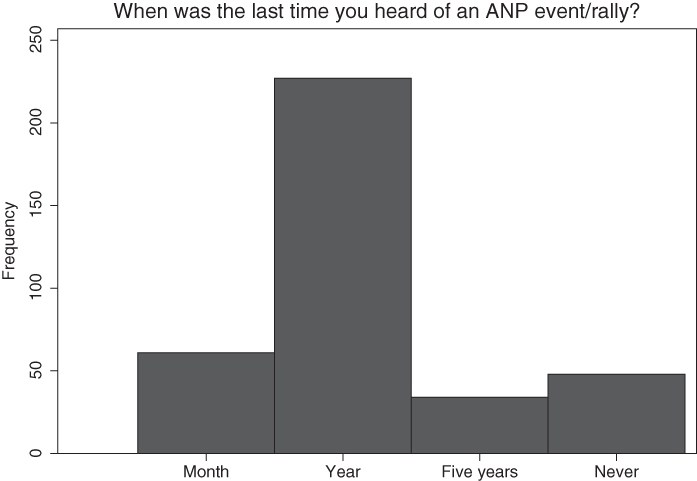
Figure 7.1 ANP presence in Khyber Pakhtunkhwa
The ANP’s relative organizational strength not only allowed it to engage in violence in Karachi in the mid-2000s but also makes it possible for the party to generally refrain from reaching out in large numbers to local patrons – and violence specialists – that are otherwise unaffiliated with the party, something the weakly organized PML-N, PPP, and (more recently) the PTI have felt compelled to do.
7.6 Conclusion
This chapter has used qualitative and survey data as well as secondary literature to demonstrate that the Pashtun ANP faced a different set of costs for, and benefits from, the use of violence in Karachi and in KP. Where ethnicity is polarized and where it is possible and electorally useful to make a particular identity salient and play the so-called “ethnic card,” the party is more likely to have a captive support base. Given the polarized nature of ethnic relations in Karachi, the ANP knew that a primary route to success in 2008 was through appealing to Pashtuns in the city. However, this unconditional support was not long-lasting. A combination of Taliban attacks on the ANP and alternative political options for Pashtun voters in the city ensured that the ANP’s use of violence in Karachi was ultimately short-lived.
Meanwhile, when parties operate in single-ethnic arenas of competition where they are likely to be competing against other members of the same ethnic group, albeit on different party platforms, ethnicity doesn’t allow for a captive support base. Local cleavages, such as tribe or quom, may be more salient but these are rarely large enough to form the basis of a national political party (consistent with arguments in other contexts, such as Koter Reference Koter2016). In addition, the ANP had to contend with different actors who wielded coercive capacity, including the state, in these two locations, altering the benefits the party could hope to glean from violence and the potential set of nonvoter costs. When the party had incentives to use violence, its organizational strength permitted it to engage in that violence directly, with party cadres engaged in a struggle with the MQM in the fraught, violent, ethnic politics of Karachi. When the party did not have incentives to use violence, its organizational strength meant that it could rely on party members for patron–client relations, and as a consequence did not need to ally with local violent specialists as weaker parties might feel compelled to do if they sought inroads in the mostly rural vote bank of KP.
The ANP case provides an important test of my theory and helps highlight the need to examine the distinct nature of subnational state capacity and the differential role played by ethnicity in determining the elasticity of party support, rather than merely focusing on the overall ethnic ethos of a party or the ethnic distribution of its support. This case also allows us to rule out alternative explanations, such as party ideology, as providing explanations for party violence. Further, it showcases how party organizational strength manifests in these distinct circumstances. I now turn to examining cases in other contexts – some outside of Pakistan – to show how this theory can help explain the existence and forms of party violence in cases other than those involving the MQM, PPP, PML-N, and ANP.

