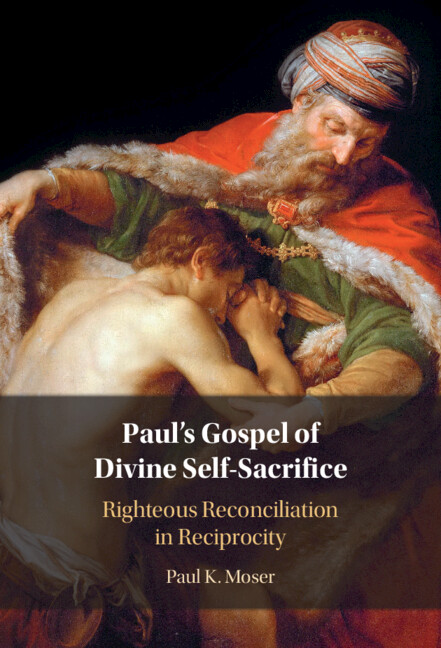

In this book, Paul Moser explains how self-sacrificial righteousness of a reparative kind is at the heart of Paul's gospel of God. He also shows how divine self-sacrifice authenticates that gospel via human reciprocity toward God in reconciliation. A basis for this reciprocity lies in a teaching of ancient Judaism that humans are to reciprocate toward God for the sake of an interpersonal relationship that is righteous and reconciled through voluntary self-sacrifice to God. Moser demonstrates that Paul's gospel calls for faith, including trust, in God as reciprocity in human self-sacrifice toward God. Although widely neglected by interpreters, this theme brings moral and evidential depth to Paul's good news of reparative redemption from God. Moser's study thus enables a new understanding of some of the controversial matters regarding Paul's message in a way that highlights the coherence and profundity of his message.
‘This is an outstanding work of scripturally informed theology and exegesis, informed by philosophical tools that provide a unique and provocative perspective on Pauline theology. All scholars of Paul, even those who might disagree with his arguments, can learn from Moser’s methodology and insights.’
Aaron Klink Source: Religious Studies Review
Loading metrics...
* Views captured on Cambridge Core between #date#. This data will be updated every 24 hours.
Usage data cannot currently be displayed.
This section outlines the accessibility features of this content - including support for screen readers, full keyboard navigation and high-contrast display options. This may not be relevant for you.
Accessibility compliance for the HTML of this book is currently unknown and may be updated in the future.
