The International Tax Revolution
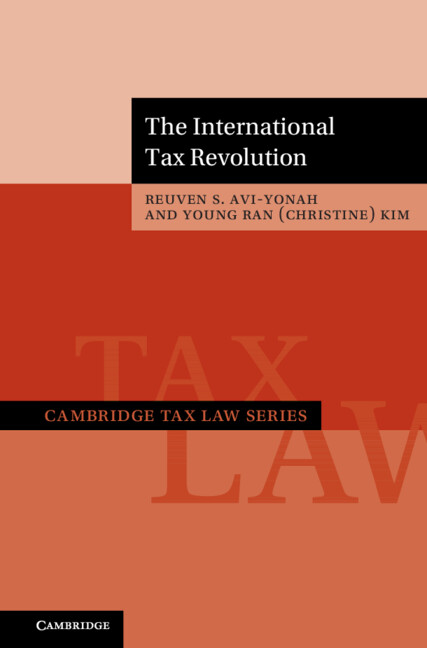

-
Select format
-
- Publisher:
- Cambridge University Press
- Publication date:
- 28 June 2025
- 03 July 2025
- ISBN:
- 9781009331852
- 9781009331845
- Dimensions:
- (229 x 152 mm)
- Weight & Pages:
- 0.55kg, 280 Pages
- Dimensions:
- Weight & Pages:
- Subjects:
- Legal History, Law, Finance and Accountancy, Taxation Law
- Series:
- Cambridge Tax Law Series
You may already have access via personal or institutional login- Subjects:
- Legal History, Law, Finance and Accountancy, Taxation Law
- Series:
- Cambridge Tax Law Series
Show more authors 
You may already have access via personal or institutional login
Book description
The International Tax Revolution offers the first comprehensive analysis of the profound changes in international taxation over the past decade, culminating in the landmark October 2021 agreement by over 140 countries to implement a global corporate minimum tax and modify profit allocation and nexus rules for the digital economy. The book provides a historical narrative of how the original International Tax Regime (ITR) crumbled under the pressures of globalization and tax competition between 1980 and 2008, and how the financial crisis of 2008-2010 and subsequent cuts to social welfare programs spurred governments to adopt new approaches to taxing multinational corporations. Chapters explore the impact of globalization and tax competition on countries' ability to provide a social safety net for their citizens, and outline how the world has come together to limit such competition, modify the outdated rules, and promote greater equity in the global tax system.
Reviews
‘… an ambitious and instructive account of how international tax rules were remade between the financial crisis and the Great Recession … The authors’ approach shows international tax is less a patchwork and more a linked set of choices about neutrality, equity, and administrability. That perspective allows readers to see why transparency and minimum taxation belong in the same narrative. The result is a well-balanced work that will serve students and non-specialist public lawyers as well as tax professionals.’
Doron Narotzki Source: Tax Notes
Contents
Contents
References
Metrics
Altmetric attention score
Full text views
Full text views helpTotal number of HTML views: 0
Total number of PDF views: 0 *
 Loading metrics...
* Views captured on Cambridge Core between #date#. This data will be updated every 24 hours.
Usage data cannot currently be displayed.
Accessibility standard: Unknown
Why this information is here
This section outlines the accessibility features of this content - including support for screen readers, full keyboard navigation and high-contrast display options. This may not be relevant for you.
Accessibility Information
Accessibility compliance for the HTML of this book is currently unknown and may be updated in the future.