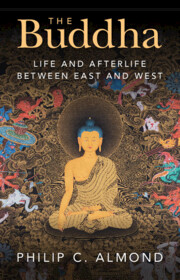


During the first decades of the twenty-first century, the Buddha has become part of Western popular culture, on occasion little more than a commodity on the shelf in the modern supermarket of individual spiritualities – brand Buddha. As Jørn Borup notes, ‘Buddha is cool and chic in the West, and as a popular brand has moved from temple to market. Buddhism has been transformed from an intellectual capital practice path for the elite to an easily approachable mindset for the masses in which consumerism, commodification and mediatization are part of the neo-liberal market where spirituality is for sale.’Footnote 1 Buddhism has, as he puts it, ‘a low level of institutional affiliation but a high level of religious brand value’.Footnote 2 In popular Western culture, ‘the Buddha’ signifies happiness, inner peace, tranquillity, serenity, wellness, simplicity, stillness, and mindfulness. He has significance, impact, and a high level of symbolic power and cultural value. Put simply, he is very marketable.
Thus, whether the story of the Buddha is history or legend, fact or fiction, he remains an exemplary human figure, whose life provides a ‘romantic’ ideal to be followed. As the Oriental ‘other’, now acceptably disenchanted, the Buddha is a symbolic antidote to the ills of modernity in the West. The disenchanted Buddha is thus able to serve as the foundation of a new Western naturalised Buddhism. Not an institutionalised religion, perhaps even anti-institutional, naturalised Buddhism makes available a spirituality that combats modern nihilism and disenchantment by ‘re-fashioning the dharma as a way of reenchanting and ushering escaped meaning back into the world while at the same time remaining within a broadly natural cosmological framework and aligning itself with rationalistic and scientific sensibilities’.Footnote 3
This is a Buddhism that does not require the enchanted world of the biographies of the Buddha. Insofar as the gods and demons of Mahāyāna Buddhism are considered to exist, they do so only as aspects of the human psyche. Although the Buddha can nevertheless experience a halo effect from his mythology that is helpful in his ‘branding’, naturalised Buddhism is most consistent with modern Western atheism and agnosticism. Its teaching on ‘not self’ is compatible with the Western loss of belief in an immortal soul. And, in keeping with the initial attraction of naturalised Buddhism to the this-worldly Japanese tradition of Zen Buddhism, it has its canonical texts – Hermann Hesse’s Siddhartha (1922), Zen scholar D. T. Suzuki’s An Introduction to Zen Buddhism (1934), Alan Watts’ The Way of Zen (1957), and, the inspiration for many other works in a similar vein, Eugen Herrigel’s Zen in the Art of Archery (1948).
The focus of naturalised Buddhism is on the individual – especially on the spiritual quest for an ‘essential’ self within. It is a self that is in control of the passions and remains uncontaminated by the world outside of it. Yet, ironically, in keeping with the Buddhist doctrine of ‘non-self’, it is realised as a self that lacks an essence and is merely a flow of consciousness embedded in an evanescent flow of events. At its centre is the practice of meditation. In naturalised Buddhism, this need be no more than sitting quietly and being attentive to the moment. As Alan Watts puts it, ‘It is simply a quiet awareness, without comment, of whatever happens to be here and now.’Footnote 4
Meditation is intended as a practice that ideally leads to living constantly without attention to or awareness of self as we do occasionally in the playing of sport, in music and dance, in the contemplation of nature, in reading, and (if it is going well) in writing. Think here of Zen Buddhism and the art of archery. In the words of D. T. Suzuki, ‘The archer ceases to be conscious of himself as the one who is engaged in hitting the bull’s eye which confronts him. This state of unconsciousness is realized only when, completely empty and rid of the self, he becomes one with the perfecting of his technical skill.’Footnote 5 This is a Nirvāna that is imminent within the everyday.
Naturalised Buddhism is also a Buddhism that does not require intellectual assent to a body of religious doctrines. It sits lightly on them, perhaps even distrusts them. Thus, for example, Alan Watts on the long silence of the Buddha after his enlightenment: ‘the Buddha “never said a word”, despite the volumes of scriptures attributed to him. For his real message remained always unspoken, and was such that, when words attempted to express it, they made it seem as if it were nothing at all.’Footnote 6
Despite the Buddhist doctrine of non-self, naturalised Buddhism provides technologies of self-formation for everyday life in this world. Here, the Buddha is a this-worldly sage and the philosopher of a new form of human consciousness focused upon the practice of mindfulness. As David McMahan nicely puts it, mindfulness is a way of ‘negotiating the fast-paced complexities of modern life with its seemingly endless stream of tasks and obligations; of transmuting its frenetically banal activity into a spiritual exercise – a moment-by-moment, vividly quiescent appreciation of things in their ordinariness’.Footnote 7 This is a practice of the discovering of the profound in the prosaic, of the privileging of immediate experience over the duality of mind and object, of the discernment of ‘spirit’ within the material, of the cultivation of personal serenity, of increased awareness, of the transcending of the ego, of the cultivation of ethical selflessness, and of compassion for all sentient beings.
In the Buddhist texts of the Pāli tradition, the Buddha was portrayed primarily as a teacher – considerate, fatherly, kind. Although he was a ‘superman’ with powers and abilities far beyond those of mortal men, he was subject to the limitations of all humanity – he became weary, he hungered and thirsted, he was said to have died of food poisoning. In the texts of the Mahāyāna tradition, he was a divine, heavenly figure, worshipped by all, available to transfer merit to his devoted followers. In Western naturalised Buddhism, the Buddha is the inspiration for every individual’s personal quest for meaning. That is because the Buddha of the modern West is exactly like us. His enlightenment is ours – if we follow his example and seek for truth. So, in the West, the Buddha exemplifies neither a superman, nor a god, but rather the individual created in the European Enlightenment – freed from external constraints in the present, unencumbered by past ideals, and capable of self-knowledge, self-management, and self-fashioning.
Thus, for example, in Hermann Hesse’s novel Siddhartha (1922), the hero Siddhartha embarks on a journey of self-discovery. He seeks out the Buddha and listens to his sermon on the Four Noble Truths and the Noble Eightfold Path. The next morning he meets the Buddha. Siddhartha tells Gautama that he believes him to be enlightened, having reached it in his own way. Instead of joining the Buddha’s community, Siddhartha tells the Buddha that he will seek the truth for himself as the Buddha had done. ‘That is why’, he declared, ‘I am going on my way – not to seek another and better doctrine, for I know there is none, but to leave all doctrines and all teachers and to reach my goal alone – or die.’Footnote 8
In the end, it was the ethical teaching of the Buddha that Siddhartha realised for himself: benevolence, forbearance, sympathy, patience, and, even though the Buddha appeared to dismiss it, love: ‘How, indeed could he not know love, he who has recognised all humanity’s vanity and transitoriness, yet loves humanity so much that he has devoted a long life solely to help and teach people?’Footnote 9 This then was the ideal and very human Buddha that the West had discovered:
