
Skip to main content Accessibility help
×
  • Cited by 2
    • Show more authors
    • You may already have access via personal or institutional login
    • Select format
    • Publisher:
      Cambridge University Press
      Publication date:
      29 July 2023
      10 August 2023
      ISBN:
      9781009389976
      9781009389952
      Dimensions:
      (229 x 152 mm)
      Weight & Pages:
      0.569kg, 294 Pages
      Dimensions:
      Weight & Pages:
    You may already have access via personal or institutional login
  • Selected: Digital
    Add to cart View cart Buy from Cambridge.org

    Book description

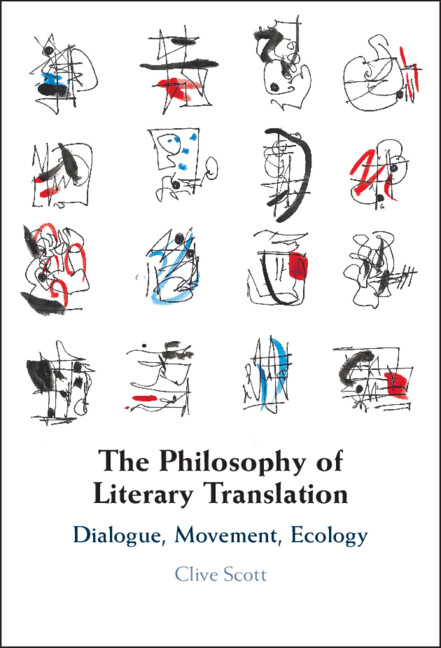
    While reading transforms texts through memories, associations and re-imaginings, translation allows us to act out our reading experience, inscribe it in a new text, and engage in a dialogic and dynamic relationship with the original. In this highly original new study, Clive Scott reveals the existential and ecological values that literary translation can embody in its perceptual transformation of texts. The transfer of a text from one language into another is merely the platform from which translation launches its larger ambitions, including the existential expansion and re-situation of text towards new expressive futures and ways of inhabiting the world. Recasting language as a living organism and as part of humanity's ongoing duration, this study uncovers its tireless capacity to cross perceptual boundaries, to multiply relations between the human and the non-human and to engage with forms of language which evoke unfamiliar modes of psycho-perception and eco-modelling.

    Reviews

    ‘It would be difficult to overstate the importance of Clive Scott's thinking to our contemporary understandings of literary translation. His work is innovative, detailed, compelling and persuasive. In placing the art of the literary translator at the heart of our engagements with reading and writing, he shows how much is at stake for the the wider culture as we negotiate multilingual difference in a time of ecological vulnerability.'

    Michael Cronin - Trinity College Dublin

    ‘The Philosophy of Literary Translation has the rare virtue of synthesizing deep knowledge of historical thought about language with the insights and recursive questions that emerge from the author's own vibrant translation practice. Clive Scott's foregrounding of the polyglot reader, his empathetic accounts of the experience and drama of reading, and the facility with which he sets theorists in dialogue with one another across time and place generate a lucid and engrossing intellectual journey into creative practice. This is an important, beautifully argued book.'

    Annmarie Drury - Queens College, City University of New York

    Refine List

    Actions for selected content:

    Select all | Deselect all
    • View selected items
    • Export citations
    • Download PDF (zip)
    • Save to Kindle
    • Save to Dropbox
    • Save to Google Drive

    Save Search

    You can save your searches here and later view and run them again in "My saved searches".

    Please provide a title, maximum of 40 characters.
    ×

    Contents

    Metrics

    Altmetric attention score

    Full text views

    Total number of HTML views: 0
    Total number of PDF views: 0 *
    Loading metrics...

    Book summary page views

    Total views: 0 *
    Loading metrics...

    * Views captured on Cambridge Core between #date#. This data will be updated every 24 hours.

    Usage data cannot currently be displayed.

    Accessibility standard: Unknown

    Why this information is here

    This section outlines the accessibility features of this content - including support for screen readers, full keyboard navigation and high-contrast display options. This may not be relevant for you.

    Accessibility Information

    Accessibility compliance for the HTML of this book is currently unknown and may be updated in the future.
