

The forces of communist totalitarianism have always disguised themselves as democracy activists, human rights advocates, or progressive activists while engaging in despicable and unethical tactics and false propaganda.
Late on Tuesday, December 3, 2024, on what was just an ordinary evening, the president of South Korea, Yoon Suk-yeol, suddenly declared martial law during a televised address. Yoon accused the opposition Democratic Party (Tǒburǒ Minjudang, DPK) of being a pro-North Korea, anti-state force trying to overthrow the social order, and he identified the current situation of “legislative dictatorship” by the Democratic Party as a state emergency. The order prohibited political activities and suspended the free press. It had been more than forty years since martial law was last declared by the military dictator Chun Doo Hwan in 1980.
Within less than six hours, Yoon’s reckless and baffling move was subdued by a vote of the National Assembly to revoke martial law, and thanks to massive citizens’ protests against Yoon’s authoritarian action, Yoon was impeached by the National Assembly eleven days later. Citizens’ resistance against Yoon revealed their unwavering belief in democracy, and given the absurdity of martial law, people initially expected that Yoon would be easily discredited and the situation would soon be stabilized.
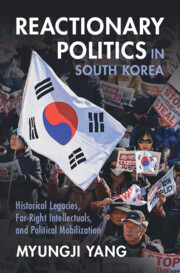
However, the aftermath of martial law, which is currently unfolding as of February 2025, is extremely uncertain and chaotic, as Yoon has unexpectedly gained substantial support from his own right-wing People Power Party (PPP, Kungminǔi Him)Footnote 2 and ordinary citizens. Not only did most lawmakers of the PPP oppose Yoon’s impeachment and instead advocate for him, but large numbers of fervent right-wing citizens also protested to show their support of Yoon and to condemn the opposing Democratic Party. Waving both the South Korean and American flags together as the symbol of a bloody alliance (hyǒlmaeng) between South Korea and the United States, tens of thousands of participants assembled in the center of Seoul to “save the Republic of Korea and its liberal democracy (chayu minjujuǔi)”Footnote 3 against the threats of “the radical left.” They yelled and held pickets stating, for example, “Stop the steal” (written in English), “Nullify the impeachment” (t’anhaek muhyo), and “Support Yoon” (Yoon Suk-yeol chiji). They were convinced by conspiracy theories – which Yoon also believed – that the elections were manipulated by North Korea and China.
Further, both PPP legislators and Yoon’s supporters denounced the Constitutional Court’s adjudication of the impeachment case as a threat to the rule of law. Some politicians visited the Constitutional Court and raised doubts about the political backgrounds of the judges and the fairness of the decision-making process. On January 19, 2025, a group of citizens who were incensed about the arrest warrant filed for Yoon attacked the Seoul Western District Court, damaging the court building severely and injuring some policemen and journalists. Impassioned followers of Yoon also harassed the acting chief of the Constitutional Court by holding protests and making noise in front of his home.
In the four decades since the overthrow of brutal dictatorship by popular uprising, South Korea has been considered a developed, stable democracy with peaceful regime changes and no possibility of authoritarian reversal. South Korea’s vibrant social movements and civic engagement have successfully pushed for political change, as exemplified by the massive candlelight rallies in 2002, 2008, and 2016–17.Footnote 4 In particular, the successful impeachment of corrupt President Park Geun-hye and the smooth transition to the liberalFootnote 5 Moon Jae-in administration in 2016–17, which were made possible by the democratic candlelight movements, confirmed the maturity of South Korea’s democracy (Cho and Hwang Reference Cho and Hwang2020; Dudden Reference Dudden2017; Jung Reference Jung2022; Park, AL Reference Park2022).
Nevertheless, the December 3 insurrection and the ensuing political dramas reveal that South Korea’s seemingly strong democracy was not immune from a coup and could be upended by antidemocratic forces. Why did South Korea’s seemingly successful and stable democracy come to what it is now? Why do most members in the PPP staunchly espouse Yoon, challenge the foundation of the rule of law, and countenance violent actions? Who are the ordinary citizens who bolster martial law? And what are the larger structural conditions that have produced the current outcome? Yoon’s self-coup and attack on democracy appear unexpected and puzzling. Yet, the process of democratic regression has been long in the making when we consider the development of organized far-right movements – the so-called T’aegǔkki (South Korean national flag) Protests that emerged to counter the candlelight protests during Park Geun-hye’s impeachment and lasted throughout the entire Moon Jae-in administration; the vilification of progressive undongkwǒnFootnote 6 forces, such as labor unions, civic organizations, and left-leaning politicians; and the mobilization of anti-feminist and anti-minority narratives. Alongside South Korea’s institutional and procedural democracy, a reactionary politics that antagonizes the subordinated and marginalized – be they workers, women, or the disabled – and worships autocratic leaders has long endured. Thus, without clearly understanding this enduring power of the far right in South Korea, it is difficult to make sense of the current crisis.
This book is about South Korean right-wing politics and its organizational and popular foundations. By focusing on right-wing actors and their supporters as a major political force that has shaped post-authoritarian South Korean politics over the last four decades, this book aims to explain how the right wing has operated within and against democracy. Taking a long-term historical perspective, I demonstrate how the structural constraints of the geopolitical dynamics in Northeast Asia and the confrontation with North Korea have provided favorable political opportunities for the right and how the right, in turn, has tried to preserve the old political order and traditional elite privilege in the post-authoritarian period. Capitalizing on lingering Cold War structures and authoritarian legacies, right-wing forces have steadfastly resisted democratic changes; they have done so in the name of “liberal democracy” – which is treated as a synonym for anticommunism and anti–North Korea. Throughout the book, I argue that the seemingly recent rise of far-right politics and activism has, in fact, deep historical roots in South Korean politics, and the far right’s long-standing institutional infrastructure and popular base have helped sustain its power. In this respect, South Korea’s right-wing politics is markedly different from right-wing politics in Western countries where the discontent of the working class, which has been adversely affected by globalization, has been a major driving force in the rise of far-right parties. By tracing how the far right in South Korea has developed its strategies and broadened its political alliances since South Korea’s democratic transition, this book seeks to enhance our understanding of the roots and sources of democratic degeneration that arise from the tensions and conflicts between right-wing politics and democracy.
Who Belongs to the Conservative Right (Posu Up’A) in South Korea?
Properly defining and conceptualizing the right and left in the South Korean context is a challenging task. Not only is the use of these terms less common than vernacular words such as “conservative” (posu) and “progressive” (chinbo) in South Korean discourses, but the traditional definitions of “left” and “right” – centered on whether they promote equality or not (Bobbio Reference Bobbio1996) – are also not sufficient for analyzing the South Korean variants. Instead, the country’s left and right should be understood as deriving from specific historical and social circumstances. In addition to their divergent positions toward equality and redistribution, their stances toward North Korea and foreign policies related to the Korean peninsula, and their views about modern Korean history generally determine whether one belongs to the left or the right, or is progressive or conservative.Footnote 7
To indicate the more militant and aggressive faction of the right, scholars and commentators use a variety of adjectives, such as the “radical” right, “far” right, “extreme” right, “populist” right, and “nationalist” right. While these terms highlight slightly different aspects of the radicalized right in recent decades, they are all distinct from mainstream conservatism. In the US context, for example, Blee and Creasap distinguish “conservative” from “right-wing” – conservatives support patriotism, free enterprise capitalism, and/or a traditional moral order, whereas the right-wing focuses on race/ethnicity (Blee and Creasap Reference Blee and Creasap2010: 270–1). The former takes more moderate stances and eschews violence, while the latter promotes violence as a tactic or goal.
The far right can be considered a more extreme part of the broader right. Miller-Idriss (Reference Miller-Idriss2020: 6) defines the far right as “a fluid spectrum of groups and individuals who represent more extreme and less extreme versions of the antidemocratic and illiberal ideals, practices, and beliefs – exclusionary, hierarchical, and dehumanizing ideals that prioritize and seek to preserve the superiority and dominance of some groups over others.” Similarly, Cas Mudde defines the far right – which consists of two subgroups, the extreme right and radical right – as “anti-system” and hostile to liberal democracy (Reference Mudde2019: 27). Characterizing the far right as espousing radically exclusionary anti-pluralism and anti-individualism, which distinguishes them from the moderate right, Pirro suggests that there are two variants of the far right: the (populist) radical right and the extreme right. The former is considered illiberal democratic in the sense that it participates in elections and runs within the bounds of democratic rule, whereas the latter rejects the constitutional order outright and aims at subverting the democratic status quo (Reference Pirro2023: 105–6). Various political parties that are considered to belong to the far right generally promote exclusive ethnonationalism and nativism, authoritarianism, and populism (Bonikowski Reference Bonikowski2017; Mudde Reference Mudde2007; Norris and Inglehart Reference Norris and Inglehart2019). Exclusive ethnonationalism and nativism are often translated into the language of xenophobia and welfare chauvinism, and because of that, many European far-right parties tend to have a Eurosceptic narrative or are critical of European Union policies. Authoritarianism here is loosely defined as believing in a strictly ordered society and prioritizing collective security for the group at the expense of individual autonomy (Mudde Reference Mudde2007; Norris and Inglehart Reference Norris and Inglehart2019). Populism reveres the “common sense” of the people or of “the heartland”; the “general will” of the people is more important than anything else (Taggart Reference Taggart2000).
Rather than distinguishing different variants within the right, some other scholars emphasize the overlapping aspects between conservatism and right-wing politics (McVeigh Reference McVeigh2009; Robin Reference Robin2011). Both focus on preserving and restoring the rights and privileges of relatively advantaged societal groups (McVeigh Reference McVeigh2009: 32), and they also share an animus against the agency of subordinate classes (Robin Reference Robin2011: 7). While acknowledging the divisions and differences within conservatism, Robin (Reference Robin2011) emphasizes the “counterrevolutionary” and “reactionary” character shared by all conservatives: “I treat the right as a unity, as a coherent body of theory and practice that transcends the divisions so often emphasized by scholars and pundits. I use the words conservative, reactionary, and counterrevolutionary interchangeably: not all counterrevolutionaries are conservative – Walt Rostow immediately comes to mind – but all conservatives are, in one way or another, counterrevolutionary” (Robin Reference Robin2011: 34).
Depending on the particular political context being analyzed, one could emphasize distinctive aspects of the far right or common characteristics within the larger right. For example, for those who analyze European multiparty systems with far-right parties that are generally separated from traditional conservative parties, emphasizing distinctive characteristics of the far right makes more sense. Yet for scholars of US politics where the two-party system is dominant and the Republican Party embraces various factions under the right’s umbrella, categorizing different factions would be less useful, unless one is interested only in a specific segment of the right.
As in other countries, the right in South Korea is not monolithic. It contains a broad spectrum of ideas and practices, and different groups exist within it. For instance, there are extremist, militaristic groups that focus more on anticommunism and authoritarianism, and other groups that claim a more moderate and practical stance. However, despite these diverse factions within the right, they generally share major commonalities: They believe that North Korea is the enemy of South Korea and that authoritarian leaders greatly contributed to the building of the Republic of Korea (ROK).
One of the central arguments I make throughout the book is that the boundaries between the far right (kǔku)Footnote 8 and mainstream conservatives (posu or up’a) are blurred and porous. What is considered mainstream conservatism in South Korea – an emphasis on anticommunism, the promotion of authoritarian nostalgia, and a denial of the expansion of the rights of the marginalized – generally possesses characteristics that could be identified as far right elsewhere. South Korea’s unique geopolitical context, in which the Cold War remains present and South Korea is still technically at war with the North, has shaped an extremely narrow ideological terrain. Before democratization, only anticommunist and right-wing positions were allowed in the political realm, and there was almost no space for leftist or progressive ideas in party politics (Choi Reference Choi2002). Given this history of exceptionally restrictive political conditions, the far right has become normalized in mainstream politics in South Korea. Within this ideological spectrum, centrists and liberals (the current Democratic Party and its predecessors) become the left or even the radical left, and the avowed left (the Labor Party) becomes the extreme left. As the far right dominates the mainstream conservative party, space for the center right is very slim. The moderate right has at times attempted to reform the conservative party to keep up with rising social demands and democratic changes, but such experiments have been unsuccessful thus far.
Highlighting these militaristic and authoritarian orientations across different segments within the right, I use the terms “conservative,” “right-wing,” and “far right” interchangeably, and I do not necessarily differentiate the far right from mainstream conservative politics at large. Thus, even if I use the terms “conservative” and “right-wing” in examining South Korean politics, the point of reference is closer to the far right in other countries. While it is possible conceptually to distinguish far-right movements from moderate conservativism, doing so is difficult in practice and not analytically useful in the South Korean context. Those on the South Korean right do not necessarily distinguish between the mainstream and the far right, and they commonly use the term “conservative right” (posu up’a) to refer to themselves in a general sense, incorporating views ranging from the extreme right wing, which explicitly supports authoritarian regimes and political suppression, to the moderate center right, which embraces some reformist social policies. The far right and center right have remained allied in practice. For example, mainstream conservative lawmakers have participated in the massive far-right T’aegǔkki protests over the past few years, and there is a deep connection between the conservative party and far-right civic organizations and figures.
Both the South Korean and Western far right embrace illiberal values, hate speech, and violent rhetoric, but the South Korean right can be distinguished from its Western counterparts in various ways. First, unlike right-wing populists in the West (including Donald Trump), who typically use anti-elitist and antiestablishment language (Bonikowski Reference Bonikowski2017; Mudde and Kaltwasser Reference Mudde and Rovira Kaltwasser2017; Müller Reference Müller2016) and argue that politics should be an expression of the volonté générale (general will) of the people (Mudde Reference Mudde2007), South Korean rightists view the general will of the people as something dangerous and destructive. Instead of presenting themselves as fighting against an allegedly corrupt and entrenched elite, they focus on restoring the power of the old elites and maintaining the established order, often attacking the left as “populists.” They have a political interest in bolstering the status quo because they believe that radical social and political change would bring about chaos and create opportunities for North Korea. Thus, the populism common to the Western far right is not characteristic of the South Korean right.
Second, in contrast to far-right politics in Europe and the United States, racism and anxiety over immigration and multiculturalism have far less prominence in South Korean right-wing politics because of the relatively small size of South Korea’s immigrant population and its brief history of immigration. Some even argue that the South Korean right actively embraces multiculturalism (Kang, M Reference Kang2014). The far right in the West blames immigrants for eroding national identity and cultural heritage as well as threatening national security (law and order). The right-wing politics of scapegoating is also prevalent in South Korea, but it is mainly North Korea (and increasingly China), and more importantly, the left-liberal alliances in South Korea who try to engage with the North that are considered the most dangerous threats to national security.
Third, the nationalism and nativism common to the right in the Western context are not strong ideological features of the South Korean right. Although it is true that both the left and right competed for ownership of nationalism, given that it was an important political ideology in postcolonial Korean society, the left tended to have a stronger nationalistic position based on anticolonialism and anti-imperialism. Because of the historical examples of right-wing political elites collaborating with Japanese colonists and the experience of the Cold War, now that the ROK has become a strong political and military ally of the United States, the South Korean right has often been considered pro-Japanese and pro-American. Notably, some right-wing intellectuals have harshly condemned left nationalism and have taken an anti-nationalist position in the last decade (Yang and Asahina Reference Yang and Asahina2024).
Table I.1 highlights similarities and differences between the PPP in South Korea and other far-right party families in various countries. While South Korea shares with other countries authoritarianism as its core value, welfare chauvinism and economic protectionism are less prominent in South Korea’s right. Like South Korea, parties in Eastern Europe and Latin America, where there is a history of (right-wing) military dictatorship or a communist past, typically have a strong anticommunist character. While the politics of othering and scapegoating are common in all these parties, the targets are different depending on historical and social contexts; for example, Islam and immigrants are the main enemies for European and US parties, and left-wing progressive forces are the common target in non-Western contexts.
Table I.1 Far-right/right-wing parties in different countries
| AfD | FN/RN | VOX | Fidez | Trump Republican | PL | Chile Vamos | LDP | PPP | |
|---|---|---|---|---|---|---|---|---|---|
| Xenophobia | C | C | C | C | C | I | I | I | |
| Welfare chauvinism | C | C | C | C | C | I | I | ||
| Economic protectionism | C | C | C | C | |||||
| Authoritarianism | C | C | C | C | C | C | C | C | C |
| Anticommunism | P | C | I | P | P | C | C | ||
| Traditional values | P | P | C | C | C | C | C | C | C |
Note: Party ideologies change over time, and this table reflects the overall trend of the parties. I adapted this table based on the variables that Cas Mudde (Reference Mudde2007: 21) used to analyze populist radical right parties in Europe. Key: C (core values); P (present, but not the core); I (indicative, but not explicit).
AfD (Alternative for Germany; Alternative für Deutschland): 2013–present.
RN (National Rally; Rassemblement National): 1972–present.
VOX (Spain): 2013–present.
Fidez-Hungarian Civic Alliance: 1988–present.
PL (Liberal Party; Partido Liberal): Brazil, Jair Bolsonaro’s party; 2006–present.
Chile Vamos (Let’s Go Chile): 2015–present; the coalition between the Independent Democratic Union (UDI, 1983–present), National Renewal (RN, 1987–present), and Evópoli (Political Evolution, 2012–present).
LDP (Liberal Democratic Party): Japan, 1955–present.
PPP (People Power Party): South Korea, 2020–present; the original predecessor of the party is the Democratic Liberal Party (Minju Chayudang), which was a coalition of the three conservative parties in 1990.
Situating the South Korean Right in the Global Context
We live in an age in which the far right is resurgent, and the revival of the South Korean right-wing movements may be understood as a part of this global trend. The rise of the far right is a new political reality in many countries, including old and new democracies. From the increasingly visible Alt-Right and white supremacist movements following Donald Trump’s 2016 election in the United States to the electoral successes of radical ultranationalist parties in Western Europe, from religious fundamentalist antigender movements in Eastern Europe to Recep Erdoğan’s authoritarian turn in Turkey, and from the militaristic Bolsonaro presidency in Brazil to Narendra Modi’s Hindu nationalism in India, this trend is generating tensions within, and challenges to, democratic norms and institutions around the world. Concerned with the contemporary mainstreaming of the far right, scholars are investigating the causes, patterns, and processes of its rise and discussing what can be done to address the limitations of democratic systems.
Existing studies generally interpret the resurgence of the far right to be a backlash against increasing economic inequality, along with political and cultural insecurity in the context of globalization and neoliberalism (Berezin Reference Berezin2009; Castells Reference Castells2004; Kiely and Saull Reference Kiely and Saull2017; Rydgren Reference Rydgren and Rydgren2018; Swank and Betz Reference Swank and Betz2003). Structural adjustment programs and austerity measures characterized by deregulation, privatization, and the rollback of welfare benefits, coupled with automation and outsourcing, have exacerbated the difficulties faced by ordinary working people. Those who struggle with economic hardship and a lack of job opportunities – mainly ordinary workers and farmers – not only experience acute insecurity but are also resentful toward mainstream political parties and establishments on both the right and the left, which they see as unable or unwilling to offer any remedies. At the same time, the noticeable increase in the number of foreigners and immigrants, whose ethnic and cultural backgrounds differ from native populations, is seen as a threat to national identity and cultural integrity (Duyvendak, Kešić, and Stacey Reference Duyvendak, Kešić and Stacey2023). For example, the recent refugee crisis and terrorist attacks in Europe have aggravated Islamophobia, causing some to link Muslim identity with criminality and violence (Allen Reference Allen2010; Hajjat and Mohammed Reference Hajjat and Mohammed2023; Kallis Reference Kallis and Rydgren2018).
In response to political insecurity and economic inequality, right-wing populist leaders often harness simplistic and nativist rhetoric to appeal to aggrieved working people who feel betrayed by mainstream politics. They accuse immigrants of “stealing” jobs and abusing the generous benefits of Western welfare states, and they highlight the (alleged) incompatibility of immigrant behavioral norms and cultural values with those of the native population (Golder Reference Golder2016; Rydgren Reference Rydgren and Rydgren2018). The core political programs and ideologies that the far-right groups share in common are thus ethnonationalist xenophobia and antiestablishment populism (Rydgren Reference Rydgren and Rydgren2018). Many studies also argue that the contemporary right-wing surge is a result of the left’s shift to the center and a general failure to manage social discontent, which together provided fertile ground for the far right (Berman and Snegovaya Reference Berman and Snegovaya2019).
Existing scholarship provides some theoretical and empirical insights into aspects of South Korea’s right-wing politics, such as the rightward voting shift and strongly anti-feminist attitudes among young people (Cheon and Jung Reference Cheon and Jeong2019). The rise in inequality, the lack of economic opportunities, and the decline in social mobility that followed the economic restructuring of the late 1990s made young people resentful and infuriated with political elites as well as with the establishment these elites represented. Some responded by taking part in progressive political actions, as seen in the candlelight rallies over the last two decades; but others turned to scapegoating minorities and women and supporting other political causes of the right. Furthermore, widespread hostility toward immigrants from Southeast Asian countries and China confirmed an ethnocentric, nativist tendency in South Korea (Jun Reference Jun2019). While this perspective is no doubt an important part of South Korean right-wing politics and is consistent with the ideological landscape of the global far right, it does not capture the core of the right in South Korea: anticommunism and veneration of the authoritarian past.
The predominantly Western-centric literature on the far right often limits its analyses to European and US cases, and it does not provide adequate explanations for why the far right is gaining traction in non-Western countries, where immigration is not a prominent political issue (with some exceptions, see Chacko and Jayasuriya Reference Chacko and Jayasuriya2018; Evans Reference Evans2020; Garrido Reference Garrido2020; Heller Reference Heller2020; Lee, Y Reference Lee2021; McKenna Reference McKenna2020). Although Asian cases are relatively rare in the study of the far right, the far right has always been part of mainstream politics in Asian countries, particularly in South Korea and Japan, both of which were anticommunist bulwarks under US hegemony after the end of World War II. In the Asia-Pacific region, where many countries have been shaped by colonialism, American hegemony, and the geopolitical fault line between the United States and socialist regimes like China and North Korea, the far right not only operates in distinctive ways regarding its political programs, tactics, and targets, but its very definition can also be different. By highlighting the broader contexts shaping the South Korean right as well as its ideological history and identity formation, this book will extend our understanding of what the far right means in non-Western contexts.
The existing literature lacks compelling explanations as to why, despite similar structural forces – namely, neoliberal economy, rising social inequality, increasing migration, and global economic integration – the far right is more successful in some countries than in others (Bustikova Reference Bustikova2014; Eatwell Reference Eatwell2000; Mudde Reference Mudde2007, Reference Mudde2010). Its progress depends on the extent to which the political opportunity structure – electoral rules, the party system, the media environment, and ideological formations – is favorable to the far right (Golder Reference Golder2016). It also depends on the capacity of far-right actors and organizations to mobilize, indicated by membership levels in far-right organizations, the strength of alliances among different political groups, the proximity of political organizations to ordinary citizens, and so on. Additionally, while previous studies have often treated far-right discourses such as hostility to immigration and the superiority of Western civilization as given in Western contexts, the ways in which certain issues become politicized and more influential than others depend on the actions of political entrepreneurs, who may use certain communication strategies and tactics to increase “discursive opportunities” (Koopmans and Olzak Reference Koopmans and Olzak2004: 202). By examining the processes through which right-wing actors capitalize on particular issues and how their tactics and narratives evolve over time, this book sheds light on the intersections between broad historical and political contexts and right-wing strategies.
Finally, existing scholarship on the far right tends to focus either on far-right parties and their electoral performance in institutionalized politics (Golder Reference Golder2016; Mudde Reference Mudde2007) or on right-wing grassroots movements that operate through extra-institutionalized channels (Blee Reference Blee2017; Cunningham Reference Cunningham2012; Klandermans and Mayer Reference Klandermans and Mayer2006; McVeigh Reference McVeigh2009). This dichotomous tendency overlooks the connections and interactions between institutional and extra-institutional politics. As McAdam, Tarrow, and Tilly aptly point out in their seminal book Dynamics of Contention, “boundaries between institutionalized and non-institutionalized politics are hard to draw with precision. More important, the two sorts of politics interact incessantly and involve similar causal processes. Coalitions, strategic interaction, and identity struggles occur widely in the politics of established institutions as well as in the disruptions of rebellions, strikes, and social movements” (Reference McAdam, Tarrow and Tilly2001: 7). Likewise, the boundaries between movements and parties are porous in far-right politics, as seen in cases where far-right activists became legislators or ran in elections. Recently, some scholars have begun to emphasize the relationship between far-right parties contesting elections and social movements mobilizing in the streets (Gattinara and Pirro Reference Gattinara and Pirro2019; Meyer and Tarrow Reference Meyer and Tarrow2018; Muis and Immerzeel Reference Muis and Immerzeel2017). Rather than focusing on a specific institution or actor, this book shows how a variety of right-wing organizations and actors have established networks and cooperated beyond their organizational boundaries to achieve a common cause. Forming a broad alliance, the mainstream conservative parties, certain government agencies, the news media (both traditional and social media-based), and civic organizations all play key roles in guarding the existing social order and fighting against leftist-liberal social forces. Emphasizing the linkages between political parties and social movements, this book promotes an interactive and relational approach to the scholarship on right-wing politics.
Toward an Understanding of the Right-Wing Ecosystem: Historical Legacies, Institutional Infrastructures, and Political Practices
To address the gaps in the existing literature about the far right and to paint a more comprehensive and accurate picture of reactionary right-wing politics, we should examine the right-wing ecosystem in which various actors uphold distinct values and ideologies, interact with one another, and strengthen their identities. While scrutinizing specific institutions and actors is helpful for building a detailed understanding of the political dynamics around them, examining the larger ecosystem can help illuminate the multidimensional aspects that not only shape right-wing politics in general but also the diverse relationships among right-wing actors and the relations between right wing and other political actors. Specifically, I discuss three dimensions of the right-wing ecosystem: historical legacies, ideological and organizational infrastructures, and actors’ political practices. Doing so not only captures the macro (larger historical and geopolitical forces) and the micro (political actors) levels of right-wing politics. It also reveals the top-down (how right-wing elites and political entrepreneurs disseminate political narratives) and bottom-up (how ordinary citizens become part of the right) aspects of the politics.
Historical Legacies
History profoundly affects political institutions and configurations in contemporary domestic politics. The level of support right-wing political leaders gain, the political programs they promote, and what it means to be “on the right” are therefore deeply rooted in specific historical contexts. Broad historical perspectives help explain, in such contexts, how the right is defined and understood, and how it has evolved and changed over time.
Korea’s unique historical experience of Japanese colonialism (1910–45), American military occupation (1945–48), the Korean War (1950–53), and national division produced powerful state institutions and an extremely restrictive ideological terrain (Choi Reference Choi2002; Cumings Reference Cumings1981). As the authoritarian South Korean state developed under US hegemony within the Cold War order, it easily legitimized the extermination of “enemy” leftists. In pursuit of this goal, it built up enormous coercive and extractive capacities with which it tightly controlled society (Choi Reference Choi and Koo1993; Koo Reference Koo and Koo1993). These dictatorial regimes wielded anticommunist and anti–North Korean rhetoric as their main ideological weapons to shore up political legitimacy and repress all opposition in the name of “national security” and “liberal democracy” (Cho Reference Cho2000). In this political environment, only anticommunist and right-wing ideologies and political groups could be allowed in mainstream politics, under what the political scientist Choi Jang-Jip has termed “conservative hegemony” (Reference Choi2002). Under these authoritarian regimes, all other political positions, even moderate centrism, were liable to be accused of having radical or pro-North Korean sympathies. Thus, the party system did not represent diverse political interests, and it excluded labor and the volatile popular sector (Choi Reference Choi2002). Even after political democratization, the political parties remained mere vehicles for status quo interests (Lee, Y Reference Lee2022; Mobrand Reference Mobrand2019; Park, S Reference Park2015). Because the extreme right was normalized as part of mainstream conservative politics in the setting of the unfinished Cold War, it has tended to be overrepresented in South Korean politics.
While historical legacies largely shape the current political landscape, history itself can be a contested political space, with no consensus over how to interpret historical events and figures. These subjects are nonetheless constantly invoked in contemporary political discourse, frequently sparking heated debates among politicians, academics, and journalists. Collective memories are “images of the past” that social groups select, reproduce, and commemorate through “particular practices” (Olick and Robbins Reference Olick and Robbins1998: 106); thus, how particular events are remembered sometimes entails intense political struggles where different political groups try to impose their own views. As David Art (Reference Art2006: 15) rightly observes, “historical interpretations matter because they contain normative and causal claims about politics in general.” Political elites and intellectuals alike exploit the past by framing historical events in ways that benefit their agendas and legitimize their worldviews. Specifically, past historical injustices become important ideological battlegrounds among contending political factions. Attempts by progressive groups to repair historical injustices have often resulted in an aggressive backlash from the opposite side, as seen in the struggles over the history of slavery and racial violence in the United States, and the Nazi and fascist pasts in Germany and Italy. Similarly, repeated controversies over whether Japanese history textbooks should include historically sensitive topics like the Nanjing Massacre and the so-called comfort women during World War II, and if so, how they should be described, have been major contentious issues for various political groups not only in Japan but also in South Korea and China. How to interpret Japanese colonialism, the authoritarian past, and popular democratic movements has been a major arena of conflict between liberals and conservatives in South Korea since democratization. By considering the historical roots of current political configurations and examining how political elites invoke contentious historical issues, this book highlights the importance of historical legacies and collective memory in shaping right-wing politics.
Organizational and Ideological Infrastructures
To understand right-wing actors and their objectives, it is necessary to explore various organizations considered part of the right. This includes examining their memberships, ideologies, goals, and activities. While historical legacies significantly shape contemporary political conditions at the macro level, core political institutions provide moral templates for interpretation, structure and guide collective behaviors, and shape identities at the meso level (Hall and Taylor Reference Hall and Taylor1996). Reproducing specific norms and rules and fulfilling different roles, these institutions contribute to maintaining the existing social order. Right-wing organizations, both informal and formal, constitute what I term a right-wing organizational infrastructure. While independent and distinct in terms of membership, organizational goals, and preferred actions, these organizations are connected. They share resources and information in addition to coordinating their activities. By emphasizing interactive and relational perspectives among a group of organizations rather than focusing on only one, I try to capture the larger institutional infrastructure of the right: a constellation of interrelated, ideologically sympathetic organizations that share and amplify similar ideas and political goals.
I also emphasize the continuity of right-wing organizational infrastructures that endured into South Korea’s post-authoritarian period. While scholars have examined the organizational infrastructures underlying progressive social movements (Almeida Reference Almeida2003; McAdam Reference McAdam1999), they have given much less attention to right-wing efforts. States, particularly authoritarian ones, and their subordinate organizations also develop extensive power infrastructures. Generally speaking, long-standing infrastructures under an authoritarian government do not suddenly disappear after a democratic transition, as they are capable of securing sufficient resources and exerting enough power to survive. Political institutions like the military, intelligence agencies, and state-sponsored organizations (kwanbyǒn tanch’e) greatly assisted the endurance of authoritarian regimes by employing coercive measures, propagating official state ideologies, and legitimizing authoritarian rule. As essential support for upholding the status quo order and resisting socioeconomic reforms, right-wing infrastructures countervail and contain opposition forces.
What are the core ideologies of right-wing actors and organizations? As with other perspectives, the right does not promote only one idea, and the diverse actors and organizations that compose it have different priorities and emphasize different things. Despite the wide range of positions found within the far right overall, there are common ideological features across different factions: anti-egalitarianism and defense of hierarchy (Miller-Idriss Reference Miller-Idriss2020; Mudde Reference Mudde2019). While far-right beliefs include a wide variety of forms of racism, opposition to immigration, nativism, white supremacy, nationalism, antipathy to Islam, and antisemitism, the core element is always that there is some division of people into superior and inferior, and those at the lower end of the hierarchy are treated as less than human (Miller-Idriss Reference Miller-Idriss2020: 6–8).
Immigrants are often dehumanized elsewhere, yet their numbers in South Korea are relatively low, and the country is still understood as being ethnically homogenous. As a result, immigration has not been strongly politicized in mainstream discourses in South Korea – although this could change in the future – making the pattern of social hierarchy distinct from other countries. Political membership, or more specifically, whether one belonged to the left or not, was thus the most important determinant for one’s position in the hierarchy. The South Korean right has long demonized communists, typically using the derogatory term “commies,” as sources of social evil interested only in colluding with the North to overthrow the ROK. Rooting out communists and other alleged anti-state forces has thus been the primary objective of the South Korean right. In this context, I will analyze the right’s core ideological tenet, “liberal democracy” as a synonym for anticommunism, and its tensions and contradictions with democracy.
Political Practices
Structural historical forces at the macro level and organizational and ideological infrastructures at the meso level are no doubt crucial in influencing political landscapes and shaping political life. Yet they do not fully explain micro dimensions on the ground: Why and how ordinary citizens are drawn to extreme ideas and participate in right-wing activism. In mobilizing ordinary citizens, intellectuals – academics, journalists, writers, and political analysts – play a significant role. As ideological brokers, intellectuals have a major part in setting agendas, producing knowledge, and building collective identity (Gross, Medvetz, and Russell Reference Gross, Medvetz and Russell2011). They construct and disseminate discourses about national history, lead public debates, and help to shape national identity and political communities. In South Korea, right-wing intellectuals are considered important and influential opinion leaders. They write op-eds in conservative media, both establish and volunteer for grassroots organizations, and advise right-wing politicians and policymakers. They have also been recruited to run for office themselves. By examining how right-wing intellectuals provide interpretive frameworks and promote coalitions within the right, I will shed light on knowledge production and the dissemination of right-wing discourses.
However, the narratives disseminated by intellectuals and elites should resonate in some way with ordinary citizens to gain traction. Arlie Hochschild (Reference Hochschild2016) writes that many conservative Americans share a “deep story” based on their own experiences – that they are “forgotten” men and women who struggle to get by while being forced to feel sorry for minorities who are receiving “unfair” government subsidies and are cutting in line for the American Dream. Whether their deep story is based on confirmed facts is not important. Rather, it comes from people’s lived experiences, and more importantly, their feelings of loss, fear, and anxiety.
Feelings mediated by such deep stories play a significant role in constructing collective identities and creating a sense of community among those who share similar political orientations. They therefore provide a key to understanding the mechanisms of mobilization (Goodwin, Jasper, and Polletta Reference Goodwin, Jasper and Polletta2001; Jasper Reference Jasper2011). Recent scholarship emphasizes the role of resentment and anger in the rise of the right (Blee Reference Blee2007; Cramer Reference Cramer2016; Hochschild Reference Hochschild2016). These emotions are prevalent among certain demographics. For instance, Cynthia Miller-Idriss (Reference Miller-Idriss2018) documents two emotional impulses – a sense of belonging and male comradeship, and anger and resistance toward social norms or mainstream society – as integral to the appeal of the far-right subculture among German youths. Through an analysis of narratives and collective identities widely shared by right-wing adherents, I will provide insight into the popular and spatial basis of the South Korean right.
The Historical Trajectories of South Korean Right-Wing Politics
This book examines the path that the South Korean right has taken over the last four decades since the country’s democratic transition in 1987, and it analyzes changes (or the lack thereof) in the right’s political tactics and discourses. I argue that there were three distinctive periods during which, faced with changing political conditions, the right adopted new strategies and sought different political configurations.
Sustained Right-Wing Hegemony, 1987–1997
South Korea’s great democratic struggles, along with the massive popular mobilization that accompanied them, concluded unexpectedly and disturbingly in 1987 with the election of the dictator Chun Doo Hwan’s successor, Roh Tae Woo. The revolution was unfinished, so while a new constitution and competitive elections were adopted, many of the authoritarian state apparatuses remained in place, and the new government could still employ coercion with relative ease. Moreover, military-turned-political figures retained power in the ruling conservative Democratic Justice Party (Minju Chǒngǔidang). The election of Kim Young-sam as president in 1992 is often seen as the opening of genuine civilian rule and the weakening of military influence. However, Kim’s government was hugely indebted to a grand conservative coalition made up of the three major parties, which were led by Kim himself, Roh, and Kim Jong-pil, an inveterate ally of Park Chung Hee. This is the origin of the current PPP. Kim Young-sam, the former antiauthoritarian and opposition party leader, had joined with these authoritarian successors in order to defeat his political rival, Kim Dae-jung, in the presidential election. While Kim Young-sam had some liberal and reformist political intentions, his reform efforts were obstructed by his authoritarian allies, and his presidency ended with a debt crisis.
The Political Entry of Leftist Forces and the Rise of the New Right, 1998–2016
South Korean society experienced significant political and economic changes in the late 1990s and early 2000s. When the longtime dissident Kim Dae-jung – customarily derided by the right as a “commie” from the marginalized Jeolla region – was elected president in 1997, liberal forces came to power for the first time in South Korean history. At the same time, with society hit hard by the economic crisis, the new government had to carry out extensive economic reforms, as the old model based on state-sponsored chaebol (huge family-owned conglomerates) no longer seemed sustainable. The entire situation represented a challenge to conservative hegemony, with former opposition members and democracy movement activists entering mainstream politics and trying to reform the socioeconomic order. Conservatives therefore felt acutely threatened.
Nonetheless, the right perceived an opportunity in this new political environment to reorganize and develop the entire right-wing sector, and the so-called New Right (Nyuraitǔ) emerged in the early 2000s. Using new communication means to develop associational networks and promote new visions of economic advancement, the New Right tried to defeat liberal forces and broaden their political constituency. Still, with their promotion of positive images of the authoritarian past and the leaders from that time, they failed to completely distinguish themselves from their older counterpart.
After ten years of liberal-reformist administrations, conservatives regained power. The discourses and policies of the Lee Myung-bak government (2008–13) were aligned with the New Right’s ideas. The next president, Park Geun-hye, did not finish her term because of major accusations of corruption that led to her impeachment. But the right had consolidated its power during these conservative administrations, so even though Park was removed from office, it was prepared for massive grassroots mobilization.
Radicalization of the Right, 2017–Present
Right-wing groups learned a hard lesson from conservative icon Park Geun-hye’s impeachment, so they strengthened their connections and worked to build solidarity with each other. Park’s scandal divided conservatives into two factions: the far right that supported Park and opposed impeachment and the more moderate center right that supported impeachment and demanded reform within the conservative party. Pressured by popular opposition to Park, the center right ultimately joined the calls for impeachment and began collaborating with liberals, leading to its split with the conservative party.
The launch of the Moon Jae-in administration and its reform agenda soon provoked a massive right-wing backlash. Opposing the “unfair” impeachment of Park and feeling extremely threatened by the preceding candlelight rallies and Moon’s “radical” policies, numerous conservative senior citizens took to the streets and began their own grassroots protest movement. Their far-right activism was widespread and lasted several years. Lawmakers who had left the conservative party returned and joined the far right to help defeat the “radical-left” Moon government. With the former prosecutor Yoon Suk-yeol as their presidential candidate, the right regained power in the next election, and Yoon’s administration immediately reversed all of Moon’s reform measures. In the name of law and order, the new government accused labor unions and progressive groups of being the enemies of “liberal democracy.” Furthermore, the government attacked any critical voices in the press, and it chipped away at protections for women and minorities. Using a diverse range of social media platforms, such as the Korean messenger app KakaoTalk and YouTube, right-wing groups circulated conspiracy theories about liberals being North Korean spies and engaging in electoral fraud and waged war on history and culture.
Methodology: Crossing the Empathy Wall
Using a diverse set of qualitative methods combining ethnographic observation, in-depth interviews, and archival research, this book presents a compelling analysis of the on-the-ground internal dynamics of right-wing actors alongside their worldviews and feelings. Drawing on more than eighteen months of field research between December 2016 and June 2022, I seek a view from inside by recounting vivid details that illustrate why right-wing elites and their supporters believe what they do (Blee Reference Blee2007; Cramer Reference Cramer2016; Hochschild Reference Hochschild2016).
As a social scientist, studying people whom I cannot agree with and whose opinions I completely oppose can be challenging. In my analysis, I try to achieve what Arlie Hochschild (Reference Hochschild2016: 5) calls “crossing the empathy wall.” According to Hochschild, an empathy wall is an “obstacle to deep understanding of another person, one that can make us feel indifferent or even hostile to those who hold different beliefs.” In closely studying racist women in hate movements and narrating their personal stories, Kathleen Blee (Reference Blee2002) is nonetheless cautious about an unintended consequence – the danger of “personalizing them too much or making their ideas more sympathetic or less odious” (21). Given this danger, crossing the empathy wall to understand the internal dynamics of reactionary activism does not mean developing rapport and empathy with extremist groups that aspire to annihilate others, and we should in any case maintain a critical stance and emotional distance (Blee Reference Blee2002: 13). Most importantly, despite these challenges, without a proper understanding of the worldviews and mobilization mechanisms of the far right, we will have to pay a greater social and political cost in the future. As political polarization has become more severe in the past decade, trying to understand the opposite side through their eyes should be considered an urgent task and crucial for developing strategies to counter and remedy antidemocratic trends in society.
The right-wing political landscape in South Korea is extremely male dominated and consists primarily of senior citizens. Thus, as a relatively young woman, I may stand out somewhat at protests or public meetings. Fortunately, unlike scholars who study right-wing extremism and ultranationalism in Western countries and run the risk of actual harm, the danger I faced in studying the South Korean right was relatively low, and the environment was reasonably safe. Even though members of the right wing generally employ hate speech and violent rhetoric, and some military veterans in uniform present a threatening and hostile image, it is rare for them to resort to open violence.Footnote 9 Guns are strictly regulated, making private gun ownership extremely rare in South Korea. Moreover, most attendees at the protests and public gatherings I attended were senior citizens, so I did not feel intimidated about attending and felt quite safe from physical harm. To be sure, some left public intellectuals and progressive activists in South Korea receive death threats and blackmail attempts. However, as a person who publishes mainly in English and who has almost no presence in the public sphere in South Korea, I was less likely to be attacked in these ways.
Nonetheless, I still had to deal with emotional distress and discomfort throughout my research process. While I sometimes felt what Blee terms a “voyeuristic thrill” (Reference Blee2002: 13) by studying research subjects who idolize authoritarian leaders and demonize progressive movements, listening to them for several hours was painful. Yet, when I reached out to them for interviews, although some potential informants refused, I was pleasantly surprised by their readiness to speak with me and share their opinions. Maybe it was my status as a university professor in the United States – their aspirational country – that encouraged them to accept my invitation. That a highly educated person was willing to listen to what they had to say could have been appealing to them. Further, my being a younger woman could be advantageous in recruiting older men as interviewees, as I could be seen as relatively reassuring. In a sense, this openness revealed their desire to connect with someone who was willing to try to understand their perspectives. At the end of the day, neither party was going to switch beliefs, but that does not mean that having a conversation and “crossing the empathy wall” was impossible.
Throughout my research period, I collected various sets of data. First, I attended T’aegǔkki protests and other political meetings such as public forums and seminars organized by right-wing politicians and organizations. The T’aegǔkki protests were held every Saturday beginning in October 2016 and continued for the duration of the Moon Jae-in administration. I tried to attend the rallies regularly whenever I was in Korea. During my sabbatical in fall 2019, I observed the demonstrations almost every weekend. I experienced the overall atmosphere and heard the slogans the protestors employed. Over time, I also charted how the protests evolved.
In addition to observing demonstrations and other public events, I also conducted in-depth interviews with thirty-two organizers and intellectuals involved in right-wing activism in both online and offline settings, including college professors, journalists, lawyers, and political analysts in think tanks. At the time of my interviews, their ages ranged between twenty-nine and eighty years old. Each interview took between one and eight hours, and I met some interviewees multiple times. The respondents were recruited through “snowballing.” I focused on conservative activists and elites rather than rank-and-file participants for two reasons. First, activists and elites tend to have a more comprehensive understanding of conservative organizations and their objectives, so they were able to provide me with a broader picture of right-wing politics at large. Second, because ordinary conservative citizens were often afraid of “speaking out” – many of them felt that they were being repressed by the Moon Jae-in government – it was therefore easier to recruit activists and intellectuals than ordinary protestors. Although I mainly focused on interviewing professionals, I used other approaches as well, such as informal conversations with protesters onsite during demonstrations. This further helped me understand the feelings and narratives widely shared by ordinary conservatives. I also spoke with residents of the Taegu-Kyǒngbuk and Gangnam regions to learn more about local identities and conservative orientations. Most of these interviews with regular citizens are included in Chapter 5.
Archival research was another important method of data collection for this book. I have analyzed more than three decades’ worth of material from mainstream conservative newspapers and magazines – the Chosun Ilbo, Dong-A Ilbo, JoongAng Ilbo, and the Monthly Chosun (Wǒlgan Chosun). Referred to with the acronym cho-joong-dong, the Chosun Ilbo, JoongAng Ilbo, and Dong-A Ilbo are the three most powerful and influential newspapers in the South Korean media landscape, and they are important sources of information for conservatives. A sister publication of the Chosun Ilbo, the Monthly Chosun is even more politically extreme, but the magazine is helpful as it presents right-wing ideas and opinions in greater depth. Additionally, I read personal memoirs and books written by right-wing authors. These written materials demonstrate far-right intellectuals’ worldviews and perspectives on national history and political identity.
The roles of social media in shaping the right-wing sphere have been emphasized by many scholars (Ebner Reference Ebner2020; Hermansson et al. Reference Hermansson, Lawrence, Mulhall and Murdoch2020; Muis, Klein, and Dijkstra Reference Muis, Klein, Dijkestra, Stephen, Busher, Macklin and Winter2021). YouTube channels and internet forums provide important venues through which right-wing groups circulate their ideas and recruit supporters. Given the scope of my study, I do not draw data from social media as my main data source. However, I joined a chatroom named “Unification and Security” (t’ongil anbo) on KakaoTalk, giving me access to the posts and messages shared on it.Footnote 10 Currently, the chatroom has 144 members, and although I do not recognize everyone who posts there, the members include about a dozen notable right-wing lawmakers, activists, and journalists. I downloaded all the messages that I have received since July 2017, and the document runs to 455 pages in Microsoft Word. While members post their own opinions about political issues, they more often share news articles and opinion pieces they have read somewhere else and thought were insightful. Sometimes they post articles from mainstream conservative sources, but more often they share “alternative” news and YouTube videos that claim to expose the “truth” that many do not know. Thus, the chatroom provided insights about where and how conservatives obtain and circulate information and what sorts of information they share.
This rich data enabled me to analyze the political ideals and strategies of political actors on the right – how they make sense of South Korean politics and history, what views they have about Korean society, how they have come to define democracy, and what it means to belong to the right in South Korea. I tried to account for ideological bias in the data by consulting a variety of sources. For example, where possible, I cross-checked and confirmed information from conservative sources regarding the size of, and participants in, the T’aegǔkki rallies. Referring to liberal as well as conservative sources, I tried to minimize biases and obtain a more accurate picture of right-wing politics.
Chapter Outlines
Reactionary Politics is comprised of six empirical chapters. Chapters 1–3 describe the historical and structural conditions that have shaped the organizational and ideological infrastructures of the right since the founding of the ROK. The latter three chapters explain the political practices of right-wing actors on the ground. Through a dialectic approach that analyzes both top-down and bottom-up processes, the chapters paint a broad picture of how right-wing politics operates in South Korea.
Tracing the historical forces that have shaped the contemporary political landscape and ideological terrain in South Korea, Chapter 1 examines the ways in which the “right” and “left” were constituted and understood. The definitions of ideological and political categories in Western milieus cannot be directly applied to the South Korean context, because the ways in which the left and right are understood are historical and social constructs that vary across time and geography. The unique historical and geopolitical context of the Korean peninsula – the division of the two Koreas and the Korean War followed by three decades of authoritarianism – made anticommunism hegemonic and produced an extremely limited ideological setting for South Korean politics. This chapter argues that, due to conservative hegemony and the right-leaning political environment in South Korea, the far right has been understood as representing mainstream conservatism, and centrists have been cast as the radical left. Thus, the distinction between the far right and mainstream conservativism within the right is blurred in South Korea.
Chapters 2 and 3 that follow describe the organizational and ideological infrastructures of the right in South Korea. Chapter 2 illustrates the ideologies and worldviews of the South Korean right. I specifically analyze the processes through which liberal democracy became a core ideological principle for the South Korean right and the ways in which the concepts of liberal democracy and freedom have been used by them. Tracing narratives and counternarratives about liberal democracy over time, I argue that its core ideas as understood and championed by the South Korean right – hostility to communism, North Korea, and the radical left – have not changed substantively in the last forty years.
Chapter 3 looks at how right-wing ideologies have been promoted and reinforced through political institutions. During the authoritarian period (1961–87), the mainstream conservative party, state apparatuses, state-sponsored organizations, and conservative media were used by the governments to control citizens and promote state propaganda. Following democratization, state power was decentralized and the possibility of future military coups was eventually ended, but the democratic transition did not completely undo the ancien régime. I argue that, despite the overthrow of formal authoritarianism, the organizational infrastructures that helped sustain the past regimes are still present in the post-authoritarian period and play a key role in perpetuating conservative values and obstructing social, political, and economic reforms.
Focusing on the case of the New Right movement that began in the early 2000s, Chapter 4 analyzes how far-right intellectuals – academics, journalists, writers, and political analysts – played a pivotal role in constructing historical narratives and building a new identity for right-wing movements. Engaging in historical disputes over Japanese colonialism, the founding of the ROK, and the Park Chung Hee era, New Right intellectuals contested what they viewed as “distorted” leftist historical narratives and instead promoted triumphalist national imagery. To solidify their influence, I argue that New Right intellectuals have proactively adopted the leftist strategy of targeting the cultural sphere, disseminating ideas, and building cultural hegemony. In doing so, they have sought to restore the right’s political legitimacy and symbolic power in a post-authoritarian context.
Chapter 5 focuses on the popular and spatial bases of right-wing politics by describing how it took root in two regions: Taegu-Kyǒngbuk and Gangnam. Taegu-Kyǒngbuk, the third largest city in South Korea along with its surrounding province, and Gangnam, the most affluent district in the capital, have been the two strongest footholds for the right-wing party. I argue that these citizens’ strong local identities – a sense of strong attachment and ties to where they live – shape their conservative political orientation and voting behaviors. Specifically, I portray the residents in Taegu-Kyǒngbuk and Gangnam as nostalgic loyalists and privileged materialists, respectively: The former share strong pride of place as the hometown of the national modernizer Park Chung Hee and as the engine of rapid economic development during the Park Chung Hee regime, and the latter enjoy a sense of superiority and exclusivity deriving from living in neighborhoods symbolized by wealth and cultured lifestyles.
Through a case study of the T’aegǔkki rallies beginning in late 2016, Chapter 6 examines why and how senior citizens took to the streets in large numbers to protest the impeachment of President Park Geun-hye and oppose the democratic and peaceful candlelight demonstrations. Analyzing the widespread emotions and narratives expressed by these older protesters, I argue that right-wing elites and intellectuals marshaled citizens by evoking historical experiences that aroused intense fear and outrage among older generations. In this chapter, I describe why the protests resonated so deeply with elderly citizens by focusing on their lived experiences during the Korean War and postwar industrialization and how the rise of new digital media inspired them to take to the streets on a large scale. Through grassroots organizing and by harnessing feelings of victimhood and fear among ordinary citizens, rightists nurtured a fertile ground for conservative mobilization.
Finally, the conclusion describes the circumstances of the South Korean right after the 2022 presidential election and explores which political strategies the right may adopt in the near future and what this will mean for South Korean democracy. It summarizes the book’s main arguments and theoretical contributions to the broader field, and it outlines future directions for the study of right-wing politics and activism. I also discuss some of the comparative implications that this study has for a more general understanding of the relationship between historical legacies, political institutions, and democratic life.
