

2 Factors contributing to democratization
An overview
Starting with initial studies many relevant analyses have focused on countries’ socioeconomic characteristics as predictors of their level of democracy (Bollen Reference Bollen1983, Lipset Reference Lipset1960; Neubauer Reference Neubauer1967). In this study it is proposed to call such predictors development indicators of democracy adoption and growth. In this case, the majority of studies have explored the role of socioeconomic conditions of countries, such as GNP, education, economic crises, the level of urbanization and industrialization. Accordingly, it was believed that democratic transitions and successive temporal growth in a country’s democraticness (the achieved level of democracy that attests to the level of strength of a democratic system) result from countries’ development. Therefore democratic transitions were believed to be slow and monotonic and typically to occur randomly in various parts of the world. Comparing the number of democracies with the level of countries’ democratization the world did not look very democratic regardless of the rapidly growing number of countries that were considered as having a democratic system (compare Figure 1.2 and Figure 1.3).
Recently researchers who have focused on groups of democratizing countries have become interested in factors that lie outside of development. For instance, initiated in the aftermath of World War I, imposition of a democratic system on many of the newly created European states – called engineered democratic experiment – changed the character and the temporal rate of democratization in the world (Gurr Reference Gurr1974). Since that time, as scholars believe, countries have tended to democratize in clusters within regions of the world, where increases in democratization have occurred as waves, each of which having its own characteristics and growth rate (Doyle Reference Doyle1983, Huntington Reference Huntington1992, Markoff Reference Markoff1996). For instance, the most recent clustering is considered the Third Wave of democratization (Huntington Reference Huntington1992), and included southern Europe in the 1970s (Pridham Reference Pridham1990; Tarrow Reference Tarrow1989), Latin America in the 1980s (Higley & Gunther Reference Higley and Gunther1992; Linz & Stepan Reference Linz and Stepan1996; O’Donnell, Schmitter, & Whitehead Reference O’Donnell, Schmitter and Whitehead1996), the former Soviet-bloc countries in the 1990s (Bermeo Reference Bermeo1991, Stark and Bruszt Reference Stark and Bruszt1998; Wejnert Reference Wejnert2002a, Reference Wejnert2005), followed by South Korea, Taiwan and re-democratization of many post-colonial African states in the late 1990s and 2000s (Bratton & Mattes Reference Bratton and Mattes2001; Spears Reference Spears2003).
The very existence of clustering within regions, and the resulting complex temporal nature of regional democratization, suggests that endogenous socioeconomic conditions may be modulated by diffusion factors. Such factors would influence the democratization processes of a country via forces at work (a) globally, e.g., due to a spread of modern media communication, (b) within the region in which a country resides, e.g., influence of high regional density of democratic countries, and (c) within a group of countries forming a network, e.g., role modeling of democracies on non-democratic members. Therefore, in the search for diffusion predictors of democratic growth, leading scholars on democracy such as Dahl (Reference Dahl1989), Lipset (Reference Lipset1994) and Markoff (Reference Markoff1996), suggested that factors influencing global democratization might operate in the form of diffusion processes. Diffusion factors would include the impact of global media information, spatial and temporal proximity or structural equivalence to democratic countries, and the hegemonic imposition of a democratic system by economic powers on less developed states, as in the influence of the British Empire on colonial dependencies or of the promotion of democracy by the United States on recipients of its economic aid and partners of trade (Fukuyama & McFaul Reference Fukuyama and McFaul2007). Consequently, diffusion might operate via several mechanisms, including provision of information about democratic systems, demonstration of how democratic systems work, modeling of existing democracies, or an imposition of democratic regimes.
The great majority of relevant studies show that indicators of countries’ levels of development are sufficient and most significant predictors of those countries’ democratization. Using studies that included only one type of indicators (only socioeconomic predictors), however, it is impossible to challenge the well-established belief and to test whether the popular argument about development predictors being the key determinants of change in countries’ level of democracy holds.
Competing conceptual frameworks explaining the development of democracy
The very existence of clustering within regions, and the resulting complex temporal nature of regional democratization, suggests that development socioeconomic conditions may be modulated by diffusion factors.
Three major frameworks – the theory of modernization; class conflict theory; and the worldsystem/dependency theory – dominated most previous interpretations of democracy development. Interpretations were less frequently enhanced by investigations of the impact of diffusion processes on democratic and democratizing countries (Huntington Reference Huntington2011; Wejnert Reference Wejnert2005). Less often, studies of democratization concluded with supporting analyses of other factors crucial to democracy’s development, such as development of societal trust and fair laws (Tilly Reference Tilly2005), or citizen unrest (Tarrow Reference Tarrow2005) or analyses of the effects of global events.
Modernization framework
Following the earlier studies of Lipset (Reference Lipset1960), Nebeurer (Reference Neubauer1967) and Schumpeter (Reference Schumpeter1950), scholars who applied the theoretical framework of modernization believed in the inevitable development of democracy and worldwide democratization due to progressive economic advancement of countries. According to these interpretations, the development of democracy is facilitated by factors of modernization, such as increase of GDP, literacy and education, formation of a middle class; establishment of democratic laws, separation of the political system from the economy and from religion, transformation of people’s values, citizens’ political participation, prevention of corruption, and an increase in the legitimacy of the ruling elite.
Since the end of World War II, socioeconomic factors have been considered to be strong predictors of democratic growth, and modern democracy was believed to be “a product of capitalistic processes” (Schumpeter (Reference Schumpeter1950 : 297). Indeed, Merritt and Rokkan’s (Reference Merritt and Rokkan1996) cross-national study illustrated the dependency of democratic growth on the level of countries’ literacy and education, showing that high illiteracy rates (higher than 80 percent) and low levels of access to schooling (where less than 40 percent of children completed primary education) inhibit democratization. Similarly, very low levels of economic development limited democratic growth because less-developed countries were incapable of overcoming the economic difficulties that emerged during the societal restructuring that accompanied the democratization process (Neubauer Reference Neubauer1967).
The dominant argument of modernization theory is that since the industrial and post-industrial revolution, the modern development of countries is expressed by expanding urbanization and industrialization, an increase in GNP, societal prosperity, and a broader income distribution (e.g., Bollen & Appold Reference Bollen and Appold1993; Boswell & Peters Reference Boswell and Peters1989; Inglehart & Welzel Reference Inglehart and Welzel2005). With these developments, the level of societies’ education, literacy and media technology advance all facilitate the formation of a middle class of intellectuals and educated professionals. The expanding middle class challenges groups that hold social and political power, demanding civil rights and inclusion in political decision-making (Maravall & Santamaria Reference Maravall and Santamaria1986; Markoff Reference Markoff1996; McAdam Reference McAdam1988; Moore Reference Moore1966, Porter & Alexander Reference Porter and Alexander1961; Stephens Reference Stephens1989) which leads to the development of inclusive government and decision-making systems that characterize democracy. Also, traditional agrarian societies (except for the free farmers’ economy) are too constrained to develop diverse social classes and essentially are outside the possible adoption of democracy (Crenshaw Reference Crenshaw1995, expanding the argument of Russett Reference Russett1964). Proto-modernity has determining effects, as a modern market economy becomes one of the favorable conditions for the creation of democratic institutions (Dahl Reference Dahl2000).
Also, democracies, in contrast to undemocratic governments, offer advantages in terms of economic and other resources to a large share of the population and create systems of extraction and allocation that are publically controllable. Therefore distribution of privileges and resources is broader and more equal, as it includes vulnerable population (Tilly Reference Tilly2007, pp. 106–133). The resulting undisturbed increase in the standard of living prevents the growth of anti-democratic political opposition that potentially could abolish nascent democratic reforms (Burton, Gunther, & Higley Reference Burton, Gunther, Higley, Higley and Gunther1992, Sawa-Czajka Reference Sawa-Czajka2010). On the other hand, lack of, or delayed, increase in the standard of living detracts from democracy, facilitating grounds to establish or to strengthen non-democratic regimes; such a process occurred in Belorussia two years after the initiation of democracy in 1991 (US Department of State Reference Skocpol and Fiorina2010).
Once modernization and development is set in motion, it penetrates all aspects of life, bringing specialization in occupations, rapid economic growth, and rising education levels and life expectancy. It transforms social life and political institutions, intensifying mass participation in politics. It also gives direction to societal differentiation and specialization, allowing for a separation of the political system (e.g., governing institutions) from other social systems (such as the economy and religious institutions), which creates societies that are ready to proceed to democratization (Dahl Reference Dahl2000, Tilly Reference Tilly2007). Societies in which religion is not separated from politics can rarely institute democracy; e.g., this category would include Muslim states and Orthodox Christian or Judaism-based states. To be sustained, democracy requires the separation of religion from politics (Lipset Reference Lipset1994). As a result, many Middle Eastern countries are undemocratic, since the religious freedom, human rights, and economic and political openness towards the Western democracies and democratic principles do not exist in these countries, and are not understood in them (Coleman & Wittes Reference Coleman and Wittes2008, Mayer Reference Mayer2007).
Modernization affects not only economic spheres, but also societal culture. As Lipset states, “capitalism has been a necessary, but not a sufficient, condition” for democracy (Reference Lipset1994:1). Cultural factors appear to be even more important than economic ones. Also, development is conducive to democracy because an educated and articulate society becomes accustomed to independent thinking. Modernization then brings social and cultural changes: changes in the societal lifestyles that transform people’s values and motivations (Inglehart & Welzel, Reference Inglehart and Welzel2005). Among these conditions are individual autonomy, self-expression and belief in individuality, freedom of choice that leads to growing emancipation from authority, and emphasis on self-expression that spills over into the political realm. The new belief system makes people more trusting, tolerant and willing to actively participate in decision-making (Tilly Reference Tilly2005). Citizens actively participating in politics require transparency and accountability from the ruling elite, which prevents corruption (Deudney & Ikenberry Reference Deudney and Ikenberry2009) and augments trust in and legitimacy of government that is necessary for establishing a successful and sustainable democracy (Tilly Reference Tilly2007). Participating citizens also demand a mechanism to sufficiently protect social minorities from the rule and infringement of the majority (Dahl Reference Dahl2000; Lipset 1993), further building societal trust and legitimacy of democratic government (Tilly Reference Tilly2005). Cultural changes add to the emergence and prospect of democratic institutions and societies with the discussed characteristics. Overall, economic development generates sociopolitical, social and cultural transformations that are conducive to democracy. Concluding the discourse, some authors have believed that democracy is the only route to countries’ modernization and sustainable development (Fukuyama Reference Fukuyama2004; Mandelbaum Reference Mandelbaum2004, Reference Mandelbaum2008).
Critique of the modernization framework: why economic growth and modernization does not always lead to development of democracy
The question remains, whether modern development is the only route to the establishment of democratic rule and whether economic development leads to development of democratic system. Of course, there are limits or exceptions to the power and influence of socioeconomic development and modernization on democratic growth. For instance, Przeworski & Limongi (Reference Przeworski and Limongi1993) and Przeworski (Reference Przeworski and Limongi1997) believed that economic prosperity could not only lead to stability of democratic regimes, but to sustainability of any political regime, including undemocratic rule that prevents democratic development. A similar perspective was shared by other scholars (Przeworski et al. Reference Przeworski, Alvarez, Cheibub and Limongi1996). Hence, socioeconomic development affects democratization, as well as the growth of non-democratic systems.
Following the same logic, others argue that the stability and sustainability of new democracies are contingent upon the level of economic development preceding the initiation of democratization processes (Przeworski & Curvale Reference Przeworski, Curvale and Fukuyama2006). The more developed countries of Eastern Europe sustained democratic processes, while the less-developed reverted to authoritarian regimes, e.g., Belorussia (US Department of State Reference Skocpol and Fiorina2010), Russia (Hersbring Reference Herspring2003; Politkovskaya Reference Politkovskaya2007) or Albania (World Bank 2011). Similarly, Latin American states embraced democracy in principle; but in practice, the democratic system quickly become unsustainable and easily reverted to low-level or non-democratic status (Przeworski Reference Przeworski2009). Another highly respected argument is that economic growth does not necessarily lead to democratic transition or the onset of democracy, but relates to democratic stability (Przeworski & Limongi Reference Przeworski and Limongi1997; Przeworski et al. Reference Przeworski, Alvarez, Cheibub and Limongi2000). A typical example is a major world power – China, that never in its glorious history was democratic and it does not look as if it will democratize any time soon. Although some scholars citing the Chinese public opinion polls argue that political rule is legitimate in China hence the country is not authoritarian (Bo Reference Bo2010), the questionable and non-existent freedom of press and expression, and questionable human rights, distort the positive portrayal of the evolvement of a supposedly unique Chinese democracy that is different from any Western democracy.
Other scholars have also raised concerns regarding the uniformity of social and cultural changes that stem from modernization, believing that changes do not follow a linear process but rather follow phases. The industrialization phase is associated with secularization, bureaucratization and development of rational values, while post-industrialization is associated with an emphasis on individual autonomy and values of self-expression leading to emancipation from authority (Deudney & Ikenberry Reference Deudney and Ikenberry2009; Inglehart & Welzel, Reference Inglehart and Welzel2005). We can hence conclude that modernization advances social and cultural changes during industrialization and post-industrialization alike and, in turn, helps democracy to develop and prosper; but the development of culture that secures sustainable democratic development is more characteristic of the post-industrialization period.
Modern development is synonymous with individual choice, e.g., the science industry that is needed for modern economic development is formed and facilitated by freedom of individual thinking. Therefore a country without democratic regimes does not guarantee that freedom of choice, and could be destined to inhibit progression of economic growth (Inglehart & Welzel Reference Inglehart and Welzel2009). Furthermore, without freedom of individual thinking, societies are driven by internal contradiction between the freedom of development and politically constrained lack of freedom of choice and prohibition of individualism in decision-making. Such countries are at risk of instability and failure of the existing political system (Mandelbaum Reference Mandelbaum2008). As was concluded, although it is unrealistic to assume that democratic institutions can be established anywhere in the world and in any preceding conditions, progress toward modernization inevitably leads to democratization and it is only a matter of time before a modernizing country will eventually become democratic (Inglehart & Welzel Reference Inglehart and Welzel2009). The contemporary regimes of China and Russia “will not be viable for a long time” (Deudney & Ikenberry Reference Deudney and Ikenberry2009). Although the prior argument is contradicted by some researchers (Bo Reference Bo2010) inevitably the journey to establishing sustainable democracy is long and difficult, as it requires building the legitimacy of the ruling elite, the emergence of a set of beliefs in freedom, tolerance, and independence, and a separation of religion from political decision-making.
Nonetheless, not all scholars and policymakers are firm believers in the theory that economic growth – and especially a global, free market economy – can enhance development of a democratic system. Gat et al. (Reference Gat, Deudney, Ikenberry, Inglehart and Welzel2009), for instance, argue that market-oriented democracies are overwhelmed by contradictions between the economic inequality generated by capitalism and democratic egalitarianism. The irreconcilable discrepancy stimulates tension within democratic societies that will diminish the power of democracies and ensure their eventual replacement by undemocratic states. Even welfare programs introduced in some democratic capitalistic countries will not reconcile these differences, allowing for the exacerbation of tensions and anti-democratic protests that eventually will weaken or destroy democratic systems.
Furthermore, debating recent worldwide economic crisis, Azar Gat and others have argued that non-democratic countries develop a stronger economy and their GDP growth rate is faster than that of democratic states; therefore, the path toward worldwide democracy will soon revert to authoritarian revival (Gat et al. Reference Gat, Deudney, Ikenberry, Inglehart and Welzel2009, Kagan Reference Kagan2008). To document this position, Gat et al. indicated that the recent decline in the growth of the GDP in the United States symbolizes the decline of its economic influence and power (Reference Gat, Deudney, Ikenberry, Inglehart and Welzel2009). This argument was echoed by scholars analyzing the recent wave of economic interventions by the state in democratic and non-democratic countries alike. Accordingly, they indicated that long-term control of the economy by the state jeopardizes the separation of the economy from the political system and, in turn, eliminates the preconditions instrumental to the development and stability of democracy (Bremmer Reference Bremmer2009; Bremmer & Keat, Reference Bremmer and Keat2009). The political and economic dominance of democratic states (like the United States) will eventually diminish, being suppressed or substituted by the economic and political power of authoritarianism. Contrasting arguments take into account government spending on development, education, science and technology, and the military. According to such a point of view the lineal interpretation of the impact of GDP growth on a country’s world influence is unreliable because a country’s power is defined by multiple and complex indicators (Joffe Reference Joffe2007). Accordingly, the United States with enlarging education and welfare spending still holds a position of unmatched economic power in the world (Joffe Reference Joffe2007). The United States also asserts its world political domination by contributing to world security and leadership in international negotiations (Joffe Reference Joffe2009), but to hold its influence, the United States needs to counter-balance the Sino-Muslim influence on world affairs and align with Western democracies (Saban Center at Brookings Reference Ryan and Gross2008).
Furthermore, the minimal spending by non-democratic states on the knowledge industry, the military, university input, research and development, social security, and health benefits will require an increase in government spending that most likely will slow present economic growth (Joffe Reference Joffe1999). Since investment in social benefits cannot be postponed because it would generate social conflict that could lead to democratic transitions, the possibility of imminent world dominance by a non-democratic regime is, at best, limited (Joffe Reference Joffe2007, Reference Joffe2009).
Will Putin’s Russia be a good example of such potential development? Just as in the former communist period, Russia’s recent dependency of economy on political institutions and constrained societal freedom, with privileged positions for members of authoritarian structures, allowed for a retreat from democracy to totalitarianism (Politkovskaya Reference Politkovskaya2007). A weak democracy was easy to change into a non-democratic system at a time of economic hardship associated with the restructuring of the economy into a market system. Authoritarian rule by promising better economic conditions was initially broadly approved and accepted by society (Fish Reference Fish2005). It is however questionable whether Russian’s economic development formed on the basis of GDP generated by the petroleum industry will continue for long, in face of the rapidly increasing development of sources of alternative energy. Lack of political freedoms combined with enlarging economic inequalities between the members of the political system and workers has already led to numerous protests that are controlled by terror and injustice. Understanding the history of the political development of this region, the short-term taste of democratic rule in the 1990s most probably will lead to large-scale unrest of the working masses deprived of human rights and economic stability. The history of contemporary Russia might repeat the situation in the Middle Eastern countries in 2011, where the abolition of undemocratic rule by desperate masses of protesters risking life, imprisonment, and torture for democratic causes was a common phenomenon (e.g, the case of Libya in 2011).
Finally critics of the “modernization” approach have questioned the influence of the global market economy and foreign multinational corporations that are supposed to enhance modernization and lead to the development of democracy in developing states. Accordingly, scholars analyzing cases of Latin American countries observed that to protect their own economic gains, foreign multinational corporations harm potential democratization by supporting autocratic rulers who suppress democratic upheaval and individual rights (Huntington Reference Huntington2011; Kolodko Reference Komitov2011; Rueschemeyer, Stephens, & Stephens Reference Rueschemeyer, Stephens and Stephens1992). Przeworski and others support this, though showing that prosperous development equally leads to the stability of democratic as well as non-democratic regimes (Przeworski et al. Reference Przeworski, Alvarez, Cheibub and Limongi2000).
The power of an authoritarian regime to withstand democratization was documented much earlier by Skocpol (Reference Skocpol1979). She showed that in the agrarian aristocracies of China, Russia, and France, landowners were too provincial to introduce democratic reforms, regardless of pro-democracy international economic and military pressure. Similarly, in many contemporary developing countries, autocratic rulers stay in power and inhibit internal pro-democratic dissention. Autocratic leadership gains public support because it is able to exert control over the influence of multinational corporations, whereas democratic governments are too weak to wield such control (Chirot Reference Chirot1996). Autocratic regimes also increase their power by effectively stimulating economic growth by announcing the prospect of warfare. In this situation, autocratic rulers gain societal support by military spending that increases development and enlarges the work force, promising better living conditions; e.g., the pre-World War II history of Europe.
World system and dependency framework
The world-system theory presents an enhanced critique of the modernization approach. Its central argument is that on the world scale, the increase of a country’s urbanization and industrialization stems in part from the country’s historically determined position in the world system (Wallerstein Reference Wallerstein1974).
Arguing for countries’ historically determined geo-positioning in a global economy of the world system, scholars representing this approach categorized countries as core (affluent), a category that includes former colonial powers and the countries of Western Europe, the United States, Canada, and countries of the British Commonwealth including Australia and New Zealand; semi-peripheral (semi-affluent), which includes countries that are approaching the status of well-developed states, but are at the developmental level of middle economies; and peripheral (marginal), including under-developed states, many of which are former colonies. The semi-peripheral and peripheral countries are exploited economically by developed democratic states, which use their raw material through the means of market. Consequently, the semi-peripheral and peripheral countries develop more slowly, are dependent on developed countries, and are disadvantaged in world trade. This dependent economic position limits and slows modernization and economic development (Bollen Reference Bollen1983; Snyder & Kick Reference Snyder and Kick1979). Consequently, delayed or minimal modernization that leads to economic disadvantages in the world trade system contains democratization processes in peripheral or semi-peripheral countries, significantly lowering the acceptance of democracy, as well as the level and rate of democratic growth (Wallerstein Reference Wallerstein and Enwezor2001).
Moreover, limited and stagnant modernization correlates with inefficiency, unprofessional business management, deters market competition and prevents progression toward democratization. It also constrains the likelihood of a country’s acceptance of the democratic system. Such conditions are common phenomena in the state-controlled market economy of less-developed countries.
Not all researchers, however, are convinced that its world-system position conditions a country’s development or democratization. For instance, Bollen (Reference Bollen1983) states that a peripheral position – and to a lesser extent semi-peripheral position – depressed the level of political democracy. However, Bollen & Appold (Reference Bollen and Appold1993) believe that position in the world system has little direct effect, per se, on the structure of industrialization and, in turn, on democratic growth, in spite of the advantages of trade. Undemocratic states are known for limited participation in a global free market, growing poorer and less advanced than those democratic states participating in global trade. Even if overall development is highly advanced, as in the case of China, social inequality in those states is also much higher (Fukuyama & McFaul Reference Fukuyama and McFaul2007), but social inequality also threatens liberal democracies (Fukuyama Reference Fukuyama2012). Increasing poverty and social inequality may eventually contribute to societal tensions, and may generate pro-democracy demands and the abolition of an authoritarian system (Inglehart & Welzel Reference Inglehart and Welzel2009, Politkovskaya Reference Politkovskaya2007). In less-developed countries, democratic processes could be challenged by the rebirth of totalitarianism and a state-controlled economy, such as was the recent case of Belorussia (Wejnert Reference Wejnert2010).
Critique of the world-system framework: why the world-positioning of countries does not affect development of democracy
The evidence regarding the effects on democracy of countries’ positions in the world system is mixed. Any negative influence of the structure of the world system on democratization of peripheral and semi-peripheral countries is balanced by positive effects. For instance, the development of Latin America strongly relied on foreign loans and so stagnated during the world oil crisis. Economic problems generated distress in a society disappointed with the ruling elite, eventually leading to a transition from non-democratic to democratic systems in Latin America during the 1980s (e.g., Rueschmeyer, Stephens, & Stephens, Reference Rueschemeyer, Stephens and Stephens1992; Stephens Reference Stephens1989; Higley & Gunther Reference Higley and Gunther1992; Huntington Reference Huntington2011; O’Donnell, Schmitter, & Whitehead Reference O’Donnell, Schmitter and Whitehead1996).
Other critics of the world-system framework have noted that democracy is effective only when political officials respect law and are ruled by law. In less-developed states, regardless of the political system, the ruling elite is known for disregarding the law (Fish Reference Fish2005), and is riddled by corruption and cronyism (Madaha & Wejnert Reference Mainwaring and Pérez-Liñán2011) that inhibits economic growth and limits the possibility of becoming an economic power (Deudney & Ikenberry Reference Deudney and Ikenberry2009). It is not the semi-peripheral or peripheral position that contributes to limited democratization but disrespect for law and an ill-functioning system of societal control combined with lack of a control mechanism to restrain corrupt members of political governance that limits countries’ development and in turn the development of democracy (Wejnert Reference Wejnert2002d).
Considering these existing critiques, why has the world-system theory become so powerful and influential? As some have argued, the justification, rationale and popularity of the dependency theory in part relates to its popularity among authoritarian leaders who conveniently use the theory to redirect the blame for poverty caused by corruption to the geo-historical structure of the world system (Joffe Reference Joffe2009).1 Others believe the world-system approach was essential to the development of neocolonial theory and an application of Marxism to international relations (Wallerstein Reference Wallerstein and Enwezor2001, Lord & Harris Reference Lord and Harris2006). Regardless of the rationale, the world-system framework designed earlier by Wallerstein (Reference Wallerstein1998) and others as an explanation for the underdeveloped south (the underdeveloped countries of Africa, Latin America, and Asia) in comparison to the well-developed North of Western European and North American countries, still presents a valid used up-to-date explanation of unequal world development and world-wide democratization.
The class conflict framework and its critics
The next perspective represents a class-conflict approach to democratization. According to Rueschemeyer, Stephens, & Stephens (Reference Rueschemeyer, Stephens and Stephens1992) capitalist development is associated with democracy because it transforms class structure – strengthening the middle and working classes while weakening the landed upper class. The contradiction of interests between classes raises class conflict and advances the cause of democracy. To overcome the power of the ruling elite, workers and intellectuals, often in partnership with capitalists, organize political movements aimed at abolishing authoritarian regimes; for instance, such political movements were organized in Latin America (Przeworski Reference Przeworski2009); in Eastern Central Europe against communist, autocratic rulers (Herspring Reference Herspring2003, Przeworski Reference Przeworski2010, Wejnert Reference Wejnert2002c, Reference Wejnert2010), and in re-democratizing countries of sub-Saharan Africa (Kapstein & Converse Reference Kapstein and Converse2008). Newly rich capitalists also use other methods than protest mechanisms to win this struggle for power. To challenge the ruling elite, they may merge with foreign capital, creating interrelated, multi-country economic production (Kolodko Reference Kolodko2011, Maravall & Santamaria Reference Maravall and Santamaria1986; Huntington Reference Huntington2011). This broad and complex global economy is more difficult for authoritarian regimes to control and, as conflict over political power escalates, ruling regimes are forced to accept democracy (Herspring Reference Herspring2003; Schwartzman Reference Schwartzman1998, 167; Tilly Reference Tilly2005).
The enlarged middle class, in addition to challenging the established political status quo, also develops laws that facilitate public participation in governing (Somers Reference Somers1993, Tilly Reference Tilly2007). Consequently, political culture forms on democratic principles, rules of law and social trust (Tilly Reference Tilly2005), with the middle class as the principle carrier of democratic values (Dahl Reference Dahl2000; Lipset Reference Lipset1960, Sawa-Czajka Reference Sawa-Czajka2010). Summarizing, as analyses attest, the increase of urbanization and industrialization stimulates development of the social classes of intellectuals and workers that are supportive of democratic principles (Huntington Reference Huntington2011, Kolodko Reference Komitov2011). Those classes challenge the established social groups, demanding inclusion in political decision making and civil rights (Moore Reference Moore1966, Sawa-Czajka Reference Sawa-Czajka2010, Stephens Reference Stephens1989). As a result, a political culture based on democratic principles evolves.
Democratization is an outcome of high levels of economic development, the formation of new classes and institutions, and new cultural values that accompany industrialization. Pluralistic social structures become economically and socially interdependent, fostering competition for political power and pushing the ruling elite to adopt civil and political rights (Crenshaw Reference Crenshaw1995). Political involvement, coupled with the enlargement of a middle class of educated professionals, enhances individuality and the request for freedom of choice stimulating emergence of a societal culture compatible with democratic principles (Inglehart & Welzel Reference Inglehart and Welzel2005). Class conflict thus in part generates the establishment of a democratic culture supporting societal aspirations for political inclusion and respect for human rights and individual values.
In contrast, to the world-system framework that stressed conflict between social groups, rather than competition, while also recognizing the importance of industrialization, the ruling elite within countries, or dominant countries within a world system, were seen as using economic or political pressure and violence to preserve their power. At the same time, powerless countries or deprived social groups also used pressure to gain political and economic influence. As a result, a struggle for power dominated relationships within economic and social structures of countries (Moore Reference Moore1966, Stephens Reference Stephens1989). Conflict between classes became an inevitable part of the democratization processes.
Thus, while focusing on means of action of conflict in the world-system and conflict frameworks versus competition in modernization frameworks, all presented explanations agreed that socioeconomic forces are the underlying impetuses for establishing democratic rights and rules of governing.
Summary of theoretical frameworks
Regardless of differences in assessment and explanations of democratization as caused by modernization, or class conflict, or countries’ positioning in the world-system, scholars were able to reach the consensus that democratization, regardless of often being considered to be the best political system of the world that exists (Fukuyama Reference Fukuyama1992, Fukuyama & McFaul Reference Fukuyama and McFaul2007) has not reached its end point (Gat et al. Reference Gat, Deudney, Ikenberry, Inglehart and Welzel2009, Dahl Reference Dahl2000). Summarizing the presented theoretical approaches we also need to agree that a level of sustainable democratic stability is rarely obtained from the moment of institution of democracy, because the process of democratization is prolonged and it takes enormous human, economic and political resources to build sustainable democracy. Western European democracies, as well as the democratic system in the United States, are vivid examples of the protracted and problematic history of the development and growth of democracy (Schmidt Reference Schmidt2006).
This study explores two alternative understandings of democracy’s development generated by the theoretical frameworks applied to analyzed democracy growth: (a) frameworks emphasizing external influences on countries, which could be named diffusion factors and may apply independently of the sociopolitical, endogenous process of a country, and (b) frameworks that focus on a country’s characteristics, such as its politics, socioeconomic factors, or culture, that could be named development factors. In fact, the very nature of the clustered and recently remarkably rapid spread of democratization (Huntington Reference Huntington1997, Wejnert Reference Wejnert2005), raises the possibility that perhaps the effect of the socioeconomic conditions specific to each country may be enhanced by diffusion processes that contribute to democratization, as “diffusion, contagion, or demonstration effects seem operative” (Lipset Reference Lipset1994:16).
Frameworks focusing on diffusion factors
The presented empirical and theoretical research on democracy suggests analysis of clusters of major factors determining the adoption and temporal rate of democratization that may apply independently of the sociopolitical processes of a country and refer to diffusion factors.
The study of diffusion began with Tarde’s 1903 book on The Laws of Imitation; however, a more concerted development of this approach did not occur until forty years later, when Ryan and Gross (1943) published results on the spread of hybrid corn use among Iowa farmers. Since that study’s publication, more than 4,000 research papers have appeared on the diffusion of such diverse endeavors as agricultural practices (Fliegel Reference Fliegel1993), new technologies (Burt Reference Burt1987; Coleman, Katz, & Menzel Reference Coleman, Katz and Menzel1966; Palmer, Jennings, & Zhou Reference Palmer, Jennings and Zhou1993), fertility control methods (Rogers & Kincaid Reference Rogers and Kincaid1981; Rosero-Bixby & Casterline Reference Rosero-Bixby and Casterline1994), policy innovations (Berry & Berry Reference Berry and Berry1992; Boli-Bennett & Ramirez Reference Boli-Bennett and Ramirez1987; Valente Reference Valente1995), and political reforms (Meyer Reference Meyer, Thomas, Meyer, Ramirez and Boli1987; Starr Reference Starr1991). Analyses of the respective sets of diffusion variables are associated with different concepts and methods involving diverse processes, principles, and determinants of diffusion. Consequently, the literature associated with each of these factors often tends to analyze diffusion in isolation from the insights of the others (exceptions include Rogers [Reference Rogers1962, Reference Rogers1995] and Strang & Soule [Reference Strang and Soule1998]).
As a means of correcting this situation, this chapter examines how diverse concepts, variables, and processes related to diffusion can be integrated to give information about the impact of diffusion on countries’ democratic growth. Since the goal is to establish a conceptual framework of variables influencing diffusion, rather than to provide an exhaustive review of the literature associated with each variable, the discussion focuses on the nature of each variable and its importance to the process of democratization, and not on every detail of its effects. Moreover, because democracy processes are different for individual countries and for collective entities within which countries operate (e.g., political organizations, political/economic blocs of countries, or regional clusters of countries), the different nature of diffusion involved in democracy processes that depend on these distinctions is noted throughout.
Generally, diffusion indicates the spread of a practice within a social system, where the spread denotes flow or movement from a source to an adopter typically via communication, role modeling, and/or coercion. Mechanisms of diffusion are frequently employed to analyze social changes characterized by temporal processes (Meyer & Rowan Reference Meyer and Rowan1977; Rogers Reference Rogers1995; Rogers & Shoemaker Reference Rogers and Shoemaker1971; Thomas et al. Reference Thomas, Meyer, Ramirez and Boli1987).
Remarkably, the impact of diffusion on change towards democracy has been rarely tested. Some exceptions are: an empirical study on the effect of neighboring democracies on non-democratic countries (O’Loughlin et al. Reference O’Loughlin, Ward, Lofdahl, Cohen, Brown, Reilly, Gleditsch and Shin1998); work on the imposition of democracy on colonial or economic dependencies (Crenshaw Reference Crenshaw1995; Bollen & Jackman Reference Bollen and Jackman1985a); and the influence of modern media on the recent spread of democracy (Gunther and Mughan Reference Gunther and Mughan2000). Some scholars have discussed the potential relevance of diffusion processes to democratization; for example, Przeworski and Limongi (Reference Przeworski and Limongi1997) argued that international conditions predict the survival of a democratic regime better than does the level of socioeconomic development,2 and Whitehead’s (Reference Whitehead1996) findings attested that the vast majority of countries did not generate democracy through independent innovation.
Moreover, few empirical studies on democracy assessed a single variable that could indicate diffusion processes. Among those few are studies on the imposition of democracy on colonial dependencies by colonial empires (Crenshaw Reference Crenshaw1995; Bollen & Jackman Reference Bollen and Jackman1985a), influence of modern media (Gunter and Mughan Reference Gunther and Mughan2000), and structurally equivalent socioeconomic characteristics of countries (Huntington Reference Huntington1992). To some degree, the understanding of diffusion was enriched by studies focusing on the introduction of the diffusion concept to analyses of democratic movements (Tarrow Reference Tarrow1989, 1998) and by longitudinal assessments of democracy’s growth in the world (e.g., Huntington Reference Huntington1992; O’Loughlin et al. Reference O’Loughlin, Ward, Lofdahl, Cohen, Brown, Reilly, Gleditsch and Shin1998). Furthermore, Wejnert (Reference Wejnert2005) empirically tested the predictive power of development versus diffusion variables on countries’ democratization and showed a stronger impact of diffusion on democratic growth than variables referring to countries’ development.
Following Dahl (Reference Dahl1989), this study suggests that although “diffusion cannot provide the whole explanation of the expansion of democracy, it probably significantly accounted for the diffusion of democratic ideas and practices” (Dahl Reference Dahl1989, 9). Consequently this study provides a comprehensive, conceptual framework of variables contributing to processes of diffusion of democracy. This framework summarizes, categorizes, and organizes diffusion variables derived in prior studies, and offers a conceptual guide to the ongoing discussion of exogenous influences on countries’ democratization that may operate as diffusion.
First, a major set of factors that have been largely neglected in empirical studies on democracy are communication modes reflecting democracy’s outcomes and determinants of communication about democracy. Among them are cost and benefits, countries’ networks, density and proximity of democratic countries to non-democracies, and the impact of media on the spread of information about democratic principles and goals. Mechanisms of networks, spatial density, and media have been applied to many different phenomena characterized by temporal processes, but to only a few studies on the trajectory and rate of democracy’s development. Second are regional characteristics affecting democratic changes, among them distinct political, socio-demographic, economic, and geographic conditions of regions that may control: (a) the susceptibility of countries to democratic transition, (b) openness toward acceptance of democracy as political system, and (c) countries’ rate of democratic growth. Third are major historical events that alter the rate of countries’ economic development, promoting or discouraging the growth of democracy. Finally, fourth and fifth are factors that reflect the global uniformity of the world, including institutionalization, cultural Westernization, and the environmental context. These factors incorporate processes that modulate democratic growth via the structural characteristics of the modern global world.
Communication modes
As the literature suggests, strongly relevant predictors of countries’ democratization are factors denoting communication channels, external promotion of models of democracy, and facilitators and barriers to the spread of democracy. Examples of studies on democracy that discuss variables indicating these predictors include discourses on the influence of international networks on the democratization of their members, for instance the European Union on countries opting for inclusion (Sawa-Czajka Reference Sawa-Czajka2010; Kolodko Reference Komitov2011); the imposition of democratic practices by colonial powers on former colonies (Bollen & Jackman Reference Bollen and Jackman1985b); and analyses addressing the adoption of democratic principles as a condition for receiving financial aid (Fukuyama & McFaul Reference Fukuyama and McFaul2007; Karatnycky Reference Karatnycky1997). These factors are potential sources of the spread of democratic ideas, especially in affecting the democratization of countries that developed during the post-industrial era (Gunther & Mughan Reference Gunther and Mughan2000).
Accordingly, I propose to name these indicators the communication mode of diffusion and categorize them as: (a) barriers to communication deterring or promoting the spread of democracy; (b) communication channels (coercion, network connectedness and horizontal/vertical channels); and (c) media. When considering democratic processes I thus derive the conceptual framework by grouping variables of communication modes into three major components, depicted according to:
(1) barriers to communication: democracy’s public versus private consequences; benefits versus costs;
(3) media.
Each component offers a different lens for understanding how variables influence a country’s decision to accept and sustain a democratic system. The first of these components is associated with the characteristics of democracy, which encompasses two sets of variables, public versus private consequences of democracy and benefits versus costs of democratic transition. The second component involves characteristics of countries that influence the acceptance and sustainability of democracy, i.e., characteristics of countries relative to communication about democracy, called here communication channels, and incorporates three sets of variables: hegemonic imposition, network connectedness, and horizontal/vertical channels of communication. Each of these sets of variables is associated with sub-variables described in the text. And the third component refers to the global spread of media communication with its delineated sets of sub-variables introduced in the text.
Barriers to communication
While most analyses of diffusion have emphasized countries and their perceptions of democracy, along with variables of environmental context influencing the democratization process, relatively few scholars have studied the barriers to democracy’s adoption relating to the nature of the democratic process per se as determinants of democracy’s diffusion. In the available literature on the diffusion of various innovations, authors have most commonly considered two factors associated with diffusing entities that are applicable to studies on diffusion of the democratic system: public vs private consequences (e.g., Meyer & Rowan Reference Meyer and Rowan1977; Strang & Meyer Reference Strang and Meyer1993), and benefits versus costs (Greve Reference Greve1998).
Public vs private consequences refers to the impact of democratization on entities other than the individual person as a citizen of a country (public consequences) versus the individual person themself (private consequences). When democracy results in public consequences, it involves collective actors – countries, states within countries, countries’ institutions, and organizations including global international organizations, such as the United Nations – mostly concerned with general issues of rights, societal well-being, justice, equality, and the like. Among the processes involved in countries’ democratization are the adaptation of political models of governing (Uhlin Reference Uhlin1995; Wejnert Reference Wejnert and Wachowiak2001a), welfare and education policies (Thomas & Lauderdale Reference Thomas and Lauderdale1987) and state laws (Berry and Berry Reference Berry and Berry1992). Public consequences concern macro-goals of democracy and refer to broad, often historical, issues, appealing to and engaging a broad audience, and leading to reforms that are historical breakthroughs, such as laws protecting civil rights, patent laws, global concern for human rights, or international regulations protecting the natural environment. Such studies, for example, address involvement of the international community in the issue of decolonization (Strang Reference Strang1990), worldwide promotion of democracy (Fukuyama & McFaul Reference Fukuyama and McFaul2007), and concerns about global warming (Gore Reference Gore2009).
Private consequences are reflected by the micro-goals of democracy that focus on the needs of an individual person, such as improvement of standards of living, improvement of health, or enhancement of the social position of a person. Micro-goals therefore affect the well-being of individual citizens of a particular state. These goals intend to improve the quality of individual lives or reform organizational and social structures of which individuals are a part. Examples include welfare policy (Karger & Stoesz Reference Karger and Stoesz2009), access to new medical practices, or management styles and new technologies (Oakley, Hare, & Balazs Reference Oakley, Hare and Balazs1992; Palmer, Jennings, & Zhou Reference Palmer, Jennings and Zhou1993).
Although both types of consequences of democracy result in societal changes, the manner of channeling information from a democracy source (a country that is a precursor of democracy or a democracy model) to a country considering democracy adoption differs depending upon the democracy’s consequences. The importance of this distinction lies in the fact that different mechanisms of interaction between the model of democracy and a potential adopter country result in diffusion processes that differ in nature. Democracy’s characteristics with public consequences are mainly adopted when information and imitative models are uniformly distributed around the world. This process is most effective when norms, values, or expectations about certain forms or practices become deeply ingrained in society – institutionalized – and reflect widespread and shared understandings of social reality (Meyer & Rowan Reference Meyer and Rowan1977, 343), as, for example, was the case with the rapid spread of mass education, social security systems, and models of nation-states among the world’s political states (Thomas et al. Reference Thomas, Meyer, Ramirez and Boli1987).
Media has a strong influence on goals with public consequences (Gunther & Mughan Reference Gunther and Mughan2000). Media becomes a channel of influence on democracy primarily when the concerns are target-like, well-defined societal issues. For example, Strodthoff, Hawkins, and Schoenfeld (Reference Strodthoff, Hawkins and Schoenfeld1985), in a study on the diffusion of ideology in environmental movements, argued that the media covered information about the movements only after their goals had become well-established public concerns. In this respect, media effects support the role of broadly accepted behavioral patterns called institutionalization, spreading information about those institutionalized practices that captivate public interest. As Uhlin (Reference Uhlin1995) argued in his study on the diffusion of democracy models, media is effective in providing information about democracy models with public consequences, but the persuasive role in the adoption of democracy is country-to-country interaction. It seems, however, that there would be limited international interest in the adoption of democracy if the democracy models were not institutionalized, meaning broadly approved (the next section of this book explains the notion of institutionalization in a greater detail).
As other studies suggest, the spread of democracy pertaining to private and public consequences occurs largely due to spatial and temporal contiguity between a source of democracy’s model and a country which is a potential adopter. A few effects are particularly substantial here: spatial effects, such as geographic proximity; interpersonal communication, institutional or individual coercion; and the pressure of social networks. For instance, studies argue that close relationships and strong ties between government members of two distinct countries (formed when countries are members of the same networks) serve a socialization-like role, familiarizing governments with democratic principles (Davis Reference Davis1991; Lord & Harris Reference Lord and Harris2006). Of course no factor affects the democracy process in a vacuum, without interaction with other factors. As this study suggests, there is a vast web of interactions between the effects of the public/private consequences of democracy and the various processes of communication and worldwide global unity, and these processes are delineated in the next sections of this chapter.
There are many cases where the consequences of democracy are not so dichotomous because in practice, many democratic changes simultaneously reflect direct (manifestedfunction) and indirect (latentfunction) consequences. For instance, while the adoption of fertility control methods by Korean village women resulted in the private consequences of reduced family size, it also promoted the democratization process of building civil society through the organization of a women’s movement that influenced national policies and led to the adoption of less traditional gender roles, reduction of violence against women, and enforcement of human rights (public societal consequences) (Rogers & Kincaid Reference Rogers and Kincaid1981).
Evaluation of benefits vs costs of adoption of democracy involves consideration of risks or costs that should be expected by countries–potential adopters, since the process of transition to democracy inevitably involves a restructuring of the political system, which may include the education of the political cadre about principles of democratic governance, establishment of a voting process, establishment of new political institutions and organizations, and/or passing amendments to constitutions. Such risks relate to the possibility of harm governed by more or less known probable outcomes of democracy (Douglas Reference Douglas1985). Since adoption of democracy is often associated with some degree of risk (Brown et al. Reference Brown, Hormats, Luers and Lederer1992), countries are likely motivated to reduce uncertainty by gathering “innovation-evaluation information” (Rogers, Reference Rogers1995, 168) and generally estimate the acceptability of certain levels of risk within the framework of a safety principle (Douglas & Wildavsky Reference Douglas and Wildavsky1982; Kahneman & Tversky Reference Kahneman and Tversky2003a). In judging risk, countries must estimate the similarity between the current expected outcome of their action and an ideal outcome they believe to be associated with democracy on the basis of the external sources of information defining its nature. The variable of risk is often treated as a component of the probability of achieving the expected outcomes, either private, public, or both, of the adoption of democracy (Wejnert Reference Wejnert2010), and countries appear to combine the costs and benefits of democracy in judging the degree of reward associated with acceptance and development of democracy (DeSoto & Anderson Reference DeSoto and Anderson1993).
Cost variables relate to monetary and non-monetary direct and indirect costs or risks associated with the adoption of democracy. Direct costs, or financial uncertainties, are typically clear and are relative to the economic situation of a country. These include such costs as the reform of social policies or institutions, reorganization of government, restructuring of the economy, reorganization of the voting system, implementation of public safety practices, and secure social equality (Bakardjiva Reference Bakardjiva1992; Gore Reference Gore2009; Kapstein & Converse Reference Kapstein and Converse2009; Tilly Reference Tilly2007, 117).
While indirect costs are not often clearly identifiable as outcomes of democracy, they can add markedly to the cost or risk of democratization, and can significantly modulate the rate of democracy’s growth. Modifying governing styles needed to enact democracy includes, for example, an indirect cost of restructuring the government (Herspring Reference Herspring2003) and organization of the voting system (Fish Reference Fish2005). Indirect costs may also be non-monetary, called “technical uncertainty” by Gerwin (Reference Gelvin1988), such as time spent on retraining volunteers who check voters’ registration or help during voting (Gill & Markwick Reference Gill and Markwick2000). These costs are especially onerous for new democracies in developing countries, relative to their current direct costs of political governing.
Another form of indirect costs has to do with social costs related to the outcome of the adoption of democracy and its growth, called “social uncertainty” by Dewar and Dutton (Reference Dewar and Dutton1986). One example of social cost is democracy-induced social conflict, as with unions organizing workers to oppose labor-saving technology that reduces employment (Gerwin Reference Gelvin1988; Kolodko Reference Kolodko2000), societal opposition to tax laws (Berry & Berry Reference Berry and Berry1992), or an outbreak of societal protests demanding higher salaries (Kolodko Reference Komitov2011).
Direct and indirect costs of democratic changes inhibit democracy adoption, especially when costs exceed a country’s resource potential. As exemplified by analysis of the introduction of democratic freedom in Russia, the costs of economic restructuring led to a retreat from democracy to an authoritarian system (Herspring Reference Herspring2003), called by Politkovskaya (Reference Politkovskaya2007) a fallen democracy, because the introduction of a market economy system was unaffordable for an average citizen in this post-socialist country (Gill & Markwick Reference Gill and Markwick2000). Under such circumstances, society opted for a return to the assured outcomes of communism rather than the slow building of uncertain democracy.
Communication channels
Since the timing of the adoption of new ideas typically depends on the interaction of social units in a process of communication (Rogers Reference Rogers1995), a major focus in diffusion research has been on variables that mediate communication processes – including both the transmission and the absorption of information – between countries within societal macro-structures. Interactions can occur between individual countries, between countries and the media, or via international organizations. In this context I examine channels of communication reflecting a country’s position in networks in relation to their interactions within three major spheres: (a) hegemonic imposition/coercion, (b) network connectedness and openness, and (c) horizontal/vertical channels of communication.
Hegemonic imposition
It would be impossible to understand globally spreading democratization without analysis of the character of communication between countries within networks of countries. For instance, across many cohesive networks, such as colonial networks, military pacts, or economic unions, hegemonic imposition of a democratic system by the democracies that are the economic powers is visible. At least across the past century, such was the influence of the British Empire on its colonial dependencies and the United States on recipients of its economic aid (Dahl Reference Dahl2000; Karatnycky Reference Karatnycky1995; Fukuyama & McFaul Reference Fukuyama and McFaul2007). In the case of Great Britain, before granting independence Britain established democracy in its former colonies during the decolonization era (Bollen & Jackman Reference Bollen and Jackman1985b; Crenshaw Reference Crenshaw1995). This regional coercion was frequently supported by economic aid when effecting democracy; e.g., post-colonial British dependencies in West Africa (Kapstein & Converse Reference Kapstein and Converse2009, 39–46) seemed to be effected by coercion.
In contrast, other colonial powers, such as France, Portugal, Spain, Belgium, or The Netherlands, adopted a position of non-intervention and left their colonies ill prepared for democratic transition (Emerson Reference Emerson1960, 230–237; Theobold Reference Theobold1960, 37; Porter & Alexander Reference Porter and Alexander1961, 9–19). Hence, Fukuyama and McFaul (Reference Fukuyama and McFaul2007) argued that coercion and mimicry among democratic governments belonging to a mutual organization leads to isomorphism of the governments’ practices.
Examples of networks that influence the temporal rate and trajectory of democratic growth also include coercive networks of strongly cohesive economic and/or political pacts. Many such networks demand the acceptance of democracy by all members that are sovereign and independent countries. This imposition of democracy includes international economic networks such as the European Union, the Nordic Council, and the Council of Asian Industrial Development. Similarly, the imposition of a political system occurs in military pacts when only stable or stabilizing democratic countries are able to be accepted, for example, in the recent incorporation of Eastern European countries into the North Atlantic Treaty Organization. This is a challenging condition for many newly democratizing countries of Eastern Central Europe (Wejnert Reference Wejnert2005) that in their recent history have needed to accept the anti-democratic ideology of communism.
Similarly, but related to coercion to adopt anti-democratic principles, the Soviet Union imposed and controlled the implementation of a hostile-to-democracy, communist ideology throughout the entire bloc of countries – members of the highly integrated economic and political networks controlled by the Soviet Union in post-World War II Europe. For instance, membership in the Warsaw Pact required adoption of the communist system across all of its countries, many of which were formerly democratic (Havel Reference Havel, Keane and Wilson1985).
As studies have shown, highly centralized, stratified networks (such as colonial networks, communist networks, or the economic network of the European Union) use coercive pressure on their members to achieve conformity of democratic practices, causing homogeneity and modulating rates of democracy’s adoption.
Countries’ connectedness/openness
It is significant to notice that the channels of communication and influence on the growth of democracy within networks differ depending on the networks’ structure (Wejnert Reference Wejnert2002b). Two sets of variables that influence the impact of networks on individual countries have been defined. The first is countries’ connectedness(i.e., closeness of communication between members). The second concerns characteristics of countries that influence openness to novel information.
The most significant countries’ connectedness within a network variable predicting adoption are inversely related to network size (Schmidt Reference Schmidt2006), but directly related to network closeness, measured as the number of friends and collaborating states each country has within the network (Starr Reference Starr1991). Both variables – network connectedness and network closeness – reflect interactions between countries. In small, well-connected groups of countries, direct interactions between members of governments frequently account for the adoption of democracy. This impact appears to be related to the fact that adoption by some countries has a cumulative effect on the adoption decisions of other countries within the same international network, such that the number of adoptions of democracy follows an exponential progression until only avid opponents of adoption remain (Starr Reference Starr1991). Thus, in many cases, adoption of democracy is better explained as a network-based decision, where exposure to new political ideology through a network of peers has a cumulatively increasing influence on a country’s adoption, as pressure towards conformity builds and perceived costs or risks of negative outcomes of democracy decrease (Schmidt Reference Schmidt2006). Important indicators of network connectedness are frequency of interactions between member countries, measured, for instance, by the rate of visits of a head of a country to other countries in a network, or the rate of meetings between representatives of members of a network. Closeness of connections is also determined by openness of communication within a network that refers to the level of privacy of shared information (Abdalla Salem El-Badri Reference El-Badri2010).
The channels of influence on diffusion of democracy from a country’s position in organizational, international networks can be viewed as twofold – horizontal and vertical communication channels – and are somewhat similar to those operating in interpersonal networks. One channel is horizontal, where upper-level integrative bodies of different but competing networks, like the the United Nations or NATO, influence the spread of democracy across regional networks such as the European Union. A second channel is vertical, where the flow of information is from upper-level executives down to members within a particular network. For instance, as Schmidt’s (Reference Schmidt2006) studies of the political behavior of large European countries indicated, variables related to the degree of central structure and central authority of the European Union substantially enhanced the effectiveness of a vertical channel of influence on the democratization of Europe.
Within vertical and horizontal channels of influence, organizational networks can affect the rate of adoption of democracy via multiple effects. They can, for example, be informative, as when members learn of the principle of democracy (Herzog Reference Herzog2002); or conductory, facilitating contact with former democracies, such as in meetings with representatives of countries that have already adopted a democratic system (Kolodko Reference Komitov2011) or with groups of political scientists that developed a paradigm of democracy (Tilly Reference Tilly2007). Another kind of effect is educational, such as providing professional advice on new developments, workshops dedicated to democracy’s promotion, publication of experts’ opinions in newsletters, and discussions with academic consultants on the beneficial aspects of democracy (Dahl Reference Dahl2000). Still others are coercive, using explicit or implicit rewards or negative contingencies for producing conformity and compliance with respect to adoptive behavior (Schmidt Reference Schmidt2006) (the coercive effects were discussed above); and modeling, providing standard, uniform models of correct decisions (Wejnert Reference Wejnert2010). For example, high-status governments can affect adoption of desirable behaviors by individual citizens, such as when adoption of agricultural innovations by farmers in developing countries was induced by governmental policy intervention in the form of subsidies and financial credits to farmers who adopted innovative practices while withdrawing support from farmers who continued old practices.
Media effects
Finally, media effects are viewed by some authors as affecting the global spread of democracy. When convincingly presented with sufficient frequency, media exposure by itself has been associated with increased rates of democratization (Dahl Reference Dahl1989; Lipset Reference Lipset1994; Karatnycky Reference Karatnycky1995). With media exposure, the need for actors to interact directly to provide information about democracy is markedly reduced because modern communication promotes democracy, thereby acting as a major channel of communication in the diffusion of democracy process (Gunther & Mughan Reference Gunther and Mughan2000; McColm Reference McColm1990). For example, the increase in the growth of democracy in Bulgaria after the introduction of satellite antennas suggests that gained societal knowledge about the standard of living in Western European democracies provided additional incentives to create a sustainable democracy (Bakardjiva Reference Bakardjiva1992).
Of course, media exposure interacts with the characteristics of countries and characteristics of social networks to influence adoption. Countries that are privileged in the world market have higher positions in the world system and, therefore, are more conducive to democratic growth; and, as the earliest adopters of democracy, they influence subsequent adoption by other countries (e.g., the more modernized countries of Eastern Europe, such as East Germany, Poland, the Czech Republic, and Hungary, democratized sooner and spread democratic principles) (Wejnert Reference Wejnert2010). In well-developed countries, the adoption of new principles and ideology about the democratic political system is equally spread throughout a country, as in the case of the interactive influence of modernization and modern media influencing the spread of internet communication technology (Computer Aid International 2000). In contrast, countries with a lower position are more economically dependent and, hence, are later adopters of democratic models and are low-level democracies (Wallerstein Reference Wallerstein and Enwezor2001). In these countries, the spread of new media technology takes place mainly in urban areas, while rural, underdeveloped environments are relatively less exposed to the newest information technology.
Thus, the impact of media is also a sign of the level of modern development; therefore, the media indicator needs to be analyzed separately as a level of availability of media technology vs the level of access to media information. The number of modern media devices per capita in each country (i.e., the number of computers, TV sets, radios, or satellite antennas) could symbolize the availability of media that is highly related to the level of countries’ modernization and partly related to diffusion. However, enhancing the spread of information about the democratic system would depend on public access to media information. This indicator could be determined by the interactive influence of other societal characteristics, such as the literacy rate, level of education, and urbanization of a particular country.
For instance, it is argued that computers require skills that are more easily learned by more highly educated people (Galbraith Reference Galbraith2000), such as those who have completed secondary or tertiary school (Computer Aid International 2000). Thus, an illiterate population or a population without sufficient education would not be able to use computers and would be excluded from access to media. In other words, regardless of multiple information sources about democracy included on web pages, a person has to be able to use computers and navigate the internet to utilize existing information.3
Thus, when the interactive indicators of “literacy x computers”; “education x computers” are high, the access of the population is greater, whereas when the indicators are low, access is limited. The populations of regions where computers are not available would be partly excluded from social accessibility to spreading information about democracy.4 Depending on the contextual situation, the media indicator could answer questions with the varied conceptual meanings of either social availability or social access to media. The meaning would measure development due to modernization or world-system position (depicted by social availability), or measure diffusion of democracy (depicted by social access).
A primary effect of media exposure is the dissemination of information about democracy directly to potential adopters, thereby acting as a major channel of communication in the diffusion process (Rogers Reference Rogers1995; Rogers & Shoemaker Reference Rogers and Shoemaker1971). Democratic goals with public interest that diffuse in loosely connected, large organizational networks of countries, such as NATO or the European Union, may be predominantly influenced by primary media effects.
In a secondary effect, media information interacts with countries’ networks, where some countries may actively select information and transmit it across a network of countries. The process of adoption of democracy appeared to involve media communications in interaction with countries’ networks, and both factors seemed to complement and support each other, in promoting the spread of democracy across Eastern Europe (Sedaitis & Butterfield Reference Sedaitis and Butterfield1991). The classic example is the activity of the American network of the Media and Democracy Coalition, which aims especially to support first adopters that are initiators of democracy within a non-democratic network of countries. Citizens in initiator-countries affected by the media’s primary effects often seek out communication channels to promote information retrieved from the media about democracy and its principles to a broader audience and to stimulate discussion about freedom of the press and telecommunication policies, further extending the impact of primary effects. Similarly, the interaction of media with the sociopolitical characteristics of a country can significantly alter the potential effect of media on the diffusion of democracy. In countries with a political climate hostile to democracy, governing constituencies may ban access to certain media forms, as in the recent case of China closing access to the Google search engine.
In some analyses, the indicator of media is considered an indicator of technological advancement and thus an indicator of economic development (Lipset Reference Lipset1994), while in others it is one of the most powerful indicators of diffusion (Rogers Reference Rogers1995). This study measures societal access to media and thus societal exposure to information channeled via media, rather than the mere existence of media technology in a country. Following investigations on media as a channel of societal communication that promotes diffusion and studies on the positive effect of media on democratic growth, exposure to media information is treated as a mechanism of diffusion.
Framework of regional characteristics
The complex temporal nature of regional democratization suggests that country-specific influences may be modulated by factors that impact the democratization processes of a country via forces at work: (a) within the region in which a country resides, e.g., due to a close regional proximity or a high regional density of democratic countries relative to undemocratic countries, (b) within the region in interaction with a non-democratic country with structural equivalence to democratic countries, and (c) spreading waves of regional democratization.
A separate chapter is needed to discuss the rich literature on the specific regional characteristics that led to the adoption of democratic systems during various historical periods. Due to this book’s focus on the portrayal of the trajectory of democratization across the world and across the world’s regions, I will specify a few regional indicators that seem to be most relevant to worldwide democratic trends.
Some analysts have emphasized regional spatial density and proximity that stimulates greater frequency and intensity of contacts between non-democracies and democracies and, in turn, increases the likelihood of the acceptance of democracy. Extensions of this approach are analyses suggesting structural equivalence of countries within regions, or within regional networks, that facilitate greater role modeling of non-democracies on structurally similar democratic countries. Countries use spatial factors and structural equivalence (a) to avoid mistakes when adopting democracy by learning from the mistakes of prior adopters, and (b) to copy solutions to the problems of democratic development that have been tested by democratic countries. Other scholars indicate regional waves of democratization as a factor affecting democracy. These regional waves occur when transitions to democracy and democratic growth sweep across most or all countries of a region.
Consequently, when using literary sources one needs to notice that the temporal rate of democratization varies across regions: countries within regions democratize in clusters, and some regions democratize much sooner than others, depending on differences in historical development, socioeconomic growth, natural and economic resources, and a region’s connection to the world’s hegemonies. Patterns of regional democratization differ, from slow and randomly occurring in various parts of the region to temporally and spatially clustering within sectors of regions. Importantly, however, regional variance in the temporal rate of democratic growth affects worldwide democratization.
Regional spatial density and proximity
As argued by Tolnay (Reference Tolnay1995), the probability of the transmission of an idea from one country to another is enhanced by the density and proximity of democratic countries within a region. The effects of density of potential adopters are a function of geographical proximity or distance between social units, e.g., countries, and hence, spatial effects are best estimated as a joint function of distance and density. Extending the understanding of spatial proximity to adoption potential (measured as the distance x density of adoptions in interacting units), Tolnay (Reference Tolnay1995) estimated adoption rate in relation to adoption potential, where, when nonlinear, or linear with a slope not equal to unity, diffusion is assumed to have occurred.
Adopting Tolnay’s (Reference Tolnay1995) findings, this study argues that the importance of proximity rests in its effect on the frequency of communication and the close nature of interactions between potential adopters, which enhance the spread of ideas and facilitate imitative behavior. In other words, the closer countries are to each other, the greater the number of possible linkages through which democracy can be promoted and spread. The effect of geographical (spatial) proximity is visible in cases of the adoption of policy reforms by countries or by large communities, such as adoption of municipal reform by American cities (Knoke Reference Knoke1982); new administrative programs and policies across American states (Walker Reference Walker1969); state lotteries and innovative tax policies by neighboring American states (Berry & Berry Reference Berry and Berry1992); and principles of democracy by countries located within the same geographical region in the world (Huntington Reference Huntington1992). Hedstrom (Reference Hedstrom1994) assessed that geographic distance between centers of trade unions added velocity and frequency to labor strikes. Frequently, the effect of geographical proximity is visible in cases of the adoption of democratic principles by countries located within the same geographical region in the world (Huntington Reference Huntington1992), especially when these countries share cultural characteristics and are engaged in mutual capital flow and trade.
Thus, across the globe, the geographic as well as numeric expansion of democratic countries increases the capacity to observe and to model democratic states. Congruently, according to Rasler (Reference Rasler1996), during the Iranian revolution the escalation of political protests across the country was a positive function of a density of protestors within a certain geographical area as well as the geographical proximity of centers of protest. The high density of democracies within one region influences the adoption of democracy by countries that are non-democratic within this region, as well as influencing the adoption rate in another region (Starr Reference Starr1991). When spatial factors are estimated as a joint function of distance and density (O’Loughlin et al. Reference O’Loughlin, Ward, Lofdahl, Cohen, Brown, Reilly, Gleditsch and Shin1998), the adoption potential indicates that the larger the proportion of democracies in the region during a particular year, the more likely democracy is to survive in any particular region (Przeworski et al. Reference Przeworski, Alvarez, Cheibub and Limongi1996, 42; Schwartzman Reference Schwartzman1998). Indeed, studies of the 1989–1990 democratization of Eastern Europe observed that the probability of transmission of democratic ideas from one country to another was closely related to the two strongest variables – the spatial proximity and density of democratized countries (Wejnert Reference Wejnert2002a, Reference Wejnert2002c).
Finally, spatial densityrefers to the density of existing democracies within an organizational network, where the lesser the density of democracies, the more the perceived risk of adopting by non-democracies (Abdalla Salem El-Badri Reference El-Badri2010). Because each democratic state also subsequently serves as a transmitter influencing other potential democracies that are in close social proximity, the density of countries that have already adopted democracy may be an important influence on the adoption rate within a network (Schmidt Reference Schmidt2006). However, it is argued that the cumulative number of adoptions within a unit of an organization or bloc of countries promotes new adoptions up to a critical point of exhaustion of resources, after which the adoption rate decreases (Hannan & Freeman Reference Hannan and Freeman1987). This finding indicates that the effect of density is not temporally static but rather varies over time, depending on the density of prior adoptions of democracy and on the duration of time intervals between former and new adoptions.
Structural equivalence
Estimating the complexity of spatial effects is further complicated by the need to consider countries’ structural equivalence as potentially affecting the impact. Structural equivalence of members in a network or in a region, particularly in terms of comparable economic and social status, stimulates a country’s perception of concordance with other countries. Awareness of the sameness of countries’ status in the international arena modulates the adoption of democracy by stimulating homogeneity in countries’ behaviors (Tuma, Titma, & Murakas Reference Tuma, Titma and Murakas2002). Countries assess their own structural equivalence with other countries by judging (a) economic factors, i.e., the level of wealth or economic system a country possesses (Burt & Talmund Reference Burt and Talmud1993; Palmer, Jennings, & Zhou Reference Palmer, Jennings and Zhou1993; Kolodko Reference Komitov2011); (b) culture, such as similarity of language, cultural traditions, religion, self-identity, values, and norms (Abbott & DeViney Reference Abbott and DeViney1992; Brown & Bandlerova Reference Brown and Bandlerova2000); (c) common historical background (Uhlin Reference Uhlin1993); and (d) similarity of prior political behaviors aimed at changes to the political system, such as using similar strategies or political actions (Abdalla Salem El-Badri Reference El-Badri2010; Oberschall Reference Oberschall1989).
The structural equivalence of countries most likely enhances the effect of distance and density by stimulating communication about democratic principles, as was the case with the formation of the suffrage and women’s rights movements in Sweden in the late nineteenth century, which were inspired by successful suffrage movements in structurally similar Switzerland and France (Markoff Reference Markoff2003; Vallinder Reference Vallinder1962). Similarly, in Finland in 1890, women gained voting rights after rights were gained not in one of the European great powers, but in structurally similar Norway, Denmark, and Iceland (Markoff Reference Markoff2003). Moreover, the Indonesian government modeled its democratic system on the Netherlands’ rather than the popular American democratic model, only because the Netherlands’ economy more closely resembled that of Indonesia and more contacts were established between the two countries (Uhlin Reference Uhlin1993, Reference Uhlin1995). Moreover, Mizruchi (Reference Mizruchi1993), studying the behavior of large corporations, showed that equivalence between firms better predicted homogeneity of behaviors in highly stratified networks than the level of cohesion between firms.
Thus, weighting countries by their structural equivalence may lead to a more accurate prediction of democracy’s adoption and rate of democracy growth than focusing solely on direct interactions between countries within networks and on communication links, particularly since structural equivalence may facilitate adoption by activating countries’ competition. This was exemplified by the former Soviet-bloc countries competing for the earliest adoption of democracy, which was a required condition for acceptance to NATO (North Atlantic Treaty Organization) and the European Union.
Looking at the adoption of welfare policies across various countries, Abbott and DeViney (Reference Abbott and DeViney1992) demonstrated that structural equivalence between states contributed more than twice as much as all other selected variables to the predictability of the adoption of welfare policy in a country, adding, furthermore, that geographic proximity alone does not have a very significant effect on a country’s adoption of welfare policy unless it is supported by close interaction between countries, e.g., comparability in trade, capital flow, language, or religion.
This finding by Abbott and DeViney (Reference Abbott and DeViney1992) was extended by the argument of O’Loughlin et al. (Reference O’Loughlin, Ward, Lofdahl, Cohen, Brown, Reilly, Gleditsch and Shin1998), showing not only that neighboring with a democratic country increases the democracy level of a country, but also that merely being located in a sub-region containing at least one democracy is an equally important predictor. Sub-regional structural similarity of countries generated by such factors as a similar culture or economic structure, trade relations or religious ties, strongly affects democratic growth. An example of the significance of structural similarity can be found in the democratization of the former Soviet bloc in the early 1990s, when Poland initiated the wave of transitions to democracy followed not by one of its neighbors but structurally similar Hungary. East Germany, which shared a border with Poland, democratized after Hungary, Czechoslovakia, and Yugoslavia. Following the logic of this argument and the results of Wejnert’s (Reference Wejnert2005) study, it would be correct to assume that democratized Iraq will enhance future democratization processes in other Muslim countries throughout the Middle East in addition to its positive effect on neighboring Iran. The Arab Spring events are perhaps the first signals of the coming democratic future in the Middle East. Although the countries in this region share a culture that is unlike the culture of Western democracies, and thus the character of developed democracies will most likely be modified, the activated civil society demonstrated in the Arab Spring should provide roots for future stable democratic institutions.
Regional waves
Another useful concept for understanding the wide-ranging conditions leading to regional democratization is the notion of waves of democratization (Huntington Reference Huntington1992). Accordingly, in Wave I, from 1828 to 1926, industrial revolutions and post-World War I pro-democratic tendencies led to the democratization of many countries, among them the newly independent European states. Wave II in the 1940s to 1960s (during and after World War II) saw the democratization of Asian countries (e.g., India), but was unstable and reversible. In the 1970s, democratization in southern Europe was ignited, in part, by the worldwide spread of decolonization and the oil crisis (O’Donnell, Schmitter, & Whitehead Reference O’Donnell, Schmitter and Whitehead1986), while a decade later, the inability to repay foreign loans caused by repercussions of the oil crisis initiated democratic processes in many Latin American countries (Higley & Gunther Reference Higley and Gunther1992). Similarly, the economic downturn and collapse of the Soviet Union added the countries of the Soviet bloc to the next wave of worldwide democratization. Thus, the most recent clustering of democratizing countries – Wave III – includes the democratization of southern Europe in the 1970s (Pridham Reference Pridham1990; Tarrow Reference Tarrow1989), Latin America in the 1980s (Higley & Gunther Reference Higley and Gunther1992; Linz & Stepan Reference Linz and Stepan1996; O’Donnell, Schmitter, & Whitehead Reference O’Donnell, Schmitter and Whitehead1996) and the former Soviet bloc countries in the 1990s (Bermeo Reference Bermeo1991; Stark & Bruszt Reference Stark and Bruszt1998; Wejnert Reference Wejnert2002a), followed by South Korea and Taiwan, and the re-democratization of many post-colonial African states (Bratton & Mattes Reference Bratton and Mattes2001; Spears Reference Spears2003).
Communication and regional factors concern a broad array of variables that modulate the process of democracy’s adoption. For instance, a democratic system could be perceived as higher in benefit if it is considered to bring economic progress (Sawa-Czajka Reference Sawa-Czajka2010) or involves justice (Rawls Reference Rawls1971; Tilly Reference Tilly2005). It is also more likely to be adopted if has been adopted by structurally equivalent countries (e.g., the common explanation of waves of democratization in Latin America, or Eastern Europe [Huntington Reference Huntington1992]); if it has been adopted by countries in close spatial proximity such as the neighboring states of Eastern Europe (Wejnert Reference Wejnert2002a); if it involves pressure from powerful international networks or economically/politically dominant states, such as the European Union or the United States (Huntington Reference Huntington1992; Markoff Reference Markoff1996; Wejnert Reference Wejnert2010). Also, when democracy is highly approved across the world and is perceived as associated with an increase of standard of living, or when information about democracy was obtained from a social/organizational network that a country belongs to rather than from objective sources such as media or scientific evaluation (a similar process was observed by Rogers [Reference Rogers2003] in the case of adoption of technological innovations), it has a greater chance of adoption by many countries. All of these variables may be seen as broadly acting influences in the processes of adoption, for example influencing attention to external information about democratic principles, and may be conceptualized as variables that modify a country’s estimation of the benefits and potential positive outcomes of democracy. Learning through observation of the adoption outcomes of other countries builds confidence in the expected outcomes of democracy, increasing democracy’s value, and has more weight than information obtained from objective sources (Rogers Reference Rogers2003).
Framework of worldwide historical events
According to the theories of democratization that emphasize a world historical perspective, worldwide historical events are distinguished as either causing marked changes in the global economy, such as a worldwide recession/economic depression or worldwide economic boom, or leading to the rapid development of civil society. Examples of historical events include: (a) major wars, e.g., World War I and World War II; (b) rapid changes on the financial market, generating worldwide depression and/or economic crisis, e.g., the 1997 Asian financial crisis; and (c) a global oil crisis altering the established patterns of world trade, e.g., the 1973 oil crisis, which started when members of the Organization of Petroleum Exporting Countries (OPEC) proclaimed an oil embargo.
Global historical events affect the spread of democracy, because they affect countries’ economic growth. In a situation of progressive economic development, a country becomes more open to the global market and to contacts with the democratic world. Frequent contacts facilitate societal exposures to democratic principles and societal awareness of democratic freedoms, leading to the strengthening of a civil society that demands inclusion in political processes. Economic downturn, on the other hand, generates dissatisfaction with the existing political system (Przeworski & Limongi Reference Przeworski and Limongi1997) and leads to the growth of a civil society protesting and calling for change in the existing ruling elite or existing political system. Economic hardship is perceived by society as an outcome of irresponsible governing; therefore, ruling elites are asked to step down. Consequently, scholars argue that an active civil society constitutes an inevitable part of the democratization process (Tarrow Reference Tarrow1989).
Some scholars, therefore, have argued that the vast majority of countries did not generate democracy through an independent innovation (Whitehead Reference Whitehead1996). First, it is argued that the 1980 democratization in Latin America in part resulted from worldwide economic decline caused by the world oil crisis (Higley & Gunther Reference Higley and Gunther1992; Huntington Reference Huntington1992, 51; O’Donnell, Schmitter, & Whitehead Reference O’Donnell, Schmitter and Whitehead1986). Second, in the challenging economic conditions after World War I, an increase in the democracy level of Western countries was observed when women were granted the right to vote, in part because of their direct involvement in war efforts (Markoff Reference Markoff2003; Skocpol Reference Skocpol1992; Tuttle Reference Tuttle1986). Third, major, global-scale wars also influence the development of democracy when victorious democratic countries impose their democratic system on liberated countries. Good examples are the newly established or liberated countries of East and Central Europe at the end of World War I. Indeed, eleven new countries were established as democratic states, in part due to political pressures during post-World War I negotiations and peace treaties. Among them were Poland, Czechoslovakia, the Ukraine, Hungary, Estonia, Latvia, and Lithuania. Fourth, ironically and contrastingly, an anti-democratic, communist system was imposed on the same countries when the communist Soviet Union won World War II a few decades later.
Therefore, Przeworski and Limongi (Reference Przeworski and Limongi1997) attested that international conditions may better predict the survival of a democratic regime than does the level of socioeconomic development. Although Przeworski and Limongi’s (Reference Przeworski and Limongi1997) analysis was short on assessments of the scope of international effects and of the predictive power of international effects relative to the socioeconomic conditions of a country, the impact of international conditions was mentioned by other authors studying processes of democracy, for example, factors that led to the creation of Balkan identity (Vickers & Pettifer Reference Vanhanen2000), or national democratic politics in the united Europe of the 2000s (Schmidt Reference Schmidt2006).
Global uniformity framework
Variables related to global uniformity reflect the view of the contemporary world as one cultural community, characterized by collective development grounded in a synchronized, cohesive process of societal evolution. This uniform evolution is thought to be a function of three exogenous variables: a process of cultural McDonaldization of the world, mainly due to the influence of Western Europe and US culture; indicators of institutionalization, rule-like behavioral or policy patterns that are assessed by experts and hence followed by many countries; and global technology. Thus, it has been frequently concluded that “modern democracy is a product of capitalist processes” (Schumpeter Reference Schumpeter1950, 297) that render socioeconomic factors strong predictors of democratic growth.
Cultural McDonaldization
The accounts of global uniformity in diffusion have often emphasized a process of cultural Westernization of the world, mainly through the influence of Western Europe and the USA, referred to in social science literature as Cultural McDonaldization (Ritzer Reference Ritzer2007). This is concordant particularly with the dominance of Western cultural characteristics that generate standard practices and behaviors. Western practices often connote symbolic meanings of socioeconomic advancement and elevated status. For less-developed countries progressing toward economic prosperity, the characteristics of modernity and Western culture are some of the strongest stimuli eliciting the adoption of practices, including those of an ideological nature, such as a democratic system (Fukuyama Reference Fukuyama1992; Pellicani & Volpacchio Reference Pellicani and Volpacchio1991). Such a process has been cited, for example, as contributing to a favorable environment for the triumph of US and Western cultural values and norms across South American societies in the 1980s (Higley & Gunther Reference Higley and Gunther1992) and Eastern European societies in the 1990s (Karnoouh Reference Karnoouh1991). Despite the depleting effect of these values on national cultures, and the degradation of national cultural roots due to the influence of Western mass culture (Koralewicz & Ziolkowski Reference Koralewicz and Ziolkowski1993), the Western values of individuality and materialism were broadly adopted.
Conversely, characteristics of modernity and Western culture can also invoke great antipathy and serve as barriers to the adoption of democracy. The critical assessment of and opposition to diffusing Western models is visible especially among societies with cultures that do not share European cultural roots. The Japanese preservation of cultural identity through selective adoption of practices and, preceding these adoptions, modifications of Western styles of political decision making, is a strong example of cultural opposition to Western models (Kissinger Reference Kissinger2001). The animosity of countries in the Middle East toward Western cultural and economic relations is another (Kurzman Reference Kurzman1996).
The impact of Western cultural patterns, therefore, does not develop in a socio-cultural vacuum, but rather is modulated by the societal culture specific to each country. Such modulating effects would be at the level of national populations, or at least at the level of large subgroups of populations in cases where heterogeneity of culture is found within countries.
A study by Herbig and Palumbo (Reference Herbig and Palumbo1994b), comparing the patterns of adoption of novel industrial practices in American (representing the Western McDonaldization) and Japanese societies (opposing cultural Westernization), supported the possibility of the modification of spreading cultural models by national cultural characteristics. Accordingly, an American culture that supported the values of independence, risk-taking, and individual success resulted in an adoption pattern in which, once exposed to a new political ideology or a new behavioral pattern, Americans rapidly adopted novelty. Their eventual rate of adoption, however, was temporally prolonged due to a relative paucity of collective interaction and collaboration. The adoption process in Japan manifested an opposite pattern. Individual Japanese citizens were generally slow to adopt innovative policies or behaviors, resulting in a relatively long time to initial adoption compared to the American population. Nevertheless, as the authors suggested, the temporal rate of adoption, once the adoption process began, was significantly shorter than for Americans, probably because Japanese culture was socialized to be strongly competitive but also to value collectivism.
When Straub (Reference Straub1994) examined comparability in adoptive behaviors between Japanese and American companies he found that in Japan, private companies adopted fax technology more frequently than email, the reverse of the pattern in America. Fax, being a more official means of communication, was more compatible with Japanese culture, which promotes more formalized social relations, while email, a more casual form of communication, was more congruent with American culture, which endorses less formalized social relations. Similarly, Herbig and Miller (Reference Herbig and Miller1991), analyzing the change of behavior in large companies, argued that companies have been found less likely to adopt new behaviors that conflict with cultural mores and systems of belief, or that are discordant with local customs, norms, and tradition, because such incongruence increases the costs of adoption (too high potential risk of societal disapproval).
On the other hand, when a behavioral pattern is consistent with local cultural traditions, belief system variables have been one of the strongest factors in determining the adoption ceiling, i.e., the number of actual adoptions to the number of potential adopters. For example, welfare policy was adopted more rapidly among countries that had similar religion and language (Abbott & DeViney Reference Abbott and DeViney1992).
This could explain the strong modifier of democracy adoption across the Middle East as resulting from the animosity of Middle Eastern countries toward Western forms of political and economic relations (Kurzman Reference Kurzman1996). This characteristic could also explain why India, introduced to Western political philosophy and Western culture by Great Britain – its former colonial power – became democratic at the moment it gained independence, while the neighboring traditional and culturally constrained society of China has endured controlling political authority throughout its history. A high degree of cultural traditionalism is often associated with social inertia in adopting new practices and ideas, adversely affecting a country’s adoption of novel developments and extending the time between early and late adoptions. Myrdal (Reference Myrdal1968), for example, thought that these factors explained the unproductive economic behavior of India’s poor peasants, where the strong cultural constraints on the societal positions of most of the poor population eliminate the potential of upward social mobility and may have gradually reduced incentives to adopt novel approaches to agricultural production.
Institutionalization
Institutionalizationis the spread of rule-like behavioral models that are supported by common recipes and an implicit structure of incentives for the adoption of approved forms of government, practices, programs, or policies. Standardization of those models elicits the adoption of institutionalized practices (Meyer & Rowan Reference Meyer and Rowan1977). Strang & Meyer (Reference Strang and Meyer1993) extended this view through the notion that the decisions of potential adopters are not completely dependent on observation of the actual experiences of early adopters of new behavioral patterns or new ideologies, but are also an outcome of imitations of rule-like models analyzed by experts. In this view, the imitative behavior of democracy adoption is influenced by the theoretical information provided by experts about the expected outcome of democracy (Dahl Reference Dahl2000).
As the initial studies on institutionalization (Meyer & Rowan Reference Meyer and Rowan1977) and a number of other studies have emphasized, institutionalized practices mainly affect adoptions by groups of countries. Two separate sources appear to contribute to the process of institutionalization of democratic principles in societies and, hence, to the adoption of democracy. The first is a base of scientific knowledge in which the costs, benefits, and outcomes of democracy are specified, attracting potential adopters and encouraging countries to comply with new models (Whitehead Reference Whitehead1996) as when the institutionalization of the world’s opinion about the benefits of democracy increased democracy’s expansion (Linz & Stepan Reference Linz and Stepan1996). The second is the introduction to the public of new practices by interest-group politics, which, through selective legitimization and rationalization of particular institutional forms and practices, contribute to their normalization. This latter case is illustrated by the 1960 United Nations declaration that de-legitimized imperialism in global political discourse and led to an increased rate of decolonization (Strang Reference Strang1990).
Moreover, countries often identified institutionalized practices as being modern, and as most central and relevant to mainstream societal evolution. Under these circumstances, individual citizens and/or political authorities in a country believe that it is advantageous to comply with accepted, modern behaviors that have gained rule-like status because those who adopt established practices are more likely to be rewarded with rapid advancement. Many modern political models such as nation-state models (Meyer Reference Meyer, Thomas, Meyer, Ramirez and Boli1987) are adopted based on this premise.
According to some studies, institutionalization is promoted when the similarity of countries’ external conditions leads to similarity in their behaviors. In this sense, institutionalization would be understood as a response to the same external conditions rather than countries’ internal processes leading to democratization and, hence, would be unrelated to diffusion. The literature on democracy suggests, however, that countries that have similar external conditions often pursue different actions. For instance, holding external conditions constant, countries select different political systems when two or more alternative systems are available (Coleman & Cofman Wittes Reference Coleman and Wittes2008; Gill & Markwick Reference Gill and Markwick2000; Politkovskaya Reference Politkovskaya2007), or try a new idea before its adoption (Lord & Harris Reference Lord and Harris2006; Vickers & Pettifer Reference Vanhanen2000). The argument, then, is that institutionalization plays an important role in the diffusion of democracy, stimulating and enhancing the processes of democratization. Therefore, as argued by Wejnert (Reference Wejnert and Wachowiak2001a), institutionalization due to broad imaging of democracy in the media, role modeling on existing democracies, and rule-like information about democracy’s outcomes promoted by experts, complemented by other mechanisms of democracy promotion, is one of the factors stimulating democracy’s diffusion.
Institutionalization, thus, is frequently enhanced by the spread of global technology and global adoption of technological innovations, including modern internet communication, worldwide connectedness of societies via online communication, and broad access to modern media that facilitates the growth of multinational connections between countries and between individual citizens of various countries, enhancing the spread of democratic principles. Similarly, global trade and economic markets lower the threshold of diffusion of various practices and policies (Stark & Bruszt Reference Stark and Bruszt1998).
Uniform evolution is also markedly enhanced by the fact that the process of diffusion per se often promotes the development of similar societal structures, which, in turn, facilitates diffusion of additional practices and ideas (Thomas et al. Reference Thomas, Meyer, Ramirez and Boli1987). For example, the temporal rate of diffusion for computer use in American public schools, begun in the 1970s, grew so rapidly that by 1988 over 97 percent of schools had one or more computers. The ratio of computers per student increased from one for every twelve students in 1993, to one for every eight students only a year later. The adoption of external networking, through the internet or area providers, was equally rapid but took a different path, determined by the density of computers a school already owned (Anderson & Magnan Reference Anderson and Magnan1996). Therefore, schools’ initial adoption of computers facilitated the adoption of external networking and, in turn, exposure to institutionalized practices and policies, including the practices of democracy.
Environmental context framework
A fundamental element in adoption theory is the recognition that innovations are not independent of their environmental context; rather, they evolve in a specific ecological and cultural context and their successful transfer depends on their suitability to the new environments they enter during diffusion (Ormrod Reference Ormrod1990). Environmental context variables fall into two subgroups: geographical settingsand global political positioning. The variables refer mainly to the spread of ideologies with private and public consequences that are adopted by countries. In his analysis of the worldwide diffusion of technological innovations, James (1993) refers to contextual factors as “externalities,” and suggests that they affect the practicality and benefits of adoption, as well as an adopter’s willingness and ability to adopt democracy. Following James’s (1993) argument, externalities would have a permissiveeffect, where their presence or absence would largely determine a country’s decision to adopt or not adopt a democratic system.
Geographical settings
Many studies of diffusion are concerned with a specific category of geographical settings: the effect of the spatial factor of proximity (distance) on democracy’s adoption. This variable refers to an automatic spread of democracy between individual countries that are in close geographical contiguity, such as within groups of countries located within the same geographical region. Geographical proximity is generally estimated as the relative rate of adoption between geographically spaced actors. Because proximity can affect the frequency of communication and the direct nature of interactions between countries, it enhances the spread of information and ideas, and facilitates imitative behavior (Rogers Reference Rogers1995). Abbott and DeViney (Reference Abbott and DeViney1992), discussing the diffusion of welfare policy across the world, added that geographic proximity alone does not have a very significant effect on a country’s adoption of welfare policy unless it is supported by countries’ closeness in interaction, e.g., comparability in trade, capital flow, language, or religion. Frequently, the effect of geographical proximity is visible in cases of the adoption of the principles of democracy by countries located within the same geographical region in the world (Huntington Reference Huntington1992), especially when these countries share cultural characteristics and are engaged in mutual capital flow and trade.
Thus, Tolnay (Reference Tolnay1995) argued that the effects of density of potential adopters of democracy are a function of geographical proximity or distance between states, and, hence, spatial effects are best estimated as a joint function of distance and density. Extending the understanding of spatial proximity to adoption potential (measured as the distance x density of adoptions of democracy in interacting regional units and networks), he estimated adoption rate in relation to adoption potential: when nonlinear, or linear with a slope not equal to unity, diffusion is assumed to have occurred. Congruently, Rasler (Reference Rasler1996) posited that during the Iranian revolution the escalation of pro-democracy political protests across the country was a positive function of a density of protestors within a certain geographical area as well as the geographical proximity of the centers of protests.
Global political positioning
Global political positioning can be detrimental to the development of democracy. The leading factors are colonial occupation and the establishment of groups of colonial dependencies, and large-scale wars where occupied or colonized countries are losing independence and sovereignty. Since only sovereign countries can become democratic, occupation and domination by a foreign power eliminates the possibility of democratic transition. Another factor is a structure of regional or global parliaments or regional political organizations, like the European Parliament, the Arab League, or the Organization of African Unity, where cohesive political structures potentiate the effects of the diffusion of democratic principles, respect for human rights, and liberty, whereas a fragmented parliamentary system inhibits tolerance, mutual support, and unity in decision making. Fragmented political structures inhibit democratic transition and democracy adoption or stimulate withdrawal from democracy because a strongly fragmented parliamentary system prolongs decision making, shared advising, and mutual support and cooperation. It also prohibits unity in voting or informed judgment on common decisions pertaining to countries that are members of the networks.
Global political networks provide means of diffusion of democracy that are independent of direct country-to-country interactions. For instance, Fukuyama & McFaul (Reference Fukuyama and McFaul2007) argued that coercion and mimicry between democratic governments leads to isomorphism of the governments’ practices. Political positioning could inhibit or postpone the adoption of democracy in a federation of countries. For example, in the case of the adoption of democratic movements and transformative ideas of a political system, political conditions appear to be important variables affecting the diffusion of new ideas, as was the political situation inhibiting the development of democratic movements in the former Soviet Union (Sedaitis & Butterfield Reference Sedaitis and Butterfield1991).
Finally, political positioning is enhanced by interaction with global cultural trends. According to Mayer (Reference Mayer2007), and Brown (Reference Brown2005), spreading popular culture matters for the worldwide development and diffusion of democracy, similar to the clash of civilizations that dictates the remaking of the world’s order according to characterization by pro- or anti-democratic principles (Huntington Reference Huntington2011). Moreover, global religious orientations significantly impact citizens’ pro- or anti-democratic attitudes and values (Chu, Diamond, & Shin Reference Chu, Diamond and Shin2001; Tessler Reference Tessler2002).
The discussion presented above has focused on the diffusion characteristics that modulate the process of development and adoption of democracy, relatively ignoring the characteristics of countries. Similarly, much of the literature that attended to the characteristics of countries has paid little attention to the influence of a country’s characteristics on other components of democracy adoption. However, as much as diffusion influence may alter the process of democracy development, the characteristics of countries may also substantially influence a country’s assessment of the potential benefits and the potential negative outcomes of democracy adoption, thereby interacting with the characteristics of democracy per se. The discussion, therefore, turns to these specific country characteristics, which in this study are called development factors.
Frameworks focusing on development factors
Four sets of variables concerning the characteristics of countries’ development appear to modulate the adoption of democracy: (a) familiarity with democracy, (b) status characteristics, (c) socioeconomic characteristics, (d) societal culture – characteristics that are associated with cultural variables that modify a country’s receptiveness to democracy – and (e) a country’s political conditions.
Familiarity with democracy
The level of familiarity associated with democracy relates to the degree of “radicalness” embodied therein (Dahl Reference Dahl2000). Because countries are naturally cautious in approaching novelty, the rate of adoption of democracy – all other factors being equal – is amplified by decreasing its novelty (Wejnert Reference Wejnert2005). A major influence in altering the notion of “radicalness” of democracy for a country is prior experience the country has had with the democratic system. This prior experience generates knowledge about the outcomes associated with democracy, a process that reduces the estimate of the potential negative consequences of democracy adoption by increasing the apparent familiarity of a new idea and by building confidence in the ability to control societal anxiety resulting from unexpected outcomes of democratization. Such a situation was discussed by Gardawski (Reference Gardawski1996), who analyzed the process of democratization and the outcomes of democratic transition in Poland.
When the apparent familiarity of democracy is increased, for instance by media information and the opinions of experts (Meyer Reference Meyer2002), the perception of risk held by a country is substantially reduced, facilitating adoptive behavior. For instance, countries that are re-adopters of a democratic system because of previous experience with democracy had significantly higher rates for adopting democracy than countries without such previous experience (Wejnert Reference Wejnert2010). Familiarity with the outcome of democracy can be also acquired by observing the outcomes of other actors, since learning through such observation lowers the risks associated with adoption by eliminating the novelty of or uncertainty regarding democracy’s outcomes (Schmidt Reference Schmidt2006).
A classic example is contemporary Russia, which attempted to adopt a democratic system prior to the presidency of Vladimir Putin. Due to lack of experience and limited knowledge, the economic costs of these democratic changes formed a negative image of the democratic system that was used by Putin to revert Russia to authoritarianism. A similar process took place during the initial hardship of newborn democracy in Belarus in the 1990s, also stimulating retreat from democracy. Rogers noted that a “negative experience with one innovation . . . conditions a potential adopter to reject future innovations” (Reference Rogers1995, 227).
The process of familiarity is, however, more complex. In extreme cases, familiarity can lead to the false belief that risks are under control; e.g., Polish workers were over-confident about the prosperity of democracy, which led to political errors and initial dissatisfaction with the long-awaited democratic system (Kolodko Reference Komitov2011; Sawa-Czajka Reference Sawa-Czajka2010). Moreover, the effect of familiarity is further extended by “anchoring” to the first experience a country had with a democratic system, where a negative first experience creates distrust and disbelief of positive results, which deters the potential adoption of democracy. Negative experience with democracy could condition a future decision not to democratize again.
There are a number of factors that reduce novelty and increase familiarity with democracy. As Rogers (Reference Rogers1995) demonstrated, information obtained from close peer-countries located in social and organizational networks has more weight than information obtained from objective sources, such as the media or scientific evaluations of democracy. Moreover, familiarity with democracy that results in public consequences is increased by non-relational sources of information (institutionalization and media) (Lord & Harris Reference Lord and Harris2006), while familiarity with democracy that results in private consequences comes primarily from spatial and/or temporal interaction between the country that is a democracy model and the adopting country (Wejnert Reference Wejnert2010). Thus, it seems that a country’s familiarity with democracy not only is a function of the source of information about democracy (e.g., media, institutionalization, direct interaction or observation), but also depends on the private versus public consequences of democracy (which were delineated earlier in this chapter, in the section on communication and diffusion).
Status characteristics
The status characteristics of a country refer to the prominence of a country’s relative position within a population of actors. In the most general terms, variance in these characteristics is a function of a country’s social structure and the homogeneity of a country’s networks. Countries with high status, i.e., those who control either political power or economic resources or both, usually adopt democracy first, and then impose the adoption of democracy on lower-status countries, as in the case where coercion by economically dominant European countries with large populations and geographical area significantly promoted the adoption of democracy by smaller, less prominent European countries in the aftermath of World War I (Gordon Ash Reference Gordon Ash2005).
A country’s high international position significantly modulates the likelihood of democracy’s adoption within culturally homogenous countries, such as when the adoption of democracy could spread across Middle Eastern countries as soon as one country becomes a precursor of democracy (Saban Center for Middle East Policy 2008), or a single powerful country could inhibit or postpone the adoption of democracy in a federation of countries. For example, in the case of the adoption of democratic movements and ideas transformative of a political system, political conditions appear to be an important variable affecting the diffusion of new ideas, as was the political situation inhibiting the development of democratic movements in the former Soviet Union (Sedaitis & Butterfield Reference Sedaitis and Butterfield1991). Furthermore, a high-status collective group of countries can also affect the adoptions of individual countries, such as when the adoption of democratic models by non-democratic developing countries was induced by the United Nations’ support for human rights (Mingst & Karns Reference Mingst and Karns2007).
High-status countries, such as the USA and the countries of Western Europe, increase the rate of democratic growth in the world by inducing adoption within their networks, coercing dependent nations to become democratic and conditioning the provision of economic aid to democratic growth. On the other hand, the low economic status and relative lack of technological advancement of third-world countries dramatically slows the worldwide diffusion of democratic practices (Tilly Reference Tilly2007).
Thus, the predictive power of an individual country’s status on the adoption of democracy varies positively with the prominence of a country’s position in a network, such as in the case of coercion of less influential countries by stronger states (Fukuyama & McFaul Reference Fukuyama and McFaul2007), or the adoption of democracy by countries when the high-status countries with whom they frequently communicate have also adopted a democratic system (Tilly Reference Tilly2007). Consequently, on the global scale, the impact of the low economic status of third-world countries dramatically slows the worldwide diffusion of democratic practices, while the advanced technological and high economic status of Western Europe and the United States enhances the adoption of democracy (Tilly Reference Tilly2007).
In a study on the effect of the media, Weimann and Brosius (Reference Weimann and Brosius1994) argued that an actor’s status characteristics interact with media effects, mainly because media affects high-status members who identify novel ideas and then vertically spread them within a group of lower-status members. If media exposure interacts with the characteristics of countries and the characteristics of social networks to influence adoption, countries that are privileged in the world market have higher positions in the world system and therefore are more conducive to democratic growth and often are the first adopters of democracy. As the earliest adopters of democracy, they influence subsequent adoption by other countries. For example, the more modernized countries of Eastern Europe, e.g., East Germany, Poland, the Czech Republic, and Hungary, democratized sooner and spread democratic principles to Bulgaria, Romania, and Albania (Wejnert Reference Wejnert2010), whereas Albania, the least influential of these countries, was the last country within the Eastern European bloc to undergo the transition to democracy. In addition, in well-developed countries, the adoption of democratic ideology is equally spread throughout a country due to the interactive influence of modernization and modern media (Computer Aid International 2000). In contrast, in less-developed countries with a lower global position, the spread of new principles of governing takes place mainly in urban places (the result of the interaction of global political positioning and the effect of media), while rural, underdeveloped environments are relatively less exposed to the principles of democracy. Countries with a lower global position are later adopters of democratic models and are low-level democracies (Wallerstein Reference Wallerstein and Enwezor2001).
These findings are modulated by the fact that high-status adopters initiate the adoption of ideas that are mainly non-controversial and are consistent with established norms. Therefore, under these particular circumstances, the processes of the adoption of democracy by countries that are within the affluent countries’ network most likely are similar, and network members with the lowest ranking in status adopt democracy last. Moreover, under these particular circumstances, countries that have a high global position but reject Western culture may delay the adoption of democratic principles that are incongruent with their cultural norms, thus either not adopting or delaying the adoption of democracy. Examples of such countries include Singapore and China.
Socioeconomic characteristics
Overall, the rate of diffusion appears to be confined within the characteristics of countries that create “objective feasibilities” of democracy adoption. For example, the rate of diffusion of practices and policies, even ideological ones such as democracy, has been correlated with a country’s overall economic development, measured by development indicators, relative position in the international trade market, and standard of living (Hyojoung & Morrison Reference Hyojoung and Morrison2010; Tuma, Titma, & Murakas Reference Tuma, Titma and Murakas2002).
Particularly strong is the effect of economic variables that have both potentiating and inhibiting effects on diffusion, such as in cases of unsuitable economic policies (Herspring Reference Herspring2003) and of poor economic conditions. The economic conditions of a country, along with its cultural and political circumstances, determine the accessibility of potential adopter-countries to innovative democratic practices, market economy, or technological advancement. For instance, some technologies are not available to citizens of developing states because these countries are too poor to introduce them into domestic markets (Rogers Reference Rogers1995). Some studies suggest that economic variables often account for more variance in the adoption of democratic policies than sociodemographic variables such as race, gender, marital status, and education level (Nazir & Tomppert Reference Nazir and Tomppert2005); adopters’ social position, education, and cosmopolitanism (DiMaggio & Powell Reference Diamond and Plattner1983); or a country’s international position or cosmopolitanism (Dahl Reference Dahl2000). For countries, economic variables accounted for more variance in the adoption rates of various practices and policies than spatial factors (Hedstrom Reference Hedstrom1994). Similarly, economic variables carried more weight than institutionalized models in the adoption of occupational practices by states (Zhou Reference Zhou1993).
As broadly described in key literature (e.g., Dahl Reference Dahl1989; Tilly Reference Tilly2005), the main elements of a country’s characteristics relevant to democracy are its socioeconomic and political conditions (see Figure 1.2). The most influential economic variable is a country’s level of economic development, which is frequently measured by GNP or GDP per capita, and where too low a level of development delays democratization (Bollen & Jackman Reference Bollen and Jackman1985a). Another variable is the GINI index, which indicates the degree of economic gap between social strata, where a large economic gap is more typically found in non-democratic regimes. Countries with large economic inequalities (large GINI index) are usually unprepared to pursue democracy, because the transparency and inclusiveness of democratic governing would inhibit the preservation of the status quo of the economically dominant group (Kolodko Reference Komitov2011).
Economic conditions also include the development of industrial or more advanced forms of economy that are the most conducive to democracy adoption. The variable labor force, representing a country’s distribution of labor force, measured, for instance, as the percentage of society working in the industrial or service economy, depicts a country’s level of industrialization. Industrial/post-industrial countries are characterized by a class of workers demanding inclusiveness in the governing process and democratic rights, and facilitating pro-democratic movements (Tilly Reference Tilly2007). On the other hand, it is more difficult to organize a democratic movement in agricultural societies; hence, democracy is often out of reach for those societies (Boswell & Peters Reference Boswell and Peters1990).
Another economic variable is the level of education and the writing and reading abilities of a country’s population. Educational attainment permits the development of a well-informed civil society that is adequately prepared to be involved in democratic processes. The knowledge base of a civil society influences a country’s governing and decision making and the establishment of an intelligentsia – social strata crucial to democracy promotion (the variable education could be measured as the percentage of a country’s population that completed high school). As presented in the discussion on democracy, highly educated societies are characterized by an intelligentsia, a social stratum instrumental in promoting democratic freedom, liberty, and human rights.
In addition to economic conditions, political characteristics can be detrimental to the development of democracy. Leading among them is a country’s sovereignty, since occupation or domination by a foreign power strongly limits or eliminates the possibility of democratic transition. The second political factor influencing the feasibility of democracy’s development is the inclusion of a wide-ranging society in the process of governing. The very essence of democracy is inclusiveness of minorities, regional groups, or regional governments in political participation; countries with large disparities in political rights are rarely democratic and are less likely to become democratic (Herspring Reference Herspring2003; Mayer Reference Mayer2007). Finally, a fragmented parliamentary system inhibits tolerance, mutual support, and unity in decision making. This leads to a withdrawal from democracy or inhibition of the democratic transition, because a strongly fragmented parliamentary system prolongs decision making. It also prohibits unity in voting or informed judgment.
Among cultural characteristics, some studies on democracy assert that the type of civic culture matters in terms of democracy adoption. In some societies, the clash of civilizations prevents the remaking of the world’s order that is characterized by anti-democratic principles (Mayer Reference Mayer2007).
For an individual country, other countries’ characteristics may influence indicators of countries’ development, such as reactivity to novelty and uncertainty, global status, past experiences with democracy, and an adequate level of “how-to knowledge” (Rogers Reference Rogers1995). For example, in the case of a country’s adoption of the newest media technology, which generally enhances the adoption of democracy, tolerance might be measured as a degree of prior use of domestic technology (e.g., a microwave, computer, cellular phone, fax machine, iphone); familiarity with technological equipment (the number of journals devoted to modern technology a person has read or subscribed to); average social and economic status of citizens (the level of education, annual income for the past five years, home ownership, job security); and how-to knowledge (the number of years a person has used computers, the number of computer programs a person is familiar with, the number of years a person has used any other digital equipment). All of these predictors, however, support, and modulate a country’s socioeconomic characteristics.
Societal culture
A broad spectrum of variables in global societal culture is studied in diffusion research – belief systems (values, norms, values, language, religion, ideologies), cultural tradition, cultural homogeneity, and socialization of citizens – as influencing the adoption of democracy. In addition, studies emphasize countries’ adoption behaviors as a function of the impact of culture on societal values, characteristics that confer high status and the composition of networks.
The impact of belief systems on countries’ decisions has been described in a number of studies. Democratic transition in the culturally similar communist countries of the former semi-colonial network of the Soviet alliances follows paths of democratic growth that were more typical of postcolonial than non-colonized states (Evens and Whitefield Reference Evens and Whitefield1995; Havel Reference Havel, Keane and Wilson1985; Holmes Reference Holmes1997). Tolnay’s (Reference Tolnay1995) work on the diffusion of behavioral patterns in the American South that follow common linguistic and religious contours is one example.
Belief systems constitute culture, but culture also affects societal values and, in turn, influences the adoption of democracy. For example, Mayer (Reference Mayer2007) and Arat (Reference Arat1991) examined how comparability in culture-induced systems of values affected variability in adopting democracy behaviors between Islamic and Western countries. In European countries where the United Nations’ concept of human rights prevails, countries more frequently adopted democracy, the reverse of the pattern in Arabic countries. The Islamic interpretation of human rights was more compatible with Arabic culture, which promotes more formalized social relations; while the United Nations human rights system, which endorses freedom of expression, personal freedom, and a more casual form of social interaction, was more congruent with American and European culture, which endorses less formalized social relations (Arat Reference Arat1991, Mayer Reference Mayer2007). Moreover, Wejnert (Reference Wejnert2010) argued that countries have been found less likely to adopt a political system that conflicts with their societal cultural mores and systems of belief, or that is discordant with local customs, norms, and tradition, because such incongruence increases the costs of adoption (unacceptably high potential risk of societal disapproval). On the other hand, when a political system is consistent with local cultural traditions, belief-system variables have been one of the strongest factors in determining the adoption of democracy ceiling, i.e., the number of actual adoptions to the number of countries at risk of adoption.5
The perception of difficulties in the adoption of democratic principles that are incongruent with local cultural values seems to be higher for individual countries than for groups of countries. Therefore, democracy conflicting with cultural norms is adopted only by a relatively small percentage of individual countries that are at risk of adoption. For instance, individual Eastern European countries under a socialist economic system would not adopt democracy because it conflicted with their norms of commanded economics (Szelenyi Reference Szelenyi1988). Middle Eastern countries rarely adopt democracy as it contradicts the Islamic interpretation of human rights (Arat Reference Arat1991). Thus, individual countries usually express higher degrees of congruence with societal cultural values than groups of countries, consequently following societal norms more strictly in their adoptive behaviors. On the other hand, marginal countries, outsiders in a community of countries who are free from societal norms, adopt unconventional systems sooner than their conventional neighbors, which could serve to explain why it was easier for Israel to adopt democracy than for Palestine.
Culture also affects two further variables: characteristics that confer high status, thereby having a significant impact on individual adoption behavior; and the composition and/or structure of social networks that are conducive to more rapid adoption. For example, favorable attitudes toward democracy and its freedom of media, belief system, and personal freedom, embedded in the local culture of European communities, conferred higher status on adopters of human rights practices. In turn, this should have a significant direct effect on the adoption of democracy by Eastern Central European countries (Slownik Reference Slownik2007).
With respect to social networks, Kristof & WuDunn (Reference Kristof and WuDunn2009) observed that the adoption of women’s empowerment practices through maternal health policies occurred within the networks of countries with similar social practices. Moreover, the effect of culture on the structure of the networks of countries is most notably visible in isolated networks, such as communities that are established by homogeneous states (Smith & White Reference Smith and White1992). In such networks, the adoption of democracy by a network’s most prominent country induces adoption across the community of countries; for example, when United States adopted the democratic system, the new democracy affected the democratization of Canada and consecutively the democratization of South American states. Moreover, the effect of culture on the composition of social networks strongly affects whether decisions to adopt are made by individual countries or, for example, by leading countries within a network that leads to the democratization of all countries within the network, as in the post-colonial societies of the British Empire (Crenshaw Reference Crenshaw1995).
This finding supports as well as extends the argument of O’Loughlin et al. (Reference O’Loughlin, Ward, Lofdahl, Cohen, Brown, Reilly, Gleditsch and Shin1998), showing not only that neighboring with a democratic country increases the democracy level of a country, but also that merely being located in a sub-region containing at least one democracy is an equally important predictor. Sub-regional structural similarity of countries generated by such factors as a similar culture or economic structure, trade relations, or religious ties, strongly affects democratic growth. An example of the significance of structural similarity can be found in the democratization of the former Soviet bloc in the early 1990s, when Poland initiated the wave of transitions to democracy followed not by one of its neighbors but by structurally similar Hungary. At the same time, East Germany, which shared a border with Poland, democratized after Hungary, Czechoslovakia, and Yugoslavia. Following the logic of this argument and the results of Wejnert’s (Reference Wejnert2005) study, it would be correct to assume that democratized Iraq will enhance the democratization processes in other Muslim countries throughout the Middle East in addition to its positive effect on neighboring Iran.
One additional aspect of culture can affect adoption rates: the degree of cultural homogeneity of a country’s population may be positively related to the adoption of democratic ideology, because it increases the degree of structural equivalence between transmitters and potential adopters (Finn Reference Finn2003). As Herbig and Palumbo (Reference Herbig and Palumbo1994a) argue, for example, the cultural homogeneity of Japanese society might have increased the rate of adoption of industrial innovations, while American cultural heterogeneity might have slowed it down. In another study, these same authors also argued that particular attributes of societal culture have had a causal effect on the speed of diffusion of new policies across societies, and on the differential rate of adoption of new practices by American vs Japanese industry. Japanese culture, resistant to change and risk-averse, promotes collective decisions, which prolongs the rate of adoption of new practices. American culture, on the other hand, shortens the time for adoption by promoting authoritarian, aggressive, and competitive behaviors. When considering the adoption of a democratic political system, cultural traditionalism and cultural homogeneity are important determinants of such adoption. Extending Herbig and Palumbo’s (Reference Herbig and Palumbo1994a) argument, we may expect that culturally traditional China is delaying the adoption of democracy, but after democracy is adopted its growth rate will be rapid due to China’s relative homogeneity and sense of collectivism.
There is one additional way in which cultural variables may influence adoption rates: pro-democracy socialization of individual citizens within countries, which is influenced strongly by culture, may mobilize the available societal talents of entrepreneurship, perseverance, determination, and liberal thinking required of societies who consider the adoption of democratic practices or policies (Rothwell & Wisseman Reference Rothwell and Wisseman1986; Ruttan Reference Ruttan1988). Socialization also includes the marketing skills required of countries that consider the adoption of a market economy, which is highly recommended for a democratic system (Finn Reference Finn2003). Socialization contributes to the development of such characteristics as tolerance and cooperation (Kristof & WuDunn Reference Kristof and WuDunn2009), which are needed for the enactment of democratic principles and the transition toward a market economy (Finn Reference Finn2003). It also contributes to the development of such characteristics as competitiveness and proficiency, voluntary service, perception of social equality, and respect for human rights, which are needed for the enactment of many types of democratic practices, including vast ones such as the transition toward a market economy, inclusiveness in the political process, and political participation of the broad society (Meyer Reference Meyer2007). Although the United States’ democracy is not perfect, these qualities of American society were found by de Tocqueville (Reference de Tocqueville2009) to be important stimulants to early democratic development in America.
Political conditions
Diffusion studies concerned with the impact of political conditions on the adoption of democracy have primarily analyzed the character of political systems, along with the regulations and norms inherent in the legal systems that control citizens’ behaviors. Researchers analyzing the adoptive behavior of countries have found strong effects of states’ political stability on the adoption of new policies (Berry & Berry Reference Berry and Berry1992) and of bureaucratic efficiency on the cross-national adoption of welfare policies (Abbott & DeViney Reference Abbott and DeViney1992). Similarly Gurr, Jagger and Moore (Reference Gurr, Jagger and Moore1990) and Sedaitis and Butterfield (Reference Sedaitis and Butterfield1991) found political conditions to be a strong prerequisite for the potential democratic transition of non-democratic states.
For a single country, the variables of political conditions include national policies, the structure of government, bureaucracies, the political character of a state, and the existence of political freedoms and laws. Particular emphasis has been placed on the extent to which state policy, by supporting traditional national practices, affects adoption. Here it has been demonstrated that the rate of adoption is strongly influenced by distribution of concessions and repressions among various political, corporate, and social groups (Rasler Reference Rasler1996). Several studies suggest that the rate of the adoption of democracy by states is a function of state legislative systems. For instance, prior to decolonization, Britain reacted to colonial discontent with the gradual introduction of a representative form of rule, which aided the transition to a more democratic form of government across the British colonies (Bollen and Jackman Reference Bollen and Jackman1985b; Crenshaw Reference Crenshaw1995). The recent conditioning of US aid on the introduction of democratic principles in economically dependent countries resembles British policy (Robinson Reference Robinson2004).
Another political factor influencing the feasibility of democracy’s development is the inclusion of society in the process of governing. With respect to individual countries, the adoption of democracy seems markedly determined by states’ ideological doctrines and by political censorship. For example, Bakardjiva (Reference Bakardjiva1992) demonstrated that, due to political reasons and fear of exposure to Western advanced technology, items such as satellite antennas, fax machines, and cellular phones were not available to citizens of former Soviet-bloc countries until the 1990s, when changes in political conditions led to the diffusion of communication technology to this region. Correspondingly, political censorship and ideological doctrines in former communist states that rejected Western philosophical thought appeared to have limiting effects on adoption of scientific knowledge by members of academic communities (Wejnert Reference Wejnert1996c). Furthermore, strong censorship severely limits the freedom of the press that is frequently the only platform where civil society can express its pro-democratic tendencies (Politkovskaya Reference Politkovskaya2007).
Summary of diffusion and development frameworks
The above discussion illustrates that studies of democratization have identified a broad array of variables that can significantly influence the probability of whether a country will adopt democracy. Most prior accounts have focused on the characteristics of countries’ development that serve a gate function, opening and closing possibilities for the successful adoption of democracy. Some more recent studies have emphasized the sources and nature of information about democracy that are available to a country and that modulate countries’ receptiveness and openness to democratic principles in their political behaviors, the diffusion factors. The combined effect of the two sources of factors influencing countries’ democratization is presented in Figure 2.1.
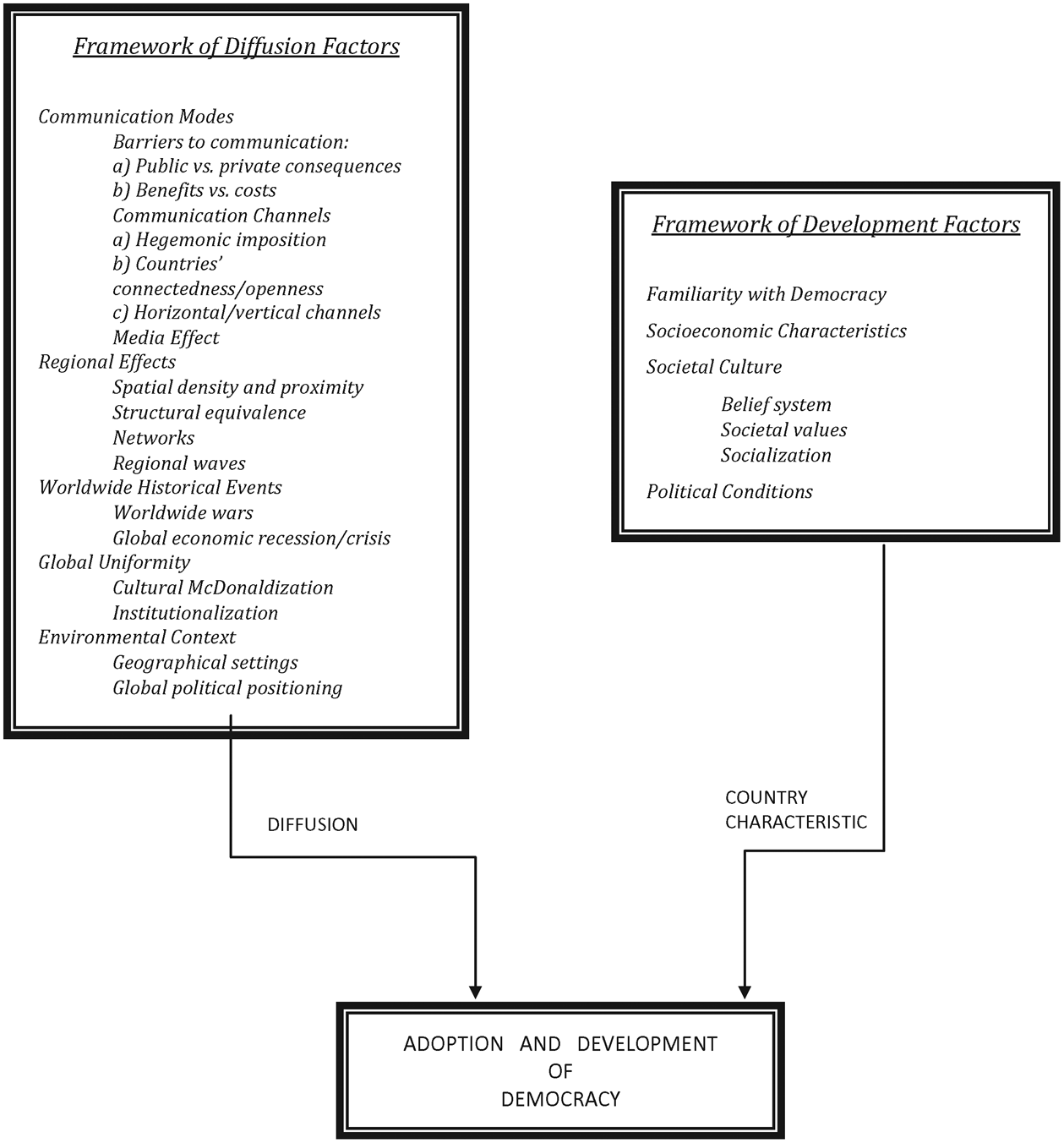
Figure 2.1 Conceptual frameworks of factors contributing to the adoption and development of democracy
Implications of the conceptual frameworks for future research on democratization
The above discussion illustrates that studies on democratization have identified a broad array of variables that can significantly influence the probability of whether a country will adopt democracy and/or further develop a democratic system. Most accounts have focused on the sources and nature of information about democracy that are available to a country. The main process underlying these accounts is generally one of modeling or learning, whereby the experience of early adopters of democracy influences the behavior of potential adopters of democracy (Wejnert Reference Wejnert2002b). From this standpoint, it could be ascertained that the growth and spread of democracy is dependent on a rational process of adoption understood in the Weberian tradition, similar to the rationalization of cultural norms, values, or structures.
What has received much less attention in democracy research is the interaction of countries’ characteristics with a larger societal context, where among the contextual influences most likely to interact with countries’ characteristics are network connectedness, spatial proximity of other democracies, structural equivalence with democratic countries, and a global pro-democracy culture that stimulates the promotion of democratic transitions. A country’s characteristics, on the other hand, involve factors determining the actual feasibility of democracy’s adoption, such as a country’s socioeconomic situation, cultural characteristics, or political position. The implication of a salient role for a country is that the country’s characteristics will modulate both the process of information intake and the process of decision making concerning the adoption of democracy.
Taken together, the process of countries’ democratization integrates the diffusion influences on adoption, arrives at value V of democracy that accounts for potential difficulties or risks associated with democratic transition or development adoption, and provides an overall estimate of the probability of a positive expected outcome of democracy adoption, or successful democratization (Svr). The country must then weigh the value of probable successful democratization Svr against the level of countries’ development denoting the feasibility of acceptance of democracy by a country, the At value, in a manner to be described below.
The theoretical threshold model of democracy adoption
Accordingly, as quantified in the empirical research on democracy, the diffusion factors referring to democracy value and the difficulties (risks) of its adoption, defined by the sets of variables of global historical events, regional effects, communication modes, global uniformity effects, and environmental context, could be specified as leading to and guaranteeing the successful adoption of democracy as a function of value and risk of adoption and depicted as (Svr). Also, a country’s characteristics defining ability to adopt democracy in a t time, depicted herein as At, can be identified. Taken together in an interactive, heuristic manner, countries’ Svr and At generate the empirically derived threshold model of adoption of democracy, where the effect of Svr interacts with At.
Hence, the framework based on decisional processes allows for a formal modeling of adoption, i.e., where all variables above can be integrated in an attempt to predict adoption. For any country, whether adoption occurs at any point in time will depend on the current relative values of three variables: Svr, At, and a threshold of adoption (T) (see Figure 2.2) within a population of countries at risk of democracy adoption.6
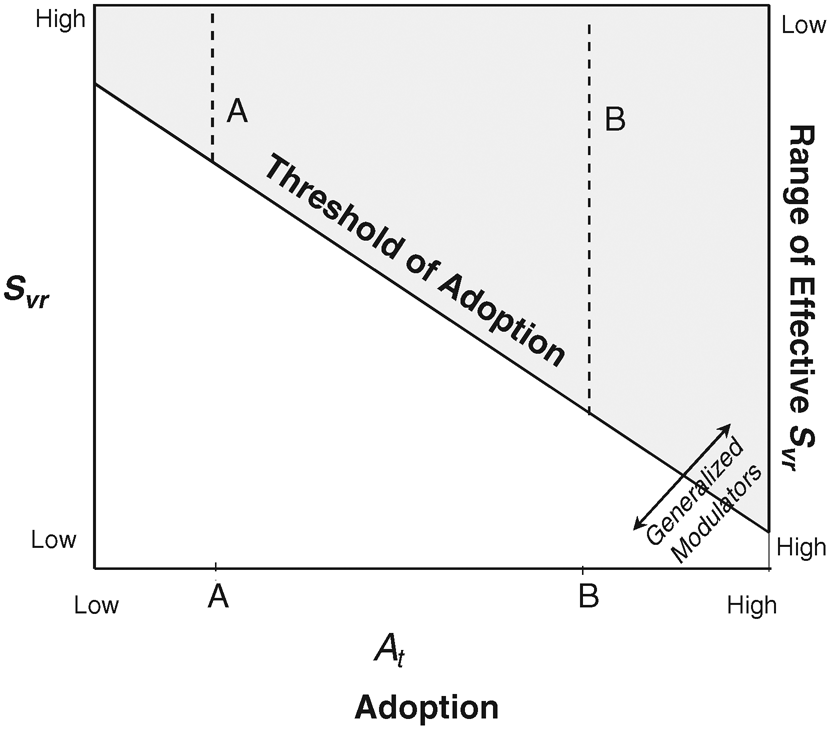
Figure 2.2 Threshold model of democracy adoption
Threshold of adoption is a hypothetical construct that represents a weighted value of all country characteristics, previous experiences, and external factors that modulate a decision to adopt democracy. Within the combinatorial weighting of these factors, the threshold is viewed as being weighted most strongly by the joint function of two main variables: Svr and A. In future research, other variables that contribute to an adoption threshold need to be defined, and their relative influence along with the variables of Svr and At needs to be statistically evaluated. In any case, a country would have a characteristic threshold value that is subject to modification as a function of changing country characteristics, previous experiences with democracy, and external influences of diffusion.
Also, it is possible to model the interaction of Svr, At, and T more formally. The relation between Svr and At is represented in Figure 2.2 as a trade-off function, where pairs of values of Svr and At (depicted as line A and line B) specify a diagonal representing the minimum threshold value for adoption. Thus, for any country, a decision to adopt democracy at any point in time is dependent on whether the interaction of Svr and At produces a value that exceeds the T value of the country. Because the two input variables (Svr and At) are interactive, independent variation in either one of the variables modifies the probability of adoption. Therefore, if there was a change in the value of At, e.g., a change in a country’s level of economic development, the country might adopt innovations at lower Svr levels than previously. Thus, as implied by Kolodko (Reference Kolodko2000), describing the influence of Western democratic states on the adoption of democracy in Eastern Central Europe in the 1990s, an increase in countries’ economic prosperity stimulates the adoption of democracy and promotes trade relations with developed Western democracies, simultaneously enhancing learning about the principles of the democratic system. In this situation, an increase in the value of Svr would increase the probability of adoption for countries of a specific range of At values. This is illustrated by the economically unstable and economically fragile democracies of the post-colonial British states in Africa, where a democratic system was imposed by Britain (see Figure 2.2).
On the other hand, an increase in countries’ economic prosperity encourages the adoption of democracy even under conditions of moderate values of Svr (Dahl Reference Dahl2000). A good example is the relatively stable democratic development of the more economically advanced India, compared to the African states that had a similar British colonial history. The functional implications of this model will now be considered.
Differences between countries
As noted by many scholars (Dahl Reference Dahl2000; Tilly Reference Tilly2005), initially the focus of research on democracy and democratic transitions has been almost entirely on the effects of individual differences in countries and not on population-based models, such as blocs of countries. Therefore, it is particularly important that the interactive relationship between Svr and At provides a means of representing individual variation in adoption. Thus, if the value of Svr for any particular country is held constant across countries, variation between countries in the adoption of democracy would be highly dependent on a country’s value of At. To illustrate this, a dimension of At values is represented on the horizontal axis of Figure 2.2, where two countries with divergent At values are demarcated: A (low At level) and B (high At level). In this example, country A has a lower level of development than country B and, therefore, country A will, on average, require higher values of Svr in order to adopt democracy. That is, for any given value of Svr, country B is more likely to adopt than country A. Interestingly, this proposition appears to be the equivalent of Rogers’ (Reference Rogers2003) suggestion that it is a country and a country’s characteristics which account for the difference in time of adoption between first adopters of novel ideas (innovators) and laggers (the last adopters in a group of countries) (see Figure 2.2).7 Applying Rogers’ (Reference Rogers2003) explanation, a country’s characteristics will account for differences in the timing of the adoption of a democratic system.
Conversely, in the case of relatively stable differences in the At values of countries (e.g., due to the same culture or a similar level of economic development), the effects of a country’s differences in Svr, the diffusion effects, become more pervasive. There are at least two major effects of stable differences in At values. First, stable differences in At values may have marked effects on the range of Svr values that lead to a decision to adopt democracy. This interaction is illustrated in Figure 2.2, where the right vertical axis represents the range of effective Svr values (i.e., Svr values that lead to democracy’s adoption). Increasing At levels (horizontal axis) are associated with an increasing efficacy of weaker Svr values, and thus with an increasing range of effective Svr values that will result in adoption. Continuing the above example, country A and country B in Figure 2.2 are shown to have a narrow (A) vs broad (B) range of effective Svr values, respectively. Therefore, the broader range of effective Svr values for country B suggests that, on average, country B will likely adopt democracy sooner than country A.
Second, if there are stable differences in the At levels of individual countries, it is possible that the effect of the magnitude of variables that contribute to Svr estimates could result in stable differences in assessing the risk of adopting democracy, as suggested by others (Dahl Reference Dahl2000; Tilly Reference Tilly2007). In this case, country A in Figure 2.2, which has a lower At level, may manifest a general reduction in the positive values perceived for Svr variables and, hence, a general reduction in the probability of adopting democracy. For instance, countries that are low in development could be found to have reduced responsiveness to the value of democracy (Kapstein & Converse Reference Kapstein and Converse2009), suggesting that adoption by highly resistant countries is achieved only by high values of Svr. Such a variable could contribute, for example, to the marked differences found between innovators and laggers in time of democracy adoption, where laggers decide to adopt only after a critical mass (a high density of democratic states within a region)8 has the effect of reducing the novelty of this system, limiting the potential of failure of democracy due to modeling effects and communications and, thereby, increasing the value of Svr. For example, poorly developed Albania adopted a democratic system last within the democratizing Eastern European bloc in the 1990s.
Modulatory variables
A threshold model of democracy has an additional important implication. One of the tasks for democracy research is to identify variables that have a generalized modulatory effect (either increases or decreases) on the threshold of adoption for a population of countries. Such modulatory variables should significantly increase the prediction of adoption rates for a group of countries because the Svr and At values required to reach a threshold of adoption will be altered by that variable for all countries. Figure 2.3 illustrates the effects of generalized modulators on the threshold of adoption, an effect that, by increasing or decreasing the threshold, simultaneously modifies the Svr and At values required to reach the threshold of adoption for an entire population of countries.
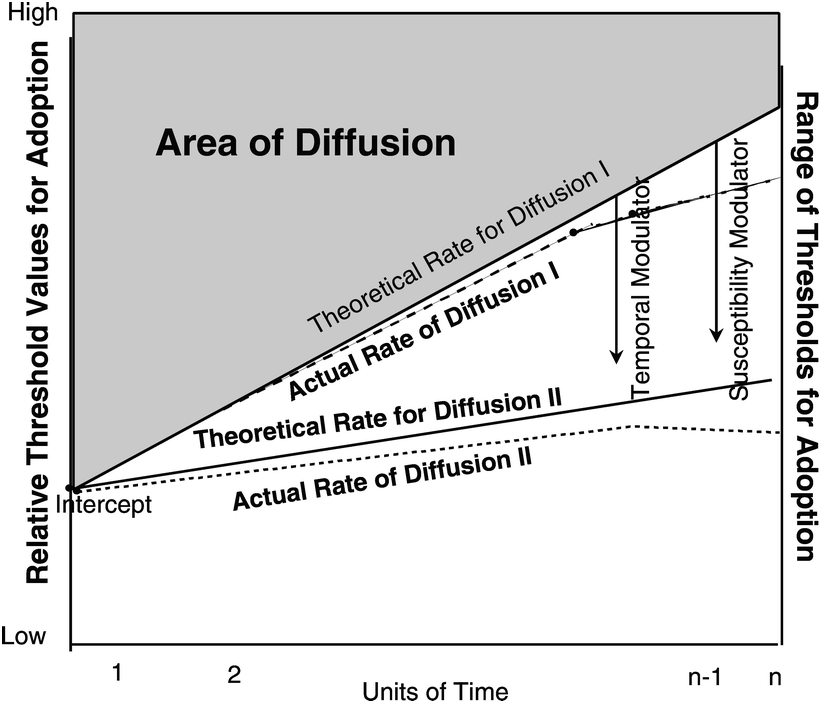
Figure 2.3 The rate of diffusion of democracy within a population at risk
One group of modulator variables would be those that have a strong, generalized effect on At values. An example of such an effect is when significant changes occur in global trade relations that lead to a rapid decline in the economic situation of all the countries in the world regardless of their initial level of development. The effect of the Great Depression of the 1930s was such a case: when facing economic difficulties, previously democratic countries became totalitarian regimes that resulted in the birth of fascism, totalitarianism, racism, and the initiation of World War II. The impact of the oil crisis of the 1970s on the economic recession and decline of democracies in Latin America could serve as another example of such a situation. That is, these variables’ presence or absence can have such a marked effect on At values that the decision to adopt can become practically a dichotomous one. Thus, for instance, global pro-democracy changes or liberal leadership of non-democratic countries might have significant modulatory effects on the threshold of adoption of democracy, as was observed in the case of the rapid spread of the adoption of principles of democratic governance during the Gorbachev era (Sedaitis & Butterfield Reference Sedaitis and Butterfield1991) versus the Putin era (Herspring Reference Herspring2003) in Russia. Such a susceptible modulatory variable could affect change in political leadership, e.g., from totalitarian to democratic or vice versa, or from hard-line totalitarian to liberal totalitarian leadership.
Similarly, a variable that could markedly affect Svr values is the density of democratic countries. When the density of adopting countries reaches a critical mass, the perception of the magnitude of Svr values can increase (rewards for democracy adoption are seen as highly plausible, while expectancy of difficulties is reduced due to learning processes from globally spreading democracies, and hence, the threshold of adoption could be reduced for all remaining countries who have not yet adopted). Density introduces temporal modulatory effects into the prediction of adoption rates, effects that are likely to be complex and which were discussed above and by others (Kolodko Reference Komitov2011; Wejnert Reference Wejnert2005).
Predictive perspective on the threshold model of the rate of democracy adoption
An important implication of the model concerns the potential to investigate democracy adoption from a predictive, as opposed to a solely retrospective, perspective. As variables that are associated with significant country characteristics are more formally defined empirically, country characteristics can theoretically be measured prior to any act of democracy adoption. At the level of populations of countries, this has implications for predicting the rate of adoption. When the value of the diffusion factors, diffusion influences Svr for democracy, is held constant across countries, variation between countries at the time of the adoption of democracy will be highly dependent on a country’s development value of At. Thus, with reference to Figure 2.3, just as country B would be predicted to adopt democracy sooner than country A, two populations of countries having different mean values of A would be predicted to have different rates of adoption.
A critical goal for democracy research will be to identify which types of variables affect the rate of adoption. As explained above, current research suggests that at least three variables – diffusion factors depicting the success of democracy adoption due to external influence Svr, country characteristics At, and threshold of adoption T – may significantly modify the rate of adoption and, hence, contribute to rate predictions. To illustrate these effects, the distributions of adoption threshold (T) values for two hypothetical groups of countries as a function of three variables – mean, kurtosis (peakedness), and skew of the distribution – are illustrated in Figure 2.4 – A, B, and C, respectively. The corresponding rate of adoption curves (percent adoption as a function of time) associated with each distribution of T values is shown in the lower left corner of each section of Figure 2.4. For simplicity, all distributions in the figure represent populations of an equal number of countries; in this case, kurtosis strongly reflects the impact of the range of T values of each distribution on the rate of adoption.

Figure 2.4 A predictive threshold model of the rate of adoption
In Figure 2.4A, the two distributions of T values, labeled 1 and 2, are of normal distribution and have equal kurtosis and skew; only their means are significantly different. As shown in the graph in the lower right corner, all else being equal, Distribution 1 – with the lower mean, earlier initial adoptions, and lower extreme high values – is predicted to have a faster rate of adoption than Distribution 2. Figure 2.4B illustrates the effects of kurtosis on predicted rate of adoption in populations that are otherwise normally distributed and have equal mean and skew. In this case, Distribution 2 is predicted to have a faster rate of adoption, despite the fact that the time of initial adoptions is later than in Distribution 1. This is because the range of T values in Distribution 2 is much lower, as are the extreme high values, than in Distribution 1. Moreover, differences between Distributions 1 and 2 of Figure 2.4B in the predicted rates of adoption may be magnified if an additional variable is considered. In Distribution 2, an increase in the density of adoptions will occur much more quickly than in Distribution 1 due to its greater kurtosis in T values, thereby reaching a critical mass of adoptions much sooner in time than in Distribution 1. Once reached, the critical-mass effect should significantly increase the rate of adoption of the remaining actors in the population (Rogers Reference Rogers1962; Wejnert Reference Wejnert2002b).
Finally, Figure 2.4C illustrates the predicted rate of adoption in two populations that are equal with respect to mean, kurtosis, and skew, but which have opposite direction of skew (Distribution 1 = right skewed; Distribution 2 = left skewed). This pattern of distributions is particularly interesting. It might be predicted that Distribution 2 has a faster rate of adoption than Distribution 1, because of (a) the tail of lower T values and hence an earlier beginning of adoptions for Distribution 2, and (b) the tail of higher T values in Distribution 1. But again, the introduction of a density variable may alter this prediction. In Distribution 1, although a later start of adoptions would be predicted, it would be characterized by a faster increase in the density of adoptions earlier in the distribution of T values and in time than in Distribution 2, thereby reaching a critical mass (the number of democracies in a region that is needed for an almost spontaneous, automatic adoption of democracy by remaining non-democratic regimes) of adoptions earlier in the range of values in Distribution 1 relative to Distribution 2. Again, the critical-mass effect would be expected to rapidly decrease the threshold of adoption for actors in the upper tail of Distribution 1, thereby producing an overall adoption rate that is faster than in Distribution 1. Interestingly, the latter scenario appears to characterize the shape of the distributions described for the adoption of democracy in Latin America vs Eastern Europe, even though democracy is believed to have equal value for the two groups (Przeworski et al. Reference Przeworski, Alvarez, Cheibub and Limongi2000; Wejnert Reference Wejnert2002b). Due to the special density, geographical closeness, and political and economic cohesiveness of Eastern European countries versus the spatial disparity, geographical distance, and political and economic variability of Latin American countries, Eastern Europe manifested an adoption distribution similar to the skew of Distribution 1 in Figure 2.4C (slow to initiate adoption, but a faster subsequent rate due to high cohesion), whereas the Latin American adoption of democracy was similar to the skew of Distribution 2 (sooner to initiate adoption, but a slower subsequent rate due to low cohesion). Importantly, as research indicates, the overall rate of adoption was faster for Eastern European than Latin American countries (Markoff Reference Markoff1996; Wejnert Reference Wejnert2010). Considering the impact of the variables Svr, At, and T on the adoption of democracy and democratic growth, the present theoretical model of decision making is illustrated more formally in an empirical study where each indicator of Svr and At is presented as an interactive component of the threshold model of democracy adoption in Eastern Europe in 1989 and the early 1990s.
In future research on democratization and on the assessment of predictive models of democratic growth, groups of development and diffusion factors need to be taken into account that emphasize differing sets of variables expected to influence a country’s democratization. Therefore, the next part of this book constitutes the research section that provides:
(a) an illustration of the adoption of democracy process, using as an example the democratization of Eastern Central European countries in the early 1990s, that includes (i) empirical research on the direct networking of dissidents in pro-democratic movements across the Eastern European regions and (ii) empirical analyses of the temporal rate and variability of democratic changes across Eastern European countries;
(b) a comparison of the relative predictive power of the groups of development and diffusion factors in accounting for countries’ variations in democratic growth, where the relative effect of exogenous factors incorporates diffusion as well as the historical events and regional factors that may alter the growth of democracy; and
(c) the provision of predictive analyses of worldwide democratic growth through the first half of the twenty-first century.
In assessing the predictive power of indicators, I view democratic growth as a joint function of characteristics of countries and of regions. Country and regional characteristics are analyzed with hierarchical models that simultaneously assess the impact of indicators on an average country’s democratic growth (the level and rate of growth) and on three types of variance: (a) variance in the level and rate of democratic growth among regions; (b) variance in the level and rate of democratic growth among countries; and (c) variance in the democratic growth within countries (residual). The hierarchical models are expressed in the form of growth models (Singer and Willett Reference Singer and Willett2003). These models provide a more comprehensive view of democratization processes than has been possible in the simple regression models used in most previous studies.
Moreover, although much more research is needed, in order for democracy to be adopted and the process of the growth of democracy to occur, the benefit of democracy’s adoption must exceed its potential cost – in other words, the adoption of democracy must be profitable. Not surprisingly, some theorists of democratization consider profitability to be one of the major advantages of democratization (Kolodko Reference Komitov2011). This concept, however, is disputed by researchers studying the outcomes of a shock therapy strategy designed by Goldman Sachs for democratizing underdeveloped third world countries (Klein Reference Klein2007).
The important questions are how the theoretical parts presented above inform understanding of the empirical processes of worldwide democratization, and in what way the presented framework influences future research on democratization. The next section of the book, therefore, contains empirical studies that attempt to statistically evaluate predictive schemes of democracy adoption as a stepping stone to understand (a) the complexities of the process of democracy adoption, (b) the complexities of the process of worldwide democratization, especially in terms of the linkage of political interrelations with countries’ economic performance, and (c) global trends that modify the temporal rate and countries’ openness toward democratic principles. Ideally, future studies should bridge the subfields of comparative (relying on domestic characteristics) and international (referring to shifting international trends) analyses.
An illustration of a threshold model of the adoption of democracy: the case of Eastern Europe
Is the adoption of democracy a diffusion process? It is generally recognized that political change is an outcome of multifactorial rather than unitary influences. The process of democratization in former communist states could be accurately viewed as the dynamic interplay of at least three factors: (1) the external, international conditions of European unification, the reforms within Soviet Union, and the global institutionalization of democracy – the diffusion variables, (2) the variables of the development of a country that include countries’ economic situation and reforms of governmental structures, and (3) a threshold of democracy adoption, derived from the external diffusion factors interacting with the internal development of countries’ domestic environment of malleable political institutions.
Contribution of diffusion factors
Most frequently, scholars believe that the factors of countries’ development are the necessary conditions that contribute to a domestic environment suitable to the adoption of democracy (Tilly Reference Tilly2005), and to the feasibility of the implementation of democratic reforms (Bruszt & Stark Reference Bruszt and Stark1991; Marody Reference Marody1991; Opp & Gern Reference Opp and Gern1993). Later investigations added that shifting international influences (which are called, in this study, factors of diffusion) constituted the enabling factor in the process of transition from communism by accommodating the development of democratic movements and the pro-democratic agendas of political organizations (Brown et al. Reference Brown, Hormats, Luers and Lederer1992; Bunce Reference Bunce1990). According to some researchers, democratic reforms in Eastern Central Europe can only be understood within the framework of external, global conditions, because these conditions would have an enabling effect on the influences of domestic conditions in communist states (Banac Reference Banac1992; Bunce Reference Bunce1990 ). Directly preceding democratic transitions in Eastern Europe, one of the major international factors was Gorbachev’s politics (Bunce Reference Bunce1990; Holmes Reference Holmes1997), which led to the East–West détente (Banac Reference Banac1992; Pridham Reference Pridham1990). At the same time, the expansion of global communication systems (Huntington Reference Huntington1992), shifts in world hegemonies (Wallerstein Reference Wallerstein2004), and the institutionalization of democracy (Wejnert Reference Wejnert2005) caused the snowballing effect of worldwide democratization (Huntington Reference Huntington1992).
Hence, the international factors could be viewed as enabling in nature, modulating the degree to which domestic conditions can express themselves and exert an influence on existing authoritarian regimes (Pridham Reference Pridham1990; Schwartzman Reference Schwartzman1998). Furthermore, changes in international relations and international political circumstances intensified exposure to the principles of freedom and equality, and to the existence of economic co-dependency in the world, encouraging communist leaders to cooperate with capitalist Western democracies.
In particular, Gorbachev’s politics were an important enabling or disinhibitory factor affecting domestic forces, because his political position, expressed in political speeches, significantly reduced the degree of threat and control exerted by the central authoritarian power of the Soviet bloc. For example, in January 1987, during a Central Committee Plenum to discuss progress on reforms in the Soviet Union, Gorbachev introduced a new slogan into the reform debate: dimocratizatsia, by which he meant competition among candidates during elections and elections by secret ballot. After disapproval by the Party hierarchy, Gorbachev quickly withdrew from this radical stance. But it was too late: the introduction of democratic concepts had already occurred, and it undermined future political statements by Gorbachev. Thus, when in 1988 the Polish Communist Party requested that the Central Committee of the Soviet Communist Party assist them in an anti-Solidarity campaign, Gorbachev restated the need for leniency toward democratic movements in Eastern Europe (Zakowski Reference Zakowski1991). Sedaitis and Butterfield (Reference Sedaitis and Butterfield1991) suggest that it was the Gorbachev era opportunity structure that improved the chances for the introduction of democracy in communist countries. Holmes argues that Gorbachev’s criticism of socialism and his own proposed reforms “helped to undermine the legitimacy of communists everywhere” (Reference Holmes1997, 26). Political liberalization in the Soviet Union and the Gorbachev era were, then, precipitating factors that led to a breakdown of authoritarian regimes in former communist countries (Bunce Reference Bunce1990).
The regimes of Eastern Central Europe were also vulnerable to the fluctuations of interest and support provided to communist allies by the Soviet Union. The “compromised integrity of the communist Moloch was exacerbated by the dependence of the East European communist parties on a powerful but capricious Soviet Union that provided their political and economic livelihood” (Bunce Reference Bunce1989, 235). For instance, as a result of Gorbachev’s policies and of Gorbachev’s critical speech of April 1987 (which legitimized the independence of all Communist parties and called for reforms throughout the bloc), several Communist parties replaced their top political executives. In Czechoslovakia, Husak was replaced by Milos Jakes as general secretary of the Party in December 1987; in Hungary, the relative hard-liner Karoly Grosz, leader of the communist party since 1956, the time of the Hungarian revolution and political changes within the communist leadership, was replaced by Janos Kadar. Frequent regime adjustments and political changes weakened the communist regimes, making it difficult for them to implement policies and to exercise political power (Banac Reference Banac1992; Havel Reference Havel, Keane and Wilson1985; Sedaitis & Butterfield Reference Sedaitis and Butterfield1991). Gorbachev’s policies stimulated the East–West détentein economic and political spheres, opening Soviet–American relations that broadened cooperation between the two superpowers (Bunce Reference Bunce1990) and increased the frequency of contact between Western democracies and communist countries.
Opportunities for adopting democracy also opened with the global promotion of democracy by Western countries. This intense promotion was often associated with financial aid and eventuated in the development of a pro-democracy era and the institutionalization of democracy as the most modern and most desirable political system. Taken together, the Gorbachev effect, open East–West relations, and the effect of the institutionalization and promotion of democracy provided opportunities and support for initiating democratic reforms in communist states.
Another factor of diffusion that opened the possibility of democratization was the advancement of global economic development and the economic need of the Soviet-bloc countries to collaborate with Western democracies. For example, the organization of the European Community (EC), as well as the elimination of the politics of separate East- and West-European economies within the framework of trading relations, channeled the merging of Eastern Central Europe and the Soviet Union with a capitalistic world (Klingemann, Fuchs, & Zielonka Reference Klingemann, Fuchs and Zielonka2006; Lovenduski & Woodall Reference Lovenduski and Woodall1987). Some of the communist countries became successful rivals of industries in the capitalist world market, and complemented capitalistic economies as subcontractors (e.g., Hungary, German Democratic Republic, and Poland) and as producers of the raw materials and agricultural products indirectly demanded by the world market (e.g., Asian regions of the Soviet Union) (Kulluk Reference Kulluk, Hermine and Anderson1993). By the end of the 1980s, the economic exchanges intensified calls for the reunification of Germany, a critical issue in Western politics (Graf, Hansen, & Schulz Reference Graf, Hansen, Schulz, Anderson, Lovenduski and Woodall1987).
Importantly, this economic and political cooperation increased dissident activity within Eastern European countries that prepared these countries for an implementation of democratic changes and the eventual replacement of the communist rulers. As the events of the recent Arab Spring in the Middle East suggest, dissident activity is commonly developed in countries with totalitarian regimes. Interestingly, however, in the case of Eastern Europe, networks of political dissidents from various countries acted in unison. Their leaders held frequent meetings – most often in secret places – jointly undertook actions promoting democratic principles and civil rights, and shared educational material about corruption and the abuse of power by communist authorities. The educational material was mainly printed by the Polish underground press and transported across borders for distribution in other Eastern European countries. During meetings and via printed material, leaders of dissident networks shared plans for anti-government activity and exchanged strategies for political action (Marody Reference Marody1991; Opp & Gern Reference Opp and Gern1993; Zakowski Reference Zakowski1991). Indeed, Tarrow (Reference Tarrow1991a, Reference Tarrow1991b) has proposed that political changes in Eastern Europe in the 1990s may be viewed as a wave of mobilization for collective action in response to generally expanding political opportunities, which lower the costs and risks of collective action yet secure higher potential gains. Cohesion and connectedness of dissident networks active in various Eastern European countries evolved as a by-product of shared material and actions aimed at the planning and projecting of a post-democratic political and economic future.
The evolved grassroots mobilization in Eastern European countries strengthened political opposition in the republics of the Soviet Union. The violent and non-violent protest demonstrations and ethnic conflicts of the 1980s constituted the foundation of social and political change in the former Soviet Union (Beissinger Reference Beissinger1990), accounting for “perestroika from below” (Sedaitis & Butterfield Reference Sedaitis and Butterfield1991).
From this perspective, the political changes and democratic transition in Eastern Europe could be seen as consequences of the waves of mobilization for collective action that were present in communist countries prior to the beginning of democratic initiatives (Tarrow Reference Tarrow1998). What was most threatening to communist regimes, then, was not the breakdown of legitimacy, since this process started prior to the 1990s reforms, but “the organization of counter hegemony: collective projects for an alternative future” (Przeworski Reference Przeworski1991, 54).
The collective project of implementation of democratic changes across the Eastern European countries, guided by unified dissident activity, was further enhanced by the structural equivalence of all communist Soviet dependencies. Structural similarity accounted for each country’s sameness of political structures headed by the communist party leaders, and the uniformity of the centrally planned economy. This structural equivalence allowed for an increase in the temporal rate of change, where the domino effect of democratic reforms in one country stimulated reforms in the most connected and most similar communist country.
At the most general level, transformation in global political and economic conditions during the second half of the twentieth century stimulated democratic movements, which, in turn, rapidly sensitized the masses and political dissidents to democratic ideas. Thus, the international political and economic trends (diffusion factors) influenced the economic and political conditions (development factors) of each former communist country, lighting a path for the transition from communism. A combination of international events, led by the strong permissive effect of Gorbachev’s politics, coalesced and to different degrees coincided with the expression of the domestic forces of Eastern Central European countries. In the process of democratization, the international diffusion factors interacted with domestic political and economic conditions.
The contribution of development factors
Several investigators have emphasized the impact of development in Eastern Europe and the economic situation of the 1970s and 1980s on the formation of democratic movements (Huntington Reference Huntington1992; Przeworski Reference Przeworski1991; Stark & Bruszt Reference Stark and Bruszt1998). Increasing industrialization, urbanization, and literacy were contradicted by the economic crisis and poverty, leading to growing public awareness of social inequalities and economic deprivation, and setting nations on the path to demand democratic reforms. Unequal distribution of scarce goods and benefits was magnified by social inequalities and the special privileges of the ruling elite, and abused the citizens’ rights. Eventually, such conditions awakened citizens’ need for freedom from authoritarian repression (Goldfarb Reference Goldfarb1991; Vladislaw Reference Veenhaven1987), or, in the poetic words of Vaclav Havel, “communism exhausted itself, had proven to be inhuman, its dream of utopia fully dissipated and bankrupt” (Havel Reference Havel, Gwertzman and Kaufman1988, 42). Thus, Eastern European democratization had its roots in despair and in an awakening imperative for change that would guarantee social equality and social freedoms (Havel Reference Havel, Gwertzman and Kaufman1988), a view congruent with Dahl’s (Reference Dahl1989) concept of citizens’ frustration taking the form of public opposition to monocratic regimes.
A declining economic situation was, however, not only a phenomenon of the 1980s. As demonstrated by Stark and Bruszt (Reference Stark and Bruszt1998), economic difficulties were visible long before the democratization of Eastern Central Europe. Moreover, the difficulties and the economies varied in nature. Therefore, comparing countries’ economies, authors described various paths of extrication from monocratic state socialism. Depending on the geopolitical and economic situation, the paths produced different institutional outcomes to the 1990s transitions; nonetheless, the resulting reforms were democratic in nature.
Pro-democracy reforms also resulted from the rapid development of modern mass communication. Mass communication inhibited the prohibition of publication and the withholding of information about democracy by the ruling elite (Huntington Reference Huntington1992; Markoff Reference Markoff1996). An increase in education led to the formation of and growth of the middle class intelligentsia. According to the literature, the intelligentsia was an important factor in the Eastern European democratic transition, as it supports human rights, liberty, and democratic principles, and often leads democratic movements (Rueschmeyer, Stephens, & Stephens Reference Rueschemeyer, Stephens and Stephens1992).
In addition to economic and media factors, the political processes of regimes’ liberalization were among the influential contributors to post-communist transitions (Dahl Reference Dahl2000; Tarrow Reference Tarrow1991a). Despite popular notions about the authoritarian, repressive nature of communist regimes, these regimes varied in the degree of their liberalization and in their attitudes toward political opposition (Bunce Reference Bunce1990; Przeworski Reference Przeworski1991; Wejnert Reference Wejnert1988). It is believed that the variability in the degree of liberalization was partly due to internal conflicts and divisions that plagued the authoritarian power of Communist parties (Banac Reference Banac1992; Havel Reference Havel, Keane and Wilson1985). On the basis of a qualitative assessment, compared to Poland and Hungary, Czechoslovakia and East Germany were two of the more hard-line Stalinist countries (Bunce Reference Bunce1990), while the Yugoslavian regime was considered to be one of the most liberal (Gredelj Reference Gredelj2002; Vodopivec Reference Veenhaven and Ehrhardt1992; Woodward Reference Woodward1995). For instance, the more liberal regimes responded to societal grievances by replacing members of the ruling elite and making adjustments in the composition of the government. The more liberal regimes were also less punitive toward the developing civil society and its democratic mobilization, thus themselves setting up more suitable conditions for a transition from communism. At the same time, the regimes that were perceived as strong, measured, for example, by the severity of sanctions against political opponents, prevented or significantly limited grassroots actions aimed at democratic reforms, as in the Ceauşescu regime in Romania, the regime in Albania, and the Brezhnev regime in the Soviet Union (Beck Reference Beck, DeSoto and Anderson1993; Bunce Reference Bunce1990). Degree of liberalization could be considered the foundation for the potential development of collective protests and also the foundation of changes within communist governments.
In sum, a broad spectrum of domestic determinants – economic development, access to media, education, and the degree of regimes’ liberalization – contributed to democratization processes in Eastern Central Europe. Taken together, these factors serve as an indicator of domestic readiness, or what this study calls development factors, to political democratic change. Democratic change, hence, was an effect of the level of countries’ socioeconomic development and the degree of the stability and strength of communist regimes.
This study hypothesizes that the interaction between international and domestic influences significantly determined the potential and the feasibility of processes of democratization in Eastern Central Europe. To prove the hypothesis, this study assesses the effects of international (representing diffusion) and domestic (representing development) factors as components of democratic processes of each country. The international factors are represented by the activity of the political opposition that was generated in large part by permissive international changes and by networking of political dissidents across communist regimes. The effects of development factors are represented by countries’ socioeconomic conditions, and the political conditions of the strength and stability of communist regimes.
An analysis of the breakdown of the communist regimes of Soviet bloc countries and the replacement of communism by democracy serves a threefold goal. First, it provides an understanding of the required suitable international conditions that sparked and initiated the breakdown of communism. These sparking events were Gorbachev policy, the East–West détente, and East–West collaboration that facilitated the first occurrences of democratization. Second, it provides an understanding of the multiple influences stimulating each country’s adoption of democracy. Third, it applies the research findings to the presented conceptual model of the threshold of democracy adoption as determining each country’s timing and temporal rate of democratic transition.
Research design: methods and data
To assess the process of countries’ adoption of democracy, I used data on (a) the perceived potential benefits of democracy and perceived potential negative outcomes of democracy adoption to illustrate the Svr of each Eastern European state, (b) At depicted as each country’s level of economic development and domestic political situation, and derived (c) the T threshold of democracy adoption. The data were extracted from five sources: (1) indicators of political mobilization in Eastern Europe and on changes within communist governments between the late 1940s and 1982 from the World Handbook of Political and Social Indicators (Taylor & Jodice Reference Taylor and Jodice1982), the World Polity III (Jagger & Gurr Reference Jagger and Gurr1995a), and Cross-Nation Indicators of Liberal Democracy, 1950–1990 (Bollen Reference Bollen1998); (2) indicators of the political system preceding communism from the Bureau of European and Eurasian Affairs of the United States government (Osmanczyk Reference Osmanczyk1982); (3) indicators of economic and political development from the database Nations, Development and Democracy: 1800–2005(Wejnert Reference Szelenyi2007); (4) data files containing interviews with Eastern European dissidents and members of democratic governments that were conducted by the author in 1992–1993; and (5) descriptions of democratic transition presented in newspaper articles 1980–1993 and recorded by the author. While all countries were communist prior to the transition to democracy, they vary significantly by (a) the level of economic development, (b) their openness toward political change, (c) the existence of prior democratic experience, (d) the degree of civil disobedience calling for freedom and equality, as well as (e) the strength of their political regimes (see Tables 2.1 and 2.2).
Table 2.1 Change to democratic system as a function of a country’s prior experience with democracy

Table 2.2 GDP per capita in Eastern European countries, 1980–1989

Diffusion indicators of democracy adoption
In the literature on Eastern European democratic transitions of the 1990s, pro-democratic tendencies expressed by various forms of anti-communist protest and dissident activity are frequently depicted as one of the factors determining the success of the adoption of democracy (Svr). As scholars argue, according to the framework of diffusion factors described in Figure 2.1 (above), such tendencies result in part from two variables in: (a) the communication channels of diffusion, especially the variables of countries’ openness towards democracy and (b) the regional networks depicted by the variable of countries’ connectedness.
Communication channels: countries’ openness towards democracy
To represent factors indicating Svr, variables were selected that depicted the degree of countries’ openness towards democracy or expressed desire for democracy, measured by pro-democracy collective actions. Collective actions are represented by collective protests, defined as a combination of strikes, riots, political protests, armed attacks aimed at the existing regime, and the irregular transfer of political power associated with violence (e.g., coups d’état). Countries’ openness toward democracy is also depicted by the variable of political demonstrations. Ties between dissident networks are indicated by frequency, place of meeting, the number and rank of interacting dissidents, and the content of shared agendas.
This study hypothesizes that the occurrence of protests and demonstrations attested to the express need for democratic freedom, and the openness was in large part facilitated by the worldwide institutionalization of democracy and the general belief that democracy means modern and desirable (Brown et al. Reference Brown, Hormats, Luers and Lederer1992), as well as the effect of the media, especially the introduction and rapid spread of satellite TV antennas across Eastern Central Europe (Bakardjiva Reference Bakardjiva2002), and the structural equivalence of economic and political systems across the former Soviet bloc countries (Bunce Reference Bunce1990; Kavan Reference Kavan2002; Kolodko Reference Kolodko2000). Each category of variables was weighted according to the degree of magnitude and frequency of a particular action for the announced purpose of protesting against the established regime. The weights of each variable were determined using the literature (Dahl Reference Dahl2000; Tarrow Reference Tarrow1989; Tilly Reference Tilly2005) and the description of variables included in Taylor & Jodice’s World Handbook of Political and Social Indicators (Reference Taylor and Jodice1982). Hence, each variable of expressed value was assigned a scalable, weighted rating. For example, for each Eastern European country, the variable collective protest was weighted by the rate and scope of actions (strikes, political protests, and armed attacks against the existing communist regime) across the years 1948–1982. In 1948, the consolidation of the communist system in all Eastern European countries took place, whereas the year 1982 marked the end of major protests before the ultimate transition to democracy in the late 1980s (see Table 2.3). Similarly, the rate and scope of the variable political demonstration was measured as an average number of political demonstrations across these years for each country. Taken together, the scores of collective protests and political demonstrations represented the pro-democratic tendencies that were expressed by each country, where the greater the rate of collective protests and political demonstrations, the higher the expressed openness toward democracy.
Table 2.3 Value of democracy and risk of democracy adoption as expressed by each Eastern European country, 1948–1982

The score of collective protests and political demonstrations were assessed as a ratio of rate and scope of collective protests that is described in the text above. Since the higher score of political adjustment and prior political system represent lower R, inverted score of R is used in the analyses of Svr.
* The higher the number of political adjustments the greater is the familiarity with political transitions and hence the lower is the R. The rate and scope were measured as an average political adjustment across the years.
** The score depicts degree of closeness of pre-communist system to democracy where the higher score represents the closer system and therefore the greater experience with democratic governing and lower R of democracy adoption, thus score 3 represents parliamentary democracy, 2 – republic, 1 – constitutional monarchy and regency, and 0 – monarchy (see also Table 2.1).
*** Countries’ At was measured on scale 1–4 where 1 represents countries with GDP per capita with GDP/c less than 2000($); 2 countries with GDP/c of 2000–2499 ($), 3 countries with GDP/c of 2500–2999 ($), and 4 countries with GDP/c of more than 3000 ($) (see also Table 2.2).
**** To simplify the T scores, the numbers are divided by 100, while scope was measured on scale 1–3 with score 3 when a country had a maximum of over 30 adjustments in any year, score 2 for 15–29 adjustments and 1 when the maximum number of adjustments was less than 15 in any year.
Once the scales were defined, each country was assessed on the same attribute-rating scales to estimate the degree of a country’s openness toward democracy (see Table 2.3). To depict small changes within the collective protest and to focus on the processes of organization of collective protests, especially the one preceding the period of democratic transitions of the early 1990s, the statistical measurement of the events of 1948–1982 is enhanced by data of the author’s interviews with the leaders of democratic movements in 1992–1993, and analyses of newspaper articles published in 1980–1993.
Countries’ familiarity with the democratic system
In addition, since the institutionalization of democracy has a strong impact on countries’ democratization processes, institutional models of democracy would more strongly affect countries that had a political system similar to democracy, or incorporated principles of democratic governing. Thus, a country’s prior system of governance was also used to assess a country’s familiarity with a political system similar to democracy. Since all Eastern European countries were communist states prior to the adoption of democracy, I assessed the type of political system a country had before becoming a communist state. Similar to the assessment of liberalization, each variable was assigned scalable, weighted ratings as determined by an analysis of variables provided in the World Handbook of Political and Social Indicators by Taylor & Jodice (Reference Taylor and Jodice1982) and by an analysis of the relevant literature (Higley & Gunther Reference Higley and Gunther1992; Held Reference Held1995; Evans, Rueschemeyer, & Skocpol Reference Evans, Rueschemeyer and Skocpol1985; Tilly Reference Tilly2007). The prior political systems of parliamentary democracy, regency, republic, constitutional monarchy, and absolute monarchy (see Table 2.1) were rated on the degree of closeness to democracy, with higher scores assigned to systems closer to democracy (Tilly Reference Tilly2007). Hence, a score of 4 refers to a parliamentary democracy, 3 to a republic, 2 to a constitutional monarchy, 1 to a monarchy/regency, and 0 to an absolute monarchy. Once the scales were defined, each country was assessed on the same scale to estimate the degree of familiarity with democracy of a country making the decision to adopt democracy (see Table 2.3).
Regional networks: countries’ connectedness
Moreover, in addition to the variable of openness toward democracy, this study assesses the diffusion indicators of the regional connectedness of dissident networks (Bloom Reference Bloom2002) that reflect regional connection and ties between communist states. These variables measure the bond between members of dissident networks. The data are derived from interviews with leaders of democratic movements conducted by the author, 1992–1993, and analyses of newspaper articles from underground and new democratic Eastern European presses published 1980–1993. The newspaper articles were analyzed by the author with the application of Tarrow’s (Reference Tarrow1991b) and Tilly’s (Reference Tilly2008) methodology of analyses of newspaper material.
Indicators of countries’ development
Importantly, indicators of countries’ development (At), especially countries’ political and economic conditions, are essential determinants of the democratization process. In this study, regime liberalization and familiarity with democracy were measured to assess the political situation, while countries’ economic situation was represented by a measure of Gross National Product per capita (GNP/c).9
Liberalization of communist regimes
In a manner similar to that used in operationalizing Svr, I measured the liberalization of communist regimes that each communist country entertained using the sub-variables of the length and number of terms the same elite served in political offices, the number of executive adjustments within the same elite, and the regular transfer of political power from one political group to another via conventional legal or customary procedures (non-violent change of political authorities), based on literature describing the degree of a regime’s changeability (Bermeo Reference Bermeo1991; Burton, Gunther & Higley Reference Burton, Gunther, Higley, Higley and Gunther1992). These variables, which were determined using Taylor & Jodice’s World Handbook of Political and Social Indicators (Reference Taylor and Jodice1982) and denoted together as regime adjustments, represent familiarity with the changes within a political system, where the greater the familiarity the lower the risk of adoption. The weights of this variable were assigned according to the rate and scope of changes in the top executive positions, and for each Eastern European country I measured the number of political adjustments within the top political offices over the years 1948–1982.
Countries’ economic conditions
Each country was also assessed on indicators of the level of economic development. Those countries that were the most economically developed would be predicted to have a higher chance of democracy adoption (high At). Each country’s At was measured as GDP per capita across a decade prior to democratic changes. Using a scale of 4–1, each country’s level of development was assessed, with score 4 representing countries with GDP above 3000 ($), 3 representing countries with 2500–2999 ($), 2 representing countries with 2000–2499 ($), and 1 representing countries with GDP below 2000 ($) (see Table 2.2).
Comparative analyses of successful democracy adoption due to diffusion (Svr) and countries’ development indicating countries’ tolerance of democracy adoption (At) yielded the assessment of countries’ predisposition to adopt democracy, or threshold of adoption (T).
Research results
Analyses of the empirical data demonstrate that Eastern European countries vary substantially in their degree of expressed openness toward democracy (P) as well as in the degree of liberalization of political regime (L). Accordingly, countries with the greatest frequency and number of collective protests and political demonstrations (high P), leading to high Svr, were Poland followed by Czechoslovakia, East Germany, and Hungary. Changes within the top political offices that frequently followed demonstrations or protests were also highest in Hungary, East Germany, Czechoslovakia, and Poland (high L) leading to high At (see Figures 2.5, 2.6, and 2.7 and Table 2.3).
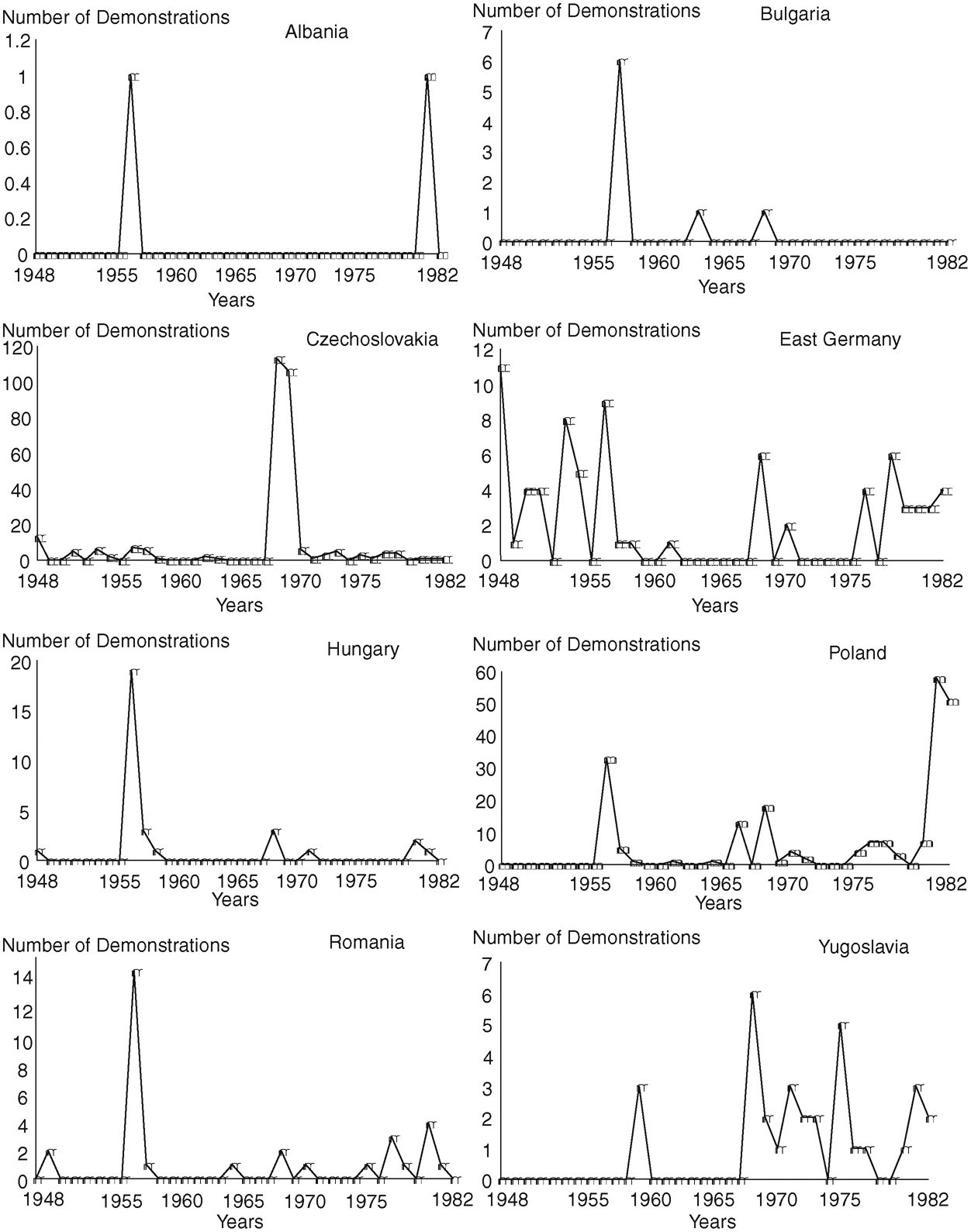
Figure 2.5 Number of political demonstrations in Eastern Europe per country per year

Figure 2.6 Number of collective protests in Eastern Europe per country per year

Figure 2.7 Number of executive adjustments in Eastern Europe per country per year
Changes within the top political offices attest to the level of regime liberalization that a country would be exposed to when it decides to change its political system to democracy (Wejnert Reference Wejnert2002a, Reference Wejnert2002d). A higher number of adjustments, regardless of the same main political line, would increase the likelihood of adoption; therefore, the standing score of political adjustment represents higher liberalization, contributing to At. Countries with the smallest number of changes in political office were Albania, Romania, and Bulgaria. The possibility of democracy adoption in those countries would be the smallest (see Figure 2.8).

Moreover, considering familiarity with democracy (F), the second variable of Svr, only Poland and Czechoslovakia, followed by East Germany (as part of Germany before the Nazi movement), experienced democratic governance prior to communism (high familiarity). Poland and Czechoslovakia were parliamentary democracies, while Germany was a republic in the 1920s but became an authoritarian state in 1933. Hungary was a regency after the abdication of the last king (Charles IV); similarly, Albania, after few years of political instability, became a constitutional monarchy, as was Yugoslavia. Romania was a kingdom, and the Bulgarian monarchy was ruled by the Tsar (see Table 2.1).
The economic development of Eastern European countries, regardless of a similar economic structure of a centrally planned economy across communist dependencies, varied in its characteristics. The most economically developed were East Germany followed by Czechoslovakia and Yugoslavia, leaving Poland, Bulgaria, Romania, and Albania far behind (see Table 2.2).
Thus, summarizing the impact of the variables of Svr and At on a country’s democratization, indicators representing Svr and At constituted interactive components of the Threshold (T) of the adoption of democracy of each country in the late 1980s and early 1990s. The adoption of democracy depicts a time of countries’ movement from being non-democratic to achieving some level of democracy (see Table 2.3 and Figure 2.9).

Figure 2.9 Components of successful dissident movements in Eastern Central Europe, 1970–1980
The figure presents a hypothetical network based on empirical data from interviews conducted by the author with leaders of dissident movements.
Accordingly, the first country to adopt a democratic system was Poland, which had the highest number and magnitude of collective protests and demonstrations (high Svr) across its communist history. Prior to the communist period, Poland was a parliamentary democracy, increasing its familiarity with democracy outcomes (high Svr). Across post-World War II history, Poland also had a high number of political changes within the communist polity (high At). In the 1980s this country, however, had one of the worst economic situations within the Eastern European bloc (low At). Nonetheless, the very high Svr (the highest of all Eastern European countries) apparently so strongly affected the threshold of adoption that the low At (significantly lowered by economic crisis) was sufficient to pass the threshold. Hungary, which before the communist period was a constitutional monarchy, was the next country to adopt a democratic system. It had the fourth largest economy and the second highest number of political adjustments following political protests, although these phased out in the early 1960s, negatively affecting the Svr value after that time. Nonetheless, the initially high number of political adjustments combined with the relatively high number of political protests was supported by the impact of a relatively stable economy. Combined, the interactive effect of these factors was sufficient to affect the threshold of democracy adoption.
Almost simultaneously with Hungary, democracy was adopted in Czechoslovakia. Czechoslovakia had some political protests and demonstrations before the 1960s and a large number of protests during the 1960s. Political adjustments visible until the 1980s resulted from these protests. Prior to the communist period, Czechoslovakia was a parliamentary democracy, which increased its familiarity with democratic principles. By the end of the 1980s, it was the second most economically developed Eastern European country after East Germany.
Bulgaria adopted democracy next to last. It was one of the poorest economies, relatively inexperienced in terms of political protests, and had only minor regime adjustments, only in the early communist period (until the mid 1950s). Prior to communism, Bulgaria was ruled by the authoritarian regime of the Tsar.
Finally, Albania was the last Eastern European country to adopt democracy. It had the smallest number and magnitude of political protests, very few political adjustments until the mid 1950s, and no adjustments after that time. Albania was also the least economically developed country of all the former communist Eastern European states. A lack of past democratic experience was magnified by the country’s monarchic history prior to the communist period. According to our conceptual model, with the exception of Poland and Hungary, countries with higher T adopted democracy sooner, while the laggers had low T scores (see Figure 2.9).
Summary and concluding comments on democracy adoption
Although these results are tentative and mainly for illustrative purposes, they suggest that, in the case of democracy adoption, the impact of the internalized democratic values of the citizenry and prior experience with democratic governing substantially increase a country’s vulnerability to democratization. In fact, pro-democratic experience, familiarity with changes within top governmental offices, and knowledge about democracy outcomes (e.g., Poland and Hungary) seem to be even more significant factors than the economic circumstances that are frequently seen as the primary promoters of democracy. For example, for Poland, which first adopted democracy, the Svr score was much higher than for any other country in Eastern Europe, but the country had low development and was undergoing economic difficulties. Similarly, the At score of middle-developed Hungary was matched only by East Germany. Poland, with the highest Svr, had lower T scores than Czechoslovakia but adopted democracy sooner. Thus, it seems that the threshold that is mainly derived by an impact of Svr has a very strong impact on the adoption process. At the same time, East Germany, with the highest At among these countries, adopted democracy after Poland, Czechoslovakia, and Hungary, again attesting that Svr has a stronger impact on democratization than At.
With the exception of two precursors of democracy adoption (Poland and Hungary), however, the higher T matched the earlier timing of democracy adoption. Even though the model is supported by illustrative analyses only, it does help to identify the relevant categories of variables that contribute to predicting the adoption of democracy and its rate. Hence, the theoretical model presented in the section above makes an attempt to guide the understanding of the manner in which these variables interact when applying a theory of diffusion to estimate the value of successful adoption of democracy Svr, its probability of being successfully instituted, and its relative importance compared to a country’s propensities.
Interestingly, regardless of all these countries being members of the same structurally similar Soviet bloc, their values of T are clearly divided into two groups of scores: of above 200 (or 2.0 x 10⁻²) and below 100 (or 1.0 x 10⁻²). In the first group are Poland, Czechoslovakia, Hungary, and East Germany, and in the second are Bulgaria, Romania, Yugoslavia, and Albania. It could be that the economy of these two sets is vastly different; however, the Yugoslavian economy was as high as that of Hungary, while Romania and Bulgaria had a higher GNP/c than Poland. Again, it is difficult to attribute the timing of the transition primarily to countries’ development; rather, it seems that the diffusion factors of Svr affected the transition time to a greater extent than the economy, and the higher T (above 200) that matched the earlier timing of democracy adoption was mainly generated by factors of Svr.
Nonetheless, in the group of the first adopters Hungary is an outlier with relatively low Svr scores and lower T scores than Poland, Czechoslovakia and East Germany. Also Hungary’s T scores, unlike those of Poland and Czechoslovakia, were generated mainly by regime adjustment that resulted from the influence of the democratic movement of 1950s and early 1960s. The grouping of countries and the interesting case of Hungary suggests that processes other than openness toward democracy and familiarity indicators may enforce the Svr and the timing of democracy adoption. Since countries’ development seems to be less influential, the additional indicators most probably reinforce processes of diffusion.
In search for additional indicators, the study relies on the empirical analysis of the outcomes of democratization factors in the years directly preceding democratic transition, believing that such analyses should shed more light on the democratization processes and democracy adoption.
An illustration of personal ties, networks, and institutional links in building democracy in Eastern Europe: studies of dissident movements
The Arab Spring of the people’s revolution in the Middle East renewed scholarly interest in the development of democracy within grassroots movements that incorporate the activity of political dissidents. Although there are many journalistic accounts of ongoing pro-democratic or anti-authoritarian movements, such as strikes, riots, and protest letters, not many scholarly analyses devote attention to the longitudinal study of the events that lead to such protests. In particular, there is a relative paucity of scholarly empirical accounts of the activity of political dissident movements that are often hidden, purposely censored, and concealed from the public eye. Most frequently, the degree of the spread of dissident activity within a country is unknown to scholars, in contrast with the rather well-developed accounts of events during strikes and city riots. It is equally difficult to find information about the national and international networks that political activists formed to gain support for acclamations, propositions, and calls for political or economic reforms. Information about these hidden political topics becomes available mainly during a time of transition from authoritarian to democratic government, or during a break in the strength and a temporary or unexpected weakening of a totalitarian government. Most of the research on political dissidents, therefore, is conducted decades after the events, when the information has only historical meaning, or at the time of an open window of opportunity that allows access to politically sensitive data. Contrasting with this trend, this study presents data from research conducted during the time of transition from a communist to democratic system, and during the formation of a new democratic government in Eastern Central Europe in early 1990s, posing a question about the importance of dissident activity to the adoption of democracy within this region.
Generally, in scholarly studies, the term dissident defines a person who actively challenges an established political government, its ideology, or existing political doctrine. The term dissident was formed in the early 1960s in the former Soviet Union, and initially it referred to the political, anti-government activity of individual citizens. Shortly thereafter, however, the name began to be used for the anti-communist groups and organizations, the uncensored, independent Samizdat Press, and anti-government actions that collectively formed the dissident movement.
The need to analyze the processes of dissident activity is important, as it provides first-hand understanding of the political background, social and economic conditions, and societal structure that are contributory components of the formation of dissident activity as a grassroots response to totalitarian rule. Some of this information is provided by the dissident press, allowing a researcher a glimpse of the activity of existing dissident organizations and their networks. “Do you, Adam Michnik, Jacek Kuroń and Jan Lutyński, remember our first secret meeting in the mountains on the Polish–Czechoslovakian border? We were then, you and us, so called dissidents, which meant people who were chased by the police, arrested, sent to prison, and publicly ridiculed” (Czech President Vaclav Havel in his Presidential Address in Polish Parliament on January 25, 1990).10
Research on anti-communist dissident activity in Eastern Central Europe
To fill the gaps in existing research on the processes of the development of societal response to totalitarian rule and the grassroots building of democracy, this book is devoted to longitudinal, historical analyses of dissident movements across Eastern Europe in the 1970s and 1980s that, as this study claims, were the building blocks of the democratic transitions in formerly communist Eastern Europe in the early 1990s. This work results from the author’s analyses of newspaper interviews and speeches delivered by political dissidents who frequently became politicians during the post-communist era. The articles were published in Polish, Czechoslovakian, Bulgarian, and Russian newspapers in 1989–1991, the period of the democratic transitions. Among the newspapers are the Polish dailies Zycie Warszawy, Gazeta Wyborcza, Trybuna Opolska, Trybuna Ludu, Gazeta Poznanska, and the Bulgarian newspaper Tpyd (Trod). The newspaper articles are supported by face-to-face interviews with Bulgarian, Polish, and Czech leaders of the anti-communist opposition conducted by the author in 1993. The collected data are complemented by data from an anthology of political dissidents of the regimes of the Soviet Union published by the Polish independent press Karta in 2007, and other available literature. For instance, a significant part of the data derives from direct interviews with prominent Eastern European political dissidents, some of them democratically elected presidents, ministers, and members of post-communist parliaments, and from an analysis of “The Paper Ammunition,” a collection of over 3,000 volumes of material published by the independent Polish press Nova and other independent presses of Eastern Europe, collected and donated to the Cornell University Special Collection at Olin Library by Cornell Librarian Wanda Wawro. The collection was smuggled to the United States during the Solidarity time and period of martial law in the 1980s.
The research analyses were organized according to three categories of variables that characterized political dissident activity in Eastern Europe and Russia and that described the processes that led to transitions from communism to democracy. The first are network variables incorporating: (a) direct contacts between political dissidents within and outside their own country – interpersonal networks of dissidents and (b) institutional links between networks of dissident organizations. The second are media, representing the influence of Western and domestic media communication on processes of dissident activity, such as the broadcasting of Radio Free Europe, Radio Svoboda, the BBC, Voice of America, Deutsche Welle, and the live broadcasting of round table negotiations or pre-election rallies by the media of communist countries. The third are organizational support variables that encompass the help and support of foundations, international organizations, and anti-communist associations in organizing meetings between the oppositions’ members and in publication or dissemination of dissident material, e.g., the Ford Foundation, Batory Foundation, and International Labor Organization.
Research results
The leading factors of dissident movements in Eastern Europe contributing to democracy changes are presented in Figure 2.9. As demonstrated there, the spirit of liberty expressed in the slogans “anticommunism,” “freedom,” and “democracy” was transferred during face-to-face meetings of dissidents; through exchanges of literary material and political analyses published in the independent press, e.g., the publications of the independent, underground Polish publisher Nova; information disseminated by the uncensored publications of Samizdat across the Soviet Union; Western media broadcasting of anti-communist protests and interviews with protest organizers and witnesses; and via unification of dissident networks, media – including the independent press – and the institutionalized goals and demands of human rights supported by the international appeal for human rights signed by many countries. It is perhaps most important to start analyses of these three channels, or factors: interpersonal and organizational networks, independent media, and organizational support of pro-democratic activity, as they constitute the permissive effects for the activity of dissident organizations.
The conceptual framework of the analyses of the leading factors of dissident movements in Eastern Europe is presented in Figure 2.9.
Network connectedness of political opposition
“The principal goal of discussion between leaders of the Polish opposition with Cardinal Tomášek, with activists of Karta 77, and with Alexander Dubček, was to find the best way to ‘push’ Czechoslovakia towards Polish-type reform . . . that would eventually result in the breaking off from communism,” commented the communist newspaper Rude Pravo, criticizing the July 1989 meeting of Solidarity members with Czechoslovakian dissidents (Lubiejewski Reference Lubiejewski1989).
As some researchers have explained, among the most influential factors that affected the development of the democratic opposition are liberalization and the level of repressiveness of communist regimes (Ost Reference Ost1990). Accordingly, Polish and Hungarian communist regimes were perceived to be more liberal than regimes in East Germany and Czechoslovakia (Bunce Reference Bunce1990). The relative freedom of a strong Polish Catholic Church, its cooperation with the political opposition, and the international authority of the Polish Pope John Paul II added pertinence to anti-communist mobilization. “Poles discovered the strength of the opposition when the Pope’s visit in June 1979 brought two million people into the streets,” wrote Przeworski (Reference Przeworski1991, 59). John Elson added: “Tadeusz Mazowiecki, a Solidarity intellectual who was Poland’s first post-communist prime minister, this month told Time [in an interview for the newspaper Time] something that church officials in the past frequently denied. ‘After the communist regime imposed martial law in 1981, the Pope wrote letters of counsel to Solidarity activists interned by the communists; priests and bishops served as couriers because they were not subjected to body searches . . . and their robes carried more mail than many workers in our postal service,’ said Mazowiecki” (Elson Reference El-Badri1994, 64).
The more liberal regimes were less punitive toward the developing civil society and its democratic mobilization. Regimes that were perceived as strong, due to their own stability and sanctions against political opponents, prevented protest actions aimed at democratic reforms, e.g., the Ceauşescu regime in Romania and the Brezhnev regime in the former Soviet Union (Beck Reference Beck, DeSoto and Anderson1993; Bunce Reference Bunce1990). But each communist regime underwent changes in regard to its degree of more open, lenient attitudes toward political opposition that affected the punitive nature of the regimes; e.g., the Polish regime under Bierut during Stalin’s time was much more punitive than the regime of Edward Gierek of the 1980s (Ost Reference Ost1990), or the Czechoslovakian regime of liberal reformist Alexander Dubček during the Czechoslovakian Spring of 1968 vs centrists and Soviet sympathizer Gustáv Husák. Such changes influenced the organization and activity of dissident movements within Eastern European countries as well as these movements’ connections and mutual support.
The most significant building blocks of pro-democratic, Eastern European movements were interpersonal contacts between the political dissidents of the former Eastern European states that dated from long before the breaking of the communist regime in Poland in June of 1989. Members of Polish Solidarity, Czechoslovakian Karta 77 (Card 77); the Bulgarian opposition movement Confederation of Labor Подкрепа (Podkrepa); Hungarian dissidents and dissidents of the Ukraine, Russia, White Russia, and Lithuania met on various occasions starting in the 1970s. As Václav Havel describes, he came to Poland the for first time “as a student with a student tourist group in 1957. It was shortly after your famous October [workers protests in Poznan, Poland, in October 1956] and your country was full of hope . . . I was fascinated with everything that was Polish. I read Hlasko, Milosz, Herbert and Kolakowski, Brandys and Rudnicki [Polish writers who were censored and banished from publishing houses]” (Gazeta Wyborcza1990, June 8).11 Polish Solidarity activist Helena Wujec, also a member of the democratically elected parliament in Poland, added in an interview with the author, “Before 1968 [organized anti-communist student protests and opposition movement in Poland] we were fascinated by the activity of Soviet dissidents, listening to the ballads of Bulat Okudzawa and soulful Russian protest songs. Very popular among Polish students was the Russian independent literature from Samizdat smuggled to, or published in, the West.”12
Hence, the links between individual dissidents were established more than a decade prior to the democratic transitions but intensified in the 1980s. In 1984 and 1985, the Polish political dissident Zbigniew Janas organized more frequent contacts with the Czechoslovakian opposition, after his release from several years’ imprisonment for political activity. Meetings of Polish dissidents with leaders of the Czechoslovakian political opposition Karta 77 (Vaclav Hável and János Kis), aimed at dislodging the communist regime (Lityński, Reference Little, Milliken, Stroup and Wolfinger1992).
Dissidents held their meetings in remote, secured mountain huts and on mountain hiking trails, hidden from secret service and police activity. Among other “convenient and secured” sites of dissident meetings were cars crossing the main cities of Hungary, Romania, or Czechoslovakia. One such meeting was described by Zbigniew Boni, former Solidarity activist, who became the democratically elected vice-Minister of Labor in the first democratic government of Poland in 1990. As Minister Boni described, to avoid detection and surveillance by the secret police, he and political dissidents from other Eastern European countries would drive on Prague’s and Budapest’s streets while discussing political programs. “At the end of the 1980s I had a secret meeting with Václav Havel. We were sitting in a car driving around Prague to secure ourselves and to protect the privacy of our conversation.”13 Such strategic meetings facilitated by face-to-face communication were the basis of programs to implement democratic principles and democratic reforms; and of plans and strategies that led to the break-up of the communist regimes. Dissidents discussed and shared plans for how and when to disarm communism and implement democratic reforms.
As the media of democratic Poland reported, a month after the collapse of communism in Poland, Solidarity members visited members of Karta 77 in Prague as members of the Polish parliament. It was “the first legal meeting of the members of the Polish and Czechoslovakian opposition. Previous meetings were organized in conspiracy, often attracting the intervention of the secret police.” (Lubiejewski Reference Lubiejewski1989). According to interviews conducted by the author, before the Polish Round Table negotiations of spring 1989, members of the Polish Solidarity movement established contacts with Russian political dissident organizations and their Samizdat publishing operation, as well as with the Lithuanian opposition that was organized around dissident periodicals such as the Chronicles of the Catholic Church in Lithuania, or the Chronicle of Contemporary Events.14 The interview data were confirmed by notations in the published Dictionary of Dissidents (Slownik Reference Slownik2007, 334–337).
Individual contacts, however, served also as a channel of exchange of Samizdat literature, published and often printed by Soviet dissidents. This literature contained data about unspoken events in the modern history of the communist states that, under communist regimes, were forbidden to be discussed or remembered. Such uncensored material also provided information about the cruelty of communist regimes toward political opponents; described cases of violations of human rights and prisoners’ rights that were supposed to be respected due to international conventions (e.g., the Helsinki accord), such as prisoners’ living conditions and cruelty committed in Russian Gulag camps; as well as the imprisonment of political dissidents in mental hospitals specially designed to interrogate and incarcerate political opposition – as sources in The Paper Ammunition explain.15
Uncensored books and other material were printed mainly by the Polish independent press Nova. This press was established in 1977 and was the longest and most active independent press within the Eastern European bloc. Its advantageous location in Poland, the most politically free country within the Soviet system, allowed for the longest functioning until the collapse of the communist regime in 1989. Some of the materials were also printed in languages other than Polish, such as Czechoslovakian, Lithuanian, Russian, and Ukrainian. “After the first meeting of Havel, Michnik, Lityński, and Jacek Kuroń,16 the Polish underground press was smuggled to Czechoslovakia thorough the mountains,” said Ludmila Wujec,17 Solidarity activist and member of the Polish democratic parliament. “Printed by Nova, material was illegally delivered to members of Karta 77 across the Polish–Czechoslovakian mountain border. Karta 77 in turn distributed it internally among Czech and Slovak dissidents,” according to information from a direct interview with Henryk Wujec, a former member of the National Committee of Solidarity and a former member of the NSZZ “Solidarity” Mazowsze Region Management Board, who in 1993 became a deputy of the Sejm(Parliament) of democratic Poland, and from 1997 to 1999 a co-chairman of the Committee for Agriculture and Rural Development.18
To demonstrate the extent and importance of interpersonal and organizational networks to the adoption of democracy in Eastern Central Europe, as well as the significance of the media, the next section delineates dissident networks and the influence of the media across historical events prior to, during, and after the democratic transitions of the early 1990s.
Interpersonal networks of dissidents: contacts before the Polish first democratic election in June, 1989
But the most significant were the interpersonal secret meetings between dissidents that were initiated in late 1970s. For instance, in 1978, Havel from the Czechoslovakian Opposition Group Karta 77 and Adam Michnik, Jacek Kuroń, and Jan Lityński from the Polish KOR (Committee of Workers’ Defense) initiated the mountain meetings. “Do you, Adam Michnik, Jacek Kuroń, and Jan Lityński, remember our first secret meeting in the mountains on the Polish–Czechoslovakian border . . . And later years of carrying backpacks full of illegal publications across our joint mountains?” asked Czech President Václav Havel (Havel Reference Havel1990). Henryk Wujec added: “after the first meeting of Havel, Michnik, Lityński, and Kuroń, the Polish underground press was smuggled to Czechoslovakia through the mountains.”19 As a continuation of these meetings, in 1984 the Polish Solidarity designated Zbigniew Janas to organize more frequent contacts with the activists of Karta 77 (Lityński Reference Little, Milliken, Stroup and Wolfinger1992). From this time Zbigniew Janas “ . . . frequently met with Václav Havel and János Kis, and smuggled books and other material across the Polish–Czechoslovakian mountain border. Some of which were published in the Czech language,” described Henryk Wujec.20 “I had a secret meeting with Václav Havel in the Fall of 1989. We were sitting in a car in Prague,” said Solidarity activist and democratically elected vice-Minister of Labor, Zbigniew Boni.21 Adam Michnik traveled to Budapest to meet Gelza Jasienki, the Hungarian reformer elected as Minister of Foreign Affairs in the post-communist government. The meeting took place in a car parked on the streets of Budapest in the summer of 1989.22 Also, Fidelsz from Solidarity visited Budapest dissidents and had a meeting in a car in the spring of 1988.23
From the early 1970s, the role of dissident meetings was twofold: (1) they facilitated direct contacts, and (2) they served to exchange and distribute printed dissident material. Both the interpersonal meetings and the printed material created channels of communication between members of democratic movements that facilitated the exchange of ideas about principles of democracy and the planning of democratic reforms. The independent press provided true information about the unspoken modern history of communist countries and the cruelty of communist regimes, and published censored literature (The Paper Ammunition).24 By the end of the 1980s, initiated by the Solidarity movement, the Solidarity Information Service (SIS) had published information about the Polish national strikes in the summer of 1988, the Round Table talks between the representatives of the Polish communist government and members of the central committee of the Solidarity movement in the Spring of 1989, and the Polish free democratic election of June 1989 that led to the breakdown of communist rule. SIS also published banned books, such as Wojciech Maziarski’s book about the independent student movement, and a book about Lech Wałęsa by the same author; essays about Polish dissidents written by Hungarian reformist Janos Kiscosz; and Janos Kiscosz’s book about Polish economic reforms. The SIS’s primary goal was to inform Polish society and to address the Hungarian political opposition.25
Starting in 1988, the Polish Klub Inteligencji Katolickiej (KIK; Club of Catholic Intellectuals), which was founded at the start of Gomulka’s political softening era in 1956 and later evolved into a mild Catholic-centered opposition group in communist Poland, established contacts with the East German political opposition, supporting the idea of the unification of Germany. At the same time, KIK also established contacts with the Hungarian opposition, and activist Fidelsz from KIK visited Budapest in the spring of 1988.26
To plan more frequent and organized contacts with members of the political opposition, Solidarity appointed “special tasks” members responsible for contacts with dissident groups in selected countries. Beginning in the mid 1980s, Zbigniew Bujak was the primary person responsible for contacts with Hungarian dissidents, Zbigniew Janas organized contacts with the Czechoslovakian Karta 77, and Grzegorz Kostiewa-Zorbas was designated to establish contacts between Solidarity and dissidents of democratic movements in the Ukraine; among them were Czarnowil and the brothers Choryniow – as Henryk Wujec explained.27 At the same time, Václav Havel and Karta 77 established contacts with Hungarian reformers; for example, Havel had a secret meeting with Imre Pozsgay in the fall of 1989 (Gazeta Wyborcza 1989e) as well as establishing face-to face contacts with the leaders of the Bulgarian Confederation of Labor Подкрепа (Podkrepa).
Podkrepa, founded on February 8, 1988 by the Bulgarian intellectuals Konstantin Trenchev, Boyko Proychev, and Nikolay Kolev-Bossia, was, as its president Konstantin Trenchev described, “a Solidarity child . . . we shared the idea for an independent trade union of intellectuals like the Polish KOR, which was the predecessor of Solidarity . . . Podkrepa had particularly friendly relations with the Polish trade union Solidarity” (Komitov Reference Komitov1991a, 1). Also, Solidarity established contacts with, and sent a congratulatory letter to, the Podkrepa founders within weeks after its proclamation.28 Podkrepa copied its strategy of protest from KOR and from Solidarity.
First, Podrepa, like KOR, sent information about its establishment to the Western media: “On February 11 we sent information to the Western broadcasters about the new formal organization. Deutsche Welle, Radio Free Europe, and the BBC immediately reported the news” (Komitov Reference Komitov1991a, 3). Second, like KOR and Solidarity, Podkrepa founders called Western radio stations from private homes. The first person to overcome the fear of the Communist police and call from a private home was Jacek Kuroń from the Polish KOR. His initiative was later copied by many dissidents from Poland and other Eastern European countries. Third, similar to the Polish political oppositionists, Podkrepa leaders signed their names and phone numbers to printed material and information submitted to Western broadcasters. Again, the first dissident who signed his name, phone number, and address under articles published in the underground press was Jacek Kuroń.29 His model of communication was also copied by other Eastern European dissidents. This direct form of communication served a double purpose; it was the fastest way to inform the world about dissident activity in any communist state, and it was also a channel for informing the citizens of communist countries about anti-communist activity in their own states. For example, after the transmission about the establishment of Podkrepa, “the telephone didn’t stop ringing. People from all over the country expressed their desire to join us. I remember that within the first fifteen minutes after the transmission, the first to give us a call were Zoja and Stefan Komitovi from Veliko Tarnovo in Bulgaria. The list of names of those who joined the organization increased with every passing day,” said Podkrepa president Konstantin Trenchev (Komitov Reference Komitov1991a, 3).
Networks of dissident organizations after the Polish Round Table negotiations and the Polish democratic election in June 1989
“The events in Poland are the role model for Czechoslovakia. If Poland sustains the change, revolution in Czechoslovakia is inevitable,” said Pavel Tigrid, director of the Czechoslovakian section of Radio Free Europe after the Solidarity victory in the June 1989 election.
The Polish Round Table talks and the Solidarity victory in the first free democratic election held in a Soviet-bloc country initiated the outburst of mutual contacts and exchange of information between Poland and the members of other democratic movements. Interestingly, following these events, dissident contacts changed their character from face-to-face, interpersonal meetings to organizational contacts with dissidents representing anti-communist organizations.
The Polish Round Table negotiations30 as well as the Polish free election in June 1989 were closely observed by the anti-communist opposition in all East European countries. After winning the free election, Solidarity’s goal was to help dissident movements in other communist countries to establish democratic elections and political reforms in their own countries. “During the Polish Round Table we created four- to five-person groups of sociologists and political scientists who daily listened to Western broadcasting and analyzed each step in the progress of negotiations . . . Our model of organization of a round table was copied from Poland,” said Kristo Petkov, president of the former Bulgarian communist trade union that in 1989 became the Confederation of the Independent Trades Unions of Bulgaria (CITUB) and one of the representatives of the Bulgarian political opposition at the Bulgarian Round Table negotiations with the communist government.31 “We borrowed from Solidarity the following strategies: waves of strikes that the government could not control, lists of demands submitted to the government, and petitions to initiate round table negotiations between the Bulgarian government and Podkrepa, to discuss needed political and economic reforms. We also called for a free election that could overthrow the communist government,” said Konstantin Trenchev, President of Podkrepa.32 Prior to the formal initiation of Podkrepa, the Bulgarian movement was organized secretly: “the idea of its establishment had often been discussed, as early as the years 1983–1984,” said Trenchev (Komitov Reference Komitov1991a). Plamen Darakchiev shared similar information in an interview with Stefan Komitov (Reference Komitov1991a).
Members of Polish Solidarity visited the Czechoslovakian, Bulgarian, Hungarian, Ukrainian, and Mongolian political opposition. Shortly before Ukrainian independence, Adam Michnik, Dracz, and Zbigniew Bujak traveled to the Ukraine for a rally in Kiev, delivering greetings from Solidarity and teaching about the Polish free election, explained Zbigniew Boni in an interview in 1993.33 Maciej Jankowski, head of the Mazowsze region of Solidarity, visited Mongolia, advising on democratic elections and helping the Mongolian opposition to prepare its first free election in 1990. Solidarity contacted Romania, but since there were no established opposition groups, it provided humanitarian help to non-communist Romanian citizens, said member of the central committee of Polish Solidarity Janusz Palubicki in 1993.34
More frequent contacts were established between Polish Solidarity and the Czechoslovakian, Hungarian, and Bulgarian democratic dissident movements. Indeed, a few weeks after the election, the newly formed Obywatelski Klub Parliamentarny – OKP (Citizens’ Parliamentary Club) consisting of 169 Solidarity members who were also members of the democratically elected parliament of Poland, fully developed actions aimed at providing help to other Eastern European pro-democratic opposition movements. Such help was openly declared by the president of OKP, Bronisław Geremek, in his manifesto addressed to all political opposition groups active in the Soviet-bloc states (Gazeta Wyborcza 1989e).35 As Zbigniew Boni explained in an interview conducted in Poland, the primary goals of OKP were twofold: first, to maintain existing contacts between members of the opposition via private face-to-face meetings and official visits of members of the Polish parliament, and second, to help to prepare other societies to break with communism and to organize democratic elections.36
Within OKP, two clubs were established to support opposition movements in Czechoslovakia and Hungary: Polish–Czechoslovakian Solidarity, presided over by Zbigniew Janas, and Polish–Hungarian Solidarity, presided over by Zbigniew Bujak. On July 18, 1989, Polish–Czechoslovakian Solidarity issued its first document, the Seven-Point Program supporting democratic reforms in Czechoslovakia. The program was a response to the manifesto “A Few Words” that was sent to the Czechoslovakian government by Cardinal František Tomášek. “A Few Words” demanded freedom of religion and citizens’ rights. On July 21, three days after the manifesto, a delegation from Polish–Czechoslovakian Solidarity, consisting of Adam Michnik, Zbigniew Janas, Jan Lityński, Zbigniew Bujak, and Mirosław Jasiński, traveled on diplomatic passports to Czechoslovakia to discuss the Seven-Point Program with the Czechoslovakian opposition. They met with a priest, Václaw Maly, and other members of Karta 77, Ana Hromatkova and Peter Pospichal. The Polish delegation also had an audience with Cardinal Tomášek and met with Alexander Dubček in his mountain dacha and again in his home in Bratislava, and had talks with Václav Havel (Trybuna Ludu1989; Lubiejewski, Reference Lubiejewski1989; Gazeta Wyborcza1989a). It was “the first legal meeting of members of the Polish and Czechoslovakian oppositions. Previous meetings were organized in conspiracy, often attracting the intervention of the secret police” (Trybuna Opolska1989). As the Czech communist newspaper Rude Pravo critically assessed, the goal of these meetings was to define a strategy to abolish the communist system in Czechoslovakia (Trybuna Opolska1989).
The frequency of contacts between the Czechoslovakian and Hungarian opposition and OKP intensified in the summer of 1989 after the victory of Solidarity in the Polish free election. The OKP members frequently traveled to Czechoslovakia and Hungary in the summer of 1989, concealing their true purpose by traveling with theater groups for drama festivals or with academics and artists to universities for art exhibitions and conferences, and illegally crossed mountain borders, all with one goal: to maintain close contacts with groups of dissidents from neighboring Eastern European countries. For example, in August 1989, Krystyna Kruaze and Mieczyslaw Piotrowski from Polish–Czechoslovakian Solidarity were stopped on the Polish mountain border (Gazeta Wyborcza1989e).37
In the fall of 1989, member of the newly elected Polish government and former dissident Zbigniew Bujak visited Budapest with the theater group “Gardziejowice,” and Adam Michnik (another member of the post-communist Polish government and a former dissident) visited Budapest as a representative of the Polish parliament. Michnik met with reformist Gelza Jasienski, who was later elected Minister of Foreign Affairs in the post-communist Hungarian government, to discuss democratic political and economic reforms.38 In August 1989, Krystyna Kruaze, and a month earlier, Mieczyslaw Piotrowski from Polish–Czechoslovakian Solidarity, traveled to Prague. They were both stopped at the border by the Czech police (Gazeta Wyborcza1989b). The Czech police attempted to halt communication between Solidarity and Czechoslovakia and Hungary. In October 1989 in Prague, they arrested Zbigniew Janas, who had traveled to Hungary on a diplomatic passport (Gazeta Wyborcza1989c). In December 1989, two members of Polish Solidarity, Grzegorz Kmita and Robert Prus, were released from a Czechoslovakian prison after being arrested for “illegally crossing the border” with Poland (Polska Agencja Prasowa 1989).39
It is assumed that meetings with Polish Solidarity members and dissidents from other Eastern European countries facilitated the development of a new strategy to promote democratic principles in Czechoslovakia and Hungary that reflected the distinct character of the democratic movements in these countries. In Czechoslovakia, political protests were expressed via alternative, independent art: music, movies, poetry, and material published in the underground press, a method of protest borrowed from the Russian underground organization Samizdat. The newly developed strategy represented a response to the repressive nature of Czech regimes that included severe punishment for political activity, significantly more severe than in Poland.
To bring together scattered alternative-culture groups, Czech and Slovak dissidents, in cooperation with Polish Solidarity, organized the Symposium of East European Cultures that included the Festival of Independent Czechoslovakian Culture in Wrocław on November 10–12, 1989. This symposium was organized in cooperation with the Czechoslovakian Karta 77 and was directed by Polish activists Zbigniew Janas and Mirosław Jasiński. Regardless of the sealed-off border between Czechoslovakia and Poland, 5,000 Czechs and Slovaks came to Wrocław, representing forty different dissident groups (Pelikan Reference Pelikan1989). They traveled through Germany and the Soviet Union. Many well-known dissidents delivered speeches at the symposium, including Stanislaw Baranczak, a Polish dissident of the 1968 student movement who emigrated to the United States; Jirzi Pelikan, a hero of the Prague Spring who emigrated to Italy; Václav Havel, former dissident and later president of the Czech Republic, Adam Michnik, Kiryl Podrabinek, Karl Johann von Schwarzenberg, Milan Simecka, Wolfgang Templin, and George Urban. It was the largest meeting of scattered opposition groups and individual dissidents from Czechoslovakia, and, as the Solidarity press jokingly described it, “the largest CIA convention” referring to the common communist accusation of political dissidents being agents of the American Central Intelligence Agency (Gazeta Wyborcza1989g). The Wrocław Festival informed Czechoslovakians about the number of political opposition groups that were active in Czechoslovakia, and their strength. As Václav Havel observed, the “ Wrocław Symposium . . . was unexpectedly the prelude to our Czechoslovakian Revolution” (Havel, Reference Havel1990).
The Polish–Hungarian Solidarity organized a similar event at the University in Pesc, Hungary, called “Polish Days.” The Polish Days in Pesc, however, brought only limited success. First, the Hungarian opposition, unlike revolutionary Poland, Czechoslovakia, or Bulgaria, chose a reformist road of transition from communism, mainly concerned with economic changes (Bruszt and Stark Reference Bruszt and Stark1991), using Polish experiences as examples of potential Hungarian reforms.40 Subsequently, in the fall of 1989, Janos Kiscosz, a member of the Hungarian opposition, published a book about Polish economic reforms. And second, it was difficult to develop contacts with Hungarian dissidents because Hungary is located farther away than Czechoslovakia and does not share a border with Poland. Also, the Czechoslovakian secret police arrested dissidents traveling for the “Polish Days” and confiscated smuggled anti-communist publications. For instance, Solidarity members Tomasz Gadula-Zawratynski, Andrzej Miastowski, Pawel Polester, and Piotr Zlosnicki were arrested at Prague airport, and police confiscated Solidarity posters, videos, and photographs prepared for the festival in Pesc (Borkowicz Reference Borkowicz1989). They were released after twenty hours of police interrogation.41 Therefore in October 1989, Zbigniew Bujak, traveling with the theater group “Gardziejowice,” visited Budapest to continue discussions, maintaining collaboration but focusing on economic changes.42 Also, to counteract the limited success of “Polish Days,” the independent trade union of Hungary visited Warsaw by official invitation of the Polish democratic government, to learn about Polish reforms.43
In the fall of 1989, the Bulgarian democratic movement Podkrepa invited members of the parliamentary club OKP of Polish Solidarity to deliver a series of lectures on the preparation of democratic elections. In the winter of 1989, a delegation from Solidarity, presided over by Wnuk Lipinski, Maciej Jankowski, and Henryk Wujec, visited Bulgaria to meet representatives of Podkrepa. “We assured them that they could win the election, although not believing it ourselves,” commented Henryk Wujec.44 The delegation from Polish Solidarity delivered printed material from the independent press describing the Polish Round Table and its free election, and also printing equipment (Zakowski Reference Zakowski1991).45 Just before the June 10 and 12 election, Zhelyu Zhelev, President of the Bulgarian Union of Democratic Forces representing the Bulgarian opposition at the Round Table, called for a rally on the Liberty Square in Sofia. One million people (nearly one-sixth of the Bulgarian population) gathered in the square to listen to the speeches of Zhelyu Zhelev and invited Polish Solidarity members Maciej Jankowski, Adam Michnik, and independent movie producer Andrzej Wajda (Gazeta Wyborcza1990). Polish Solidarity members read a letter from Lech Wałęsa to the gathered Bulgarians. On June 5, the Bulgarian democratic newspaper Trud published a speech delivered by Adam Michnik at this meeting (Michnik Reference Michnik1990). Zhelyu Zhelev, soon to be the democratically elected president of Bulgaria, said to the Polish president Lech Wałęsa: “My country follows Polish footsteps because Poland is the most advanced and the most experienced in political and economic reforms. The common factor of Poland and Bulgaria is that they are both liberated from communism . . . We have often used the Polish model in our activity” (Informacja PAP 1993). Pavel Giergica from the Polish communist trade unions (Zwiazki Zawodowe) visited CITUB in March 1990 to help the Bulgarian opposition to prepare for the free election (CITUB 1991). “No government could resist Podkrepa’s strength . . . We even tried to assist and help the incipient democratic movements in the Soviet Union and Albania,” said Konstantin Trenchev (Komitov Reference Komitov1991a, 12).
“The delegation of Polish Solidarity also delivered printing equipment and printed material from the independent press describing the most recent democratic events in Poland: the Round Table and the free election,” said Henryk Wujec.46 Trenchev said, “We did not have any information about Solidarity in 1980–1981 or any contacts with Solidarity. We listened to Radio Free Europe and other Western broadcasting, so there were limited opportunities to learn about Solidarity. But we met with Wałęsa and other Solidarity members during international congresses and conferences numerous times. The name and the idea of a round table was copied from Poland but the structure of the Bulgarian Round Table was different.”47 “From May 1990 Solidarity supplied Podkrepa with printing equipment and material about the organization and setting up of a free election,” recalled secretary of the central committee of CITUB, Emilian Abadzejew.48
Maciej Jankowski from Mazowsze Solidarity and Henryk Wujec from the OKP visited Podkrepa, helping in preparations for the free election (Zakowski Reference Zakowski1991). Similar contacts developed with the Ukraine dissident movement, aimed at the preparation for a free election and the establishment of democratic government. Shortly before Ukrainian liberation from Soviet dependency and abolition of communism, members of the central committee of Solidarity Dracz, Michnik, and Bujak traveled to the Ukraine for a rally during which they delivered greetings from Solidarity and gave speeches in Kiev.49 Maciej Jankowski, head of the Mazowsze chapter of Solidarity, visited Mongolia to advise democratic forces on democratic elections and to help prepare for the first free election in 1990.
The leaders of Polish Solidarity also established contacts with Romania; however, since there were no dissident movements or established opposition groups in Romania, Solidarity contacts with Romania focused on the provision of humanitarian help to non-communist Romanian citizens. Nonetheless, as member of Polish parliament Janusz Palubicki explained, due to information shared during such contacts, the new communist elite that replaced the previous communist elite in the Romanian government had to respond to societal requests for reforms; among them was the introduction of a free market economy and democratic ideology.50
After the waves of Bulgarian national strikes at the end of 1989 and the overthrow of the last communist government of Lukanov, plans for the Bulgarian Round Table and free election solidified. This coincided with the free election won by Czechoslovakian democratic forces and the election of former dissident Václav Havel as president in January 1990. From this point in early 1990, contacts between the democratic oppositions of Eastern European states reshaped their character, and the direct contacts, anti-communist publications, and preparations to abolish communist governments were replaced by dissidents’ concentration on the implementation of democratic reforms and the creation of a solid and stable base for sustainable democracies.
As during the period of dissident activity, the models of economic and political reform and models of democracy were not individually invented by each country or borrowed from the Western democracies, but rather the newly elected democratic governments of East European countries followed the model established by the first post-communist, democratic government of Poland and the first Polish economic restructuring plan of Balcerowicz. To implement democratic freedom Václav Havel, for instance, sent a letter to Tadeusz Mazowiecki, Solidarity prime minister in Poland, and to the leader of the Hungarian opposition Imre Pozsgay, asking for intervention to release the arrested dissident Ján Čarnogurský from prison.51 At the same time, the Czechoslovakian Civil Forum informed the media about the arrest of Polish dissidents by the Czech police, which led to their release.
Frequent meetings of former Eastern European dissidents who became members of newly elected governments also concentrated on the post-communist economic reforms.
Democratic networks after the victories: the first democratic elections in the countries of Eastern Europe
Diffusing democratic transitions initiated the spread of information about democratic reforms in the Soviet Union. Although throughout the 1980s contacts were maintained between Solidarity (mainly KIK), the Russian and Lithuanian opposition Samizdat, and the Ukrainian and Belorussian opposition movement, the free election won by Solidarity intensified prior links.52 Adam Michnik traveled to Moscow, where he spoke before a group of reformist deputies to the Supreme Soviet and Solidarity parliaments. “Weeks later, Michnik went again to the Soviet Union [the Ukraine], this time to Kiev, where he spoke to the founding conference of the Ukrainian National Movement shouting ‘Long live Ukraine!’ Komsomolskaya Pravda then ran an extensive interview with Michnik in late September, allowing him to present his view freely to the paper’s several million Soviet readers” (Ost Reference Ost1990). A few months later, in the fall of 1989, Bogdan Borusewicz was sent by Solidarity to the striking workers in the oil fields of Donbas (Russia) to help with the organization of their strike.
Contacts between the democratic opposition movements of East Europe and the Solidarity movement reshaped their character when Czechoslovakian democratic forces won the free election;53 Václav Havel became president of Czechoslovakia in January 1990; the Bulgarian Round Table and free election were organized in the spring of 1990; and the Hungarian communist party officially renounced Leninism, legalized all political parties, and announced a free election for spring 1990. The illegal secret visits became official visits of the members of democratic parliaments, and discussions about the abolition of communism transformed into discussions about the implementation of democracy, a market economy, and merger with the countries of the European Union, which so far had incorporated only Western European democracies.
In the fall of 1989, the Independent Trade Union of Hungary made an official visit to Warsaw by invitation of the members of the Polish democratic government and the Solidarity trade union. The discussion centered on using Polish democratic reforms as a model for reforms in Hungary.54 Three weeks after the victory in the democratic election in Czechoslovakia, on January 3, 1990, Václaw Claus, Minister of Finance of the Czechoslovakian democratic government, visited Leszek Balcerowicz, Polish finance minister, to confer about Polish economic strategy. A week later, Jirzi Dienstbier, the Czechoslovakian Minister of Foreign Affairs, visited Warsaw by invitation of the Polish foreign minister and the Polish parliament, discussing problems of European unification. And that same month, Václav Havel and his cabinet visited the Polish parliament, taking counsel on political reforms, the Balcerowicz plan of economic reconstruction, and on “seeking to achieve . . . the return to Europe” (Havel Reference Havel1990). As Havel announced in his presidential speech, delivered in the Polish parliament on January 10, 1990, “a perfect coordination of measures and actions with those taken by Hungary is required” for merger with the European Union (Havel Reference Havel1990).
Role modeling on Polish reforms was also visible in Bulgaria. During the Bulgarian Round Table negotiations between the political opposition and the Bulgarian communist regime, economic reforms and the political situation in Poland as well as in Hungary were discussed (CITUB 1991, 8). Also, shortly after the Bulgarian democratic election in the spring of 1990, Kristo Petkov, President of CITUB, traveled to Warsaw to meet Leszek Balcerowicz, Minister of Finance, Jacel Kuroń, Minister of Social Policy, Tadeusz Mazowiecki, Prime Minister, Maciej Jankowski, head of the Mazowsze region of the Solidarity movement, and Alfred Miodowicz, president of the Polish communist trade union. The discussion mainly focused on Polish economic reforms.55 In addition, a group of Bulgarian parliamentary members, presided over by Ivan Kostov from the Bulgarian Union of Democratic Forces, visited members of the Polish parliament in September 1990. “We returned to our country believing that we would be able to avoid many mistakes in the transition to a market economy,” said Kostov, commenting on the discussions about privatization and market economy (Informacja PAP 1993). In May 1989, Bulgarian students who studied at Lodz University in Poland invited Henryk Wujec to give lectures to the Bulgarian opposition on the Polish Round Table negotiations and Polish preparations for the democratic free election of June 1989.
After the victory of the Polish Round Table negotiations, Polish Solidarity also intensified contacts with the oppositions from the Soviet republics.56 Since 1986, Grzegorz Kostiewa-Zorbas had been responsible for contacts with the Ukrainian opposition. In 1988, the Ukrainian dissident Czarnowil renewed contacts with Polish Solidarity activists after being released from a Ukrainian prison. According to Henryk Wujec, a member of the central committee of the Polish Solidarity movement, and later president of the Party of the Democratic Union, contacts between Polish Solidarity and Ukrainian dissident movements were also maintained through the three Choryniow brothers.57 At the end of the Polish Round Table negotiations, a member of the national committee of Solidarity, Bogdan Borusewicz, discreetly visited striking workers in the oil fields of Donbass in Russia and initiated contact with the opposition of Russian workers, remembered Janusz Palubicki.58
Following the Romanian revolution in December 1989 that overthrew the communist government of Nicolae Ceauşescu,59 a delegation from the Romanian post-communist government headed by Dr. Alexander Atanasis (vice-Minister of the Romanian Ministry of Labor) visited the Polish Minister of Labor and Social Policy on September 3, 1990, to discuss a strategy for transition to a market economy, particularly reforms within the labor force, unemployment benefits, privatization policy, and new wage and salary policies (Polish Ministry of Labor and Social Policy 1990). In November 1991, the Albanian government also visited the Polish government by invitation of the Minister of Foreign Affairs, and two months later the Albanian vice-Prime Minister Abdul Dxhaja had a meeting with Polish government members: the vice-Prime Minister, the Minister of Economy, and the Minister of Finance, to discuss the problems of a market economy (PAP 1991).
The impact of the media on democratic transitions in Eastern Central Europe
“Once or twice they lied, that it would be possible for me to see my wife Kojana, but we managed to see each other after they took me to the militia headquarters. There I gave her a message with a short summary of what had happened to me in prison. The Western information services broadcast it immediately,” said Konstantin Trenchev, president of Podkrepa (Komitov Reference Komitov1991a, 3).
From the initial stages of the anti-communist opposition expansion until the implementation of the first democratic reforms in communist countries, the most influential factor on the development of democratic movements was Western radio broadcasting, such as Radio Free Europe, Voice of America, the BBC, Radio Svoboda, and Deutsche Welle, while the national media were rather silent. Among a few exceptions was the Information Service about Solidarity (SIS) established by Wojciech Maziarski the summer of 1988, which, among other goals, monitored the waves of Polish national strikes in the summer of 1988 that led to round table negotiations between the Communist government and members of Solidarity regarding democratic reforms in Poland and to the first free democratic election in June 1989. Solidarity also initiated an information campaign about Polish dissidents and Polish political activity in Hungary. This campaign was organized in cooperation with members of the Hungarian democratic opposition. Wojciech Maziarski from Solidarity published a book about the Hungarian independent student movement, as well as the first book ever written about Lech Wałęsa. Janos Kisza published essays about Polish dissidents that were also distributed in Hungary. Moreover, in Czechoslovakia, due to similarity of language, the newspapers of independent-thinking intellectuals and religious groups were also broadly distributed. These newspapers, such as the Polish Common Weekly (Tygodnik Powszechny), a Catholic newspaper with limited censorship, often defeated the formation and creation of an underground press in Czechoslovakia because Czechs broadly subscribed to the Polish publications. Also, many political dissidents subscribed to Polish underground publications, partly compensating for the lack of a Czechoslovakian independent press, explained Ludmila Wujec during an interview with the author.60
The democratic reforms in Poland in June 1989 provided the political opposition with access to national media. The independent and legal press, and radio and TV stations, were able to inform Eastern European societies about democratic changes, further promoting pro-democracy ideas. Thus, the role of the media was diverse and corresponded to the degree of development of a democratic movement in each country. First, the system of mass communication intensified the exposure of East European societies to the principles of freedom and equality, undermining the totalitarian character of communism. This role was mainly provided by Western broadcasting. Second, it stimulated the growth of democratic opposition by enhancing internal communication within the democratic movement, as in Poland, where the re-broadcasting of information about the 1980 summer strikes in shipyards by international radio and TV stations helped to mobilize workers and provided support from other social strata (Verdery Reference Verdery1993; Wejnert Reference Wejnert1988); or in Bulgaria where enrolment to Podkrepa was initiated after Radio Free Europe’s broadcasting (Komitov Reference Komitov1991a). Third, considering that telephone communication was censored access to phone lines limited, postal mail correspondence was controlled, and the possibility of international travel was highly controlled and very limited, for general societies the media were the only available source of information about dissident activity in other communist countries. “We did not have any direct contacts with Solidarity leaders prior to 1989. But we listened to Western broadcasting, Radio Free Europe, Radio Svoboda, and learned about Solidarity,” said the the president of Podkrepa in an interview.61 Fourth, the media, by informing the international community about the violations of human rights committed by communist rulers, actively defended arrested dissidents. As Darakchiev said, “other active assistants in defense of those arrested were Deutsche Welle, the BBC, and the other Western information services” (Komitov Reference Komitov1991b, 8).
Summarizing, across Eastern Central Europe prior to the Round Table negotiations and the democratic elections, the media affected democratization processes mainly via Western European and other foreign broadcasts, connecting dissidents and providing channels of information about their activity. During the democratic negotiations, the national media were allowed to provide live broadcasting of round table negotiations and pre-election rallies in communist countries, thus becoming a transmitter of information about the the first victories over communist regimes, and sending a message about the democratic reforms implemented by the newly democratic governments in each country. Last, the media brought international and national attention to the unified efforts of dissident movements, discussing mutual support and frequent meetings between reformists and members of Eastern European democratic governments. Thus, the impact of the media on the occurrence and temporal rate of democratic transition in Eastern Europe was visible during all stages of the breakdown of the communist regimes.
Foreign intervention: the role of foreign organizations in the processes of democratization of Eastern Europe
Foreign organizations influenced the spread of democratic movements in communist countries in two ways: (a) by inviting political dissidents from communist countries to organized international conferences, seminars and, workshops that became platforms for discussions about democracy and the implementation of democratic reforms in the communist states, and (b) by sponsoring meetings of the newly elected members of Eastern European democratic governments with the dissidents of communist countries. The international conferences, in addition to their purpose of learning about free trade unions, democracy, and human rights, provided the opportunity to meet dissidents from other communist countries and activists of the Western labor unions. “I met with Wałęsa and other Solidarity members during international congresses and conferences numerous times,” said Trenchev in an interview.62 These initiatives were particularly valuable in the initial phases of the development of democratic movements, when the fledgling democratic movement needed public support for their activities. “This declaration was sent to all the mass media in our country, and abroad, to the Committee for Human Rights, to the Standing Committee for Defense of Citizens’ Social Interest and Rights in the United Nations, to the independent trade unions of some European countries and to some international law defense organizations,” said Trenchev, discussing the declaration submitted to the Bulgarian communist government that proposed economic and political reforms in Bulgaria (Komitov Reference Komitov1991a).
Moreover, international organizations intervened on behalf of arrested dissidents, as when the Human Rights Committee requested the release of the arrested founders of Podkrepa (Komitov Reference Komitov1991a), or when the Polish democratic government of Mazowiecki negotiated with the Czech government for the release of the arrested Slovakian dissidents Ján Čarnogurský and Miroslav Kusý (Gazeta Wyborcza1989c). International organizations also sponsored consultation-type meetings on the implementation of democratic reforms between newly elected governments and dissident movements in still-communist countries. Such meetings were organized by the Ford Foundation, the Batory Foundation, and the International Labor Organization, in 1989–1993.
For example, after the Polish democratic election of June 1989, the Batory Foundation, a branch of Soros’s Open Society Institute, sponsored a meeting in Warsaw between the Czechoslovakian and Hungarian opposition and the newly elected members of the Polish democratic government. Among the participants were Havel, Balcerowicz, and Mazowiecki. The meeting facilitated future contacts between political dissidents and provided an opportunity to exchange views about economic and political reforms.63 In May 1990, the Batory Foundation sponsored Zhelyu Zhelev and Petyr Beron (the president and secretary of the Bulgarian Democratic Forces, which represented unified pro-democratic movements) and Konstantin Trenchev (President of Podkrepa) in their visit to Lech Wałęsa (Polish president, and former head of the Solidarity movement), Tadeusz Mazowiecki (the prime minister in the newly elected government), and members of the Presidium (central committee) of the OKP.
Starting in 1990, the International Labor Organization (ILO) supported a Polish initiative to become a supplier of printed material about the Polish free election, Round Table negotiations, and agreements signed between Solidarity and the Polish government. This material was sent to other Eastern European countries. By 1993, “Poland had become a model country sharing its experience with Eastern European neighbors.”64
The ILO also helped the Polish Ministry of Labor and Social Policy to organize a training center on the management of labor and on social policy in Molino, Poland, that trained members of new governments and policy makers on new strategies and styles of management of labor resources, and helped to establish new regulations on social policies in a free market economy. The center was equipped with modern technology, and world-renowned labor experts gave workshops on the social and economic policies of the emerging market economies. In October 1993, among the trainees were ministers of labor in Estonia, Lithuania, Latvia, the Ukraine, Russia, and Belorussia.65
In addition, the ILO, together with the Polish Ministry of Labor and Social Policy, opened the International Training Centre of the ILO in Turin, Italy, to “provide training at national and regional level to meet the needs of labour and social policy on the basis of modern methods and programs, and experience of Western European countries and international organizations, particularly the ILO . . . The training programs of the Centre correspond in large degree to current needs of Central and East European countries” (International Labour Organization 2014). The seminars, supported by the Brussels Fund of the ILO, were particularly addressed to the Estonian, Lithuanian, Ukrainian, Belorussian, and Russian ministries of labor and social policy, regional social policy makers, and labor unionists. Similar working meetings were organized by the ILO in Geneva.
Consequently, the initiatives of Western organizations helped dissidents and, later, new democratic governments to coordinate economic and political cooperation and exchange experiences on political and economic reforms. Clearly the closest cooperation and most frequent exchange of ideas in the initial stages of transition took place between Poland, Hungary, and Czechoslovakia. This cooperation culminated with a signed agreement on mutual cooperation between the Czechoslovakian, Hungarian, and Polish ministers of labor and social policy, in Visegrad in October 1991.66
The significant role of international organizations in the institutionalization of democracy and in the implementation of democratic reforms in former communist countries was expressed in Podkrepa’s Constitution, which began: “Bearing in mind the fundamental rights and needs of people stemming from their human nature and the norms of civilized behavior endorsed and proclaimed by the United Nations in the Universal Declaration of Human Rights . . . guided by a sense of civic and human solidarity and by a sincere desire to aid the building of a fair, humane and civilized society based on the principles of democracy and pluralism, we have decided to hereby found the Confederation of Labor Podkrepa” (Podkrepa 1990, 1).
The rise of dissident movements met with the approval of societies dissatisfied with their economic situation: increasing inflation, uncontrolled amounts of private savings with no possibility of spending, scarcity of all consumer goods, long lines of consumers in front of grocery and other retail stores, and lack of freedom and liberty. Lack of political freedom combined with economic difficulties attested to the inability of communism to sustain itself (Havel Reference Havel, Gwertzman and Kaufman1988).
Cohesion of dissident activity: an overview and conclusion
In conclusion, regardless of many studies arguing that democratic transitions are products of the conditions of each country’s development of primary economic difficulties and the weakening of communist regimes, it would have been impossible to achieve the rapid tempo of democratic transitions in Eastern Europe without the impact of a variety of diffusion factors: interpersonal networks of dissidents and networks of dissident organizations, media, and institutionalization of democracy. This group of diffusion factors interacted with the malleable conditions of countries’ development. Hence, historical changes would not have taken place without the support of interpersonal and organizational networks of political opposition, the influence of global and national media, and assistance of international organizations supporting and promoting an institutionalized model of democracy. The timing of the transition was also influenced by the global Gorbachev effect and his reforms and new policies implemented in the Soviet Union. Visible also was the impact of a leading democratic movement in Poland on democratic movements in other Soviet-bloc countries.
Anti-communist activity was initiated by dissident networks cascading with webs of connections between European countries of the Soviet bloc. For example, starting in 1988, the Polish Klub Inteligencji Katolickiej (KIK; Club of Catholic Intellectuals), established contacts with the East German political opposition, as well as with the Hungarian opposition – activist Fidelsz from KIK visited Budapest in the spring of 1988.67 Simultaneously, dissident Václav Havel from Czechoslovakia established contacts with the Hungarian political opposition, particularly with Imre Pozsgay (Gazeta Wyborcza1989e).68 The same year dissident organizations of Polish Solidarity and Czechoslovakian Karta 77 jointly established contacts with the Bulgarian Podkrepa soon after its establishment. On April 13, 1988, Solidarity sent a letter to the founding committee of Podkrepa congratulating it on its organization (Komitov Reference Komitov1991a). From spring of 1989, Zbigniew Bujak from Polish Solidarity maintained contacts and visits with the Hungarian opposition. In the spring of 1989, Solidarity activist Irena Lasota traveled to Prague and Budapest to meet Czech and Hungarian dissidents.69 In May 1989, Zheli Zhelev from Bulgarian Podkrepa visited Solidarity in the Mazowsze region and conducted a meeting with the head of regional Solidarity in Mazowsze.
After the victory of Solidarity in the first free democratic election in June 1989, the contacts between dissident organizations exploded. In addition to direct visits of dissident leaders, contacts were maintained via meetings at the international conferences sponsored by Western European organizations and fully publicised by broadcasting in the global as well as national media. Such intensity of contact between Polish, Czechoslovakian, Bulgarian and Hungarian oppositions, as well as oppositions in other countries, stimulated the exchange of material, experiences, and knowledge among dissidents and unified opposition in the struggle against communist power.
The visible unity of the Eastern European dissident movements and the ties between dissident networks significantly contributed to the rapid adoption of democracy across the communist regimes of Eastern Europe. In this study, the temporal rate and the consecutive order of these adoptions are called the domino effect of democratic transitions. Together with the contributors of diffusion and development analyzed in previous sections of this study, the domino effect of democratization shaped all the Soviet regimes within Eastern Central Europe as well as within the countries of the Soviet Union. Thus, the network ties of dissident movements and the role modeling of the first democratic transition of Poland, combined with the permissive effect of the Gorbachev policy and shared information on reform strategies, contributed to diffusion factors, facilitating cross-state unity and solidarity of these movements and eventually leading to the change from communist systems.
Consequently, when in 1988 the Polish communist party requested that the central committee of the Soviet communist party assist them in an anti-Solidarity campaign, Gorbachev restated the need for leniency toward democratic movements in Eastern Europe (Zakowski Reference Zakowski1991). Thus, the “Gorbachev era of structural opportunities” and a conviction that the Soviet Union would not intervene in Eastern European domestic affairs, enhanced the emergence of amenable conditions for Eastern Europeans to introduce democratic political reforms and market economic systems (Bunce Reference Bunce1990; Holmes Reference Holmes1997; Sedaitis & Butterfield Reference Sedaitis and Butterfield1991). Financial support to newly emerged Eastern Central European and Russian democracies was provided by the World Bank, the International Monetary Fund, and the Bank for Development and Reconstruction. The financial aid, however, was conditional upon the sustainability of the new democratic rule by governments of the former Soviet states (Graf, Hansen, & Schulz 1993; Kolodko Reference Kolodko1996; Lovenduski & Woodall Reference Lovenduski and Woodall1987).
Summarizing, the permissive effect of Gorbachev’s politics combined with (a) ties and frequent contacts between dissident networks, (b) support provided by the institutionalization of democracy as the most desirable political system, and (c) the help provided to new democracies by global financial institutions, set up ideological and philosophical trends that coalesced in the mid 1980s, leading to the mobilization of domestic democratic movements in Eastern Central Europe and the former Soviet republics (Dahl Reference Dahl1990; Deacon Reference Deacon, Castle-Kanerova, Manning, Millard, Orosz, Szalai and Vidinova1992; DeSoto & Anderson Reference DeSoto and Anderson1993; Havel Reference Havel, Gwertzman and Kaufman1988, Reference Havel, Keane and Wilson1985). Democratic opposition that included the activity of anti-communist groups, democratic movements, violent and non-violent protest demonstrations, and ethnic conflicts is often credited as the main constitutor of political changes in the Soviet-style regimes (Beissinger Reference Beissinger1990; Marody Reference Marody1991; Opp & Gern Reference Opp and Gern1993; Sedaitis & Butterfield Reference Sedaitis and Butterfield1991; Zakowski Reference Zakowski1991). These waves of mobilization for collective action (Tarrow Reference Tarrow1991a) exemplify regimes’ democratic transitions: “psychologically frustrated opponents to a government who could not openly and legally organize into political parties took the form of public opposition” (Dahl Reference Dahl1989, 170).
What are now needed are empirical studies that attempt to statistically evaluate predictive schemes of democracy adoption and growth as a stepping stone to understand (a) the complexities of the process of worldwide democratization, especially in terms of the linkage between political factors and countries’ economic performance, (b) predictive power of the contribution of endogenous versus exogenous factors to the world’s democratization, (c) the temporal rate and growth of democracy, and (d) the global and domestic trends that modify the temporal rate and countries’ openness toward democratic principles. Such empirical analyses are presented in Chapter 3.
1 Polemically, Gat presented examples of two non-democratic counties (Prussia and Singapore) with a ruling elite respecting law and not being corrupted. Expectedly, these countries were also economically prosperous (Gat et al. Reference Gat, Deudney, Ikenberry, Inglehart and Welzel2009).
2 Przeworski and Limongi (Reference Przeworski and Limongi1997), however, did not statistically distinguish different mechanisms by which the international climate is transmitted to particular countries. They also did not assess the predictive power of the international climate relative to the socioeconomic conditions of a country, which this chapter focuses on.
3 Moreover, adding computers to the skill kit for educated people raises the worth of the skill on the labor market (Galbraith Reference Galbraith2000, 31). As Krueger (Reference Krueger1991) calculated, computer skills added 10–15 percent of wage premium in the United States. The benefit of using computers to increase skills of workers has been recently recognized by many African countries that are trying to build a highly skilled, computer-literate labor force. With the help of international aid organizations, e.g., the European Computers for African Schools Project (CFAS) or Computer Aid International, recycled computers are delivered to African schools, and post-educational training in computer operation is offered. The trained students, upon returning to their own communities, are in turn obligated to educate the local community in computer use (Computer Aid International 2000).
4 In Swaziland, Africa, 90 percent of state high school graduates have never used or seen computers (Computer Aid International 2000).
5 Countries at risk of democracy adoption are non-democratic countries that could become democratic under suitable conditions. For more information on the potential adopters at risk of adoption see Wejnert (Reference Wejnert2002d).
6 Population at risk is best defined in the literature on the adoption of innovations where such a population is a group of actors with characteristics that predestine them to make the decision of adoption, but which has not adopted a particular behavior yet (Rogers Reference Rogers2003).
7 An explanation about laggers is provided, e.g., by Palmer, Jennings, & Zhou (Reference Palmer, Jennings and Zhou1993).
8 A comprehensive discussion on critical mass provided Rogers (Reference Rogers2003) and Valente (Reference Valente1995).
9 The description of variables is provided in Appendix 1.
10 Trybuna Ludu (January 25, 1990). Czech president Václav Havel in his presidential address in the Polish parliament on January 25, 1990.
11 Speech of the President of Czechoslovakia, Václav Havel, addressing the Polish parliament on October 1, 1990. Polish daily newspaper Gazeta Wyborcza (October 1, 1990): 1.
12 Interview with Helena Wujec was conducted by Barbara Wejnert on July 20, 1993 in Warsaw’s chapter of the the Polish Solidarity party that was formed from the Solidarity movement.
13 Interview with Zbigniew Boni, vice-Minister of Labor in the democratically elected Polish government, former activist of Solidarity. The interview was conducted by the author of this book on July 3, 1993.
14 Described by Zbigniew Boni, July, 1993.
15 “The Paper Ammunition” collection of material published by the independent Polish press Nova and other independent presses of Eastern Europe, smuggled to the United States during the Solidarity time and martial law in the 1980s, collected and donated to Cornell University Library’s special collection. The collection is described above.
16 Jacek Kuroń was a Minister of Labor and Social Policy in 1989–1990 and 1992–1993. Among other parties he belonged to the post–Solidarity Citizens’ Parliamentary Club (OKP).
17 Interview with Ludmila Wujec, Solidarity activist and member of the Polish democratic parliament, conducted on July 23, 1993, by the author.
18 The interview with Henryk Wujec was conducted on July 19, 1993, in the Warsaw headquarters of the OKP (Citizens’ Parliamentary Club), by the author.
19 Interview with Ludmila Wujec, Solidarity activist and member of the Polish democratic parliament, conducted on July 23, 1993 by the author.
20 This interview with Henryk Wujec was conducted on July 5, 1993, in Warsaw, in the headquarters of OKP, by the author.
21 Interview with Zbigniew Boni, July 4, 1993.
22 Interview with Zbigniew Boni, July 4, 1993.
23 Interview with Zbigniew Boni, July 3, 1993.
24 “The Paper Ammunition” is a collection of over 3,000 volumes of material published by the independent Polish press Nova and other independent presses of Eastern Europe, collected and donated to the Cornell University special collection libraries by Cornell Librarian Wanda Wawro. The collection was smuggled to the United States during the Solidarity period and the period of martial law in the 1980s. The author of this book studied almost the entire collection, supported by a grant from the Humanity Institute in 1994.
25 Described by Zbigniew Boni, July 3, 1993.
26 Interview with Zbigniew Boni, July 20, 1993.
27 Interview with Henryk Wujec, secretary of OKP and president of Unia Demokratyczna (Democratic Union Party), conducted by the author in the Unia Democratyczna office in Warsaw on July 30, 1993.
28 Interview with Dr. Trenchev, president of Podkrepa, in the Podkrepa office in Sofia, on August 6, 1993, conducted by the author.
29 Interview with Ludmila Wujec, Solidarity activist and member of the Polish democratic parliament, conducted on July 23, 1993 by the author.
30 Negotiations between the democratic movement Solidarity and the Polish communist government regarding political and economic reforms in Poland.
31 Interview with Kristo Petkov, president of the Independent Trade Union of Bulgaria, conducted in Sofia at the headquarters of CITUB by the author on August 4, 1993.
32 Interview with Konstantin Trenchev conducted in Sofia at the headquarters of Podkrepa by the author in August 8, 1993.
33 Described by Zbigniew Boni. The interview was conducted by the author on July 3, 1993.
34 Interview with Janusz Palubicki, member of the Polish parliament and Solidarity member, conducted by the author on July 26, 1993.
35 Gazeta Wyborcza1989b, “Polska Zaraza” (Polish Disease) (September 3–5): 2.
36 Interview with Zbigniew Boni, July 20, 1993.
37 Gazeta Wyborcza, 1989d. Kometarz Wiadomosci (Commentary News) (August 21, 1989): 2.
38 Interview with Zbigniew Boni, July 20, 1993.
39 The Polish Press (Polska Agencja Prasowa) was informed about this arrest by “Citizens Forum,” a Czechoslovakian opposition organization.
40 In the fall of 1989, the Hungarian opposition published a book about Polish economic reforms, by Janos Kiscosz.
41 Gazeta Wyborcza, 1989a. “Polacy Niemile Widziani” 9.11.1989.
42 Interview with Zbigniew Boni, July 20, 1993.
43 Interview with Zbigniew Boni, July 20, 1993.
44 Interview with Henryk Wujec, Solidarity activist and member of the democratically elected Polish Parliament. Interview was conducted by the author of this book in Warsaw, on July 18, 1993.
45 Interview with Henryk Wujec, July 18, 1993. Also: interview with Emilian Abadzejew, secretary of the Central Committee of Bulgarian Independent Trade Union (CITUB), conducted in the CITUB office in Sofia by the author on August 10, 1993.
46 Interview with Henryk Wujec, July 18, 1993.
47 Interview conducted by the author with Dr. Trenchev, President of Podkrepa, in the Podkrepa office in Sofia, on August 6, 1993.
48 Interview with Emilian Abadzejew, August 10, 1993.
49 Interview with Zbigniew Boni, July 20, 1993.
50 Interview with Janusz Palubicki, member of the Polish parliament and member of the Solidarity movement, conducted by the author on July 26, 1993.
51 Daily newspaper Gazeta Wyborcza, 1989a. “News.” October 3, p. 3.
52 Interview with Zbigniew Gadaj, Office of Cooperation with Trade Unions, Polish Ministry of Labor and Social Policy. The interview was conducted by the author on July 21, 1993.
53 In 1992, because of growing nationalist tensions, Czechoslovakia was peacefully dissolved by parliament. On 1 January, 1993, it formally separated into two completely independent countries: the Czech Republic and the Slovak Republic.
54 Interview with Zbigniew Boni, July 20, 1993.
55 Interview with Kristo Petkov, President of the Bulgarian Independent Trade Union CITUB, conducted by the author in the CITUB office in Sofia on August 12, 1993; interview with Emilian Abadzejew, August 10, 1999.
56 Interview with Zbigniew Boni, July 20, 1993.
57 Interview with Henryk Wujec, July 30, 1993.
58 Interview with Janusz Palubicki, July 26, 1993.
59 The Romanian Revolution started in December 1989 in the city of Timisoara and soon spread throughout the country, becoming the only one of these revolutions that forcibly overthrew a communist government and executed the country’s head of state. The Revolution marked the end of the communist regime of Nicolae Ceauşescu and his family, who were tried in a show trial by a military tribunal on charges of genocide, and immediately executed on Christmas Day, 1989.
60 An interview with Ludmila Wujec conducted by the author in Warsaw on July 23, 1989.
61 Interview with Konstantin Trenchev, President of Podkrepa, conducted on August 3, 1993, by the author.
62 Interview with Konstantin Trenchev, August 3, 1993.
63 Interview with Zbigniew Boni, July 20, 1993.
64 Interview with Henryk Wujec conducted by the author in Warsaw on July 4, 1993.
65 Interview with Remigiusz Henczel, Director of the International Cooperation Department, Polish Ministry of Labor and Social Policy, conducted in Warsaw, July 27, 1993, by the author.
66 The Visegrad Agreement was signed by the Visegrad Group formed by the newly democratic governments of Poland, Hungary, and Czechoslovakia on February 15, 1991. The main goal of the group was the development of cooperation with the European Union and NATO in order to become members of these organizations. On January 1, 1993, the new countries of the Czech and Slovak Republics replaced Czechoslovakia.
67 Interview with Zbigniew Boni, July 20, 1993.
68 Gazeta Wyborcza, 1989a. Premier Solidarny z Havlem (Solidarity of the Prime Minister with Havel) (October 3): 1.
69 Interview with Zbigniew Boni, July 20, 1993.


