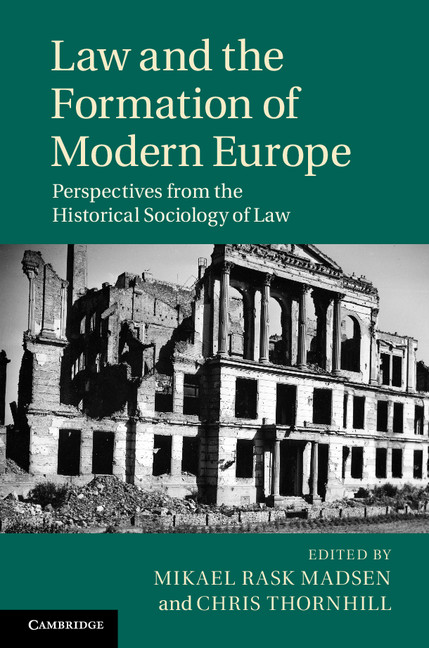

Law and the Formation of Modern Europe explores processes of legal construction in both the national and supranational domains, and it provides an overview of the modern European legal order. In its supranational focus, it examines the sociological pressures which have given rise to European public law, the national origins of key transnational legal institutions and the elite motivations driving the formation of European law. In its national focus, it addresses legal questions and problems which have assumed importance in parallel fashion in different national societies, and which have shaped European law more indirectly. Examples of this are the post-1914 transformation of classical private law, the rise of corporatism, the legal response to the post-1945 legacy of authoritarianism, the emergence of human rights law and the growth of judicial review. This two-level sociological approach to European law results in unique insights into the dynamics of national and supranational legal formation.
Loading metrics...
* Views captured on Cambridge Core between #date#. This data will be updated every 24 hours.
Usage data cannot currently be displayed.
This section outlines the accessibility features of this content - including support for screen readers, full keyboard navigation and high-contrast display options. This may not be relevant for you.
Accessibility compliance for the HTML of this book is currently unknown and may be updated in the future.
