

1.1 Introduction
The penetration of English in Pakistan is too obvious to need proof. In a recent paper, Rahman (Reference Rahman2006) discussed the role of English in the domains of education, media, entertainment and literature with a view to illustrating how deeply and in what ways English has penetrated these domains. This chapter updates that study with data from 2006 to 2013. It adds material on the phonetic, phonological and lexical features of the non-native variety of English called Pakistani English (PakE). It touches upon code-switching, that is, the use of words, phrases and sentences of indigenous languages (mostly Urdu) while speaking English.
1.2 Review of literature
In all publications about English in the world, even about South Asia, Pakistan is either lumped together with India or provided with passing reference without specifying in which ways the story of English in Pakistan is different from that of other South Asian countries. It is true, however, that there is an overlap in the stories of India and Pakistan, so the various studies of English in India (Kachru Reference Kachru1982, Reference Kachru1983; Hosali Reference Hosali2005) also apply to Pakistan but there are differences which can be brought out if the focus of research is shifted to Pakistan. This is done in Baumgardner’s ‘Pakistani English’ (Reference Baumgardner1987). That study was followed by Rahman’s (Reference Rahman1991) monograph and Baumgardner’s (Reference Baumgardner1993) collection of chapters. The book contains Baumgardner’s earlier articles and new articles by Pakistani authors like Saleemi, Talaat and Shamim. After that, Baumgardner conducted a survey on the acceptability of PakE among teachers and journalists (Reference Baumgardner1995). Since 2002, Ahmar Mahboob has contributed studies on PakE (Mahboob Reference Mahboob, Obeng and Hartford2002, Reference Mahboob2004, Reference Mahboob2009; Mahboob and Ahmar Reference Mahboob and Nadra2004).
The specific debates on whether English should be the medium of instruction, and at what levels, were discussed in Rahman (Reference Rahman1997) and Mustafa (Reference Mustafa2011). Mansoor did two surveys of students’ attitudes towards English (Reference Mansoor1993, Reference Mansoor2005: 560–75). Mahboob (Reference Mahboob, Obeng and Hartford2002: 30) and Mansoor (Reference Mansoor2005: 408) looked at the demand for English in education. A major focus was English Language Teaching, which has been encouraged by the British Council and the American Centers since the 1980s. The Society of Pakistani English Language Teachers (SPELT) pioneered the teaching of English through modern techniques in the 1980s and continues to keep up the momentum by holding conferences once a year in Karachi, Lahore and Islamabad. They have now started publishing a journal. Conference proceedings, such as the ones held by the Aga Khan University’s English Language Unit, have been edited by Mansoor, Meraj, Tahir (Reference Mansoor, Meraj and Tahir2004) and Mansoor, Hussain and Sikandar (Reference Mansoor, Hussain and Aliya2009). In short, since 1987, there has been more activity in research on and the teaching of English than there was in the first forty years of Pakistan’s existence.
1.3 English in the domains of power
The constitution of the Islamic Republic of Pakistan (1973; Article 251) stipulates that the national language of Pakistan will be Urdu but English will be the official language for the next fifteen years (up to 1988). This date came and passed, and English continued to be the working language in the most powerful institutions of the state: the higher bureaucracy, the higher judiciary, the officer corps of the armed forces, the highest levels of government, etc. English is also ubiquitous in the elite institutions of the corporate sector. Besides the education sector where it is most visible, it is the language of elite think-tanks, NGOs, banks, media and the entertainment sectors. Let us take schools.
There was a significant increase in the proportion of English-medium schools in Pakistan from 2006 to 2012.
Table 1.1. Schools with medium of instruction 2006 (Census, Private Reference Census2006: 37, see Table 23)
| No. of schools (2006) | Medium of instruction | ||||
|---|---|---|---|---|---|
| Urdu | Sindhi | English | Other | ||
| Total | 227, 791 | 64.6% | 15.5% | 10.4% | 9.5% |
| Public | 151,744 | 68.3% | 22.4% | 1.4% | 7.9% |
| Private | 76,047 | 57.2% | 1.8% | 28.4% | 12.7% |
| PS: Figures add up to 100.1 in the original. | |||||
Table 1.2 provides a basis of comparison.
Table 1.2. Schools with medium of instruction 2012 (ASER 2013: 17)
| Region (schools only) | Medium of instruction | |
|---|---|---|
| Government schools | Private schools | |
| Baluchistan | Urdu (100%) | Urdu (49%) English (51%) |
| Azad Jammu and Kashmir | Urdu (97%) English (3%) |
Urdu (32%) English (68%) |
| FATA | Urdu (80%) English (2%) Pashto (17%) |
Urdu (12%) English (86%) Pashto (2%) |
| Gilgit, Baltistan | Urdu (68%) English (32%) |
Urdu (16%) English (84%) |
| Islamabad Capital Territory | Urdu (97%) English (3%) |
Urdu (32%) English (68%) |
| Khyber Pakhtunkhwa | Urdu (66%) English (3%) Pashto (30%) |
Urdu (23%) English (70%) Pashto (7%) |
| Punjab | Urdu (50%) English (50%) |
Urdu (35%) English (65%) |
| Sindh | Urdu (2%) English (1%) Sindhi (97%) |
Urdu (59%) English (35%) Sindhi (6%) |
Note: Figures do not add up to 100 per cent in the original, because some schools are classified as ‘mixed’, that is, they are not teaching in any one language alone.
It is clear from these figures that English-medium schools have increased as a percentage of all schools and that the private sector is the largest provider of such institutions. Indeed, figures for urban schools in the private sector in the Punjab are reported to be as high as 91 per cent of the total number of private schools (ASER 2013: 138). However, the quality of these schools and whether they actually teach in English cannot be ascertained. In the case of government schools in the Punjab, which go by the name of English-medium, we can be sure that they do not actually teach in English and the phenomenal increase in their proportion is illusory.
1.4 The demand for English-medium schooling
A number of surveys have been carried out to determine the demand for English among students, their parents and teachers in the country. Mansoor’s (Reference Mansoor2005: 408) and Mahboob’s (Reference Mahboob, Obeng and Hartford2002: 30) surveys indicate that English is the preferred medium of instruction both of students and their parents, especially at the higher level. The present author’s survey (Rahman Reference Rahman2002: 595) seems to suggest that English as a medium of instruction is mostly desired only by those who are already being educated in it, while others regard it as something of a burden which prevents their social and academic advancement. However, conversations with students and parents have shown how keen parents are to invest in giving their children an English-medium education so that they can advance in the world.
A more reliable indicator of the increased demand for English-medium education is the increase in the percentage of those who appear in the British Ordinary (O) and Advanced (A) level examinations as opposed to those who opt for the Pakistani matriculation and intermediate examinations. This increase since 2002 is shown in Table 1.3.
Table 1.3. Increase in those taking British examinations
| Year | Matric+ Intermediate | O + A levels | Total |
|---|---|---|---|
| 2002 | 1,529,014 | 16,222 | 1,545,236 |
| 98.95% | 1.05% | ||
| 2013 | 2,103,000 | 65,000 | 2,168,000 |
| 97% | 3% |
1.5 English for empowerment
Because of a perceived link between the acquisition of English-language skills and social and economic status and power, Pakistani parents and teachers assume that English should be the medium of instruction from the very beginning, which is the current practice in English-medium schools. However, several international studies have suggested that all children should be educated initially through the mother tongue (e.g., Atkinson Reference Atkinson1987; Xhemaili Reference Xhemaili2013). Such a policy has also been recommended by some Pakistani scholars. They argue that, although Pakistan has seventy-two languages (Lewis et al. Reference Lewis, Simons and Fennig2015), it is only in the large cities that many linguistic communities live close together and they cannot be taught in their mother tongues. However, it is possible to do so in concentrations of rural communities, which are mainly monolingual. After basic schooling (three to five years), children may be taught through the Language of Wider Communication (LWC), which may be Urdu except in Sindh, where Sindhi is being used in rural schools. At university level, however, English should be used as the medium of instruction. To facilitate the transition from secondary schools to universities, English should also be taught as a subject at all levels (Rahman Reference Rahman1996: 256, Reference Rahman2002: 535; Coleman Reference Coleman2010). The policy of teaching English as a foreign language and as a subject has never been implemented because the most powerful sections of Pakistani society have invested heavily in English-medium schools. This being the case, the Punjab government thought it could satisfy popular demand by merely converting its Urdu-medium schools into English-medium ones (Govt. of the Punjab, Schools Education Department, Lahore, personal communication, March 29, 2009). In 2011, almost three years after the order of the government was issued in 2009, a survey by the British Council indicated that:
Sixty-two per cent of private school teachers and 56 per cent of government school teachers registered scores in the lowest band of the Aptis test which tests for competence in English.2
In English-medium schools, 44 per cent of teachers were in the lowest band.
Only 7 per cent of teachers aged 51 and over scored in the pre-intermediate and intermediate categories. However, those aged 21–35 scored better, that is, 24 per cent were at this level (PEELI [Punjab Education and English Language Initiative 2013]).
Despite the nomenclature of English-medium schools, the teachers mostly teach in Urdu or Punjabi (PEELI 2013: 22–3). The SAHE (Society for Advancement of Higher Education) report comes to the conclusion that ‘if the decision is to teach English from the very beginning, then it needs to be taught at the primary level as a subject from Grade-1, or later depending on the availability of competent teachers and not as “MO1”’ (SAHE 2013: 40).
1.6 English in the media
Though the English-using elite is small in number, the circulation of English dailies and periodicals is highly influential since they are read by the decision-makers and other influential elite pressure groups.
Table 1.4. Language choice in print media (Monitor 2010)
| Most read dailies | ||
|---|---|---|
| Name of newspaper | Language | Daily circulation |
| Jang | Urdu | 850,000 |
| Nawa-e-Waqt | Urdu | 500,000 |
| The News | English | 120,000 |
| Dawn | English | 109,000 |
A recent trend in printing is the decrease in the number of dailies and periodicals but an increase in their circulation. This has affected both Urdu and English printed material in circulation as Table 1.5 indicates.
Table 1.5. Language in print media (Asif Reference Asif2013)
| English dailies and periodicals | ||||
|---|---|---|---|---|
| Year | Total dailies/periodicals |
English dailies/periodicals | ||
| Number | Circulation | Number | Circulation | |
| 1997 | 4,455 | 3,912,301 | 368 | 485,073 (dailies) |
| 2006 | 1,464 | 8,208,874 | 133 | 905,755 (dailies) |
Besides print media, there are English-language radio stations. Radio Pakistan, a state-sponsored institution, launched its first 24/7 English radio channel (Planet FM 94) on November 14, 2009 in Islamabad (Planet 2009) and in Lahore on August 25, 2012 (Agha Reference Agha2012). Since 2002, more than one hundred radio stations are broadcasting in Pakistan and many have bilingual programmes in which people code-switch between English and Urdu to express informality. Moreover, a number of English-language programmes are aired on Urdu channels. In short, English is seen as the passport to a middle class lifestyle, recognition and prestige in Pakistani society and is, therefore, in demand.
1.7 The English-speaking elite
According to Wikipedia, 49 per cent of the population of Pakistan speaks English (English 2014), but this is manifestly wrong since literacy, and that too in Urdu, is only 60 per cent (ESP 2014). In India, 5 per cent of people were fluent in English in 2005 (English 2014), and this is one indicator of the number of speakers fluent in English in Pakistan. By fluent speakers, I mean those who speak English habitually even in private and send their children to elite English-medium schools which prepare them for the British O and A level examinations. This elite is small: between 2 and 3 per cent of the population according to the census reports of 1951 (Tables 7 and 8a) and 1961 (Tables 5.1 and 5.5); 2–4 per cent according to Rahman (Reference Rahman2006: 221); 4 per cent according to Mahboob and Ahmar (Reference Mahboob and Nadra2004: 1005) and 11 per cent according to Crystal (Reference Crystal1997: 57–9). Crystal does not reveal how he came up with this number. According to my estimate, fluent English speakers form about 3.2 per cent of the population, that is, about 6 million people in 2013.3
| Country | No. of test-takers (GRE only) | Score (GRE) | IELTS 2011 general training |
|---|---|---|---|
| World | 466,674 | 151.0 | N.A. |
| USA | 318,240 | 152.9 | 8.0 |
| India | 33,504 | 144.7 | 6.1 |
| China | 29,255 | 145.9 | 6.0 |
| Pakistan | 2,212 | 147.0 | 6.1 |
| Arabic speakers | NA | NA | 5.2 |
| Persian speakers | NA | NA | 5.9 |
| Turkish speakers | NA | NA | 5.7 |
But whatever its size, this elite is articulate and ‘fashionable’. It used to be connected to the elite civil services and the officer corps of the armed forces up until the 1960s but is now connected with the corporate sector, NGOs, think-tanks and upper class urban social groups. These people read material in English, listen to English songs or rap (with code-switching between Urdu and English) and aspire to study abroad.
This elite tended towards British English and habits but is now said to be picking up certain sartorial, culinary and linguistic fashions from America.
1.8 Affordability of English-medium education
Table 1.7 suggests that even for middle class households, the tuition fees of elite English-medium schools are a disproportionately large proportion of their income.
Table 1.7. Monthly expenditure on elite English-medium schooling in Lahore
| Name of school | Level/type of school certificate | Monthly fees | Proportion of fees to income |
|---|---|---|---|
| The New School | International Baccalaureate (IB) | 35,000 | 28.81% |
| Learning Alliance | 1B | 37,000 | 30.45% |
| Aitchison College | A level | 33,150 | 27.28% |
| Grammar School | A level | 24,000 | 19.75% |
| LACHS | A level | 22,575 | 18.58% |
The mean proportion of expenditure is 24.97 per cent of the estimated average middle class monthly income, which is unaffordable for many people.4 Nevertheless, parents spend this money, foregoing other things on the assumption that private English-medium schools teach English more efficiently than government vernacular-medium ones.
English also enters the lives of working class people as they negotiate urban life styles at even lower levels. Words connected with driving (car, jeep, bus, accelerator, clutch, brakes, etc.), flying (airport, boarding pass, ticket, air hostess, pilot, take-off, land, etc.), offices (file, meeting, time, secretary, clerk, assistant, officer, etc.); commerce (shopping, bank, money-changer, etc.) and education (school, college, university, teacher, professor, principal, registrar, vice chancellor, dean, department, etc.) are part of the lexicon of barely literate people working in the cities. The indigenous equivalents, often borrowed from Arabic and Persian, are too abstruse to be used so English words are in popular use. The computer has forced young people with very little understanding of English to handle e-mail, visit websites and follow instructions.
The use of English keeps increasing with the rise in one’s social class, the nature of one’s job and level of education. In addition, one’s control over the language keeps increasing, as the section on varieties of PakE below suggests. Moreover, one needs to note that the present author observed in his previous work that it was considered an insult to say that someone was speaking this variety and nobody confessed to doing it. However, in 2002 Mahboob, in a survey of 226 faculty members teaching English and students of Karachi University, found that 66.8 per cent of informants called their English PakE, 21.7 per cent called it British English and 6.6 per cent thought it was American English (Mahboob Reference Mahboob2009: 181).
1.9 Pakistani English
The phonetic and phonological features of Indian English (IndE) have been described by many scholars besides Kachru, such as Masica (Reference Masica1966) and Verma (Reference Verma1957). The features of PakE were first described by Rahman (Reference Rahman1991: 18–40). However, Mahboob and Ahmar (Reference Mahboob and Nadra2004: 1010) have argued that some features of this variety are in a state of flux and others differ from person to person or from situation to situation. One such feature, for instance, is rhoticity, which is not as fixed as the table below suggests.
At this point, it should be mentioned that PakE has four subvarieties. There are, for instance, varieties which differ only in a few phonological–phonetic features from Received Pronunciation (RP), but are otherwise identical to British Standard English (BSE). This variety is used by people who have been exposed, generally for long periods, to BSE spoken in the RP accent. These are the fluent English speakers mentioned above. This variety can be called Anglicized English and, in order to distinguish it from other varieties, we may call it Variety A. The acrolect (Variety B), differs from BSE in the dimensions of morphology and syntax as well as lexis and semantics in addition to that of phonology. It is used by Pakistanis who have been educated in English-medium elite schools or have had much exposure to BSE and RP later. Many good journalists, administrators, professionals and other upper middle class people write the acrolect or, at least, speak this variety of English. Most other people, however, write and speak the mesolect (Variety C), which differs more from BSE than the previous two varieties. Such people are in middle and upper middle class occupations but they have generally been educated in Urdu-medium schools and have not been much influenced by native varieties of English. The basilect (Variety D) is used by clerks, minor officials and typists, who have not had much education. This kind of English is full of clichés and is the least intelligible variety for foreigners. It is probably this variety which corresponds to Indian Pidgin English (Mehrotra Reference Mehrotra1982: 155).
With this explanation, it is possible to summarize the features of PakE in Table 1.8.
Table 1.8. Phonetic and phonological features of PakE
Primary stress is marked with bold letters.
| Feature | Variety A | Variety B | Variety C | Variety D | |
|---|---|---|---|---|---|
| 1 | Replacement of /θ/ and /ð/ by /t/ & /d/ | Yes | Yes | Yes | Yes |
| 2 | Aspiration of word-initial /pʰ/, /tʰ/ and /kʰ/ | Not aspirated | Not aspirated | Not aspirated | Not aspirated |
| 3 | Replacement of /t/ & /d/ by retroflex /ʈ/ & /ɖ/ | Replaced | Replaced | Replaced | Replaced |
| 4 | Diphthongs of RP replaced by monopthongs | /oʊ/ & /ei/ replaced by /o/ & /e/ | as in A | as in A | as in A |
| 5 | No intrusive /r/ between two vowels | The idea is /ðəaidiər iz/ | as in A | as in A | as in A |
| 6 | /l/ is not velarized in positions where it is in RP | Clear /l/ becomes dark /ǝ/ at the end of words | Not velarized | Not velarized | Not velarized |
| 7 | Vowels /ɒ/ & /ɔ/ are replaced by /a/ | /ɒ/ & /ɔ/ are used | Not used | Not used | Not used |
| 8 | /v/ & /w/ are not distinguished | They are distinguished | Not distinguished | Not distinguished | Not distinguished |
| 9 | Rhoticity | Non-rhotic | Rhotic | Rhotic | Rhotic |
| 10 | Stress patterns different from RP. (i.e. stress-timed) | Same as RP | Different (syllable-timed) | Different (syllable-timed) | Different (syllable-timed) |
| 11 | Verbs and nouns have the same stress | They are stressed as in RP Ob ject (n) Ob ject (v) |
Mostly same stress as in left column | Both syllables carry equal stress | Same stress as in Variety C |
| 12 | Epenthetic vowels are inserted so as to preserve word-final consonantal clusters. | Not inserted | Not inserted | Urdu speakers insert /ɩ/ according to these phonological rules: ɸ – /ɩ/ / # – [+ cont] [-cont] Punjabi speakers insert /ǝ/ according to this formula: ɸ – /ǝ/ / # [+ cont] – [cont] |
Rules given in the column to the left are use in this variety and most speakers also use the following rule: ɸ – /ǝ/ / [+ cons] – [-cons] # |
Other features, dependent upon the first language, are the substitution of /p/ for /f/ and of a vowel for /h/ by Pashto speakers. The non-segmental features, too, provide a distinctive intonation to varieties of PakE.
The morphology and syntax of the varieties of PakE are not different from IndE (see Dustoor Reference Dustoor1954; Verma Reference Verma1957; Kachru Reference Kachru1965, Reference Kachru1982, Reference Kachru1983; Hosali Reference Hosali2005). The lexical features, too, are shared with IndE because of a shared history (Yule and Burnell Reference Yule and Burnell1866). The differences from IndE are in borrowing from Islam, indigenous cultures and Pakistan’s different experiences from India since 1947 (Rahman Reference Rahman1991: 66–8; Mahboob Reference Mahboob2009: 182–4). To take the Islamic component first, Mahboob (Reference Mahboob2009: 188) says that ‘the English language in Pakistan represents Islamic values and embodies South Asian Islamic sensitivities’. Turning to the word ‘drone’, recent uses as a verb such as ‘to drone’, ‘droning’ and ‘droned’ have entered the lexicon only a few years ago. They refer to the United States’ use of drones to fire missiles on perceived terrorist targets in parts of Pakistan. Thus, the verb now means ‘to destroy’, ‘to kill’, ‘to annihilate’, and is used for anything from human beings to plans and ideas. Although the word reflects a common word pattern and could be used in other varieties of English, it is being used in Pakistan because of an ongoing debate about the use of drones in parts of the country.
Table 1.9. Words used in PakE
| Word | Meaning |
|---|---|
| Booty | Material prepared for cheating in an examination. It probably comes from the Urdu word booty, which means herb. Some people, however, maintain that it comes from the English word meaning ‘loot’, ‘captured wealth’. Also used in IndE. |
| Bun-Kabab | A young person educated in Urdu-medium schools belonging to the lower-middle and middle classes. Opposite of ‘burger’. |
| Burger | A young person educated in English-medium schools |
| Children | Besides the ordinary meaning of the word it is also used for ‘students’ of all ages, even those in a university. In the latter sense it is a direct translation of the Urdu and Punjabi words ‘bachche’. |
| Copy | Notebook. Also used in IndE |
| Curd | Yoghurt. Also used in IndE |
| Dish | Voluptuous, sexy girl. Used only in conversation among boys. |
| Drone | Verb from drone, meaning ‘to destroy’ |
| First and family name | There is no strict distinction between first and family names; hence, titles and formal forms of address are used with first names. Farzana Khan is more likely to be referred to as Miss Farzana than Miss Khan and so on. Also used in IndE. |
| Gulluism | Disruptive conduct presumably supported by people in authority. Gained prevalence in Pakistan’s English-language press from June 2014, when a policeman called Gullu Butt, in plain clothes, vandalized vehicles allegedly to intimidate the political opponents of the Chief Minister of Punjab, Shahbaz Sharif. |
| Lift | To encourage, or give attention to someone (especially in a romantic way); e.g, ‘the girls give lift to boys in good cars’. However, lift also means elevator and to allow someone to ride one’s car as a favour. |
| Mummy-Daddy type | Same as ‘burger’ above. |
| Mutton | Used for goat-meat and not sheep-meat, as in English-speaking countries. Also used in IndE. |
| Pass out | Graduate. Also used in IndE. |
| Ragging | Hazing; teasing; bullying. Also used in IndE. |
| Shopper | Plastic bags for carrying goods. |
| Tension | Worry. To ‘take tension’ means to ‘worry’ (Mohsin Reference Mohsin2009: 22). |
| Tight | Beautiful or sexy girl. Pronounced /taet/. Used only in conversation between boys. |
| Yo | More positive than ‘burger’. Fashionable in a Westernized way. |
Another feature of PakE is the use of English words in Urdu and vice versa. This ranges from borrowing only a few words to switching between English and Pakistani languages, especially Urdu, in informal conversation. Code-switching has been defined in various ways (Nilep Reference Nilep2006).With our interest in real-life situations, sociocultural approaches are most useful such as the markedness model (Myers-Scotton Reference Myers-Scotton1983, Reference Myers-Scotton1995, Reference Myers-Scotton and Myers-Scotton1998); the relationship of code-switching with identity (Heller Reference Heller1988: 1–24) and the study of interaction (Auer Reference Auer1984). Most relevant here are studies that look at code-switching between English and Hindi in India. Indeed, the classical studies on the phenomenon were carried out by John J. Gumperz (Reference Gumperz1958, Reference Gumperz and Dil1971, Reference Gumperz, Auer and di Luzo1992). Later research tried to identify constraints on Hindi–English ‘code mixing’ (Singh Reference Singh1995: 32–40). These are also applicable to Urdu–English code-switching, though the only Pakistani study by Talaat (Reference Talaat2002) does not mention any.
I will situate code-switching in the context of history, the expression of class identity and social power in Pakistan. English entered India when the first few Englishmen arrived as envoys, merchants and travellers in the Mughal courts of the sixteenth century. One feature of British linguistic usage in India was code-switching, the use of Hindustani words in English conversation and vice versa (Foster Reference Foster1906: 247). This is a feature of South Asians’ spoken English even now, but the British used the typically imperative forms even on such occasions. An example is as follows:
Decko, you want this admi abhi, but you ain’t goin’ to get ‘im. Tumhara nahin. He’s mine, mehra admi, sumja? If you want to lurro, come on (Steel, Voices in the Night, 1900 in Lewis Reference Lewis1991: 12).5
While this is a caricature, former British officers who have spent their lives in India use many Hindustani words they had become accustomed to. In India it was an expression of their power – an insouciant way of saying that they did not care for native linguistic norms and mixed languages if they so desired. In England, however, it was an identity symbol – a way of proclaiming that they had dared to serve the empire and were, therefore, superior to the stay-at-homes they were talking to (Rahman Reference Rahman2011: 199–225).
The mixing of languages has a tradition that goes back to the medieval period in India, when Persian was the language of power. Verses of this kind attributed to Ameer Khusrau (1253–1325), a major poet and intellectual, are considered high literature. An example is:
Zahal-e-Miskeen makan taghaful /Durae nainan banae batian.
Ke tab-e-hijran nadaram ae jan /na leho kahe lagae chattiyan.
(Do not be indifferent to my sorry state/she rolls her eyes, makes excuses. That I cannot bear separation from you/Oh! Why won’t you clasp me to your breast.)
The first line in bold is in Persian, the second one is in a variety of the common ancestor of Hindi–Urdu. Here is a couplet by Moazullah Khan Mohmand, a Pashto-speaking poet living in India (Fl. 1674–1715), in three languages, Persian, Hindi–Urdu and Pashto. The Persian words are in bold, the Hindi ones are underlined and the Pashto is in italics.
sajan za lutf o karam ke amshabla ma ghariban che khwa pe khwa de/ qasam bamushaf jo gham khushi soon la dera meene na heer zama de) (Bukhari Reference Bukhari1958).
(My beloved, out of graciousness and favour, has bestowed her favours upon me/ I swear on her radiant countenance! That in ecstasy I have forgotten sorrow.)
In short, code-switching is not ephemeral and confined to spontaneous, informal conversation. It is used for literary effect and occupies a prestigious niche in Urdu literature. Code-switching has also been used by creative writers for characterization, for comic effect and other literary purposes. Its use by the Pakistani novelists Bapsi Sidhwa, Zulfikar Ghose and others has been noted by the present author (Rahman Reference Rahman1990) and it is a perennial theme of comic shows and dramas on TV). Even more than TV the music industry has made code-switching a fashion in Pakistani music. Code-switching between Urdu and English is considered ‘cool’ in modern songs.
And yet one hears the drawing room and classroom complaint that our children do not know any language and the proof which is offered is that they code-switch between the two languages. Parents and teachers, who generally offer this criticism of the younger generation, generally do not know the historical role of code-switching described above. Examples of this phenomenon are legion with the film ‘Jab we met’ being a trendsetter. In the title of this film, only ‘jab’ (when) is Urdu–Hindi while the rest is English.
Examples of code-switching in informal conversation are excessively numerous to be enumerated. This kind of borrowing and code-switching is also a feature of IndE as mentioned earlier. Talaat (Reference Talaat2002: 133–5) has several other examples. Her hypothesis is that phrases, idioms and words from the indigenous linguistic and cultural traditions are the most creative source of code-switching.
In my view, Myers-Scotton’s markedness model mentioned earlier, along with the relationship of code-switching with identity and interaction, provide insights into why Pakistani speakers, competent in both Urdu and English, code-switch between them. According to Myers-Scotton, each language in a multilingual society like Pakistan is associated with certain social roles – called ‘rights and obligations’ (RO) by her – and is indexed to a certain identity, a certain social role, in a given context. So a conversation is a process of continual negotiation in which one starts with an unmarked code (say English) but then explores one’s linguistic repertoire by using Urdu or uses that language so as to signal informality and ease (Myers-Scotton Reference Myers-Scotton1995: 113–42). Even more relevant are the insights of code-switching as a ‘political strategy’ (Nilep Reference Nilep2006: 12). Also relevant is the work of Monica Heller who argues that groups use one code to maintain symbolic dominance, while the dominated ones use codes to resist that dominance. In his research on code-switching in India, Gumperz (Reference Gumperz and Dil1971: 183) pointed out that ‘a switch from Hindi to Urdu to English may have similar status-marking functions’. In Pakistan, English being indexed to a sophisticated, urban, Westernized identity, signals the speaker’s position as a member of the urban elite. The switch to Urdu, then, signals the desire to be relaxed, to unbend, to be at ease and often to be condescending to those who may not be fluent in English. Those less proficient in the language use it to signal entry into the elite but have to slip back into Urdu, because they are merely ‘crossing’ (Rampton Reference Rampton1995) into a desired identity role. However, a few may even ‘pass’ for fluent English speakers in short, formulaic interactions. Briefly, the social functions of code-switching are related to the linkage of English with power, class, sophistication and elite status in Pakistan.
1.10 Conclusion
English is not only a colonial legacy any longer in Pakistan. It has been appropriated by the elite – the governing elite, the professionals, the educational and research elite, the cultural elite – in order to empower itself and to modernize the country. Empowerment is a consequence of treating English as symbolic capital, which is concentrated in a certain section of the urban, educated elite and functions as the identity marker of that elite. The second objective, both of the British and the Pakistani post-independence elite, is that of modernizing the state, which makes English a professional necessity. But the two objectives are mismatched. The first requires a concentration of the capital of English in a small elite; the second its dispersal in as large a population as possible. The first needs English to continue to function as an impediment to those outside the elite circles where it is entrenched. The second would have these privileged circles abolished while making English a tool of modernization, a means of transcending one’s socioeconomic class for far more people and achieved far more easily than it is now. Being a world language, English is very much in demand for its modernizing role and, therefore, being cognizant of its empowering potential, ordinary people invest in it disproportionately to their income. This makes English both a class-oppressor and a class-changer in Pakistan.
This account of English in Pakistan has taken note of the kind of English written and spoken in the country. It is a non-native variety – Pakistani English – which comes in several subvarieties indexed to the level of exposure to English and class. While speaking the language in informal contexts, there is a lot of mixing of words and sentences of the indigenous languages. This phenomenon of code-switching has been examined in a historical context to suggest that it is a universal and age-old phenomenon and the popular idea that it is an indicator of linguistic incompetence is incorrect. On the contrary, it may be an indicator of competence in English along with Pakistani languages, as well as a means for indicating switches between social identities in the context of power, class and status. It is also an indicator that English has been indigenized in important ways in Pakistan.
2.1 Introduction
This chapter looks into the role of English for the Japanese through an analysis of English language teaching in Japan, including its historical background. It is hoped that this discussion will provide useful knowledge for communicating with the Japanese, by illustrating their struggles to accommodate their conventional sociolinguistic attitudes to the current tide of globalization.
As a country in the Expanding Circle in East Asia, English used to be perceived in Japan as a tool for absorbing advanced Western technologies and cultures. In fact, as Otani (Reference Otani2007: 191) observes, Japan is “traditionally a country with an overwhelming emphasis on reception over production in the teaching of English” (translation mine). This attitudinal tendency is evident in the conventional Japanese approach to the learning of English, whereby the language is decoded solely for passive acquisition of knowledge rather than for two-way communication, as a method rooted in the Japanese tradition of over a thousand years of deciphering ancient Chinese in their aspiration to learn advanced Chinese culture (Hino Reference Hino1988a, Reference Hino, Kirkpatrick and Sussex2012c).
However, regardless of the highly limited use of English in Japan where the native language serves almost all domestic purposes, the Japanese currently find it imperative to express themselves to the outer world in English in various domains, including the economy, politics, technology, and academic studies. Efforts have been made to introduce more communicative methodologies into the teaching of English, but it seems that the Japanese still have a long way to go before they become capable of handling the need for global communication.
One of the major factors that prevents the Japanese from acquiring English as a means of international communication is a belief that native speakers are the sole legitimate source of language, often called “native-speakerism” (Holliday Reference Holliday2006), which is still persistent in this country (Houghton and Rivers Reference Houghton and Rivers2013). It is true that there has been significant progress in the enlargement of the cultural scope in English textbooks in public schools toward the inclusion of nonnative English-speaking values, but linguistic norms presented in those materials still remain Anglo-American. As long as native English is regarded as the only model when the diversification of English, including the feasibility of Japanization of English, is neglected, Japanese learners of English cannot be expected to become able to receive messages from users of World Englishes nor to adequately express themselves. In this chapter some prospects for teaching de-Anglo-Americanized English for global communication are discussed.
2.2 Traditional Japanese attitudes toward English: Absorption of Anglo-American cultures
In order to understand Japanese attitudes toward international communication in English, it is essential to investigate the Japanese values for the learning of foreign languages. This section first analyses what sociolinguistic values have been formulated through the learning of ancient Chinese, and then goes on to examine how they have been transferred to the study of English.
2.2.1 Reading Chinese as Japanese
While it is unclear exactly how the Japanese started to learn languages other than their own, an evident fact is that their traditional attitudes toward the learning of foreign languages were already formed during the first millennium, the legacy of which still remains today. The basic mode of learning the written language of their big neighbor China, which initially started arguably around the third or fourth century, was passive decoding for obtaining information from the highly advanced country that the Japanese turned to as their model. It should be noted that Chinese was historically the first written language known in Japan, as Japanese had no writing system before its contact with Chinese characters.
The method that they gradually developed for reading, learning, and teaching Chinese was a unique technique for word-by-word (also word-for-word) translation with the use of certain symbols for reordering each Chinese word into Japanese word order. Remarkably, this approach is still officially taught in “the national language” (kokugo) classes as a part of the mandatory high school curriculum in Japan. As the name of the subject suggests, classical Chinese is regarded here as a kind of Japanese rather than the Chinese language, an attitude inherent in the nature of their method for reading classical Chinese. An example taken from a current senior high school textbook is given below:
Chinese is written vertically in this textbook as in the original, but is quoted in a horizontal manner in the present chapter to avoid complexity. This is a sentence authored by an ancient Chinese philosopher Mencius (372–289 BC) on the Confucian concept that everyone is born with a good nature. In fact, classical Chinese in secondary education is an opportunity for Japanese students to learn traditional East Asian values.
一, 二, and レ in the above quote are special symbols, used by the Japanese for centuries, to direct the reordering of Chinese characters. レ indicates that the adjoining two characters are to be reversed. 一 and 二, the shapes of which come from the Chinese numerals for “one” and “two” respectively, guide the reader to first bypass the character before 二 and to go forward as far as 一 before going back to the character preceding 二. While this example only requires a relatively simple reordering process, additional symbols such as 三 (three), 上 (up), and 下 (down) are used with complicated rules in reading more complex sentences. Most Japanese high school students strive to learn those rules, as a necessary skill for university entrance examinations which often play decisive roles for their future.
As for the Japanese letters (originally devised by simplifying Chinese characters) put beside the Chinese sentence above, リ (ri), ル (ru), and ビ(bi) supply inflectional suffixes, while ニ (ni), which should not be confused with the reordering symbol 二, is a postpositional particle. Both of these grammatical elements are uncommon in Chinese but are essential in Japanese syntax.
On the whole, the reading of classical Chinese consists of three stages; translating each Chinese word into Japanese, adding inflectional suffixes and postpositional particles, and reordering them into Japanese word order. Below, the word-by-word translation for the Chinese sentence is shown, with the addition of the inflectional suffixes “ri,” “ru,” “bi,” and the postpositional particle “ni”. English equivalents are also provided.
人 皆 有 不 忍 人 之 心
hito mina a-ri za-ru shino-bi hito-ni no kokoro
(people) (all) (have) (not) (neglect) (others) (of) (mind)
If we simply use numbers instead of the symbols to direct the reordering, it will appear as follows:
人 皆 有 不 忍 人 之 心
hito mina a-ri za-ru shino-bi hito no kokoro
1 2 8 5 4 3 6 7
Thus, the final product reads as the following Japanese sentence, in the form of classical Japanese:
Hito mina hito-ni shino-bi za-ru no kokoro a-ri.
In the Japanese writing system, which integrates Chinese characters with Japanese letters, it appears as below:
人皆人ニ忍ビ不ル之心有リ
This sentence may be literally translated into English as “All people have minds with which they cannot neglect others,” which is usually interpreted as “Innately, no one can ignore others’ misfortunes.”
2.2.2 The kundoku inheritance in the teaching of English
The method of reading, learning, and teaching classical Chinese described in the previous section is known as kundoku (訓読), which was originally developed as a means of absorbing the advanced Chinese civilization. The word kundoku literally means “reading by translation,” with kun (訓) meaning “translating” and doku (読) “reading.” As is evident in its reading process, kundoku is a technique for passively decoding a foreign language, with little interest in producing the language for communication. While kundoku presents some resemblance to the Grammar-Translation Method developed in the West for learning and teaching classical languages such as Latin (Kelly Reference Kelly1969; Richards and Rodgers Reference Richards and Rodgers2001), it is unique in many ways, including its explicit and systematic process of word-by-word translation.
An important aspect of kundoku in terms of the theme of the present chapter is that this method was transferred to the learning of modern Western languages in recent centuries. In fact, while the symbols for reordering are not used any more in the teaching of English today, high school students studying classical Chinese in the National Language classes also learn English with essentially the same word-by-word translation technique known as yakudoku (Hino Reference Hino1988a) in their English classes, though often with an addition of more communicative approaches. The literal meaning of the word yakudoku (訳読) is “reading by translation,” which is synonymous with kundoku.
It has been established by Japanese researchers as a historical fact that yakudoku for reading English is a descendent of kundoku for reading classical Chinese (Kawasumi Reference Kawasumi1976, Reference Kawasumi1978; Hino Reference Hino1988a, Reference Hino, Dubin and Kuhlman1992; Kotajima Reference Kotajima, Kawamoto and Inoue1997). In this chapter, the terms kundoku and yakudoku are at times used interchangeably.
After a thousand years of kundoku practice in Japan, this method was applied to the reading, learning, and teaching of Dutch (Kawasumi Reference Kawasumi1978; Akagi Reference Akagi1980; Mozumi Reference Mozumi1989; Morioka Reference Morioka1999), the first Western language extensively studied in Japan, and then to English, when Dutch was replaced by English as a foreign language to be taught in Japan in the late nineteenth century. Below is an excerpt from an English conversation textbook authored by a Japanese pioneer of English language teaching, Nakahama Manjiro.
レ 二 一
He has kept his bed about a fortnight.
(Eibei Taiwa Shokei, 1859. Reprinted in Inui Reference Inui2010: 26)
Just as with classical Chinese, in accordance with those symbols, the English sentence was to be rearranged for word-by-word translation as below:
He has kept his bed about a fortnight.
1 8 7 2 3 4 5 6
This kundoku tradition has lingered on in Japan. A number of Western pedagogies, including the Oral Method by H. E. Palmer and the Audio-Lingual Method by C. C. Fries, have been brought to Japan, but none of them have had a major lasting impact on this long-held sociolinguistic convention (Hino Reference Hino, Dubin and Kuhlman1992, Reference Hino, Kirkpatrick and Sussex2012c). It is only recently, as discussed later, that any shift from the overwhelming dominance of yakudoku has become tangible.
For example, the present author and many of his Japanese contemporaries recall that they were taught English basically with the yakudoku method in junior and senior high school in the 1970s. Although the symbols for reordering were not explicitly used any more, the same process was mentally required. While in theory the most influential pedagogy in the 1970s in Japan was supposed to be the Audio-Lingual Method, the kundoku tradition was very much alive in practice in spite of its incompatibility with this American method that eliminated translation in principle (Fries Reference Fries1945). A few activities used in the Audio-Lingual Method such as pattern practice were added to classrooms, but the central pedagogy was none other than the persistent yakudoku approach.
In fact, kundoku is an integral element not only in foreign language literacy but also in first language literacy in Japan (Hino Reference Hino, Dubin and Kuhlman1992). As briefly mentioned earlier, the writing system of Japanese itself is based on kundoku. Let us go back to the example cited above:
人皆人ニ忍ビ不ル之心有リ
Though this example is archaic, this is basically the same as the way Japanese is written today, except that the Japanese katakana letters ニ, ビ, ル, リ would now be replaced by their more casual hiragana equivalents に, び, る, り. What is significant with the Japanese writing system, as a result of kundoku, is that Chinese characters are utilized to transcribe not only Chinese borrowings but also indigenous Japanese words. In the present example, the Chinese characters人 (people), 皆 (all), 忍 (neglect), 心 (mind), 有 (have) are employed to transcribe the original Japanese words hito, mina, sino-bu, kokoro, a-ri, respectively.
2.2.3 Reception of native English-speaking cultures
The kundoku tradition embodies certain values held by the Japanese. Particularly salient from the perspective of the present chapter is the focus on absorption of cultures that the Japanese regard as advanced, such as those of China, the Netherlands, Britain, and America. Kundoku is, in a way, an effective approach when the purpose of learning the foreign language is simply to figure out what is written.
The passive Japanese attitudes toward English were long exhibited as native-speakerism in the cultural aspects of English textbooks. With the general lack of interest in expressing their own values in English, though with some exceptions such as Saito’s Japanese–English Dictionary (Reference Kunihiro1928), school textbooks during World War II, and proposals on de-Anglo-Americanization of English by a few thinkers including Kunihiro (Reference Kunihiro1970), the Japanese often have had a strong tendency to associate native English speaking cultures with the language itself. For example, below is a typical content in one of the most popular junior high school textbooks in use from the 1960s to 1970s.
Pearl: Hello, Aunt Mary. How cold it is! I was surprised at the cold wind when I got off the airplane.
Mary: New York is very cold in winter. Aren’t you hungry, Pearl?
Pearl: No, I’m not very hungry. But I’m a little cold.
Mary: A dish of steaming stew and some hot coffee will make us warm. Let’s go to the restaurant.
Pearl, an American junior high school student, is a leading character of this textbook along with her friend Roy. With this scene, life in New York is introduced, which was venerated by the Japanese in those days. In fact, to the present author and his junior high school classmates at that time, “a dish of steaming stew and some hot coffee” appeared as a symbol of advanced American culture far remote from their daily lives in Japan. Those students surely dreamt of having a dish of steaming stew and some hot coffee.
The learning of Anglo-American cultures along with the learning of English, as in the example above, is in line with the mainstream trends in the history of English language teaching in Japan. The following excerpts from the table of contents from major school textbooks from three different periods in history exemplify the strong orientation toward “the Inner Circle” cultures:
New Crown Readers V (1916)
“Franklin’s First Entry into Philadelphia” by Benjamin Franklin, “David Copperfield and the Waiter” by Charles Dickens, “An English Sunday” by Arthur Cliff, “Rural Life in England” by Washington Irving.
Let’s Learn English 3 (1947)
“All Fools Day,” “Pippa Passes” by R. Browning, “May in England,” “London Season,” “Independence Day,” “Bed in Summer” by R. L. Stevenson, “Thanksgiving Day,” “Christmas,” “Queen Victoria,” “Home Sweet Home” by J. H. Paine, “Lincoln’s Birthday”, “British Parliament.”
New Approach to English 1–3 (1960):
“A Map of North America,” “A Farmhouse in Colorado,” “The First Thanksgiving Day,” “The United States,” “Abraham Lincoln,” “American Games,” “American Sayings,” “Mrs. Roosevelt and the United Nations,” “The Arrow and the Song” by H. W. Longfellow.
History tells us that the content of materials for teaching English is by no means free from the political environment (Hino Reference Hino1988b). As for these three examples, the first one was a textbook in the infancy of English language teaching in Japan when there was not much choice in materials but to depend on classics from Britain and America. Those were the days when the Japanese perceived urgent needs to learn from the West in order to achieve rapid modernization, after opening the country in the 1860s following over two hundred years of international isolation.
The second example, immediately after World War II, shows how Anglo-American cultures were conveyed to the Japanese youth through the teaching of English under the US-led occupation forces that governed Japan until 1952. During this period, a large part of indigenous Japanese values was denied in school education as a cause of Japanese militarism while democratic values of the West were promoted.
The third textbook reflects the deepening of the relationship between Japan and the United States, including their military alliance established in 1960 with the agreement known as “the Treaty of Mutual Cooperation and Security between the United States and Japan.” When the Cold War enhanced American influence in many facets of Japanese life, the cultural content of English textbooks was not an exception.
2.3 Coping with the need for global communication today
As we have seen in the previous section, the conventional mode of English language teaching in Japan, with the long-standing yakudoku practice, has focused on the passive learning of Western cultures, particularly Anglo-American, native speaker, Inner Circle values. Therefore, the next phase we should look into is what changes have been brought about, if any, in response to the recent need for using English for international communication.
2.3.1 Recent reform attempts in the teaching of English in Japan
There have lately been various moves toward the reform of the teaching of English in Japan. One of the major reform attempts at the national level is a new weekly class entitled “Foreign Language Activities (FLA)” as an opportunity to familiarize the children with foreign languages, mainly English, which was officially introduced by the Ministry of Education to the fifth and the sixth grade of public elementary schools in 2011. This has further led to the recent decision by the Ministry to start those English activities in the third and the fourth grade once or twice a week by 2020, as well as to remodel the semi-informal FLA classes into a regular subject entitled “English,” taught three times a week to the fifth and the sixth grade. In this new subject, the language is expected to be taught in a more substantial manner than in its predecessor, which has been often criticized for entailing little more than songs and games. It is clear that the Japanese government is trying to catch up with its East Asian neighbors China, Korea, and Taiwan, where the teaching of English in elementary schools began to be practiced much earlier as governmental policies.
Guided by a governmental initiative known as “Global 30” for globalization of higher education in Japan, a number of universities have also been pursuing curriculum reforms allowing for various content courses to be taught in English, not only as a service for international students but as an opportunity for Japanese students to practice academic English skills. In fact, English-medium instruction (EMI) (Doiz, Lasagabaster, and Sierra Reference Doiz, Lasagabaster, Sierra, Doiz, Lasagabaster and Sierra2013) is now rapidly coming to be recognized as a major task for universities in Japan. For instance, Sophia University, one of the representative private institutions of higher learning in this country, has recently been attracting a lot of attention by promoting EMI as Content and Language Integrated Learning (CLIL) (Watanabe, Ikeda, and Izumi Reference Watanabe, Ikeda and Izumi2011). To give another example, Osaka University, a major national university especially well-known in the fields of science, has developed a self-access courseware called “Let’s teach in English,” which is programmed to help professors in any field of discipline to teach their subject matters in English.
The number of Assistant Language Teachers (ALT), or international English speaking assistants for English classes in elementary, junior, and senior high schools, has been on the increase by employing them at the discretion of local boards of education, in addition to those hired under the Japan Exchange and Teaching (JET) program sponsored by the Japanese government. The presence of ALTs has been significant in creating authentic needs for international communication in classrooms.
Regarding methodologies for teaching English, a new regulation in the courses of study for public education also took effect in 2013, whereby teachers of English in senior high schools are expected to teach their classes in English in principle, a requirement which raised a heated controversy in this country entrenched in the yakudoku tradition. This policy by the Ministry of Education is planned to be extended to junior high schools in 2020.
All these schemes toward educational reform in the teaching of English in Japan, chiefly led by the government and backed by businesses, have not been without their critics. For example, some scholars argue that the learning of Japanese should be given priority in elementary school education (e.g. Otsu et al. Reference Otsu, Erikawa, Saito and Torikai2013). Others also claim, with a belief in explicit teaching of grammar, that teaching English “in English” is bound to be counterproductive in Japan (e.g. Narita Reference Narita2013). Indeed, also from the viewpoints of English as an International Language (EIL) (e.g. Smith Reference Smith1976a, 1976b, Reference Smith1978a and 1978b; Hino Reference Hino2001, Reference Hino2009) that this chapter draws upon a recent government proposal on extending the use of Test of English as a Foreign Language (TOEFL) to university entrance exams can be an inappropriate application of the test that is tailored to cater to the needs of universities in North American contexts. However, putting its actual effects aside, these reform attempts at least show that the Japanese government is now seriously aware of the urgent need for a medium of international communication to cope with the tide of globalization.
2.3.2 Persistence and change in the yakudoku tradition
As described earlier, numerous reform movements, at least in outfits, have been going on. Therefore have there really been changes in actual pedagogical practice toward global communication skills in English language teaching in Japan? To answer this question, let us take a look first at what has now happened to the yakudoku tradition, symbolic of the ancient regime.
The assumption in the present chapter is that the obsession with the yakudoku practice will hardly meet the need for a more communicative approach, and that a methodical shift toward direct reading without constant recourse to the native language, especially via word-by-word translation, would mean significant attitudinal changes. It is true that the role of translation in foreign language teaching has recently been positively reevaluated (e.g. Cook Reference Cook2010), and I have also long been in full support of effective use of students’ native languages, including translation when it is pedagogically appropriate (Hino Reference Hino, Dubin and Kuhlman1992), but one of the serious problems with the traditional yakudoku practice is that it has little chance of leading to practical productive skills, namely, speaking and writing, in as much as its goal remains word-by-word translation itself.
In my observation, coupled with my impressions from conversations with a number of English teachers and university students, the yakudoku tradition is still alive in the teaching of English in Japan today, although change toward communicative reading seems to have also occurred to a considerable extent. This view of the present situation has also been endorsed by my recent mini-survey in October 2013 in four of my English as a Foreign Language (EFL) classes at Osaka University, targeted at the most recent recipients of English language education in Japanese schools. One of the questions for those classes consisting mostly of first-year and second-year undergraduate students with various majors was “In your junior high, senior high and university English classes, has it been taken for granted that English should be translated into Japanese in every reading?” Out of the 172 respondents, 40 (23.3 percent) strongly agreed, 73 (42.4 percent) moderately agreed, 14 (8.1 percent) were neutral, 36 (20.9 percent) moderately disagreed, and 9 (5.2 percent) strongly disagreed.
While this is a small survey conducted at a particular educational environment, which in this case is an elite national university, the fact that roughly 66 percent of the students agreed that translation into Japanese had been generally taken for granted in their reading classes seems to suggest the tenacity of the yakudoku tradition, also with an indication that some changes have been taking place – several surveys conducted in Japan in the 1980s, including my own, found that 70–80 percent of the teaching of reading in English classes were dominated by the yakudoku approach (Koike 1983, Reference Koike1985; Hino Reference Hino1988a). Without a uniform research design between the surveys in the 1980s and the one in 2013, there is no valid statistical comparison. Still, the moderate decrease down to 66 percent matches my observation during the past three decades, which is also substantiated by open-ended answers to follow up the multiple choice question.
Open-ended description by many students testified to the persistence of the yakudoku tradition. For one typical example, “In English classes in junior and senior high schools, translation of the whole text into Japanese was always assigned to the students as daily homework. Major activities in classes also included having the students present Japanese translations, which were checked by the teachers.” (In Japanese, translations are mine). Even the ancient kundoku approach for classical Chinese has proved to be still in practice in the teaching of English today, according to the description of some respondents, for instance, “The way I was taught in my classes was to first translate every English word into Japanese, and to rearrange them in accordance with grammatical rules, and finally to come up with a Japanese sentence.” Word-by-word translation indeed seems to remain the norm in many English classes. For example, a student wrote, “Rather than reading English in its original word order, the method was to seek Japanese equivalents for each English word.”
The impact of the yakudoku tradition in Japan is best understood in comparison with sociolinguistic situations in Korea, the East Asian neighbor with cultural kinship and with syntactic similarities between the two national languages. Despite the possibility that Japan learnt the kundoku approach from Korea in ancient times (Kanno Reference Kunihiro1986; Yoshino Reference Yoshino1988; Yoshikawa Reference Yoshikawa and Honna2002; Kobayashi Reference Kobayashi2006), Chinese characters have usually been employed in Korea only to transcribe Chinese borrowings. This fact also means that, unlike in Japan, kundoku has never been an established practice in Korea for reading and learning classical Chinese. Koreans have generally been reading classical Chinese directly in Chinese in its original word order.
In sharp contrast with Japan, where the kundoku norms dictated that any foreign language should always be rendered into the mother tongue, English language teaching in Korea started with the Direct Method in the 1880s without recourse to Korean, which was accepted and practiced until the country was annexed by Japan in 1910 (Kwon Reference Kwon and Honna1990; Kawai Reference Kawai, Otani, Hayashi, Aikawa, Azuma, Okihara, Kawai, Takeuchi and Takehisa2004). The Grammar-Translation Method, which came to dominate the teaching of English in Korea for years, was actually introduced to (or imposed on) Korea by the Japanese colonizer who believed in yakudoku (cf. Deyama Reference Deyama1988; Yoshikawa Reference Yoshikawa and Honna2002). After World War II, Korean struggles against the legacy of the colonization period entailed modernization of English language teaching through pedagogical liberation from the yakudoku practice.
2.3.3 Diversification of cultural content of English textbooks
One of the salient changes that have occurred in the teaching of English in Japan during the past four decades is a diversification of cultural content in school textbooks (Hino Reference Hino1988b). These changes have been brought about in line with transitions in the governmental “Course of Study” as an embodiment of “the highly centralized nature of the Japanese educational system” (Seargeant Reference Seargeant2009: 61).
As was presented earlier, junior high school English textbooks in this country used to center around the life of American junior high school students. In contrast, varieties of culture are nowadays described in English textbooks in Japan, guided by the Ministry of Education, including the values of nonnative speaking countries. The following excerpt from a current junior high school textbook is a typical example.
Nana: It smells really good!
Sonia: Have you ever eaten Indian food?
Nana: Yes, I have. I like curry.
Sonia: When we eat, we only use our right hand. And we don’t use spoons or forks. It’s a custom here. (Yada and Yoshida Reference Yada and Yoshida2012: 38)
The main characters in today’s junior high school textbooks are Japanese students, identical with the users of those books, like the Japanese girl Nana in the above citation. Those texts also revolve around the life of Japanese youngsters, thereby expressing Japanese cultures in English. In other words, English is now viewed as a means of expressing oneself rather than merely as a tool for absorbing Anglo-American values.
In the scene above, Nana travels to India and learns local customs from an Indian lady. Thus, the current English textbooks are not confined within the cultural contexts of the Inner Circle or native English-speaking countries. Although caution should be taken on the part of teachers, in dealing with such cultural description, that learners will not fall into a pitfall of stereotyping, the widening of cultural scopes is certainly a welcome trend from EIL perspectives.
On the other hand, despite the diversification of cultural components, linguistic norms in the school textbooks still remain Anglo-American. In the above dialog, for example, there is no sign of Indian English or Japanese English. In fact, editors of junior high school textbooks in Japan are known to make sure that each and every sentence sounds right to native speakers of English, by constantly consulting staff from the Inner Circle. A salient phenomenon along this line of editorial policies is that most CDs accompanying those texts seem to be still recorded by native speakers of English regardless of the variety of nationalities of the current characters. Indeed, as of present, textbooks have not gone so far as to incorporate the notion of EIL in their linguistic domains, except for a few fragments such as the ones observed in Hino (Reference Hino, Kirkpatrick and Sussex2012c).
2.4 Movements toward the teaching of de-Anglo-Americanized English for international communication
As presented earlier, Japan is now struggling to find ways to get out of their traditional mode of English language teaching, where the educational goal was to copy the Anglo-American civilization, to respond to the urgent need to accommodate to the rapid globalization of today. Therefore, what prescriptions may be suggested for helping the Japanese acquire English for international communication? From EIL perspectives, recently several hopeful signs have emerged to build further reform efforts on. They are briefly discussed in the last section of the chapter.
The “native speakers wanted” hiring practice for English teachers is still prevalent in Japan, which blocks students from opportunities to be exposed to World Englishes. On the other hand, nonnative English-speaking ALTs (see 2.3.1 above) is becoming increasingly common today, particularly among those employed by local municipalities. For example, Yu (Reference Yu2014) reports on a city in the Osaka area where semi-volunteer ALTs assisting elementary school classes (aimed at international understanding with an emphasis on English) come from a vast diversity of countries such as the Philippines, Sri Lanka, Singapore, Russia, China, Thailand, Indonesia, Egypt, Nepal, Bhutan, Kazakhstan, and Japan. From EIL viewpoints, it is hoped that efforts like this should be expanded to other local boards of education.
At the university level, pedagogical efforts in teaching EIL or ELF (English as a Lingua Franca) (e.g. Jenkins Reference Jenkins2007; Seidlhofer Reference Seidlhofer2011) for global communication instead of British or American English are also under way. Most of these projects place an emphasis on authentic experiences in EIL/ELF, reflecting the recent educational belief in participation in a community of practice. For example, Chukyo University, an institution with the “Department of World Englishes” sends students to Hawaii during summertime, where they are enrolled in a program called the Global Cultural Exchange Program (GCEP). It allows them to interact with speakers of World Englishes, with appropriate support or scaffolding, through real-life experiences, including job shadowing at hotels and child day-care centers, in the multicultural environment of Hawaii. Direct cross-cultural contact, as in GCEP, has a major advantage of avoiding the danger of forming cultural stereotypes (Hino Reference Hino and Hino2013).
Hokusei Gakuen University and Bunkyo Gakuin University have both started programs for teaching Asian Englishes that combine learning in classrooms with experiences outside the classes. For instance, a Hokusei faculty team reports on an internship as flight attendants at Malaysian Airlines (Yoshida and Morikoshi Reference Yoshida and Morikoshi2013). Another example is Waseda University, well known for their CCDL (Cross-Cultural Distance Learning), featuring TV conferences and PC-based video chat in English between their students and their counterparts at universities in China, Taiwan, and Korea (Nakano et al. Reference Nakano, Kondo, Owada, Ueda and Yoshida2012). As for classroom teaching, a method called the Integrated Practice in Teaching English as an International Language (IPTEIL) has been practiced in CALL classrooms at Osaka University by employing real-time news media across the world given in World Englishes with varieties of cultural background (Hino Reference Hino and Matsuda2012b). This is an attempt to engage students in authentic EIL tasks in the classroom environment. Moreover, most recently, Tamagawa University launched a program in April 2013 that explicitly proclaims the concept of ELF, symbolically embodied in their policy for hiring instructors with no distinction between native and nonnative speakers (Oda Reference Oda2013).
Another promising move in regard to EIL/ELF education at Japanese universities is the increase of English-medium instruction (EMI) mentioned earlier in Section 2.3.1. In many of those classes, students with a diversity of nationalities and cultures participate in what Hino (Reference Hino2003: 71) called a “community of practice in EIL.” Students in the EMI classes, including those from Japan, are engaged in discussions in EIL with others who are mainly nonnative (some native) speakers of English. These are valuable opportunities where vital skills in ELF communication, such as accommodation (Jenkins Reference Jenkins2000) and negotiation of meaning (Seidlhofer Reference Seidlhofer2009), can be trained in classroom situations.
Recently, one of the salient phenomena is that concrete proposals on endonormative models of Japanese English are beginning to be made by some supporters of EIL (e.g. Hino Reference Hino2009, Reference Hino and Matsuda2012a; Suenobu Reference Suenobu2010; Tachibana Reference Tachibana2012). “Japanese English” as defined here refers to a pedagogically designed variety of English that is capable of expressing Japanese values as well as internationally communicative, which is different from the Englishization of Japanese discussed in works such as Stanlaw (Reference Stanlaw2004). Frustrated with the Kachruvian World Englishes paradigm in which Expanding Circle varieties including Japanese English are treated merely as exonormative varieties (Kachru Reference Kachru, Quirk and Widdowson1985, Reference Kachru, Smith and Forman1997), those Japanese educators of English are finally going for creating original models on their own. Indeed, with a view to the major role of education in forming the English used by the Japanese, no significant change in the quality of their English could be in sight for the foreseeable future as long as pedagogical models simply continue to be those of native speakers of English.
2.5 Conclusion
In Japan, where the tradition of passive decoding of Chinese has deeply penetrated into the infrastructure of foreign language education, the learning of English also long remained a means of absorbing Anglo-American cultures. However, Japan is now striving hard to accommodate to the need for expressing their own values and understanding varieties of culture in global communication.
What is imperative in such efforts is to go beyond the outmoded native speaker framework in learning English. Though slowly, change is occurring in Japan in this direction, suggesting a new possibility for attitudes toward English in the East Asian Expanding Circle.
The Japanese have often been known to make little contribution to discussions in international settings, ranging from diplomatic meetings to academic conferences. With respect to our theme “Communicating with Asia,” it is hoped that the present chapter will help readers to understand the sociolinguistic nature of the agony experienced by the Japanese in trying to express themselves in English for international communication.
3.1 Introduction
The varieties of English in Malaysia and Singapore must be studied against the backdrop of the very complex linguistic environments in the region that have arisen out of ethnic, socioeconomic and educational factors as well as language policies adopted by both countries. Both countries share common historical roots before independence in 1957 and 1965, respectively, and as such, earlier scholars used to classify the English spoken in this region as one variety, Singapore and Malayan English (SME) (Platt and Weber Reference Platt and Weber1980). Post-independent Malaysia has positioned English as a second language (Asmah Reference Asmah, Low and Hashim2012: 160) while Singapore has moved towards an ‘English-based bilingualism policy’ (Tickoo Reference Tickoo, Fishman, Conrad and Rubal-Lopez1996: 438). Consequently, the differences in the language policies of both countries have impacted the development of English in both countries.
This chapter essentially focuses on the linguistic policies adopted post-2010 since Low (Reference Low2010) has traced the historical development of English in Singapore and Malaysia and examined the different post-independent language policies leading to the emergence of two distinct varieties of English.
The present chapter briefly traces the historical background of the development of the use of different languages in Malaysia and Singapore from the arrival of the Portuguese, Dutch and British colonizers in the sixteenth and seventeenth century through to the post-independence era. The chapter then focuses on the development of the varieties of English in the region from their shared common beginnings up to when they were considered distinct varieties. The different language policies adopted in both countries in the post-independent period, especially post-2010, will be reviewed to shed light on how the distinctive varieties of English in both countries have emerged. The chapter will then highlight latest research on the phonological features of English in both countries before ending with suggestions for future research that can help elucidate further the development of English in both countries.
3.2 Shared beginnings
The favourable geographical position of the Malay Peninsula allowed it to be a maritime trade hub from as early as the eighth century. This robust position attracted not just different ethnic groups to settle in Malaya but also led to the advent of European traders, which led to colonization later. The Portuguese came in 1511, the Dutch in 1641 and the British in 1786. The linguistic footprints left by the Portuguese and Dutch may be considered to be minimal and is evidenced mainly in the creole known as Kristang spoken by the Eurasian community who are descendants of the Portuguese and Dutch who married local people. English has had a greater presence in both countries as the educational system allowed for the learning of the language formally. In the nineteenth century, large-scale migration from South China and India was encouraged by the colonial government and the immigrants settled mainly in Singapore, Malacca and Penang. Both countries shared similar social, cultural, religious and linguistic backgrounds. However, from the time Malaysia and Singapore gained their independence in 1957 and 1965, respectively, they have moved in different directions with regard to language policies. Malaysia chose to have Malay as the national language and consequently the language of instruction in national schools as it is the language of the majority race while Singapore chose English as the co-official language, along with Malay, Mandarin and Tamil and later made it the sole medium of instruction (henceforth MOI) in all schools from 1987 onwards. This crucial difference in policy stance and direction marks the beginning of a divergence from each other in the development and use of English in Singapore and Malaysia.
3.3 English in post-independent Malaysia
It has been observed by previous scholars working on English in Malaysia that the positions of the different languages in Malaysia, English, Malay and the minority languages are in a ‘dichotomous sociopolitical situation’ (Kärchner- Ober, Mukherjee and David Reference Karchner-Ober, Mukherjee, David, Mukherjee and David2011: 174). Additionally, in the post-independent period, the language policies for Malaysia’s minority languages which include the Indian languages (Tamil and Malayalam, for example) and Chinese dialects (Hokkien, Cantonese and Teochew, for example) have become marginalized in favour of either Malay or English and to some extent Mandarin Chinese among the Chinese population as these languages are perceived to offer social or economic advantages. The complex relationship between politics, economic and social needs has resulted in a linguistic dilemma due to the need to balance the importance of nation-building and the pragmatic need to prepare Malaysians to be competitive in the global arena that uses English as an international language. This dilemma has resulted in ‘shifting policies’ with regard to the use of English for educational purposes (Azirah and Leitner Reference Hashim and Leitner2014).
The language policies or government decisions that have had a major bearing on English in Malaysia are:
1. The Razak report (1956) and Education Ordinance (1957)
2. The Education Bill (1995)
3. Teaching of Maths and Science in English (2003) (Pengajarandan Pembelajaran Sains dan Matematik Dalam Bahasa Inggeris, PPSMI)
4. To uphold Bahasa Malaysia, to strengthen the English language (‘Memartabatkan Bahasa Malaysia, Memperkukuh Bahasa Inggeris’, MBMMBI) (2010)
Quick snapshots of the main recommendations of these policies will be provided herewith.
Upon gaining independence, Malaysia pursued the twin goals of building a strong sense of national identity and national unity/cohesiveness signaled via the implementation of the language policies of the country (Azirah Reference Hashim2009). Malay was promoted as the MOI in schools following the Education Ordinance (1957), which was based on the recommendations of the Razak report. Malay as MOI was phased in gradually from 1968 starting from Standard One (first grade) in primary schools. By 1983, English gradually became far less important and was just a subject to be learnt at school. There was not even a need to obtain a pass in English in the national examination known as the Sijil Pelajaran Malaysia (SPM) taken at the end of secondary education. Vernacular schools known as National Type schools were allowed to function at the primary school level but these schools continued to have either Mandarin or Tamil as the MOI with Malay and English as compulsory subjects (Phan, Kho and Chng Reference Phan, Kho and Chng2013). Students from the National Type schools switched to mainstream schools at the secondary level or moved to private schools using English as MOI if they could afford the school fees (Asmah Reference Asmah, Low and Hashim2012). Students from Chinese National Type schools also had the option of continuing their secondary school education at Chinese Independent schools where the MOI was Mandarin. The Chinese Independent schools are private schools which have a different syllabus from the national curriculum and students in these schools are prepared to sit for a different end of secondary education examination, called the United Examination Certificate (UEC). With the national language policy in education actively promoting the use of Malay as the MOI, Malay gained prominence in official domains and was used for purposes of official governmental administration and for official state ceremonies. However, in the private sector, due to the existence of private schools that continued to use English as the MOI, English continued to be the de facto official language within the private sector.
The 1980s saw the advent and establishment of many multinational companies in Malaysia, leading to a need for skilled workers who are able to communicate in English for purposes of carrying out international trade and businesses (Phan, Kho and Chng Reference Phan, Kho and Chng2013). Malaysia’s labour and infrastructure costs were considered low by international standards and still are and this accounts for why many multinational companies have decided to locate their offices and factories in Malaysia. In 1995, the government introduced the Education Bill which allowed for the teaching of technical subjects in Institutes of Higher Learning (IHLs) in English. Following this, the Private Higher Education Institute Act in 1996 allowed for the use of English in twinning programmes between a Malaysian institute and a foreign university.
The next major language policy change was introduced in 2003. This involved changing the MOI of Mathematics and Science in schools to English. The government felt that the change was necessary in order to fulfill Malaysia’s vision of becoming an industrialized country by 2020. English, being an international language, was seen as key to helping Malaysia to realize this vision as it is the language of international trade and business. However, the implementation of PPSMI met with many challenges and this has been documented by other scholars (Phan, Kho and Chng Reference Phan, Kho and Chng2013). First, it was not legislated as a real change in language policy because, officially, Malay was still the main MOI for the national education system. Second, PPSMI (Pembelajaran Sains dan Matematik Dalam Bahasa Inggeris) was a policy that met with resistance from the Chinese schools (see Gill Reference Gill2007 for a fuller account). Finally, some Malay non-governmental organizations and teachers in schools were not able to deliver the content of their courses in English because of their own limited proficiencies in the language. As a result of these difficulties, the PPSMI policy was reversed in 2009 and subsequently the MBMMBI policy, which adopted a much broader approach to English, was announced in 2010. It was also announced that by 2016, a pass in English will be made compulsory for the SPM examinations. The Ministry of Education later announced on 19 August 2015 that the decision will be put on hold indefinitely to give teachers and students more time to prepare for this (Khor Reference Khor2015).
3.4 Malaysia’s response to the challenge of nation-building and global competitiveness after 2010
The Malaysian linguistic landscape has seen many exciting changes in the last four years and it is important to discuss some of these latest policy changes and shifts in strategic directions. An analysis of the different language policy changes shows that the policies appear to promote the supremacy of one language over another and there does not appear to be a mid-way compromise position where two or more languages co-exist with fairly equal status assigned. English appears to be viewed as a direct competitor to Malay rather than a complementary language to enhance the nation’s global competitiveness (Kärchner-Ober, Mukherjee and David Reference Karchner-Ober, Mukherjee, David, Mukherjee and David2011). The government appears to be conscious of the need to put in place policies to enable the citizens to be competitive in the global arena but faces the dilemma of balancing that with the need to preserve a strong national identity which they associate to be tied to the predominance of the Malay language. At the same time, some factors in recent years, particularly in Higher Education, have appeared to favour language policies that promote English. Global reform in terms of education has meant that rankings such as QS World University and Times Higher Education rankings have influenced the actions and decisions of Malaysian universities as well as the Ministry of Education since these rankings are very often used as indicators by potential students selecting their universities for pursuing further education (Azirah and Leitner Reference Hashim and Leitner2014). To boost rankings, universities need to ensure that they have good facilities as well as the ability to attract foreign talent (staff and students) and have faculty that publish widely in academic journals or contribute significantly to academia. The majority of these scientific journals are in English. The push towards higher university rankings has meant that there is a need to have staff and students who are proficient in English as well as to adopt English as the MOI since international staff especially will not be able to deliver content instruction in Malay. Driven by Malaysia’s strong desire to be an education hub, policies have been amended so that foreign institutions such as Monash University, Nottingham University and Heriot-Watt University can set up branch campuses and function effectively.
While Malaysia has embraced language policies that focus on creating and preserving a national identity, resulting in the lack of emphasis on English, the reality is that English is still very much needed as the working language if Malaysia aspires to have a workforce that enables the country to achieve the status of being a developed country. The lack of proficiency in the English language of Malaysian IHL graduates is evident as the lack of employability, especially among graduates from public universities, has become a cause of concern for the government. The National Graduate Employability Blue Print 2012–2017 cites a number of reasons why graduates are not employed and lack of proficiency in English is the top reason given by the employers for not employing a graduate (Ministry of Higher Education 2012: 9). The document goes on to suggest actions to be taken to ensure that graduates develop the necessary skills but stops short of advocating action to be taken to improve the English proficiency level of students. There appears to be awareness on the part of the policy makers that there is a gap between the level of English proficiency the school system prepares them for and the actual English proficiency expected in the workplace.
In response to the different challenges faced, the Malaysia Education Blueprint 2013–2025 was formulated. As expressed by the prime minister in the foreword of the preliminary report of the policy, the government recognizes the need to transform the educational system in order to remain competitive in the global arena (Ministry of Education 2012). Reference was made to PISA 2007 results (Programme for International Student Assessment) where the average Malaysian students’ score was in the bottom-third for literacy. This was in contrast to Singapore, which emerged in the top five in PISA 2009 and again in PISA 2012. The Blueprint makes reference to the Common European Framework of Reference for Languages (CEFR) and has set the target of between B2 (vantage level) and C1 (effective operational efficiency) for English upon completing secondary school education (Azirah and Leitner Reference Hashim and Leitner2014). The target level of achievement in Europe is higher, at C2 (mastery). More recently, in 2014, the Minister of Education announced that a pass in English will be made compulsory for all students at public universities (Mun Reference Mun2014).
The Malaysian government’s move to reverse the policy of having English as the MOI for Mathematics and Science and instead to have it taught as a ‘strong and compulsory’ subject right up to university level (Azirah and Leitner Reference Hashim and Leitner2014: 24) appears to be positive, given the constant dilemma Malaysia has in balancing between preserving national identity through the dominance of the Malay language and looking after the national interest via using English to connect successfully with the rest of the world.
3.5 English in post-independent Singapore to the present
Singapore’s post-independent language policy scene is a lot more stable compared to Malaysia and the brevity of this section compared to the previous one reflects this. Since the 1960s, Singapore has practised a policy of English-knowing bilingualism (English and mother tongue) as English was considered essential for economic survival (Gopinathan Reference Gopinathan, Gopinathan, Pakir, Kam and Saravanan1998: 20) while the preservation of the mother tongue was seen as an essential link to traditional culture (Pakir Reference Pakir, Choon, Pakir and Kiong2004).
When Singapore and Malaysia established their independence from British colonial rule, there was a brief period when both countries functioned administratively as a merged country and the period was known as ‘the merger’, namely, from 1963 to 1965. This merger was short-lived, partly due to the ideological differences in terms of multiculturalism and multilingualism. Singapore, which supports four co-official languages viz. Malay, Mandarin Chinese, Tamil and English, differed from Malaysia, which supported Malay as the sole national language. Singapore practised a policy of pragmatism; as the Chinese were the largest ethnic group in Singapore, there was a need to find a working language that is ethnically and culturally neutral (Alsagoff Reference Alsagoff, Low and Hashim2012: 142). In 1965, Singapore became a fully independent island city-state. According to Bolton and Ng (Reference Bolton and Ng2014), the sociolinguistic scenario of Singapore today has been strongly influenced by four main language policies, namely
(i) the Official Languages and National Language policies (1950s–1960s);
(ii) the Bilingualism Policy (1966);
(iii) the Speak Mandarin Campaign (1979 to present);
(iv) the Speak Good English Movement (2000 to present).
The consequence of the bilingual policy introduced in the 1960s was that the different ethnic groups tended to use English for inter-ethnic communications, as it was deemed to be ethnically neutral, since no Chinese, Malay or Indian can be deemed to ‘own’ the English language. The position of English was thus being strengthened and the status of the indigenous languages weakened gradually. The indigenous languages promoted in the schools are often the standard languages and not the actual mother tongue of the pupils. For example, the ‘Speak Mandarin’ movement, which was introduced in 1979, successfully promoted Mandarin at the expense of other Chinese dialects (Bolton and Ng Reference Bolton and Ng2014). Tamil is officially listed as the mother tongue of Indian students, yet in reality, there are many other mother tongue languages spoken by Indians, such as Hindi and Malayalam, for example, as the Indians have come to Singapore from different parts of India (Pakir Reference Pakir1991: 168). Bolton and Ng have also noted that between 1980 and 2010, there has been a significant shift in the home language of Indians and Malays to English (Reference Bolton and Ng2014: 312). The Singapore population census has also, through the years, found that an increasing percentage of Singaporeans, particularly among the younger generation, speak English as their main household language. For example, in the Census of Population 2010 (Department of Statistics, Singapore 2010: 27), it was found that English was becoming more prevalent as the home language, especially among the younger generation aged between five and fourteen years of age. In particular, 52 per cent of Chinese, 26 per cent of Malays and 50 per cent of Indians in this age group used English as their home language. The figures for those aged five years or older who used English as their most frequently spoken language stand at 32.6 per cent for the Chinese, 17 per cent for the Malays and 41.6 per cent of the Indian population (Department of Statistics, Singapore 2010: 26).
Unlike in post-independent Malaysia, English in post-independent Singapore gained increasing importance, and in 1987 English became the MOI for all schools in Singapore and this policy has remained in place ever since. The struggle Singapore faces is that as English is widely used as the lingua franca among Singaporeans, just like in all language contact situations, a local variety, Singlish or Singapore Colloquial English (SCE) with strong substratum influences from the locally spoken languages such as Mandarin, Hokkien and Malay has become more commonplace (Bolton and Ng Reference Bolton and Ng2014). This development has had a polarizing effect among Singaporeans. Some recent studies have found that Singaporeans tend to rate Standard Singapore English (SSE) higher than SCE although many Singaporeans feel that SCE represents the Singaporean identity and are positive about its use in informal situations (Cavallaro and Ng Reference Cavallaro and Chin2009; Cavallaro et al. Reference Cavallaro, Chin and Seilhamer2014). This ‘acceptance’ of SCE is also seen in the present stance taken by the Speak Good English movement which aims to equip Singaporeans with ‘the basics of good English’ so that they can ‘code switch’ from SCE to standard English and vice versa depending on the context of the communicative situation (Cavallaro et al. Reference Cavallaro, Chin and Seilhamer2014: 394.)
While this and previous sections have documented the differences in the language policies in post-independent Singapore and Malaysia, the final section of this chapter explores, from a study of latest research on the phonological features of English in Singapore and Malaysia, whether the impact of these differing language policies has led to the development of two phonologically divergent varieties of English and highlights the phonological areas of convergence that still exist.
3.6 Pronunciation of English in Malaysia and Singapore
Many models for linguistic variation have been put forward in discussing the situation concerning English in Singapore. The present chapter will adopt the description put forward in Pakir (Reference Pakir1991) and Low and Brown (Reference Low and Brown2005) which look at variation in Singapore English as comprising of two main varieties: Standard Singapore English (SSE) that is used for formal and official purposes of communication and Singapore Colloquial English (SCE) that is used for informal purposes of communication or when communicating with close friends and family members. Variation in Malaysian English has been noted by scholars such as Baskaran (Reference Baskaran2005) who notes the existence of standard Malaysian English, colloquial Malaysian English and broken Malaysian English that is spoken. The situation regarding colloquial Malaysian English is extremely complicated due to the fact that there exists variation according to different levels of proficiency and also according to whether the variety is spoken by Malaysians residing in rural or urban areas, or in West or East Malaysia. In the absence of further research, it is impossible to document an agreed set of features of colloquial Malaysian English without having to go into the detailed study of all the sub-varieties that may exist within this variety. As such, this chapter chooses to document the pronunciation features of standard Malaysian English only. The other varieties that will be described are SSE and SCE that have been well documented in previous research. The description focuses on research done in the last five years and, where possible, highlights those which have been acoustically (experimentally) validated.
3.7 Segmentals of Malaysian English (MalE) and Singapore English (SgE)
While impressionistic descriptions of Malaysian English (MalE) vowels abound (see Zuraidah Reference Zuraidah, Ng and Said2000; Baskaran Reference Baskaran, Schneider, Burridge, Kortmann, Mesthrie and Upton2004; Rajdurai 2006; Azirah and Tan Reference Hashim and Tan2012), acoustic validation of vowel formants have been scarce. To date, only Tan and Low (Reference Tan and Low2010) and Pillai, Zuraidah, Knowles and Tang (Reference Pillai, Zuraidah, Knowles and Tang2010) have conducted a thorough acoustic analysis of MalE, and for this reason their findings will be discussed herewith. Tan and Low (Reference Tan and Low2010) measured the vowel formants of ethnically Malay speakers of MalE (five males and five females). Additionally, the MalE vowel durations for long/short vowels in citation forms were also measured. It was found that the MalE female speakers had an overlap between the long/short vowel pair /ɑː/ and /ʌ/. In terms of vowel length measurements, however, it was found that durationally, the long/short vowel pair /ɔ:/ and /ɒ/ were conflated. Pillai et al.’s (Reference Pillai, Zuraidah, Knowles and Tang2010) acoustic study of vowel monophthongs recorded 47 female MalE speakers. When the vowel formants were plotted, there was overlap between /iː/ and /ɪ/, /e/ and /æ/ and /ɑː/ and /ʌ/. There is thus agreement with the findings made by Tan and Low (Reference Tan and Low2010) for the five female MalE speakers, which also found that there was overlap between the /ɑː/-/ʌ/ pair. Durationally, it was also found that there was conflation between the vowel pair /ɔː/ and /ɒ/, just like what was found for the Tan and Low (Reference Tan and Low2010) data.
Turning to vowels in SgE, Low (Reference Low2012) presents a comprehensive overview of the impressionistic and acoustic studies that have been done in the last decade validating the vocalic features of SgE. However, what is of relevance in this chapter is to discuss them in relation to the findings for MalE. Tan and Low (Reference Tan and Low2010) compared the vowel formant plots for MalE and SgE speakers. The vowel quadrilaterals of both the male and female speakers plotted appeared to show no overlap or evidence of conflation between vowel pairs. Durationally, both SgE males and females distinguished between the long and short vowels, thus showing further evidence of non-conflation of long/short vowel pairs.
A t-test showed that the overall vowel space was significantly more compact for MalE males than SgE males, which tended to be more peripheral. This indicates that SgE males tend to use more full vowels that cluster peripherally compared to reduced ones.
Research on the consonants of MalE presents a similar picture where impressionistic studies exist (see Brown Reference Brown and Foley1988; Baskaran Reference Baskaran2005; Azirah and Tan Reference Hashim and Tan2012). However, to date, two acoustic studies appear to have attempted to provide empirical evidence to support the impressionistic observations. The first is made by Phoon, Abdullah and MacLagan (Reference Phoon, Abdullah and MacLagan2013) who have attempted an auditory analysis based on the recordings of five Chinese, five Malay and five Indian MalE speakers. Seven phonological features were judged to be shared by all three ethnic sub-varieties of MalE. These are final stop cluster reduction, devoicing of final fricatives and affricates, devoicing of /ʒ/ in medial position, final stop devoicing, TH-stopping, unaspirated voiceless stops and glottalization of stops. The second acoustic study was conducted by Yamaguchi and Pḗtursson (Reference Yamaguchi and Pḗtursson2012) who commented that the replacement of voiceless dental fricatives with the voiceless alveolar plosive [t] showed that this version is shorter than the original /t/ found in words that have voiceless dental fricatives, such as take, in terms of having significantly shorter voice onset time (VOT) values.
More acoustic studies have been done to validate the consonantal features of SgE. Beginning with the most recent, Tan (this volume) studied the speech of Chinese, Malay and Indian Singaporeans from two different generations, those above forty years of age and those aged between twenty and twenty-five years old and examined whether any of these groups of speakers showed evidence of American influence in their phonological realizations of four segmental features: the postvocalic-r, taps, the pronunciation of the vowel [æ] in dance and the vowel [eɪ] in tomato. The results show that the younger speakers exhibited more AmE features than the older speakers. Interestingly, Chinese SgE speakers exhibited the most Americanized features.
Low (Reference Low2012) documented the consonantal features found in initial and final positions in the conversational standard English of SgE speakers. Conflation of sounds between alveolar plosives and dental fricatives in initial position has been observed. Similarly, in final position, conflation of sounds between alveolar plosives and labiodental as well as dental fricatives has been found. Comparing the consonantal features of SgE with the description provided by Phoon, Abdullah and MacLagan (Reference Phoon, Abdullah and MacLagan2013), it is evident that both MalE and SgE share similar consonantal features. However, in the absence of an acoustic study studying MalE and SgE consonantal features using directly comparable data, it is difficult to state with precision whether MalE or SgE consonantal features are more divergent than they appear to be as reported in separate studies.
3.8 Rhythmic patterning of MalE and SgE
While there exists many recent studies covering different aspects of the suprasegmental features of MalE and SgE, such as Gut, Pillai and Zuraidah (Reference Gut, Pillai and Zuraidah2013) and Gut and Pillai (Reference Gut and Pillai2014) on prosodic marking of information in MalE, this chapter will discuss the results of a recent study comparing the rhythmic patterning of MalE and SgE (Tan and Low 2014). The intention of this chapter is to consider whether the phonological features are converging or diverging given the different language policies adopted by the two countries post-independence.
Tan and Low (2014) represents the first acoustic work attempting to validate the impressionistic descriptions of the rhythmic patterning of MalE. Ten MalE and ten SgE speakers read a passage and engaged in spontaneous conversation. Analysis was done using two well-established rhythmic indices that have been shown to be capable of capturing differences in rhythmic patterning across different varieties of English and different languages. These are the pairwise variability index (PVI) designed by Low, Grabe and Nolan (Reference Low, Grabe and Nolan2000), which measures how much variation exists durationally between successive vowels in an utterance, and VarcoV devised by White and Mattys (Reference White and Mattys2007), which is a measurement of the normalized standard deviation of vocalic interval durations divided by the mean vocalic duration. The PVI was selected because it has been shown to be capable of robustly capturing the difference between stress-based and syllable-based languages with a high correlation with the perception of rhythm. VarcoV was selected because it has been shown by White and Mattys (Reference White and Mattys2007) to be robust for controlling against speech rate variation rather than rhythmic differences per se. Furthermore, it was shown to be able to capture rhythmic differences between languages perceived to be different rhythmically and to discriminate between first and second language speakers. It was felt that a combination of the two measures can give a better insight into the rhythm of MalE in relation to SgE. Results were obtained for MalE and SgE for the two rhythmic measures used, PVI and VarcoV, and across the different data sets (full and reduced vowel sentence sets), the read text known as ‘the Wolf passage’ and conversational speech. A significant difference was found between the full and reduced vowel sentence sets for SgE (PVI), while no significant difference was found between the MalE full and reduced vowel sentence sets. A significant difference was also found between MalE and SgE for ‘the Wolf passage’ (PVI and VarcoV) and the conversational speech (PVI).
It is clear that both varieties differed significantly from each other in the rhythmic findings for the read passage, whether measured by the PVI or VarcoV. This finding is important in giving us an understanding of the divergence that is occurring in the rhythmic patterning of SgE and MalE that is acoustically validated. Overall, the PVI and VarcoV values obtained for SgE compared to MalE also point towards SgE being more stress-based compared to MalE.
3.9 Discussion and conclusion: convergence or divergence?
We started this chapter charting clearly the divergent language policy directions with regard to the supremacy of the English language taken by both countries in the post-independent era. One can reasonably predict that this divergence is likely to create concomitant linguistic divergences in the varieties of English spoken in both countries. We focused on the pronunciation of English in Singapore and Malaysia, specifically on acoustic studies done on the segmental features of both MalE and SgE and on one aspect of suprasegmentals that is rhythmic patterning. This section discusses the implications of the phonological findings described and reflects upon the possible washback effects from the divergence in the strategic directions of the language policies adopted in both countries.
The overall picture that emerged from the comparison of the vocalic features of MalE and SgE is that some differences can be noted between MalE and SgE though many similarities are still evident. The vowel spaces of the male speakers of the two varieties were significantly different. As far as consonantal features are concerned, there appears to be many areas of convergence although no study, to date, has directly compared SgE and MalE consonants using comparable data; hence, no firm conclusions can be reached for the consonantal features across the two varieties. In terms of rhythmic patterning, the PVI and VarcoV values show that the two varieties differed significantly in their production of the read passage and, additionally, that overall SgE exhibits more features of stress-based timing compared to MalE.
The subtle differences found in the vowel formant space and the rhythmic patterning, at least for read speech, could indicate that both varieties are now perhaps in different developmental phases, as observed by previous scholars. Schneider (Reference Schneider2007), in applying his Dynamic Model of Postcolonial Englishes, has suggested that MalE is in Phase 3 of development, which is characterized by nativization of the variety, and is therefore showing evidence of greater phonological innovations; whereas SgE is in Phase 4 of development where there is endonormative stabilization motivated by the process of nation-building, thus creating greater homogeneity in the variety. While no acoustic studies have been able to provide support for validating the phonological homogeneity in one variety versus the other, what is clear is that both varieties are clearly diverging, as can reasonably be predicted from their divergent English language policies adopted. However, it is impossible to make any firm conclusions in the light of much more research needing to be conducted on both varieties of English under tightly controlled experimental circumstances. The following are some urgent areas requiring further investigation: carefully designed experiments using exactly the same set of test items investigating consonantal features, lexical stress placement and the marking of intonational form and function in SgE and MalE. Moving beyond pronunciation features, there is a need to extend the investigation to other aspects of the linguistic structure of the two varieties with regard to the syntax and lexicon of both varieties of English. Perhaps more evidence of divergence will emerge from examining the syntactic and lexical features of both varieties of English. Ethnic and cross-generational sub-varieties within MalE and SgE should also be examined and compared.
Considering the forces of globalization in the twenty-first-century workplace and society, it is not difficult to predict that English will continue to play a predominant role as an international language and there will be mounting pressure to ensure that countries prepare their young to function effectively in English. How countries manage this tension and indeed, what impact the policies taken might have on the linguistic features of English spoken and used generate issues and research areas worthy of future investigation.
4.1 Introduction
No aspect of Indian English pronunciation is as complex as its prosodic phenomena, namely, stress, rhythm and intonation. The main factors that lend them complexity are the following. (1) The pedagogy of English in India since the earliest times has excluded the teaching of prosodic phenomena. They have been included in the curricula of graduate studies of English today, but a large section of the educated public has no training in them. Their pronunciation of English is expected to have a predominance of the features of their first languages (L1). (2) The rise of the media has led to an exposure of the Indian public to native varieties of English (NE), in particular, American English (AmE) and British English (BrE), and standard non-native English speech. There is thus a situation today where the standards of prosody in the speech of the speakers of Indian English have begun to change in favour of a move away from a very close affinity to the first language. (3) Each source language has its own prosodic features, which are further differentiated on account of their belonging to different language groups, such as Dravidian, Indo-Aryan and Tibeto-Burman, among others. Wiltshire (Reference Wiltshire2005) is, thus, right in pointing out that Indian English should not be seen as a single variety.
Notwithstanding the complexity inherent in a discussion of the prosodic phenomena in IndE, an attempt is made to give an account of those aspects of IndE prosody that have been well-studied and that give us a clear idea of the unique features of IndE prosody as well as of the common features that it shares with NE varieties, especially BrE and AmE. The variety of IndE that is at the basis of the discussion is the variety that is between the basilectal, ‘Babu’ or Butler English (e.g., Hosali and Aitchison 1986) and the acrolectal, highly educated variety, also known as General Indian English (GIE) (e.g., Masica and Dave Reference Masica and Dave1972). This is the variety that has both L1 transfer features as well as independent features and is the most widely distributed across all regions and economic and educational classes in India. The reason for this selection is that there are detailed investigations of it, with hardly anything for the acrolectal variety to compare with. The discussion focuses on the description of the prosodic phenomena as well as the phonetic evidence for them.
The description of the prosodic phenomena assumes the claims of the theory of Prosodic Phonology (e.g., Nespor and Vogel Reference Nespor and Vogel1986), in which phonological segments are organized into the following prosodic units from the smallest to the largest: the Syllable (σ), the Foot (Ʃ, a unit of stress), the phonological Word (Wd), the Phonological Phrase (PP), the Intonational Phrase (IP) and the Utterance (U).
The prosodic phonological organization of the sentence The ˈwoman in a ˈblue ˈdress is the ˈleader of the ˈgroup is shown as follows:
U[IP[PP[W[The F[woman]F in the]W W[F [blue]F]W [W [F[dress]F]W]PP PP[W[is the[ F[leader]F]W W[of the F[group]F]W]PP]IP]U.
The organization of the segments of the sentence is given for all prosodic units in (1), except the syllable, since the syllabic organization of the segments is obvious. The sentence is shown as a single Utterance containing a single IP, two PPs, five Wds and five Feet (and eleven syllables). We can envisage a variant production of the Utterance with two IPs containing two nuclear accents – The woman in the blue dress and is the leader of the group, or The woman in the blue dress is and the leader of the group, depending on the division of the Utterance in spoken discourse (see e.g., Brazil Reference Brazil1992). The main justification of the theory of Prosodic Phonology, as should be obvious by now, is that the phonological structure is not entirely dependent on the syntactic structure, but is mapped onto it and has its own organizational structure.
4.2 Syllable structure
This is an area that has lent Indian English its complexity on account of L1 interference in both syllable structure types and syllable division in words. As IndE speakers are distributed in all regions of India and cumulatively give it its character, it is reasonable to see why this should be so.
The most significant reason for the complexity in syllable structure types in IndE is the variety of canonical syllable structures in the L1 of IndE speakers. Pandey (Reference Pandey2014) lists fifty types of canonical syllable structures found in Indic languages. A lot of them are fairly close to NE, with (C)(C)(C)V/C̩ (C)(C)(C)(C) canonical structure (see Roach Reference Roach2013 [1993]) consisting of maximally three optional Onset clusters, maximally four optional Coda clusters and an obligatory Nucleus vowel or syllabic consonant. Hindi/Hindustani English (Pandey Reference Pandey1985), for example, has a canonical structure very close to NE, with the exception of the absence of a syllabic consonant. A large number of the varieties of IndE differ in Onset and Coda clusters. To what extent and how exactly L1 interferes in the organization of syllable structures in IndE is a topic of much research interest. There are cases of very limited interference, as in Bengali English. Bengali has the canonical structure [(C) (C) (C) V (C)], but Bengali English has the complex onsets and codas of NE syllables. There are also cases where there is strong L1 interference in a sub-variety, as in Khasi English (Raghavan personal communication, based on her on-going doctoral thesis) and Chakma English (Bardhan Reference Bardhan1999). Some examples of the pronunciation forms in Khasi English and Chakma English are presented below:
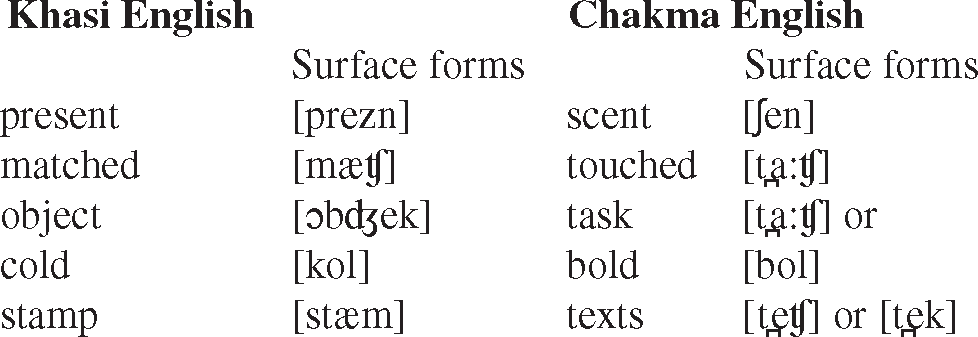
As can be seen in (2), the English consonant clusters are simplified in the two varieties with the elision of final consonants. In Chakma English, in some cases, the penultimate consonant may be deleted, instead of the final.
In the case of complex onsets, in the varieties of IndE whose source languages do not permit them, the words surface with vowel epenthesis or prothesis. For instance, the word school is pronounced as [is.ku:l], with a word-initial prothesis, in many areas in the northern and the north-eastern region, such as the Hindi-speaking areas, Assamese English, and Chakma English. The word surfaces with an epenthesized [ə], [səku:l], in Punjabi or Kashmiri-speaking areas (e.g., Bhatt Reference Bhatt2000). Notice that the consonant clusters in the English words with word-initial sC clusters, such as school and state, apart from differing from L1-specific constraints, also violate (as noted by Bhatt Reference Bhatt2000) the universal Sonority Sequencing Constraint (Goldsmith Reference Goldsmith1990). These could well be seen as instances of the emergence of the unmarked features of syllable structure.
Another point of difference between NE varieties and IndE varieties with regard to syllable structure is that the diphthongs in IndE (Pandey Reference Pandey1981) often behave as sequences of two rather than as a single vowel.
4.3 Word-stress
Word-stress in NE plays a significant role in its phonological organization. As is generally recognized, aspiration of voiceless plosives takes place in the initial position in stressed syllables, stressed vowels are fully pronounced and unstressed vowels tend to be reduced as can be seen in the realizations of the vowels in alternating forms such as ˈph[əʊ]to, ˈphot[ə]ˌgr[aː]ph, ph[ə]ˈt[ɒ]gr[ə]pher, ˌphotoˈgr[æ]phic. Most of these word-stress dependent phenomena are not found in the common varieties of IndE. Bansal (Reference Bansal1969), in a seminal study on the intelligibility of IndE to BrE speakers, showed how the difference in the word-stress patterns in IndE crucially affects its intelligibility to BrE hearers. For instance, the word atmosphere [ˈætməsfɪə] pronounced as [æʈˈmɔsfɪər] in IndE is heard as at most, because of the different stress in the word and the presence of a full vowel instead of a reduced vowel on the syllable.
4.3.1 Word-stress pattern in IndE
Structural descriptive accounts of NE word stress (see e.g., Roach Reference Roach2013 [1993]) show that it is sensitive to the morphological and syntactic structures of words: simple and complex nouns have stress assigned up to the antepenult syllable (e.g., Aˈmerica, diˈvinity, etc.), while adjectives and verbs have stress assigned up to the penult syllable (e.g., speˈcific, soˈlicit, deˈvelop, etc.). Almost all accounts of IndE varieties, for example, Babu (Reference Babu1971), Dhamija (Reference Dhamija1976), Vijaykrishnan (Reference Vijaykrishnan1978), Gokhale (Reference Gokhale1982), Pandey (Reference Pandey1985), Chaudhury (Reference Chaudhury1984), and Wiltshire (Reference Wiltshire2005), show that stress assignment is not sensitive to the grammatical category and morphological structure of words. The following patterns of word-stress in Hindi English present in (3) are a case in point.
The description of a stress foot in IndE within the framework of Metrical Theory of stress (Hayes Reference Hayes1995) varies in its sub-varieties because of the filter of the L1 of the speakers. In Hindi English and Punjabi English, it is quantity-sensitive (e.g., Sethi Reference Sethi1980; Pandey Reference Pandey1985), as also in some of the Tibeto-Burman varieties in which stress is placed on syllables depending on whether they are heavy or light (e.g., Wiltshire Reference Wiltshire2005: 295). It is quantity-insensitive in Tamil English (e.g., Vijaykrishnan Reference Vijaykrishnan1978) in which the first syllable is stressed, irrespective of the weight of the internal syllables. This difference can be more intricate. The quantity-sensitivity of stress systems may depend only on vowel length but not on the presence of codas in syllables, as in Malayalee English (e.g., Sadanandan Reference Sadanandan1981) or it may depend only on codas but not on vowel length as in Assamese English (e.g., Mahanta Reference Mahanta2001). Among quantity-insensitive stress systems, we have word-initial systems, such as Tamil, and word-final systems which characterize a large number of Tibeto-Burman languages of north-east India, including the languages of Arunachal Pradesh and Manipur.
In general, the following features characterize word-stress in IndE:
a. Word-stress is insensitive to the syntactic category of words, unlike NE. Thus, doublets such as export, rebel, etc. have a single pattern for both syntactic categories – for example, exˈport, ˈrebel in Hindi English, ˈexport, ˈrebel in Tamil English.
b. Word-stress in most cases is predictable. In the sub-varieties such as Hindi English or Punjabi English (e.g., Sethi Reference Sethi1980), final syllables are stressed only if they are superheavy (i.e., V:C or VCC type) such as exˈplore, maˈchine, etc. Words ending in V:/ VC syllables are in general not stressed, e.g., *ˈcanoe, *ˈdegree, *ˈtotal, etc. Words ending in diphthongs are stressed finally not because they function as long vowels, but because they function as sequences of two vowels (e.g., Pandey Reference Pandey1981 [1994]), for example, a:u or au, a:i or ai, i:ə or iə, etc., as in aˈllow, deˈfy, etc.
In the sub-varieties with quantity-insensitive systems as L1, such as Tamil English (e.g., Vijaykrishnan Reference Vijaykrishnan1978), the stress is usually on the first syllable, ˈexplore, ˈmachine, ˈallow, etc. In languages with quantity-sensitive systems as L1, such as Punjabi English, stress is placed on the consideration of syllable-quantity and syllable position from the right, as in NE. In both, stress patterns are derived (i.e., predictable).
The resultant effect of predictability and regularity in word-stress in IndE is that the regular and lexical stresses in NE have undergone levelling. Stress patterns in NE that must be seen as lexical as, for example, in caˈsette, caˈnoe, and deˈgree (e.g., Hayes Reference Hayes1982), are regular in IndE: *ˈcassette, *ˈcanoe, *ˈdegree, etc.
c. The segmental structure of many words in IndE has undergone restructuring, with changes in vowel length, involving both shortening of long vowels, as in medieval *[ˈmedivəl] as well as lengthening of short vowels, as in event *[ˈi:vent].
d. Compound words, with stress on the two or the three words, have a fixed pattern as shown in (4): the first member of the compound has primary stress in most sub-varieties of IndE.
| (i) | *ˈcollege ˌcanteen | ˈWhite ˌhouse |
| *ˈnorth-ˌeast | *ˈtwo-ˌwheeler | |
| ˈsuit ˌcase | ˈtea-ˌcup | |
| (ii) | *ˈwaste ˌpaper ˌbasket | *ˈkitchen-ˌtowel ˌrack |
4.3.2 Phonetic cues of word-stress in IndE
A general observation about the phonetic cues of word-stress in IndE (e.g., Pickering and Wiltshire Reference Pickering and Wiltshire2000; Wiltshire and Moon Reference Wiltshire and Moon2003; Puri Reference Puri2013) is that stress is realized in terms of a fall in pitch on the stressed syllable. Wiltshire and Moon (Reference Wiltshire and Moon2003), in an investigation of the phonetic correlates of word-stress in Hindi and a comparison between American English (AmE) and IndE, arrive at the conclusion that increase in amplitude and duration are also associated with stressed syllables in addition to fall in F0, although the former are not reliable cues of word-stress. They follow Beckman (Reference Beckman1996) in using the term ‘pitch accent language’ to characterize IndE, like Japanese, in which a fall in F0 is the main phonetic correlate.
4.4 Speech rhythm
English speech rhythm is known (e.g., Adams Reference Adams1979) to be ‘stress-timed’, that is, the duration between stresses in NE spoken utterances is roughly equal. Thus, the durations of the stretches between ˈ ma- and ˈ here in the sentences Theˈ manager is ˈ here and Theˈ man is ˈ here are roughly equal in the speech of a NE speaker. Stress-timed rhythm is characterized by the process of weakening of the unstressed syllables manifested by reduction or deletion of the unstressed vowel, especially in fast speech, and contraction of function words, as in (5):
(a) ˈphoto, ˈphotoˌgraph, phoˈtographer
(b) oˈccasionally, poˈtato [ptʰɪetəʊ]
(c) we’ve, they’re
The underlined unstressed vowels in (a) and (b) are reduced and deleted, respectively. The contracted forms involve mainly function words, such as have, had, are, etc. These words are unstressed in the neutral context and occur in their ‘weak’ forms, for instance, [həz]/ [əz] for has, [kən] for can. When stressed, in given contexts, they occur in their ‘strong’ forms, for instance, [hæz] for has, [kæn] for can. Phoneticians (e.g., Ladefoged Reference Ladefoged1993; Wells Reference Wells2000; Roach Reference Roach2013) have stressed the need for the pronunciation of weak forms in English in order to avoid miscommunication and sounding very different from NE.
In contrast with speech rhythm in NE, speech rhythm in IndE is generally labelled as ‘syllable-timed’ (e.g., Bansal Reference Bansal1969; Kachru Reference Kachru1983), that is, the number of syllables in it determines the duration of spoken units. The classification of speech rhythm in IndE as syllable-timed has come to be questioned on close examination, with the substrate languages, such as Tamil (Balasubramanian Reference Balasubramanian1980) and Telugu (Babu Reference Babu1971) for Tamil English and Telugu English, respectively, militating against the classification. However, some of the features of stress-timed rhythm are certainly not found in IndE varieties. For instance, as pointed out above, related forms like ˈphoto, ˈphotoˌgraph and phoˈtographer tend to have full vowels once they are stressed. Besides, function words such as has and can tend to have the vowels in them pronounced in full, leaving the impression of pronouncing them in strong forms (Madhavi Reference Madhavi2009). There is some ground thus for distinguishing between the two types of speech rhythm (see e.g., Ohala and Gilbert Reference Ohala, Gilbert, Léon and Rossi1979), although the terms need to be redefined. Is there acoustic evidence for syllable-timed rhythm in IndE? Fuchs (Reference Fuchs2012) found that there was some evidence for the syllable-timed speech rhythm in IndE, due to less variability in the durations of vocalic intervals in IndE than in BrE.
4.5 Intonation
Most intonational studies on IndE have been impressionistic, on the one hand, and of specific sub-varieties, on the other. This statement is true of Latha (Reference Latha1978) and Nair (Reference Nair1996) for Malayalee English, Joseph (Reference Joseph1984) for Telugu English, and Gokhale (Reference Gokhale1982) for Marathi English, among others. There have been some studies of intonation of GIE, in the main, Babu (Reference Babu1971), Khan (Reference Khan1974) and Shekhar (Reference Shekhar1993). The latter two examine the intonation of All-Indo Radio announcers of IndE.
4.5.1 Intonational unit
One of the claims consistently made in studies of intonation in IndE is that it is characterized by multiple stresses in an intonational unit. The impression is so strong, in the case of both Indic languages as well as IndE, especially to foreign ears, that Féry (Reference Féry2011) proposes a new type of intonational language that properly describes these languages, namely, Phrase-Accent language. There have been some recent experimental studies of IndE varieties that corroborate the observation regarding the placement of multiple stresses in an intonational unit. These are, in the main, Verma (Reference Verma2005), Puri (Reference Puri2013), Féry, Pandey, and Kenntner (Reference Féry, Pandey and Kenntner2014) for Hindi English, and Wiltshire and Harnsberger (Reference Wiltshire and Harnsberger2006) for Tamil English and Gujarati English.
4.5.2 Types of tone
Gokhale (Reference Gokhale1982) describes three simple tones in Marathi English – Fall, Low-Rise, and High-Rise, and one complex tone – Fall-Rise. Studies on rhythm and intonation in IndE are generally in agreement with Gokhale’s observation regarding the lack of a crucial difference between IndE varieties and NE with regard to the use of the types of tone in them. The tones in IndE varieties form a subset of the tones used in BrE. An exception here is Latha (Reference Latha1978), who posits the following tones in Malayalee English: One simple tone – Fall, and four complex tones – Rise-Fall, Fall-Rise, Drop-Rise and Drop-Rise-Fall. The types of tone in Malayalee English are obviously quite different from BrE in the (lack of) employment of some of the tones. Notice that a simple Rise tone is missing in Malayalee English, in which a Rise begins with a drop.
The use of the nuclear tone in IndE varieties is not predictable, as in NE, where the nuclear accent is placed on the last important word in the neutral context. There is no such reliable rule in IndE. The only reliable generalization that holds for the placement of the nuclear tone is on the penultimate word in the following constructions: (a) those ending in an NP with a Modifier + Head structure, such as Mary wore a ˋblue dress and (b) those ending in clauses with a simple VP + NP or VP + AdvP construction, such as John ˋfound the book or John ˋwent home or John is ˋstanding there. The nuclear tone in these intonational units is placed not on the final Head noun, but on the penultimate word. This appears to be a general pattern in Indian English, as also in the source Indian languages as diverse as Hindi (Bansal Reference Bansal1976; Puri Reference Puri2013), Malayalam (Mahesh Reference Mahesh2014) and Meitei (Meiraba Reference Meiraba2014).
4.5.3 Discourse features: tag questions
Tag questions in NE are short questions at the end of statements, as in (6) below:
a. He has been there, hasn’t he?
b. You won’t be coming with the papers, will you?
Tag questions are normally used to confirm the truth of a statement or to encourage the interlocutor to continue a conversation. In terms of the prosodic structure, tag questions are like a ‘tail’ in an Intonational unit, following the nuclear pitch. They can also function like an independent question and thus be an independent Intonational unit.
The common, regional varieties of IndE are known to use an undifferentiated tag question ‘Isn’t it?’ added in any sentence with the matrix sentence in the positive or the negative, and the Subject being always ‘it’ (see e.g., Trudgill and Hannah Reference Trudgill and Hannah2002; Mesthrie and Bhatt Reference Mesthrie and Bhatt2008).
In regional varieties of IndE, questions are also formed with an invariant ‘no’ as a tag, for example, You are coming tomorrow no? We have reached Agra no? ‘No’ questions are statement sentences with ‘no’ appended at the end and said with a rising tone. A comparison of the intonation structures of the invariant ‘no’ question and the invariant Tag question shows that while the invariant ‘no’ has features of a sentence-final question word, the undifferentiated ‘Isn’t it?’ has features of an independent question, as can be seen in Figures 4.1 and 4.2.

Figure 4.1. You have been to Agra, no?

Figure 4.2. The train was on time today, isn’t it?
Whereas there is a continuity of the pitch contour in the ‘no’ question (Figure 4.1), there is a break in the pitch contour before the ‘isn’t it’ tag (Figure 4.2). The duration of the break is 0.084 seconds. A sentence such as the one in Figure 4.3 shows the interval duration between the matrix sentence and the tag question to be close to 0.3 seconds.
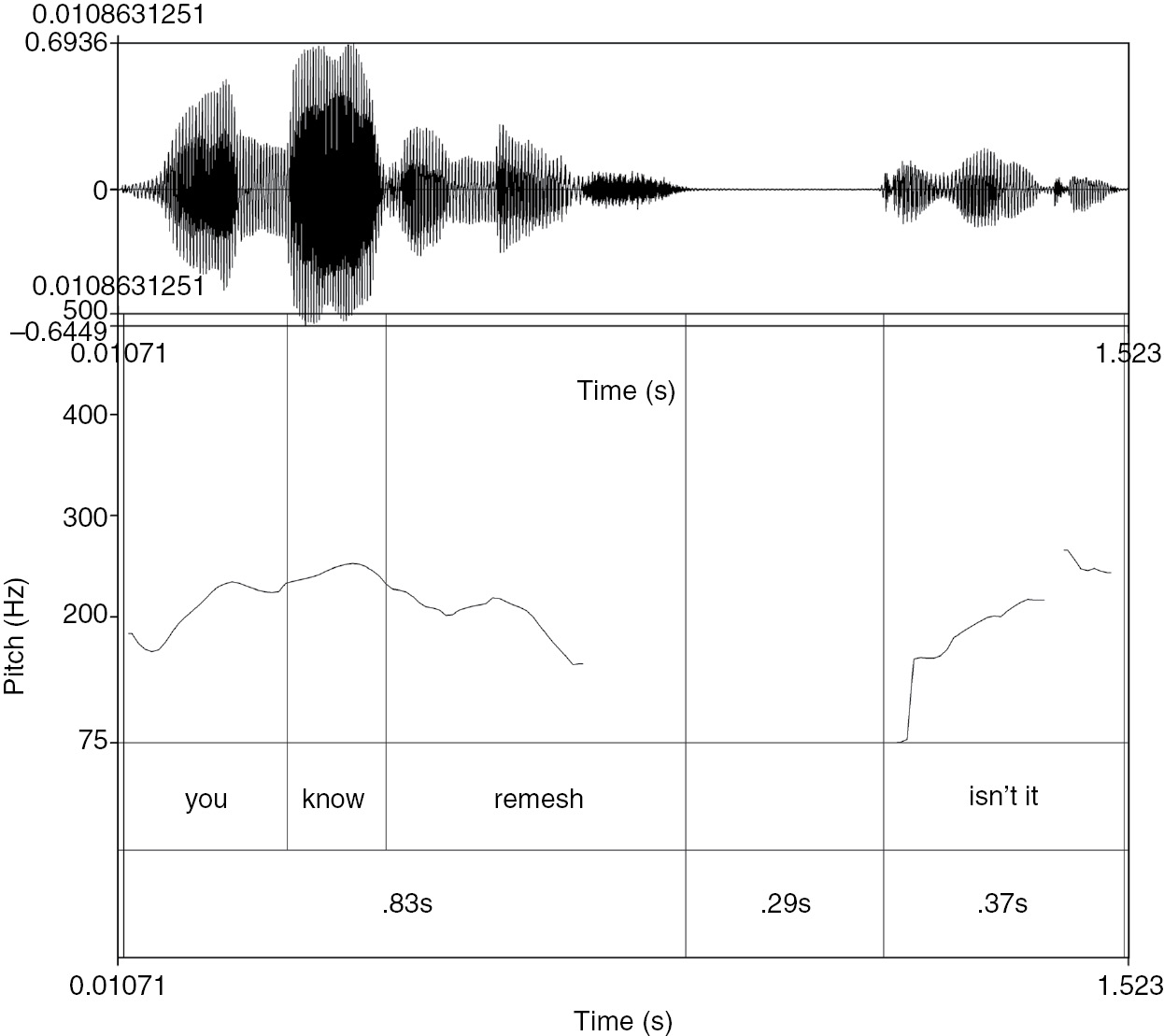
Figure 4.3. You know Ramesh, isn’t it?
An explanation for the difference between the prosodies of the tag question ‘Isn’t it’ and the ‘no’ question in IndE appears to be that the undifferentiated tag always functions as an independent question about the truth of the statement in the matrix sentence, whereas the ‘no’ question is part of the matrix question. The undifferentiated tag question is different from the tag in NE where it can optionally function as an independent question when so intended. It should be noted, however, that the use of the undifferentiated tag question and the ‘no’ question is found more commonly in the basilectal varieties of IndE than in the acrolectal, idealized model.
4.6 Information structure: focus
The characteristic features of rhythm and intonation in IndE have been found to cause considerable problems of communication, noted by many authors (e.g., Bansal 1976, Reference Bansal1983; Wells Reference Wells1982). The basic issue here is of the difference in the information structure conveyed by the intonational phrase. On account of multiple pitch accents and unpredictable placement of the tonic, the intonational pattern of a clause does not match the information structure in NE. There have been some recent studies of the phonetics of information structure in IndE that are pertinent to the discussion here.
Verma (Reference Verma2005) in a study of the realization of Focus showed that Hindi bilingual speakers of Indian English transferred the pitch melody of Hindi to IndE. Hindi is known to have L*H melody (Dyrud Reference Dyrud2001) for stress, while NE (e.g., Pierrehumbert Reference Pierrehumbert1980; Steedman Reference Steedman2000; Gussenhoven Reference Gussenhoven2004 among others) has the H*L melody for Focus realization. While NE does not have a pitch melody on the Pre-Focus elements, IndE speakers showed considerable instability in switching between the L*H melody of stress to the H*L melody of Focus. No pitch melody was found in the Post-Focus elements.
Féry, Pandey and Kenntner (Reference Féry, Pandey and Kenntner2014), in an experimental study of the prosodic correlates of focus in Hindi and Hindi bilingual speakers of IndE, found that Object focus showed significant results compared to Subject focus. Object focus was realized as higher F0 with L*H melody on nonfinal elements and H*L melody on final elements, a ‘hammock’ structure realized as H*LH melody, higher amplitude and greater duration. The last two are not significant. The ‘hammock’ structure is found also for Hindi in this study. It has been reported to characterize question intonation in Dutch (see e.g., Haan et al. Reference Haan, van Heuven, Pacilly, van Bezooijen, Coerts and de Hoop1997: 98). However, as a melody for the realization of focus, it has been found to characterize Indic languages mainly (see also Mahesh Reference Mahesh2014 for Malayalam).
The illustration in Figure 4.4 from the data collected for the study in Féry and Pandey (Reference Féry and Pandey2012) show two aspects of the prosody of focus in IE. The sentence The man is pulling a woman with Object focus shows the HL melody on the Object, with H at the beginning of the Phonological Phrase ‘woman’ and L at the end. The Subject and the Verb group show the LH melody. Apart from the melody, Focus was found to be aligned to the left of a phonological phrase. The sentence also shows the results of alignment on the phrasing being different from NE, where the phonological phrases show different groupings among words. There are three phonological groups – the man is, pulling a, and woman. The separation of the article from the Noun in the Object shows encliticization as well as glottal stop insertion to be features common to Focus realization in both Hindi and IndE, as (discussed in greater detail in Féry, Pandey, and Kenntner Reference Féry, Pandey and Kenntner2014). The symbols Φ and ι stand for the phonological phrase and the intonational phrase.
LΦHΦ HΦLι
((The man is)Φ ((pulling a) womanΦ))ι

Figure 4.4. The man is pulling a woman
Puri (Reference Puri2013) has a detailed investigation of three aspects of prosody of late and simultaneous bilinguals of Indian English from Delhi – pre-boundary lengthening, pitch accent and focus. Her experiments show that both Hindi and IndE have pre-boundary lengthening like many languages, including American English. The study shows that there is no difference in the two groups in the domain of pre-boundary lengthening: both groups indicate the end of the Intonational Phrase through pre-boundary lengthening effects (a) on the final as well as the penultimate syllable before the IP, (b) more on the rhyme than on the vowel, and (c) of stress on the final or penultimate syllables. With regards to pitch accent, the study gives evidence for the use of the Hindi LH pitch accent in IndE as well. However, the simultaneous bilinguals use both the Hindi LH and to a limited extent (17 per cent of the time) the British English H*/H*L pitch accent. Thus, while late bilinguals show static interference in the use of the Hindi LH pitch accent, the simultaneous bilinguals show a fusion of NE and L1. The results on Focus show that both simultaneous and late bilinguals use a bigger F0 excursion in narrow focus, and both groups have postfocal compression due to lower duration, RMS amplitude and F0 range in Hindi and IndE.
4.7 Summary and conclusion
In the above discussion of intonational prosody in IndE, we have tried to show that it is much affected by the prosody of the source language. The amount of affection may vary from a large to a small degree. The more basilectal the speech, the greater is the rate of transfer of the prosodic features of the source language. The case from the Tibeto-Burman varieties of IndE offers a different picture, as discussed in Wiltshire (Reference Wiltshire2005). Wiltshire quotes from Fanai (Reference Fanai1989: 29):
… to a lay person, a Mizo speaker speaking English sounds rather ‘flat’ or ‘toneless’. This seems to suggest that Mizo speakers consider the pitch system of Mizo and English to be so different that the former should not be allowed to influence the latter at all and hence the tonelessness of the latter.
Wiltshire (Reference Wiltshire2005: 296) adds:
From the recordings of both the readings and the interviews, this observation seems to be true of all TB-IE speakers; while GIE uses more pitch accents than American or British English, the TB variety of English uses fewer.
We can stop here with the remark that although there is a considerable amount of uniformity in the varieties of IndE prosody, lending it its ‘natural’ character, regional variation in the basilectal varieties should be as naturally expected.
5.1 Introduction
Singapore English (henceforth SgE) is one of the most extensively researched and well-documented institutionalized second-language varieties of English. The linguistic distinctiveness of this variety and its sociolinguistic context have been the subject of many scholarly works from as early as the 1970s. This period saw the emergence of Singlish, a colloquial variety of English strongly marked by the influences of Chinese and Malay (Low and Brown Reference Low and Brown2005: 30). Research on SgE during this era tended to be dominated by purist interpretations of the linguistic features of the variety (Tongue Reference Tongue1974; Crewe Reference Crewe and Crewe1977) – linguistic divergences from British English were considered erroneous, non-standard and were negatively evaluated.
By the 1980s, these traditionalist viewpoints were beginning to be replaced by a growing recognition that many of these distinctive features were in fact natural outcomes of the emergence of a local variety of English in a multilingual setting. The development of English-medium education during the British colonial period, followed by the penetration of the language into the local sociolinguistic landscape, were considered to be the dynamics that brought about lexical, phonological and syntactic manifestations of contact and simplification in SgE (Platt and Weber Reference Platt and Weber1980). Within this framework, variation within SgE is constructed as a speech continuum, ranging from an internationally intelligible acrolect to a more distinctive mesolect and finally, an extremely localized basilect spoken by those with minimal knowledge of English and others in informal situations. This notion of a speech continuum was further developed by Lowenberg (Reference Lowenberg1984) who used, as a criterion, degree of nativization – that is, the degree to which the language changes as it acculturates to ‘“un-English” ecologies’ (p. 32) – to empirically distinguish the three sociolects.
Another concept that has been used to describe the situation of English in Singapore is diglossia (Gupta Reference Gupta1986, Reference Gupta1994; Pakir Reference Pakir, Alsagoff, Bao, Pakir and Wee1998). In this model, SgE is represented as comprising two sub-varieties which co-exist within the community, but in non-overlapping domains. The High variety or ‘Singapore Standard English’ (SSE) occurs in formal domains and in writing, and is transmitted through education; while the Low variety or ‘Singapore Colloquial English’ (SCE), with its stock of localized syntactic and morphological features, is used in casual contexts, and is the native language of many Singaporeans (Gupta Reference Gupta1994: 7). What sets Gupta’s framework apart from the earlier models is her emphasis on the agency and volition of SgE speakers:
The use of SCE by those who have a command of both StdE and SCE is not the result of error in using a language which may or may not be native, but a matter of choice based on context and affective message
The depiction of SgE as comprising two or three distinct sub-varieties has become a very dominant thread in the field, as indicated by the number of studies that have used it as a working assumption (e.g., Cavallaro and Chin Reference Cavallaro and Chin2009; Kiss, Ong and Pelly Reference Kiss, Ong and Pelly2012). Although appealing as a theoretical concept, this representation is not without challenges. Tongue (Reference Tongue1974) himself conceded that the line between standard and sub-standard forms in SgE ‘is extremely difficult to draw with confidence’ (p. 10). A classroom experiment conducted by Tay (Reference Tay1986) found that it was exceptionally difficult for Singaporeans to categorize actual discourse according to the three sociolects. In another study, Bao and Hong (Reference Bao and Hong2006) found quantitative evidence of the SgE diglossia in the use of already and also: while the use of these words in SSE is not obviously different from British English, it is marked by distinct ‘substrate-derived grammatical meanings’ in SCE (Bao and Hong Reference Bao and Hong2006: 112).
More recently, Schneider’s (Reference Schneider2007) model of ‘Postcolonial Englishes’ offers us new ways of thinking about these varieties. Based on language contact theories, this model proposes that the evolution of English in various postcolonial localities typically undergoes five progressive phases of ‘identity rewritings and associated linguistic changes’ (Schneider Reference Schneider2007: 30) – foundation, exonormative stabilization, nativization, endonormative stabilization and differentiation. Schneider (Reference Schneider2007: 160–1) places SgE in the endonormative stabilization phase, which is characterized by the emergence of a local standard embraced by the vast majority of the population. This process is said to have taken place in spite of official ideological discourse that rejects the local vernacular and promotes an exonormative standard, represented by Standard British English and, more recently, Standard American English. In a study that evaluates Singaporeans’ linguistic self-confidence, Bokhorst-Heng et al. (Reference Bokhorst-Heng, Rubdy, McKay, Alsagoff, Lim, Pakir and Wee2010: 152) found younger generation Singaporeans to exhibit a greater ‘sense of ownership and intuitive authority over their English norms’. These authors interpret this as evidence of ‘a growing endonormative stabilization of English in Singapore’ (Bokhorst-Heng et al. Reference Bokhorst-Heng, Rubdy, McKay, Alsagoff, Lim, Pakir and Wee2010). Other signs of this development include an expanding body of literature in the local variety, continuing efforts to define and codify the endonormative standard (e.g., Gupta Reference Gupta1986, Reference Gupta, Lim, Pakir and Wee2010; Lim Reference Lim2004) and ongoing discussions on how the local variety can be brought into the classroom (e.g., Rubdy Reference Rubdy2007). This body of research clearly suggests the coming of age of this localized variety, which corresponds with an ever-widening linguistic divergence from the assumed model of Standard British English. Yet there is much that we do not know about the linguistic manifestations of the endonormative stabilization of SgE, especially in comparison with the third phase of nativization. The present study is an attempt to address this lacuna through the corpus-based analysis of a category of SgE features – nativized multi-word verbal combinations (henceforth MVCs).
The following part of this chapter describes some common nativized MVCs, their usage in contemporary SgE and local attitudes towards them. The core of the chapter is a corpus-based study of fifteen specially selected nativized MVCs that aims to identify structural and distributional manifestations of the stabilization of these features in SgE. Based on evidence of usage, it is obvious that some of these nativized features have been institutionalized and integrated into the grammatical system of SgE. Exactly what drives the emergence of the endonormative standard remains speculative, although it clearly involves competition among nativized and standard inner-circle variants. The actual resolution, at least, where these features are concerned, appears to be shaped, in part, by the internal structure of the English language.
5.2 Why nativized multi-word verbal combinations?
Nativized MVCs, such as discuss about, emphasize on, list out and raise up, are some of the more frequently observed grammatical features of numerous institutionalized second-language varieties of English (Bamgboṣe Reference Bamgboṣe and Kachru1982; Gonzales Reference Gonzales and Noss1983; Nesselhauf Reference Nesselhauf2009; Tan Reference Tan2012). In these contact settings, trade and colonization were the routes through which English first gained entry, and English-medium education was the main mechanism through which the language gained a foothold and subsequently spread (Schneider Reference Schneider2007: 84–5; Mesthrie and Bhatt Reference Mesthrie and Bhatt2008: 156).
Rather than overt substrate influences, these features reflect strategies of simplification and overgeneralization typically found in contact situations involving group second language acquisition and language shift (Winford Reference Winford2003: 235–7; Mesthrie and Bhatt Reference Mesthrie and Bhatt2008: 156). Based on his analysis of the use of some of these features in SgE, Deterding (Reference Deterding2007: 57–8) concludes that they are extensions of standard nominal collocations (e.g., discussion about and emphasis on). Nesselhauf (Reference Nesselhauf2009: 19–21) proposes three additional reasons for these features: the properties of the relevant prepositions which predispose them to co-occurrence with ‘semantically similar verbs’, the fact that some of these features exist in standard inner-circle varieties though with a different meaning from the nativized form, and the propensity among speakers of second-language varieties to stress the direction expressed in verbs of movement even when the direction is implicit in the lexical verb. Deterding (2007a: 58) suggests that these features are instances of SgE ironing out ‘a few of the creases in the fabric of the language’ and that they may well be ‘one of the areas where Singapore is at the forefront of the natural development of English’. While noting the presence of some of these MVCs in inner-circle varieties such as British English, Nesselhauf (Reference Nesselhauf2009: 22) demonstrates through a comparison of various corpora, that these features are far more frequent in second-language and foreign learner varieties than in British English. So for the time being at least, innovative MVCs appear to be more strongly associated with institutionalized second-language varieties than with inner-circle varieties.
Outside the realm of sociolinguistics, discourse surrounding the use of nativized MVCs tends to be more prescriptive. Because these features occur in contexts where standard inner-circle varieties would use the corresponding single-word lexical verbs such as discuss, emphasize, list and raise, nativized MVCs are often labelled as learner errors (e.g., Elliot Reference Elliot1983; Turton and Heaton Reference Turton and Heaton1996). In Singapore, the presence of such grammatical divergences is viewed by the government as a sign of the deteriorating standard of English that could seriously threaten the nation’s competitive edge in the global marketplace. As noted by Bokhorst-Heng et al. (Reference Bokhorst-Heng, Rubdy, McKay, Alsagoff, Lim, Pakir and Wee2010: 133), ‘the officially preferred model is British RP, and the Inner Circle speakers of English continue to be regarded as the true owners of English’. Since 2000, the government, through its famed Speak Good English Movement, has been actively ‘encouraging Singaporeans to speak grammatically correct English that is universally understood’ (‘About us’ n.d.). To this end, the Speak Good English Movement website features resources that draw Singaporeans’ attention to the ‘common English errors’ that they make and suggest ‘grammatical’ alternatives. Nativized MVCs are some of the so-called errors that are routinely flagged (see ‘List of common English errors in everyday situations’ n.d.).
In spite of these initiatives, nativized MVCs continue to prevail in SgE, often spilling over the boundaries of vernacular English to encroach on formal language in public domains. A search of websites hosted by tertiary institutions, government bodies, political parties, as well as databases of newspapers and business reports found numerous instances of these features. Table 5.1 shows some of the most visible nativized MVCs, each accompanied by a citation demonstrating contemporary usage of the feature.
Table 5.1. Nativized MVCs in Singapore English
| Nativized MVC | Contemporary usage and citation |
|---|---|
| Await for | The stock market had a listless day as investors were sidelined while awaiting for fresh leads from overseas … (The Straits Times, 23 January 2013) |
| Comprise of | The association, comprising largely of members from the mercantile community, aimed to … (Singapore Infopedia, 2006) |
| Demand for | The weather, an unreliable administrative structure and lack of cricketing culture were the main reasons cited by those demanding for a move from the Emirate, … (The Straits Times, 26 August 2013) |
| Discuss about | Assoc Prof Simon Tay of the NUS Faculty of Law … discussed about the emerging character of the new Chinese leadership … (National University of Singapore website, May 2013) |
| Discuss on | Mobile advertising is a relatively new industry – and the team is currently discussing on how to best use it. (The Business Times, 22 October 2007) |
| Emphasize on | ‘The largest possible role for research is …’, said Mr Lai, while emphasizing on the numerous opportunities afforded to businesses in such contexts. (The Business Times, 6 March 2012) |
| Enter into | He believes an easier or more direct way would be to restrict the number of foreign workers entering into the country. (Singapore Management University website, 3 August 2011) |
| List down | Last week, I listed down stocks with the highest returns in the last five years … (The Business Times, 24 May 2008) |
| List out | Staff members have been provided with a manual listing out the appropriate disciplinary action for minor and serious misbehaviour. (The Straits Times, 6 April 2007) |
| Lower down | When Macbeth was crowned king, a giant bust was lowered down and a face moulded on it … (The Business Times, 31 May 2010) |
| Mention about | Dr Lim mentioned about unspoken comments where there are fears of being punished by the Government. (The Straits Times, 17 May 2005) |
| Page for | The airport staff were paging for Dr Aghi. (The Straits Times, 17 October 2004) |
| Pursue for | The liquidators of Five Star Finance Ltd are pursuing for ownership of units in the Richmond Park Property Trust … (Troubled Company Reporter – Asia Pacific, 24 June 2009) |
| Raise up | His glitchy electronica … pulls no lyrical punches, but the music raises you up. (The Straits Times, 18 July 2013) |
| Repay back | ‘I do not think that anybody would lend to ITV as it is loss-making and how would they repay back the funds they borrow’, said one analyst. (The Business Times, 10 May 2006) |
| Request for | If I cannot complete the formalities within the 2-month period, can I request for an extension? (The Immigration and Checkpoints Authority of Singapore, 2 September 2013) |
| Return back | We believe part of the divestment proceeds could be returned back to the shareholders in the form of a special dividend … (The Business Times, 20 November 2013) |
| Revert back | … it changed its name and reverted back to its core printing business. (The Business Times, 19 March 2002) |
| Stress on | They also stressed on the need for continual progress … (Singapore Government News, 8 May 2011) |
| Voice out | … Bernard believes that the Workers’ Party provides a credible platform from which the people’s views can be voiced out and addressed. (The Workers’ Party, 31 January 2008) |
Clearly, nativized MVCs are being used by some of the strongest proponents of the standard language ideology in Singapore. This seems to suggest some degree of institutionalization – that is to say that some of these twenty MVCs may have become permanent variants in SgE. The prevalence of these features amidst their continuing stigmatization has made them a promising point of departure for this study. How this phenomenon might be linked to the ongoing endonormative stabilization of SgE is the main concern of this chapter.
5.3 Methodology
This study has utilized a corpus-based approach to demonstrate some structural and distributional manifestations of endonormative stabilization in SgE, focusing on the use of nativized MVCs. In order to ascertain that only features that are nativized – vis-à-vis British English (the assumed parent variety of SgE) – were selected for analysis, I began by comparing the frequencies of the twenty MVCs in two parallel, one-million-word components of the International Corpus of English – the Singapore component (ICE-SIN) and the British component (ICE-GB). Table 5.2 is a summary of the results of this exercise performed using Mike Scott’s Wordsmith Tools.
Table 5.2. Comparative frequencies of MVCs in ICE-SIN and ICE-GB
| Nativized MVC | ICE-SIN | ICE-GB |
|---|---|---|
| Await for ‘to wait for’ | 3 | 0 |
| Comprise of ‘to consist of’ | 2 | 1 |
| Demand for ‘to ask for urgently, brusquely or authoritatively’ | 0 | 0 |
| Discuss about ‘to talk about; to examine (a subject) in speech or writing’ | 10 | 0 |
| Discuss on ‘to talk about; to examine (a subject) in speech or writing’ | 3 | 0 |
| Emphasize on ‘to stress’ | 4 | 0 |
| Enter into ‘to go or come into a building, room, country, etc.’ | 0 | 1 |
| List down ‘to make a list of (something)’ | 2 | 0 |
| List out ‘to make a list of (something)’ | 4 | 0 |
| Lower down ‘to cause to descend’ | 1 | 0 |
| Mention about ‘to refer to (something) briefly’ | 8 | 1 |
| Page for ‘to call or contact by means of a public address system, a radio pager, etc.’ | 5 | 0 |
| Pursue for ‘to strive to gain or accomplish (something)’ | 0 | 0 |
| Raise up ‘to cause someone or something to rise or to be elevated; to put forward’ | 3 | 2 |
| Repay back ‘to pay back; to give back, either in return or in compensation’ | 1 | 0 |
| Request for ‘to politely or formally ask for’ | 3 | 0 |
| Return back ‘to go or come back (to an earlier place); to give back; to elect or re-elect’ | 3 | 0 |
| Revert back ‘return to a previous state, practice, topic, etc.’ | 1 | 1 |
| Stress on ‘to give emphasis to (something)’ | 4 | 0 |
| Voice out ‘to express’ | 0 | 0 |
| Total | 57 | 6 |
Of the twenty features searched, three (demand for, pursue for and voice out) did not yield any data, one (revert back) occurs the same number of times in both corpora, and one (enter into) occurs in ICE-GB but not in ICE-SIN. These five features were excluded from further analysis. The remaining fifteen MVCs occurred fifty-six times in ICE-SIN versus four times in ICE-GB, and were thus considered nativized in the sense of being divergent from British English norms yet quite commonly found in SgE.
Focusing on the grammatical structures of these MVCs and variation in their use across diverse registers of SgE, this study utilized data extracted from ICE-SIN, a corpus comprising 603,819 words of spoken and 406,226 words of written texts1 compiled in the early 1990s. Following the guidelines of the ICE Project, the authors and speakers of these texts were eighteen years old or above at the time when the texts were produced, and had gone through English-medium education in Singapore. In accordance with the design established by the ICE Project (see Nelson Reference Nelson2002), ICE-SIN is made up of five hundred 2,000-word texts spreading across thirty-two categories. The spoken component contains fifteen text categories that are grouped into four registers – private dialogue, public dialogue, unscripted monologue and scripted monologue, while the written component consists of seventeen text categories that are grouped into two registers – non-printed texts and printed texts.
The present study explored variation in the use of the fifteen nativized MVCs across these six registers. Using Wordsmith Tools, and in particular Concord, relevant MVCs were extracted from ICE-SIN for analysis. The analysis focused on the following: (1) the syntactic environment of these MVCs; and (2) their rates of nativization, operationalized as their frequency relative to the frequency of the lexical verbs from which they are derived.
The Concord searches involved defining the relevant lexical verb as the search word, and its corresponding particle as the context word. To ensure that as many MVCs as possible were extracted, I established a context search horizon of 5L to 25R. This effectively captured all instances of a MVC as long as the particle occurs within five words to the left and twenty-five words to the right of the verb. The collective contexts of the fifteen MVCs formed the data for the analysis of the syntactic environment of these features. This syntactic exploration was guided by the following questions: Do these nativized MVCs maintain regular syntactic patterning? Does a particular MVC serve a distinct grammatical function? Is there any evidence of inherent grammaticality in the way that these nativized features are used in SgE?
In order to determine the rate of nativization associated with the use of each MVC, I had to obtain the frequency of the lexical verb from which the MVC is derived. This was based on the assumption that every finite and non-finite lexical verb has the potential to be nativized or to be realized as a MVC. Therefore, the rate of nativization for return in ICE-SIN – 3/110 or 2.7 per cent – means that 3 of 110 instances of finite and non-finite verb phrases deriving from return appeared as the nativized form return back. This procedure was used to calculate the rates of nativization across the six registers for each MVC. These figures were analysed with the following questions in mind: Are there any significant differences across the six registers of ICE-SIN in the rates of nativization of these MVCs? What are the likely dynamics that have shaped these patterns of usage? The answers to these questions have been used to propose an account of some structural and distributional manifestations of endonormative stabilization in SgE.
5.4 The grammar of nativized multi-word verbal combinations in Singapore English
5.4.1 Structural description
As mentioned earlier, this study found a total of fifty-six instances of the fifteen targeted nativized MVCs in ICE-SIN. Detailed analysis of the contexts of these features revealed that nine of them serve the function of prepositional verbs (PrVs), and five as transitive phrasal verbs (PhVs). The final MVC appears in two entries as transitive PhVs and in another as a free combination (FC). Such well-defined grammatical functions suggest that these MVCs have been integrated into the grammatical system of SgE. This section utilizes the framework and terminology of Biber et al.’s (Reference Biber, Johansson, Leech, Conrad and Finegan1999: 403–28) grammar of MVCs to demonstrate the structural stability of these nativized SgE features.
Like most PrVs, the nine identified in this study – page for, await for, emphasize on, stress on, request for, comprise of, discuss about, mention about and discuss on – are transitive and do not allow ‘particle movement’ (Biber et al. Reference Biber, Johansson, Leech, Conrad and Finegan1999: 404). This is to say that the ‘particle’ or the preposition always comes before the object noun phrase. This pattern is adhered to in all forty-two instances of PrVs extracted from ICE-SIN, even when there is an intervening adverbial (see 2 below), within the PrV:
1. Then we discussed on [the use of notes whether uhm it’s a good idea to hand out notes to students]. (UNSCRIPTED MONOLOGUE, unscripted speech)
2. I did not mention to him about [the criteria requirement] … (UNSCRIPTED MONOLOGUE, legal presentation)
Another characteristic of PrVs is that they take a prepositional object, which is typically realized by a noun phrase (NP). The main structural pattern for the nativized PrVs in SgE is verb + preposition + NP. As illustrated below, this pattern occurs in both finite (see 3) and non-finite clauses (see 4):
3. They are eagerly awaiting for [their turn to run our country]. (PRINTED TEXTS, creative writing)
4. By doing so, he is inevitably controlling our responses to the story by emphasizing on [the morals to be learnt, rather than the harshness of the situation]. (NON-PRINTED TEXTS, student essay)
Besides NPs, the prepositional object can also be realized by ing-clauses and wh-clauses, as demonstrated below:
5. Just now you were mentioning about [the guy wanting to buy the property]. (PUBLIC DIALOGUE, broadcast discussion)
6. Did you discuss with her about [what plan she has for her family her sons]. (PUBLIC DIALOGUE, legal cross-examination)
Because the NP following the preposition is the object of the PrV, wh-questions are typically formed using what or who (Biber et al. Reference Biber, Johansson, Leech, Conrad and Finegan1999: 405):
7. We would like to request for a copy of the handbook … (NON-PRINTED TEXTS, business letters) Wh-question: What would we like to request for?
8. He said he paged for me … (PRIVATE DIALOGUE, direct conversation) Wh-question: Who did he page for?
A distinct characteristic of PrVs is their flexibility where adverbials are concerned. Adverbs and prepositional phrases functioning as adverbials can occur, not only before (‘eagerly’ in 9) and after (‘so far’ in 10) the PrV, but also within it (‘only’ in 10, and ‘so much’ in 11):
9. They are eagerly awaiting for [their turn to run our country]. (PRINTED TEXTS, creative writing)
10. I have discussed only about [x] so far. (PUBLIC DIALOGUE, class lesson)
11. Why should we stress so much on services? (UNSCRIPTED MONOLOGUE, unscripted speech)
The five transitive PhVs identified in this study are repay back, list out, list down, lower down and raise up. Unlike the PrVs described above, these PhVs allow particle movement – the preposition or the spatial adverb can be placed either before or after the object NP:
12. I have problem raising up [head]. (UNSCRIPTED MONOLOGUE, unscripted speech)
13. The Lions won’t have to raise [his flag] up … (UNSCRIPTED MONOLOGUE, spontaneous commentary)
An exception to this rule is when the object is a pronoun. In such a situation, the object typically occurs before the particle:
14. I just list [it] out … (PUBLIC DIALOGUE, business transaction)
As the NP following (or preceding) the particle is the object of the PhV, wh-questions are typically formed using what or who:
15. So right now if you tell everybody and we have and we find out that there’s a large demand for this then we can immediately lower down [the ISDN offer]. (UNSCRIPTED MONOLOGUE, demonstration) Wh-question: What can we lower down?
Another structural characteristic of PhVs that is observed in all the 14 instances of nativized PhVs examined in this study is its inability to take adverbs between the verb and the particle. Therefore, while citation 15 above is possible, ‘we can lower immediately down [the ISDN offer]’ is not.
The final MVC, return back, serves the function of a transitive PhV (see 16) as well as that of a FC (see 17). Citation 16 satisfies Biber et al.’s tests for PhVs – the NP ‘a government’ is clearly the object of return back, and furthermore, one can envision particle movement ‘return [a government] back’ being possible:
16. And that attitude changed on the validity of nomination when you returned back [a government]. (SCRIPTED MONOLOGUE, non-broadcast talk)
The structure of 17 is slightly different in that the prepositional phrase ‘to the home’ does not function as the object of return back but as an adverbial referring to the place that PW returned back to – it answers the question ‘Where did PW return back?’:
17. But where the dispute comes about my Lord is the fact that on the unfortunate day when PW two choose to return back [to the home] and that quarrel took place that that’s when this whole case began. (UNSCRIPTED MONOLOGUE, legal presentation)
Biber et al. consider such a construction a FC, a class of MVCs that is less idiomatic than PrVs and PhVs. Many MVCs do have more than one structural category (Biber et al. Reference Biber, Johansson, Leech, Conrad and Finegan1999: 405–7), and so the case of return back in SgE is far from unusual. However, as the instance above is the only FC that I have been able to identify, it was decided that return back would be classified as a PhV in this study.
In summary, although the MVCs examined here are often considered non-standard, they are relatively widespread. As will be seen in the next section, they occur in all six registers represented in ICE-SIN, and even in the most formal register of printed texts. This suggests that they have been institutionalized, or in Winford’s (Reference Winford2003: 236) terminology, ‘conventionalized as part of the communal grammar’ of the language. That they appear in stable syntactic environments and exhibit the structural characteristics of standard inner-circle PrVs and PhVs indicates that they have been formalized or integrated, at least to the degree that they no longer appear erroneous to most SgE speakers.
5.4.2 Register variation
This study relies on rates of nativization to quantify register variation in the use of nativized MVCs. Table 5.3 shows the rates of nativization of the fifteen MVCs in both fraction and percentage form, organized according to register and grammatical function.
Table 5.3. Rates of nativization across the six registers of ICE-SIN
| Nativized MVCs | Spoken | Written | Total | |||||||||||
|---|---|---|---|---|---|---|---|---|---|---|---|---|---|---|
| Private dialogue 200,011 words | Public dialogue 161,396 words | Unscripted monologue 141,497 words | Scripted monologue 100,915 words | Non-printed texts 101,321 words | Printed texts 304,905 words | Total 1,010,045 words | ||||||||
| Ratio | Rate | Ratio | Rate | Ratio | Rate | Ratio | Rate | Ratio | Rate | Ratio | Rate | Ratio | Rate | |
| Page for | 5/8 | 62.5% | 0/0 | - | 0/0 | - | 0/3 | 0.0% | 0/1 | 0.0% | 0/0 | - | 5/12 | 41.7% |
| Await for | 0/0 | - | 0/1 | 0.0% | 0/1 | 0.0% | 0/3 | 0.0% | 2/7 | 28.6% | 1/11 | 9.1% | 3/23 | 13.0% |
| Emphasize on | 1/2 | 50.0% | 0/3 | 0.0% | 0/5 | 0.0% | 1/6 | 16.7% | 2/4 | 50.0% | 0/17 | 0.0% | 4/37 | 10.8% |
| Stress on | 1/2 | 50.0% | 0/0 | - | 1/4 | 25.0% | 0/14 | 0.0% | 2/4 | 50.0% | 0/15 | 0.0% | 4/39 | 10.3% |
| Request for | 0/1 | 0.0% | 0/2 | 0.0% | 1/4 | 25.0% | 0/0 | - | 1/6 | 16.7% | 1/18 | 5.6% | 3/31 | 9.7% |
| Comprise of | 0/0 | - | 1/5 | 20.0% | 0/1 | 0.0% | 0/2 | 0.0% | 0/4 | 0.0% | 1/17 | 5.9% | 2/29 | 6.9% |
| Discuss about | 3/21 | 14.3% | 4/35 | 11.4% | 1/22 | 4.6% | 0/21 | 0.0% | 2/17 | 11.8% | 0/49 | 0.0% | 10/165 | 6.1% |
| Mention about | 0/23 | 0.0% | 4/57 | 7.0% | 3/46 | 6.5% | 1/6 | 16.7% | 0/24 | 0.0% | 0/25 | 0.0% | 8/181 | 4.4% |
| Discuss on | 0/21 | 0.0% | 0/35 | 0.0% | 1/22 | 4.6% | 1/21 | 4.8% | 0/17 | 0.0% | 1/49 | 2.0% | 3/165 | 1.8% |
| Total PrVs | 10/57 | 17.5% | 9/103 | 8.7% | 7/83 | 8.4% | 3/55 | 5.5% | 9/67 | 13.4% | 4/152 | 2.6% | 42/517 | 8.1% |
| Repay back | 0/1 | 0.0% | 0/0 | - | 1/3 | 33.3% | 0/1 | 0.0% | 0/0 | - | 0/1 | 0.0% | 1/6 | 16.7% |
| List out | 0/7 | 0.0% | 1/6 | 16.7% | 3/6 | 50.0% | 0/1 | 0.0% | 0/4 | 0.0% | 0/18 | 0.0% | 4/42 | 9.5% |
| List down | 1/7 | 14.3% | 1/6 | 16.7% | 0/6 | 0.0% | 0/1 | 0.0% | 0/4 | 0.0% | 0/18 | 0.0% | 2/42 | 4.8% |
| Lower down | 0/0 | - | 0/4 | 0.0% | 1/5 | 20.0% | 0/1 | 0.0% | 0/4 | 0.0% | 0/10 | 0.0% | 1/24 | 4.2% |
| Return back | 0/11 | 0.0% | 0/11 | 0.0% | 2/15 | 13.3% | 1/11 | 9.1% | 0/22 | 0.0% | 0/40 | 0.0% | 3/110 | 2.7% |
| Raise up | 0/5 | 0.0% | 1/31 | 3.2% | 2/31 | 6.5% | 0/19 | 0.0% | 0/7 | 0.0% | 0/48 | 0.0% | 3/141 | 2.1% |
| Total PhVs | 1/24 | 4.2% | 3/52 | 5.8% | 9/60 | 15.0% | 1/33 | 3.0% | 0/37 | 0.0% | 0/117 | 0.0% | 14/323 | 4.3% |
| Total | 11/81 | 13.6% | 12/155 | 7.7% | 16/143 | 11.2% | 4/88 | 4.5% | 9/104 | 8.7% | 4/269 | 1.5% | 56/840 | 6.7% |
As expected, nativized MVCs are not as widespread as their standard single-word variants in SgE. Across all six registers of ICE-SIN, single-word variants such as await, discuss, lower, mention, request, return and so on are far more widely used than nativized variants in contexts where both are structurally appropriate. There are nevertheless patterns of register variation in the use of these lesser variants which provide us with an idea of the distributional manifestations of endonormative stabilization in SgE.
First, nativized MVCs tend to be unfavoured in printed texts. This register exhibits the lowest rate of nativization at 1.5 per cent. More significantly, ten of the fifteen MVCs – emphasize on, stress on, discuss about, mention about, repay back, list out, list down, lower down, return back and raise up – do not occur in this register at all. This is unsurprising as this register, comprising academic writing, non-academic writing, reportage, instructional writing, persuasive writing and creative writing, is the most formal, and the most likely to uphold the idealized abstraction of ‘standard’ English. Academic writing, in particular, is highly specialized and does not lend itself to linguistic creativity. More importantly, most of the text categories within this register are subject to editing and revisions, processes which would have allowed for ‘errors’ to be identified and removed. That the lowest rate of nativization among the spoken registers is observed in scripted monologue (4.5 per cent) lends support to this observation. Comprising broadcast news, broadcast talks and non-broadcast talks, this register is also relatively formal and is intended for public consumption. As with printed texts, news and talk show scripts are often edited and revised before they are disseminated more widely.
Second, although the rates of nativization for the remaining four registers are higher than those of printed texts and scripted monologue, not much can be concluded about how these four registers can be distinguished from one another. For instance, although the highest rate of nativization overall (13.6 per cent) can be seen in private dialogue, there is little evidence that MVCs are more tolerated in this register compared to the others. In fact, seven of the MVCs – request for, mention about, discuss on, repay back, list out, return back and raise up – do not occur in this register at all. Also contrary to what one might expect, some of the highest rates of nativization are found in unscripted monologue, which includes spontaneous commentaries, unscripted speeches, demonstrations and legal presentations. Besides being relatively formal and public, these text categories tend to be produced by individuals who are highly educated. This certainly suggests the conventionalization of some of these features – unless one is extremely careful, it is difficult to keep these features out of spontaneous discourse no matter how well-educated one is or how formal the contexts may be. Whether this finding also signals actual destigmatization of nativized MVCs in the context of SgE is something that has to be explored in a separate study, one which assesses speakers’ attitudes towards these features in addition to their usage.
Third, on the whole, nativized PrVs are more widespread than nativized PhVs. Of the fifty-six occurrences of the fifteen nativized MVCs examined in this study, forty-two are PrVs and only fourteen are PhVs. The three highest frequency MVCs shown in Table 5.3 are discuss about, mention about and page for – all PrVs. Furthermore, PrVs are found in more registers than are PhVs. None of the six PhVs targeted for study appears in printed and non-printed texts, and only one, return back, occurs in scripted monologue. In comparison, PrVs occur across the whole range of registers, and exhibit higher rates of nativization than PhVs in all but one register. While somewhat underused in printed texts and scripted monologue, they are quite frequently found in non-printed texts. Comprising student essays, examination scripts, social letters and business letters, these text categories must tip the scale towards the formal end of language use. Yet they do not exhibit a clear disfavour for nativized features. These patterns may well be an extension of the register distribution of PrVs and PhVs found in native-speaker varieties. Biber et al. (Reference Biber, Johansson, Leech, Conrad and Finegan1999: 415) demonstrate that typically ‘prepositional verbs are three to four times more common than phrasal verbs’, and that while PrVs are relatively common across all registers, PhVs tend to have ‘informal overtones’. Nevertheless, the question of whether nativized PrVs have been more frequently institutionalized in SgE compared to nativized PhVs is one that is worth exploring in future studies. Based on what is admittedly a limited range of features, it seems likely that structural analogies have a role to play in the institutionalization of MVCs. While many of the PrVs examined here have overt analogies in the form of nominal constructions, the same cannot be said about the PhVs. In other words, nominal constructions such as wait for, emphasis on, stress on, request for, discussion about, mention about and discussion on may serve to reinforce the structural legitimacy of the nativized PrVs.
In conclusion, the most pronounced variation in the use of nativized MVCs in ICE-SIN is observed between private dialogue, public dialogue, unscripted monologue and non-printed texts, on the one hand, and printed texts and scripted monologue, on the other: the former consistently demonstrates higher rates of nativization than the latter. It appears that preference for standard inner-circle variants is most obvious in contexts where there is opportunity for linguistic choices to be carefully monitored. In less careful and more spontaneous contexts, nativized features tend to be more frequently found. The lack of finer distinctions, especially among the spoken registers, suggests a need for the reevaluation of links between adherence to native-speaker norms, and user and uses variables (e.g., education level and social class of the speaker, and formality of the domain). Certainly the nativized features examined in this study came from a wide range of text categories, some of the most formal being parliamentary debates, legal cross-examinations, legal presentations, broadcast news, examination scripts and academic writing. These patterns of register variation suggest that the institutionalization of nativized MVCs is not a deliberate process. Rather, they become a part of the communal grammar of the local variety of English through repeated use. The likelihood that not all MVCs are successfully institutionalized suggests the presence of reinforcing feedback within the contact situation that promotes the use of some features more than others.
5.5 Discussion and conclusion
In line with Schneider’s framework of Postcolonial Englishes, this chapter considered the growing linguistic self-confidence among Singaporeans and the expanding body of literature in and on this variety as clear indications of the endonormative stabilization of SgE. Alsagoff (Reference Alsagoff, Lim, Pakir and Wee2010: 115) attributes the ‘increased sense of ownership’ over SgE to the changing profile of SgE speakers and the penetration of the language into ‘more personal and less institutional settings’. She suggests that this phenomenon corresponds to an ever-widening linguistic divergence from the assumed model of Standard British English.
Nevertheless, nativized MVCs are still met with resistance as they challenge traditional notions of grammaticality and acceptability as prescribed in many references for learners of English. Singaporeans are often reminded via the Speak Good English Movement and the mainstream media, and by teachers, educators and textbook writers that these features are erroneous. In spite of this, nativized MVCs continue to exist as stable linguistic variants, even in some of the most formal domains of language use. Although not as widespread as their standard single-word variants and disfavoured in careful language use, they occur in stable syntactic environments and are assigned specific grammatical functions and structural characteristics that clearly define them. So despite being divergent in form, these features are not divergent in their broader structure – in the way they relate to other components of the clause, and, perhaps, also in the way they replicate some parallel nominal constructions. This aspect of structural nativization has allowed SgE users to formalize some of these features, legitimize their use in diverse registers, and integrate them into the linguistic system of the local variety of English.
In addition to these structural aspects, the emergence of an endonormative standard can also be defined in terms of register variation. A particularly strong indication of the stabilization of nativized MVCs is the use of these features in contexts where the so-called High variety is generally deemed more appropriate – in parliamentary debates, legal cross-examinations, legal presentations, broadcast news, examination scripts and academic writing, for instance. That these MVCs have penetrated these domains of language use clearly suggests that they have been conventionalized, and that unless careful correction and editing are involved, it is impossible for most SgE speakers to keep track of their production of these features. The only registers where the use of nativized MVCs is more restricted are printed texts and scripted monologue. These registers represent a highly specialized written variety that is intended for public consumption. But even then, nativized PrVs have been found, providing further evidence of the integration and formalization of these features in SgE.
In her recent attempt to reconceptualize ‘Singapore Standard English’, Gupta (Reference Gupta, Lim, Pakir and Wee2010: 64) proposes that the standard – that is, the variety found in ‘edited written texts’ – is shaped by both traditional notions of grammaticality as well as society-wide linguistic practices and choices. This ‘interaction and competition’ among various nativized and inner-circle variants is characteristic of many contact situations that involve group second language acquisition and language shift (Winford Reference Winford2003: 236). Eventually, some of these nativized features ‘are selected and conventionalized as part of the communal grammar, while others are discarded’ (Winford Reference Winford2003: 236). Regardless of how we might construct the process, the emergence of an endonormative standard in SgE is not a deliberate process of language change and adaptation. On the contrary, the process takes place despite systematic attempts to weed the nativized features out of the local variety of English. Under such circumstances, textbooks and references based on inner-circle norms are unhelpful and unrealistic because they fail to give due recognition to localized features that are conventional and well formed. Clearly, the way forward is the promotion and codification of the local standard, be it for academic or for pedagogical purposes.
The MVCs, as discussed in this chapter, are, however, not the only outcomes of structural nativization in SgE. The stabilization of other linguistic changes, especially those that reflect the phonological and lexico-grammatical patterns of the languages with which English comes into contact in Singapore, needs to be studied as well. Knowledge of how these diverse outcomes of structural nativization are distributed and used across different registers of SgE is essential if we are to have a better understanding of the endonormative stabilization of SgE. A greater awareness of how the sociolinguistic conditions of Singapore interact to produce ‘gradual adoption and acceptance of the local variety of English’ (Schneider Reference Schneider2007: 49) is crucial if the field of English linguistics is to be equipped with capacities to predict how English, as a world language, will continue to evolve.
6.1 The sociopolitical history of contact with Arabic
Contact outcomes depend on the linguistic, sociocultural and political background throughout the history of contact in some geopolitical entity. South-East Asia and especially Malaya can look back to a long history of the exchange of goods, people and ideas that connected East Africa, the Middle East, South Asia, the Malayan region and Southern China from the seventh century onward (Reid Reference Reid1988; Wade Reference Wade2009, Reference Wade, Morgan and Reid2010). An early pre-Islamic trade period was followed by the spread of Islam from the twelfth century, which triggered a considerable amount of commercial and religious travel between the Middle East and as far as Southern China. The European colonial powers shifted the direction of trade to Europe without stopping the intra-Asian network and brought the Christian religion. The Dutch and British colonizers encouraged trade settlements of Middle Eastern Muslims in South-East Asia and furthered the pilgrimages to Mecca (Hamid Reference Hamid1982). Up to the early nineteenth century, Malay was used extensively as a lingua franca across the region. Like other aspects of Malay culture, the language was first influenced by Indian languages, then by Arabic and later English and Dutch in the British and Dutch sphere, respectively. Contact thus went through a series of shifts, all of which have left their traces. Colonial migrations from India and China and contemporary inbound work migrations have added to the complexity of contact.
Arabic has played, and is playing, a considerable role in Malaya and today’s Malaysia (Milner Reference Milner2011b). Its role as a former trade and a migrant language and as a religious language introduced influences ranging from the classical to the colloquial and dialectal spheres (Beg and Jabbar Reference Beg1979; Versteegh Reference Versteegh2001). Along with the Jawi script for Malay that was used up to British and Dutch colonialism, Arabic has influenced orthography, pronunciation, word formation, grammar, pragmatics and discourse. While Arabic was never maintained actively as traders shifted to Malay, it has maintained its position as a religious language. There is no need for direct contact now, as Thomason (Reference Thomason, Eid, El-Gibaly and Versteegh2006) has pointed out, for it to enrich Malay and English in domains related to Islam. And as the Koran is written in Classical Arabic, even that variety continues to be in contact, as is attested by the sizeable number of loanwords in Persian, Turkish, Malay and other languages (Thomason Reference Thomason2001: 3).
Due to its role as a religious language and the dominance of Islam in Malaysia and other South-East Asian countries, Arabic has acquired a political dimension. Over the past few decades considerable efforts have been made to increase the prominence of Islam in Malaysia through the creation of new institutions, such as the International Islamic University, academies for Islamic Studies, such as Pusat [‘Centre’] Islam, Islamic banking and businesses and Syariah law with enhanced status for Syariah judges. In 1997, the Department of Islamic Development Malaysia (JAKIM) was formed to protect the purity of faith and the teachings of Islam. Debates between the governing party UMNO (United Malays National Organisation) and the more conservative Islamic opposition Parti Islam Malaysia (PAS) are ongoing about deepening the public image of Islam and, by implication, Arabic. It is visible in the media with, for example, an Islamic TV station, the press and public discourse. Its impact is such that it has attracted political attention. The coordinator of the so-called G25 group of moderate retired senior civil servants drew attention to the alleged ‘Arabization’ of Malay Muslims, as The Star, a Malaysian paper, reports.1 Datuk Noor is quoted as saying that ‘You have the overt symbols in the sense that you see a lot more people are wearing the abaya (black robe for women), and there are a lot of Arab words being used now’ and she illustrates that statement with words that are favoured by Malay Muslims such as ‘solat’ to ‘sembahyang’ and ‘iftar’ instead of ‘buka puasa’, but remarks ‘that changes in vocabulary are minimal’. She warns that ‘I hope it will not be widespread as to threaten our own Malay Nusantara culture, Islam Nusantara, which is a centuries-old culture which we ought to be proud of’. Her main concern is the fear that Arab and especially Saudi values will result in the neglect of Malay and Malay values as in other Muslim countries or those with a considerable Islamic input. The levels of competence in Arabic achieved depend on the amount of learning, the type of school children attend and ongoing exposure, though competence is often limited to reading the Quran.
While the role of Arabic cannot be overlooked, British colonialism, regionalization and globalization have given prominence to English. Today, English is the most significant factor in all domains of life in Malaysia. Making inroads into religion, it is worth noting that the inter-Islamic dialogue is in English or Malay, not in Arabic. When after independence in 1957, Malay was given the status of official language and English that of an ‘important second language’, Malaysia became one of the few postcolonial countries that have successfully diminished its role. But the interplay of factors at the national, regional South-East Asian or ASEAN level, and the aspirations to be a global player has shown that a high level of national competence in English is indispensable. Education is the main site of debates about English vis-à-vis Malay and other languages (see Malaysia Education Blueprint 2013; Azirah and Leitner Reference Leitner, Calabrese, Chambers and Leitnerforthcoming).
These glimpses into social history reveal the multiplex nature of contact and point to research issues relevant to the study of multilingual situations in the region. As this chapter’s focus is on present-day contact in Malaysia, we will highlight the ongoing influence of Arabic on both English and Malay and the disputes about English vis-à-vis Malay in the educational and public domain. That influence deserves attention and adds a new dimension to the Englishes paradigm. We will address questions like these:
1. Which Arabic words do we find in English and Malay in Malaysia today?
2. What may be the reasons for the borrowing of Arabic words in the public domain?
3. Do Arabic loans reflect differences between varieties of English in the Asian region and between local varieties inside Malaysia?
In order to answer the first question, we have compiled a glossary and a corpus of Arabic loans in the English and Malay language press (ACEM). Related questions, such as whether Arabic loans stratify across ethnicities, gender and social classes in Malaysia’s multilingual habitat or whether there are signs of an integrative layer (mainly in English) will not be raised. Azirah and Leitner (Reference Hashim and Leitner2011) have studied the currency and awareness of Arabic loans in Malaysia. The implications of an Arabic layer for the study of varieties of English worldwide and political issues in education will be mentioned in the conclusion.
6.2 Research history
There is a considerable body of research on the role of Arabic and of loans in European, African and Asian languages, for example, Beg (Reference Beg1979), Versteegh (Reference Versteegh2001), Thomason (Reference Thomason, Eid, El-Gibaly and Versteegh2006), Jones (Reference Jones2007), van Dam (Reference Van Dam2010), and Campbell (Reference Campbell2015). A specific issue, the political terminology in Indonesia and its indebtedness to Arabic, is dealt with by Laffan. Older layers of borrowing are documented in OED Online, Webster’s and other dictionaries. Older influences on English and other languages were studied by Cannon (Reference Cannon1992, Reference Cannon1998), Scott (Reference Scott1896, Reference Scott1897) and others. A study of interest is Wilson’s Reference Wilson2001 study on the Arabic influence on Middle English.
There is a lack of research on the role of Arabic in the South-East Asian region today (see Ferguson Reference Ferguson1959). Our research will contribute to the study of long-distance and domain-restricted contact that is likely to create a new layer within varieties of English.
6.3 Methodology and the Arabic Corpus of English and Malay (ACEM)
Given the lack of primary data on the current situation, it was essential to create a database, which is ongoing, that is, the Arabic Corpus of English and Malay (ACEM). This database is derived from the major English and Malay dailies between 2006 and 2013, that is, The Star, The New Straits Times, Berita Harian and Utusan Malaysia. On occasion, we used other online English language papers. A strict corpus linguistic approach was not to be aimed at and is not practical at this stage. We needed ‘hits’ and only collected articles that contained Arabic loans. Here is an overview of the sources in ACEM:
All four major national papers are close to Barisan Nasional (BN), the governing coalition of UMNO, the major Malay party, the Malaysian Chinese Association (MCA) and the Malaysian Indian Congress (MIC), respectively. The New Straits Times is owned by the major Malay party UMNO and The Star by the Malaysian Chinese Association (MCA). Both project a clear pro-government stand, with the New Straits Times being somewhat more Islamic in content. The ongoing debates about the introduction of the Islamic criminal law (hudud) in the State of Kelantan, however, do reveal differences in content selection, which impacts on loan lexis. Both papers are national, while the other English papers are more limited in distribution and readership. The Malay language papers we used most, that is, Utusan Malaysia and Berita Harian, are also closely related to the governing coalition.
Table 6.1. A break-down of the ACEM data
| Sources | Articles | Tokens | Unique word forms | Language |
|---|---|---|---|---|
| Berita Harian | 20 | 162 | 62 | M |
| Utusan Malaysia | 103 | 3,332 | 425 | M |
| New Straits Times | 119 | 1,073 | 207 | E |
| The Star | 107 | 663 | 168 | E |
| AsiaOne | 1 | 5 | 2 | E |
| Free Malaysia Today | 1 | 18 | 4 | E |
| The Malay Mail | 1 | 1 | 1 | E |
| Harakah Daily | 1 | 8 | 3 | E |
| New Age Islam | 1 | 10 | 8 | E |
| Siawat Daily | 1 | 2 | 1 | E |
| Malaysia Today | 1 | 29 | 11 | E |
| MIF Monthly | 1 | 53 | 13 | E |
| TOTAL | 357 | 5,356 | 905 | |
| Total Malay | 123 | 3,494 | 487 | |
| Total English | 234 | 1,862 | 418 |
The identification of loans has followed dictionary practices and we have collected common words of (ultimately) Arabic descent. What this means is that we have accepted words that contain an Arabic origin although they may have been transmitted by other languages. We have retained titles of surahs and similar words from the Quran as they reflect the Islamic angle in press coverage. We have also retained high frequency words like Islam and Muslim that could well be taken as proper and international names. There are some multiword expressions such as Anugerah Perdana Maulidur (Award on the Anniversary of the Prophet Muhammad’s birthday) or Selamat Aidil Fitri (greeting on the occasion of Hari Raya, a Muslim festival). We have excluded most encyclopedic words like proper personal, place, brand and institutional names. This decision turned out to be difficult in the glossary, as many words are used both as common words and proper names.2
There is a total of 743 word forms in the glossary, which boil down to a smaller number of lexemes when spelling variants, variation of lexico-grammatical or syntactic forms, derivatives and compounds and levels of integration into the host languages are taken care of. The English corpus of ACEM consists of 233 texts, has 128,496 tokens and 12,017 distinct types or word forms, according to the Wordsmith count. The Malay corpus has 123 texts, 70,859 tokens, and 6,267 distinct word forms. The number of tokens of Arabic loan words in the English segment is considerably smaller (1,862) than in the Malay one (3,494). English has 340 and Malay 467 unique word forms that show a considerable Arabic heritage. The English press has a sizeable number of Arabic words but they are used less frequently than in the Malay press. What is surprising is that only 73 words are used in both the English and the Malay sub-corpora. The number of tokens is of interest, which is 754 in English and 1,428 in Malay. Normalized to 100,000 tokens, the figures are 586.8 Arabic words in the English, and 2,015.3 in the Malay component.
Given the method of data collection, we cannot put too much weight on rank-orders but the first fifteen loans in the English and Malay corpus give a general picture. A number of word forms occur in both lists: Islam, shariah ‘Islamic law’, sultan ‘ruler’, takaful ‘Islamic insurance’,3 rakyat ‘nation, nationality’, sukuk ‘bond (according to Islamic banking)’, Arab, Islamic (the Malay equivalent has the same form), Ramadan ‘ninth Islamic month, fasting month’ (depending on the period of data collection), Allah,4 etc. There are then some generally integrated words in the English language that one might expect in any corpus. The words that are frequent in the Malay corpus and those that occur in the English press reflect an Islamic angle such as values like wajib ‘obligatory’ or halal ‘permitted’. There are words for sanctions or values like fatwa ‘ruling on a point of Islamic law’, adab ‘civil, polite’, adat ‘custom; convention’ or syariah ‘Islamic law’.
6.4 Lexicological coverage of Arabic words in ACEM
The OED online has 512 lexemes with ‘Arabic’ as source language for the entire or part of the entry. Table 6.2 clusters loanwords into six periods relevant to this study. The Greek and Roman periods are excluded. Columns one to three cover the periods to British colonialism in South-East Asia and imply a pan-European angle. Column two ends before the Seven-Years’ War (1756–63), the third roughly around the time when Britain became politically active in Asia and had, for instance, obtained Bengal from France. The other columns go from the nineteenth to the end of the twentieth century. Column six begins seven years before Malaysia’s independence.5
Table 6.2. Arabic loans in OED Online by period of first attestation
| Until 1549 | 1550–1749 | 1750–1799 | 1800–1899 | 1900–1949 | 1950–1999 |
|---|---|---|---|---|---|
| 16 | 166 | 259 | 196 | 51 | 28 |
| 16 | 325 | 247 | 28 | ||
The data permit some generalizations. First, the majority of words seem to be due to the geopolitical expansion of Europe, of the Arabs and later of Islam, whose territory stretched at one time from the Iberian Peninsula to Southern China. The big ‘boom’ of Arabic loans started with the Portuguese explorations and trade settlements, covered in column two. They entered English like many other European languages and often via New Latin. The period from 1750 to 1900 accounts for 455 loans. Nearly 200 words entered English (globally) at the turn of the nineteenth century to 1849. Thereafter, the numbers dropped drastically and the twentieth century accounts for a mere twenty-eight words. The second generalization is that the OED hardly lists any Arabic words that entered the English language between 1949 and the turn of the twenty-first century. If the past seems under-represented, our study will show that the recent history is even more so. But we must add a caution: the OED online has no regional or variety policy unlike, for example, the Cambridge International Dictionary. Such an angle would be significant to our findings.
A brief look at the two parts of ACEM and OED, the out-of-print Singaporean (and Malaysian) dictionary and the Times Chamber’s Dictionary show significant discrepancies. The OED has 40 of the words collected in ACEM and only 32 of the 347 used in the English press component. Times Chambers has 240 lexemes from the total of 743 in ACEM but only 43 of the 347 word forms that appear in the English language press part of ACEM. There must be more words that have made it into the global public domain than we have been able to collect.6
6.5 Formal-structural properties of loans in ACEM
The frequencies mentioned above indicate differences and overlaps between the English and Malay language press. The total number of word forms of Arabic descent, for instance, is larger in the Malay corpus than in the English one, despite the fact that it is much smaller. The Malay corpus includes common words and covers domains of daily life not found in the English corpus of ACEM. The English data are mainly related to Islam. We will now turn to characteristics at the formal-structural levels.
6.5.1 Spelling conventions and variation
Spelling may reflect pronunciation, language change, dialect origin and hence the population segment that has brought words to Malaya, or shifts due to orthoepism or other schools of thought (see van Dam Reference Van Dam2010). Generally speaking, Arabic loans in the Malay press are more frequently spelt in a manner that suggests a closer relationship to Arabic than in the English press. Spelling may imply features of pronunciation. The glottal stop, for instance, is deleted in the English press in doa ‘prayer’, ain ‘precious’ and kaabah ‘mosque’ but spelt with an apostrophe in Malay that marks the glottal stop, such as do’a (or du’a), a’yn and ka’aba. The Arabic back velar /q/ is replaced by ‘k’ in ikrar ‘pledge’ and talak ‘to utter a word to divorce’ in English but rendered as ‘q’ in Malay (iqra, talaq). We have double vowels in berdua-duaan or a single one in berdua-duan ‘being together’, emphasizing closeness. One often finds the ending –ah and –a in words like istilah and istila ‘term’ in both English and Malay. The distribution is pretty random, as it is with single or double vowel letters. We have ka’aba and kaabah; there is also ka’bah or ka’abah. Sometimes a vowel is deleted, as in kufr versus kufur ‘blasphemy’. There are doublets like ulama and ulamak ‘religious teacher’. And there are variants like Syar’iyyah and Syarie versus Syariah in (Malaysian) English; in the Cambridge dictionaries it is sharia, in others shariah. Capitalization seems to be largely uncodified. One finds variants such as Al-Anfal, al-anfal and Al-Anfaal (note the double vowels) ‘name of a chapter in the Quran’. Arabic words in the English corpus need not follow the English practice of capitalizing proper names. Titles of surahs ‘chapter of the Quran’, festivities, etc., may be, but need not be, capitalized. It seems that capitals may be used in the English data to signal loanword status.
If one contrasts spelling variants that transliterate Arabic loans closely to ones that simplify, international English would be simplifying, while Malay would aim for authenticity.
The English newspapers seem to share forms from the variable Malay conventions on the one hand and from international English on the other. Notwithstanding, even in international English there is a range of variants. For instance, one finds Al-Qaeda, Al Qaeda, al-Qaida ‘militant Islamic group’, etc.
6.5.2 Word classes, derivatives and compounds
Loanwords are assigned to a word class from which they may acquire the inflectional patterns of the recipient language. Derivation, such as the formation of verbs from nouns, and compounds, would show a growing level of integration and productivity. Stylistic and semantic shifts, too, increase the level of integration.
Like in other languages, Arabic loans are mainly nouns. There are some verbs, adjectives and exclamations. Their number is larger in the Malay press. Berterawih ‘to pray’ and rafak ‘to rise’ are verbs; daif ‘weak’, thabat ‘permanent’, and wajib ‘compulsory’ are adjectives; Alhamdullillah ‘praise be to Allah’ and the globally known Insya’allah ‘God willing’ are ritual expressions.
To turn to word formation, a word like diharamkan ‘to forbid’ can be segmented into di-haram-kan. Di– and –kan together turn the adjective haram ‘something forbidden’ into a causative verb, meaning ‘to make forbidden’ or ‘to forbid’. That verb occurs only in the Malay corpus. Words derived with ber– or the suffix –nya are berjemaah ‘congregation’, berkata ‘say’ and akhirnya ‘at the end’. Another example of a productive word is adab, ‘polite, courteous’, which occurs in the Malay and English press. We have, for instance, peradaban ‘civilization’, memperadabkan ‘to civilize’, and the compound adab ikhtilaf ‘ethics of disagreement’, which is a central concept in Islam. There are derivatives like abadi ‘endless, eternal’, which has itself derivatives like keabadian ‘eternity, immortality’ and mengabadikan for ‘immortalize’, which do not occur in ACEM.7
To turn to inflectional morphology, nouns have no plural affix in Malay. The plural is formed by reduplication, the use of a quantifier or with no overt signal if number is retrievable in context. A few Arabic loans have retained the Arabic plural affix ‘in’, as in Muslimin ‘Muslims’. In the Malay corpus, the word appears only with unmarked number. A similar case is ulama ‘learned person’, but we have the reduplicated ulama-ulama for the plural. In fact, reduplication is relatively frequent in the Malay corpus, witness hadis-hadis ‘sayings of Prophet Muhammad’, sunat-sunat ‘teachings of the Prophet Muhammad’, adat-adat ‘customs; usual way of behaving’, ahli-ahli ‘members (of a particular group in society)’, and ayat-ayat ‘sentences, word groups’, or sultan-sultan ‘sultans’. There may even be the Malay singular form to express plural meaning, as in ‘Ulama push for top PAS [= Islamic political party] posts [Headline] … Their [young preachers] task is to push for more ulama to contest senior positions’ (New Straits Times, August 26, 2013). None of that occurs in the English corpus. Doa-doa ‘prayers’ did appear in the New Straits Times (de Guise, Reference de Guise2012), but it was the title of a sculpture by a Malaysian artist and does not count. The English press regularly uses the English suffix –s, as in ulamas ‘religious teachers’, muftis, fatwas ‘edicts’, or hadiths (same as hadis) ‘sayings of Prophet Muhammad’.
An important part of integration is syntax, such as the retention or omission of the Arabic definite article. The Arabic determiner al- can be found prefixed to loans in Malay and, infrequently, in English. Thus, there are alhaj and haj ‘pilgrimage’, but the former occurs only in the Malay, the latter only in the English press. Here is a list of loans used with the article in the Malay (left) and English (right) press (spellings are as found inside a sentence):
The Malay corpus seems to have al- quite often. The situation is different in the English one. There are some words that have come into English with the article such as Alaksar ‘name of a mosque’, Allah and Alkaida (with different spellings). But the rule is to omit the article in international English or to replace it with the English definite article, as in these cases:
(1) holds regular Quran-reading classes for children
(2) quoted verse 2: 256 in the Quran
A particularly interesting item is the word Quran without an article, which occurs in the English corpus, along a single occurrence of Koran, and occurrences with an article like Al Quran or hyphenated Al-Quran:
(3) ‘Al-Quran verses are not part of a poem, which can be interpreted according to one’s own taste and understanding’, he said in his speech at the state mosques in conjunction with Maal Hijrah. (Teh Reference Teh2012)
(4) The Al-Quran, the symbol of the sanctity of Islam as the official religion, was then presented to His Majesty by the Grand Chamberlain. His Majesty then kissed it and placed it on a ‘rehal’ or Quran stand on a table placed in front of the Sovereigns’ thrones. (The Star, April 11, 2012)
Table 6.3. Words with Arabic article al- in English and Malay press
| al-Anfaal (and variants) |
| Al-Asr |
| al-falah |
| al-fatihah |
| Alhamdulilah |
| al-Hujurat |
| Al-Ittihad |
| Allah |
| Almarhum Sultan |
| al-Quran |
| al-tadbir |
| al-sultan |
| al-Syura |
| al-amr |
| Al-Aqsa |
| al-bay’ bithaman ajil |
| al-Hikam |
| al-I’tiqad wa al-Hidayah ila Sabil al-Rashad |
| Alhamdulillah |
| Allah, -’s |
| Al-Quaeda |
| al-Ra’d |
| al-Sajada |
| al-Tadbir |
| Al-Ahzab |
The word Koran and more Arabic variants like Quran or al-Quran are used with a highly religious reference. It would be worth investigating whether the Arabic article occurs more frequently in highly religious contexts in a paper like the New Straits Times. If so, that might well show a stronger affiliation with Islamic values than without.
6.6 Selected Arabic lexemes from ACEM
Having covered formal properties of Arabic loans in the English and Malay press, we turn to the semantic and pragmatic side of selected words. Table 6.4 shows the main semantic domains in which loans have been found. The Islamic association is clear, but that does not preclude a wide range of other domains.
Table 6.4. The semantic domains of Arabic loans
| Islam, religion, institutions, issues, values | terawih (prayer performed at night during Ramadhan), mufti (deliverer of legal opinion), halal (permissible according to religious law), haram (prohibited by religion), imam (priest), khalwat (close proximity) |
| Quran | al-Anfaal ‘The Spoils of War’ (eighth chapter of the Koran), Al-Asr ‘a section of the Quran’, al-fatihah ‘prayer’, al-Maa’un ‘110th surah of the Quran’ |
| Festivals/Sacred Days | Aidiladha (festival to celebrate the Haj), Maulidur Rasul (birth of the Prophet), Maulud Nabi (birth of the Prophet), Maal Hijrah (new year of the Muslim calendar) |
| Law | fiqh (jurisprudence), hudud (Islamic criminal law), hukum (judgement), mutaah (contractual marriage), nafkah (maintenance) |
| Titles | almarhum (deceased), Khalifah (caliph), bin and binti (signaling male and female descent), sultan or Sultan |
| Administration | tadbir (administration, management, governance) [Star, May 5, 2009, Tadbir in the Quran] |
| Banking | khazanah (possessions), takaful (Islamic insurance), sukuk (deed), musharakah (joint venture/agreement to provide funds) |
| Greetings, wishes | selamat hari raya ‘Welcome [at the time of Raya]’, etc. |
| Ethics, values | wajib ‘compulsory’, halal ‘permissible’, adab ‘courteous’ |
The following survey will look at words mainly from the very pervasive domain of religion as it fans out into the domain of law and the public sphere.
6.7 Domain of religion
Islam bears upon all domains of the lives of Muslims and society. As a result, it is often difficult to assign a word solely to religion rather than also to politics, law, opinion, social values, festivities and crime. Islam and business is less frequent but here, too, magazines like MIF Monthly or business articles in other papers cover Islamic business and may use loans. We have selected words related to values, gender relationships and marriage.
6.7.1 Terms for social values
Surveying ACEM, one finds a range of words related to Islamic values and we will argue that there is an interesting reduction from the words in the Malay to the English press or, in other words, that Islam plays a more detailed role in the Malay than in the English press.
The word adab was used as an example above to show how a good number of loans are integrated into Malay. The word describes a central ethical value in Islam and covers patterns of behaviour in line with the Quran. The first passage in (5) is not from ACEM but from an Islamic website that explains the concept of adab (and is, according to Google searches, much quoted):
(5) The word adab is not fully translatable from Arabic to English. It encompasses all the good things a Muslim must do … Adab hence includes all that is good; every noble characteristic, habit, or trait that is included within the scope of adab. Adab is natural, it isn’t really taught, or learnt, but it is naturally developed. Children acquire adab from their parents, students from their teachers, the young from the elders … (Adab in Islam 2007)
The English corpus has this example, which deplores the absence of adab in modern society:
(6) Muhammad [the author of a book] sees more than just the failure to uphold the principles of adab (courtesy and respect) and akhlak (morality) but to understand the underlying needs for best practices in living. He believes that a basic understanding of proper values, righteousness, compassion, sympathy, propriety and aesthetics will make a better human. (Jaaffar, Reference Jaaffar2011)
One might say that such cases derive from a pervasive Islamic interpretation, which we find in other cases, but the writer goes on to cite Tamil and Chinese sources to argue for the universal validity of this concept and to emphasize its integrative function in Malaysia. Adab is a guide to ‘good’ behaviour in both the public and private domain and has not been trivialized in the colloquial style. The compound adab ikhtilaf mentioned earlier reflects an intellectual and classical concept on how to dispute in Islam.
There is a scale that rank order actions deontically from strict obligation to do something or to act to strict obligation not to do something. It is a scale that is central to shariah. The extreme points are wajib (or wajip) ‘compulsory’ and haram ‘unlawful, forbidden’. There are several intermediate points: manduh ‘recommended (but not rewarded or punished if not done)’, sunnah ‘possible’, mubah ‘alright to do’, and makruh ‘reprehensible (rewarded for not doing)’.8 An opinion article in the tradition of Sufism that has been reprinted with some variations reflects on how to deal with innovation in society:
(7) Another Shafi’i jurist, Izz al-Din b. Salam, indeed categorises innovation into five: obligatory (wajib), unlawful (haram), recommended (mandub), reprehensible (makruh) and permissible (mubah) … After getting sufficient explanation from scholars, Muslims have to perform the first and abandon the second. They are at liberty to practise the remaining three categories. If they are not happy with any of the division, the room for discussion is open. (Wan Ahmad Reference Wan Ahmad2009)
Example (7) above elaborates that these principles apply to both the individual and the community. In this graded antonymic scale, it is mainly the extreme points, wajib and haram, that are regulated by a body of muftis in Malaysia. They may issue an edict or fatwa that such and such a course of action, idea or thing is haram – rarely wajib. If they declare something not to be haram, then it may be anywhere along the scale. Non-haram, thus, allows for a fair amount of subjectivity in applying the term to particular potential referents. (Guidance can be given by ulamas ‘religious teachers’, but normally is not given nor sought.) Halal ‘permissible’ is related and yet distinct from haram as it typically refers to a course of action that is ‘permitted to do’ or a substance ‘to be used’, etc. It is found in the English press in the context of substances, food, (food) certificates, (food) products and (food) industry. More peripherally, it is used in the context of leather goods, indelible ink (used in elections), or gay and lesbian sex practices. To give some examples:
(8) Election Commission can now go ahead with the purchase for the next general election. [headline] THE final hurdle for indelible ink to be used in the 13th general election was cleared yesterday when the National Fatwa Council ruled the substance to be halal … The council’s decision had hinged on three conditions – that the ink was not contaminated with waste, not hazardous and permeable. (Koi Reference Koi2013)
(9) Shisha ‘haram’ [front page headline] … The National Council for Islamic Affairs has issued an edict that shisha or water-pipe smoking is haram [sic] (forbidden) on the basis that it is detrimental to health. (Ariff Reference Ariff2013)
(10) The council also declared that showing support for the lesbian, gay, bisexual and transgender movement was also haram. ‘Islam forbids any unnatural sexual act and a person who supports such an idea is considered an accomplice’. (Lee Reference Lee, Goh and Sulaiman2012)
The indelible ink mentioned in (9) is to be used as a sign of identification in the voting offices which must be declared halal, which means it must be made from halal goods, not from pigs, gelatin, etc. If these items are not, Muslims who come in contact with them need to cleanse themselves according to the accepted method and ritual before they can pray or read the Al-Quran (Hussaini, personal communication). In (10) and (11), the decisions made reference to the effect of the substances used on people’s health. The decision on shisha goes on to argue that its use would adversely affect education and the national economy. It is interesting in passing that the word edict is used where it could have been replaced by fatwa. The argumentation exemplified here reveals the pervasive interpretation of Islamic principles that use arguments applicable to only a segment of the population. These examples come from two texts, which discuss principles of innovation from an Islamic angle and are, one may conclude, very much opinion articles and specific.
The other extreme point of the scale of values is wajib ‘compulsory’ and occurs in a wide range of contexts like these:
(11) Voting during election is ‘wajib’ (compulsory), Pahang Mufti said (New Straits Times, February 29, 2012)
(12) Firdaus Hassan and Mohd Fazali Latif winning the putra regu-jurus wajib (a form of Malay martial arts) gold with 451 points ahead of Sarawak (450) (New Straits Times, June 4, 2001)
The intermediate terms mukrah, mubah and mandub occur less frequently in the Malay press and even less so in the English one. Here are some examples:
(13) Another Shafi’i jurist, …, indeed categorises innovation into five: obligatory (wajib), unlawful (haram), recommended (mandub), reprehensible (makruh) and permissible (mubah). (Wan Ahmad Reference Wan Ahmad2009)
(14) Secondly, to perform as much as we can of the recommended or preferable acts (mandub) that will contribute to self wellbeing [sic!] and that of society. (The Star, June 16, 2009)
(15) Thirdly, to avoid that which is forbidden (haram) and to avoid as much as we can of the ‘makru’ (those that are disliked) in order to avoid actions which are useless to us and may harm others. (The Star, June 16, 2009)
In terms of frequency haram and halal come out top, followed by wajib. They need an institutional (Islamic) backing to validate the enforcement of a judgment, so infringements can be brought to shariah courts. In terms of press values, these terms make it to the front page on occasion.
6.8 Conclusion
This chapter has looked at a particular type of contact situation, that of Arabic with English and Malay in the English and Malay language press in Malaysia. Let us summarize our main findings. The first is a lexicological one. We have seen the considerable under-coverage of Arabic loans in English dictionaries. The OED does not fare well even for the past, as shown by Osman’s (Reference Osman2010) discussion of more than 500 Arabic loans in German. Many of these words must count as international words and one would expect English to have more than 515. Our database ACEM accentuates this impression of under-coverage for the contemporary period and in the domain of new varieties of English. The OED is not corpus-based and is a dictionary of general English. Yet, our findings point to the clear need for applied lexicological research and a policy that allows users to trace the region-of-origin policy of attestations in major historical dictionaries. It should be complemented by usage studies (possibly based on corpora) and of those that investigate comprehension and attitudes along the lines of Azirah and Leitner (Reference Hashim and Leitner2011).
The second point is that more research should be done on Islamic countries in general to see if there is a layer of Arabic-Islamic words that needs to be dealt with in the Englishes paradigm.9 To the extent that we can extrapolate from cursory searches in Indonesian, Bangladeshi and Pakistani newspapers, we believe there must be a considerable body of Arabic loans in Islamic countries worth investigating. Such studies would help ‘denationalize’ studies of new varieties of English, a line of research that is long overdue. An Islamic layer would constitute a unifying layer across national varieties of English that may well be deepened if one were to investigate from a comparative angle local developments across South and South-East Asia. This point already hints at the significance of studying language habitats, rather than adopting the boundaries of contemporary countries as guidelines and projecting into the past. It would be important to study the interaction of Malay, which has been the most dominant language in the region even before the beginning of British colonization, with the other local (formerly migrant) languages and dialects to see if, and what, words of Arabic descent have spread.
The third point is an extension of this position. The historical sketch of the contact of Arabic in the region concerned pointed to a significant impact on Malay, the national language of Malaysia. ACEM shows that this is reflected in Malaysia’s print media’s public idioms. There appears to be a connection of the Malaysian English press idiom with the Malay one, which generally is in line with the significance of the Habitat Model (Leitner Reference Leitner2004). Malaysian English is deeply embedded in Malaysia’s languages habitat and interacts with its other languages. The particular shape English assumes in print media is a hybrid. This observation has several implications.
The first and most obvious one concerns the stratification of the newspapers’ readerships and the level of understanding of Arabic loans. The papers we have used had an affinity to Islam and a large Malay readership, though both The Star and the New Straits Times also cater for a national readership. How, then, does the Arabic component figure in the overall image that these media construct and maintain of themselves? To what extent do non-Malays and non-Muslims read, understand and interpret texts with Arabic loan words? Are the brief (often) bracketed transliterations like ‘(close proximity)’ for khalwat, which is considered a crime and dealt with in the shariah court, revealing enough? Often the amount of religious knowledge required looks extreme and one wonders if readers generally have that at their disposal in that multireligious country. And that may, as Azirah and Leitner (Reference Hashim and Leitner2011) have argued, even apply to Muslims. The papers pursue, in other words a very didactic purpose. It would seem that the national and cross-ethnic readership size may diminish when they come across texts that mainly apply to Muslims and Malays. One would assume they will understand international words like fatwa. There might still be a fair understanding, or at least awareness in general, when words are paraphrased but the depth of understanding would be reduced (see Azirah and Leitner Reference Hashim and Leitner2011). We must go further and ask what the function of Arabic loans is from a socio- and psycholinguistic and political angle. Recall, we drew attention to the increasing political emphasis given to Islam and Islamic institutions, which were often founded to increase their visibility and power. The practices of the media used for this study seem in line with that policy supported by government, Islamic bodies and a public consensus that may be divided by religion and race. The use of Arabic loans is not a practice to fill lexico-semantic gaps like the search for words during the period of discovery and the growth of sciences in the nineteenth century. Arabic loans and, to widen the area to pragmatic and discoursal features, are a reflection of a deliberate sociopolitical development in Malaysia. That usage may correlate with the Islamic middle-classes who can express a novel development in their affiliation and loyalty to Islam in this way. Arabic loans have become a means by which politicians and other public figures can demonstrate their competence and attract rural Malay and Islamic voters or consumers. More generally still, while it is true that an Arabic-Islamic layer unites the English in Islamic countries and those with a sizeable Islamic community, it also segregates the press, broadcasting and public discourse along an Islamic and non-Islamic dimension. Segregation divides readerships and speakers and has implications for the international role of these domains. What about alternative media outlets, other political streams of thought? There is considerable potential for research on media and their public idioms.
To conclude, Arabic loans raise the question of whether, how and if a multireligious and multi-ethnic country like Malaysia can find a societal religious consensual socio-political discourse. They raise the question of whether Islamic countries in general participate in this same process, whether they are further advanced or lag behind or pursue a totally independent path. Their study is not confined to sociolinguistics but has a political dimension that may make ‘communicating with Asia’ somewhat harder.
7.1 Introduction
7.1.1 The Philippines: its people and their languages
The Philippines is the world’s twelfth most populous country, with its population hitting the one hundred million mark in July 2014 (Rappler, “Philippine population officially hits 100 million” 2014). Roughly two-thirds of Filipinos reside on the island of Luzon; the rest live on the islands of Visayas and Mindanao.
In terms of languages, one can say that the Philippines is a truly multilingual country. The Ethnologue reports that the total number of individual languages listed for the Philippines is 185 (Lewis, Simons and Fennig 2014). Of the 185 languages, 181 are living and four are extinct. Of the 181 living languages, 41 are institutional, 71 are developing, 46 are vigorous, 13 are in trouble, and 10 are dying. In addition, twelve are considered languages of wider communication: Cebuano, Tagalog, Ilokano, Hiligaynon, Bikol, Pampangan (or Kapampangan), Pangasinan, Maguindanaon, Tausug, Waray-Waray, Masbatenyo, and Chinese (Mandarin) (Lewis, Simons and Fennig 2014). Filipino, which is based on Tagalog, is the national language. English and Filipino are the two official languages of the country (Article IV, 1987 Constitution of the Republic of the Philippines).
Given the above linguistic situation in the Philippines, it is very possible that the average Filipino is at least trilingual; that is, s/he uses a mother tongue (which may be a minority or regional language) at home or in communicating with family members and friends, and Filipino (the national language) and English in speaking in school or at the office. According to Bautista (Reference Bautista1996), the Filipino is thus faced with three competing demands: ethnicity (through the mother tongue), nationalism (Filipino), and international relations (English).
7.1.2 Philippine English: brief history, functions, status, and variation
As mentioned above, English and Filipino are the official languages of the Philippines. This section narrates a brief history of Philippine English and describes its uses, its functions, status, and levels.
7.1.2.1 History
The Philippines was colonized by Spain for 333 years, from 1565 to 1898. Despite more than three centuries of Spanish occupation of the country, the Spanish language hardly made a dent in the Philippines, with only 2 percent of the population speaking the language at the end of the Spanish period (Gonzalez Reference Gonzalez and Bautista1997: 28).
In contrast, the United States of America, which ruled the Philippines for only forty-seven years (1899–1946), was highly successful in spreading English. It was from the Thomasites, the first group of American teachers in the Philippines, that Filipinos first learned English in 1901. Interestingly enough, although English was one of America’s tools to colonize them, Filipinos embraced the language arguably quite wholeheartedly. This acceptance of what was then a transplanted or imported language may be reflected in census figures showing the rapid growth and expansion of the language decades after the turn of the twentieth century. Gonzalez (Reference Gonzalez and Bautista1997), for instance, reports on survey data (see Table 7.1).
Table 7.1. Number of English speakers in the Philippines (Gonzalez Reference Gonzalez and Bautista1997: 29)
| Year | Number of self-reported English speakers | Percentage of the population |
|---|---|---|
| 1939 | 4,264,549 | 26.60 |
| 1948 | 6,934,712 | 36.05 |
| 1960 | 10,547,950 | 38.96 |
| 1970 | 16,409,133 | 44.80 |
| 1980 | 25,000,000 | 64.50 |
Gonzalez (Reference Gonzalez and Bautista1997: 29–30) further points out that a survey commissioned by the Linguistic Society of the Philippines in 1990 revealed that 56 percent of those surveyed said they were able to speak, 73 percent able to read, and 59 percent able to write English. The Summer Institute of Linguistics pegs the English-speaking population in the Philippines at approximately 32 million, based on the 1990 census.
In 2008, a survey conducted among 1,200 respondents nationwide by the local pollster Social Weather Stations revealed the Filipinos’ self-assessed proficiency in English as follows: 76 percent of Filipino adults said they understood spoken English; 75 percent said they read in English; 61 percent said they wrote in English; close to half (46 percent) said they spoke English; about two-fifths (38 percent) said they thought in English; while 8 percent said they were not competent in any way when it came to the English language (SWS survey, “‘Filipinos’ proficiency in English shows ‘substantial recovery’” 2010).
7.1.2.2 Functions and status
One of the reasons for the rapid growth of Philippine English is the expanded societal role that it performs in the lives of Filipinos. Whereas people in countries where English is used as a foreign language use it to be able to communicate with so-called native speakers of the language and with others with whom they have only English as a common language, the motivation for Filipinos to use English goes beyond the desire to speak with Americans (or other speakers of this language, for that matter) or to integrate themselves with the culture of the latter. The point is that Filipinos use English for instrumental purposes (Kachru Reference Kachru and Kachru1992), thereby underscoring the functional role of English in the Philippines. This means that English is the dominant language in controlling domains – education, science and technology, mass media (especially print media), creative writing, legislation, judiciary, government administration, and business and industry (Sibayan Reference Sibayan1999, as cited in Dayag Reference Dayag, Low and Hashim2012: 92).
As for education, for instance, entrance examinations at all levels – elementary, secondary, and collegiate – are given in English, except perhaps for a section in and about the Filipino language. In most colleges and universities, with the exception of subjects (for example, those in the social sciences) that are mandated by the 1987 Bilingual Education Policy to be taught in Filipino, many classes use English as the medium of instruction. This is particularly true in the case of mathematics, natural sciences, and engineering, where almost all teaching resources and materials are written in English. Similarly, much research in science and technology conducted by academics and researchers employed by government and private agencies is written up and disseminated for local and national consumption in English. Clearly, then, efforts by some sectors of the Philippine society to intellectualize Filipino have not resulted in making it the language of academia, research, and scholarship. And because English is the dominant language for higher education and international publications, it is still the dominant medium of research and scholarship (Dayag Reference Dayag and Nakano2007a).
Another domain in which English is the dominant language is mass media, although, as pointed out by Dayag (Reference Dayag2004, Reference Dayag, Bautista and Bolton2008), its use is limited to print media (newspapers and magazines). Much of the communication in broadcast media (radio and television) is carried on in Filipino. Presumably, online communication such as e-mail is in both English and Filipino. In the field of creative writing, there is a large body of great works of Filipino writers in Philippine English, although creative literature in Filipino and in regional languages such as Cebuano and Hiligaynon is flourishing. Among Filipino novelists who have contributed to the development of literature in Philippine English are the late Nick Joaquin, the late N. V. M. Gonzales, F. Sionil Jose, Christina Pantoja-Hidalgo, and the like. Filipino poets writing in English include Cirilo Bautista, Marjorie Evasco, Gemino Abad, etc. (Dayag Reference Dayag and Nakano2007a).
The language of law is English, and it is used pervasively in legislation, the process of passing laws in both houses of Philippine Congress. All bills are filed and laws enacted and published in English. A similar situation may be found in provincial, city and municipal legislative bodies, with the possible use of the dominant regional language during debates. However, as noted by Powell (Reference Powell, Low and Hashim2012), there is a gradual move toward bilingualism, especially during hearings and deliberations conducted by the Philippine Congress. This move is exemplified by the following excerpt from the hearing at the Senate (sitting as an impeachment court) on February 27, 2012, in connection with the impeachment trial of former Supreme Court Chief Justice Renato C. Corona:
Prosecution: Mr. Witness, saan po kayo nagtatrabaho?
“where are you working?”
Witness: Sa ABS-CBN Corporation po.
“At ABS-CBN Corporation.”
Prosecution: Bilang ano po?
“As what?”
Witness: Cameraman.
Prosecution: Kailan po kayo naging cameraman ng ABS-CBN?
“When did you become a cameraman of ABS-CBN?”
Witness: 11 years na po, since 2001.
“11 years already.”
Prosecution: Ano po ang trabaho po ng isang cameraman?
“What is the nature of the work of a cameraman?”
Witness: To shoot sa news gathering. Nagne-news gather po, kami po iyong nagsho-shoot sa field.
“To shoot for news gathering. We do news gathering, it is us who shoot footages.”
Prosecution: Bilang isang cameraman po saan po kayo naka-assign?
“As a cameraman, where are you assigned?”
Witness: Ito pong mga nakaraang taon, general assignment po ang assignment namin.
“These past years, we have been having general assignment.”
Presiding Officer: Para madali ano, kayo po ba ay cameraman ng ABS-CBN?
“To make this fast, are you a cameraman of ABS-CBN?”
Witness: Opo, Your Honor.
“Yes, Your Honor.”
As shown in the above extract, there is constant switching between English and Filipino in the utterances of participants in the trial, which points to the importance of bilingualism as a resource in a domain where English plays a dominant role.
Similarly, in the judicial branch of government – the Supreme Court, the Court of Appeals, and the lower courts – most deliberations are conducted in English. In general, decisions handed down by the Philippine Supreme Court are in English, though separate concurring and dissenting opinions issued by the Justices may be written in Filipino. (One example of an opinion written in elegant Filipino is the one issued by the current Supreme Court Chief Justice Ma. Lourdes Sereno in relation to the controversial Reproductive Health Law.) It should be noted, however, that courtroom interactions such as the cross-examination of a witness by a lawyer are usually done in the language the former is comfortable with, presumably, Filipino or a regional language (e.g., Ilokano or Cebuano) (Dayag Reference Dayag and Nakano2007a). Powell (Reference Powell, Low and Hashim2012: 255) goes further by saying that even judges “seem increasingly willing to intervene in Filipino in order to reassure witnesses,” as the following extract from Benitez (Reference Benitez2009) (cited in Powell Reference Powell, Low and Hashim2012: 255) shows:
Prosecutor: Do you and your husband have a loving relationship?
Witness: Bakit po kailangan tanungin iyan?
“Why is it necessary to ask that question?”
Judge: Importante po yon, kasi kailangan natin malaman.
“It matters because we need to know.”
In the government bureaucracy, English is the dominant language, especially in interagency and intra-office transactions. While there may be the occasional use of Filipino and regional languages in informal conversations between government employees and even in formal department and office meetings in the various government agencies at both the national and local levels, the use of English in written communications is almost a rule of thumb.
In business and industry, English is the dominant medium of communication. Not only is this true in the case of multinational corporations based in key cities (e.g. Manila, Makati, Cebu), it is also true of companies that are wholly owned and operated by Filipinos. Of course, in informal interactions between employees in companies, it is to be expected that Filipino, a regional language, or code-switching between two languages, say, English and Filipino, are utilized.
English is so important in the Philippines that it has become a tool for social mobility (Gonzalez Reference Gonzalez and Bautista1997). That means that generally, better opportunities in life are available to those Filipinos who are competent in English. This may be seen in the hiring practices of many companies that give weight to communication skills in English as a criterion for filling vacancies. In other words, all other things being equal, an applicant with better English (in both written and spoken modes) almost always has a better chance of landing a job. Unfortunately, this practice seems to put graduates of lesser known and less affluent schools (where English teaching may not be as good as in the more prestigious ones) at a disadvantage, thereby further widening the socioeconomic divide that exists between the rich and the poor.
Moreover, government licensure examinations are administered in English. For instance, the Supreme Court, which is mandated by the 1987 Constitution as the sole agency responsible for admitting candidates to the legal profession, conducts bar examinations in English. Similarly, the Professional Regulations Commission administers examinations in the other fields – medicine, nursing, engineering, accountancy, dentistry, etc. – in English (Dayag Reference Dayag and Nakano2007a).
In effect, the widespread use of English in various settings or contexts makes Philippine English an institutionalized variety of English, if one goes by the characteristics enumerated by Kachru (Reference Kachru and Kachru1992). In Kachru’s view, institutionalized varieties should possess the following:
(a) They should have an extended range of uses in the sociolinguistic context of a nation;
(b) They have an extended register and style range;
(c) A process of nativization of the registers and styles has taken place, both in formal and in contextual terms; and
(d) A body of nativized English literature has developed which has formal and contextual characteristics which mark it localized. (Kachru Reference Kachru and Kachru1992: 55; emphasis in the original)
Clearly, Philippine English has acquired the status of an institutionalized variety of English. It has an extended range of functions in the Philippines, as explained above. Its registers vary from one discipline to another, and its styles shift from the least informal to the most formal, depending on the context in which Filipinos use it. Because of the multiple functions that it serves, as pointed out, and because of the long period in which it has existed in Philippine society, Philippine English has gone through the process of nativization. And as explained above, it has a large body of creative writings such as short stories, novels, biographies, plays, and the like. There is a long list of creative writers writing in Philippine English, and there is a huge domestic market for their works. There is also a long tradition of giving out literary awards to outstanding writers in English, among other languages, chief of which is the Annual Carlos Palanca Memorial Awards for Literature that have recognized the contributions of some of the country’s topnotch contemporary writers in English such as Cirilo Bautista, Marjorie Evasco, Alfred Yuson, etc.
7.1.2.3 Variation
Like other languages and other varieties of English, three levels of Philippine English occur in a continuum: the basilect on one end and the acrolect on the other; in the middle is the mesolect. In layperson’s terms, basilectal Philippine English may be roughly defined as the lowest level of English in the Philippines. On the one hand, it may be what some English teachers might want to call “bad or crude English” because of extensive “mistakes” or “errors” in grammar or because of frequent mispronunciations perhaps brought about by the influence of the native tongue. On the other hand, it may be described as very informal English which is manifested by the mixing of two languages (for example, English and Filipino) or switching from one language to another (Tagalog to English, for instance).
By contrast, acrolectal Philippine English may be loosely described as the English of most educated Filipinos. It is almost grammatically flawless or perhaps it has none of what Bautista (Reference Bautista, Bautista, Llamzon and Sibayan2000a) considers deviations from General American English, such as problems with subject-verb agreement, wrong tense, etc. Furthermore, the articulation of sounds of English by acrolectal Philippine English speakers approximates that of native speakers of the language, although it is possible that the rhythm they adopt is still syllable-timed rather than stress-timed.
In between the basilectal and acrolectal levels of Philippine English is the mesolectal variety. Users of this variety of Philippine English may not have “problems” with the English grammar that are as serious as those of the basilectal speakers. Still, certain lapses occur, especially in spontaneous speech, among them the use of an inappropriate word, problematic verb tenses, lack of subject-verb agreement, etc. Speakers of mesolectal Philippine English may also have occasional deviations from standard American English in terms of pronunciation of critical sounds, such as the substitution of [p] for /f/ and [b] for /v/ (Dayag Reference Dayag2007b). It should be mentioned here that some mesolectal speakers are educated, having obtained a college degree. Possible reasons for the development of this group of speakers, at least as far as Philippine English is concerned, include the absence of exemplars or models of acceptable speech and grammar in school at a young age and the possible influence of the mother tongue. On the latter, some regional languages and minority languages in the Philippines lack the fricatives /f/ and /v/, which probably explains the substitutions of the stops [p] and [b] for the two fricatives, respectively, just mentioned (Dayag Reference Dayag, Low and Hashim2012).
Bautista (Reference Bautista2000b), however, argues against the above tripartite description of the variations of Philippine English, and instead suggests the “educated–idiosyncratic” distinction to highlight the role of education in a Filipino’s acquisition of and use of English, arguing that “mastery of English in the Philippines is primarily a function of length of schooling and quality of education – determined by and/or co-occurring with such variables as socioeconomic status, urban vs. rural residence, and private school vs. public school attendance” (Bautista Reference Bautista2000b: 13–14). She describes the “educated–idiosyncratic” varieties of Philippine English as follows:
the cline of different varieties of Philippine English is better captured by the end-point bipolar terms ‘educated – idiosyncratic’ rather than the three-way distinction in the current New Englishes literature of ‘acrolect–mesolect–basilect.’ Thus, the one bipolar end of educated Philippine English is the English used by newspaper columnists and editorial writers, while the other bipolar end of idiosyncratic Philippine English is exemplified by yaya [nanny] English and bar girl English. (Bautista Reference Bautista2000b: 14)
In describing the varieties of Philippine English, it would then be more appropriate to use education as the determining factor and to distinguish between educated Philippine English and the idiosyncratic variety.
7.2 Recent grammatical studies of Philippine English
Philippine English has been described at various levels: the phonological, lexical, morphosyntactic, and discourse level. In this section, I survey recent studies, mostly using the Philippine component of the International Corpus of English (ICE-PHI) (Bautista, Lising and Dayag Reference Bautista, Lising and Dayag2004) as the database, that look at the grammatical features of this English variety. In a summary of the grammatical features of Philippine English, Bautista and Gonzalez (Reference Bautista, Gonzalez, Kachru, Kachru and Nelson2006: 136) distinguish between those features connected with verbs and those related to nouns as follows.
7.2.1 Grammatical features connected with verbs
– Lack of subject-verb agreement, especially in the presence of an intervening prepositional phrase or expression
(3) The teacher, along with her students, were in the library yesterday.
(4) The parents, together with the association president, has met with student leaders.
– Faulty tense-aspect usage including unusual use of verb forms and tenses, especially the use of the past perfect tense for the simple past or present perfect
(5) I had not gone to class yesterday.
(6) The secretary had not reported for work last week.
– Lack of tense harmony
(7) She would give you the correct answer if you ask her for it.
(8) He says he had lived in the UK before.
– Modals would and could used for will and can
(9) The students could not understand why they will have to come to school on Sunday.
– Adverbial placed at the end of the clause, not between the auxiliary and main verb
(10) The walk-in participants will join the post-conference tour also.
– Non-idiomatic two- or three-word verbs
(11) The government decision will result to dire consequences.
(12) The professor’s discussion is based from empirical research.
(13) The boy closed the aircon when it was getting colder inside the room.
7.2.2 Grammatical features connected with nouns
– Variable article usage – missing article where an article is required; an article where no article is required
(14) Ø majority of teachers want a pay increase.
(15) In that task, the medium of [the] television offers advertisers a powerful tool.
– Faulty noun subcategorization, including non-pluralization of count nouns and pluralization of mass nouns
(16) Equipments were purchased using the previous year’s budget.
(17) Feedbacks were given on the proposal.
(18) Researches were conducted to determine the effect of the implementation of intervention programs on students’ writing performance.
– Lack of agreement between pronoun and antecedent
(19) The work is so heavy that they are taking their toll on the health of people.
– One of the followed by singular noun.
(20) The principal reprimanded one of the student.
(21) One of the candidate withdrew from the race.
In another study, Coronel (Reference Coronel and Bautista2011) primarily aimed to describe the patterns of intensifier usage in Philippine English and to find out whether intensifiers tend to be underused in this English variety compared to New Zealand English. Using data from the Philippine component of the International Corpus of English (ICE-PHI), the study found, among other things, that Philippine English users tend to underuse intensifiers (particularly downtoners) when compared to New Zealand speakers. In terms of boosters (very, especially, truly, highly, and fully), these are used more frequently in Philippine English than in New Zealand English. The same goes for the approximator almost, whose frequency of occurrence is higher in Philippine English than in New Zealand English.
While Coronel’s (Reference Coronel and Bautista2011) study displayed a discrepancy between Philippine English and native varieties like New Zealand English, Schneider’s (Reference Schneider and Bautista2011) investigation of the subjunctive showed it to be in line with native varieties or even ahead of them. Schneider examined the use of the subjunctive in Philippine English and compared its use with that in other varieties of English, such as American English, British English, Australian English, and New Zealand English. Using ICE-PHI, his study focused primarily on the “mandative” subjunctive (i.e., in that-clauses dependent upon so-called “suasive” expressions of suggestion, request, demand, order, proposal, recommendation, etc) and secondarily (with respect to past tense forms of to be only) on conditional clauses. The study found that the subjunctive is very commonly used in Philippine English and that the modal verb should is only rarely used to express suasive meaning. Furthermore, no stylistic difference in the use of the subjunctive occurred, i.e., overall, Philippine English speakers use the subjunctive in both spoken and written registers. Based on Schneider’s (Reference Schneider and Bautista2011) study, structures such as The congressman proposed that the penalty be increased by 100 percent and The Dean recommended that the applicant be hired as full professor are often used in both formal and informal contexts. Results also showed that the hypothetical subjunctive form were was preferred to was and that the former figured more often in spoken than in written genres. Comparing the data across varieties of English, Schneider (Reference Schneider and Bautista2011: 170) concluded that the use of the subjunctive in Philippine English “place[s] it in close proximity to American English [the exonormative standard], in line with its history and normative orientation.”
For his part, Collins (Reference Collins and Bautista2011) explored the agreement patterns in existential there-sentences in Philippine English, and in particular of the grammatical factors that promote “singular agreement” in there-existentials when the post-verbal subject is plural but the verb singular (henceforth “SA”) (as in “There’s three teachers in the faculty office”). While the focus of the study was on Philippine English, comparisons were made with other varieties, particularly with American English, with further comparisons drawn between Indian English and British English. And while the study used ICE-PHI as the data source, its analysis relied mainly on the spoken data because “SA is known to be rare in written English” (Collins Reference Collins and Bautista2011: 180). Two tendencies were observed in the use of SA: (1) Philippine English patterns similarly to American English, while Indian English patterns similarly to British English; and (2) The co-patterning of Philippine English and American English appears to be closer than that for Indian English and British English. Furthermore, it was suggested that, in terms of using the SA in there-existentials, Philippine English is “relatively more advanced with respect to this phenomenon than is IndE [Indian English]” (Collins Reference Collins and Bautista2011: 184).
7.3 The present study
The present study looks at phenomena in Philippine English that have not been captured by previous studies, in particular pied-piping and preposition stranding. Pied-piping is a construction in which a preposition is fronted before its object, usually a wh- word. Originally coined by Ross (Reference Ross1967), the phenomenon goes by the structure preposition + relativizer, as illustrated by the following examples:
(22) To whom did she give it?
(23) With whom has she spoken?
In (22) the preposition to is pied-piped with its object the wh- word whom, and in (23) with is pied-piped with whom.
In English, however, the above examples may be restated, as follows:
(24) Who did she give it to?
(25) Who has she spoken with?
(24) and (25) are instances of preposition stranding. Pied-piping, as in (22) and (23), is associated with the formal register, whereas preposition stranding, as shown in (24) and (25), is colloquial (Leech, Hundt, Mair, and Smith Reference Leech, Hundt, Mair and Smith2009).
This chapter aims to show whether pied-piping or preposition stranding is the more common phenomenon in Philippine English. Drawing on data from various genres across spoken and written texts, the chapter indicates the consistency (or lack of it) of pied-piping with formality and preposition stranding with informality.
Data for this study come from the Philippine component of the International Corpus of English (ICE-PHI) (Bautista, Lising and Dayag Reference Bautista, Lising and Dayag2004). The corpus consists of one million words from both spoken and written texts across genres. The written genre includes such texts as nonprinted (nonprofessional writing such as student essays and correspondence like social and business letters) and printed (academic writing in humanities, social sciences, natural sciences, and technology); nonacademic writing in the four disciplines; reportage (press news reports); instructional writing (administrative writing and writing about skills and hobbies); persuasive writing (press editorials); and creative writing (novels and stories).
Spoken texts in the ICE-PHI, on the other hand, include dialogue (both private such as direct conversations and public like class lessons, broadcast discussions, broadcast interviews, parliamentary debates, legal cross-examinations, and business transactions) and monologue (unscripted like spontaneous commentaries, unscripted speeches, demonstrations, and legal presentations; and scripted, such as broadcast news, broadcast talks, and non-broadcast talks).
7.4 Results
A close look at the concordanced data reveals that very few structures in the corpus are classified as pied-piping and preposition stranding. Table 7.2 shows the frequency of occurrence of these syntactic constructions.
Table 7.2. Frequency of occurrence of pied-piping and preposition stranding
| Syntactic construction | Spoken texts | Written texts | Total |
|---|---|---|---|
| Pied-piping | 25 | 20 | 45 |
| (34.72%) | (27.78%) | (62.50%) | |
| Preposition stranding | 26 | 1 | 27 |
| (36.11%) | (1.39%) | (37.50%) | |
| TOTAL | 51 | 21 | 72 |
| (70.83%) | (29.17%) | (100%) |
Table 7.2 suggests that it is in spoken texts that both syntactic constructions of pied-piping and preposition stranding frequently occur, with both structures appearing in less than three-fourths of the total. In contrast, roughly 30 percent appear in written texts. Of this percentage, 27.78 percent are occurrences of pied-piping. Looking closely at the data for pied-piping and preposition stranding in spoken texts, one can say that the two syntactic phenomena figure in the corpus at a similar frequency. On the other hand, there is a marked difference between the two structures in the written texts, with pied-piping significantly outnumbering preposition stranding. Across genres, there are a few more instances of pied-piping in spoken texts than there are in written texts. In the case of preposition stranding, written texts pale in comparison to spoken texts.
7.4.1 Pied-piping
In this section of the chapter, I describe the data in detail in terms of the genre in which pied-piping occurs and what this means in relation to the cline of formal-informal register or style.
The extract below comes from creative writing (novel or story). This is a case of pied-piping because the pronoun who has undergone movement and has dragged along the preposition to.
<ICE-PHI:W2F-005#101:1>
Sarah was expecting her youngest child, now a skilled orthopedic surgeon and her endless source of pride, to be back anytime the next day to quietly remember with her the man to whom she had given her heart when she was a romantic coed.
Similarly, in the same genre, the following excerpt shows the fronting of who together with the preposition to.
<ICE-PHI:W2F-005#93:1>
You know to whom this (touching his heart) belongs.
A similar structure occurs in the next example; the difference, however, is its use of with instead of to. It is written data from which this is taken:
<ICE-PHI:W2A-011#23:1>
A number of newspapers in Spain printed articles the <it> <foreign> ilustrados </foreign> </it> found offensive and insulting not just to their individual persons but to a collectivity – the “Filipino people,” <it> <foreign> los indios bravos </foreign> </it> – - with whom the mainly Chinese <foreign> mestizo </foreign> <it> <foreign> ilustrados </foreign> </it> identified (cf. Schumacher Reference Schumacher1973: 55–6, 213–6).
The next excerpt comes from spoken texts, specifically broadcast talk. Here, the moved item is with whom, rather than the relative clause who … with, which is less formal than the pied-piped phrase.
<ICE-PHI:S2B-036#98:1:A>
Following the advice of Thucydides after his study of the Peloponnesian war we should look for an ally with whom we share a common threat.
In the following extract, culled from the genre of public dialogue, specifically broadcast discussion, we see the pied-piping of to and whom.
<ICE-PHI:S1B-064#40:1:B>
To whom did you refer the report Exhibit seven M’s after it was brought to your office on February twelve two thousand
The following excerpt is from a monologic text, specifically an unscripted speech, which adopts a less formal or colloquial style. In this extract, the preposition for is pied-piped with whom, resulting from the fronting of the relevant items in the relevant clause. This is interesting, considering that the text in question is a less formal one but allows a formal structure such as pied-piping.
<ICE-PHI:S2A-021#47:1:A>
In fact when I got home I saw on my desk a note from my <indig> pamangkin </indig> [niece or nephew] for whom many of you might have voted during the last election.
In the excerpts below, which are taken from a public dialogue, specifically a legal cross-examination, the movement of the entire prepositional phrase to whom to the front of the relevant clause is featured. Legal cross-examinations are unscripted, and in the case of the following extracts, the text from which they are drawn is the impeachment trial of the former Philippine President Joseph Estrada. In this genre, the senator-judge asks his questions without reading from his notes, and the person taking the witness stand answers the questions extemporaneously. Arguably, this then makes the interaction less formal than a prepared speech read on the floor of the Congress by a lawmaker. If this interpretation is true, then the use of pied-piped to whom raises questions about the consistency of the register with the genre in question.
(32) <ICE-PHI:S1B-069#129:1:D>
And to whom did you submit your letter of resignation as Corporate Secretary
(33) <ICE-PHI:S1B-069#100:1:D>
After you signed that blank deed of assignment to whom did you turn over that blank deed of assignment
The following excerpt is taken from a private dialogue, specifically from a direct conversation, an informal genre. Despite the informality of the genre, the more formal pied-piping construction with whom is still preferred to the colloquial structure – preposition stranding.
<ICE-PHI:S1A-075#40:1:B>
But I guess the hard the hardest part for me right now is that I don’t know where exactly I fit in ‘cause since I’m new here in Manila I don’t know where or with whom exactly I could jive and I could get along with
Finally, the last excerpt for this section is from a public dialogue – broadcast interview. Again, the genre in question is less formal or colloquial, so to speak, as it is unscripted and has conversational features such as speech filler (uh). Still, the pied-piped with whom is preferred by the speaker.
<ICE-PHI:S1B-042#77:1:B>
And so I don’t ever remember having shouted at any time in the cabinet and much less uh at Secretary Orbos with whom I’ve been very friendly
7.4.2 Preposition stranding
The second phenomenon which this chapter analyzes is preposition stranding. In the corpus, the only instance of preposition stranding is in a relative clause resulting from the fronting of who without dragging along the preposition about. It is found in an instructional text about skills and hobbies, which is a form of formal writing. That there is a very low frequency of preposition stranding in formal written texts is consistent with Leech, Hundt, Mair, and Smith’s (Reference Leech, Hundt, Mair and Smith2009) finding that pied-piping is associated with formal texts and that preposition stranding is linked to informal or colloquial texts.
<ICE-PHI:W2D-014#7:1>
If you were at one time a member of the Babysitters Club like I was, you would know who I am talking about.
In the following excerpt from a spoken text (a direct conversation), the preposition stranding is found in a relative clause resulting from the preposing of the pronoun who and leaving the preposition about behind.
<ICE-PHI:S1A-075#27:1:A>
So you ‘re the first one who they come to if they don’t have if they don’t know what lesson is or something
Similarly, the following four excerpts show the fronting of who and leaving behind the relevant preposition, resulting in a relative clause who …with/about/for. Like the above excerpt, these are culled from a spoken text, specifically direct conversation. What this preponderance of preposition stranding in informal texts tells us is that, at least based on the limited data for this study, this syntactic phenomenon is closely linked to informal or colloquial texts.
(38) <ICE-PHI:S1A-025#80:1:A>
He’s the guy who I used to play basketball with
(39) <ICE-PHI:S1A-019#84:1:A>
And that’s when I realized that she’s the kind of girl who I’d love to be with and spend most of the time with
(40) <ICE-PHI:S1A-038#141:1:B>
You know who I’m talking about
(41) <ICE-PHI:S1A-012#29:1:A>
Yeah and then the manager who I work for has this box and that box every day mail comes in and at practically any time
The second type of clause in which preposition stranding occurs is the interrogative clause. In this structure, the wh- pronoun is fronted but leaves the relevant preposition behind. In the first extract below, for example, who has moved from the complement position after from to the front of the sentence. It is the same process that the other wh- pronouns have undergone in the subsequent sentences. The other characteristic that these sentences share is that they all come from spoken texts, specifically direct conversations, thus strengthening the argument that preposition stranding is connected to informal or colloquial texts and that Philippine English follows this pattern.
(42) <ICE-PHI:S1A-029#306:1:B>
Who did you hear it from
(43) <ICE-PHI:S1A-025#124:1:B>
Who did I sleep with
(44) <ICE-PHI:S1A-025#77:1:B>
Who’d you hang out with when you were there
(45) <ICE-PHI:S1A-012#99:1:A>
Who are you going with
(46) <ICE-PHI:S1A-012#45:1:B>
Who do you eat with
(47) <ICE-PHI:S1A-002#31:1:A>
Who did you go with
7.5 Discussion
In this chapter, I have analyzed two syntactic phenomena, namely, pied-piping and preposition stranding, using the Philippine component of the International Corpus of English (ICE-PHI). Based on the limited data, two patterns have emerged. First, preposition stranding in Philippine English is closely related to spoken texts which are informal or colloquial, whereas pied-piping is related to both spoken texts and the more formal written texts. The former supports Leech, Hundt, Mair, and Smith’s (Reference Leech, Hundt, Mair and Smith2009) claim about preposition stranding being heavily biased toward less academic registers such as fiction, and to a lesser extent, press or media texts. That is, preposition stranding leans heavily toward less formal (or colloquial) register, which is exemplified in the present study by direct conversations. It should be noted, however, that Leech, Hundt, Mair, and Smith’s (Reference Leech, Hundt, Mair and Smith2009) study, which was based on the four Brown corpora – Brown, Lancaster-Oslo/Bergen, Freiburg-Brown, Freiburg-Lancaster-Oslo/Bergen – is limited to preposition stranding in relative clauses, specifically in zero relative clauses. For its part, the present study focused on preposition stranding in both interrogative and relative clauses.
A more striking finding of the present study has to do with the distribution across genres of pied-piping in Philippine English. In their study, Leech, Hundt, Mair, and Smith (Reference Leech, Hundt, Mair and Smith2009) argued that pied-piping is associated with more formal or expository registers exemplified by learned and general prose. They further argue that, although there had been a highly significant decline in the use of pied-piping in both American and British varieties of English from 1961 to 1991/2, pied-piping is still much more common than preposition stranding in written texts. In the present study, however, it may be safe to say that pied-piping is preferred in both spoken and written texts, appearing more often in the former than in the latter. That pied-piping appears more often in spoken texts, most of which are informal or colloquial, is perhaps a manifestation of what Gonzalez (Reference Gonzalez and Cheshire1991: 334) called the “stylistic under-differentiation” of Philippine English, which was echoed by Nelson (Reference Nelson, Dayag and Quakenbush2005) in his study of future time in Philippine English. Quoting from Gonzalez (Reference Gonzalez and Cheshire1991: 334), Nelson (Reference Nelson, Dayag and Quakenbush2005: 57) defines “stylistic insecurity” as Filipinos “switch[ing] styles within the same discourse” when they attempt to write texts which are less formal. He goes on to say that the “shift is often from informal to formal, the latter being the style that they are most comfortable with. One is thus confronted with the phenomenon in Philippine life where people speak as if they were reading a formal essay” (Gonzalez Reference Gonzalez and Cheshire1991: 334, as cited in Nelson Reference Nelson, Dayag and Quakenbush2005: 57).
Commenting on Gonzalez’s (Reference Gonzalez and Cheshire1991) assertions, Nelson (Reference Nelson, Dayag and Quakenbush2005) further argues that Philippine writers (or more generally, users of Philippine English) being more “comfortable” with the formal style suggests that they are also more “comfortable” when they follow prescriptive rules learned in the classroom. He goes on to say that “this would seem to follow, too, from their alleged ‘stylistic insecurity’ since following the rules closely may be perceived as the best way to attain the appropriate style” (Nelson Reference Nelson, Dayag and Quakenbush2005: 59). These prescriptive rules include those that prohibit ending sentences with a preposition, or that enjoin learners to make sure that a preposition should always be followed by its object, no matter what its structure is. The latter, therefore, prohibits the use of split prepositional phrases or stranded prepositions such as those used in the present study. Since the first exposure – and perhaps the only one – of an ordinary Filipino to English is the classroom, there is hardly any input in terms of differences in style and the appropriate language that goes with them.
Finally, two areas of inquiry are suggested. First, there may be a need for a cross-varietal analysis of pied-piping and preposition stranding, especially involving varieties in the Outer Circle. Second, it may be insightful to look into other manifestations of over-observance of other prescriptive rules of English grammar – for example, split infinitives – and find out how they figure in texts across various genres and whether they result in stylistic shifts.
8.1 Introduction
In a recent language attitudes study conducted by Tan and Castelli (Reference Tan and Castelli2013), American English (AmE) was found to be preferred over Singapore English (SgpE) by most speakers of English even though SgpE was judged to be no less intelligible compared to AmE. The participants in their study, especially participants from East and Southeast Asia, saw AmE as the model of choice as, according to Tan and Castelli (Reference Tan and Castelli2013: 197), “AmE is not only the variety that these participants are more familiar with given the US-dominant media exposure, it is also an influential variety, enjoying a great deal of prestige… Intelligibility or even positive attitudes do little to change the bias toward AmE.” It is of little wonder, therefore, that even local politicians want to move toward AmE as a standard of reference for English in Singapore. In one of his public speeches on language issues in 2011, Lee Kuan Yew, Singapore’s ex-Prime Minister, remarked that one of Singapore’s future challenges is to decide whether to adopt AmE, as he believes that adopting AmE as a standard for Singapore might be inevitable (Ramesh Reference Ramesh2011). In the same speech, he predicted that AmE will have a dominant role in Singapore and would most likely prevail over other varieties of English, given the increasing exposure to AmE through America’s dominating media and economy. Will SgpE really move toward AmE? To what extent would AmE affect the phonology of SgpE, and what does this imply for Asian Englishes? This is what this chapter aims to explore.
It is not without any basis to say that SgpE has the potential of becoming Americanized, as AmE is, according to Kirkpatrick (Reference Kirkpatrick2007), the most influential and powerful variety of English in the world today. In his article on the transition of AmE into a high prestige language, Kahane (Reference Kahane and Kachru1992) reiterates John Adam’s 1780 prediction that AmE is destined to be the language of the world in the next few centuries. The rise of American popular culture, an extension of the country’s political and economic influence in the world today, has contributed greatly to the expansion of AmE. The international reach of American mass media through news, movies, music, and advertisements has also heightened the prestige of American culture.
It probably comes as no surprise therefore to find AmE dominating the linguistic ecology of a locale such as Singapore, given AmE’s influence in many parts of the world. Yet it becomes particularly interesting to look at the impact AmE has on SgpE when one considers this against the historical backdrop of English in Singapore, which involves a different, yet equally powerful British English (BrE). Prior to its independence in 1965, Singapore was a British colonial outpost. Even after independence, BrE is still known as an official frame of reference for English teaching in Singapore (Ooi Reference Ooi and Ooi2001), and held as the exonormative standard for pronunciation training (Saravanan and Gupta Reference Saravanan and Gupta1997). In an early study on language attitudes on English varieties, Goh (Reference Goh and Noss1983) found that BrE was chosen by Singaporeans as the most highly regarded variety, and 84 percent of the participants acknowledged BrE to be the educated and standard variety, suggesting strongly that BrE was the widely accepted and respected norm. Yet over a decade later, Saravanan and Poedjosoedarmo (Reference Saravanan, Poedjosoedarmo and Brown1997) show evidence that young Singaporeans regard AmE as less “foreign” and more “natural” as compared to BrE. Saravanan and Poedjosoedarmo suggest that these positive attitudes toward AmE might possibly propel young Singaporeans to adopt American features in their speech. Ooi (Reference Ooi and Ooi2001) also remarks that AmE is unofficially competing with the recognized British norm due to the influx of American movies, television, and radio programs. This view echoes that of Brown (Reference Brown1999), who holds the frequent screening of American television programs on Singapore’s English national channel during prime time to be the main contributing factor to the Americanization of SgpE. Be it as it may, there is no doubt that Singaporeans are viewing AmE in a more favorable light today.
The question then is: have Singapore’s ties with its British colonial past and language been weakened so much that American features have been adopted and incorporated into SgpE? This chapter focuses on four pronunciation features in SgpE, namely, the postvocalic-r taps, the pronunciation of the vowel [æ] in dance, and the vowel [eɪ] in tomato. Of particular interest in this chapter is the use of these AmE features between speakers of two different age groups: an older group aged forty and above, and a younger group aged between twenty and twenty-five. The rationale behind this comparison is that should the AmE phonological features appear more predominantly in the speech of the younger speakers, one can posit that the Americanization of SgpE is a relatively recent phenomenon.
8.2 Past research on American features in SgpE phonology
There exists a large body of work on SgpE pronunciation. Older publications are comparative in nature, comparing SgpE to BrE (e.g., Tongue Reference Tongue1979; Platt and Weber Reference Platt and Weber1980; Tay Reference Tay1982; Deterding and Hvitfeldt Reference Deterding and Hvitfeldt1994). Such works stem from the tradition that SgpE should be primarily British, and that any differences between SgpE and BrE are deviations or aberrations. More recent works are descriptive in nature (e.g., Bao Reference Bao and Joseph1998; Wee Reference Wee, Schneider, Burridge, Kortmann, Mesthrie and Upton2004; Brown and Deterding Reference Brown, Deterding, Brown, Deterding and Low2005; Deterding Reference Deterding2005; Low Reference Low2012), making observations about the phonological features in SgpE without comparison to another variety; and some others go into further detail, working on ethnic variations within SgpE (e.g., Lim Reference Lim, Brown, Deterding and Low2000; Tan Reference Tan and Cruz-Ferreira2010). Precisely because of the fact that SgpE is believed to have evolved from its British past, and is thus tied very strongly to British pronunciation, very few studies have focused specifically on features of AmE pronunciation in SgpE.
Rhoticity is one of the most common and obvious features that differentiates AmE from BrE. Rhoticization is considered a norm in AmE (Ladefoged Reference Ladefoged and Johnson2006), and occurs in most dialects of AmE. In terms of rhoticity, SgpE has commonly been described as and believed to be a non-rhotic variety (e.g., Low and Brown Reference Low and Brown2005; Deterding Reference Deterding2007; Salbrina and Deterding Reference Salbrina Haji and Deterding2010), though postvocalic-r use has been observed to be increasingly common. This is especially so among young Singaporeans who, Deterding (Reference Deterding2007) believes, regard postvocalic-r as “cool,” an influence perhaps from Hollywood and American music. In rhotic varieties of English, the postvocalic-r occurs wherever there is an <r> in the spelling in word-final positions, for example, bar [bɑɹ] and before a consonant, e.g., mart [mɑɹt]. American, Scottish, and Irish Englishes are examples of rhotic varieties (Wells Reference Wells1982). In contrast, non-rhotic varieties of English, such as BrE, only allow [ɹ] to occur before a vowel (Crystal Reference Crystal2003). Some postcolonial Englishes like SgpE and Indian English, because of their British descent, have also been commonly described as non-rhotic. An early work by Nihalani, Tongue, and Hosali (Reference Wells1979), for instance, considers Indian English to be lacking in rhoticity. Chand (Reference Chand2010), however, shows that urban Indian English is becoming semi-rhotic, and the use of postvocalic-r can be predicted by social factors. Similarly for SgpE, because SgpE has been believed to be non-rhotic, little has been written on this subject in SgpE. Only three studies (Tan and Gupta Reference Tan and Gupta1992, Salbrina and Deterding 2010, and Tan Reference Tan2012) so far have been devoted to rhoticity in SgpE.
Salbrina and Deterding (Reference Salbrina Haji and Deterding2010), for instance, using a sample of Malay-speaking SgpE speakers, concluded that SgpE was non-rhotic and exhibited far fewer instances of rhoticity than Brunei English; only 8.3 percent of their SgpE tokens showed rhoticity. In contrast, the earlier work by Tan and Gupta (Reference Tan and Gupta1992), interestingly, observed some degree of rhoticity in SgpE. They further suggested that the use of postvocalic-r was a prestige feature for some speakers. Poedjosoedarmo (Reference Poedjosoedarmo, Brown, Deterding and Low2000), describing phonological features of the speech of Singaporean newscasters and radio deejays, also argues that SgpE is influenced by American media. She found, in her study, some AmE-like characteristics in SgpE, but noted only a few instances of postvocalic-r. The most recent study by Tan (Reference Tan2012) shows that the use of postvocalic-r in SgpE is strongly and directly correlated to the speaker’s educational and socioeconomic status. Tan’s study of twenty-four SgpE speakers of different educational levels and socioeconomic status suggests that the use of postvocalic-r is set to increase as it is used to signal one’s upward social mobility, no doubt an influence from the dominant American culture as a symbol of globalization.
The other feature that this chapter looks at is taps – another common characteristic of AmE that differentiates it from other varieties of English (Kretzschmar Reference Kretzschmar and Kirkpatrick2010) and also commonly observed in many regional varieties of AmE (Davies Reference Davies2005). According to Ladefoged (Reference Ladefoged and Johnson2006), a tap is produced as the tip of the tongue moves up to contact the roof of the mouth in the dental or alveolar region and then moves back to the floor of the mouth along the same path. Taps occur as replacement of the regular pronunciation of /t/ and /d/ in the middle of words such as latter and ladder (Ladefoged Reference Ladefoged and Johnson2006) and they occur after a stressed syllable and before an unstressed syllable (Herd, Jongman, and Sereno Reference Herd, Jongman and Sereno2010). Interestingly, no known study so far has looked at the occurrences of taps in SgpE. It is to be hypothesized, therefore, that the presence of taps in the speech of the participants in this study could be the result of the Americanizing effect on SgpE.
It is well known that there are distinct vowel features that set BrE and AmE apart (e.g., Finegan Reference Finegan, Finegan and Rickford2004; Wolfram and Schilling-Estes Reference Wolfram and Schilling-Estes2005; Labov, Ash, and Boberg Reference Labov, Ash and Boberg2006; Kretzschmar Reference Kretzschmar and Kirkpatrick2010). Obvious and well-established examples include the use of [eɪ] in words such as tomato as compared to [ɑ:] in the British variety and the use of the vowel [æ] in words such as dance, can’t, and plant as opposed to [ɑ] in BrE – both of which will be looked at in this chapter. And as mentioned earlier, while there are numerous studies on the vowels in SgpE (e.g., Deterding and Hvitfeldt Reference Deterding and Hvitfeldt1994; Lim Reference Lim2004, Reference Lim and Hickey2012; Deterding Reference Deterding2007; Tan and Low Reference Tan and Low2010; Low Reference Low2012), none has focused on AmE features in the SgpE vowel inventory.
8.3 This study
A total of forty-eight SgpE female speakers form the pool of informants in this study. As mentioned earlier, these speakers are of two different age groups: an older group aged forty and above, and a younger group aged between twenty and twenty-five. The other important point to add is that participants were grouped according to the three major ethnic groups in Singapore – the Chinese, Malays, and Indians. A comparison will be made between these three groups to see if any particular ethnic variety of SgpE is more susceptible to Americanization. At the same time, should there be no discernable difference between the three ethnic groups, one can conclude that the features are not due to individual ethnic substratal influences. The speakers are made up of three equal groups of sixteen speakers from each of the three ethnic groups. Of the sixteen speakers in each group, eight were young adults aged twenty to twenty-five, the other eight were older adults aged above forty.
As age and ethnic groups are the two variables in this data set, all other variables were kept constant as much as possible. For instance, only females were chosen so as to reduce the effect of gender differences on the results. Females were chosen over males; as Wolfram (Reference Wolfram and Alatis1969) has noted, females are found to be generally more aware of socially evaluative linguistic features and are more careful with their way of speech. The education levels of the participants were controlled as they have been found to be correlated to the speech patterns of Singaporeans (see Tan Reference Tan2012). The young adults are undergraduates or recent graduates from the author’s university. The older adult participants were recruited through word of mouth from friends and acquaintances of the researchers, and most of them are parents whose child was undergoing tertiary education at the author’s university. All participants from the older age group had also received tertiary education.
All participants are Singaporeans who have not lived in America for more than three months and hence can be said not to have had substantial direct exposure to AmE. The Chinese participants are all English-Mandarin Chinese bilinguals. To ensure that the participants are minimally affected by their language abilities in Mandarin Chinese, speakers who spoke mainly English in their households and in their daily lives were selected. All of the Malay participants are English-Malay bilinguals. Not all the Malay speakers speak mainly English in their households and in their daily lives, but they reported to at least use English and Malay equally in their daily interactions. Likewise, all participants of Indian ethnicity are English-Tamil bilinguals. All Indian-Singaporean speakers reported that they speak English dominantly in their households and in their daily lives.
8.3.1 Data elicitation design
To elicit postvocalic-r, twenty target words were varied in terms of the preceding vowels (/ɑ/, /ɔ/, /ɛ/, /ə/, and /iə/), and /ɹ/ was positioned in both simple and complex codas (see Appendix for the reading list). The target words can be seen in Table 8.1.
To elicit taps, a word list consisting of twenty words was constructed for /t/ and /d/ that are candidates for alternation into taps in AmE, and they were varied for five different vowel environments, similar to the word list for postvocalic-r. The word list can be seen in Table 8.2.
For the vowels, a word list consisting of ten words was constructed for the following vowel distinctions, namely [ɑ]/[æ], and [ɑː]/[eɪ], with five target words for each vowel. The word list can be seen in Table 8.3.
Table 8.3. Target words to elicit vowel pronunciation
| BrE [ɑ] > AmE [æ] | BrE [ɑː] > AmE [eɪ] |
|---|---|
| dance | tomato |
| laugh | charade |
| staff | gala |
| can’t | amen |
| gasp | cicada |
As it is difficult to ensure adequate and appropriate environments for the occurrences of the phonetic features investigated, the advantages of natural and spontaneous speech were sacrificed in favor of a reading task. The reading task required the participants to read a set of fifty sentences, with each of the target words embedded within each sentence. Sentences were also controlled so that there were no more than ten words in each sentence so as to keep the participants’ reading constant. This method of data collection was necessary to ensure a sufficient number of tokens for each feature, and more importantly, to allow for a fair comparison across all the speakers.
8.3.2 Procedure
The recording was done with a Marantz Professional PMD660 portable audio recorder, and the sessions were carried out either in a sound-proof Linguistics Laboratory at the university, or on occasions, when the location proved to be inconvenient to the participants, especially for the older adults, in an enclosed room with minimum sound distractions in their homes. Participants were asked to partake in a background profile survey before the start of the recording to ensure that they met all the controlled requirements.
8.3.3 Analysis
Each target word was given an auditory binary analysis, indicating whether or not it was realized either with the postvocalic-r or tap, or the vowels under scrutiny. In addition, for the consonants, namely for the postvocalic-r and taps, an acoustic analysis using Praat (Boersma and Weenink Reference Boersma and Weenink2014) was carried out to confirm the auditory analysis, looking in particular at the third formant (F3) of these consonants. This is because acoustically, F3 is the most salient characteristic of /ɹ/, characterized by a dip in the formant. Meanwhile, the occurrence of taps can be confirmed by the small gap in F3 due to the swift sudden movement of the tongue.
The total number of tokens analyzed for postvocalic-r and taps is 960 each. The results will be presented by comparing across ethnic groups and age groups, first describing the consonants in the next section, followed by vowels in the section after.
8.4 Production of postvocalic-r and taps
The results in this section will be presented with a focus on speaker-specific productions of postvocalic-r and taps and their correlation to the speaker’s age and ethnic group. Statistical analyses (one-tailed ANOVA and post-hoc Tukey) were carried out to compare the differences between the different ethnic groups and age groups. Table 8.4 shows the percentages of occurrences of postvocalic-r and taps across the speakers of the younger age group and across the three ethnic groups; Table 8.5 shows that of the speakers of the older age group.
Table 8.4. Percentages of occurrences of postvocalic-r and taps of the younger group of speakers across the three ethnic groups
| Speaker Chinese (Young) |
CY1 | CY2 | CY3 | CY4 | CY5 | CY6 | CY7 | CY8 | Average |
| Postvoc.-r (%) |
5.0 | 5.0 | 0.0 | 70.0 | 80.0 | 65.0 | 70.0 | 65.0 | 45.0 |
| Tap (%) |
0.0 | 0.0 | 0.0 | 5.0 | 15.0 | 5.0 | 5.0 | 10.0 | 5.0 |
| Speaker Malay (Young) |
MY1 | MY2 | MY3 | MY4 | MY5 | MY6 | MY7 | MY8 | Average |
| Postvoc.-r (%) |
5.0 | 30.0 | 0.0 | 10.0 | 15.0 | 5.0 | 0.0 | 40.0 | 13.13 |
| Tap (%) |
0.0 | 0.0 | 0.0 | 0.0 | 5.0 | 0.0 | 5.0 | 5.0 | 1.9 |
| Speaker Indian (Young) |
IY1 | IY2 | IY3 | IY4 | IY5 | IY6 | IY7 | IY8 | Average |
| Postvoc.-r (%) |
0.0 | 25.0 | 5.0 | 10.0 | 30.0 | 0.0 | 0.0 | 10.0 | 10.0 |
| Tap (%) |
0.0 | 0.0 | 0.0 | 0.0 | 5.0 | 0.0 | 0.0 | 5.0 | 1.3 |
Table 8.5. Percentages of occurrences of postvocalic-r and taps of the older group of speakers across the three ethnic groups
| Speaker Chinese (Older) |
CO1 | CO2 | CO3 | CO4 | CO5 | CO6 | CO7 | CO8 | Average |
| Postvoc.-r (%) |
20.0 | 0.0 | 5.0 | 5.0 | 0.0 | 15.0 | 20.0 | 10.0 | 9.38 |
| Tap (%) |
0.0 | 0.0 | 0.0 | 0.0 | 0.0 | 5.0 | 5.0 | 10.0 | 2.5 |
| Speaker Malay (Older) |
MO1 | MO2 | MO3 | MO4 | MO5 | MO6 | MO7 | MO8 | Average |
| Postvoc.-r (%) |
0.0 | 10.0 | 10.0 | 0.0 | 20.0 | 10.0 | 20.0 | 10.0 | 10.0 |
| Tap (%) |
0.0 | 0.0 | 0.0 | 0.0 | 5.0 | 0.0 | 5.0 | 0.0 | 1.3 |
| Speaker Indian (Older) |
IO1 | IO2 | IO3 | IO4 | IO5 | IO6 | IO7 | IO8 | Average |
| Postvoc.-r (%) |
0.0 | 0.0 | 0.0 | 0.0 | 0.0 | 0.0 | 0.0 | 0.0 | 0.0 |
| Tap (%) |
0.0 | 0.0 | 0.0 | 0.0 | 0.0 | 0.0 | 0.0 | 0.0 | 0.0 |
In terms of the production of postvocalic-r, there seems to be a correlation between the speaker’s age and ethnic group. The Chinese speakers, as a whole, produce the highest percentage of postvocalic-r with an average of 27.19 percent, whereas the other two groups of speakers (namely, the Malay and Indian speakers) produce postvocalic-r at a much lower frequency, with an average of 11.57 percent and 5.0 percent, respectively. The younger speakers also have a tendency to produce more postvocalic-r as compared to the older ones, and this is true across all groups.
While the average seems low, the production rates are significant when analyzed by individual speakers. Five out of eight young Chinese speakers produce postvocalic-r for more than 50 percent of the tokens. In contrast, half of the young Malay and Indian speakers produce almost no postvocalic-r at all. The difference between the young Chinese speakers’ postvocalic-r production and that of the young Malay and young Indian speakers is found to be statistically significant at p < 0.05 (p = 0.00001, N = 960, df = 2). These findings seem to suggest that postvocalic-r production is prevalent only among the young Chinese speakers.
It is also apparent that the postvocalic-r occurrences are found primarily in the speech of the younger speakers. The older Indian speakers, in fact, do not have a single instance of postvocalic-r, and the average means of postvocalic-r production in the speech of older Chinese and Malay speakers are less than 10 percent. The younger speakers’ production of postvocalic-r is significantly different from that of the older speakers at p < 0.05.
The frequencies of taps are negligible. Speakers of all ethnic and age groups produce almost no taps. Out of a possible 960 instances for taps to occur, only nineteen taps were produced, and they were produced idiosyncratically by fifteen out of the forty-eight speakers, and each speaker producing only a couple of taps, typically on words such as bottle and letter. What is interesting to note though is that the speakers who produce the taps (albeit in small numbers) are also the ones producing postvocalic-r. In the same vein, the speakers who do not produce postvocalic-r also do not produce taps. This observation seems to suggest that the production of postvocalic-r and taps go in tandem.
The Chinese speakers, on average, produce more taps (3.75 percent) as compared to the Malay (1.6 percent) and Indian speakers (0.65 percent). The younger speakers, similar to what we saw in the postvocalic-r production, are also the ones producing more taps, as compared to the older speakers. The younger speakers, on average, produce 2.73 percent of taps, as compared to only 1.26 percent by the older speakers. Though these tendencies are marginal, they do support the general pattern seen earlier in the production of postvocalic-r and are significant indicators of the influence of AmE.
8.5 Who says “to-MAY-to”?: vowel productions
As mentioned earlier, there are five target words for each vowel production, and in this section, I will focus not on the actual numbers, but the words that have been produced with American pronunciation, as the numbers are too small to run any meaningful statistical analysis.
It is quite clear from tables 8.6 and 8.7 that vowel productions are not as dichotomized as consonants are. For one, there is no identifiable ethnic group that produces American pronunciations more than the other two. Second, it is also not apparent that the younger speakers produce them more than the older speakers. There are, however, interesting consistencies to the words that tend to have the American vowel pronunciations.
Speakers show a tendency to produce words such as tomato, charade, and amen with the diphthong [eɪ], as opposed to the British use of [ɑː]. This is regardless of ethnic group and age group, though it is interesting to see that the Indian speakers (on the whole) produce these words with the diphthong [eɪ] for 55 percent of the total tokens, more than that produced by the Chinese speakers at 28.75 percent and the Malay speakers at 35 percent. Statistically, there is no significant difference with regard to age and ethnic group in the production of these vowels, indicating that age is not a factor here. It is worth noting, though, that out of the possible five words in this group, only three are pronounced with the American vowels, with charade and tomato the two words with the highest count. The word gala was pronounced with the American pronunciation only six times in total, and no single speaker pronounced cicada with an [eɪ]. Some words, not all, are produced with the American pronunciation, suggesting that this phenomenon is perhaps not quite yet a part of the SgpE phonological system.
Table 8.6. Occurrences of American vowel pronunciation among the younger group of speakers across the three ethnic groups by percentages
| Speaker Chinese (Young) | CY1 | CY2 | CY3 | CY4 | CY5 | CY6 | CY7 | CY8 | Average (%) |
| [ɑ] > [æ] | gasp | gasp | gasp | gasp | – | gasp | gasp | gasp | 25.0 |
| – | – | can’t | – | – | can’t | – | can’t | ||
| [ɑ:] > [eɪ] | tomato | – | – | tomato | tomato | tomato | tomato | – | 30.0 |
| charade | – | – | charade | charade | – | charade | – | ||
| amen | – | – | – | amen | – | – | – | ||
| – | – | – | – | – | – | – | gala | ||
| Speaker Malay (Young) | MY1 | MY2 | MY3 | MY4 | MY5 | MY6 | MY7 | MY8 | Average (%) |
| [ɑ] > [æ] | gasp | gasp | gasp | gasp | gasp | – | gasp | gasp | 27.5 |
| – | – | – | – | – | can’t | – | can’t | ||
| – | – | – | – | – | dance | – | dance | ||
| [ɑ:] > [eɪ] | tomato | tomato | tomato | – | tomato | tomato | tomato | – | 32.5 |
| charade | – | – | charade | charade | – | charade | – | ||
| amen | – | – | – | amen | – | – | – | ||
| – | – | – | – | – | – | – | gala | ||
| Speaker Indian (Young) | IY1 | IY2 | IY3 | IY4 | IY5 | IY6 | IY7 | IY8 | Average (%) |
| [ɑ] > [æ] | – | – | – | gasp | – | gasp | – | – | 5.0 |
| [ɑ:] > [eɪ] | tomato | tomato | tomato | tomato | tomato | tomato | – | tomato | 55.0 |
| charade | charade | charade | charade | charade | charade | charade | charade | ||
| amen | – | amen | amen | amen | amen | – | amen | ||
| – | – | – | – | – | – | gala | – |
Table 8.7. Occurrences of American vowel pronunciation among the older group of speakers across the three ethnic groups by percentages
| Speaker Chinese (Older) | CO1 | CO2 | CO3 | CO 4 | CO5 | CO6 | CO7 | CO8 | Average (%) |
| [ɑ] > [æ] | gasp | – | gasp | – | gasp | gasp | – | gasp | 17.5 |
| dance | – | – | – | – | dance | – | – | ||
| [ɑ:] > [eɪ] | tomato | – | – | – | – | – | – | – | 27.5 |
| charade | charade | charade | charade | – | – | charade | charade | ||
| amen | – | – | – | – | – | amen | amen | ||
| – | – | gala | – | – | – | – | – | ||
| Speaker Malay (Older) | MO1 | MO2 | MO3 | MO4 | MO5 | MO6 | MO7 | MO8 | Average (%) |
| [ɑ] > [æ] | – | gasp | gasp | gasp | gasp | gasp | – | gasp | 25.0 |
| dance | – | – | – | – | dance | – | |||
| – | – | – | – | – | can’t | – | – | ||
| [ɑ:] > [eɪ] | tomato | – | tomato | – | tomato | – | – | – | 37.5 |
| charade | charade | charade | charade | – | – | charade | charade | ||
| amen | – | – | amen | amen | – | amen | amen | ||
| – | – | gala | – | – | – | – | – | ||
| Speaker Indian (Older) | IO1 | IO2 | IO3 | IO4 | IO5 | IO6 | IO7 | IO8 | Average (%) |
| [ɑ] > [æ] | – | – | – | gasp | – | – | gasp | – | 5.0 |
| [ɑ:] > [eɪ] | tomato | tomato | tomato | tomato | tomato | tomato | – | tomato | 55.0 |
| charade | charade | charade | charade | charade | charade | charade | charade | ||
| amen | – | amen | amen | amen | amen | – | amen | ||
| – | – | – | – | – | – | gala | – |
The same tendency can be observed in words such as gasp, can’t, and dance. Some words, more than others, receive the AmE pronunciation. The word gasp, for instance, was produced with the vowel [æ], as opposed to the British use of [ɑ]. Again, this is regardless of age group, though it is interesting to see here, that, unlike the previous vowel set, the Indian speakers tend to produce this the least, with an average of only 5 percent, as compared to the Chinese speakers at 10.15 percent and the Malay speakers at 26.25 percent. There are, however, no statistical differences across the age groups. Again, it is important to note that out of the possible five words in this group, only gasp has the greatest tendency to be pronounced with [æ]. Words like can’t with the American pronunciation are favored more by the younger speakers, appearing five times in total in the speech of the young adults, as opposed to only once in the speech of the older adults. On the other hand, the word dance, pronounced with [æ], appears to be preferred by the older speakers, as it is produced a total of four times by these speakers, as compared to only twice by the younger speakers. Words like laugh and staff, on the other hand, are still pronounced with [ɑ], and not [æ]. As can be seen, these occurrences, though present, are in small numbers, and they are not consistent across all the target words. In fact, the inconsistency of these vowel productions in a small number of specific words suggests that this may not be a robust phonological shift toward the American pronunciation, but points toward a random pronunciation preference for some lexical items. This certainly begs a bigger question: why some words and not others? This is most certainly fodder for future research.
8.6 Conclusion
I began this chapter by asking if SgpE has moved from a British norm toward an American one, and I suggested that the answer to this question lies in the presence of salient AmE features, such as postvocalic-r and taps, in the SgpE of young and old adults. I hypothesized that young SgpE speakers would show more AmE features as compared to the older SgpE speakers, suggesting that the influence of AmE is a fairly recent phenomenon, and that SgpE is moving from a more BrE model toward an AmE one. Putting the results together, however, it becomes apparent that the Americanization process is not a uniform one. For one, only the postvocalic-r and the use of the diphthong [eɪ] in words like tomato appear to be the two relatively more prominent American features out of all the features studied here. Most speakers hardly produce taps, if any. There is some degree of usage of the vowel [æ] in words like gasp, but the usage does not extend across all the possible target words. One can conclude, at this point, that some American features are present, but not salient in SgpE.
With the exception of postvocalic-r, no other feature shows any difference in usage by age or ethnic group. It is clear that the younger speakers produce postvocalic-r with a higher frequency compared to the older speakers. It is also noteworthy that the younger Chinese speakers lead the pack by producing the postvocalic-r with a much higher frequency than their Malay and Indian counterparts. This somewhat erratic behavior of the postvocalic-r calls for an explanation. Why is the postvocalic-r used predominantly by the young speakers but not by older ones? Why is postvocalic-r restricted to the young Chinese speakers, but not taken up by the Malay and Indian speakers? There are some possible answers to these questions. First, the relative absence of postvocalic-r in the older adult group shows that the introduction of this feature into SgpE is a recent phenomenon. This explains and provides justifications for the earlier works on SgpE pronunciation (e.g., Low and Brown Reference Low and Brown2005; Deterding Reference Deterding2007; Salbrina and Deterding Reference Salbrina Haji and Deterding2010), which suggest that SgpE does not have postvocalic-r. The young SgpE speakers’ relatively high frequency use of the postvocalic-r also corroborates with what has been found in previous studies, which noted an increased use of the postvocalic-r (e.g., Tan and Gupta Reference Tan and Gupta1992; Poedjosoedarmo Reference Poedjosoedarmo, Brown, Deterding and Low2000; Tan Reference Tan2012). In fact, as Chand’s (Reference Chand2010) study on Indian English has shown, as a city urbanizes, social factors do create an increased use of postvocalic-r, even though Indian English was said to be a non-rhotic variety of English. It is also highly possible that the use of postvocalic-r in SgpE is due to the speakers’ increased exposure to AmE, as suggested also by Tan and Gupta (Reference Tan and Gupta1992), Poedjosoedarmo (Reference Poedjosoedarmo, Brown, Deterding and Low2000), and Tan (Reference Tan2012). These young SgpE speakers have English as their main home language, and one can therefore assume that these speakers are likely to be exposed to the highly Americanized English-language media in Singapore.
It is in fact highly peculiar that one finds more occurrences of postvocalic-r in the Chinese speakers than the Malay speakers. As Salbrina and Deterding (Reference Salbrina Haji and Deterding2010) and Deterding and Salbrina (Reference Salbrina Haji and Deterding2013) have found, Brunei English is rhotic in part because these speakers use postvocalic-r in Malay. If the postvocalic-r in Malay contributes to rhoticity, by the same logic, Malay speakers of SgpE are the ones more likely to use postvocalic-r. Interestingly, this lack of rhoticity in the SgpE of Malay speakers has also been reflected in Salbrina and Deterding’s (Reference Salbrina Haji and Deterding2010) study. Salbrina and Deterding, when comparing speakers of Brunei English and Malay speakers of SgpE, note a significantly higher use of the postvocalic-r in Brunei English as compared to SgpE speakers of the Malay ethnic group. This is despite the fact that both groups of speakers in their study speak Malay. Salbrina and Deterding concluded that this difference is due to the fact that the Malay spoken in Singapore is perhaps less rhotic than the Malay spoken in Brunei. Substrate influences do little to explain the occurrences of postvocalic-r in SgpE.
The reason for the ethnic difference in the postvocalic-r production, as we have seen in this chapter, therefore, may be a nonlinguistic one. One could hazard, as Tan and Gupta (Reference Tan and Gupta1992) have suggested, that the postvocalic-r is, in their words, associated with “high prestige.” If it were true that postvocalic-r production is correlated to high prestige, the results in this chapter would suggest that the older speakers or the Malay or Indian speakers have no conception of high prestige. This also suggests that the Chinese SgpE speakers are more prestige-conscious than the Malay and Indian speakers. Such a conclusion would, however, be odd. Even if this was truly the case, more sociological evidence is required before one can say this conclusively.
What this chapter has presented is a pilot study showing a small set of data with a few prominent AmE features. The results reveal some interesting aspects of SgpE phonology, and more importantly, has raised bigger questions for future research. Future studies investigating beyond the four AmE features studied in this chapter will certainly provide a more comprehensive picture of SgpE phonological change. Furthermore, as the data collection process in this study has only dealt with females, one wonders if male participants also show similar production patterns.
To conclude, it is perhaps not inaccurate to say that Asian Englishes are fertile grounds for change and innovation. As postcolonial Englishes, such as SgpE, go through the processes of nativization and change, new norms are adopted and one sees the adaptation of linguistic features with the force of globalization. What we are observing now is perhaps the process of SgpE detaching itself from its British history, and displaying not only its own local flavor, but also prominent phonological features of other varieties such as AmE. As Englishes in Asia continue to evolve and flourish, it becomes paramount to acknowledge that these Englishes will exhibit change that reflects the make-up of their linguistic ecologies.
9.1 Introduction
The complex colonial history of Southeast Asia has resulted in a mosaic of countries and territories that use English as a second language as well as countries where English is a foreign language (cf. Kirkpatrick Reference Kirkpatrick and Kirkpatrick2010b: 1–2). This diverse constellation of nations with different colonial backgrounds allows for a comparative analysis of postcolonial and learner forms of English. Besides giving insights into the differences between these forms of English, this type of analysis can shed light onto the genesis of postcolonial varieties of English. These two aspects may be of relevance for international communication with Southeast Asia, especially countries sharing a substrate language but which do not share a colonial history.
One such example of a substrate language spoken in countries with different colonial backgrounds is Malay. Its geographical distribution extends to Malaysia, Singapore, Indonesia, and Brunei (Tadmor Reference Tadmor, Haspelmath and Tadmor2009: 686–7). Malaysia, Singapore, and Brunei experienced a period of British rule, while Indonesia was under Dutch rule. This chapter will focus on Malaysia, Singapore, and Indonesia only. This triadic constellation shall suffice for the purpose at hand as it covers two diverging postcolonial varieties of English as well as a learner variety.
9.2 Background
As the respective countries’ colonial histories do not fully explain the current linguistic situation, a brief review of postcolonial developments and resulting linguistic ecologies is necessary. Further, models for classifying postcolonial varieties need to be evaluated. Given that one of the varieties under investigation does not fall into the category of postcolonial Englishes, a theoretical foundation for a comparison of postcolonial and learner Englishes has to be determined.
9.2.1 Postcolonial linguistic ecologies
Based on their status as former British colonies, Singapore and Malaysia are commonly categorized as English as a Second Language (ESL) countries. Using Kachru’s (Reference Kachru, Quirk and Widdowson1985) “Three Circles” model, they are part of the Outer Circle. In contrast, Indonesia falls into the category English as a Foreign Language (EFL), or the Expanding Circle in Kachru’s model.
However, different postcolonial developments in the three countries have resulted in distinctive linguistic ecologies that cannot solely be accounted for on the basis of the countries’ respective colonial legacies. While Singapore has pursued a policy of promoting English in combination with the nation’s ethnic groups’ respective mother tongues, Malaysia has promoted its national language, Bahasa Malaysia, at the expense of English, while supporting the two ethnic languages, Tamil and Mandarin (cf. Low Reference Low2010: 233–4). Indonesia, on the other hand, appointed English as its first foreign language immediately after declaring independence, and entirely discarded Dutch, its former colonial language.
9.2.2 Classifying postcolonial Englishes
Given these postcolonial developments, it is necessary to question the accuracy of widespread models such as the ENL/ESL/EFL distinction and Kachru’s Circles, which group Singapore and Malaysian English under the same label of ESL/Outer Circle in spite of different linguistic ecologies. For reasons of convenience, the terms ESL and EFL will be used, but the equivalence to Kachru’s Outer and Expanding Circles is implied.
In order to perform a comparative analysis of Singapore English, Malaysian English, and Indonesian learner English, a model taking into account both colonial as well as postcolonial aspects is needed for a more accurate classification of varieties of English. One model that categorizes ESL varieties by incorporating colonial as well as postcolonial factors is the one proposed by Schneider (Reference Schneider2007). The model comprises five distinct stages, of which the third, nativization, is considered by Schneider to be “the most interesting and important, the most vibrant one, the central phase of both cultural and linguistic transfer” (Reference Schneider2007: 40). Stage 4, endonormative stabilization, presupposes not only political independence but also cultural self-reliance, meaning that the postcolonial society considers itself detached from its former colonial master (Reference Schneider2007: 48–50). The linguistic effects of this stage are characterized by emphasized homogeneity of the new indigenous language.
Schneider describes Malaysian English as having proceeded substantially into phase 3 (Reference Schneider2007: 148). Singapore English is classified as having reached many characteristics of phase 4 and may make the full cycle (Reference Schneider2007: 153). The model does not cover EFL countries, therefore, Singapore English and Malaysian English cannot be compared to Indonesian learner English within this framework. However, crucial differences between the two ESL varieties and the EFL variety can be identified via Schneider’s model, namely that both ESL varieties have undergone nativization, but to varying degrees, while Indonesian learner English has not. It is thus possible to categorize the three varieties as such: Indonesian learner English as a nonnativized variety, Malaysian English as a nativized variety, and Singapore English as a nativized variety undergoing endonormative stabilization.
9.2.3 Comparing postcolonial varieties and learner Englishes
Performing a comparative analysis of Singapore English, Malaysian English, and Indonesian learner English entails comparing postcolonial varieties and learner forms of English. The individual fields World Englishes/New Varieties of English and Second Language Acquisition (SLA) have each built up their respective bodies of research and developed independently from each other, a “paradigm gap” deplored by Sridhar and Sridhar (Reference Sridhar and Sridhar1986: 3). The following year, Williams (Reference Williams1987: 163) put forward a common denominator for postcolonial and learner forms of English by describing nonnative varieties of English as a special case of language acquisition. Although ESL and EFL varieties share certain features, and EFL properties may even play a role in the genesis of ESL varieties, they differ in the fact that ESL varieties are spoken within the population. This implies that unlike for EFL learners, standard varieties are no longer regarded as a target of development, since they are neither easily accessible nor desirable for a majority of speakers (Williams Reference Williams1987: 164).
As certain features found in ESL varieties may originate in learner errors, present-day EFL varieties that share a common substrate language can be thought of as similar to ESL varieties in their pre-nativization stages. It is therefore useful to extend Schneider’s (Reference Schneider2007) model, devised specifically for postcolonial varieties, by treating EFL varieties with a common substrate language as a hypothetical “stage 0” addition to the model, as illustrated in Figure 9.1. The term “stage 0,” that is, the status of the variety before any of the model’s actual stages come into effect, remains in quotation marks as isolated characteristics of stages 1 and 2, such as bilingualism within the local elites, may be applicable to an EFL context such as English in Indonesia.
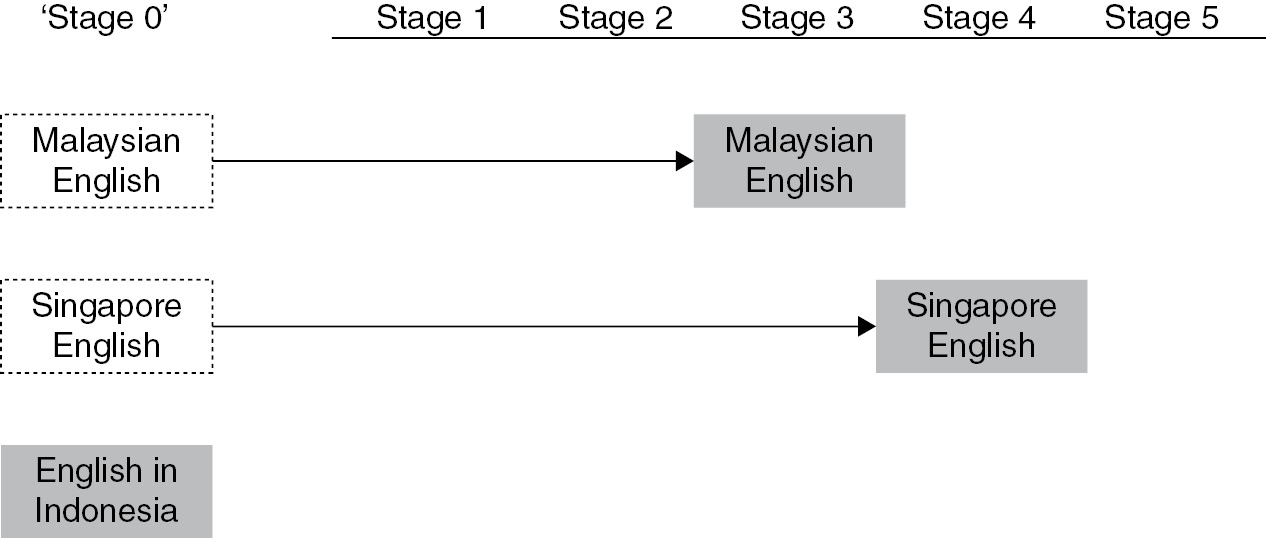
Figure 9.1. “Stage 0” addition to Schneider’s (Reference Schneider2007) model
9.3 Data and methodology
Data for a comparative analysis of the three varieties should ideally be spoken language, not only because phonological features will be investigated alongside morphology and syntax, but also due to the fact that nonstandard features are more likely to occur in (informal) spoken language than in (formal) written language. Two suitable spoken language corpora of Singapore English are the National Institute of Education Corpus of Spoken Singapore English (Deterding and Low 2001), henceforth NIECSSE, and the Grammar of Spoken Singapore English Corpus (Lim Reference Lim2001; Lim and Foley Reference Lim, Foley and Lim2004), henceforth GSSEC. Out of a total of forty-six speakers in the “Interview” category of NIECSSE, only four are ethnic Malay speakers. Data of ethnic Malay speakers from both NIECSSE and GSSEC should be combined in order to obtain a sufficiently large amount of data for a comparative analysis with Malaysian English and Indonesian learner English. GSSEC contains nine files of conversations involving ethnic Malay speakers, totaling twenty-three speakers.
At the time of writing, the Malaysian component of the International Corpus of English (Hajar and Su’ad Reference Rahim and Awabforthcoming) is still being compiled. However, the ICE-Malaysia team have kindly provided a dozen transcribed files from the category “Spoken Component/Dialogue/Private/DirectConversations.”
Regarding the Indonesian learner data, choosing a source is not as simple as for the neighboring ESL varieties. The International Corpus of Learner English (ICLE) has no Indonesian component. Furthermore, the study is intended to pay particular attention to spoken language, a genre not covered by ICLE. It was therefore preferable to collect Indonesian learner data. The process of data collection took place in May 2009 at two locations: the International University of Batam (Universitas Internasional Batam) located on the island of Batam, and the public library in Tanjung Pinang on the island of Bintan. Both islands lie in the Riau Islands archipelago, approximately 20 km south of Singapore.
Batam and Bintan were chosen not only due to their location, but first and foremost because the variety of Malay spoken on the Riau Islands is very similar to that spoken in Singapore and the southern regions of the Malay peninsula. Also, Malay and Indonesian form the two ends of a register continuum in regions of Indonesia where Malay is spoken as an L1, with the latter being the high variety and the former being the low variety (Tadmor Reference Tadmor, Haspelmath and Tadmor2009: 687). This diglossic situation is closer to that of Malaysia than in other parts of Indonesia, where Indonesian is the high variety and a local language other than Malay is the low variety. Thus, the influence of regional variability as a factor can be kept to a minimum. The data recorded on the Riau Islands is by no means representative of English in Indonesia, as it does not represent the country’s vast territory, nor its wealth of different substrate languages. In addition, the respondents all learned English in a scholastic setting, which may not hold true for all speakers of English in the country. As the present study is concerned with a comparison of English in countries sharing a substrate language but having different colonial histories, the label “Indonesian learner English” (abbreviated IndonE) can be used for reasons of convenience. However, any study aiming to describe the state of English in Indonesia in its entirety would have to rely on a wider variety of data than Riau Islands scholastic learner English.
The data for this category were obtained by conducting informal thirty-minute interviews. In total, twenty-five interviews were conducted. The level of English, as measured in years learning English, ranged from 3 to 17 years. In a similar vein to the data borrowed from NIECSSE, utterances by the foreign interviewer (i.e., the author) were not taken into account.
An overall comparison of data for the three varieties under discussion is given in Table 9.1, detailing total numbers as well as subtotals for Malay as L1 and Chinese as L1.
Table 9.1. Overview of total data
| Variety | Source | Total | L1 Malay | L1 Chinese |
|---|---|---|---|---|
| Singapore | NIECSSE + GSSEC | 13,062 | 11,155 | 1,907 |
| Malaysia | ICE-Malaysia | 21,042 | 13,965 | 7,077 |
| Indonesia | Own recordings | 47,9781 | 26,603 | 16,337 |
| TOTAL | - | 82,082 | 51,723 | 25,321 |
The three varieties under investigation were compared in terms of their “nonstandard” features. The term “standard English,” in a similar vein to Kortmann and Schneider (Reference Kortmann, Schneider, Schneider, Burridge, Kortmann, Mesthrie and Upton2004: 1–2), refer to the forms of English used as models for international communication and as models of English language teaching worldwide, that is, British and American English. For the level of phonology, the term “nonstandard” is used for features not found in Received Pronunciation or General American. Needless to say, the terms “standard” and “nonstandard” do by no means imply any superiority of one set of variety over another, but are merely used as a tool of comparison.
The data were annotated using a custom annotation scheme designed to allow both broad and narrow searches. In addition to the category and description of a given feature, specific attributes and additional information were also marked. Standard cases of morphological marking were also annotated to facilitate comparisons of ratios for standard versus nonstandard marking in the three varieties at hand (cf. Figure 9.2 in Past tense marking). An overview of the structure of the annotation scheme with examples of features is given in Table 9.2.
Table 9.2. Overview of annotation scheme structure
| Category | Feature | Attributes | Additional |
|---|---|---|---|
| cluster | origin, result | location | |
| p | monophthong | origin, result | - |
| stop | origin, result | location | |
| 3rd person | missing, analytic, double | verb | |
| m | past | missing, analytic | verb, adverbial, context |
| plural | missing | marker | |
| deletion | item | - | |
| s | inversion | missing | - |
| redundant | item | - | |
| ok | feature | - | - |
| overuse | feature | - | - |
| switch | - | - | - |
An example sentence is given below to illustrate the format of the annotated version of the data.
<IndonE-BBY:45> I don’t<p cluster origin=nt result=n l=final> know, the lecturer <m past missing verb=give adv=no context=no><m 3rdperson missing verb=give>give it to us, so, just<p cluster origin=st result=s l=final>, yeah, it’s included<p stop origin=d result=d_} l=final> in <s deletion item=article> curriculum, right<p stop origin=t result=? l=final>, that’s why we learn it<p stop origin=t result=? l=final>
9.4 Description of select features
In total, thirty features have been annotated and analyzed, a subset of which will be described in Phonological features, Morphological features, and Syntactic features. The selection of features to be described individually consists of the nonstandard realization of /ʃ/, the nonstandard realization of /θ/ and /ð/, monophthongization, past tense marking, comparatives, and deletion. The big picture then proceeds to compare the overall frequencies of all features under investigation in the three varieties.
9.4.1 Phonological features
9.4.1.1 Nonstandard realization of /ʃ/
The phoneme /ʃ/ is frequently realized in a nonstandard manner, generally as [s]. This feature is frequently observed in Indonesian learner English while virtually absent from the postcolonial varieties, with only a single token found in the Singaporean data. Examples of such realizations are given in sentence (1).
(1) But the English [ʃ], er, the British [s] English [ʃ] with the American English [s] is quite different, you know. <IndonE-YL:101>
Sentence (1) features both standard as well as nonstandard realizations of the phoneme /ʃ/, which suggests attempts by the speaker to self-correct the feature.
9.4.1.2 Nonstandard realization of /θ/ and /ð/
The phonemes /θ/ and /ð/ are often realized as [t] and [d], respectively, in all three varieties. Examples are given in sentence (2).
(2) I think [t] yes, er we must hard work to find money, to build social with other [d]- other [d] citizen in that city <IndonE-TC:307>
However, [t] and [d] are not the only observed realizations. Table 9.3 gives an overview of the number of realizations of /θ/ and /ð/ as well as their frequencies.
Table 9.3. Nonstandard realizations of /θ/ and /ð/, frequencies normalized for 100,000 words, rounded to the nearest integer
| SgE | MalE | IndonE | |
|---|---|---|---|
| /θ/ | |||
| Types of realization | 1: t | 3: t, s, ʃ | 11: t, tʰ, t̚, d, d̚, ʔ, ɾ, f, s, ts, ∅ |
| Frequency of realizations | 61 | 190 | 240 |
| /ð/ | |||
| Types of realization | 1: d | 2: d, s | 8: d, d̚, t, ɾ, ʔ, s, v, z |
| Frequency of realizations | 505 | 1,074 | 811 |
With respect to the nonstandard realizations of /θ/, the overall frequency is higher in the learner variety than in the postcolonial varieties. In addition, the range of observed realizations sets the learner variety apart from the postcolonial varieties.
Regarding /ð/, the learner variety also exhibits a wide range of possible realizations. Unlike /θ/, a wider range of realizations does not correlate with higher frequencies, as the nonstandard realization of /ð/ occurs more often in Malaysian English.
9.4.1.3 Monophthongization
Monophthongization of diphthongs is a feature attested in the three varieties under investigation. Examples are given in sentences (3) and (4).
(3) B: No [oː], Mendaki teachers need to take leave, you see, to go on a holiday [eː].
C: Exactly. So [oː] I’m left with no money and no [oː] holiday [eː].
<SgE-T4-1:23–4>
(4) Er flour [uː] and bread, crispy bread. <IndonE-TC:196>
The two types of monophthongization shown in sentence (3) are found in all varieties, while the monophthongization of sentence (4) is only observed in the Indonesian learner data. Table 9.4 gives an overview of the different types of monophthongization observed.
Table 9.4. Overview of monophthongization, normalized for 100,000 words, rounded to the nearest integer
| Diphthong affected | SgE | MalE | IndonE |
|---|---|---|---|
| /әʊ/ | 367 | 737 | 33 |
| /eɪ/ | 666 | 1,036 | 35 |
| /aɪ/ | 0 | 0 | 15 |
| /aʊ/ | 0 | 0 | 6 |
The overview given in Table 9.4 allows two observations which set the postcolonial varieties apart from the learner variety: first, monophthongization is far more frequent in the postcolonial varieties; second, the lower frequency of the phenomenon in the learner variety coincides with a wider range of affected diphthongs.
In addition to the different frequencies of monophthongization (and additional diphthongs affected in Indonesian learner English), the varieties also show variation with regard to the resulting sounds produced. While the diphthong /әʊ/ displays three types of nonstandard realization in Singapore English ([o, õ, ɔ]) and two types in Malaysian English ([o, ɔ]), there are four types in Indonesian learner English ([o, ɔ, ɒ, ʊ]). The differences are more pronounced for the diphthong /eɪ/, where Singapore English and Malaysian English feature only two types ([e, i]), and one type ([i]) respectively, whereas Indonesian learner English displays five types of nonstandard realization ([e, ɛ, ɪ, ɜ, ɑ]).
9.4.2 Morphological features
9.4.2.1 Past tense marking
There are three main types of nonstandard past tense marking observed in the data. Examples illustrating these different types are shown in sentences (5) to (7).
(5) Uh I already go to Singapore just once. <IndonE-WW:162>
(6) Avinesh took, right? Yea. Uh, I rush back, like, I sat on the, you know, the chair outside the d…, uh, bilik tutorial? Then I realize as far as I remember accurate right, he was saying about the [???].2 <MalE-S1A001:134:A>
(7) We were rarely practice it then s- now I think my pronunciation is not really good. <IndonE-AGS:29>
Sentences (5) and (6) represent cases where no marking is present on the verb. However, the past tense setting is indicated by other means. In sentence (5), it is marked by the adverbials already and just once, thereby signaling that in this instance, go does not refer to a prototypical present tense function but to a past action. Sentence (6) uses a different strategy, whereby the unmarked verbs occur in the proximity of marked verbs so that the past tense context is already established. Sentence (7) serves as an example of cases in which the past tense is marked with the insertion of a marked auxiliary. The verb to be is placed in its past tense form before the lexical verb, resulting in we were rarely practice it rather than we rarely practiced it.
Cases of missing past tense marking such as those given in sentences (5) and (6) are by far more frequent than marked auxiliary insertions as in sentence (7). As the total frequencies of past tense contexts vary across the varieties, a comparison of relative frequencies, shown in Figure 9.2, is necessary in order to obtain a clear picture of standard and nonstandard past tense marking in each variety.

Figure 9.2. Relative frequencies of past tense marking types, indicated values rounded to three decimals
The relative frequencies given in Figure 9.2 show that the rate of standard past tense marking in Malaysian English lies somewhat in between the rates of Singapore English and Indonesian learner English. While the rate of standard past tense marking is above 90 percent in Singapore English, Indonesian learner English uses standard marking in less than half of all cases. At 71.9 percent, the rate of standard marking in Malaysian English is closer to that of Singapore English than that of the learner variety, but only slightly so. The differences in standard marking go hand in hand with those observable for missing inflectional marking. Singapore English omits inflectional past tense marking in less than 10 percent of all cases, while this phenomenon is found in a majority of cases in Indonesian learner English. The rate for Malaysian English lies slightly above a quarter of all cases. What the three varieties have in common is a very low rate of inserted marked auxiliary, barely discernible on the right-hand edge of the figure.
9.4.2.2 Comparative
The form of nonstandard comparative marking observed in the data consists of using both standard comparative marking strategies simultaneously, that is, by placing the particle more in front of the adjective as well as appending the suffix -er. Examples are given in sentences (8) and (9).
(8) Oh, so, it’s be, like, more nicer than Cameron Highland. <MalE-S1A010:15:A>
(9) Enough sleep yes, have a fresh mind to study is more better. <IndonE-HP:47>
Examples (8) and (9) both feature a comparative form with double marking, the difference being that sentence (9) combines the particle more with a suppletive comparative form. The double comparative is more frequent in Indonesian learner English (55 occurrences per 100,000 words) than in Malaysian English (10 occurrences per 100,000 words) and Singapore English (8 occurrences per 100,000 words).
9.4.3 Syntactic features
9.4.3.1 Verb deletion
Verb deletion is a feature found in all varieties. Two examples are given in sentence (10).
(10) The beach ∅ so far away from here, ya, so I ∅ on the road, using the road. <IndonE-DI:113>
The beach ∅ so far away is a case of copular verb deletion, while the second deletion, so I ∅ on the road, is a case of lexical verb deletion. Other types of verb deletion encountered are auxiliary verb and modal verb deletion. The normalized frequencies for the different subtypes of verb deletion are given in Table 9.5.
Table 9.5. Types of verb deletion, normalized for 100,000 words, rounded to the nearest integer
| Type | SgE | MalE | IndonE |
|---|---|---|---|
| Auxiliary | 107 | 67 | 96 |
| Copula | 107 | 185 | 254 |
| Lexical | 23 | 19 | 69 |
| Modal | 0 | 0 | 15 |
| Total | 237 | 271 | 434 |
The overview of normalized frequencies reveals the distribution of types of verb varied across varieties. While the overall frequency of verb deletion is almost twice as high in Indonesian learner English as in Singapore English, auxiliary deletion is more frequent in Singapore English than in the learner variety. The remaining types are more frequent in the learner variety, and modal deletion is unique to Indonesian learner English.
9.4.3.2 Relative pronoun deletion
Although it is not among the most frequent types of deletion, relative pronoun deletion is discussed separately because it leads to a nonstandard form of relative clause. In standard English usage, object-relative clauses may have their relative pronoun deleted to form a zero-relative clause, for example, the person (that) I met. Such cases were not taken into consideration, as they are part of standard usage. The cases under discussion here are subject-relative clauses with a deleted relative pronoun, or subject-zero-relative clauses. An example is given in sentence (11).
(11) You know when the waitress or waiter, uh, send the, uh, the, the food to us, we are the first table ∅ will finish it. <MalES1A012:6:B>
Relative pronoun deletion that results in a subject-zero-relative clause is observed for Malaysian English on seven counts (~33 occurrences per 100,000 words) and for Indonesian learner English on eighteen counts (~38 occurrences per 100,000 words). In spite of the similar normalized frequencies observed for these two varieties, the feature is not attested in the Singaporean data.
9.4.4 The big picture
An overall comparison of the features encountered in the categories phonology, morphology, and syntax makes it possible to find out whether any of the categories show more discrepancies or similarities between varieties than others. Such a comparison is given in Figure 9.3, which contrasts normalized frequencies of nonstandard features in the three varieties grouped by category. The frequencies of nonstandard features given include deleted forms, nonstandard forms as well as unexpected usage.

Figure 9.3. Overall comparison of nonstandard features by category, normalized for 100,000 words
The following observations can be made from the comparative overview shown in Figure 9.3. First of all, Indonesian learner English exhibits the highest number of nonstandard features in the morphology and syntax categories, while the opposite appears to be true for the phonology category. The learner variety displays the lowest frequency of phonological features; however, that value is relatively close to that observed for Singapore English. Malaysian English generally lies between the frequencies observed for Singapore English and Indonesian learner English, with the notable exception of the category phonology, for which it has by far the highest frequency of all varieties. Singapore English displays the lowest frequencies for the morphology and syntax categories. In the phonology category, its frequency surpasses that of the learner variety but is considerably lower than that observed for Malaysian English.
The ESL varieties display a certain degree of unity in the category of syntax when compared to the frequencies observed for the learner variety. This observation cannot be made for the morphology category, as the frequency observed for Malaysian English lies almost right between those observed for Singapore English and Indonesian learner English. The phonology category displays an entirely different image, as Singapore English and Indonesian learner English show relative unity, particularly when contrasted to the much higher frequency observed for Malaysian English.
The fact that the ESL varieties show vast differences in the frequencies of phonological features while displaying relative unity in the frequencies of syntactic features goes in line with the “common knowledge in variation studies that ‘accent divides, and syntax unites’” (Mair Reference Mair2007: 97). While this holds true for ESL varieties, the comparison of the ESL varieties and the learner variety appears to result in a reversal of this “long-established truism” (Mair Reference Mair2007: 84). The ESL varieties on the one hand and the learner variety on the other hand are divided with regard to syntax, while on the level of phonology Singapore English and Indonesian learner English are united. However, the fact that Malaysian English and Indonesian learner English display obvious differences when it comes to phonology render the first part of the maxim “accent unites, syntax divides” inaccurate. To summarize, the truism “accent divides, and syntax unites,” observable for ENL and ESL varieties, does not appear to be applicable to comparisons of ESL and EFL varieties. Its reversal, “accent unites, and syntax divides,” can be applied to a comparison of Singapore English and Indonesian learner English, while only the “syntax divides” part is valid for a comparison of Malaysian English and Indonesian learner English.
9.5 Analysis of register variation
As the corpus material collected for Singapore English originates from two corpora, each representing a different level of formality, the influence of register can be investigated in Singapore English and contrasted with the relatively informal and formal registers in the Malaysian data and the Indonesian data, respectively. The data from GSSEC and ICE-Malaysia were collected in similar contexts, that is, spontaneous conversations among peers, and therefore represent informal language. In contrast, the data from NIECSSE and the Indonesian learner data, while not strictly formal, represent a greater degree of formality as they were recorded in an interview setting with a foreign interviewer. The comparison of normalized frequencies for formal and informal Singapore English as well as Malaysian English and Indonesian learner English is given in Figure 9.4.
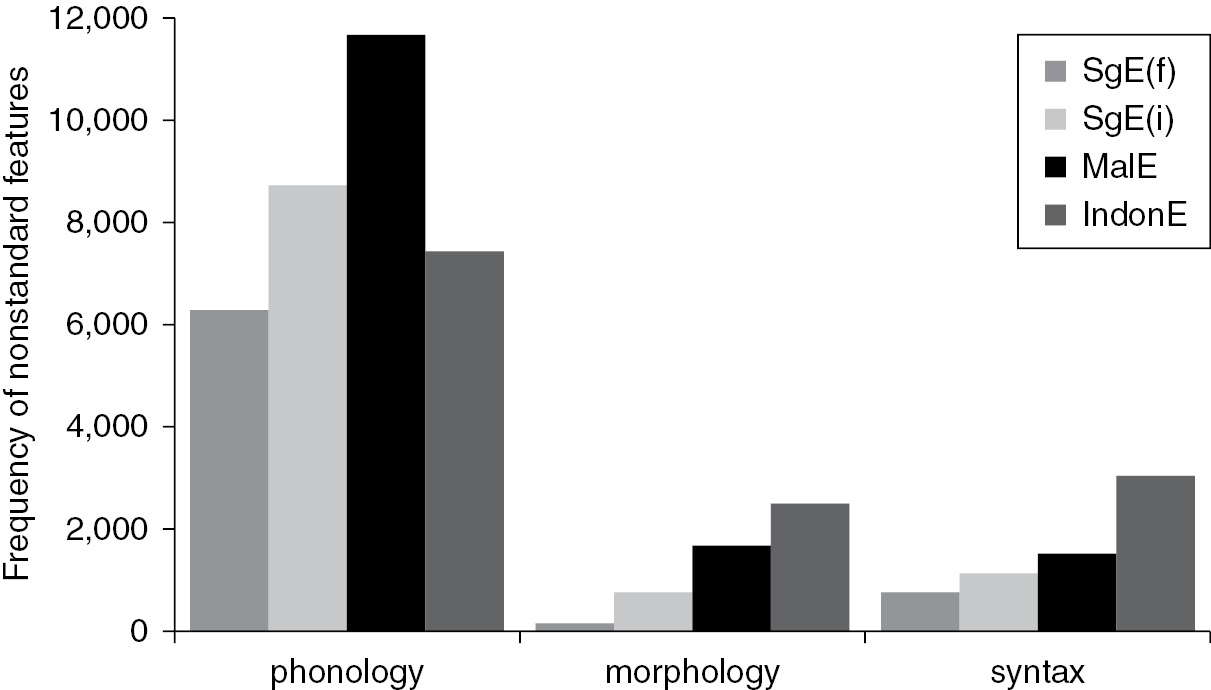
Figure 9.4. Comparison of nonstandard features observed in formal (f) Singapore English, informal (i) Singapore English, Malaysian English and Indonesian learner English, normalized for 100,000 words
With regard to the levels of register examined in Singapore English and their similarities to Indonesian learner English, the comparison given in Figure 9.4 offers clear insights for the morphology and syntax categories. The frequencies observed for morphological and syntactic features suggest that the differences between formal Singapore English and the learner variety are far greater than the differences between informal Singapore English and the learner variety, in spite of the relatively formal setting in which the Indonesian learner data was recorded. Overall, the differences observed between the postcolonial variety and the learner variety with respect to morphology and syntax remain vast.
The comparison of phonological features across the learner variety and formal/informal Singapore English suggests that the frequency of nonstandard phonological features in Indonesian learner English lies somewhat between the frequencies observed for formal and informal Singapore English. As such, the accent of formal Indonesian learner English can be regarded as more pronounced than that of formal Singaporean English, but less so than that of informal Singaporean English.
9.6 Conclusion: implications for communicating with Asia
The analysis of selected features has revealed certain characteristics relevant to communicating with Asia. Firstly, the forms of English observed in Singapore, Malaysia, and Indonesia share many features, which can be explained by their common origin as learner varieties. However, they are not identical, as certain features, such as nonstandard realization of /ʃ/, are virtually unique to Indonesian learner English. Van Rooy (Reference Van Rooy, Mukherjee and Hundt2011) gives an explanation for these differences between nativized and learner varieties, stating that learner errors enter a feature pool from which they may (or may not) be conventionalized by the speech community, as illustrated in Figure 9.5.
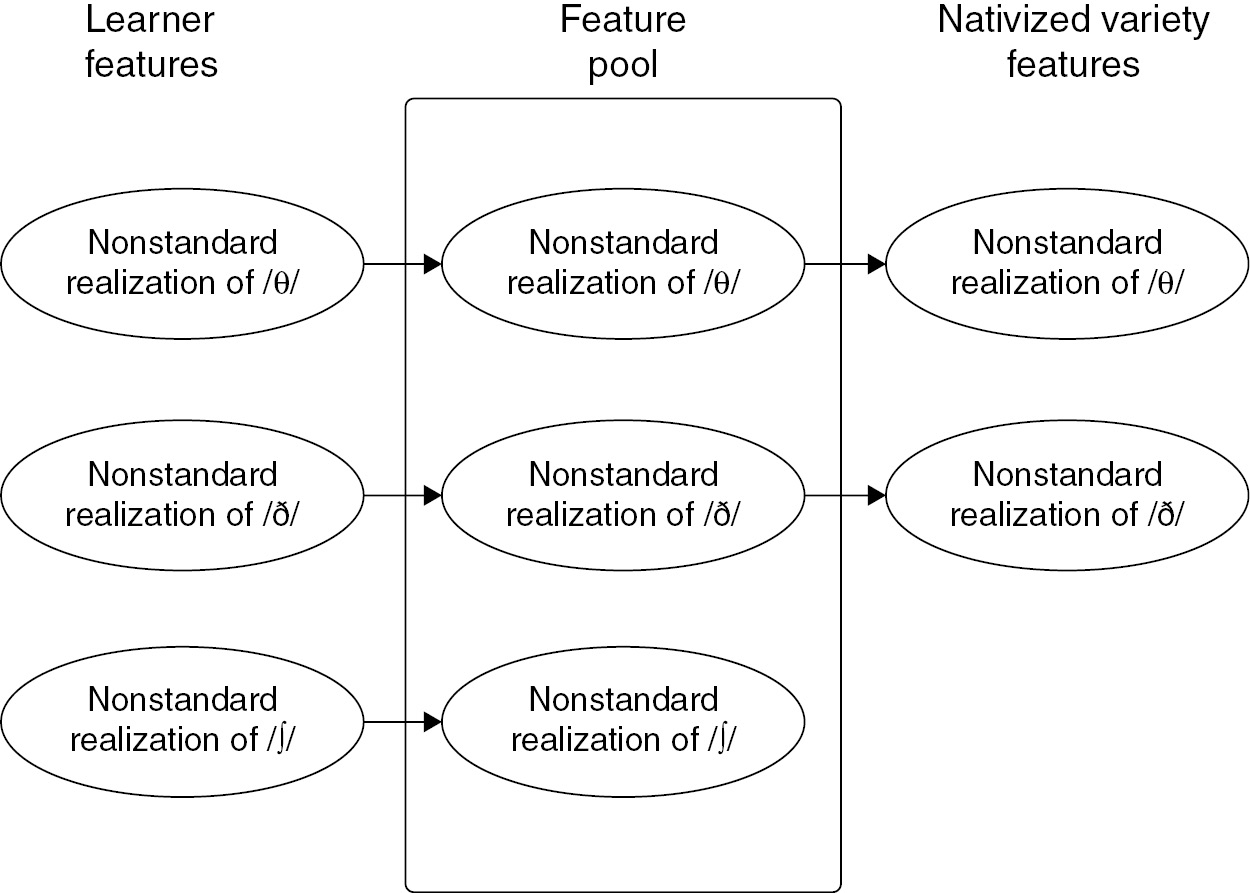
Figure 9.5. Illustration of feature selection in the nativization process
However, the process of nativization appears to be more subtle than consisting simply of selection versus nonselection of a given feature. This is best demonstrated by the recurring observation that nonstandard features display a wider range of realizations in the learner variety than in the nativized varieties. An illustration of this more subtle type of selection is given in Figure 9.6.
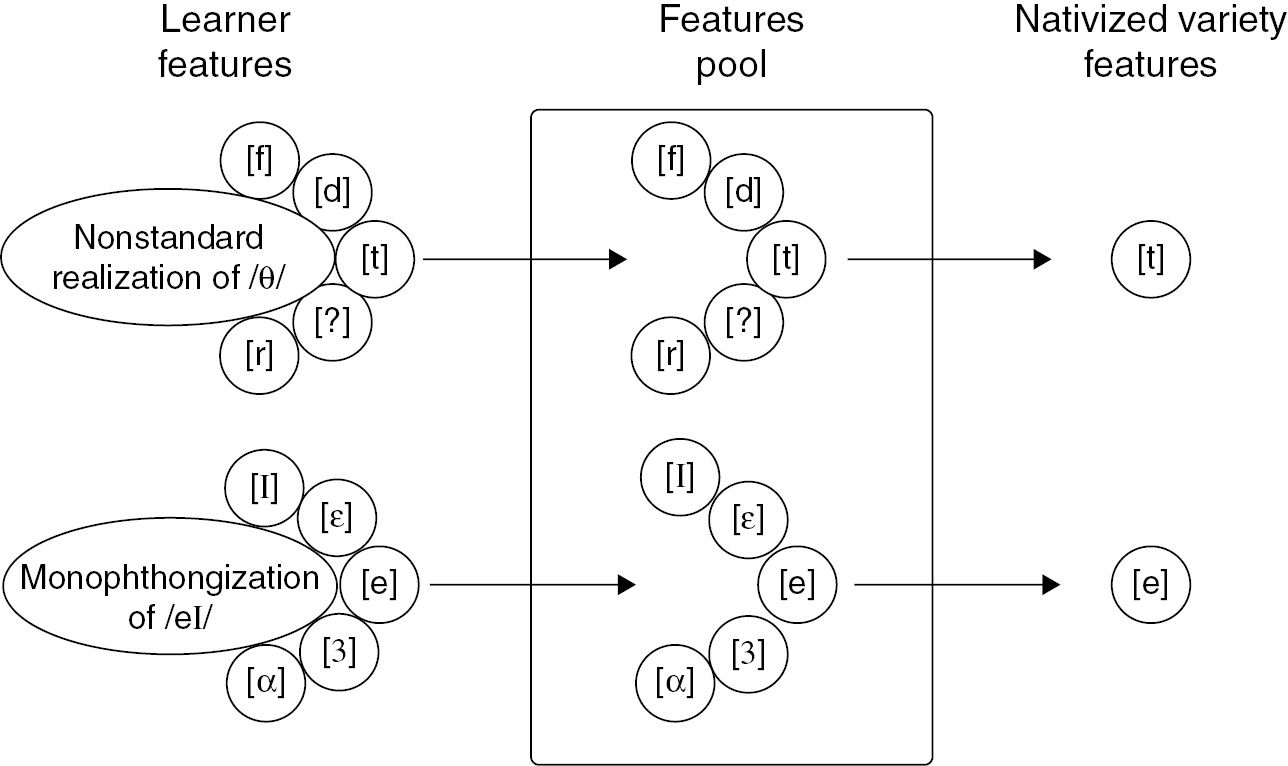
Figure 9.6. Illustration of feature range selection in the nativization process
This has implications regarding communicating with Asia using English as a lingua franca, in particular, understanding English language produced by Asian speakers. Nonstandard features produced by speakers of postcolonial varieties tend to occur as a few realizations, typically just one. For example, Europeans communicating with Singaporeans or Malaysians can improve their understanding of the respective accents by expecting /θ/ to be occasionally realizedas [t]. In contrast, understanding the accent of an Indonesian learner may prove to be more difficult, as /θ/ may be realized in a completely unexpected manner.
The second relevant contrast relates to the accent/grammar divide observed. Although their accents are marked to a comparable extent, the morphology and syntax of the postcolonial varieties are clearly closer to standard English than is the case for Indonesian learner English. As such, communication with speakers from countries with a British colonial background should be easier when it comes to grammar. In addition, the influence of register variation investigated for the Singaporean data has shown that speakers of postcolonial varieties of English are able to adjust their accent and grammar to contain fewer local features in a formal context. They should therefore be able to accommodate their speech toward standard English with more ease than Indonesian speakers could.
The question remains how formal Malaysian English and informal Indonesian learner English would fare in such a comparison. It remains unclear whether register variation in Indonesian learner English is nonexistent or, if it exists, how restricted it is in comparison to postcolonial varieties. Figure 9.7 gives a schematic representation of register variation in both ESL and EFL settings.
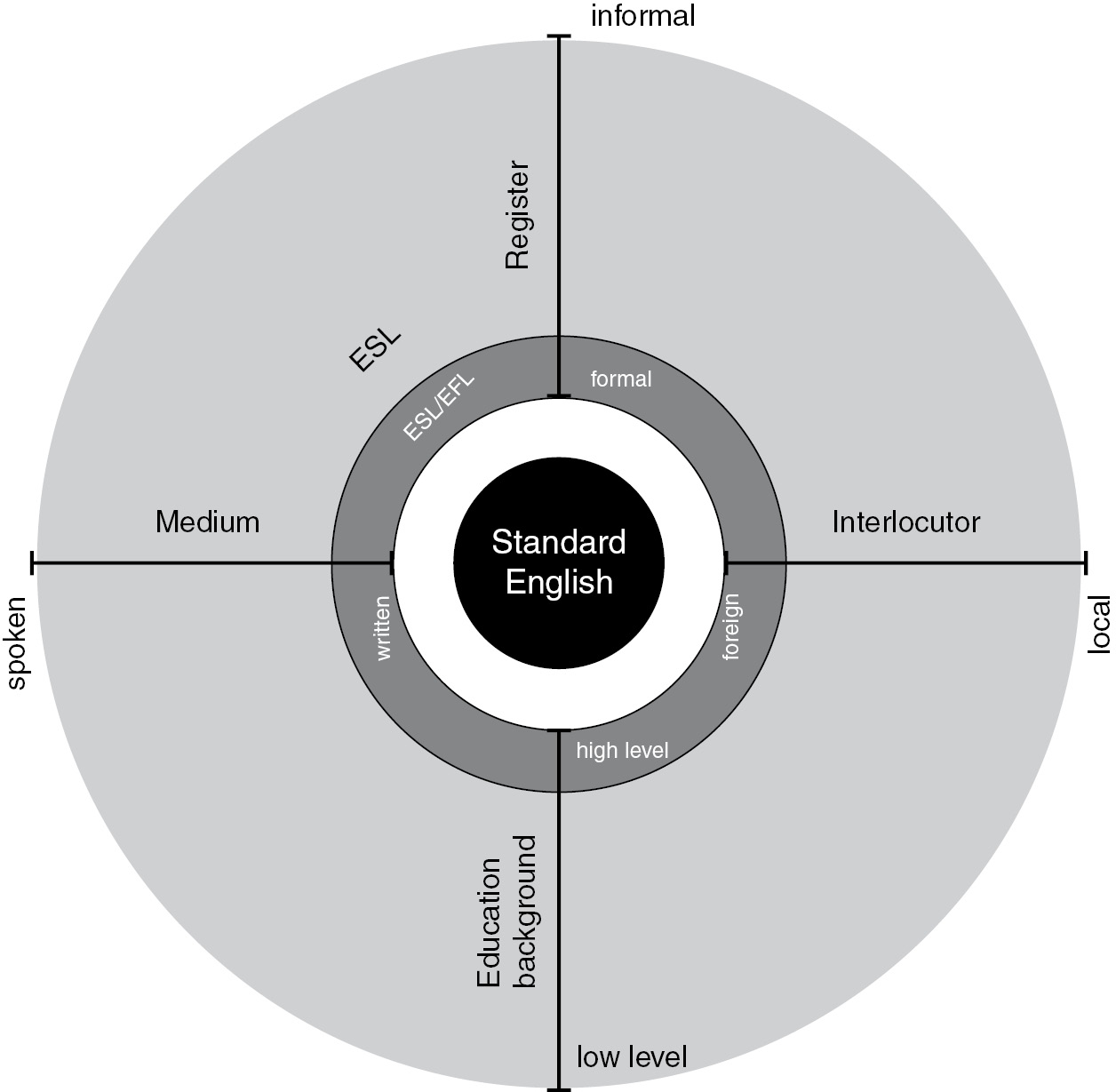
Figure 9.7. Model of sociolinguistic range of English in ESL and EFL settings
The model in Figure 9.7 conceptualizes the range of uses of English in both settings. Although speakers of postcolonial varieties use English in local and informal contexts, their usage of English also extends to the domain of international and formal usage to which Indonesian learner English is mostly limited. Indonesian learner English produced in a relatively formal setting has been shown to contain more nonstandard features than formal Singapore English with regard to phonology, and more nonstandard features than both informal postcolonial varieties with regard to grammar. While the three varieties share many features and may appear similar on the surface, speakers of postcolonial varieties produce these features out of choice rather than necessity and possess the ability to reduce the local character of their language production, which cannot be said of Indonesian learners. Accordingly, any communication problems occurring in international communication with Singaporean or Malaysian speakers may be exacerbated when Indonesian speakers are involved. It remains to be seen whether this is limited to the varieties presently under consideration, or whether this also applies to similar constellations in Asia (and beyond), for example, a comparison of Hong Kong English and learner English from Cantonese-speaking regions of the People’s Republic of China.


