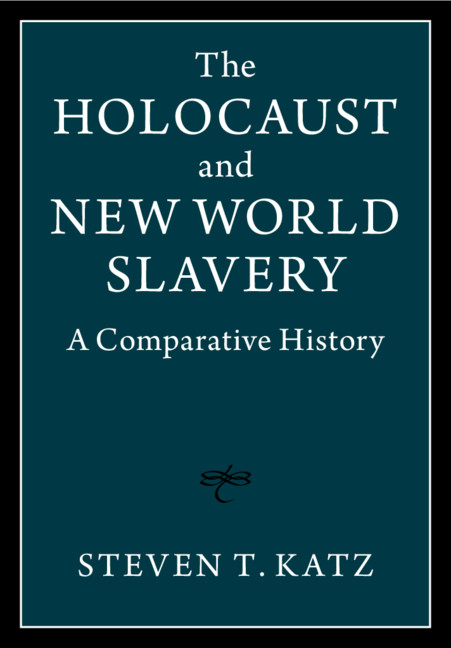

This volume offers the first, in-depth comparison of the Holocaust and new world slavery. Providing a reliable view of the relevant issues, and based on a broad and comprehensive set of data and evidence, Steven Katz analyzes the fundamental differences between the two systems and re-evaluates our understanding of the Nazi agenda. Among the subjects he examines are: the use of black slaves as workers compared to the Nazi use of Jewish labor; the causes of slave demographic decline and growth in different New World locations; the main features of Jewish life during the Holocaust relative to slave life with regard to such topics as diet, physical punishment, medical care, and the role of religion; the treatment of slave women and children as compared to the treatment of Jewish women and children in the Holocaust. Katz shows that slave women were valued as workers, as reproducers of future slaves, and as sexual objects, and that slave children were valued as commodities. For these reasons, neither slave women nor children were intentionally murdered. By comparison, Jewish slave women and children were viewed as the ultimate racial enemy and therefore had to be exterminated. These and other findings conclusively demonstrate the uniqueness of the Holocaust compared with other historical instances of slavery.
Winner, 2020 PROSE Award for World History
‘Comparisons and contrasts, both popular and academic, between slavery and the Holocaust are common but often superficial, even facile. Katz (Boston Univ.), however, succeeds in lifting the discussion to notably higher levels … Highly Recommended.’
T. P. Johnson Source: Choice
‘… an extensively researched masterwork …’
Manus I. Midlarsky Source: Holocaust and Genocide Studies
‘Katz has mastered the literature of two boundless fields and has produced a graphic crime report that jolts the senses and numbs with excess. Immersing himself in documents, data, first hand accounts, and secondary sources that add a layer of analysis to primary voices, he has produced a massive study of two historical realities that, to paraphrase historian Edward Lilenthal, stick in the throat of Western civilization like a fish bone.’
Theodore Rosengarten Source: Yad Vashem
Loading metrics...
* Views captured on Cambridge Core between #date#. This data will be updated every 24 hours.
Usage data cannot currently be displayed.
This section outlines the accessibility features of this content - including support for screen readers, full keyboard navigation and high-contrast display options. This may not be relevant for you.
Accessibility compliance for the HTML of this book is currently unknown and may be updated in the future.
