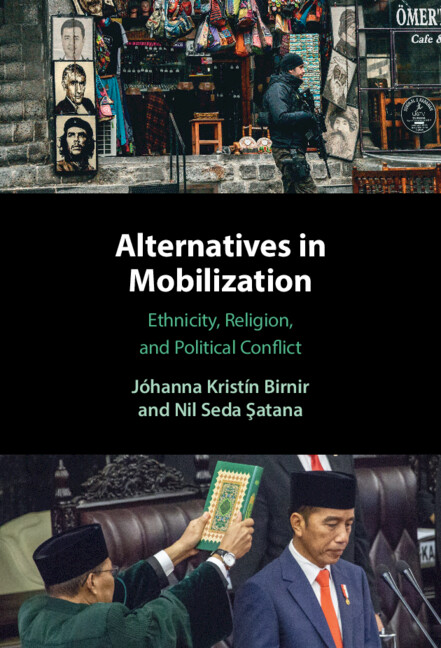

What determines which identity cleavage, ethnicity or religion, is mobilized in political contestation, be it peaceful or violent? In contrast to common predictions that the greatest contention occurs where identities are fully segmented, most identity conflicts in the world are between ethnic groups that share religion. Alternatives in Mobilization builds on the literature about political demography to address this seeming contradiction. The book proposes that variation in relative group size and intersection of cleavages help explain conundrums in the mobilization of identity, across transgressive and contained political settings. This theory is tested cross-nationally on identity mobilization in civil war and across violent conflict in Pakistan, Uganda, Nepal and Turkey, and peaceful electoral politics in Indonesia. This book helps illustrate a more accurate and improved picture of the ethnic and religious tapestry of the world and addresses an increasing need for a better understanding of how religion contributes to conflict.
Loading metrics...
* Views captured on Cambridge Core between #date#. This data will be updated every 24 hours.
Usage data cannot currently be displayed.
This section outlines the accessibility features of this content - including support for screen readers, full keyboard navigation and high-contrast display options. This may not be relevant for you.
Accessibility compliance for the PDF of this book is currently unknown and may be updated in the future.
