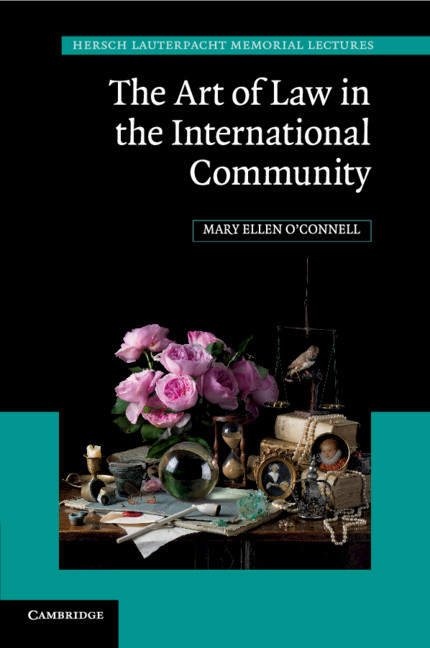

International law evolved to end and prevent armed conflict as much as for any other reason. Yet, the law against war appears weaker today than ever in its long history, evidenced by raging armed conflicts in which people are killed, injured, and forcibly displaced. The environment is devastated, and the planet impoverished. These consequences can be traced to the dominant ideology of realism. In 1946, Hersch Lauterpacht challenged that ideology by contrasting it with the idea of international law, composed of natural law, positive law, and process theory. The Art of Law in the International Community revives his vision, rebuilding the understanding of why international law binds, what its norms require, and how courts are the ideal substitutes for war. The secret to the renewal of international law lies in revitalizing the moral foundation of natural law through drawing on aesthetic philosophy and the arts.
‘O’Connell’s plea for creative means to both educate international legal participants in, and secure buy-in for, the value of legal process and the importance of peaceful methods of dispute resolution is both powerful and timely, especially given the recent backlash against international tribunals and other international organizations.’
Neha Jain Source: American Journal of International Law
Loading metrics...
* Views captured on Cambridge Core between #date#. This data will be updated every 24 hours.
Usage data cannot currently be displayed.
This section outlines the accessibility features of this content - including support for screen readers, full keyboard navigation and high-contrast display options. This may not be relevant for you.
Accessibility compliance for the HTML of this book is currently unknown and may be updated in the future.
