

Until now, this book has traversed what may be seen as more natural terrain for the historian. To end at this point, however, would be to overlook a crucial component of historical research, especially on a topic like disasters, which is the theoretical and practical contribution to current challenges. This final section therefore poses three questions. Starting from the concept of the Anthropocene, it first of all asks whether the modern period is fundamentally different from the past, and if so, why? Second, it maps the potential of historical research for better understanding vulnerability and resilience to disasters, and equally, the potential of disasters for the study of history. Finally, it outlines some pathways for the future elaboration of disaster history.
7.1 Disaster History and/in the Anthropocene
The profoundly reconditioned interactions between humans and nature in the present age are increasingly perceived as so fundamental as to justify speaking of a new geological epoch – the Anthropocene – in which humankind is fundamentally altering the basic geophysical and biological conditions of life on Earth. The concept of the Anthropocene does away with the modernist distinction between Nature and Society, questions the limits of human agency, and forces us to link the most recent period in the Anthropocene – the postwar period, in which human impact has increased enormously – with the ‘deep history’ of humankind as predatory species.Footnote 1 While there is still discussion on the precise starting point of the Anthropocene on the geological time-scale – the beginnings of agriculture, the Industrial Revolution, the impact of the latter on atmospheric CO2 via the burning of fossil fuels? – it is clear that the scale of human interactions with the global environment changed dramatically from the 1950s onwards, when almost every indicator of human enterprise – population, resource use, species extinction, connectivity, etc. – showed an exponential increase.Footnote 2
This Great Acceleration, as it is often called, profoundly altered not only the scale but also the nature and perception of disasters. When Japan was struck on 3 November 2011 by the most powerful earthquake in its recorded history, the country faced a real conundrum of disaster, with 670 kilometers of coast directly affected by a tsunami wave 40 meters high which, apart from destroying or damaging almost one million buildings, also triggered a meltdown of the Fukushima nuclear powerplant.Footnote 3 As Sara Pritchard has argued, Fukushima is the ultimate example of the “complex, dynamic, porous and inextricable configuration of nature, technology and politics” in modern disasters.Footnote 4 In the “new planetscape of impossibly intertwined entanglings of earthly biorhythms and colossal human engineering projects,” John David Ebert argues, the distinction between ‘natural’ and ‘human-made’ disasters can no longer be made.Footnote 5 Furthermore, a disaster like Fukushima is fundamentally a global one, not only through the evident global media coverage and international solidarity, but also through its impact on nuclear policies, opening a window of opportunity for countries like Germany to shut down their nuclear power plants. The changing attitude towards the potential of technology to prevent disasters is also reflected in the reconstruction policies after the disaster: instead of rebuilding the destroyed houses as soon as possible, Japanese coastal communities hit by the tsunami were resettled on high ground, often invoking a lot of resistance on behalf of villagers that for economic (fishermen) or moral (connection to the ancestral ground) reasons wanted to rebuild their homes in the traditional location near the sea.Footnote 6
There still is debate on whether the Anthropocene itself should be considered as a ‘disaster’ in its own right – one which probably can only be equaled to the asteroid which about 66 million years ago killed about 70 percent of the species on Earth, including most dinosaurs – or whether there could be such a thing as a ‘good Anthropocene,’ in which humans and nature will co-evolve into some mutually beneficial ‘better’ state.Footnote 7 More important for our purpose is the question whether disasters in the Anthropocene are indeed profoundly different from any disaster which preceded the Anthropocene, and if so, why exactly? Are the essential changes, if any, situated in the production of disasters, or rather in new types of social vulnerabilities, or shifts in coping mechanisms, for instance from risk reduction to resilience? In what follows we consider three features which might set apart the disasters of the Anthropocene: climate change, capitalism, and risk culture.
7.1.1 Climate Change
One debate that has characterized the climate change and disasters literature in recent years is the extent to which climate change – that is, changes in climate resulting from anthropogenic influence – is itself a direct driver of disaster risk. Evidence for the influence of humans on climate has become ever more voluminous. The IPCC currently puts global mean surface temperature in the period 2006–15 at 0.87°C above that of 1850–1900,Footnote 8 while model projections suggest that temperatures are locked into a further increase even without continued growth in greenhouse gas emissions. Importantly, this shifting baseline also translates into an increased risk of extreme weather events through changes in their frequency and/or intensity. This can alter the exposure of a society to events such as heat waves, precipitation extremes, and coastal flooding, and consequent overall levels of risk.
Some have argued that climate change has already made an impact on the nature of hazards and disasters. The occurrence of floods and windstorms within the Emergency Events Database (EM-DAT) of international disasters,Footnote 9 for example, exhibits a pronounced upward trend over the final decades of the twentieth century, which has led some to argue that we have entered a new age of climate-related disaster. This must be treated with caution, however; data coverage within EM-DAT is poor prior to 1970, and growth since then may be as much a factor of better recording practices as it is a factor of changes in the occurrence or return periods of extreme weather. While this uncertainty is often concluded to be a combination of changes in hazard occurrence, recording, and greater numbers of people and amounts of capital exposed to harm, the relative importance of these factors in producing the apparent increase in disaster occurrence remains unclear.Footnote 10
Similarly, although it has long been recognized that risk and vulnerability to hazards is a “construct of the physical and social worlds,”Footnote 11 analyses of the relative roles of the physical and social in producing risk and vulnerability are not consistent across the literature. In mainstream climate change research (i.e. that included within the IPCC Working Group II – Impacts, Adaptation, and Vulnerability), ‘risk’ – defined as the combination of hazard, exposure, and vulnerability – remains primarily a physical construct, with the degree of environmental exposure and the nature of hazard often overshadowing social vulnerability (Figure 7.1). Furthermore, although the most recent IPCC report notes that vulnerability is multidimensional, it still tends to be conceptualized as a ‘second-order’ factor; in other words as something that is impacted on by hazards, rather than something that, by way of human agency and deep-rooted social factors, actively shapes the nature of this impact.
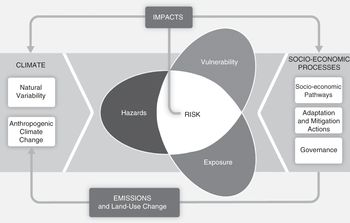
Figure 7.1 Illustration of the core concepts of the WGII AR5. Risk of climate-related impacts results from the interaction of climate-related hazards (including hazardous events and trends) with the vulnerability and exposure of human and natural systems. Changes in both the climate system (left) and socio-economic processes including adaptation and mitigation (right) are drivers of hazards, exposure, and vulnerability. Courtesy of the IPCC. IPCC, ‘Summary for Policymakers.’
These critiques have been most prominent within some quarters of the disaster studies literature and have been brought into focus by the recent media coverage of the contribution of climate change to hurricane disasters.Footnote 12 Although climate change is thought to influence hurricane intensity through warmer ocean temperatures, Ilan Kelman has argued powerfully that this is largely irrelevant in explaining why the hurricanes of the 2017 season had such significant impact, the issue being rather that a disaster involving a hurricane can happen only if people and infrastructure are vulnerable to it.Footnote 13 This vulnerability may arise from a lack of capability or financial capacity to respond effectively to a hurricane, brought about by, for example, lack of stringent building regulations or access to insurance – factors completely independent of climate change. In this view, the debate over whether climate change itself is a driver of disaster therefore represents a return to older arguments concerning the nature of hazard and disaster. More practically, the resultant focus on large-scale efforts to reduce global greenhouse gas emissions may present a ‘dangerous distraction’ from the more local-level responsibility to implement effective measures to reduce vulnerability.
The longer view nevertheless tells us that both of these perspectives have validity. History is littered with examples of societies in ‘marginal’ environments where the local-level implications of global temperature change may have pushed the continued viability of human activities in particular environments beyond a certain threshold. It would therefore be unwise to discount the potential for similar changes in the future. On the other hand, what may be perceived as ‘unfavorable’ longer-term changes in historical climatic conditions did not necessarily lead to economic decline or political instability. On the contrary, historians have argued that Northwest European societies thrived during the cooler climatic conditions of the Little Ice Age, while drier overall Little Ice Age conditions in seventeenth-century Southern Africa appear to have been accompanied by a reduction – rather than an increase – in drought impacts on society.Footnote 14 Each of these processes was rooted in levels of social vulnerability rather than in environmental risk.
One can argue, then, that climate change contributes to, and, in many places, increases overall levels of risk by modifying environmental exposure and the nature of hazards. Yet whether this risk translates into disaster is, in the vast majority of cases, determined by society itself. This has two implications for climate change debates. First, reducing underlying vulnerability to present climate variability may not represent a mere ‘first step’ towards future climate change adaptation,Footnote 15 but may instead hold the key, at least insofar as extreme weather is concerned. In this sense it is unhelpful to cast aside the past as something fundamentally different from the “nonlinear and stepped” changes associated with future climate change,Footnote 16 although clearly in areas highly exposed to rises in sea-level, for example, these differences will be felt to a far greater extent. Second, the continued hegemony of research into future physical changes in hazard and exposure at the expense of research into what drives vulnerability may promote a reductionist approach that obscures the critical role of the underlying patterns of vulnerability in producing disasters. Despite many calls for research into such underlying patterns, which may be historically determined, these remain poorly understood in many areas. This represents a major challenge for social scientists and historians to confront.
7.1.2 Capitalism
Underlying the concept of the Anthropocene is the idea that humans or humanity have started to change the physical conditions of the global environment.Footnote 17 This might suggest that humanity as a whole can be held responsible for the planetary changes associated with the Anthropocene and the disasters resulting from these changes. But probably, it is more accurate – and fair – to argue that specific humans in specific economic and social configurations were responsible for these changes, while others were forced to cope with the consequences, including increased numbers of extreme meteorological events or technological catastrophes.Footnote 18 The best-known spokesman of this position is Jason Moore, who argues that it is not humanity that is responsible for climate change, but capitalism: hence he argues in favor of replacing the concept Anthropocene by Capitalocene: the Age of Capital.Footnote 19
The Industrial Revolution is usually portrayed as the main turning point in the relation between humanity and nature. In The Great Transformation (1944) Karl Polanyi already meticulously depicted industrial capitalism as a gigantic process of reducing and simplifying land – just like labor – to its mere economic functionality, instead of a vital part of human life, which provided habitation, physical safety, the landscape, and the seasons.Footnote 20 Moore, however, retraces the origins of the Capitalocene to the long sixteenth century, when the European-centered modern world economy – as devised by Wallerstein – was taking shape. Around 1450 a turning point was reached, through which humanity’s relation with the rest of nature underwent a fundamental change. For Moore, capitalism changed humans’ interaction with nature in three ways.Footnote 21 First of all, humans and nature were commodified, meaning they could be exchanged and accumulated as labor, food, energy, and raw materials – the ‘Four Cheaps’ as Moore has labeled them, because of the inherent drive in capitalism of acquiring them as cheaply as possible. By doing so, nature is constantly reworked into a partly human, partly non-human, ‘bundle’ – a process political ecologists call ‘hybridization.’Footnote 22 In hybrid form, nature could be mobilized and accumulated. This mobilization over ever longer distances widened the so-called ‘Metabolic Rift’ between production and consumption – a metaphor of the human body introduced by Karl Marx to analyze the progressive rupture in the nutrient cycle between town and countryside, and later between different parts of the world. Nutrients were extracted in one place, consumed in another, and dumped in a third, hence causing a fundamental socio-environmental disequilibrium and a harbinger of ecological crisis.Footnote 23 Abstraction and accumulation are facilitated by a third feature of Capitalism: the ‘Cartesian’ drive of surveying, identifying, quantifying, classifying, controlling, and sometimes ‘protecting’ Nature – a logic which, according to Alfred W. Crosby, had already developed into a distinctive feature of European culture and society by the twelfth–thirteenth centuries.Footnote 24
Using a world systemic perspective, Moore argues that the environmental vulnerabilities produced by the Capitalocene are most visible at its margins: the ‘frontier’ zones of the capitalist system, where cheap resources, labor, energy, and food are found, which can be processed and transferred to the system’s core. The ‘commodity frontiers’ of sugar, cotton, or beef have been mapped as spaces where the new order of the Capitalocene subordinates and in the end erases the old order, but not without exploiting the latter to yield cheap production and unprecedented profits. This is also because the rise of capitalism, in Moore’s view, was inextricably linked with colonialism and violent Western expansion, slowly leading to the whole world being incorporated into the capitalist regime.Footnote 25
In the process, ‘frontier’ societies often became extremely sensitive to nature-induced as well as technological disasters. The plantation economies that were established in the colonies, based on the Four Cheaps, transformed existing ecosystems and societies, producing not only a different landscape but also new vulnerabilities. In the early-modern Caribbean, for example, the new plantation landscape provided ideal conditions for specific species of mosquitoes, carrying two lethal diseases, yellow fever and malaria, resulting in disease and death among native and slave populations.Footnote 26 Something similar happened in the early-modern Southeast of the current-day United States, where the native population was hit not only by continuous slave raids – looking for cheap labor – but also by a transforming disease ecology, as smallpox wreaked havoc among the native population.Footnote 27 Colonialism and capitalism not only created new disease ecologies, but according to Davis’ well-known work they also turned droughts into famines, causing ‘Late Victorian holocausts’ from India and China to Brazil. A colonial government unwilling to control the market and focused upon transporting cheap commodities to the homeland did not intervene when harvests failed.Footnote 28
Moore, like Polanyi, in his analysis maintains a rather linear perspective on the development of capitalism – from its medieval localized roots to the world-encompassing system of the present. Scholars like van Bavel, however, recently argued for the existence of capitalist configurations in other contexts as well: for instance in Iraq in the eighth century or China in the Sung period. In each of these contexts, land, labor, and capital became primarily ‘processed’ and allocated through the market, and in each of these contexts, a dynamic period of economic growth was followed by a period of instability, characterized by rising inequality, collusion between political and economic interests, and mounting environmental problems. From this perspective, capitalism is not the distinctive feature which sets ‘modern’ history apart from a ‘pre-modern past.’ Moreover, in each of these contexts, capitalism would itself decline, giving way to a different organization of the economy and the environment, no longer exclusively based upon commodification of production factors.Footnote 29 In the future, historical approaches to capitalism combining this idea of cyclicality and a world system analysis might push the analysis one step further.
7.1.3 The Risk Society
Writing in the 1980s, Ulrich Beck formulated the idea of the present age as a ‘Risk Society,’ a society in which disasters stopped being exceptions, a break from daily routines, and had become part of everyday life. For individuals, for communities, and for states, dealing with the risk of hazards and disasters became a central preoccupation. In other words, people started to live in constant fear.Footnote 30 In the wake of Chernobyl and Bhopal, the disasters Beck had in mind were predominantly technological or, more precisely, they were hybrid configurations of nature and technology. As hazards and disasters could no longer be avoided, resilience – bouncing back and adapting – gradually replaced vulnerability as the dominant framework in disaster analysis and policy.Footnote 31
In the Risk Society, natural disaster is increasingly framed as inevitable. Quite paradoxically, however, much of the present-day vulnerability to natural disaster resulted from the ambition to control nature, using technology, creativity, and capital. In this respect the antecedents of the modern Age of Risk can be situated much earlier. In the eighteenth and nineteenth centuries, the Enlightened naturalization of the world definitely set society and nature at different poles: nature became something ‘out there,’ waiting to be understood, controlled, and conquered. Meanwhile, the Industrial Revolution greatly expanded the technological possibilities allowing one to succeed in this conquest of nature. As a result, nature-induced disasters were increasingly presented as failures of control, calling for greater human endeavors to avoid their repetition. In this respect, the Lisbon Earthquake of 1755 is often considered a turning point in (Western) dealings with risk, for a number of reasons. Among the reasons are the degree of central coordination by the state shown in the recovery from the earthquake, the efforts of this state to rationalize, measure, calculate, and undo its impact, and the wide range of technological improvements deployed to make the built environment more resilient to future earthquakes. Lisbon, however, was also one of the first disasters which was widely discussed in an emerging public sphere of newspaper-readers and intellectuals, all over Europe and the colonial world.Footnote 32 The earthquake made a deep impression on the intellectual world of the Enlightenment, with its adherents such as Voltaire and Kant publishing extensively on the subject and each in their way contributing to both the scientific study of disaster and its naturalization, with Voltaire in both Candide and the Poème sur le désastre de Lisbonne vehemently attacking those who still believed that such disasters were some form of divine punishment.Footnote 33
If disasters were natural, blind, and evil, human industry should and could be directed at preventing their occurrence and controlling their impact. And in the two centuries following the Lisbon Earthquake, the technological possibilities to do so expanded greatly, and huge numbers of people started to settle in flood-prone deltas or practice irrigation-farming in water-poor regions, as if floods and droughts did not exist. The coming of age of the Anthropocene replaced the ideal of absolute safety by the ideal of acceptable risk – a relative degree of safety based on accurate calculation and assessment, permanent alert, smart use of technology, and maximal accommodation of hazards.Footnote 34 The idea of ‘acceptable risk’ is very prominent, for instance in modern coastal engineering. On the basis of projections of the frequency and intensity of extreme sea levels in the future, as well as calculations of relevant uncertainties, flood protection is continuously being adapted in order to withstand ‘once-in-a-thousand-years’ or even ‘once-in-ten-thousand-years’ storms.Footnote 35 However, if ‘acceptable risk’ is one side of the coin, the fundamental unpredictability of modern disasters is the other. Disasters like 9/11, Chernobyl, or the 2004 Indian Ocean Tsunami by far exceeded the margins of probability of commonly available risk assessments, leading Joachim Radkau to the suggestion that only science fiction and horror stories could provide realistic scenarios for some of the disasters unfolding in the modern age of risk.Footnote 36
In sum, it is clear that anthropogenic climate change as well as the rise of the capitalist world-system, or the risk society, drastically altered the production, the impact, and the handling of disasters. At the same time, however, the gap between Anthropocene disasters and disasters in the more distant past is often surprisingly small, especially when discussing vulnerability and resilience. Especially the roles of different institutional formations and coordination systems (state, market, family) in relation to hazards, and those of social actors and their sometimes differing interests, can be instructive with respect to present-day situations. The many examples and case studies discussed throughout this volume make clear that the study of past disasters, even those which occurred in the distant past, can offer a substantial contribution to a better understanding of disasters today.
7.2 The Potential of History for Better Understanding Disasters
Of the many fields that contribute to mainstream disasters discourse, history is often found towards the bottom of the list.Footnote 37 In much of this literature we might find a brief preamble on the history of a particular disaster or policy over some decades – the so-called ‘long term’ – while the present tends to remain rigidly detached from the past, creating an artificial divide between knowledge perceived as relevant and that seen as irrelevant for disaster risk reduction. Equally, we might argue that much scholarship focusing on historical disasters remains detached from the present. Many arguments for historically informed disaster research have come not from historians, but from geographers, sociologists, ecologists, and paleoclimatologists – a circumstance that has shaped the ways in which scholars have attempted to draw ‘lessons’ from the past.
One of these is known as ‘forecasting by analogy’ – an approach pioneered by social scientist Michael H. Glantz in the late 1980s and 1990s. This approach views past experiences of responses to hazards as analogous to future challenges, arguing that, if we can identify how past societies successfully or unsuccessfully managed risk, then we can use this knowledge to forecast the likely impacts of future threats such as climate change.Footnote 38 Past disasters are turned into ‘completed natural experiments of history’, which can be mobilized to forecast the range of potential outcomes of future disasters (Figure 7.2).
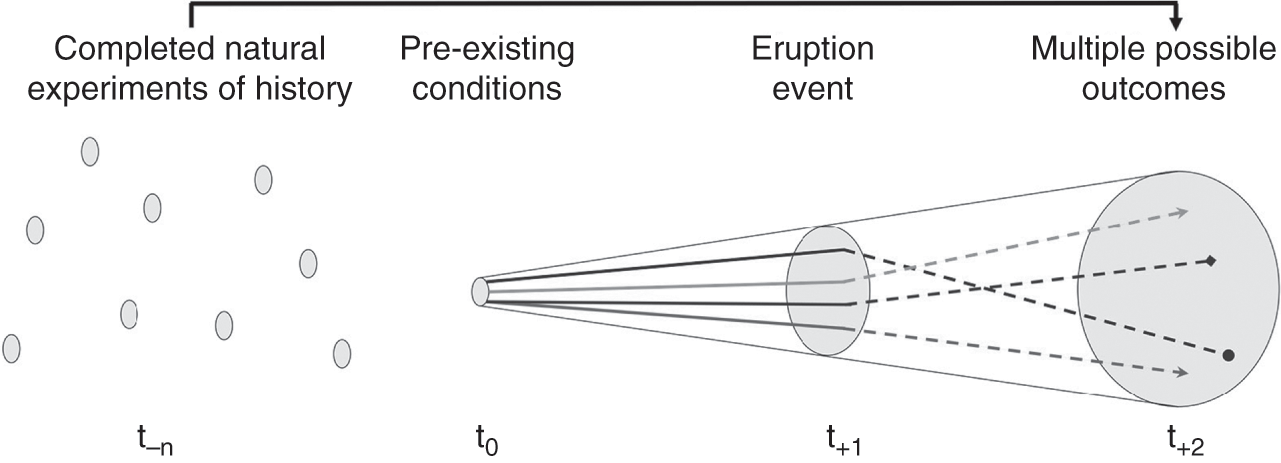
Figure 7.2 So-called ‘scenario trumpet’ projecting possible disaster scenarios, building on experiences of the past. Riede, ‘Past-Forwarding Ancient Calamities.’
In the field of disasters, analogy-based methodologies grew in popularity during the 2000s as the rapid growth in paleoclimate proxy data began to shed greater light on past climatic change, which in turn facilitated an increasing number of studies that zoomed in on episodes of societal ‘collapse’ in past millennia that coincided with episodes of significant climatic change.Footnote 39 Yet it was largely because of an explicit focus on discrete periods of abrupt environmental change and collapse that these analyses have been left open to criticisms of determinism and oversimplification. In particular, analogies have been criticized for reducing the societies in question to respondents to a series of exogenous threats, for uncritically drawing lessons from societies that are markedly different from those of today, and for the lack of a suitable analogy for contemporary climate change.Footnote 40 Despite such critiques, analogies retain considerable currency, particularly as communication tools.
It was off the back of these criticisms that the Integrated History and Future of People on Earth (IHOPE) network emerged.Footnote 41 This approach derives from social-ecological systems analysis, which views humans and the environment as one holistic system that is defined by its level of resilience to disturbance.Footnote 42 This school of thought rejects the notion of past, present, and future as separate entities and instead conceptualizes temporality as the ‘long now.’Footnote 43 In doing so, it integrates historical (largely archaeological) data into systems models to identify ‘safe and just’ spaces and boundaries for humanity to operate within – its ultimate aim being to provide recommendations to build sustainability.Footnote 44 A focus on systems rather than people and a reliance on archaeological rather than historical evidence has nevertheless left IHOPE exposed to some of the same criticisms directed at analogies, in that they tend to present historical trajectories without recourse to the human agency and uneven distributions of power embedded within decision-making, and are therefore ultimately reductionist.Footnote 45
It is all very well for historians to label these approaches as ‘deterministic’ or ‘reductionist,’ but are there historical approaches that can counteract these criticisms? Indeed, historians have been relatively slow to make the case for historical disaster research that moves beyond the view of the past as an end in itself, and instead to see history as a vehicle to understand how societies engender, respond to, and recover from disasters.Footnote 46 This is in part due to a fear of appearing deterministic. Even historical climatologists have largely avoided connecting their research to the present until relatively recently, despite making use of frameworks derived from the contemporary global climate change literature such as vulnerability and resilience. This is unfortunate given that the richness of the historical record allows us to reconstruct the social, economic, and cultural impact of hazards and shocks over time periods simply not possible in contemporary disaster studies material – allowing us to better observe structural societal changes rather than short-term immediate disruption that may be rectified within a matter of years.Footnote 47 Only recently have calls for historically informed disasters research begun to emerge from historians themselves. We now review some of the arguments which these calls have made.
7.2.1 The Historical Roots of Present-Day Disasters
Throughout this volume, it has been shown that contemporary disasters sometimes had deep roots in historical processes: the impact of the terrible earthquake in Peru in 1970, for example, has been linked to Spanish colonial practices over 500 years ago.Footnote 48 Extreme destruction and suffering turned out to be as much products of Peru’s long history of underdevelopment as they were of the earthquake itself. Urbanization patterns – with their dense concentrations of humans, buildings, and capital – were the long-term remnants of Spanish subjugation of the indigenous population in the sixteenth century. Spanish colonizers forcibly moved rural peasants out of their traditional dispersed habitation patterns, where they had found a complex socio-economic balance in this difficult environment and were able to spread and buffer risks, into these central agglomerations. The collective institutions (formal or informal), redistributive systems, and personal reciprocity required to reduce the impact of severe shocks had long been eroded by the installation of hacienda-based modes of exploitation worked by mass ranks of marginalized Indian serfs. Similarly, the devastating earthquake that struck Haiti in 2010, killing approximately 250,000 people, has been linked to a pre-existing state of societal vulnerability inherited from very particular paths taken far back at the beginning of the nineteenth century.Footnote 49 A skewed relationship between state and society, epitomized by frequent patterns of violence and peasant resistance and revolt, led to a vicious circle of reduced rent extraction opportunities, a weak or ‘failed’ state, and ultimately a dearth of growth-enhancing and protective public and private institutions – the absence of which was keenly felt when the earthquake occurred in 2010.
Some would conclude that such path dependencies can render us ‘prisoners of history,’ as institutional arrangements shaping human interaction with hazards tend to embody past understandings and imperatives rather than those attuned to the present.Footnote 50 Institutions are deeply embedded in the societal context within which they were formed, and are shaped according to power dynamics and the memory of issues they have addressed over the course of their existence. This historical context is frequently hidden from view in the disasters literature, and as argued there is an urgent need for new lines of research that trace how institutions have functioned historically in relation to hazards, and that map out where and how path dependencies become active over time.Footnote 51 Similar calls have been made in the climate change adaptation literature, although these have been criticized for the relatively shallow time depth that is often employed.Footnote 52 Indeed, in path-dependent patterns, formative moments or critical junctures drive or reinforce divergent paths. Having crystallized into institutions – including cultural values – these paths become difficult to shift. Increasing costs develop over time when switching from one policy alternative to another, making future change and adaptation more difficult.Footnote 53 These deep causes become especially highlighted when faced with new circumstances brought on by exogenous shocks.Footnote 54 In order to uncover path-dependent processes, then, one must begin from a critical juncture that underlies subsequent events, which necessitates historical research. The identification of path dependency can therefore allow one to acquire better understanding of the long-term drivers of vulnerability, and ultimately lead to better-targeted interventions that avoid potential unintended consequences that can arise in the absence of sensitivity to historical and social contexts.
7.2.2 The Past as an Empirical Laboratory: Institutions and Social Context
One key argument underpinning this monograph is that ‘the past’ can be used as a ‘laboratory’ to empirically test hypotheses of relevance to the present, by spatially and chronologically comparing the drivers of and constraints on societal responses to shocks – in turn enriching our understanding of responses to stress today. This approach sees history as a science: it moves beyond ‘the narrative’ and ‘the particular,’ and seeks to identify distinct or divergent patterns, constellations, and trajectories. This can help guard against teleological forms of explanation, or explanations following uni-linear forms of progression to an inevitable outcome.
Despite arguing for a focus on patterns and trajectories, we also advocate for a focus on social context and its role in shaping responses to hazards in particular regions and localities. First, hazards and human responses to them have regionally and locally specific characteristics: even ‘global’ phenomena such as climate change are experienced in the form of local processes such as coastal erosion or various forms of extreme weather, with sometimes very differing social consequences, and therefore no singular approach to reducing risk and vulnerability fits neatly across all contexts. As a result, it was often the ‘export’ of institutional and technological ‘solutions’ to hazards and disasters from one region to another which proved particularly problematic, as such solutions not only failed to do what they were meant to do, but also created new types of problems – sometimes directly paving the road to future disaster themselves.Footnote 55 Similarly, the global climate environment may ‘drive’ epidemic disease outbreaks, but they represent only the larger framework within which local contextual environmental and societal conditions dictate actual epidemiologic outcomes – pathogens move to human hosts under contextually specific conditions.Footnote 56 This contextualized view is nevertheless sometimes lacking in disasters discourse. Equally, the hegemony of model-based approaches in the IHOPE school, for example, can overlook the social and cultural attributes of a region. The kind of ‘within region’ systematic comparative approaches that we have made the case for can therefore be accompanied by detailed, long-term analyses of human interaction with the ‘inbuilt’ hazards of a particular place, which can ensure that responses are grounded within their place-specific context.Footnote 57 This can also extend to an investigation of how past hazards and disasters become inscribed in the cultural memory of a region, which has been shown in a number of contexts to inform responses to hazards today.Footnote 58
Building on this appreciation of social context, a second element calls for a more contextualized approach to historical disaster research that focuses on the evolution and functioning of institutions. Responses to hazards and disasters always take place within the broader context of institutions – be they formal or informal – which play a crucial role in driving or constraining vulnerability. By this, we do not mean only those institutions that are specifically set up to deal with hazards, which much of the disasters literature focuses on exclusively, but also those ‘indirect’ institutions that exist regardless of the presence of hazards.Footnote 59 While it is common in the disasters literature to compare various institutional responses against disaster outcomes across a diverse range of contexts, whether that be at the market, state, communal, or household level, recent work has questioned the validity of this exercise, instead noting that types of institutional arrangements do not per se have an intrinsic value in reducing risk, but only ‘make sense’ by being embedded within their social settings.Footnote 60 This is significant, given that a varied array of research in the disciplines of history, sociology, and political economics tells us that institutions do not always evolve towards a state that promotes an optimum level of societal resilience, but rather tend to drift towards the needs of restricted interest groups, especially those with the most bargaining power and access to resources.Footnote 61 Institutions necessary for welfare and protection may also have their performance and functions inadvertently affected by interaction with other institutions.Footnote 62 One further process that historical research can illuminate, then, is how the deep-rooted interests and preferences of certain social groups who control the functioning of institutions may dictate their effectiveness in dealing with hazards in different contexts. This can, in turn, help ensure that responses to hazards do not simply reproduce inequitable power structures and create self-reinforcing cycles of vulnerability. In this book, we have elucidated ways we can approach these lines of investigation most fruitfully through systematic comparative analysis.Footnote 63
7.2.3 The Great Escape: Can History Teach Us How to Escape from Disaster?
Disaster history is generally considered a dark and gloomy field of history, telling stories of suffering and despair, of vulnerable people whose livelihoods were suddenly and brutally disrupted. However, history also hides many examples of regions and societies which once have been vulnerable to a particular threat, but where this threat has eventually been overcome, or at least strongly contained. Careful historical analysis might reveal the conditions and drivers that produced such an ‘escape from disaster.’ A classic, though highly disputed, example is to be found in the history of famine. After the 1845–47 potato famine, harvest failures in Europe no longer induced massive starvation (which became confined to contexts of warfare and to people experiencing ‘marginal’ living conditions).Footnote 64 Moreover, in some regions such as Holland, this ‘escape from famine’ may have been achieved already at a much earlier stage, in the course of the sixteenth or seventeenth century.Footnote 65 Hence it becomes tempting to frame such a retreat of vulnerability as a by-product of ‘modern’ economic growth, producing the technological advances necessary to remove the Malthusian limits on food production, the economies of scale and levels of market integration needed to overcome regional food shortages through trade, and the gains in productivity that made it possible to reduce the importance of food in the expenditure of the household.
If poverty was the ultimate cause of disaster vulnerability, then growth in welfare provision might be the solution. More generally, economic growth may be seen as the crucial factor in reducing vulnerabilities, including those related to natural hazards. But can we indeed observe such positive interaction between economic growth and reduced vulnerability throughout history, and if so, what were the underlying mechanisms explaining the positive impact of economic growth on disaster vulnerability? A way of approaching this question, focusing on the relation between economic growth and environmental problems in general, is offered by the so-called Environmental Kuznets Curve (EKC).Footnote 66 In parallel to the relationship between economic growth and social inequality put forward by Simon Kuznets, the EKC or ‘inverted U-curve’ predicts that economic growth will initially produce increasing environmental problems. When the growth becomes sustainable, however, the environmental impact will stabilize and perhaps even decrease again. Because pollution can be measured in a relatively uniform way, the model is mostly used in pollution studies, although it has been applied to disaster impact as well.Footnote 67 The basic causal mechanism behind the stabilization of environmental problems where prolonged growth exists is the demand for a ‘clean’ environment (or better protection against disasters), which is believed to increase in parallel to income and standards of living (and which becomes an issue once a significant proportion of the population is no longer predominantly occupied with fulfilling needs of subsistence). Meeting the requirements of a safer and cleaner environment, while maintaining higher levels of income per capita, becomes possible as efficiency gains make it possible to release capital which can be invested in environmental protection. In the sphere of human health, the obvious gains in life expectancy and diminished exposure to epidemic diseases and mass mortality in developed countries might be linked to improve standards of hygienic, better nutrition, and better health care. All of this could be afforded by higher income. And indeed, in the twentieth century, there was a fairly stable positive correlation between life expectancy at birth and GDP per capita, with richer countries indeed witnessing higher life expectancies. Interestingly, this was not yet the case in the nineteenth century, when countries with a higher per capita income might even have seen lower life expectancies, compared with ‘poorer’ countries.Footnote 68 While this suggests the existence of an environmental Kuznets curve, of course, aggregate data on life expectancy and exposure to disease provide no information on the important social differentiations in health care which continue to exist in developed economies, and might even become stronger with the increase in inequality, and/or reductions in public expenditure on health care.Footnote 69
In the past, sustained economic growth provided the funding to carry out big engineering projects, like the major improvements in flood protection in the North Sea area after the 1953 floods. These improvements coincided with the postwar economic boom, and helped to reduce the theoretical likelihood of major dike breaches from once in 100 years to once in 10,000 years. We have also seen, however, that technological solutions can create either a false sense of security or dangerous side-effects and thus increase rather than decrease vulnerability.Footnote 70 In the history of agriculture, economic growth might enable higher capital inputs (mechanization, fertilization) as well as investments in research and development, all working to reduce the potential of adverse weather to seriously disrupt the harvests. On the other hand, new ‘high-yielding’ crop varieties are often highly demanding in technical terms, as well as being vulnerable to distortions in both inputs and weather. In the end, advanced agriculture remains as dependent on weather and diseases as its ‘traditional’ predecessors; only the effects of a harvest failure might be different.Footnote 71 Or, as William H. McNeill observed in 1992 in what he termed the ‘conservation of catastrophe’: “It certainly seems as though every gain in precision in the coordination of human activity and every heightening of efficiency in production were matched by a new vulnerability to breakdown.”Footnote 72 Hence, the existence of an inverted U-shape in the relation between economic growth and the occurrence or impact of disasters remains to be tested.
7.3 The Potential of Disasters for Historical Research
While historical research can contribute to understanding disasters, the reverse is also true: studying past disasters can enrich historical research. Historians are by no means unfamiliar with disasters; they have been writing about catastrophes for a long time. In fact, few historians will object to the observation that disasters have played a central role in many cultures. Fear of hunger and famine often had a pervasive impact on the organization of food production in rural communities, explaining the so-called ‘prudence of the peasants.’Footnote 73 The successful management of natural hazards often became a cornerstone of political power: the Chinese imperial constitution, for instance, turned disasters into serious challenges for the emperors: the Mandate of Heaven saw the emperors as the ultimate connection between Heaven and Earth, and uncontrolled natural disasters might indicate that the emperor had forsaken this mandate.Footnote 74 Origin myths also often start from mega-disasters. The enduring importance of Noah’s Flood for Jewish, Christian, and Islamic cultures is probably the best-known example – it even proved very inspiring for the development of geology, as the biblical catastrophe could apparently explain the occurrence of marine sediments and fossils of sea animals high above sea level, an interpretation known as ‘Neptunism.’Footnote 75 And after all, with the idea of the Big Bang, modern science is still arguing for a disaster as starting point – and potential end – of our universe: earth’s origins remain rooted in catastrophe. In national histories as well, disasters frequently occupy a prominent place. Societies often developed an obsession for particular types of disaster, and in some cases these disasters turned into a cornerstone of national identity: as we have seen above, this was the case for famine in Ireland, for floods in the Netherlands, and for disasters induced by colonialism in many parts of the Global South.Footnote 76
Throughout this book we have highlighted two ways in which more attention to disasters might benefit our understanding of history. On the one hand, disasters sometimes turned out to be ‘historical protagonists,’Footnote 77 forcing, accelerating or facilitating changes in the economic, cultural, social, or political organization of society. On the other hand, disasters might also reveal features of societies which remain hidden in ‘normal’ situations, but become exposed in times of crisis. These themes are now consolidated, before exploring future pathways for disaster history.
7.3.1 Disasters as Historical Protagonists
As we have seen, historians have long been reluctant to ascribe too much causality to disasters, in particular to nature-related disasters. Throughout much of the twentieth century, environmental determinism was considered outdated, a relic of the past. Because of their apparently random and insignificant nature, nature-induced disasters were considered unlikely to cause anything like a long-term structural impact. Back in the 1960s, even Emmanuel Le Roy Ladurie, the pioneer of Climate History, considered the ‘human’ effects of climate extremes almost irrelevant.Footnote 78 As late as 1980, Jan de Vries famously argued that “short-term climatic crises stand in relation to economic history as bank robberies to the history of banking.”Footnote 79 Opinions were about to change, however. As early as 1989, Mark Overton challenged the claim by de Vries, saying that bank robberies can still be proximate causes of changes in the banking system; structural responses could outstrip the economic effect of the individual bank robbery in question.Footnote 80 But, especially since 2000, a rapidly expanding body of historical literature has argued for a more active role for disasters, not only in the short term, but also in the long term, as vectors of lasting, structural changes.
As we have seen in Section 6.3, shocks and disasters are increasingly being rediscovered as the ‘missing link’ in the explanation of major dynastic, demographic, or economic crises, or the collapse of entire civilizations. Well-known disasters like the Lisbon Earthquake or the fourteenth-century Black Death, but also hitherto unknown or poorly studied ‘mega-droughts’ and pandemics, are being framed as important drivers of change. Sometimes the disaster or shock is identified as ‘the prime mover’ of an important transition, while on other occasions it is seen mostly as an accelerator or catalyst for processes that were already unfolding. In the latter case the disaster might have opened a ‘window of opportunity’ allowing specific actors to finally impose a program of change they already had in mind. As we have argued, history can still gain a lot by paying more attention to the precise nature of the interactions between ‘exogenous’ shocks and ‘endogenous’ features of the societies affected by the disaster, notably by developing more systematic spatial and chronological comparisons, making it possible to disentangle the disaster from its context as much as possible.Footnote 81
7.3.2 Disasters as Tests at the Extreme Margin
There is yet another way in which disaster history can directly inspire other fields of history. As we have seen, the significance of disasters did not remain constant, but was profoundly different from period to period, and from region to region. One can know a society through its disasters – so to speak. Disasters put societies under pressure: they are tests at the extreme margin. As such, they bring to light latent qualities and characteristics of societies, features that under normal conditions do not stand out.
Among those features, inequality is an important element. As demonstrated in Chapters 5 and 6, the vulnerability of groups and individuals is often closely linked to their social, economic, and political position in society. People at the margins of society – lacking capital, political influence, or cultural status – tend to be the most exposed to the negative impact of disasters. In turn, disasters may further erode the resources of victims, thus reinforcing and exacerbating existing inequalities. Studying past disasters can reveal aspects of inequality that otherwise would have remained hidden from view. The differential impact of shocks, in particular, may show which groups lived closest to the edge, how precarious their position was, and frequently also which underlying mechanisms explained their vulnerability. That New Orleans was divided along racial and socio-economic lines was well known even before Hurricane Katrina, but exactly how deep the divisions were became crystal clear during and after the storm. Low-income African-Americans in particular were hit harder than other groups: they were over-represented among the group that did not manage to leave the city before the storm struck and they were far more likely to lose their job afterwards. African-Americans in general, poor or not, reported higher levels of stress in the aftermath of Katrina than whites.Footnote 82
In the history of colonialism and imperialism as well, disasters have often been scrutinized to reveal the underlying systems of economic exploitation and political dominance. For Mike Davis, only the massive starvation following El Niño-related droughts on the Indian subcontinent from the 1870s onwards can accurately capture the economic logic of the imperial world-system, with its forced concentration on massive exports of grain and cotton, and destruction of the traditional resources of resilience.Footnote 83 Floods have also been studied to uncover the nature of colonial rule. In the period 1880–1950 the British colonial government made important efforts to regulate the rivers of Northern India, for purposes of flood safety, transportation, and irrigation.Footnote 84 The construction of large-scale embankments prevented alluvial deposit formation, impeded drainage, fostered the spread of malaria, and in the end increased rather than decreased the flood risk. In the analysis of Rohan D’Souza, dam building became the ultimate instrument of colonial capitalism, ending centuries-old flood-dependent agrarian regimes and installing an export-oriented agriculture based on a private property regime.Footnote 85
Social and political inequalities are not the only features of societies exposed by disasters; the institutional framework is another. Here, perhaps, the role of disasters as tests at the extreme margin becomes clearest. The capacity of societies, groups, and individuals to cope with shocks depends partly on institutions: the rules, customs, practices, and organizational forms that shape the response to shocks. Studying the response of historical societies to shocks can, first of all, reveal the robustness of institutions under adverse circumstances. Research has, for instance, shown that in late-seventeenth- and early-eighteenth-century France grain markets did not, as was previously thought, ‘balkanize’ during famines through local imposition of restrictions on food shipments. Regional and interregional grain trade, with its emphasis on the provisioning of Paris, continued to operate largely as it did in normal years. Thus the organization of the grain market proved highly ‘robust,’ although this also implied prioritizing the capital over provincial cities and the countryside.Footnote 86 This observation leads us to a second question: did institutions operate in ways that allowed people to cope with shocks? Did they, in other words, reinforce the resilience of society as a whole, and of vulnerable groups in particular? Whether grain markets in early-modern France had this effect is doubtful. Not only was mortality very high – the famines of 1693–94 and 1709–10 together killed more than two million people – but also urban demand, backed by superior urban purchasing power, inflated prices in the production areas disproportionately: in the Paris basin the volatility of wheat prices was higher than in the city itself.Footnote 87 Through the history of these famines, a better understanding of both the French grain market and the degree of political centralization can be achieved.
Finally, disasters test the capacity of societies to learn and adapt in order to prevent recurrences, or at the very least to mitigate the impact of subsequent shocks. Returning to Hurricane Katrina, responses to the storm were thoroughly examined afterwards in a series of official reports. However, these reports focused largely on the actions – or absence of actions – by various governmental agencies at the federal, state, and local level and on the need for adjustments of communication systems and technological infrastructure. The reports paid virtually no attention to issues such as poverty and race, which had been identified as root causes of vulnerability in academic research.Footnote 88 The case of Katrina thus demonstrates how the capacity of societies to learn from disaster can be restricted by political and social biases. Disasters, in short, act as magnifying lenses which expose aspects of past societies that might otherwise have escaped the eye.
7.4 Future Pathways
It is difficult to predict what the future will hold for the field of disaster history, but certain trends will most probably unfold in the coming years. One of these is interdisciplinary research. The field of disaster history is by definition crowded with natural, social, and human scientists; nevertheless, true interdisciplinary research is still quite rare, and the chasm between these fields is seldom bridged. The niche of climate history may be the exception to the rule. Here, both climatologists and historians have created long-term climate reconstructions based on a wide range of data, archival sources, and methodologies. Most impressive, however, is the tendency of the social, human, and exact sciences to approach these interdisciplinary sources and datasets not from the isolated perspective of their individual discipline, but rather bringing an open mind to tackle questions and to perform analyses from different disciplines. Historians have stepped outside of the realm of the human sphere and looked at ecosystems, weather patterns, and climatic shifts in their own right, while ecologists and climatologists have been interested in the societal impact of climatic influences. In this way, both sides of the scientific world have cross-fertilized one another.Footnote 89
This interdisciplinary success should have a role as an exemplar for the other sub-fields of disaster studies. Historians should embrace the methodologies, data, and findings of the other social sciences as well as those of the exact sciences to get a better understanding of disasters in the past and present. This should not have to lead to an adaptation to or appropriation of the perspectives and methods of these different disciplines, however. Interdisciplinary research should be a two-way interaction whereby the disciplines involved could work on a common set of concepts, topics, and questions that can be approached in a truly interdisciplinary way, rather than merely correlating or combining multiple independent datasets and methodologies.
Importantly, and perhaps obviously, historians can convey the importance of time and chronology in studying disasters. As this book has shown, general patterns of behavior do occur in different places and in different time frames. Some patterns have a linear temporal distribution, while others have a cyclical or sporadic recurrence. For some types of disasters, there are clear precedents in recent history, for others only a perspective spanning several centuries can inform us on causes, vulnerabilities, and impact, and yet other categories of disaster – think of volcanic eruptions in Western Europe – require an archaeological or geological time-scale, covering at least several millennia.Footnote 90 In the analysis of disaster responses, effects, and preconditions as well, a historical approach problematizes a purely processual interpretation of disasters, vulnerability, and adaptability. Context always mattered, and responses which were successful in one context utterly failed in others. In unraveling the intimate relationship between the disaster and its particular social, temporal, and geographical context, historians can offer a major contribution to the study of disasters.
This brings us to a second pathway: history as a laboratory. The past provides us with a wide range of disasters set in different time frames, and more especially in different types of societies, with very specific socio-economic, political, and cultural structures. As a result, historians can test how different social, economic, cultural, and political constellations affect the adaptability and vulnerability of societies or social groups. By comparing and analyzing these differences and similarities, historians can distinguish general patterns and trajectories that occur in distinct societal circumstances. This book has attempted to provide such an approach. It is, however, important to apply this approach beyond the examples that we have considered here and increase the amount of comparative research to broaden this perspective. A future goal should be to look for the most basic causes of social vulnerability and adaptability. What causes societies, and especially social groups, to become vulnerable to natural hazards? Which institutions, social structures, political actors, and cultural settings provide the best options – depending on the specific context – to respond efficiently to crisis? Only when certain patterns and trajectories become clearer can historians move beyond the narrative and the particular and provide assessments that may even inform policy.
A third pathway for the future is to challenge the Eurocentric approach to disaster history that has predominated, at least until relatively recently. A first challenge is to expand the amount of research concerning non-Western societies and their mechanisms for coping with natural hazards and shocks in the past and present. Unfortunately, most of our current overview is highly focused on European or Western contexts, because these regions and societies are highly over-represented in the available literature. As Greg Bankoff has pointed out convincingly, Western perspectives on risk, mitigation, danger, and vulnerability still dominate how we look at regions and disasters.Footnote 91 As a result, the Global South is often portrayed as unsafe, highly vulnerable, and less resilient. In addition, researchers often look for Western institutions, responses, and mitigation measures across the globe, instead of analyzing the alternative structures and strategies in their own right. The centralized and highly technological prevention, response, and mitigation measures that are common in Western countries have been set as a standard against which all other disaster prevention and mitigation measures are tested. As our analysis has shown, however, even within Europe a plethora of responses existed. There never was a single set of conditions and strategies which proved universally applicable and successful. It is therefore also time to ‘provincialize Europe’Footnote 92 once and for all, also in the field of disaster history. In every region, social vulnerability levels and societies’ adaptability should be measured starting from the norms, institutions, technologies, and discourses prevailing in that particular region. Only then will it be possible to make a comparative assessment of different responses to similar pressures and hazards, without using a fixed standard or idea of success. Without retreating into relativism concerning social vulnerability and resilience towards hazards, this approach can distinguish between patterns and strategies in a non-Eurocentric way.
Our fourth suggestion is to analyze the unfolding of disasters from the local level. This may seem to go against the grain, now that global history figures prominently in historiography. This is not a plea to limit research to local actors and locally specific responses, however. The locality can and must be used as a starting point to look for broader patterns in dealing with hazards and disasters. Only at the local level do all types of responses, all the different actors, and all the different scales (the global, national, regional, and local level) come together. A top-down, centralized approach is often the most visible reaction, but the interaction between different actors operating at different levels is dominant through time and space. This is especially the case for social vulnerability. We can only grasp the impact of disasters by looking at how different social groups, or even the household or individual level, may have been affected. Local configurations of race, class, gender, age, profession, family, and household composition, etc., all had a tremendous impact on both the exposure to and the recovery from disaster. Moreover, as long as disaster history approaches disasters at the level of societies as a whole, it will almost invariably observe high levels of resilience: as we have seen, societal collapse and abrupt transformations are extremely rare in history. This societal continuity nevertheless masks big impacts from the level of social groups towards the individual onwards.Footnote 93 Similarly, it is important to move beyond large-scale or national responses, and look at how different levels interacted and affected responses to hazards. On a more practical level, existing localized histories and case studies, which can get lost in regional journals, should be brought to center stage by way of their intersection with overarching questions and bigger debates, so that comparative research becomes a possibility.
Finally, these pathways also require consideration and exploration of how (and, in many cases, whether) our results can inform not only disasters research, but also disaster management. It is clear that the value of the cautionary tale has its limits, but how do our results move beyond this? Does our historical laboratory offer us the basis to make predictive assessments about future disasters? Can our research intersect with, or feed into, agent-based modeling approaches that many researchers in the humanities and social sciences are wary of? These are likely to be contentious questions, but ones that an interdisciplinary field like historical disaster research cannot avoid. Whatever the answers, it is evident that, if historical disaster research is to speak to disaster management, and even policy, then a more transdisciplinary approach is called for – that is to say, research based upon co-design, co-production, and co-dissemination beyond the humanities and beyond the academic community as a whole.
7.5 A Final Word on Disaster Victims
Concluding a textbook on disaster history would not be possible without briefly returning to the single most essential question in the research field: why do people suffer from disaster, and how can such suffering be avoided or at least mitigated? It seems evident that disaster history should maintain a strong focus on the victims of disaster – the people struck by natural or human-made disaster, their misfortune and suffering, the causes of their suffering, and the efforts undertaken to alleviate or (even better) prevent this suffering. But, surprisingly, disaster victims are seldom at the heart of disaster history, in part because accurate data on casualties are often lacking, but also because historians have been more preoccupied by the causes of disaster, the coping mechanisms, or the recovery.Footnote 94 Historians are children of their time, and in the twenty-first-century ‘Age of Disaster’ there is a strong tendency to scrutinize history for examples of ‘resilience’: success and failure in adapting to hazards and disasters which – again – seem inevitable.
However, while adaptive processes are indeed very important in disaster management, they do not necessarily reduce the exposure to harm and suffering. History demonstrates that high levels of resilience can co-exist perfectly with high levels of vulnerability. For a number of cases – the Lisbon Earthquake of 1755, the 1693 Etna eruption on Sicily, and of course the fourteenth-century Black Death – historians have even argued that high numbers of casualties had a ‘beneficial’ impact on both the post-disaster recovery and the material welfare of the survivors, because of redistribution of wealth, investments in reconstruction, or improvements in policy making.Footnote 95 In resilience studies, this would be framed mainly as an issue of scaling: the adaptive capacity of societies as a whole unfolds in different ways from the adaptive capacity of individual households.Footnote 96 In other words, what is bad for the individual can be good for the community. The expectation of high numbers of casualties gradually became part of a standard disaster narrative: a substantial death-count was expected – and was even needed in order to unleash relief and support from outside, especially when the disaster was situated in the colonial (or post-colonial) world and relief from the West had to be mobilized.Footnote 97
Disaster history is still a very recent field of historical inquiry, gaining significant attention only from the late 1990s onwards. As a result, the field was not very much influenced by the older tradition of vulnerability studies, which aimed precisely to reveal the underlying, structural, causes of risk and harm.Footnote 98 Time and again, vulnerability studies demonstrated how exposure to risk and hazard was fueled by marginalization processes, which played themselves out both between regions and between households within a given region. Today, as well as in the past, risk is being ‘dumped’ on poor regions and people in marginal living conditions.Footnote 99 History has the unique potential to demonstrate how economic or political marginalization eventually led to vulnerability, but also to indicate ways in which this ‘iron law’ of vulnerability could be broken, by studying the conditions and instruments which allowed some societies to arrive at a more equal spread of vulnerability, or more ‘inclusive’ ways of achieving disaster resilience.
Perhaps one way forward for disaster history could be to shift attention from societies as a whole to communities and individual households and livelihoods, elaborating multidimensional assessments of household vulnerability and analyzing how households were capable of preventing disasters from happening and/or coped with their impact if they did happen. While disaster history has often questioned how regions recovered from disasters, historical studies investigating the livelihood trajectories of individual households struck by disaster remain rare. Moreover, in recent years, disaster studies have developed a clear interest in so-called ‘traditional’ coping mechanisms: strongly localized ‘indigenous’ knowledge on disaster prevention and mitigation, which was often passed from generation to generation, and might be ‘reactivated’ to complement ‘modern’ disaster prevention or relief mechanisms. Debates concentrate both on the relevance of highly localized coping mechanisms when confronted with increasingly globalized environmental, economic, and political pressures and on the intimate link between such traditional coping mechanisms and the empowerment of local populations, which might (or might not) be capable of organizing their environment in a way that fits their livelihood.Footnote 100 Historians can offer an important contribution to this debate, provided they reshuffle their analysis to focus on disaster victims, the causes of their vulnerability, and their capacity to impact disaster prevention, management, and recovery.


 Open access