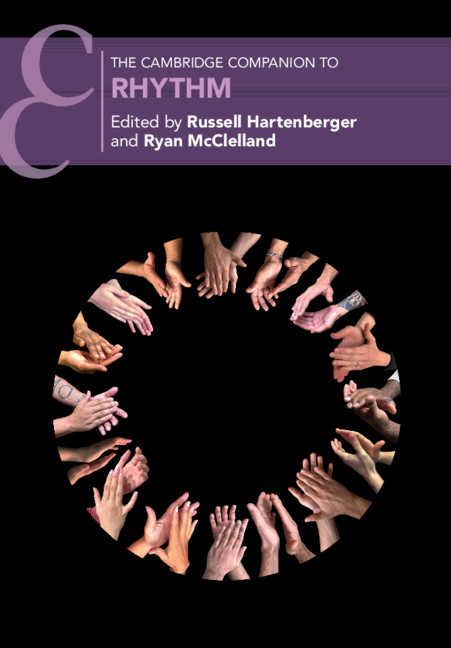

One of the defining aspects of music is that it exists in time. From clapping to dancing, toe-tapping to head-nodding, the responses of musicians and listeners alike capture the immediacy and significance of the musical beat. This Companion explores the richness of musical time through a variety of perspectives, surveying influential writings on the topic, incorporating the perspectives of listeners, analysts, composers, and performers, and considering the subject across a range of genres and cultures. It includes chapters on music perception, visualizing rhythmic notation, composers' writings on rhythm, rhythm in jazz, rock, and hip-hop. Taking a global approach, chapters also explore rhythmic styles in the music of India, Africa, Bali, Latin America and the Caribbean, and Indigenous music of North and South America. Readers will gain an understanding of musicians' approaches to performing complex rhythms of contemporary music, and revealing insights into the likely future of rhythm in music.
‘The importance of this collection for music scholarship lies not only in the subject matter - rhythm has long been ignored by traditional music studies - but in the fact that fully half the volume is devoted to music other than the Western European classical canon … Summing Up: Recommended. Upper-division undergraduates through faculty; professionals.’
M. Dineen Source: Choice
Loading metrics...
* Views captured on Cambridge Core between #date#. This data will be updated every 24 hours.
Usage data cannot currently be displayed.
This section outlines the accessibility features of this content - including support for screen readers, full keyboard navigation and high-contrast display options. This may not be relevant for you.
Accessibility compliance for the HTML of this book is currently unknown and may be updated in the future.
