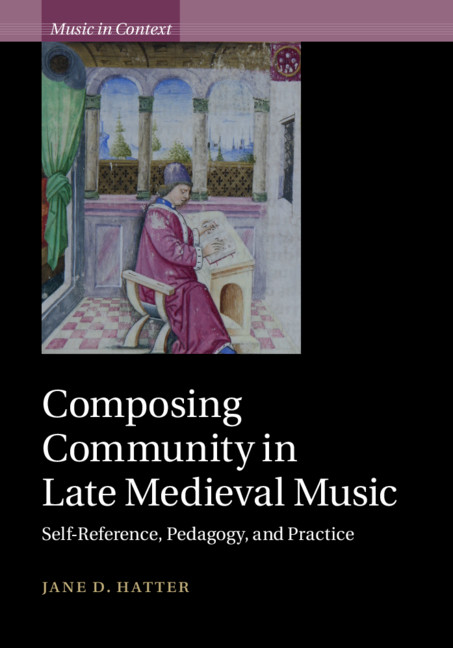

When we sing lines in which a fifteenth-century musician uses ethereal polyphony to complain mundanely about money or hoarseness, more than half a millennium melts away. Equally intriguing are moments in which we experience solmization puns. These familiar worries and surprising jests break down temporal distances, humanizing the lives and endeavors of our musical forebears. Yet many instances of self-reference occur within otherwise serious pieces. Are these simply in-jokes, or are there more meaningful messages we risk neglecting if we dismiss them as comic relief? Music historian Jane D. Hatter takes seriously the pervasiveness of these features. Divided into two sections, this study considers pieces with self-referential features in the texts separately from discussions of pieces based on musical self-referential elements. Examining connections between self-referential repertoire from the years 1450–1530 and similar self-referential creations for painters' guilds, reveals musicians' agency in forming the first communities of early modern composers.
‘This is a wonderful book with a clear and convincing central claim. Jane D. Hatter's engagement with primary sources and recent scholarly literature on music, art, and cultural history displays highly original thought and will give scholars a fresh perspective on what they thought they knew.'
David J. Rothenberg - Case Western Reserve University, Ohio
‘Composing Community in Late Medieval Music is the first book-length study to explore a pivotal paradigm shift in European music history – the decades around 1500 when composers became self-conscious professionals both individually and as a group. Jane D. Hatter explores the ways in which this self-consciousness began to express itself in individual works. Her fascinating study deftly disentangles the various musical, social and cultural strands in this complex process and provides essential reading for every student of the musical Renaissance.'
Wolfgang Fuhrmann - Universität Leipzig
‘… the book is stimulating and profitable to read because it brings together many well-known aspects in an interesting way and enriches them with detailed observations.’
Nicole Schwindt Source: Die Musikforschung
Loading metrics...
* Views captured on Cambridge Core between #date#. This data will be updated every 24 hours.
Usage data cannot currently be displayed.
This section outlines the accessibility features of this content - including support for screen readers, full keyboard navigation and high-contrast display options. This may not be relevant for you.
Accessibility compliance for the HTML of this book is currently unknown and may be updated in the future.
