


2.1 Introduction: Approaching the Climate-Energy Nexus
How can we analyze the complexity of the climate-energy nexus in a systematic way that is informative for both scholars and practitioners? Over the past roughly twenty years, scholars discussed a series of approaches to make sense of the growing institutional complexity in international relations. They mostly did so for what we call the micro level in this volume, i.e. for interactions between individual institutions, and in particular between intergovernmental institutions (e.g. Young Reference Young1996; Stokke Reference Stokke2001; Gehring and Oberthür Reference Gehring and Oberthür2009). Some of the more recent scholarship completed these approaches by targeting relations among transnational arrangements (e.g. Eberlein et al. Reference Eberlein2014; Tosun et al. Reference Tosun, Koos and Shore2016). The merits of these different perspectives notwithstanding, they led to certain terminological squabbles – with preferences for different concepts such as polycentricity, polyarchy, or complexity – while mostly neglecting overlaps between a larger set of institutions.
As argued in Chapter 1, what is missing is a pragmatic approach (1) that combines these literatures and converges their often similar categories for (a) a nexus among two major policy fields, climate and energy, and (b) different analytical levels within such a nexus, and (2) that also takes into account consequences of institutional interactions and complexity. In the next pages we propose such a careful compromise of dimensions. This approach will guide not only our analyses of the institutional coherence and management of the climate-energy nexus as a whole (Chapter 3) and of three selected subfields within this nexus (Chapters 4–6), but also our examinations of respective consequences for legitimacy and effectiveness (Chapters 7 and 8).
The framework leaves space for the case studies in this volume to unravel additional dimensions that are suitable to the respective policy field or subfield and research question they are addressing. We hope that this multi-dimensional framework with its mix of novelty and flexibility will also be attractive for future qualitative assessments of linkages between private, public, and hybrid institutions in other global governance fields.
The chapter will proceed as follows. The next section briefly lays the conceptual ground by disentangling major concepts (nexus, institutions, and types thereof) and analytical levels that we put under scrutiny in this volume. This is followed by the main Section 2.3, which establishes the core evaluative themes of our analytical framework – coherence, management, legitimacy, and effectiveness – as well as dimensions to assess them for different subfields and analytical levels. The concluding section summarizes our approach and looks ahead to its application in the remainder of this volume.
2.2 Conceptual Framework
2.2.1 Core Concepts
Before starting with our actual framework, we briefly introduce key terms and outline how we understand them in this chapter and the remainder of the volume. We define global governance as ‘all coexisting forms of collective steering of social affairs, by public and private actors, that directly or in their repercussions, transcend national frontiers’ (Zelli Reference Zelli, Brown, McLean and McMillan2018). International institutions, be they intergovernmental or transnational, are one major instrument to provide such collective steering. We follow Robert Keohane (Reference Keohane1989, 3) who defined institutions as ‘persistent and connected sets of rules (formal and informal) that prescribe behavioural roles, constrain activity, and shape expectations’. This definition treats institutions as the most generic term for forms of collaboration at the international level, since it neither specifies the degree of persistence or connectedness nor the types of members or functions involved.
This leaves space for a set of types of institutions. These include organizations, i.e. institutions with ‘purposive entities … capable of monitoring activity and of reacting to it’ (Keohane Reference Keohane1989, 3) and regimes, i.e. ‘institutions with explicit rules … that pertain to particular sets of issues in international relations’ (Keohane Reference Keohane and Rittberger1993, 28). In addition to these traditional types of international institutions, there are more loosely coupled types, which include initiatives, i.e. connected rule systems with a relatively low degree of persistency (meaning that they may be short-lived or very malleable), and networks, i.e. institutions with low degrees of both persistency and connectedness.
All institutions that address a specific policy field (or, as a synonym, domain) of international relations form the institutional complex for that field – with institutional architecture as a term we use synonymously on occasions. Wherever two institutional complexes overlap, forming a set of institutions that address two different policy fields in parallel, we speak of an institutional nexus. The delineation of a policy field is hence key for the inclusion or exclusion of institutions in a complex or nexus. This delineation, we argue, has a necessarily constructivist or subjective aspect, i.e. it depends on how certain observers or participants frame an issue in question. We provided our own understandings of climate change and energy as well of the three subfields we chose in Chapter 1, but of course acknowledge that this is but one possible way of delineating these. Being mindful of this perceptional or framing element, our analyses will rely not only on rationalist but also on constructivist evaluative themes, as we further clarify in Section 3.
2.2.2 Analytical Levels
One core contribution of our analytical approach is the distinction of, and positioning within, three levels of analysis that we often find mixed up in the emerging literature on institutional complexity: the macro level, which captures the overarching institutional fragmentation for a given field or domain of global governance and its respective complex; the meso level, which zooms into specific subfields of such a domain and the institutional complexes thereof; and the micro level, which exhibits interlinkages among two individual institutions on specific questions (cf. Biermann and Kim, forthcoming).
With regard to the thematic scope of our volume, this distinction of analytical levels translates into: at the macro level, the climate-energy nexus as a whole; at the meso level, the three subfields of this nexus that we put under scrutiny in the following chapters, i.e. carbon pricing, fossil fuel subsidies, and renewable energies; and at the micro level, specific interlinkages within each of these subfields that we studied, e.g. between the Group of 20, the Asia Pacific Economic Cooperation, and the Friends of Fossil Fuel Subsidy Reform in Chapter 5. Figure 2.1 illustrates how these three levels of institutional complexity relate to each other.
It is particularly the meso level that so far has gained only little attention by the literature on institutional complexity. It is here where this volume fills an important research gap. In the next section, we introduce a set of evaluative themes that help us to analyze interlinkages at the micro level in their relevance for the meso level, i.e. for a subfield of the climate-energy nexus. These four evaluative themes are:
Coherence and Management: to characterize sub-themes of the nexus (meso-level), and specific institutional linkages therein (micro level), according to their normative, functional, and membership-based relations and the deliberate attempts to regulate these relations;
Legitimacy and Effectiveness: to characterize respective consequences of micro-linkages for the subfields to which they belong.
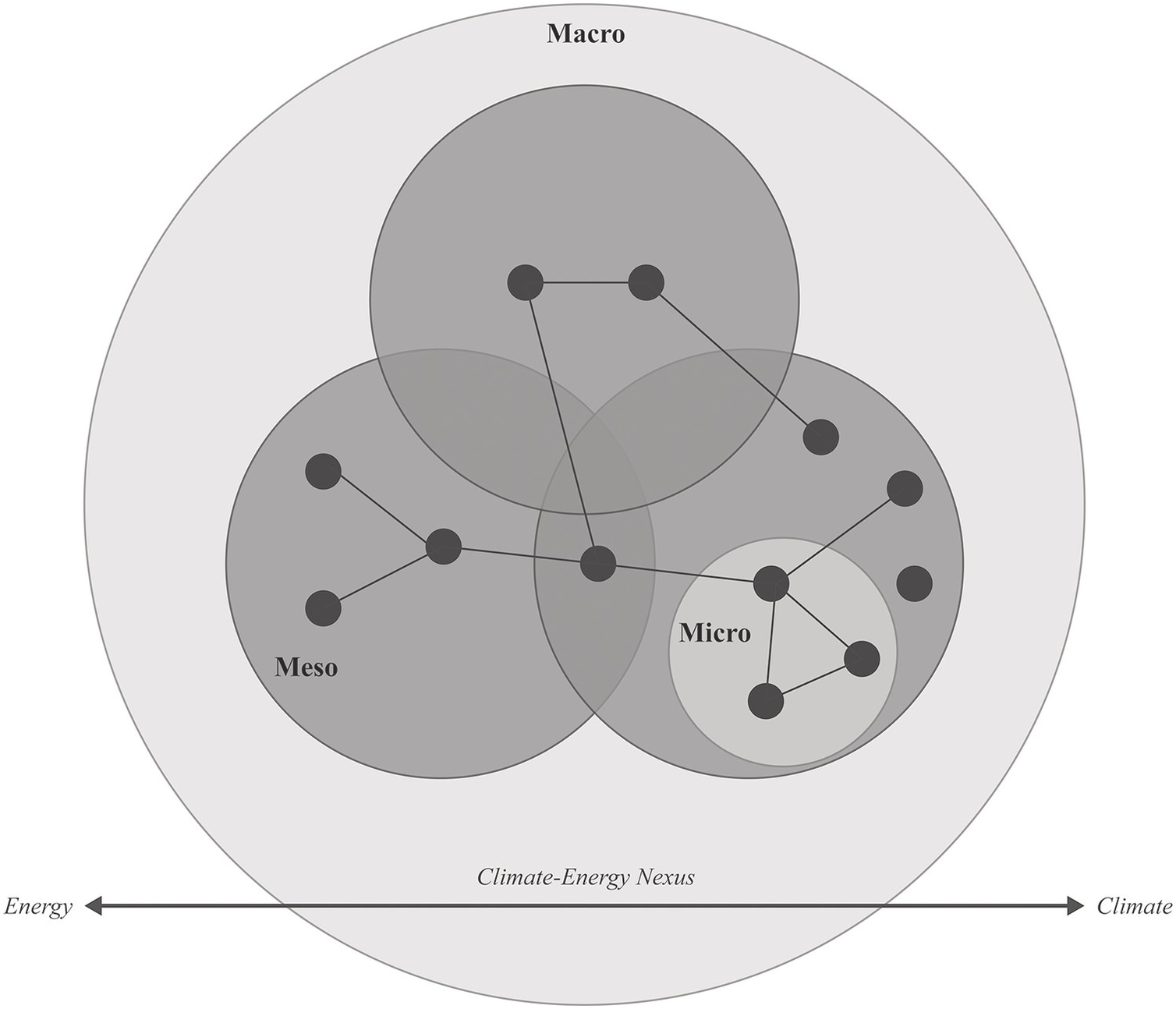
Figure 2.1 Analytical levels of the climate-energy nexus.
2.3 Evaluative Themes
In ontological terms, we follow a dual approach to give us a more comprehensive picture when analyzing the climate-energy nexus. Concretely, the four evaluative themes that we introduce in the following help us to capture both rationalist and constructivist aspects at different levels. For the first two – coherence and management – we apply a rationalist or objectivist approach by examining factual dimensions, e.g. membership patterns or concrete efforts taken to manage an institutional interlinkage. For the themes of legitimacy and effectiveness, by contrast, we bring in a sociological approach, i.e. we identify respective perceptions and expectations of actors attributed to the relationships among institutions within a nexus.
2.3.1 Coherence
How then can we qualify institutional interactions at the micro level and their relevance for the meso level, i.e. for a specific subfield within a nexus of two policy fields, in a feasible and qualitative way that allows for comparisons across such interactions? When can we speak of rather conflictive or synergistic cross-institutional relationships within a policy subfield, and on what grounds? We define coherence in institutional complexes as the harmony of certain institutional features to one another or to an overarching purpose. To characterize such institutional coherence in a policy subfield such as carbon pricing, we suggest two consecutive steps that build on the same dimensions for assessment (Box 2.1).
(1) The first step of analyzing meso-level coherence provides input on three analytical dimensions – core norm, membership, governance functions – that will guide the subsequent two steps of assessing institutional linkages, and their management, within the respective policy subfield. This step is largely descriptive in nature, since it assesses the three dimensions according to their distribution across the climate-energy nexus.
(1a) The first and most central dimension, core norm of a policy field, depends on the delineation and essential questions of the subfield under scrutiny. We follow a sociological understanding of norms here, not a narrower legal one, as ‘shared expectations about appropriate behaviour held by a community of actors’ (Finnemore Reference Finnemore1996, 22). For the realm of global governance, this implies a shared narrative about the conditions and objectives that inform individual institutions and even entire institutional complexes (or architectures) as a whole (Ruggie Reference Ruggie and Ruggie1998). In other words, building on Conca (Reference Conca2006) and Zelli et al. (Reference Zelli, Gupta and van Asselt2013),we hold that such complexes are embedded in a broader normative context. For instance, the core norm of the global climate governance complex would be to ‘prevent dangerous anthropogenic interference with the climate system’ as laid out in Article 2 of the United Nations Framework Convention on Climate Change.
The first task for our researchers is to identify such a core norm for the policy subfield they put under scrutiny, e.g. from the preambles of leading institutions in the respective subfield. Following this, they need to assess whether there is a certain convergence among interpretations of this norm across different institutions and their linkages, or whether these institutions follow different interpretations or variants of the norm.
(1) Meso-level Coherence, i.e. the level of coherence in the subfield as a whole, to be assessed along three major dimensions
a. Core norm, i.e. the overarching expectation of behaviour that characterizes the subfield, and how this expectation has been interpreted in institutional practice;
b. Membership: public, private, or public–private, across institutions in the subfield;
c. Governance functions addressed by different institutions and their members;
(2) Micro-level Coherence, i.e. the level of coherence in specific interactions of institutions within the respective subfield, in terms of the same three dimensions and underlying mechanisms
a. Core norm (and each institution’s interpretation of it);
b. Membership;
c. Governance functions;
d. Mechanisms of interactions among institutions.
Importantly, the identification of a core norm is closely related to the delineation of a subfield, or rather its institutional complex – since the core norm provides the substance or goal that unites the institutions governing the field in question. As discussed in Chapter 1, this implies that the delineation of a governance problem or institutional complex has an element of construction to it. In formulating the core norms for each of the three subfields (see Chapters 4, 5, and 6), the authors make a subjective choice as researchers about what counts as a sub-structure within the climate-energy nexus.
The construction of the core norm provides a crucial link between the evaluative theme of coherence and the other three themes of this framework. Management can be seen as an active attempt to enhance normative coherence across institutions by creating a common understanding of a problem and working toward a joint goal with different institutional efforts. And legitimacy and effectiveness are conceptualized sociologically in the further course of this chapter, i.e. in terms of assessments or perceptions, which directly link back to the core norm underlying an institutional complex: institutions may be assessed according to whether they have the right to govern toward that norm (legitimacy) and whether they deliver on that norm (effectiveness).
The centrality of the (constructed) core norm in our framework also has consequences for how we understand normative coherence: there is a bias toward convergence on the core norm as a positive or at least essential ideal for a subfield in question, since too many strong deviations from that norm would undermine the identification of the subfield in the first place.
(1b+1c) By contrast, we treat the two ensuing dimensions – membership and governance functions, i.e. coherence in their case is not marked by convergence but by balanced distribution and synergy. These two dimensions will also be used in our analysis of the macro-level coherence of the entire climate-energy nexus in Chapter 3.
Boxes 2.2 and 2.3 display our typologies for membership and governance functions that institutional complexes and their components may exhibit in different mixes. We build the respective types on Eberlein et al. (Reference Eberlein2014), Tosun et al. (Reference Tosun, Koos and Shore2016) as well as Abbott (Reference Abbott2012) and Abbott and Snidal (Reference Abbott and Snidal2009a; Reference Abbott, Snidal, Mattli and Woods2009b) with their governance triangle and distinction of functions (see also Chapter 3 for a more detailed introduction of both typologies).
- Public
∘ International organizations / bureaucracies (intergovernmental or transnational);
∘ States (could be further distinguished: governments, specific ministries, agencies);
∘ Sub-national regions / provinces / states;
∘ Cities;
- Civil Society Organizations
∘ Nongovernmental organizations (could be further distinguished, e.g. advocacy, watchdog, disruptive);
∘ Research / Experts (could be further distinguished, e.g. certifiers, academic observers);
- Firm
∘ Business;
∘ Investors.
- Standards and commitments, e.g.:
∘ Rule-making processes;
∘ Mandatory commitments;
∘ Voluntary commitments (e.g. voluntary pollution reduction schemes);
∘ Communiqués;
∘ Schemes for implementation and enforcement;
∘ Standards for monitoring, reporting and verification.
- Operational activities, e.g.:
∘ Technology research and development;
∘ Pilot projects;
∘ Demonstration and deployment activities;
∘ Technical assistance and capacity building;
∘ Best practices;
∘ Implementation of commitments;
∘ Enforcement activities.
- Information and networking, e.g.:
∘ Monitoring, reporting, and verification;
∘ Evaluation activities (e.g. peer reviews);
∘ Behind-the-scenes diplomacy;
∘ Collecting and publishing information;
∘ Technical consulting, training, and information events & services to build capacity, share knowledge, and to support local governments;
- Financing (i.e. operational activities that particularly involve financing schemes), e.g.:
∘ Project-funding;
∘ Conditions in structural adjustment programmes;
∘ Aid.
Coherence depends on the extent to which the different types of members (or audiences) and governance functions are covered across an institutional complex, and on the extent to which this distribution or coverage is taking place in a synergistic way. Thus, an institutional complex exhibits low coherence if, for instance, operational activities are hardly performed by institutions and major public or private actors are not members. Importantly, certain activities can pertain to various governance functions, e.g. a report on financing may fall under both financing and information and networking.
With regard to synergy, the activities depicted in Box 2.3 can interact in different ways. Information-sharing and networking do not inherently have the same potential for competition or conflict as the setting of standards and commitments, since the adding of another standard- or commitment-setting institution to a subfield often undermines the existing standard- or commitment-setting institutions. If, for instance, one institution sets standards for offsets, and another institution starts to introduce a different set of standards for offsets, competition or conflict is likely, inter alia, because of forum or ‘standard’ shopping by public and private actors (Alter and Meunier Reference Alter and Meunier2009). Information-sharing and networking are different from standard-setting in that the information-sharing and networking of one institution is likely to add to the information-sharing and networking of another institution, provided that their activities are connected.
(2) Our in-depth analysis of micro-level coherence will equally be based on the three aforementioned dimensions, i.e. we suggest going beyond legal consistency toward assessing normative, membership-based, and functional coherence among specific institutions in a policy subfield.
(2a+b+c) This threefold understanding implies that complete coherence, like complete conflict, is rather an ideal type – since we will rarely find them to the same degree across all of these three dimensions. Two institutions that address a particular energy policy issue such as fossil fuel subsidy reform may, for instance, be synergistic or at least non-conflictive in terms of the core norm they adhere to, e.g. the need to phase out respective subsidies, but still may invade each other’s turfs and compete over governance functions they seek to serve.
When it comes to weighing the coherence of the three core dimensions against each other, we suggest a simple hierarchy, holding that normative relationships between institutions in a policy subfield are most important, followed by functional ones, with membership carrying the least weight. If two institutions move into very different directions on major norms or governance functions (e.g. egalitarian versus efficiency goals on carbon pricing, or rivalling ideas for standards or evaluation), this constitutes a major conflict that cannot be balanced on the level of membership, which is rather formal in nature.
The researcher therefore has to establish whether the core norms and governance functions between two institutions turn out rather synergistic or conflicting. This implies a careful qualitative analysis about the essence and direction of each institutional approach, i.e. a combination of normative and functional assessment. It is not sufficient to check whether certain governance functions are complimentary, duplicated, or not served at all.
For instance, one might find that intergovernmental institutions are mostly responsible for the formulation of standards or targets, while private institutions largely take over information and networking tasks. At first glance, this may suggest a sensible division of labour at the meso level. However, a closer look at the micro level, i.e. at the actual essence of the activities within and across selected institutions, might reveal that public institutions adhere to different norms and pursue different goals and ambitions (e.g. command-and-control and trade-restrictive) than private ones (e.g. bottom-up and market-liberal) – and that this leads to a disconnect among the purposes of institutions.
The coherence in membership, finally, is closely connected to governance functions. The focus here is on how different actors in a given part of the nexus have these functions covered in a coherent manner, i.e. which enabling or restricting roles are played to fulfil certain governance functions.
(2d) Importantly, our assessment does not stop at contrasting individual institutions in terms of their functions, membership, and norms. As mentioned earlier in this chapter, the micro level of complexity for us is constituted by institutional interlinkages, i.e. relations between institutions along the dimensions we discussed. For a fuller picture on coherence in a policy subfield this implies that: we need to scrutinize the actual exchange processes among institutions, not just compare their individual norms, memberships, and functions – and qualify these exchanges in terms of underlying causal mechanisms.
To characterize different interaction mechanisms that are of relevance in such exchanges across norms, functions, and members, we rely on the literature on causal mechanisms in institutional interlinkages (Stokke Reference Stokke2001, 10–23; Gehring and Oberthür Reference Gehring, Oberthür, Oberthür and Gehring2006; Oberthür and Gehring Reference Oberthür and Gehring2006), but also on more recent typologies, e.g. Eberlein et al. (Reference Eberlein2014) and Tosun et al. (Reference Tosun, Koos and Shore2016), and our own work, e.g. Zelli et al. (Reference Zelli, Gupta and van Asselt2013) and Van de Graaf and Zelli (Reference Van de Graaf, Zelli, Van de Graaf, Sovacool, Kern, Ghosh and Klare2016).
Concretely, we distinguish interactions at the cognitive, normative, and behavioural levels. Box 2.4 displays our definitions and examples for these three types.
- Cognitive = impact of knowledge and information in one institution on another one, e.g.:
∘ Flow of information between institutions and their members;
∘ Deeper cross-institutional learning, including on the execution of certain governance functions;
- Normative = impact of norms and rules of one institution on another one, e.g.:
∘ Imitation of rules / practices;
∘ Adaptation toward certain rules or practices;
∘ Internal debates over rules of another institution;
- Behavioural = impact of the functional and strategic behaviour of members and other relevant actors in one institution on another one, e.g.:
∘ interlocking memberships;
∘ Pressure;
∘ Shaming;
∘ ‘Monitoring’ each other’s performance;
∘ Brand management;
∘ Capacity-building, e.g. resource allocation.
This selection shown in Box 2.4 is non-exhaustive and we are aware that other scholars added further mechanisms, e.g. legal or institutionalized interactions among institutions (Eberlein et al. Reference Eberlein2014). We take out such legal interactions here and deal with them under the evaluative theme of management, since we see them as results of management attempts, not as processes of interaction.
For each of these mechanisms we will assess to what extent they affect the levels of functional, normative, and membership-based coherence among institutions in a policy subfield. As some of the examples in Box 2.4 suggest, certain mechanisms may well have more importance for certain dimensions than others. For instance, membership and certain governance functions play a key role for the behavioural mechanism, while norms are at the core of the normative mechanism.
2.3.2 Management
When we refer to the evaluative theme of management in this volume, we mean micro-level management, which for us describes any deliberate attempt to formally regulate the linkage between two or more institutions (Zelli Reference Zelli2010). This follows Stokke’s understanding of interplay management as ‘deliberate efforts by participants in tributary or recipient regimes to prevent, encourage, or shape the way one regime affects problem solving under another’ (Stokke Reference Stokke2001, 11).
Management in this understanding is one possible form of intentionality in institutional linkages. Gehring and Faude (Reference Gehring and Faude2014) distinguish further types of intentionality, especially the very creation of a functional overlap among two institutions in the first place, e.g. to challenge the regulatory dominance of one of them (cf. Schneider and Urpelainen Reference Schneider and Urpelainen2013; Van de Graaf Reference Van de Graaf2013) or to shift regulatory activities from one to the other (Braithwaite and Drahos Reference Braithwaite and Drahos2000, 564–577; Helfer Reference Helfer2009).
This notwithstanding, we focus here on management instead of intentionality as a whole. One reason for our choice is that a wider perspective on intentionality would mix causal explanations into our assessment of the character of an interaction or sub-complex – and we intend to keep the former apart from the latter as far as this is analytically possible. Moreover, management has been more systematized in the literature than intentionality, giving us a set of tools at hand to clarify and characterize the state of management of an institutional linkage.
We roughly distinguish two dimensions by which we assess micro-level management for our three case studies (Box 2.5).
(1) Following Oberthür’s and Stockke’s influential typologies, management attempts can be distinguished according to the levels at which they are taken and the types of agents usually involved at a respective level (Oberthür Reference Oberthür2009; Oberthür and Stokke Reference Oberthür and Stokke2011). This yields four types of management levels and agents (Box 2.6).
(2) In addition, management brings in a time dimension. It implies that, at least analytically, one may distinguish essential aspects of an inter-institutional relation – that we scrutinize under the evaluative theme of ‘coherence’ – from a reaction to this relation. Thus, a second dimension that we seek to assess for micro-level management is the consequences of the management process. Using the aforementioned coherence dimensions, we examine to what extent management efforts enhanced the functional, normative, and membership-based coherence or division of labour among institutions in a subfield. As for the assessment of mini-level coherence that we introduced earlier in this chapter, it is particularly crucial to assess the normative and functional consequences of the respective management attempts, e.g. whether or not they lead to more synergy and, more precisely, whether the management approach ultimately serves the functions and goals of one or both institutions.
To summarize this and the previous subsection, we have established a set of dimensions and associated types to analyse two of our evaluative themes (coherence at the meso and micro levels, and management at the micro level). These steps will guide the analyses on the state of play in the three subfields we selected in Part II – renewable energy (Chapter 4), fossil fuel subsidy reform (Chapter 5), and carbon pricing (Chapter 6).
(1) Levels and agents of management;
(2) Consequences of management, i.e. any change or convergence on the coherence dimensions (norms, membership, governance functions).
Uncoordinatedly at national or regional levels;
Unilaterally by one of the affected institutions;
Jointly between the affected institutions; or
By an overarching institution (e.g. the United Nations Environment Programme) or third institutions (e.g. the International Court of Justice) as mediator or dispute settler.
Juxtaposing the themes of coherence and management leads us to six generic ways of characterizing the institutional complex of a subfield of the climate-energy nexus (Table 2.1). ‘Generic’ also implies that the intermediate concepts (coexistence or duplication, coordination) describe a middle ground that serves as a proxy for an actual continuum between synergy and conflict.
Table 2.1 Dimensions for assessing the institutional complex of a subfield of the climate-energy nexus.
| Coherence Management | High | Medium | Low |
|---|---|---|---|
| Non-managed relationship | Synergy | Coexistence / Duplication | Conflict |
| Managed relationship | Division of labour | Coordination | Competition |
The terms in the upper row of Table 2.1 are straightforward and intuitive and reflect when we can speak of high or low coherence, in terms of the three core dimensions we introduced earlier. Coherence exists if institutions converge on a core norm and exert governance functions accordingly and synergistically, while covering a large set of complementary audiences without too many gaps or duplications. Conflict, on the other side of the spectrum, refers to a strong divergence on the core norm and respective contradictions, rivalries, and gaps in the exercise of governance functions for various audiences.
The three types of managed relationships (division of labour, coordination, competition) are understood correspondingly. We define an institutional division of labour as the deliberate and continuous sharing of governance functions and norms among institutions for complimentary memberships. This definition chimes with Young (Reference Young1996) and his understanding of ‘embedded institutions’ that work on different issues, but share overarching principles and practices, and ‘nested institutions’ that work on the same issue, but differ in functional scope or geographical domain and are ‘folded into broader institutional frameworks’.
Coordination, as a middle ground, would mark deliberate management attempts in a policy subfield that rather facilitate an ad-hoc or case-based sharing of specific governance functions.
Competition, finally, describes deliberate attempts to manage institutional linkages that are either not successful or that are only meant to facilitate a legal or political frame in which institutions vie for the same governance task and / or audience. ‘Vying’ here relates to competition for predominance, either in a specific sector or geographical level or across sectors or levels.
2.3.3 Legitimacy
While the previous two themes, coherence and management, focused on the shape of complexity among institutions, this and the next section concentrate on the consequences of this complexity for the affected institutions, their operation, and their goal-fulfilment. We focus on two distinct yet related concepts: legitimacy and effectiveness. This is because, on a fundamental level, institutions, and institutional complexes or architectures as a whole, need to be both legitimate and effective to function well in the long term (Andresen and Hey Reference Andresen and Hey2005). In the following we argue why we need new approaches to studying legitimacy and effectiveness that take into account the wider context that institutions find themselves in. Specifically, we show how both legitimacy and effectiveness are multidimensional concepts that need to be investigated through multiple methods.
The evaluative theme of legitimacy has been discussed extensively in the literatures on global governance and institutional analysis (Suchman Reference Suchman1995; Hurd Reference Hurd1999; Bernstein Reference Bernstein2005; Buchanan and Keohane Reference Buchanan and Keohane2006; Clark Reference Clark2007; Keohane Reference Keohane2011). Broadly it refers to ‘the acceptance and justification of shared rule by a community’ (Bernstein Reference Bernstein2005, 142). A legitimate institution thus rules with authority as it has obtained support for its operation. Legitimacy is important for global governance, as the alternative tools for generating compliance with shared rules in the international system – inducement or coercion – ‘are often unavailable, in short supply, or costly to use’ (Bernstein Reference Bernstein2011, 20). Global governance institutions that seek to exercise legitimate power must thus gain acceptability and credibility amongst the communities that they seek to govern.
Legitimacy can be studied through different approaches. Two common approaches are normative and sociological legitimacy. While the former examines whether the authority in question performs according to some pre-defined standards, the latter is concerned with whether the authority is perceived as having the right to rule amongst those it seeks to govern (Buchanan and Keohane Reference Buchanan and Keohane2006). Given these different approaches, scholarly evaluations of legitimacy may diverge depending on whether the focus of the study is to examine justifications of operations or the acceptability of those claims to a given constituency.
In sum, legitimacy is a multidimensional concept that can be evaluated in different ways. Institutional complexity adds another challenge to this evaluation due to the interplay between different sets of institutions – each with their own audiences, objectives, processes, and consequences. In particular, institutional complexity blurs the question of attribution due to the interdependence between institutions. With some institutions being placed in a subfield crowded with competing institutions with overlapping mandates (Abbott et al. Reference Abbott, Green and Keohane2016), it is very difficult, if not outright impossible, to disentangle the legitimacy of individual institutions. Conventional methods of assessing legitimacy only by looking at institutions individually against a set of criteria thus provides an insufficient perspective for studying both legitimacy and complexity (Alter and Meunier Reference Alter and Meunier2009).
With these caveats in mind, we choose a different and novel approach to assess the legitimacy of the climate-energy nexus. We argue that it is necessary to draw on a mix of the normative and sociological approaches in order to understand legitimacy under institutional complexity. Specifically, we highlight an aspect of legitimacy that has to date received little attention in the literature – namely how key stakeholders value this concept. To study this phenomenon, we start from the normative literature but then rely on interviews and questionnaires to explore how stakeholders assess legitimacy.
Our focus on stakeholder perceptions is grounded in two considerations. The first of these arises from an academic debate on how institutional complexity affects actors’ choices in international cooperation in general, and political decision-making in particular (Alter and Meunier Reference Alter and Meunier2009). The second one stresses the policy implications of institutional complexity, concretely the notion of an era in which global governance institutions compete over members and resources (Andresen and Hey Reference Andresen and Hey2005; Karlsson-Vinkhuyzen and McGee Reference Karlsson-Vinkhuyzen and McGee2013). While actors join institutions based on strategic considerations, global governance institutions need to be legitimate and must gain acceptability and credibility amongst the communities they seek to govern to achieve their objectives. It is therefore important to empirically study the views of those actors that global governance institutions seek to govern. In Part III we therefore examine if and how legitimacy assessments vary between key audiences (c.f. Nasiritousi et al. Reference Nasiritousi, Hjerpe and Bäckstrand2016).
Who these legitimacy-granting actors are has been the subject of some debate in the literature. While traditionally only states, as the central international actors, were seen as members of the community that grant legitimacy to international institutions, the boundaries of this community have shifted as nonstate actors have risen in prominence in recent years. Thus, international institutions now need to be perceived as legitimate not only by states, but also by ‘democratic publics’, including a range of stakeholders (Symons Reference Symons2011, 2561; Gronau and Schmidtke Reference Gronau and Schmidtke2016). This directly connects to the core dimension of membership that we introduced earlier for assessing coherence. Institutional membership may not necessarily be identical with a legitimacy audience, but it is an important and defining dimension for identifying such an audience.
Based on these considerations, which dimensions are suitable to examine legitimacy under conditions of institutional complexity? Or, put in perceptional terms, which dimensions help us examine how institutional complexity affects stakeholders’ assessments of key institutions of the climate-energy nexus? Chapter 7 will develop such a set of dimensions in further detail and apply them to the renewable energy subfield of the climate and energy nexus. In the following we will only briefly sketch how, and based on which theoretical assumptions, we derive these dimensions.
While the general concept of legitimacy is contested, the literature is in relative agreement about the institutional qualities that contribute to legitimacy (Karlsson-Vinkhuyzen and Vihma Reference Karlsson-Vinkhuyzen and Vihma2009; Mena and Palazzo Reference Mena and Palazzo2012; Scholte and Tallberg Reference Scholte, Tallberg, Tallberg, Bäckstrand and Scholte2018). Yet, the extent to which stakeholders believe that different institutions are fulfilling these criteria has thus far not been empirically explored. Therefore, based on the literature on what makes an institution legitimate, we derive a set of dimensions for assessing the normative legitimacy of international institutions. These include both process-related (input) dimensions as well as outcome-related (output) ones (see Box 2.7, and Chapter 7 for a detailed introduction of each dimension):
Expertise;
Inclusion of all appropriate actors;
Procedural (decision-making) fairness;
Transparency;
Accountability;
Output (what is produced);
Outcome (the effect the output has on its members);
Impact (the effect the output has on problem-solving);
Distributive fairness (distributing benefits to members fairly).
When applying these dimensions in Chapter 7, we map how different audiences assess these nine dimensions of legitimacy that we derived from the normative literature for five key institutions in the renewable energy subfield. This approach hence occupies a middle ground between the normative approach (whereby the researcher assesses an institution based on normative criteria) and the sociological approach, which focuses on the legitimacy perceptions of audiences (cf. Agné Reference Agné, Tallberg, Bäckstrand and Scholte2018). Gaining an understanding of these perceptions is important for institutions that seek to tailor their legitimation strategies toward different audiences (Bäckstrand and Söderbaum Reference Bäckstrand, Söderbaum, Tallberg, Bäckstrand and Scholte2018).
There are two main explanations for why legitimacy perceptions may diverge between different types of stakeholders: according to the traditional view of legitimacy in IR, the congruence model, actors make informed assessments about institutions. In this understanding, differences in legitimacy perceptions stem from variations in legitimacy demands between groups of stakeholders. According to the cognitive model, in contrast, actors rely on mental shortcuts to make assessments. This view builds on insights from the field of cognitive psychology, and highlights that legitimacy perceptions are rooted in cognitive schemata and heuristics. This means that differences in legitimacy perceptions instead stem from variations in the heuristics that different actors use to make the assessment (Lenz and Viola Reference Lenz and Viola2017).
The latter model is expected to be of use particularly under conditions of institutional complexity since actors (even if they are experts) cannot be expected to make a fully informed assessment as implied by the congruence model. This is in line with research that has found that ‘complexity forces bounded rationality on actors’ (Alter and Meunier Reference Alter and Meunier2009, 17), and that actors rely on heuristics in the face of overwhelming information. Chapter 7 does not seek to explain how legitimacy assessments are made but instead assumes that differences in perceptions can stem both from differences in norms and values, as well as differences in experiences and thereby heuristics used to form opinions. The chapter thus maps the differences in assessments between key institutions and stakeholder groups to provide novel empirical insights into the normative legitimacy of these institutions.
2.3.4 Effectiveness
As with legitimacy, the evaluative theme of effectiveness is multidimensional. Generally speaking, effectiveness can be conceptualized as the level of goal attainment by an institution (Bernauer Reference Bernauer1995). In the literatures on International Relations and Comparative Politics, effectiveness is typically operationalized through three dimensions, as the output, outcome, or impact of institutions (Underdal Reference Underdal and Miles2002; Tallberg et al. Reference Tallberg, Sommerer, Squatrito and Lundgren2016; see Box 2.8). Whereas output is a process-based dimension that looks at the narrow governance functions of an institution, and outcome examines the political impacts or behavioural change resulting from the operations of the institution, impact looks at issues of problem resolution and the extent to which the institution has contributed to welfare enhancement (Gutner and Thompson Reference Gutner and Thompson2010).
Output (what is produced);
Outcome (the effect the output has on its members);
Impact (the effect the output has on problem-solving).
These three dimensions of effectiveness correspond to three of the nine dimensions of legitimacy we just introduced. This overlap suggests that, while legitimacy and effectiveness are distinct concepts, they are also strongly interrelated – e.g. with (perceived) high levels of effectiveness positively impacting the legitimacy (perceptions) of the institution in question.
Since output focuses on the immediate performance of an institution, it is the most observable of the three dimensions and does not have to consider issues of causation. This may make it the preferred operationalization of effectiveness from a methodological viewpoint, but it only captures potential effectiveness, as it does not consider the actual consequences of the output. Impact, conversely, is difficult to measure, but captures how well the institution changes target indicators – and is hence in a better position to answer questions concerning whether and how the institution is able to solve the problems that it has been designed to tackle (Underdal Reference Underdal and Miles2002). Ideally, an investigation into all three dimensions of effectiveness provides a fuller picture of the performance of the institution. An analysis of how outputs link to outcome and impact would provide valuable insights into the actual effectiveness of the institution, especially if such an analysis also takes into account unintended side effects of the institution’s work.
Another complicating factor in assessing effectiveness is that international institutions typically have several, and sometimes conflicting, goals or core norms (for example, there exist tensions between alleviating energy poverty and promoting sustainable energy). Therefore, similar to sociological legitimacy where legitimacy demands may vary between actors, evaluations of effectiveness may vary amongst constituencies depending on which goal-fulfilment is favoured. This is what Gutner and Thompson (Reference Gutner and Thompson2010) refer to as the ‘eye of the beholder’ problem, as effectiveness may be assessed differently by members of an institution and outside stakeholders, but sometimes also between members if interests diverge.
Chapter 8 turns to the question of effectiveness to evaluate the three subfields of the climate-energy nexus. Here we rely on a mixed approach of assessing three dimensions of effectiveness – output, outcome, and impact – of the institutions at the meso level by combining interview data with experts in the field and the researchers’ own assessments of how outputs relate to outcomes and impacts. The chapter discusses these three dimensions and highlights the difficulties involved in determining the outcomes and impacts of institutions at the meso level given the range of confounding factors and the problem of attribution under institutional complexity.
Nevertheless, the chapter offers a transparent evaluation of the effectiveness of the subdomains – by discussing the outputs at the meso level, in terms of, for example, data and reports, capacity building, standard-setting financing, and implementation of projects, and then discussing how these may (or may not) be linked to observed outcomes and impacts. The value of the analysis lies in the examination of how institutional complexity affects the effectiveness of the subfields and the identification of management options that may be useful in addressing some of the existing bottlenecks.
2.4 Conclusions
The previous pages introduced our understanding of major terms (nexus, institutions, organizations, regimes, initiatives, networks) and analytical levels (macro, meso, micro) as well as a novel combination of evaluative themes and their dimensions for a thorough and comparative analysis of the macro, meso, and micro levels of the energy nexus:
Coherence – in terms of convergence on a core norm; and balanced distribution and synergy on governance functions, and membership as well as underlying causal mechanisms;
Management – in terms of agents, levels, and consequences for normative, functional, or membership-related convergence;
Legitimacy – in terms of perception of institutional audiences of process- and outcome-based criteria;
Effectiveness – in terms of the output, outcome, and impact-related consequences of institutional complexity at micro and meso levels.
These four themes are not meant to present a silver bullet toward studying a governance nexus or institutional complexity in general. First, they are not mutually exclusive. For instance, management is defined as deliberate attempts to provide more coherence, and effectiveness is framed as an important cornerstone of legitimacy. Second, they are not exhaustive, since there are a series of other dimensions which could also be assessed in such a nexus, such as underlying discourse coalitions or social networks.
These qualifications notwithstanding, the four evaluative themes, their dimensions and criteria, provide an detailed framework for an in-depth analysis of a governance nexus. They help us examine a variety of important questions in a comparative research design, combining a high level of ambition with feasibility and novelty.
The following chapters will illustrate these qualities when applying the analytical framework to our three case studies. Chapters 3–6 will provide an encompassing application of the framework’s criteria for coherence and management. Chapter 3 offers overarching perspectives on macro-level coherence for the nexus as a whole and for the meso-level coherence for the three subfields. Chapters 4–6 then delve into each subfield and provide further details on meso-level coherence as well as analyses of micro-level coherence and management attempts. Chapters 7 and 8 follow with in-depth applications of the legitimacy and effectiveness criteria of the framework before our conclusions in Chapter 9 tie together our various results in a comparative and comprehensive manner, summarizing the strength of our multi-dimensional approach.


 Open access