

7.1 Introduction
People can work internationally without being classified as expatriates or migrants. This chapter explores these alternative options, focusing, in particular, on three of the main alternative ‘other’ ways of arranging international work: short-term assignments (STAs), international business travel (IBTs), and international commuting (Reference McNulty and BrewsterMcNulty & Brewster, 2019). While expatriates are people who go to work in another country on a temporary basis but for a number of years and migrants are people who go to work in another country expecting to settle down there (McNulty & Brewster, 2019), the ‘other’ ways of working in another country tend to be shorter and, crucially, do not involve relocating ‘home’ or taking the family, if there is one, with them.
As is always necessary, we note the fungibility of the categories we explore and we discuss that briefly as follows: international business travellers are sometimes already expatriates, and some international commuters do not retain a permanent home in their own country; people who start as short-term assignees may be asked to stay on and become expatriates, and so on. But the categories indicate important classes of people who have to date received much less research attention than expatriates or migrants, even though there are substantial numbers in each group.
Each of the three major categories of ‘other’ international work – STAs, IBT, and international commuting – can be either organisationally initiated or can be self-initiated and we note these variations as we explore the topic. Common to all three main alternative types of international work is that the period of time they spend outside the home country is relatively short: during the working day only or varying from a few days to one year (Reference Mäkelä, Saarenpää, McNulty, McNulty and SelmerMäkelä, Saarenpää, & McNulty, 2017) – if it is longer than that, of course, they meet the criteria for ‘expatriation’. Serious research on this large group of international workers is limited; some of the best information and reports that we have about ‘other’ international workers and the opportunities and challenges that they and their employers face have to be taken from the consulting field. Scholarly work is, as we shall show, only slowing catching up.
From the organisational perspective, consultancy reports predict that while long-term expatriation is forecast to stay at about current levels, or to grow only slowly, these other kinds of work are expected to grow by more than half over the next few years (KPMG, 2017). It seems that similar patterns can be found in all regions of the world (Cartus, 2018; Reference JohnsonJohnson, 2017). For the organisation these could be cost-effective ways of working that fit business requirements. The one-off, up-front costs are more attractive than commitment to costs over a long period of time (Air Inc, 2018; Reference JohnsonJohnson, 2017). Expatriation is expensive for organisations and they are continually seeking ways to reduce the costs of getting work done internationally, while trying to gain some, though necessarily not all, of the benefits of expatriation. ‘Other’ international workers are normally cheaper than expatriates, staying on home country salaries, with fewer additional benefits and perks. Because assignments are short, families do not accompany them, and that is cheaper for the employer. In addition, administration is more straightforward, and hence cheaper, because in most cases no international tax liabilities are created (Reference DuxburyDuxbury, 2018). In nearly all cases, the employment contract remains in the home country and is administered under its terms and conditions (Reference Mäkelä, Saarenpää, McNulty, McNulty and SelmerMäkelä et al., 2017).
Yet these cheaper ‘other’ international assignments have some (though not all) of the benefits of expatriation. They can bring needed skills to a specific location (Reference Mäkelä, Saarenpää, McNulty, McNulty and SelmerMäkelä et al., 2017; Reference Minbaeva and MichailovaMinbaeva & Michailova, 2004), they are flexible, (Air Inc, 2012; Brookfield Global Relocation Services, 2009) and they fit with operational requirements. In addition, the use of, for example, commuter assignments may be safer than expatriation to a dangerous territory (Welch & Worm, 2006)
One consequence is that much of these ‘other’ forms of international work are outside the purview of the Global HRM function, where the specialists are responsible for expatriation, and the local HRM function, where the specialists may know about and be trying to integrate migrants. Neither has responsibility for the other forms of international work, which are largely controlled by line managers: the organisation as a whole may not even have a clear view of how many people they have in each of these categories.
For the people who are on short-term assignments, or travelling frequently or commuting, these patterns may be convenient or safer, or they may just be part of the way their job is done and, perhaps, always has been done. We explore the advantages and disadvantages of each form of work for each of the key stakeholders as we address them in turn.
7.2 Short-term Assignees
7.2.1 Overview
Though empirical research has been scarce, there has been increasing discussion in the literature about short-term assignments (Reference Collings, McDonnell, McCarter, Collings, Wood and CaligiuriCollings, McDonnell & McCarter, 2015; Reference Harvey, Mayerhofer, Hartmann and MoellerHarvey et al., 2010; Reference Mäkelä, Saarenpää, McNulty, McNulty and SelmerMäkelä et al., 2017; Reference Suutari, Brewster and SparrowSuutari & Brewster, 2009). Such assignments are typically defined as lasting less than a year (Reference Collings, McDonnell, McCarter, Collings, Wood and CaligiuriCollings et al., 2015) though in practice they commonly last less than half a year, due to the tax, insurance and social security implications of longer assignments (Reference Collings, McDonnell, McCarter, Collings, Wood and CaligiuriCollings et al., 2015; Reference Suutari, Brewster, Riusala and SyrjakariSuutari et al., 2013).
While many organisations aim to reduce the number of long-term assignments the use of STAs appears to be increasing, though our evidence is still quite limited and relies largely on consultancy reports. For example, a survey by Mercer (2016) reported that organisations are more likely to deploy STAs than long term assignees; and a report by ECA International (2016) found the use of STAs was already 22 per cent of all assignments, compared to 14 per cent in 2008, and was increasing further. There are academic studies reporting similar increases (Reference Kang, Shen and BensonKang, Shen, & Benson, 2016).
7.2.2 Motives and Barriers
These increases have taken place due to reasons such as better transportation and communication systems, wider organisational networking, more flexible intra-organisational coordination of global units, and cost containment initiatives (Reference Harvey, Mayerhofer, Hartmann and MoellerHarvey et al., 2010). STAs are often used for problem solving on specific issues that do not require longer term expatriation (Reference Collings, McDonnell, McCarter, Collings, Wood and CaligiuriCollings et al., 2015). Typical work has been found to relate to tasks such as construction projects, spreading changes, managing projects, and expanding the company’s market (Reference Salleh and KohSalleh & Koh, 2013). STAs are often thus involved in project work that is required for some months but then ceases. They allow temporary access to specialised talent that requires the moving of people to other countries (Reference Hocking, Brown and HarzingHocking, Brown & Harzing, 2004). Sending a skilled person to fix a problem will be considerably quicker and easier than training up local staff or trying to resolve a problem at a distance (Reference Meyskens, Von Glinow, Werther and ClarkeMeyskens et al., 2009; Reference Tahvanainen, Welch and WormTahvanainen et al., 2005). STAs can also be utilised in management development programmes (Reference Salleh and KohSalleh & Koh, 2013). In that respect, STAs at headquarters for foreign subsidiary unit employees, or, ‘inpatriation’ – from an ethnocentric viewpoint – offer technical training and learning about the corporate culture (Reference Harvey, Mayerhofer, Hartmann and MoellerHarvey et al., 2010; Reference Reiche, Harzing and KraimerReiche, Harzing & Kraimer, 2009). At the same time, inpatriates can bring host country knowledge into the headquarters. Overall, STAs can become an important source of information relevant to developing relationships in global networks and can, thus, facilitate knowledge sharing across borders (Reference Harvey, Mayerhofer, Hartmann and MoellerHarvey et al., 2010; Reference Minbaeva and MichailovaMinbaeva & Michailova 2004).
At the same time, employee interests also support the growth of short-term assignments: they are much easier for assignees and their families. Though the absence of assignees for a period can disturb their family’s daily life for anything up to several months, the partners can still continue their own careers and children can continue their schooling uninterrupted (Reference WurtzDickmann, Suutari, & Wurtz 2018: 13). Furthermore, and again from the organisational perspective, since partners or families typically stay at home, the costs involved with these ‘extra’ people – which are significant– are much lower than in the case of long-term expatriation (Reference Starr and CurrieStarr & Currie 2009; Reference Tahvanainen, Welch and WormTahvanainen et al., 2005).
For assignees, STAs can offer a change of routine (Reference Crowley-Henry and HeaslipCrowley-Henry & Heaslip, 2014). They can provide the opportunity of working in and getting to know about another country – although some individuals, sometimes called FIFO, or fly-in-fly-out contractors (Reference Blackman, Welters, Murphy, Eagle, Pearce, Pryce, Lynch and LowBlackman et al., 2014), are ‘off-shore’ or in remote locations. In all cases they offer self-development opportunities (Reference Starr and CurrieStarr & Currie 2009). Adjustment occurs on a positively skewed distribution, with most learning taking place in the first few months (Reference Haslberger, Brewster and HipplerHaslberger, Brewster, & Hippler, 2014), so short-term assignees may get similar developmental benefits to many long term expatriates. Therefore, STAs can be a form of training (Reference Crowne and EngleCrowne & Engle 2016), particularly in inpatriate assignments, and they can develop managerial skills (Reference Crowley-Henry and HeaslipCrowley-Henry & Heaslip, 2014), project skills (Reference Suutari, Brewster, Riusala and SyrjakariSuutari et al., 2013), and offer the possibility to experience new cultures and business practices (Reference Harvey, Mayerhofer, Hartmann and MoellerHarvey et al., 2010; Reference Reiche, Harzing and KraimerReiche et al., 2009). STAs may be a useful way to give young potentials international work experience (Reference Mayrhofer and ScullionMayrhofer & Scullion 2002; Reference Starr and CurrieStarr & Currie 2009; Reference Suutari, Brewster, Riusala and SyrjakariSuutari et al., 2013) that such people often value (Reference Collings, McDonnell, McCarter, Collings, Wood and CaligiuriCollings et al., 2015). For people from emerging economies, they can be a good way of getting their first international experience and of polishing their English.
Though the research evidence on STAs is limited, both from the individual and organisational angles, the existing research has already covered STA experience from several perspectives. For example, Reference Starr and CurrieStarr and Currie (2009) analysed the role of the family in the STA process, Reference Crowne and EngleCrowne and Engle (2016) studied the cross-cultural adaptation stress of assignees, and Reference StarrStarr (2009) explored the ‘repatriation’ experiences of such assignees. There have also been several studies from the organisational perspective such as studies by Reference Salleh and KohSalleh and Koh (2013) that analysed the purposes of STAs, and Reference Crowley-Henry and HeaslipCrowley-Henry and Heaslip (2014) who focused on the use of STAs in the military sector. Several case studies have examined human resource management processes around STAs: Reference Tahvanainen, Welch and WormTahvanainen, Welch, and Worm (2005) investigated the use and management of STAs and Reference Suutari, Brewster, Riusala and SyrjakariSuutari et al. (2013) reported on development processes related to the management of different alternative assignment types within one MNC.
7.2.3 Management of STAs
Although we have noted several reasons for the increased use of STAs within companies, there are also some disadvantages for the employing organisation and for the assignees. The management challenges involve administrative issues connected with the individual’s taxation and social security issues, particularly if the assignment lasts longer than six months (Reference Collings, McDonnell, McCarter, Collings, Wood and CaligiuriCollings et al., 2015; Reference Tahvanainen, Welch and WormTahvanainen et al., 2005). In some countries the need for visas and work permits, especially in locations where the company does not yet have an affiliate, can create problems (Reference Collings, McDonnell, McCarter, Collings, Wood and CaligiuriCollings et al., 2015; Reference Tahvanainen, Welch and WormTahvanainen et al., 2005). There are also problems of allocating responsibility. Many STAs are costed within the budget of the line manager and often managed by them with little support from the IHRM department (Reference Brewster, Harris and PetrovicBrewster, Harris, & Petrovic, 2001). There can therefore be problems of co-ordination and of appropriate compensation. However, there are some signs that companies are developing explicit STA policies and practices including stringent reward rules (Reference DickmannDickmann, 2016).
It can be difficult for STAs to become integrated into the local workplace and host community, hence they find it harder to develop effective relationships with local colleagues and customers (Reference Tahvanainen, Welch and WormTahvanainen et al., 2005). Since they have little time to adjust to local ways of doing things, those in non-technical jobs, in particular, may find that individual adjustment problems cause challenges for the well-being and performance of the whole group (Reference Suutari, Brewster, Riusala and SyrjakariSuutari et al., 2013). The partner and family may not move abroad during the STA, but the absence of the assignee impacts family life in other ways, adding extra burdens to the partner and the children, and can lead to family stress and difficulties in work-life balance (Reference Meyskens, Von Glinow, Werther and ClarkeMeyskens et al., 2009; Reference Starr and CurrieStarr & Currie 2009; Reference Tahvanainen, Welch and WormTahvanainen et al., 2005). It is relatively easy to communicate with the family in the era of Skype, FaceTime, WhatsApp, Kick, Facebook, and other social media sites (Reference Bonache, Brewster, Suutari and CerdinBonache et al., 2018), but no technology can replace the actual presence of the complete family. In turn, without family responsibilities, the expatriate can focus on their work: short term assignees typically put in long hours at the plant or in the office. This may lead to problems of stress and fatigue (Reference Tahvanainen, Welch and WormTahvanainen et al., 2005). Short-term assignees typically live in hotels or, for more remote locations (oil rigs, pipelines, etc.), in company provided dormitories or similar accommodation. Once off work, particularly in countries where they cannot speak the language and in less-developed countries, there is little to do other than go back to their sleeping quarters. For some the result will be boredom, heavy drinking and/or depression (Reference WurtzWurtz, 2018); others will find themselves taking risks they would not do when they were at home with their family.
In order to succeed in the management of short-term expatriation, many multinationals have been developing their STA policies and practices. For example, Reference Mäkelä, Saarenpää, McNulty, McNulty and SelmerMäkelä, Saarenpää and McNulty (2017) argue that consultancy reports indicate that STAs may be more systematically managed than is apparent from the extant research evidence. There is limited case study evidence examining the issue from the perspective of human resource management (Reference Tahvanainen, Welch and WormTahvanainen et al., 2005; Reference Suutari, Brewster, Riusala and SyrjakariSuutari et al., 2013). In practice, the role of line managers is, however, often central in the process and the follow-up of assignments, the costs involved or the overall success of assignments (Reference Collings, McDonnell, McCarter, Collings, Wood and CaligiuriCollings et al., 2015; Reference Dickmann and DickmannDickmann, 2015). The lack of basic monitoring of these assignments means that learning becomes difficult and many of the challenges involved in working abroad are left to assignees themselves to deal with.
The selection of assignees appears to be mostly informal, involving little bureaucracy, even if HRM specialist may be aware that a more formalised selection process would avoid an over-reliance on line managers’ personal contacts (Reference Kang, Shen and BensonKang et al., 2016; Reference Suutari, Brewster, Riusala and SyrjakariSuutari et al., 2013; Reference Tahvanainen, Welch and WormTahvanainen et al., 2005). This over-reliance on personal contacts can also lead to a critical shortage of internationally experienced project staff. Still, our evidence on selection processes is very limited (Reference Collings, McDonnell, McCarter, Collings, Wood and CaligiuriCollings et al., 2015).
The administrative issues related to STAs may be dealt with by IHRM or global mobility units (Reference Collings, McDonnell, McCarter, Collings, Wood and CaligiuriCollings et al., 2015), while taxation and alignment to immigration regulations are frequently outsourced to mobility service providers (Reference DickmannDickmann, 2016). With regard to STAs lasting less than six months, salary payment and associated taxes, insurances and pension arrangements typically remains in the home company and country, the home country salary forms the basis for compensation for more than three quarter of STAs (Reference DickmannDickmann, 2016). The assignee typically continues on the same contract that they were on at home (Reference Kang, Shen and BensonKang et al., 2016). Sometimes the company’s travel policy may form a basis for additional rewards (Reference Tahvanainen, Welch and WormTahvanainen et al., 2005) and they thus get a per diem: a (tax free) daily allowance and a hardship allowance when needed (Reference Collings, Scullion and MorleyCollings, Scullion, & Morley, 2007). For assignments over six months, more detailed contracts can be organised, and in many countries such contracts are required also in the host country (Reference Suutari, Brewster, Riusala and SyrjakariSuutari et al., 2013).
7.2.4 Future Research Avenues
Clearly, given their numbers and importance we need to know more about STAs. We know little about their selection. There has been almost no research on the requirements for training among other types of assignees than long-term assignees (Reference Collings, Scullion and MorleyCollings et al., 2007). Training of STAs is still often limited due to the restricted time for preparation, the costs of training, and a lack of understanding of the need for training (Reference Suutari, Brewster, Riusala and SyrjakariSuutari et al., 2013). Such a lack of preparation may have negative impacts for both organisations and individuals (Reference Collings, McDonnell, McCarter, Collings, Wood and CaligiuriCollings et al., 2015). It may hinder the integration of assignees with the local workforce, restrict their adaptation to local practices, and limit the performance of the assignees (Reference Tahvanainen, Welch and WormTahvanainen et al., 2005). Sometimes, if cultural distance is higher between the home and host country, some training may be provided, though even here it is on a voluntary basis and only available if the timing works out (Reference Kang, Shen and BensonKang et al., 2016). In the case of more difficult environments, some training about travel, and health and safety in foreign countries may be given (Reference Collings, Scullion and MorleyCollings et al., 2007). If an STA is itself used as a tool for professional or managerial development, nominating a mentor with defined responsibilities, more careful planning of such assignments, and in-depth evaluation of learning are also seen as necessary (Reference Suutari, Brewster, Riusala and SyrjakariSuutari et al., 2013).
Given that the training of assignees is rare, it is not surprising to find that the further step of family support is even less often offered (Reference Tahvanainen, Welch and WormTahvanainen et al., 2005), but again we have little empirical evidence. The organisations that do provide support typically grant additional family leave and finance flights home (Reference DickmannDickmann, 2016). In those few cases where the STA lasts longer, the family may accompany the assignee and the company may pay the related costs (Reference Tahvanainen, Welch and WormTahvanainen et al., 2005). In a case reported by Reference Suutari, Brewster, Riusala and SyrjakariSuutari et al (2013), the company had started arranging visits and providing informal guidance for the whole family in order to reduce the problems involved.
We have little data about what happens after the assignment. Given that such individuals are away for less time than long-term assignees, repatriation should be easier, but we lack empirical evidence (Reference Tahvanainen, Welch and WormTahvanainen et al., 2005). Nevertheless, it has been reported that repatriation and integration back home may still not be without problems (Reference StarrStarr, 2009). STAs were found to sometimes build expectations about upward mobility and new jobs after the international mobility experience and may get disappointed when such expectations are not met. Whether such experiences impact on intentions to leave deserves further research attention (Reference Collings, McDonnell, McCarter, Collings, Wood and CaligiuriCollings et al., 2015).
Not all STAs lead to repatriation and continued employment in the organisation. In some cases, assignees may be recruited specifically for the role – this is typical for specialists in information technology, in resource exploration, or in short-term expatriation to dangerous environments. At the end of the contract such assignees often leave the organisation.
7.3 International Business Travellers
7.3.1 Overview
An international business traveller, or as they are sometimes called a ‘frequent flyer’, is someone ‘for whom business travel is an essential component of their work’ (Welch & Worm, 2006: 284). Crucially, IBTs do not relocate, differentiating them from STAs and other forms of assignees. And they normally travel to several different countries and on less regular patterns, which sets them apart from international commuters. The duration of their visits is defined by the goals of their work and they may be involved with a range of teams in different countries (Reference Collings, McDonnell, McCarter, Collings, Wood and CaligiuriCollings et al., 2015).
The last decades have seen an increase in international business travel (Brookfield GMAC, Reference Brookfield2013; Reference DeFrank, Konopaske and IvancevichDeFrank, Konopaske, & Ivancevich, 2000; Reference Hovhannisyan and KellerHovhannisyan & Keller, 2015) and it has been common to assume that this trend will continue. The value of the global business travel market is already well over #1 trillion and forecast to grow to #1.3 trillion by 2023 (Allied Market Research, 2018). Many authors have pointed to patterns of globalisation and the increased need for cooperation, innovation, and trust across units that operate in different countries. While some of these factors are clearly right, we are currently witnessing a strong societal trend emerging that may limit this growth. Global warming and the need to reduce carbon emissions have become central in the political and environmental discourse of many societies and the pressure to limit one’s carbon footprint is increasing. While this has yet to manifest itself in less international travel it remains a distinct possibility that many MNCs may take drastic actions to use more virtual means of business meetings and coordination. This may decrease costs and their carbon footprints further while alleviating some of the pressures on IBTs to travel as frequently as before.
There are different perspectives that can be used to explore the issues involved in IBTs. We have chosen to use a perspective that focuses predominantly on individual, organisational, and family characteristics. As with other expatriation models (Reference Harris, Brewster and SparrowHarris, Brewster, & Sparrow, 2003) it employs a temporal view and takes account of the mutual dependency of international workers and their employers. Given, however, that international travel may be part of a normal career pattern in a multinational organisation we have developed a double helix framework that indicates that the endings might also be new beginnings in another position that equally involves international travel.
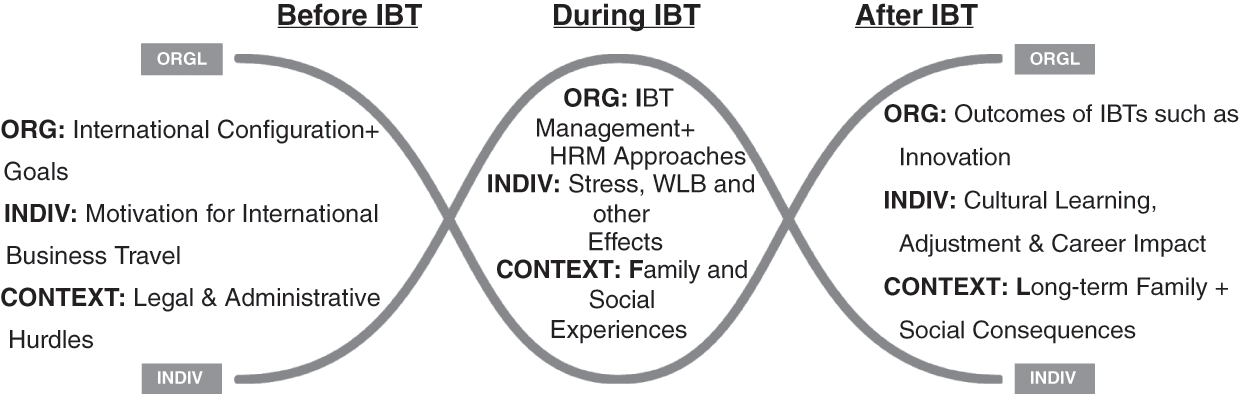
Figure 7.1 The double helix of IBTs – combining perspectives
Work as an IBT is distinct from work as an expatriate who relocates to a foreign country. The pressures on expatriates have been depicted through the expatriation cycle (Reference Harris, Brewster and SparrowHarris et al., 2003). While a mutual dependence between organisation and individuals obviously exists for IBTs, its nature is distinct. Expatriates depend most on their organisation when they are moving abroad – for household shipping, schooling, accommodation, health provision, etc. – and when they are returning from abroad (predominantly for the physical relocation and for gaining a ‘good’ job in the next location). For IBTs this dependency has different nuances (the focus is on travel arrangements, security, and health implications) and it is more evenly stretched in time and in relation to all their travel activities. Thus, the organizational support needed is distinct. The family – which does not move abroad – is affected in a different way. In addition, the learning that IBTs are likely to accumulate is less single foreign location specific and may include some more transferable skills and insights (Reference Baruch, Dickmann, Altman and BournoisBaruch et al., 2013). The double helix of IBTs depicts the interplay and complex interdependencies between individuals, organisations, and the wider context.
7.3.2 Motives and Barriers
Why do organisations use IBTs? It is argued that the costs of business travel are lower than traditional expatriation and that the flexibility of their use – IBTs can work in a variety of locations, on diverse projects, etc. – is superior (Reference Collings, McDonnell, McCarter, Collings, Wood and CaligiuriCollings et al., 2015). In addition, they may support the integration of organisational culture and the achievement of common standards. IBTs can have similar control and coordination as well as knowledge transfer roles to other forms of international work assignments (Reference Edström and GalbraithEdström & Galbraith, 1977; Reference Harvey, Mayerhofer, Hartmann and MoellerHarvey et al., 2010). In addition, face-to-face meetings and (physical) joint work is still often seen as beneficial for trust-building and to cement personal relationships amongst the key stakeholders in projects or more permanent work teams (Reference Beaverstock, Derudder, Faulconbridge and WitloxBeaverstock et al., 2010; Reference Davidson and CopeDavidson & Cope, 2003; Reference Mäkelä and BrewsterMäkelä & Brewster, 2009). Little is known about how IBTs are selected for their jobs and whether it is linked to strategic goals. Operationally, however, Reference Demel and MayrhoferDemel and Mayrhofer (2010) suggest that multinationals should improve their selection mechanisms to go beyond technical expertise and cultural insights and skills. They suggest that physical fitness, persistence, resilience and self-discipline should also be assessed given some of the challenges outlined below.
The organisational drivers that may guide the use of IBTs in MNCs include cost, cultural and operational issues, in that IBTs are seen as a more cost-effective variant of international work than traditional expatriation while still allowing cultural coordination and operational integration. The effects of IBTs within specific business configurations (Reference Bartlett and GhoshalBartlett & Ghoshal, 2002) in relation to control and coordination, innovation, cost, leadership development, and knowledge transfer (Reference Dickmann and Müller-CamenDickmann & Müller-Camen, 2006) have not been explored holistically. Nevertheless, work has emerged that looks at some sub-section of these issues. For instance, Reference Hovhannisyan and KellerHovhannisyan and Keller (2015) find that increased business travel is correlated with an increase in patenting in organisations. There is also some indication that IBT costs are lower than those of traditional expatriation (Reference Collings, McDonnell, McCarter, Collings, Wood and CaligiuriCollings et al., 2015) although tracking these costs is difficult and not well executed (Reference DickmannDickmann, 2018). Crucially, cost is not equal to value and MNCs are traditionally weak in assessing value in global mobility (Reference McNulty, De Cieri and HutchingsMcNulty, De Cieri, & Hutchings, 2009; Reference DickmannRenshaw, Parry, & Dickmann, 2018).
IBTs themselves might be driven by a mixture of factors that determine their willingness to work abroad while wanting to keep their ‘home base’. People with a global mindset and an international career orientation are seen to be more likely to accept or seek cross-border business travel (Reference Kedia and MukherjiKedia & Mukherji, 1999; Reference Phillips, Gully, McCarthy, Castellano and KimPhillips et al., 2014). Conversely, if they were to decline to travel this might harm their career prospects (Reference Shaffer, Kraimer, Chen and BolinoShaffer et al., 2012) as travelling might be seen as a ‘must for career development’ (Reference Demel and MayrhoferDemel & Mayrhofer, 2010: 305). However, there may be a range of further considerations that guide the decision to undertake frequent international business travel, including health, learning, having a respite, monetary and family elements (Reference Beaverstock, Derudder, Faulconbridge and WitloxBeaverstock et al., 2010; Reference Demel and MayrhoferDemel & Mayrhofer, 2010; Reference Westman and EtzionWestman & Etzion, 2002; Reference Westman, Etzion and ChenWestman, Etzion, & Chen, 2009b). Concerns about the security of the host location if the family were to relocate, for the career of the partner (for instance avoiding the dual career problem of long-term expatriation), or for the non-interruption of the education of children, are likely to be substantial in shaping individuals’ motivation to become an IBT (Reference Dickmann and BaruchDickmann & Baruch, 2011).
The IBT literature has explored the individual experience of the global worker in detail, identifying a range of negative effects. More than two decades ago Reference RogersRogers (1998) found that international travel often results in physical and psychological health issues. Reference Striker, Luippold, Nagy, Liese, Bigelow and MundtStriker et al. (1999) identified risk factors that led to stress amongst World Bank IBTs. Working abroad for some time, separated from one’s family and often on schedules that are very crowded and dynamic may lead to job, social, and emotional worries. For instance, IBTs would worry about the impact of their absence on their family, social links, and work upon return. Reference DeFrank, Konopaske and IvancevichDeFrank, Konopaske, and Ivancevich (2000) point out that international travel may be associated with emotional upset and even in some cases physical illness. While any solo travel is associated with being away from loved ones and friends, international journeys often imply differences in time zones, languages, culture, safety contexts, customs, and business practices – all of which place higher demands on IBTs. In addition, physical effects such as an unbalanced diet, more food and alcohol intake and other health concerns are frequently associated with international travel (Reference Demel and MayrhoferDemel & Mayrhofer, 2010). Thus, compared to domestic trips, IBTs feel more mental and physical strain (Reference 175Baker and CiukBaker & Ciuk, 2015) and they can experience loneliness and burnout (Reference Collings, McDonnell, McCarter, Collings, Wood and CaligiuriCollings et al., 2015). They also suffer work-family conflict and sleeping problems (Reference Mäkelä, Bergbom, Tanskanen and KinnunenMäkelä et al., 2014).
Where IBTs perceive an imbalance between their efforts and resulting rewards, this can increase work to life conflict (Reference Mäkelä, Kinnunen and SuutariMäkelä, Kinnunen, & Suutari, 2015). However, positive effects are also possible. For instance, in the same study it was found that a low effort-reward imbalance can support work to life enrichment if coupled with a pronounced international career orientation.
Clearly, IBT affects not only organisations and their staff but also impacts a wide variety of other stakeholders such as the family and friends of the cross-border traveller. It is not only global workers who suffer from increased stress but also their partners, especially if they had young children, if travel plans are changed frequently, or if their partners (in the case of female partners) were young (Reference Espino, Sundstrom, Frick, Jacobs and PetersEspino et al., 2002). The work-family interface in IBTs seems to be affected predominantly by the range of key factors outlined earlier: the length of absence, control of the global worker of the travel schedule, predictability of travel periods and organisational support measures (Reference 175Baker and CiukBaker & Ciuk, 2015). In international work the boundaries of family and work are blurred (Reference Caligiuri, Hyland, Joshi and BrossCaligiuri et al., 1998; Reference Lazarova, Westman and ShafferLazarova, Westman, & Shaffer, 2010) and this general observation regarding expatriates is likely to extend to IBTs, too. It is, therefore, no surprise that IBTs themselves had a range of negative feelings when travelling ‘too much’ – they could not attend important family gatherings, other key events in the lives of their children and partners, or were not available when a crisis happened (Reference DeFrank, Konopaske and IvancevichDeFrank et al., 2000; Reference Demel and MayrhoferDemel & Mayrhofer, 2010; Reference Espino, Sundstrom, Frick, Jacobs and PetersEspino et al., 2002). Their partners echoed these negative impressions. While negative effects have been explored in more depth there are a range of potential positive effects of international business travel that could be more thoroughly investigated. These include the effects of absence on the time that partners and families are able to spend together (e.g., the ‘golden weekend or holidays’), the insights and other positive spill-over effects that IBTs can bring back into their families (Reference Mäkelä, Bergbom, Tanskanen and KinnunenMäkelä et al., 2014; Reference Westman, Etzion and ChenWestman et al., 2009a) or the effects of IBTs on host unit teams.
IBTs are not traditional expatriates so that some of the expected outcomes of their international work are different. Given that they are less embedded in a foreign host culture and that they generally work less time abroad their cultural experiences are different and the likely cultural adjustment to one host culture is lower (Reference Baruch, Dickmann, Altman and BournoisBaruch et al., 2013). While their cross-cultural agility (Reference CaligiuriCaligiuri, 2012) may well be high as they have to adjust to potentially many countries and host contexts, so their cultural learning is likely to be different. Reference Demel and MayrhoferDemel and Mayrhofer (2010) found IBTs had some negative and some highly positive expectations in relation to the outcomes of their international work on future careers. The positive expectations included gaining valuable professional, project, and personal experiences, building useful networks abroad and acquiring a strong and positive reputation that would allow them greater choice of career possibilities.
A large range of negative and some positive work-family and work-life spill-over effects from international business travel have been outlined previously. It is clear that the absence from one’s family and social network has some major short-term effects in terms of stress, feeling of loneliness, and worry. Amongst the longer-term effects are ‘burn-out’ and enduring family tension. In addition, because IBTs are likely to have highly unpredictable patterns relating to when they are ‘at home’ their whole social network and activities may suffer long-term damages. Reference SaarenpääSaarenpää (2017) outlines an extensive range of negative work-family balance issues – exploring these holistically in the long-term would aid our understanding of how to manage IBTs and how to select them greatly (Reference Demel and MayrhoferDemel & Mayrhofer, 2010).
7.3.3 Management of IBTs
Because international business travel is part and parcel of certain jobs in multinational enterprises, the information on tailored HRM approaches is sparse. Very few organisations have their HRM or GM departments involved in setting separate policy guidelines for cross-border travellers. Where the international trips are especially long – extended business trips that often trigger compliance issues – about a quarter of larger firms have dedicated policy approaches (Reference DickmannDickmann, 2018: 83). Enterprises also occasionally have different reward approaches where IBTs may get some extra remuneration. However, the likelihood that IBTs attract a mobility premium, cost of living, hardship or home leave allowance is lower for IBTs than for short-term, long-term, or commuter assignments (Reference DickmannDickmann, 2018: 88). In addition, it seems that HRM support practices such as cross-cultural training are predominantly aimed at other forms of international working – ignoring IBTs (Reference Harvey, Mayerhofer, Hartmann and MoellerHarvey et al., 2010; Reference Mäkelä, Kinnunen and SuutariMäkelä et al., 2015). This is not to argue that organisations should not devise special policies or practices for IBTs. It is known, for instance, that where IBTs have more control over their resources and trip numbers, this is associated with travellers having higher vigour (Reference Westman, Etzion and ChenWestman, Etzion, & Chen, 2009a); and efficient and safe travel arrangements as well as the opportunity to rest after a stay abroad are related to higher IBT satisfaction (Reference Beaverstock, Derudder, Faulconbridge and WitloxBeaverstock et al., 2010). An early article listed a range of organisational and individual activities that could help to manage traveller stress (Reference DeFrank, Konopaske and IvancevichDeFrank et al., 2000: 67).
Given that cross-border business travel is associated with many professional career paths in multinational enterprises and seen as ‘part of the job’, it is highly likely that global mobility departments are not involved in the selection and management of IBTs. In fact, in many cases GM professionals complain about having insufficient data about travel patterns (some might get these via their travel agencies) and see major tax and compliance risks (Brookfield GMAC, Reference Brookfield2013). Assuring legal compliance, for example, that IBTs have the right working visa and that all corporate and individual taxes are being paid, can be highly complex.
Beyond the legal context, there are a number of destination factors that organisations might factor into their IBT strategies. The emerging literature on expatriation to hostile environments (Reference Bader, Schuster and DickmannBader, Schuster, & Dickmann 2019; Reference Pinto, Bader and SchusterPinto, Bader, & Schuster, 2017; Reference Posthuma, Ramsey, Flores, Maertz and AhmedPosthuma et al., 2017) explores some of the physical and psychological risks of working in dangerous contexts. While it seems likely that some of these insights might be transferred to IBTs (e.g., risk management approaches, training) some authors have suggested that multinationals might reduce their expatriate numbers in favour of increased use of IBTs (Reference Mäkelä, Kinnunen and SuutariMäkela, Kinnunen, & Suutari, 2015).
7.3.4 Future Research Avenues
The management literature on IBTs is even more sparse than the literature on short-term assignees. Overall, we know little about either the management or the personal problems of IBTs. More evidence about the existence and effects of specific work arrangements, career and development patterns as well as performance and reward implications specifically for IBTs would be a welcome addition to our understanding of these global workers. There are also issues with the assessment of the value of international business travel, particularly where it has a managerial or control function: is the impact of someone with little understanding of the local context, pressured to take quick decisions after a short visit, and then to fly off and leave local managers to deal with the fall-out, always going to be positive? The lack of understanding of the effects of IBTs on local teams and units, global configurations and particular business goals are hampering an assessment of IBT value and would provide an exciting area for further investigation.
More research is needed on the outcomes for the individuals concerned. What problems do they face and how might they be alleviated? Are the positive expectations some IBTs have (Reference Demel and MayrhoferDemel & Mayrhofer, 2010) likely to come to fruition and what would influence long-term career patterns of current or former IBTs? Reference Westman, Etzion and ChenWestman et al. (2009b) argue that the positive impact of international travel such as improved business learning; individual growth; career impact of IBTs; and getting to know new cultures, nations, and regions has rarely been studied.
7.4 International Commuters
7.4.1 Overview
International commuters live in one country and work in another. Although there may be millions of such people, there is almost no research about them. For them, their journey to work involves crossing the border between the two countries. There are two different categories of international commuters: one is people who simply prefer to live in their home country and work in the neighbouring state; and one involves living in one country that is not home and commuting to one, or to others, that are also not home. We explore each in turn.
For commuters living at home, the decision to adopt a lifestyle of international commuting is usually taken by them, a self-initiated decision, it might be called, and their employer is either unconcerned with the decision or neutral about it (Reference Mäkelä, Saarenpää, McNulty, McNulty and SelmerMäkelä et al., 2017). Hence, they are unlikely to provide financial or any other support for the arrangement. For these people, as for domestic commuters (Reference SandowSandow, 2014), travelling is simply a necessary part of their working lives. These kinds of arrangement are common in Europe, because of the number of countries in a relatively small land space and where, within the European Union, there are no restrictions on cross-border employment. France, for example, has land borders with eight other countries and many people prefer to live in France, where taxes are lower and work, for example, in Switzerland. People living in southern Sweden commute to Copenhagen by crossing the bridge that connects Sweden and Denmark, travelling across every weekday morning and back every evening. Crossing from the Czech Republic to Austria may involve less than a 15-minute car journey to work (Reference Mäkelä, Saarenpää, McNulty, McNulty and SelmerMäkelä et al., 2017).
Other commuters do not live at home. In some intergovernmental agencies, in aid organisations, and in religious groups, the work may be in turbulent, war-torn, or physically dangerous conditions. These people are expatriates in both the country that they and, sometimes, their family live in, and they are also international commuters, travelling regularly between that state and another.
Here, too, there will be employees from the shipping industry, with entire families relocating, usually from poorer countries such as Indonesia or Bangladesh to places such as Singapore or Hong Kong where the families can live in a nearby and attractive location (Reference Dickie and DwyerDickie & Dwyer, 2011), where work is available and where the family earners can commute to their work on ships or oil rigs.
7.4.2 Motives and Barriers
When cities are close together, albeit across a national border, people can easily be mobile between the countries involved (Reference Huber and NowotnyHuber & Nowotny, 2013). The choice of this form of international commuting may simply be a personal or family preference, but often the life-style, or living standards, in the home country are beneficial to the commuter, while the better work and higher salaries are available in the country where they work. Hence, for example, there are Uruguayans commuting to work in Brazil and Malaysians commuting to work in Singapore. It is particularly frequent for those in the unskilled workforce (domestic helpers, tradesmen, construction workers) commuting daily, weekly, or monthly between two countries in order to earn a living. Their salaries are higher where they work, and they can live better on the money they make in their own country.
For the countries themselves (where the commuter works) there can be benefits such as cheaper labour and increased tax receipts, while the neighbouring state (where the commuter lives) loses those gains but does have the costs of community and social services, schooling and policing, etc. Accordingly, some states have spent heavily on transportation or reduced road tolls to improve systems and reduce travelling times to make such commuting easier (Reference Knowles and MatthiessenKnowles & Matthiessen, 2009).
In few cases, international commuting based on living at home may be employer initiated. For instance, a company may promote a manager to a position where they are responsible for dealing with suppliers from three adjacent states. The manager continues to live at home but travels regularly to the other states to conduct their work, perhaps on a half-weekly, weekly, or bi-weekly rotation. The employer will be expected to pay for their travel and subsistence and perhaps to provide additional time off or extra leave to compensate for the commuting. Workers in industries such as oil and gas, typically travel to their country of work, or to their rig in international waters, on a monthly basis, working for 30 days on the rig and then having 30 days at home. Flight crew in the airlines or shipping employees will have work patterns matching the required transportation schedules (Reference Mäkelä, Saarenpää, McNulty, McNulty and SelmerMäkelä et al., 2017).
For the workers in less comfortable circumstances the main motives concern safety. Bodies such as the United Nations categorise locations around the world – some are categorised as ‘non-family’, meaning that the organisation feels that it is too dangerous to place the worker’s family in that country (Cartus, 2012). In such cases, the family may be left behind, whereas in other cases families may relocate with the worker to a nearby country deemed to be safer, with the employee commuting on a regular basis to the state which they are trying to help (Reference Fee and McGrath-ChampFee & McGrath-Champ, 2017; Reference Mäkelä, Saarenpää, McNulty, McNulty and SelmerMäkelä et al., 2017: 277).
7.4.3 Management of International Commuters
For the commuters living at home there may be very little additional management involved: for them, their travel to work just happens to include crossing a national border (non-visibly in the EU for example, and often unattended as between, say, France and Switzerland). Their employer has no more interest in their journey to work than anyone else’s journey to work.
There are, however, some limitations and considerations that do not necessarily apply to other international work forms. The international commuter may live in a country where the organisation does not have formal operations. For instance, a UK firm may not operate in Poland but may have some staff who work in a German factory just across the Polish border. On normal days these Polish workers commute to their German place of work. However, on those occasions where they have a ‘home-office day’ they run the risk that the Polish authorities might regard this as establishing an office in Poland. Thus, legal and tax compliance issues would arise, and companies would be well advised to not allow working from home for these international commuters.
For those employers motivated by concern for their employees’ welfare, management becomes a key issue. By making such arrangements they have acknowledge the dangers involved and accepted an obligation of responsibility. Unfortunately, while we are beginning to get a better understanding of the management of expatriates in dangerous environments (Reference Bader, Schuster and DickmannBader, Schuster, & Dickmann 2019; Reference Pinto, Bader and SchusterPinto, Bader, & Schuster, 2017; Reference Posthuma, Ramsey, Flores, Maertz and AhmedPosthuma et al., 2017), we have little knowledge of the issues involved in managing international commuting in such cases.
7.4.4 Future Research Avenues
Given our almost total absence of information about international commuters, the research requirements are plain. We need to separate out the two main categories of commuters and then, in each case, to explore the motivation and management of these arrangements, and their negative and positive outcomes for individuals, families, organisations, and colleagues. There is a rich research agenda here.
7.5 Conclusions
Overall, it seems that ‘other’ kinds of international working are growing faster than the more familiar forms of expatriation. Due to such growth and our lack of research evidence around such forms of mobility, we need further understanding of the special nature of such mobility. In Table 7.1, we compare the characteristics of the three types of international mobility we have discussed. Table 7.1 collects together the key points in what literature we have. A major research problem is that in many cases there is no central repository within organisations about these categories of worker. Because some of these types of international working (such as international commuting in the European Union) are organised by and controlled by individuals, and many of the other kinds (short-term contracts, frequent travel, etc.) are organised and controlled by individual line managers and financed directly from their budgets, the human resource management specialists may not even know how many of these types of international workers the organisation has, never mind understand their issues and their potential. This makes research difficult. It may also be that some characteristics posed for certain type might also be relevant for other types, but those have not been raised in the literature. Further research is thus needed to fully understand the characteristics of these types of international work.
Table 7.1 Comparing the main other types of international work
| STAs | IBTs | International commuting | |
|---|---|---|---|
| Common features |
| ||
| Length of international work |
|
| Regular, periodic travelling between two locations |
|
|
|
|
|
|
|
|
| Individual challenges |
|
|
|
| Organisational challenges |
|
| Risk of corporate establishment of business if commuter works from home in a country where organization is not incorporated |
| Future research avenues |
|
| Due to overall lack of research, more research is needed both from individual and organization angles |
As noted throughout the chapter, our knowledge of such workers is generally thin: there is much that we do not know. These are areas of international mobility where the opportunities for further research appear fruitful, ultimately advancing not just our academic knowledge but also informing organisations, policy-makers as well as STAs, IBTs, and cross-border commuters and their families of the likely benefits and potential threats to their careers and lives.
Based on our review and discussion on future research avenues related with each type of international work in the text, we have suggested some areas for further research in Table 7.1. Even where we have evidence, it often comes from just one or very few, often limited, studies. We thus have little information about different types of employees, and certain types of organisations or country contexts. It is difficult to generalise findings to other types of situation and we need further research to validate the observations. There is a fruitful research field here.
8.1 Introduction
Skilled individuals with professional qualifications increasingly decide to relocate temporarily and work in foreign countries (Reference Doherty, Dickmann and MillsDoherty, Dickmann, & Mills, 2011; Reference FroeseFroese, 2012; Reference Suutari, Brewster, Mäkelä, Dickmann and TornikoskiSuutari, Brewster, Mäkelä, Dickmann, & Tornikoski, 2018). These individuals, referred to as self-initiated expatriates (SIEs) (Reference Froese and PeltokorpiFroese & Peltokorpi, 2013; Reference LeeLee, 2005; Reference PeltokorpiPeltokorpi, 2008; Reference Peltokorpi and FroesePeltokorpi & Froese, 2009; Reference Selmer and LauringSelmer & Lauring, 2014; Reference TharenouTharenou, 2013), are estimated to make up the majority of the overall expatriate population (Reference Shao and Al ArissShao & Al Ariss, 2020; Reference Stoermer, Davies and FroeseStoermer, Davies, & Froese, 2017). In contrast to assigned expatriates (AEs), sent from headquarters to work in a foreign subsidiary for a set period of time to achieve an organisational goal (Reference Harrison, Shaffer and Bhaskar-ShrinivasHarrison, Shaffer, & Bhaskar-Shrinivas, 2004: 203), the key distinguishing characteristic of SIEs is that their expatriation is not company-backed (Reference Inkson, Arthur, Pringle and BarryInkson, Arthur, Pringle, & Barry, 1997; Reference Suutari and BrewsterSuutari & Brewster, 2000) and less driven by career concerns. SIEs tend to place more emphasis on the desire to spend some time living in a certain country of their choice and to initiate a change of scenery (Reference Doherty, Dickmann and MillsDoherty et al., 2011; Reference Selmer and LauringSelmer & Lauring, 2012; Reference Suutari and BrewsterSuutari & Brewster, 2000; Reference ThornThorn, 2009). For organisations, SIEs are a welcomed and valuable addition to the available talent pool and can be hired to fill shortage of skilled labour and to buy-in expertise with the aim of facilitating intra-organisational knowledge transfer and learning processes (Reference Tang, Chang and ChengTang, Chang, & Cheng, 2017; Reference TharenouTharenou, 2013; Reference Vaiman and HaslbergerVaiman & Haslberger, 2013; Reference Vaiman, Haslberger and VanceVaiman, Haslberger, & Vance, 2015).
Although the traditional research on expatriates has implicitly or explicitly focused on AEs (Reference Selmer, Lauring, Vaiman and HaslbergerSelmer & Lauring, 2013), research on SIEs has started to gain momentum in the past two decades and evolved into its own field of inquiry (Dickmann, Suutari, Brewster, Mäkelä, Tanskanen, & Tornikoski, 2018; Reference DohertyDoherty, 2013). One stream of this research has also compared the career experiences, trajectories, and cross-cultural adjustment between SIEs and AEs (Reference Froese and PeltokorpiFroese & Peltokorpi, 2013; Reference Jokinen, Brewster and SuutariJokinen, Brewster & Suutari, 2008; Reference Peltokorpi and FroesePeltokorpi & Froese, 2009; Reference Suutari and BrewsterSuutari & Brewster, 2000; Reference Suutari, Brewster, Mäkelä, Dickmann and TornikoskiSuutari et al., 2018). Another stream of research has further increased the clarity of the SIE-concept (Reference Al Ariss and Crowley-HenryAl Ariss & Crowley-Henry, 2013; Reference Andresen, Bergdolt, Margenfeld and DickmannAndresen, Bergdolt, Margenfeld, & Dickmann, 2014; Reference Cerdin and SelmerCerdin & Selmer, 2014), and the motivations that lead individuals to self-initiate expatriation (Reference Cerdin and Le PargneuxCerdin & Pargneux, 2010; Reference FroeseFroese, 2012; Reference Inkson, Arthur, Pringle and BarryInkson et al., 1997; Reference Selmer and LauringSelmer & Lauring, 2010; Reference ThornThorn, 2009). Due to the considerable increase of the literature on SIEs and the growing importance of SIEs as a source of talent (Reference Cerdin and SelmerCerdin & Selmer, 2014), the purpose of this chapter is (1) to provide a concise overview of the extant knowledge on SIEs; (2) to outline relevant areas of research that warrant further attention; and (3) to derive recommendations for individuals entrusted with human resource management (HRM) on how to attract and retain SIEs.
The remainder of this chapter is organised as follows. In the next section, we will review the literature on the conceptual definition(s) pertaining to SIEs and illustrate how SIEs differ from AEs and other types of globally mobile individuals. We then outline the relevant literature dealing with the specific characteristics and challenges/advantages of the SIE-situation. Here, we cover vital aspects, such as SIE demographics, motivation, cross-cultural adjustment to the host country, and career experiences and career capital accumulation. In the discussion section, we synthesise the most pressing implications for the management of SIEs and future research, and conclude with a brief summary.
8.2 SIEs – Definition and Differentiation
In the expatriate literature, SIEs were first mentioned in an article by Reference Inkson, Arthur, Pringle and BarryInkson et al. (1997) describing common practice among university graduates in Australia and New Zealand to work and travel abroad for a certain time and then return home (Reference Inkson and MyersInkson & Myers, 2003). Since then, various different SIE-related terms and definitions have emerged, such as self-initiated foreign work experience (SFE) (Reference Suutari and BrewsterSuutari & Brewster, 2000), self-initiated foreign workers (Reference Harrison, Shaffer and Bhaskar-ShrinivasHarrison et al., 2004), and self-initiated foreign expatriates (SEs) (Reference Biemann and AndresenBiemann & Andresen, 2010). In addition to inconsistent terms and definitions of SIEs, there has been confusion on the defining features that constitute self-initiated expatriation and how SIEs are distinguished from other expatriate types, sojourners, and migrants (Reference Al Ariss and Crowley-HenryAl Ariss & Crowley-Henry, 2013; Reference Andresen, Bergdolt, Margenfeld and DickmannAndresen et al., 2014; Reference Cerdin and SelmerCerdin & Selmer, 2014; Reference McNulty and BrewsterMcNulty & Brewster, 2017; Reference FroesePeltokorpi & Froese, 2012). SIEs were often defined as individuals who decide by themselves to live and work in foreign countries (Reference Peltokorpi and FroesePeltokorpi & Froese, 2009). To differentiate SIEs from migrants, Reference FroesePeltokorpi and Froese (2012) suggested that SIEs should harbour at least some thoughts of returning back to their home country. However, many SIEs eventually become migrants planning to remain indefinitely in the host country (Reference Al Ariss and Crowley-HenryAl Ariss & Crowley-Henry, 2013).
Despite the initial (and to some extent continuing) vagueness about what the SIE-categorisation entails, several scholars have developed criteria for defining SIEs (Reference Cerdin and SelmerCerdin & Selmer, 2014; Reference McNulty and BrewsterMcNulty & Brewster, 2017; Reference FroesePeltokorpi & Froese, 2012). Among the most notable efforts, Reference Cerdin and SelmerCerdin and Selmer (2014) developed a taxonomy consisting of four criteria: (1) self-initiated international relocation; (2) regular employment intentions; (3) intentions of a temporary stay; and (4) skilled/professional qualifications. The first criterion relates to whether the expatriate or the employing organisation initiated the international relocation. If individuals have been deployed by their employer to carry out an international assignment, they should be considered AEs. The same applies to individuals who proactively initiated their expatriation within the boundaries of their organisation, because they still remain employees of their home country company and usually receive support during the expatriation cycle. In contrast, individuals who move on their own accord without organisational support from the home country should be considered SIEs. This may also include individuals who self-dependently acquired their job in the host country before relocation and who received relocation support from the new employer in the host country. In addition, following criterion two, SIEs take up regular employment in the host country or at least have the intention to do so. Application of this criterion helps to distinguish SIEs from students or trailing partners who have no intention to become employed in the host country (Reference Cerdin and SelmerCerdin & Selmer, 2014). Third, while SIEs can in some cases obtain the citizenship of the host country, the intention of a temporary stay during the initiation of the relocation is what differentiates SIEs from migrants, who usually plan to settle permanently in the host country. Fourth, SIEs need to have certain skills/professional qualifications that allow them to find a job in the host country. However, Reference Andresen, Bergdolt, Margenfeld and DickmannAndresen et al. (2014) do not consider criteria three and four essential for SIEs and adopt a much broader understanding of the SIE-concept.
In summary, the criteria provided by Cerdin and Selmer resonate to a great extent with the other available differentiation schemes found in the literature (Reference McNulty and BrewsterMcNulty & Brewster, 2017; Reference FroesePeltokorpi & Froese, 2012), suggesting that SIEs (1) seek employment abroad self-dependently; (2) are employed in the host country; (3) intend to stay for a limited time; and (4) are skilled professionals. However, scholars still appear to have different opinions of how to categorise SIEs and debate exists regarding the differentiation from migrants (Reference Al Ariss and Crowley-HenryAl Ariss & Crowley-Henry, 2013; Reference Andresen, Bergdolt, Margenfeld and DickmannAndresen et al., 2014; Reference Cerdin and SelmerCerdin & Selmer, 2014).
8.3 SIEs – Who They Are
SIEs have been estimated to account for a substantial and increasing number of the globally mobile workforce (Reference Shao and Al ArissShao & Al Ariss, 2020; Reference Vaiman and HaslbergerVaiman & Haslberger, 2013). However, estimating a precise SIE headcount is a difficult task because reports about temporary worker migration as provided by the OECD and other large-scale studies are not without caveats and data coverage might not be exhaustive. Also, in part due to different definitions of SIEs and classifications of migration statistics of temporary workers, it is difficult to make an exact estimation of the SIE-population. Nevertheless, the accumulated research on SIEs has provided valuable information on the individuals constituting the SIE-population and helped to triangulate the demographic profiles of SIEs.
Regarding gender, the SIE-population is estimated to have a more even share of males and females as compared to the male-dominated AE-population – which is estimated to be approximately 75 per cent males (e.g., Brookfield Global Relocation Services, 2016). Based on an analysis of large-scale studies (e.g., Reference Napier and TaylorNapier & Taylor, 2002; Reference ThornThorn, 2009), Reference TharenouTharenou (2010) estimated that approximately half of the SIE-population is female. She reasoned that women may self-initiate expatriation to circumvent male-bias in selection processes for company-backed overseas assignments. Then again, some female spouses become SIEs in an attempt to follow their husbands while maintaining their careers. Similar numbers reflecting a nearly even share of male and female SIEs are found in several studies (Reference Andresen, Biemann and PattieAndresen, Biemann & Pattie, 2015; Reference Cerdin and Le PargneuxCerdin & Pargneux, 2010; Reference Chen and ShafferChen & Shaffer, 2017; Reference Suutari and BrewsterSuutari & Brewster, 2000).
In terms of age and organisational rank, research suggests that SIEs start their overseas working experience at a younger age than AEs (Reference Biemann and AndresenBiemann & Andresen, 2010; Reference Cerdin and Le PargneuxCerdin & Pargneux, 2010; Reference Suutari and BrewsterSuutari & Brewster, 2000). SIEs tend to work in lower levels in organisational hierarchy (Reference Froese and PeltokorpiFroese & Peltokorpi, 2013; Reference Jokinen, Brewster and SuutariJokinen et al., 2008) and since self-initiated expatriation is not subject to intra-organisational selection processes (Reference Cerdin and SelmerCerdin & Selmer, 2014; Reference FroesePeltokorpi & Froese, 2012), it might fit better into the life stage of younger individuals. This assumption is in line with Inkson et al.’s (Reference Inkson, Arthur, Pringle and Barry1997) account of overseas experience as a time for young university graduates to go abroad for travel and work.
With regards to marital status and number of children, research suggests that SIEs are often singles (or, at least not married) and have no or fewer children than AEs (Reference Cerdin and Le PargneuxCerdin & Pargneux, 2010; Reference Suutari and BrewsterSuutari & Brewster, 2000; Reference Suutari, Brewster, Mäkelä, Dickmann and TornikoskiSuutari et al., 2018), which could have facilitated their motivation to expatriate without organisational support (Reference FroeseKim & Froese, 2012). Furthermore, a study suggests that married expatriates with children were less motivated to be geographically mobile unless circumstances rendered no other alternative (Reference Crowley-HenryCrowley-Henry, 2007). Of course, these research findings can be confounded with the age differences between AEs and SIEs.
Referring to education level, several studies consistent with Reference Cerdin and SelmerCerdin’s and Selmer’s (2014) taxonomy suggest that SIEs are well-educated. For example, this tendency is reflected in studies focusing on SIE-academics (Reference Chen and ShafferChen & Shaffer, 2017; Reference FroeseFroese, 2012; Reference Richardson and McKennaRichardson & McKenna, 2002; Reference Richardson and MallonRichardson & Mallon, 2005; Reference Selmer and LauringSelmer & Lauring, 2010), and other skilled groups of SIEs such as accountants, IT-experts, managers, and lawyers (Reference LeeLee, 2005; Reference Suutari and TakaSuutari & Taka, 2004; Reference Tharenou and CaulfieldTharenou & Caulfield, 2010). Perhaps for this reason, Haslberger and Vaiman (Reference Haslberger, Vaiman, Vaiman and Haslberger2013: 4) characterised self-initiated expatriation with ‘high skill level’. However, research suggests that there are no major differences between AEs and SIEs in terms of education level – most hold at least a graduate degree (Reference Dorsch, Suutari, Brewster, Andersen, Al Ariss and WaltherDorsch, Suutari & Brewster, 2013).
In terms of country of origin, early studies focused mainly on SIEs originating from Anglo-American and Western European countries (e.g., Reference Biemann and AndresenBiemann & Andresen, 2010; Reference Cerdin and Le PargneuxCerdin & Pargneux, 2010; Reference Dickmann, Suutari, Brewster, Mäkelä, Tanskanen and TornikoskiDickmann et al., 2018; Reference Inkson, Arthur, Pringle and BarryInkson et al., 1997; Reference Richardson and McKennaRichardson & McKenna, 2002; Reference Suutari and BrewsterSuutari & Brewster, 2000; Reference Suutari and TakaSuutari & Taka, 2004; Reference Tharenou and CaulfieldTharenou & Caulfield, 2010; Reference ThornThorn, 2009). In the light of this bias on Western industrialised countries, research on SIEs and AEs has some similarities. More recent studies on SIEs have also expanded the scope to SIEs from emerging markets such as China (Reference Shao and Al ArissShao & Al Ariss, 2020), and less developed countries such as Lebanon (Reference Al Ariss and ÖzbilginAl Ariss & Özbilgin, 2010) or Sri Lanka (Reference Chathurani, Froese and BaderChathurani, Froese & Bader, 2019). Considering the ‘push-pull model’ in the migration literature (Reference Cerdin, Abdeljalil-Diné and BrewsterCerdin, Abdeljalil-Diné, Brewster, 2014), we expect that a substantial number of the present SIE population moves from developing countries to industrialised countries, because industrialised countries tend to provide better career opportunities for highly educated and mobile individuals. In general, the accumulated research suggests that SIEs come from various countries and move in various directions. This is somewhat in contrast to AE who are mainly assigned from industrialised countries to other industrialised and major emerging markets such as China (e.g., Brookfield Global Relocation Services, 2016).
As for duration of host country stay, scholars have argued that SIEs stay longer – on average between six to eight years – whereas AEs’ stay often ranges between two to five years (Reference Cerdin and SelmerCerdin & Selmer, 2014; Reference FroesePeltokorpi & Froese, 2012). As already noted, AEs by definition are sent from headquarters to work in a foreign subsidiary for a given period of time to achieve an organisational goal (Reference Harrison, Shaffer and Bhaskar-ShrinivasHarrison et al., 2004). In contrast, SIEs have more flexibility to determine the duration of their stay in the host country. Perhaps for this reason, studies show that SIEs remain longer in host countries than AEs (Reference PeltokorpiPeltokorpi, 2008). Turning to further explanatory factors underlying duration of stay, a recent study (Reference Meuer, Troster, Angstmann, Backes-Gellner and PullMeuer et al., 2019) focused on the influence of embeddedness, which relates to individuals’ perceptions of how strongly there are enmeshed in the host country (e.g., Reference Tharenou and CaulfieldTharenou & Caulfield, 2010). Meuer et al. showed that community embeddedness (i.e., non-work-related links, fit, and sacrifices) is more important for explaining the repatriation intentions of AEs than of SIEs, whereas on-the-job embeddedness (i.e., work-related links, fit, and sacrifices) is more important for explaining the repatriation intentions of SIEs compared to AEs.
Taken together, previous research has not provided any definite numbers capturing the global SIE population. Nevertheless, accumulated studies allow us to infer some rough trends suggesting that the SIE population is (1) more balanced in terms of gender than AEs; (2) younger than AEs; (3) less bounded by family obligations than AEs; (4) well-educated; (5) highly diverse in terms of country of origin; and (6) stay abroad longer than AEs. While substantial research has identified typical characteristics, most previous SIEs studies have used convenience samples that do not necessarily present the overall SIE population. Large-scale data is still missing to provide a representative account of SIE characteristics, particularly on a global scale.
8.4 SIEs – Motivations for Going Abroad
Research suggests some notable differences in SIEs’ and AEs’ motivations for going abroad (Reference Andresen, Biemann and PattieAndresen et al., 2015; Reference Cerdin and Le PargneuxCerdin & Pargneux, 2010; Reference Doherty, Dickmann and MillsDoherty et al., 2011; Reference Inkson, Arthur, Pringle and BarryInkson et al., 1997; Reference Jokinen, Brewster and SuutariJokinen et al., 2008; Reference Selmer and LauringSelmer & Lauring, 2010; Reference Suutari and BrewsterSuutari & Brewster, 2000; Reference ThornThorn, 2009). While AEs often accept overseas assignments for career-related reasons (Reference Cerdin and Le PargneuxCerdin & Pargneux, 2010; Reference Doherty, Dickmann and MillsDoherty et al., 2011), studies suggest the subordinate role of (immediate) career motives for SIEs. In a qualitative study, Reference Inkson, Arthur, Pringle and BarryInkson et al. (1997) analysed the accounts of New Zealand SIEs to explore the reasons that make them relocate. They found that SIEs placed great importance on collecting cultural experience, were highly curious, and considered their time abroad as a means to grow as a person. A similar picture was drawn in one of the most comprehensive endeavours by Reference ThornThorn (2009) who collected data from more than 2,600 New Zealand SIEs spread across 93 host destinations. The study revealed that the opportunity to travel was the most important motive followed by getting to know the home country of the partner, which relates to the fact that many SIEs are married to host country nationals (Reference FroeseFroese, 2012; Reference VanceVance, 2005). In Thorn’s study (Reference Thorn2009), better remuneration was the most important economic concern, ranked as the third important overall motive.
From interviews among British SIE academics, Reference Richardson and McKennaRichardson and McKenna (2002) derived four metaphors that capture the main motives for self-initiated expatriation: explorer; refugee; mercenary; and architect. The explorer, the mercenary and the architect leave their home country in order to gain something in the other country (interesting cultural experience, financial rewards or career-building, respectively). A ‘refugee’ is mostly interested in leaving the country he or she presently works in. Relatedly, the seminal qualitative study by Reference Richardson and MallonRichardson and Mallon (2005) developed a set of five themes that underlie SIE-motivation to move abroad. The most salient themes in their qualitative analysis related to adventure/travel, family, and change of scenery (e.g., being bored with life in the home country). Subordinate themes were financial reasons and career enhancement – for example, in terms of improving one’s resume by adding an international profile. Delving further into the motivational differences between SIEs and AEs, one stream of research has examined varying conceptions of careers between SIEs and AEs. Focusing on career anchors (Reference ScheinSchein, 1990) – a combination of perceived areas of competence, motives, and values relating to professional work choices – Reference Cerdin and Le PargneuxCerdin and Le Pargneux (2010) found that dedication to a cause and lifestyle considerations were more pronounced in SIEs than AEs.
Further, protean (Reference HallHall, 2004) and boundaryless career orientations (Reference ArthurArthur, 1994) have been used in research on SIE motives to move abroad. Individuals with a protean/boundaryless career orientation take charge of their own careers, emphasise freedom and personal growth, and de-emphasise objective success criteria, such as salary or position, for the sake of personal goals. They are more committed to their profession as compared to their organisation and attach great relevance to being satisfied with work (Reference HallHall, 2004). Likewise, the boundaryless career concept takes account of the development that nowadays careers are less likely to unfold within a single organisational context and that individuals become increasingly independent from traditional organisational career principles (Reference ArthurArthur, 1994). The research on SIE-motivation has portrayed SIEs as protean/boundaryless careerists (e.g., Reference Cao, Hirschi and DellerCao, Hirschi & Deller, 2012; Reference Ceric and CrawfordCeric & Crawford, 2016: Reference Crowley-HenryCrowley-Henry, 2007; Reference Howe-Walsh and SchynsHowe-Walsh & Schyns, 2010; Reference InksonInkson, 2006) conveying the notion that SIEs tend to pursue a boundaryless career in which they move between organisations and countries; whereas AEs usually follow an organisational career (Reference Biemann and AndresenBiemann & Andresen, 2010). Yet, in their empirical study, Reference Andresen, Biemann and PattieAndresen et al. (2015) showed that while SIEs can be regarded as protean/boundaryless careerists no significant differences to AEs exist.
Another aspect influencing SIEs’ motivations to relocate are home and host country characteristics. In this stream of research, scholars have often relied on the ‘push-pull’ model (Reference Bierbrauer, Pedersen, Semin and FiedlerBierbrauer & Pedersen, 1996; Reference Massey and EspinosaMassey & Espinosa, 1997) to delineate factors that draw SIEs to certain locations and make them leave their home country. These motives range from better employment conditions in the host country labour market to family considerations, such as having extended family in the host location (e.g., Reference FroeseFroese, 2012; Reference ThornThorn, 2009). For example, job markets – at home and abroad – have been shown to affect SIEs’ decision to move abroad (Reference Jokinen, Brewster and SuutariJokinen et al., 2008; Reference TharenouTharenou, 2010). Further, Doherty et al.’s (Reference Doherty, Dickmann and Mills2011) study compared a set of pull factors and their influence on the decision to relocate between SIEs and AEs. Interestingly, their findings suggest that SIEs placed significantly more relevance on aspects related to the host culture, the perceived ability to adapt, and the reputation of the host country.
Taken together, the above evidence suggests that SIEs (1) assign high importance to gaining cultural experience; (2) don’t consider career enhancement as the top priority; (3) are protean/boundaryless careerists; and (4) allocate greater value to host country characteristics in their decision to move abroad. Most studies in this domain are qualitative. While these studies have identified key motivating factors, quantitative studies are needed to validate and establish the generalisability of findings.
8.5 SIEs – Host Country Adjustment
Because individuals moving abroad are often confronted with a novel and unfamiliar cultural environment in host countries, cross-cultural adjustment is one of the most important antecedents of successful international relocation (Reference Bhaskar-Shrinivas, Harrison, Shaffer and LukBhaskar-Shrinivas et al., 2005). Cross-cultural adjustment refers to the degree to which expatriates are psychologically comfortable and familiar with different aspects of a foreign environment (Reference BlackBlack, 1988). One strand of the literature suggests that the construct has three sub-dimensions: general adjustment, work adjustment, and interaction adjustment. General adjustment is the degree of psychological comfort with regard to the host culture environment, such as climate, food, health care, housing conditions, and shopping; work adjustment is the degree of comfort regarding different expectations, performance standards, and work values; and interaction adjustment is comfort associated with interacting with HCNs inside and outside of work (Reference BlackBlack, 1988).
To date, research has focused predominately on the antecedents of SIEs’ cross-cultural adjustment. Looking at the role of personality of SIE academics in Denmark, Reference Selmer and LauringSelmer and Lauring (2014) found significant interrelations between dispositional affectivity and all three adjustment facets. Dispositional affectivity is a personality trait comprised of two dimensions – positive and negative affectivity – delineating an individuals’ general propensity to respond positively or negatively to environmental stimuli (Reference Watson, Clark and CareyWatson, Clark & Carey, 1988). More specifically, the findings suggest that positive affectivity has a positive effect on all three facets of adjustment; whereas negative affectivity relates negatively to the three adjustment facets. Emphasising the importance of personality and cultural intelligence, the study by Reference Huff, Song and GreschHuff, Song and Gresch (2014) investigated SIE teachers in Japan. Their findings indicate a positive relationship between motivational cultural intelligence and all three adjustment facets. In addition, two of the Big Five personality traits, that is intellect (openness to experience) and neuroticism, showed significant relationships with interaction adjustment. As such, neuroticism had a negative association with interaction adjustment; whereas intellect related positively to interaction adjustment. Furthermore, investigating multi-wave data, Reference Fu, Hsu and ShafferFu et al. (2017) showed that organisational socialisation tactics facilitated SIE-teachers’ social integration and learning in the Hong Kong workplace, which in turn facilitated interaction and work adjustment. Another study of SIE-teachers in Korea shows that whereas host country language proficiency and social interaction frequency with HCNs had a more positive influence on general and interaction adjustment facets, English use in the workplace, congruent communication, and conflict styles were more relevant to work adjustment (Reference Froese, Peltokorpi and KoFroese, Peltokorpi & Ko, 2012). Elucidating the role of family-related variables for SIE-academics’ adjustment in East Asia, Reference Davies, Kraeh and FroeseDavies, Kraeh and Froese (2015) found that SIE academics who were married to locals experienced the steepest increase in overall cross-cultural adjustment over time. Drawing on person-environment (PE) fit theory (Reference Jansen and Kristof-BrownJansen & Kristof-Brown, 2006), Reference Nolan and MorleyNolan and Morley (2014) tested how correspondence between SIE needs and organisational supplies, and SIE abilities and job demands affected their cross-cultural adjustment. The authors found that a good fit between SIE abilities and job demands facilitated work adjustment; whereas needs-supply fit facilitated interaction adjustment. Furthermore, Reference Cao, Hirschi and DellerCao et al. (2012) argued that a protean career orientation influences cross-cultural adjustment positively. The positive interrelation between protean career orientation and overall cross-cultural adjustment were corroborated in a subsequent empirical study (Reference Cao, Hirschi and DellerCao, Hirschi & Deller, 2013).
While both SIEs and AEs can face similar culture-related challenges adjusting to the host country environment, SIEs can encounter additional challenges because they often work in lower positions and start working in an entirely novel organisational context (Reference McDonnell, Scullion, Vaiman and HaslbergerMcDonnell & Scullion, 2013). Peltokorpi and Froese conducted two studies comparing AEs and SIEs in Japan. In their first study (Reference Peltokorpi and FroesePeltokorpi & Froese, 2009), SIEs reported higher general and interaction adjustment. However, the levels of work adjustment were similar between AEs and SIEs. In their second study, Reference Froese and PeltokorpiFroese and Peltokorpi (2013) centred on the causes that could explain the different levels of adjustment. Their results suggest that SIEs were more adjusted to interactions with locals due to better Japanese language proficiency and longer stays in Japan. Also, Japanese language proficiency and duration of stay in Japan mediated the effects of expatriate type on interaction adjustment. Interestingly, despite scoring higher on interaction adjustment, SIEs were not adjusted to work under a Japanese supervisor. Indeed, the mediation analysis of Reference Froese and PeltokorpiFroese and Peltokorpi (2013) show that supervisor national background carried an indirect effect in the association between expatriate type and job satisfaction, and accounted for lower levels of job satisfaction with SIEs.
In terms of outcomes of cross-cultural adjustment, Reference Tang, Chang and ChengTang et al. (2017) investigated a sample of SIEs in Vietnam. The authors found a positive link between work adjustment and SIE knowledge sharing in the workplace. Furthermore, the study of SIEs in Germany by Reference Cao, Hirschi and DellerCao et al. (2013) provided evidence that overall cross-cultural adjustment leads to higher career and life satisfaction as well as increased host country stay intentions. The study by Reference Selmer, Lauring, Normann and KubovcikovaSelmer, Lauring, Normann and Kubovcikova (2015) focused on how adjustment informs a host of pivotal work outcomes for SIE academics. Inter alia, they found that each of the three adjustment facets was positively correlated with job performance and job satisfaction. Likewise, time needed to establish proficiency on the job was negatively correlated with adjustment facets. In addition, the authors provided evidence that relationships varied between SIEs working for local or foreign universities. Moreover, the study by Reference Froese, Peltokorpi and KoFroese et al. (2012) suggested a strong negative relationship between work adjustment and SIEs’ turnover intentions across a sample of SIE teachers in South Korea.
Taken together, the above research on SIEs suggests that (1) cross-cultural adjustment is influenced by SIEs’ cultural intelligence, personality, and host country language proficiency; (2) that cross-cultural adjustment facilitates stay intentions, job/career satisfaction, and job performance; and (3) higher levels of adjustment to the cultural environment and interaction with locals are more likely to be found among SIEs. However, since the focus in research on SIEs has been on cross-cultural adjustment as an outcome itself, more studies are needed to consolidate the effects of cross-cultural adjustment facets on pertinent work outcomes, such as job performance or knowledge sharing. Research could also expand its focus and centre on variables such as voluntary turnover. Further, while SIEs and AEs differ on several dimensions, little is also known about the unique situation of SIEs since scholars have often replicated prior research from AEs to SIEs. In terms of methodology, prior research was mainly confined to qualitative and cross-sectional quantitate data. As a next step, we recommend more research relying on longitudinal research designs.
8.6 SIEs – Careers
A stream of research has examined SIEs’ career experiences and outcomes (Reference Al Ariss and ÖzbilginAl Ariss & Özbilgin, 2010; Reference Biemann and AndresenBiemann & Andresen, 2010; Reference Dickmann, Suutari, Brewster, Mäkelä, Tanskanen and TornikoskiDickmann et al., 2018; Reference Doherty, Richardson and ThornDoherty, Richardson & Thorn, 2013; Reference Inkson, Arthur, Pringle and BarryInkson et al., 1997; Reference Jokinen, Brewster and SuutariJokinen et al., 2008; Reference LeeLee, 2005; Reference 201Myers and PringleMyers & Pringle, 2005; Reference Richardson and MallonRichardson & Mallon, 2005; Reference Rodriguez and ScurryRodriguez & Scurry, 2014). In general, SIEs are found to benefit from their international experience. In the case of younger SIEs, who set out to explore foreign cultures and to use their experience abroad to learn and develop, Reference Inkson, Arthur, Pringle and BarryInkson et al. (1997) found that SIEs returned to their home countries with a clearer outline of their career goals and felt more self-confident and self-reliant. In another study on New Zealand SIEs, Reference 201Myers and PringleMyers and Pringle (2005) stated that self-initiated expatriation provided individuals with accelerated career development opportunities and that especially female SIEs, because of their longer stays and more profound (work) experiences, accumulated more career capital than male SIEs. In this regard, key career qualities found in the study by Myers and Pringle were self-confidence, focus and career aspirations, interpersonal relations, and cross-cultural skills. Likewise, in Richardson and Mallon’s study (Reference Richardson and Mallon2005) on SIE-academics, a pattern emerged reflecting that the interviewed individuals associated their international experience with an increased employability in the internationalised academic job market.
Comparing the development of career capital between Finnish SIEs and AEs, Reference Jokinen, Brewster and SuutariJokinen et al. (2008) focused on three types of career capital: knowing-how, knowing-why, and knowing-whom. Overall, their findings suggest that both AEs and SIEs associated their foreign experience with an increase in career capital across the three types of career capital. AEs and SIEs perceived that their social skills, their self-awareness of personal values and interests, and knowledge of key decision-makers in their organisation had increased as part of their foreign experience (Reference Jokinen, Brewster and SuutariJokinen et al., 2008). In terms of differences, the study showed higher increases in AEs’ knowing-whom career capital. Furthermore, using time-lagged data to examine the development of career capital, Reference Dickmann, Suutari, Brewster, Mäkelä, Tanskanen and TornikoskiDickmann et al., (2018) collected information from a group of Finnish AEs and SIEs in 2004 and 2012. Similar to Reference Jokinen, Brewster and SuutariJokinen et al. (2008), they focused on changes in knowing-how, knowing-why, and knowing-whom, career capital. In summary, their study provided evidence that both AEs and SIEs perceived an overall increase in their career capital due to their expatriation experience; however, AEs gained significantly more knowing-whom and knowing-why career capital compared to SIEs. In another study relying on the same data, Reference Suutari, Brewster, Mäkelä, Dickmann and TornikoskiSuutari et al. (2018) compared the career satisfaction, promotion and job changes of SIEs and AEs. The found no differences in terms of career satisfaction and promotion, but found that AEs changed their jobs more often than SIEs.
While the above evidence suggests generally positive effects of foreign work experience on SIEs’ careers, SIEs are also found to encounter challenges in the foreign workplace. Using a sample of SIEs in Singapore, Reference LeeLee (2005) examined the impact of perceived underemployment – perceptions of working in an inferior, lesser, or lower quality type of employment with little opportunities to utilise one’s skills – finding negative effects on SIEs’ job satisfaction, identification with work, and career satisfaction. In the same study, antecedents to perceived underemployment were a lack of job autonomy, a poor fit between SIEs’ skills and job demands, low variability in tasks, and unfulfilled promises made by the organisation. Furthermore, a study by Reference Al Ariss and ÖzbilginAl Ariss and Özbilgin (2010) on career experiences of Lebanese SIEs in France suggests the existence of structural constraints that impeded the utilisation of SIEs’ skills. Their study raised awareness on issues of downward career mobility related to self-initiated expatriation. In a related manner, Reference Hildisch, Froese and TohHildisch, Froese and Toh (2015) found evidence for the existence of discrimination of SIEs in Asia-Pacific and detrimental effects on retention outcomes.
While some SIEs seek to stay abroad and eventually become naturalised (Reference Al Ariss and Crowley-HenryAl Ariss & Crowley-Henry, 2013), repatriation is an important concern for most SIEs. In one of the few longitudinal studies on SIEs, Reference Tharenou and CaulfieldTharenou and Caulfield (2010) examined the factors that promote and inhibit repatriation. The findings show that career and community embeddedness acted as pull factors to stay in host country; whereas national identity, family encouragement to return, perceptions of better living conditions in the home country, and pressing situational factors (e.g., pregnancy and illness of a family member) acted as push factors to leave. The long-term career consequences of SIEs’ repatriation have not been comprehensively investigated given that this requires longitudinal research designs. Nonetheless, the small-scale qualitative study by Reference Begley, Collings and ScullionBegley, Collings and Scullion (2008) on the readjustment experiences of self-initiated repatriates to Ireland suggests that SIEs face greater stress and upheaval when returning to the home labour market than AEs, who remain in the same company.
In summary, the above evidence suggests that self-initiated expatriation is (1) associated with increased career capital; (2) not completely devoid of issues related to underemployment or structural barriers; (3) likely to get terminated/extended by push- and pull-factors; (4) presumably linked to more difficulties when it comes to re-adjusting to work after repatriating. Because prior research was mainly limited to subjective career perceptions, we know little about other objective career outcomes such as promotions and pay rise and little about the long-term consequences of self-initiated expatriation.
8.7 Conclusions
Changing demographics and globalisation have led to increased opportunities for skilled individuals to pursue international careers, and many SIEs have taken up these opportunities. In line with these changes, substantial research has been devoted to analyse the situation of SIEs (e.g., Reference FroeseFroese, 2012; Reference Jokinen, Brewster and SuutariJokinen et al., 2008; Reference Peltokorpi and FroesePeltokorpi & Froese, 2009). This chapter has reviewed the burgeoning literature on SIEs. Based on a comprehensive screening of the extant literature, we grouped prior research into five topics. Early research sought to define the concept of SIEs and describe the characteristics of SIEs, the first two topics we discussed in this chapter. This line of inquiry reached a certain level of saturation as it has created some clarity about the definition and characteristics of SIEs. We see more research opportunities in the other areas: motivation, adjustment and success, and career development. For these three areas, Table 8.1 summarises key findings, future research avenues, and practical implications for the management of SIEs.
Table 8.1 Summary and implications for research and practice
| Topic | Key findings | Future research | Practical implications |
|---|---|---|---|
| Motivation |
|
|
|
| Adjustment and success |
|
|
|
| Career development |
|
|
|
A substantial body of research has focused on the motivations of SIEs and identified differences between AEs and SIEs (e.g., Reference Andresen, Biemann and PattieAndresen et al., 2015; Reference Cerdin and Le PargneuxCerdin & Pargneux, 2010; Reference Doherty, Dickmann and MillsDoherty et al., 2011; Reference FroeseFroese, 2012). We encourage future research to investigate how these differences affect other relevant outcomes, such as job performance; knowledge sharing; and voluntary turnover, preferably in a longitudinal fashion. Longitudinal designs would also reveal whether and how motivations change and how SIEs respond to such changes. For organisations, it would be important to consider the motivation of SIEs in their HRM practices. Given the boundaryless career understanding of many SIEs, organisations may consider international careers for their SIEs, such as relocation to other countries and rotations into other functions to offer learning opportunities. For aspiring SIEs, it would be important to obtain realistic job previews so that jobs would match their expectations.
Similar to the research on AEs (Reference Bhaskar-Shrinivas, Harrison, Shaffer and LukBhaskar-Srinivas et al., 2005), a large portion of prior SIE research has investigated the antecedents of cross-cultural adjustment and, to a lesser extent, its outcomes (e.g., Reference Cao, Hirschi and DellerCao et al., 2013; Reference Davies, Kraeh and FroeseDavies et al., 2015; Reference Froese, Peltokorpi and KoFroese et al., 2012). While previous SIE research has largely replicated and confirmed previous research on AEs, it is time for more contextualised research considering the unique situation of SIEs. For example, future research could examine the role of culture-specific knowledge and motivation of SIEs. Further, SIE research could consider other important outcome variables. In terms of methodology, we need more robust research designs, including longitudinal research. Based on previous research, organisations are recommended to provide more support to SIEs so that they can thrive. As SIEs do not receive the support and status that AEs do, they need to develop their own skills, resources and supporters to succeed in the foreign country. It would be important for them to carefully select a host country where they benefit from certain advantages, for example, prior existing network, language abilities, highly sought-after skills.
Career and career development have been a key topic in SIE research (e.g., Reference Al Ariss and ÖzbilginAl Ariss & Özbilgin, 2010; Reference Biemann and AndresenBiemann & Andresen, 2010; Reference Dickmann, Suutari, Brewster, Mäkelä, Tanskanen and TornikoskiDickmann et al., 2018), as it is an important concern for SIEs. Beyond research on subjective career perceptions, we need more research on objective career outcomes, also considering long-term consequences. It would also be interesting to consider other stakeholders, such as HCN colleagues and partners, in this process. Organisations employing SIEs could consider individually tailored HRM practices to better motivate SIEs. SIEs, in turn, should carefully select host countries that would be beneficial for their careers and focus their efforts on learning to maintain their employability.
9.1 Introduction
One of the main challenges in the current literature on skilled migrant integration is understanding how distinct this population is from other groups of global careerists, such as expatriates, for example. Skilled migrants are often defined as individuals who bring credentials and experience from other countries who permanently settle and work in the host country have often been described as ‘forgotten’ and ‘invisible men and women’ (Reference Bell, Kwesiga and BerryBell, Kwesiga, & Berry, 2010). Thus far, one of the main differentiating features tends to be the intended length of stay that is the permanency of this decision. Migrants typically move with an idea of making their host country home for them and their families for the future. Moreover, in many migrant-welcoming countries, such as Canada, migrants initiate their migration journey into their home country through a lengthy process of application for immigration visas and thus their decision and the process of transition starts from home. Finally, another major distinction in most cases is the proactive nature as well as the independent character of their move. That is, most migrants arrive in the host country without any guarantee of work, not having many or any local relationships, so they have to proactively search for work and navigate the local labour market. This chapter will focus on skilled migrants, in particular, and their work and life trajectories in the new host country (see Figure 9.1). The chapter is organised in three major sections: (1) exploring individual level factors in skilled migrant adaptation and coping, (2) social capital and skilled migrant trajectories in the host country, and (3) organisational pathways towards migrant integration.
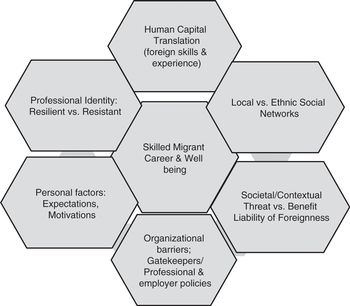
Figure 9.1 Skilled migrants’ work and life trajectories in the host country.
9.2 Individual Level Factors in Skilled Migrant Adaptation and Coping
One of the major challenges and most commonly researched topics related to skilled migrant careers in the host country has been their inability to secure employment commensurate to their level of education. This phenomenon is often described as underemployment or career downshifting. It has been studied in the context of regulated and unregulated professions; that is those who are regulated by local professional associations/bodies vs. those who do not have such barriers to practice. Typically, the research finds that skilled migrants in regulated professions such as doctors, lawyers, engineers, and teachers experience much more serious barriers to entry to the point that they suffer emotionally, and may experience strong form of professional identity threat due to occupational closure in those tightly controlled regulated fields (e.g., Reference Zikic and RichardsonZikic & Richardson, 2016). On the other hand, skilled migrants in unregulated professions, such as sales and marketing managers, financial analysts, or IT specialists, also face barriers often typical of anyone seeking work in the host country. This group of unregulated professionals is more challenged by issues such as having inadequate language/communication skills, seeking local social networks, and/or lacking full understanding of the local business norms.
Thus, some of the most common issues addressed in the literature today are these individual level barriers, whether related to credential recognition or what is commonly called ‘human capital translation’. Career challenges are also just one possible difficulty; migrants may also experience social and professional isolation, lack of belongingness, and inability to fully identify and acculturate locally. Questions revolve around not only migrants’ ability to manage these challenges but also how local context, society, and structures may affect their ability to cope. Thus, individual level issues must be understood in the context of local culture, organisation, and society overall.
Questions also focus on migrant’s motivation to migrate and integrate as well as their readiness to cope with variety of challenges experienced locally. Researchers pointed that a combination of rational and irrational factors draws skilled migrants into developed industrial countries (Reference HaugHaug, 2008). For example, rational choice and human capital theory proposed that economic and demographic factors motivate migration, since level of skills and qualification is strongly connected with the opportunities for finding a job and with the level of income in the country of destination (Reference HaugHaug, 2008). However, Boneva and Frieze (Reference Boneva and Frieze2001; 2006) noted that individuals might also be driven by the specific sets of personality characteristics, such as openness to experience (Reference Canache, Hayes, Mondak and WalsCanache et al., 2013), power motivation, and work-family values that initiate migratory behaviour pushing individuals to leave their country of origin. Among other factors leading to migration, researchers highlighted the presence of networks contributing to the skilled migrants’ expectations regarding help and desire to settle in certain countries/regions (Reference EpsteinEpstein, 2008).
As mentioned above, one of the common individual level barriers is language and communication. Language and culture, for example, are the most significant factors through which individuals define their similarity and differences in relation to others and these serve as the basis for group formation and differences. At the same time, social categorisation processes and stereotyping behaviours may determine action against groups seen as dissimilar (Reference Bonache, Brewster and SuutariBonache, Brewster, & Suutari, 2007; Reference Bonache, Langinier and Zárraga-ObertyBonache, Langinier, & Zárraga-Oberty, 2016; Reference Harvey, Novicevic, Buckley and FungHarvey et al., 2005; Reference Ogbonna and HarrisOgbonna & Harris, 2006); thus, in the case of skilled migrants vs. locals one may observe language, cultural, and human capital (foreign vs. local) differences as the most salient basis for differentiation. Moreover, beyond basic language skills, skilled migrants often struggle with mastering the tacit forms of communication skills, such as confidence, tact, fluency, modesty, interaction skills, and effective face to face techniques (Reference Mahmud, Alam and HärtelMahmud, Alam, & Hartel 2014). As a result, locals and migrants may easily encounter communication difficulties due to these culturally differing communication norms. In fact, communication competence overall is seen as one of the key indicators of employment success in today knowledge economy (e.g., Reference Dugdale, Daly, Papandrea and MaleyDugdale et al., 2005). Most local employers find that communication skills remain the biggest barrier for skilled migrants in terms of fitting into the local workplace, irrespective of their professional background (Reference Derwing and MunroDerwing & Munro, 2009). In the context of these communication challenges, accents also are associated with prejudice and negative stereotypes by the native speakers (Reference DerwingDerwing, 2003; Reference Lippi-GreenLippi-Green, 1997). Accordingly, non-native speakers are also likely to be viewed as less competent individuals as their accents can make it difficult to understand them, exchange information, and learn about each other (Reference Bresnahan, Ohashi, Nebashi, Liu and ShearmanBresnahan et al., 2002; Reference LindemannLindemann, 2003). Moreover, when skilled migrants become aware of these language differences, some may be more reluctant to share their ideas, or even lose self-confidence: in meetings and interviews, for example (Reference Harrison, Harrison and ShafferHarrison, Harrison, & Shaffer, 2019; Reference Lauring and KlitmøllerLauring & Klitmoller, 2017). As a result, communications challenges remain one of the major barriers in skilled migrant/local relationships.
In addition to language skills, migrant vs. non-migrant identity (i.e., including both surface and deep level characteristics) will become an important and salient basis for categorisation and easily identified social category as the source of social identity. It has been shown more recently that ‘immigrant status’ is a complex and deeply ingrained social category’ (Reference Bell, Kwesiga and BerryBell et al., 2010), easily perceived by local society and local organisations. Migrants are likely to identify with their ‘migrant identity’ based on their unique life and organisational experiences in the host country. For example, migrants share experiences of the liability of foreignness and employment challenges related to navigating the local labour market (e.g., Reference DiBenigno and KelloggDiBenigno & Kellogg, 2014; Reference Zikic and RichardsonZikic & Richardson, 2016), thus constantly seeking to learn local business norms as well as showcasing their value and uniqueness to local colleagues.
The liability of foreignness namely hazards of discrimination and unfamiliarity with skilled migrants’ foreign human capital (Reference Fang, Samnani, Novicevic and BingFang et al., 2013; Reference Luo and MeziasLuo & Mezias, 2002) also affects how migrants experience and cope with potential devaluation of their foreign credentials. While foreign degrees are often the basis for being welcomed to the local economy as skilled migrants, local employers often have doubts about its applicability and relevance in relation to the local standards, local customers and market in general (Reference Mahmud, Alam and HärtelMahmud, Alam, & Hartel, 2014). Moreover, due to devaluation of migrants’ foreign skills and experience at the time of hiring and selection, skilled migrants often end up working at lower levels compared to their original qualifications, experiencing career downshifting and underemployment (Reference Bauder and CameronBauder & Cameron, 2002; Reference Chiswick and MillerChiswick & Miller, 2012; Reference Zikic, Bonache and CerdinZikic, Bonache, & Cerdin, 2010). This lack of legitimacy afforded to the foreign credentials and experience can lead to reluctance and doubts in interactions with local co-workers and supervisors (Reference Almeida, Fernando and SheridanAlmeida, Fernando, & Sheridan, 2012); it may lead to questioning of migrants’ fit and suitability to actively contribute and participate in various meetings, collaborations, local business networks, etc. Moreover, for many skilled migrants in highly regulated professions, this devaluation or even their inability to re-enter their professions affects their sense of self and professional identity and may lead to major consequences for the person such as identity struggle, feelings of loss, and even depression (Reference Zikic and RichardsonZikic & Richardson, 2016).
Finally, while skilled migrants may need many individual resources such as resilience and proactivity to cope with many of the challenges listed above (e.g., communication difficulties, learning a new language, translating their human capital, dealing with accreditation difficulties), another key individual dimension in managing migrant lives and careers is their motivation to address these challenges as well as integrate and become part of local organisations. For example, some migrants arrive with a fear of losing a lot by coming to the host country and these individuals may have the lowest motivation to integrate, while those with the highest motivation to integrate typically believed that they have a lot to gain by migrating to the host country (Reference Cerdin, Abdul-Diné and BrewsterCerdin, Abdul-Dine, & Brewster, 2014). Similarly, skilled migrants’ initial framing and expectations may even determine the effectiveness of organisational integration policies (Reference Cerdin, Abdul-Diné and BrewsterCerdin et al., 2014) as well as how they view employment and tenure in local organisations (Reference Dietz, Joshi, Esses, Hamilton and GabarrotDietz et al., 2015).
Another source of evidence regarding skilled migrants’ motivation is found in the cross-cultural psychology literature. Reference Frieze, Hansen and BonevaFrieze, Hansen, and Boneva (2006) report that some immigrants may have higher motivation to leave their home country as well as adjust and succeed locally and this is based on what they describe as a ‘migrant personality’. These individuals are more likely to leave their home country in search of better opportunities, and they often have higher achievement and power motivation (Reference Boneva and FriezeBoneva & Frieze, 2001; Reference Frieze, Hansen and BonevaFrieze et al., 2006) to adapt locally. For example, they may experience heightened need to support their families especially during settlement and adaptation in the host country (Reference De Castro, Gee and TakeuchiDe Castro, Gee, & Takeuchi, 2008). Similar findings were reported by Reference Zikic, Bonache and CerdinZikic et al. (2010) who studied skilled migrants in three different countries. Reference Zikic, Bonache and CerdinZikic et al. (2010) concluded that some migrants do in fact exhibit very strong motivation to adapt. This group was said to have an ‘embracing’ career orientation in the host country, to be driven by the force of their subjective career and even to be challenged by the objective career barriers they were experiencing. A majority of skilled migrants however were described as ‘adaptive’ in their new career orientation (Reference Zikic, Bonache and CerdinZikic et al., 2010), that is being proactive in their adaptation efforts, while still cognisant of the barriers along the way. A small group of skilled migrants in this study, however, was defined as ‘resisting’ and these individuals could not mobilise sufficient career motivation and psychological mobility to deal with objective barriers in the labour market. Thus, a majority of skilled migrants fall into the embracing and adaptive category and this motivation may be an asset to organisations; the resisting group is a much smaller group and due to this, orientation will be less likely to engage with the job market at all, thus unlikely to come in contact with the employers. Together, the findings reviewed in this section lend support to the multifaceted nature of individual resources and how they may impact the adaptation, settlement, and careers of migrants. However, all individual level factors are intertwined with organisational, professional, social, and even more broadly societal characteristics where migrants settle.
9.3 Social Capital and Skilled Migrant Trajectories in the Host Country
A second major area of research addresses the social aspect of the migrant experience, namely the ability to obtain local social capital that will assist in learning and integrating. It is important to clarify that under social capital we consider several types of relationships (e.g., family, friendships, and professional relationships). The main challenge faced by skilled migrants is that, after they move to a new country, most of their network of contacts is simply obsolete, as their networks typically reside in their home country. Instead, many newcomers will resort to what is typically seen as the logical coping strategy, namely looking for similar others for advice and support upon arrival. Thus, they will seek social support which helps skilled migrants to more successfully face the challenges associated with settling into the local society (Reference Hobfoll, Dunahoo, Ben-Porath and MonnierHobfoll et al., 1994). In general, social support can provide immediate resources, such as understanding, information, and encouragement in the face of difficulties, and thus also creates feelings of safety (Reference Schweizer, Schnegg and BerzbornSchweizer, Schnegg, & Berzborn, 1998; Reference Walker, Wasserman, Wellman, Wasserman and GalaskiewiczWalker, Wasserman, & Wellman, 1994). This is particularly relevant in the case of migrants, due to various issues such as identity challenges and lack of established social networks and relationships in the course of their migration (Reference De Leon SiantzDe Leon Siantz, 1997; Reference Turchick Hakak, Holzinger and ZikicTurchick Hakak, Holzinger, & Zikic, 2010). As a result, migrants often gravitate towards their own ethnic community which can provide comfort and support. In other cases, this strategy can be especially challenging as it may lead to survival jobs that often detract one from their original career path (Reference Lubbers, Molina and McCartyLubbers, Molina, & McCarty, 2007).
Moreover, typically, migrant newcomers form a minority in local communities and organisations, and will seek to become part of homophilous networks (Reference IbarraIbarra, 1993): that is, they become part of the networks of similar others. Yet, these networks typically do not involve high-status contacts since the similar others who are present in organisations are usually not in positions of authority (Reference Turchick Hakak, Holzinger and ZikicTurckick Hakak et al., 2010). Moreover, these subgroups of skilled migrants may be seen as highly distinctive from majority members in organisations. And while connecting to others who may be facing similar difficulties in their transition locally can be encouraging and lead to formation of strong ties, and provide emotional support, these subgroups may also be seen as forming a ‘clique’ structure (Reference Brass, Galaskiewicz, Greve and TsaiBrass et al., 2004). These cliques may be somewhat marginalised, and even cut off from the mainstream of information, and may also seem insular to the majority employees. On the flipside, there is also some evidence that by being on the outskirts of the social networks, these employees may have more opportunities to span structural holes and even increase creativity of local units (Reference BurtBurt, 2004; Reference Harrison, Harrison and ShafferHarrison et al., 2019)
Thus, while the ties to the ethnic community and formation of homophilous networks may provide social support that acts as a buffer for many other challenges they face in their adaptation to a new country; these types of connections may not be enough in terms of migrants’ career needs. Instead, recent work on the role of local social support also finds that skilled migrants may do best when they are able to obtain both types of support, not only homophilous but also heterophilous ties (i.e., with members of the local community) (Reference Zikic and VoloshynaZikic & Voloshyna, 2018). In fact, those migrants who managed to integrate most effectively both in terms of their career as well as outside of work and later even gave back to the local community were those that merged both types of ties. Specifically, when skilled migrants not only leveraged contacts and networks from their own communities but also successfully explored, and proactively connected to, local communities and contacts in the host country, they achieved best results. Thus, a mix of ties, blended between those from one’s country of origin and locals is likely to lead to most effective adaptation and even career outcomes (Reference Bhaskar-Shrinivas, Harrison, Shaffer and LukBhaskar-Shrinivas et al., 2005). Overall, what is known is that social networks can both constrain as well as facilitate skilled migrant experiences. Thus, we must understand deployment of social capital (perhaps, for example, drawing on ethnic networks) vs. accumulation of new local contacts. In this context, Reference Al Ariss and SyedAl Ariss and Syed (2011) find accumulation of local social capital to be challenging, while deployment of social capital is influenced by factors such as gender and ethnicity.
In the context of relying on ethnic networks, it is also known that these contacts can sometimes be one avenue for achieving career success in the local economy, for example when they assist newcomers in starting their own business (Reference Salaff, Greve, Siu-Lun and PingSalaff et al., 2003). Thus, a lack of local social capital and an inability to obtain employment in local organisations can force immigrants to turn to entrepreneurship. Empirical evidence suggests that skilled migrants form a large proportion of the population of the founders of successful businesses (Reference Neville, Orser, Riding and JungNeville et al., 2014) and, therefore, research describes several explanations of this propensity for immigrants to become business owners. For example, business ownership is usually higher among skilled migrants who are more educated. In addition, empirical evidence shows that skilled migrants’ propensity to take a risk positively contributes to their ability to develop successful enterprises (Reference El-AssalEl-Assal, 2018). Another explanation could be found in selection and discrimination processes in local organisations that can also contribute to higher level of entrepreneurship among skilled migrants (Reference Vandor and FrankeVandor & Franke, 2016). In this case it is said that migrants may feel ‘frustrated in their goals to join the mainstream society’, and as a result they find it easier to draw on the enclave for social capital at different stages of building a business. Thus, some skilled migrants depend on social networks to establish their own businesses in the local economy (Reference BlusteinBlustein, 2017); for example, 27.5 per cent of US entrepreneurs are skilled migrants and, in addition, about ‘one-fourth of all technology and engineering companies started in the US between 2006 and 2012 had at least one immigrant co-founder’ (Reference Vandor and FrankeVandor & Franke, 2016).
Finally most recently, researchers described another fruitful avenue assisting skilled migrant integration through obtaining local social capital, has been mentoring programmes between local professionals and skilled migrant newcomers (Reference ZikicZikic, 2018; Reference Zikic and SondhiZikic & Sondhi, 2015). These types of relationships have been linked to potential job search and career assistance from local experts in the field. Moreover, when newcomers are able to connect and associate themselves with locals, some of the major challenges of adaptation and re-establishing their careers may be alleviated. In reviewing literature on the relationships between migrants and locals, whether prior to organisational entry or after, it turns out that focusing on the dyadic relationships between skilled migrants and locals may be the most important diversity integration mechanism, one that has been little understood so far (Reference ZikicZikic, 2018). Much of the literature seems to present locals vs. migrants as two opposing sides and provides evidence of discrimination, whether overt or covert depending on the social and national context (Reference Turchick Hakak and Al ArissTurchick Hakak & Al Ariss, 2013). Moreover, typically the two groups may also feel threatened by each other as skilled migrants’ (newcomers) desire to obtain much needed recognition for their foreign human capital may be met by local colleagues’ doubts and even feeling threatened, thus fearing for their established status and not knowing newcomers’ abilities (Reference Tartakovsky and WalshTartakovsky & Walsh, 2016).
However, by proposing to integrate these two seemingly opposing perspectives and focusing on the quality of the migrant/local relationships, via interventions such as mentoring, we highlight the importance of combining the conflicting nature of this relationship through focusing on what they have in common and how to achieve successful collaboration between the two. For example, both sides are seeking to achieve the same basic needs at work (for belongingness and competence), as well as meeting organisational goals, for example. As a result, recent conceptual work proposes creating and fostering opportunities for high quality connections (Reference Heaphy and DuttonHeaphy & Dutton, 2008) between foreign (i.e., skilled migrant) and local workforces (Reference ZikicZikic, 2018). Thus, we expect that through high-quality connections between skilled migrants and locals, both groups will obtain much needed opportunities for social connection, knowledge exchange, and learning from each other that will in turn: (1) ease their relational challenges and reduce uncertainty, (2) allow for a more balanced understanding of relational threats vs. benefits, and (3) enhance satisfaction of both belongingness and uniqueness needs. In fact, it is said that dyadic relationships (e.g., with co-workers, superiors, subordinates) are said to be the foundation of how individuals feel about themselves in the context of work and even the basis of their overall success in local organisations (Reference Harrison, Harrison and ShafferHarrison et al., 2019). As the most common type of work relationships, we propose that local organisations should focus their attention on improving the quality of these dyadic relationships, with special attention given to relationships and communication between skilled migrants and local employees.
9.4 Organisational Pathways towards Migrant Integration
A third major area of research regarding skilled migrant careers has been migrant integration into local organisations. Again, this topic has a dualistic character whereby the rhetoric and the onus is placed on the migrants themselves to ‘integrate’, to fit into the local business culture and the society overall. However, much less is known about local efforts to manage this type of diversity and assist integration into local organisations (e.g., Reference Harrison, Harrison and ShafferHarrison et al., 2019). Some of the current research describes potential benefits related to skilled migrant entry and integration, specifically in the context of foreign human capital being one aspect of the unique competitive advantage (Reference ZikicZikic, 2015). Yet, much of the diversity literature still finds many related barriers that prevent both skilled migrants as well as local individuals and organisations, from leveraging this unique form of human capital. On occasion, the barriers are related to individual level issues, as described earlier. Other times barriers are much more systemic and thus harder to address as they centre at the level of the organisational system, culture, local norms, and also societal attitudes.
The most common scenario, in the context of skilled migrants working alongside local employees, is that migrants will be judged as belonging to the ‘out-group’ at least based on several obvious characteristics. Skilled migrants as organisational insiders are clearly ‘newcomers’ who come from another country, also they are often but not always, demographically dissimilar, and typically end up in lower status positions or underemployed compared to their qualifications and experience. These differences in comparison with locals are often said to create a ‘perfect storm’ of ‘otherness’ (Reference MuhrMuhr, 2008). There is research to suggest that due to some of these aspects of ‘otherness’ skilled migrants may be discriminated against at the point of entry into local organisations (Reference Banerjee, Reitz and OreopoulosBanerjee, Reitz, & Oreopoulos, 2017; Reference Almeida, Fernando, Hannif and DharmageAlmeida et al., 2015). For example, Reference Almeida, Fernando and SheridanAlmeida et al. (2012) found out that instead of considering a wider pool of candidates, including skilled migrant applicants, employers often rely on well-known networks and sources that will lead to hiring from a narrow pool of candidates with qualifications, work experiences, and attributes similar to the already existing employee base. There is also evidence for a variety of challenges in terms of skilled migrant entry into local workforces, resulting from a lack of HRM know-how (for example, procedures specifically dealing with skilled migrant diversity), as well as inefficient and faulty systems and screening procedures. As a result, organisations are advised to review whether they in fact have an ‘inclusive recruitment strategy’, a recruitment philosophy that focuses on skills, as opposed to country of origin, or other candidate characteristics (Reference MourtadaMourtada, 2010); similarly, creating barrier-free job advertisements and ensuring job descriptions do not exclude any qualified candidates.
On the other hand, much less is known about the actual experiences of skilled migrants as organisational insiders. Some speculate that, based on our understanding of diversity in general, where dissimilarity may breed contempt and especially by sounding and looking different (Reference Creese and KambereCreese & Kambere, 2003), migrants may receive a more negative treatment in organisations too. For example, their status as described above may lead to stigmatisation by the dominant group and they could be seen as less worthy members of local organisations, thus receive less support from co-workers or even be trusted less (Reference Harrison, Harrison and ShafferHarrison et al., 2019). Some recent research supports these ideas that likely due to this perceived ‘otherness’, migrants may be susceptible to lower overall success as members of local organisations (Reference Fang, Samnani, Novicevic and BingFang et al., 2013; Reference Turchick Hakak, Holzinger and ZikicTurchick Hakak et al., 2010) such as unfavourable performance reviews, less training and fewer promotions, etc. Similarly, there is evidence that foreign-sounding names and even physical characteristics of migrants in the United States of America, for example, negatively impact their wages (Reference HerschHersch, 2008; Reference OreopoulosOreopoulos, 2011). Finally, migrants may encounter antagonism simply based on the competition for valuable and often limited organisational resources as well as skilled migrants being seen as a potential threat due to their foreignness, so ‘less deserving’ of these resources.
These issues between migrants and locals have been captured by the threat-benefit model (Reference Tartakovsky and WalshTartakovsky & Walsh, 2016). In this model the authors discuss how at the same time locals may perceive migrants as both beneficial and threatening for the receiving society. They may be perceived as threatening in terms of competition for resources and possibly incompatibile with the local society, while at the same time migrants may also be perceived as benefiting local society by filling vacant jobs and bringing cultural diversity to the local society. Thus, how migrants are perceived by local organisations and the resulting challenges are also closely related to the overall attitude towards migrants in the local society more broadly (Reference Tartakovsky and WalshTartakovsky & Walsh, 2016). Specifically, macro factors at the societal level, such as anti-immigration attitudes, may impact how organisational insiders feel and interact with skilled migrants inside local organisations and perhaps even intensify the challenges skilled migrants may face as insiders (Reference SyedSyed, 2008). Thus, while the three challenges discussed above distance locals and skilled migrants and impede their collaboration and integration, the threat-benefit paradigm, specifically its emphasis on the benefits, may assist in understanding how local organisations may frame and further discuss these challenges. For example, while organisations can acknowledge the potential feelings of threat by some employees, it is imperative to highlight the benefits of having skilled migrants locally and in this way create a more positive context for integration to take place. This can be done as part of diversity management training and cross-cultural intervention programmes. By diversity management is meant managerial actions aimed at either increasing diversity and inclusion or promoting amicable, productive working relationships within local organisations (Reference Jonsen, Maznevski and SchneiderJonsen, Maznevski, & Schneider, 2011). Thus, understanding and incorporating threat-benefit rhetoric into local organisations’ diversity management training, for example and programmes focusing on cross-cultural topics will produce a more balanced view of skilled migrants, while limiting extreme perceptions of threat and recognising the value and uniqueness that skilled migrants bring to the local organisation and the local society overall.
In further focusing on the ‘how’ of integration, Reference ZikicZikic (2015) applies the resource-based view of the firm as a theoretical lens to understand how skilled migrant career capital, in particular, may be the source of competitive advantage. Thus, skilled migrants may be diverse in many ways, but their uniqueness comes from the diversity of their career capital (i.e., motivation for migration, human and social capital). However, in understanding how this population can be the source of competitive advantage it is important to know the conditions or contingencies; specifically, knowing the existing internal and external context and cultural values of a particular organisation in order to judge its readiness and need to invest in creating, promoting and benefit from skilled migrant diversity (Reference Almeida, Fernando and SheridanAlmeida et al., 2012). Thus, the integration of skilled migrants requires consideration of influences related to factors already inherent in the local organisation, for example, the presence of diversity champions, or individuals who play a key role in promoting and creating a culture that leverages on diversity (Reference ThomasThomas, 2004) (e.g., modelling positive diversity values, at the top management team level, Reference 222Guillaume, Dawson, Woods, Sacramento and WestGuillaume et al., 2013). In addition to understanding organisational culture and internal support, one must also assess the external environment, for example the diversity of the community, its customers, as well as already existing organisational diversity that may influence the firm’s orientation towards skilled migrant diversity.
Finally here, Reference ZikicZikic (2015) recommends that local employers seek to establish networks in order to better tap into the skilled migrant talent pool (Reference Malik, Manroop and SinghMalik, Manroop, & Singh, 2017); for example, through creating various partnerships between local employers, policymakers, immigrant community agencies, and professional associations (Reference HabibHabib, 2011). These initiatives can be geared towards educating local leaders and employers about the value of skilled migrant career capital, as well as helping design specific procedures and more efficient ways of assessing and attracting foreign human capital. Greater cultural understanding and integration of skilled migrant newcomers may also help in creating improved team collaborations leading to more creative solutions at work (Reference Janssens and BrettJanssens & Brett, 2006).
Therefore, skilled migrants do not exist in isolation of local colleagues. In order to understand how skilled migrants cope with these contrasting needs amid local obstacles, their perspective must be understood, together with that of local colleagues with whom they must collaborate and work closely together with. Local employees are already established organisational insiders, eager to emphasise their already achieved belongingness and unique contributions to the local organisation. As a result, immigrant organisational integration is defined here as a joint effort between local organisations (local employees) and skilled migrants to create a context where at each stage of the integration process (from entry to later stages), both parties have the ability to contribute free of barriers, and to experience belongingness in every aspect of organisational life. Effective integration between skilled migrants and local employees will allow each group to grow their careers, and in this process feel respected and recognised for each other’s uniqueness. Overall, effective integration of skilled migrants has the potential to benefit both entities: (1) as skilled migrants and locals collaborate through productive working relationships, local employers and the host country can leverage migrants’ foreign capital towards enhanced competitive advantage (Reference ZikicZikic, 2015); and (2) effective integration can enhance migrants’ career success, well-being, and their overall prosperity in the host country.
9.5 Conclusions
This review provides evidence for the multifaceted nature of skilled migrant integration into local organisations and local societies. Three major themes served as an organising framework: the individual, social, and organisational domains of migrant life (summarized in Figure 9.1). Clearly in each domain we see the migrants as the focal point, both in terms of their human, social, and motivational capital as well as their role in the local labour market or local organisations. Skilled migrants are an integral part of many global economies and their pathways into those economies may also be distinct based on local laws, and the broader national context (Reference Turchick Hakak and Al ArissTurchick Hakak & Al Ariss 2013), labour policies and the general climate related to how migrants are portrayed in the local discourse (the threat vs. benefit paradigm).
Overall, one of the major dichotomies in research on migrants so far is the need to understand both local as well as migrant perspective in the process of integration. Specifically, questions arise about the responsibility of the local society (e.g., local employees) vs. migrants’ own proactivity and ability to integrate and adapt, and ‘fit’ locally. Much of the research portrays the migrants as ‘vulnerable’ or even ‘oppressed’ actors (e.g., Reference Esses, Deaux, Lalonde and BrownEsses et al., 2010), however, it is important to strike a balance in terms of understanding migrant expectations/ motivations to integrate as well as what local society may have to offer in regards to settling and trying to re-start their careers. While some countries may be known to be migrant receiving economies (with well-developed migrant settlement and integration models), there is still a need to understand both overt as well as covert factors related to discrimination from organisational entry (e.g., organisational gatekeepers) to broader integration into local community and society overall. Overall, skilled migrants are equally seen as very resilient and proactive individuals (Reference ZikicVoloshyna & Zikic, 2018; Reference Frieze, Hansen and BonevaFrieze et al., 2006) who take major career risks as a result of their cross-national moves in the hopes of better lives and career opportunities. Thus, a more nuanced portrayal and acknowledgement of local vs. migrant perspectives is needed in the hopes of obtaining a more holistic and valid understanding of skilled migrant transitions and local integration.
Much of the research focuses on the time when the migrant is already in the host country, yet it is important to understand that pre-arrival expectations and connections also play an important role in adaptation. In this context, social networks, whether local or ethnic, have received much attention and their influence on migrant pathways in local economies is a powerful one. Again, there is a dichotomy between finding local mentoring connections that can ease migrant integration into local organisations and ethnic connections that may instead reinforce migrants’ desire towards entrepreneurial careers. Thus, the role played by a variety of social factors has powerful impact on migrant integration locally. Similarly, it is important to understand that migrant social and career experiences in the host country must also be understood in the context of intersectionality of ethnicity, religion, sex, age, and physical abilities among other determinants (Reference Al Ariss, Koall, Özbilgin and SuutariAl Ariss et al., 2012).
Finally, the third aspect of migrant experience that requires much more research is related to how migrants navigate local organisations. Much of the existing research focuses on the pre-entry stage, focusing on migrants as ‘outsiders’ to local organisations, mainly navigating on the periphery of the labour market. In this context, the literature often takes the ‘normalising’ approach in that it is expected that the migrant must find a way to somehow ‘fit into’ local organisations and as a result the migrant is expected to ‘fix’ some aspects of the self (e.g., take extra training, downshift in their career, improve communication/language skills). In much of the literature, the onus to adapt and succeed in the new country is often put on the migrants, thus if they experiences challenges then they must be ‘deficient’ in some ways and need to adapt to the local norms and conditions. This one-sided view must be expanded in future research by allowing for local perspectives and a deeper understanding of the role of gatekeepers (e.g., HRM professionals, line managers, local leaders). Thus, we propose one avenue for merging these opposing sides by focusing on fostering high quality dyadic relationships as the basic building blocks that can buffer the feelings of threat, lower discrimination, and accentuate the benefits related to welcoming and integrating skilled migrants into local economies.
10.1 Introduction
Globalisation has facilitated the spread and awareness of dramatic changes in societal values and legislation, and there have been major shifts in women’s participation in the global workforce. Gender diversity in management and leadership is associated with better organisational performance and reputation (Reference Brieger, Francouer, Welzel and Ben-AmarBrieger et al., 2019; Reference Hoobler, Masterson, Nkomo and MichelHoobler et al., 2018; Reference Jeong and HarrisonJeong & Harrison, 2017). However, women continue to be under-represented in management and leadership roles worldwide, including in global mobility, and the current situation is a long way from global gender equality (Reference Eden and GuptaEden & Gupta, 2017). This warrants attention because understanding the factors that affect women and the implications for individuals and their employers is important for the advancement of research and management of global mobility.
There is debate about whether research on women in management should: (a) focus on women; (b) include diverse genders and sexualities; or (c) view gender as one category in the broader field of workforce diversity and inclusion. On one hand, scholars who study diversity and inclusion (e.g., Reference RobersonRoberson, 2019; Reference Shore, Cleveland and SanchezShore, Cleveland & Sanchez, 2018) emphasise that diversity in the global workforce includes not simply the binary categories of men and women but also diverse genders and sexualities, as well as attributes such as ethnicity, age, culture, and religion (Reference Mor BarakMor Barak 2017; Reference Kim and Von GlinowKim & Von Glinow, 2017). Managing issues that affect women at work can be seen as part of workplace inclusion, which refers to the processes that ensure everyone is accepted, respected, and able to contribute to organisational success (Reference Shore, Cleveland and SanchezShore et al., 2018). Without doubt, diversity and inclusion research has enriched our understanding of gender and of the importance of inclusion in workplaces and in society. On the other hand, scholars whose research focuses on gender have cautioned that broadening the discussion to all forms of diversity and inclusion may divert attention from, and dilute efforts to address, concerns that are specific to women (Reference Broadbridge and SimpsonBroadbridge & Simpson, 2011). For more detailed discussions about gender and management research, see Reference Broadbridge and SimpsonBroadbridge and Simpson (2011) and Reference Bullough, Moore and KalafatogluBullough, Moore and Kalafatoglu (2017). In this chapter, we focus on women in global mobility and hope to offer some insights that will inform research and practice both targeted for women in global mobility and inclusive for a diverse workforce. We argue for the importance of both targeted and inclusive policies, processes and practices, and suggest that these are complementary rather than mutually exclusive.
10.1.1 The Global Context for Women
Research and management of women in global mobility is a small yet important component of the larger context for gender equality worldwide. The World Health Organisation defines gender as the socially constructed characteristics of men and women, such as norms, roles, behaviour, and attributes, that a particular society considers appropriate for men and women (www.who.int). Gender equality means that: ‘women and men enjoy the same rights and opportunities across all sectors of society, including economic participation and decision-making, and […] the different behaviours, aspirations and needs of women and men are equally valued and favoured’ (United Nations Conference on Trade and Development, 2016: 31). According to the Global Gender Gap Report 2018, ‘although many countries have achieved important milestones towards gender equality …, there remains much to be done’ (World Economic Forum, 2018: v).
However, as Syed and Van Buren (Reference Syed and Van Buren2014: 252) discuss, ‘what gender equality means in practical terms is a subject of considerable debate, and especially so when considering how cultures and societies differ’. There are ongoing tensions between principles of equality that might be thought of as universal and local views of gender and equality. The prevention of gender inequality and strategies to deal with the negative effects of inequality will vary across national contexts and require understanding of societal and institutional differences (Reference Syed and Van BurenSyed & Van Buren, 2014; Reference Triana, Jayasinghe, Pieper, Delgado and LiTriana et al., 2019).
Women represent half the population in most countries and the participation of women in higher education and in the workforce has risen in almost all regions of the world (World Economic Forum, 2018). Worldwide, there is increasing representation of women in managerial roles and women constitute just over 40% of managers, professionals, and technicians (International Labour Office, 2016), which is the group where most research on globally mobile employees has been focused. Although there has been progress in recent years, women remain under-represented in political and business leadership positions worldwide (Reference Bullough, Kroeck, Newburry, Kundu and LoweBullough et al., 2012; Reference Peus, Braun and KnipferPeus, Braun & Knipfer, 2015). A recent global survey found that women represent 29% of senior management roles and 15% of chief executive officers (Grant Reference ThorntonThornton, 2019). Globally, around 25% of all companies do not have a woman in a senior management role (Catalyst, 2019). Studies continue to show that women remain under-represented in globally mobile work.
10.1.2 Women and Global Mobility
As Reference Michailova and HutchingsMichailova and Hutchings (2016: 349) have shown ‘the IB [international business] literature has paid, and continues to give, little consideration to gender generally and much less to women specifically’. The same can be said for the field of global mobility, where research to date on women in global mobility has been somewhat fragmented, despite valuable contributions.
Women participate in all forms of global mobility, which includes various types of work that involve international travel, such as expatriation, international business travel, global project teams (Reference Meyskens, Von Glinow, Werther and ClarkeMeyskens et al., 2009), and migration for employment purposes (Reference Bierwiaczonek and WaldzusBierwiaczonek & Waldzus, 2016). We adopt a broad definition of an expatriate by including employees who are sent abroad by an organisation, usually for between one to five years (Reference Cerdin and BrewsterCerdin & Brewster, 2014), as well as self-initiated expatriates who find their own employment opportunities and undertake international work experiences for a limited or undefined duration (Reference Andresen, Bergdolt, Margenfeld and DickmannAndresen et al., 2014). Many expatriates are employed by multinational enterprises (MNEs), yet other expatriates include volunteers, particularly in the aid and development sector (Reference 253Bhatta, Simkhada, van Teijlingen and MaybinBhatta et al., 2009), diplomats (Reference Dunn, Williams, Kemp, Patel and GreenbergDunn et al., 2015), and/or military personnel (Reference Beder, Coe and SommerBeder, Coe & Sommer, 2011).
Within the research on global mobility, much of the attention has been narrowly focused on long-term company assigned expatriates who ‘have typically been senior managers, Western, males in their late 40s or early 50s, with an accompanying female spouse and children’ (Reference McNulty and HutchingsMcNulty & Hutchings, 2016: 699). Some research has focused on women who are expatriate partners, often non-working individuals who are dependent on their partner for the right to remain in a country (e.g., Reference De Cieri, Dowling and TaylorDe Cieri, Dowling & Taylor, 1991; Reference Doherty, Richardson and ThornDoherty, Richardson & Thorn, 2013). Reference AdlerAdler (1984) asked: ‘Where are the women in international management?’ raising awareness of the large gender disparity, specifically with regard to expatriate assignments, based on a survey of major North American firms where only 3% of their expatriates were women. In the mid-1980s, countries like the United States of America saw important developments such as legislation for equal employment opportunity and affirmative action – and increasing participation of women in the labour force. Such developments led Reference AdlerAdler (1984) to predict a rise in the representation of women in international assignments. In the 1990s, the numbers crept up so that women represented 12–15% of all expatriate managers (Reference Caligiuri, Joshi and LazarovaCaligiuri, Joshi & Lazarova, 1999). Reference Altman and ShortlandAltman and Shortland (2008) reported that the 2000s saw a further increase in the engagement of women in international assignments. Current surveys indicate that women constitute around 25% of the global expatriate population (Brookfield Global Relocation Services, 2016).
In recent decades, research in the management field has broadened to include self-initiated expatriates (e.g., Reference Doherty, Richardson and ThornDoherty et al., 2013; Reference WechtlerWechtler, 2018), international business travellers (e.g., Reference Mäkelä, Lämsä, Heikkinen and TanskanenMäkelä et al., 2017), and migrants (Reference Colakoglu, Yunlu and ArmanColakoglu, Yunlu & Arman, 2018). The situation for women varies across different types of global mobility. It is interesting to note that women appear to be more prevalent among self-initiated expatriates than among corporate-initiated expatriates (Reference Doherty, Richardson and ThornDoherty et al., 2013). This may be because self-initiated expatriates include occupations and industries that have higher representation of women, such as healthcare workers, teachers, and academics.
There is increasing awareness that globally mobile women include highly skilled professionals who represent a valuable source of human capital (Reference Kemp and RickettKemp & Rickett, 2018). However, studies of highly skilled migrants have found that female migrants experience more difficult transitions than do male migrants, due to a range of factors including visa processes that tend to give preference to male-dominated occupations, and women having less access to professional social networks and taking more responsibility for childcare (Reference Salaff and GreveSalaff & Greve, 2004). The career of a female migrant will be more negatively affected by migration than will a male migrant’s career (Reference Salaff and GreveSalaff & Greve, 2004; Reference Colakoglu, Yunlu and ArmanColakoglu et al., 2018).
Although management researchers have paid more attention to high-status professionals in global mobility, the global talent pool is diverse in gender, age, family status and occupation (see Reference McNulty and HutchingsMcNulty & Hutchings, 2016; Reference 259Paisley and TayarPaisley & Tayar, 2016), and social status (Reference Haak-Saheem and BrewsterHaak-Saheem & Brewster, 2017). It is important to recognise that gender parity is an important concern across all layers of the workforce and for all women whose work and lives are affected by the global economy (Reference Metcalfe and ReesMetcalfe & Rees, 2010). Globalisation is empowering for some, yet disempowering and impoverishing for others, particularly unskilled women in developing countries (Reference GuillénGuillén, 2001). Extreme forms of gender inequality and exploitation may be evidenced and experienced by women who are in low-skilled work such as ‘hidden expatriates’ (Reference Haak-Saheem and BrewsterHaak-Saheem & Brewster, 2017) and sex trafficking (Reference LaiteLaite, 2017). While a full discussion of women in all types of global mobility is beyond the scope of this chapter, we hope to contribute to awareness of the range of experiences.
10.2 A Framework of Factors Affecting Women in Global Mobility
Building on previous research on women in the workforce and women’s career advancement (Reference Metz and KumraMetz & Kumra, 2019; Reference Ragins and SundstromRagins & Sundstrom, 1989), four levels of factors that affect women in global mobility can be identified: (1) societal and institutional; (2) organisational; (3) interpersonal; and (4) individual (see Figure 10.1). These factors may act either as barriers that hinder women’s global mobility or as facilitators for women. It is important to note that some factors such as stereotypes permeate multiple levels: ‘stereotypes operate at the social systems level and thereby influence the lower levels’ (Reference Peus, Braun and KnipferPeus et al., 2015: 56). Also, there will be interactions between factors at different levels. For example, in influential early research, Reference Caligiuri and CascioCaligiuri and Cascio (1998) identified four categories of antecedents for the success of female expatriates: (1) organisational support; (2) host nationals’ attitudes towards women expatriates; (3) family support; and (4) personality traits. Our framework also identifies important outcomes at each level for women in global mobility.

Figure 10.1 Framework for women in global mobility
10.2.1 Societal and Institutional Factors
Societal and institutional factors include the legal, cultural, political, economic, and technological characteristics in each country that create the context for gender equality (Reference Brieger, Francouer, Welzel and Ben-AmarBrieger et al., 2019; Reference Eden and GuptaEden & Gupta, 2017; Reference Peus, Braun and KnipferPeus et al., 2015; World Economic Forum, 2018). The extent, causes, and characteristics of gender inequality within countries have direct implications for women’s employment, career advancement, and opportunity to participate in global mobility. Institutional theory (Reference DiMaggio and PowellDiMaggio & Powell, 1983) offers an explanation of how institutions such as legal frameworks set the rules and legitimise actions, creating isomorphic pressure so that organisations and individuals will seek to conform in order to prosper and survive (Reference Kostova and ZaheerKostova & Zaheer, 1999). Institutional and societal support is necessary in order for actors such as women in leadership roles to have legitimacy; increasing the representation of women in leadership roles requires societal and institutional change (Reference Bullough, Kroeck, Newburry, Kundu and LoweBullough et al., 2012; Reference Lewellyn and Muller-KahleLewellyn & Muller-Kahle, 2019). It is important to note that a country’s stage of economic development does not seem to play a key role in determining the percentage of women in senior official or managerial positions (Reference Michailova and HutchingsMichailova & Hutchings, 2016). For example, in China the participation rate of women in the workforce is much higher than the global average, which can be largely attributed to the legacy of state socialism and recent government reforms (Reference CookeCooke, 2005; Reference Woodhams, Xian and LuptonWoodhams, Xian & Lupton, 2015).
Legislation. In many countries, important progress has been made in legislative reform for gender equality. Many governments have implemented equal opportunity and anti-discrimination laws, and most countries have equal opportunity laws that specifically include gender as a protected attribute (Reference Michailova and HutchingsMichailova & Hutchings, 2016; Reference Mor BarakMor Barak, 2017). In addition, several countries have implemented legislative reforms to improve women’s workforce and managerial participation. For example, countries such as Iceland, Finland, Norway, and Sweden have implemented laws specifying quotas, and penalties for lack of compliance, for the gender diversity of corporate boards (Reference Lewellyn and Muller-KahleLewellyn & Muller-Kahle, 2019; Reference Sojo, Wood, Wood and WheelerSojo et al., 2016). However, currently only six countries in the world (Belgium, Denmark, France, Latvia, Luxembourg, and Sweden), offer women and men equal rights via laws that affect women throughout their working lives (World Bank Group, 2019). In many countries, laws are influenced by patriarchal cultures that place restrictions on the roles and opportunities for women to participate in the workforce (e.g., Reference Bullough, Kroeck, Newburry, Kundu and LoweBullough et al., 2012; Reference de Klerk and Verreynnede Klerk & Verreyne, 2017). Legislation plays a critical role in gender equality, yet the legal framework is not sufficient to bring about the social change required for gender equality.
National culture. Societal barriers for women seeking global mobility might include religions or traditional norms, national culture, and stereotypes (Reference Mor BarakMor Barak, 2017; Reference Triana, Jayasinghe, Pieper, Delgado and LiTriana et al., 2019). For example, de Klerk and Verreyne (Reference de Klerk and Verreynne2017: 479) discuss the barriers caused by norms that hinder women managers, particularly in emerging economies. Changing mindsets about gender, work, and family roles and efforts to make it easier for both men and women to engage in career and family is a complex and large-scale societal issue (Reference Puchmüller and FischlmayrPuchmüller & Fischlmayr, 2017). Comparative and cross-cultural research such as the Global Leadership and Organizational Behavior Effectiveness Project (GLOBE, Reference House, Hanges, Javidan, Dorfman and GuptaHouse et al., 2004) has led to a stream of research investigating which national societal or cultural characteristics either facilitate or hamper women’s career advancement (e.g., Reference Bullough and de LuqueBullough & Sully de Luque, 2015).
Stereotypes. Scholars in the management and leadership fields have discussed the systemic discrimination that has led to gender imbalance in leadership roles, which has been explained as a ‘lack of fit’ model (Reference HeilmanHeilman, 2012) or a ‘think manager, think male’ mindset (Reference Kossek, Su and WuKossek, Su & Wu, 2017). According to Reference HeilmanHeilman (2012), stereotypes or preconceptions that a manager looks and behaves in ways that are typically associated with men will lead people to underestimate the managerial potential of women and others who do not fit the stereotype. Due to this underestimation, women may be excluded from opportunities such as managerial and leadership opportunities. With regard to global mobility, the ‘think international manager, think male’ mindset (Reference Festing, Kornau and SchäferFesting, Kornau, & Schäfer, 2014) may be exacerbated by stereotypes held about cultural expectations within countries, linked to negative reactions by host country nationals towards female expatriates, and explain why women are so under-represented in international assignments.
Valuable contributions to understanding societal and institutional factors have been made by a growing stream of research conducted in Middle Eastern contexts, with studies including explorations of employment opportunities for Middle Eastern women (e.g., Reference Hutchings, Metcalfe and CooperHutchings, Metcalfe & Cooper, 2010) and the work experiences of foreign women in the Middle East (e.g., Reference Kemp and RickettKemp & Rickett, 2018). Reference Alhejji, Ng, Garavan and CarberyAlhejji et al. (2016) examined MNEs in Saudi Arabia and found that although formal institutional factors such as laws and government policy encourage gender equality, there are powerful factors, particularly cultural norms and traditions, that may hamper efforts towards gender equality. Similarly, Reference Stalker and MavinStalker and Mavin’s (2011) interviews with self-initiated expatriates in the United Arab Emirates identified ongoing cultural and institutional constraints on workplace participation for both local and foreign women, although they predicted that social changes will transform future work settings.
Safety and security. The global context for work has become more risky, or at least we are more aware of safety and security hazards such as terrorism, geopolitical tensions, and hostile environments (Reference Bader and SchusterBader & Schuster, 2015). Some occupational groups are more likely to be engaged in hazardous global work, such as aid and development workers, military personnel or war journalists, and some safety and security concerns are particularly important for women. For example, Bhatta et al.’s (Reference 253Bhatta, Simkhada, van Teijlingen and Maybin2009) study of risks and problems encountered by volunteers overseas found no gender differences with regard to outcomes such as likelihood of suffering post-traumatic stress disorder, yet identified rape and sexual violence as a category of trauma to which aid workers and particularly women might be vulnerable in high-risk locations such as war zones.
10.2.2 Organisational Factors
Many employers worldwide make substantial investment in gender equality and workplace inclusion (Reference Groysberg and ConnollyGroysberg & Connolly, 2013; Reference WentlingWentling, 2004). In business terms, it makes sense for all qualified employees to have equal opportunity to engage in work; discrimination against any segment of the human resource pool is in neither the individuals’ nor the employer’s interests (Reference Hoobler, Masterson, Nkomo and MichelHoobler et al., 2018).
CEO and top management team mindset. According to upper echelon theory, demographic characteristics and cognitive biases of the CEO and top management team are likely to be reflected in the firm’s culture and organisational characteristics (Reference Hambrick and MasonHambrick & Mason, 1984). Hence, the mindsets of the top management team will influence the firm’s approach and outcomes relevant to gender equality, and there may be both overt and subtle power relations and mechanisms that hinder women in global mobility (Reference Athanasopoulou, Moss-Cowan, Smets and MorrisAthanasopoulou et al., 2018; Reference London, Bear, Cushenbery and ShermanLondon, Bear, Cushenbery & Sherman, 2018). Studies have shown that decision makers may be influenced by biases or stereotypes that lead them to view women as less competent than men (Reference HeilmanHeilman, 2012; Reference Tinsley and ElyTinsley & Ely, 2018).
Stereotypes and glass borders. Research evidence of barriers for women’s career advancement in global mobility is quite consistent and the pace of change is slow (Reference Chrobot-Mason, Hoobler and BurnoChrobot-Mason et al., 2019). Women face barriers to their global career advancement that men do not encounter (e.g., Reference 258Linehan and ScullionLinehan & Scullion, 2008; Reference 261TzengTzeng, 2006). It should be understood that this is not due to some inherent factor present, or deficient, in individuals. Rather, the key barrier for women has been described as the ‘think international manager, think male’ mindset (Reference Festing, Kornau and SchäferFesting et al., 2014) already noted as a societal factor, or an enduring form of the ‘glass ceiling’ for women (Reference Caligiuri and TungCaligiuri & Tung, 1998) identified in global mobility as a ‘second layer’ of glass ceiling (Reference Insch, McIntyre and NapierInsch, McIntyre & Napier, 2008) or ‘glass border’ (Reference Linehan and WalshLinehan & Walsh, 1999). All of these terms refer to stereotypes held by decision makers and senior management about female managers and their interest in and suitability for global mobility. Such stereotypes may lead women to have less access to the resources, such as job feedback, mentors, and challenging work assignments that would help them to advance in their careers (Reference Chrobot-Mason, Hoobler and BurnoChrobot-Mason et al., 2019). Several researchers have investigated the importance of managerial attitudes in influencing women’s participation in global mobility. For example, Reference Paik and VancePaik and Vance (2002) found that managers’ unfounded selection biases influenced expatriate selection decisions to the detriment of female candidates. Gender stereotypes also have negative consequences for men. Reference Collins and BertoneCollins and Bertone (2017) reported that men who are expatriate partners may experience isolation and loss of self-esteem due to their lower social status as a non-working partner rather than as a ‘breadwinner’.
HRM and global mobility policies, processes and practices. Numerous studies have shown that policies, processes, and practices to facilitate women’s participation in global mobility span all areas of HRM and global mobility, including leadership development, talent management, and training; recruitment and selection; remuneration; flexible work arrangements; and occupational safety and health. It is clear that no single HRM initiative will fully address inequality. A strategic and comprehensive approach is required to manage the global workforce and specifically to manage global mobility for women.
Many employers have recognised the benefits of improving representation of women at senior levels in the organisation and have introduced targets for gender balance on boards and at senior management levels, even in countries where there is no governmental/institutional requirement for gender equality on boards (Reference Sojo, Wood, Wood and WheelerSojo et al., 2016). Reference Smith and ParrottaSmith and Parrotta (2018) present empirical evidence that suggests an important way to increase female representation on boards is for employers to implement policies and initiatives that improve the pipeline for women progressing through managerial positions to reach leadership roles. In addition to targets, HRM strategies could include opportunities for women to develop networks with senior managers who are likely to offer support for their career advancement (Reference Bullough, Moore and KalafatogluBullough et al., 2017; Reference ShortlandShortland, 2018), and mentoring and coaching programmes (Reference 258Linehan and ScullionLinehan & Scullion, 2008).
For women interested in global mobility, formal performance reviews and talent management processes offer important opportunities to flag their interest. Leadership development programmes can offer a way to combat gendered world-views and stereotypes in workplaces (Reference Madsen and ScribnerMadsen & Scribner, 2017), and to improve women’s participation in global mobility. Training programmes for women, their managers, and co-workers can be valuable initiatives to reduce stereotyping and to improve cross-cultural sensitivity and skills (Reference TungTung, 2008). Training programmes offered before international assignments in many MNEs already include topics such as diversity and inclusion and legal obligations; however, there is room for more targeted attention to women’s global mobility. Shortland and Perkins (Reference Shortland and Perkins2019: 110) also suggest that ‘formalised, transparent expatriate career management supports women’s access to expatriation’. As an example of career development policies tailored for the Chinese context, Reference Woodhams, Xian and LuptonWoodhams et al. (2015) recommend work-life policies for flexible work hours, mentoring, the use of collective learning techniques and collaborative methods such as team coaching, to be consistent with local cultural values of high collectivism.
An enduring issue relevant to the impact of globalisation is that of pay inequality across and within countries; on average, women work for lower pay than their male counterparts, even when women advance in their careers and occupy senior positions (see Reference Blau and KahnBlau & Kahn, 2017). The evidence over the past three decades shows gender inequality in pay has decreased yet persisted, and discrimination accounts for a substantial proportion of the gender pay gap (Reference Blau and KahnBlau & Kahn, 2017; Reference Rubery and KoukiadakiRubery & Koukiadaki, 2016; World Economic Forum, 2018). Given the widespread and endemic nature of gender pay inequity across industries and countries, it seems naïve to assume there is no inequity among globally mobile workers. Despite this, there appears to have been very little, if any, research focused on gender pay inequity in global mobility.
Flexible work arrangements include part-time work, job-share arrangements, changes in work schedules, changes in work location (such as working from home), as well as access to parental and carer leave, and childcare. Although flexible work arrangements and corporate-funded childcare emerged as a ‘Western’ concept (Reference Puchmüller and FischlmayrPuchmüller & Fischlmayr, 2017), flexibility is becoming more widespread and many employees, not only women, increasingly seek flexible arrangements (Reference BrumleyBrumley, 2014; Reference Távora and RuberyTávora & Rubery 2013). Where formal childcare is commonly available and widely used, it can facilitate women’s participation in the paid workforce, and attitudes towards childcare tend to be more positive (Reference Hegewisch and GornickHegewisch & Gornick 2011). However, there are differences across countries. In developing economies, informal and family-based childcare is likely to be available at lower cost. In contrast, in developed countries there tends to be more reliance on formal childcare. The introduction of parental and carer leave, including paid leave for fathers, has been led by the Nordic countries (Reference Távora and RuberyTávora & Rubery 2013). In addition to positive initiatives, the removal of barriers such as workplace policies that require women to stop working upon marriage and pregnancy, and the right to paid leave with job security, are critical steps for women’s workforce participation, given that women are overwhelmingly the primary carers for children in many societies (Reference BrumleyBrumley, 2014). There has been valuable scholarly discussion of the work-life interface for expatriates (e.g., Reference Lazarova, Westman and ShafferLazarova, Westman & Shaffer, 2010) and some examination of women’s experiences associated with global mobility, work-life and domestic responsibilities (e.g., Reference Bergström CasinowskyBergström Casinowsky, 2013). However, there appears to have been little, if any, empirical research focused on flexible work arrangements for globally mobile workers.
The organisational context and type of global mobility are likely to be important factors for women, so policies, processes, and practices should be flexible to cater for differences. For example, where women are unaccompanied expatriates, working and living alone in a male-dominated workplace may be an isolating and lonely experience. In such circumstances, organisational supports such as social networks and HRM practices designed to attract and retain more women in the worksite could be particularly helpful (Reference ShortlandShortland, 2018). For dual career couples, organisational supports could include resources such as discussion and preparation before an international assignment, as well as a mentor, and support for childcare (Reference Fischlmayr and PuchmüllerFischlmayr & Puchmüller, 2016).
Occupational safety and health (Reference Cruz Rios, Chong and GrauCruz Rios, Chong & Grau, 2017) is a critically important aspect of women’s global mobility. Reference AdlerAdler (1984) noted that safety concerns in some host country locations were one of the reasons used to explain managers’ reluctance to send women on international assignments. International travel and work have always posed risks such as travel-related stress, affective disorders, cardiovascular disease, sleep disturbance, trauma exposure, or substance abuse (Reference Anderzén and ArnetzAnderzén & Arnetz, 1997; Reference Eriksson, Van de Kemp, Gorsuch, Hoke and FoyEriksson et al., 2001; Reference Jensen and KnudsenJensen & Knudsen, 2017; Reference Richards and RundleRichards & Rundle, 2011; Reference WurtzWurtz, 2018). Collings et al. (Reference Collings, Scullion and Morley2007) point out the implications of ill-health for MNE performance and for the international worker’s family and suggest that ‘MNCs must be aware of these potential issues and proactively develop HR policies accordingly’. However, the majority of studies in this area have focused at the individual level on stress and coping (e.g., Reference Andresen, Goldmann and VolodinaAndresen, Goldmann & Volodina, 2018; Reference Kollinger-Santer and FischlmayrKollinger-Santer & Fischlmayr, 2013); there has been relatively little discussion of the management of safety and health in global mobility – and even less for women.
Research has recently begun to investigate the experience of workplace sexual harassment and discrimination experienced by women on international assignments (Reference Bader, Stoermer, Bader and SchusterBader et al., 2018), despite the implementation of legislation and workplace policies designed for prevention, protection and punishment. Bader et al.’s (Reference Bader, Stoermer, Bader and Schuster2018) results are consistent with domestic research and show that women expatriates experience more harassment and discrimination than do men. Rather than deter women from global mobility, MNEs should emphasise supportive HRM practices such as awareness training, reporting of unacceptable behaviour, and development of inclusive organisational climates (Reference Bader, Stoermer, Bader and SchusterBader et al., 2018; Reference RobersonRoberson, 2019).
Employers carry a duty of care to take responsibility for protecting their employees from hazards and risks (Reference McNultyClaus & McNulty, 2015). Duty of care typically includes ensuring that appropriate management plans are in place for matters such as crisis and disaster management and should facilitate women’s global mobility. For globally mobile workers, specific areas for attention might include access to risk assessments of host locations as well as access to information and training to ensure their safety and health (Reference Quigley, Claus and DothanQuigley, Claus & Dothan, 2015).
10.2.3 Interpersonal Level Factors
Interpersonal factors refer to the quality and characteristics of social supports and relationships that women in global mobility have with managers, co-workers, family, and friends.
Social support. Social support refers to the informational, emotional, and instrumental resources that are available to an individual and contribute to the individual’s ability to cope with stress (Reference CohenCohen, 2004). Reference Puchmüller and FischlmayrPuchmüller and Fischlmayr (2017) examined the types of social support available to female international business travellers of various nationalities with dual-career families. Their interviews identified support at all levels – government, organisational, interpersonal, and individual – that would help women to juggle their responsibilities for career, travel, partner, and family, although the specific types of support that were available and desired varied by nationality. Other researchers have suggested that female executive repatriates can offer social support and act as role models and mentors to other women who wish to undertake international assignments (Reference Alhejji, Ng, Garavan and CarberyAlhejji et al., 2016; Reference 258Linehan and ScullionLinehan & Scullion, 2008). While the importance of social support networks is recognised in many societies, the context varies between countries. For example, in China, ‘existing evidence suggests that women, more so than men, tend to enter their managerial careers by a route dependent on personal/family network, or “Guanxi”’ (Reference CookeCooke, 2005: 158).
Reference Shen and JiangShen and Jiang (2015) examined factors that affect Chinese female expatriates’ performance and found that prejudice from host country nationals had a significant negative relationship, while the expatriate’s self-efficacy had a significant positive relationship with female expatriate performance. These authors also found that perceived organisational support played a moderating role where the female expatriate faced prejudice from host country nationals. It should be noted that Reference Shen and JiangShen and Jiang (2015) focused on female expatriates and it would be interesting for future research to compare the circumstances for women and men. Reference Varma and RussellVarma and Russell (2016) demonstrated that perceived organisational support can play an important role in global mobility and they discuss how employers might dismantle pre-, during, and post-assignment barriers for women who are potential expatriates.
Work-life conflict. Several studies have shown that women in dual-career couples encounter work-life conflict related to their opportunity for, and experience of, global mobility (Reference Kollinger-Santer and FischlmayrKollinger-Santer & Fischlmayr, 2013). In a study conducted with Finnish expatriates, Reference Mäkelä, Lämsä, Heikkinen and TanskanenMäkelä et al. (2017) found that in dual-career couples women experienced more work-life conflict than did men. Reference Fischlmayr and PuchmüllerFischlmayr and Puchmüller’s (2016) interviews with women who are in dual-career couples and are international business travellers found that these women maintain major caretaking roles such as organising childcare even when they are absent from home. This is consistent with other research (e.g., Reference Bergström CasinowskyBergström Casinowsky, 2013) that has shown globally mobile women and men both feel guilty due to their absence but men are less likely to be engaged in home-life while travelling for work.
10.2.4 Individual Level Factors
There has been a substantial body of research focused on factors at the individual level that are influential for women’s global mobility. Studies have ‘evolved’ from a focus on women as expatriate spouses (e.g., Reference De Cieri, Dowling and TaylorDe Cieri et al., 1991), through identifying barriers to women’s international careers (e.g. Reference 261TzengTzeng, 2006), to more sophisticated analyses exploring the complexities of work, relationships and travel for culturally diverse, globally mobile women (e.g., Reference Puchmüller and FischlmayrPuchmüller & Fischlmayr 2017).
Identity. Much of the research focused on individual factors has been underpinned by identity theory (Reference Ashforth and MaelAshforth & Mael, 1989), which conceptualises the self as a social construct that is ‘a collection of identities that reflects the roles that a person occupies in the social structure’ (Reference Terry, Hogg and WhiteTerry, Hogg & White, 1999: 226). Engaging in role-appropriate behaviour reinforces or validates one’s role status. However, we all have multiple identities associated with work, age, gender, and so on, and conflicts may arise between the expectations that are seen as appropriate in each of these roles. For a globally mobile woman, her identity roles may conflict, for example, where the expectations of her work role conflict with expectations associated with her familial role (Reference Janssens, Cappellen and ZanoniJanssens, Cappellen & Zanoni, 2006).
Some worthwhile research has examined the intersection between gender and other identities such as sexuality, age, and ethnicity. Intersectionality theory (Reference CrenshawCrenshaw, 1989) explains that simultaneous membership in multiple social groups that are stigmatised or disadvantaged leads to greater social inequality. For example, lesbian expatriates may encounter a double layer of discrimination where there are social stigmas associated with being female and homosexual (Reference GedroGedro, 2010). As Reference 259Paisley and TayarPaisley and Tayar (2016) have discussed, identification as a lesbian, gay, bisexual, or transgender (LGBT) expatriate in some countries and cultural contexts may be difficult and even dangerous. Although these studies have focused on discrimination experienced in host countries, global mobility might also provide an escape from a restrictive institutional context in one’s parent country.
Motivation. Several studies have investigated differences between men and women with respect to their motivation for global assignments. There is now a substantial body of research showing that women are motivated to participate in global mobility, although there are complex dynamics underlying decisions to expatriate (Reference Caligiuri, Joshi and LazarovaCaligiuri et al., 1999). Reference ShortlandShortland (2016) found that the key motivator for women to take up an expatriate assignment was career advancement, although family and financial matters were factors that influenced their decision. Motivations appear to vary across types of global mobility. Reference WechtlerWechtler (2018) analysed online diaries of single, childless female self-initiated expatriates and identified motivations for global mobility, including the potential for escape and identity reconstruction, which are distinct from the motivations found among assigned expatriates. Reference Valk, Van der Velde, Van Engen and GodboleValk et al. (2014) interviewed women in India working in science and technology and reported that key motivators for these women to participate in global mobility were: exposure to foreign cultures, work opportunities specifically for international collaboration in science, and personal and professional development. Overall, the research findings do not suggest there are gender differences in factors that motivate individuals to expatriate, although Reference Stoermer, Davies, Bahrisch and PortniaginStoermer et al. (2017) found that men were more willing than women to relocate to dangerous destinations.
Leadership style. To some extent, the research focus in global mobility reflects research on women in management, by moving ‘beyond looking for whether women ‘fit’ normative expectations of ‘leader’/‘manager’ at work to explicitly acknowledging how social roles, such as motherhood, that are unique to women have real consequences for their work lives’ (Reference Joshi, Neely, Emrich, Griffiths and GeorgeJoshi et al., 2015: 1463). In the 1970s and 1980s, studies of women in global mobility were focused on Western perspectives, particularly on expatriates from North America (e.g., Reference AdlerAdler, 1984). There has also been a substantial body of research on this topic in Europe (e.g., Reference Festing, Kornau and SchäferFesting et al., 2014; Reference KollingerKollinger, 2005). More recently, studies have been conducted in the Middle East (e.g., Reference Harrison and MichailovaHarrison & Michailova, 2012; Reference Shaya and Abu KhaitShaya & Abu Khait, 2017; Reference Stalker and MavinStalker & Mavin, 2011), and Asia (e.g., Reference Shen and JiangShen & Jiang, 2015). In an interesting study, Reference Peus, Braun and KnipferPeus et al. (2015) interviewed women managers in Asia (China, India, Singapore) and the United States of America to investigate cross-cultural differences in leadership styles and critical success factors. They found larger differences within Asia (particularly between China and India) than differences between Asia and the USA. Some scholars have introduced diverse perspectives, such as Reference Syed and Van BurenSyed and Van Buren’s (2014) analysis of Islamic views of women’s employment. Africa and Latin America are still under-represented in studies of women in leadership and global mobility (Reference Madsen and ScribnerMadsen & Scribner, 2017).
Global mindset. Studies have demonstrated that a global mindset is a valuable individual factor for success in global mobility, although some gender differences have been found. For example, Reference Javidan, Bullough and DibbleJavidan, Bullough and Dibble (2016) examined gender differences in global mindsets in over 1,000 managers from 74 countries. They found that women were more likely to have mindsets that are open to diversity, with higher levels of cross-cultural empathy and diplomacy. In contrast, men were more likely to have higher global leadership self-efficacy with regard to global business savvy, cosmopolitan outlook, and interpersonal impact.
Individual characteristics, attitudes, and behaviours. Some studies have examined gender differences in attitudes and behaviours associated with global mobility. Reference Lee, Chua, Miska and StahlLee, Chua, Miska and Stahl (2017) examined gender differences in turnover intentions among company-initiated expatriates. While they found no gender difference in the level of turnover intention, women were more likely to be influenced by their level of satisfaction with company support during expatriation. In contrast, men were influenced not only by company support but also by opportunities for career advancement.
In sum, the body of research suggests the importance of looking beyond simple explanations of gender differences to investigate the context and mechanisms that will influence individual attitudes and behaviours.
10.2.5 Outcomes of Women’s Global Mobility
As we have discussed there are many factors that may either facilitate or hinder global mobility for women. There are also important outcomes for individuals, employers, and society, of increasing the participation of women in global mobility.
Societal outcomes. To identify societal outcomes of women’s participation in global mobility, we must view global mobility as part of the global context for equality. Where a country’s institutions are more supportive of gender equality, and gender equality is encouraged, women’s representation in leadership roles will increase (Reference Brieger, Francouer, Welzel and Ben-AmarBrieger et al., 2019; Reference Jeong and HarrisonJeong & Harrison, 2017). There are potential benefits for societal performance overall, as equality and inclusion can contribute to poverty reduction and improvements in national development (McKinsey Global Institute, 2018). For example, ‘[a]dvancing women’s equality in the countries of Asia Pacific could add [US]$4.5 trillion to their collective annual GDP by 2025, a 12 percent increase over the business-as-usual trajectory’ (McKinsey Global Institute, 2018: 1).
Organisational outcomes. Gender diversity in management and leadership is associated with organisational outcomes such as better performance and reputation (Reference Brieger, Francouer, Welzel and Ben-AmarBrieger et al., 2019; Reference Hoobler, Masterson, Nkomo and MichelHoobler et al., 2018). A meta-analysis of 146 studies in 33 countries found that greater representation of women in upper management levels has a net long-term benefit for firms, although the relationship is complex (Reference Jeong and HarrisonJeong & Harrison, 2017). As one example of this complexity, in a recent study in the South Korean context Reference Siegel, Pyun and CheonSiegel, Pyun and Cheon (2019) show that where MNEs hire more local women as managers, the firm’s profitability and productivity improved in the local market. Women are marginalised in managerial ranks in South Korea, so foreign MNEs have the advantage of being outsiders and can benefit by employing talented women who have been overlooked by local firms. However, Siegel et al. (Reference Siegel, Pyun and Cheon2019: 393) also noted the potential for a negative backlash from local ‘regulators, customers, business partners, and/or male employees’.
Interpersonal outcomes. Global mobility typically entails changes in one’s work and non-work spheres, and affects individuals and their relationships in many different ways. Beyond the work sphere, global mobility can lead to positive new opportunities linked to travel but there can be negative consequences such as work-life conflict and separation from family (Reference Bergström CasinowskyBergström Casinowsky, 2013). There may be complex and sometimes traumatic implications of global mobility, as graphically described in the cases discussed in Reference McNultyMcNulty’s (2015) study of the causes and consequences of divorce for expatriate women and men.
Individual outcomes. The outcomes of global mobility at the individual level include work-related attitudes and behaviour such as job satisfaction and successful job performance as well as personal outcomes such as health and well-being. Globally mobile work provides opportunities for individuals to gain career advancement into global leadership positions and to build cross-cultural knowledge and skills (Reference Dickmann and HarrisDickmann & Harris, 2005). The overwhelming evidence to date shows that women are successful in global mobility, even in host countries that might be perceived as unwelcoming for women (Reference van der Boonvan der Boon, 2003). Overall, it seems likely that factors other than host country attitudes will influence whether women are effective expatriates. Company and managerial support, and the personal competencies of the female assignee, all play important roles in expatriate success (Reference Caligiuri and LazarovaCaligiuri & Lazarova, 2002). Several researchers (e.g., Reference GustafsonGustafson, 2014; Reference Ren, Yunlu, Shaffer and FodchukRen et al., 2015) have identified positive outcomes and potential benefits of global mobility for individual well-being.
The impact of global mobility on a range of outcomes relevant to individuals’ adjustment, stress, health, and well-being has received considerable research attention (e.g., Reference Andresen, Goldmann and VolodinaAndresen et al., 2018; Reference Jensen and KnudsenJensen & Knudsen, 2017). Expatriates are likely to experience more stress than do domestic employees. Other types of global mobility such as short-term assignments and frequent flyer work are likely to be stressful as they are characterised by most of the challenges and none of the perks or generous compensation of traditional long-term expatriation (Reference Tahvanainen, Welch and WormTahvanainen, Welch & Worm, 2005). Stressful outcomes of global mobility, particularly for women, have been shown to result from changes in family responsibilities (e.g., Reference Bergström CasinowskyBergström Casinowsky, 2013). Reference WurtzWurtz (2018) surveyed expatriates and expatriate-supervisor dyads to examine the implications of stress associated with global mobility for the use and abuse of alcohol and drugs. This study supported previous research that has shown men are more likely than women to respond to stress with substance abuse. While this has contributed valuable knowledge, more research is needed to investigate contexts and factors that will facilitate positive experiences for women in global mobility (Reference Madsen and ScribnerMadsen & Scribner, 2017).
10.3 Research Directions
Our review of the literature on women and global mobility has summarised current knowledge and identified some important gaps and areas in need of attention to improve understanding of the experiences of women and their participation in global mobility.
Numerous theoretical perspectives have been applied to research on women in global mobility. These range from theories that explain contextual forces, such as institutional theory (Reference DiMaggio and PowellDiMaggio & Powell, 1983); organisational perspectives such as upper echelon theory (Reference Hambrick and MasonHambrick & Mason, 1984); gender-based theory such as stereotyping (Reference HeilmanHeilman, 2012); interpersonal factors such as social support (Reference CohenCohen, 2004); and individual-level theories that explain attitudes and behaviours, such as social identity theory (Reference Ashforth and MaelAshforth & Mael, 1989). This is by no means a comprehensive list of theoretical perspectives that may apply to women in global mobility. Most of the theoretical frameworks applied in research to date are not specific to gender or to global mobility, which may limit the research questions being addressed. There is opportunity for future research to apply new theoretical frames and build theory to explain phenomena relevant to women in global mobility.
The literature reviewed in this chapter has focused to some extent on antecedents of women’s participation in global mobility. Future research could build more sophisticated analyses by identifying moderators and mediating relationships, as well as by further exploring the outcomes of women’s participation in global mobility. There have been increasing efforts to build cross-level research of women in global mobility and we encourage future studies to explore the connections and interactions between the four levels of factors (societal, organisational, interpersonal, and individual). Overall, the focus of research is moving from barriers for women to identifying ways in which organisations can accommodate difference in aspiration, preference, and motivation across the globally mobile workforce.
Future research on women and global mobility could be shaped in several ways:
1. Applying relevant theoretical perspectives and developing new theoretical frames;
2. Bringing together knowledge from different fields such as anthropology, gender studies, health, international human resource management, and psychology;
3. Designing cross-level research to investigate the inter-relationships between societal and institutional, organizational, interpersonal, and individual influences and outcomes;
4. Utilising innovative and rigorous research design and methods, particularly to test interventions to advance women’s careers, and using longitudinal studies; and
5. Building comparative studies of inclusive and gender-specific practices that account for contextual differences in national culture, industry, and organisational characteristics.
Some directions for future research and illustrative research questions are suggested in Table 10.1.
Table 10.1 Suggestions for future research directions
| Theoretical framing | Illustrative research questions |
|---|---|
| Institutional |
|
| Comparative and cross-cultural studies |
|
| Diversity and inclusion management |
|
| Leadership and gender |
|
| Global talent management | To what extent do global mobility and talent management conflict with, or support, social inclusion and gender equality? |
| Careers |
|
| Human resource management |
|
| Flexibility and work-life |
|
| Social support |
|
| Gender in management | What actions could be taken by men to ‘undo’ gender in global mobility? |
| Intersectionality | How does intersectionality (e.g., gender and race) play out in the globally mobile workforce? |
| Positive psychology and thriving | How might interventions such as stress management or mindfulness training contribute to women’s thriving in global mobility? |
10.4 Practical Implications
In the following sections 10.4.1–10.4.4 give recommendations, we offer recommendations at societal, organisational, interpersonal, and individual levels.
10.4.1 Recommendations for Policy-Makers
To advance gender equality in the work context we need government policies and workplace programmes that can address long-standing barriers and deliver gender equality (Reference Eden and GuptaEden & Gupta, 2017; Reference Lewellyn and Muller-KahleLewellyn & Muller-Kahle, 2019). Specific initiatives and implementations are likely to vary across cultures and contexts (Reference Syed and Van BurenSyed & Van Buren, 2014), and efforts to implement gender equality initiatives will be most effective where key decision makers within the country see the connection to ‘enhanced legitimacy and the standing of the country internationally’ (Reference Alhejji, Ng, Garavan and CarberyAlhejji et al., 2016: 156).
Recommendations for interventions by governments and at societal level that could address women’s under-representation in leadership and thus contribute to greater participation by women in global mobility include:
1. Impose requirements for public reporting of representation of women in leadership roles and set targets or quotas for women in government and corporate boards.
2. Implement initiatives to encourage women’s participation in the paid workforce and to address unpaid care work.
3. Improve access to digital technology and take action to encourage girls and women to engage in scientific education and careers.
4. Collaborate with other governments and with MNEs on regional solutions to ‘broaden the global female talent pool or at least encourage good management practices and accountability to facilitate female empowerment’ (Reference Athanasopoulou, Moss-Cowan, Smets and MorrisAthanasopoulou et al., 2018: 633).
10.4.2 Recommendations for Employers
Promoting gender equality requires changes to be made to strategic and structural conditions in organisations that shape the conditions of work for all employees (Reference Rubery and KoukiadakiRubery & Koukiadaki, 2016). It is important for managers and individuals to recognise that the role and conceptions of gender will vary across national and societal contexts, requiring application of global policies to be balanced with nuanced understanding of local conditions. Targeted policies are important to address problems that apply to women, such as the gender pay gap, while complementary inclusive policies are important to address the multiple forms of diversity in the global workforce (Reference Groysberg and ConnollyGroysberg & Connolly, 2013; Reference Rubery and KoukiadakiRubery & Koukiadaki, 2016). Equality of opportunity in global mobility requires a strategic approach towards inclusive workplaces that will bring benefits for women and for the diverse workforce (Reference RobersonRoberson, 2019; Reference Tinsley and ElyTinsley & Ely, 2018). The management of global mobility will be most successful where there is a combination of targeted and inclusive policies, processes, and practices. Many recommendations can be offered for employers, including:
1. Assess the current state of global mobility management to identify areas of strength and areas for improvement, by: auditing current policies, processes and practices; conducting focus groups with employees or surveying employee attitudes; measuring absenteeism and turnover; and benchmarking within the organisation and with other organisations. Seek to identify any differences that might indicate inequity between demographic sub-groups of the workforce.
2. Ensure recruitment and selection processes are free from bias and discrimination with regard to any protected attribute of diversity (e.g., gender, age, ethnicity). Decision-making about international assignments should be evidence based. Unconscious bias and unfounded assumptions should be identified and removed from decision-making processes.
3. Make flexible work arrangements available and encourage their uptake. Flexible work arrangements should facilitate a larger resource pool of employees who are qualified and willing to engage in global work. Managers should be educated to support flexible work arrangements.
4. Safety and health risks should be assessed, prevented, monitored, and managed for all globally mobile work. Jobs and working conditions could be modified or re-designed to ensure work is healthy and safe. Reporting and recording of safety and health incidents could include gender information to allow analysis of gender differences.
5. Provide a supportive and inclusive work environment. All forms of discrimination, harassment, bullying, and violence should be prevented in the workplace. Safety and health issues should be included in global mobility planning and pre-assignment training. This might include training and policies to ensure respectful behaviour in the workplace. Effective mechanisms should be in place for the prevention, reporting, and management of negative acts such as sexual harassment.
6. Training for globally mobile workers should include awareness of stress and coping strategies. Leaders, line managers, and HRM specialists should be trained to provide support. Organisational resources such as employee assistance programmes should be accessible.
7. Leadership development programmes should challenge restrictive constructs of gender, systemic bias, and stereotypes, in order to shift mental models to facilitate women’s advancement into leadership roles.
8. Hold managers accountable for gender equality and inclusion. Provide information, resources, and diversity and inclusion training programmes for leaders, supervisors, and all organisational members.
9. Implement positive interventions, such as stress management and mindfulness training, to contribute to women’s thriving in global mobility.
10.4.3 Recommendations for Leaders and Managers
Some research in the management field has focused on offering advice to women, which seems to reflect an assumption that somehow the women need to be ‘fixed’. However, the evidence is that it is systemic, structural changes and cultural attitudes of those working with women, particularly those in powerful roles, that could make the most difference (Reference London, Bear, Cushenbery and ShermanLondon et al., 2018; Reference TungTung, 2008). Recommendations for leaders and managers include:
1. Be involved in the development and implementation of policies, processes, and practices to improve gender equality and inclusion.
2. Help women to build social networks and find mentors, particularly for women managers in emerging economies.
3. Lead by example and be a role model for other leaders and managers in supporting women in global mobility.
4. Be an ally for women in your workplace. Actively tackle myths, biases, and stereotypes that managers may have about women in global mobility.
In the literature on gender equality there is relatively little advice directed at men. Reference KelanKelan (2018) addresses this by identifying how men can do, and undo, gender to support gender equality in workplaces, and this advice is equally helpful for global mobility. Although Reference KelanKelan (2018) identifies these as actions to be taken by men, they are relevant to anyone in a position of power to influence and lead change (also see Reference London, Bear, Cushenbery and ShermanLondon et al., 2018):
1. Instead of creating connection with other men and excluding women, men could specifically sponsor and include women in work meetings and events.
2. Rather than men distancing themselves from women, for example by undermining a female colleague or by being hostile to women, men could be visibly supportive of women.
3. Instead of seeking to impress others by self-promoting and ‘peacocking’, men could display humility and listen to women’s voices.
4. Where men may display ‘heroism’, for example by undermining flexible work arrangements and insisting on presenteeism that disadvantages those with non-work responsibilities, they could instead demonstrate dedication to their families and show their vulnerability.
10.4.4 Recommendations for Women
While recognising that many women face structural and relational constraints that limit their choices with regard to employment and career advancement (Reference Chrobot-Mason, Hoobler and BurnoChrobot-Mason et al., 2019), some suggestions can be offered at an individual level.
1. Whether a local or expatriate woman, explore opportunities for collaborative learning, particularly to share knowledge by offering mentoring and coaching to the next generation of women.
2. Develop social capital by building networks and seeking out supportive structures such as a coach or mentor for future career development. Develop strategies to generate contacts that will lead to international work.
3. Participate in training, workshops, and programmes that aim to increase women’s leadership abilities and leader identity.
4. Know your rights and share the responsibility to work in respectful and inclusive ways.
5. Take active ownership of your career and explore opportunities for development and develop your own leadership style.
6. Understand your own strengths, be pro-active in your own career, and identify specific steps to be taken before, during, and after an international assignment.
7. Manage your health and wellbeing through healthy activities and stress management techniques.
10.5 Conclusions
It is in the best interests of scholars, managers, employees, and communities to make sense of and understand the complexities in research and practice relevant to women in global mobility. While there has been progress for women in global mobility, there are enduring problems, challenges, and opportunities for researchers, managers, and individuals to address. We share a responsibility to debate and investigate, monitor and measure, and to work on solutions. Learning from issues that are specific to women will help us to work with all forms of diversity and to build more inclusive organisations.
11.1 Introduction
As the world economy becomes more intertwined and trade barriers decline, the global mobility of human talent has increased. Despite the high costs of international assignees and the increased variety of global employees (Reference Shaffer, Kraimer, Chen and BolinoShaffer et al., 2012), multinational firms around the world continue to send expatriates and their families to live and work in foreign countries. These assigned expatriates are sent by their employer to live and work in a foreign country for at least one year to complete a specific task, with the expectation that they will repatriate to the home country (Reference Harrison, Shaffer and Bhaskar-ShrinivasHarrison et al., 2004). As barriers restricting the movement of human resources have also decreased, an increasing number of expatriates are self-initiated employees who generally sponsor their own relocation and that of their family to a foreign country (Reference Suutari and BrewsterSuutari & Brewster, 2000). The majority of assigned and self-initiated expatriates (commonly referred to as expatriates in the rest of this chapter) relocate with family members, who are both a source of support as well as a concern. Indeed, it is the family that is credited for being responsible for most failed international assignments (Brookfield Global Relocation Services, 2016).
Given the critical role of families to expatriate success (Reference Erogul and RahmanErogul & Rahman, 2017; Reference Haslberger and BrewsterHaslberger & Brewster, 2008; Reference WebbWebb, 1996), researchers have included family members in studies since the 1980s, and for every decade since then, partner and family adjustment has been a recurrent theme in the expatriate literature (Reference Kraimer, Bolino and MeadKraimer, Bolino & Mead, 2016). Drawing on Black, Mendenhall and Oddou’s (Reference Black, Mendenhall and Oddou1991) model of international adjustment, early scholars interested in the role of expatriate families focused on partner adjustment (e.g., Reference Black and GregersenBlack & Gregersen, 1991a, Reference Black and Gregersen1991b; Reference Shaffer and HarrisonShaffer & Harrison, 2001), defined in terms of comfort with the general cultural environment (i.e., cultural adjustment) and with interacting with host country nationals (i.e., interaction adjustment). As confirmed by meta-analytic evidence of various anticipatory, individual, job, organisational and nonwork factors associated with expatriate adjustment, partner adjustment is the strongest input to expatriate cultural adjustment and it has a significant influence on both expatriate work and interaction adjustment (Reference Bhaskar-Shrinivas, Harrison, Shaffer and LukBhaskar-Shrinivas et al., 2005).
Except for a couple of early studies on expatriate family adjustment (e.g., Reference Caligiuri, Hyland and JoshiCaligiuri, Hyland, & Joshi, 1998; Reference Caligiuri, Hyland and JoshiCaligiuri et al., 1998), research on this topic is more nascent but growing. In fact, there are now two recent reviews of this burgeoning literature that provide good insights into the functioning of the expatriate family (Reference Goede and BergGoede & Berg, 2018; Reference Sterle, Fontaine, de Mol and VerhofstadtSterle et al., 2018). In reviewing the literature on expatriate family outcomes, Reference Goede and BergGoede and Berg (2018) developed a multi-level framework of environmental, organisational, and family determinants of various family outcomes before, during, and after the assignment. Interestingly, in their list of individual family characteristics, the adjustment of individual family members is not included. This omission is striking given the predominant focus in the literature on expatriate adjustment and the important role of partner adjustment in this process. Furthermore, only a few scholars have looked at the relationship between partner adjustment and family-related variables (e.g., Reference Ali, Van der Zee and SandersAli, Van derZee, & Sanders 2003; Reference Gupta, Banerjee and GaurGupta, Banerjee, & Guar 2012; Reference Ramos, Mustafa and HaddadRamos et al., 2017; Reference Shaffer and HarrisonShaffer & Harrison, 2001; Reference Takeuchi, Yun and TeslukTakeuchi et al., 2002; Reference Van der Zee, Ali and Salomevan der Zee, Ali, & Salome 2005; Reference Van Erp, Giebels, van der Zee and van Duijnvan Erp et al., 2011a, Reference Van Erp, Giebels, van der Zee and van Duijn2011b). Recognising that the expatriate partner is the lynchpin of expatriate success, and wanting to better understand the partner’s adjustment to the foreign culture, we chose to conduct an in-depth review of the empirical expatriate partner adjustment literature.
11.2 Review of Empirical Literature on Expatriate Partner Adjustment
To identify manuscripts that included the term ‘expatriate partner adjustment’, we searched several databases: PsycINFO, Google Scholar, ABI-Inform, and Web of Science. Keywords included ‘expatriate’ or ‘international assignee’ plus ‘adjustment’ and ‘spouse’, ‘partner’, ‘family’, or ‘children’. After screening these for papers that conceptualised or assessed expatriate partner adjustment, we ended up with twenty-five empirical articles, including twenty quantitative articles, three qualitative articles, and two mixed method articles.
To facilitate our review of this literature, we identified all significant variables associated with expatriate partner adjustment and well-being (see Table 11.1). For partner adjustment, we differentiated three forms that have dominated the partner adjustment literature: expatriate partner personal adjustment, interaction adjustment, and cultural adjustment. Expatriate partner personal adjustment refers to belonging to or becoming a part of the foreign environment (Reference Shaffer and HarrisonShaffer & Harrison, 2001); partner interaction adjustment is defined in terms of relationships or interpersonal interactions with host country nationals; and partner cultural adjustment refers to adaptation to environmental or situational conditions (Reference Black, Mendenhall and OddouBlack, et al., 1991). We also grouped various indicators of partner well-being (i.e., psychological adjustment, life satisfaction, and overall partner adjustment) to form a fourth category.
Table 11.1 Detected relationships with expatriate partner adjustment and well-being
In categorising the variables significantly associated with expatriate partner adjustment and well-being, we first separated them into three major categories that represented partner, expatriate, and family aspects. For the partner category, we then identified various personal (i.e., demographic, traits, knowledge/skills/abilities/others, and attitudes/cognitions), relational, organisational, and assignment factors. For the expatriate category, we formed two groupings: personal and job/assignment factors. For the family variables, we separated them based on the source of the rating (i.e., partner or expatriate). Through our analysis of these detected relationships, we observed three major themes: crossover occurrences from partners to expatriates, the relationship between the partner and family dynamics, and under-researched topics relevant to partner adjustment. For each theme, we discuss what we currently know (or don’t know), relevant theoretical perspectives to advance our knowledge in these areas and suggestions for future research.
11.2.1 Partner Adjustment from a Crossover Perspective
The most consistent relationships we detected have to do with the crossover effects of partner adjustment to expatriate adjustment as well as other expatriate outcomes. Crossover is an inter-individual process that occurs when the experiences of one member of a dyad are transferred to another member (Reference WestmanWestman, 2001). For example, expatriates whose partners had high levels of personal adjustment were significantly more adjusted in terms of interacting with host country nationals and interfacing with the environment (Reference Chen and ShafferChen & Shaffer, 2018; Reference Shaffer and HarrisonShaffer & Harrison, 1998, Reference Shaffer and Harrison2001). The influence of partner interaction and cultural adjustment is pervasive, with expatriates benefitting in terms of all three facets (work, interaction, and cultural) of expatriate adjustment when their partners were comfortable with the social and cultural aspects of the assignment (Reference Black and GregersenBlack & Gregersen, 1991a; Reference Black and StephensBlack & Stephens, 1989). Later studies confirmed the strong link between partner cultural adjustment and expatriate work (Reference Takeuchi, Yun and TeslukTakeuchi, Yun, & Tesluk, 2002) and cultural adjustment (Reference Takeuchi, Yun and TeslukTakeuchi et al., 2002; Reference Takeuchi, Lepak, Marinova and YunTakeuchi et al., 2007). Reference Mohr and KleinMohr and Klein (2004) also reported crossover effects from partner cultural adjustment to expatriate overall adjustment.
Other variables have also been implicated in crossover effects, with expatriate partners facilitating expatriates’ experiences on the assignment. For example, expatriate partner well-being has been associated with all three forms of expatriate adjustment (Reference Bhaskar-Shrinivas, Harrison, Shaffer and LukBhaskar-Shrinivas et al., 2005; Reference Shaffer and HarrisonShaffer & Harrison, 1998) and with expatriate psychological well-being (van der Zee et. al., Reference Van der Zee, Ali and Salome2005; Reference Van Erp, Giebels, van der Zee and van Duijnvan Erp et al., 2011a, Reference Van Erp, Giebels, van der Zee and van Duijn2011b, Reference Van Erp, van der Zee, Giebels and Duijn2014). Various forms of partner adjustment/well-being have also been credited with enhancing a range of expatriate work attitudes, cognitions, and behaviours, including job satisfaction (Reference Ali, Van der Zee and SandersAli et al., 2003; Reference Takeuchi, Yun and TeslukTakeuchi et al., 2002), affective commitment (Reference Shaffer and HarrisonShaffer & Harrison, 1998; Reference Van Erp, van der Zee, Giebels and Duijnvan Erp et al., 2014), normative commitment (Reference Shaffer and HarrisonShaffer & Harrison, 1998), assignment retention cognitions (Reference Black and StephensBlack & Stephens, 1989; Reference Shaffer and HarrisonShaffer & Harrison, 1998; Reference Takeuchi, Yun and TeslukTakeuchi et al., 2002), and expatriate job performance (Reference Van Erp, van der Zee, Giebels and Duijnvan Erp et al., 2014). For all of these expatriate outcomes, well-adjusted expatriate partners have proven to be an asset.
In addition to the empirical evidence for crossover effects between expatriates and their partners, scholars have also offered several theoretical arguments to explain the contagion effects that occur in expatriate-partner relationships. For example, the Job Demands-Resources model (Reference Demerouti, Bakker, Nachreiner and SchaufeliDemerouti et al., 2001) is a heuristic model specifying how employees’ health impairments, such as burnout, and motivation, such as engagement, are generated by two working conditions: job demands and job resources, separately. Spillover theory (Reference Zedeck and ZedeckZedeck, 1992) proposes a permeable boundary existing between one’s life roles (e.g., work and family domains), such that the factors from different domains may influence one another. Crossover theory explains how the experiences of one member of a dyad influence those of the other member (Reference WestmanWestman, 2001). Integrating these three theories, Reference Lazarova, Westman and ShafferLazarova, Westman and Shaffer (2010) proposed a theoretical framework explaining how expatriates’ work and family demands and resources determine their work and family role performance through expatriate, partner, and family adjustment and expatriate role engagement. Although the focus of this theoretical model is on expatriate performance, the authors offer two noteworthy contributions to the expatriate partner literature. One has to do with the development of family-role adjustment. Not only do expatriate partners (and expatriates) have to adjust to a foreign environment, they also must adjust to expanded and/or new roles within the family domain. The second contribution is that Lazarova and colleagues (Reference Lazarova, Westman and Shaffer2010) propose different crossover effects for expatriate partners’ cultural and family-role adjustment. Specifically, they argue that partner cultural adjustment will cross over to expatriate family role and work role adjustment, and partner family role adjustment will cross over to expatriate family role adjustment. While this approach suggests a more complex interplay between expatriates and partners, to date there is no empirical support for the model.
Another possible avenue for understanding the dynamics between expatriates and their partners is Interdependence theory (Reference Kelley and ThibautKelley & Thibaut, 1978; Reference Thibaut and KelleyThibaut & Kelley, 1959). According to this theory, interaction between two individuals is a function of two persons’ needs, thoughts, and motives in relation to one another such that the (in)congruence of each partner’s characteristics jointly influence their personal outcomes (Reference Kelley, Holmes, Kerr, Reis, Rusbult and Van LangeKelley et al., 2003). For example, it is possible that incongruent levels of partner and expatriate family role adjustment could result in greater levels of work-family conflict for the expatriate. Similarly, if both expatriate and partner are dissatisfied with their marriage, they may be more likely to get a divorce (see Reference McNultyMcNulty, 2015, for an interesting look at expatriate divorce).
11.2.2 Expatriate Partner Adjustment and Family Dynamics
Given the strong emphasis in the expatriate literature on both expatriate partner adjustment and the family as critical inputs to expatriate success, we were surprised that there was a paucity of research about the influence of partner adjustment on expatriate family dynamics. In fact, only one study reported positive relationships between both partner cultural adjustment and well-being and various family-level variables, including family cohesion, adaptability, and communication (Reference Ali, Van der Zee and SandersAli et al., 2003). Even at the individual level, just a few studies reported significant relationships between partner adjustment/well-being and partner-rated family variables such as social support (Reference Gupta, Banerjee and GaurGupta et al., 2012; Reference Ramos, Mustafa and HaddadRamos et al., 2017, Reference Shaffer and HarrisonShaffer & Harrison, 2001; Reference Van der Zee, Ali and Salomevan der Zee et al., 2005), partner conflict and justice (Reference Van Erp, Giebels, van der Zee and van Duijnvan Erp et al., 2011a; Reference Van Erp, Giebels, van der Zee and van Duijn2011b). Expatriate-rated family variables were even scarcer, but some studies did provide support for the beneficial influence of partner adjustment/well-being on expatriate nonwork satisfaction (Reference Shaffer and HarrisonShaffer & Harrison, 1998; Reference Takeuchi, Yun and TeslukTakeuchi et al., 2002) and the adverse effects on expatriate negative home/work spill-over (Reference Van der Zee, Ali and Salomevan der Zee et al., 2005) and partner conflict (Reference Van Erp, Giebels, van der Zee and van Duijnvan Erp et al., 2011b).
One reason for the limited studies linking expatriate partner adjustment and family dynamics may be that researchers have argued for conceptualising the expatriate family as a holistic unit. For example, Reference Caligiuri, Hyland and JoshiCaligiuri, Hyland, and Joshi (1998) theorised family dynamics based on an integration of the double ABCX model (Reference HillHill, 1949; Reference McCubbin, Patterson, McCubbin, Cauble and PattersonMcCubbin & Patterson, 1982), family systems theory (Reference MinuchinMinuchin, 1974), and spillover theory (Reference Zedeck and ZedeckZedeck, 1992). In particular, the Double ABCX model illustrates how the stressor elements (aA) yield family adaptation (xX) to these stressors through family adaptive resources (bB) and perceptions of coherence (cC). Family systems theory systematically views family as a unit and suggests that anticipated patterns of interaction that occur in a family system help to maintain the family’s equilibrium and the healthy function of each family member. Based on these theories, Caligiuri and colleagues (Reference Caligiuri, Hyland, Joshi and Bross1998) proposed and found a positive relationship between a set of family factors (cohesion, adaptability, and communication) and family adjustment to living abroad, with this relationship moderated by the family’s perception of the global assignment. Further, Reference Haslberger and BrewsterHaslberger and Brewster (2008) applied the family adjustment and adaptation response (FAAR) model (Reference PattersonPatterson,1988) and the theory of work adjustment (Reference Dawis and LofquistDawis & Lofquist, 1984) to develop an environmental fit model of expatriate family adjustment as a function of the family’s capabilities and needs or demands. The FAAR model delineates how the family system applies its capabilities to address its demands, thereby maintaining a balanced functioning of the family. The theory of work adjustment has been used to describe how the correspondence between person factors (e.g., skills or values) and environment factors (e.g., required skills or values) is associated with one’s work consequences. While we support these more holistic models, we also encourage researchers to consider multi-level models that include individual family members as well as the family as a unit. In doing so, partner adjustment, as well as the adjustment of children and the expatriate could be incorporated into models of expatriate family adjustment and effective functioning.
Scholars have also suggested that organisations should recognise the importance of the expatriate family as a unit. Based on the theory of stakeholder salience (Reference Mitchell, Agle and WoodMitchell, Agle, & Wood, 1997), which provides a theoretical understanding of who or what really matters to the organisation, Reference Lämsä, Heikkinen, Smith and TornikoskiLämsä et al. (2017) proposed that the expatriate family should be considered as a stakeholder of the firm. Relocation for family members represents a tremendous shift in living circumstances, and this can be crucial to the family’s adjustment and to expatriates’ success. Lämsä and colleagues (Reference Lämsä, Heikkinen, Smith and Tornikoski2017) highlighted the need for a socially responsible relationship between the company and family to advance the effective functioning of the expatriate family. Again, we would encourage scholars and practitioners to adopt a multi-pronged approach and target the family as a whole, as well as its individual members, each of whom may have unique needs and considerations.
11.2.3 Under-researched Topics Associated with Partner Adjustment
In reflecting on our review of the partner adjustment literature, we noted three topics that we believe deserve greater attention. The first has to do with expatriate children. While the relationship between expatriate and partner adjustment has been well-established, we did not find any evidence that children’s adjustment is associated with partner adjustment. Only one study, based on qualitative data from partners, suggested that children are a double-edged sword when it comes to partner adjustment (Reference Mohr and KleinMohr & Klein, 2004). On the one hand, children may complicate the partner’s forays into the environment, resulting in reduced cultural adjustment. On the other hand, children may also be conduits facilitating interactions with others in the foreign environment, leading to greater interaction adjustment. In testing this in a quantitative study, however, Reference Mohr and KleinMohr and Klein (2004) detected no significant differences of any forms of partner adjustment between expatriate partners with or without children. This is similar with null findings from other studies (e.g., Reference Shaffer and HarrisonShaffer & Harrison, 1998). It may be that the adjustment of children rather than just their presence is related to expatriate partner adjustment. Although surveying children is challenging, a couple of studies have begun to examine their adjustment (e.g., Reference Rosenbusch and CsehRosenbusch & Cseh, 2012; Reference Van der Zee, Ali and Haaksmavan der Zee, et al., 2007). While researchers did not directly associate children’s adjustment with that of the expatriate partner, they did find strong relationships between family characteristics, such as cohesion and flexibility, and children’s adjustment. Insofar as it is likely that both children and partners are instrumental in facilitating the assignment success of both expatriates and families, we encourage more in-depth studies of expatriate children to understand their adjustment process as well as their influence on expatriate, partner, and family adjustment.
Another important under-researched topic has to do with the gender of expatriate partners. Of the studies we reviewed, only one reported a significant relationship between gender and partner cultural adjustment, with female partners better adjusted than male partners (Reference ColeCole, 2011). With the increasing numbers of female expatriates, there is a need to focus also on a growing group of male partners (Reference Haslberger and BrewsterHaslberger & Brewster, 2008). Although male partners have received much less attention in terms of their difficulties abroad (Reference Selmer and LeungSelmer & Leung, 2003), some researchers have suggested adding gender dynamics into studies of both expatriates and their trailing partners (e.g., Reference HarrisHarris, 2004; Reference Linehan, Scullion and CollingsLinehan, 2006). One possible theoretical approach to understanding similarities and differences in the adjustment of female and male partners is identity theory (Reference Stryker, Yardley and HonessStryker, 1986). For example, Reference Tharenou and CarrTharenou (2010) used this theory to argue that the combination of multiple identities – career identity, family identity, and cultural identity – influences expatriation. Similarly, differences in identity (re)formation for female and male expatriate partners could also explain differences in their successful navigation of a foreign environment and their subsequent adjustment.
A final topic that we advocate needs more research attention has to do with organisational support practices and mechanisms that will facilitate expatriate partner adjustment. While company support has been associated with enhanced partner personal (Reference Simeon and FujiuSimeon & Fujiu, 2000) and cultural (Reference Malek, Budhwar and ReicheMalek, Budhwar, & Reiche, 2015) adjustment, as well as partner well-being (Reference Ali, Van der Zee and SandersAli et al., 2003; Reference Gupta, Banerjee and GaurGupta et al., 2012; Reference McNultyMcNulty, 2012), there is no indication that such support facilitates partner interaction adjustment. Perhaps organisations do not offer training that targets the development and maintenance of effective relationships with host country nationals, or such relationships require more time than is generally allotted to expatriate assignments. Regarding cross-cultural training, the findings are mixed, with Reference Black and GregersenBlack and Gregersen (1991b) reporting a negative relationship between cross-cultural training and partner cultural adjustment and Reference Gupta, Banerjee and GaurGupta et al. (2012) suggesting that such training will facilitate partner well-being. In looking at employment assistance offered by companies and the value of that assistance, Reference ColeCole (2011) found that these were both related to partner interaction adjustment. Insofar as training and organisational support help to reduce the uncertainty and stress of adjusting to a foreign culture, organisations that offer assistance to expatriate partners will better ensure a positive experience and enhanced adjustment. As Reference WebbWebb (1996) noted, the inclusion of all family members in cross-cultural training is vital. In particular, specific training programmes need to be developed for the unique challenges faced by expatriate partners (e.g., how to get working permit and develop personal career in the other country) and children (e.g., education-related issues).
11.3 Where Do Researchers Go from Here?
Based upon our review of the expatriate partner literature, we propose four directions for future research. First, we encourage scholars to identify the specific mechanisms and boundary conditions that explain the influence of partner adjustment on expatriates’ work and nonwork outcomes. Although we noted consistent positive relationships between partner adjustment and expatriates’ work performance and adjustment, more empirical evidence is needed to identify the distinct psychological and emotional mechanisms linking these crossover effects (Reference Lazarova, Westman and ShafferLazarova et al., 2010). Future research could apply additional theoretical foundations to elucidate the intricate processes linking partners’ cross-cultural experiences and expatriates’ adjustment and work consequences. For example, the work-home resources model (Ten Brummelhuis & Bakker, Reference Ten Brummelhuis and Bakker2012), which illustrates how work and home resources influence each other through different theoretical paths, may offer a suitable theoretical framework that facilities our understanding of how partners’ adjustment contributes to expatriates’ success in their international assignments.
Second, we suggest that the role of expatriate children is a key factor for expatriate scholars to examine. As indicated, research into how children’s adjustment determines expatriates’ adjustment or work performance is still lacking. Future researchers should pay more attention to children’s adjustment and explore the two research questions echoed in the qualitative findings of Reference Mohr and KleinMohr and Klein (2004): why is children’s adjustment a double-edged sword when it comes to expatriate partners’ adjustment? How could we advance the positive effects and buffer the negative effects of children’s adjustment in this context? Further, when also considering expatriates’ adjustment, we could raise another question: how does the adjustment of expatriates, their partners, and their children intertwine with each other and lead to different positive and negative outcomes for the expatriate family as a whole, as well as for individual family members? Examining these questions theoretically and empirically will enrich the literature and clarify the role of children more thoroughly in global families.
A third future direction is to compare the experiences of male and female expatriates’ partners. Future researchers could apply gender-related theories to specify the common challenges for both genders of expatriate partners as well as the gender-specific challenges. Identifying gender-specific challenges is especially critical, as prior research has suggested these differences are significant and calls for more research to address this issue (e.g., Reference HarrisHarris, 2004; Reference Linehan, Scullion and CollingsLinehan, 2006; Reference Selmer and LeungSelmer & Leung, 2003). Therefore, researchers and practitioners should not neglect the gender-related issues for partners and, in fact, we encourage them to consider these issues across all phases of the assignment, including repatriation.
Fourth, we suggest that future studies should focus more on the family level and examine the well-being, functioning or challenges of the family as a whole. This approach will not only expand our understanding of the global family but it will also contribute to the literature by integrating individual- and family-level factors. We also want to highlight that scholars need to categorise expatriate family well-being in terms of their relocation status. That is, the demands, needed resources, and work and family outcomes for co-located and separated families could be different. For example, families that relocate together on an assignment may need more cross-cultural training during the different stages of expatriation and direct assistance for settling down in the host country. Partners who do not relocate with the expatriate may also benefit from additional support and training so the partner is cognisant of what the expatriate is experiencing, and they have resources that will help them cope with the absence of their partner.
11.4 What Can Organisations Do To Help Expatriate Partners and Families Thrive?
Our review of expatriate partners hints at several practical implications for organisations. First, research confirms the crossover effects of partners’ adjustment and well-being on expatriates’ adjustment, well-being, job satisfaction and turnover intentions (Reference Chen and ShafferChen & Shaffer, 2018; Reference Shaffer and HarrisonShaffer & Harrison, 1998). Thus, organisations should invest in supporting expatriate partners to ensure that they effectively adjust to all aspects of the international assignment. Understanding and personalising the support that partners may need is of critical importance, as every situation is different. Some partners are experiencing role changes by quitting jobs in the home country and taking on full responsibility for the family while on assignment; others may be struggling with elder care responsibilities and/or special needs children. By taking into consideration the individual needs of expatriate partners, organisations will be able to better facilitate partners’ adjustment and success in living and even possibly working in the foreign country. Advantages will accrue to the organisations in that the positive experiences of expatriate partners will cross over to expatriates and facilitate their satisfaction, productivity, and retention on the assignment and with the organisation.
Second, we encourage organisations to consider the gender differences of expatriate partners when initiating partner and family support programmes. Although the research findings are scarce, our review demonstrates that male and female partners may encounter different gender-related challenges in the host country. For example, male partners may have specific needs when adjusting to living, and possibly working, in another country. This is especially the case when male partners are stay-at-home-parents during the assignment as they may suffer an identity crisis and experience some unique challenges as a minority among expatriate partners (who are mostly female). Organisations need to address these gender-related difficulties of expatriate partners and launch unique workshops, policies, support packages, and even consulting support to ensure that expatriate partners are receiving the right support at the right time. In doing so, organisations are highly likely to help expatriate partners face the challenges of living in a foreign culture, increase their levels of adjustment and further benefit expatriates’ adjustment and well-being.
Third, we suggest that organisations take all stakeholders into consideration including the partner and children who relocate with the expatriate as well as extended family members who remain at home but may need extra care. This emphasis on the entire family is important, as organisations will actively evaluate the family’s needs as a whole, as well as the specific support that each stakeholder in the family may request or need. Taking the whole family into consideration throughout the initiation and implementation of expatriate family support programmes will improve considerably the efficiency and effectiveness of the assistance, thereby the whole family’s functioning and well-being will be enhanced. Consequently, organisations will facilitate positive and successful work and personal experiences for expatriates and their families.
11.5 Conclusions
Based on our review of the expatriate partner adjustment literature, it is clear that expatriate partners are a critical resource in facilitating the success of expatriate assignments. However, despite more than three decades of research on expatriate partner adjustment, there is still much that we do not know about this phenomenon. In addition to further examining various aspects of expatriate partner adjustment, such as identities, gender, and career-related issues, it is also time to focus attention on a wider range of stakeholders in the expatriate process. We agree with scholars who have advocated the adoption of a more holistic approach towards understanding the family, and we encourage researchers to consider all family members, including children, in studies of expatriate family adjustment and functioning.
Because the vast majority of research on the partners and families of global employees focuses on expatriates and the lack of relevant research for the partners of other forms of global employees, we limited our review to the expatriate population. However, with increasing forms of global employees (Reference Shaffer, Kraimer, Chen and BolinoShaffer et al., 2012), each of which faces unique challenges regarding families, we also encourage researchers to investigate the partners and other family members of global employees, such as international business travellers and short-term assignees (see Chapter 7). It seems that the partners, and other family members, of these more recent types of global employees have become the new ‘forgotten families’ of international human resource research and practice.
12.1 Introduction
This chapter explores the pressures that global mobility (GM) is facing, provides insights into the roles of GM departments and develops a refined GM model to successfully cope with mobility challenges. Notwithstanding some of the limitations that diverse contexts, diverging managerial objectives, lacking GM capabilities, and implementation difficulties present, it can be argued that smart, agile, flawless, and efficient GM work (SAFE GM) is at the core of a successful GM department. Smart organizational development and talent management; Agile approaches to embrace a multitude of GM challenges successfully; Flawless design of programme management and compliance approaches; and Efficient ways to structure GM rewards, are leading to a professionalization of global mobility work. Some of the drawbacks to this practice-focussed, managerial approach are explored towards the end of the chapter. Basing the discussion on the general literature on HR roles, and in particular on the ideas of David Reference UlrichUlrich (1997, 1998) it can be held that enacting this SAFE GM framework will strengthen the position of GM departments in their organizations. This chapter addresses the following questions: Why and how do we need to rethink GM to enable it to master its future? What roles do GM professionals enact to refine their work and to make working abroad more attractive?
12.2 HR Department Roles and Their Link to Global Mobility
Global Mobility in its many forms (Reference Baruch, Dickmann, Altman and BournoisBaruch, Dickmann, Altman & Bournois, 2013) is growing strongly and there is a substantial interest in exploring the broad phenomena associated with it (Reference Dickmann, Wilkinson, Redman and DundonMcNulty & Selmer, 2017). Interest has focused on individuals and organizations and the context that globally mobile individuals such as company-sponsored and self-initiated assignees are embedded in (Reference Bonache, Brewster and SuutariBonache, Brewster & Suutari, 2001; Reference Mäkelä, Suutari, Brewster, Dickmann and TornikoskiFroese & Peltokorpi, 2013; Suutari & Brewster, 2000). It has also explored macro-level issues such as institutions or macro-talent management (Reference Andresen, Al Ariss, Walther, Andresen, Al Ariss and WaltherAndresen, Al Ariss & Walther, 2013; Reference Vaiman, Sparrow, Schuler and CollingsVaiman et al., 2019). Within organizations, research has often focussed on the journey that assignees undertake which has been charted as the expatriate cycle (Reference Harris, Brewster and SparrowHarris, Brewster & Sparrow, 2003). Fundamentally, however, the focus is often on how to manage assignees and is reflected in work concentrating on the selection of expatriates (Harris & Brewster, 1999; Reference CaligiuriCaligiuri, 2013), global talent management (Reference Collings, Scullion and CaligiuriCollings, Scullion & Caligiuri, 2018), cultural adjustment (Reference Beer, Spector, Lawrence, Quinn Mills and WaltonBlack & Gregersen, 1991; Reference Davies, Kraeh and FroeseDavies, Kraeh & Froese, 2015; Reference Haslberger, Brewster and HipplerHaslberger, Brewster & Hippler, 2013), their career journey and management (Reference Andresen, Al Ariss, Walther, Andresen, Al Ariss and WaltherAndresen et al., 2013; Reference Dickmann, Suutari and WurtzDickmann, Suutari & Wurtz, 2018), and performance management (Reference Engle, Dowling and FestingEngle, Dowling & Festing, 2008), or repatriation (Reference UlrichLazarova & Cerdin, 2007). However, the roles of global mobility departments have been relatively neglected.
While we have only emerging insights into the structures and roles of GM departments, these are highly interlinked with broad human resource (HR) activities within the organization. There is a long-standing interest in exploring what HR functions do and what roles they have (Beer et al., 1984). It has long been argued that the value added by an HR function depends on the complexity of interaction. Reference HeskethHesketh (2006) argues that these include (in order of diminishing value add): first, corporate governance services (HR strategy, employment relations, strategic workforce planning); second, professional and advisory services (learning management, change management consulting, global mobility); third, employment services (recruitment and selection, training administration); and fourth, more transactional services (payroll administration, relocation services, employment data changes). The reader will notice that GM activities are part of the overall remit of HRM and are predominantly located in the professional and advisory as well as transactional service categories.
One of the most influential authors with respect to the roles and structures of HR departments is David Ulrich. His argument is rooted in the basic observation that all functions in an organization strive to strengthen the competitive position of it. Given the rapid changes in the competitive contexts of firms, it is argued that human capital has become increasingly important to create valuable, non-substitutional, difficult to copy and rare resources (Reference Ambrosini and BowmanAmbrosini & Bowman, 2009; Reference Barney and ClarkBarney & Clark, 2007; Reference Sparrow, Hird, Hesketh and CooperSparrow et al., 2010). Therefore, the function of HR, its roles and how it is organized, is crucial for the competitive position of a firm (Reference Becker, Huselid, Pickus and SprattBecker et al., 1997, Reference Wright, Dunford and SnellWright, Dunford & Snell, 2001). Reference UlrichUlrich (1998) holds that HR is the key to sustainable competitive advantage.
In particular, Ulrich’s ideas on the roles of HR departments have found enthusiastic followers amongst practitioners and have shaped the structural organization of the people function in many firms (Reference FriedmanFriedman, 2007; CIPD, 2007; Reference Brockbank and UlrichBrockbank & Ulrich, 2009). In his writing Ulrich had made a strong case about the dangers of HR working as administrators and showing little leadership in supporting the achievement of strategic business objectives. The call for refocussing HR’s operating model towards a model of business partnering has led to many attempts by HR professionals to increase their agility and value to the business. It has also meant that HR experts had to rethink the competencies needed to be successful in their role and to support their employer more effectively (Reference Brockbank and UlrichBrockbank & Ulrich, 2009; Reference CaldwellCaldwell, 2008; Reference UlrichUlrich, 1998).
So what does the ‘Ulrich Model’ entail? In general, it calls for a re-orientation towards closer cooperation with other business functions and a concentration on business-relevant outcomes. This means that HR needs to move out of its cocoon where it concentrated on administrative delivery and people results. The argument is driven by the insight that the value of pure administrative activities is often seen as low (Reference Sparrow, Hird, Hesketh and CooperSparrow et al., 2010) and that errors in non-complex activities can easily lead to a disregard of the function and a loss in reputation. Instead, HR professionals need to understand the more important, often strategic, goals of the organization and develop approaches of how to support the business in achieving these (Reference Brockbank and UlrichBrockbank & Ulrich, 2009). In order to do so, Reference UlrichUlrich (1997) initially outlined four roles for HR functions.
Strategic Partner. This role consists of understanding the company’s key strategic objectives and how HR can help to achieve them. Thus, HR needs to be aligned to the business strategy in order to acquire, develop, and sustain the right human resource capabilities. Thus, HR professionals need to have the competencies required to diagnose their firm’s competitive environment. Based on this diagnosis HR should create and sustain adequate HR policies and practices that support organizational priorities (Reference UlrichUlrich, 1997). If HR leaders manage to do this they are often seen to ‘earn a seat at the top table’.

Figure 12.1 The original Ulrich model, Reference UlrichUlrich, 1997 p. 24
Change Agent. This role consists of building capacity for change in the firm. It is argued that all employees need to accept the necessity of change in highly dynamic industries where the competitive pressures are intense and new developments occur almost on a daily basis. HR professionals need to understand how successful change is delivered, should have the capability to help change leaders to devise communication strategies, should be able to identify change resistance and to deal with change resistors. In addition, they should aim to build trust in order to help change agents to implement change plans successfully (Reference UlrichUlrich, 1997). This role consists of understanding good change management, preparing the organization for change and working together with change leaders.
Employee Champion. This role aims to enhance employee engagement, to build staff capability and to plan work to give individuals the opportunity to use their knowledge and skills. While the role of employee champion is implicitly modelled on the ability, motivation, and opportunity (AMO) framework, it necessitates identifying employee grievances and to deal with these. Reference UlrichUlrich (1997) argues that HR functions need to actively engage with employees. Motivated, committed, and capable individuals are seen to be a cornerstone of dynamic capabilities which would achieve sustained competitive advantage.
Administrative Expert. This role consists of being an efficient and effective administrator, either of internal administrative processes or as the manager of outsourcing relationships. It is clear that HR departments undertake a large number of administrative responsibilities (Reference Dickmann and TysonDickmann & Tyson, 2005). These should be analysed and, if needed, improved or even totally re-engineered in order to reduce costs and increase administrative effectiveness (Reference UlrichUlrich, 1997).
The drive to decrease administrative costs has often led to the establishment of shared service centres and the development of HR structures that consist of three parts. The first part of this ‘three-legged stool’ is shared service centres. Shared services deal with many administrative HR issues and are highly process-driven. Given that certain administrative tasks can be clearly defined and that task specialization and information-technology support is normally able to keep costs low, firms have mostly opted to centralize these in shared service centres. However, one of the disadvantages of this structure is that HR personnel working in these centres find it hard to acquire general HR skills and insights and, subsequently, are often faced with career barriers when they want to progress to work on other HR activities (Reference Hird, Sparrow, Marsh, Sparrow, Hird, Hesketh and CooperHird, Sparrow & Marsh, 2010: 32–42). The second leg consists of HR professionals working as HR business partners. Business partners have a primary function to aid the organization in the achievement of its objective and their job description and activities most often include both strategic partner and change agent roles. They are distributed across the organization as sub-units, such as production plants, where they also need HR partnering services. The third leg consists of units that develop specialized HR approaches and tools such as performance management, career and training & development systems. These systems normally benefit from being based on company-wide competency frameworks. These HR professionals are often located in centres of excellence and expertise where they work on capability management (Reference Sparrow, Hird, Hesketh and CooperSparrow et al., 2010, p. 27).
In subsequent years, Ulrich, together with other co-authors such as Brockbank, has further developed this model and has distinguished five reconfigured roles: strategic partner, functional expert, human capital developer, employee advocate, and HR leader (Reference Ulrich and BrockbankUlrich & Brockbank, 2005). While this makes much sense for the HR function overall (it is larger and has more need for leadership and development of HR professionals), the roles are either more highly integrated or more clearly delineated – the HR leader role extends into the GM function and may to some extent supersede or supplicate the role of the GM leader. This is particularly the case in terms of development and career decisions within the whole HR team. For the GM field, however, there continues to be a strong relevance of distinguishing strategic and operational dimensions as well as people and process areas. Despite some of the criticism in terms of how to successfully design and implement HR roles based on Ulrich’ ideas (Reference Sparrow, Hird, Hesketh and CooperSparrow et al., 2010), the three-legged stool and other business outcome oriented HR approaches are highly popular (CIPD, 2007). How the original Ulrich model has been an inspiration in the realm of GM is outlined below.
I will consider the future of global mobility and the necessary changes using three perspectives. First, the mobility functions as being a substantial partner in creating organizational and international value. Second, I explore implications arising from the broader company context and its stakeholders. These two perspectives are closely aligned to Ulrich’s arguments. Third, I want to concentrate on the drivers of global value, the employees and their varying interests and capabilities. Overall, therefore, the perspectives on GM loosely mirror the thrust of the resource-based view of the firm (Reference BarneyBarney, 1991) and how it seeks to achieve sustainable competitive advantage through dynamic capabilities (Reference BarneyBarney, 2001; Reference Bowman and VéroniqueBowman & Ambrosini, 2000).
Information with respect to the roles of GM departments are sparse. Some authors imply roles for GM departments through describing some of the activities that these professionals undertake. The expatriate cycle (Reference Harris, Brewster and SparrowHarris et al., 2003) delivers a temporal perspective on expatriate management, depicting an assigned expatriates’ journey starting before departure and ending after the assignee returns ‘home’ or moves to another destination. Reference Dickmann and BaruchDickmann and Baruch (2011) have further refined the expatriation cycle by strengthening the strategic planning and assessment elements of the GM programme as well as integrating the mutual dependency perspective called for by Reference LarsenLarsen (2004). Thus, they depict individual and organizational expatriation phases and their interlinkages (see Figure 12.2).

Figure 12.2 A strategic, long-term, and interactive perspective on international work activities
Figure 12.2’s strengths lie in depicting the expatriation journey and some of the key, interrelated activities associated with the various phases. While it covers a multitude of activities it necessarily has to focus on some of the key expatriation management policies and practices. Crucially, it only indicates that these activities (should) occur but rarely specifies the associated GM goals and their link to wider organizational objectives. Thus, a more nuanced framework of the roles of GM departments and their associated goals is needed.
12.3 GM Department at Cross-Roads: Emerging GM Roles and Their Key Aims
Because the available information in the academic literature is so limited, much of the discussion below is based on data and insights from a large community of GM professionals (https://theresforum.com/)Footnote 1. At the time of writing, The RES Forum was a network of 740 corporations in over 40 countries. It had approximately 1500 members who were all GM professionals, predominantly Head of GM or Head of Global Rewards. The research amongst the RES Forum member has found that in most multinational corporations (MNCs) mobility work is strongly processed and due diligence oriented to the detriment of strategic work or talent management (RES Forum, 2017). In addition, activities that concentrate on understanding the drivers and experiences of expatriation candidates were also rare (RES Forum, 2018). In essence, GM experts seem to concentrate on operational expatriation processes aiming for streamlining these activities to achieve cost savings. In addition, they are fulfilling some strategic work, for instance when GM experts liaise with other functions in relation to the underlying corporate motivations for expatriation (Reference HipplerEdström & Galbraith, 1977). However, strategic work elements tend to be underrepresented and certainly GM leaders want to increase these over time (RES Forum, 2018). In addition, the GM people dimension could also be strengthened. While GM staffs are often involved in the selection of international assignees, this continues to be an area where they could become more evidence-guided and more sophisticated (Harris & Brewster, 1999; Reference CaligiuriCaligiuri, 2013; Reference Dowling, Festing and EngleDowling, Festing, & Engle 2013). Strengthening the strategic and people aspects of GM work could make GM departments more effective and could lead to a higher degree of professionalization. These are some of the roles that would give GM departments a broader, yet more focused purpose, allow it to strengthen the experience of assignees and add to the value creation of GM work. In essence, this would mean that GM departments find themselves in a similar situation as HR departments in the past – they may benefit from analysing the original Ulrich ideas, adapting them to the GM context and their purpose and from implementing these to become more strategic and people-oriented. In short, GM departments are at cross-roads where they need to rethink global mobility.
What do these insights mean in broad terms and how can global mobility be advanced to make it fit for the future? Rethinking global mobility is driven by some key trends and drivers. In the following section I reflect on four fundamental GM roles.
12.3.1 Role 1: Agile Global Mobility Created Through Strategic Advice
GM leaders need to develop agility to align and support their business and HR strategies, to develop value, and to adapt quickly to changing organizational needs. Technological advances, automation, artificial intelligence and robots, the need for new skill sets and dynamic operating models are all expressions of the rapid changes in the business environment (Reference BaderBader, 2019). These developments make it necessary to find feasible ways to adapt to them and to harness the opportunities for the organization. Constantly changing requirements, which are already varying among different stakeholders, make it necessary to provide flexibility for assignments.
The key value of GM is related to broader business and people management objectives (Reference Dowling, Festing and EngleDowling, Festing & Engle, 2013; Reference Edström and GalbraithEdstöm & Galbraith, 1977). On a highly strategic level, aligning GM to business and HR strategies in order to enable and support them is highly important. These often embody key objectives such as the control of the business units, cultural integration across borders, knowledge creation, transfer and application, or enabling certain work activities through filling positions. To successfully advance the agility and flexibility of international work in organizations, GM professionals need to fill the role of strategic advisor and to understand the manifold ramifications of their organization’s strategy and the diverse GM avenues that could be pursued to realize their MNC’s ambition. Figure 12.3 gives an overview of the breadth of GM tasks and recommendations on how to advance GM excellence. The figure outlines all the SAFE areas and depicts the various roles of GM professionals. While agility refers to the strategic advisor role there are spill-over effects into the other quadrants as the other roles would also benefit from the flexibility to master emerging challenges.

Figure 12.3 SAFE roles of global mobility: managing international work with a purpose
In practice, this means that GM professionals have to identify ways how mobility strategies underpin organization-wide strategies. In addition, GM departments need to develop policies that facilitate agility. This might mean, for instance, to develop ‘core flex’ approaches and to create flexible governance approaches that incorporate agility in relation to exception management. Agility will also go a long way to future proof GM and may be expressed in other quadrants of Figure 12.3. Younger generations entering the labour market will likely drive a change in more flexible remuneration approaches, which will also have an influence on compensation and benefits in GM. Dealing with agility in GM means to plan for crisis responses, develop scenarios and approaches to refine the corporate reaction to events such as terrorist attacks or natural disasters. This can include, for example, a cost saving scenario or the plans for potential group relocations (e.g., in the light of Brexit). It will be necessary to stay close to the business and its stakeholders to understand their changing needs and future aspirations. The bottom line is to be prepared as much as possible for potential future demands.
12.3.2 Role 2: Smart Global Talent Management and Individualized GM Relationships
Successful GM work is not just smart in the sense of clever; it is also able to create specific, measurable, achievable, results-focused, and time-bound objectives for global workers. The role of the global talent manager will grapple with some of the tensions that are often a challenge in developmental work. Organizations set up talent and career systems and paths that are geared to groups and yet, GM professionals will work with individuals who want a tailored solution in response to their goals and situations. Millennials (and to some extent earlier generations) are already pushing quite hard for an individualization agenda. While the systems aspects always have the potential to display tensions with individualized talent management, developing flexible approaches allows organizations to strive for an agility that is becoming ever more important.
It is important for a firm to reassess its talent recruitment approach; its selection, talent development, performance, potential, GM rewards, and assignment support approaches, in order to manage this situation (RES Forum, 2018; Reference Dowling, Festing and EngleDowling et al., 2013). Operationalizing a smart global talent management approach may give candidates more certainty in terms of what is expected of them and also a more secure ‘pay back’ in career terms and development. In addition, providing a good ‘deal’ in terms of non-monetary assignment factors is known to be attractive to potential assignees (Reference Suutari, Brewster, Mäkelä, Dickmann and TornikoskiSuutari et al., 2018) and can help to reduce expatriation costs (Reference Dickmann, Doherty, Mills and BrewsterDickmann et al., 2008).
The value of a smart global talent management lies in the focus on the intersection of organizational and individual interests. Constructing intelligent careers has shown to be valuable to individuals (Jokinen, Brewster & Suutari, 2008; Mäkelä, Suutari, Brewster, Dickmann & Tornikoski, 2016) and organizations (Reference Inkson and ArthurInkson & Arthur, 2001). Where organizations engage assignees and their families, devise high quality and useful talent development and plan ahead for repatriation, they are experiencing higher retention figures and better performance (Reference Doherty and DickmannDoherty & Dickmann, 2012; Reference DowningScullion & Collings, 2006). In addition, their expatriates feel more valued and satisfied with their work abroad.
What are some of the activities necessary to develop smart and individualized GM? There are many roads to Rome but useful activities are centred around understanding and factoring in individual drivers and motivations in the GM attraction, selection, and posting approaches or implementing GM mentor and coaching systems (Reference Dickmann and DohertyDickmann & Doherty, 2008; Reference HipplerHippler, 2009). In addition, it would be useful to truly understand the learning needs of individual assignees (and fit them into the overall development needs of the organization) and to factor these into the career planning for individuals.
12.3.3 Role 3: Flawless Compliance through GM Programme Design
In the past companies have focussed strongly on compliance. The RES Forum data often shows that firms are highly risk averse when it comes to obtaining residence and work visas or when dealing with corporate and individual taxation (RES Forum, 2017). However, compliance is seldom able to substantially improve the employee experience of working abroad. Complying with local tax legislation, remaining in the home social security system as promised, obtaining a work permit, adhering to applicable labour laws, and the existence of an emergency telephone number when needed, normally does not have the potential to make assignees happy, whereas the absence of compliance bears a lot of potential for dissatisfaction. Thus, achieving compliance is simply a hygiene factor.
The value of high-quality programme design lies predominantly in two areas. First, being ‘flawless’ in compliance is highly important because of the multiple risks that come with non-compliance. Firms face stiff fines and stronger regulatory oversight, even down to having their operating permits withdrawn, with a range of further effects on the supply and working patterns of assignees (Reference AndersonAnderson, 2007; Reference SartoriSartori, 2010). Second, successful tracking and data analytics, for example, with respect to risk identification, vendor performance, security and crisis arrangement evaluation, movers’ satisfaction. is likely to give information that can improve the GM programme, reduce risks and increase satisfaction. This may go some way to senior managers regarding the programme management role as more than simply operational. Where a GM team manages to use data analytics in order to manage risks and improve its GM processes the programme design role has a higher chance of being seen as strategic, thus achieving the effect envisaged by Reference UlrichUlrich (1997) for the HR function as a whole.
Practical approaches in the market to treat compliance for what it really is differ according to the size of the mobility programme. Some of the options are depicted in Figure 12.3 under GM Programme Designer. MNCs with larger programmes should consider whether they can maximize the outsourcing of compliance activities to external partners beyond what they are doing today. It would be useful to identify a dedicated professional, or groups of professionals, with a compliance mindset to be in charge of dealing with external service providers and being knowledgeable about the various aspects of the compliance risk. Good vendor management is obviously important. Being in charge means that these professionals are also positioned in such a way that they can make tactical decisions, for example, on issues and exceptions that would have formerly landed on the desk of the Head of Mobility. In this way, the work is done by the people who are best placed to do it. In a smaller assignment programme, the option to have specialized compliance experts may not be feasible. Specialization is possible only in larger programmes and generalists are typically found where firms have smaller assignment populations. Given that smaller GM programmes have fewer economies of scale, the GM professionals in these companies could seek efficient external partners to whom they could outsource compliance and programme management activities.
12.3.4 Role 4: Efficient Global People Effectiveness Expert
Part of the individualization of the GM role is that of understanding the drivers of individuals who may want to work abroad. Developing an overview of these motivations can help MNCs to improve their global career branding (Reference Point and DickmannPoint & Dickmann, 2012), to refine selection (Harris & Brewster, 1999) and rewards (Reference Perkins, Festing, Dowling, Festing and EnglePerkins & Festing, 2008). This may enhance their ability to identify the most suitable candidates and to present them with an attractive GM proposition in the shape of job content, talent and career progression, or monetary rewards (RES Forum, 2019).
The obvious value of being a people effectiveness expert is in relation to sending better qualified, culturally sensitive assignees abroad who have the appropriate set of drivers for the objectives of the organization. In addition, this allows the selection of a better matched assignment type, for example, short term or long term assignees, business travellers or cross-border commuters (Reference Baruch, Dickmann, Altman and BournoisBaruch et al., 2013). Having superior assignment planning, that builds on individualised candidate information, may also lead to improved performance management in relation to the assignment objectives.
The practical approaches to implement the global people effectiveness role are manifold. They could start in devising a superior global career branding approach that outlines the purpose and advantages of international assignments to internal and external candidates. The actual selection of expatriates can be substantially improved (Harris & Brewster, 1999) through the use of psychometric instruments, competency-based interviews or measures to find out candidates’ global work drivers. Thus, going beyond the ‘coffee machine selection’ to have a more sophisticated and formal approach to global staffing is likely to be highly beneficial (Reference Scullion and CollingsScullion & Collings, 2011). Designing reward systems that are not ‘one size fits all’ but are responsive to assignment types, locations, lengths and objectives, can also increase effectiveness and efficiency. The RES Forum reports have begun to delineate the differences in ‘assignment packages’ that MNCs have implemented (RES Forum, 2017, 2018).
Previously, the case for ‘rethinking GM work’ has been made and four roles of GM functions were presented in more depth. These had various combinations of strategic and operational management and were often geared to either GM processes or the people dimension in the SAFE framework. The quadrants that were outlined show the primary orientation but this does not mean that the strategic advisor role does not have any operational or people elements. In turn, the GM programme designer role is not simply operational but has also strategic aspects if clever outsourcing provider management or the sophisticated use of data analytics are enacted. In addition, there are many interlinkages between the different roles of GM departments. For instance, if a firm’s GM is strategically driven by leadership development and knowledge transfer then the talent manager role is strongly affected. In addition, there are consequences for the selection of assignees and their expatriate package design (Reference Dowling, Festing and EngleDowling et al., 2013; RES Forum, 2017). While these interactions are real and part of the day-to-day work of GM departments, the framework is necessarily oversimplifying reality. Based on Ulrich, it argues that the key dimensions are strategy/operations and people/processes but there are obviously other elements that are important for GM roles, for example, organizational structure, GM agility and innovation, resources and internal leadership. While these are implicit to some of the roles outlined, they are less explicitly depicted in the SAFE framework. In addition, the roles of other functions and HR areas will also influence the actual roles that GM professionals can play. For instance, if the talent management function has a broad remit that incorporates global talent management it may have many overlaps with GM (Reference Collings, Scullion and CaligiuriCollings et al., 2018). The framework tries to delineate GM work and has to, by necessity, take decisions about what are some of the core contents and processes in the management of global mobility. It will apply to various degrees to large and sophisticated GM departments compared to organizations that have small, emergent GM programmes. Overall, it is hoped that the SAFE framework can guide and inspire GM professionals to rethink and improve their activities. Beyond the four key roles of GM departments there are two further factors to consider if an MNC wants to create a truly attractive and successful expatriation offer.
12.4 Global Mobility with a Compelling Purpose
There is a mutual dependency between assignees and their employers (Reference LarsenLarsen, 2004). Organizations highly depend on the quality of their international workers while assignees may find themselves ‘high and dry’ in certain situations in their host environments, especially in hostile or crisis contexts (Reference Bader and BergBader & Berg, 2013; Reference Gannon and ParaskevasGannon & Paraskevas, 2019). So far, the GM purpose has been predominantly seen through the employer lens and especially incorporates the strategic and operational process dimensions of Figure 12.3.
The value for the organization in determining its key mobility objectives and how GM can support organization-wide strategies have been discussed under the strategic advisor role. However, it is important to go beyond a strategic level to look at the vision of the organization and to long term goals that are attractive to individuals which they can identify with and that give them purpose (Reference Mäkelä, Suutari, Brewster, Dickmann and TornikoskiOrdoñez de Pablos & Tennyson, 2016; RES Forum, 2018). Working abroad will change the psychological contract of assignees and their expectations (Reference Conway and BrinerConway & Briner, 2005; Reference Dowling, Festing and EngleDowling et al., 2013). In terms of the GM programme designer role, letting people down in terms of compliance or security issues will fundamentally rock their relationship with their employers and will have a detrimental effect on their global work and identification with the organization.
The implications are complex and wide-ranging. The intended role and objective of an assignment will have to be analysed in the sense of delivering purpose to the organization and providing purpose to the individual. Thus, corporate motivations such as knowledge transfer, skills gap filling, control and coordination (Reference HipplerEdström & Galbraith, 1977) will need to be aligned to the mindset and motivations of assignees. More broadly, even if the MNC has a purpose statement, it might well make sense to define a team purpose for mobility that is aligned with the company vision and objectives. Some authors in the generational literature argue that purpose is the new currency for creating attraction, retention, and an engaged workforce (Reference DowningDowning, 2006; Reference Mäkelä, Suutari, Brewster, Dickmann and TornikoskiOrdoñez de Pablos & Tennyson, 2016).
12.5 Global Mobility – Focussing on Assignee Experience
Mobility teams need to engage in the purpose of creating positive assignee experiences. A paradigm shift is already happening in HR and HR transformations. In the past they predominantly focused on cost savings and reducing cycle times. Now they are looking at the effectiveness and, not exclusively, the efficiency of change interventions. Treating compliance as a hygiene factor will support the shift towards purposeful GM that aims to enrich the private and professional lives of assignees.
International assignments are undisputedly one of the most significant experiences employees can have during their careers. It involves their families and creates great learning and developmental opportunities when living and working in other cultural contexts. Where assignees (and their organizations) avoid or overcome the risks associated with working abroad (such as culture shock, work-life imbalance, family separation), it has been shown that their career progression, talent development, and marketability is highly positive (Reference Suutari, Brewster, Mäkelä, Dickmann and TornikoskiSuutari et al., 2018). This is why Global Mobility needs to focus on employee experiences and how to enhance them.
Assuming a relatively flawless programme design, the experience element of GM is mostly shaped by the people dimension of Figure 12.3. It includes the range of activities that were discussed under the roles of global talent manager and global people effectiveness expert. To put this into practice would mean taking a closer look at all the interactions that an employee (and their families) experience during their journey along the expatriate cycle. It would further involve checking how positive experiences look and how negative perceptions are created. This also involves an analysis of the assignee experience with the many external service providers.
Furthermore, the host teams and host mentors have a strong impact on how an expatriate feels, adjusts to the local culture, and performs (Reference Toh and DeNisiToh & DeNisi, 2005; Reference Carraher, Sullivan and CrocittoCarraher, Sullivan & Crocitto, 2008). Overall, it would be good to engage as many stakeholders as possible in the search for a good global mobility experience. One step would be to explore what these stakeholders believe has scope for improvement. In practice, mobility departments are often seen as forces onto themselves which operate in separation to other company functions. The argument above strongly implies that GM departments will need to think and live out of their silos, engage with talent management and other stakeholders, understand the purpose and objectives of the assignment, and distinguishing different and alternative forms of global work that are aligned with purpose and that create valued experiences.
12.6 Limitations
This chapter has depicted a simplified, homogenous and idealised picture of what the role of a GM department could entail. It has been deliberately presented this picture in order to draw up the SAFE framework that may inspire global mobility professionals. Nevertheless, this carries a range of limitations.
A simplified approach. MNCs are highly complex organizations that operate by definition on a number of different country contexts. This means that their institutional environments differ and that the environments that expatriates and other global workers face vary. For instance, it may include safe and hostile environments as well as contexts that are more or less welcoming to international workers (Reference Fee, McGrath-Champ and BertiFee, McGrath-Champ & Berti, 2019). This is likely to signify that a one size fits all GM approach does not suit all these different conditions. In addition, the different types of globally mobile workers – for instance including international business travellers or cross-border commuters – can create pressures for many diverse GM approaches (Reference Baruch, Dickmann, Altman and BournoisBaruch et al., 2013). While the agile quadrant of the SAFE framework tries to take account of this, the complexity and dynamism in the environment and the manifold demands from individuals, organizations, and institutions may just be too varied to achieve alignment in the various host environments.
A homogenous view. The chapter has treated MNCs as unitary units. However, there are actually many fractions in organizations. We have assumed that there is one vision on the way that MNCs want to achieve competitive advantage neglecting potential differences between local and global goals, counteracting pressures between different business units or potential gaps between the objectives of senior leaders in the MNC and GM managers. In addition, there are some overlaps in some of the functional areas – for example, talent management for all employees versus the smart global talent management role; overall rewards versus local rewards versus global rewards impacting on the efficient people effectiveness expert role – which result in approaches that are potentially beyond the realm of true influence of the GM function and/or necessitate compromises (Reference Dowling, Festing and EngleDowling et al., 2013). Lastly, the interests of global workers, their line managers and the GM functions may also diverge. Where the line management has strong power it is likely that ‘negotiations’ with GM professionals result in some adjustment to the intended GM approaches. Thus, enacted practices may diverge from planned ones (Ferner et al., Reference Ferner, Almond, Clark, Colling, Edwards, Holden and Muller-Camen2004).
An idealised stance. This assumes that GM staff is seeking to pursue extended and more strategic roles as described in the SAFE model and has the required competencies to fulfil these roles. In reality, it has been found that when the HR function embarked on a similar journey following Ulrich’s ideas, the interpretation of what this would mean for organizations differed between organizations, the support from other departments and top management within their organizations was often lacking, and the needed competencies for HR practitioners to become more strategic and business focussed were often absent (Reference Sparrow, Hird, Hesketh and CooperSparrow et al., 2010). Given the often quite tactical and specialist roles in GM departments these practical barriers to moving towards a successful formulation and implementation of the SAFE GM approach may also apply. Lastly, it seems to be rare in GM departments to go beyond assessing the cost of global mobility in order to develop a broad value case for specific international assignments and global mobility overall (Reference McNulty, De Cieri and HutchingsMcNulty, De Cieri, & Hutchings, 2009; Reference McNultyMcNulty, 2014; Reference Nowak and LinderNowak & Linder, 2016). In the relative absence of well-founded, broad cases for different types of global mobility policies and practices – those that also incorporate benefit considerations and not just cost figures – it will be hard to develop all areas of the SAFE model. The risk is high that some GM departments continue to trouble shoot and to focus purely on operational, short-term issues (Reference Harris, Brewster and SparrowHarris et al., 2003; Reference Dowling, Festing and EngleDowling et al., 2013). Nevertheless, this chapter was written to develop a vision of the GM function’s diverse roles that would likely improve the strategic importance and quality of the GM work.
12.7 Conclusions and Learning Points
This chapter has concentrated on the dynamic pressures impacting on GM and is suggesting that agile mobility strategies, structures, and policies enable MNCs to shape the future successfully. For this, GM departments need to move out of their comfort zones and out of their silo mentality. They need to understand organizational and HR strategies and should engage intensively with the business. Based on these pressures, a new SAFE Global Mobility model was developed that depicts key roles and activities emphasizing the purpose and valuable experiences of GM. Notwithstanding the limitations outlined earlier, the chapter contains a range of ideas and recommendations that can improve the GM work of organizations.
The key learning points for GM professionals, formulated as a call to action and bearing in mind the points regarding simplicity, homogeneity, and idealism, include:
1. GM professionals need to understand the massive and rapid changes that define the world of global mobility. Technological advances, automatization, artificial intelligence, new competitive pressures needing new capabilities, and dynamic operating models, create pressures for learning and paradigm shifts.
2. Smart global talent management needs to create tangible results through the management of specific, measurable, achievable, results-focused, and time-bound GM objectives. The value of smart mobility approaches lies in the intersection of organizational and assignee interests. This encourages integration with intelligent career and succession planning.
3. Agile global mobility configurations are constructed through strategic advice. These need to be based on the corporate vision, business, and other strategies and need to be scalable and flexible to react to dynamic competitive developments. In practice, GM professionals have to identify ways how mobility underpins organization-wide strategies.
4. Flawless programme leadership needs to create high quality compliance and vendor relationship management. Flawless programme management mitigates the multiple risks associated with non-compliance. Successful tracking of assignees and sophisticated data analytics can enable GM departments to analyse their activities and improve them even further while increasing client satisfaction.
5. Efficient global people effectiveness approaches need to understand, attract, motivate, and performance manage mobility candidates and assignees. This is enabled through the use of more developed global career branding, more sophisticated mobility selection approaches and instruments, as well as a conscious assignment objective setting and management process.
6. GM professionals should seek to individualize the relationship to assignees through smart global talent management and efficient global people effectiveness approaches. Given the need for superior data for the management of assignees, it can also be used to individualize where expatriates are sent, what form of assignment they go onto, and how they are managed.
7. GM departments need to understand and find shared territory in relation to the purpose of GM work. Beyond using the organizational interest, the purpose needs to incorporate the interests of assignees. This ‘mutual purpose’ is likely to motivate and energize global workers, resulting in better performance, retention, and commitment.
8. Focus on assignee experience. Staffs increasingly seek meaning in work and life, and good assignee experiences should be valued by expatriates as they are likely to enrich their private and professional lives.
MNCs are embedded in massive change and undertake substantial internal transformations. GM departments and professionals need to understand and shape these changes in order to live their four key roles. Adapting to the new paradigm developed in Figure 12.3 and through the SAFE GM approach, focussing on the purpose and employee experience of working abroad needs sensitive, sophisticated, and agile GM approaches. The road to this is highly complex and will need strong internal support and highly developed strategic and operational capabilities within the GM function. The writer has outlined a strongly practice-focussed chapter and hopes to add to the insights of how to effectively tackle GM challenges in order to take advantage of the manifold opportunities of global work.


