

In August 1919, a few months after the League of Nations Commission rejected Japan’s proposal to write the clause of racial equality to the Covenant of the League, in Shanghai Kita Ikki drafted one of his most influential books, An Outline for the Reorganization of Japan (Nihon Kaizō Hōan Taikō). Kita pointed out in the book that Japan’s rapidly growing population and the racism of the Western empires made Japan the only righteous empire in the world, who was destined to overthrow the tyranny of Western imperialism and liberate all peoples of color through its own colonial expansion. With its population doubled every fifty years, Kita argued, acquiring more territories overseas was the only way of the empire to avoid chaos in the archipelago caused by overpopulation.Footnote 1 Due to the low population densities, Kita saw Australia and Siberia in particular the rightful targets of Japanese expansion. As the new rulers of these lands, Kita envisioned, the Japanese would be different from the racist white occupiers who reserved these vast and empty territories only for themselves by excluding others. The Japanese, instead, would open the borders by welcoming the Chinese and Indians in Australia and the Chinese and Koreans in Siberia and turning these lands into cosmopolitan paradises.Footnote 2
Kita was later known as a doyen of Japanese fascism in the 1930s whose ideas had a central responsibility for the terrifying coup d’état on February 26, 1936, and the rise of Japanese militarism in the 1930s in general. However, he was hardly an anomaly among the educated Japanese in the 1920s to promote expansion as a solution to the crisis of overpopulation in the archipelago. The 1920s was a special era in the evolution of Japanese Malthusian expansionism. On the one hand, the influence of the overpopulation discourse expanded beyond the circles of political and social elites and reached at the grassroots level throughout the archipelago.Footnote 3 The anxiety over the “population problem” (jinkō mondai), as prominent scholar of colonial studies Yanaihara Tadao described in 1927, was spreading like a “wildfire” in the public discourse. Mass media engaged in nationwide debates on how to deal with overpopulation. On the other hand, the Japanese government was also undergoing a series of institutional changes in the decade to morph into what I call a migration state – a state that promoted and controlled overseas migration on an unprecedented scale backed by the logic of Malthusian expansionism.
After decades of preparation, Japan conducted its first national census in 1920. To encourage mass participation, the imperial government and public intellectuals alike went to great lengths to publicize the census’s importance in articles, books, and even popular ballads.Footnote 4 Their efforts, together with data from the first census, further stirred the common people’s national pride in the empire’s burgeoning population; at the same time, however, they also fanned the flames of overpopulation anxiety in the archipelago.Footnote 5
A series of international and domestic events between the late 1910s and early 1930s were also directly responsible for the escalation of overpopulation anxiety in Japan’s public sphere. The most significant and large-scale rice riots broke out in 1918, bringing the issue of food shortage into the ongoing debate about Japan’s overpopulation crisis. The global wave of post–World War I disarmament led to substantial layoffs in munitions and commercial shipbuilding industries in Japan, exacerbating the unemployment problem that had plagued Japan since 1920, adding fuel to the flame of Malthusian crisis.Footnote 6 The devastating Great Kantō Earthquake in 1923 further amplified national anxiety over the ever-growing surplus population within the archipelago, while the passage of the Immigration Act in the United States one year later led many to believe that previous outlets for these surplus people were no longer viable. The Japanese government also established the Commission for the Investigation of the Issues of Population and Food (Jinkō Shokuryō Mondai Chōsa Iinkai) directly under the cabinet.Footnote 7
The escalation of nationwide anxiety regarding overpopulation was accompanied by an explosion of texts in the forms of books and articles in both public media and academic circles. Scholars, politicians, and social activists rushed to the fore, each of them offering different diagnoses and remedies. This chapter examines the changes in the discourse of Malthusian expansionism in the sociopolitical context of the 1920s and 1930s. It illustrates how the sudden outburst of nationwide overpopulation anxiety ushered in a new version of Japanese expansionism that radically differed from its predecessors. This new model of expansion not only disavowed white supremacy but also directly challenged the universal applicability of Western civilization. Thinkers and doers of migration began to seek homegrown justifications for Japan’s expansion. To this end they looked to Japan’s own culture, tradition, and history, though much of these were recent inventions just like their counterparts in the West.
While the enactment of the Immigration Act of 1924 in the United States had a huge impact on the transformation of Japan’s Malthusian expansionism, rising sentiments of Japanese agrarianism also contributed to the development of Japan’s own version of Manifest Destiny. The migration of Japanese farmers overseas was considered not only as a means to combat rural depression but also as a way for Japan to enlighten and guide other countries. The agrarian expansionists claimed that Japan was uniquely qualified as the harbinger of a new world order due to its distinct agrarian tradition, nonwhite cultural/racial identity, and marvelous success with modernization. These traits meant that Japan could lead the world to overthrow the triple tyranny of white racism, Western imperialism, and capitalism; and by doing so, it would bring true justice, peace, and freedom everywhere on earth.
The partnership of agrarianism and overseas expansion was reinforced by growing Japanese migration to Brazil since the beginning of the 1920s. The widening doors of Brazil to Japanese rural migrants and their success in becoming owner-farmers convinced the Japanese expansionists that farmer migration was indeed feasible. Driven by the promising future of Brazil-bound migration abroad and the intensified overpopulation anxiety at home, the Japanese government became increasingly involved in the migration scheme.
The formation of the migration state marked a turning point in the evolution of Japanese Malthusian expansionism. After the times of the shizoku and heimin, the imperial government devoted resources and power to catapult the most destitute and unprivileged class in the Japanese society, the rural masses, onto the grand stage of overseas expansion. It was these landless farmers, the agrarian expansionists believed, who would spearhead the Japanese empire’s ultimate mission by acquiring and farming land abroad. The centrality of the masses in Japanese overseas migration was well captured by contemporary writer Ishikawa Tatsuzō’s 1932 novel Sōbō, which highlighted the misery of the rural Japanese during the entire process of migration to Brazil. The novel has been commonly known for its criticism of the imperial government for abandoning its own subjects through emigration;Footnote 8 its story, nevertheless, revealed that rural masses had become the backbone of Japan’s overseas migration. The fact that the novel won Japan’s first Akutagawa Prize in 1935 also confirmed the emergence of the rural masses as a dominating political force of the empire.
Overpopulation Anxiety and the Denunciation of White Racism
A direct trigger of the overpopulation anxiety was the passage of the Immigration Act of 1924 in the United States, the country that had received the largest number of Japanese migrants outside of Asia during the first two decades of the twentieth century. The shutting of the American doors to Japanese immigration immediately impacted the mind-sets of Japanese intellectuals and policymakers in diverse ways. Some took the Immigration Act as evidence of the overall failure of overseas migration as a way to relieve Japan’s population pressure and urged the government to turn to more realistic solutions. They advocated measures such as increasing food production by introducing new crops with higher productivity, accelerating the process of industrialization, and expanding international trade.Footnote 9 Some previous migration promoters, like Abe Isoo, also joined the fledgling birth control and eugenics movement in order to solve the alleged population crisis.
While the birth control and eugenics movement gained momentum in Japan amid growing nationwide anxiety about overpopulation, nevertheless, apart from laborers’ and women’s rights activists the opinion leaders did not view population increase by itself in a negative light. Reducing the size of the population and reining in its growth rate through birth control remained unacceptable to the government of the day. Like most countries in the West, Japan did not legalize contraception until the latter half of the twentieth century. Instead of birth control, the main question that Japanese policymakers and intellectuals in the 1920s and 1930s wrestled with was how to maintain migration-driven expansion so that the Japanese population could continue to grow.
Other thinkers and doers of migration-based expansion saw the passage of the Immigration Act as a remarkable opportunity to further advance their migration agenda by describing Japan as a victim of the Western empires. They denounced Japanese exclusion campaigns in the United States and the European colonies across the Pacific as fundamentally unjust. Nasu Shiroshi, a University of Tokyo professor, was a highly influential figure in Japan’s agricultural policies circle from the 1920s to the end of World War II. He presented Japan as a victim of the population crisis at home and white racism abroad. Japan not only had a population that grew as fast as the Western nations, Nasu argued, but also a small territory. While Japan’s territory was no more than one-twentieth that of the United States, it had to feed a population that was more than half the United States populace.Footnote 10 Furthermore, most of the land in the archipelago was covered by mountains and volcanoes; only 15.8 percent of it was arable – and this paltry figure was growing smaller each year because some of the land known as arable turned out to be arid.Footnote 11 Such an unbalanced ratio of population and arable land, Nasu claimed, was a breeding ground for social tensions. Japan’s limited natural resources would soon fail to adequately provide for the archipelago’s inhabitants, and it was only a matter of time before social unrest become a national plague. While the best way to solve Japan’s current crisis was the migration of surplus population overseas, Nasu lamented, the Immigration Act had unfairly closed off this avenue for the Japanese.
Nasu spared no efforts to let his voice heard internationally. In 1927, the Institute of Pacific Relations held an international conference in Honolulu with the issue of population and food as one of its central themes. At that conference, Nasu pointed out that the Japanese people were confined to an isolated and overcrowded archipelago while the more fortunate nations not only occupied huge, unexplored lands but also had reserved them for their descendants by excluding other races. It was unfair, he contended, to confine the civilized Japanese race to the small archipelago and deprive them of expansion opportunities.Footnote 12
According to Nasu, human history itself was a story of mass migrations of peoples. Contemporary national boundaries were only artificial constructs, and to stop peaceful transnational migrations was to go against the natural flow of people. In this sense, Nasu claimed, Japan’s struggle for its right to survive and prosper through migration was also an effort to open up future possibilities for the entire world. Japan would demonstrate to the world how humankind could solve the inherent tension between population and food supply in a “reasonable and constructive” way, thereby allowing mankind to overcome its eventual fate.Footnote 13
Table 6.1 Comparison between the size of arable land and population among the countries of the world in 1924
| Country | Area in ten thousand hectares | Population in ten thousand persons | Population per 100 chōbu* |
|---|---|---|---|
| United States | 13,820 | 11,200 | 79.6 |
| British India | 12,210 | 31,880 | 260.9 |
| Russia | 9,900 | 9,590 | 96.9 |
| Canada | 2,750 | 920 | 33.4 |
| France | 2,290 | 3,918 | 171.1 |
| Argentina | 2,130 | 950 | 44.7 |
| Germany | 2,020 | 6,260 | 309.6 |
| Spain | 1,600 | 2,170 | 135.7 |
| Italy | 1,320 | 3,960 | 299.4 |
| Australia | 870 | 564 | 64.8 |
| Brazil | 760 | 3,060 | 398.5 |
| Japan | 620 | 5,900 | 950.4 |
| Czechoslovakia | 590 | 1,360 | 230.4 |
| Great Britain | 570 | 4,370 | 761.4 |
| Hungary | 540 | 820 | 149.8 |
| Sweden | 380 | 600 | 158.5 |
| Egypt | 340 | 1,552 | 408.4 |
| Denmark | 260 | 330 | 128.7 |
| Belgium | 120 | 770 | 629.1 |
| Netherlands | 90 | 720 | 629.1 |
| New Zealand | 74 | 130 | 170.7 |
This chart was made by Nasu Shiroshi based on data provided by Yokoi Toshiyoki. It shows that Japan had the highest population density vis-à-vis arable land among the listed countries. Nasu Shiroshi, Jinkō Shokuryō Mondai (Tokyo: Nihon Hyōronsha, 1927), 107.
* 1 chōbu is equal to approximately 0.99 hectares.
While Nasu’s criticism of Japanese exclusion was comparatively mild and his blueprint for Japanese expansion rested on achieving reconciliation with the West, other expansionists had more radical takes on the issue by directly attacking Western imperialism and white racism. Kyoto University professor Yano Jin’ichi warned his readers that Western nations were hypocrites who only paid lip service to the principles of justice and equality. The current global inequality in land and resource distribution, he argued, was not a mere coincidence; instead it rose out of centuries-long European invasions and appropriation of other peoples’ ancestral lands. Even though the white settlers did not have enough people to utilize the land resource they had deprived of others, they reserved the land for their posterity by refusing entry to migrants from overpopulated countries. This behavior itself, Yano argued, violated the principles of justice and equality and was a threat to the world peace.Footnote 14
Another scholar, Tazaki Masayoshi, echoed Yano’s criticism of Western imperialism and attributed global inequality in land distribution to white racism. He wrote in 1924, “When one looks at the world’s map, there is an abundance of spacious and sparsely populated lands in the Americas, Australia, and Africa. Those lands have been unjustly colonized by a handful of white empires, and now the white settlers are prohibiting other people from immigrating to those places simply because of their skin color. How could this be acceptable according to the international standards of morality?”Footnote 15 In order to bring justice to the world and break the monopolization of land resource by white men, Tazaki argued, the world’s lands should be redistributed based on the actual need of nations according to their population sizes.Footnote 16
Nasu, Yano, and Tazaki held different opinions about how Japan should deal with its current tension with the Western empires. However, their problems with Western imperialism were quite similar. For all three of them, what was unjust was not that the Western empires deprived other peoples of their land and property per se, but that they wouldn’t share the spoils with people from other civilized nations like Japan. Nasu, Yano, and Tazaki also all embraced the logic of Malthusian expansionism: the crisis of overpopulation not only deeply plagued the Japanese society, but also justified Japan’s demands for its right to conduct overseas migration. They saw Japan as a victim of both overpopulation at home and racial exclusion abroad, and they believed that such injustices established Japan as the natural and rightful leader of all peoples of color, poised to challenge the global hegemony of Western imperialism and racism.
While the overpopulation was further agitated and diffused in the 1920s, the overall increase of Japanese population continued to be celebrated as evidence that the empire was growing ever stronger. For Japanese expansionists, Japan’s population growth appeared even more important than before, as the empire began to depart from the Western model and take on the mission of challenging Anglo-American world order. The most representative articulation of this belief was voiced by economist Takata Yasuma. In a 1926 article titled “Be Fruitful, and Multiply!” (“Umeyō! Fueyō!”), Takata argued that birth control would hold back population growth and lead to a decline of national strength, equaling national suicide. He believed that population was not the cause of trouble but the source of national power. Not only was a large population needed for prosperity and expansion, Takata reminded his readers, it was also an essential weapon for the peoples of color in their fight against the white people.Footnote 17
At the same time, some intellectuals in the West echoed the Japanese expansionists’ calls for free international migration and land redistribution on a global level. As the need for extra land to accommodate surplus population had served as a central justification for Anglo-American expansion in the recent past, a number of influential Anglophone scholars, in particular, shared the logic of Japanese Malthusian expansionists. Raymond Pearl, director of the Institute of Biological Research at Johns Hopkins University, validated the anxiety of overpopulation through scientific calculations. In a speech at the World Population Conference in Geneva in 1927, Pearl argued that a society’s population density had to be kept below a certain degree, otherwise it would lead to a decrease in birth rate and an increase in mortality rate.Footnote 18 Also at the conference was Warren Thompson, director of the Scripps Foundation and one of the most influential sociologists in the English-speaking world. In 1929, Thompson would publish a book calling for global land redistribution as a way to avoid another world war. In this book, Danger Spots in World Population, Thompson pointed to regional overpopulation as an important cause of international wars. He urged the United Kingdom, Australia, and the Netherlands to concede their territories in New Guinea to Japan in order to forestall a possible Japanese invasion due to Japan’s population explosion. The Philippines, Thompson argued, was similarly expendable for the United States if it meant keeping a desperate Japan at bay.Footnote 19
The Marriage of Population Crisis and Agrarianism
Japanese Malthusian expansionists’ attack on white racism and Western imperialism was accompanied by a challenge against capitalist modernity. The criticism of Western capitalism reflected a surge of agrarianism in response to the continuous rural depression during the 1920s. The deterioration of the rural economy, growing rural-urban tensions, as well as mounting conflicts between different rural interest groups all added fuel to the spreading fire of population anxiety.
During the early twentieth century, except for a short period during World War I,Footnote 20 Japan’s rural economy had suffered due to the accelerating processes of urbanization and industrialization. Higher wages and upward mobility in urban industries drained the most productive labor pool from agricultural production, while villages had to shoulder the burden of urban industries by absorbing the laid-off returnees whenever there was an economic downturn.Footnote 21 As historian Louise Young convincingly shows, the interwar period witnessed a flourishing of cities throughout the archipelago.Footnote 22 For the countryside, however, it was a particularly difficult time. The end of World War I was immediately followed by a steep drop in the prices of rice and silk, the two pillars of Japan’s rural economy in both international and domestic markets. The situation grew catastrophic at the turn of the 1930s: a global depression sent the prices of Japan’s agricultural products into free fall, while countless laid-off factory workers had to return to their home villages. On top of it all, famines caused by natural disasters claimed almost half a million victims in Hokkaido and the Northeast.Footnote 23
As a result of the continuing devastation of the rural economy, the average profit from paddy field leasing in Japan fell from 7.92 percent in 1919 to 5.67 percent in 1925, then to 3.69 percent in 1931.Footnote 24 The prolonged depression pushed tenant farmers to demand further rent reductions.Footnote 25 Such tensions led to an exponential increase in tenant disputes throughout Japan. Nationwide, rent dispute incidents rose from 256 in 1918 to 1,532 in 1924, then to 2,478 in 1930.Footnote 26 In addition to rent disputes, the number of land-related disputes also grew steadily beginning in the mid-1920s. The drop in profit left many small and midsize landlords bankrupt, as they could no longer live on tenant rents. They began to demand their land back from tenants, in many cases even before the lease had expired, because they wanted to farm the land on their own in order to make ends meet. The number of land-related disputes reached its peak in 1936.Footnote 27
Influenced by the global trend of democratization and socialism in the years immediately after World War I,Footnote 28 a group of new bureaucrats who sympathized with the rural poor rose to power in the agriculture section of the imperial government. These bureaucrats gathered around the figure of Ishiguro Tadaatsu, who began his political career in 1919 as the head of the Department of Agricultural Policy in the Bureau of Agricultural Affairs. To protect the interest of tenant farmers in rampart rent disputes, Ishiguro ushered in the Tenant Mediation Law (Kosaku Chōtei Hō). Under this law, the government assigned a tenant mediator (kosakukan) to each prefecture, putting him in charge of mediating the disputes.Footnote 29 However, such efforts did not stem the tide of growing rural tensions.
The burgeoning crisis in the Japanese countryside became a breeding ground for agrarianist ideologies and movements. When compared with the dominant discourse in Japanese agrarianism at the turn of the twentieth century, this new wave of agrarianism was, as a whole, markedly more critical of capitalism and industrialization. In 1927, when disputes over land and tenant rent had reached a crescendo, the doyen of Japanese agrarianism, Yokoi Tokiyoshi, published his final book, A Study on Small Farmers (Shōnō ni Kansuru Kenkyū). The book, a closing statement from a lifelong critic of capitalism, attributed the root of the ongoing rural crisis to the profit-driven capitalist economy. Yokoi argued that Japan’s traditional small-scale farming would free its people from the yokes of capitalism because owner-farmers did not trade their labor for profit; they provided labor out of moral obligation, took pleasure in their work, and found happiness in “nurturing the growth of plants and animals” with consideration for the environment.Footnote 30
Yokoi’s rejection of capitalist economy and his glorification of small-scale farming became increasingly attractive to the majority of the Japanese rural dwellers who had lost their hope in the status quo amidst the waves of depression. These included small owner-farmers who could lose their land at any time, tenant farmers who decried their exploitive landlords, and small landlords who, under economic pressure, had to take their land back from tenant farmers in order to farm it on their own. For all of them, living in a society where everyone farmed their own land with no debt or exploitation was the solution to all the countryside’s economic problems. Although Yokoi died shortly after the book’s publication, his teaching inspired a new generation of agrarianists in the 1920s and 1930s, represented by men such as Tachibana Kōzaburō and Katō Kanji. They not only brought small-scale farming to the core of Japanese national identity but also put Yokoi’s ideas into practice.
The teachings and doings of Tachibana and Katō also demonstrated that compared to the previous decades, the agrarian movement in the 1920s and 1930s targeted people on a more grassroots level. In their imaginations, the ideal Japanese society would be composed of owner-farmers. Yet as the majority of rural residents were in reality landless, they embarked on a mission to help these farmers to acquire land. Tachibana, for example, saw owner-farmers as the backbone of the Japanese nation-empire. He believed that Japanese owner-farmers were the only people immune from the corrupted system of Western capitalism, thus they alone were qualified to save the society from the abyss of depression. Fostering prosperous self-sufficient villages and self-governed communities of owner-farmers was regarded as the ultimate solution to the current crisis. A passionate activist, Tachibana founded the Village Loving Society (Aikyō Kai) in 1929, and it became the engine of his farm cooperative campaign to create and cultivate owner-farmers. The cooperative movement aimed not only to provide poor farmers with financial aid but also to nurture the spirit of “true brotherhood” among them by promoting “diligent labor” with a “pure heart.” They believed that by doing so, collective small-scale farming could achieve its goal of harmonizing the interest of self with that of others, thereby offering an effective remedy to a nation-empire that was suffering from both material and spiritual crises.Footnote 31
While the call for supporting owner-farmers as the foundation of Japanese society continued to mount at the grassroots level, this agrarianist solution faced serious resistance from policymakers. As the government had no intention to alter the existing system of landownership, the competing interests of landlords and tenant farmers remained irreconcilable.Footnote 32 The most noteworthy action the imperial government took to cultivate owner-farmers in the 1920s was to provide long-term, low-interest loans to help them purchase the land they farmed. However, given that the land prices were far too high, few tenant farmers found these loans useful.Footnote 33
Compared with calling for land redistribution in Japan, defining the entire archipelago as suffering from a shortage of land and demanding more land abroad were much more politically expedient, as they could avoid provoking the existing rural tensions and the unchallengeable power of the big landlords. The land shortage was ultimately attributed to the rapidly growing surplus population within the archipelago. In fact, overpopulation served as a tenable explanation for all the major problems that plagued Japanese society in the 1920s, such as farm land shortage, increased food costs, the growth of unemployment, economic stagnation, a shortage of natural resources, as well as deadlocked social progress.Footnote 34
The thoughts and activities of Katō Kanji, another prominent leader of Japanese agrarianist movement, illustrated that agrarianism not only lent power to Malthusian expansionism but also became an ideological weapon for the empire to challenge Western imperialism and legitimize its own expansion. After investigation tours in Denmark, the United Kingdom, and the United States in 1922 and 1926, Katō concluded that the current distribution of land vis-à-vis population in the world was unfair, with a few Western powers monopolizing the vast majority of land on the one hand and the starvation of the colored people due to land shortage on the other. Just as the United States claimed its sphere of influence in the two Americas under the Monroe Doctrine, Katō believed, Japan had to monopolize the land of the Korean Peninsula, Manchuria, and Siberia.Footnote 35
Katō further argued in a public speech in 1927 that among all the Asian nations, only the Japanese could save their brethren from the Western imperialism. The depression that plagued the Japanese countryside was not merely an issue for Japan but a crisis that had engulfed the entire Asia. Therefore, rescuing Japan from the rural crisis was to rescue Asia itself from the evil clutches of Western imperialism and white racism. Since the root of the problem was overpopulation in the countryside, merely reducing tenant rents would mean little. The real solution was to settle landless farmers overseas to acquire and work new land. The Korean Peninsula, in Katō’s imagination, had abundant and fertile tracks of land waiting for Japanese farmers to work. Japanese farmer migration to the Korean Peninsula would not only save Japan from rural depression but also protect Korea from further American penetration.Footnote 36 To this end, Katō began to build schools that provided agricultural training to young Japanese students who would become empire builders in Northeast Asia.
While Katō later emerged as a political leader and ideological advocate of Japanese mass migration to Manchuria, he did not gain prominence until the latter half of the 1930s. Japanese colonial privilege in leasing land in Manchuria met strong resistance from local Chinese residents. Due to their higher costs of living, Japanese farmers could not compete with local Chinese and Korean farmers either. For these reasons, Japanese agrarian migration in Manchuria remained unsuccessful in the 1920s. By 1931, only 308 of the 64,662 farm families living inside Japan’s sphere of influence in Manchuria were Japanese.Footnote 37 The plan of the Oriental Development Company (Tōyō Takushoku Kabushiki Gaisha) to expand Japanese farming communities in the Korean Peninsula also proved to be a disappointment.Footnote 38
The Ascendancy of Brazilian Migration
Compared to Northeast Asia, from the 1920s to the mid-1930s, a locale that received a much more robust inflow of Japanese rural migrants was Brazil. Brazil was an attractive destination for Japanese expansionists due to two reasons. First, Japanese exclusion in North America and an unfavorable outlook for agricultural migration in Northeast Asia left Japanese expansionists few alternatives to choose from. Second, not only did Brazil’s door remain open to Japanese immigration, but Aoyagi Ikutarō’s success in acquiring land and expanding Japanese farming communities in the state of São Paulo convinced the expansionists that Japanese agrarian settlement could in fact succeed there.
Table 6.2 Comparison of Japanese migration to Brazil, the continental United States, and Hawaiʻi, 1906–1941
| Time period | Brazil | Continental US | Hawaiʻi |
|---|---|---|---|
| 1906–1910 | 1, 714 | 7, 715 | 46, 650 |
| 1911–1915 | 13, 101 | 20, 773 | 17, 846 |
| 1916–1920 | 13, 576 | 30, 756 | 16, 655 |
| 1921–1925 | 11, 349 | 14, 849 | 10, 935 |
| 1926–1930 | 59, 564 | 1, 256 | 1, 546 |
| 1931–1935 | 72, 661 | N/A | N/A |
| 1936–1941 | 16, 750 | N/A | N/A |
This table compares the different dynamics of Japanese migration to Brazil, the continental United States, and Hawaiʻi – the three destinations with the highest average annual numbers of Japanese migrants between 1906 and 1941 outside of Asia. Based on data taken from Okabe Makio’s Umi wo Watatta Nihonjin (Tokyo: Yamagawa Shuppansha, 2002), 14–15.
The steady growth of Japanese migration to Brazil throughout the 1920s constituted a crucial step in the fermentation of Japanese agrarian expansionism because it successfully put the combination of agrarianism and Malthusian expansionism into practice. The public media’s growing enthusiasm for Brazil as a migration destination occurred at the same time when overpopulation anxiety intensified in the depressed Japanese countryside, and migration to Brazil seemed like a natural solution.
As one of the leading migration promotion journals in Japan in the 1920s and 1930s, Shokumin disseminated information about the prospects of migration to different areas of the world. It was founded by Kanda Hideo in 1921, after he returned from an investigative trip to Brazil. Kanda established the magazine as a response to the nationwide Rice Riots of 1918, providing a solution to the rural crisis by ways of overseas migration.Footnote 39 While Shokumin boasted a global scope, judging from the number of pages and articles devoted to Brazil, the journal’s focus was undoubtedly this Amazonian country. Latin America in general also received more coverage than other parts of the world. The magazine’s content mirrored the actual general public interests of the day. According to a survey conducted by Shokumin in 1925 about the most popular migration destination among its readers, Brazil was the overwhelming favorite, with 2,101 votes, far ahead of the South Seas (Nan’yō), which came in second with 409 votes; the rest were Manchuria (78 votes), Karafuto (9 votes), and Korea (3 votes). In fact, Brazil was so popular that in order to promote migration to the Korean Peninsula, a 1926 article in Shokumin had to showcase the similarities between Brazil and the northern Korean Peninsula: it labeled the latter as the “Brazil of the frigid zone” (kantai Burajiru) in the hopes of making the Korean Peninsula more attractive to the domestic readers.Footnote 40

In the 1920s, even some of the most passionate supporters of Japanese expansion in Asia cast their gazes to Brazil. After spending five months in South America, Nanba Katsuji, who had been promoting Japanese migration to Manchuria for over ten years, gave up his earlier agenda and became a vocal supporter of migrant expansion to Brazil.Footnote 41 He authored the book A Grand View of the Sources of Wealth in South America (Nanbei Fugen Taikan) in 1923. Published in Dalian (Dairen), the political center of Japanese-occupied Southern Manchuria, this book aimed to encourage Japanese settlers in Northeast Asia to remigrate to Brazil.
A Grand View is representative of the enormous number of texts on Brazilian migration (in forms of books, articles, and pamphlets) that emerged in the 1920s, and it provides us with a valuable window into how Japanese Malthusian expansionists perceived Brazil during the age of agrarian expansion. Nanba began his book by lamenting Japan’s social problems as a result of overpopulation, asserting the urgency of overseas migration as a solution. The bulk of the book was devoted to describing Brazil as an empty and rich land waiting for the Japanese to settle. In Nanba’s imagination, unlike North America and Manchuria, which were either controlled by white racists or occupied by dangerous Chinese bandits, the natives of Brazil were not only few in number but also docile in nature. With a vast land that was four times Japan’s size, Brazil was also blessed with countless natural resources like gold and diamonds. In addition, unlike Manchuria and Taiwan, Brazil possessed incredible agricultural potential because of its suitable climate.Footnote 42 No place on earth, concluded by Nanba, was better than Brazil for Japan’s surplus population.Footnote 43
The Making of the Migration State
The nationwide “Brazil fever” and the growing flow of migration to South America could not have taken place without the imperial government’s endorsement. The period from the 1920s to the mid-1930s was marked by a gradual but steady expansion of the government’s power in migration-related affairs. The imperial government intervened in both promotion and management of overseas migration on an unprecedented scale. A series of institutional changes in the 1920s led to the birth of what I call “the migration state,” one that continued to function in Japan until the end of World War II. Its formation occurred at both central and local levels.
State Expansion at the Central Level
The imperial government had been involved in migration management since the Meiji era, but the migration state that emerged in the 1920s marked a substantial departure from past practices. Overseas migration became an increasingly important method for the central government to deal with domestic social issues. While it was common practice for policymakers to use overseas migration to solve domestic problems, migration management had been historically separated from governmental institutions that handled domestic affairs. Colonial migration to Hokkaido was first monitored by the Hokkaido Development Agency and, after the said agency was abolished, managed by the authority of Hokkaido. Policies on colonial migration to Taiwan and the Korean Peninsula were decided through negotiations between the cabinet and local colonial authorities. Emigration to places beyond the imperial territories, such as the Americas, was primarily managed by the Ministry of Foreign Affairs (Gaimushō). As such, migration was not institutionally tied to social management until 1920, when the Bureau of Social Affairs was established under the Ministry of Home Affairs (Naimushō). The bureau was assigned to both combat domestic unemployment and manage migration outside of the imperial territories.Footnote 44 Its creation signaled the government’s official recognition of overseas emigration as a critical solution to domestic social problems.
The Japanese government further integrated overseas migration into the sphere of domestic affairs in 1927, when it established the Commission for the Investigation of the Issues of Population and Food. Aiming to provide solutions to the alleged population crisis, the commission was headed by the prime minister and counted key policymakers and intellectuals among its members. Overseas migration was one of the key solutions proposed by the commission. In 1929, the government further involved itself in migration affairs by establishing the Ministry of Colonial Affairs (Takumushō), bringing the management of migration and other affairs inside the empire with that of migration beyond the imperial territories under one roof. The Ministry of Culture and Education (Monbushō) also created three migrant training centers (takushoku kunren sho) that prepared prospective migrants both mentally and physically for their upcoming undertakings.Footnote 45
In addition to these institutional changes, the government gradually increased its financial support for overseas migration by working with migration and transportation companies, as was discussed in the previous chapter. In 1920, with governmental endorsement, the Overseas Development Company (Kaikō) merged with the Morioka Migration Company to form Japan’s sole migration company. In 1921, the government began to allocate funds to the Bureau of Social Affairs, which in turn provided funds for the Kaikō in order to subsidize emigration. From 1923 onward, the Kaikō received further financial assistance from the government and was able to waive the registration fees for all recruited migrants. Also starting in the same year, the government halved the railway fare for all migrants from their home villages to the ports of departure.Footnote 46
The government spared no effort to promote Brazil-bound migration through media channels and public gatherings. Nearly every issue of Shokumin contained contributions from officials in the Ministries of Home Affairs and Foreign Affairs – articles that disseminated information about the government’s overseas migration subsidies and the many opportunities abroad. The chorus of the government and public media for migration promotion in the 1920s reached a crescendo at the Conference for Overseas Colonial Migration (Kaigai Shokumin Taikai). This gathering was held in Tokyo in 1930, cohosted by the Colonial Migration Association (Shokumin Dōshi Kai) and the Tokyo Daily News Agency (Tokyo Nichi Nichi Shinbun Sha). Its aim was promoting Japanese migration to South America by presenting it as Japan’s contribution to world peace and human progress.
The conference’s three keynote speakers were the heads of the two hosting organizations and that of the Overseas Development Company. Their addresses were followed by speeches from the minister of colonial affairs, the emissary of the Vatican, the ambassador of Brazil, as well as the consulate generals of Argentina, Peru, and Mexico. The conference concluded with the screening of two films, one being an introduction to Brazil and the other a historical account of European colonial expedition in Africa.Footnote 47
Above all else, the purpose of the migration state was to facilitate agrarian migration to Brazil. Growing amounts of government funds were being poured into the Kaikō and transportation companies in order to recruit the rural masses, especially tenant farmers, for migration. Even though they were identified as surplus population and ideal migration candidates, due to growing land disputes, most tenant farmers were unable to migrate due to sheer poverty. Whereas their predecessors – the shizoku migrants during the early Meiji period and the common youth at the turn of the twentieth century – possessed a certain capacity to finance their own attempts to move up in the world, these tenant farmers had neither the material means for social climbing nor the ambition for it. They were, as a whole, preoccupied by the fight for physical survival and rent reduction. Therefore, convincing them to migrate overseas was a far more difficult task, demanding unprecedented undertakings. The growing government subsidies were intended to lift these most powerless people up and utilize them for overseas expansion by releasing them from financial burdens. If the overall poverty of the prospective migrants was an internal factor that contributed to the formation of the migration state, the state of São Paulo’s suspension of its subsidy for Japanese migrants served as an external impetus for the Japanese government’s increased financial aid to migrants.
Aside from the unfavorable outlook for Japanese migration to North America and agricultural expansion in Northeast Asia, the possibility for Japanese laborers in coffee plantations to become owner-farmers, as demonstrated by Aoyagi Ikutarō’s Iguape communities, made Brazil especially attractive. The imperial government’s subsidies through the Kaikō were decidedly generous for migrants to Brazil. In 1924, the Ministry of Home Affairs began to provide full coverage of steamship fare (two hundred yen per migrant) plus the handling fee (thirty-five yen); and beginning in 1932, it provided start-up funds for all Brazil-bound migrants.Footnote 48
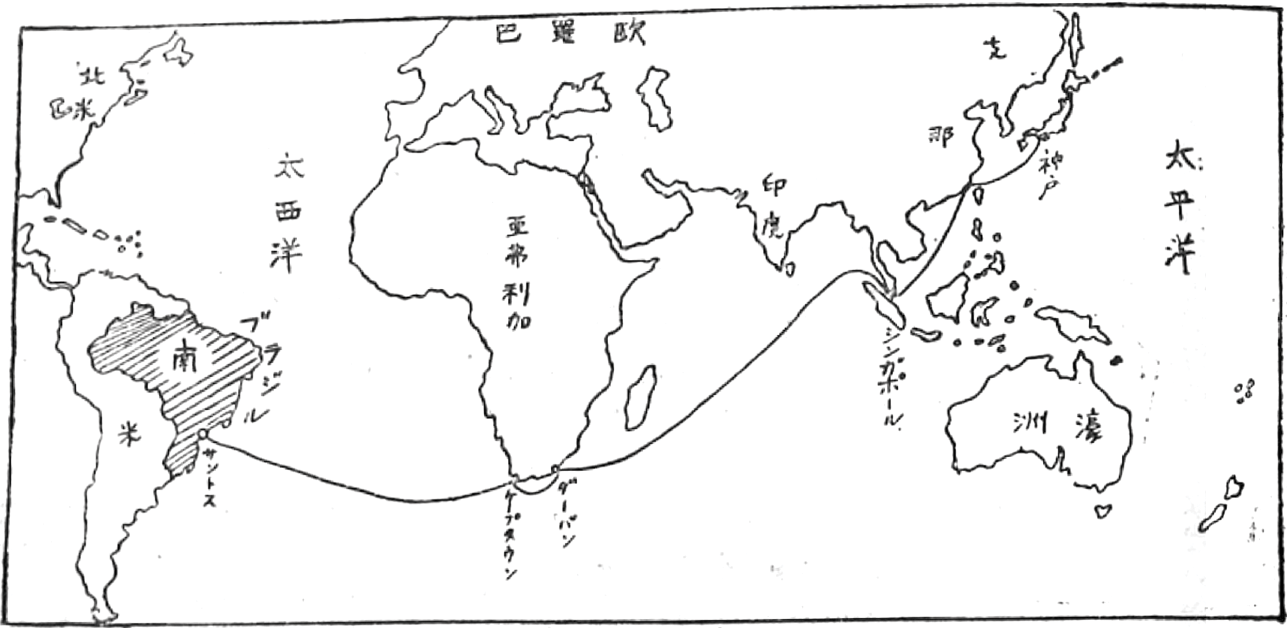
In addition to financial aid, the government also built facilities to provide temporary accommodations and training to migrants before their departure. Out of these centers, the establishment of Kobe Migrant Accommodation Center (Kobe Imin Shūyō Jo) in 1924 by the Ministry of Home Affairs was a milestone event.Footnote 49 Its functional priority was to serve Brazil-bound migrants, and it was open to migrants bound for other parts of the world only when it had extra space available. Migrants to Brazil could stay in the center gratis for up to eight days before their departure, during which time they would learn Portuguese, geography, custom, hygiene, religion, agriculture, and other information about Brazil.Footnote 50 The choice of location for the center also signified that Japan’s primary departure port of overseas migrants had shifted from Yokohama to Kobe: the westbound sea route across the Indian and Atlantic oceans, one that eventually brought Japanese migrants to the Southeast coast of Brazil, had replaced the trans-Pacific route to the American West Coast as the primary route for Japanese emigration.
The expansion of Japanese government in migration promotion and management in the archipelago was further accompanied by the institutional growth of Japan’s Ministry of Foreign Affairs in Brazil. A Japanese consulate was established in the state of São Paulo in 1915, and its branch was open in 1927 in Santos, the port where most of the Japanese migrants landed. The expansion of Japanese diplomatic branches in Brazil did not stop even after 1934, when the Getúlio Vargas regime restricted the number of annual Japanese immigrants to 2,849, 2 percent of the total Japanese immigrant population in Brazil that year. To support the growth of Japanese farming communities in northern and southern Brazil, two more Japanese consulates were established in the states of Amazonas in 1936 and Paraná in 1941.Footnote 51
State Expansion at the Local Level
Another departure of the migration state from the previous model was the remarkable degree of initiative taken by local/prefectural governments and semigovernmental organizations in starting and managing migration campaigns. Prefectural governments had been involved in migration management as early as 1897. In that year, the central government transferred the responsibility of reviewing Japanese subjects’ overseas travel applications (other than to Qing China and Joseon Korea) for labor migration and the power of granting passports to the government of each prefecture (fu and ken). During this early period, the prefectural governments’ authority on migration-related matters was limited to deciding who could legally leave the archipelago and who could not. From the 1920s onward, however, the prefectural governments themselves became engines of migration promotion and migrant training. As the next chapter discusses in detail, some, such as Nagano and Kumamoto, even managed to establish prefecture-centered Japanese settler communities in South America and later in Manchuria.
As it was at the national level, the rapid growth of local governmental involvement in migration management during the 1920s was triggered by the boom of migration to Brazil; like Tokyo, the local governments had the direct aim of promoting Japanese settlement in Brazil. The specific ways in which the prefectural governments involved themselves in Brazil-bound migration, however, were quite different from those of Tokyo. Under the sponsorship of the central government, the primary goal of the Kaikō’s migration project was to export contract laborers to São Paulo coffee plantations, expecting that these laborers would later become owner-farmers. The migration campaigns spearheaded by the local authorities, however, were aimed at resettling poor farmers from Japan to Brazil directly as owner-farmers. Their settlement in Brazil was organized by the administrative divisions in the migrants’ home prefectures.
Prefecture-centered Brazilian migration campaign first appeared in Nagano, and it grew into a nationwide movement after the Imperial Diet enacted the Overseas Migration Cooperative Societies Law (Kaigai Ijū Kumiai Hō) in March 1927. The law facilitated the formation of an Overseas Migration Cooperative Society (Kaigai Ijū Kumiai) in each prefecture. These societies were open to anyone in the prefecture who purchased a certain number of shares. In turn, the societies offered loans, migration-related facilities, and access to land in Brazil to their members who planned to resettle in South America. August of the same year saw the birth of the Federation of Overseas Migration Cooperative Societies (Kaigai Ijū Kumiai Rengōkai), which oversaw the existing societies and assisted with the establishment of new societies at the prefectural level. The imperial government immediately granted the federation a 1.7-million-yen land acquisition loan, enabling it to provide the existing societies with land and facilities in Brazil to be distributed to individual migrant households.Footnote 52
By the mid-1930s, forty-four out of Japan’s forty-seven prefectures had established their own Overseas Migration Cooperative Societies. Soon after its formation, the federation created the Brazilian Colonization Company Limited (Burajiru Takushoku Kumiai, Burataku for short) as its agent to carry out land acquisition and community building in Brazil.Footnote 53 By the end of the 1930s, when the Japanese migration to Brazil was suspended, Burataku was managing four major Japanese settler communities, including Bastos, Tietê, and Aliança in the state of São Paulo as well as Tres Barras in the state of Paraná. In total, these communities had 537,668 acres of land and 18,317 Japanese residents. Most settlers were farmers, with the majority of agricultural households owning land, while other settlers pursued commerce and manufacturing.Footnote 54
Conclusion
In the history of Japanese colonial expansion, the 1920s was a crucial turning point despite the absence of military conflicts. On one hand, the empire substantially expanded its involvement in the establishment of the post–World War I war order and strengthened its ties with all of the major Western powers.Footnote 55 On the other hand, in sharp contrast with the turbulent 1910s, the metropolis maintained relatively peaceful relationships with its Asian colonies and semicolonies. However, two important changes signaled that the empire’s expansion was undergoing a radical transformation. The first was the growing divergence between Japanese and Western ideologies of migration. The second was the expansion of state power in the promotion and management of overseas migration.
As overpopulation anxiety quickly spread throughout the archipelago in the 1920s, Malthusian expansionism’s appeal continued to grow. However, instead of emulating the models of British settler colonialism and American westward expansion, as the empire had done during the Meiji and early Taishō periods, the thinkers and doers of colonialism collectively turned to the newly invented tradition of Japanese agriculture as their source of legitimacy.Footnote 56 This ideological split was directly triggered by both the passage of the Immigration Act of 1924 and the deterioration of Japanese rural economy since the early 1920s. The American ban on Japanese immigration created a strong backlash among Japanese intellectuals who became increasingly vociferous critics of white racism and Western imperialism. At the same time, the continuous depression in the countryside ushered in a surge of agrarianism that attributed the rural crisis to Japan’s adoption of urban/industry-centered mode of development. The agrarianist thinkers contended that Japan needed to restore the centrality of owner-farmer-based agricultural production in the national economy and recapture the spirit of self-sufficiency in everyday life. Embracing Malthusian expansionism allowed this wave of agrarianism to gain increasing popularity without exacerbating the existing tensions in the countryside. As it was politically unfeasible to redistribute land in the archipelago to create the much-vaunted owner-farmers, the agrarian expansionists called for sending the landless, thus “surplus,” farmers abroad to acquire more land. In addition to relieving population pressure and save the rural economy, agricultural migration would also create more owner-farmers on the frontiers of the empire.
While the paradigm shift of Japanese Malthusian expansionism toward farmer migration began with the campaign of rice farming in Texas around the time of the Russo-Japanese War, by the time the shift was complete in the 1920s, both the goal and practice of farmer migration had departed significantly from that of the Texas campaign. The Texas campaign had targeted Japanese rural elites who were financially prepared to migrate to the United States and become big farm owners. The promoters of farmer migration in the 1920s, however, appealed to more grassroots audiences in a much wider social stratum. Now the ideal recruits were either landless farmers or owner-farmers barely scraping by, and the ultimate goal of overseas migration was to turn these unfortunate rural subjects into owner-farmers by allowing them to acquire foreign land. Moreover, while the Texas migration campaign was ideologically patterned after the Anglo-American mode of expansion, the Japanese agrarian mode of expansion in the 1920s and 1930s was based on the time-honored Japanese agricultural tradition; and it was the vehicle through which Japan would fulfill its own manifest destiny as the liberator of the world’s colored races.
What made this agrarian version of expansionism convincing was the steady development of Japanese migration to Brazil. For the expansionists in Tokyo, the recent failure of Japanese migration projects in North America, Hawaiʻi, and Australia proved the cruelty of white racism. At the same time, their attempts at creating Japanese owner-farmers in Northeast Asia and the South Seas were also unsuccessful. Brazil, however, was regarded as a shining beacon for the advocates of farmer migration and the Japanese public at large – its steady growth of migration inflow and the flourishing Japanese own-farmer communities seemed to prove that agrarian migration was more than just an enticing slogan.
The promising future in Brazil and the nationwide recognition of emigration as a solution to poverty drew an unprecedented level of involvement from the imperial government in the areas of migration promotion and management. The formation of the migration state and its financial and political aids, in turn, made the migration of the hundreds of thousands of rural poor possible. In collaboration with the Kaikō, the central government began providing full subsidies to any authorized Japanese subject who would like to pursue a future in Brazil. Some of the prefectural governments also came to the fore and launched their own campaigns of land acquisition and settler migration. The birth of the migration state thus perpetuated the marriage between the grassroots agrarianism and Brazilian migration. It allowed the landless farmers, deemed by the Malthusian expansionists as the most desirable subjects for migration, to participate in Japan’s migration-driven expansion in South America.
The formation of the migration state paved the way for Japan’s state-led mass migration to Manchuria during the late 1930s in order to facilitate its total war in Asia. One cannot fully grasp this historical transformation without understanding how the Japanese government inserted itself into the Brazilian migration project in the 1920s. Due to intensive involvement by the prefectural governments, the tale of Japanese migration and settlement in Brazil in the 1920s and 1930s was also a rich collection of local histories. The next chapter delves into the migration campaigns led by the government of Nagano prefecture, one that was the most active and successful in promoting and managing migration to Brazil, to illustrate how Malthusian expansionism functioned at the local level. Not coincidentally, Nagano was also the prefecture that exported the greatest number of migrants to Manchuria between the late 1930s and 1945. The study of migration promotion and management in Nagano pinpoints the nexus between Japanese migration to Brazil and Manchuria from the 1920s to the end of World War II.
Among Japanese settler communities in Brazil, Aliança deserves special attention. It was the first community that attempted to put the new principles of Japanese expansionism that emerged in the 1920s into practice. As a model project of Japanese settler colonialism in Brazil, the establishment of Aliança laid the foundation for a new phase of Japanese expansion during the 1930s and 1940s in both ideology and practice.
Aliança was the first Japanese overseas community established under the principle of “coexistence and coprosperity” (kyōzon kyōei or kyōzon dōei). This principle of expansion challenged Western imperialism and capitalism by promoting Japan’s own expansion as a mission to bring genuine peace, liberation, and happiness to the world. During the 1930s, the very same slogan was used in the puppet state of Manchukuo to justify escalated Japanese expansion. More broadly, it also served as the ideological framework of the Greater East Asia Co-Prosperity Sphere (Daitōa Kyōei Ken), the new world order envisioned by the Japanese empire during World War II.
In addition to radical ideological divergence, Aliança also saw the birth of a new model of recruiting and relocating migrants. While previous Japanese migrants undertook the journey either individually or under the auspice of migration companies, Aliança migrants collectively moved and resettled in groups that were based on their native prefectures and villages. Beginning in the late 1930s until the empire’s demise in 1945, the Aliança model served as a central reference for the imperial government to relocate hundreds of thousands of rural Japanese to Manchuria and other parts of Asia.
What also distinguishes Aliança from the all previous migration projects is that it was the first prefecture-initiated project of migration. It was launched by the Shinano Overseas Association (Shinano Kaigai Kyōkai) in 1923 with support from Nagano’s prefectural government.Footnote 1 Nagano’s success in Brazilian land acquisition and settler community management brought on a nationwide campaign of building prefectural Overseas Migration Cooperative Societies (Kaigai Ijū Kumiai) for Brazil-bound migration. As a pioneer of this campaign, Nagano prefecture became one of the most active participants in the mass migration movement during the late 1930s. Out of all the prefectures in the archipelago, it was Nagano that sent out the most men and women to Manchuria.Footnote 2
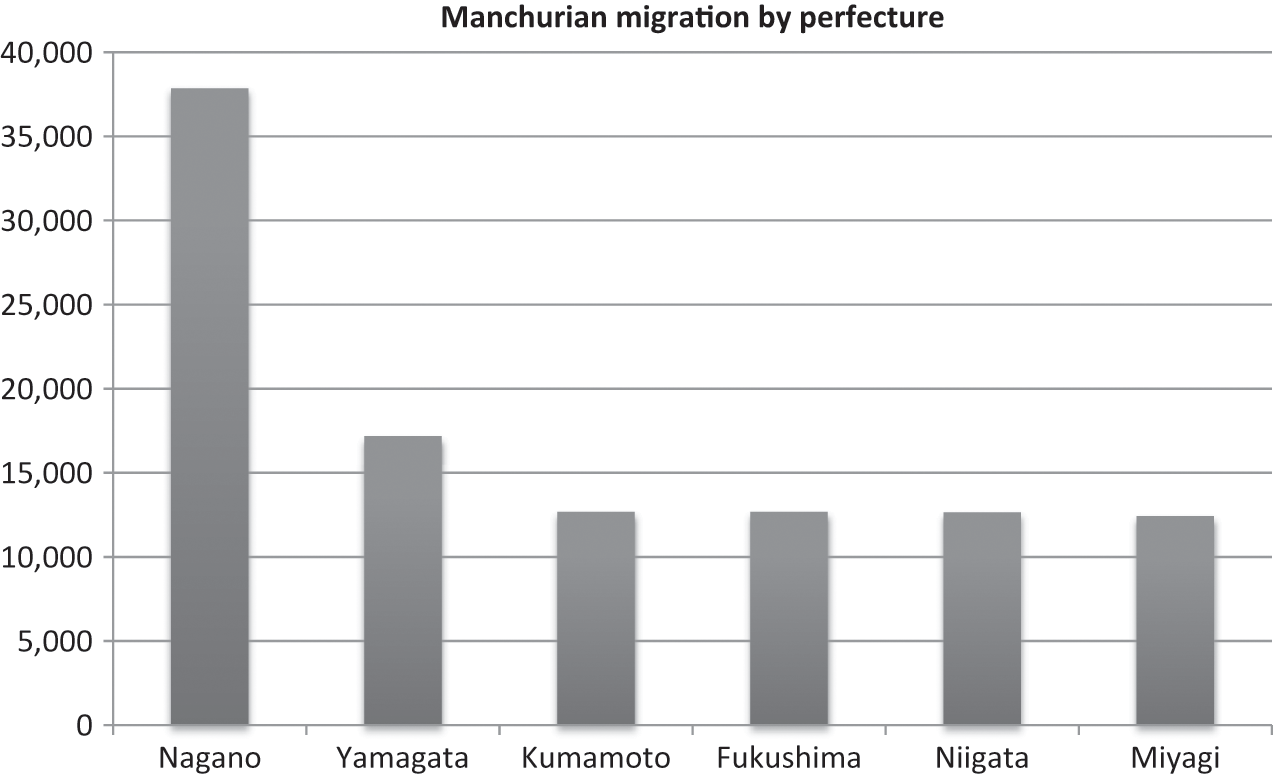
Figure 7.1 The six prefectures that exported the largest numbers of migrants among all Japanese prefectures to Manchuria from the beginning of the 1930s to the end of World War II were Nagano, Yamagata, Kumamoto, Fukushima, Niigata, and Miyagi. However, as the chart illustrates, among these six prefectures, the number of migrants from Nagano (37,859) was much larger than the number of migrants from any other prefectures and was even more than the numbers of migrants from Yamagata (17,177) and Kumamoto (12,680; the second and third in the rank) combined.
The central role of Nagano prefecture in Manchurian migration in the 1930s and 1940s cannot be fully explained without an understanding of the prefecture’s participation in Brazilian migration right before it. This chapter analyzes the process of Japanese community building in Aliança and Nagano prefecture’s role in it. It also explains how the experience of Japanese migration in Brazil paved the way for Japan’s later expansion into Manchuria. Through the story of Nagano prefecture, this chapter illustrates the ways in which the discourse of Malthusian expansionism drove migration-based expansion at the prefectural level. The chapter ends with a brief discussion of how the previous experiences of Japanese migration on both sides of the Pacific were reinterpreted to support the empire’s expansion on the Asian continent during the total war.
Nagano Prefecture and Overseas Migration
Out of all the Japanese prefectures, Nagano had one of the longest histories of overseas migration. Historian Louise Young has traced the history of emigration promotion of the Prefectural Board of Education (Shinano Kyōiku Kai) back to 1888.Footnote 3 Stimulated by multiple wars and waves of migration, the board encouraged migration to Hokkaido, Taiwan, Manchuria, and the Korean Peninsula through publications and public lectures.Footnote 4 The prefecture’s migration promotion substantially intensified in the 1910s, when Japanese expansionists began to explore alternative migration destinations due to anti-Japanese sentiment in North America. In this context, the expansionists believed that introducing migration preparation as a central element of Japan’s national education agenda would enhance the quality of the migrants to forestall Japanese exclusion and to attract more Japanese subjects to the grand mission of overseas expansion.Footnote 5 Nagano’s Board of Education responded quickly by adopting the promotion of overseas migration as one of the five principle goals of education in the prefecture. It published and assigned Shinano Colonial Migration Reader (Shinano Shokumin Dokuhon), a textbook promoting overseas migration, to be used in elementary schools. In order to further stimulate public interest and disseminate information about overseas migration, during the next few years the board organized hundreds of events for the schools of different levels throughout the prefecture, including public lectures, magic lantern shows, and photo exhibitions.Footnote 6
Such efforts from Nagano’s Prefectural Board of Education would not have been possible without cooperation from the Japanese Striving Society. The society was established by Christian Socialist Shimanuki Hyōdayū in Tokyo in 1897. Under Shimanuki’s leadership, the society promoted and facilitated the migration of young Japanese students to the United States as laborers. Following Shimanuki’s death, Nagata Shigeshi became the president of the society in 1914. This leadership change ushered in a fundamental shift in the society’s agenda as a migration organization. While it continued to smuggle laborers into the United States even after the Gentlemen’s Agreement banned laborer migration from Japan, it became increasingly focused on exploring alternative migration destinations, particularly those in South America.
The change of leadership also reflected a discursive shift in Japan’s migration-based expansion from laborers to agriculture workers. Nagata previously had edited the North American Agricultural Journal (Hokubei Nōhō), a Japanese American agricultural journal based in San Francisco, and now he quickly directed the society’s migration promotion to target the rural population. A Nagano native, he also moved the geographical focus of the society’s promotion from urban Tokyo to the countryside of Nagano. Working closely with the Nagano Prefectural Board of Education, the society provided speakers for most of the public lectures organized by the board during the 1910s. At the peak of the lecture campaign, between 1915 and 1916, Nagata alone delivered 250 lectures that were attended by a total of 120,000 prefecture residents.Footnote 7
Nagata found a collaborator on the other side of the Pacific Ocean in Wako Shungorō, another Nagano native. Like Nagata, Wako migrated to the United States immediately after the Russo-Japanese War. Disappointed by institutionalized racism, Wako remigrated to Brazil after the passage of California Alien Land Law of 1913. In the state of São Paulo, he served as the editor of a Japanese immigrant newspaper Noticias Do Brazil (Burajiru Jihō; Brazilian Times) and became an active promoter of Nagano migration to Brazil.Footnote 8
By the end of the 1910s, hundreds of Nagano residents had migrated to Iguape in the state of San Paulo as farming settlers, and they soon constituted a majority of the Japanese settlers in the Registro region.Footnote 9 By the late 1910s, Japanese communities in Iguape were, to various degrees, plagued by financial difficulties. Under pressure from Tokyo, the administrative authority of all these communities was transferred into the Kaikō’s hands in 1919. Unsatisfied with this change, Nagata and Wako began to plan for an autonomous settler community in Brazil. They conceived that such a community, primarily made up of Nagano natives, would be independent from both the imperial government and the Kaikō.Footnote 10
In order to fund their land purchase and other expenses along the way, Nagata and Wako formed the Shinano Overseas Association (Shinano Kaigai Kyōkai) with cooperation from the prefecture government, the Board of Education, and the Japanese Striving Society. With the governor of Nagano and the head of the Prefectural Diet as its director and vice director, the association was a semigovernmental, nonprofit migration organization funded by both public grants and private donations. Established in 1922, the association gradually expanded beyond Nagano prefecture and Japan itself, establishing branches in Tokyo, San Francisco, Los Angeles, Mexico, Brazil, the Korean Peninsula, Manchuria, and China proper through a network of Nagano natives. It conducted a variety of activities such as hosting public lectures, publishing an official journal called Beyond the Seas (Umi no Soto), sponsoring investigative trips, as well as building Japanese communities in Asia and South America.Footnote 11
Migration promotion in Nagano demonstrated how Malthusian expansionism worked at the prefectural level. As early as 1899, due to a shortage of farmland within the prefecture, Nagano’s Board of Education had already begun to perceive a necessity of relocating farmers to Hokkaido and Taiwan.Footnote 12 The logic of Malthusian expansionism later gained more adherents amongst Nagano expansionists who were disappointed by Japanese exclusion in North America. The opening article in the inaugural issue of Umi no Soto in 1922 was the script of a speech of Nagano governor Okada Tadahiko, delivered at the founding ceremony of the journal and titled “The Overseas Development of Nagano People.” Okada claimed that the Japanese people were troubled by poverty because the country had one of the highest population densities in the world, even while white people all over the world enjoyed a more prosperous life because of their low population densities. The population of the United States, for example, was smaller than that of Japan while its territory was much larger. The population densities of the United Kingdom, Belgium, and the Netherlands were originally as high as that of Japan, but their people were able to enjoy spacious land resources because these countries engaged in overseas expansion. The British had acquired Canada, Australia, India, and some territories in Southeast Asia and Africa, the Belgians took Congo, while the Dutch claimed the Dutch East Indies. These white settlers, Okada further pointed out, not only occupied foreign land throughout the world but also set aside these territories for their own descendants by excluding others.Footnote 13
After presenting the unequal state of land resource distribution around the world, Okada emphasized that the Malthusian crisis was particularly severe in Nagano. As the prefecture had relatively little arable land, its farmers had to plant crops on mountaintops and still could barely make ends meet. To make things worse, the speed of population growth in Nagano was faster than the national average, which was already among the highest of the world. To rescue the prefecture from Malthusian doom, it was imperative for Nagano residents, like the Westerners, to set out and explore land overseas. The prefecture’s unfavorable natural environment, Okada predicted with confidence, had made Nagano people every bit capable as the Anglo-Saxons to overcome challenging environments around the world.Footnote 14
As Okawa Heikichi, another speaker at the ceremony, would remind the same audience, however, population growth itself was not a bad thing at all. A Nagano native, Okawa served the imperial government as the head of the Bureau of Statistics. He argued that while international competitions of the day took a variety of forms, the winners were always nations with growing populations. The Jewish people, for example, were able to maintain their strength through population growth even though they did not have a home country. With their unparalleled solidarity and growth rate, the Japanese had a most promising future. Remarkably, Okawa used racial discrimination against Japanese immigrants in the United States to prove his point. He argued that the exclusion of the Japanese was rooted in the fear of white Americans because the Japanese people had the highest fertility rate among all the ethnic groups in the United States. While America was closing its doors, Okawa pointed out, Brazil was waiting for the Japanese with its spacious and empty land for the taking. By migrating to Brazil, the Japanese could not only explore and acquire local resources but also ensure that the Japanese population would continue its superior growth rate.Footnote 15
Aliança, Malthusian Expansionism, and the Illusion of Coexistence and Coprosperity
The most significant campaign that the Nagano prefecture accomplished during the 1920s was the founding of Aliança in Brazil in 1923. Like Iguape, the farming community of Aliança was built by taking advantage of the 1907 law of the state of São Paulo that provided subsidies and land concessions to any migration company that would bring in agricultural settlers. The successful promotion campaign in Nagano, however, made Aliança the first Japanese community in Brazil that was primarily composed of farmers directly migrating from Japan, not those who arrived in Brazil initially as plantation laborers and then turned into farmers. With the continuous inflow of migration, the population of Aliança grew steadily from 54 settlers in 16 households to 1,335 settlers in 280 households from 1924 to 1934.Footnote 16
Even more significantly, Aliança was the first Japanese overseas community that was established to consciously exemplify the new model of Japanese migration-driven expansion based on the principle that later came to be known as “coexistence and coprosperity.” Along with Japan-centered Pan-Asianism, coexistence and coprosperity served as the overarching discourse legitimizing Japanese expansion in Asia beginning in the 1930s, eventually becoming the ideological basis of the Greater East Asia Co-Prosperity Sphere. Historians have long dismissed this slogan as a piece of empty propaganda that merely testified to the hypocrisy of Japanese imperialism and militarism, yet as the following paragraphs will illustrate, kyōzon kyōei, as the core principle of this new version of Japanese expansion, emerged as early as the 1920s during Japan’s mass migration to Brazil. It was a product of specific international and domestic factors of the day and included multiple dimensions of meaning. Analyzing how the discourse of coexistence and coprosperity emerged will also help to elucidate the ideological and organizational connection between Japanese migration to Brazil in the 1920s and 1930s and later Japanese colonial expansion in Northeast Asia until the end of World War II.
First and foremost, as an expansionist discourse, coexistence and coprosperity was a direct response to the exclusion of Japanese from North America. It claimed that unlike racist Caucasians, the Japanese would treat people of color as equal partners. Both Nagata Shigeshi and Wako Shungorō, central figures in the establishment of Aliança, had experienced institutionalized white racism against Japanese immigrants firsthand in California. As early as 1917, Nagata published a book that defined white Americans as hypocrites who only paid lip service to justice and freedom. As he pointed out, “Their freedom was the freedom of the white Americans, not the freedom of the colored people. Their equality was the equality among the Euro-Americans, not the equality among different races of the entire world!” In the same book, Nagata also connected American anti-Japanese campaigns with white racism against black people in the United States and against the colonized people within the British Empire. He recalled his conversations with an African American and three Indians in California. The black person complained to Nagata that while African Americans were liberated from racial slavery, they were subject to racial segregation and discrimination in almost every aspect of US society. Similarly, the three Indians lamented that in all colonies of the British Empire around the world, Asians were excluded from benefits and opportunities enjoyed by the British. Both the African Americans and the Indians, according to Nagata, saw Japan as the only possible liberator who would destroy the tyranny of white racism and imperialism. They pledged their allegiance to the Japanese empire if it would fight a war against the United States and the United Kingdom.Footnote 17
As a faithful Malthusian expansionist, Nagata had no doubt that the destiny of the Japanese empire lay in overseas expansion. However, he further glorified Japanese expansion as a righteous mission to defeat global white hegemony by leading and uniting all peoples of color, thereby bringing genuine peace, freedom, and equality to the entire world. In his imagination, the people in Latin America, already suffering from the tyranny of white racism, were waiting for the Japanese empire to take on this global mission as their liberators – unlike the hypocritical white settlers, the Japanese would truly cohabit and cooperate with other racial groups.Footnote 18 As a reaction to the anti-Japanese campaigns in the United States, the racial denotation of coexistence and coprosperity made the project of Aliança particularly appealing to Japanese American immigrants. A substantial portion of its initial fund for land acquisition was contributed by Japanese Americans, and some issei also migrated to Aliança permanently.Footnote 19 The slogan of “coexistence and coprosperity” was quickly enshrined by other Japanese expansionists as a general guideline for Japanese migration to Brazil as well as other destinations.Footnote 20
Its professed antiracist principle, however, only masked the Japanese empire builders’ desire to overtake white men as the champion in the global racial hierarchy. In fact, the very name of Aliança spoke to this slogan’s inherent hypocrisy. As was customary of naming organizations affiliated with Nagano prefecture, the new community was originally to be named Shinano colony (Shinano Shokuminchi). Yet this name was scrapped because the word Shinano sounded similar to Chino, the Portuguese word for Chinese. The Japanese founders wanted to avoid being confused with the Chinese, who were considered inferior in both Japan and Brazil. As a goodwill gesture, Wako Shungorō eventually named the community Aliança, meaning “alliance” in Portuguese.Footnote 21 From its very start, an understanding of racial hierarchy thus was ingrained in the slogan of “coexistence and coprosperity.”
Nagata described the residents in Brazil as products of miscegenation between the Portuguese, the aborigines, and African immigrants. He argued that as a result of their mixed racial origin, the Brazilians not only harbored no racism against the Japanese migrants but also had little sense of nationhood. They had no plan to reserve the spacious land of their country exclusively for their own use, nor did they have the ambition to conduct colonial expansion themselves, all of these making them extremely pliable to Japanese manipulation.Footnote 22 This racial hierarchy was later replicated in the relationship between the Japanese and the other peoples of Asia as coexistence and coprosperity became the guiding ideology of the empire’s expansion in Asia during the 1930s and 1940s.
Second, aside from the professed antiracism element, coexistence and coprosperity was also a discourse of internationalism that emerged in Japan right after World War I in an era of Wilsonianism. Working in conjunction with Malthusian expansionism, it described the exportation of surplus Japanese population overseas as a mission to bring civilization and peace to the world. As a victor of the Great War, Japan responded quickly to the call for international cooperation in maintaining the security of the imperial world order in post–World War I era. Politicians, businessmen, and opinion leaders, old and new, urged their fellow countrymen to abandon traditional militarism in favor of the new and peaceful way of expansion through trade and migration. The purpose of expansion was no longer to conquer foreign land through warfare but to bring peace and progress to the entire humankind.Footnote 23
As Diet member Tsuzaki Naotake pointed out in 1929, Aliança was a pioneer of Japan’s new approach in global expansion.Footnote 24 By exporting surplus population to the less populated and less developed land abroad, the Japanese empire was helping local people to tap the sources of wealth and bringing enlightenment and prosperity to remote corners of the world. Migration of the rural poor from Nagano to Aliança as farmers instead of laborers fitted well with this magnanimous image of Japanese expansion. Unlike the labor migrants who had little investment in the long-term outlook of the host country, the agricultural migrants were joining the local society as permanent members. To highlight the difference between the model of Aliança and the previous model of migration that exported Japanese laborers to Brazilian coffee plantations, Nagata argued that the goal of Aliança was to “cultivate people rather than coffee” (kōhī yori hito wo tsukure).Footnote 25
The success of the Aliança project spurred even more enthusiasm for Japanese land acquisition in Brazil in the name of peaceful expansion and shared development. Expansionists in Tokyo began to look beyond the state of São Paulo and sought to establish similar Japanese communities in other parts of Brazil. In 1928, Brazilian Colonization Company Limited purchased 74,750 acres of land in northern Paraná, where the Japanese farming community of Tres Barras was established in the early 1930s.Footnote 26 In the same year, answering the call of the Japanese prime minister and minister of foreign affairs, Tanaka Gi’ichi, a group of Japanese entrepreneurs founded the South America Colonization Company (Nanbei Takushoku Kabushiki Gaisha, or Nantaku for short). Nantaku was created to take advantage of the state of Pará’s policy of attracting foreign immigrants to develop the Amazon Basin. Dionysio Benetes, the governor of Pará, granted Nantaku one million hectares of land, including six hundred thousand hectares in the municipality of Acará and four hundred thousand in the municipality of Monte Alegre. In Acará, the company built its colony around Tomé-Acu.Footnote 27 Nantaku, however, did not limit its ambition to land acquisition in the Amazon Basin; it sought to raise more funds from the archipelago to acquire land in other parts of Brazil as well. The map in figure 7.2, marking out the land prices of all states in Brazil, was published by Nantaku in the journal Shokumin in 1928.

Coexistence and coprosperity’s claim of internationalism, like its supposed pursuit of racial equality, did not come to pass in Aliança. After all, the ultimate goal of building Aliança was not to usher in global peace but to see if this new model of migration-driven expansion was indeed tenable.Footnote 28 The Aliança model rejected the traditional conquest of sword and fire in favor of spade and hoe. However, the shift occurred not because expansionists wished to share the benefits of migration with the Brazilians but because they perceived this model as a better one to put down the roots of the Japanese empire in South America. Even during the height of Japanese immigration, Aliança failed to live up to its cosmopolitan promise. Until 1936, when the annual number of Japanese migrants to Brazil began to drop sharply, the inhabitants of Aliança were almost entirely Japanese.Footnote 29
Third, coexistence and coprosperity was also an agrarian discourse that had its root in the growing agrarianist movement in Japan during the 1920s and 1930s. Japanese expansionists promoted it as the embodiment of a community-building spirit from ancient Japan that was centered on self-sufficiency and mutual aid. Many of the leading agrarianists of the day, including Tachibana Kōzaburō, Gondō Seikyō, and Katō Kanji, attributed Japan’s rural depression to the capitalist economic system and individualism – evils that were imported from the West. For them, the remedy for the ills plaguing the Japanese countryside was to return to Japan’s traditional rural-centered life and mode of production. Shaped by the agrarianist movement of the day, the principle of coexistence and coprosperity called for owner-farmer-based collective farming in which all members of a village would preserve their economic autonomy while maintaining mutual support. In the minds of the agrarianists, subsistence farming was the ideal way of living because villagers would not rely on others or exploit them. Through mutual aid, each village would achieve self-sufficiency at the community level.Footnote 30 Such self-sufficiency and autonomy, the agrarianists believed, would rescue the Japanese countryside from capitalist exploitation and individualist self-interest.
This agrarianist approach was put into practice through the rapid expansion of the Producers’ Cooperative Association (Sangyō Kumiai) among Japanese farmers during the 1920s. This association was founded in 1900 in Japan with the aim to protect the economic interests of low-income farmers and workers through mutual aid. In 1921, the imperial government endorsed the formation of a national headquarters of the Association (Zenkoku Rengōkai) under the newly revised Producers’ Cooperative Law (Sangyō Kumiai Hō). The number of association members reached 3.64 million in 1925, almost half of them being farmers. To monitor and manage the association’s activities, the government established the Department of the Producers’ Cooperation under the Ministry of Agriculture and Forestry (Nōrinshō) in the same year.Footnote 31 At the same time, the association began to publish its official magazine, the Light of Family (Ie no Hikari). Promoting owner-farmer-based collective farming under the principle of coexistence and coprosperity, the magazine grew into one of the most popular periodicals in rural Japan during the 1930s, reaching one million in monthly circulation by 1935.Footnote 32

The founders of Aliança did not believe that the domestic agrarianist movement alone would be sufficient to save the Japanese countryside. For them, overseas migration was the ultimate solution. However, they did loyally follow the agrarianist principles of community building in their migration campaigns. Aliança was first conceived when Nagata Shigeshi and Wako Shungorō were disappointed by the Kaikō taking over the management of Japanese communities in Iguape. Certain that a settler community’s autonomy was of the utmost importance, they began to undertake the first prefecture-centered migration project. While Aliança received financial aid from the imperial government, it was established as a farming community independent from managerial intervention of both the Kaikō and the imperial government.Footnote 33
In addition to its prized autonomy, Aliança also followed the principle of collective farming. Unlike Western colonial expansions that allowed the elites to monopolize wealth and power, Nagata argued, Japanese overseas expansion should benefit the common people.Footnote 34 To this end, the Aliança project was derived from the growth of Producers’ Cooperative Association in Japan. Different from previous campaigns that recruited migrants from all over the country, Aliança’s fund-raising and recruitment campaigns were conducted with in Nagano prefecture. Aliança’s settlers were primarily Nagano farmers who were expected to possess a strong sense of community and willingness for mutual aid because of their homegrown ties. To ensure its socioeconomic autonomy, Aliança had facilities such as construction companies, a rice mill, and a coffee refinery in addition to its administrative office, clinic, elementary school, hotel, dormitories, church, and newspaper agency.Footnote 35
The establishment of Aliança by the Shinano Overseas Association paved the way for a wave of prefecture-based Japanese expansion projects in Brazil. The overseas associations of Tottori, Toyama, and Kumamoto, with support from their own prefectural governments, acquired lands adjacent to Aliança and established migrant communities. Replicating Aliança’s prefecture-centered model, Tottori’s community was formed in 1926 as Aliança II. Toyama and Shinano Overseas Associations collaborated to build Aliança III in 1927, while Kumamoto Overseas Association established Vila Nova during the same year.Footnote 36

To further encourage prefecture-centered collective migration to Brazil, the Imperial Diet in 1927 enacted the Overseas Migration Cooperative Societies Law (Kaigai Ijū Kumiai Hō). This legislation facilitated the formation of an Overseas Migration Cooperative Society (Kaigai Ijū Kumiai) in each prefecture that raised funds and recruited migrants based on the model of the Producers’ Cooperative Association. In order to synchronize the campaigns in each prefecture, the government also established the Federation of Overseas Migration Cooperative Societies. The fact that Umetani Mitsusada, the former governor of Nagano who played a key role in the establishment of Aliança, served as the first director of the federation testified to the impact of Aliança on this movement.Footnote 37
The agrarianist spirit of self-sufficiency and mutual aid also became a requirement for Japanese overseas migrants in general. In a 1928 issue of Shokumin (Colonial Review), its editor Naitō Hideo reminded his readers that the issue of overpopulation had caused numerous social problems in Japan, including economic depression, greater social inequality, and the monopolization of wealth and power by a small group of elites. Naitō urged his countrymen to explore new land abroad where they could establish progressive societies with equality for all through the spirit of coexistence and coprosperity. “I believe,” he contended, “the success of colonial migration is not valued by the amount of money or wealth you make. Instead, it is … judged by whether you can achieve true freedom and live together with each other in happiness and equality.”Footnote 38
However, like the internationalist and racial equality aspects of coexistence and coprosperity, its self-proclaimed agrarianist dimension also turned out to be a mere illusion. None of the three settler communities (Bastos, Tieté, and Tres Barras) established by Burataku, the agent of the Federation of Overseas Migration Cooperative Societies in Brazil, copied the prefecture-centered model of Aliança. Due to financial and organizational barriers, they all became mixed communities that had settlers from all over the archipelago.Footnote 39 Moreover, Aliança II, Aliança III, and Vila Nova quickly lost their autonomy. Due to financial and political pressure from the federation, the leadership of these three communities was handed over from the Overseas Migration Associations of Tottori, Toyama, and Kumamoto to the Burataku soon after their establishment. Collective farming also turned out to be detrimental to Aliança’s well-being as individual farmers’ economic condition successively deteriorated. Though it managed to maintain the autonomy of Aliança for more than a decade, the Shinano Overseas Association eventually handed the community over to Burataku in 1938 due to financial problems.Footnote 40

Figure 7.5 Cover of a brochure for the migration of Japanese owner-farmers to Brazil published by the Federation of Overseas Migration Cooperative Societies in March 1932. This brochure was distributed by the Overseas Migration Cooperative Society in Kagawa prefecture. National Diet Library, Japan, 100 Years of Japanese Emigration to Brazil, www.ndl.go.jp/brasil/e/data/R/042/042-001r.html.
From Aliança to Manchuria: The Heyday of Malthusian Expansionism
Japan’s military expansion in Manchuria in 1931 and the formation of Manchukuo as the empire’s puppet state inspired Japanese expansionists to reconsider Northeast Asia as an optimal migration destination. By the mid-1930s, migration promoters, old and new, had not only debated about strategies and plans but also conducted a number of experimental migration campaigns under sponsorship from the military. None of these campaigns prevailed, however, due to violent Chinese resistance as well as the lower living cost of local farmers that the Japanese farmers failed to compete with in Manchuria.Footnote 41 Though anxiously seeking ways to lift the countryside out of depression, Tokyo did not offer substantial policy support for migration to Manchuria.
The malaise of migration to Manchuria was in stark contrast with – as well as partially a result of – the further development of Japanese expansion in Brazil during the first half of the 1930s. Though Brazil’s coffee economy took a serious hit from a sudden price drop during global depression, the country in general continued to welcome migrants from Japan as plantation laborers and farmers due to shrinking immigration numbers from Italy and Portugal. The number of annual Japanese migrants to Brazil kept growing from the 1920s. In 1932, Japanese accounted for 37 percent of the immigrants who entered Brazil, becoming the largest group of immigrants in terms of annual number. The inflow of Japanese migrants reached its peak in 1933 and 1934, with about twenty-three thousand migrants each year that accounted for an absolute majority of the overall number of immigrants to Brazil.Footnote 42
The early 1930s was also marked by further growth of Japanese communities in Brazil. In response to the commonwealth nations’ boycott against Japanese textile in 1932, Tokyo turned from India to Brazil as Japan’s cotton supplier.Footnote 43 Technical assistance from Tokyo and financial subsidies from major Japanese textile companies began to pour into Japanese Brazilian communities to stimulate cotton cultivation. It contributed to the prosperity of Japanese agriculture in Brazil in general and the success of cotton production in particular throughout the 1930s. By 1939, the Japanese communities in São Paulo single-handedly contributed 20.4 percent of the state’s annual agricultural output. In terms of cotton, Japanese communities accounted for as much as 43.3 percent.Footnote 44 Until the outbreak of the Pacific War in 1941, Japanese communities in Brazil continued to serve as one of the major cotton suppliers for the textile industry of the Japanese empire.Footnote 45
Compared with the success of Japanese expansion in Brazil, Manchuria appeared much less attractive to common farmers and migration promoters even after the empire secured military and political control of Manchuria between 1931 and 1932. By 1936, despite enthusiastic support from the Kwantung Army, none of the Japanese migration endeavors in Manchuria prevailed.Footnote 46 During the early 1930s, even some Japanese government officials maintained that Brazil was a better place for Japanese migration than Manchuria would be.Footnote 47
Two political changes in the mid-1930s, however, altered this situation. Japanese military expansion in Manchuria led to a resurgence of “ yellow peril” rhetoric in Brazil. The idea of protecting the nation from Japanese imperialism joined forces with the old race-based anti-Japanese sentiment that first emerged in Brazil during the first two decades of the twentieth century.Footnote 48 The constitution of 1934 following the Vargas Revolution eventually included an amendment modeled after the Immigration Act of 1924 in the United States. It imposed a 2 percent annual quota of the numbers of immigrants from each nation based on the numbers of the existing immigrants who had arrived in the past half a century. Based on this quota, only 2,775 (later revised to 2,849) Japanese subjects were allowed for immigration.Footnote 49 Though the amendment did not immediately come into effect, Japanese immigration still plummeted in response – from more than 23,000 in 1933 to fewer than 2,000 in 1941.Footnote 50
Japan’s migration-driven expansion eventually took another major direction change in 1936, shifting its destination from South America to Manchuria. As the Japanese military dramatically increased its political influence following the February 26 Incident, the Hiroda Kōki cabinet successfully turned the Kwangtung Army’s agenda of mass migration to Manchuria into a national policy. The imperial government began to organize a project that would relocate five million farmers in one million households from Japan to Manchuria within the next two decades.Footnote 51 The heyday of migration to Manchuria had begun.
After the Manchurian Incident, and with the same passion that they previously had demonstrated for Brazil-bound migration, the elites of Nagano prefecture quickly responded to the political changes in Northeast Asia. Aliança pioneers such as the Shinano Overseas Association, the Prefectural Board of Education, the Japanese Striving Society, and the prefectural government enthusiastically committed themselves to the promotion of migration to Manchuria long before the imperial government had launched its mass migration project in 1936.Footnote 52 By the end of World War II, Nagano had sent out the largest number of migrants to Manchuria among all the prefectures. The number of migrants from Nagano was more than twice the number from Yamagata, which came in second, and was just slightly less than the combined figure of migrants from Yamagata, Kumamoto, and Fukushima (ranked second, third, and fourth).Footnote 53 The readiness of Nagano prefecture in migration to Manchuria could not be fully explained without understanding the important role the prefecture had played in migration to Brazil a decade earlier.
The story of Nagano prefecture during the 1920s and 1930s reveals the intrinsic connections between Japanese migration to Brazil and Manchuria. Malthusian expansionism, which had justified Japanese migration to Brazil, continued to serve as the central principle for Japan’s expansion in Manchuria. This new migration campaign saw the coinage of the term “lifeline” (seimeisen), indicating that the rich and conveniently empty land in Northeast Asia, similar to the empire’s source of wealth (fugen) in South America of yesteryear, would provide a panacea to Japan’s social problems brought on by overpopulation. In the logic of Malthusian expansionism, Manchuria was now vital to Japan’s continued existence as an empire – for the sake of self-defense, the Japanese needed to occupy and colonize it.Footnote 54
The outwardly benevolent discourse of coexistence and coprosperity that guided Japanese expansion in Brazil remained in effect for its Manchurian expansion. In fact, it became enshrined as the guideline of racial relations in Manchukuo: different from the Anglo-Saxons who not only invaded the domain of peoples of color but also excluded Asian immigrants from their territories, the Japanese would treat all people around the world equally and lead them to establish a new world of genuine peace.Footnote 55 The Japanese pointed to the supposed racial harmony with local residents achieved by Japanese communities in Brazil as evidence that they would be able to accomplish the same task in Manchuria.Footnote 56 As it was in Brazil, far from simply dumping the surplus people onto the Asian continent, the empire expected the migrants to be the vanguard in the fight for a new Japan-centered world order.
The expected roles of the migrants were clarified in a 1938 anthology titled Agriculture and the Building of East Asia (Tōa Kensetsu to Nōgyō). The book outlined the government’s plan of accelerating farmer migration to Manchuria in order to support the total war. Aside from an essay by Katō Kanji, it also featured the writings of Ishiguro Tadaatsu and Kodaira Gon’ichi, central figures in the government’s agricultural section, as well as Nasu Shiroshi, the leading agrarianist scholar. The book’s contributors believed that not everyone in Japan was qualified to shoulder the task of agricultural expansion. Only the owner-farmers, they argued, were competent empire builders under the principle of coexistence and coprosperity.
Katō Kanji’s essay pointed out that the owner-farmers’ spirit of self-sufficiency was essential for the Japanese to cohabit and coprosper with others in Manchuria. Businessmen and landlords, he argued, made profits by exploiting others, thus their settlement in Manchuria could only create conflicts between the colonists and the local people. In contrast, owner-farmers were the sons of toil who earned their own bread and clothes by their bare hands. Since their livelihood did not depend on exploiting others, they could live peacefully with their neighbors and exchange knowledge, technology, and goods with them on an equal footing.Footnote 57
Nasu Shiroshi’s piece reaffirmed Katō’s arguments from another angle by integrating the principle of coexistence and coprosperity into the school of Pan-Asianism. The production mode of owner-farmers, Nasu believed, represented the success and superiority of Japanese agriculture. According to Nasu, despite some difficulties, the Japanese empire was able to accommodate a huge number of farmers within an extremely small size of land, all the while maintaining a high standard of civilization. No other nation on earth could boast the same achievement, and the Japanese were able to achieve such an extraordinary success only after a long period of hard work, beginning in the Meiji era, in combining universal scientific principles with East Asian characteristics. This experience made Japanese owner-farmers natural tutors to their Chinese brethren: with a high density of farming population, the state of Chinese agriculture mirrored that in Tokugawa Japan and was in sharp contrast with the big-farm mode of Euro-American agriculture. Similarities between the states of Chinese and Japanese agriculture meant that the Japanese owner-farmers were more qualified than Westerners to bring progress to the Asian continent.Footnote 58
Institutional and human connections between Japanese expansion to Brazil and that to Manchuria were also evident. For example, Umetani Mitsusada, the first director of the Federation of Overseas Migration Cooperative Societies that carried out most of the Japanese land acquisition projects in Brazil after 1927, became the head of the migration department of the Kwantung Army in 1932 to orchestrate Japanese migration campaigns and land acquisition in Manchuria.Footnote 59 A former governor of Nagano, Umetani was also the one who provided the crucial financial support for the Aliança project. Nagata Shigeshi, a founder of Aliança, began to participate in the Manchuria-bound migration movement in 1932; he would also serve on the planning committee established by the imperial government that drafted the blueprint for the five-million-people migration project.Footnote 60 Under his leadership, the Japanese Striving Society launched campaigns to send men and women to Java and the Philippines as the empire expanded into Southeast Asia during World War II.Footnote 61 The Overseas Women’s Association (Kaigai Fujin Kyōkai) that focused on facilitating the migration of Japanese women to Brazil since the mid-1920s also gradually shifted its focus from South America to Asia. It began to relocate Japanese women to Manchuria and China proper in 1935, through either marriage with local Japanese male setters or employment opportunities.Footnote 62 The association also responded to the mass migration policy during the late 1930s by vowing to contribute to the construction of a Japan-centric new order in East Asia.Footnote 63
While there were important connections between Japanese migration campaigns to Brazil and Manchuria, the latter began in the late 1930s as a nationwide sociopolitical movement orchestrated by the “total empire,” to borrow a phrase from Louise Young. As such, the Manchurian campaign differed substantially from its forerunners; indeed, it marked the culmination of Japan’s migration-driven expansion, during which the state and civil society were integrated in an unprecedented scope and depth for the purpose of achieving the same goal. The Aliança model of collective migration, for example, remained an outlier in Japanese migration to Brazil. It was the rehabilitation movement launched throughout the Japanese countryside in the 1930s that turned the model of Aliança to the principal method of the state’s choosing. Migrants were collectively recruited and settled in Manchuria according to their common home villages and prefectures.Footnote 64
The global depression at the turn of the 1930s triggered a dramatic increase of land disputes in the Japanese countryside. An increasing number of landlords could no longer survive on collecting rent from tenants, thus they began to take the land back from their tenants in order to farm on their own.Footnote 65 The exacerbated tension led the government to accelerate its cultivation of the class of owner-farmers. The driving force behind Tokyo’s new policies in this era was agrarianist bureaucrat Ishiguro Tadaatsu, the vice-minister of agriculture and forestry. Under his leadership, the government ran its rural rehabilitation program between 1932 and 1935, providing financial and technical aid to farmers in a thousand villages each year in order to help the owner-farmers. In 1934, the Ministry of Agriculture and Forestry established the Association for Rural Rehabilitation (Nōson Kōsei Kyōkai), which carried out these policies at local levels through campaigns of education and suasion. These campaigns were aimed at helping the rural poor to achieve economic independence and self-sufficiency.Footnote 66
The owner-farmer-centered nature of the rural rehabilitation program was evident in the writings of Sugino Tadao, a director of the Association for Rural Rehabilitation. The rehabilitation program, Sugino argued, was targeted only at helping the owner-farmers. Through their own labor, the owner-farmers were able to produce sufficient agricultural products; as such, they could lead a life of economic independence without being exploited by – or exploiting – others. These farmers, claimed Sugino, were the true foundation of nation and empire.Footnote 67
However, since the landlords maintained a firm grip on political power, the rural rehabilitation program, like other government programs aimed at reducing rural tensions, accomplished little. Given that land redistribution within the archipelago was impossible, the overall shortage of land was readily offered as an explanation for the lack of owner-farmers. The solution, therefore, lay in land acquisition beyond the archipelago. Malthusian expansionism allowed the agrarian expansionists to connect the domestic efforts of cultivating owner-farmers with the campaign of agricultural migration to Manchuria. Joining hands with longtime agrarian expansionist Katō Kanji, Ishiguro welcomed agrarian migration to Manchuria as an essential cure for land shortage in the overpopulated Japanese countryside.Footnote 68 Japan itself, argued Ishiguro in 1936, was like a tenant farmer on the world stage, rejected for landownership everywhere due to the stranglehold of white hegemony.Footnote 69 Accordingly, in Ishiguro’s imagination, Japan’s expansion into Manchuria was a landless farmer’s just demand for land to survive.
More specifically, the impact of the rehabilitation movement differentiated the Manchuria-bound migration campaign from the empire’s previous waves of migration-based expansion. Aiming to create owner-farmers through land rationing, the rehabilitation movement brought about a rash of local initiatives to define the minimal size of land needed for a farming household to achieve self-sufficiency. Based on their own calculations, different local authorities created various standards. Through a nationwide survey, the Ministry of Agriculture and Forestry concluded in 1937 that a farming household needed an average of 1.6 chō (4 acres) of land.Footnote 70 The Japanese colonial authority in Manchuria devised its own standard for Japanese farming settlers in 1935, which was as big as 20 chō.Footnote 71
These surveys and standards, though invariably arriving at different numbers, together vested the logic of Malthusian expansionism with a veneer of scientific respectability. It presented Japanese land acquisition in Manchuria as a reasonable action based on objective calculations. Japan’s migration-based expansion was no longer legitimized only by the growing number of the empire’s surplus population; it was now also justified by the concrete calculability of the amount of land these surplus people would actually need. The scope of Japanese expansion, as this logic went, was entirely driven by the objective need of the surplus population, as if the expansion would indeed come to an end if the imagined standard of land per household of all Japanese farmers was eventually met.
On the other hand, the imperial government showed little interest in setting a cap on Japanese population growth. Instead, it continued to demand the birth of more people instead of less. Such a demand was further advanced by the outbreak of the total war and the mass migration to Manchuria. Worried by shortages of manpower after millions were drafted into military service,Footnote 72 the cabinet issued a guide for making new population policies in 1941, titled The Principle to Establishing Population Policies (Jinkō Seisaku Kakuritsu Yōkō). The principle set the goal to increase the Japanese population to one million by 1960 by lowering the age for legal marriage by three years and having each couple give birth to five children on average. To this end, it planned policies like encouraging marriage via governmental financial subsidies, restricting employment opportunities for women over twenty years old, taxing single people heavily while reducing the taxes of those with large families, and banning birth control.Footnote 73
Past in Present: From “Emigrants” to “Overseas Compatriots”
In addition to Brazil, the empire’s other experiences of migration-driven expansion, real or imagined, were also called into service to promote and legitimize Japanese migration to Asia from the 1930s to 1945. Empire builders now portrayed the migration of farmer-soldiers to Hokkaido in early Meiji as a resounding success in order to justify similar programs in Manchuria.Footnote 74 They also offered the supposed benevolence of Japanese colonizers toward the Ainu as evidence that the Japanese expansion in Asia was truly for the purpose of coexistence and coprosperity.Footnote 75 In 1936, the imperial government hired historian Iriye Toraji to author a massive two-volume epic of Japanese overseas migration that chronicled various Japanese migration activities in different parts of the world (Hawaiʻi, Southeast Asia, North and South America, etc.) from the dawn of Meiji to the present. The central message contained in these over a thousand pages was straightforward: with the glorious past achievement of overseas expansion and the unprecedented support from the imperial government at present, the empire’s mass migration to Manchuria was destined for unparalleled future success.Footnote 76
The efforts in weaving the past and present experiences of Japanese migration-based expansion culminated in November 1940, when the imperial government held the Tokyo Conference of the Overseas Compatriots (Kaigai Dōhō Tokyo Daikai) to celebrate the 2,600th anniversary of the Japanese empire. The conference was attended by Japanese representatives from all over the world. To downplay the political boundaries between the Japanese inside and outside the empire’s sphere of influence, the representatives were divided into several sections solely by geography, including sections for Hawaiʻi, North America, Latin America, the South Seas, and East Asia. Prime Minister Konoe Fumimaro chaired the conference and delivered the opening address. Several ministers also contributed remarks. In addition to holding exhibitions and speeches to glorify the sacrifices and achievements the overseas Japanese had made, the conference honored many figures from the overseas communities for their contributions to the empire. Such recognition and appreciation naturally came with a price: overseas Japanese across the globe were all called on to serve the grand mission of the empire – “eight corners under one roof” (hakkō ichiu). As the speech of Konoe made it clear, “Our glorious history of overseas expansion has been written by the blood and sweat of your forefathers … and the world has now come to a turning point. … Our empire, under the reign of our emperor, is on a mission to bring true justice and true happiness to all mankind, as well as uniting the entire world. … Unite, and be ready to make sacrifices!”
The commemoration of the glorious and patriotic history of Japanese trans-Pacific migration at the 1940 conference was accompanied by an identity transformation of the overseas Japanese during the total war. Under the reign of the migration state, Japanese emigrants came to be hailed as “overseas compatriots” (kaigai dōhō). The identity of “overseas compatriots” downplayed the difference between the Japanese abroad and those living in the home archipelago. It transcended time, geography, generation, social class, and gender by tying every individual of Japanese ancestry to one sacred mission: the destined expansion of the empire.
This identity transformation was well illustrated by a radio drama that the Japanese Broadcasting Cooperation (NHK) aired nationwide on November 9, 1940, a day after the closure of the Tokyo Conference of the Overseas Compatriots. Titled “Thousands of Miles of Waves” (“Hatō Banri”), the drama depicted an exchange between several Japanese emigrants in a third-class cabin of a ship bound overseas, and the conversation took place when the ship encountered a storm on the sea. Among these passengers, only one character – a second-generation Japanese American – was specifically identified. He was depicted as a young man of promise who had just completed a three-year study period in Japan during the Sino-Japanese War; proud of being a Japanese American, he decided to return to the United States in order to carry on the great cause of his forefathers. After showing his approbation for this nisei, another passenger said, “We used to be called ‘emigrants’ (imin), but now it’s time to completely change this perception (of the Japanese back home). We went overseas not for material gains, but to expand the frontier of Japanese people.” In this way, the overseas Japanese sought to shake off the negative label of “emigrants” and become the respected “overseas compatriots,” the pioneers of the empire’s global expansion. This sublimation was realized in the drama through a Japanese American’s affirmation of his loyalty to the empire by coming back to Japan for study, then returning to his host country and vowing to contribute to Japan from abroad.Footnote 77
This sought-after recognition by the empire and its people, however, had a price tag. As the passenger continued, “Yet the true overseas development of our nation will start from now!” After recounting the past pains and sacrifices of the overseas Japanese, he reminded his audience that Japan had secured the leadership of East Asia; now the overseas Japanese needed to shoulder more responsibilities than ever in order to support the empire’s mission. Since none of the passengers’ destinations were indicated except for the young Japanese American, the audience could assume that the ship was bound for the United States. Yet at the end of the drama, when a female passenger turned on a radio in the cabinet, everyone on board heard “The Song of Patriotic March” (“Aikoku Kōshin Kyoku”), popularized by a program that was broadcasted from Tokyo to China and Southeast Asia. The direction of the radio broadcast followed the route of the empire’s current expansion. The seemingly strange fact that the song that was broadcast toward China and Southeast Asia was received on the emigrant ship bound for the United States highlighted the ties between Japanese migrations to both sides of the Pacific Ocean.Footnote 78
The drama also carefully demonstrated to its audience that Japanese expansion was a story of women as much as of men. Of the nine characters in the drama, four were female. Unlike the male characters, who were uniformly depicted as decisive, courageous, and patriotic, the female characters were portrayed with a touch of delicacy: they were physically and mentally weaker, but had the potential to become as strong as their male counterparts. When the ship encountered a storm and shook severely, three women began to complain and a young wife even burst into tears and began to regret her decision of giving up a peaceful life in Japan’s countryside. Disappointed by her weakness, her husband reminded her that they could achieve success abroad only by overcoming such hardships. In contrast to those who complained, the fourth woman, who did not have a single line of dialogue, was in the throes of labor. She was praised by the men on board as living proof that the strong spirit existed in the blood of Japanese women. The nisei also brought up the name of Okei, a fictional female figure in Japanese American history, praising her as a pioneer of Japanese overseas expansion.Footnote 79 The drama used the stories of a pioneering Japanese American woman and a mother silently giving birth on the ship together to urge Japanese women to leave the overpopulated archipelago and become mothers and wives on the empire’s overseas frontiers.Footnote 80
Conclusion
The history of Japanese community building in Aliança by the Nagano prefecture offers a valuable lens through which one may examine the characteristics of Japan’s migration-driven expansion during the 1920s and 1930s. First of all, the establishment of Aliança in the state of São Paulo, Brazil, a brainchild of expansionists based in Nagano, was the first prefecture-led migration project in imperial Japan. The success of Aliança ushered in a wave of prefecture-centered Brazilian migration throughout the archipelago in the latter half of the 1920s. Many prefectural governments, following Nagano’s example, established their own Overseas Migration Cooperative Society to promote overseas expansion. Some also managed to establish exclusive settler communities in Brazil.
Second, Aliança was also a direct response to the institutionalized racism against Japanese immigrants in the United States. The architects of Aliança carefully designed it to exemplify the new model of Japanese settler colonialism. It marked Japanese expansion’s ideological departure from Western imperialism by advocating the principle of coexistence and coprosperity. The project of Aliança, followed by other Japanese settler communities established in Brazil, was to demonstrate the benevolence of the Japanese: the Japanese expansionists believed that unlike the racist and hypocritical Westerners, the Japanese would treat the unenlightened people as equals and bring them genuine peace and progress. Influenced by Japanese agrarianism in the 1920s and 1930s, the principle of coexistence and coprosperity also grounded itself in self-sufficiency and mutual aid-centered agricultural production, which was claimed to be a uniquely Japanese tradition.
Nagano prefecture’s history of migration also offers an example of the intrinsic connections between Japanese migration to Brazil and later to Manchuria. State institutions involved in the promotion and management of migration, at both central and prefectural levels, were first established for Japanese Brazilian migration but later became engines of mass migration to Manchuria. Core leaders of Brazilian migration, such as Nagata Shigeshi and Umetani Tadaatsu, also enthusiastically participated in the government-led Manchurian migration campaign. The principle of coexistence and coprosperity, first exemplified in Japanese Brazilian communities, was later applied to Japanese expansion in Manchuria and eventually became the ideological core of the Greater East Asia Co-Prosperity Sphere.
Ironically, even as the total war drained manpower from the archipelago, the anxiety of overpopulation continued to legitimize Japan’s migration-driven expansion. In addition to Brazil, the experiences of migration in Hokkaido and North America of yesteryear were also reinvoked as justification for the empire to send more subjects, not fewer, to the Asian continent. When the empire collapsed in August 1945, approximately 6.9 million Japanese subjects, around 9 percent of the entire Japanese population, were living overseas, mostly in Asia.Footnote 81 The return of these former settlers and soldiers eventually paved the way for the restart of a new wave of Japanese overseas migration in the 1950s. Like the migration waves before 1945, this new wave of migration to South America was also legitimized by Malthusian expansionism. How did this new wave of migration start? To what extent was it a continuation of Japan’s pre-1945 migration-driven expansion? These questions are answered in the next chapter.
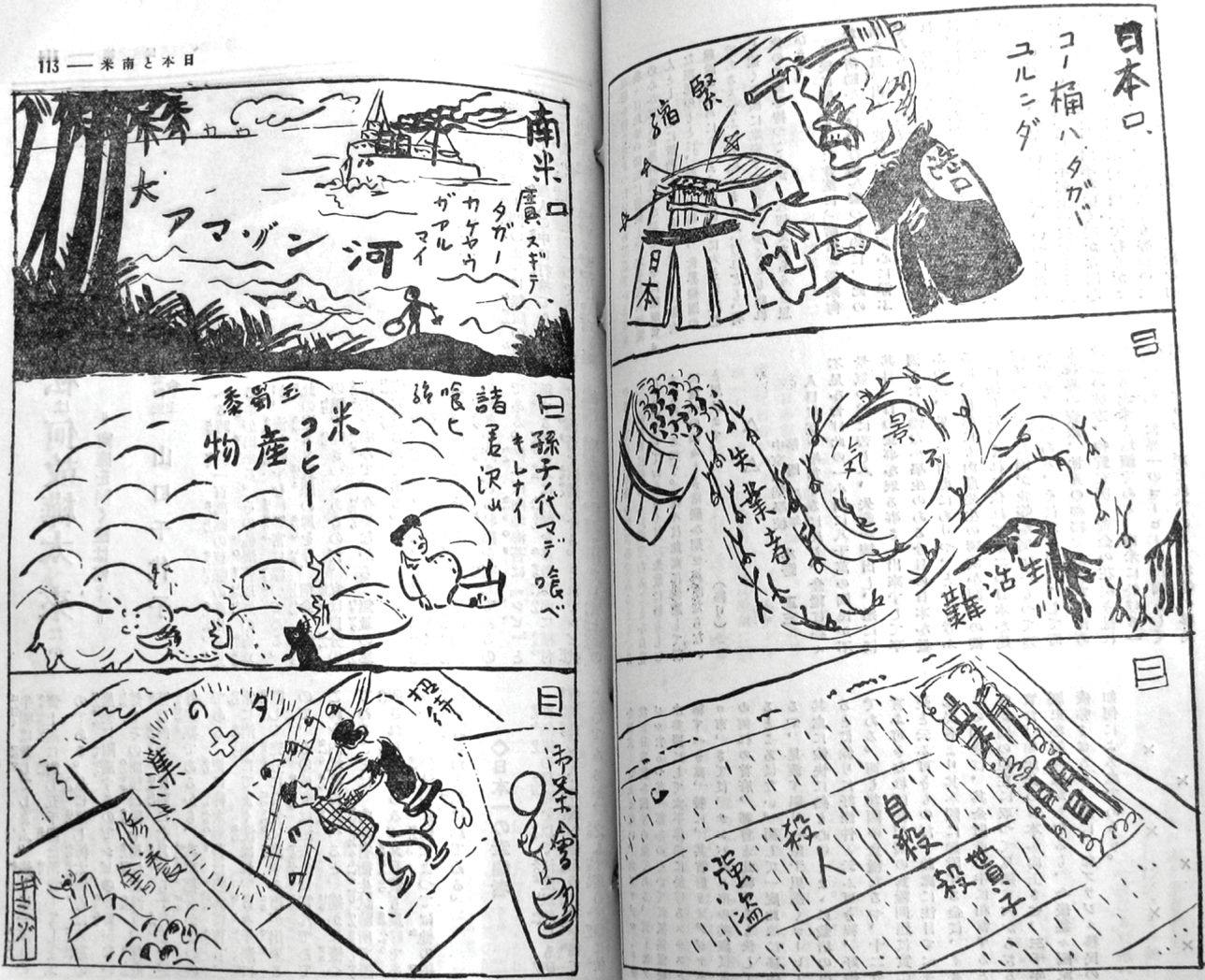
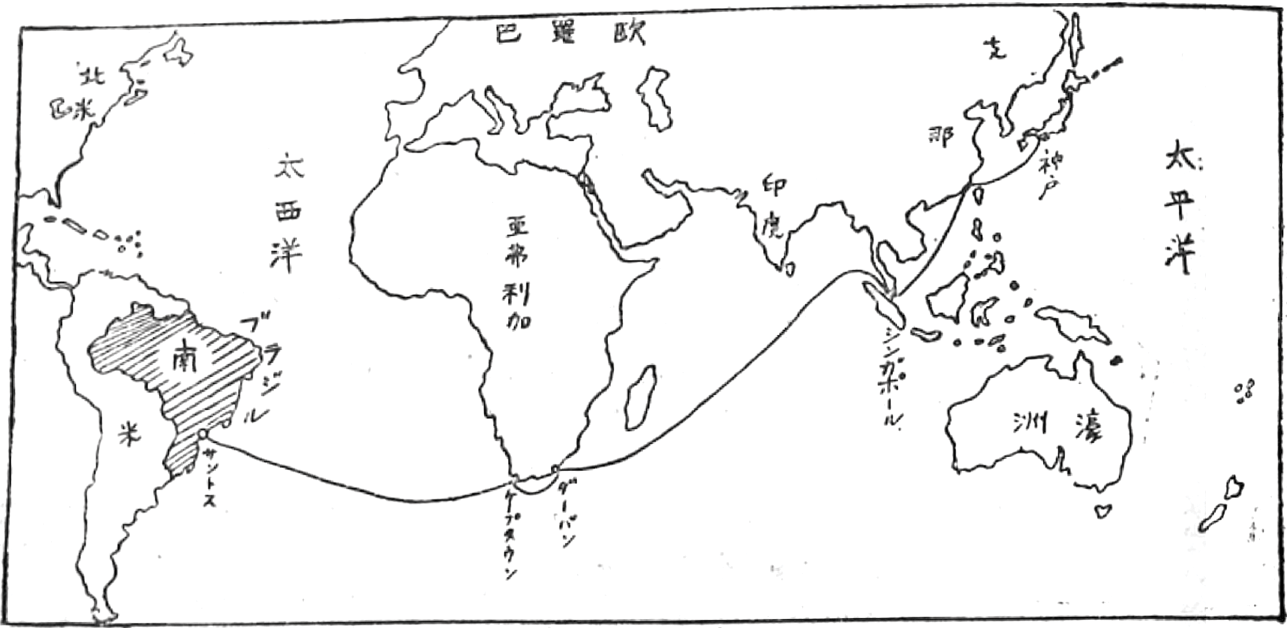
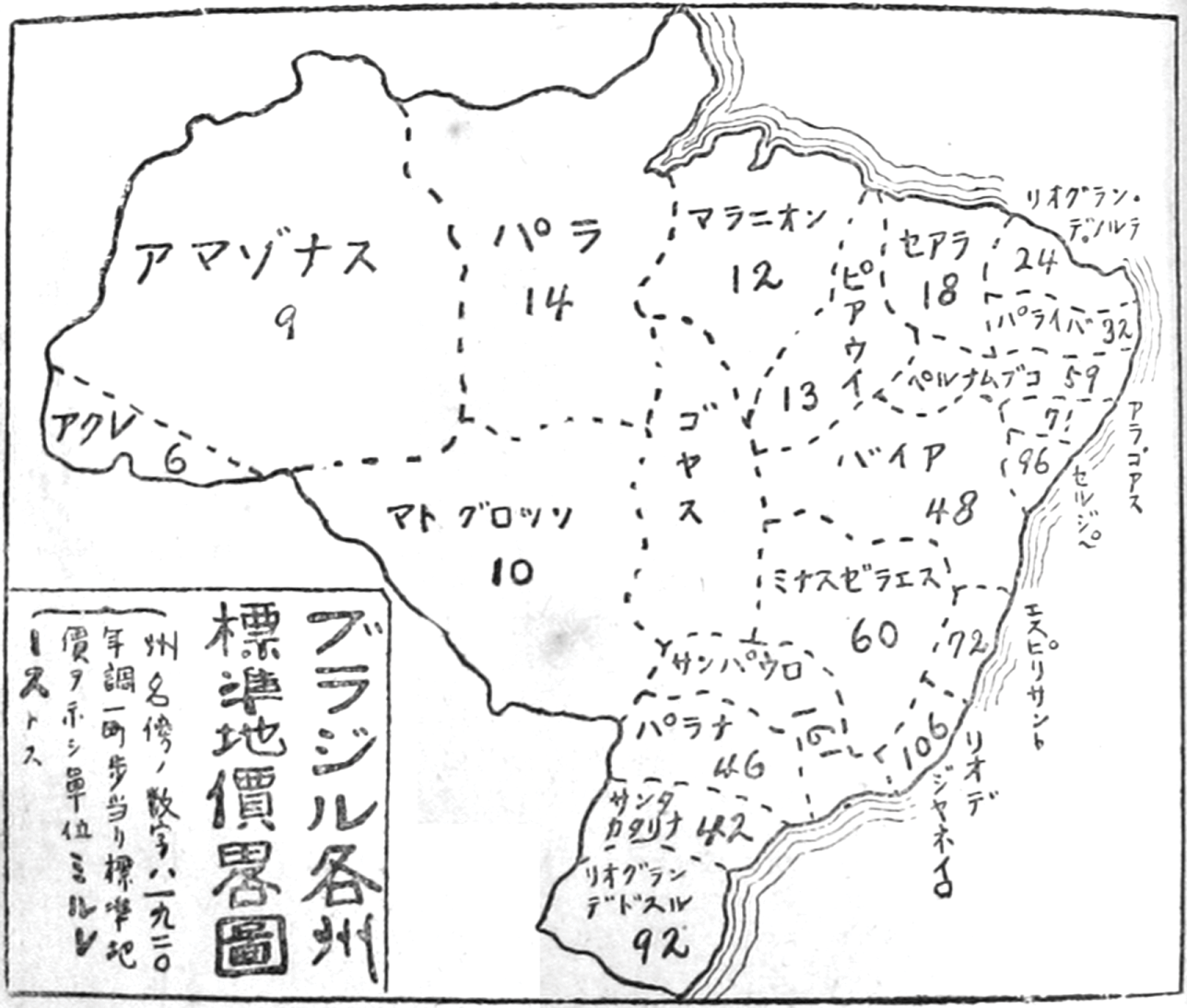
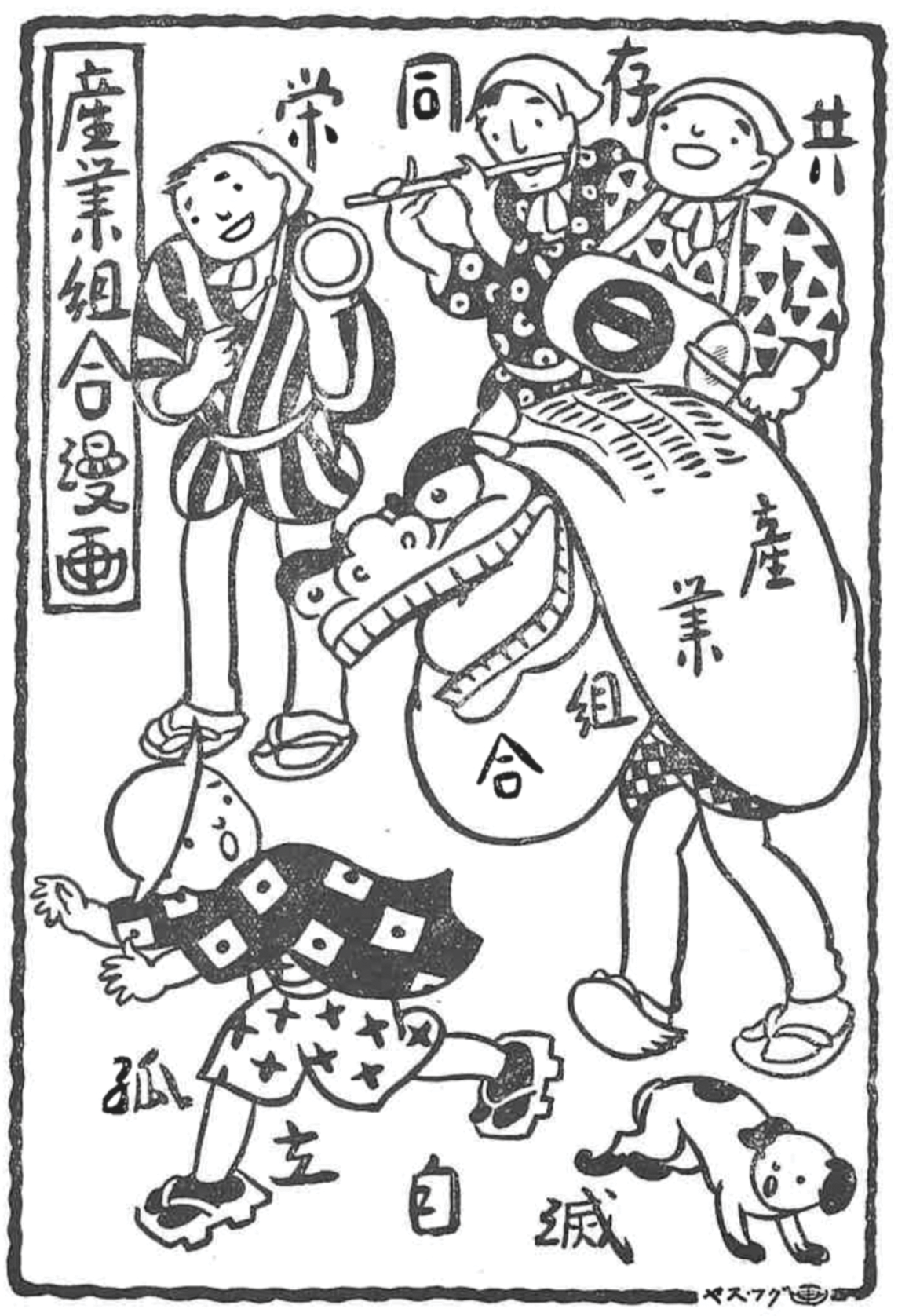
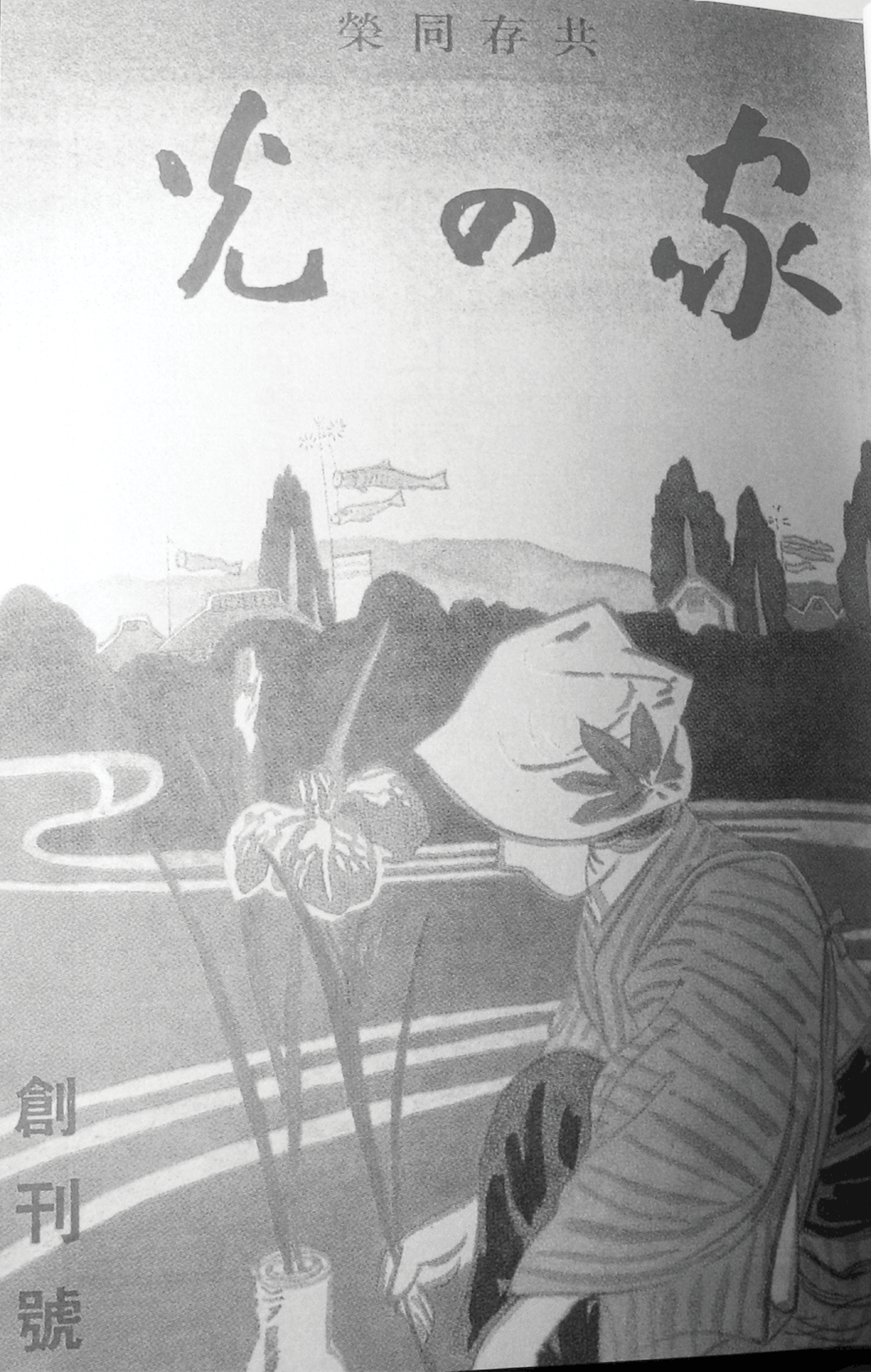


 Open access