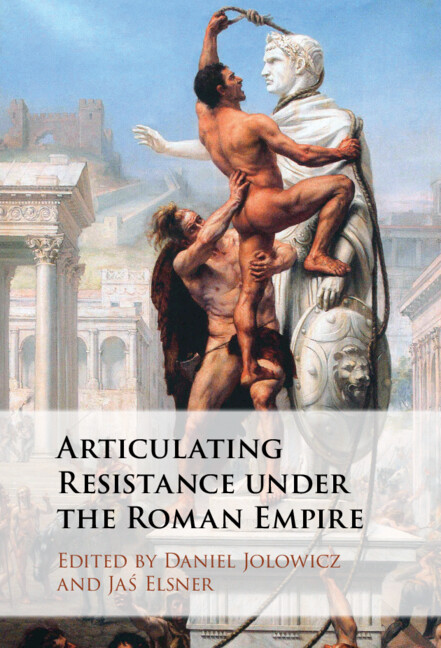

This book explores the many strategies by which elite Greeks and Romans resisted the cultural and political hegemony of the Roman Empire in ways that avoided direct confrontation or simple warfare. By resistance is meant a range of responses including 'opposition', 'subversion', 'antagonism', 'dissent', and 'criticism' within a multiplicity of cultural forms from identity-assertion to polemic. Although largely focused on literary culture, its implications can be extended to the world of visual and material culture. Within the volume a distinguished group of scholars explores topics such as the affirmation of identity via language choice in epigraphy; the use of genre (dialogue, declamation, biography, the novel) to express resistant positions; identity negotiation in the scintillating and often satirical Greek essays of Lucian; and the place of religion in resisting hegemonic power.
Loading metrics...
* Views captured on Cambridge Core between #date#. This data will be updated every 24 hours.
Usage data cannot currently be displayed.
This section outlines the accessibility features of this content - including support for screen readers, full keyboard navigation and high-contrast display options. This may not be relevant for you.
Accessibility compliance for the HTML of this book is currently unknown and may be updated in the future.
