


Organizational platforms have steadily grown in importance in recent years. We focus on digital platforms that, along with their associated ecosystems, are uniquely positioned to create and capture value in the digital economy. One type of digital platform, which we call innovation platforms, enables third-party firms such as software developers to build millions of applications that enhance the functionality of foundational products such as Microsoft Windows or Google’s Android. Another type, which we call transaction platforms, includes companies such as Uber, Airbnb, Facebook, Alibaba, and Amazon Marketplace. These platforms link buyers and sellers and thereby reduce search and other transaction costs for millions and billions of customers and providers. Both types of platforms are an organizational form that extends beyond traditional firm and supply chain boundaries to encompass ecosystems of innovators and suppliers of various products and services.
In this chapter, we discuss the origins and characteristics of organizational platforms as well as the economics that underpin their operation. We then describe two basic types of platforms, innovation and transaction, and point out that some companies combine the two into hybrid platforms. We identify the four key steps that designers and entrepreneurs must take if they want to build a successful platform business. Finally, we discuss current societal and regulatory challenges associated with the increasing dominance of the most powerful platform companies.
Rise of Platforms
The Industrial Revolution brought us the modern corporation. As Alfred Chandler (Reference Chandler1990) explained in Scale and Scope: The Dynamics of Industrial Capitalism, the modern corporation was born and evolved to take advantage of production techniques made available by the Industrial Revolution. The industrial firm, with its multidivisional managerial hierarchies, was able to create value and generate competitive advantage by harnessing the new technological infrastructures of the time, such as electricity and railroads, to operate efficient production processes. Firms obtained, controlled, and coordinated resources to create products through increasingly integrated and automated manufacturing systems.
If the Industrial Revolution enabled massive economies of scale and scope, the Digital Revolution dramatically lowered the costs of rapid scaling on a global basis. The emergence of personal computers (PCs), the Internet, mobile devices, and Cloud servers allowed digital platforms to form and grow, sometimes exponentially. Companies no longer need to do all their own innovation or own all the assets they provide to consumers. Digital technologies allow individuals to connect with other individuals and organizations with minimal friction. With many digital technologies, the cost to service an additional customer can be close to zero. The zero-marginal cost economics of digital technologies allowed Facebook to grow from a few million users to 2.4 billion in slightly over a decade. Such a growth pace would have been impossible before the Internet linked markets globally and instantly.
One profound difference in the digital world is the opportunity for companies to achieve demand-side scale and scope economies from positive feedback loops called network effects (Armstrong, Reference Armstrong2006; Katz & Shapiro, Reference Katz and Shapiro1985; Parker & Van Alstyne, Reference Parker and Van Alstyne2005). A network effect exists when the value that a user obtains from a particular product or service grows as more users adopt the product or service. For example, an increase in the number of Uber drivers is valuable for Uber riders (shorter wait times), and as more riders sign up with Uber, drivers have access to a larger market. Developers creating apps for a mobile operating system represents a different type of network effect. The larger the number of iPhone users, the more attractive it is for developers to create apps for the AppStore (a larger market). iPhone users, in turn, benefit from an increased number of available apps (more things to do with their phones).
Today, included among the most valuable firms in the world, and the first to surpass the trillion-dollar mark in market value, are platform companies such as Apple, Microsoft, Amazon, Google, Alibaba, and Tencent. Platform companies make up between 60 percent and 70 percent of all “unicorns” – privately held companies with valuations exceeding $1 billion, including Ant Financial, Didi Chuxing, Byte Dance, and Airbnb. All these organizations take advantage of modern digital infrastructures such as the Internet, the Cloud, and global mobile connectivity. They also take advantage of the behavioral habits of billions of users who, by connecting daily to these platforms through their digital devices to consume digital services, continuously (and often unwittingly) generate data. This data-as-output, in turn, becomes a key resource that platform companies leverage to further enhance the digital services they offer or to develop new services.
Platforms as Organizational Forms
Platforms are used to organize economic activity within firms, across firms in industry supply chains, and in multi-industry ecosystems (see Figure 5.1). The notion of a platform as an organizing mechanism arose in firms that created “families” of products based on a common platform to which diverse modules could be fitted in order to tailor products to market niches (Wheelwright & Clark, Reference Wheelwright and Clark1992). Early examples were observed in automobile manufacturing, stereo equipment, medical electronic equipment, and computers. For example, an automobile manufacturer could use one chassis to support multiple car models. The key to early platform architectures was standardizing the interfaces so that different modules could work together (Baldwin & Clark, Reference Baldwin and Clark2000). Early platforms were company-specific and allowed product development processes to be controlled and coordinated in a way that dramatically accelerated the pace and quality of product development.
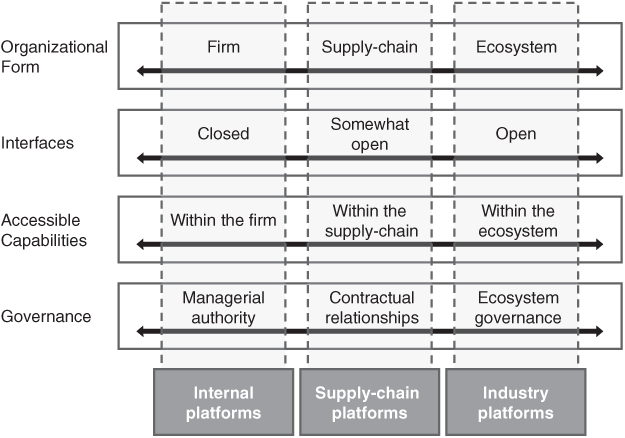
Figure 5.1 Types of organizational platforms
The use of platforms as an organizing mechanism also extended to industry supply chains. For example, the modular architecture of the IBM System/360 mainframe computer enabled other firms to create modules that could “plug-in” to IBM’s systems. Several companies started offering compatible products including disk drives, terminals, printers, and memory devices (Baldwin & Clark, Reference Baldwin and Clark2000). When IBM introduced its PC in 1981, it was built with off-the-shelf parts from an industry supply chain that included Intel and Microsoft. Supply chain platforms increased the diversity of product options available to customers and allowed platform owners to enjoy increased economies of scale in the supply of components. Virtually every global supply chain today can be viewed as a platform: A particular company acts as the platform leader, it designs processes and infrastructures that allow suppliers to provide their inputs in an efficient manner, and governance of the entire system is accomplished largely through contracts.
Moore (Reference Moore1993) suggested that some companies be viewed not as members of a single industry but as part of a business ecosystem that crosses a variety of industries. For example, he pointed out that Apple is the leader of an ecosystem that crosses at least four major industries: computers, consumer electronics, information, and communications. He also noted that the community of firms providing software and hardware for the Microsoft Windows operating system, and the Intel processor architecture on which it relied, was an example of organizing as a business ecosystem. A key characteristic of the Intel/Microsoft ecosystem was that suppliers of complementary components could utilize free, openly available interfaces to both the processors and the operating system for purposes of innovation, and they would independently supply components to users without having contractual relationships with either Microsoft or Intel, as would be the case in a supply chain. This organizational arrangement spurred intense innovation around the new technological platform at the center of a rapidly expanding ecosystem, in which the platform leader plays the central role (Gawer & Cusumano, Reference Gawer and Cusumano2002). As platform scope broadens from the firm to industry supply chain to multi-industry ecosystem, access to innovating agents and their diverse capabilities increases (Gawer, Reference Gawer2014).
The Economics of Platforms
Platforms that mediate economic exchange constitute private markets (Gawer & Cusumano, Reference Gawer and Cusumano2002). The company that owns the platform connects two or more distinct categories of economic actors (referred to as “sides” of a market) whose benefits from interacting through the common platform give rise to network effects (Rochet & Tirole, Reference Rochet and Tirole2003). For example, the Uber platform connects drivers and riders. Both drivers and riders are users of Uber, but they belong to two different sides of the market – sellers of rides and buyers of rides. Benefits related to connecting users on different sides give rise to cross-side network effects (Parker & Van Alstyne, Reference Parker and Van Alstyne2005). For example, eBay sellers attract eBay buyers, and more buyers attract more sellers. More Airbnb hosts attract more potential guests. Lots of users attract app developers or advertisers. When users benefit from connecting directly with similar others (Katz & Shapiro, Reference Katz and Shapiro1985), we speak of same-side network effects. Same-side effects occur in social networks: Users join because they want to connect to other users; they bring in their friends, and friends of friends, and so on. Facebook, Twitter, Instagram, Snap, and Tik Tok are powerful examples. Strong network effects can lead to “winner-take-all” dynamics, where one firm takes a very large share of the market (Shapiro & Varian, Reference Shapiro and Varian1998). Market dominance is likely to occur if there are few opportunities for competitors to differentiate, it is costly for users to engage in “multi-homing” (the ability of users to use more than one platform at the same time for the same purposes), and high barriers to entry exist (Cusumano, Gawer, & Yoffie, Reference Cusumano, Gawer and Yoffie2019; Eisenmann, Parker, & Van Alstyne, Reference Eisenmann, Parker and Van Alstyne2006; Parker, Van Alstyne, & Choudary, Reference Parker, Van Alstyne and Choudary2016).
Platform competition is centered around adoption by users, fueled by network effects. As the value of the platform stems principally from the access of “one side” to the “other side” of the platform, the question of platform adoption becomes “how to bring multiple sides on board” (Evans, Reference Evans2003; Rochet & Tirole, Reference Rochet and Tirole2006). Platform designers must figure out how to solve the chicken-and-egg problem (Caillaud & Jullien, Reference Caillaud and Jullien2003; Eisenmann et al., Reference Eisenmann, Parker and Van Alstyne2006) – that is, one side of the market (e.g., Uber drivers) may see little or no value in a platform without significant presence on the other side (Uber riders). So, when launching a platform, which side should come first, drivers (sellers) or riders (buyers)? Or should a platform try to bring both sides on board at the same time? This coordination problem can be solved by subsidizing the side of the platform that is most needed to attract the other side (Parker & Van Alstyne, Reference Parker and Van Alstyne2005; Rochet & Tirole, Reference Rochet and Tirole2003, Reference Rochet and Tirole2006). A platform such as Upwork, for example, connects freelance labor with companies that need skilled workers. Upwork charges only the freelancer (approximately 10 percent of their pay), while companies get the service for free. In this case, the value that both users and the platform owner can capture increases with a growing user base in a virtuous cycle of network effects that reflect the interdependence of demand between user groups.
Platform leaders may own few assets and yet create high value. For example, Uber provides rides but owns no vehicles; Airbnb provides rooms to rent but owns and manages no rooms. Amazon provides millions of products to its customers through its marketplace, which links buyers and sellers. Amazon also buys and resells goods through its online store, which uses the same digital infrastructure as the marketplace for purchasing and billing. Both the marketplace and the store may also use the same physical infrastructure for the delivery of goods.
In platform organizations, data has become a raw material. In the digital economy, with billions of users connected through mobile online devices, and constantly engaging with other users, many platforms have added advertisers as one of their market sides. Companies such as Google, Facebook, and Amazon record and analyze enormous amounts of user-generated data, tracked via cookies and other means. This data has high economic value because it allows advertisers to target specific types of users and behaviors. Data is also invaluable in developing new products and services.
Innovation and Transaction Platforms
In our book The Business of Platforms: Strategy in the Age of Digital Competition, Innovation, and Power (Cusumano et al., Reference Cusumano, Gawer and Yoffie2019), we divided digital platforms into two basic types, depending on their primary function (see Figure 5.2). We call the first type innovation platforms. These platforms usually consist of common technological building blocks that the owner and ecosystem partners can share in creating complementary products and services such as smartphone apps. By complementary, we mean that these innovations add functionality or access to assets that make the platform increasingly useful. The network effects come from the number and utility of the complements: The more complements there are, or the higher quality they are, the more attractive the platform becomes to users and complementors as well as other potential market actors such as advertisers and investors. Microsoft Windows is a classic innovation platform. Microsoft sold the Windows operating system to PC manufacturers and developed application programming interfaces (APIs), which allowed software developers to create applications. Billions of PCs were sold, attracting an army of independent developers who delivered millions of applications that ran on Windows. Developers were not suppliers to Microsoft, writing applications under contract; they were ecosystem participants. With the emergence of smartphones in 2007, Google Android and Apple iOS became new high-volume innovation platforms. In the last ten years, Amazon Web Services and Microsoft Azure have become the leading innovation platforms for the Cloud ecosystem, which became an innovation environment complete with development tools and app stores (Cusumano, Reference Cusumano2019).
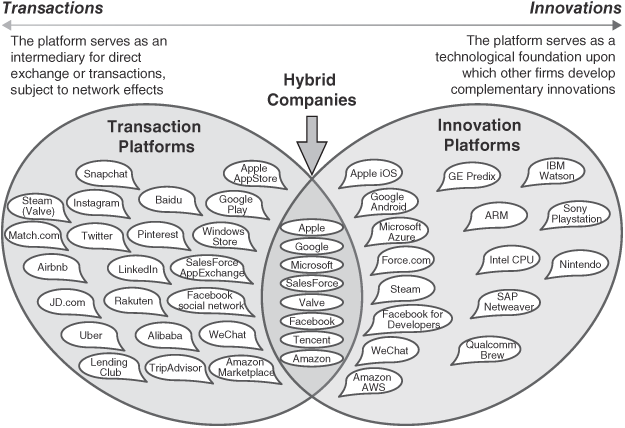
Figure 5.2 Innovation and transaction platform companies
Ecosystems vastly expand the pool of innovation sources because those sources are not restricted to the focal firm or the focal firm’s pool of suppliers as is the case in traditional supply chains. Instead, innovators can be anyone and may be found anywhere. The platform leader may not even be able to forecast who or where innovators may be. Steve Jobs initially wanted the iPhone to be a firm-level platform, where Apple would build or buy and bundle all the applications. Had Jobs stuck to his original strategy, the iPhone would have never delivered anything close to the more than two million apps on the platform in 2020. A feature of ecosystem platforms is that the platform leader does not need to know in advance who a complementary innovator might be to be able to capture value from the innovation. Open interfaces are crucial as facilitators of external complementary innovation (Gawer, Reference Gawer2014; West, Reference West2003) – they enable specialization and mix-and-match innovation through recombination of modules (Garud & Kumaraswamy, Reference Garud and Kumaraswamy1995; Langlois, Reference Langlois2002; Parnas, Reference Parnas1972; Simon, Reference Simon1962).
The second platform type is called transaction platforms. These organizations are intermediaries or online marketplaces that make it possible for people and companies to share information or to buy, sell, or access a variety of goods and services (Stabell & Fjeldstad, Reference Stabell and Fjeldstad1998). Classic examples are credit card companies and telecommunication services. In transaction services, the network effects come from the connections that can be made among users (North & Wallis, Reference North and Wallis1994). The more users a platform can connect, and the more content and functionality it makes available, the more useful the platform becomes. It is the digital technology and scale that make today’s platforms unique and powerful. Google Search, Amazon Marketplace, Facebook Social Network, Twitter, and WeChat are examples of transaction platforms used by billions of people every day.
There are important differences between the two platform types. Innovation platforms create value by facilitating the development of complementary products and services, sometimes built by the platform owner but mostly by third-party firms. They capture value (“monetize the platform”) by selling or licensing products. In cases where the platform is free (e.g., Google Android), it is monetized by selling advertising or other services. In contrast, transaction platforms create value by facilitating exchange and capture value through combinations of subscriptions, transaction fees, and advertising.
Some firms begin with one type of platform and then add the second type. We refer to companies that support both types as hybrid platforms. In the 1980s and 1990s, innovation and transaction platforms were distinct businesses. In recent years, a growing number of successful innovation platforms have integrated transaction platforms into their business models. An example is the Apple AppStore, which sells apps to iPhone users. Correspondingly, successful transaction platforms have created open interfaces to encourage third parties to develop complementary products and services. For example, Facebook opened its platform to external developers of games and other applications. Other prominent hybrid examples include Google’s decision to launch the Android operating system, Amazon’s decision to create multiple innovation platforms around Amazon Web Services and the Alexa “smart” speaker, and the decisions of Uber and Airbnb to allow developers to build services on top of their transaction platforms. We expect that competition will turn more and more platform firms into hybrids.
Strategic Choices for Companies That Want to Build a Platform Business
To create a sustainable platform business, designers and entrepreneurs should start with the value proposition they envision. If value will come mainly from enabling third parties to build their own products or services that utilize and enhance the platform, then they should develop an innovation platform. If value will come mainly from allowing different sides of a market to interact, rather than building or delivering a product or service directly, then they should develop a transaction platform. Successful platform companies tend to adopt a hybrid approach. Once the value proposition is clear, then platform designers need to proceed through four decision-making steps as shown in Figure 5.3.

Figure 5.3 Four steps to build a sustainable business platform
The first step is to identify the various market sides managers and entrepreneurs want for their platform and how to create value through them – the role different actors (buyers, sellers, complementors) will play and who specifically will take on those roles. LinkedIn, for example, has users, application developers, advertisers, and recruiters. Over the years, the company has debated adding new sides such as consultants, experts, and company intranets. The potential problem for all platforms is that adding more sides may generate more revenue opportunities but also more conflicts among the sides.
The second step is to launch the platform, which requires solving the chicken-and-egg problem of how to get started and then how to attract increasing numbers of users and complementors to generate strong, persistent network effects. The question is: How do you make your platform sufficiently valuable to early users when there are no complementors or other users to connect with? Some innovation platform leaders, such as Apple, start by developing the initial complements to their platform – Apple developed the iPhone, its operating system, and an initial set of applications to make the phone useful for early buyers. Subsequently, Apple attracted independent app developers to their ecosystem. Correspondingly, a classic transaction platform strategy, referred to as penetration pricing, involves subsidizing initial users to reach a critical mass (Katz & Shapiro, Reference Katz and Shapiro1994). Initially, Facebook offered its service for free and later monetized the platform by selling targeted advertising services and user data.
The third step is to design revenue mechanisms that will monetize network effects without depressing them. The monetization challenge involves deciding how long the subsidies required to launch the platform will need to be continued and identifying the sides that eventually will generate positive cash flow. Uber, for example, has yet to create a business model with positive cash flow. It built its business by subsidizing drivers with aggressive bonuses and lowering prices significantly below the price of a taxi for riders. As the company tries to satisfy its investors, it has been working to revise the business model by lowering subsidies to both sides. The jury is still out on whether this strategy will work.
Lastly, managers and entrepreneurs must establish an effective ecosystem governance regime. They need to decide what behaviors to encourage and discourage on the platform and how to enforce the rules. The challenge of platform governance has become one of the most difficult problems managers face at companies such as Facebook, Twitter, and YouTube. Governance mechanisms include elements such as property rights, interfaces and other standards, as well as rules related to platform membership and actor behavior (Jacobides, Cennamo, & Gawer, Reference Jacobides, Cennamo and Gawer2018).
Harnessing Platform Power
In a global economy where many resources can be digitized, and where such resources can be utilized even if they are geographically dispersed, platforms are positioned to facilitate the exchange of those resources as well as combine them in innovative ways (Yoo, Henfridsson, & Lyytinen, Reference Yoo, Henfridsson and Lyytinen2010). A platform is, by design, a central agent at the nexus of a network of value creators. A platform leader can capture a significant proportion of the value being created in the distributed network, and resources can be monitored, controlled, and used without owning them.
One ongoing challenge for both innovation and transaction platforms (as well as hybrids) is the potential centralization of power by companies whose platforms become highly successful. The Internet once promised to deliver a fairer world, bringing down old power structures, where distributed computing and communication networks provided equal access for all to digital information and economic opportunities (Benkler, Reference Benkler2006). While an open, democratic Internet is partly true, so is the opposite. Platform dynamics has led to the concentration of economic and social activity in a small number of large and powerful companies. In response, we see growing demands from both users and governments to regulate or break up some of the biggest platforms.
The huge platforms – Apple, Amazon, Google, Microsoft, Facebook – have become so large that they are wealthier and more influential than many countries. As a group, the top platform firms have garnered so much power that one observer labelled them the Frightful Five (Manjoo, Reference Manjoo2017). These tech giants may have become too big to control. Google and Facebook dominate two-thirds of digital advertising, with Google controlling about 90 percent of internet search in most markets (except China) and about 80 percent of smartphone operating systems with the free Android operating system. Apple has captured 90 percent of the world’s profits in smartphones and a large percentage of digital content sales with iTunes. Amazon presides over more than 40 percent of e-commerce in the United States and dominates e-books. Microsoft owns more than 90 percent of the world’s PC operating systems. Intel provides some 80 percent of the microprocessors for PCs and more than 90 percent of the microprocessors for Internet servers. Facebook accounts for approximately two-thirds of social media activity. The most powerful platform companies have started to look like the big banks in the 2008–2009 financial crisis: Are they too big to fail? Consider as well how platforms enable the dissemination of fake news or Russian manipulation of social media and election tampering, and clearly, we have reached an inflection point. We now must view the most powerful platform companies as double-edged swords, capable of both good and evil.
A significant platform concern is: Who controls personal data? Control of personal data can lead to violation of privacy, exemplified by complaints against major social networks such as Facebook. A series of scandals, including that of Facebook and Cambridge Analytica, demonstrate how easy it can be for malevolent actors to take control of user data and to influence individuals through the information they see on social networks, influence national elections, and ultimately threaten democracy. The centrality of data extraction in platform business models (Srnicek, Reference Srnicek2016) and the reliance on user monitoring for profit-making have raised the possibility that “surveillance capitalism” (Zuboff, Reference Zuboff2015) may now be occurring. Facebook and Google capture data on users (and their friends) even when they are not on the website.
Managers and entrepreneurs need to understand what constitutes an abuse of market power and what conditions may lead to potentially illegal market actions. Sometimes the conditions for winner-take-all outcomes are met. In such cases, platform companies have many opportunities to abuse their market power – harm consumer welfare, hurt local or global competitors, and extract monopoly or quasi-monopoly rents. As a regulatory antidote, antitrust cases are costly and lengthy affairs that usually take many years to resolve. Platform companies would do themselves and society a considerable favor if they learned how not to violate the law and user trust, misuse their market positions to harm competitors, or garner excessive profits.
Managers in platform companies also need to be careful with how their organizations impact labor and labor regulations. One of the most attractive features of platforms for financial investors is that they can be “asset light.” Uber does not own taxis or employ drivers directly. Airbnb does not own apartments or houses or employ the people who manage properties listed on its site. OpenTable does not own or manage restaurants. Microsoft, Google, Apple, and Facebook do not employ the millions of engineers that independently choose to write software applications for Windows, Android, iOS, and the Facebook APIs. While asset-light platforms potentially provide highly leveraged returns to investors, they create another challenge for human capital: How should platform owners manage a workforce largely composed of independent contractors (Jordan, Reference Jordan2017)? Unlike employees, independent contractors are due no benefits, guarantee of hours, or minimum wage, enabling the enterprises that employ them to keep labor costs low. There were 57 million freelancers in the United States in 2017; for one-third of those people, freelance activity was their main source of income (Pofeldt, Reference Pofeldt2017). One estimate suggested that, if current trends continue, freelancers could represent 50 percent of all US workers by 2027 (Pofeldt, Reference Pofeldt2017).
Platforms such as Uber, GrubHub, TaskRabbit, Upwork, Handy, and Deliveroo classify much of their workforce as independent contractors. The companies justify this practice because the workers tend to perform their jobs as a side activity, with significant flexibility in their hours. In reality, the classification is about keeping labor costs low. Industry executives have estimated that classifying workers as employees tends to cost 20–30 percent more than classifying them as contractors (Scheiber, Reference Scheiber2018). Some analysts argue that the entire “gig economy” would collapse if start-ups were obliged by law to classify all their workers as employees (Kessler, Reference Kessler2015). Overall, the practice of classifying workers as independent contractors is becoming increasingly controversial. In the United States, the situation is particularly complex because laws that determine independent contractor and employee status vary from state to state and even city by city. Many regulations focus on how much control workers have over their work. Researchers are beginning to study “algorithmic labor” and the role that information asymmetries embedded in the algorithmic management of workers’ tasks shape control and power relations (Rosenblat, Reference Rosenblat2018; Rosenblat & Stark, Reference Rosenblat and Stark2016). In Europe, regulators are also starting to pay attention to the labor practices of platform firms.
Until recently, the dominant mood in the business press (and in many business books on platform companies) was unbridled enthusiasm for the efficiency of platforms and awe at the speed at which they introduced both innovation and disruption. Parker, Van Alstyne, and Choudary (Reference Parker, Van Alstyne and Choudary2016), Evans and Schmalensee (Reference Evans and Schmalensee2016), and Cusumano, Gawer, and Yoffie (Reference Cusumano, Gawer and Yoffie2019), among other publications, all have shown that platforms can create enormous value for users and investors – they can reduce search and transaction costs, and fundamentally restructure entire industries, within a few years. We have seen this phenomenon in computers, online marketplaces, lodging, financial services, and many other sectors. Nonetheless, it appears that the tide of public perception seems to have turned as media coverage of platforms has become increasingly negative. Calls to break up Google have appeared in major newspapers. The movement to delete Facebook from smartphone apps gained substantial traction among the public. Uber has faced internal turmoil from failing to properly vet drivers, abusing digital technology (e.g., the Greyball software that helped drivers evade law enforcement in markets where Uber was prohibited), and aggressively challenging local governments. This change in public sentiment reflects the fact that platforms regulate their ecosystems by developing and enforcing their own rules of platform access and interaction. Furthermore, platforms gain access to personal data and set the rules by which this data is extracted and used.
As platforms have gained so much power over their ecosystems, a major concern among government regulators is that it has become too easy for platform owners to erect long-term barriers to entry. Many government agencies and think tanks have been working on whether and how to regulate competition in digital markets (Furman, Reference Furman2019). Calls for updating antitrust laws have become louder (Khan, Reference Khan2017). In 2019, the European Commission issued new regulations for platform-to-business trading practices, aiming to create a fair, transparent, and predictable business environment for smaller businesses and traders when using online platforms (European Commission, 2019). A report for the European Commission titled Shaping Competition Policy in the Era of Digitisation (Crémer, de Montjoye, & Schweitzer, Reference Crémer, de Montjoye and Schweitzer2019), which is likely to be influential in shaping the European legislative and enforcement agenda in the longer term, states that digital markets require vigorous enforcement of competition policies and laws, arguing that large incumbent digital players are difficult to dislodge and may have strong incentives to engage in anticompetitive behavior. A key area of concern in the report is the hotly debated topic of “killer acquisitions,” whereby dominant firms acquire small start-ups with quickly growing user bases that might otherwise have developed into strong rivals. The report concludes that adjustments are needed with respect to the application of competition law.
To be sustainable enterprises, and to be accepted as contributors to society, platform companies need to adopt values that are congruent with those of the societies in which they function. With growing sensitivity to issues of power and fairness, platforms that ignore those issues risk destroying their reputations. With increasing calls to reign in platform businesses, entrepreneurs, managers, and boards of directors at leading platform companies must take more responsibility for their social, political, and economic impact.
Conclusion
Platforms, by controlling standards, interfaces, and rules of membership and user interaction, organize an enormous amount of innovation, commercial exchange, and social interaction. Given the dramatic growth of platforms in the global economy and the increasing public concern with their market power, organizational researchers studying platforms need to expand their focus from describing the features and operation of platform companies to studying their contribution to society. We need a comprehensive understanding of platform ecosystems – how capabilities are developed and harnessed within them, the principles by which they are organized, and what constitutes good ecosystem performance.


