

Key Points
Education is argued to be at the heart of sustainable development. SDG 4 aims to broaden and deepen education to people of all ages and expand its scope to a lifelong process spanning formal, non-formal and informal settings. SDG 4 emphasises quality of educational access, particularly for girls, women and marginalised groups.
Education plays a foundational role in developing the knowledge, competencies and attitudes that foster pro-environment behaviour, yet this relationship is not simple or direct. Individual and community attitudes to the environment, their competencies in managing it and their sense of connectedness to nature are key factors in fostering pro-environmental behaviour.
Pro-forest behaviours are those intended to benefit forests, or the components of forest ecosystems, in some way. There are many manifestations of and pathways to these behaviours.
Encouraging and enabling pro-forest behaviours, in all their forms and contexts, is the basis of positive linkages between SDG 4 and forests.
The formal, non-formal and informal elements of education systems have complementary and synergistic roles in facilitating pro-forest behaviours and outcomes.
In these contexts, progress towards SDG 4 will benefit forests if education:
1. Informs, encourages and enables pro-forest behaviour;
2. Respects, nurtures and enables Indigenous and traditional knowledge;
3. Promotes forest-related environment and sustainability education in each of formal, non-formal and informal settings;
4. Strengthens forest-related professional, technical and vocational education and training, and capacity development;
5. Capitalises on the power of both established and new media.
4.1 Introduction
This chapter explores the relationships between SDG 4 Ensure inclusive and equitable quality education and promote lifelong learning opportunities for allFootnote 1 and forests – specifically forest ecosystem services, forest-related livelihoods and human well-being. The 2030 Agenda for Sustainable Development understands education to be ‘at the heart’ of sustainable development (UNESCO et al. 2016: 24) and as ‘the golden thread that runs through all 17 [SDGs]’ (Thomson Reference Thomson2017). This is in part because SDG 4 conceives of education in very broad terms, encompassing formal, non-formal and informal elements over a person’s lifetime (UNESCO 2016). The Incheon Declaration (UNESCO et al. 2016: 27), which articulates the rationale for SDG 4, argues that:
Evidence of education’s unmatched power to improve lives, particularly for girls and women, continues to accumulate. Education has a key role in eradicating poverty: it helps people obtain decent work, raises their incomes and generates productivity gains that fuel economic development. Education is the most powerful means of achieving gender equality, of enabling girls and women to fully participate socially and politically, and of empowering them economically.
The ambition articulated by SDG 4 builds on both the Millennium Development Goals and the UN Decade of Education for Sustainable Development 2005–2014 (UNDESD)Footnote 2 (UNESCO 2016). The UNDESD drew from precursor initiatives and experiences in both environmental and sustainability education (Thomas Reference Thomas2017, UNESCO 2016 Table 1.2, Wals and Benavot Reference Wals and Benavot2017), including initiatives addressing forest-related topics such as biodiversity conservation, climate change and the green economy.
However, little of the research exploring the relationships between education and sustainable development focuses explicitly on forests; rather, as in the SDGs, forests are present as part of wider cultural, social and terrestrial landscapes (Buckler and Creech Reference Buckler and Creech2014; Introduction (this volume)). Nevertheless, inferences can be drawn for forests because many of the challenges to and opportunities for sustainable development are manifest in and for forests (UNEP 2011), and because experience in environmental and forest-related education informs education for sustainable development, and vice-versa (Gilless Reference Gilless2015, NEEF 2015).
We first overview education as conceived under SDG 4 (Section 4.2) and discuss how key contexts frame the relationships between SDG 4 and forests (Section 4.3). We then explore how progress towards SDG 4 targets might have impacts on forests and interact with other SDGs (Section 4.4), and ways to develop elements of SDG 4 to the benefit of forests (Section 4.5). Drawing on pro-environment behaviour concepts, we propose pro-forest behaviour as foundational to SDG 4 progress benefitting forests. Finally, we briefly note synergies between SDG 4 and other SDGs (Section 4.6) and offer concluding observations (Section 4.7).
4.2 SDG 4: Quality Education
SDG 4 is avowedly ‘comprehensive, holistic, aspirational, ambitious and universal’ (UNESCO et al. 2016: 24). It focuses on broadening and deepening education, to reach people of all backgrounds and all ages with effective and relevant learning (UNESCO et al. 2016); it expands the scope of education beyond the traditional focus of the formal schooling environment and years, to a lifelong process in a wide range of formal, informal and non-formal settings.
SDG 4 characterises formal education as education delivered in an organised system, occurring in institutions and leading to a recognised award. Non-formal education occurs in planned learning settings outside of formal systems, such as professional and capacity development. Informal education, which includes Indigenous knowledge, happens outside of organised programmes. It includes learnings from everyday activities and is increasingly facilitated by new technologies (UNESCO 2016, Figure 4.1).
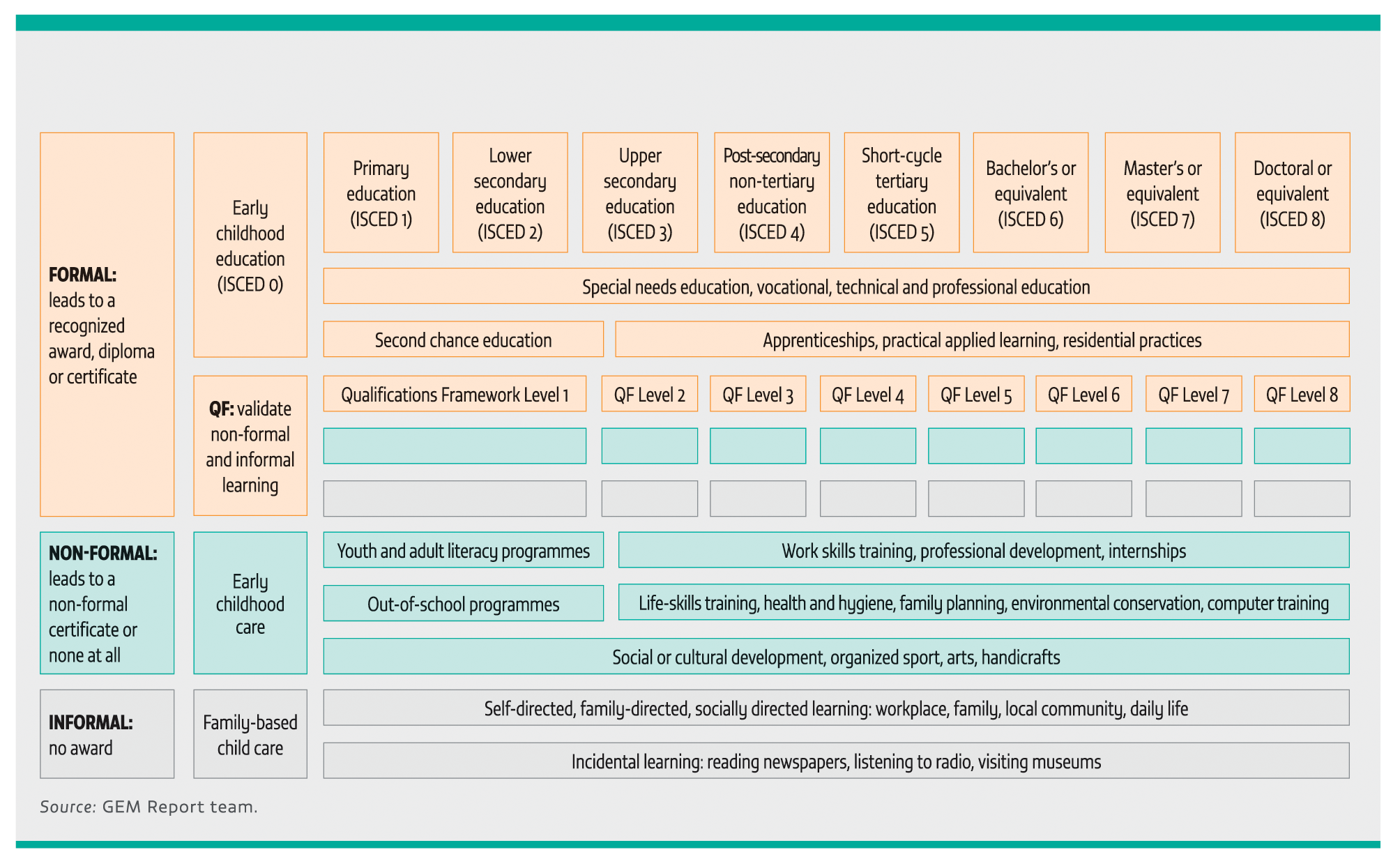
Figure 4.1 General form, structure and elements of lifelong education, as conceived by the post-2015 development agenda.
The breadth of SDG 4 (Table 4.1) is reflected in its targets. Each is supported by specific indicators; the UN reports annual evaluations of progress towards targets (UN SDG Knowledge Platform 2019).
Table 4.1 SDG 4 targets
| SDG 4 Targets |
|---|
| 4.1 By 2030, ensure that all girls and boys complete free, equitable and quality primary and secondary education leading to relevant and effective learning outcomes |
| 4.2 By 2030, ensure that all girls and boys have access to quality early childhood development, care and pre-primary education so that they are ready for primary education |
| 4.3 By 2030, ensure equal access for all women and men to affordable and quality technical, vocational and tertiary education, including university |
| 4.4 By 2030, substantially increase the number of youth and adults who have relevant skills, including technical and vocational skills, for employment, decent jobs and entrepreneurship |
| 4.5 By 2030, eliminate gender disparities in education and ensure equal access to all levels of education and vocational training for the vulnerable, including persons with disabilities, Indigenous peoples and children in vulnerable situations |
| 4.6 By 2030, ensure that all youth and a substantial proportion of adults, both men and women, achieve literacy and numeracy |
| 4.7 By 2030, ensure that all learners acquire the knowledge and skills needed to promote sustainable development, including, among others, through education for sustainable development and sustainable lifestyles, human rights, gender equality, promotion of a culture of peace and nonviolence, global citizenship and appreciation of cultural diversity and of culture’s contribution to sustainable development |
| 4.A Build and upgrade education facilities that are child, disability and gender sensitive and provide safe, non-violent, inclusive and effective learning environments for all |
| 4.B By 2020, substantially expand globally the number of scholarships available to developing countries, in particular least developed countries, small island developing States and African countries, for enrolment in higher education, including vocational training and information and communications technology, technical, engineering and scientific programmes, in developed countries and other developing countries |
| 4.C By 2030, substantially increase the supply of qualified teachers, including through international cooperation for teacher training in developing countries, especially least developed countries and small island developing states |
Figure 4.2 presents a stylised representation of SDG 4 targets: how they are situated and interact along axes represents the type of education and the stage of life. Some targets, such as those directed at gender equality and inclusivity, apply across the full spectrum of educational settings and stages; others, such as access to early education, are specific to stages. While only Target 4.7 (‘Sustainable Development and Global Citizenship’) of SDG 4 explicitly addresses sustainability, it is argued that progress towards other SDG 4 targets also underpins progress towards sustainability, and towards other SDGs (UNESCO 2016, Wals and Benavot Reference Wals and Benavot2017). This assertion is necessarily qualified, as ‘education can make a critically important contribution to progress towards the SDGs, but this is by no means inevitable’ (Sterling Reference Sterling2016: 211). As we discuss further, this caveat applies to the impacts of SDG 4 on forests as much as it does to the SDGs more generally.
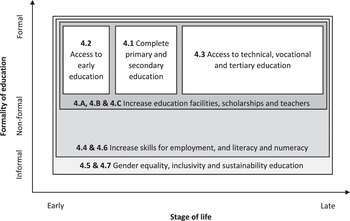
Figure 4.2 Stylised representation of the coverage of SDG 4 targets (numbered), in relation to formality of education and stage of life.
4.3 Contextual Conditions
We identify four sets of contexts for the adoption of SDG 4 and its impacts on forests: the quality and reach of education (Section 4.3.1); Environment and Sustainability Education (Section 4.3.2); the relationship between education and behavioural change (Section 4.3.3); and the nature of relationships between people, forests and pro-forest behaviour (Section 4.3.4).
4.3.1 The Education System
The characteristics of national education systems – often comprising sub-national, both public and private components – provide a foundational context for SDG 4, particularly levels of access at different stages and quality at all stages. The education system encompasses all formal, non-formal and informal elements of education, and their ‘life-wide contexts (family, school, community, workplace and so on)’ (UNESCO et al. 2016: 30). It therefore includes the various forms of adult learning and education (UNESCO et al. 2016) and capacity building (Bloomfield et al. Reference Bloomfield, Bucht and Martínez-Hernández2018) related to forests.
A central focus of SDG 4 is to improve access to education, particularly for school-aged children. Despite substantial progress over the past 50 years (World Bank 2018), some 263 million children worldwide aged 6–17 do not attend school (UIS 2016). Currently, only 2 of 8 world regions have achieved the goal of universal lower-secondary education, and 3 are projected to not even achieve universal primary education by 2030 (UNESCO 2016). There are significant gender dimensions to access: worldwide, girls are twice as likely as boys to not start school, and rates of completing primary school are as low as 25 per cent for girls in the poorest families in low-income countries (World Bank 2018).
Educational quality is an issue of universal concern. The quality of a country’s education system is often associated with the difference between richer and lower- and middle-income countries (Wals and Benavot Reference Wals and Benavot2017), although there is significant variation within these categories (UNESCO 2017, Figure 20.1). Richer countries are characterised as having well-developed and relatively well-funded formal education systems, with high rates of participation and effective learning through to post-secondary level; the situation in lower- and middle-income countries is typically the converse (WEF 2016a).
Consequently, the situation in many poorer countries’ school systems has been described as a learning crisis, characterised by inadequate educational systems and schools (World Bank 2018). Unless these are addressed (for proposed actions WEF 2016a, World Bank 2018), neither the ambitions of SDG 4 in those countries nor the potential positive impacts on forests we discuss herein are likely to be realised.
4.3.2 Environment and Sustainability Education
The second context is that of environment and sustainability education (ESE; Sterling et al. Reference Sterling, Glasser, Rieckmann, Warwick, Blaze Corcoran, Weakland and Wals2017).Footnote 3 ESE was founded on promoting environmental literacy, which extends beyond simply knowledge of the environment to adoption and promotion of pro-environment behaviours (Leicht et al. Reference Leicht, Heiss, Byun, Leicht, Heiss and Byun2018); it does so particularly by fostering relevant competencies and a sense of connectedness to the environment through experiential learning (NEEF 2015). ESE programmes specifically focused on forests have been developed to complement school curricula in many countries (e.g. Australia: Forest Education Foundation 2018; Scotland: OWL Scotland 2018; the USA: Project Learning Tree 2018), often beginning at the pre-school level, e.g. European forest kindergartens (Gregory Reference Gregory2017).
The UNDESD extended the environmental literacy concept to sustainability more broadly, seeking – in the SDG context – to integrate education into sustainable development, and vice-versa (Leicht et al. Reference Leicht, Heiss, Byun, Leicht, Heiss and Byun2018), and enable transformative societal change (UNESCO 2014). There was global progress in developing and implementing education for sustainable development (ESD) during the UNDESD (Buckler and Creech Reference Buckler and Creech2014), but there is significant variation in SDG 4 indicators among otherwise comparable countries (UNESCO 2017).
4.3.3 Education and Pro-Environment Behavioural Change
Quality education plays a fundamental role in achieving sustainability globally by fostering pro-environment behaviour (UNESCO 2016) – i.e. ‘behaviour that is undertaken with the intention to [positively] change the environment’ (Stern Reference Stern2000: 408). For example, holistic pedagogical practices that complement immersive environment experiences with pre-experience preparation and post-experience follow-up are more likely to foster pro-environment attitudes than less holistic approaches (Stern et al. Reference Stern, Powell and Hill2014). The pathways through which education exerts influence are not simple, linear or direct. Behaviour is determined by a suite of complex and interconnected elements that vary contextually; it is easy to oversimplify these elements and overestimate their causality (Heimlich Reference Heimlich2010, Steg and Vlek Reference Steg and Vlek2009). With these caveats, we summarise the most influential elements in terms of Kollmuss and Agyeman’s (Reference Kollmuss and Agyeman2002) categorisation of demographic, external and internal factors in Figure 4.3, and discuss them below.
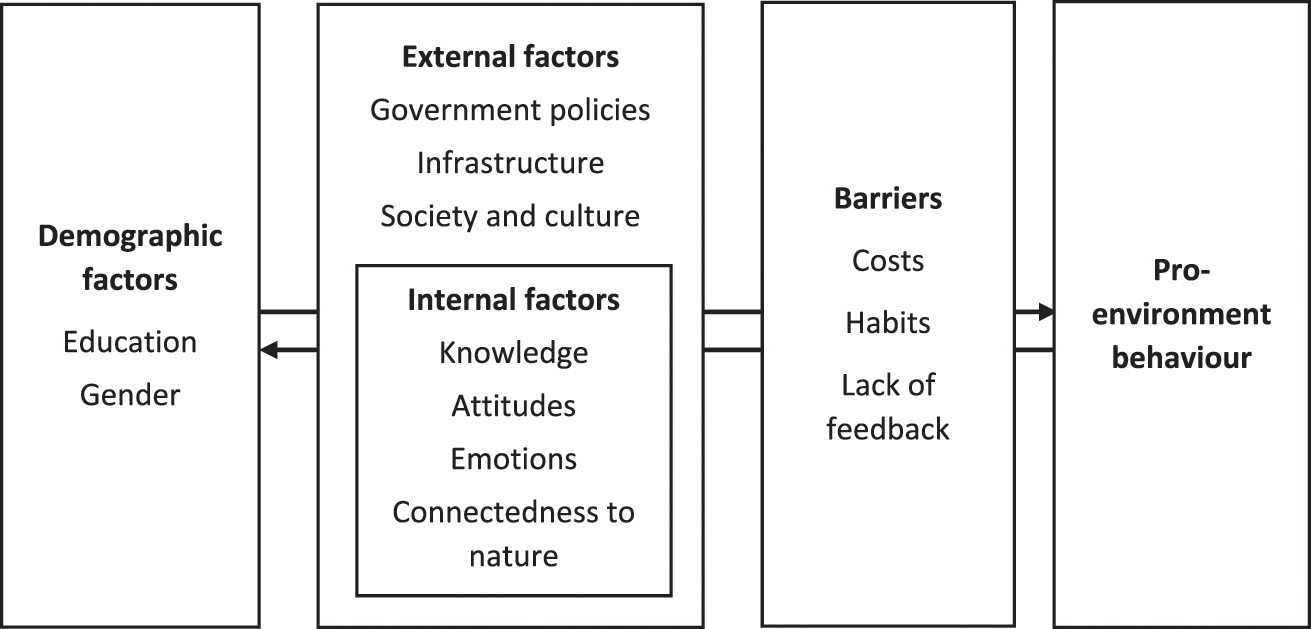
Figure 4.3 Simplified model of factors shaping pro-environment behaviour.
Education and gender are the most influential demographic factors (Kollmuss and Agyeman Reference Kollmuss and Agyeman2002). Increasing the duration, intensity or quality of education increases pro-environment behaviour (Zsóka et al. Reference Zsóka, Szerényi, Széchy and Kocsis2013). In many (but not all) contexts (Villamor et al. Reference Villamor, Desrianti, Akiefnawati, Amaruzaman and van Noordwijk2014), women are more likely than men to empathise with environmental causes and behave accordingly (Hunter et al. Reference Hunter, Hatch and Johnson2004).
External factors including infrastructure, policies and social and cultural factors form the context in which behavioural decisions are made. Infrastructure (e.g. the accessibility of recycling bins) enables or hinders pro-environment behaviour (Freed Reference Freed2018). Government policies (e.g. taxes) can successfully deter certain behaviours, such as plastic bag usage (Convery et al. Reference Convery, McDonnell and Ferreira2007). Social and cultural norms are particularly powerful because they set standards, e.g. in relation to energy and water-conserving behaviour (Reese et al. Reference Reese, Loew and Steffgen2013).
Internal factors comprise various psychological factors, notably knowledge, attitudes, emotions and habits (Kollmuss and Agyeman Reference Kollmuss and Agyeman2002). These are often the target of education-based interventions (Stern et al. Reference Stern, Powell and Hill2014). Knowledge, including of behavioural options to achieve environmental outcomes (Frick et al. Reference Frick, Kaiser and Wilson2004), is foundational but not solely influential. Positive attitudes and emotions towards the environment are relatively strong determinants of pro-environment behaviour (Roczen et al. Reference Roczen, Kaiser, Bogner and Wilson2014), particularly a sense of connectedness to nature (Otto and Pensini Reference Otto and Pensini2017).
Pro-environment behaviour is inhibited by various barriers, conceptualised by Diekmann and Preisendörfer (Reference Diekmann and Preisendörfer2003) in terms of cost. Low-cost behaviours (i.e. relatively easy or inexpensive, such as using a recycling bin) are more likely to be performed than high-cost behaviours, such as using public transport instead of a car (Boyes and Stanisstreet Reference Boyes and Stanisstreet2012). Many behaviours are habits – learned routines performed without conscious intention – and are challenging to change (Steg and Vlek Reference Steg and Vlek2009). Moreover, pro-environment behaviours can wane without positive feedback, such as a sense of satisfaction or social approval (Kollmuss and Agyeman Reference Kollmuss and Agyeman2002).
Furthermore, the benefits pro-environment behaviours convey can be overshadowed by the overall impact of higher-consumption lifestyles. Behaviours are therefore unlikely to be transformative in isolation. For example, environmentally conscious people who recycle can have a similar overall ecological footprint to their less environmentally conscious counterparts who do not (Csutora Reference Csutora2012).
In summary, education is an important foundation for pro-environment behaviour, but such behaviour depends on a suite of complex, interconnected and contextual factors. Fostering behavioural change requires strategies developed thoughtfully in this light.
4.3.4 Relationships between People, Forests and Pro-Forest Behaviours
The fourth context is the diverse relationships between people and forests. Broadly, we characterise these at individual, household and community levels; we distinguish those dependent directly or indirectly on forests for livelihoods (e.g. forest-dwelling people or forestry sector employment, respectively) from those with less-dependent relationships (e.g. most urban residents). There are also socially and culturally constructed relationships, which differ, for example, between Indigenous and non-Indigenous peoples and their environments (Tengö et al. Reference Tengö, Hill and Malmer2017); over time and between actors in a particular country (Dargavel Reference Dargavel1995, Hull Reference Hull2011); or between societies in forest-rich compared to forest-poor countries (Sands Reference Sands2013).
These different relationships are recognised in various ways: for example, through major groups in international intergovernmental processes (e.g. the UN Forum on Forests); as stakeholder groups in international or national multi-stakeholder platforms (e.g. The Forest Dialogue and Brazilian Diálogo Florestal, respectively); or in relevant principles and criteria under mechanisms promoting sustainable forest management (SFM), such as forest certification systems (e.g. FSC and PEFCFootnote 4) or SFM processes (e.g. the Montreal Process).
Attitudes and behaviours towards forests are shaped and mediated by a range of internal and external factors. We suggest it is helpful to focus on pro-forest behaviours, which we define by adapting Stern’s (Reference Stern2000) definition of pro-environment behaviours as those that are intended to benefit forests, or the components of forest ecosystems, in some way. We recognise that there are many pathways to and manifestations of pro-forest behaviour (Beery and Wolf-Watz Reference Beery and Wolf-Watz2014).
We suggest that pro-forest behaviours are evident and can be fostered across the full spectrum of people–forest relationships for natural and planted forests in urban and rural landscapes. They may manifest in forest protection and conservation activities undertaken by individuals and groups, ranging from Indigenous peoples to environmental and forestry agencies and corporations; in SFM implementation by Indigenous and local communities, private landowners and public forest managers; in various forms of forest and landscape restoration; and in product choices made by consumers. We argue that education has a key (albeit complex) role in fostering pro-forest behaviours.
4.4 Possible Impacts of Progress towards SDG 4 on Forests
SDG 4 is anticipated to have a range of societal benefits, as discussed in Section 4.1. Progress towards SDG 4 may affect forests in various ways, which we categorise (from general to specific) under the following overlapping outcomes:
1. improved education, in the broad sense intended by SDG 4, for individuals, communities and societies (Targets 4.1, 2, 3 and 6);
2. greater equality and inclusiveness, for women and vulnerable people, including Indigenous peoples (Target 4.5);
3. greater knowledge about and skills for sustainable development (Target 4.7);
4. employment associated with forests and the forest-based economy (Target 4.4);
5. post-secondary education relevant to the environment and sustainability, and professional, technical and vocational education and training specifically relevant to forests (Target 4.3).
4.4.1 Improved Education
Progress towards SDG 4, at levels from the most foundational and general (e.g. improved literacy and numeracy) to the more specific and targeted (e.g. increased numbers of qualified teachers), is expected to lead to benefits at a range of scales, from those of the individual and family to those of community and society (Table 4.2). Multinational surveys of representative national adult populations since 1993 demonstrate both that the aggregate level of environmental concern increases with national wealth (as measured by GDP), and that people with higher levels of formal education are more likely to express concern for the environment, regardless of personal wealth, political preference or individual characteristics (Franzen and Vogl Reference Franzen and Vogl2013). While there are obvious caveats to these results – they are limited to middle- and high-income countries (Franzen and Vogl Reference Franzen and Vogl2013) and are unlikely to adequately sample the views of groups for whom forests have particular significance, such as Indigenous peoples – they nevertheless suggest a strong role for education in raising environmental awareness. However, to adapt Sterling’s (Reference Sterling2016) caution: while education can contribute to pro-forest behaviour, this not guaranteed.
Table 4.2 Generalised examples of benefits of education
| Individual/family | Community/society | |
|---|---|---|
| Monetary |
|
|
| Non-monetary |
|
|
As discussed in Sections 4.3.3 and 4.3.4, such awareness and concerns may foster pro-forest actions – e.g. landowners supporting biodiversity conservation (Drescher et al. Reference Drescher, Warriner, Farmer and Larson2017) or individual awareness, mitigation and adaptation regarding climate change (Wamsler et al. Reference Wamsler, Brink and Rantala2012). More educated individuals are more likely to follow up environmental concerns with activism to advance a pro-environment political agenda (Clery and Rhead Reference Clery and Rhead2013). However, specific outcomes for forests from educational improvements envisaged by SDG 4 depend on complex interactions, across and within levels of social organisation and individual and group values, worldviews, norms and behaviours (Drescher et al. Reference Drescher, Warriner, Farmer and Larson2017).
4.4.2 Greater Equality and Inclusiveness
Improving equality of access to and inclusivity in education has significant benefits for disadvantaged groups, and potentially for forests.
Addressing Gender Disparity
Gender disparity is manifest in most societies, but is most marked in terms of educational access and participation in low-income countries and regions, where the out-of-school population is disproportionately high (UIS 2017). Correspondingly, the general consequences for forests of addressing this disparity differ between lower-income and higher-income societies.
Lower-Income Societies
Improving participation by women and girls in education is central to the goal of improving their lives, the lives of the families and communities of which they are members, and educational outcomes generally:
Better educated women tend to be healthier, participate more in the formal labor market, earn higher incomes, have fewer children, marry at a later age, and enable better health care and education for their children, should they choose to become mothers. All these factors combined can help lift households, communities, and nations out of poverty.
Women with fewer children have more time to engage in productive work or education, which reduces their preferred family size and helps normalise educational attainment for women (Colfer et al. Reference Colfer, Dudley, Gardner and Colfer2008). While population growth, particularly in poorer countries, usually increases direct pressures on forests, this pressure can be mediated by greater human development (Jha and Bawa Reference Jha and Bawa2006), to which education is a fundamental contributing factor (UNDP 2018).
In general, ‘increases in women’s incomes have greater impacts on food, health and education expenditure and therefore on overall household well-being than increases in men’s incomes’ (FAO 2013: 9). As an additional year of schooling can increase a woman’s earnings by 10–20 per cent (UN Women 2012), women’s education offers a more direct pathway to improving household well-being, and also diminishes – at least in principle – the need for household members, typically men (Sunderland Reference Sunderland, Achdiawan and Angelsen2014), to access forests for commercial products at unsustainable rates.
Improved literacy, education and practical skills related to income generation or employment increase women’s social status and self-confidence, thereby increasing the effectiveness of their participation in forest management through organisations such as community forest user groups (Agarwal Reference Agarwal2010, Coleman and Mwangi Reference Coleman and Mwangi2013, FAO 2013). Women’s participation in decision-making can reduce gender-based conflict because it leads to more equitable access to forests (Coleman and Mwangi Reference Coleman and Mwangi2013). Furthermore, women’s participation can lead to greater forest conservation and restoration through a range of direct and indirect pathways (Agarwal Reference Agarwal2009).
The importance of empowering women in relation to forest and tree management is amplified by the feminisation of rural communities and economies globally, as men migrate for or in search of employment elsewhere (Alston et al. Reference Alston, Clarke and Whittenbury2018, Mukhamedova and Wegerich Reference Mukhamedova and Wegerich2018, Tamang et al. Reference Tamang, Paudel and Shrestha2014).
Higher-Income Societies
Gender disparity also remains significant in most rich countries. As the World Economic Forum (WEF 2016b: 1) notes, ‘Female talent remains one of the most underutilised resources, so in addition to the moral case for gender equality, which has mostly been won, there is a business case’. In nearly 100 countries, women make up most university enrolments, but overarching cultural and societal factors result in skews against women in Science, Technology, Engineering and Medicine (STEM) fields, where women comprise only 32 per cent of graduates (WEF 2016b). This impacts on forest-related professions, as well as others.
In forest-sector contexts specifically, gender gaps persist (Brown et al. Reference Brown, Harris and Squirrell2010, Eriksen et al. Reference Eriksen, Waitt and Wilkinson2016, Hansen et al. Reference Hansen, Conroy and Toppinen2016). However, as Lawrence et al. (Reference Lawrence, Spinelli, Toppinen, Salo and Winkel2017: 113–14) note:
Female leadership potential has been recently emphasised as a source of untapped potential in forest industry. … Higher diversity is also associated with better sector image, retention of much required talent pool, innovation and better reflection of customer and stakeholder needs, all of which are significant sources of market and financial benefits over the longer run.
Consequently, addressing the educational, employment and societal constraints that limit women’s participation in the forest-sector workforce can be expected to deliver a range of positive outcomes: for individuals and organisations, for innovation and workforce capacity in forest management and forest-based value chains, and for the rural and regional economies on which these value chains are typically embedded.
Addressing Indigenous Rights, Interests and Disadvantages
The importance of access to appropriate education for Indigenous peoples is now well-established internationally (e.g. UNCED Forest Principles 5a and 12d, UN 1992), but implementation remains challenging. Article 14 of the UN Declaration on the Rights of Indigenous Peoples (UNDRIP 2007) asserts that Indigenous people have a right to control education systems so they are culturally appropriate and in their own language. The relevance of Indigenous knowledge (IK)Footnote 5 is increasingly recognised in contemporary forest management (Parrotta and Trosper Reference Parrotta and Trosper2012) for the benefits it delivers to both Indigenous and wider communities, and for SFM (Ens et al. Reference Ens, Finlayson, Preuss, Jackson and Holcombe2012, Lyver et al. Reference Lyver, Timoti and Gormley2017).
IK is typically rooted in distinct ontologies, incorporating cultural values and norms:
Knowledge is not secular. It is a process derived from creation, and as such, it has a sacred purpose. It is inherent in and connected to all of nature, to its creatures, and to human existence … Traditions, ceremonies, and daily observations are all integral parts of the learning process. They are spirit-connecting processes that enable the gifts, visions, and spirits to emerge in each person.
Consequently, IK is inherently place- and context-specific; it is often privileged, with restrictions on knowledge sharing and learning (e.g. to elders, men or women), typically intended to ensure that those who hold knowledge appreciate how this knowledge may and should be used. While the foundations and perspectives of IK and modern Western science differ (Fenstad et al. Reference Fenstad, Hoyningen-Huene and Hu2002), it is important to appreciate the complementary relationship between various tenets of traditional knowledge and those of ecological sciences, and the value of learning from both realms (Parrotta and Trosper Reference Parrotta and Trosper2012). Education systems for both Indigenous and non-Indigenous peoples can capitalise on this complementarity and its synergies, while respecting differences.
The importance of culture and values, and of oral and experiential teaching and learning, can mean that IK education is seen principally in terms of informal and non-formal approaches, in a family or a community setting. However, Indigenous education also occurs in other modes, including the most formal and advanced (Allen and Krogman Reference Allen, Krogman, Tindall, Trosper and Perreault2013, Dockry et al. Reference Dockry, Hall, Van Lopik and Caldwell2016, Hoagland et al. Reference Hoagland, Miller, Waring and Carroll2017), and practice-based co-learning through co-management (Ens et al. Reference Ens, Finlayson, Preuss, Jackson and Holcombe2012). Many such examples demonstrate how awareness, understanding and respect for IK can be integrated into both formal and non-formal education about forests; and how forest-related IK can contribute to enhancing forest management.
More broadly, recognition of the validity and utility of IK and of Indigenous education systems can empower Indigenous communities seeking an enhanced role in forest management, or the recognition of their traditional rights, e.g. in post-colonial societies such as Canada, Australia and New Zealand (Wyatt et al. Reference Wyatt, Natcher, Smith, Fortier, Stevenson and Natcher2010). Thus, an important outcome of advancing SDG 4 ambitions in terms that are respectful and inclusive of IK can be the greater empowerment of Indigenous peoples in relation to their rights and interests in forests (Bulkan Reference Bulkan2017).
4.4.3 Greater Knowledge and Skills
ESD begins from the premise that ‘certain knowledge and skills promote sustainability more than others’ and aims to create empowered and responsible global citizens (UNESCO 2016: 11). Education generally, and that for sustainability specifically (EfS), support sustainable development in two ways: through knowledge and skills that foster values and behavioural change; and through building ‘greater agency to address complex sustainability challenges’ (UNESCO 2016: 11). The former is most relevant in addressing issues about which there is a high level of agreement, and the latter where there is uncertainty and contingency (UNESCO 2016). Forest-related examples of such issues might be, respectively, the significance of biodiversity loss and the best means to address trade-offs between conservation and development.
In the EfS context specifically, Wals and Benavot (Reference Wals and Benavot2017) characterise these approaches as instrumental and emancipatory, respectively. Instrumental education communicates the knowledge and skills that foster sustainable behaviours; emancipatory education operates on a deeper, value-based level to foster independent, reflective, responsible behaviours (Wals and Benavot Reference Wals and Benavot2017). They suggest three general ways education supports sustainable development: recognising and drawing on diverse viewpoints, including IK; emphasising learning across disciplinary and societal boundaries; and helping learners acquire new life skills and competencies, and interpret and apply them in more holistic and systemic understandings of complex realities (Wals and Benavot Reference Wals and Benavot2017).
Enhancing environmental and sustainability literacy fosters commitment and action, enables the identification of environmental issues and the capability to respond and provides the agency required to tackle wicked problems and facilitate transformative change (UNESCO 2016). Developing such literacy is the premise of established environmental education programmes (NEEF 2015), including those focused specifically on forests, which provide platforms for greater pro-forest thinking and decision-making at all levels of social organisation, from individual to international.
4.4.4 Employment and the Forest-Based Economy
Forest management, production systems and value chains are an important source of employment, particularly for forest-dependent and other rural communities, employing some 54 million people formally and informally worldwide (World Bank 2016). In a world in which the importance and value of the green economy (UNEP 2011) and bioeconomy (Lawrence et al. Reference Lawrence, Spinelli, Toppinen, Salo and Winkel2017) are growing, forest-related employment should expand far beyond traditional roles associated with management of forests and harvesting and processing of wood and non-wood products. A much wider knowledge and skill base will be required for the sustainable management of forests and trees, including those on farms and in cities, for the full range of ecosystem goods and services, and for the continuing development and success of innovative and sustainable forest industries, on both small and large scales (Macqueen et al. Reference Macqueen, Bolin., Greijmans and Grouwels2018, Panwar et al. Reference Panwar, Kozak and Hansen2016, Sanchez Badini et al. Reference Sanchez Badini, Hajjar and Kozak2018).
While there remain some forest-related roles that require little formal education, including those for which high levels of informal Indigenous and local knowledge are particularly valuable, the knowledge and skill requirements for forest-sector employment continue to evolve (Brandth and Haugen Reference Brandth and Haugen2000, Lawrence et al. Reference Lawrence, Spinelli, Toppinen, Salo and Winkel2017): away from simply labour-based and towards more knowledge-based skills requiring post-secondary education, including advanced mechanical and information technology skills, entrepreneurship and business skills (e.g. ecotourism) and high-level communication, organisation and people management skills (Lawrence et al. Reference Lawrence, Spinelli, Toppinen, Salo and Winkel2017). As noted in Section 4.4.2, many of these skills are associated with women, reiterating the importance of gender equality in access to relevant education and training.
The evolution of forest-related employment needs to be supported and facilitated by equitable and affordable access to relevant education and training, particularly in formal and non-formal contexts. Consistent with the breadth of SDG 4, such education and training needs to be broadly conceived and accessible, to reach diverse groups:
Members of Indigenous communities acquiring higher levels of technical, specialist and business knowledge to complement their traditional knowledge, to better participate in green economy roles, such as those created by ecosystem services markets or ecotourism (Altman and Kerins Reference Altman and Kerins2012, Ens et al. Reference Ens, Finlayson, Preuss, Jackson and Holcombe2012, Russell-Smith et al. Reference Russell-Smith, Cook and Cooke2013, UNEP 2011);
Members of rural communities acquiring higher levels of technical, specialist and business knowledge, to allow them to better participate in or capitalise on forestry sector employment in various ways (Hiedanpää and Salo Reference Hiedanpää and Salo2017, Mayett-Moreno et al. Reference Mayett-Moreno, Villarraga-Flórez and Rodríguez-Piñeros2017, Sanchez Badini et al. Reference Sanchez Badini, Hajjar and Kozak2018);
Public, private and community organisations relying on technically and vocationally skilled staff to respond to the diversification of the forest-based economy, which is creating the need for new knowledge and skill sets in a wider array of organisations (UNEP 2011);
Tertiary students in a wide range of forest-sector-related programmes, whose participation reflects a growing interest in enhanced degree programmes and leads to a stronger and more diverse professional workforce (Gilless Reference Gilless2015).
4.4.5 Professional, Technical and Vocational Education and Training
The evolution of scientific professional and technical forestry education has been described elsewhere (Innes and Ward Reference Innes and Ward2010, Kanowski Reference Kanowski2001). Notwithstanding its strengths in developing cadres of well-educated and trained professional and technical foresters, the limitations of this model are apparent – e.g. in terms of its privileging of particular interests (Ojha et al. Reference Ojha, Cameron and Kumar2009), or its focus on only some elements of forested landscapes and on only some of the diverse skills required to manage them in dynamic social and landscape contexts (Gilless Reference Gilless2015, Hull Reference Hull2011).
Consequently, both professional and technical education and training relevant to forests have changed significantly in the late twentieth and early twenty-first centuries (AP-FECM 2018, Rekola et al. Reference Rekola, Abbas and Bal2017, Temu and Kiwia Reference Temu and Kiwia2008). University forestry curricula have been broadened, strengthening the social sciences, humanities and interdisciplinarity; programmes have become more inclusive, and more networked and internationalised; and student communities have become more diverse (Gilless Reference Gilless2015). Topic areas that were once marginal, such as agroforestry or community forestry, are now mainstream, and the focus of specific institutions and programmes as well as elements of broader curricula (RECOFTC 2018, Yayé et al. Reference Yayé, Ochola, Chakeredza and Aucha2015). International collaboration seeks to strengthen forest-related education networks, student mobility and curricula (Kanowski Reference Kanowski2015, Rekola et al. Reference Rekola, Abbas and Bal2017, Temu and Kiwia Reference Temu and Kiwia2008, Yayé et al. Reference Yayé, Ochola, Chakeredza and Aucha2015), as forestry education continues to evolve and adapt to ensure its relevance. However, challenges remain in aligning curricula and skills sought by employers, particularly in terms of the balance and relevance of generic and technical skills (Ramcilovic-Suominen et al. Reference Ramcilovic-Suominen, Puentes Rodriguez, Kirongo and Pitkänen2016).
These challenges are paralleled at the technical and vocational levels, which are historically underdeveloped in many lower-income countries and for the natural resource sectors (Robinson-Pant Reference Robinson-Pant2016, UNEP 2017), and which must contend with perceptions, particularly among youth, that rural-based occupations and work are those of last resort (Robinson-Pant Reference Robinson-Pant2016). However, as Robinson-Pant (Reference Robinson-Pant2016) and Lawrence et al. (Reference Lawrence, Spinelli, Toppinen, Salo and Winkel2017) note for the agriculture and forestry sectors, respectively, there are significant opportunities to improve household livelihoods, rural communities’ resilience, and environmental outcomes from more effective technical and vocational education that is also more inclusive of women, who now comprise a much greater proportion of farmers and rural workers. While green knowledge and skills are foundational in technical and vocational education and training (TVET) for rural work (INRULED 2012), they should also be embedded in TVET more widely (UNESCO-UNEVOC 2017).
Such challenges also extend into the arena of non-formal education, in its many forms relevant to forests. The continuing decline of traditional public extension services in many countries (Mogues et al. Reference Mogues, Fan and Benin2015) has fostered new approaches, including those capitalising on the rapid development and reach of information and communication technologies (Sagor et al. Reference Sagor, Kueper, Blinn and Becker2014), and more community-based approaches (Catacutan et al. Reference Catacutan, Muller, Johnsson, Garrity, Minang, van Noordwijk and Freeman2015, Reid Reference Reid2017). These activities are increasingly seen in the context of broader knowledge and innovation systems (Lubell et al. Reference Lubell, Niles and Hoffman2014), based on capacity development for co-production of useable knowledge (Clark et al. Reference Clark, Tomich and van Noordwijk2016), in which boundary workers may play critical roles. Forest-related examples illustrative of the diversity of actors and approaches include the UK Sylva Foundation’s myForest and Forest Schools initiatives (Sylva Foundation 2018), which facilitate forest information and knowledge exchange for landowners and schools, respectively; structured multi-stakeholder dialogue processes, such as Brazil’s Forest Dialogue (Diálogo Florestal 2018); and the research partnerships and outputs of international public good research centres such as the World Agroforestry Centre (World Agroforestry Centre 2018) and international forest-related initiatives such as forest and landscape restoration (Chazdon et al. Reference Chazdon, Brancalion, Lamb, Laestadius, Calmon and Kumar2017).
4.5 Advancing the Ambitions of SDG 4 Relevant to Forests
While the ambitions of SDG 4 are global, transcending countries and sectors, many forest-related actors have particular interest in fostering synergies between SDG 4 and forests. We propose five priorities that forest-related actors might seek to advance in this context.
4.5.1 Encouraging and Enabling Pro-Forest Behaviour
It is evident that pro-forest behaviour at various levels of social organisation, from the individual to the international, derives from a complex combination of factors that are both internal and external to the individual and the community. Education that builds and reinforces understanding and knowledge of forests and competencies in forest management, and that helps individuals and communities to feel or stay connected to forests, has a foundational role in fostering or sustaining pro-forest attitudes and behaviours. The formal, non-formal and informal elements of education systems have complementary and synergistic roles in facilitating these outcomes. Figure 4.4 draws from generic models of learning outcomes from environmental education (Ardoin et al. Reference Ardoin, Bowers, Wyman Roth and Holthuis2017), the ESD literature (Lozano et al. Reference Lozano, Merrill, Sammalisto, Ceulemans and Lozano2017) and sustainable development curricula (University of Florida 2017) to present a stylised model of educational outcomes that contribute to pro-forest behaviour.
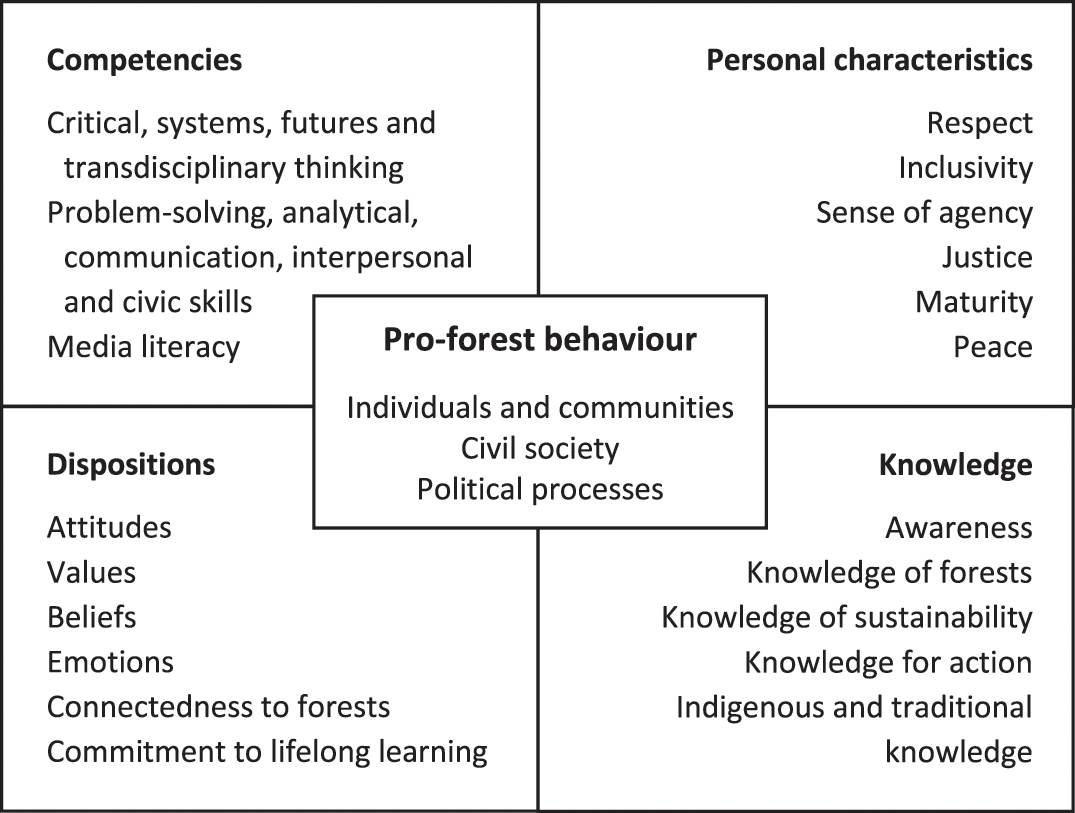
Figure 4.4 Outcomes of forest-related education contributing to pro-forest behaviour.
A central goal of education about forests should be to provide opportunities and enable experiences that help individuals develop a sense of connectedness to forests, or that sustain and enrich connectedness that already exists. Strategies to achieve this need to be diverse, to reflect the diversity of ways in which people learn and the diversity of their backgrounds and circumstances (Collins and Bilge Reference Collins and Bilge2016), and will obviously differ between, for example, Indigenous communities in which individuals have intimate cultural and material connections to their forests, rural communities in which connectedness to the forested environment is part of daily life, and urban communities for whom the most common experience of forests is of urban and peri-urban settings. They will differ in their form and elements between higher-income and lower-income countries. At their core, these strategies share the common purpose of fostering a personal sense of connectedness to forests, as the basis for fostering pro-forest attitudes and behaviour.
It is evident that these behaviours are most likely to be expressed when external actors and factors enable and support pro-forest actions. Such enabling and support measures are embedded or implicit in concepts such as a landscape approach (Sayer et al. Reference Sayer, Sunderland and Ghazoul2013), forest and landscape restoration (Chazdon et al. Reference Chazdon, Brancalion, Lamb, Laestadius, Calmon and Kumar2017), locally controlled forestry (Elson Reference Elson2012) or biophilic cities (Beatley and Newman Reference Beatley and Newman2013). These principles need to be translated into policies, processes and outcomes that recognise and respect different forms of knowledge and enable partnerships for its use: e.g. between state management agencies, researchers and Indigenous and local communities (Fisher et al. Reference Fisher, Workman and Mulyana2017); between investors and traditional forest owners (Elson Reference Elson2012); or between local authorities and communities in urban environments (Mattijsssen et al. Reference Mattijssen, van der Jagt and Buijs2017).
Encouraging and enabling pro-forest behaviour, in whatever context and form, is the basis of connecting SDG 4 and forests. It underpins each of the following areas of activity.
4.5.2 Respecting, Nurturing and Enabling Indigenous and Traditional Knowledge
The standing and value of Indigenous and other forms of traditional knowledge for forests and their management are now well-recognised, as are both the epistemological differences and potential complementarities with modern scientific knowledge (Mistry et al. Reference Mistry, Bilbao and Berardi2016). Forest management that draws on both Indigenous and scientific knowledge can explore a wider range of options than that limited to either paradigm (Mistry et al. Reference Mistry, Bilbao and Berardi2016, Parrotta et al. Reference Parrotta, Hin Fui, Jinlong, Ramakrishnan and Yeo-Chang2009), and can be an important element of empowering Indigenous communities (Altman and Kerins Reference Altman and Kerins2012, Bulkan Reference Bulkan2017, Tengö et al. Reference Tengö, Hill and Malmer2017).
Capitalising on Indigenous and other forms of traditional knowledge to the benefit of Indigenous and local communities, and of society more widely, faces a range of challenges. These include the privileging of scientific knowledge in environmental governance and management, the restrictions on access to some elements of IK to specific knowledge holders, the loss of Indigenous and traditional knowledge due to loss of agency and to a range of societal forces, and challenges of integrating elements of traditional and scientific knowledge in contemporary policy and management contexts (Mistry et al. Reference Mistry, Bilbao and Berardi2016, Tengö et al. Reference Tengö, Hill and Malmer2017). Nevertheless, a diverse range of examples (Bulkan Reference Bulkan2017, Parrotta and Trosper Reference Parrotta and Trosper2012) and policy development at international and national levels (Tengö et al. Reference Tengö, Hill and Malmer2017) illustrate how these challenges can be addressed.
The common theme that underlies these examples is one of respect by other parties for Indigenous and traditional knowledge, and of a range of measures to nurture this knowledge and enable its use. Fundamentally, governments and other actors have to create the space in knowledge systems and in policy and decision processes for IK (Hill et al. Reference Hill, Grant and George2012, Tengö et al. Reference Tengö, Hill and Malmer2017); and, where Indigenous people have lost agency and standing, as in many settler societies, foster and support the engagement of Indigenous peoples in those processes. Non-governmental and community-based organisations and forestry businesses can play significant enabling roles in these diverse contexts (Chhetri et al. Reference Chhetri, Johnsen, Konoshima and Yoshimoto2013, Nikolakis and Nelson Reference Nikolakis and Nelson2015, Waller and Reo Reference Waller and Reo2018).
Commitment by non-Indigenous actors to respecting, nurturing and enabling Indigenous and traditional knowledge benefits both Indigenous and non-Indigenous communities and the relations between them, and should lead to more adapted and sustainable forest management.
4.5.3 Promoting Forest-Related ESE in Formal, Non-Formal and Informal Settings
Formal
Forest-related ESE is already well-established in many formal education systems, at pre-school, primary and secondary levels. While the UNDESD fostered progress for ESE curriculum integration globally, including the institutionalisation of ESE in many countries, teacher capacity and curriculum implementation remain limited in others (UNESCO 2014). For example, in some countries, ESE has been de-emphasised due to a focus on content and skills relevant to economic growth, and greater emphasis on standardised curricula and testing (McBeath et al. Reference McBeath, Huang McBeath, Qing and Huang2016, Witoszek Reference Witoszek2018).
Immersive and experiential forest-related ESE is especially effective in fostering pro-forest behaviour and delivers a range of wider learning and behavioural benefits (Project Learning Tree 2018), and so complements and extends classroom-based learning. Therefore, programmes that connect children to forests from the outset of their formal education (we have noted a small number of the many examples in preceding sections), and those that engage tertiary students similarly in a variety of settings (Hill et al. Reference Hill, Birch-Thomsen, Traynor, de Neergaard and Bob2008, van Wynsberghe and Moore Reference van Wynsberghe and Moore2015), are most likely to enable pro-forest behaviours. ESE principles are reinforced and demonstrated by whole-of-institution approaches that embed sustainability into the facilities and operations of the learning environment (UNESCO-UNEVOC 2017) – a goal to which many institutions are already committed (University Alliance for Sustainability 2018).
Non-formal
Non-formal forest-related ESE is an essential complement to formal approaches in fostering pro-forest behaviour. For example, businesses are seeking training and professional development through a range of actors to improve their sustainability performance (UNESCO 2014). Non-formal modes of education can be more effective than formal modes in reaching marginalised groups, such as women forest owners who have little agency in a traditionally male domain (Redmore and Tynon Reference Redmore and Tynon2011). Experiential co-learning approaches (e.g. farmer field schools) can be effective in many contexts, particularly for those who are resource-poor, such as smallholder farmers and tree growers, and can facilitate both scaling up and fostering local adaptation (FAO 2017). In contrast, eco-tourists – a resource-rich group – are demonstrably willing to pay for non-formal ESE (Walter Reference Walter2009). In urban environments, community engagement programmes offer non-formal ESE that foster and support pro-forest behaviour: e.g. Chicago’s long-established Treekeepers (Dwyer and Schroeder Reference Dwyer and Schroeder1994) or Singapore’s Community in Bloom and Community in Nature (Er Reference Er2018). Non-formal education can also be an effective and targeted way to reach groups on the margins of society; e.g. ESE delivered through the USA’s Sustainability in Prisons Project reduced recidivism (LeRoy et al. Reference LeRoy, Bush, Trivett and Gallagher2012).
Informal
Informal education is widely encompassing and ubiquitous, and therefore also important for forest-related ESE, as the following examples illustrate. Informal learning frequently occurs in social settings when knowledge is transferred through social networks; for example, children learn pro-environment behaviour directly and indirectly from their parents (Ando et al. Reference Ando, Yorifuji, Ohnuma, Matthies and Kanbara2015), and, conversely, environment-related learning from school can reach parents through their children (Eilam and Trop Reference Eilam and Trop2012). Children also learn from role models, especially adults, whose behaviour instils environmental literacy and responsibility and helps develop relevant character and leadership traits (Stern et al. Reference Stern, Frensley, Powell and Ardoin2018).
NGOs and community groups are active informal educators and can promote pro-forest knowledge and behaviours through awareness campaigns, such as those directed at reducing deforestation or responsible consumption, or engagement programmes such as those for community-based forest restoration (Boyer-Rechlin Reference Boyer-Rechlin2010). Online communities can be effective means of improving people’s scientific literacy and increasing pro-environment behaviour (Robelia et al. Reference Robelia, Greenhow and Burton2011). Researchers and knowledge institutions can engage, educate and learn from the public through citizen–science projects (Bonney et al. Reference Bonney, Shirk and Phillips2014).
In urban environments, parks and green spaces are important sites for learning about trees, particularly for children, whose play and interaction with nature not only develops appreciation for the environment but also improves their cognitive abilities and physical growth (Clements Reference Clements2004). However, they can be equally important for adults, especially those with low levels of environmental knowledge. Similarly, community-based activities, such as community gardens or environment groups, are an important vehicle for informal knowledge and skills development and exchange (Krasny and Tidball Reference Krasny and Tidball2009). The increasing body of evidence of positive relationships between people’s physical and mental health and various forms of experience of trees and forests (Dzhambov et al. Reference Dzhambov, Markevych and Hartig2018), and of feelings of well-being associated with exposure to wood in buildings compared to harder materials (Strobel et al. Reference Strobel, Nyrud and Bysheim2017), also offer potentially powerful means of informal learning about the value of forests and forest products, as the basis for pro-forest behaviours.
Mutually Reinforcing Formal, Non-Formal and Informal Education about Forests
There is strong circumstantial evidence that learning about and experiencing forests – in informal, non-formal and formal settings – forms the foundations of pro-forest behaviour. This suggests that, from a forest perspective, SDG 4 implementation should focus on promoting forest-related content and opportunities to experience trees, forests and forest products. New technologies can assist this in a variety of ways, complementing established structures and modes. For example, social media can support self-regulated, on-demand learning through personal learning environments (PLEs); these are personalised learner-driven platforms to aggregate, create and share knowledge using digital tools, and so help to bridge formal and informal learning (Dabbagh and Kitsantas Reference Dabbagh and Kitsantas2012). The highly autonomous nature of PLEs synergises well with other forms of learning, such as lifelong and workplace learning, and so this approach is widely applicable (Attwell Reference Attwell2007) as well as increasingly available.
4.5.4 Strengthening Professional, Technical and Vocational Education and Training
Tertiary forestry education has evolved (see Section 4.4.5), and frequently in the context of significant changes to national higher education systems (Kanowski Reference Kanowski2015). In conjunction with shifts in student preferences and employment opportunities that parallel the emergence of a wider landscape approach (Sayer et al. Reference Sayer, Sunderland and Ghazoul2013) to forests and forestry, these changes challenge tertiary educators and institutions to deliver both a broader curriculum and specific elements that address the need for increasing specialist knowledge across the natural and social sciences and their intersection, and in relevant generic knowledge and skills such as those in business and communication.
These challenges suggest a range of responses, which themselves demand new or more effective partnerships within and between tertiary education institutions and other actors, notably employers and professional associations. These partnerships should support:
New modes of teaching and learning, including online learning using a variety of platforms and mechanisms, ranging from mass participation Massive Open Online Courses (MOOCs) to personalised micro-credentials (Carey and Stefaniak Reference Carey and Stefaniak2018, Carrera and Ramírez-Hernández Reference Carrera and Ramírez-Hernández2018);
More interdisciplinary and integrated curricula and programmes, providing students with a more diverse and individually relevant portfolio of knowledge and skills, which in turn allows them the wider suite of employment opportunities and career pathways necessary in contemporary and future employment markets (WEF 2016c);
Shifting the locus of professional forestry education to Masters-level programmes (Innes Reference Innes2015), and strengthening learning and knowledge partnerships with industry at all stages of professional and technical education (Sagor et al. Reference Sagor, Kueper, Blinn and Becker2014, Yayé et al. Reference Yayé, Ochola, Chakeredza and Aucha2015);
Further internationalising programmes by enabling international participation of students in a variety of ways (e.g. exchanges, joint degrees or degree elements, placements), explicitly internationalising curricula, and supporting complementary activities such as students’ active participation in international processes (Yunita et al. Reference Yunita, Soraya and Maryudi2017);
Through all of these means, broadening access to and inclusivity of programmes, and enhancing the diversity of those studying forest and forestry-related courses and programmes. These goals are being actively pursued by many institutions and networks (e.g. AP-FECM 2018, Gilless Reference Gilless2015, Rekola et al. Reference Rekola, Abbas and Bal2017).
These challenges are perhaps more marked in many countries for TVET than professional education, because TVET systems for rural sectors are often less well-developed. Strengthening ‘skills related to the quality of life, productivity skills and skills related to organization, attitudes and values’, and ‘providing business and entrepreneurial skills training to improve understanding of market opportunities and improve managerial expertise’, should underpin future TVET, in recognition that rural people deriving their livelihoods from farms and forests are also likely to want or need to derive income from other, non-farm or forest activities (Robinson-Pant Reference Robinson-Pant2016: 19–20).
4.5.5 Capitalising on the Power of the Media
Both old (print, radio and television) and new (online, social) media are near-ubiquitous and influential forces in disseminating environmental information and messaging, reflecting and changing attitudes and norms, encouraging or discouraging pro-environment behaviour, and enhancing or subverting educational experiences. Digital disruption is changing the ways in which people access information, and is challenging established models of reporting and programming (Newman et al. Reference Newman, Fletcher, Kalogeropoulos, Levy and Nielsen2017). Media literacy is arguably now more important than ever, in an era of post-truth news and of social media that can facilitate the propagation of misinformation (Williams et al. Reference Williams, McMurray, Kurz and Hugo Lambert2015).
Despite the media transition, traditional means of communication continue to be important. Television is still the primary news source in many countries (Newman et al. Reference Newman, Fletcher, Kalogeropoulos, Levy and Nielsen2017) and remains influential in shaping viewers’ understanding of environmental issues (Hofman and Hughes Reference Hofman and Hughes2018, Huang Reference Huang2016). For example, nature documentaries supported by post-viewing material have been demonstrated to instigate long-term behavioural change (Hofman and Hughes Reference Hofman and Hughes2018).
The power of social media has been harnessed by many actors – government, business, NGOs and community groups – to promote their perspectives on pro-forest behaviour. One of the strengths of social media is its interactivity, which enables the strategic building of communities and relationships through two-way communication and networking (Lovejoy and Saxton Reference Lovejoy and Saxton2012). These online communities can create engaging informal learning environments, especially when users continue to generate and post content (Mason and Rennie Reference Mason and Rennie2007). However, both old and new media can work against pro-forest efforts. Journalists may compromise the accuracy of scientific information to increase entertainment value, thereby misrepresenting a story (Frank Reference Frank2014). Environmental issues can also be framed through narrow perspectives, reinforcing perspectives that prioritise economic growth, or disseminating misconceptions such as that deforestation is confined to the Global South (Lewis Reference Lewis2000). Media can disseminate information unsupported by science, as is evident in reporting of climate scepticism (Painter Reference Painter2011). In this context, Boykoff and Boykoff (Reference Boykoff and Boykoff2007) note the role of journalistic norms such as personalisation (to focus on human-interest perspectives) and balance (to present both sides of a story).
Media literacy is therefore an increasingly essential component of education to foster pro-forest behaviour. It enables people to critically analyse the accuracy and credibility of media content, to identify intents, and to effectively access and create media (Koltay Reference Koltay2011). Education can also help bridge knowledge inequality gaps and empower people to learn through media, as educated people are more likely to use media for personal information gain (Wei and Hindman Reference Wei and Hindman2011). In summary, both old and new media can facilitate or constrain the ambitions of SDG 4 in relation to forests.
4.6 Synergies
Education is at the heart of sustainable development, underpinning progress towards all other SDGs through various direct and indirect pathways. Core competencies, such as literacy and numeracy, are the basis for fostering individual agency to participate in society in terms more likely to realise their potential. It is this human potential that other SDGs variously seek to nurture or capitalise on. Education catalyses virtuous circles: those who receive early education are more likely to continue learning formally and non-formally (OECD 2014); educated parents are more likely to invest in their children’s education (Pufall et al. Reference Pufall, Eaton and Nyamukapa2016); education provides the platform for knowledge generation and capacity building to support SDG implementation; and education, in conjunction with experience of forests, fosters pro-forest behaviours across the domains of other SDGs. However, as Rieckmann et al. (Reference Rieckmann, Mindt and Gardiner2017: 7) warn, ‘not all kinds of education support sustainable development. Education that promotes economic growth alone may well also lead to an increase in unsustainable consumption patterns’. This caution emphasises the rationale and need for education to be embedded in an environmental and sustainability context, as discussed in Section 4.3.2.
In these terms, education is pivotal to improving well-being and livelihoods, particularly through securing income from decent employment (SDG 8, Hanushek and Wößmann Reference Hanushek and Wößmann2007), enabling the alleviation of poverty (SDG 1) and hunger (SDG 2), and access to clean water (SDG 6) and clean energy (SDG 7). Education, especially maternal education, improves child health and reduces family sizes (SDG 3, Colfer et al. Reference Colfer, Dudley, Gardner and Colfer2008). Education empowers women (SDG 5) and marginalised groups (SDG 10) to participate fully in society by instilling values of inclusion and challenging the socio-cultural norms that contribute to inequality. Education is also core to climate action (SDG 13) as it fosters concern and capacity for action, particularly for those vulnerable to climate-related disasters (Wamsler et al. Reference Wamsler, Brink and Rantala2012).
Economic development (SDG 8) is strongly linked to education quality (Hanushek and Wößmann Reference Hanushek and Wößmann2007) and, similarly, underpins multiple facets of development, including sustainable built environments (SDG 11) where knowledge institutions can cluster and collaborate. Universities and other knowledge sector actors are key to generating and applying knowledge to drive sustainable development, generally through partnerships (SDG 17, Charles Reference Charles2011) and inclusion and diffusion mechanisms such as international scholarships to build capacity at a global scale (SDG 17). However, as cities grow, education inequalities may widen without adequate education infrastructure (SDG 9), particularly in poorer and peri-urban areas (UNESCO 2016).
As discussed in Sections 4.4 and 4.5, targeted education can foster pro-forest behaviour more directly, through research and training to build capacity for SFM (SDGs 14, 15); education campaigns to encourage responsible consumer choices and production that minimise consumption and waste (SDG 12) and conserve energy (SDG 7); corporate education to discourage unsustainable business models (SDG 12); farmer education to discourage deforestation (SDGs 14, 15; Sills and Caviglia-Harris Reference Sills and Caviglia-Harris2015); technical training to enable forest-conserving technologies and their applications (SDG 9); and civic education that empowers people to participate in public policy processes and challenge elite interests (SDG 16) or support planning decisions that better protect forests (SDG 9).
4.7 Conclusions
There is a persuasive case that progress towards SDG 4 is a foundation for progress towards the other SDGs. However, it is also the case that progress towards SDG 4 will not necessarily benefit forests, or the livelihoods of those who depend on forests, unless the inclusive and equitable quality education and lifelong learning for all envisaged by SDG 4 fosters pro-forest behaviour by individuals, communities and societies. Pro-forest behaviour is supported by education – formal, informal and non-formal – that shapes pro-forest attitudes and builds and enriches relevant competencies and a sense of connectedness between people and forests. As in other arenas of forest knowledge and management, non-Indigenous people and those not dependent on forests have much to learn in this realm from Indigenous peoples and other holders of traditional and local forest knowledge; there are both synergies and power in partnerships between these and scientific forms of knowledge. There is compelling evidence that engagement with nature from an early age fosters connectedness between people and forests across diverse societies, in both rural and urban contexts, providing the basis for the formation of pro-forest attitudes and behaviours. These can be further amplified, with relevant capacities and skills developed, by subsequent formal, non-formal and informal education.
There are many examples globally of approaches to developing knowledge about forests, and of fostering pro-forest attitudes and behaviours. These can be part of formal curricula from pre-school to tertiary levels, of non-formal education such as capacity development, and of informal learning among families, peers and communities. Educational systems that recognise the significance of each of these modes, and the ways in which they reinforce each other over an individual’s lifetime and within their societal contexts, will be most effective in encouraging pro-forest behaviour. However, access to education and the quality of education remain major constraints for many of the world’s poorer people, for girls and women in many societies, and for marginalised groups such as Indigenous and forest-dependent peoples. Addressing such disadvantage, as SDG 4 seeks to do, has the potential to realise significant benefits for forests as well as for these people, many of whom depend directly or closely on forests. Correspondingly, fostering a greater sense of connectedness to forests among those in the world who are advantaged – typically those in richer countries, and in cities – can be expected to benefit forests; such connectedness also benefits the well-being of people whose day-to-day lives are more physically distant from forests. There are both great opportunities and considerable challenges for all involved in formal, non-formal and informal education, if the ambitions of SDG 4 are to be realised in ways that benefit forests and our many forms of dependency on them.
Acknowledgements
We thank the editors for their invitation to participate in this work, and their support for it; other chapter leads for stimulating workshop discussions; Riley Schnurr and Kate Sherren of Dalhousie University for preliminary research and ideas that greatly assisted us to begin this chapter; Natalie Cheong of the Singapore National Parks Board and Jakob Terwitte for their timely contributions; and those editors and reviewers whose helpful comments much improved earlier drafts.


 Open access