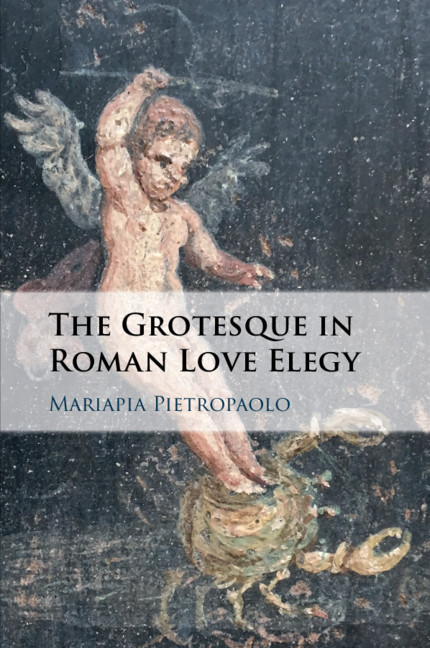

Roman elegy makes frequent use of themes of ugliness and disfigurement, juxtaposing them with images of ideal beauty and sentiment. In order to overcome the obstacles to his erotic relationship, the poet-lover repeatedly represents his rivals and opponents in such a way as to ridicule their appearance and to degrade their social standing. This book explores the theme of corporeal, intellectual, and social degradation from a perspective attentive to the aesthetic significance of the grotesque imagery with which such degradation is accomplished. Although there has been sophisticated discussion of the use of grotesque imagery in genres like comedy, invective, and satire, which are concerned in part with themes of transgression and excess, Mariapia Pietropaolo demonstrates that the grotesque plays a significant role in the self-definition of love elegy, the genre in which it is least expected.
‘… her argument about elegy’s reliance on grotesque imagery to undermine and accentuate its idealized portraits emerges organically from within a careful hermeneutics, one as attentive to the blemishes that mark the genre as it is to the elegant surfaces they adorn.’
Hunter H. Gardner Source: Exemplaria Classica
Loading metrics...
* Views captured on Cambridge Core between #date#. This data will be updated every 24 hours.
Usage data cannot currently be displayed.
This section outlines the accessibility features of this content - including support for screen readers, full keyboard navigation and high-contrast display options. This may not be relevant for you.
Accessibility compliance for the HTML of this book is currently unknown and may be updated in the future.
