

Introduction
In the introduction to his Illustrations of the Diseases of the Breast (1829), Astley Cooper writes that the ‘difference between the experienced and scientific, and the ignorant and unobserving member of the profession’, is his ability to determine ‘the distinctive character of disease as soon as it is presented to his attention’. Such knowledge, he claims, enables the scientific surgeon to ‘discriminate curable from incurable cases; the dangerous from the slight; those which require surgical operations from those which do not demand them; and such as admit of a trifling operation from those which call for one of extreme severity’. Nowhere, Cooper suggests, is this essential quality ‘more fully exemplified […] than in the diseases incidental to the female Breast’. Cooper’s first volume of the Diseases of the Breast is concerned with non-malignant growths (the second volume on malignant tumours was never published). In this regard, the ability of the surgeon to determine the nature of a swelling, through ‘a very careful and nice manipular examination of the complaint’, combined with experience of pathological presentations and a ‘minute history of the case’, was vital. Otherwise, ‘the uninformed Surgeon is too apt to fall in with the opinion of the vulgar, and to confound all the swellings of the breast under the general term of Cancer’, when in fact ‘a great number of genera of tumours actually exist’, ranging from the acute to the chronic and the malignant to the benign. He continues:
The result of such knowledge is frequently the source of great security and happiness to a person afflicted with a disease in the breast, as well as of great satisfaction to the Surgeon. I have scarcely witnessed a stronger expression of delight than that which has illuminated the features of a female – perhaps the mother of a large family dependent upon her for protection, education, and support – who, upon consulting a Surgeon for some tumour in her bosom, and expecting to hear from him a confirmation of the sentence she has pronounced upon herself, receives, on the contrary, an assurance that her apprehensions are unfounded. Pale and trembling, she enters the Surgeon’s apartment, and baring her bosom, faintly articulates – Sir, I am come to consult you for a Cancer in my breast; – and when, after a careful examination, the Surgeon states, he has the pleasure of assuring her that the disease is not cancerous – that it has not the character of malignancy – that it is not dangerous, and will not require an operation; the sudden transformation from apprehension to joy brightens her countenance with the smile of gratitude; and the happiness of the moment can hardly be exceeded when she returns with delighted affection to the family, from whom she had previously considered herself destined soon to be separated by death, with the alternative only of being saved by a dubious and painful operation.Footnote 1
There is perhaps no better introduction to the emotional dynamics of the Romantic surgical encounter than this passage. In the midst of a brief and otherwise functional introduction, Cooper intrudes a highly wrought literary vignette. He draws on his extensive first-hand experience to present the reader with the figure of an unspecified woman, and to encourage our pity and sympathy by imagining her as the mother of a large, dependent family. At the same time, he evokes her delight at his being able to dispel the despondency, fear, and anxiety she has mistakenly imposed upon herself in thinking her condition cancerous. Cooper is not content with this, however, and provides an intensely dramatic rendering of the same essential narrative, evoking an embodied transformation from the pale, trembling woman who can barely articulate her self-diagnosis to one brightened by a joyful countenance of relief and happiness. What is more, he proceeds beyond the bounds of the consultation room, and indeed of his personal experience, to imagine her return to her family and their collective joy at the news of her relative good health.
At one level, this passage is a straightforward account of a woman’s deliverance from the fear and anxiety of a malignant and fatal disease and from the possibility of having to undergo an intensely painful, and frequently unsuccessful, surgical procedure. At another, however, it is suggestive of a more complex dynamic. Cooper begins by establishing the twin poles of the emotional relationship between patient and practitioner; for the patient, surgical knowledge brings ‘happiness’, while for the surgeon, it brings ‘satisfaction’. Superficially at least, this passage is concerned with the former, with the patient’s relief and happiness. Yet it is clear by inference that the ‘satisfaction’ of the practitioner is of equal, if not greater, importance. After all, the whole scene is ultimately intended to stir feelings in the surgical reader as to the emotional rewards of clinical knowledge and experience. This passage should, then, be viewed through the prism of paternalism, not to say patriarchy. There is an evident power relationship here. It is not straightforward; after all, the consultation is most likely a private one in which the patient is patron. Nevertheless, the imbalance of expertise and the gendered dynamics of the relationship serve to cast Cooper in the dominant role. We might call this passage melodramatic, not simply because of its appeal to emotion, but because it accords with many of the conventions of melodrama, notably an inert and suffering woman in need of male rescue.Footnote 2 She enters weak, vulnerable, and supplicatory, and leaves happy and grateful.
This passage testifies to the importance of emotion in the Romantic surgical relationship and in the cultures of surgical performance and self-fashioning more generally. But it also poses questions about the sorts of cultural work that these kinds of emotional expressions performed. As we saw in Chapter 1, early nineteenth-century surgeons were increasingly promoting a culture of operative restraint, based on claims to superior anatomical and pathological knowledge. Certainly, such concerns are evident here, as Cooper deploys emotions to underscore an epistemological and professional authority founded upon extensive experience at a prestigious metropolitan hospital and a familiarity with the Parisian clinical method. This knowledge and experience, he makes clear, allow him to distinguish between a truly cancerous tumour requiring caustic treatment, or perhaps an operation, and one requiring much milder remedies. In the hands of another, ‘uninformed Surgeon’, this patient might have been subject to a dangerous, painful, and ultimately unnecessary treatment when she should instead have been sent home to her family.
What this chapter demonstrates is that, as well as serving a rhetorical function, emotions also played a more vital role in the shaping of Romantic surgery. Within the cultures of Romantic sensibility, feelings and expressions of anxiety, pity, sympathy, and compassion could serve to shape a culturally resonant image of the surgeon as a genteel man of feeling, in keeping with surgery’s social aspirations and far removed from its traditional associations with brute physicality and manual trade. Yet emotions shaped not only surgical identities, but also experiences and subjectivities. The issue of phenomenology in the history of the emotions is a vexed one. Needless to say, it would be naïve to assume that early nineteenth-century surgeons’ emotional expressions can be taken at face value. And yet, at the same time, it would be reductive to assume that such expressions were merely the product of cultural convention or professional self-interest. As we shall see, surgeons of the period gave expression to their emotions in a variety of contexts and settings, from public lectures to more private letters and diaries. Drawing on the emotive theory of William Reddy, we might see these expressions as a form of ‘navigation’, an attempt to reconcile lived experience and inward feelings with the dictates of the dominant emotional regime of the period, in this case Romantic sensibility.Footnote 3 Hence, when we are told that Astley Cooper burst into tears when a child about to undergo an operation ‘smiled very sweetly upon him’, we might think of this both as an authentic emotional response and as a culturally conditioned performance.Footnote 4
In many ways, the authenticity of surgical emotion was rooted in the embodied experience of operative practice.Footnote 5 As will be shown, compared to the later nineteenth century, when surgeons shaped identities as heroic miracle workers and carried out operations with the assistance of anaesthesia and antisepsis, Romantic surgeons were acutely aware of the limitations of their art and were consistently exposed to the suffering, misery, and death that disease and injury, as well as their surgical treatment, could cause. If this shaped surgical subjectivities, encouraging anxiety, fear, reflection, and regret, then it also shaped what I call an ‘intersubjectivity’ between surgeons and their patients. Indeed, one of the defining characteristics of the Romantic surgical relationship was the emphasis that surgeons placed on their ability to project themselves, through acts of imagination, into their patient’s position, so that they might assess their state of mind and manage their condition more effectively.
Of course, this display of emotional acuity resonated with the cultures of sensibility and shaped the surgeon’s public identity as a sympathetic and compassionate individual. But it also did more than this. Early nineteenth-century understandings of the relations between body and mind placed great emphasis upon the importance of mental states in the propagation and progress of disease. In the absence of a concept of post-operative infection, many surgeons were unable to account for the post-operative deaths of patients, even those who had borne the procedure well, in terms other than what James Wardrop called ‘moral depression’.Footnote 6 In this context, then, an ability to read and manage the patient’s emotions was not simply the marker of a refined sensibility, it was an essential clinical skill, allowing the surgeon to understand, prognosticate, and treat their patient’s illness or injury.
This chapter begins with a discussion of surgeons’ emotional expressions and reflections, including their attitudes towards the trials of operative surgery and clinical practice. It demonstrates how, within the cultures of sensibility, expressions of anxiety, fear, pity, and regret could shape surgical identities and subjectivities in powerful ways. It then considers how those emotions were managed and harnessed and how, through the mechanisms of emotional intersubjectivity, it was imagined that the patient’s sufferings might be alleviated. Finally, it returns to the subject of our opening remarks by considering the nature of Astley Cooper’s relationship with his patients, particularly those women he treated for breast cancer, demonstrating the importance of gender relations, identities, and ideologies in shaping the emotional dynamics of the therapeutic relationship. As can be seen, this chapter is predominantly concerned with the emotional perspective of the surgeon. Although patients are a near-constant presence, their voices, experiences, and agency are considered in more detail in Chapter 3.
Expressing Surgical Emotions
In 1759, the Scottish moral philosopher Adam Smith (bap. 1723, d. 1790) published his Theory of Moral Sentiments, a foundational text for the culture of sensibility, which asserted the importance of sympathy and intersubjectivity in the shaping of social relations. ‘As we have no immediate experience of what other men feel’, he writes:
we can form no idea of the manner in which they are affected, but by conceiving what we ourselves should feel in the like situation. Though our brother is on the rack, as long as we ourselves are at our ease, our senses will never inform us of what he suffers. They never did, and never can, carry us beyond our own person, and it is by the imagination only that we can form any conception of what are his sensations.Footnote 7
Smith’s example of the rack was a fanciful historical allusion, for it, together with all other forms of judicial torture, had been phased out in Britain over one hundred years before his book was published. Nonetheless, if torture no longer provided a convenient occasion for sympathetic projection, there was another spectacle of human suffering far more readily available to Smith and his contemporaries: operative surgery. Thus, in his discussion of pain and suffering, Smith suggests that ‘Some people grow faint at the sight of a chirurgical operation, and that bodily pain which is occasioned by tearing the flesh, seems, in them, to excite the most excessive sympathy’.Footnote 8 Meanwhile, for Smith’s friend and intellectual ally David Hume (1711–76), the mere anticipation of an operation was enough to provoke a powerful emotional response. ‘Were I present at any of the more terrible operations of surgery’, he writes in his Treatise on Human Nature (1740), ‘tis certain that even before it began, the preparation of the instruments, the laying of the bandages in order, the heating of the irons, with all the signs of anxiety and concern in the patient and assistants, wou’d have a great effect upon my mind, and excite the strongest sentiments of pity and terror’.Footnote 9 For Smith, however, ‘Nothing is so soon forgot as pain’ and, once removed from the scene, he alleges, it becomes almost impossible for an individual to imagine themselves back into a state of agony.Footnote 10 Indeed, compared to Hume’s first-person evocation of sympathetic feeling, Smith’s phrase ‘Some people’ suggests a certain distancing from the ‘excessive sympathy’ of the surgical witness; he even goes so far as to suggest that ‘One who has been witness to a dozen dissections, and as many amputations, sees, ever after, all operations of this kind with great indifference, and often with perfect insensibility’.Footnote 11
In her account of eighteenth-century surgical emotion, With Words and Knives (2007), Lynda Payne makes no mention of the moral philosophy of Smith or Hume, nor indeed of the cultures of sensibility and sentiment. Her interpretation of the surgeon’s emotional disposition nonetheless approaches Smith’s notion of a habituated ‘insensibility’. She argues that ‘Objectivity was necessary to render a professional judgement’ and asks: ‘did objectivity preclude having sympathy for the suffering patient?’ Her answer is that on balance, it did, and that, to quote William Hunter, surgeons of the period were encouraged to develop ‘a sort of necessary inhumanity’. ‘Losing pity and gaining control went hand in hand’, she argues; ‘Hardening or dampening emotions led to heightened perception, knowledge, rationality and a new sensibility – dispassion’.Footnote 12
However, even if Payne’s observations are true for the eighteenth century (and there is reason to believe that she overstates her case), they do little justice to the emotional cultures of Romantic surgery. This might be accounted for in part by the cultural shift from the public and stylised figurations of sensibility in the Enlightenment towards the internalised and emotionally self-reflective modes of the Romantic era. Certainly, as we shall see, surgeons of the early nineteenth century were far more apt to give expression to their feelings than Payne’s reading of the earlier period suggests. But, at a more fundamental level, this disjuncture between Payne’s dispassionate stoics on the one hand, and the surgeon as man of feeling on the other, derives from her very conceptualisation of the emotions and their action. She opens her book by stating that ‘In practice, physicians, and especially surgeons, have always had to learn some type of detachment […] in order to cope with the more revolting aspects of their art’, and her foundational premise is that ‘medical dispassion, or […] clinical detachment, has existed throughout the history of medicine’.Footnote 13 Such presentism occludes historical understanding. While it is certainly true to say that emotions have always been, to a greater or lesser extent, managed, Payne’s adoption of a modern notion of clinical detachment, which tends to regard emotions as a contaminant of rational decision-making, blinds her both to the culturally and historically relative nature of emotional experience and expression, as well as to the varied forms of work that such emotions might perform, including the exercise of clinical judgement.Footnote 14
In order to reach a nuanced understanding of the historical relationship between surgery and emotion, it is therefore necessary to adopt a more inclusive approach, one that is capable of acknowledging complexity and ambivalence. Hence, while this book argues for the centrality of emotions in the shaping of Romantic surgical culture, it is important to note that, whatever the realities of surgeons’ emotional sensations and expressions, it was a relative commonplace of early nineteenth-century popular discourse that surgeons were unfeeling. As Benjamin Brodie told his students in 1820, ‘It has been a matter of complaint against our profession that the being perpetually present at scenes of woe tends to blunt the feelings of our nature, and to render us less capable of sympathizing with the sufferings of others’.Footnote 15 Likewise, nine years earlier, Everard Home told his audience that ‘Operations in Surgery have in general been considered as acts of cruelty, & Surgeons have been accused of want of humanity’.Footnote 16 Such ideas were given powerful visual expression in the rich satirical traditions of the period, notably in such famous images as Thomas Rowlandson’s Amputation (1793) (Figure 2.1), which portrays a gaggle of corpulent and decrepit surgeons, with such names as ‘Benjamin Bowels’, ‘Launcelot Slashmuscle’ and ‘Samuel Sawbone’, surrounding a terrified patient, who is about to have his leg bisected by a fearsome-looking bone saw.
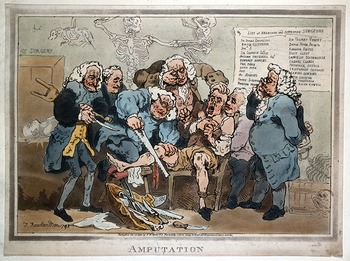
Figure 2.1 Thomas Rowlandson, Amputation (1793).
As we saw in Chapter 1, surgeons of the Romantic era were actively seeking to challenge such stereotypes of their profession. It should therefore come as little surprise that both Brodie and Home referred to popular prejudices only to dispute them. However, if we are to push beyond the boundaries of rhetoric and approach something closer to subjective emotional experience, it might be worth starting with the diary of Henry Robert Oswald (1790–1862). Unlike most of the surgeons featured in this book, Oswald was not a leading practitioner. Indeed, he lived and died in relative obscurity, although his son, Henry Robert Oswald (1827–92), became Surgeon General of India, while his grandson, also confusingly called Henry Robert Oswald (1852–1940), became a leading coroner.Footnote 17 Nonetheless, his diary offers a revealing insight, not only into the emotional life of this particular surgeon, but into the cultures of Romantic introspection more generally.
Oswald was born in Fife and educated in Edinburgh, where he was apprenticed to the surgeon George Bell (1777–1832). He joined the Inverness-Shire Militia, but resigned his commission after less than a year, having ‘seen much of the envy and selfishness of the world’.Footnote 18 With the assistance of Bell and the Professor of the Practice of Physic at the University of Edinburgh, James Gregory (1753–1821), he subsequently secured a post as ‘Government Surgeon’ to John Murray, 4th Duke of Atholl (1755–1830) and Governor General of the Isle of Man. Oswald moved to Douglas, where he remained for the rest of his life, despite being divested of his post on the Duke’s death in 1830.
Oswald began his diary in 1812 with the intention of recording ‘such things and thoughts therein as may be useful and a lesson to me in future life’.Footnote 19 His entries suggest that he was a highly sensitive man, racked by doubts and anxieties concerning his place in society, his relations with others, and his own state of mind. Thus, one of the earliest entries reflects on his relationship with his former master, particularly the fact that during his apprenticeship he was required to sit at dinner in total silence, Bell being ‘affectedly distant in his manner’. Oswald worried that the ‘long habit of silence in that family at table has given a turn to my manners which may hurt me in future society’. At the same time, he maintained that he ‘was not an inattentive observer when in that situation and had many visionary conjectures about the nature of the human heart’. Though Oswald wrote that he could now only ‘wonder that I submitted to the senseless affected and cold freaks of that family’, an interleaved note, written at some later date, offered an apology for his earlier sentiments:
The page regarding my situation in Mr Bell’s family arose more from the Diseased state of my feelings than reality […] it requires the intellect watching over the mind and the feelings to prevent their being led astray by the appearances that in fact have […] nothing worthy of being considered real in them. Still that was the state of my feelings and therefore it ought to be recorded.Footnote 20
Sadly for Oswald, things were not to improve on Mann. The Duke’s standoffishness mirrored his experience with Bell and caused him great consternation. So too did his subordinate status and his relations with others on the island. Indeed, at times he worried that he was losing his mind. For example, in January 1813, after having been called upon to attend a ‘melancholic maniac’, he reflected on his own sanity:
Did not reason tell me that the many wild imaginations and ridiculous notions that daily pass through my mind, were foolish, and prevent me from noting them down here. I might justly consider myself a mad man; indeed at some futurity, if I live, when I look over this diary I believe I will consider myself a silly fellow.Footnote 21
Oswald was consumed by the ‘strange notion’ that his actions were unwittingly the ‘cause of great inquietude [sic] and vexation to some unknown persons’. ‘Even I myself consider them foolish and indicate a derangement of the imagination’, he wrote: ‘would not others if I mentioned them do the same’.Footnote 22 Somewhat later, he also developed the notion that his stomach complaints were the result of being poisoned by unknown parties, who were adulterating his food. ‘Such wild ideas’, he confided to his diary; ‘They are those of a melancholic man. Away with them. Let me be content with things as they are and be thankful that they are not worse. I would blush if these thoughts were to come to the knowledge of any one, they would condemn me for a mad man’.Footnote 23
Oswald’s self-reflections may indicate his personal idiosyncrasies, but they also cast light on the broader cultures of contemporary surgery. In part, his anxieties about his relations with others stemmed from his tenuous social position and the very real risks of disgrace and ruin. At one point, for example, he was called upon to attend a gravely ill patient who was already in consultation with two senior practitioners, a perilous professional situation. As he reflected in his diary:
I believe there is no profession which harbours so much mean and mercenary jealousy and hypocritical ill nature as the medical. One reason is that we are almost universally very fond of money and another is that we are public men and our actions have gravity […] so that every unfortunate or unlucky action goes a great way to break our reputations. This is not the case with other professions. A Physicians [sic] success depends almost altogether on popular fame. A few malevolent insinuations unless he is a man of ability and address is sufficient to blot his character forever: for of nothing is a man more anxious about than his health.Footnote 24
Oswald alludes to the physician here, and his practice was certainly more akin to that of the surgeon-apothecary or general practitioner than to the ‘pure’ operating surgeon of the metropolis. Even so, there is reason to believe that surgeons were particularly vulnerable to shame and disgrace. According to Benjamin Brodie:
The diseases, concerning which the Surgeon is usually consulted are such as are visible to the eyes, and sensible to the touch, and their nature, or something respecting their nature, is known to everyone. The treatment of the Surgeon is known also, and the effects of it are evident to those who stand by […] The professional character of a Surgeon is continually open to discussion. Where he acts with judgement or skill his merit can seldom fail of being known; where he displays ignorance or folly, the subterfuges and evasion to which weak minds are disposed to resort, will seldom be capable of concealing his defects.Footnote 25
Whereas the physician dealt with the interior of the body, an invisible domain whose management might be regarded as arcane, the surgeon, Brodie suggests, dealt with conditions that were highly visible and whose mitigation or aggravation was equally apparent. It is important to remember that the fear of disgrace was probably one of the most consistent emotions experienced by surgeons. As we shall see, this was particularly true in this period, given the potential for quite literally spectacular forms of failure in the operating theatre. But even in the case of the surgeon-apothecary, professional humiliation, though perhaps of a less dramatic kind, was still an ever-present anxiety.
Despite this, Oswald’s emotional reflections on his professional life were by no means entirely self-interested. In fact, his diary is full of pity for the sufferings of others, such as in the case of an ‘Infant Patient’, a ‘Poor Little Dear’ who ‘suffered much from dry cough and Restlessness’ and who was ‘long gone before I saw it’.Footnote 26 Perhaps most poignantly, in March 1813 he was called upon to attend a young girl from Castletown who was ‘very ill’ and ‘very extraordinarily impressed with the Idea that she is to die’. He spent that night in her home, observing:
To see a father very highly affected with the prospect of losing a daughter […] is no easy task. He groaned in Spirit and writhed with anguish. These are the scenes which medical men are obliged to behold in apparent coolness whatever may be their inward pain. Perhaps by seeing them so frequently they make less impression on them than others but people are not aware of the anxiety we suffer when a patient is suffering severely and approaching to death, and when every effort of art is in vain. Then we must suppress all feeling appear composed and endeavour to comfort if we do not wish to produce mischief by adding to the alarm which others experience. Though I am sensible of this yet from the distressing nature of these scenes and from the embarrassing uncertainty of the medical art I have often wished that some other profession had fallen to my lot: I have myself to blame: it was my own wish.Footnote 27
Oswald’s entry beautifully encapsulates the emotional demands of practice and the tensions between sensation and expression in the clinical encounter. Clearly, given his deep concerns about recording his reflections on his mental state for posterity, there is no indication that he intended such thoughts to reach a public audience. Rather, his diary might best be interpreted as a private act of Bildung, an attempt to reconcile heart and mind in the formation of the self. Because of its private nature, however, it provides a highly suggestive insight into both his personal subjectivity and his public identity. As is evident, one of the central motifs of Oswald’s diary is the distinction between emotions that are inwardly felt and those that are outwardly expressed. Again, we might invoke Reddy’s concept of emotional navigation, the attempt to reconcile felt sensations with the cultural conventions of emotional expression. For Reddy, this can lead to emotional ‘suffering’, as there is often a disjuncture between what is felt and what can be expressed.Footnote 28 This was certainly the case for Oswald, whose emotional agony centred around his inability to fully express his all-consuming anxieties, even in such an ostensibly private arena. But as well as causing him suffering, such emotional introspection was also central to his sense of self, and to his identity as an authentic man of feeling. As he wrote, ‘A man can only be truly polite who had acute feelings and a cultivated understanding. With these he will never go far wrong, nor do an uncivil action’.Footnote 29 Indeed, for Oswald, such suffering was ultimately a price worth paying. ‘I wish I could subdue every such passion’, he reflected; ‘But this I would do at the risk of having the character of a cold hearted humdrum. Nor would I wish to overcome the fair and honourable feelings and I am afraid that if the spirit were overcome character must also suffer’.Footnote 30
There is a relative paucity of ego documents equivalent to Oswald’s diary that might provide the basis for an extensive insight into the intimate elaboration of surgical selfhood. Even so, it is not uncommon to find Romantic surgeons expressing similar sentiments in more public contexts. John Bell, for example, echoes Oswald in his description of ‘that silent humiliation in the presence of misery, which so well becomes one, who feels that he cannot alleviate the pangs, nor avert the changes, of the scene before him; while the afflicted look up to him for help’.Footnote 31 However, if the sufferings of patients in the clinical encounter, especially those for whom little could be done, were deeply affecting, the greatest emotional tribulation for the surgeon was undoubtedly that posed by operative practice. As we saw in Chapter 1, Romantic surgeons were avowedly inclined to reduce the frequency of operations and to diminish the role of operative performance in the shaping of surgical identities and reputations. They were also concerned to counter the popular stereotype of the rash and reckless sawbones with an idealised image of the surgeon as compassionate and selfless, always placing his patients’ interests ahead of any desire to cultivate a reputation as a dextrous and skilful operator. These reformulations derived, in part, from claims to a greater understanding of anatomy and pathology, but they also stemmed from a recognition that, however advanced surgical knowledge had become, operative surgery remained a deeply imperfect art productive of occasionally unbearable suffering. The ‘father’ of scientific surgery, John Hunter, claimed that operations were ‘a tacit acknowledgement of the insufficiency of surgery’ and maintained that ‘No surgeon should approach the victim of his operation without a sacred dread and reluctance’.Footnote 32 Such sentiments, albeit with a more emotionally reflective twist, were taken up by his acolytes, notably John Abernethy who, in 1827, told his own students that ‘The necessary performance of an operation is, or ought to be, an humiliating reflection, since it contains a confession that our art is inadequate to the cure of disease’.Footnote 33
For Abernethy, however, more so perhaps than for Hunter, the relative worth of operative surgery was measured not only by its scientific validity, nor simply by the suffering it caused the patient, but also by the emotional toll it exacted on the surgeon. Indeed, in this period patients and practitioners alike approached surgery as a shared tragedy and a mutual ordeal. Thus, Abernethy’s mid-nineteenth-century biographer wrote that there was ‘little in most of them [operations] to set against that repulsion which both his science and his humanity suggested’. He also claimed that Abernethy’s ‘benevolent disposition led him to feel a great deal in regard to operations’, particularly ‘when a patient bore pain with fortitude’. To support this point about the overwhelming force of Abernethy’s sympathy, he recounted the case of ‘a severe operation on a woman’ that the patient bore ‘with great fortitude’. In the midst of the procedure, she turned to Abernethy to ask him if it would take long, to which he replied ‘No, indeed […] that would be too horrible’.Footnote 34
Abernethy’s repugnance for operations was well known. Indeed, he famously, though possibly apocryphally, remarked, on being asked how he felt before an ‘important operation’, that ‘I feel as if I was going to be hanged’.Footnote 35 Such expressions might seem peculiar coming from a leading metropolitan hospital surgeon, as these men were often thought to be inured to such sentiments. In actual fact, the notion that operative enthusiasm, perhaps even operative confidence, might be diminished by the effects of sympathy was widespread enough to constitute a cliché of surgical self-representation in this period. Even Cooper, whose reputation as an operative surgeon was virtually unrivalled at the peak of his career, reportedly said of himself that ‘He felt too much before he began ever to make a perfect operator’.Footnote 36 One of the most expressive surgeons on this point was Charles Bell. Trained in large part by his older brother John, Charles left Edinburgh for London in 1804 because John’s public dispute with James Gregory had rendered his professional position in that city untenable, at least for a period.Footnote 37 While in London he lectured at the Great Windmill Street anatomy school and, briefly, at London University.Footnote 38 During that time he developed a reputation not only as an excellent teacher and experimentalist, but also as a highly capable surgeon. Indeed, Charles wrote in his extensive correspondence with his brother George Bell (1770–1843) that ‘My hands are better for operation than any I have seen at work’.Footnote 39 However, Charles was also a man of great sensitivity and once told his wife Marion Bell (1787–1876) that ‘I get wearied – exhausted by the sufferings of others’.Footnote 40 This sensitivity was so acute as to give rise to a profound malaise in anticipation of an operation, something he regularly referred to in his letters. In many cases this stemmed from an acknowledgement of the limitations of the surgical art in alleviating human suffering. Thus, in July 1824 he told George that ‘I must do an operation to-morrow, which makes me to-day quite miserable […] I have not only the conviction that great blockheads have enjoyed this before me, but that I am providing for a relay and continual supply of suffering’.Footnote 41 Similarly, in February 1826 he wrote: ‘I have had operations both at the Hospital and in private, from which I suffer indescribable anxiety, so that I vote my profession decidedly a bad one – the more to do, the worse’.Footnote 42
Charles’ anxieties in advance of an operation, which were ‘the greatest any man can suffer’, hint at the enormous emotional demands of the procedure itself.Footnote 43 His brother John wrote that ‘An operation is a distressing scene, even when conducted by men the best prepared for such awful duties’.Footnote 44 Indeed, for John the experience of operating was one that defined the surgeon’s professional and affective character and distinguished him from the physician. In his dispute with James Gregory, for example, he claimed that as a physician, Gregory had ‘never passed a sleepless night, reflecting what was to be done on the morrow; never witnessed the severities of the surgeon; never strained hard his breath, nor involuntarily clenched his hands at the sight of another’s agony; nor blanched with fear, nor felt the palpitations of anxiety, in the midst of an eventful operation’.Footnote 45 As these comments suggest, the emotional challenges of operative surgery derived not simply from the infliction of pain and suffering, but also from the weight of responsibility and the capacity for things to become ‘eventful’. Needless to say, surgical operations of the early nineteenth century were nowhere near as extensive or invasive as those of today. The limiting factors of shock and blood loss generally prevented surgeons from intruding too far into the body’s main cavities of head, thorax, stomach, and abdomen until around the 1880s.Footnote 46 And yet, operations of this period were often far more sophisticated and complex than is generally assumed. Moreover, if intraoperative death is now an extremely rare occurrence (in the developed world at least), in the early nineteenth century it was, if not routine, then certainly a far more common experience. A particularly dramatic example of this can be found in the archives of Astley Cooper who, in late 1829 or early 1830, received from the Lancashire surgeon and obstetrician James Barlow (1767–1839) an account of an operation to remove a tumour from the neck of ‘a delicate lady’ named Mrs Beardsworth.Footnote 47 With the patient seated on a ‘reclined chair’, Barlow ‘began by making two elliptical incisions with the scalpel from under the ear over the most prominent part of the tumour’ when
a sudden and unexpected hissing noise issued obviously from a large divided empty vein and the patient instantly expired without either sigh, groan or struggle and every effort used to restore animation became fruitless. This unexpected event was truly appalling to all present for scarcely an ounce of blood was lost on the occasion.Footnote 48
In this instance, what was especially notable and ‘appalling’ about the patient’s sudden death was the lack of blood, for catastrophic operative failure was most often accompanied by a sanguinary effusion. Indeed, haemorrhage can rightfully be said, in the words of Peter Stanley, to have constituted ‘the surgeon’s greatest fear’.Footnote 49 John Bell claimed that to ‘expire by successive haemorrhages is perhaps the least painful of deaths, and yet it is the most awful’. ‘Is not this fear of haemorrhagy always uppermost in the minds of the young surgeon?’ he asked; ‘Were this one danger removed, he would go forward in his profession almost without fear’. This fear remained a constant presence, however, and in a typically embodied and affective description of operative practice, he wrote:
It is the dashing of the blood from the great arteries, and the fainting of the patient, that hurries our most important operations, and makes all the difference betwixt operating on the living body and dissecting the dead. It is this which unsteadies at times the hand of the boldest surgeon, and makes his heart, at the first alarm, sink within him. No surgeon nor spectator can keep the natural colour of his cheek when a patient is expiring, or in danger of expiring, by loss of blood; and the actual death of a patient must leave a lasting melancholy on the surgeon’s mind.Footnote 50
If haemorrhage challenged the resolve of even the ‘boldest surgeon’, then it was a particularly terrifying prospect for the surgical initiate. Hence, various lecturers regaled their students with cautionary tales of the dangers of blood loss, and of the importance of maintaining composure when faced with its appearance. In January 1820, for example, John Abernethy told his St Bartholomew’s class of a student who opened the artery of a woman and ‘when he saw the scarlet blood gush out, he had so little of the mind of a Surgeon that he said “Good God, what have I done, I have murdered you and ruined myself”’.Footnote 51 Meanwhile, several cohorts of Astley Cooper’s St Thomas’ surgical class heard the story of a hospital dresser who ‘wished very much to perform an operation’ and therefore convinced the hospital’s ‘surgery boy’ Abraham, ‘who had a bad leg’, to consent to him performing an amputation. Upon making his incision, the dresser was confronted by a ‘great discharge of blood’ and so he ‘cried out’ to his assistant to ‘“Screw the tourniquet tighter”’. Unfortunately, however, the screw of the tourniquet broke:
At this unforeseen accident, the dresser lost all presence of mind; he jumped about the room, then ran to the sufferer, and endeavoured to stop the effusion of blood by compressing the wound with his hand, but in vain; his sleeve became filled with blood, and poor Abraham would have died in a very short time, had not a pupil accidentally called, who had the presence of mind to apply the key of the door to the femoral artery, and, by compressing it, stopped the bleeding.Footnote 52
As both of these cases suggest, if fear and anxiety were a near-constant presence in the mind of the operative surgeon, their ultimate realisation was almost invariably accompanied by panic and professional disgrace. This was especially true given the highly ‘public’ nature of many surgical procedures, notably those undertaken in metropolitan teaching hospitals. Hence, in advocating for a rigorous anatomical education, John Bell wrote of the consternation of ‘untaught men operating upon their fellow creatures’ who
are seen agitated, miserable, trembling, hesitating in the midst of difficulties, turning round to their friends for that support which should come from within, feeling in the wound for things which they do not understand, holding consultations amidst the cries of the patient, or even retiring to consult about his case while he lies bleeding in great pain and awful expectation; and thus […] incurring reproaches which attend them throughout life.Footnote 53
Operative surgery was, then, a profoundly challenging experience, fraught with anxiety and fear. For Bell, it was one that could only truly be mastered by the surgeon whose capacity for emotional self-possession transcended the tribulations of the moment, enabling him to function to the best of his abilities and to see the operation to a successful conclusion, even in the most trying of circumstances. Indeed, it was that capacity, that inner resolve, which was for Bell, as for many of his contemporaries, the highest indication of professional surgical acumen.
However relieved by the successful termination of an operation a surgeon might be, the emotional trials of surgery did not necessarily end when the patient was removed from the table or chair. For some surgeons, such as Charles Bell, the strain of operating continued to resonate long after the knife was set down. In 1818 he wrote to his wife saying: ‘I have just been performing a serious operation, and that, you know, is always severe upon me’. In order to clear his mind, Charles proposed to ‘take a run to Box Hill to-morrow’. Nevertheless, in this case even the thought of a ride in the country quickly turned to despondency. ‘Quick! quick! and get well, and come back again’, he wrote. ‘This is the most stupid life imaginable. I really have not interest enough in anything to drag me this way or that. If I were once set a running, I think I should run a long way’.Footnote 54 Charles’ thoughts of quite literally running away were, as he recognised, fanciful, for the surgeon’s life was far too busy for such indulgences. Indeed, the days and weeks following an operation often involved an anxious vigil, as the patient was monitored, either in person or by proxy, for signs of recovery or decline. Hence, in 1830, Charles told George that ‘Last night I said I must sit down and write to you, because I found my spirits unusually light’. However, ‘Just then I got a notice that one of my patients had altered very much for the worse in the last two hours, and so I was put again in the blue devils’.Footnote 55 Needless to say, the death of a patient, either during or after an operation, had the most profound emotional consequences. In 1823, for example, Charles wrote to George telling him that ‘I have had a most miserable time since I wrote to you, from the failure of an operation, and the death of a most worthy man. I shall regret it as long as I live. It is very hard, more trying than anything that any other profession can bring a man to’.Footnote 56
Regret was a common motif of Romantic surgical discourse, albeit one that had to be carefully deployed. After all, a surgeon’s living was highly dependent on his reputation and so any public admission of remorse risked drawing unfavourable attention. Nevertheless, it was not uncommon for surgeons to express regret, even to their students. Like many others in his position, John Abernethy would occasionally use such reflections as a means of discouraging students from certain modes of treatment or therapeutic management, such as when he told them, in relation to the delicate art of bone setting, that ‘I have done much mischief by getting patients up to have their beds made, cramps come on, the Bone is moved and we have all to do over again’.Footnote 57 Abernethy’s regrets testified to the lessons of occasionally bitter experience. As we shall see, breast cancer was one of the most emotionally challenging diseases for early nineteenth-century surgeons to deal with and often functioned as a source of regret. Its disfiguring virulence and almost inevitable recurrence meant that many experienced surgeons were despairing of cure and sceptical of the value of surgical excision. Looking back on his early experience with the disease, Abernethy recalled the case of ‘a pretty girl’ who
came to me with one of these tumours in her breast which she was desirous of having removed, I made a small elliptical incision to remove it, being anxious that there should be but a little scar and not knowing the disease well then; but it grew again, which was devilish vexatious and very disgraceful to a Surgeon.
Abernethy’s experience of breast cancer, like that of most of his contemporaries, was grim. ‘Having seen these cases turn out so unfortunately’, he claimed, ‘I began to be very much afraid of them’.Footnote 58
In other instances, Abernethy’s reflections gave rise to more mixed feelings: for example, in the case of a woman with an inguinal hernia that he decided to reduce by operation. On cutting into the sac he found it contained no bowel but merely the omentum. ‘Here was a lesson for my vanity’, he told his students. ‘I went home exceedingly displeased with myself for having performed the operation’. The patient died a few days later, but on examining her body he found that she had a condition of the descending colon that would have complicated the procedure, ‘so that I was as well pleased with myself as I was before displeased’.Footnote 59
In most cases, however, the only consolation Abernethy could derive from reflecting on past mistakes was that he had done the best he could in the circumstances. Hence, in one of his lectures he stated:
I always regret not having sufficiently enlarged the wound in a poor boy who fell on a stick by which a wound was made in the abdomen and through it the viscera protruded in great quantities from vomiting – they had been much pummelled in the endeavour to return them – I measured the opening and put them in by degrees, but it was a long business and if I had made the wound larger it would have been better – he died – but I do not reproach myself for I did all that lay in my power and what I then believed to be best.Footnote 60
What is clear is that such emotional self-reflection shaped Abernethy’s surgical practice, encouraging him to operate in certain cases and discouraging him from doing so in others. Moreover, it also allowed him to pass on the fruits of his wisdom to his students. As we have seen, Abernethy, like most of his contemporaries, was painfully aware of the limitations of operative surgery. By sharing his experiences of such uncertainty, he sought to forewarn his pupils of what lay ahead, and reassure them that as long as they acted according to the best knowledge and practice and adhered to what he called the maxim of ‘do as we would be done by […] then we shall be acquitted in the grand tribunal’.Footnote 61 As he said of that most dangerous and invasive of procedures, lithotomy:
No blame can be attached to you if you lose a patient after the operation for the stone – we are called in to operate when the case is desperate – we do not solicit patients to let us perform this operation, we are urged by them to it – and in many cases like the coup de grace of the executioner [it] puts them out of their troubles at once.Footnote 62
This comment might seem offhand, callous even. But in reality, such sentiments were less the product of emotional detachment or gallows humour than an acknowledgement of the inherent pathos of human suffering. They were also at one with Abernethy’s social and professional identity. One of his former students claimed that he liked Abernethy’s lectures ‘because he is always so gentlemanly’ and because he had ‘a kind of unaffected respect for himself and his audience, which obliges one to pay attention to him, if it were only because you feel that a man of education is speaking to you’.Footnote 63 Through his lectures, Abernethy not only presented himself as a gentleman of great experience, capable of earnest reflection, he encouraged similar behaviour in his students.
As is clear, then, emotional expression played a vital role in shaping both professional identities and personal subjectivities. Contrary to Adam Smith’s observation about the desensitising effects of exposure to suffering, the experiences of men like John Abernethy and Charles Bell suggest that the performance of operative surgery enhanced the intensity of emotional sensation, encouraging an emotional self-reflection that in turn determined future practice. However, as we shall now see, while emotional expression was a virtue, emotional incontinence was not, for the emotions of the surgical relationship had to be carefully managed, not only those of the surgeon but also those of the patient.
Managing Surgical Emotions
Perhaps the most vivid, and certainly the most famous, account of undergoing operative surgery in this period is that provided by Frances Burney (1752–1840). In 1810, during her time in France, she was diagnosed with a breast tumour and her husband, General Alexandre D’Arblay (1748–1818), secured the services of Antoine Dubois (1756–1837), consultant surgeon to the Imperial family, and Dominique Jean Larrey (1766–1842), surgeon-in-chief to the Imperial army. The relationship between Burney and these two men was structured, to a very significant degree, by feelings and expressions of emotion. For example, Larrey was ‘so anxious […] from his own fear lest he was under any delusion, from the excess of his desire to save me’ that he asked Burney to consult with the anatomist and surgeon Francois Ribes (1765–1845).Footnote 64 Upon telling her that she would need an operation, Larrey ‘had […] tears in his eyes’, while Dubois was almost ‘unintelligible […] from his own disturbance’.Footnote 65 Larrey was ‘always melancholy’ around Burney and ‘so deeply affected […] that – as he has lately told me, he regretted to his Soul ever having known me, and was upon the point of demanding a commission to the furthest end of France in order to force me into other hands’.Footnote 66 Indeed, so pronounced were these surgeons’ emotions that during the procedure itself, Burney spoke only to assure them how much she pitied them, ‘for indeed I was sensible to the feeling concern with which they all saw what I endured’ and, when it was all over, she saw ‘my good Dr Larry [sic], pale nearly as myself, his face streaked with blood, and its expression depicting grief, apprehension, and almost horrour [sic]’.Footnote 67
It is hard to imagine quite such a degree of emotional expressiveness from British surgeons. As Reddy has shown, sentimentalism reached a peculiarly high pitch in France in the decades following the publication of Jean-Jacques Rousseau’s (1712–1778) Julie, ou la nouvelle Héloïse (1761). During the period of the French Revolution, especially the Terror of 1793–4, profuse expressions of feeling came to function as a marker of moral and political virtue.Footnote 68 British observers were generally distrustful of such tendencies as, according to Markman Ellis, excessive displays of emotion had already come to be regarded as vulgar and disingenuous, even before their association with foreignness or political radicalism.Footnote 69
In early nineteenth-century Britain, therefore, a somewhat more restrained form of emotional expression was à la mode. Moreover, for surgeons of this period, regardless of their nationality, there was a balance to be struck between the expression of feelings such as pity and sympathy and one’s ability to operate effectively. In 1815, for example, Charles Bell attended the wounded after the battle of Waterloo. Referring to his experience with the French casualties, he described a situation in which ‘All the decencies of performing surgical operations were soon neglected’ as he amputated one man’s thigh while ‘there lay at one time thirteen, all beseeching to be taken next’. ‘It was a strange thing’, he recalled, ‘to feel my clothes stiff with blood, and my arms powerless with the exertion of using the knife’. But it was ‘more extraordinary still, to find my mind calm amidst such variety of suffering; but to give one of these objects access to your feelings was to allow yourself to be unmanned for the performance of a duty’.Footnote 70 In his history of tears and national character, Weeping Britannia (2015), Thomas Dixon uses this example to suggest that Charles was a surgeon (or rather, as he incorrectly states, a physician) who led a ‘dual existence’ as ‘a man of feeling in private, but a resolute and apathetic stoic in his professional activities’.Footnote 71 In his work on Romantic military art, Philip Shaw likewise sees Charles as an exemplar of professional detachment, donning ‘armour’ in order to ‘protect the core self from the intrusion of feminized affects’.Footnote 72 As we have suggested in relation to Payne’s work, such dichotomies between the ‘professional’ and the ‘private’ self do little to capture the complexities of emotional navigation, nor do they acknowledge the role that emotions played in Romantic surgical culture more generally. After all, Charles’ reaction to his ability to function in such circumstances was one of astonishment rather than professional ‘apathy’. He acknowledged the danger that excessive pity and sympathy might prevent him from performing his duty adequately, but this danger was precisely due to the acuity of his sentiment, not its absence.Footnote 73 What this example demonstrates, then, is that though Romantic surgeons might be emotionally affected by their exposure to suffering, they nonetheless had to manage those emotions in order to be of use, even if, as in Charles Bell’s case, it was contrary to their inclinations.
If the emotions of battlefield surgery ran particularly high, then those of civil surgery were equally in need of careful management. As we heard earlier, in 1820 Benjamin Brodie told his class of aspirant surgeons of the public’s belief that ‘being perpetually present at scenes of woe’ tended to ‘blunt the feelings of our nature’. However, as he continued,
It appears to me, that the prejudice of some persons on this point is very unfounded. Undoubtedly a Surgeon does not sympathise with the bodily pain of the patient as an ordinary bystander would do: but this is not because he is deprived of feeling, but because his mind is occupied by other considerations; because he is engaged in adopting means for his patients relief.Footnote 74
Here, the surgeon’s focus on the task at hand and his commitment to his patient’s well-being necessitated that he should, in Brodie’s words, ‘be capable of abstracting himself from the consideration of the distress which another endures’.Footnote 75 In a similar vein, Charles Bell argued: ‘Let no man boast of feelings, until they are of that genuine kind, and amount to that degree, that he can forget himself, in the desire to give aid to another’.Footnote 76 It is important to recognise how this differs from conventional understandings of surgical dispassion or detachment. Neither Brodie nor Bell suggest that this is a normative emotional state, nor is it a permanent one. On the contrary, it requires effort and is specific to the moment of the operation. Moreover, emotions of pity and sympathy for another’s suffering are not absent here. They are not even ‘blunted’ by repetition and habituation into a kind of ‘insensibility’, as Adam Smith might suggest. Rather they are sublimated, through training and moral self-discipline, into a higher form of expression. Hence, situating this emotional transfiguration within the culture of sensibility, Brodie argued that such forms of self-control ‘ought to form anything rather than a matter of reproach’:
The Surgeon, whose delicate sympathy makes him shrink within himself at every strike of his scalpel, would be ill fitted to perform an operation. He ought not to be characterised as a man of superior sensibility but as one whose zeal in the science of his profession, and whose anxiety for his patients welfare, are not sufficiently powerful to suspend for a while feelings of less importance. If present when an operation is tediously and awkwardly performed, I question whether the Surgeon does not feel more severely than an ordinary bystander.Footnote 77
Brodie’s comments bring to mind the quotation from Rab and His Friends (1859), introduced in Chapter 1, in which John Brown distinguishes between ‘pity – as an emotion, ending in itself or at best in tears’ and ‘pity as a motive’.Footnote 78 The suspension of ‘feelings of less importance’ is a professional skill derived from ‘zeal’ and ‘anxiety’ for the patient. In the moment of the operation, one particular mode of emotional expression, the active, supersedes another, the passive. What we see at work here is the elaboration of what Barbara Rosenwein calls an ‘emotional community’.Footnote 79 While recognising the pervasive emotional regime of sensibility, Brodie elaborates a distinctly surgical emotional disposition, which he acknowledges is not always understood by those outside of the professional community of which he is part, and into which his students are being initiated. As such, he suggests that in cases where operations are performed badly, the surgeon feels even ‘more severely’ than an ‘ordinary bystander’, not merely because he knows what should be done whereas they do not, but also because, when removed from the act of doing, the surgeon’s emotions are no longer held in check to quite the same degree. Brodie’s observations on this point resonate with the personal experience of Charles Bell who, in 1805, told his brother that he had ‘just returned from an operation’ but that ‘being bound by certain rules, a spectator merely, it was torture to me’.Footnote 80
Everard Home, Brodie’s teacher, expressed similar sentiments. He too acknowledged that ‘Surgeons have been accused of want of humanity’ and suggested that ‘The circumstances of their being present so frequently at scenes of distress prevents them from receiving the same shock which others do’. However, like Brodie, he was anxious to exculpate surgeons from the charge of insensibility, claiming that ‘an excess of sensibility is of no use & takes away the power of giving relief’. Likewise, he argued that in the moment of the operation, surgeons were required to manage their emotions in order to perform effectively. But to illustrate this point, he chose an intriguing metaphor:
A mother, when the house is on fire will carry her infant through the flames or she may hold her infant to have an operation performed with great firmness & resolution, & afterwards when it is over faint away. During an operation, while he is acting for the relief of another, [the surgeon] is putting a restraint on his own feelings. He does not feel the momentous distress he occasions. As there is nothing in Surgery which can soften an unfeeling man so there is nothing to diminish his benevolence or humanity. Every act which he performs is to relieve distress, to remove temporal evils & to preserve life.Footnote 81
This quotation suggests a number of things, not the least of which is that a surgeon of the early nineteenth century might use maternal metaphors to describe the compassionate, self-sacrificing, and devotional dimensions of his profession. Such analogies complicate Shaw’s notion that Romantic surgeons like Charles Bell sought to insulate themselves from ‘feminized affects’. In reality, the cultures of sensibility did not necessarily code such emotional expressions as ‘feminine’; when Charles wrote of being ‘unmanned’, this did not equate to feminisation, but rather to a failure of personal and professional duty. Indeed, as in Home’s case, the figure of the mother might function as the most obvious motif for selfless devotion, especially if that devotion was conceived in terms of instinctual care. As the century wore on, such analogies, though not necessarily unthinkable, certainly became less common, as medical and surgical metaphors of professional duty and devotion took on more active, intrepid, and warlike forms.Footnote 82
What this quotation also reveals is the limited power of dispassion or detachment to capture the subtleties of the Romantic surgical relationship. After all, as with Brodie’s comments, Home’s lecture proposes that the emotional restraint of the surgeon is temporary and that, like the mother having rescued her child from the flames, he might afterwards ‘faint away’. Moreover, if detachment involves isolating oneself from the suffering and subjectivity of the other, here we have the very opposite, as Home draws parallels between himself and the resolve and fortitude of his patient’s mother. Such intersubjectivity was absolutely central to Romantic surgery, for emotional management did not simply involve the surgeon controlling his own feelings, it also necessitated the management of the patient’s state of mind, something that could never be achieved through a process of emotional distancing.
The centrality of emotional intersubjectivity to the Romantic surgical relationship was shaped, to a profound degree, by the nature of pre-anaesthetic surgery and by contemporary understandings of the importance of emotional states in the regulation of bodily health. In a period when patients underwent surgery without any significant pain relief and fully conscious of what was happening to them, surgery was an inherently collaborative act that required patient and practitioner to forge an effective (and affective) alliance. A striking case in point took place at Guy’s Hospital in January 1824, when Astley Cooper performed the ‘formidable operation’ of an amputation of the leg at the hip joint on a 40-year-old man who was ‘rapidly sinking’ under the effects of a previous amputation at the knee. The gruelling operation lasted twenty minutes but, according to The Lancet, ‘the patient bore [it] with extraordinary fortitude’. After it was over, he said to Cooper ‘“that was the hardest day’s work he had ever gone through”, to which Sir Astley replied “that it was almost the hardest he ever had”’.Footnote 83
In light of such emotional and physical trials, surgeons of the period were advised to do as much as they could to alleviate the patient’s anxiety in advance of a procedure. As we saw in the previous chapter, the public nature of operations in teaching hospitals did not always make this a straightforward task. Nevertheless, the idealised performance of the surgeon as calm and composed did not merely convey moral rectitude and professional self-control, it also helped to put the patient at ease, or as much at ease as circumstances would allow. The same was also true of the surgeon’s attire and the arrangement of the operating room. In 1833 James Wardrop told his students that ‘the necessary preparations [for an operation] should be made as far as possible, without the knowledge of the patient’:
All the instruments ought to be laid on in proper order, and covered over, so that the patient may not witness the preparations which are required. Pains ought also to be taken to avoid all exhibition of blood, as the sight of that never fails to create disquietude in the minds both of the patient and his surrounding friends.Footnote 84
Likewise, ‘there is nothing the surgeon should so much avoid, as by his dress, to impress [the patient] with an idea that the operation will be attended by much bloodshed’. Claiming that it ‘used to be a very general custom […] more particularly in public hospitals, that the surgeon attires himself in such a dress as to give rise to the impression that he is about to perform the duties of an executioner rather than those of benefactor’, Wardrop advised that it was far better to wear dark clothing so ‘that any small quantity of blood which may be spilt shall not be conspicuous’, rather than donning a full-length apron, as some surgeons were wont to do.Footnote 85 Similar advice was given by John Abernethy. On one occasion, when he was supervising the preparations of a young surgeon, he exclaimed ‘No, there is one thing you have forgotten’ and laid a napkin over the instruments. ‘It is bad enough for the poor patient to have to undergo an operation’, he declared, ‘without being obliged to see those terrible instruments’.Footnote 86 In another instance, he even advised against the use of certain terms in theatre. Imagining a surgeon declaring to his assistant during the midst of a trephination ‘Give me the knife Sir’, he reflected ‘good God, what must the patients feeling be, blind folded and hearing give me the knife Sir – Had you not better say give me the Bistoury, a name which not being familiar to the patient would not alarm him[?]’.Footnote 87
It was not only during an operation that a surgeon’s behaviour was important; his demeanour during the clinical encounter might also affect his patient’s emotional state. As we have heard, certain surgeons were perhaps more polished in their social interactions than others. Nonetheless, Benjamin Brodie recommended ‘guarding against the acquirement of such manners, as may be apparently rough or really offensive’. At the same time, he also warned against ‘the adoption of those courtier like manners, those continued attempts to suit the inclination and flatter the self-love of others, by means of which mean persons endeavour to make up for their own Ignorance and want of skill’.Footnote 88 For his part, Astley Cooper recommended a ‘gentleness of manner’, observing that ‘patients having a natural dislike to operations, feel still more uneasy if they discover anything in their practitioner’s behaviour that makes them apprehend rough treatment’. Like Brodie, he was sensitive to the balance between integrity and obsequiousness. Nevertheless, he maintained that ‘These qualities forward the interest of professional men, whilst they diminish the sufferings of human nature’. ‘Patients generally form an opinion of a Surgeon’s ability by his manner’, he suggested: ‘if he be of a dry, morose turn, he is apt to alarm not only the patient, but his whole family; whereas, he who speaks kindly to them, and asks for particular information, is supposed to have more knowledge, and receives more respect’.Footnote 89
In Cooper’s configuration, then, manners were not merely social affectations designed to gain an advantage in the competitive world of private practice, they were a vital tool of therapeutic management. While this might seem like special pleading, it is important to remember the material effect that words, deeds, and their emotional correlates were deemed to have on a patient’s health. In making his case for the importance of ‘gentleness of manner’, for example, Cooper cited the example of a surgeon who, upon examining a patient for a compound dislocation of the ankle joint, declared ‘Carthage must fall. Thereby implying that amputation must be performed’. ‘Indeed’, Cooper observed, ‘from the rough manner in which he treated his patient there seemed no other chance for the poor fellow’s recovery. In this case, gentleness might have prevented such an unpleasant circumstance’. In another instance, meanwhile, a surgical pupil at Guy’s asked a man about to undergo an operation where he came from, to which the patient replied ‘“From Cornwall”. ‘“Oh, did you”’, the pupil responded, ‘“I can tell you, you will never see Cornwall again”’.Footnote 90
Whatever the pupil’s intention here, the effect, unsurprisingly perhaps, was that ‘the patient became alarmed’ and fled the hospital before the surgeon even had a chance to perform the operation. In other cases, meanwhile, a patient’s despondency could have an even more dramatic and unfortunate impact on the outcome of a procedure. ‘The mind has great influence over the actions of the body’, Cooper wrote in one of his casebooks, ‘and it often happens after operations that the least discouraging expression will produce fatal effects’. To support this observation, he cited the case of Mrs Shipley, who had been operated upon by Cooper’s mentor, Henry Cline (1750–1827), for a cancerous breast. ‘She said she was sure she should die’, Cooper wrote, and ‘immediately after the operation she became almost lifeless and in three hours she died’. As if to prove the inevitability of her demise, he observed that she had made arrangements to hand over her role as mistress of the household, stating: ‘All her keys were found marked that there might be no confusion occasioned by her death’.Footnote 91
Thus, while social graces were doubtless important in the fashioning of an agreeable professional persona, the power accorded to sympathy and imagination within contemporary surgical thought and the intimate connection that was held to subsist between mind and body, mood and health, ensured that emotional sensitivity was no mere ornament. In fact, Romantic surgery demanded a deep emotional communion with one’s patient, in order to manage their condition as effectively as possible. According to John Bell, ‘the surgeon must be every thing to his patient; watchful, friendly, compassionate, cheerful; for the patient lives upon his good looks; it is when his surgeon becomes careless, or seems to forsake him, that he falls into despair’.Footnote 92 Meanwhile, in his Operative Surgery (1850), Frederic Skey claimed that ‘A man is disqualified [from the duties of surgery] […] who cannot in imagination place himself in the position of the patient, and reflect on the case in all its bearings and calculate the result as though his own personal health were directly involved’. Skey called this ‘the moral relation of the surgeon to his patient’ and it was a well-established feature of Romantic surgical culture.Footnote 93 In particular, it was a vital tool of surgical decision-making. As we shall see in the next chapter, the performance of an operation almost always involved a process of negotiation between patient and practitioner, but it was nonetheless essential for the surgeon to determine in his own mind whether an operation was in the patient’s best interests. As Astley Cooper put it:
Sorry indeed should I be, to sport with the life of a fellow-creature who might repose a confidence either in my surgical knowledge or in my humanity; and I should be equally disposed to consider myself culpable, if I did not make every possible effort to save a person whose death was rendered inevitable, if a disease were suffered to continue which it was possible for surgery to relieve […] In the performance of our duty one feeling should direct us; the case we should consider as our own and we should ask ourselves, whether, placed under similar circumstances, we should submit to the pain and danger we are about to inflict.Footnote 94
Not only was it necessary to determine whether an operation was appropriate but, given the gruelling nature of contemporary operative surgery, it was also essential to gauge whether or not the patient had the mental, moral, and physical capacity to withstand a procedure. James Wardrop, for example, gave extensive advice to his students as to the kinds of patients who generally made for better or worse operative subjects. The obese, the gouty, and the scrofulous all presented their challenges but, above all, it was ‘Persons of nervous temperament’ who were ‘by no means eligible subjects for operations’. According to Wardrop, fear played a particularly malign role in determining operative outcomes, and he urged his students to ‘make a nice distinction between those patients whose nervous system is strongly developed, and those who have little moral courage, or are easily impressed with fear’. ‘The physical frame of the former’, he alleged, might suffer severely, ‘but if they be of a cheerful disposition they soon recover; whereas, when a person has an impression that the operation to which he is to submit is one of great danger, you should consider his recovery doubtful’.Footnote 95 Needless to say, almost all patients suffered from some form of apprehension in advance of an operation, which was why it was vital for a surgeon to be able to read his patient’s emotions and distinguish normative anxiety from the baleful influence of what he called ‘moral depression’:
When […] you find the patient greatly under the influence of fear, there is one important point to consider, as it ought materially to guide your judgement, and that is, to discover whether the patient’s fear arises from the dread of the temporary pain of the operation, or its consequences. If he merely dread the pain, then may you with confidence adopt the measure […] On the other hand, if he entertain an impression that the operation will cause his death, you ought then only to undertake it with the full conviction and precaution of this additional source of danger before you.Footnote 96
As with Henry Cline’s patient, the fear of death could very easily become a self-fulfilling prophecy. But even here the surgeon was not helpless, for as well as reading a patient’s emotions, he was also expected to be able to influence them through his own manner and emotional countenance. Thus, Frederic Skey maintained that ‘the larger the share of confidence entertained by the patient in the skill and resources of the surgeon, the more fully will he be able to divest his mind of apprehension’ concerning an operation. ‘At such a time’, he claimed, the patient was ‘an object of just and natural sympathy’, and it was ‘rare that sympathy does not tell beneficially upon his mind […] A peculiar kindness, and in the example of a female or child, even tenderness of manner, begets a confidence, which without betraying weakness or uncertainty, fortifies the patient’s mind, and reconciles it to the effort’.Footnote 97
For all his evident emotional sensitivity, Skey’s caveat alluding to the potential ‘weakness’ attendant upon emotional expression anticipates a shift in the cultures of surgery that will be the focus of the latter part of this book. Certainly, it was rare for surgeons of the earlier period to express any significant reservations about the rectitude of emotional intersubjectivity in the practitioner–patient relationship. Indeed, as with many other aspects of the emotional cultures of Romantic surgery that we have discussed so far, it was John Bell, at the beginning of our period, who was perhaps the most expressive and eloquent commentator on the value of an emotional and affective engagement with one’s patient. In perhaps the most powerful evocation of surgical emotion committed to the page, he wrote:
To become skilled [in surgery], a man must live among the sick: he must have lively feelings, and a sympathizing nature; his mind and senses must be deeply impressed with the character of every kind of suffering; he must have that inward sympathy with the distresses of his fellow-creature [sic], which fills the mind with sincere and affectionate interest. What can more aggravate sickness, than to tell the long tale of misery to one who merely listens, who betrays no touch of compassion, whose cold and formal inquiries imply no interest, and end with a prescription in form. Such a man never learnt his profession, will never learn it: he has no feelings towards his individual patients, and can have no enthusiasm towards his general duty […] To be initiated into our profession, is not merely to be taught the principles of Chemistry, and the Anatomy of the human body; but it is […] to feel an interest in the fate of each patient; to form apprehensions for his safety which perhaps he himself does not feel […] to be alarmed by changes of voice, pulse, and countenance, which make no impression even on a patient’s friends. This is the true initiation in to our profession; and he, who is once full of these sympathies, takes an interest in every case, and studies with unremitting diligence.Footnote 98
For Bell, then, the ideal surgeon was to be a kind of emotional savant, not only capable of sympathy and pity, mitigating sickness through tender compassion, but also able to read his patient for signs so subtle that they might be missed by their closest friends and to know the patient better than they knew themselves. These qualities were not merely ornamental to a surgeon’s identity, they were akin to a knowledge of anatomy and chemistry, a vital source of his moral and professional authority. Of course, in order to regulate the patient’s emotional state of mind, the surgeon also had to be capable of managing his own. As already shown, the Romantic surgeon was expected to cultivate an intellectual and emotional self-mastery and, hence, the emotional dynamics of the surgical relationship were never simply subjective, they were always intersubjective, requiring self-reflection and imaginative projection. As Benjamin Brodie put it:
You must ever recollect, Gentlemen, that those beings on whom you are destined to practise are endowed with a percipient, thinking mind, and that that mind will become in the highest degree irritable from a variety of causes such as long confinement, sleepless nights, painful days; now it will prove greatly to your advantage and success if you should be capable of regulating your patient morally as well as physically. But it may be asked here, Who can regulate the minds of others, if they are incapable of commanding their own? and I therefore address to you the expressive words of the poet, inscribed on the portico of the temple of Apollo – “Man, know thyself” […] I do not hesitate to say that he who can look with indifference on the agonies of a fellow creature is not the person to practise surgery in the manner that it ought to be practised; without sensibility, there would not be that anxiety which the humane surgeon feels to relieve pain […] nothing distinguishes the scholar and the gentleman from the barbarian and the ruffian more than this.Footnote 99
For the most part, the expressions of emotional intersubjectivity that we have encountered so far have been idealised and rhetorical. True, the letters of Charles Bell provide an insight into the operations of surgical emotion in the ‘real’ world, but much of the rest of our evidence has been drawn from textbooks, lectures, and other didactic materials. This is not to say that such expressions are of lesser value; far from it. After all, it is essential to establish the norms of any particular emotional community and there can be no greater testimony to the cultural resonance of an idea than its presentation as an ideal, and its inculcation into that community’s initiates. Nevertheless, in order to fully appreciate the role played by emotions in the Romantic surgical relationship, it is important to consider how they shaped the everyday dynamics of the clinical encounter and so, in the last section of this chapter, we shall consider the place of emotion in Astley Cooper’s casebooks and its relationship to gender identities and ideologies.
Astley Cooper’s Casebooks: Emotions, Gender, and Intersubjectivity in Practice
We began this chapter with Astley Cooper’s lively representation of the emotions inherent in the clinical encounter. As we suggested, Cooper’s act of literary imagination was based on extensive experience, experience that is, at least in part, preserved in his personal archive, held by the Royal College of Surgeons of England. This material constitutes a particularly rich resource, not only because of its sheer extent, but also because Cooper was one of the preeminent surgeons of the Romantic era, perhaps even its leading light. In Chapter 3, we shall explore the many letters from his patients that are held in Cooper’s archive. For the moment, however, our focus is primarily on the casebooks that he kept from his first entry into practice as a pupil of his uncle, William Cooper (1724–c.1800), at Guy’s Hospital in 1784, to his retirement from hospital practice in the later 1820s.
Astley Cooper treated a vast range of conditions in the course of his professional career, and many of these are recorded in his casebooks. Above all, however, it is afflictions of the female breast, most especially cancer, that stand out, not only in terms of the frequency of their appearance, but also by virtue of his deep engagement with this particular disease. Cooper became one of Britain’s leading experts on breast cancer and, as a result, a large number of women sought his advice. As Erin O’Connor has observed, breast cancer gave rise to a complex set of gendered emotions. For one thing, since at least the eighteenth century, the breast had come to function as a synecdoche for an essentialised femininity. Its destruction by an often virulent and disfiguring disease was therefore deeply troubling to established gender ideologies.Footnote 100 Moreover, the fact that the disease was regarded as largely incurable seriously undermined conventional expectations of male guardianship. It is perhaps for this reason that Cooper chose to begin his work on non-malignant growths with a tale of female salvation, even though such instances were comparatively rare. Indeed, as we have already heard, surgeons such as John Abernethy despaired of cure in cases of breast cancer and greatly feared their appearance.
This complex melding of horror and pathos, abjection and fascination, is given powerful expression in a watercolour held in Astley Cooper’s archive (Figure 2.2). Its initial creation and subsequent transference to Cooper’s collection derived from a collaboration between three professional men: the Cheltenham surgeon Charles Averill (d. 1830), a former pupil of Cooper’s whose case it was; the clergyman the Rev. William Brown, who painted it; and ‘Mr Turner’, probably Charles W. Turner (b. 1804), Averill’s own pupil, then studying at Guy’s Hospital, who brought it to Cooper. The woman featured in the image is Elizabeth Lowe, a 29-year-old admitted to the Casualty Hospital in Cheltenham on 26 August 1828. In the accompanying letter, Averill wrote that her case might be of interest to Cooper as ‘you are about publishing on Cancer’. Also, when Averill was a student, Cooper ‘had used to state that you had never seen but two cases of schirrous [sic] breast under the age of thirty’. Lowe was therefore remarkable. Not only was she unusually young to be suffering from breast cancer, but her ulceration was particularly pronounced, ‘the edges of the sore being very irregularly thickened […] the middle deeply excavated and partly covered with small yellow sloughs and discharging a bloody sanious fluid’. But she was clearly regarded as extraordinary in other respects too, for, despite the horrific nature of her condition, she held a deep fascination for the men who attended her. This is evident in Brown’s portrait, which presents her with humanity, compassion, and not a little tenderness, her downcast look reminiscent of the sublime suffering evoked by Charles Bell’s watercolours of the wounded of Waterloo (Figure 2.3).Footnote 101 And it is also present in Averill’s case history, for he concluded it by noting that, after she died on 16 October, ‘her skeleton which is remarkable for the beauty of its symmetry [was] preserved in the Museum attached to the Hospital’.Footnote 102

Figure 2.2 Elizabeth Lowe, painted by the Rev William Brown (1828).
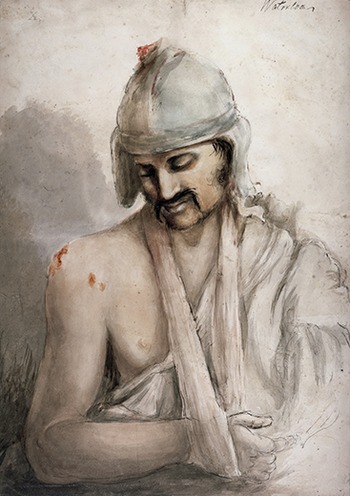
Figure 2.3 Charles Bell, Gunshot wound of the left shoulder (1815).
If Elizabeth Lowe was remarkable, then, in other respects she was eminently typical of the breast cancer patient of this period. Her disease was said to have been caused by a blow to her breast, a commonly cited cause for the development of a tumour. Even more significant, for our purposes at least, was the role played by the trials of motherhood in her condition and treatment. Lowe had borne six children, ‘of whom one only is living’, and was pregnant again when she developed cancer. Some three and a half weeks before her death, she was delivered of a boy ‘who was not permitted to take the breast’ and after that point ‘she sunk faster’ and ‘the ulceration extended more rapidly’.Footnote 103
Breast cancer (and female cancers more generally) have attracted a good deal of recent attention from historians of gender and medicine. For the most part, this literature has focused either on the early modern period, up to the end of the eighteenth century, such as with the work of Alana Skuse and Marjo Kaartinen, or on the period from the mid-nineteenth century onwards, such as that of Illana Löwy and Ornella Mosucci.Footnote 104 The first half of the nineteenth century has, by contrast, been comparatively neglected.Footnote 105 Moreover, while Kaartinen dedicates an entire chapter of her book to the subject of ‘pain, emotions and cancer in the breast’, her analysis is largely concerned, perhaps understandably, with the patient’s experience of the disease; she pays comparatively little attention to the intersubjective dimensions of the clinical relationship and the surgeon remains a relatively shadowy figure in her analysis. She briefly considers the qualities of ‘empathy and pity’ and refers to Frances Burney’s mastectomy and the emotional expressiveness of Dominique Larrey. She even acknowledges that Burney’s account is embedded in ‘early nineteenth[-]century Romanticism and its “sensibility”’, but suggests that, as such, ‘we cannot […] extrapolate anything from it’. Indeed, while she speculates that ‘most surgeons felt for their patients, and some of them had to struggle to remain sufficiently detached’, she does not explore what this might mean, either for surgeons like Larrey or for patients like Burney, and, ultimately, falls back on the familiar narrative of detachment, supporting her point with a secondhand quotation from a book published nearly seventy years prior to Burney’s operation.Footnote 106
A more considered exploration of the emotionally intersubjective dimensions of breast cancer is therefore necessary, not simply because surgeons were required to ‘read off’ emotions from their patients in their treatment and management of the disease, but also because these emotional ‘readings’ were central to the very conceptualisation of breast cancer in this period. Early nineteenth-century ideas about what caused breast cancer (or any cancer, for that matter) were varied and complex, as indeed they still are. Historians such as Mosucci and Patricia Jansen have identified a general shift in the mid-nineteenth century away from ‘constitutional’ explanations towards ‘local’ theories, which emphasised its cellular origins.Footnote 107 Most historians of breast cancer acknowledge the role that ‘passions’ played in ‘constitutional’ understandings of the disease.Footnote 108 For the most part, however, the place of the emotions in the generation of cancer has been given short shrift, with some scholars deferring to generalised arguments about the supposed ‘excess emotion’ of women.Footnote 109 Furthermore, while these scholars point to the importance of the reproductive female body in the aetiology of breast cancer, they have tended to approach such considerations from a purely biological perspective, and none has united such considerations with the emotional dimensions of surgical understanding. As we shall see, however, a contextualised reading of Astley Cooper’s casebooks reveals that his understanding of cancer was rooted in what, to co-opt Arlie Russell Hochschild’s term, we might call the ‘emotion work’ of real and idealised femininities. This understanding was forged in the gendered and emotionally intersubjective relationship between the male surgeon and his female patients.Footnote 110
In her essay on breast cancer in the nineteenth century, Erin O’Connor draws attention to what she calls the ‘emotional anatomy’ of the breast, in other words its profound connectedness to other parts of the body.Footnote 111 The basis of this connectedness was the concept of ‘sympathy’. As Cooper told his students in 1823:
There exist, among all parts of the body, intimate relations, all corresponding with each other and carrying on a reciprocal intercourse of action. The wonderful and beautiful harmony produced by these concurrent phenomena, is called Sympathy; its real nature is yet unknown but we are acquainted with many of its effects; thus the common and natural sympathy of the uterus and breasts.Footnote 112
The concept of sympathy had been developed from around the mid-eighteenth century by medical men such as Albrecht von Haller (1708–77) and John Hunter, in tandem with its development by moral philosophers such as Adam Smith. The connectedness of the human body and the connectedness of the social body were thus two sides of the same intellectual coin; physiology and philosophy provided equal impetus to the cultures of sensibility.Footnote 113
Unsurprisingly, perhaps, the concept of sympathy could, as in Cooper’s example, serve to reify gender ideologies as medical fact. Women were defined by their reproductive capacity and, hence, the two anatomical markers of that function, uterus and breasts, were inseparably linked. Such ideas had ancient origins. The Greek concept of hysteria, after all, rooted women’s bodily health in their reproductive system, while the constitutionalism of medieval and early modern medicine was likewise shaped by gender norms.Footnote 114 Not by accident did Cooper refer to such connections as ‘natural’. It was therefore well recognised by contemporary practitioners that diseases of the breast could be caused by the irregular functioning of the uterus; suspension or retention of menses were regarded as particularly dangerous. But they also ascribed an important role to the operation of the mind and the emotions. Hence, in the Preface to Illustrations of the Diseases of the Breast, Cooper said of the breasts that ‘malignancy may be lighted up in them by constitutional disease – by anxiety of mind – and the cessation of the menstrual secretion’.Footnote 115
Indeed, for all the talk of mechanical causes, it is anxiety of mind that occupies by far the most prominent place in Cooper’s notes on breast cancer. In 1819, for example, he recorded the following case:
Mrs Burk: Scirrhous a year and a half ago size of a nutmeg and for half a year there was no pain. Operation by Travers in January. Now June 18th Schirrhous [sic] in the same breast and axilla pain and a small lump on the other breast. Age 44 – anxiety the cause – accident and ill health and ill circumstances the cause and nothing has succeeded.Footnote 116
Likewise:
Mrs Webster […] aged 40 – has had 10/9 children – always healthy except occasionally a cough during pregnancy – bowells [sic] rather costive – Menstruation not generally regular = has a swelling in the breast and axilla – its cause is unknown except cold and extreme anxiety of mind.Footnote 117
Even in cases where the disease was not ascribed to anxiety, its relative absence was noted. Hence, another case reads:
Mrs Wilson aged 40 – married but no children has a general enlargement of the breast as if the whole were affected by a sccirhous [sic] […] not regular – bowells [sic] irritable no anxiety – cause unknown – unless sympathetic with the Uterus.Footnote 118
It is important to note that breast cancer was not the only disease in Cooper’s casebooks for which anxiety was considered as a cause. For example, in the case of a 43-year-old man with ‘Fungus Testis’ who was described as being of a ‘sallow’ countenance with ‘dark hair and complexion’, it was noted that he had ‘no anxiety’ and was ‘not aware of any blow’.Footnote 119 Meanwhile, in another case of ‘Testis Fungoid’, a man similarly described as ‘unhealthy’, ‘wasted’, ‘sallow’, and of ‘complexion dark’ was said to have ‘drank hard and been of late anxious in mind on account of his business going wrong’.Footnote 120 However, while there are relatively few instances of testicular cancer in Cooper’s casebooks, cases of breast cancer are extremely numerous and the reference to anxiety virtually ubiquitous. Moreover, if the cause of testicular cancer was rooted in men’s physical health and appearance, as well as in normatively masculine activities and conventional, albeit excessive, male appetites, in almost every instance of breast cancer reference was made to similarly normative feminine attributes.Footnote 121 In part this can be attributed to physiological understandings of disease, such as the role of menses and breast feeding. However, given that the cause was almost always attributed to anxiety of mind, it suggests something quite profound about the place of emotion work in Romantic conceptions of femininity and its pathologies.
The role of women’s emotion work in Cooper’s breast cancer cases is especially notable in relation to motherhood. As Joanne Begiato has suggested, ‘Anxiety was an essential state of parenting’, and some in this period even saw it as the natural state of mothers. It was not a shameful emotion, but rather a ‘badge of sensitivity and refinement’ and ‘thus a trait of good parenting’.Footnote 122 At the same time, however, Begiato recognises that anxiety could be problematic. This was especially true of pregnancy, which was regarded not only as a joyous occasion but also as a time of great constitutional upheaval, as well as apprehension.Footnote 123 This is certainly borne out by the cases in Cooper’s archive for, in a number of instances, his patients’ tumours either derived from, or coincided with, their confinement. For example, in August 1830, Cooper received several letters from Mary Bradney of Charlton in Somerset and her medical assistant, John Valentine. Mary had a tumour in her right breast and experienced bleeding from the nipple. Valentine wrote that ‘She looked forward with great anxiety to her approaching confinement which is expected to be early next month’.Footnote 124 Her anxiety was evident from the fact that Valentine followed this statement with the words: ‘I know of no good in my writing to you at present, for the purpose of mentioning the above particulars, but it is her will’. And indeed, the very next day Mary wrote herself, ending her letter: ‘I cannot expect to trouble you to write both to Mr Valentine and myself but when you write to the former I trust you will give him every advice with regard to my approaching confinement – particularly how to stop the bleeding both now and at the term of labour’.Footnote 125
Another cause of anxiety for mothers that was strongly associated with breast cancer was the ill-health of a child. Mrs Palmer of Wellingborough came to see Astley Cooper in 1836, bearing a note from her surgeon recording that she had received a blow on the breast from ‘an intoxicated man’. Furthermore, ‘About the time of receiving the blow she was in painful anxiety of mind from the continued illness of her son, which I should suppose so operated upon the constitution as to dispose it to schirrous [sic] inflammation’.Footnote 126
Given the remarkably high levels of infant mortality in this period, it is no surprise that grief was a common experience of motherhood and that it also exerted a powerful influence over mind and body. In the case of a 53-year-old woman named Mrs Bull, for example, Cooper noted that she ‘had been very anxious in mind from the loss of a child’, while in another, he observed that the patient had ‘anxiety of mind from the loss of a daughter 2 years ago’. Most poignant of all, perhaps, is the case of Laetitia Kelly of Carrickfergus in Ireland, who replied to Cooper’s inquiry after her health in September 1824. Referring to her recent confinement she wrote:
I had an excellent time and to all appearances a healthful (tho small) Infant – but the Almighty saw fit to take her from us on the third day – the event was so sudden – you will most particularly oblige me by informing me do you or not think the complaint I had in my Breast could have had any influence on the state […] [of] my dear Infant?Footnote 127
In this particular case it was not that the death of a child had caused cancer, but rather that the patient feared her disease had precipitated her child’s untimely demise. Such examples as this attest to the emotion work of motherhood and its role in shaping bodily health. In some cases these emotional demands were unsustainable. In the handwritten notes to his Illustrations of the Diseases of the Breast, for example, Cooper recorded the case of an unnamed woman. ‘She has been since her last child in ill health’, it reads. ‘She has been a good nurse – She is defeated and has lost all her feelings of love and affection for [her] children and has lost her appetite’.Footnote 128
It was not only motherhood that was imagined to test women’s emotional capacities to the point of physical illness. Other caring roles took their toll, such as in the case of a woman whose cancer was thought to have been ‘brought on by anxiety and watching a consumptive sister’.Footnote 129 Indeed, all the emotional ties of family life might produce illness, particularly when broken by bereavement. In the case of one woman, for example, her ‘anxious state of mind’ derived ‘from the loss of Brother some time before’.Footnote 130 Meanwhile, for Mrs Turner, a 38-year-old with an ‘irritable left breast’, the cause of her anxiety was a combination of grief and fear, for her ‘Mother died of Cancer’.Footnote 131 The loss of a husband was a particularly trying circumstance, not only emotionally but also because of the social and economic vulnerabilities of widowhood. Thus, the cause of Mrs le Roux’s cancer was given as ‘Anxiety of mind – She is a widow’, while more specific circumstances were recorded for another Mrs Turner, ‘who has had an anxious state of mind from the loss of her husband and from a Chancery Suit’.Footnote 132
As these last two examples suggest, women’s identities as wives were as important in such cases, as were their roles as mothers. Indeed, in almost every instance, Cooper’s casebooks make note of both the maternal and marital status of these women. In a number of cases, the anxiety they experienced derived not merely from bereavement, but from husbands who were either abusive or irresponsible. In 1819, for example, the cause of one unnamed 48-year-old woman’s tumour was listed as ‘anxiety of mind from a drunken husband’.Footnote 133 Meanwhile, in the 1830s Cooper was given an account of the case of Elizabeth Sawyer, who had received a blow from a boy in play, but whose notes concluded:
This person was married at twenty eight, the husband died five years afterwards, he being a seafaring man was absent the greatest part of the time they were married and did not pass more than one year with her at home he was very gay and unsteady which caused her much trouble and anxiety. They had no children.Footnote 134
The reason why it is important to consider the emotionally intersubjective qualities of these diagnostic and therapeutic encounters is because, while it is likely that the patient recounted their own case history and may even have provided their own causal explanation for their condition, it is certain that Cooper, like other surgeons in his position, interpreted their testimony and made his own particular determination about the role of emotional experience in the propagation of their disease. Indeed, despite the terse, notational nature of his casebooks, one can find instances therein of Cooper exercising a kind of moral and emotional judgement, such as in the case of an unnamed 30-year-old woman for whom he imagined that a stay in hospital might provide refuge from the rigours of her domestic life, including the burdens of sexual intercourse: ‘She is nervous and weak and can not bear fatigue – Bowells [sic] regular – She has had 4 successive miscarriages – Absence from her husband will be useful’.Footnote 135
What the evidence of these casebooks suggests, therefore, is that emotional relations were central to the elaboration of breast cancer as a condition; its diagnosis and meaning were produced in the space between two subjectivities, those of the patient’s experience and the surgeon’s interpretation. The latter was shaped not merely by contemporary medical theory, but also by the cultural ideologies that sustained it. Those ideologies were not unique to the surgeon, of course. Indeed, the internal evidence suggests that ideas about the causes of cancer and its relation to gendered identities were often shared by patient and practitioner.Footnote 136 Even so, the authoritative position of the surgeon, especially within the hospital, which is the context in which these casebooks were produced, gave his perspective a particular significance. For Cooper, breast cancer did not derive from an excess of emotion, nor from a perversion of established gender norms, but rather from the very state of mind, anxiety, that was considered entirely natural to the role of the wife and mother.
While this could potentially be interpreted as a pathologisation of femininity per se, such readings would be a simplification. In her essay ‘Breast Reductions’, Erin O’Connor explores the complex social, cultural, and emotional contours of breast cancer in the mid to late nineteenth century. She aims to critique a style of Victorian literary criticism, and its reading of medical discourse, that represents the breast as the object of an inherently misogynistic male clinical gaze. The extensive use of analogy that characterised medical and surgical discourse, particularly the use of political economic language, she suggests, did not necessarily function to frame the breast within a patriarchal ideology that saw women’s place as removed from the public sphere of urban industrial modernity. Rather, it served to shield these practitioners from the emotionally troubling experience of having to watch their patients suffer and die from a painful, malignant, and disfiguring disease with little hope of relief.Footnote 137 Similar, though subtly different, readings are appropriate here. The place of anxiety in the elaboration of breast cancer owed much to the sentimentalisation of femininity, and especially motherhood, in the Romantic era.Footnote 138 However, rather than distancing or shielding surgeons from the distressing nature of the disease, these associations actually served to enhance the pathos associated with it. Cooper’s patients were victims of an emotional, as much as biological, burden, and while breast cancer was certainly fear inducing for the surgeon (to say nothing of the sufferer), the general emotional tenor of Cooper’s archive is one of pity, sympathy, and compassion.
Cooper was certainly not alone in acknowledging the influence of emotions on breast cancer. In his Thoughts on the Cancer of the Breast (1787), for example, George Bell writes that a ‘foundation may be laid for this disease […] if the mind is agitated by anger, or depressed by fear, grief, or anxiety’.Footnote 139 Nonetheless, the sheer ubiquity of anxiety in his casebooks is perhaps more unusual.Footnote 140 How to explain this? Well, we might choose to look to Cooper’s identity as the quintessential Romantic man of feeling. A youthful radical and suspected Jacobin who honeymooned in revolutionary Paris only to become a titled grandee in later life, Cooper travelled the same path as many of his Romantic contemporaries, from William Wordsworth (1770–1850) to William Lawrence.Footnote 141 However, even if he may have tamed his political convictions for the sake of professional advancement, one aspect of his Romantic persona that never left him was his carefully fashioned gender identity and, in particular, his attachment to women and children. As his nephew, Bransby Cooper, later wrote:
The sensibility of his disposition, which throughout life continued to form one of the most distinguishable and loveable traits of his character, led him in his earliest years, even when delighting in the rough and hazardous sports we have described, to appreciate the charms of female character and court friendship in its society. The evident pleasure he took in contributing to the amusement of his sisters and their friends, the respect and attention he always paid to them, together with his elegant form and handsome features – not omitting the other qualities which had exercised so much influence over the companions of his own sex, – all combined to render him an especial favourite with the softer sex; and in their society he spent a considerable portion of his time.Footnote 142
We have already heard how Cooper was said to have cried at the sight of a smiling child about to undergo an operation, a sentiment that may have been enhanced by the loss of his own daughter in 1794 and his subsequent childlessness.Footnote 143 In addition to this, his nephew claims that he had ‘such a horror […] of any symptom of privation from food, especially in children, that he never could […] suppress a tear, when he witnessed an object of his commiseration in the streets of London’. ‘I remember’, he continues, ‘that when I repeated to him the [workhouse] scene in Oliver Twist […] he was quite overcome, and, crying like a child, would not suffer me to continue my description of the distressing tale’.Footnote 144
This compassionate and sensitive demeanour was said to have carried over into Cooper’s clinical work. According to John Flint South:
His manner with the patients was always encouraging and kind, and not infrequently he enjoyed a little joke with them as he went along. I never recollect to have seen him lose his temper or treat a patient with unkind, rough language, but, on the contrary, with gentle sympathy, which won for him their immediate confidence and warm attachment […] With all his boldness in acting out his maxim that a surgeon should have ‘an eagle’s eye, a lady’s hand, and a lion’s heart,’ I cannot doubt that Cooper did think of the suffering of patients on whom he operated; his kind and encouraging and patient manner with them was very striking, and not exceeded by any operator I have ever seen.Footnote 145
Moreover, most commentators noted his particular affinity with his female patients. Not only was frequent reference made to his handsome features and the ‘suavity of his manners’, but his servant Charles Balderson was even recorded as having said that, when it came to his private consultations, there was often a throng of women waiting to see him and there was always ‘more difficulty in drawing one lady than two gentleman’, by which he meant ‘withdrawing the lady from Mr Cooper’s presence’.Footnote 146
Conclusion
As the example of Astley Cooper’s casebooks suggests, our understandings of early nineteenth-century surgery and of the relationships between surgeons and their patients can be significantly enhanced by an attention to the operation of the emotions. The dominant emotional regime of the period, Romantic sensibility, with its veneration of women, children, and the family, shaped surgical discourse surrounding breast cancer. Cooper understood the disease primarily through the lens of domesticity and motherhood and, in his dealings with his female patients, he shaped a persona as a sensible, sensitive, and refined gentleman. Clearly, then, established notions of dispassion and detachment fall far short of capturing the emotional complexity and richness of the Romantic surgical relationship. Surgeons not only conceived of their own work in emotional terms, they were also required to make judgements about the emotional dispositions of their patients, determining what forms of treatment were appropriate or whether they could withstand the physical and emotional rigours of an operation. Cooper’s archive is full of such judgements. For example, in a scrawled annotation on the proofs of his Illustrations of the Diseases of the Breast, he states concerning an unknown case:
No danger in the Operation and it removes Suspence [sic] and anxiety of mind which are worse than the real evil of a moment
It is impossible to promise it shall not reappear but the proper thing is to remove it and then alter the constitution – the removal alone will surely succeed.Footnote 147
As this comment demonstrates, emotions were not simply a rhetorical device or a professional performance. Emotional intersubjectivity was central to the experience and practice of surgery, especially when confronted by such a dreadful and fearsome disease as breast cancer. Dealing with such conditions required emotional sensitivity and took an emotional toll, giving rise to sensations of pity, sympathy, grief, and regret. However, if emotions shaped surgical identities and subjectivities, then they were equally important in the patient’s experience of illness and surgical care. In Chapter 3, we shall continue to explore the nature of the Romantic surgical relationship by switching our perspective and considering how patients experienced sickness, interacted with surgeons, exerted their agency, and negotiated their treatment, through the language of the emotions.


 Open access