


Overview
Chapter 13, “An Overview of Some Legal Issues Concerning Unilateral Sanctions,” Pierre-Emmanuel Dupont
While states may generally choose with whom they wish to engage as trade partners, there are nonetheless limitations on whether and how states may exert economic pressure unilaterally. There may be limits where such measures violate the principle of nonintervention, or when they have extraterritorial reach engaging third countries. This chapter looks at these issues in the context of treaties and customary law. It also looks at judicial and other venues where unilateral coercive measures (UCMs) have been challenged.
Chapter 14, “Unilateral Sanctions and Emerging Issues of International Human Rights Law,” Alena F. Douhan
This chapter addresses some of the many ways that UCMs run counter to international human rights law. Such measures may directly compromise the human rights to health, education, economic and social rights, and the right to development. Listings of individuals regularly run counter to the right to due process. Most recently these measures have compromised internet access, which in turn undermines access to many essential services. UCMs may also indirectly compromise human rights, and harm vulnerable populations, when these measures are extraterritorial or result in overcompliance.
Chapter 15, “A Global Analysis of Economic Sanctions and Civil Society Participation in Target Countries,” Dursun Peksen
It is well known that economic sanctions do not have a high likelihood of success in regard to compliance in many situations, including where the stated purpose is to address repression and human rights violations on the part of the target state. But sanctions may also result in increased repression, and undermine civil society, dissent, and public accountability. This has implications not only for the effectiveness of sanctions but also for their legitimacy as a tool of global governance and foreign policy.
Chapter 16, “Hurting Your Own Allies: The Impact of US Sanctions on Venezuela and the Fracturing of the Wrong Coalition,” Benedicte Bull and Antulio Rosales
There are also questions of legitimacy with regard to the US sanctions imposed on Venezuela. Although US sanctions were intended to put pressure on the Maduro government, they have contributed to both its economic and social crisis. While they were framed as measures to ensure human rights, and then later to support regime change, US sanctions have undermined the country’s business sector, created political divisions among those opposing the government, and contributed indirectly to the Maduro government’s consolidation of power.
Chapter 17, “Walking a Diplomatic Tightrope: The US and South Korea’s Sanctions against Iran,” Deokjun Ha
In the sanctions literature, it has often been said that multilateral sanctions have greater legitimacy than unilateral measures, based on the premise that multilateral sanctions reflect the views of the broader international community. However, as this chapter shows, joining a sanctions alliance does not necessarily reflect agreement. This chapter demonstrates how South Korea was pressured by the US, its major economic and political ally, to impose sanctions against Iran, despite the singular and longstanding friendship between South Korea and Iran.
Chapter 18, “A Private-Sector Perspective on the Sanctions-Industrial Complex,” Nicholas W. Turner
While states and institutions of global governance are the entities that impose sanctions, to a large extent it falls to the private sector to implement them. Corporations, nonprofit organizations, and other private actors in turn are subject to legal and financial pressures, and may respond not only by complying with regulations but also by “overcomplying” and terminating even legal business relations. This has significant consequences for civilian populations, particularly in the Global South. Because sanctions implementation is, in a sense, outsourced to the private sector, it is difficult to show where responsibility lies; and the damage done can elude accountability.
Chapter 19, “US Treasury Department Blacklisting and the Barriers to Delisting,” Erich Ferrari
Due process rights entail the right of an individual to know clearly what the law requires, to be informed of accusations against them, to have access to the evidence upon which the accusations are based, and to have the opportunity to respond to the allegations and the evidence. However, under US law, “Specially Designated Nationals” (SDNs) may be subjected to severe financial and other restrictions, imposed by the U.S. Treasury Department’s OFAC, with few legal protections and little accountability.
Chapter 20, “Caught in the Crosshairs of Sanctions and Anti-money Laundering Measures: Informal Value Transfer Systems and Civil Asset Forfeiture,” Rachel Barnes KC and Ryan Dowding
As banks increasingly withdraw services to those with ties to sanctioned countries, many of those in need of financial services – such as migrants seeking to send remittances to family members in their home country – turn to organizations that transfer value rather than funds. However, US and UK authorities consider these entities to be at higher risk of involvement with fraud or money laundering. The assets of customers as well as the IVTS may be seized in a civil process, with potentially devastating financial consequences, on the basis of scant evidence.
Chapter 21, “Economic Sanctions: Accountability, Legality, and Legitimacy,” Joy Gordon
Sanctioners maintain that they are imposing coercive economic measures to protect international security, stop terrorism and human rights abuses, and so forth. However, sanctions themselves raise concerns of legality when they violate international law; as well as concerns of legitimacy when they run counter to human rights and humanitarian needs. At the same time, there are many means by which sanctioners elude responsibility, and few venues where sanctioners can be held accountable for their practices.
While the UN has worked in recent decades to strengthen the legal framework governing sanctions programs adopted by the Security Council under Chapter VII of the UN Charter, the widespread practice of unilateral international sanctions – imposed by states rather than institutions of global governance – remains largely under-regulated and subject to few commonly acknowledged legal restraints,Footnote 1 except perhaps as regards basic humanitarian exceptions. In a context where unilateral sanctions, often referred to in UN terminology as “unilateral coercive measures” (UCMs),Footnote 2 are increasingly resorted to by certain states as legitimate foreign policy tools – most often to compel a change in policy of another state – the present chapter attempts a broad overview of some of the most pressing legal issues raised by the practice of unilateral sanctions.
First, it will revisit the issue of the legal validity of coercive measures, using as a starting point the principle according to which the targeting state is seemingly entitled to sever economic relations with the target. Assuming that this principle adequately reflects present-day international law, it remains that applicable treaty obligations or other customary law or general principles of international law (such as the principles of nonintervention and self-determination) may restrict such freedom to impose sanctions. Economic coercive measures may however be legally justified where they constitute countermeasures, in the meaning of the 2001 draft articles of the International Law Commission (ILC) on the responsibility of states.
Second, this chapter will review certain cases where unilateral sanctions have actually been subjected to legal challenges. This will encompass a range of claimants (either the targeted state itself, or a third state affected by the sanctions, or private parties, such as individuals or corporations), and a variety of dispute settlement mechanisms, including judicial (or quasi-judicial) interstate dispute settlement options, such as the ICJ; as well as options open to private parties (international arbitration, regional jurisdictions such as the European Court of Justice (ECJ) or European Court of Human Rights (ECtHR), and human rights treaty bodies). The chapter will finally address another, nonjudicial, mechanism, that of countermeasures adopted by targeted states in reaction to unilateral sanctions perceived as unlawful.
The Issue of Legal Justification of Unilateral Sanctions
Unilateral Sanctions and Economic Coercion
The issue of whether unilateral sanctions are admissible under international law has attracted much attention, even before the UN Charter was adopted in 1945. During the nineteenth century, in the context of the rise of global trade and what was labeled the “first globalization” (i.e., approximately the period between 1870 and 1914), much discussion surrounded the issue of whether states had the right to close themselves to, or insulate themselves from, foreign trade.Footnote 3 During that period, some influential voices asserted that an international legal rule mandating free trade was emerging, but this trend was challenged by both World Wars, which witnessed a massive use by most belligerents of coercive measures aiming at the blocking of economic interaction with enemy nations, extending to measures impacting third states, including neutrals.Footnote 4
The concept of economic coercion was again the focus of attention in the early years of the UN in various fora. Thus, during the final phase of the drafting of the UN Charter (May 1945), a proposal was made by Brazil to include economic measures within the realm of measures prohibited under the draft provision that was to become Article 2(4) of the Charter, embodying the prohibition of the threat or use of force.Footnote 5 The ultimate rejection of the Brazilian proposal was inconclusive as to the willingness of the negotiators of the San Francisco Conference to exclude economic coercion from the ambit of the prohibition in Article 2(4).Footnote 6 Later on, in 1950, the ILC, in the course of its work on the Draft Code of Offences against the Peace and Security of Mankind, was called to consider as an international crime “the fact of a State applying measures of psychological or economic coercion in respect of another State.”Footnote 7
The 1960s and 1970s also saw discussion and proposals along these lines. During the discussion at the UN Conference on the Law of Treaties of Article 49 of the ILC Commission’s draft (on “treaties concluded under threat or use of force”), some countries had proposed an amendment which would have made a treaty void if its conclusion had been procured by the threat or use of force, including economic or political pressure in violation of the principles of the Charter of the UN.Footnote 8
Economic coercion was also discussed in the framework of the UN Special Committee on Principles of International Law concerning Friendly Relations and Co-operation among States. Arguments for and against the inclusion of political, economic, and other pressures within the meaning of force as per Article 2(4) of the UN Charter were exchanged.Footnote 9 In 1970, the prohibition of economic coercion found its way into the so-called Friendly Relations Declaration.Footnote 10
In recent decades, the UNGA has time and again adopted resolutions condemning the use of unilateral economic measures and economic coercion with clear majority votes, but also with the persistent opposition of certain countries.Footnote 11 Another recurrent series of resolutions has addressed the specific case of the embargo on Cuba, stressing its unlawfulness under international law and calling for its immediate lifting.Footnote 12 Resolution 78/135 (2023)
[u]rges the international community to adopt urgent and effective measures to eliminate the use of unilateral economic, financial or trade measures that are not authorized by relevant organs of the United Nations, that are inconsistent with the principles of international law or the Charter of the United Nations or that contravene the basic principles of the multilateral trading system and that affect, in particular, but not exclusively, developing countries.Footnote 13
Also in December 2023, the UNGA adopted the latest (to date) of a long series of resolutions on “Human rights and unilateral coercive measures,” whereby all states are urged
to cease adopting or implementing any unilateral measures not in accordance with international law, international humanitarian law, the Charter of the United Nations and the norms and principles governing peaceful relations among States, in particular those of a coercive nature, with all their extraterritorial effects, which create obstacles to trade relations among States, thus impeding the full realization of the rights set forth in the Universal Declaration of Human Rights and other international human rights instruments, in particular the right of individuals and peoples to development.Footnote 14
Some have asserted that the support, expressed repeatedly for decades, by an impressive majority of states in the UNGA, for the legal position that unilateral sanctions are intrinsically unlawful, is indicative of the emergence of a customary norm prohibiting unilateral sanctions.Footnote 15 This argument has been criticized by Hofer, who argues in substance that “[i]n spite of frequent calls for the cessation of such practice, a prohibition of UCM has not crystalized.”Footnote 16 It has also been asserted in this context that some countries opposing the use of unilateral economic sanctions as a matter of principle have recourse to such measures in certain instances, relying on the invocation of the necessity to defend certain values.Footnote 17
It seems, however, that there is a strong indication that, at the very least, extraterritorial, secondary sanctions, that is to say, those measures that are designed and intended to impede (trade or other) relations between the targeted state and third states, may be considered inadmissible under international law. It is widely acknowledged that such measures disregard basic principles of jurisdiction under international law, and that these “disproportionately impact third states because they unjustifiably infringe upon their rights to trade and to conduct their foreign policy freely, thereby interfering in their external affairs in a manner that is incompatible with the principle of non-intervention.”Footnote 18 Thus, extraterritorial (secondary) sanctions are inadmissible to the extent that these entail jurisdictional claims “to regulate the activities of aliens outside the territory of the legislating State.”Footnote 19 It has also been suggested that a consensus exists among a vast majority of states to condemn and resist the extraterritorial application of unilateral sanctions.Footnote 20
Unilateral Sanctions, the Freedom of States, and Economic Coercion
It has been observed by Joyner that, consistent with the Lotus principle of international law, “as a general proposition, and in the absence of positive legal obligations to the contrary, it is certainly correct that a State has the legal discretion to choose with which other States it pleases to have, and to allow the legal and natural persons subject to its jurisdiction to have, economic/financial dealings.”Footnote 21
This implies that unilateral sanctions measures may be legally permissible if these fit into the concept of “retorsion.” Retorsion in international law is a concept that refers to “unfriendly” conduct by a state, which is not a priori inconsistent with any international obligation of the state engaging in it (even though it may be a response to an internationally wrongful act of the target state).Footnote 22 Acts of retorsion may include the prohibition of or limitations upon normal diplomatic relations or other contacts, embargoes of various kinds, or withdrawal of voluntary aid programs. Whatever their motivation, so long as such acts are not incompatible with the international obligations of the states taking them towards the target state, they do not qualify as countermeasures,Footnote 23 which would have to meet other legal requirements.
To the extent that these measures are not prohibited by any positive rule or obligation of international law, retorsions are lawful to maintain.Footnote 24 Thus, retorsion is “widely regarded as a freedom (as opposed to a right to which certain limitations may apply) and is accordingly largely unregulated by international law.”Footnote 25
The ICJ in the Nicaragua case reaffirmed the principle of the discretion of states when it found that “[a] State is not bound to continue particular trade relations longer than it sees fit to do so, in the absence of a treaty commitment or other specific legal obligation.”Footnote 26 This meant that in the absence of specific legal obligations to engage in trade with another state, a general trade embargo may be a lawful measure. However, it happened that, in the particular circumstances of that case, there was such a treaty obligation on the part of the US and the ICJ accordingly held the boycott unlawful on that ground.
However, as it has been observed, “there is considerable evidence that the true position on the question of the legality of economic warfare under customary international law is rather less categorical than this brief statement by the Court would lead one to believe.”Footnote 27
Neff has indeed rightly pointed to the hesitation on the part of modern international lawyers “to accept that any form of patently hostile conduct (economic or otherwise) directed by one State against another could be wholly and completely lawful.”Footnote 28 He referred in that context to the case of the Arab boycott of Israel, whose defenders, he noted, “tend to justify its legality not on the basis that boycotting is lawful per se, but rather on more narrow and specific grounds such as self-defence, the exercising of belligerents’ rights, the promotion of the human rights of the Palestinian people and so forth.”Footnote 29 Similarly, in most contemporary instances of uses of unilateral sanctions the targeting state(s) invoke legal grounds to support the lawfulness of their actions. For instance, the EU implements a wide range of autonomous (unilateral) sanctions programs, these sanctions being portrayed as “one of the European Union’s tools to promote the objectives of the [EU Common Foreign and Security Policy]: peace, democracy and the respect for the rule of law, human rights and international law.”Footnote 30
Thus, it appears that the exercise of economic pressure, even in the absence of specific international (treaty or other) obligations, must not exceed a certain limit, lest it constitute a violation of the customary principle of nonintervention.Footnote 31 Accordingly, economic measures not otherwise prohibited by international law would arguably become unlawful if their real aim is to coerce the target state in respect of matters which each state has the right to decide freely, such as the choice of a political, economic, social, and cultural system.Footnote 32
Unilateral Sanctions and the Law of Countermeasures
A state imposing unilateral sanctions may arguably be able to justify its measures as non-precluded countermeasures, in the meaning of the ILC’s Articles on State Responsibility, which are widely considered as codification of customary international law.Footnote 33 Under this framework, the conduct of a state in violation of international obligations is not wrongful when it is employed as a proportionate response to a previous internationally wrongful act having injured the acting state, subject to certain conditions, both substantive and procedural.Footnote 34 Countermeasures may thus be taken against a responsible state to induce it to comply with its obligations to cease the internationally wrongful conduct. Countermeasures are supposed to be temporary measures, and to be subject to the principle of proportionality.Footnote 35 Countermeasures are generally understood as operating in a bilateral setting. This means that the legality of third-party countermeasures, that is to say, taken by a state other than the state affected by the wrongful act, and of collective countermeasures or countermeasures “in the common interest,” remains a matter of controversy.Footnote 36
A number of instances of unilateral economic measures in the contemporary period have been tentatively justified by the acting state(s) as a response to some perceived violation on the part of the targets. This was the case, for example, of the Arab oil boycott in the 1970s against states supporting Israel, of the measures against the USSR for its intervention in Afghanistan in the 1980s, and of the Greek embargo against the former Yugoslav Republic of Macedonia in the early 1990s. It has been observed that: “[m]any of these measures, such as also the ongoing comprehensive US embargo against Cuba, are of dubious legality under the law of countermeasures, partly because of the operation of the principle of proportionality, and partly because of the jurisdictional claims which they entail to regulate the activities of aliens outside the territory of the legislating State.”Footnote 37
It should be noted that the legal regime of countermeasures as devised by the ILC does not admit of the legality of countermeasures that affect the prohibition on the use of force, or that negatively impact human rights, which is arguably the case regarding (at least certain) unilateral economic sanctions that may have wide-ranging consequences for the human rights of affected populations. Article 50(1) of the ILC Articles indeed provides that countermeasures shall not affect (inter alia): “(b) obligations for the protection of fundamental human rights; […] (d) other obligations under peremptory norms of international law.”Footnote 38 Prohibited economic countermeasures involving the use of force include the imposition of a blockade of the ports or coasts of a state by the armed forces of another state. It has also been stressed that such a blockade would also constitute an act of aggression against the blockaded state, in accordance with Article 3(c) of UNGA Resolution 3314 (XXIX) of 1974 (Definition of Aggression).Footnote 39
Analysis of Some Legal Challenges to Unilateral Sanctions
The present section will review certain significant actual cases where unilateral sanctions have been subject to legal challenges. The idea is to seek to identify trends and recurring practices, as well as possible limits or gaps in the law. This evaluation will necessarily be non-exhaustive, and it will not include a consideration of cases where sanctions issues are addressed in nonjudicial mechanisms, such as negotiation, conciliation, and mediation between states. It will not address either the mechanisms of blocking legislation intended to shield one’s nationals from the effects of secondary, extraterritorial sanctions enacted by another state. Nor will this section address “unconventional” means to resist unilateral sanctions, such as techniques of avoidance of sanctions (“sanctions-busting”), and the practice, either by affected states or by affected parties or communities themselves or NGOs, of documenting and publicizing to the international community the adverse impacts of sanctions.
Unilateral Sanctions Challenged as Violations of Customary Rules
As noted in the previous section, there is a strong legal argument that, in numerous instances, unilateral sanctions may amount to violations of certain customary rules of international law. This includes the customary rule of nonintervention. However, legal actions against unilateral sanctions before international jurisdictions have in practice rarely, if at all, been based on claims of violation of customary rules, including nonintervention. It is reasonable to assume that litigant states and their counsel have generally considered that uncertainties relating to the invocation of customary norms before international judicial fora were such as to mandate the practical option to frame legal claims in terms of violations of specific treaty obligations.
To the author’s knowledge, no state has ever sought to invoke the rule of nonintervention as its main legal ground to challenge unilateral sanctions. For example, Iran, in its case brought in 2018 before the ICJ to challenge the reimposition by the US of various sanctions in the wake of the US withdrawal from the JCPOA, has chosen to strictly circumscribe its claim as based on violations of the 1955 US–Iran Treaty of Amity, whereas customary rules are referred to only as secondary sources: “The principal sources of law to be applied in resolving the dispute are the Treaty of Amity, and, as secondary sources applicable to the interpretation and application of the Treaty of Amity, rules of customary international law and general principles of law.”Footnote 40
However, it is to be noted that on various occasions, in cases where violations of the principle of nonintervention were alleged, the ICJ found that it had jurisdiction to rule on such allegations. Thus, in the Nicaragua case, the ICJ ruled that the US, “by training, arming, equipping, financing and supplying the contra forces or otherwise encouraging, supporting and aiding military and paramilitary activities in and against Nicaragua, has acted, against the Republic of Nicaragua, in breach of its obligation under customary international law not to intervene in the affairs of another State.”Footnote 41
There are many situations in international relations where violations of norms of international law are believed to have occurred, but nonetheless no concrete remedies are available because international law procedures of dispute settlement are not clearly available. In other words, while a breach of international law can reasonably be identified, such breach cannot give rise to legal remedies before an international court or tribunal, because no jurisdictional option exists that would allow the aggrieved state or other entity to seek remedies and redress against the culprit. When such a treaty-based jurisdictional option exists, it is still an uncertain and risky strategy for a claimant state to invoke the violation of customary principles of international law such as intervention. Thus, generally “there is a hesitancy to use treaties to reach beyond the core cases which obviously fall within the dispute settlement provision.”Footnote 42 States will usually seek to invoke firmer legal grounds, usually the violation of certain substantive treaty provisions in force between themselves and the targeting state(s).
Unilateral Sanctions Challenged As Violations of Treaty Commitments
Faced with the embargo implemented by some of its neighbors as of 2017, Qatar has decided to bring claims simultaneously before various judicial or quasi-judicial bodies, including the WTO’s General Council convened as a dispute settlement body and the council of the International Civil Aviation Organization (ICAO).Footnote 43 In 2017 and 2018, Qatar filed several WTO claims against the countries that imposed restrictions against it.Footnote 44 It complained of “coercive economic measures,”Footnote 45 or of “written and unwritten, published and unpublished measures adopted in the context of coercive attempts at economic isolation imposed […] against Qatar.”Footnote 46 It asserted that the measures “individually and collectively affect trade in goods, trade in services and trade-related aspects of intellectual property rights,”Footnote 47 thus violating some obligations under the WTO covered agreements. Saudi Arabia took the position that the dispute was not actually a “trade dispute” but a dispute in relation to security matters. It claimed that “political and essential security disputes of this kind cannot be resolved at the WTO and should not be brought to the WTO disguised as trade disputes.”Footnote 48 Saudi Arabia accordingly relied on the security exception in Article 73(b)(iii) of the Agreement on Trade-Related Aspects of Intellectual Property Rights (TRIPS Agreement), a provision mirroring that of Article XXI(b)(iii) of the General Agreement on Tariffs and Trade (GATT, 1994). The Panel found that some of the challenged measures, that is to say, measures that prevented Saudi law firms from representing a Qatari targeted entity, were actually justified as a legitimate use of a security exception under Article 73(b)(iii), to the extent that these measures “meet a minimum requirement of plausibility in relation to the proffered essential security interests, that is to say, that they are not implausible as measures protective of these interests.” Other “measures,” that is to say, the non-application of criminal procedures and penalties to a pirate broadcasting company whose activities had detrimental impact on Qatar, were not considered by the Panel as covered by a security exception, to the extent that such conduct was unrelated to the “emergency in international relations” as to make it implausible that Saudi Arabia implemented these measures for the protection of its “essential security interests.”Footnote 49 Since then, the underlying dispute has become moot as a result of the withdrawal of the restrictive measures imposed against Qatar.Footnote 50
Venezuela similarly chose the WTO route to challenge the measures implemented against it by the US. It formulated its complaint against “certain coercive and trade-restrictive measures, (i) consisting of inclusion on blacklists; and in relation to (ii) the sovereign debt market; and (iii) digital currency, imposed by the United States on the Bolivarian Republic of Venezuela in an attempt to isolate it economically.”Footnote 51
At the time of writing (December 3, 2024), this case has not yet given rise to the establishment of a panel.
Qatar also filed a complaint before the ICAO. On June 8, 2017, Qatar requested that a special session of the ICAO Council be convened under Article 54 (n) of the 1944 Chicago Convention in order for the Council to consider the “matter of the actions of the Arab Republic of Egypt, the Kingdom of Bahrain, the Kingdom of Saudi Arabia and the United Arab Emirates to close their airspace to aircraft registered in the State of Qatar.” Bahrain, Egypt, the UAE, and Saudi Arabia subsequently filed an application before the ICJ constituting an appeal from the decision rendered by the ICAO Council on June 29, 2018. The Court rendered its judgment in July 2020, rejecting the appeal and holding that the ICAO Council has jurisdiction to entertain the application submitted to it by Qatar in 2017, and that the said application is admissible.Footnote 52 Later on, however, the dispute was settled so that the ICAO case did not go further.
Iran, as mentioned above, focused its claim against the US before the ICJ on alleged violations of several provisions of the 1955 Treaty of Amity. At the time of writing, the case is still pending, the ICJ having rejected in its judgment of February 3, 2021 the preliminary objections to its jurisdiction raised by the US.
While most of these legal challenges are still under way, the case of Qatar – in respect of which the various WTO and other claims are now moot – has shed light on the fact that jurisdictional claims are in practice primarily used as bargaining mechanisms, with Qatar reportedly conceding to cease international adjudication in exchange for the lifting of the sanctions,Footnote 53 and it is uncertain whether any of the international bodies seized of unilateral sanctions cases in recent years will accept that it has jurisdiction to rule on the merits of the dispute. More than thirty years ago, Hans van Houtte observed that: “[t]reaties are frequently invoked against sanctions. They often have prevented states from imposing sanctions. In only very few instances, however, has it been recognized that sanctions had violated treaty commitments.”Footnote 54
In light of recent cases brought against unilateral sanctions, it seems prima facie that this statement retains its relevance today.
Unilateral Sanctions Challenged As Human Rights Violations
States targeted by unilateral sanctions have also in various instances challenged these as violations of human rights. Thus, Qatar in its case against the UAE before the ICJ portrayed the restrictive measures as “discriminatory measures directed against Qataris on the basis of their national origin,” qualifying as violations of the International Convention on the Elimination of All Forms of Discrimination (ICERD).Footnote 55 In parallel, it lodged complaints before a UN human rights treaty body, the Committee on the Elimination of Racial Discrimination (CERD) under article 11 of the ICERD, which were the first ever uses of the interstate communication procedure provided for by the convention.Footnote 56 While the ICJ ruled on July 23, 2018 that it had prima facie jurisdiction to the extent that the dispute between the parties related to the “interpretation or application” of the CERD, and requested that the UAE take provisional measures to prevent further aggravation or extension of the dispute, it subsequently dismissed Qatar’s claims, finding that the dispute fell outside of the scope ratione materiae of the ICERD, since discrimination based on nationality did not constitute discrimination based on national origin as required under Article 1(1) of CERD.Footnote 57
Various cases claiming that sanctions had resulted in adverse human rights impacts have been brought before various relevant international courts, such as the ECtHR.Footnote 58 A significant number of legal cases have also been brought before EU courts by parties affected by sanctions decided at the EU level and implemented by EU member states, claiming that the implementation of EU unilateral sanctions did not comply with the EU’s human rights obligations as guaranteed by EU law.Footnote 59 These actions have generally led to mixed outcomes, and it is worth mentioning that the EU and its member states have a history of relisting individuals and entities after these have obtained their delisting before EU courts.
Countermeasures against Unilateral Sanctions
As noted by the ILC, a state taking countermeasures
acts at its peril, if its view of the question of wrongfulness turns out not to be well founded. A State which resorts to countermeasures based on its unilateral assessment of the situation does so at its own risk and may incur responsibility for its own wrongful conduct in the event of an incorrect assessment.Footnote 60
In other words, the lawfulness of the taking of countermeasures depends, in the first place, on the effective occurrence of the prior international wrongful act by the target state.
Thus, assuming that in a given situation measures of economic coercion are in violation of obligations of the acting state under international law and cannot be justified as countermeasures, that state could be found liable for a breach of its international obligations. Its actions could then serve as grounds for resort to countermeasures by the injured state.Footnote 61
It has been widely reported that Russia has in recent years applied de facto countermeasures, especially under the form of import restrictions, in reaction to the economic sanctions adopted against it in relation to the situation in Ukraine and the Crimea. This in particular led the EU to file a WTO complaint against Russia in 2014 over bans and restrictions of pork imports that Moscow justified as due to swine fever outbreaks but that the EU suspected “to be driven by Russia’s geopolitical stand-off with the west over Ukraine.”Footnote 62 Iran has also repeatedly asserted its right to resort to countermeasures in the face of unilateral sanctions imposed against it, and it has actually applied targeted sanctions, albeit on a limited scale, against various entities and individuals of Western states having enacted sanctions against Iran, on a basis of “reciprocity.”Footnote 63
Conclusion
The enquiry on the issue of legality of unilateral sanctions gives some weight to the opinion that economic pressure involving a sufficient degree of magnitude can, at least in certain cases, be considered unlawful as a violation of the principle of nonintervention, even in situations where it does not imply that a state has failed to meet specific international (treaty or other) obligations. In addition, I found that there is a strong legal argument for the position that unilateral economic measures claiming extraterritorial reach (and thus impact on third parties) are widely considered by the international community, in light of the consensus existing at the UNGA, as intrinsically unlawful.Footnote 64 Such wide rejection of unilateral sanctions entailing extraterritorial application is arguably strong evidence of an emerging customary prohibition of such measures.
Turning to actual legal claims against unilateral sanctions, their review allows for the formulation of several provisional findings. First, it seems there is little expectation that a legal action brought solely on grounds of violating general rules of international law such as the rule of nonintervention is likely to succeed; realistically, there may be no remedies for this in judicial settings. This may of course be considered an unfortunate situation, but this is confirmed by the practice of most states affected by sanctions.
Thus, actions framed as violations of treaty commitments may meet with more success; but that option is often subject to limitations in practice, especially when the sanctioning state withdraws from the treaty, as in the case of Iran’s claim regarding alleged violations of the 1955 Treaty of Amity; or when the sanctioning state invokes the national security clause in GATT or TRIPS; and even when these claims are fully adjudicated, experience shows that they have rarely resulted in rulings that the sanctions constituted treaty violations.
It does seem that bringing a case may in itself constitute a form of pressure that can be used to achieve an end to the sanctions, as in the case of Qatar. Indeed, whereas private actors affected by sanctions primarily bring legal claims with a view to obtain remedies and redress against the sanctions, affected states challenging sanctions before international judicial fora often do it as part of a broader strategy, along with other means of dispute settlement such as negotiation or mediation, or even countermeasures.
From an international relations perspective, it may be added that while a targeted state may resort to countermeasures where it asserts that unilateral sanctions are used wrongfully, that option may be an effective strategy for a target country with considerable economic strength (such as Russia, for which there is strong evidence that its economy has so far successfully withstood – to a large extent – the many packages of unilateral sanctions applied on it since it retook control of the Crimea in 2014, and most of all since it launched its military offensive on Ukraine in 2022),Footnote 65 but will not realistically be an option for most small or developing countries.
Introduction
Unilateral coercive measures present a set of concerns different from those posed by sanctions of the UN Security Council. Among such concerns are the extent to which states have the authority to impose sanctions unilaterally, as well as the absence of oversight mechanisms. Unilateral sanctions also pose legal questions due to their extraterritoriality, severity of the means of their enforcement: In addition to those measures that are specific and explicit in their targets, unilateral sanctions – absent judicial oversight and humanitarian accountability – routinely result in such severe consequences that risk-averse companies will overcomply and fail to do any business, even legitimate, with parties “designated” on sanctions lists, those which might have any nexus to listed individuals or private entities or even entire countries where those parties may reside.
Human rights protection is considered a cornerstone of the contemporary international system. States are obliged to take all possible steps to guarantee that human rights are observed in territories under their jurisdiction and control. A number of international mechanisms exist to ensure that states protect human rights. Indeed, unilateral sanctions have often been announced as constituting measures implemented to protect “common goods,” including human rights. At the same time, their scope, number, grounds, subjects, targets, and means of introduction and implementation are expanding exponentially, even when their legitimacy may be questionable. The very fact that states and regional organizations unilaterally sanction individuals, companies, economic sectors, or even entire countries without or beyond the authorization of the UNSC poses questions about their legality, particularly in cases when the humanitarian impact is so severe as to run counter to human rights.
Unfortunately, international legal discourse focuses mostly on the grounds, mechanisms, and effectiveness of initial or secondary sanctions;Footnote 1 the motivation, political costs, and internal justifiability of sanctions as an alternative to the use of military force; and the possibility to assess negative consequences as “collateral damage.”Footnote 2 The problem of their humanitarian impact has received far less attention.
The Expanding Nature of Sanctions in International Law
The nature and purposes of sanctions in general have proliferated in recent years. According to the Global Sanctions Database, the stated objectives of more than 40 percent of sanctions introduced between 2013–2019 were to pursue the enhancement of democracy, human rights protection, and other similar purposes rather than to address threats to peace, breaches of peace or acts of aggression, or in response to violations of erga omnes obligations as viewed by the ICJ in the Barcelona Traction case,Footnote 3 or in the ICCPR of 1996 General Comment No. 31, para. 2.Footnote 4
However, states and regional organizations are also expanding the application of unilateral measures to target individuals and private entities without or beyond the authorization of the UNSC under its Chapter VII authority.Footnote 5 Historically, the UNSC has authorized these measures against actors responsible for massive and gross violations of fundamental human rights. Recently, though, so-called “Magnitsky-like sanctions” have been imposed by the US,Footnote 6 the EU,Footnote 7 Estonia,Footnote 8 Canada,Footnote 9 Lithuania,Footnote 10 Latvia,Footnote 11 Gibraltar,Footnote 12 Jersey,Footnote 13 and Kosovo,Footnote 14 with reference to human rights violations or specific crimes, including corruption.
Another important development relates to the emergence of so-called “sectoral” sanctions, which apply nonselectively to all or nearly all individuals and organizations in a given economic sphere. The US and EU have applied such sectoral sanctions to the financial, energy, defense, railway, metals, and mining sectors of the Russian Federation,Footnote 15 “to impose costs […] for its aggression in Ukraine.”Footnote 16 The US and EU have also targeted the Venezuelan gold,Footnote 17 oil, and financial sectors;Footnote 18 the Iranian banking sector;Footnote 19 Syrian oil, financial, and other sectors;Footnote 20 and the Belarussian fertilizer sector.Footnote 21 Several other countries face sanctions in the context of counter-terrorism or anti-money laundering programs, as when countries are unilaterally designated as states sponsoring terrorism.Footnote 22
Other technological developments, including cyber technologies, have affected the nature of unilateral sanctions. In particular, the US and EU have subjected some perpetrators of cyber-related activities to sanctions,Footnote 23 and it is now common to see sanctions creating impediments to online banking, trade in software, and restricted access to online platforms and social media.
A no less important development concerns the expansion of so-called “secondary sanctions” against individuals and companies for violating unilateral sanctions regimes. Appendix A to part 501 of the US Economic Sanctions Enforcement Guidelines stipulates civil monetary penalties up to $289,239 or criminal penalties up to $1 million, imprisonment for up to twenty years, or both, upon conviction.Footnote 24 The practice of criminalizing the circumvention of unilateral sanctions regimes is expanding dramatically,Footnote 25 as well as imposing civil penalties, seizing cargo by customs authorities,Footnote 26 putting reputational and other types of pressure over countries, businesses, and individuals,Footnote 27 including via introduction of maximum pressure campaigns.Footnote 28
These trends result in the expansion of targets for unilateral sanctions, both directly and indirectly. States can, and do, designate individuals, companies, and populations in whole or in part. They sanction counterparties of designated individuals and companies, employees, and beneficiaries in third countries,Footnote 29 family members of designated individuals,Footnote 30 nationals of sanctioning states, and third-country nationals. They even sanction humanitarian organizations and their constituent parts, along with international judges and civil servants.Footnote 31
Beyond these developments, contemporary unilateral sanctions regimes are characterized by complexity and comprehensiveness. They may be enforced through extraterritorial jurisdiction, and often their basis is in emergency declarations that grant executive bodies extraordinary powers. Due to severe consequences for violations, these measures result in overcompliance by banks, states, trade partners, and donors. Even humanitarian exemptions and permissions for the delivery of humanitarian aid are hampered by complicated and unclear rules, as well as extremely narrow interpretation. Finally, the entire domain of sanctions regimes is without any comprehensive mechanism of accountability and redress for those whose rights have been violated by unilateral sanctions.
Of course, not every unfriendly act or means of pressure by a state may be described as a unilateral coercive measure, with the connotations of illegality as described by the UNGA and UNHRC.Footnote 32 Simply refusing to interact with another state is not illegal, since states are free to choose their partners in trade, economic, or other international relationships. Customary international law accommodates unfriendly acts that do not violate international law. At the same time, states are to make sure that their activity does not violate any international obligation in force between two states, otherwise it cannot be qualified as a retortion. International law also seems to authorize universal criminal jurisdiction over some international crimes.
According to the DARS, it is legal for directly affected states to employ proportionate countermeasures in response to the violation of international obligations.Footnote 33 DARS stipulates that states which are not directly injured are entitled to respond, but only if “the obligation breached is owed to the international community as a whole,”Footnote 34 that is to say, in response to the “serious breach by a State of an obligation arising under a peremptory norm of general international law,” “involv[ing] a gross or systematic failure by the responsible State to fulfil the obligation.”Footnote 35 Even then, a state can act only with the purpose of stopping the wrongful act and guaranteeing its non-repetition.Footnote 36 The ICJ concluded in a number of cases that such breaches include acts of aggression, genocide, apartheid, impediments to the right to self-determination, slavery, slave trade, genocide, racial discrimination, torture, and serious violations of IHL of a “systematic, gross or egregious nature.”Footnote 37 These are the situations that have been considered by the UNSC to constitute a threat to, or breach of, international peace and security.
Even in the case of a breach of erga omnes obligations, DARS stipulates that countermeasures shall generally be restricted to addressing the “non-performance for the time being of international obligations of the State taking the measures towards the responsible State,”Footnote 38 proportionate with the injury suffered,Footnote 39 with due account for the requirements of humanity and the rules of good faith,Footnote 40 and implemented in accordance with the rules of Article 52. Countermeasures may not violate either peremptory norms of international law or obligations to protect fundamental human rights and obligations prohibiting reprisals.Footnote 41 Therefore, observance of human rights obligations as well as assessments of the humanitarian impact are vital for the legitimacy of any countermeasure.
Human Rights and Unilateral Sanctions
The need to protect common goods – whether protecting human rights, fighting international terrorism, or combatting corruption or other transboundary crimes (although all the more frequently supplemented by the mere reference to the interests of the foreign policy) – is repeatedly cited as a reason to introduce unilateral sanctions today. It is claimed, or implied, that these sanctions are applied to protect the goods, rights, and freedoms that are guaranteed by international law. However, the expanding practice of unilateral sanctions does not provide any mechanisms for humanitarian assessment, and mechanisms of humanitarian exemptions and redress are generally insufficient, complicated, confusing, lengthy, costly, and ineffective.Footnote 42
Consequently, numerous UNHRC resolutions refer to the negative impact of UCMs on fundamental human rights, including the rights to life, health and medical care, an adequate standard of living, food, education, work, housing, and development. They also point out the specific effects on women, children, the elderly, persons with disabilities, those suffering from rare and severe diseases, marginalized groups, and other vulnerable persons.Footnote 43 Not only do these resolutions affirm that people should not be deprived of their means of subsistence but the resolutions also hold that the extraterritorial application of laws is impermissible.Footnote 44
The severe effects of unilateral sanctions were on display during the Covid-19 pandemic. The UN Secretary-General,Footnote 45 the OHCHR, UN Special Procedures,Footnote 46 international organizations,Footnote 47 and civil actors (ICRC,Footnote 48 Human Rights Watch,Footnote 49 and other NGOsFootnote 50) requested that all unilateral sanctions that obstruct humanitarian responses should be lifted, suspended, or at least eased so that the healthcare systems of sanctioned states could fight Covid-19.Footnote 51 The EU Commission Guidance of November 16, 2020 admitted that sanctions may “alter a country’s ability to fight Covid-19 by affecting the procurement of certain goods and technologies,” may impede transactions relating to targeted people or countries even when they do not fall within sanctions (overcompliance), and may cause the economic situation to deteriorate, “increasing hardship for the non-targeted civilian population.”Footnote 52 Unilateral sanctions, means of their enforcement, and overcompliance have been reported to cause a devastating humanitarian effect on the right to health, impeding the delivery of humanitarian assistance, access to health facilities, and the ability to use the latest methods of treatment, creating conditions undermining the right to health (poverty, food insecurity, discrimination, etc.).Footnote 53 As a result, the most vulnerable groups become affected the most.Footnote 54
Currently, it is not possible to adequately assess the humanitarian impact of specific sanctions imposed against a particular state or entity. To fully account for the magnitude of this impact, it would be necessary to assess the cumulative impact of all types of sanctions imposed by all actors. This must include even those measures that are not targeting a specific state (as many of these measures may have extraterritorial effects on third countries and their nationals), as well as the practice of overcompliance.
As the rest of this chapter will show, the widespread use of unilateral sanctions negatively affects all categories of human rights, especially civil, economic, social, and cultural rights. It also violates the right to development,Footnote 55 and impedes the achievement of the SDGs.Footnote 56 All of this occurs despite the fact that it is widely known that sanctions have these effects.
The Expanding Scope of Unilateral Measures
In the 1990s, sanctions constituted the instrument most frequently used by the UNSC. Today, however, they are mostly used unilaterally by states or regional organizations to allegedly strategically target designated individuals or companies. At the same time, these “targeted sanctions” have expanded considerably. The EU’s financial sanctions include several thousand individuals and companies,Footnote 57 and far more are listed by the US.Footnote 58 When combined with sectoral sanctions, means of sanctions enforcement, and overcompliance, the claim that these measures are “targeted” is questionable.
There are also issues of due process, since individuals are designated by executive bodies, rather than judicial authorities. This deprives them of access to the justice system and its protection, including the right to due process. Disturbingly, the US executive branch has designated individuals without initiating any criminal case in response to the alleged cybercrimes. Instead, the OFAC acts without any mention of criminal proceedings and little possibility for the designees to access courts to defend their rights, reputations, or personal data.Footnote 59 Moreover, appealing a designation on a US sanctions list is very difficult, and the process is lengthy and costly. As a result, access to justice to protect affected human rights is very unlikely and often is not possible, affecting therefore additionally the right to a meaningful remedy and redress.Footnote 60 Consequently, the designee has few meaningful opportunities to defend his or her rights in court, violating the designee’s property rights, freedom of movement, right to protection of personal life, and right to reputation, as well as economic, labor, and social rights.Footnote 61
Some authors refer to “economic sanctions” as the “withdrawal of customary trade and economic relations,” including both comprehensive measures – blocking financial relations with the entire country – as well as targeted measures – blocking relations with specific companies, groups, and individuals.Footnote 62 However, the notion of unilateral sanctions has changed to include not only specific goods, such as arms. Unilateral sanctions now encompass every domain which may have an economic impact on targeted countries, sectors of the economy, specific companies, or individuals. Unilateral sanctions include measures that impact non-designated individuals and companies, including those in third countries, or the entire population of the country under sanctions. Their impacts are felt both financially and politically. As such, they bear little resemblance to, for example, the more straightforward arms embargoes of the past.
Unilateral sanctions can result in the freezing of bank accounts and property of central banks, other financial institutions, states, companies, and nationals. They include prohibitions on transferring funds to or from the targeted country, its nationals and companies, and this may apply even for non-designated goods, including food and medicine. Often, sanctioned countries are threatened with removal from Society for Worldwide Interbank Financial Telecommunication (SWIFT), thus preventing or limiting money transactions for the entire population. These economic consequences can take even more political forms, too, as sanctions can prevent countries from getting emergency and development loans from the World Bank or the IMF.
In relation to trade, sanctions can prohibit a country’s nationals and companies from engaging in trade and prohibit other countries and their nationals from trading with the country under sanctions. This is sometimes explicit. In other cases, it follows from measures, for example, restricting the sale of products that contain at least 10 percent of components or technologies produced in the sanctioning country, and sometimes is the end result of the uncertainty, fear of punishment and implementation of zero-risk or de-risking policies of businesses.
Even when sanctions are supposed to target specific individuals, there are often indirect effects that result in entire populations being de facto targeted. Designating high state officials may prevent any relations and trade with the entire sector of economy or infrastructure, including food, health, water supply, and so on, as quite often all at least public sector, and sometimes even relevant private areas are considered to be under the control of designated individuals. Beyond this, there are threats of secondary sanctions, and civil and criminal penalties for circumvention of primary sanctions regimes. Even in areas that are supposed to be universally recognized as fundamental rights, such as education, sanctions may restrict the transfer of funds for study, research, or humanitarian purposes.
These severe penalties for sanction results in a widespread practice of overcompliance, in which a private actor withdraws from an entire market or otherwise reduces legal business opportunities to reduce its risk of sanctions violations. This practice prevents, delays, or makes more costly the purchase and shipment to sanctioned countries of goods – including food, medicine, medical equipment, and spare parts for such equipment. Overcompliance can occur even when the goods are not under sanctions lists or are exempted from sanctions regimes. This may occur as well with regard to urgently needed goods that are critical to save lives.Footnote 63
It is often maintained that the consequences of blocking financial accounts are exacerbated by the extraterritorial application of sanctions and overcompliance.Footnote 64 Due to the high risks presented by US extraterritorial jurisdiction, banks are greatly reluctant to permit money transfers or extend transfer terms, and other companies are unwilling to be involved in transactions because of the fear of secondary sanctions or civil and criminal penalties, even when companies in targeted countries are not on US sanctions lists.Footnote 65
Russia has most been one of the more notable recent targets of unilateral sanctions. The EU has applied sectoral sanctions to the Russian energy, defense, financial, and dual-use goods sectors, and has introduced an import ban on goods from Crimea and Sevastopol and a ban on tourism services in those areas.Footnote 66 The effect of bans such as this are heightened because the majority of mechanisms enabling trade, such as SWIFT, are either within the US or the EU. There have been discussions of cutting off access to SWIFT as part of the sanctions against Iran, Syria, Cuba, Russia, Belarus, and China.Footnote 67 When sanctions are applied by the US, its jurisdiction allows for the possibility of controlling and blocking payments in US dollars via Visa, MasterCard, American Express, Western Union, and PayPal.Footnote 68 Because there are so few major financial service providers, and financial markets are so interdependent, unilateral sanctions affect not only sanctioned countries, but also and the individuals and companies who are the end users.Footnote 69
While the EU restrictions do not extend to software in the public domain,Footnote 70 the US differs by restricting trade in “technology, and software relating to materials processing, electronics, telecommunications, information security, sensors and lasers, and propulsion,” including traditional encryption and geospatial software.Footnote 71 The consequences of this are extensive. For example, because of this policy, Syria reportedly has been unable to buy software produced only by US companies,Footnote 72 which is required for CT scanners and ventilators used to fight Covid-19.Footnote 73
Human Rights Violations
Marc Bossuyt, reporting to the UN Economic and Social Council in 2000, challenged the basic rationale behind economic sanctions as fallacious: the assumption that the “pressure on civilians will in turn translate into pressure on the Governments for change.”Footnote 74 Further, Bossuyt argued that sanctions undermine access to fundamental human rights, including the right to life, freedom from inhuman or degrading treatment, the right to an adequate standard of living (including food, clothing, housing, and medical care), and the rights to health and education, especially for vulnerable populations.Footnote 75
In 1997, the UN Committee on Economic, Social and Cultural Rights (CESCR) reported on the negative impact of sanctions on economic, social and cultural rights.Footnote 76 Academic works from that period also described and predicted the enormous destructiveness of economic sanctions.Footnote 77 Sanctions often give rise to corruption,Footnote 78 and may also be self-defeating, preventing governments from actually protecting human rights. Michael Reisman and Douglas Stevick characterized UN economic sanctions as a “deadly remedy” demonstrating a “comfortable astigmatism,”Footnote 79 and detailed their enormous humanitarian effects on economic rights and the rights to health, water, education, and life in South Rhodesia, Iraq, Libya, Yugoslavia, and Haiti. They noted that sanctions caused physical and mental suffering due to economic collapse; malnutrition; epidemics; food, medicine, vaccines, and medical equipment shortages; operations performed without anesthesia; suicides; and forced migration. These in turn have a heightened impact on vulnerable populations, including children, mothers, migrants, economic refugees, and the poor.Footnote 80
The impact of these reports resulted in changes to the UNSC’s implementation of sanctions. In the case of the sanctions on Iraq, UN agencies provided extensive monitoring of the humanitarian situation, and the equity, adequacy, and efficiency of the Oil-for-Food Programme. It is now a standard practice that UNSC sanctions regimes will not only have a committee of the Council overseeing the implementation of the sanctions, but that there is also a panel of experts for each sanctions regime, which may study and document the consequences of the sanctions. Resolution 2664 adopted by the UNSC in December 2022 provides for unfreezing assets for humanitarian purposes.Footnote 81 At the same time, this resolution cannot be fully implemented due to the impediments caused by unilateral sanctions, means of their enforcement and overcompliance.Footnote 82
For the most part, no such measures have been adopted in relation to unilateral sanctions. While there have been numerous studies of the negative impact of sanctions in general, the studies that look specifically at the humanitarian impact of unilateral sanctions are limited, even though the negative impact is often both obvious and dramatic.
There are several reasons for the severity of these humanitarian impacts. First, there is the direct and clear scope of unilateral measures, which may directly undermine a country’s access to shipping, banking, exports and imports, and foreign investment, particularly where there is a policy of “maximum pressure” aimed at the target states. Additionally, there is the use of secondary sanctions, imposed upon third parties who do business with the primary target, which are accompanied by civil and sometimes criminal penalties. These are penalties imposed not only upon the nationals of the sanctioning state, but also on foreign nationals – not properly subject to the sanctioner’s jurisdiction – who do business with the target country. Finally, there are decisions by private actors to avoid doing business with countries and entities, even where it is permitted. Private actors may avoid engaging with governments, or entire countries, because there are multiple sanctions regimes in place, imposed by several different sanctioning bodies. Taken as a whole, these multiple sanctions regimes are sometimes overlapping, and sometimes inconsistent with each other; and in the aggregate may be so confusing or lacking in transparency that compliance would be very costly, if not actually impossible.
Some information can be found in the statements of states and humanitarian organizations. For instance, it has been repeatedly reported that delays and increasing costs of bank transfers and transportation result in rising prices for medical equipment, food, and other essential goods in Venezuela, Sudan, Syria, Iran, Zimbabwe, and other countries under unilateral sanctions.Footnote 83
In particular, there has been documentation of the direct impact of unilateral coercive measures on access to medicine and medical equipment in several sanctions regimes.
Unilateral sanctions, and the overcompliance that sanctions entail, have meant that countries have struggled to import necessary medical equipment and supplies. UN organs and the countries themselves have produced reports detailing their struggles to support their population’s health. These shortages have affected the treatment of common health issues, including diabetes, forms of cancer and leukemia, respiratory illness, heart disease, asthma, and so on. States have struggled to procure respiratory, cardiology, endoscopic, pharmaceutical, and other types of equipment; high-tech kits; medicine for treating heart disease, specific forms cancer,Footnote 84 diabetes, hemophilia, leukemia, ichthyosis, multiple sclerosis, autism,Footnote 85 epidermolysis bullosa,Footnote 86 thalassemia, HbA,Footnote 87 kidney failure and dysfunction, hypertension, anemia, respiratory diseases,Footnote 88 chronic inflammatory myelinating polyneuropathy of multifocal motor neuropathy, immunosuppressed patients, and asthma; treatments for orthosis, prostheses, as well as factor VII hormones; anesthetics, antibiotics, antidotes, immunoglobulin, immunosuppressors, blood derivatives;Footnote 89 blood pressure, cardiac, and antipyretic drugs; painkillers; and other irreplaceable and essential drugs and equipment.Footnote 90
During the Covid-19 pandemic, some sanctioned states were unable to buy necessary medicines and medical equipment to treat this disease. This was due in part to the impossibility of making financial transfers, in conjunction with trade and financial sanctions imposed upon Cuba,Footnote 91 Iran, Venezuela, Syria, and other states.Footnote 92 Iran is reportedly unable to use foreign currency for humanitarian imports, such as grains, and also for medicines,Footnote 93 including insulin.Footnote 94
In Venezuela more than 85 percent of globally available medicine is reportedly unable to reach the country.Footnote 95 In Cuba, professional health associations have reported on the challenges of obtaining medicine and equipment to care for premature newborns, as well as children facing other health issues that rely on specialized medical equipment and medicines. Professional associations report on the challenges of delivering life-saving and pain-killing medicines and equipment for pediatrics in Cuba, including high-tech lung ventilators for newborns or children, nutritional supplements or special foods for medical use in the dietary management of specific childhood disorders and diseases, pediatric arterial and venous lines, hydrophobic filters, temporary hemodialysis catheters for young children, pediatric dialyzers, dialysis bags and catheters used for newborns and infants with acute renal failure, analgesics or anesthetics to prevent or treat pain,Footnote 96 high-tech medical treatment and support equipment of children with disabilities;Footnote 97 pacemakers, supplies and medications needed in cardiovascular surgery; as well as new high-tech equipment, catheters, stents, oxygenators, disposable electrodes, contrast media, and radioisotopes.Footnote 98 Swiss humanitarian organizations have also been prevented from collaborating with Cuban medical entities because some Swiss banks have suspended money transfers to Cuba, for fear of secondary sanctions, including civil or criminal penalties.Footnote 99
In addition to human rights relating to health, unilateral sanctions can violate the right to development and other economic rights specified in the ICESCR. In 2019, the US adopted the Caesar Syria Civilian Protection Act (Caesar Act), which expanded the extraterritorial jurisdiction of the US to third-country individuals and entities who provide significant financial, material, or technological support to the Syrian government (including entities owned or controlled by the government), engage in transactions with it, or supply goods or services to the country’s military forces. The Caesar Act also targeted the energy sector as a whole, and forbids assistance directly or indirectly on significant construction or engineering services.Footnote 100 This resulted in the termination of many humanitarian projects which maintained critical infrastructure (electricity, water, sanitation, irrigation systems, health facilities, transportation – including ambulances and rescue equipment – seed, and fertilizers), reconstructed and rebuilt, and assisted or trained public sector workers (including in health, education, water, electricity, irrigation, transportation, agriculture, etc.). The worry was that even these humanitarian projects would be interpreted as illegal assistance to the government.Footnote 101
Finally, unilateral sanctions often impact basic human rights guaranteeing the human rights to freedom of movement, applying by analogy of law Article 13 of the ICCPR, privacy and family life, the right to life,Footnote 102 and the right to work when one’s work involves crossing borders. Similarly, targeted financial sanctions may violate the rights to privacy, family life, health, and property.Footnote 103 Even an arms embargo may violate property rights.Footnote 104 When sanctions are applied against journalists, as the US has done to Iranian journalists,Footnote 105 these coercive measures may violate the rights to hold opinions and freedom of expression.
These severe humanitarian effects may seem surprising because there are often carve-outs for humanitarian goods. However, these exemptions do not adequately address the situation. The process of obtaining licenses for exempting humanitarian goods is lengthy, complicated, and expensive, and often several licenses are needed. Beyond this, there is often the problem that “humanitarian” may be interpreted very narrowly by the sanctioning agencies and also by NGOs and private actors. This impedes the trade of several domains of goods, including medicine, food, and other essentials. When combined with risk aversion by private actors, the result is a trend of increasing overcompliance by banks, donors, and delivery companies, including the reduction or termination of services and funds. This ultimately makes humanitarian aid delivery more complicated,Footnote 106 putting enormous burdens and risks on humanitarian operators.Footnote 107 Most importantly, though, it negatively affects the beneficiaries of these goods in targeted and other countries.Footnote 108
Further, private actors are also reluctant to use “humanitarian exceptions,” out of fear that they may run afoul of the expanded legislation that criminalizes the circumvention of sanctions regimes, not only by nationals of the sanctioning government but also by third country nationals and companies.Footnote 109 There is also the growing risks of extradition by a sanctioning government in regard to foreign nationals on the grounds that they breached or circumvented the sanctions regime. For example, the US requested to extradite a British businessman on the grounds that he assisted a Russian national in circumventing US sanctions.Footnote 110 This has been challenged as a violation of international law; yet banks and other private actors remain wary and inclined to decline even legitimate business. A study commissioned by the European Parliament’s Committee on International Trade found not only that such actions are illegal but that they also present a danger even for huge economies such as that of the EU.Footnote 111
Even where it is clear that certain goods are not subject to unilateral sanctions, or are explicitly permitted by humanitarian exemptions provisions, it may still be impossible for a sanctioned country to obtain them. This can happen when the country’s central bank has been placed on a list of blocked entities, or the country or its banks were cut off from the SWIFT system. It may happen as well because a shipping company has been designated, or because insurance companies will not insure deliveries to the sanctioned country. In the environment of overcompliance, states and companies shift responsibility to each other – the companies citing the lack of legal protection from the sanctioning state, and the sanctioning state citing freedom of trade by private companies.
Taken together, the impact of unilateral sanctions on basic human rights is severe. Indeed, there is good reason to say that these measures may violate the right to life, under Article 6 of the ICCPR. The UN Human Rights Committee, charged with overseeing the implementation of the ICCPR, notes in General Comment No. 36 that the prevention of “access by individuals to essential goods and services such as food, water, shelter, health care, electricity and sanitation” may violate the right to life.Footnote 112 While the committee was not referring specifically to unilateral sanctions, it is clear that the Committee’s notes very much depict what often happens under these measures, even when humanitarian exceptions are theoretically present.
There are grounds to argue that private actors have obligations to prevent the violation of human rights, and that in the context of unilateral sanctions, their overcompliance conflicts with these obligations. According to the Guiding Principles on Business and Human Rights issued by the OHCHR, “Business enterprises should respect human rights. This means that they should avoid infringing on the human rights of others and should address adverse human rights impacts with which they are involved.”Footnote 113
“Human rights,” in this context, is “understood, at a minimum, as those expressed in the International Bill of Human Rights,” such as the Universal Declaration of Human Rights, the ICCPR, and the International Covenant on Economic, Social, and Cultural Rights.
In addition,
The responsibility to respect human rights requires that business enterprises:
(a) Avoid causing or contributing to adverse human rights impacts through their own activities, and address such impacts when they occur;
(b) Seek to prevent or mitigate adverse human rights impacts that are directly linked to their operations, products or services by their business relationships, even if they have not contributed to those impacts.Footnote 114
In light of this, it can be argued that businesses are acting counter to these obligations when they comply with unilateral sanctions that are illegal, such as those that are extraterritorial. But at the very least, it can be said that overcompliance by businesses – including banks, pharmaceutical, transportation, and insurance companies – violate their due diligence obligations. Private companies are obliged to take measures to prevent any violation of human rights – at least those human rights set forth in the ICCPR and ICESCR. Further, “in meeting their duty to protect, States should: (a) Enforce laws that are aimed at, or have the effect of, requiring business enterprises to respect human rights, and periodically to assess the adequacy of such laws and address any gaps.”Footnote 115
As noted by the CESCR, the failure of states to ensure that business freedoms do not violate rights enshrined in the ICESCR – and the failure to establish mechanisms to prevent such violations, including extraterritorially – constitute violations of the due diligence requirements of states under the ICESCR.Footnote 116 This is true regardless of whether this occurs by the acts of the state, or by its failure to act.
There is no need to develop new norms of international law to identify obligations of states and businesses to protect human rights in the sanctions environment, as relevant treaty and customary norms already exist. At the same time, it is important to recognize such norms and demonstrate how they shall be implemented in the face of unilateral sanctions, the means of their enforcement, and overcompliance.Footnote 117
Emerging Issues of Unilateral Sanctions: Cyber Technologies
Cyber technologies are an emerging area that is changing the nature of unilateral sanctions regimes. Unilateral sanctions have been imposed on persons and entities on the claim that they are engaged in malicious cyber activity,Footnote 118 even where such measures do not necessarily involve sophisticated electronic activities, or the use of spyware or malware. Cyber-related sanctions imposed by US authorities can then prohibit ordinary online transactions relating to the property of sanctioned individuals,Footnote 119 with far-reaching consequences. Blocking online commerce has become a frequent means of implementing unilateral economic and financial sanctions. It often results in prolonging the time necessary to complete transactions, increasing bank costs and entrepreneurial risks, shutting down investments, and making it impossible to buy or order even essential goods.Footnote 120
Some unilateral sanctions block software used for regular administration of commercial internet services or connectivity,Footnote 121 and even for noncommercial activity. The latter has become especially problematic in the course of Covid-19. For example, the terms of service, as of August 20, 2020, for the online meeting platform Zoom precluded use by those living in Cuba, the DPRK, Iran, Syria, and Crimea, following US law.Footnote 122 However, this prohibition restricted communication even among doctors regarding symptoms, diagnostics, and means of treatment. Consequently, it was impossible for those across the UN system to use Zoom for official communication as initially planned. This led to Cuba being excluded from a Zoom summit meeting of leaders of the Organization of African, Caribbean and Pacific States on June 3, 2020, to discuss the Covid-19 pandemic.Footnote 123
Other platforms are also subject to restricted use by a sanctioned country’s citizens. Iranian citizens cannot access information on Covid-19 and its symptoms, even from the Iranian government, because Google – responding to US law – blocked access to AC19, an Iran-developed app,Footnote 124 and Iranian doctors could not access PubMed, a medical database, after its server was transferred to Google.Footnote 125 In addition to health information, citizens of Iran, Sudan, and Venezuela cannot use online platforms for educational purposes, potentially affecting enrollment and dropout rates.Footnote 126 The majority of Google services, as well as educational resources or services tied to other educational platforms – such as Udemy, Amazon Cloud, GoDaddy, GoFundMe, Khan Academy, Coursera, GitLab, Slack and Digital Ocean, and WeTransfer – cannot be accessed from countries under sanctions, even for legitimate use by their nationals.Footnote 127
Cyber sanctions have prevented scholars from targeted countries – Iran, Russia, Syria, and Venezuela – from submitting their articles for publication, including to online journals, owing to their nationality.Footnote 128 This isolates people engaged in art, science, and sport. Besides depriving the world of these knowledge contributions, these sanctions violate the obligation of states to guarantee equal participation in academic cooperation, access to information, and the right to benefit from scientific progress, as reflected by the CESCR in its General Comment No. 36.Footnote 129
Numerous other human rights are also affected by sanctions in the digital age. Article 19 of the ICCPR provides that: “Everyone shall have the right to freedom of expression; this right shall include freedom to seek, receive and impart information and ideas of all kinds, regardless of frontiers, either orally, in writing or in print, in the form of art, or through any other media of his choice.”Footnote 130
However, the practice of blocking social media accounts has expanded; we see this, for example, when US-registered companies act in compliance with Magnitsky sanctions.Footnote 131 This is the case even when the justification for the cyber sanctions is questionable, as when an individual’s online social activity is blocked, although there is no judicial conviction.Footnote 132 Indeed, these measures may be imposed on persons or entities solely on the basis of accusations from the executive organs. These accusations, in turn, may be based upon disinformation, propaganda, or misinformation.
The use of unilateral cyber sanctions raises novel concerns and threatens a number of fundamental human rights. While states are obliged to take measures to suppress cybercrimes against the state, its nationals, and legal entities, such measures should conform to recognized international practice, such as joining treaties, developing legislation, criminal investigations and prosecutions, and judicial cooperation,Footnote 133 rather than executive actions that do not meet the evidentiary and procedural standards ingrained in fundamental documents articulating civil and political human rights.
Targeted Sanctions and Human Rights of Targeted Individuals
The use of targeted sanctions against individuals has, on a large scale and with frequency, run counter to the rule of law. The right of individuals to judicial protections of their rights is guaranteed both in international practice and legal doctrine. All procedural guarantees, in particular, the right to due process,Footnote 134 and the right not to be held guilty ex post facto, for any offense that was not an offense at the moment of its commission,Footnote 135 are considered inalienable by human rights institutions,Footnote 136 legal scholars,Footnote 137 and international treaties.Footnote 138 Violating these rights, even in time of war, is considered a serious breach of IHL.Footnote 139
Some targeting states, particularly the EU, acknowledge the need to adopt and implement unilateral sanctions in accordance with the purposes and principles of the UN, obligations under the UN Charter, human rights, and fundamental freedom commitments.Footnote 140 These frameworks provide the possibility of appeal,Footnote 141 and regular review,Footnote 142 consistent with principles of judicial review and the rule of law, and may also require humanitarian exceptions.Footnote 143
Yet in many cases, unilateral sanctions violate basic guarantees of due process or the rule of law. Sanctions targeting individuals often violate the rights to a fair trial, effective remedy, protection of law, and procedural guarantees,Footnote 144 as well as the rights to be informed promptly on the nature and cause of the accusation and to defend oneself, and the right to protection of reputation.Footnote 145 While sanction regimes are often framed as “merely administrative,” this depiction is misleading, given that in the majority of cases sanctions are imposed “for … [some wrongful act],” clearly demonstrating a punitive purpose and converting an administrative process into a form of punishment,Footnote 146 that in many cases is comparable to criminal punishments. Moreover, circumvention of such sanctions regimes may result in criminal charges, even by third country nationals. It is also important to note that the designation of family members of listed individuals contradicts the prohibition on punishment for activity that does not constitute a criminal offense, and arguably constitutes collective punishment, which is prohibited by international human rights law.
Unilateral targeted sanctions against individuals are routinely imposed today by the executive bodies of the US and the EU in the absence of court hearings or due process guarantees. In the US, the authority for these designations comes from national emergency declarations. However, these declarations are problematic.Footnote 147 Article 4 of the ICCPR does allows a party to derogate from the due process rights normally required, on the basis of declaring a public emergency. But this requires that there must be a threat to the life of the nation; and any action taken under Article 4 must be temporary. In addition, Article 4 also prohibits derogations from the right not to be punished for acts which, at the moment of their commission, are not crimes.
The Article 4 provision becomes especially pertinent when individuals and companies are placed on lists of SDNs, or comparable lists – potentially causing enormous disruption and personal and economic harm – for acts which are not recognized as actual crimes under the legislation of the sanctioning state, or any other state.Footnote 148 This results in the violation of the right not to be held guilty for any offense that did not constitute an offense at the moment of its commission.Footnote 149 Thus, while emergency declarations could, in principle, serve to justify some derogations from the ICCPR, those declarations used to justify current US designations are not in compliance with Article 4.
In addition to falling afoul of the ICCPR, targeted sanctions listing individuals and companies also cannot be justified as countermeasures in accordance with Article 49(1) of DARS. According to this article, countermeasures may only be applied against individuals immediately responsible for the policy or activity of a state in breach of an international obligation, and in order to change that policy or activity.Footnote 150 Countermeasures are not applicable to other categories of persons or entities. In any event, the requirement to observe fundamental human rights, discussed above, must be applied in all cases of countermeasures.
Outside of the EU, the majority of other unilateral sanctions regimes do not provide for either preliminary judicial guarantees or access to justice afterwards. US unilateral sanctions against judges and officials of the ICC on the grounds of E.O. 13928 of June 11, 2020 and later affect procedural rights twice.Footnote 151 Besides general concerns about applying targeted sanctions to judges and court officials, the sanctions constitute a clear violation of their privileges and immunities granted to guarantee their role in international adjudication.Footnote 152 Moreover, such measures undermine the ICC’s efforts to investigate, prosecute, and sanction international crimes and thwarts victims’ access to justice.
Even if an individual may be a plausible candidate for sanctioning, there are unintended consequences to targeting particular persons depending on the roles played by those individual persons or entities. For instance, several high-ranking state officials or public figures have been designated in recent years who are in charge of public agencies – such as health, education, or food – and are leading industry figures. Although it is only a single individual being formally designated, the effect of the designation is to deny funds to the entire public body. In the case of a company, this designation may negatively impact a corporation whose revenue plays a large role in the state revenue. An example of this is the designation in 2017 of Petróleos de Venezuela (PDVSA), the Venezuelan state-owned oil and gas company. The designation and sanctioning deprived Venezuela of 99 percent of its external revenue.Footnote 153
While the impact on the Venezuelan population is severe, its people are only considered “indirect victims.” As indirect victims, their rights can only be protected intermediately by their states. The indirect impact on populations and industries differs considerably from the direct listing of individuals and companies. Judicial cases seeking redress in these circumstances are limited. The Pre-trial Chamber of the International Criminal Court (ICC) is still considering the referral of Venezuela of February 12, 2020 on qualification of unilateral sanctions imposed against Venezuela as crimes against humanity.Footnote 154 However, litigation between states concerning unilateral sanctions typically do not invoke human rights treaties, but rather violation of interstate treaties. For example, Iran’s case against the US before the International Court of Justice, concerning economic and sectoral sanctions against Iran,Footnote 155 and the seizure of certain Iranian assets,Footnote 156 were based upon the Treaty of Amity, Economic Relations, and Consular Rights of 1955 between Iran and the US.
Thus, for unilateral sanctions that target individuals, we see a pattern of the denial of due process rights. This occurs in part because sanctions are treated as administrative matters, and thus circumvent the procedural protections available in criminal contexts, even though the acts and penalties are comparable to those found in criminal law. These measures run counter to the due process requirements of Article 4 of the ICCPR; but do not meet the requirements for derogation under the ICCPR. To the extent that these sanctions claim justification as countermeasures, they do not meet the requirements for countermeasures under international law.
Conclusion
Unilateral sanctions have expanded so widely that they are often viewed as an acceptable means of international practice aimed at protecting “common goods,” even in the absence of UNSC authorization. Yet under international law, unilateral sanctions can only be imposed if they do not violate international obligations, if they constitute proportionate countermeasures in response to the violation of international erga omnes obligations, and if they are exercised in full conformity with international responsibilities. However, the overwhelming majority of unilateral sanctions do not conform to the above criteria. Indeed, while sanctions are often imposed in the name of punishing or preventing the violation of human rights, we see numerous ways in which they in fact violate human rights.
Despite the growing understanding that sanctions against states, individuals, and companies are not effective at achieving their stated goals,Footnote 157 while often causing enormous human suffering, the number and scope of targets of unilateral sanctions have expanded considerably. They now include countries, economic sectors, designated individuals, companies, populations of targeted societies, nationals of targeting countries subjected to secondary sanctions, and humanitarian NGOs and beneficiaries of their aid, regardless of nationality. Due to the multiplicity of sanctions regimes, fear of secondary sanctions, and civil and criminal penalties for circumvention of primary sanctions regimes, unilateral sanctions negatively affect the rights of many population groups in targeted states, as well as third-state nationals, with a special impact on vulnerable populations.
Today, numerous reports detail the ways in which unilateral sanctions violate nearly all categories of human rights: the rights to health, education, food, fair trials, property, movement, privacy and reputation, the right to life, and so on. Procedural rights – including the presumption of innocence, the right to a fair trial, and the independence of the judiciary – are often violated in cases where individuals are placed on lists of SDNs and similar lists, on the basis of questionable evidence, and with little recourse. That these measures may be imposed arbitrarily is particularly evident in regard to the sanctions imposed on ICC judges and officials.
Furthermore, insofar as unilateral measures are comprehensive and indiscriminate, they create serious obstacles for the achievement of all SDGs. This situation is then worsened by the practice of overcompliance.
As not all unilateral measures are prohibited by international law, there is a clear need to develop a proper legal and institutional network to guarantee the rule of law and human rights protection in this arena. It is certainly true that no humanitarian purpose can be achieved via measures that violate the rights of those they intend to protect. Moreover, UN findings clearly demonstrate that preliminary and continuous assessments of the humanitarian impact must be done, even if measures are imposed legally.
No good intentions can justify the violation of fundamental human rights, even when it is deemed to be “collateral damage.” Moreover, it is believed here that the term “unintended,”Footnote 158 with regards to the humanitarian consequences of unilateral sanctions, is misleading and even dangerous, as it might create a feeling of the legitimacy of the measures applied. When unilateral sanctions are taken without or beyond authorization of the UNSC and do not correspond to the requirements of international law, sanctioning states should be held responsible for these violations and for their negative consequences, regardless of the stated intention of the officials of the sanctioning state.
Unilateral sanctions are often presented as measures imposed to prevent and stop severe human rights violations, to stop international, transboundary, or national crimes, and to hold those who are responsible accountable for violations committed. However, the reality today is that most unilateral sanctions are illegal in one aspect or another. Their use raises numerous concerns from the point of international security law, sovereign equality of states, international trade and international criminal law, immunities of state property and high state officials, peaceful settlement of international disputes, due process guarantees, observance of labor, health, environmental and civil aviation standards, and many other issues.
A closer look at the consequences of unilateral sanctions makes it difficult to find a situation where they have changed the situation for the better. On the contrary, what we see with great frequency is that they worsen the situation, affecting civilian populations as a whole, with especially negative impacts on women, children, the poor, people suffering from severe or chronic diseases, and other vulnerable groups. Unfortunately, the use of unilateral sanctions is mostly discussed in political rather than legal or humanitarian terms. The result is that there is insufficient accountability for those applying unilateral coercive measures, and insufficient redress for victims.
Introduction
Economic sanctions are popular foreign policy tools levied by individual states as well as international organizations such as the UN and the EU. Though sanctions are oft-used policy tools to address a wide spectrum of foreign crises, there is some consensus in the literature that they achieve their intended policy objectives less than 40 percent of the time.Footnote 1 Earlier sanctions research, particularly during the Cold War, mainly addressed the questions of whether sanctions work and under what circumstance they become more effective. Especially with the well-documented humanitarian effects of UN-led sanctions against Iraq in the 1990s, a growing body of the literature has studied possible socioeconomic and political consequences of sanctions for target states beyond their intended policy objectives. This line of research has been crucial for demonstrating that sanctions might not only fail in achieving their stated objectives, but also potentially undermine political stability and amplify dire humanitarian conditions in target countries.
Despite growing research on possible consequences of sanctions, we lack any comprehensive assessment of how civil society fares under sanctions. This chapter offers a thorough assessment of the extent to which economic sanctions affect civil society participation in target countries. Consistent with the cross-national quantitative data used in the analysis further on, I specifically analyze the degree to which sanctions might affect non-state groups’ ability to fulfill their political and civil duties freely and actively without any state intervention in target countries. Non-state or civil society groups refer to all groups – such as interest groups, political organizations, and social movements – that are not associated with governments and formed by a group of individuals with shared interests, values, and purposes. A robust civil society performs many crucial roles such as holding the government accountable, advocating for social norms and values, enhancing democratic freedoms, and offering alternative views and policies to the government and businesses.Footnote 2 It is therefore crucial to study civil society given its importance for good governance, political accountability, and social cohesion.
I argue that sanctions are likely to weaken civic engagement through increasing state repression of civil society groups and impairing their capacity to organize because of the uneven sanctions-induced economic costs they endure. To substantiate the theoretical claims, I analyze time-series cross-national data for 130 less developed countries for the years spanning 1989 to 2015. Results show that sanctions imposed by the US, EU, and UN are detrimental to civil society participation and the impact is likely to be higher in the early rather than later years of the imposition of sanctions.
Sanctions and Civic Engagement in Target Countries
As suggested by the “naive” theory of sanctions, sender countries levy sanctions with the expectation that sanctions-induced economic and political pressure will result in compliance by the target government.Footnote 3 It is assumed that the lack of access to key economic and military resources would directly harm the target government’s coercive capacity to maintain rule and order. It would also result in defections from the ruling base of the regime as the government would be unable to provide selective inducements and rewards in return for the allegiance of its supporters. Further, economic grievances against the government due to the dire economic conditions could mobilize the public against the government and thus embolden the opposition. As a result, growing public grievances coupled with weakened coercive capacity would possibly help non-state actors such as rival political parties, social movements, and labor organizations gain more political influence in target societies. This would subsequently help strengthen civil society participation in target countries.
Sanctions, however, rarely operate the way they are expected to by sender policymakers. Target regimes often escape the intended costs of the coercion on their coercive capacity and ability to rule. The expected effect on the coercive capacity often fails to materialize as target regimes, especially in repressive states, disproportionally use public resources to keep their coercive power intact.Footnote 4 They also often find ways to generate income and gain access to the resources made scarce by sanctions. They rely on their allies or seek new partners to make up the economic damage caused by sanctions.Footnote 5 Some other governments use transnational black markets or other clandestine channels to secure the resources made scarce by sanctions and to generate revenue.Footnote 6 It is therefore unlikely that sanctions would help strengthen civic engagement through weakening target regimes. On the contrary, in the remainder of this section I argue that sanctions might inadvertently weaken civil society groups through (1) making them more likely targets of state repression and (2) hurting their ability to organize due to the uneven economic and other costs of foreign pressure they are likely to endure during sanctions years.
First, sanctions are likely to incentivize target regimes to restrict civic activism from such groups as rival political parties and human rights organizations. Studies show that governments under the pressure of sanctions commit more human rights abuses against and further repress anti-regime movements.Footnote 7 They do so in part because the use of repressive means against actual or perceived rival groups would preempt any potential threat to their authority during sanctions years. More specifically, they would be less tolerant of any groups that criticize their policies or seek to mobilize the public against them. They would thus employ such repressive means such as political imprisonment, demonstration, or public gathering bans, and even shut down some non-state organizations to minimize any possible domestic challenges to their authority. The use of repression at home would also signal to both their supporters and the international community that they are still in power and determined to prevail against any challenge to their rule.Footnote 8
Sanctions might also reduce the capacity of civic society groups to remain active in the public space. Civil society groups are more likely to maintain their autonomy from the state to the extent that they have resources at their disposal. The more resources they have, the better they would advocate for their causes, lobby the government, and organize collective mobilization.Footnote 9 Resources such as full-time staff, office space, computers, and cell phones are crucial for non-state groups to carry out their civic duties. Sanctions could undermine the economy through reducing economic growth and even trigger financial crises.Footnote 10 There is also evidence that groups outside the close ruling circle of the government might unevenly bear the burden of the sanctions.Footnote 11 To the extent that civil society groups and their supporters disproportionately endure the sanctions-induced economic harm, they have less resources to actively participate in the public space.
Based on the previous discussion, I hypothesize that economics sanctions undermine civil society participation in target countries (Hypothesis 1).
The suggested effects of sanctions on civic engagement might partially be conditional upon the severity of sanctions. Target regimes might feel more threatened by external pressure if they are subject to comprehensive or multilateral sanctions. Pressure by multiple countries might create more insecurity and anxiety for target leaders. This would make them become more inclined to restrict civil society participation as a way to eliminate any potential or actual threat to their survival. Further, comprehensive or multilateral sanctions tend to have higher economic damage on the target economy than targeted or unilateral sanctions.Footnote 12 If so, such sanctions might inflict more harm on the wellbeing and resource capacity of civil society groups and subsequently hurt their ability to carry out their civic tasks.
Based on the previous discussion, I posit that multilateral sanctions are more detrimental to civil society than unilateral sanctions (Hypothesis 2). I also argue that conventional comprehensive sanctions are more detrimental to civil society than targeted sanctions (Hypothesis 3).
Data Analysis
To assess the empirical merits of the argument advanced in the preceding section, I analyze time-series cross-national data for 130 less developed countries for the years spanning 1989–2015. I specifically exclude all the Organisation for Economic Co-operation and Development (OECD) countries as they are also less likely targets of economic sanctions. Even when the OECD countries face sanctions, they are unlikely to incur significant sanctions-induced economic costs or to sustain any discernable effect on civic engagement. This is because, compared to most non-OECD countries, they have stronger economies to survive sanctions.
Variables
The outcome variable in the models is Civil Society, which is the Civil Society Participation Index of the Varieties of Democracy dataset. The index provides “a measure of a robust civil society, understood as one that enjoys autonomy from the state and in which citizens freely and actively pursue their political and civic goals, however conceived.”Footnote 13 It specifically captures the extensiveness of citizens’ involvement in civil society groups and whether these groups are allowed and able to influence the policymaking process. The data are based on a wide range of NGOs such as interest groups, labor unions, professional associations, religious organizations, and social movements. The index variable was originally calculated using a Bayesian factor analysis. It is a continuous variable ranging from zero to one with higher values denoting more robust civil society in each country-year.
The sanctions data include all sanctions imposed by the US, EU, and UN. The data come from the EUSANCT dataset.Footnote 14 The dataset was originally built using data from existing sanctions datasets as well as collecting original data for the post-Cold War era. The Sanctions variable is a binary measure coded one for the years a country is under sanctions, and zero otherwise. The binary Unilateral Sanctions variable takes the value of one for only sanctions initiated by a single state, and zero otherwise. The Multilateral Sanctions variable is coded one for all sanctions levied by multiple countries with or without the involvement of the EU or the UN. The binary Conventional Sanctions variable captures more traditional sanctions, including total or partial embargoes, trade restrictions, and major financial sanctions. The Targeted Sanctions variable accounts for targeted restrictions, including asset freezes and other financial restrictions directed at specific entities and individuals, suspension of a specific economic agreement, exclusion from regional or international organizations, aid cuts, arms embargoes, visa restrictions, and diplomatic sanctions. The sanctions as well as other explanatory variables in the model are lagged one year to make sure they precede the outcome variable at least one full calendar year.
In addition to the binary sanctions variables, I use Sanctions Duration and its squared term to assess whether the length of imposed sanctions is significantly related to civic engagement. The duration variable counts the number of years a country has been under a given sanctions case. I include the squared term of the duration variable to account for any possible curvilinear association between sanctions years and civil society participation. The final sanctions variable, Post-Sanctions Years and its squared term, tests possible lingering effects of sanctions. The variable tallies the number of years since the removal of a sanctions regime against a given country.
I include a battery of control variables to avoid omitted variable bias. The model controls for Democracy to account for the likely positive influence of democratic regimes on civic engagement. The variable comes from the Polity IV dataset and varies from −10 to 10.Footnote 15 The higher the score, the more democratic a country is. It is likely that political repression restricts civil society groups’ ability to be active in society and politics. The Repression variable controls for this expectation. It comes from the Political Terror Scale project.Footnote 16 It is an ordinal measure that varies from one (no repression) to five (widespread repression). Economic Wealth, which is the natural log of GDP per capita, considers possible positive association between better economic conditions and stronger civil society. The variable comes from the World Development Indicators.Footnote 17
Countries that are more integrated into the global community might be more receptive of global norms regarding political pluralism, human rights, and social equality. It is thus likely that globalization enhances civic engagement. The model includes two variables, Economic Globalization and Social Globalization, to capture possible effects of global economic engagement and social globalization, respectively. Economic Globalization is an index measure that quantifies the amount of foreign trade and investment, international reserves, and foreign debt as well as regulations that facilitate global economic integration. Social Globalization captures to what extent each country’s citizens, both in practice and law, are allowed the freedom to have interpersonal, informational, and cultural engagement with citizens in other countries. Both variables come from the KOF Globalization dataset.Footnote 18 They are coded on a 100-point scale with higher scores indicating more globalization. The extent of civil society participation in recent history of countries is likely to be a strong predictor of the current civil society participation. The model controls for the initial value of the civil society variable (i.e., the value for 1989), Past Civil Society, to account for the temporal dependence.
Methodological Approach
Countries subject to foreign economic pressure are likely to have certain economic and political traits that make them more likely candidates of foreign pressure. Failure to account for such selection effects stemming from potential target countries’ unique economic and political characteristics could bias the data analysis. To address this concern, I use a conditional mixed-process (CMP) recursive estimator.Footnote 19 It is a seemingly unrelated regressions estimator that jointly estimates the covariates of civil society participation and sanctions imposition with a correlated error term. In the two-equation model, Civil Society is the outcome variable in one of the equations and Sanctions Onset is the outcome variable in the other equation. On the right-hand side of the civil society equation, I include the explanatory variables previously discussed.
In the sanctions onset equation, the sanctions variable is coded one for the first year of each sanctions episode, and zero otherwise. Following the sanctions onset literature,Footnote 20 I include several explanatory variables in the equation. Democracy and Political Repression control for the expectation that countries under dictatorial rules and repressive regimes might be more targeted with sanctions. Economic Wealth is another key variable that is considered negatively associated with the likelihood of sanctions. That is, wealthier economies are less likely to face sanctions compared to less developed economies. Economic Globalization considers the possibility that more dependence on foreign trade and investment through economic globalization might raise the likelihood of facing external economic pressure. The Violence variable is a binary measure indicating whether a country is under an ongoing civil conflict in a given year. Political instability and violence could trigger more external interventions. The variable takes the value of one for the years a countries is experiencing an internal conflict with at least twenty-five battle-related deaths, and zero otherwise. I gathered the data from the Armed Conflict Dataset created by the UCDP/PRIO.Footnote 21
Political Affinity captures whether countries that have close ties to major western powers are less likely targets of economic sanctions. I use the UNGA voting data from the dataset gathered by Bailey, Strezhnev, and Voeten,Footnote 22 in order to account for the extent of political affinity between target states and three major Western powers – France, the UK, and US. The variable is based on roll-call voting records to determine countries’ political preferences on various global issues. It specifically captures the extent of dissimilar voting patterns between a pair of countries at the UNGA. I first created three separate variables to capture every country’s voting similarity to those of the US, France, and UK using absolute distance in the ideal points data in the dataset. I then took the average of the three variables to create the affinity variable. It is a continuous measure ranging from zero (most similar voting preferences) to five (most dissimilar voting patterns). Finally, Past Sanctions accounts for the possibility that past sanctions onsets against a target state might increase the probability of new sanctions against the same target. It is a one-year lagged value of the sanctions onset variable. There was no major change in the main findings when I used a variable counting the years since last imposed sanction and three cubic polynomials instead of the lagged sanctions variable.
Findings
Table 15.1 reports the models that estimate the likely impact that sanctions have on civic engagement in target countries. The upper half of the models shows the results for the civil society equation while the lower half reports the results for the sanctions onset equation. According to the upper half of the first model, presence of sanctions is significantly associated with lower civil society participation. In the second model, the multilateral and unilateral sanctions variables are statistically significant with a negative coefficient. It thus suggests that sanctions imposed by a single state as well as a group of states are likely to undermine civic activism. The results in the third model reveal that both conventional and targeted sanctions are likely to be detrimental to civil society in target countries. Overall, the findings in Table 15.1 support the theoretical claims that sanctions are likely to deteriorate civic engagement.

Notes: Robust standard errors appear in parentheses.
a Significant at 0.01, b at 0.05, c at 0.1.
All explanatory variables are lagged at t-1.
Table 15.1Long description
The table presents regression results on the relationship between sanctions and civil society participation. Across three models, sanctions consistently show negative and significant effects, whether multilateral, unilateral, conventional, or targeted. Democracy strongly and positively predicts civil society, while economic wealth and economic globalization are negative. Past civil society has the largest positive effect. In models predicting sanctions onset, repression and past sanctions are strong positive predictors, while economic globalization reduces the likelihood of sanctions.
How large is the impact of each sanctions type on the predicted value of the outcome variable? Figure 15.1 shows the predicted value of the civil society variable when each sanctions variable in Table 15.1 moves from zero (no sanctions) to one (presence of a given sanction type), while holding all other explanatory variables at their mean values. I generated the predicted values using “no sanctions” as the baseline. That is, each predicted value reported in the figure indicates the magnitude of a given sanctions type relative to country-years with no sanctions in the sample. In estimating the substantive effect of each sanctions variable, I dropped the observations for the other sanction types in the estimated model to report a given sanctions variable’s effect relative to the baseline category of no sanctions.

Figure 15.1 Economic sanctions and the predicted value of civil society participation (with 95% confidence interval).
The figure shows that the predicted value of the civil society variable goes down by about 4 percent (from 0.642 to 0.618) once a country becomes a target of sanctions. For multilateral sanctions, the change in the predicted value is about 5 percent (from 0.642 to 0.612), while it is about 2 percent (from 0.642 to 0.630) for unilateral sanctions. Consistent with the hypothesis previously discussed, this suggests that the likely impact of multilateral sanctions is greater than that of unilateral sanctions. According to the figure, whereas conventional sanctions reduce the predicted value of the civil society variable by about 5 percent (from 0.642 to 0.612), targeted sanctions reduce it by 4 percent (from 0.642 to 0.617). In line with the argument previously advanced, it is thus likely that conventional sanctions are more detrimental to civil society than targeted sanctions. Overall, when compared to the baseline case of no sanctions, the statistical analysis denotes that multilateral or conventional sanctions are likely to inflict greater harm on civil society participation than unilateral or targeted sanctions.
In Table 15.2, I analyze the extent to which the duration of sanctions regimes and the post-sanctions years are associated with civil society participation. The findings in the upper half of Model 4 point to a nonlinear association between the length of sanctions and civil society participation. It appears that the hypothesized effect of sanctions is likely to be felt more in the early rather than later years of ongoing sanctions. The results for the post-sanctions years variables in Model 5 indicate that civil engagement is likely to recover considerably from the adverse effect of sanctions as target countries move farther from the sanctions years.

Notes: Robust standard errors appear in parentheses.
a Significant at 0.01, b at 0.05, c at 0.1.
All explanatory variables are lagged at t-1.
Table 15.2Long description
This table reports regression results on how sanctions years and post-sanctions periods affect civil society participation. In Model 4, more years under sanctions reduce civil society participation, though a squared term shows diminishing marginal effects. In Model 5, post-sanctions years increase civil society, but with diminishing returns. Democracy remains a strong positive predictor, while repression, economic wealth, and economic globalization exert negative effects. Social globalization has a small positive effect in Model 5. Past civil society participation continues to have the strongest positive influence. For sanctions onset, repression and past sanctions predict higher likelihood, while economic globalization lowers it.
According to Figure 15.2, the negative, curvilinear effect of sanctions years on civil society could last up to twelve years with the impact being considerably larger in especially the first few years of a sanctions episode. After the first twelve years of ongoing sanctions, the figure suggests that imposed sanctions are unlikely to further undermine civil society. This is because the adverse economic and political conditions induced by sanctions are likely to be felt less during the later years of imposed sanctions. The figure even suggests that civil society participation might begin to recover during those later years.

Figure 15.2 Post-sanctions duration and predicted value of civil society participation (with 95% confidence interval).
According to Figure 15.3, once sanctions are lifted, civic engagement is likely to improve over time. Though the recovery of civil participation is likely be stronger in the early post-sanctions years, the positive impact of post-sanctions years is likely to continue up to twelve years. Hence, sanctions appear to have no discernable adverse lingering effects on civil society during the post-sanctions period. On the contrary, once they are lifted, civic engagement is likely to recuperate though the extent of civic engagement might not go back to pre-sanctions years even several years after the removal of the sanctions.

Figure 15.3 Post-sanctions years and predicted value of civil society participation (with 95% confidence interval).
Among the control variables included in the upper half of the models in Tables 15.1 and 15.2, Democracy positively and significantly covaries with the outcome variable. Repression, on the other hand, has a significant negative effect on civil society. Economic globalization also has a significant negative effect on the outcome variable in most models. Another significant variable in most models is economic wealth. It appears that higher levels of GDP per capita might not be positively associated with civil society engagement among the non-OECD countries included in the sample. Though it is beyond the scope of this chapter, the negative GDP effect is arguably counterintuitive and requires additional detailed research. The civil society variable that accounts for the strength of past civic engagement shows a significant positive effect on the strength current civil society participation as expected.
The results reported in the lower half of the models indicate that repression and economic globalization are the two most significant predictors of sanctions onset. Repressive regimes are more likely to face foreign pressure. More economic globalization might help potential target countries to avoid sanctions. More economic engagement enhances mutual dependence between potential target and sender countries. This might in turn create less incentives for potential senders to impose sanctions as trade and investment restrictions could hurt their own economies as much as target economies due to high levels of interdependence. Finally, the past sanctions variable suggests that countries with a recent history of sanctions are more likely to be targeted with sanctions in a given year.
Conclusions
This chapter has explored the degree to which economic sanctions affect civic engagement in target countries. Sanctions are likely to hurt civic engagement as they contribute to the rise of state repression of non-state groups and decrease the capacity of those groups to carry out their activities due to the sanctions-induced economic harm they endure.
This study complements and adds to the growing body of literature on the major consequences of sanctions for target societies. Given the significance of a robust civil society for political stability, human rights, and social cohesion, it is imperative that policymakers involved in the design and imposition of sanctions consider possible adverse effects of sanctions on non-state groups outside the close circle of target governments. The adverse effect on civil society is yet another possible negative consequence that signifies the necessity of a more holistic approach to policymaking that considers not only the intended policy gains, but also possible negative effects of sanctions use.
While this chapter analyzed civil society as a whole, future case studies and cross-national analyses could build on this initial study by focusing on different societal groups. Groups that more directly challenge the government’s domestic and foreign policies such as human rights advocacy groups and rival political or social movements might be particularly vulnerable to the negative impact of sanctions discussed here. Hence, in-depth analyses of different non-state actors would be beneficial for a more exhaustive understanding of which groups suffer most from sanctions.
Introduction
Venezuela has been subject to sanctions from the US since 2006. While the EU, Canada, and some Latin American countries have also imposed sanctions on Venezuela, in this chapter, our focus will be those imposed by the US. An arms embargo was introduced in 2006, and over the subsequent years individuals loyal to the government first of Hugo Chávez, then Nicolás Maduro were targeted with individual sanctions. These sanctions had limited effect on the goals they were established to achieve, ranging from improving the human rights situation to creating a wedge in the governing coalition and forcing democratization of the political regime. They also had limited consequences for the Venezuelan economy. However, the August 2017 Executive Order that prohibits access to US financial markets by the Venezuelan government marked the start of a series of Executive Orders issued by the US introducing sectoral restrictions targeting finance, oil, gold, and government transactions. Although they are all “targeted” in theory, taken together, these sanctions amount to what is defined as comprehensive sanctions.
The main debates related to the sanctions against Venezuela have centered on the extent to which they have contributed to their stated goals, and what consequences they have had for the economy and humanitarian situation. What is clear is that between 2017 and 2024, sanctions failed to achieve their stated goal of weakening the regime of Nicolás Maduro.Footnote 1 To the contrary, Nicolás Maduro consolidated his power after sanctions were imposed, despite his dwindling popular support.
Following the literature on sanctions, it is no surprise that the sanctions have failed in reaching the goal of regime change. Sanctions rarely succeed in encouraging a shift from an authoritarian to a democratic regime,Footnote 2 and any sanctions will be more likely to succeed when they are multilateral and used strategically associated with negotiations.Footnote 3 In Venezuela, none of these conditions were present when the sanctions were first imposed. A less developed part of the literature looks at when and why sanctions have negative effects.Footnote 4 Yet, many case studies demonstrate the unintended effects of sanctions on targeted countries. Gordon has shown that sanctions have produced dire effects on the Cuban economy despite being ineffective in bringing regime change.Footnote 5 Iran is another case where sanctions have generated economic costs and social repercussions.Footnote 6
In this chapter, we seek to contribute to this literature, by first briefly reviewing the sanctions against Venezuela. We then review the existing literature on the impact of the sanctions against Venezuela. Here we first discuss the different arguments about the economic impact of the sanctions. We then discuss the impact of the sanctions on the humanitarian situation, and subsequently, how the dynamic interaction between governmental policies and measures and sanctions have forced businesses in different sectors to apply strategies that in sum have led to an informalization of the economy and the emergence of new business elites. We argue that by weakening the private sector, sanctions have hurt the potential allies of the democratization agenda and contributed to the fragmentation of the social and political coalition that opposes the government. Thus, they have contributed to divisions within the opposition, rather than to the collapse of the Maduro regime. These issues are the focus of the final section before we draw implications of the Venezuelan case for the literature on sanctions. The chapter is based on a thorough review of the literature and secondary sources, as well as around fifty interviews with business representatives in Venezuela in five separate periods between 2017 and 2024.
The Sanctions against Venezuela: How Targeted Sanctions Become Comprehensive
The first sanctions imposed by the US on Venezuela were introduced as a crackdown on lack of compliance with US policies regarding drug trafficking, terrorism, and human trafficking. Between 2006 and 2014, obstacles to arms purchases and shame-listing Venezuela for not cooperating with US-led anti-narcotics, human trafficking, and anti-terrorism efforts comprised the bulk of US sanctions.
In 2014, a wave of protests dubbed “the exit” ended with state repression. As a response, in December 2014, the U.S. Congress enacted the Venezuela Defense of Human Rights and Civil Society Act of 2014.Footnote 7 Among its provisions, the law requires the President of the United States to impose sanctions (asset blocking and visa restrictions) against those whom the President determines are responsible for significant acts of violence or serious human rights abuses associated with the protests or, more broadly, against anyone who has directed or ordered the arrest or prosecution of a person primarily because of the person’s legitimate exercise of freedom of expression or assembly. In 2016, Congress extended the 2014 Act through 2019 in Pub. L. No. 114-194. In March 2015, President Barack Obama issued Executive Order 13692 to implement Pub. L. No. 113-278, and the Treasury Department issued regulations in July 2015.Footnote 8 The Executive Order targets (for asset blocking and visa restrictions) those involved in actions or policies undermining democratic processes or institutions; violence or serious human rights abuse; prohibiting, limiting, or penalizing the exercise of freedom of expression or peaceful assembly, or engage in corruption.
In 2017, protests escalated with the government’s attempt to shut down the National Assembly. The protests were crushed with violent repression from state and para-state groups and the government’s decision to convene a National Constituent Assembly (NCA), capable of overriding the power of any other public power. Sanctions continued to expand amid the harsh repression and the election of the NCA.
Starting in August 2017, President Donald Trump imposed broader financial sanctions on Venezuela through three additional Executive Orders: E.O. 13808 (August 6, 2019), which restricts the Venezuelan government’s access to US bond and equity markets; E.O. 13827 (May 19, 2018), which prohibits transactions involving the Venezuelan government’s issuance and use of digital currency; and E.O. 13835 (May 21, 2018), which expands E.O. 13808 to include all transactions of with debt, including secondary sales, seeking to avoid any form of debt-rescheduling. After the first financial sanctions, the government convened a round of dialogue in the Dominican Republic, with the support of Danilo Medina’s government and ministers of foreign affairs from governments of the region. The government’s goal was to force a National Assembly call to ease or end the sanctions.Footnote 9 Among the priorities of Maduro’s economic policies at the time was an attempt to reschedule the debt, something that required first the lifting of financial sanctions.
The opposition’s representative sought a set of minimal conditions to secure their participation in the elections of 2018. In addition, the institutional normalization of the National Assembly, freeing of political prisoners, and dismantling of the NCA were part of the opposition’s demands. The Dominican Republic dialogue ended in no agreement. Instead, the NCA called for presidential elections for May 2018, as opposed to December when they are normally held, with no change in the conditions of the electoral process. The call for anticipated presidential elections is the background of the following standstill, in which Nicolas Maduro’s term was not recognized by most democracies, nor by the 2015 National Assembly.
On November 1, 2018, President Trump issued E.O. 13850, setting forth a framework to block the assets of, and prohibit certain transactions with, any person determined by the Secretary of the Treasury, in consultation with the Secretary of State, to operate in the Venezuelan gold sector (or any other sector of the economy as determined in the future by the Secretary of the Treasury) or to be responsible or complicit in transactions involving deceptive practices or corruption. On January 28, 2019, pursuant to E.O. 13850, the U.S. Treasury Department’s OFAC designated PDVSA, Venezuela’s state-owned petroleum and natural gas company, as subject to US sanctions. As a result, all property and interests in property of PDVSA subject to US jurisdiction were blocked, and US persons were prohibited from engaging in transactions with the company. In essence, the Maduro government was blocked from accessing the accounts of PDVSA’s main asset in the US, Citgo.
At the same time, OFAC issued general licenses to allow certain transactions and activities related to PDVSA and its subsidiaries, some within specified time frames or wind-down periods.
The PDVSA sanctions were imposed after the president of the National Assembly, Juan Guaidó, declared he was the interim president of Venezuela on January 20, which came as a rejection of the May 2018 election. The explicit goal was to drive a wedge into the government coalition, hoping to produce sufficient defection, particularly among the military, to shift power to Guaidó. The Guaidó-led opposition announced in May 2019 that it was negotiating with the Maduro government for a political solution, mediated by Norway. Yet, on August 5, 2019, President Trump signed E.O. 13884, blocking any property of the Venezuelan government in the US. It also subjected to sanctions any person who has materially assisted, sponsored, or provided financial, material, or technological support for, or goods or services to or in support of, any person involved with the Venezuelan government and all its entities. This led to the immediate withdrawal of the Maduro government from the table, and by September the same year, the opposition formally withdrew.
At the same time as E.O. 13884 was enacted, general licenses 4c was signed. This allows for the exemption from E.O. 13884 and previous Executive Orders for the exports of medicines and in order to mitigate the humanitarian effects of the sanctions. Italy’s Eni, Spain’s Repsol, India’s Reliance Industries, and Thailand’s Tipco Asphalt received oil in return for diesel, based on a quiet clearance with the OFAC. At the end of 2020, OFAC changed its attitude and started to consider these swaps as a break of the sanctions regime. In other words, US law enforcement gradually tightened the measures through sanctioning not only companies directly involved with the Venezuelan government, oil or gold sectors, but also subsidiaries of those companies. However, after the Joe Biden administration took over in 2021, the US also started to actively support political negotiations between the opposition coalition, the Unitary Platform, and the Maduro government. These negotiations have been facilitated by Norway and have taken place in Barbados and Mexico from the fall of 2021. Two partial agreements were signed. The last of these, signed in Barbados in October 2023, included clear conditions for free and fair presidential elections in 2024. The US negotiated in parallel with Maduro and announced the subsequent day, a six-month suspension of all sectoral sanctions, conditioned on progress in implementing the Barbados-accord. When those conditions were not fulfilled, given continued repression and a ban on the most popular opposition candidate, Maria Corina Machado, sanctions were reimposed in April 2023. After the presidential election of July 28 ended in a clear and well-documented fraud,Footnote 10 giving Maduro the victory, hope dwindled of any sanctions relief. However, several licenses were given to oil companies, most notably US-based Chevron, allowing for continued and increasing oil production.
The Impact of Sanctions on the Economy
There is little agreement in the literature about the economic impact of the sanctions. This is partly due to several methodological problems with distinguishing between the impact of the policies and events leading to the pre-existing crisis, and the additional limitations resulting from the sanctions.
Among the main contributors to the debate (including Rodríguez,Footnote 11 Weisbrot and Sachs,Footnote 12 Hausmann and Muci,Footnote 13 Bahar et al.,Footnote 14 Oliveros,Footnote 15 and SutherlandFootnote 16), there is a consensus regarding the fact that Venezuela was already in a deep economic crisis when the first sector sanctions – the financial sanctions – were introduced in August 2017. By then, the Venezuelan economy had been through fourteen trimesters of consecutive economic contraction; inflation was about to reach levels of hyperinflation, imports had been reduced by almost 70 percent since the peak in 2013 (see Figure 16.1) and Venezuela had already lost access to many financial markets.Footnote 17

Figure 16.1 Monetary poverty according to the National Statistics Institute.
There is also little disagreement about the fact that the steep drop in oil prices at the end of 2014, and the further slump in 2016, led to an acceleration of the reduction in economic growth that had started even before the oil-price drop. While 2013 and 2014 saw relatively moderate contractions, as oil prices hit a $38 low in 2016, the economy contracted by nearly 15 percent, the negative growth rates continued into 2017 and 2018. While there is no official information about 2019 and 2020, the total contraction between 2014 and 2020 was calculated to be over 80 percent.Footnote 18 As Rodríguez emphasized, the drop in oil income was the single most important reason for the worsening of the economic crisis.Footnote 19
There is also little disagreement that the Chávez and Maduro governments bear the brunt of the general responsibility for the long-term crisis, due to their failure to reduce Venezuelan oil dependency, overspending and indebtedness during the boom years, mismanagement of the oil sector, and introducing a currency regime and monetary policies that contributed to inflation. The use of ground rents to subsidize dollars encouraged an import-dependent industry as well as high domestic consumption of end products.Footnote 20 However, there is less consensus about the reasons for the worsening of the crisis after 2016.
One question is why the oil production failed to stabilize or recover after the 2014 and 2016 oil price drops. Venezuelan oil production had been on a downward trend since 1998. It was then at 3.5 million barrels a day (b/d) but had dropped to 2.7 million b/d by 2013. Nevertheless, there is relative agreement that the subsequent drop in oil prices contributed to the steep contraction in oil production starting in 2015. However, while oil production dropped in most oil-producing countries (including neighboring Colombia) during the oil-price slump, in most other countries, production recovered relatively rapidly. Venezuela, in contrast, reported production of 2.1 million b/d to OPEC in mid 2017. However, since then, the production fell even more steeply. By January 2019, when sanctions banned all oil trade in Venezuela, production had dropped to 1.1 million b/d and by mid 2020 to below 0.4 million b/d.Footnote 21
Rodríguez (2018) was the first to relate the failure to stabilize oil production to financial sanctions. His argument was that while many oil companies had incurred debt due to the oil-price drops, PDVSA was restrained from rescheduling its debt, and was thus unable to recover production. This led to a continued decline in GDP. This was corroborated by Weisbrot and Sachs (2019), which linked the GDP decline directly to the worsening of the humanitarian situation. However, they have been criticized on many accounts. Hausmann and Muci rejected the usefulness of comparing Venezuela with Colombia, due to the number of additional differences between the two countries.Footnote 22 Bahar et al. focused on a series of changes to the Venezuelan oil industry starting with Hugo Chávez, the sacking of 18,000 oil workers in 2001, and continuing with the militarization and draining of the company of expertise that disabled it from implementing the strategies needed to recover.Footnote 23 Moreover, they argued that it was not the financial sanctions that primarily cut off Venezuela from access to global finance, as the Venezuelan sovereign spread (the premium that bondholders demand the country pay over the so-called “risk-free” rate) had been 7.8 times the spread paid by the rest of Latin America before the sanctions hit. Venezuela was, in other words, basically cut off from financial markets already before the sanctions hit.
In his rebuttal, Rodríguez estimated whether sanctioned companies fared better or worse than those not affected by sanctions (joint ventures with Russian and Chinese companies). He found that oil output from joint ventures with Russian and Chinese firms, which were much less affected by sanctions and financial “toxification” than the US-related companies, remained stable and even grew as the remainder of Venezuelan oil production was collapsing.Footnote 24
Sutherland, on the other hand, underlines the lack of necessary connection between sanctions and inflation by pointing to comparable sanctions episodes in Russia and Iran that have not led to anywhere close to the same inflation rates.Footnote 25 Thus, at best, sanctions are a factor that has contributed to a deepening of the conditions that lead to hyperinflation in a particular context of an economy already prone to inflation.
One may conclude that there is little agreement about the overall impact of sanctions on the Venezuelan economy. Yet it is likely that the 2017 financial sanctions are partly responsible for the lack of recuperation of oil production after the 2014–2016 drop in prices with its associated drop in GDP. The impact has probably been even more pronounced after the introduction of sanctions against oil trading in 2019. While these macroeconomic issues are clearly related to both how the micro-functioning of the economy, and the humanitarian situation, these are influenced also by the strategy of the government and private actors to confront them.
Sanctions and the Humanitarian Situation
The most pressing and hotly debated possible consequence of sanctions is, of course, their impact on poverty and the humanitarian situation. There are scant official data for the period after 2015. However, as shown in Figure 16.1, the official measure of monetary poverty (population below national poverty lines) data shows a steep decline in poverty starting in 2003. Monetary poverty reaches its lowest level in 2012, and then starts to climb, despite continued increase in oil income and imports until 2014. For data on monetary poverty after 2015, we need to lean on a consortium of universities in Venezuela that conducted broad surveys of living conditions since the 1970s, but intensified after INE stopped publishing data, the ENCOVI survey. As shown in Figure 16.2, according to ENCOVI data, a steep upsurge in poverty was recorded since the start of the survey in 2014. Income poverty levels are directly affected by inflation, leading to a decline in real wages. Between 2013 and 2020, the real minimum wage declined by 94 percent, mainly because of inflation.Footnote 26 However, we see no major change in poverty trends in 2017 when the financial sanctions were introduced. Rather, we see a continued steep upsurge in poverty that starts in 2014.

Figure 16.2 Monetary poverty according to ENCOVI.
The picture is somewhat different regarding multidimensional poverty, including access to food, housing, and public services. The official data on this, collected by INE, show a decline in multidimensional poverty that starts in 2001, and continues until the last survey collected in 2019 (Figure 16.3). This is in stark contrast to the numbers collected by ENCOVI and other sources. It also contradicts other macroeconomic indicators, most importantly, a drastic contraction in GDP from 2013 until 2020.

Figure 16.3 Multidimensional poverty (Necesidades Básicas Insatisfechas [NBI, Unmet Basic Needs] indicators), National Statistics Institute.
Unlike the official data, ENCOVI data show a gradual increase of multidimensional poverty between 2014 and 2022 with the most distinct jump taking place in 2018, which coincides with the imposition of financial sanctions (Figure 16.4). Moreover, the number of respondents reporting lack of sufficient funds to access food jumped from 80 percent in 2014 to 93.5 percent in 2016. After that it declined moderately in 2017, probably explained by introduction of the government food program Comité Local de Abastecimiento y Producción (Local Supply and Production Committees, CLAPs) in 2016. In other words, the decline in ability to buy food was unrelated to the financial sanctions that were introduced in 2017. By 2017, 6.7 million people were dependent on receiving the CLAP boxes containing basic food items. This contributes to explaining another finding: Venezuelans depend increasingly on governmental support and other noncash transfers from employers or other private individuals, mostly the diaspora of Venezuelan migrants, who coincidentally were leaving the country en masse to avoid these conditions.

Figure 16.4 Multidimensional poverty (ENCOVI), percentage of population.
Various data collected by Caritas show a rapid deterioration of the nutrition and general humanitarian situation. Chronic malnutrition increased from affecting 24.7 percent of children in 2017 to 35.1 percent in 2019.Footnote 27 Nevertheless, the longer curves that exist show a continuity in the worsening of the humanitarian situation, rather than any clear break in 2017. Venezuela imports more than 90 percent of its medicines and 75 percent of its food.Footnote 28 Thus, it is highly likely that the humanitarian situation is affected by the drop in imports. An overview over public and private import shows that both fall drastically after peaking in 2013. The steepest drop occurs between 2013 and 2016.
Venezuela has also seen as steep deterioration of public services. An April 2020 report by the Venezuelan Observatory of Public Services (OVSP) revealed that only 16.7 percent of Venezuelan households receive water on a continuous basis. In February 2020, according to the World Food Program, four out of ten households suffer daily electricity outages and 72 percent have an irregular gas supply.Footnote 29 Once again, whereas it is easy to establish that there has been a worsening of the situation, most represent a continuation of a trend that started before the 2017 sanctions.
The same is true for the health situation. Mortality by disease has increased significantly, but it is difficult to connect that directly with sanctions. A 2019 article in The Lancet shows, for example, a strong increase in mortality from different diseases starting in 2013. The cases of TB increased by 68 percent between 2014 and 2017, and the HIV cases increased by 78 percent between 2012 and 2016. The study also shows that Venezuela had the highest increase in malaria deaths in the world between 2016 and 2017, and there was an outbreak of diphtheria and malaria in 2016 and 2017, respectively. Increases in infant mortality in Venezuela started already in 2009, but shot up between 2012 and 2017. In this period there was an increase of infant mortality of 76 percent, while maternal mortality doubled in the same period. The main reasons point to the drop of imports starting in 2012, as well as a general deterioration of health systems.Footnote 30
A report from the Pan-American Health Organization (PAHO) highlighted the additional factor of the emigration of health personnel. The report estimated that 22,000 doctors emigrated from the country in 2018, a third of the total in the country in 2014, in addition to 6,000 laboratory technicians and 3,000–5,000 nurses.Footnote 31
These trends of social indicators’ worsening started before the sector sanctions were imposed in 2017. The increase in the infant mortality statistics started also before oil prices dropped in 2014, as did the rise in monetary poverty according to official data. The former may be an indication of structural problems. Thus, there is some evidence of forces other than deteriorating oil prices and its subsequent decline in imports affecting some of aspects of standard of living and these forces might have continued, even with a rapid recovery of oil income that sanctions partly prevented. However, most of the declines in standard of living seem to be linked with the timing of the decline in oil prices. While the sanctions did not turn the tide on any of these trends, they can be understood as preventing recovery once oil prices rebounded.
The sanctions are also thought to have caused some direct negative impacts on the humanitarian situation. One direct impact came from increasing scarcity of fuel. The inability to import refined gasoline used to mix with Venezuela’s heavier crude is mainly a consequence of the 2019 oil sanctions. Diesel was imported due to a special exemption, yet by 2020, it was withdrawn. This had significant consequences for the transportation of food and other essential goods. A second direct impact was the difficulty that humanitarian organizations and other civil society organizations experienced in operating in the country due to the financial sanctions. Although humanitarian imports are exempt from sanctions, many organizations experienced problems in conducting the transactions and accessing important goods in addition to the problems experienced due to a collapsing infrastructure and difficulties in accessing fuel for transport.
Sanctions and the Private Sector
While the sanctions intended to produce an economic contraction, they were aimed mainly at the public sector. Yet they have had several direct and indirect effects on the local private sector. Indeed, by 2024, according to a poll conducted by the business federation Fedecámaras, 81 percent of Venezuelan private businesses considered that they were negatively affected by sanctions.Footnote 32 The indirect effects are produced as the government has sought to adapt to the situation. Jointly, public, and private adaptation strategies have translated into a reconfiguration of the Venezuelan economy.
One of the direct effects of the sanctions on Venezuelan businesses is the decline in access to credit abroad. After the imposition of financial restrictions in August 2017, international banks started to avoid giving credit to any Venezuelan actor out of fear of being sanctioned. Although the three executive orders only prohibit transactions with the public sector, “overcompliance” was widespread. Companies report to have experienced reduced access to credit because of what Rodríguez calls “financial toxification,” leading banks to stop providing services to the Venezuelan private sector, often citing increased reputational risk.Footnote 33 Lack of access to foreign finance has led industrial enterprises to face difficulties accessing raw materials, in part due to lack of dollars. Others were cut off from their markets as they were unable to receive payment from abroad. To bypass the sanctions, businesses tried to “triangulate,” transferring payment in euros or rubles, or to bitcoin and from bitcoin to dollars. Even leaders of small and medium sized enterprises reported to have traveled to Moscow to open bank accounts, often with little success. Those who were successful reported that the “financial triangulation” allowed them to continue to operate, but with an estimated 10 percent increase in costs. The situation became even more difficult for the various industry and service companies that operate in the hydrocarbon sector. After the designation of PDVSA as a company subject to sanction in early 2019, credits were closed off for the many companies producing goods or services for some PDVSA-associated companies. Investments in the oil sector have thus dried up even further.
In addition, sanctions had several indirect effects. The contraction has led to a profound decline in aggregate demand fueled by a decline in real government spending. Moreover, as the government experienced a decline in income from the hydrocarbons sector, tax pressure increased on the manufacturing and commerce sectors. By 2019, the government demanded weekly tax payments to make up for the loss of income. As a consequence of increased tax pressure and arbitrarily implemented regulations and controls, more companies decided to move all or parts of their operations into the informal sector. Business representatives have stated that while in the past there was a common practice of “over-billing” (sobrefacturación) of 20 percent by private companies – 45 percent by public companies – to obtain subsidized dollars from the government, now the tendency is to “under-bill” to avoid taxes.Footnote 34 In the wake of the Covid-19 pandemic, some businesses moved operations online to cope with the lockdowns and other restrictions. Many Venezuelan businesses closed their formal operations but continued to operate on an informal basis.
Another effect of the sanctions is the deepening of political and often military control of different productive sectors. The complex impact of sanctions leading to this outcome can be illustrated by the agriculture and food production and distribution sectors. From the mid 2000s, the Venezuelan government sustained a policy of expropriations and centralization, intended to build food sovereignty, push forward land re-distribution, and weaken landed elites. These policies led to a decline in production and the political use of supplies and dollar allocation to producers. At the same time, the country became more reliant on imports. Increasing reliance on imports meant that the credit crunch and revenue reduction that resulted from the financial sanctions affected the ability of government food acquisition.
Food imports were then centralized through the enterprise of the armed forces, AgroFan, in 2017 while the food distribution mechanism established in 2016, the CLAPs, is also run by the military. The CLAPs function through community organizations that allocate food boxes directly to families. In a nutshell, food distribution became an important source of social control and, at the same time, a source of business for military actors who became crucial for the Maduro regime’s survival.
After the imposition of the oil ban, the Venezuelan government imposed a stringent monetary policy aimed at curbing inflation while also allowing dollars to circulate in the economy. In addition to a steep devaluation, in February 2019, the government obliged banks to maintain a reserve of 60–100 percent of deposits. This restrictive monetary policy ended access to credit for the nongovernment-aligned agricultural sector.Footnote 35 These restrictions were compounded by increasing fuel shortages that affected agricultural producers. Many resorted to military officers to distribute their output, since the military already has the logistical capacity to distribute, and controls supply chains and fuel access.
A further indirect effect has been a shift in the foreign economic relations with implications for how the different sectors are governed. To bypass sanctions, the Maduro regime allied closely with alternative powers. PDVSA partners with companies in the UAE and Russia to transport its oil and sell it in international markets. The bulk of oil exports have been purchased by Chinese private traders, while PDVSA has used transport operatives who sell Venezuela’s output through Malaysian intermediaries. These transactions and oil shipments occur off the radar with no proper registration and are disguised through different company operations.
The lack of international credit to Venezuela pushed the government to use gold ingots as a form of payment for transnational transactions. Gold extraction has spiked as the military has associated with criminal organizations who control mining territories and local.Footnote 36 The increased extraction has been crucial in the government’s ability to purchase goods abroad, through opaque sales of gold in Europe, Africa, and the Middle East. In this case, the triangulation of transactions from gold to a convertible currency to a specific good or service means increasing transactional costs and a network of informal exchanges.
Last, to counter the effects of sanctions, the Maduro regime resorted to many changes to the economic policy. Gradually, the government has deregulated foreign currency use and liberalized the economy, through, for example, providing tariff exemptions. In late 2020, the NCA approved the “anti-blockade law,” which allows the government to privatize state-owned assets, including changing the composition of joint ventures in the oil industry (which would normally require parliamentary approval and force the state to hold at least 50% of assets). The law gives the government unchecked license to sell assets and disregards constitutional mandates in confidentiality and secrecy, with the goal of “protecting and assuring the effectiveness of measures taken by the Venezuelan government,” in the “protection against the coercive, unilateral, restrictive and punitive measures.”Footnote 37
The result of all these measures is a significant re-arrangement in the Venezuelan economic elite and economic governance. Privatization has benefitted business allies of the government in different sectors, from the agri-food business, such as AgroPatria stores and milk processing plants, to supermarket outlets and other companies in retail. Investors from Iran as well as Venezuelan private investors linked to the corruption scandal that led to the split of part of the opposition may have benefitted from these sales.Footnote 38 The government has also allowed private enterprises to issue dollar-denominated debt.Footnote 39 New businesses have emerged in the now more generalized dollar-denominated commerce of luxury products. The groups that have benefitted from these new markets are associated with government officials and cronies with sustained access to foreign currency.
The most significant losers are the traditional and medium to small business sector with no access to foreign currency and import lines. This has been affected not only by the sanctions’ financial restrictions but also by the government’s countermeasures. As a result, there is a weakened and less autonomous business sector, unwilling and incapable of providing material support to the political agenda of the Venezuelan opposition.
The Political Effect of Sanctions: A Divided Opposition
These impacts may also have contributed to the lack of achievements of the goals with the use of sanctions. The US initially formulated its goals in terms of combating drug-trafficking and ensuring respect for human rights. Later it went further in demanding the substitution of Nicolás Maduro and regime change. The Qatar accords of 2023 state that the goal and condition for eventual sanctions lifting is the celebration of presidential elections according to a set of criteria in 2024, and the subsequent entering into power of a “duly elected” president.Footnote 40
However, since the first sanctions were imposed the human rights situation has deteriorated sharply. This was evidenced in the report issued by the OHCHR in September 2020. It shows that while there were 120 extrajudicial killings by Venezuelan security forces in 2014 when the US imposed individual sanctions due to their alleged involvement in human rights abuses, the number had increased to 185 in 2017 and to 1,233 in 2019.Footnote 41 Cases of torture, disappearances and arbitrary detentions and imprisonment also increased.
At the same time, Venezuela took new steps in the process toward consolidating an authoritarian regime. While the 2017 financial sanctions were imposed as a reaction to the establishment of the NCA that set aside the legally elected National Assembly, the subsequent subnational and presidential elections were marked by electoral irregularities to an extent not seen previously.Footnote 42 Moreover, there was government intervention in political parties, and opposition politicians were banned, harassed, and imprisoned. With the noncompetitive election of the National Assembly on December 6, 2020, the Maduro government had essentially eradicated all opposition in national institutions and consolidated his authoritarian regime. In 2021, Maduro called for new negotiations and, in the context of a general review of the US foreign policy under the Biden administration, some measures reflecting a timid alleviation of the sanctions emerged. A more comprehensive attempt at lifting sanctions in exchange for electoral conditions and political participation for all came with the 2023 Barbados accord.
However, as previously mentioned, the 2024 elections were everything but free and fair. Moreover, following the government’s electoral fraud, an unprecedented wave of repression was set in motion. An October 15 2024 report on the pre- and post-electoral violence from the UNHRC documented widespread unlawful detentions, abuse and torture, twenty-nine deaths and close to 2,000 political prisoners, including over 60 children and youth.Footnote 43
The main theory of change behind the US sanctions was that reducing the income of the regime would produce internal divisions in the governing coalition, leading to a fall of the government. Since then, the desire to lift the sanctions has given Nicolás Maduro an incentive to negotiate with the opposition.Footnote 44 Moreover, Maduro has lost electoral support, and the governmental coalition shows signs of divisions.Footnote 45 However, we have not seen the kind of military defection or other forms of breakup of the government coalition that the proponents of sanctions had envisioned. Rather, as the regime has become more authoritarian, it has come to depend on a narrow “selectorate,”Footnote 46 rather than the electorate – an inner circle of strong regime supporters, and a new elite consisting of the military, and a new well-connected bourgeoisie (known in Venezuela as “enchufados” or “plugged-in”).
Moreover, the sanctions have produced clear division within the opposition. While the Venezuelan opposition has been divided since the entering of Hugo Chávez, the strategy that proposed Juan Guaidó as a new leader of a plan to bring the government down, achieved a unity not seen for many years. It was, however, short-lived. Opposition coordination soon broke down and different opposition factions have emerged around what strategies can be most efficient in achieving the goals of bringing a transition to democracy.Footnote 47 One of the most divisive issues has been the use of sanctions.
One may divide the opposition into three groups on that issue. The more radical parts of the opposition welcome sanctions. This group was for some time led by Guaidó. More radical leaders such as María Corina Machado and Antonio Ledezma have long been vocal defenders of the “maximum pressure” strategy and the idea of scaling up tensions to force a multilateral military coalition to intervene under the banner of Responsibility to Protect. As the Interim Government strategy failed, and accusations of corruption have plagued its administration, this group is now led by Machado, who overwhelmingly won the primary elections of the Unitary Platform in late 2023 for the opposition candidacy against Maduro. A second group, led by Henrique Capriles, former presidential candidate, has continuously called to stop measures that hurt the Venezuelan population, and argued that sanctions do not solve these problems. Another strand of the opposition has emerged to try and work within the parameters of the authoritarian nature of Venezuela’s political regime. Opposition parties such as Avanzada Progresista, Cambiemos, and Esperanza por el Cambio have sat with the government in a National Dialogue Table and participated in elections organized by the NCA. Among the main discursive elements of these organizations in a strong rejection of sanctions. Other groups have been implicated in maneuvers with the government to hijack party symbols. In essence, while sanctions were intended to pressure and divide the government, they have in turn served to divide the opposition.
According to surveys, a majority of Venezuelans are opposed to the sanctions. Although most people also answer that they mainly hold Maduro responsible for the economic collapse, the number of people additionally blaming sanctions is increasing.Footnote 48 This should indicate that the sanctions have a potential of backfiring and consolidating Maduro’s power.
The Political Economy of a Sanctioned Economy: Lessons for the Sanctions Literature
The Venezuelan case offers important lessons to the sanctions literature. The results of sanctions in Venezuela confirm the ineffectiveness of unilateral measures in provoking regime change. However, the most important lessons are about what changes these measures have created. First, there is an expansion of shadow economies and empowering of illicit and informal actors. Second, the military, as a fundamental constituency of the targeted regime, has gained considerable power, not only as a veto player in political decisions but as an active economic actor. Third, the Maduro government has used sanctions effectively as a unifying and justifying device that allowed it to weather the storm and, most importantly, use it as unconventional weapon to divide the opposition. This last point represents an important takeaway: sanctions can unintendedly hurt those who they are designed to help. Through a study of the effects of sanctions in Venezuela, we have highlighted these three processes.
In terms of the broader importance of this case for the literature on sanctions regimes, the downstream effects of sanctions in Venezuela confirm some of the developments that have occurred in other countries. Gordon argues that the impact of the sanctions regime in Cuba is substantial for the economy. Sanctions imposed on Cuba, according to Gordon, contribute to a case of “negative development” due mostly to the lack of access to markets and necessary imports as well as financial limitations that make simple transaction costly and cumbersome.Footnote 49
The issue of extraterritoriality is another important aspect of the US sanctions regime which seeks to expand its power over jurisdictions where it may not hold legitimate authority.Footnote 50 Similarly, the long history of sanctions in Iran helped strengthen the power of the Islamic Revolutionary Guard Corps, which have slowly gained control over the economy, including in the oil sector, through acquiring contracts that other companies were barred from due to the sanctions’ regime.Footnote 51 Like in Iran, sanctions encouraged waves of privatization in Venezuela, which often benefitted the armed forces and elites associated with the government.
Another important lesson that stems from taking a more comparative and transnational perspective is that the shared experiences of targeted regimes may go beyond a political posturing and authoritarian solidarity. These shared experiences can also translate into effective alliances and fertile ground for business opportunities among targeted countries. Support for Venezuela from Iran, Russia, Turkey, and Syria – that add to the existing linkages with Cuba – is a testament of these developments. In past decades, China and other allies in Latin America were Venezuela’s closest partners, notwithstanding the continued linkages to the US. Recently, however, Venezuela’s elite has shifted the country’s economic and geopolitical allegiance to a close circle of sanctioned regimes that are willing to bypass sanctions and strengthen existing partnerships, even beyond ideological affinities.
Introduction
While there have been many studies on the lawfulness and effectiveness of multilateral sanctions in comparison with unilateral sanctions, there has been little discussion of how a sanctions alliance is organized and why members of the alliance join the sanctioning campaign. The sanctioning nations appear to join the drive voluntarily because they all have the same objectives and incentives, but this is not always the case.
After US President Barack Obama signed the Comprehensive Iran Sanctions, Accountability, and Divestment Act of 2010 (CISADA) on July 1, 2010,Footnote 1 which requires that sanctions be imposed on companies engaged with Iran’s energy sector, US allies such as the EU, Canada, Australia, and Japan followed suit, announcing their own independent sanctions against Iran. South Korea was dismayed by US pressure to join the US-led drive in the face of Iran’s warnings of economic retaliation. Unlike the US, South Korea had maintained friendly diplomatic relations with Iran. Also, South Korea and Iran were important to each other as trading partners. In other words, while the US is and has long been South Korea’s most important ally in every respect, with South Korean exports of over $100 billion of goods to the US in 2022,Footnote 2 South Korea was unable to ignore the importance of Iran, given the overall impact of the Iranian sanctions on the Korean economy as well as diplomatic backlash from Tehran.
While the US had maintained sanctions against Iran since 1979, international sanctions against Iran were tightened considerably from September 2010 through January 2016, when the JCPOA was implemented. During and since that time, the Korean government walked a tightrope between the US and Iran. On the one hand, South Korea participated in the US imposition of sanctions on Iran by imposing measures substantially identical to those imposed by the US. On the other hand, while Seoul implemented its own independent sanctions against Iran from time to time, South Korea also maintained its diplomatic and commercial relationship with Iran.
In this chapter, I shall explore how South Korea found itself walking a tightrope, beginning in 2010. It then becomes clear why South Korea hesitated when introducing autonomous Iranian sanctions; how Washington pressured Seoul to join the US-led Iranian sanctions; how the US and its sanctions directly affected and changed the Korean sanctions regime against Iran from time to time; and, in the end, how South Korea organized its unique sanctions regime. Finally, I conclude this chapter by revisiting the commonly held views of multilateral sanctions, and what drives such alliances.
Two Old Friends: Tehran and Seoul
Unlike the relationship between the US and Iran, Iran and South Korea had steadily strengthened their ties since establishing diplomatic relations in 1967.Footnote 3 When Korean people talk about friendly relations between the two countries, they invariably mention Teheranno, also known as “Tehran Street,”Footnote 4 in Seoul. The 3.7-kilometer-long ten-lane Tehran Street, running through Seoul’s affluent Gangnam district from east to west, is the only main road in Seoul that has a foreign name. In 1977, the Mayor of Tehran proposed to his counterpart, the Mayor of Seoul, that they exchange names for streets in their capital cities. In response to Tehran Street, the Mayor of Tehran named the 3-kilometer-long road, which runs in the north part of the capital and has four to six lanes, Seoul Boulevard. This prominent symbolism speaks volumes about the positive relationship between Iran and South Korea.Footnote 5
The economic relationship between the two states is what connects them the most. South Korea’s total export value to Iran reached $3.1 billion in 2009, making it the fifth largest exporter to Iran in the world. South Korea imported 81.4 million barrels of oil from Iran in 2009, representing 9.6 percent of the total volume of oil imported by South Korea.Footnote 6 Further, the growth in the usage of Korean engineering and construction firms in Iranian construction continued.Footnote 7 From 1975 to 2010, the value of orders that South Korean engineering and construction firms received from Iranian entities amounted to $119 billion. Iran ranked sixth among all the countries in which Korean engineering and construction companies operated.Footnote 8
Before the Sanctions: Seoul’s Hot Summer in 2010
Let’s wind back the clock to Seoul in August of 2010. After enacting CISADA, Washington began to put pressure on its allies, including South Korea. Obama regularly and personally checked on Seoul’s “strategic choice,” and Robert Einhorn, US special adviser for nonproliferation and arms control, visited Seoul, to push South Korea to join the US sanctions against Iran.Footnote 9 Meanwhile, through multiple channels, Iran warned that it would retaliate if South Korea acquiesced in the US demand to go beyond the sanctions regime under the resolutions of the UNSC. For instance, a senior Iranian lawmaker, Parviz Sorour, said “We warn other states, [e]specially South Korea, not to tie their national interests with those of the Americans. They should know that Iran will take punitive measures if it comes under sanctions.”Footnote 10
The Korean government was thus caught in a difficult dilemma. On the one hand, it had no choice but to join the US sanctions on Iran given that the US was its strongest ally. On the other hand, Seoul was afraid of losing an important energy source and one of its biggest export markets in the Middle East. In Seoul, public opinion was not only extremely divided, but opinion was divided even among different departments of the Korean government. The Foreign Ministry, prioritizing the US–South Korea alliance, encouraged the introduction of autonomous Korean sanctions against Iran. They were sharply opposed by the Ministry of Strategy and Finance, which was more concerned with economic ties with Iran and potential retaliation by Tehran.Footnote 11 Even within the Foreign Ministry, there were sharp conflicts between two groups, a pro-US group prioritizing the Washington–Seoul alliance and a pro-Middle East group emphasizing regional sentiments.Footnote 12 This diversity of opinions directly reflected the Korean government’s deep internal conflict.
The Start of the Sanctions: Walking a Tightrope between the US and Iran
Seoul’s hot summer of 2010 passed into fall, and South Korea released the “Announcement by the Korean Government regarding Implementation of the United Nations Security Council Resolution 1929” (the “Announcement”) of its sanctions against Iran,Footnote 13 in the four sectors of finance, international trade, transportation and travel, and energy.Footnote 14
But it was just the beginning of Korean-style tightrope walking. Its reluctance to join the sanctions seemed evident. First, South Korea was the last of the US allies to join the US-led Iranian sanctions.Footnote 15 Second, the Korean government did not invoke any US sanctions, including CISADA, as the basis for its own measures. It invoked instead the UNSC resolutions, including Resolution 1929,Footnote 16 even though virtually every Korean sanction measure was identical to a measure in CISADA. Last, the Korean government introduced Korean won-based settlement accounts for normal and lawful transactions with Iranian parties in Korean banks, under the name of the CBI.
Unfortunately, the Obama administration continually pressed for further Korean sanctions against Iran. Robert Einhorn visited Seoul on December 5, 2011 to call for South Korea’s cooperation with the US sanctions, in particular, prohibiting purchases of Iranian petrochemical products.Footnote 17 Following Washington’s pressure, on December 16, 2011, the Korean government released the second announcement (1) requiring Korean companies to pay attention to transactions in connection with purchasing Iranian petrochemical products;Footnote 18 and (2) blacklisting 99 Iranian entities and six individuals.Footnote 19
After Obama signed the 2012 National Defense Authorization Act (NDAA 2012),Footnote 20 Einhorn urged South Korea to reduce purchases of Iranian crude oil and unwind financial dealings with the CBI.Footnote 21 In response to the US pressure, Iran warned that it would retaliate by suspending all South Korean imports,Footnote 22 and would reconsider the ties between the two countries.Footnote 23 South Korea finally agreed to slash its oil imports from Iran by at least 18 percent every 180 days.Footnote 24 This led to Washington granting South Korea a waiver of sanctions under NDAA 2012 on June 11, 2012,Footnote 25 which enabled South Korea to import Iranian crude oil with continuous reductions.Footnote 26
In the meantime, diplomatic efforts by Seoul continued in an attempt to appease Tehran’s anger, especially due to Korea’s reduction of Iranian oil purchases. After Iran threatened retaliation in response to Korea’s participation in sanctions under NDAA 2012, several Korean officials visited Iran in July 2012 to explain Korea’s troubling position between the US and Iran.Footnote 27 After Iranian President Hassan Rouhani’s election, a group of senior officials from both parties’ foreign ministries discussed how to bolster bilateral ties in October 2013.Footnote 28 One month later, a high-level policy consultation was held between the Korea’s Deputy Foreign Minister for Political Affairs and Iran’s Deputy Foreign Minister for Asia-Pacific Affairs to discuss ways to bolster bilateral ties.Footnote 29
The Implementation of the Sanctions: An Unprecedented Sanctions Regime
Under the Korean sanctions regime against Iran, sanctions on trade and finance played a pivotal role. Importantly, Korean private institutions were the entities that primarily implemented the sanctions measures on trade and investment. Meanwhile, South Korea implemented its financial sanctions against Iran through pre-existing and new regulatory frameworks,Footnote 30 as well as governmental bodies and two state-owned banks.
Korean Sanctions on the Trade and Investment Sector
On the date of the Announcement, South Korea’s Iran Trade and Investment Guidelines,Footnote 31 an exact copy of CISADA, were announced by a private institution, the KITA.Footnote 32 Among other things, all Korean individuals and business entities must not engage in certain “Prohibited Activities”:Footnote 33 (1) export of significant goods or services (equivalent to making an investment) materially and directly facilitating Iran’s development of petroleum resources in Iran; (2) export of significant goods or services materially and directly facilitating Iran’s production of refined petroleum products; (3) export of significant goods or services materially and directly facilitating Iran’s import of refined petroleum products; and (4) export of refined petroleum products to Iran,Footnote 34 under the Iran Trade and Investment Guidelines.Footnote 35
According to the Iran Trade and Investment Guidelines, any Korean individuals and entities intending to trade with Iranian parties or invest in Iran in a way that does not fall within the category of the Prohibited Activities must complete a confirmation form for Unprohibited Trade and Investment (the “Confirmation Form”) and apply to the Korea Strategic Trade Institute (KOSTI),Footnote 36 a government-affiliated institute, for approval of the confirmation. The KOSTI then examines, within fifteen days, whether the applicant’s Iranian counterpart, items, and activities comply with the Iran Trade and Investment Guidelines.Footnote 37 After the KOSTI validates the Confirmation Form, the applicant submits the Confirmation Form to the financial institutions,Footnote 38 enabling the applicant to access financial services.
Korean Sanctions on the Finance Sector
The day after the Announcement, the Ministry of Strategy and Finance amended the Notification on the Approval of Payments and Receipts for Implementation of Maintaining International Peace and Security (the “Notification on the Approval of Payments and Receipts”),Footnote 39 adding 102 entities and twenty-four individuals to the list of “Financially Restricted Persons.” As a result, any payment or receipt of money to or from those entities and individuals was barred without prior approval of the Bank of Korea.
Four months later, the Ministry of Strategy and Finance issued a notification, identical to the EU sanctions measure,Footnote 40 requiring, from the Bank of Korea, (1) prior approval for all financial transactions of €40,000 or more (or a series of transactions where each transaction is €10,000 or more and the aggregate amount is €40,000 or more in any given twelve-month period); and (2) a prior report for all financial transactions of €10,000 or more involving Iranian parties that were not in the above list of Financially Restricted Persons.Footnote 41
Once an application was submitted, the Bank of Korea screened it, within ten to fifteen days, to determine whether the items and activities involved in the underlying transaction were Prohibited Items or Prohibited Activities of the Iran Trade and Investment Guidelines by the KITA. It then issued the approval or the report to the applicant if there was nothing wrong.Footnote 42
Thus, the Korean government structured the framework of its sanctions regime as follows: If a Korean individual or entity made a trade with an Iranian party (1) in the Prohibited Items or Prohibited Activities; and/or (2) without the prior approval or notification from the Bank of Korea, the transaction would violate the Korean Foreign Exchange Act eventually. These unprecedented levels of bureaucratic requirements reflected the tension between the US pressure to suspend all trades with Iran and the Korean government’s will to protect trade with Iran at all costs.
Korean Won-Based Settlement System
On September 17, 2010, to facilitate financial transactions between Korea and Iran, the Korean government established a complex system for won-based settlement accounts, reflecting the government’s commitment to continued trade with Iran, even as Korea imposed sanctions in alliance with the US. Korean won-based settlement accounts were opened under the name of the CBI in two Korean state-owned commercial banks, Woori Bank and Industrial Bank of Korea (IBK). This made possible legitimate financial transactions with Iran by transferring money between the two states without any physical money actually moving (see Figure 17.1).Footnote 43

Figure 17.1 Payment structure of Korean won-based settlement.
Under this arrangement, the CBI opens Korean won-based settlement accounts in Woori Bank and IBK, receives oil payments from Korean refineries in Korean won, and reserves the payments in its accounts in the two banks. Later, when Iranian importers try to purchase Korean goods, the importers’ Iranian banks establish letters of credit and notify Korean exporters of the issuance of the letter of credit through the CBI and Woori Bank or IBK. After the Korean exporters ship the goods to Iran, they, by submitting shipping documents, including bills of lading to Woori Bank or IBK, receive payments in Korean won from the account of Iran’s Central Bank in Woori Bank or IBK (see Figure 17.2).Footnote 44

Figure 17.2 Process of payment and receipt for Iranian parties.
The Korean won-based settlement accounts, an idea of Seoul’s officials,Footnote 45 has played a pivotal role in bridging bilateral economic relations. It is a precious link with the outside banking world from Tehran’s perspective, in part because many of Iran’s banks were expelled from SWIFT, the global financial messaging hub that is critical for bank-to-bank transactions. In addition, the Korean won-denominated system was one of only a few banking channels connecting Iran with the US’ allies.Footnote 46 It was also the only (unofficially) US-approved banking network with Iran for quite a long time.
The Guideline on Payment and Settlement,Footnote 47 together with the announcement of the Iran Trade and Investment Guidelines, were published by the Korea Federation of Banks (KFB).Footnote 48 Korean banks must follow the Iran Trade and Investment Guidelines and the Notification on the Approval of Payments and Receipts. For example, before Korean banks facilitated a financial transaction relating to any Iranian parties, banks required the Confirmation Form under the Iran Trade and Investment Guidelines.
An Analysis
We have examined how the Korean government implemented sanctions against Iran through a unique mix of mechanisms: (1) guidelines issued by private institutions that are substantially identical with the US sanctions, that is to say, Iran Trade and Investment Guidelines; (2) implementation by government-affiliated institutes, for example, KOSTI’s Confirmation Form; (3) pre-existing regulatory frameworks, for example, the Notification on the Approval of Payments and Receipts; and (4) new regulatory frameworks, for example, the Bank of Korea’s approval and report requirement. We have also seen that this government-led mechanism arose from Seoul’s strong political, diplomatic, and economic concern to avoid Tehran’s retaliation.
Seoul’s approach to Tehran during the sanctions era was largely successful. On the one hand, the Korean government’s participation in the US drive delivered a very clear message to Iran that US allies strongly and firmly backed the US Iranian policy regardless of their national interests. On the other hand, by maintaining bilateral trade, South Korea has never been subjected to any countermeasures from Iran. While bilateral trade between Iran and South Korea has fluctuated greatly, depending on the sanctions, the trade volume between Iran and South Korea continues to be substantial. Trade reached its peak in 2011 ($17.426 billion) thanks to the introduction of the Korean won-based settlement accounts; plummeted sharply during 2012–2015, recording $6.098 billion in 2015, due to the reinforced Iranian sanctions, inter alia, strengthened financial sanctions by NDAA 2012; and showed signs of recuperation after Implementation Day of the JCPOA during 2016–2017, recording $12.010 billion in 2017.Footnote 49
The Korean won-denominated accounts were a critical means of maintaining trade with Iran and must be one of the reasons that Iran did not retaliate. Although the payment structure of Korean won-based settlement required both banks and traders to invest significant effort in compliance due to its complicated arrangement, this settlement system made it possible for Iran and South Korea to maintain trade relations in the face of the sanctions. And it was one of the few international banking channels approved by the US, during a period when Iran was rapidly losing access to international banking.
Post-2016
During the Trump presidency, ironically, there was no apparent dilemma by South Korea since that administration made it virtually impossible for South Korea and Iran to have any meaningful diplomatic and economic relations. At the outset, the Trump administration approved waivers for South Korea to continue importing oil from Iran. But before long, the White House announced an end to the exemptions, and Woori Bank, IBK, and the CBI stopped all won-denominated settlement services on May 2, 2019, in line with the expiration of waivers on that day.Footnote 50 As a result, the trade volume between South Korea and Iran dropped from $2.416 billion in 2019 to $195 million in 2020.Footnote 51 Also, because South Korea froze some $7 billion of Iran’s assets being held by Woori Bank and IBK under pressure from the Trump administration, in apparent retaliation, Iran seized a Korean vessel in January 2021, pressuring South Korea to release the funds. South Korea proposed to use part of the funds for paying Iran’s UN contributions or Covid-19 vaccines by using the SHTA, with the cooperation of the Biden administration, and Iran eventually released the ship.Footnote 52
Conclusion
By structuring a unique sanctions regime and operating a Korean won-based banking channel, South Korea successfully walked a tightrope between the pressure from the US, its major economic and political ally, and the pressure from Iran, with which it had a singular and longstanding friendship. South Korea accomplished this delicate maneuver through creating a complicated system that could not easily be replicated by other nations.
At the same time, this Korean case reveals a dimension of the sanctions alliance that is not often addressed: Not all countries participating in a sanctions alliance are pleased about doing so. Amid deep concerns regarding expected disadvantages, South Korea chose to be a member of the Iran sanctions alliance in response to US pressure. Indeed, this is a good example showing that each sanctioning nation may in fact be ambivalent, or deeply reluctant, and is participating not out of a shared commitment to the sanctioning campaign, but rather in response to continued pressure from a powerful ally they cannot afford to alienate.
Since Russia’s invasion of Ukraine, in February 2022, a coalition of nations led by the US, EU, and the UK, has adopted a series of ever-increasing sanctions aimed at punishing Russia (and Belarus) and restricting the Russian military’s access to resources.Footnote 1 The efficacy of these sanctions will be studied closely in the years to come. One effect that is evident already even to a casual observer is that the sanctions have contributed to a trend of “de-globalization,” an unraveling of previously stable trading relationships, that started in the years leading up to the conflict.Footnote 2 There is also a growing awareness of the consequences of this trend on third countries and populations that are bystanders to the conflict. As Nicholas Mulder, a scholar and noted sanctions expert, wrote for the IMF shortly after the invasion:
It is rapidly becoming clear just how significant the spillover effects are of sanctions against countries in the top stratum of the global economy. As sanctions remove Russian commodity exports from world markets, prices are driven higher, putting pressure on the import bills and constrained public finances of net-commodity-importing emerging market and developing economies. Unsurprisingly, these are precisely the countries that have not joined the sanctions against Russia, since they are most at risk of a balance of payments crisis if sanctions on Russian exports are tightened over an extended period.Footnote 3
With Russia being just one example, this chapter frames the adverse consequences of sanctions as a product of the interplay between government policy and commercial decision-making. Corporations, whether privately or state owned, are conveyors of government policy concerning the distribution and withdrawal of goods and services. Corporate decision-making about when and how to comply with economic sanctions (and when to stop complying) is at least as important as government decision-making when it comes to evaluating the efficacy of sanctions. A government minister may announce sanctions against a foreign adversary; commercial actors give the sanctions bite by withdrawing their goods and services from the target. It follows that the effects of sanctions are determined, at least in part, by the way governments communicate and clarify their expectations and how corporations interpret and apply those messages.
This chapter does not argue that sanctions, even unilateral sanctions, are bad in and of themselves. Often, as in the case of Russia’s aggression against Ukraine, the reasons for sanctions are valid. But there are harms associated with sanctions – economic isolation, reduced development, humanitarian crises – that cannot be overlooked. The scale of these problems is well illustrated by other authors in this volume. As corporations are the principal conduits for sanctions policy, their role in causing or amplifying these harms also cannot be overlooked. The image of multinational corporations as intrepid, risk-taking enterprises is a false one when it comes to sanctions. Rather, the evidence, including the author’s own experience, suggests that many companies tend to “overcomply.” This tendency is desirable when the target is, say, a military aggressor, corrupt oligarch, illegitimate dictator, or human rights abuser. If the idea is to deny the target access to resources, the fact that companies zealously comply is a good thing and increases the chances of success.Footnote 4 A problem arises when companies over comply in the direction of withdrawing legitimate business from non-sanctioned parties or declining to support much-needed humanitarian trade (meaning trade in agricultural goods, pharmaceuticals, and medical devices, and activities of NGOs) at the expense of already vulnerable populations and developing economies.Footnote 5
The tendency for commercial actors to terminate trade relations well beyond the actual terms of sanctions regulations is worth studying because it reveals a gap between the expectations of government policymakers who characterize their sanctions as “smart” and “targeted” and the reality of how business practices take place. Over time, it can also make sanctions weaker by reducing the amount of trade that can be leveraged for influence over the target and by incentivizing the creation of alternative “unsanctioned” trade channels.
Manufacturing Compliance
Sanctions As Legal Rules
Before discussing the causes of over compliance, it is worth exploring how sanctions operate through the law to regulate the activities of commercial actors. As used here, overcompliance refers to cases where commercial actors consciously avoid an activity that would be legally permissible, whether based on a rational calculation of risk or a misunderstanding of how the law applies to them.
On the face of it, sanctions are an exercise in power. They are designed to punish or coerce their targets by depriving them of something valuable. Sanctions are also an exercise in law because they are formulated and administered in terms of regulations and legal rules. Most sanctions are “jurisdiction-based” or “primary” sanctions. These involve a state regulating the activities of persons over whom it exercises legal jurisdiction in an attempt to influence a third party over whom it does not. Primary sanctions are limited by traditional notions of jurisdiction and due process. The most important of these notions is that states may enforce their laws against their own nationals (wherever located) and activities taking place in whole or in part in their territories.Footnote 6 That is to say, US sanctions apply to US persons, EU sanctions apply to EU persons, People’s Republic of China (PRC) sanctions apply to PRC persons, and so on. “Extraterritorial” sanctions that seek to regulate persons with tenuous or no direct ties to the sanctioning state are highly controversial. But it is often the case that, while taking exception to a target’s conduct, the sanctioning state does not purport to exercise legal jurisdiction over the target. If it did, it could simply haul them into court to face charges, rather than sanctioning them from afar. When the target is out of reach, a sanctioning state instructs the persons over whom it has jurisdiction to shun the target, threatening punishment for those who disobey.Footnote 7
Because sanctions are limited by a state’s ability to enforce its laws against rulebreakers over whom it has jurisdiction, it follows that a state has the greatest potential to influence a third party who depends on that state’s nationals or territory for trade; and less influence over a third party who is not dependent on them. It also follows that a sanction’s bite can deteriorate over time as the target forms new trading relationships. For example, Venezuela’s top export market was once the US, but its trade and diplomatic links with countries such as China, Russia, Cuba, Iran, and Turkey are understood to have increased steadily after the imposition of US sanctions in 2015.Footnote 8 If trade and influence are linked, it follows that their ability to apply economic pressure to the Maduro government is growing, while the US is left with fewer economic levers to pull. Similarly, strong demand from India and other markets have complicated efforts to sanction Russia’s energy exports after its invasion of Ukraine.Footnote 9 Meanwhile, trade data show that Russian importers are increasingly sourcing a wide range of goods via third countries in Central Asia and elsewhere in an effort to replace previously reliable Western suppliers.Footnote 10 This is one reason why US policymakers have emphasized China’s potential role in influencing Russia’s behavior, although China has declared it will not use sanctions to do so.Footnote 11
Using the Market As Leverage
These jurisdictional shortcomings could be solved through collective sanctions adopted by the United Nations Security Council (UNSC) and faithfully implemented by all UN member states. Jurisdictional gaps would not exist were all states to impose the same sanctions (putting aside questions of uneven implementation and enforcement of those rules). This is the model enshrined in the UN Charter.Footnote 12 Multilateral sanctions outside of the UN framework are based on the same logic, albeit limited to participating states. Multilateral sanctions following Russia’s invasion of Ukraine are a case in point. They also evidence why UN sanctions may not always be available, given Russia’s status as a permanent member of the Security Council.
The US – well known for using unilateral sanctions – attempts to overcome this limitation by stretching its jurisdiction through “extraterritorial” enforcement of sanctions laws against foreign persons who would not ordinarily be subject to US law. Here, the term extraterritorial refers to a set of law enforcement and communications strategies for maximizing the effect of primary sanctions by encouraging persons outside the US to obey certain US laws. The first of these strategies is through the global regulation of financial institutions and corporations incorporated under US law, wherever they operate. This strategy is uncontroversial because the US has uncontested jurisdiction over companies incorporated under US law – most states seek to regulate companies incorporated under their jurisdiction, regardless of where their business takes place.Footnote 13 Second, the US Department of the Treasury’s OFAC and the US Department of Justice enforce sanctions rules against foreign persons who transact through the US or with US persons. A corporation outside the US that processes wire transfers through a correspondent bank in New York – an intermediary bank that facilitates transnational transactions – can be held liable if the transfers violate OFAC regulations.Footnote 14 Similarly, a trading company in Dubai can be prosecuted for re-exporting some types of US-origin goods to Iran.Footnote 15 Although these companies are not ordinarily subject to US jurisdiction, US agencies are allowed to assert their jurisdiction when the companies’ activities touch on the US. While controversial internationally, this authority has been ratified by US federal courts and is rarely challenged.Footnote 16 Once caught up in an investigation, reputable firms are often compelled to participate in legal proceedings in the US to minimize damages and avoid further retaliation. Third, the US threatens foreign persons with “secondary sanctions” if they engage in activities that are offensive to certain US policies, even if those activities are outside of traditional US enforcement jurisdiction and have no nexus to the US. For instance, under the Hong Kong Autonomy Act of 2020, a “foreign financial institution” could lose access to the US financial system (that is, lose the ability to transact with financial institutions within the jurisdiction of the US) for engaging in “significant transactions” with PRC and Hong Kong government officials sanctioned by the US.Footnote 17 From the legal perspective, a secondary sanction is an extension of a primary sanction because it threatens to forbid a US person from doing something with a foreign target (e.g., processing a wire transfer for a sanctioned bank), but it does not purport to directly exercise law enforcement jurisdiction over the target. That is to say, the foreign bank that transacts with a sanctioned official is not going to be hauled into a US administrative hearing or before a judge or jury – instead, the US government would simply instruct US persons to stop transacting with it.Footnote 18 Although secondary sanctions have the potential to be devasting (and are marketed as such), in practice secondary sanctions apply to a relatively narrow band of transactions defined in legislation or executive orders, and most OFAC programs do not have a clearly defined secondary sanctions component.Footnote 19 Moreover, the US government rarely uses secondary sanctions to their full extent. For instance, as of November 2024, the US Department of the Treasury has not identified any financial institutions to sanction under the Hong Kong Autonomy Act.Footnote 20
Perceiving and Assessing Risk
If one assumes that corporations follow the letter of the law, and nothing more, then the above description would also suggest that corporations outside the jurisdiction of a sanctioning state would tend to maintain business with sanctions targets, to the extent permitted under the laws of their home country and assuming secondary sanctions risk was minimal. This is because they would not fear administrative or criminal penalties or other forms of retaliation for breaching a sanction so long as they are outside the jurisdiction of the sanctioning state. There may even exist a business case for doing so. After all, without American companies in the mix, Chinese, Japanese, and European competitors could do very well in a place like Iran. Yet, many companies avoid business with sanctioned persons and countries at all costs, even when the law permits it. To put it another way: The content of a sanction (as a legal rule) is not always predictive of market behavior. Even if the letter of the law allows companies to engage in business, they may nevertheless avoid it.
Often, the reasons for this hesitancy are based on a rational perception of risk. Take for instance the US government’s efforts to persuade companies to re-enter the Iranian market after the adoption of the JCPOA, a multilateral agreement that called for the lifting of many secondary sanctions imposed by the US in the preceding decade. In May 2016, then US Secretary of State John Kerry met with representatives of major European banks to promote business opportunities in Iran following the entry into force of the JCPOA.Footnote 21 There were few takers. In the years leading up to the JCPOA, US agencies had collected in excess of $15 billion in civil and criminal penalties from financial institutions ($8.9 billion of which was paid by BNP Paribas) for violations of US primary sanctions on Iran, Cuba, Sudan, and other “comprehensively sanctioned” countries.Footnote 22 In some cases, the banks’ settlement agreements with the US government forbade taking on new “high-risk” business, which would have precluded their reentry into Iran, in any event. Notwithstanding Secretary Kerry’s efforts, many companies continued to perceive the Iranian market as high risk as long as the US primary sanctions remained in force.
Two years later, the Trump administration withdrew the US from the JCPOA, strengthened the primary sanctions, re-imposed secondary sanctions, and embarked on a series of new enforcement actions against banks and other companies whose business ran afoul of OFAC regulations. As of November 2024, the prospects for a renewed JCPOA are uncertain at best.Footnote 23 Given Iran’s support for Russia’s war efforts, and general concerns over the stability of US policy, it is unclear to what degree Iran would benefit from such a deal if multinational corporations continued to shun the country. After all, a future president could again reverse the course of US policy. Unlike sanctions, foreign investment cannot be turned on and off like a proverbial light switch. Cross-border opportunities can take years to bring to fruition even under the best of circumstances. After finding and wooing suitable local partners, a company must secure reliable banking and logistics channels and navigate a labyrinth of regulation, customs requirements, and tax issues. Without an airtight guarantee that US sanctions could not be reimposed for a third time, Iran would remain a high-stakes gamble for many firms.
US sanctions toward China offer other examples. In November 2020, the Trump administration imposed a ban on US persons transacting in publicly traded securities of certain companies designated as “Communist Chinese military companies.”Footnote 24 The named companies included Xiaomi Corporation, a maker of everyday consumer electronics with no apparent links to the Chinese military. Although the sanctions, on their face, only applied to US persons and to their dealings in publicly traded securities, some foreign and US-based companies nonetheless chose to terminate other business with the targeted firms, something the law did not explicitly require, because of the perceived reputational harm and uncertain legal consequences of associating with a listed company. Following this, several of the so-called military companies challenged their designations in US federal court, and their pleadings evidenced substantial business harms and reputational damages that went well beyond the sanctions’ stated purpose of restricting their access to US capital markets.Footnote 25 Eventually, the Biden administration revised the ban and removed numerous companies from the list of Chinese military companies. The companies that were removed included Xiaomi and other companies that had filed court challenges against their designations as military companies.Footnote 26
The confusion caused by OFAC’s Afghanistan-related sanctions was even more consequential. In August 2021, after the Taliban seized control of the government, NGOs began urging the Biden administration to issue general licenses authorizing the provision of aid to the country. “Specific licenses” are issued by OFAC only after a company submits a formal application. “General licenses” are categories of permitted activities defined in regulations or posted to OFAC’s website that do not require any prior approval. The organizations reported serious problems with accessing financial transfers and deliveries of urgent humanitarian goods, with banks and vendors citing US sanctions.Footnote 27 In reality, US sanctions on the Taliban, while broad, did not apply to the territory or government of Afghanistan as a whole. Nevertheless, confusion about the sanctions and fear of US reprisals stymied the delivery of humanitarian aid in part because banks and other service providers were not willing to facilitate it. The US Department of the Treasury issued a handful of licenses several weeks after the Taliban takeover and ensuing chaos.Footnote 28 In December 2021, following the adoption of UNSC Resolution 2615 (2021) authorizing humanitarian aid to Afghanistan, OFAC issued three additional general licenses.Footnote 29 But the licenses did not remove every obstacle. According to some reports, the general licenses, although well intentioned, were not sufficient to provide assurances to commercial actors, who continued to be reluctant to engage with Afghanistan, even in the face of imminent suffering.Footnote 30 Moreover, foreign assets of Afghanistan’s central bank remain blocked under a US Executive Order issued in February 2022, which reportedly compromised the government’s ability to purchase goods necessary to respond to the humanitarian crisis.Footnote 31
Another example is the 2022 “oil-price cap” imposed by the G7 and EU in an effort to prevent the Russian state from profiting from rising oil prices after its invasion of Ukraine. The price cap prohibits G7 and EU companies from providing services in connection with the maritime transport of Russian-origin crude oil and petroleum products if those products are sold above a certain price. According to a US Department of the Treasury fact sheet, this novel form of sanction is meant to achieve the contradictory goals of reducing Russia’s profits while ensuring that Russian oil products continue to reach the market, thereby avoiding price shocks.Footnote 32 Fearing the consequences of inadvertently breaching the convoluted rules, some companies reportedly took the decision to stop providing any services related to Russian energy exports, regardless of the price.Footnote 33
Financial Exclusion
Harms to Innocent Third Parties
As suggested above, the tendency for corporations to over comply with sanctions is desirable in some cases. Where multilateral or UN-led sanctions are not forthcoming, the willing participation of private actors in a boycott against a blameworthy target offers a partial substitute for coordinated state action. However, this tendency becomes dysfunctional when it harms innocent bystanders and vulnerable populations. The causes of overcompliance are complex. As previously noted, overcompliance is often based on a company’s rational calculation of risk based on perceptions about government expectations. In other cases, overcompliance is based on a misunderstanding of how sanctions apply. Sanctions regulations are technical in nature, and misunderstandings are more likely to occur when governments fail to make their rules intelligible and unambiguous.
Companies may over comply by withdrawing business from non-sanctioned parties that are indirectly associated with a sanctioned territory or person. While a Syrian or Iranian national who resides outside of Syria or Iran is not subject to the US embargos, the mere sight of a Syrian or Iranian passport (or, increasingly, a Russian one) can stop a bank from opening a retail banking account, even in Dubai, Hong Kong, or Singapore.Footnote 34 Unfortunately, individuals who were born in territories that are subject to sanctions are routinely denied banking services, even after relocating to other places. Overcompliance may even affect entire countries or regions. For instance, most UN sanctions are highly targeted in nature – with most being restricted to arms embargoes and asset freezes on a relatively small number of individuals and groups. Yet, it is not difficult to find companies whose terms of service prohibit any dealings with any territory affected by sanctions, no matter how targeted. For example, the terms of service of a US-based digital payments company identifies thirty “sanctioned” countries and regions. However, only seven of the territories on the list are, in fact, subject to comprehensive US sanctions that would prohibit the provision of services to persons in those territories.Footnote 35 (The remainder are the focus of targeted UN and US sanctions which would not prohibit these services generally.) Another US-based payments company prohibits using its services in connection with forty-two territories that it deems to be prohibited. Again, only seven of those territories are actually subject to country-wide sanctions.Footnote 36 Although the reasons companies mischaracterize or misapply sanctions vary, in the author’s experience, overinclusive sanctions clauses are usually the result of a misunderstanding over what constitutes a “comprehensive” sanction prohibiting most trade with a designated territory and a “list-based” sanction aimed at a relatively small number of individuals and entities in a particular territory. For example, Iran is subject to comprehensive sanctions prohibiting most trade, whereas Ethiopia is subject to a list-based program targeting named persons. As it happens, OFAC identifies a grand total of three individuals and two entities in Ethiopia who are on the SDN List.Footnote 37 Yet, the entire territory of 120 million people is off limits under the terms of service of the aforementioned companies. It could be the case that the companies received inaccurate legal advice or failed to do their homework before drafting their terms of service. Another possibility is the companies opted to “de-risk” by writing off dozens of markets, to the detriment of anyone who might lawfully benefit from their services, rather than committing time and resources to the issue.
Humanitarian trade, which tends to be directed toward “high-risk” jurisdictions by necessity, is especially impacted when companies over comply with sanctions. In December 2020, the UN Special Rapporteur on the negative impact of unilateral coercive measures on the enjoyment of human rights observed that “[h]umanitarian organisations refer to unilateral sanctions as the main obstacle to the delivery of aid, including medicine, medical equipment, protective kits, food and other essential goods.”Footnote 38 In June 2022, the Special Rapporteur issued a “Guidance Note on Overcompliance with Unilateral Sanctions and its Harmful Effects on Human Rights,” calling on commercial actors to avoid overcompliance that harms human rights.Footnote 39 The note also urges governments to balance the use of unilateral sanctions against international legal obligations to protect human rights. In September 2022, the Special Rapporteur submitted a report to the UNGA concerning sanctions enforcement and secondary sanctions based on information gathered from a wide range of public- and private-sector actors.Footnote 40 While criticizing states for ignoring the detrimental effects of unilateral sanctions on human rights, the report singles out companies’ overcompliance as a “widespread practice on a global scale” that “must be recognized as a significant new danger to international law and human rights.”Footnote 41
A February 2021 US GAO report entitled “Additional Tracking Could Aid Treasury’s Efforts to Mitigate Any Adverse Effects U.S. Sanctions Might Have on Humanitarian Assistance” found that US sanctions against Venezuela’s government and state-owned entities significantly hampered the delivery of humanitarian aid to the country, both before and after the Covid-19 pandemic. In discussing the work of USAID in Venezuela, the report states:
All nine USAID implementing partners we spoke with reported instances of banks closing their accounts or delaying or rejecting transactions due to concerns over U.S. sanctions … Treasury provides licenses to authorize humanitarian-related transactions, but banks may still seek to minimize risk by limiting services for any transactions involving Venezuelan entities, according to Treasury officials … Officials noted that such delays occur in all conflict and high-risk jurisdictions, even where there are not U.S. sanctions programs, because banks conduct increased due diligence to comply with their own internal risk-based approaches on money laundering and terrorist financing.Footnote 42
In other words, the ability of NGOs to deliver humanitarian aid to Venezuela (and other territories affected by sanctions) is limited by the willingness of banks (as well as suppliers and logistics companies) to support them, even where the US government has expressly authorized and promoted their activities. According to the GAO report, US officials are aware of the tendency of banks to decline such transactions and have attempted to advise banks about the types of activities that are permitted under US sanctions regulations.Footnote 43 Unfortunately, these messages may have been overshadowed during the Trump administration by official rhetoric that discouraged companies from taking advantage of humanitarian authorizations. In October 2019, the US Department of the Treasury issued a guidance document accusing the Iranian government of abusing “the goodwill of the international community, including by using so-called humanitarian trade to evade sanctions and fund its malign activity.”Footnote 44 The document alleged that the Iranian government was siphoning resources from humanitarian channels to fund other activities and obscuring the involvement of military groups and other sanctioned persons in ostensibly humanitarian trade. It laid out expectations for companies to conduct extensive due diligence before engaging in humanitarian trade with Iran, lest they expose themselves to US sanctions risk. The document strongly implied that otherwise innocent parties could find themselves sanctioned if they inadvertently dealt with the wrong Iranian counterparty, even indirectly.
Balancing Risks and Costs
Beyond simple misunderstandings about the law, there are several possible explanations for the type of over compliance described in the GAO report and by the Special Rapporteur. As noted in the previous excerpts, sanctions rules do not operate in isolation. Inside a bank, risk management systems designed to comply with various AML/CTF requirements categorize jurisdictions as “low,” “medium,” or “high” risk based on various factors, including the presence of sanctioned persons.Footnote 45 AML/CTF regulations based on standards such as the recommendations of the FATF – the international body that sets standards for banking procedures in contexts such as anti-money laundering – require banks to apply enhanced due diligence, monitoring, and other controls to their transactions with higher risk countries and customers.Footnote 46 A banker who wishes to pursue an opportunity in a higher risk jurisdiction or with a sanctioned counterparty (which may include processing payments for NGOs) must justify “taking risk,” not to mention spending resources for enhanced compliance.
Consider the following hypothetical example. A bank that is asked to onboard an NGO working in Afghanistan would usually be required under its internal standards to undertake enhanced due diligence on the organization, often consisting of lengthy questionnaires and open-source research, a process that could take weeks or even months. In addition to sanctions risk, the bank must consider whether the NGO could be used as a conduit for terrorist financing because international AML/CTF standards deem some (but not all) NGOs to be at greater risk of abuse by terrorist organizations.Footnote 47 Given that US sanctions on the Taliban could apply to any transaction in which a member of the Taliban has an interest – for example, the purchase of a government vehicle or other asset that could be used be a Taliban member, or funds which could be used to pay them – the bank’s compliance officers would likely recommend evaluating all transactions to or from Afghanistan and require the NGO to somehow prove that the Taliban had no involvement, direct or indirect, in the NGO’s work in the territory. All of the NGO’s transactions and documents submitted to the bank would be screened against databases of sanctioned names, with each potential hit being reviewed and if necessary checked by hand. This inevitably takes operational resources away from other customers and transactions, costing the bank in time and resources, and potentially in lost business opportunities. The NGO’s transactions would also be subject to continuous AML/CTF monitoring to detect unusual patterns which may call for additional reviews. Because Afghanistan is a high-risk jurisdiction, the decision to onboard the NGO would fall to senior management, who may ask for internal or external legal counsel to opine on the proposed relationship. Once the NGO is onboarded, external scrutiny is likely inevitable. To the extent the NGO’s transactions pass through correspondent accounts, the bank may draw unwanted attention from intermediaries, who may begin to view the bank itself as higher risk. Correspondents may stop transactions and demand additional information about the NGO’s activities, a task that would fall to a relationship manager or customer service representative. Regulators, too, could begin asking questions about how the bank manages money laundering and terrorist financing risks and whether sufficient compliance resources are being applied to its Afghanistan payments. High-risk business lines are also subject to more frequent compliance testing and audits – the results of which may factor into individual managers’ performance reviews. It is unsurprising that banks at all levels – those providing direct services and correspondent banks at each point in the chain – choose to terminate their services, or to charge much higher fees, to cover their own costs and risks. And it is also unsurprising that the individual decision-makers in this process, such as compliance officers and senior executives, would be incentivized to recommend against the business, rather than taking on the personal and professional risk of recommending a transaction that could result in legal penalties for the bank. As a result of the loss of legitimate, ordinary banking services, the NGO may then be forced into less transparent, riskier, and higher cost alternatives – such as using cash transactions or unregulated banking channels – or may have to abandon its plans all together.
A growing body of research is bringing attention to the consequences of the tendency of banks to “de-risk” certain types of customers or regions in regard to the availability of financial services globally. A frequently cited 2015 survey from the World Bank found that the money transfer sector (companies other than banks that transmit funds such as family remittances) was particularly hard hit, with nearly half of respondents reporting they had received account closure notifications from their banks, threatening the flow of remittances worldwide.Footnote 48 According to the report, many operators had resorted to moving money through other channels or personal bank accounts. Another World Bank survey that year found strong evidence for the decline of correspondent banking networks globally.Footnote 49 A 2015 report from the Center for Global Development highlighted the risks posed by these trends to global remittance flows, trade, and NGOs, as banks increasingly pulled away from certain activities deemed too risky under prevailing AML/CTF standards.Footnote 50 Africa and the Caribbean were among the regions that saw the greatest declines in services. (The effects of de-risking on the Caribbean were considered specifically in a September 2022 hearing before the US House of Representatives Financial Services Committee.Footnote 51) A 2018 briefing from the International Finance Corporation reinforced these concerns and argued that the decline in correspondent banking “slows business growth, keeps people poorer longer, weakens links to the global financial system and markets, and disrupts the connections that countries desperately need.”Footnote 52 A March 2020 analysis of SWIFT data from the Bank for International Settlements (BIS) showed the number of correspondent accounts fell by 20 percent from 2011 to 2018.Footnote 53 (No doubt this number is higher today following the 2022 expulsion of many Russian banks from the SWIFT network.) The BIS paper found AML/CTF regulations to be one of the factors driving the reduction in correspondent relationships, noting that a continued decline could threaten the integrity of the international financial system as more payments move into unregulated channels.Footnote 54 In March 2021, the European Banking Authority released an opinion that drew attention to the risk to the EU financial system from de-risking within EU member states.Footnote 55 An April 2021 report from the ESAAMLG listed Zimbabwe, Kenya, and Botswana as having suffered the most from correspondent banking restrictions in recent years.Footnote 56 A 2024 report published by the Centre for Economic Policy Research attempts to quantify the effects of the withdrawal of correspondent banking relationships on seventeen local European economies, finding that export growth rates fell by roughly 8 percentage points, while import growth rates fell by up to 24 percentage points, in countries that saw high rates of correspondent account closures following the US government’s emphasis, beginning in 2014, on criminal prosecutions for corporations that violate sanctions.Footnote 57 A 2023 report from the Norwegian Refugee Council links de-risking and overcompliance to the financial exclusion of vulnerable groups and a wide range of harms including “new conflict, extremist ideologies, gender inequality and human rights abuses such as modern slavery and human trafficking,” while impeding NGOs’ ability to deliver humanitarian goods and services to those in need.Footnote 58
Even where a company is open to supporting humanitarian trade, the complexity of sanctions regulations presents an obstacle. All international sanctions, including those of the US, include authorizations for the provision of humanitarian trade. However, these authorizations are rarely straightforward, even for speakers of legalese, and are narrowly drafted. A May 2019 editorial in the Financial Times by Justine Walker, a noted expert on the intersection of economic sanctions and humanitarian aid, argues that “a problem persists because the framework for implementing sanctions exceptions and licences are so technical even experts struggle to decipher them.”Footnote 59 Walker continues, “[g]overnments cannot expect to impose sanctions on large swaths of a country’s financial systems without it having major consequences for legitimate transactions.”
The irony in all of this is that large financial institutions and corporates are not lacking for skilled practitioners with the capabilities to manage compliance risks. Government regulators with first-hand knowledge of the regulations often find well-paying jobs in the private sector as sanctions and AML/CTF experts. Former OFAC officials are employed at all major financial institutions, including many non-US banks. Every major US law firm and accountancy advertises a compliance practice group, while databases built by Bloomberg, Dow Jones, and Thomson Reuters supply intelligence on prospective customers. The Association of Certified Anti-money Laundering Specialists boasts tens of thousands of members in more than 175 countries and regions. Scores of external legal advisors and consultants stand ready to draft memoranda on the latest rules, implement sophisticated transaction monitoring systems, and guide clients on best practices for compliance. To the extent government regulators assume that corporations will hire lawyers, consultants, and compliance officers to interpret and apply the regulations (or look forward to doing so in private practice), the incentive to write clear regulations is diminished.
Enforcement of Sanctions
Policymakers recognize the crucial role corporations play in carrying out sanctions, and considerable effort goes into promoting and enforcing sanctions to achieve greater impact. The US government, in particular, seeks to amplify sanctions through “force multipliers” such as financial institutions – the gatekeepers to the global economy – and through the use of secondary sanctions to influence foreign persons over whom it would ordinarily lack legal jurisdiction under the conventions of international law.
Sanctions enforcement is by no means limited to financial institutions, and even seemingly innocuous business can attract the ire of US enforcers. Take for instance OFAC’s May 2020 settlement with BIOMIN America, a Kansas-based animal-nutrition company, which violated the US Cuban Assets Control Regulations (CACR) when its foreign subsidiaries exported agricultural products to Cuba.Footnote 60 In its public settlement notice, OFAC stated that BIOMIN “could potentially have availed itself of an existing general license under … the CACR or applied for a specific license from OFAC … but it failed to seek appropriate advice or otherwise take the steps necessary to authorize these transactions.”Footnote 61 In other words, the business itself was not offensive to US policy toward Cuba because OFAC had already approved such exports under the CACR for other companies, and presumably it would have approved BIOMIN’s transactions if the company had asked. Similarly, in September 2016, OFAC entered into a $4,320,000 settlement with Illinois-based PanAmerican Seed Co., which had exported flower seeds to Iranian distributors in violation of the Iranian Transactions and Sanctions Regulations (ITSR).Footnote 62 Again, OFAC observed in its settlement notice that “the exports at issue were likely eligible for an OFAC license,” but the company did not seek one.Footnote 63
The public settlement documents do not explain why the companies failed to seek OFAC’s approval for their transactions. However, many such cases arises out of a general lack of awareness about OFAC sanctions or a misunderstanding about how the regulations apply to a specific activity. The challenge is illustrated by the ITSR’s authorization for the exportation or re-exportation of medicine and medical devices at Section 560.530(a)(3)(i):
Except as provided in paragraphs (a)(3)(ii) through (iv) of this section, the exportation or reexportation by a covered person (as defined in paragraph (e)(4) of this section) of medicine (as defined in paragraph (e)(2) of this section) and medical devices (as defined in paragraph (e)(3) of this section) to the Government of Iran, to any individual or entity in Iran, or to persons in third countries purchasing specifically for resale to any of the foregoing, and the conduct of related transactions, including the making of shipping and cargo inspection arrangements, obtaining of insurance, arrangement of financing and payment, shipping of the goods, receipt of payment, and entry into contracts (including executory contracts), are hereby authorized, provided that, unless otherwise authorized by specific license, payment terms and financing for sales pursuant to this general license are limited to, and consistent with, those authorized by § 560.532; and further provided that all such exports or reexports are shipped within the 12-month period beginning on the date of the signing of the contract for export or reexport.
Not only must the goods themselves qualify as “medicine” or “medical devices” (terms defined separately under the Federal Food, Drug, and Cosmetic Act of 1938), but the exporter must also be a person subject to US jurisdiction (in this case, a US person or a foreign company owned or controlled by a US person). Finally, the payment terms must also fall within the strict conditions of the license. If any aspect deviates from these requirements, the exporter must seek a specific license from OFAC, something BIOMIN and PanAmerican Seed apparently failed to do. In bringing these cases, OFAC was not arguing that marigold seeds or animal supplements present a national security risk or even that Americans should not export them to sanctioned countries. The problem, in OFAC’s eyes, was that the exporters failed to adhere to the technical requirements of the regulations which included applying for a license. To the uninitiated, the idea of fining companies millions of dollars for selling agricultural goods to Cuba and Iran may appear draconian or even misguided.
Financial institutions and other private actors may also become enforcers of the practice of overcompliance when they require their counterparties to adopt a restrictive approach to sanctions. This occurs, for example, when private agreements are drafted broadly and far exceed what is required by regulation (as noted in the examples of the US payment companies above). Through representations and warranties inserted into contracts, corporations require one another to terminate or avoid business with sanctioned territories or persons, even if that business may be perfectly legal. Lending agreements, whether inside or outside the US, often forbid the borrower from using the proceeds in support of any business involving a sanctions target as a condition of receiving financing (regardless of whether it is legally permissible). The purpose of these provisions is to avoid the perception that the lender is “facilitating” or condoning the activity. However, this is not strictly required by the regulations. Unless the borrower is of particular importance to the lender, a borrower who pushes back is usually told to take it or leave it. After accepting the language, a borrower may in turn become adverse toward new “high-risk” business out of fear of inadvertently breaching a covenant and potentially losing access to funding or banking services.
While the penalties for even inadvertent violations may be severe, that is not the sole cause of over compliance. Of equal significance are simply the vagaries of the system, the difficulty of interpreting the rules, and the very high costs of even trying to comply. In the author’s experience, there is a genuine fear that any business with a sanctioned jurisdiction or counterparty could expose a company to crippling investigations and settlements or even secondary sanctions that would prevent all future business with the US. Sometimes, the fear is of a counterparty terminating a contract or withdrawing services to minimize their own exposure. Financial institutions routinely exit business with customers after discovering previously overlooked nexuses to sanctions targets.
Problem-Solving
Rethinking “Smart” Sanctions
Since the 1990s, proponents of sanctions have argued in favor of “targeted” or “smart” sanctions that are believed to minimize collateral damage to civilian populations by localizing costs on specific individuals and groups. The analogy to a precision-guided missile is clear, but the evidence for their success is not so. As demonstrated by sanctions aimed at the governments of Hong Kong, Myanmar, Russia, and Belarus, in recent years, targeted sanctions (while serving a legitimate expressive function) often fail to influence the target state’s policies and may instead tend to push them into entrenchment and alignment with strategic competitors. Following the imposition of US sanctions in 2020, the Hong Kong government remains as committed as ever to its National Security Law under the direction of a Chief Executive who is personally sanctioned by the US. This does not mean that corporations have ignored the sanctions or that the targets have not felt their bite. The former Chief Executive of Hong Kong, who, like the current Chief Executive, is sanctioned, lamented to local media that she was reduced to spending cash after losing access to banking and credit card services, when the US sanctioned her and other officials in response to the adoption of the National Security Law and displeasure with the Hong Kong government’s handling of local protests.Footnote 64 On some levels, this is surprising because most banks in Hong Kong are not directly subject to US regulatory jurisdiction and could continue to provide services to the sanctioned officials. Nonetheless, misunderstandings about how the sanctions apply, compliance costs, and fear of US retaliation, among other factors, have caused most Hong Kong banks to adhere to them, even if that means turning down business from the region’s top-ranking local official. Likewise, while the US, the EU, and other powers have sanctioned specific individuals and state-owned enterprises in Myanmar following the country’s military coup in February 2021, many transactions with the country remain permissible. Still, a large number of multinationals have withdrawn from the market or are refusing to engage in new business there.Footnote 65
There has been some recognition by the major institutional actors of the large-scale effects of their policies and some efforts to address them. In October 2015, FATF issued a statement on the practice of “de-risking,” through which financial institutions and other regulated entities terminate or avoid business with parties or jurisdictions perceived as high risk. FATF encouraged national AML/CTF authorities to pursue a “risk-based” rather than a “zero-tolerance” approach to enforcing regulation.Footnote 66 In June 2016, FATF adopted revisions to its Recommendation 8, concerning the risks presented by NGOs in general, to place greater focus on a specific subset of “non-profit organisations” (as defined by FATF) that are at higher risk of being used to facilitate terrorist financing, as opposed to the NGO sector at large.Footnote 67 In February 2021, FATF launched a project to further study the adverse consequences of its AML/CTF recommendations, which include de-risking, financial exclusion, targeting of NGOs, and curtailment of human rights through the misapplication of the FATF standards.Footnote 68 An interim report issued in October 2021 found that “AML/CFT rules are not the main cause of derisking,” although they may be a contributing factor.Footnote 69 Instead, FATF holds that “profitability concerns are the primary driver,” along with “fear of supervisory actions, reduced risk appetite in banks, and reputational concerns.”Footnote 70 FATF is expected to consider proposals to respond to the project’s findings in future plenary sessions.Footnote 71
In December 2022, following the issuance of the Special Rapporteur’s report on sanctions and human rights, the UNSC adopted Resolution 2664 to create an across-the-board carveout from asset freezes under all UN sanctions programs for “the provision of goods and services necessary to ensure the timely delivery of humanitarian assistance or to support other activities that support basic human needs,” as long as those goods or services are provided by or in conjunction with one of several UN programs and initiatives listed in the resolution.Footnote 72 Although both China and Russia voted in favor of Resolution 2664, their representatives noted that the US-sponsored resolution did not address the impacts of unilateral sanctions that were the focus of the Special Rapporteur’s work.Footnote 73 This concern was highlighted in commentary from the Carnegie Endowment for International Peace that underscored the need for effective implementation of Resolution 2664 and additional exemptions for unilateral sanctions that go beyond UN asset freezes.Footnote 74
Prior to the outbreak of war between Russia and Ukraine in February 2022, the Biden administration appeared to be placing special emphasis on addressing the adverse consequences and collateral damages that had come to be associated with the aggressive use of US sanctions. In June 2021, OFAC issued three general licenses authorizing US persons to engage in a wide range of activities to support Covid-19 relief efforts in Iran, Syria, and Venezuela.Footnote 75 (The licenses, which could have been issued by the Trump administration, came nearly a year and a half after the WHO declared Covid-19 a “public health emergency of international concern.”Footnote 76 Even then, many practical barriers to delivering aid remain, as previously outlined.) In October 2021, the US Department of the Treasury issued the results of a “top-down review” of US sanctions, which called for “calibrating sanctions to mitigate unintended economic, political, and humanitarian impact.”Footnote 77 On the topic of overcompliance, the report states:
Treasury should seek to tailor sanctions in order to mitigate unintended economic and political impacts on domestic workers and businesses, allies, and non-targeted populations abroad. This will protect key constituencies and help preserve support for U.S. sanctions policy. For example, U.S. small businesses may lack the resources to bear the costs of sanctions compliance while competing with large companies at home and abroad; uncalibrated sanctions could unnecessarily lead them to turn down business opportunities in order to avoid these costs. Better tailored sanctions can help avoid these costs and maintain the competitiveness of U.S. businesses.Footnote 78
The Department of the Treasury’s report frames overcompliance too narrowly as a problem among US small businesses, which ignores the role of large multinationals and non-US companies who also turn down business to avoid compliance costs. The report does, however, acknowledge the need to “provide clear guidance at the outset when sanctions authorities are created and implemented,” to promote the flow of humanitarian trade “through legitimate channels.”Footnote 79 While more needs to be done, the Biden administration has followed through with modest steps that include the aforementioned Covid-19 general licenses, general licenses aimed at facilitating humanitarian activities in Afghanistan and after the February 2023 Turkey-Syria earthquake, and sponsorship of Resolution 2664 carving out humanitarian activities from UN asset freezes, along with administrative steps to implement Resolution 2664 in the US. Congress has also taken note of the negative effects of de-risking on American interests. The US Anti-money Laundering Act of 2020 (AMLA) mandated the US. Department of the Treasury to undertake a review of de-risking caused by US AML/CTF laws and to issue a “de-risking strategy.” Like FATF’s 2021 interim report, the Department of the Treasury’s April 2023 strategy identified “profitability as the primary factor in financial institutions’ de-risking decisions,” but also points to considerations of “reputational risk, risk appetite, a lack of clarity regarding regulatory expectations, and regulatory burdens, including compliance with sanctions regimes.”Footnote 80 The effects of US sanctions related to Russia are also beginning to be considered. A December 2022 Congressional Research Services report on the economic impact of Russia sanctions called the sanctions a “shock to the global economy, which is still struggling to recover from the COVID-19 pandemic.” The report acknowledged the sanctions “have likely contributed to disruptions in global supply chains, higher global commodity prices, and a slowdown in global economic growth,” while generating concerns about global food security.Footnote 81 In June 2023, OFAC and the UK OFSI issued a joint fact sheet on Russia sanctions, humanitarian assistance, and food security, listing a number of general licenses and policy statements authorizing the continued flow of humanitarian goods to Russia and elsewhere.Footnote 82
The US has another incentive for reducing adverse consequences of its sanctions. The US can achieve an oversized effect by leveraging the predominance of the US dollar as a global reserve currency, at least for the time being. According to IMF data, US dollar reserves accounted for about 58 percent of central bank reserves globally as of the second quarter of 2024.Footnote 83 A June 2021 BIS report estimated that about half of all cross-border bank loans and international debt securities were denominated in USD.Footnote 84 Meanwhile, SWIFT, the global payments network, calculated that, as of September 2024, more than 47 percent of payments over the network were denominated in USD, while almost 84 percent of trade-finance transactions were in USD.Footnote 85 Thus, whether the US unilateral measures are or are not accepted by other governments, the impact is considerable. At the same time, there is a growing recognition that this predominance may not last forever. The US Department of the Treasury’s October 2021 policy report warns that new technologies could “empower our adversaries seeking to build new financial and payments systems intended to diminish the dollar’s global role.”Footnote 86 On this point, the report quotes former Treasury Secretary Steven Mnuchin: “I do seriously think we have a responsibility to use sanctions for important national security issues. But we need to think about the long-term impact on the global currency.”Footnote 87 A January 2023 staff report from the New York Federal Reserve on the topic of sanctions provides an extensive background of the growth of the SWIFT international payment framework and recent efforts to develop alternatives less susceptible to US sanctions pressure. The authors conclude: “While currently limited in scope, over time these alternative systems could meaningfully reduce the effectiveness of restricting access to the existing infrastructure of cross-border payments based in the West.”Footnote 88 The report echoes the conclusion of the Congressional Research Service in its report on Russia sanctions:
Sanctions also could accelerate efforts by various countries, particularly China, to reduce their reliance on the U.S. dollar in international transactions, and Western crossborder payments infrastructure more generally. The freeze of Russia’s central bank assets, in particular, could make countries reconsider their holdings of and use of the dollar. If de-dollarization efforts gain traction on a broader scale, U.S. borrowing costs could increase and sanctions could become a less effective policy tool.Footnote 89
New Strategies for Humanitarian Trade
To counteract the perception that humanitarian trade is not worth the risk, enforcers could adopt safe harbors for companies and NGOs involved in humanitarian trade such as food and medicine. OFAC enforces its regulations under a “strict liability” standard that does not require a showing of specific knowledge or intent to bring an administrative penalty (which currently can result in a fine of more than $300,000 per violation). That a transaction was technically outside the letter of a regulation is sufficient, even if it was accidental or inadvertent. In both the BIOMIN and PanAmerican Seed cases, OFAC claimed that the companies could have received licenses for agricultural exports. Apart from using its discretion not to bring such cases, OFAC could apply a higher standard of knowledge to cases involving agricultural goods, pharmaceuticals, medical devices, and NGOs – the criminal standard of willful intent is one option. By bringing these cases under a strict liability standard, OFAC demonstrated that no industry is safe from administrative enforcement, even if that means discouraging others from engaging in potentially lawful transactions.
Another strategy, albeit divisive, is for other governments to actively discourage overcompliance through “blocking regulations” and other legal mechanisms that prohibit their nationals from complying with foreign sanctions that are contrary to national interests. The EU Blocking Regulation and its UK equivalent prohibit EU and UK persons from complying with US secondary sanctions on Cuba and Iran.Footnote 90 In June 2021, China adopted the Anti-foreign Sanctions Law, loosely based on the EU Blocking Regulation, which authorizes PRC government agencies to take action to prohibit compliance with “discriminatory measures” aimed at China and Chinese companies.Footnote 91 By drawing attention to a conflict between policy expectations, blocking regulations are effective in causing companies to more carefully weigh the potential risks of withdrawing business where doing so is not strictly required. For example, an EU company that is not otherwise subject to US law may think twice about terminating a contract with an Iranian counterparty solely to minimize its risk of US reprisals, an issue explored by the EU Court of Justice in its December 2021 decision concerning Telekom Deutschland’s termination of a contract with Bank Melli Iran.Footnote 92 As remarked by the Special Rapporteur in her September 2022 report to the UNGA, blocking regulations are limited in scope and are not typically framed in terms of protecting humanitarian trade or development.Footnote 93 Still, they represent one potential avenue for discouraging overcompliance and de-risking that results in demonstrable harms.
Commercial actors are the ultimate conveyors of government-led sanctions, and efforts to refine sanctions policy cannot succeed without their involvement. It is worth studying more closely how companies, and the individuals within them, come to learn about, interpret, and apply sanctions to their day-to-day activities because the aggregate outcome of business decisions matters for global development and populations who suffer as a consequence of overcompliance. This is doubly true where sanctions are found to have failed to bring about a desired change in the target or to have given a trading advantage to a foreign adversary. Where harms outweigh benefits, sanctions should not be a “tool of first resort.”Footnote 94 Where sanctions must be used, governments should aim to create conditions in which commercial actors are able to partake in legally permissible trade without facing an intractable dilemma between crippling compliance costs or crippling enforcement. This may include steps to more clearly authorize and promote legitimate commercial and humanitarian activities and genuine measures to stimulate economic activity once a sanction is terminated.
Introduction
Once individuals are listed by the US government as an SDN or placed on a similar blacklist, the impact on their lives, both personal and economic, is immediate and profound.Footnote 1 Their bank accounts are frozen, as are their credit cards, access to other assets, and access to credit. Any US entity that transacts business with an SDN is subject to severe penalties under US law, and foreign entities that transact business with an SDN may be excluded from the US markets or the US financial system.
These designations take place without any prior notice to the persons to be listed. The reasoning for that is to avoid giving them the opportunity to hide their assets prior to being frozen. In other ex parte proceedings – that is, where only one side has access to the court – such as a hearing seeking an injunction in civil litigation, a temporary order may be granted, pending a thorough hearing involving both parties. However, in the case of blacklisting an individual, the determination is entirely ex parte. There is no comprehensive hearing in which the agency or court hears the arguments of the SDN, gives them access to the evidence against them, and provides an opportunity to refute the accusations against them prior to the designation being imposed.
In the context of US economic sanctions, the primary agency that engages in the blacklisting of persons and companies is OFAC, within the Treasury Department. In placing someone on a blacklist, the agency, such as OFAC, which oversees the implementation of economic sanctions, may rely on classified information, which will not be available to the listed person or their legal counsel. The agency may also rely on rumors, newspaper articles, or blog postings, however unreliable or unfounded these may be.
Once someone is listed by OFAC, and their assets are frozen and financial transactions are prohibited, they may want to contest their listing. In this case, they will find that the barriers are nearly insurmountable. First, the due process requirements are minimal, and easily sidestepped. The individual seeking to contest their designation will find that it is difficult or sometimes impossible to obtain the documents upon which the designation is based. What documents they do receive may be so heavily redacted as to be useless. Consequently, it is difficult to even determine whether the designation was carried out in accordance with the law, and in seeking reconsideration, or pursuing a legal challenge, the SDN is quite literally left to guess at what the evidence for their listing may be, and then produce evidence to rebut such basis and its sources that remain obscured to them.
US nationals, and those with substantial ties to the US, may seek judicial review on constitutional grounds. Even in such cases, however, they will be unlikely to succeed in court. This is because the courts generally grant a high level of deference to the actions of federal agencies, and when national security is invoked, as is the case with sanctions, that deference has been characterized by the courts as “extreme.” Notably, most of the persons and companies placed on US blacklists are not US nationals, and thus would be unable to assert such constitutional rights absent a showing of “substantial ties” to establish standing for such claims in US courts. Most sanctioned persons do not have these ties, however. Rather, they are simply persons or companies based in Latin America, Africa, Asia, the Middle East, and so forth, and do not have US immigration status, bank accounts, property, or business transactions in the US. In that case, they will have no standing to bring an action in US courts to challenge their listing on constitutional grounds, and will be relegated to seeking judicial review under the Administrative Procedure Act (APA). Meanwhile, because they are listed, any foreign bank that engages with the US financial system will often refuse to do business with them, and any foreign company that fears being excluded from the US market will often do the same. Thus, the US listing may paralyze them financially and ruin their business; and yet they will be barred from seeking redress in US courts, on the grounds that they do not have sufficient ties to give them standing to bring constitutional claims regarding the lack of due process.
All those who are listed, including foreign nationals, however, may seek to challenge their designation under the APA, which governs the operation of government agencies, including those within the Treasury Department. However, the APA places minimal limitations on executive agency powers, with few meaningful opportunities for appeal, either within the agency or in the courts. Further, the APA contains a high degree of deference toward the judgment of any agency. Moreover, in the case of national security matters, which include economic sanctions, the courts are even more reluctant to question the agency’s judgment stating that the SDN must provide the agency’s judgment with “extreme deference.”
Compounding matters further, for persons who are listed, gaining the documentation that is the basis for their designation, or even learning the specific accusations against them, is difficult and sometimes impossible. In addition, OFAC’s designation only requires showing that it is based on a reasonable cause to believe the party meets the sanctioning designation criteria arising from evidence which, again, may consist of anything from rumors, to press releases, to internet blog postings by a group with personal or political antagonism toward the individual who is listed.
In the rare event that an SDN is successful in challenging their designation, either within the agency or in the courts – a process which may take years and cost hundreds of thousands of dollars – then OFAC can simultaneously relist them, giving a new reason. This forces the sanctioned person to embark anew on the same process, which then may take years more, at considerable expense.
Unsurprisingly, the process of challenging a sanctions designation has been described by some commentators as Kafkaesque,Footnote 2 and politically driven, and the author has heard from sanctions practitioners and designated parties alike that there is no real hope for removal of sanctioned parties until the US believes it is politically expedient to do so.
This chapter explores the US sanctions delisting process. Drawing on the author’s experience in challenging US sanctions designations, as well as a variety of court decisions, this chapter provides an overview of the challenges sanctioned parties face in seeking to challenge their designations and how courts have treated such claims.
The US Sanctions Designation Process
Almost daily, news headlines flash with descriptions of new sanctions imposed against politically or financially high-profile individuals, companies, or organizations. Indeed, in 2018 alone, the Trump administration sanctioned nearly 1,500 individuals and entities.Footnote 3 Despite this, there is rarely any substantial information made publicly available about how these designations happen. So what considerations, processes, and review went into the decision to impose sanctions on a particular individual? And what criteria were met to determine whether the designation was appropriate, and what conclusions and/or findings were made in support of that determination?
The US government offers many purported reasons for imposing sanctions – for example, to protect the US financial system, support diplomatic efforts, coerce action in furtherance of US foreign policy, and so on. Traditionally, however, US economic sanctions were thought of as a means by which to protect US national security interests. While this theory has evolved, many US sanctions actions are still undertaken with the express goal of protecting US national security. For example, in a sanctions designation of a Russian government research institution connected to the development and distribution of malware, former U.S. Secretary of the Treasury, Steven Mnuchin, noted that the US “will continue to aggressively defend the critical infrastructure of the United States from anyone attempting to disrupt it.”Footnote 4
But protection of the US’s national security interest is not the only proffered justification for a sanctions designation. Indeed, the US has also used its economic sanctions authorities to promote its foreign policy goals. One of the starkest examples of this approach can be seen in US sanctions actions targeting Iran and Venezuela, even when there is no clear relation to US national security.Footnote 5 For example, in 2020, the Trump administration issued an Executive Order, E.O. 13902. The accompanying press release stated that the action was taken to “deny the Iranian government financial resources that may be used to fund and support its nuclear program, missile development, terrorism and terrorist proxy networks, and malign regional influence.”Footnote 6 However, the scope of the action went far beyond that; the Secretary of the Treasury was authorized to sanction literally any Iranian financial institution for operating in Iran’s financial sector.Footnote 7 This affected the entire economy of Iran, as well as its international trade – measures that went well beyond missile development and so forth, and which were expressly aimed at addressing “regional” issues of malign influence, not necessarily those directly threatening or impacting US “national” security.
While the legal authority authorizing the use of US economic sanctions derives from various statutes, US sanctions typically manifest themselves in the form of executive orders issued by the President which are implemented under regulations promulgated and administered by OFAC. These orders and regulations set forth the legal criteria under which a target is determined to warrant sanctioning. While numerous federal agencies may participate in particular cases, this chapter will focus on OFAC, which is the primary sanctioning agency in the US.
The criteria for designation under these sanctions regimes varies depending on the particular sanctions regime, however, there are some common categories of activities that trend across them. For example, US sanctions almost universally target the conduct of persons or companies, which are owned or controlled by, or acting for or on behalf of, persons targeted under a sanctions authority. In addition, these authorities also almost uniformly target persons providing material support or services or goods and services, directly or indirectly, to sanctioned persons.
Evidentiary Memorandum
The factual basis, and OFAC’s rationale, for a particular designation are found in the evidentiary memorandum. An evidentiary memorandum sets forth the information and evidence marshalled and relied upon by OFAC to justify its decision to sanction a particular party. The categories of information found in the evidentiary memorandum include: (1) personal identifying information; (2) the legal authority under which the sanctions action is taken; (3) background information to provide context on the sanctions or the person being targeted; (4) the basis for designation, that is to say, the conclusions and findings upon which the determination that the legal criteria for a sanctions designation is satisfied; and (5) additional information, that is to say, derogatory information concerning the subject of the targeting action which is not necessarily material to the designation action. Exhibits containing the “evidence” relied upon in support of its determination, conclusions, and findings are also attached to the evidentiary memorandum. OFAC has no duty to seek any information that runs counter to the accusations against the individual, or to consider any materials that may cast doubt on the credibility of the evidence it has collected.
Insofar as the evidentiary memorandum contains OFAC’s factual basis and reasoning for the designation, it is of critical importance to challenging a sanctions designation either through OFAC’s administrative delisting procedures or via judicial review. That is because the factual bases of the designation – and establishing that those bases are erroneous, insufficient, or have changed – are the subject of the administrative delisting process, while the reasoning in support of the designation action is at the crux of judicial review. Thus, without some level of access to the evidentiary memorandum and the ability to address it head on, no meaningful challenge to an OFAC designation can be made.
In truth, from the author’s experience, there are limited ways to obtain it: (1) a request made to OFAC’s Office of Global Targeting (OGT) seeking release of a “courtesy document,” which constitutes an unclassified version of the list of exhibits compiled in support of the evidentiary memorandum; (2) a request for its disclosure pursuant to the Freedom of Information Act 1966 (FOIA); or (3) its disclosure during litigation challenging the designation. Of those three ways, obtaining the evidentiary memorandum through litigation is the fastest, while disclosure through the FOIA process yields the most insight, by providing, for example, the rationale underlying redactions made to the evidentiary memorandum. Unfortunately, requesting the courtesy document from OGT – which is disclosed rather quickly – yields very little in terms of the content underlying the agency’s reasoning for the designation.
In short, obtaining the OFAC evidentiary memorandum underlying a designation is not easy, and there is no clear, direct path to obtaining this document, and no clear obligation on the part of OFAC to provide it, much less do so in a timely manner. And the one document that is disclosed quickly (the courtesy memo) provides little usable information. In addition, the materials provided may be heavily redacted. Indeed, it is not uncommon for nearly all of the text to be blacked out, leaving little more than page numbers and section headings (Figure 19.1).


Figure 19.1 Redacted evidentiary memorandum provided by OFAC to an SDN during litigation seeking judicial review of their listing.
Avenues for Appealing an OFAC Sanctions Designation: The Administrative Reconsideration Process and Judicial Review
Sanctions designations are undertaken ex parte – without notice to or participation of the party to be designated. Consequently, the first opportunity for a designated person to challenge their listing is through the mechanism of seeking administrative reconsideration, after the listing has taken place. Additionally, there is no equivalent of a presumption of innocence. On the contrary, the agency has great discretion in sanctioning an individual, sometimes even on the basis of very thin or questionable evidence; and it falls to the individual to then provide exculpatory evidence to OFAC or to demonstrate a change in circumstances,Footnote 8 even though the individual may be unable to find out the particulars of the wrongful acts they are accused of, let alone the evidence ostensibly proving these acts. In seeking administrative reconsideration, the blocked person “may submit arguments or evidence that the person believes establishes that [an] insufficient basis exists for the designation.”Footnote 9 But without actual knowledge of the conclusions and findings against them, the individual may be reduced to simply guessing as to the agency’s reasoning for designating them, and the particulars of their claimed misconduct; this would then provide evidence which they hope will address the claims and evidence that have been withheld from them, or redacted so extensively as to be useless. After OFAC has conducted its review of the request for reconsideration, which may (but need not) include a hearing, it “will provide a written decision to the blocked person.”Footnote 10
A “designated person can request delisting as many times as [they like].”Footnote 11 This would appear to give the individual limitless opportunities to challenge their listing. However, without access to evidence against them, it makes little difference whether they may submit two delisting requests or ten. In denying a delisting petition, OFAC has no duty to provide the SDN with the information in OFAC’s possession, which OFAC is relying upon in its denial.Footnote 12 Instead, the SDN is required to present all evidence that they “[believe] establishes that [an] insufficient basis exists for the sanction,”Footnote 13 even though they may have no idea what information OFAC relied upon to list them in the first place, or to demonstrate that there has been a change in the circumstances which originally gave rise to the designation.
OFAC’s regulations permit it to “request clarifying, corroborating, or other additional information,” with respect to the information put forward by the petitioning party.Footnote 14 However, there is no duty to solicit the designated person’s opinion on the facts that the agency relies upon for its denial of the delisting petition.Footnote 15 Instead, it is the sanctioned person’s burden to provide such evidence in a future petition to OFAC, thereby requiring the administrative delisting process to start anew,Footnote 16 and the SDN may once again be entirely in the dark about the particular claims or evidence against them.
Unsurprisingly, requests for reconsideration do not automatically result in delisting. Instead, these cases may go on for months or even years, all while the individual’s assets and income are frozen, and anyone who provides the SDN with financial support could be exposed to consequences under US law. For the most part, arguments for delisting due to an insufficient basis for the designation are typically granted only for situations of mistaken identity. Rarely is OFAC persuaded that its core claims are unsound, or that its evidence is not credible. In part, of course, this is because the individual is not provided with the evidence against them, and so has little chance of refuting it effectively. While, due to the confidential nature of the delistings, there does not appear to be any publicly available data on this, it is the author’s own professional experience that about 90 percent of cases arguing for reconsideration on insufficient basis have been denied, and no such cases have been granted since 2017.
Judicial Review of US Sanctions Actions: The APA and Other Legal Claims
While the administrative delisting process provides many barriers to an individual obtaining relief from a US sanctions designation, the remedies available through the courts are not much more promising. Notably, the caselaw addressing OFAC designations and delisting challenges is not favorable to plaintiffs seeking to challenge their designations, even though a growing number of such cases have been brought in the courts.
Generally, there are two types of claims brought by sanctioned parties seeking to challenge their designations in court: (1) claims made under the APA; and (2) claims made under the US Constitution. Unfortunately for sanctioned parties, neither have been terribly successful, although constitutional claims have received more serious consideration than those brought pursuant to the APA, and have thus often led to favorable outcomes out of court (e.g., settlement of the claims in exchange for delisting).
APA Claims
The APA is a statute that grants authority to US federal courts to review actions by federal executive agencies to ensure that those agencies act lawfully. The statutes authorizing the various sanctions regime traditionally do not themselves provide for judicial review. Consequently, the APA often serves as a stand in, providing standards and a procedural path for actions seeking to challenge a sanctions designation.
In addition, as most sanctions designees (referred to throughout this chapter as SDNs) cannot assert standing to bring claims under the US Constitution, the APA is often the only resort for those parties to obtain the review by a US court of the legality of their designation.
The bar for courts to set aside an agency action under the APA is extremely high. The APA requires courts to “hold unlawful and set aside agency action, findings, and conclusions” that are “arbitrary, capricious, an abuse of discretion, or otherwise not in accordance with law” or “in excess of statutory jurisdiction, authority, or limitations, or short of statutory right.”Footnote 17 In the context of APA review, reasoned decision-making requires that an agency “articulate a satisfactory explanation for its action” with a “rational connection between the facts found and the choice made.”Footnote 18 In doing so, courts are limited to reviewing the administrative record that OFAC relied upon in making the designation. The court “may not substitute [its] judgment for Treasury’s,” but can only require that the agency “examine the relevant data and articulate a satisfactory explanation for its action including a rational connection between the facts found and the choice made.”Footnote 19
As previously noted, the courts provide a highly deferential standard of review under the APA, whereby they will only set aside agency action “if it is arbitrary, capricious, an abuse of discretion, or otherwise not in accordance with law.”Footnote 20 But in the case of sanctions, the level of deference is even greater, since sanctions are considered to involve national security. Courts reviewing sanctions challenges asserting APA claims have noted that since such cases involve national security, the sanctioning agency’s determination should be provided “extreme deference.”Footnote 21
If an agency “offer[s] an explanation for its decision that runs counter to the evidence before the agency or is so implausible that it could not be ascribed to a difference in view or the product of agency expertise,” the action is deemed arbitrary and capricious and set aside.Footnote 22 However, in practice, there are few circumstances where courts have found the agency’s decision to be arbitrary and capricious. For the most part, the courts have generally treated the “extreme deference” standard as entailing absolute deference.
Despite the level of deference provided to OFAC’s sanctions determinations,Footnote 23 courts have acknowledged that they “retain a role, and an important one, in ensuring that agencies have engaged in reasoned decision making.”Footnote 24 A reasoned decision in this context means a final determination that sanctions should be imposed must be based on an administrative record containing and “supported by substantial evidence.”Footnote 25
Even if the courts were to take a more activist approach in reviewing the agency’s determinations, the standard of review makes it almost certain that the outcome would favor the agency. Courts reviewing APA claims do not review the evidence from the perspective of “whether [it] could support the petitioner’s view of the issue, but whether it supports the agency’s ultimate decision.”Footnote 26 In doing so, courts have found the OFAC’s resolution of which pieces of evidence were most credible and convincing is enough to affirm OFAC’s determination; thus, it is OFAC’s reasoning, not the SDN’s argument,Footnote 27 that is reviewed for soundness. If OFAC’s decision corresponds to the evidence on which it is based – however partial or dubious the evidence may be – then the decision will be upheld. Conversely, if the SDN provides evidence that it did not engage in the misconduct of which they are accused, however well documented that may be, their evidence is largely irrelevant, since it is primarily OFAC’s reasoning that is subject to the court’s review.
Types of APA Claims
Sanctions designation challenges under the APA have run the gamut from claiming that the designation was undertaken in excess of statutory authority or not in accordance with law; was arbitrary and capricious or lacked substantial evidentiary support; was unreasonably delayed or withheld; or violated due process rights espoused by the APA. Each category of claim and the courts’ recent treatment of them is reviewed below. However, for each of these categories, the results are similar: almost none are successful.
“Arbitrary and Capricious” and “Lack of Substantial Evidence” Claims.
Perhaps the most common APA challenge to a sanctions designation is one that alleges that the action is arbitrary and capricious. Under this type of claim, if an agency “offer[s] an explanation for its decision that runs counter to the evidence before the agency or is so implausible that it could not be ascribed to a difference in view or the product of agency expertise,” in theory, the action is deemed arbitrary and capricious and set aside.Footnote 28
Claims that OFAC’s designation actions are arbitrary and capricious under the APA may take on many forms, from contentions that actions are procedurally flawed to substantive claims regarding decisions the designated parties deem illogical.Footnote 29 For example, OFAC sometimes designates an SDN for conduct that had ceased prior to their designation. OFAC has also refused to delist an SDN, even though the conduct in question took place, in some cases, years before the SDN was listed. In cases such as these, the SDNs have sometimes brought litigation arguing that OFAC’s actions are arbitrary and capricious.
The courts have rejected these claims, however, as long as the relevant authority, such as the executive order, authorizes OFAC to blacklist individuals for conduct that occurred in the past – even if it was legal at the time it occurred, and had stopped, sometimes years earlier. In examining such a claim, the court in Olenga v. Gacki noted the language of the relevant Executive Order permitting designation of persons determined to “have engaged in, directly or indirectly … actions or policies that undermine democratic processes or institutions …”Footnote 30 In reviewing that language the court determined that OFAC could indeed designate a person for their past conduct, at least to the extent such past tense language was present in the designation criteria of the particular executive order.Footnote 31 Other courts have followed suit and allowed for historic conduct to be relied upon for a sanctions designation action. In doing so, courts have held that where the executive order relied upon for the designation contains criteria written in past tense, the SDN need not be engaged in sanctionable conduct at the time of their designation or the review of their delisting petition for OFAC to reasonably conclude that they should be or remain designated.Footnote 32
Naturally, SDNs have also presented claims that the conduct that they purportedly engaged in did not meet the designation criteria of a particular sanctions authority, and thus OFAC’s determination that they meet that criteria was arbitrary and capricious. For example, an SDN may be blacklisted on the grounds that he provided material or financial support to someone else who was blacklisted. In these cases, the courts will not look at the underlying fact of whether the SDN provided the material or financial support. Rather, they will primarily consider OFAC’s rationale for that determination and how the agency reasoned from their evidence to reach that decision.
Courts, however, have routinely found that OFAC’s decision to designate or deny a delisting petition was not arbitrary and capricious, as long as OFAC was “reasonable.” For example, where OFAC relies on specific examples of conduct that, in its reasonable judgment, constituted material or financial assistance to another sanctioned person or furthered the national emergency underlying a designation, OFAC’s action is not arbitrary or capricious.Footnote 33 What is significant here is that the focus is on OFAC’s reasoning and not whether the factual claims are actually true.
It is important to recall that OFAC’s reasoning only concerns whether there is a rational connection between its findings and the evidence before it. But, again, OFAC has no obligation to use evidence that is thorough or impartial, or even credible. And as long as its decision to list an SDN, or deny a petition for delisting, is rationally connected to the evidence it has gathered, then courts will not set aside that decision as arbitrary and capricious, and OFAC’s decision will stand, even if it is factually groundless.
OFAC is also entitled to rely on the documents and views of the other government agencies that consult with OFAC on its decision to designate or delist SDNs. For example, in one case, OFAC relied upon the State Department’s public statements in assessing the SDN’s evidence and argumentation, and then denied the SDN’s request to be delisted.Footnote 34 This guidance was deemed by the court to be credible because the State Department is viewed as a subject matter expert on foreign policy determinations, and thus it is appropriate for OFAC’s decision-making to turn upon the State Department’s assessment of the foreign policy implications of certain conduct.Footnote 35
The courts have, however, sometimes rejected sanctions agencies’ interpretations of authorizing language as arbitrary and capricious. In Luokong Technology Corp., for example, the court found that reliance on the interpretation of certain language when imposing sanctions was contrary to how that language is ordinarily used or interpreted by courts. The court considered this to be evidence that the agency – in that case, the Department of Defense – engaged in arbitrary and capricious decision-making with respect to the designation.Footnote 36 In doing so, courts have rejected requests to accept an agency’s interpretation of a term over that of the plain text of a sanctions–related authority.Footnote 37 Indeed, courts have stated that to allow such interpretations to rule over plain meaning would be to render a sanctioning agency’s power to sanction nearly limitless.Footnote 38 The court found that misinterpretations or misapplications of language not only support a holding that the action was arbitrary and capricious, but also that it exceeded statutory authority or was not in accordance with law.Footnote 39
While the court in Luokong rejected the agency’s interpretation when it ran counter to the plain meaning of the text, the courts have had no objection when the agency uses interpretations of key terms in one context and gives the same term an entirely different reading in another. For example, in Deripaska v. Mnuchin, OFAC interpreted the word “agent” one way under E.O. 13661, while interpreting it differently under Foreign Terrorist Organization Sanctions Regulations. This pattern of varying interpretations can create considerable confusion for individuals and companies that are obligated to comply with multiple sanctions regimes administered by OFAC, where the same terms are employed, and OFAC is entitled to interpret and apply the language differently in each sanctions regime.
Moreover, this issue of varying definitions and interpretations goes beyond just the common usage of certain words; it also extends to whether certain activities fall under certain text used in one sanctions program but not in another. Indeed, in those instances where a term is defined under a certain sanctions authority to cover particular activities, parties seeking delisting have argued that there should be consistency with respect to the coverage of those activities by the same terms used under a sanctions authority that does not define it.Footnote 40
OFAC’s response has been to say that its interpretations of terms used in different sanctions programs are informed by the unique foreign policy and national security circumstances at play in each sanctions regime and therefore an interpretation in one program is not determinative of an interpretation in other programs.Footnote 41 Courts have accepted this line of reasoning, again by relying on extreme deference to OFAC’s decision-making, and by determining that if the definition that OFAC relies upon is reasonable, the court will not disturb the agency’s decision to interpret the term in that manner,Footnote 42 even if OFAC is using entirely different definitions across the sanctions regimes that it administers.
While courts have generally deferred to OFAC’s varying interpretations of authorizing language, even when it is inconsistent, they have been less deferential when OFAC asserts that its decision is based on a “potential” satisfaction of a legal authority’s designation criteria. Indeed, in Luokong, the court held that potential satisfaction of designation criteria inherently cannot constitute substantial evidence of satisfaction of those criteria.Footnote 43 Where the agency’s findings are simply that a party may have future potential dealings with someone, and that such future dealings would be sanctionable, then a designation on those grounds is likely arbitrary and capricious.Footnote 44
As such, an agency’s sanctions designation is arbitrary and capricious when it is not supported by substantial evidence.Footnote 45 To establish substantial evidence, the court must ask, “whether a reasonable mind might accept a particular evidentiary record as adequate to support a conclusion.”Footnote 46 In Xiaomi, the sanctioning agency sought to justify its decision to sanction a Chinese company as a Chinese Communist military company because the SDN was engaged in the production of technology that was viewed as having military capabilities.Footnote 47 The court did not find that evidence to be substantial, however, because that technology was proclaimed by the company to be used for consumer electronics and technology, and indeed, was widely used in the consumer electronics industry.Footnote 48 The court found that to accept the government’s purported evidence as substantial would provide no limit to what they could use to justify a designation of a company as purportedly being a Chinese military company.Footnote 49 Accordingly, the designation on those grounds was found to be arbitrary and capricious.Footnote 50
In recent cases, reviewing courts have found other circumstances to evidence arbitrary and capricious action when reviewing sanctions designation actions. For example, one court found that an evidentiary memorandum justifying a sanctions designation failed to articulate a satisfactory explanation for the sanctions.Footnote 51 In doing so, the court pointed to several deficiencies in the memo which supported its finding. First, the court noted that the memo did not expressly identify the source of the authority for the designation, and that even when it quoted portions of the purported authority for the sanctions those quoted portions were incorrectly stated.Footnote 52 In addition, the agency relied on inaccurate and out of date summaries of the sanctioned person’s business, and misnamed the sanctioned entities or parties it purportedly had dealings with.Footnote 53 The court found that these errors undermined confidence in the care the agency took in the decision-making process.Footnote 54 Second, the memo’s analysis merely consisted of a recitation of the misquoted sanctions designation criteria, two facts pulled from the plaintiff’s Annual Report, and then the blanket conclusion that the sanctions designation criteria were met.Footnote 55 The court noted that the lack of analysis failed to connect the facts to the conclusion – which is the most critical step in the reasoned decision-making process.Footnote 56 The court thus found that merely restating the language of the sanctions authority and following it with a conclusory statement does not adequately explain the basis for its decision.Footnote 57
Thus, there have been some circumstances where the courts have set aside sanctions designations as arbitrary and capricious. But those are rare. For the most part, the courts have shown an extreme degree of deference to OFAC, even where evidence supporting its judgment is barely credible and where its interpretations are inconsistent. And of course, OFAC may simply base its listing on classified materials, which may be based on questionable claims made by persons who are not particularly credible.
Arguments That OFAC Exceeds Its Statutory Authority or Is Not Acting in Accordance with Law.
There have also been numerous challenges brought by SDNs asserting that OFAC did not have the statutory authority to impose sanctions against the SDN. This claim might be made either in regard to the SDN’s initial listing or in response to an SDN’s petition to be delisted. Although raised under the APA, these claims usually allege that an Executive Order or implementing regulations violate the First and Fifth Amendments to the US Constitution, and/or exceed OFAC’s statutory authority under the IEEPA.Footnote 58
IEEPA, the primary statutory authority in most US sanctions regimes, requires the President to declare a national emergency that is the justification for the sanctions. Many claims have been brought on the argument that the publicly stated reasons for a designation do not appear to align with a declared emergency for which a sanctions authority was effected.Footnote 59 For example, this issue has been raised when a press release announcing a sanctions designation gave reasons for the sanctions that appear untethered to the national emergency on which the sanctions authority was based.Footnote 60
The courts, however, have not been very receptive to this argument. Recently, a court noted that as long as OFAC’s administrative record shows that the SDN was listed for a proper purpose, then OFAC’s public statements that run counter do not constitute prima facie evidence that the listing is not in accordance with the law.Footnote 61 In doing so, the court focused not on whether the reasons for imposing the sanctions were correct – that is to say, whether it was in response to the declared emergency identified by the sanctions authority – but rather, whether OFAC had a reasonable cause to believe that the designation criteria was satisfied.Footnote 62 Further, according to the court, if a press release identifies one reason for the imposition of sanctions connected to a threat identified in the declared national emergency then that qualifies as a legitimate basis for the imposition of sanctions, regardless of whether the other reasons constitute threats underlying that emergency.Footnote 63 Moreover, the same court found that there are no authorities to support an argument that public statements can supplant the stated reasons for the sanctions as identified in an evidentiary memorandum compiled in support of the designation.Footnote 64
Another example of such a challenge to OFAC claims, and one treated more favorably by the courts, involves situations where OFAC claims that the designation is justified based upon its consultation with other agencies; but in fact, OFAC never consulted them.Footnote 65 When reviewed in the context of a preliminary injunction, this type of claim has been deemed to have a high likelihood of success.Footnote 66 Indeed, in examining such a claim, a court found that failure to consult all relevant agencies can show that a designation was not carried out in accordance with law, or at a minimum that there was a lack of care taken in determining the basis for the sanctions.Footnote 67 The latter of these points could contribute to an order to delist an individual.Footnote 68
Arguments That OFAC Engaged in Unreasonable Delay or Unlawful Withholding.
Another claim frequently brought by SDNs is that OFAC has unreasonably delayed a decision on a pending delisting petition. These types of claims are common, as OFAC often takes years to adjudicate a delisting petition presented to it, and in some instances may take years to even ask questions in response to such petitions. One recent example of this type of claim was raised in Pejcic v. Gacki. In 2004, OFAC designated plaintiff Pejcic under E.O. 13219, as amended by E.O. 13304, for materially assisting, or providing financial or material support for, Radovan Karadzic, a designated person and convicted war criminal, and for actively obstructing or posing a risk of actively obstructing the Dayton Accords.Footnote 69 In response, Pejcic initiated a delisting petition in 2017, which was denied by OFAC in December 2019 – nearly three years after he filed his petition.Footnote 70
That delisting petition was only denied, however, following a civil lawsuit brought against OFAC for, among other claims, unreasonable delay in adjudicating the delisting petition.Footnote 71 Following OFAC’s denial of the delisting petition, Pejcic amended his complaint which persisted in its claim that there was an unreasonable delay in the processing of the petition.Footnote 72 Even though OFAC eventually issued a ruling, Pejcic argued that his claim regarding the unreasonable delay was not moot.Footnote 73 In general, even after a legal claim is resolved, it may not be subject to dismissal for mootness if the wrongful act is capable of repetition, but would also evade review. Pejcic argued that OFAC’s unreasonable delay in responding to his petition met this standard.Footnote 74 This was because, according to Pejcic, OFAC had not adjudicated the delisting petition for nearly three years, and thus delayed his ability to file future delisting petitions.Footnote 75 The court, however, rejected Pejcic’s argument that OFAC’s delay was unreasonable, or that he was likely to be subject to unreasonable delays in the future.Footnote 76
In addition, other plaintiffs have argued that OFAC’s failure to delist them constituted the unlawful withholding of an agency action under the APA.Footnote 77 While the APA requires the courts to “compel agency action unlawfully withheld or unreasonably delayed,” the courts have found that this provision only applies when there is a failure to undertake a discrete agency action that it is required to take.Footnote 78 There must be “a ministerial or non-discretionary duty amounting to a specific, unequivocal command.”Footnote 79 Accordingly, in cases where OFAC has responded to the SDN’s request to delist but the SDN disagrees with OFAC’s decision, courts have found unlawful withholding claims to be moot.Footnote 80
Finally, some SDNs have sought to bring unreasonable delay claims under the APA, claiming that that OFAC’s withholding of a decision on a petition for administrative reconsideration until litigation is brought, and then – in the midst of litigation – adjudicating that petition is impermissible as capable of repetition, yet evading review. Capable of repetition, yet evading review is an exception to when courts may review for unreasonable delay, an agency action that has already been taken.Footnote 81 The claims occur whether the challenged agency action is too short in duration to be litigated prior to cessation, and there is a reasonable expectation that the complaining party will be subjected to the same action again.Footnote 82
In the context of sanctions litigation, this type of argument was pursued by Lilijana Karadzic, an individual sanctioned under E.O. 13304, the Western Balkans sanctions program. In determining whether OFAC’s delay in processing Ms. Karadzic’s delisting petition, only to decide it once she sought judicial review for unreasonable delay based on capable of repetition, yet evading review, the court found the claim to be moot.Footnote 83 In making that determination, the court held that any decision on the merits of Ms. Karadzic’s APA claims would not affect her rights currently, nor would they have any chance of affecting her rights in the future, other than speculatively.Footnote 84 Further, the court held that the claims are not capable of repetition, yet evading review because requests for removal from the SDN List are not too short in time to be litigated prior to cessation or expiration.Footnote 85 It did not matter, the court found, if declaratory judgment was sought because OFAC’s adjudication of the petition for reconsideration removes any substantial controversy of immediacy and reality regarding the agency action purportedly unreasonably delayed.Footnote 86 Further, even if OFAC takes years to decide a renewed petition for reconsideration only to await litigation for unreasonable delay to adjudicate that petition, it does not evade review because such facts speak to unreasonable delay itself, not evasion of review.Footnote 87 Indeed, the court noted, for evasion of review to occur, the agency action should be two years’ in duration or longer, lest they cannot be fully litigated prior to cessation.Footnote 88 As Ms. Karadzic had admitted in her pleadings that her petition for reconsideration took about three and a half years to be resolved, and that most such petitions take two years or more, the court found that there was no evasion of review, and thus held her claims as moot.Footnote 89
Constitutional Claims
Constitutional claims, such as those involving due process rights under the Fifth Amendment, involve different standards which may offer SDNs a stronger basis for their petitions to be delisted than the APA provides. But SDNs must have standing to make these claims. “Standing” is the right of a party to bring suit in court.Footnote 90 The plaintiff must show that a given court has the power to hear the specific kind of claim that is brought to the court, such as a federal court that can adjudicate constitutional matters.Footnote 91 US persons may assert that their constitutional rights have been violated. But most SDNs are not US persons. For a foreign SDN residing outside the US to have standing to assert rights under the US Constitution, they must have a “substantial connection” to the US.Footnote 92 Courts have found that, without “substantial connections” to the US, there is no standing for foreign SDNs to bring due process claims under the US Constitution in challenging a designation.Footnote 93 But the law is largely unsettled as to what exactly meets the “substantial connection” test.Footnote 94
As a result, courts have engaged in fact-dependent, case-by-case assessments to determine whether constitutional protections apply.Footnote 95 For example, in National Council of Resistance of Iran v. Department of State, an SDN challenging its designation was found to have had substantial connections to the US because of an overt presence they maintained in a building in Washington, DC, and their interest in a small bank account in the US.Footnote 96 Despite this precedent, it remains unclear whether those rights turn on the presence of property in the US, or whether SDNs can raise certain constitutional claims, but not others.Footnote 97
The established precedent is that “non-resident aliens who have insufficient contacts with the United States are not entitled to [constitutional] protections.”Footnote 98 However, courts have taken divergent approaches in these cases. For example, a number of courts have declined to decide whether the plaintiffs were entitled to constitutional protections because they determined – regardless of any rights to due process – that the SDNs had already received such process.Footnote 99 Those courts have thus frequently declined to decide whether foreign plaintiffs can assert rights under the Constitution where, even assuming they could, the agency had been determined to have not violated those rights.Footnote 100 Some courts have found standing to sue where OFAC did not contest that the SDN has concrete and particularized, and actual or imminent injury-in-fact, that there is a causal connection between the injury and challenged OFAC action, and where a favorable decision would redress the injury.Footnote 101 On the other hand, some courts have taken the approach that foreign plaintiffs with no documented ties to the US lacked entitlement to the Constitution’s protections, and thus the courts do not have jurisdiction to hear the claim.Footnote 102
The extent of constitutional rights afforded to SDNs challenging their designations by OFAC is a hotly contested topic. But the traditional posture of the courts has been that “a foreign entity without property or presence in [the US] has no constitutional rights, under the due process clause or otherwise.”Footnote 103 Thus, it is possible – and indeed, it occurs with some frequency – that foreign individuals or companies might find their assets frozen and their transactions blocked by banks all over the world because they have been listed by OFAC; yet the courts will find that they do not have “substantial ties” to the US and therefore cannot assert in US courts that they have been denied due process or other constitutional rights.
First Amendment
Where the above discussion has concerned cases brought by the SDNs, there have also been several challenges brought by US persons who had dealings with an SDN prior to its designation. In these situations, a number of US persons have challenged the President’s exercise of IEEPA authority on the grounds that it violates the US person’s rights under the First Amendment. For example, some of these plaintiffs have asserted that their First Amendment rights were violated when sanctions regulations and executive orders barred certain speech and advocacy in supporting a sanctioned party and subjected them to potential civil or criminal liability.Footnote 104
Generally, under the First Amendment, the government may regulate the time, place, and manner of speech and expression, but not the content. However, in this case, the government’s restriction on speech is content-based: speech is restricted if it has the function or purpose of benefitting the sanctioned party.Footnote 105 Despite this, the courts have found that “[p]rotection of the foreign policy of the United States is a governmental interest of great importance.”Footnote 106 Moreover, in this context – and similar to the APA review discussed elsewhere in this chapter – the “evaluation of the facts by the Executive … is entitled to deference” given the “sensitive and weighty interests of national security and foreign affairs” at issue.Footnote 107 Therefore, courts have generally accepted the government’s claimed interest in the enforcement and administration of sanctions authorities.Footnote 108
Even so, the courts have placed some restrictions. A sanctions authority may not chill speech more than is necessary to achieve the objectives of the sanctions designation. In the case of Open Society Justice Initiative, the U.S. Department of State listed two prosecutors of the ICC, Ms. Fatou Bensouda and Mr. Phakiso Mochochoko, claiming national security concerns. In Open Society Justice Initiative, the court ruled that “national-security concerns must not become a talisman used to ward off inconvenient claims – a ‘label’ used to ‘cover a multitude of sins.’”Footnote 109 Thus, the national security justifications for seeking to prevent and potentially punish Plaintiffs’ speech may be inadequate to overcome the interests furthered by the protection of First Amendment rights.Footnote 110 And in some cases, the courts have found that even where OFAC offers the possibility of licensing speech or advocacy related to SDNs, even the potential for enforcement may impair an individual’s First Amendment rights.
But, again, this constitutional claim is available only to US persons and those with substantial ties to the US. Foreign nationals without such ties may be blacklisted for their association or advocacy for an SDN and will have no recourse under the First Amendment.Footnote 111
Fifth Amendment: Due Process
The use of asset freezes and other forms of blacklisting by the UNSC as well as by the US have long been criticized for the lack of due process. Certainly, these measures run counter to many of the principles that are basic to the rule of law: clear and consistent standards, applied transparently, where the person being punished has the right to see and contest the evidence against them, and so forth. These principles are contained in the Fifth Amendment’s due process protections.
Challenges under the Fifth Amendment to the US Constitution to the process afforded to SDNs looking to challenge their designations are also among the most common claims courts review in the context of challenges to US sanctions designations. To begin with, courts have routinely found that there is no constitutional requirement that OFAC must notify the individual, and provide an opportunity to be heard before issuing the order to freeze their assets. The rationale is that “any delay or pre-blocking notice would afford a designated entity the opportunity to transfer, spend, or conceal its assets,” defeating the purpose of the sanctions programs.Footnote 112
While this reasoning is compelling, it does not apply, of course, in the post-deprivation context, after the person’s assets have been frozen. However, even after the listing has taken place, courts have viewed the due process entitlements very narrowly, giving great deference to OFAC. OFAC has traditionally maintained that even if a plaintiff SDN can assert a Fifth Amendment claim, OFAC’s administrative procedures provide all the process that SDNs are due.Footnote 113 Courts, as usual, have agreed.Footnote 114
Courts have traditionally applied the three factors under the familiar Mathews v. Eldridge balancing test when considering whether constitutionally sufficient due process was afforded to an SDN.Footnote 115 This test requires consideration of (1) “the private interest that will be affected by the official action”; (2) “the risk of an erroneous deprivation of such interest through the procedures used, and the probable value, if any, of additional or substitute procedural safeguards”; and (3) “the Government’s interest, including the function involved and the fiscal and administrative burdens that the additional or substitute procedural requirement would entail.”Footnote 116
Despite these considerations, courts reviewing constitutional due process claims arising in SDN designation challenges have found the Mathews standard to be flexible, in that it only requires “that process which is due under the circumstances of the case.”Footnote 117 For example, where OFAC is required to provide an SDN with the documentary evidence on which their listing is based, OFAC may redact some or all of the text, making the document virtually useless in the individual’s efforts to understand and appeal their listing. In addition, in applying the Matthews test, the courts have found that OFAC need only disclose part of its reasons for listing, again making it difficult if not impossible for the SDN to prepare an effective appeal.Footnote 118 The proffered reason for these rejections is that IEEPA allows for designations based on classified information where the disclosure of that information is made to a reviewing court ex parte and in camera.Footnote 119 Courts have held this to mean that the designated party has no need for the classified information, and that due process only requires OFAC to provide the unclassified portions of the administrative record.Footnote 120 Courts have gone so far as to suggest that not only is this all that is required, but that even this is beyond what the Constitution requires.Footnote 121 As a result, OFAC may rely on classified information in rendering its decision, so long as it provides the SDN with the unclassified portions of the administrative record. Moreover, courts have found that OFAC is not bound by the Federal Rules of Evidence when designating individuals and entities and may consider any source so long as it is relevant.Footnote 122 This has led to courts upholding OFAC designations based on internet sources, intelligence data, hearsay declarations, press stories, criminal indictments, news articles, information from other government agencies, and open-source materials generally, and may include information that pre-dates designation.Footnote 123 Even where OFAC actually obscures the reasons and evidence for a designation action, the courts have had little objection.Footnote 124
Despite this incredibly favorable posture towards OFAC, courts have at least acknowledged that an OFAC designation has dire consequences for a designated party’s interests, and that when the blocking is predicated on redacted evidence the risk of erroneous deprivation is particularly high.Footnote 125 Still, these same courts have also found that the third Mathews factor – “the governmental interest at stake” – is dispositive “in the extraordinary [circumstance] where the government’s withholding is justified by ‘the privilege and prerogative of the executive’ in protecting vital national security interests.”Footnote 126 Moreover, courts have noted that forcing the executive to disclose classified information would “compel a breach of the security which that branch is charged to protect.”Footnote 127 Indeed, it is due to this “extreme importance of maintaining national security” that courts reject any position which would not permit OFAC to use classified information in designating a target.Footnote 128
However, in an effort to reconcile the dissonance between the harm to private interests and the government’s interests against disclosure, courts have noted that, in certain limited circumstances, OFAC may provide designees with sufficiently specific “unclassified summaries that describe the ‘who,’ ‘what,’ ‘when’ and ‘where’ of the allegations.”Footnote 129 While the disclosure of those unclassified summaries sounds promising, courts have not expressly required those summaries and have permitted OFAC to provide these summaries in seemingly random order and disconnected from any specific portion of the evidentiary memorandum.Footnote 130 Thus, even the very limited information that is provided to an SDN regarding the evidentiary basis for their listing may be communicated in such a way that it is difficult, if not impossible, for the SDN to respond effectively.
When an SDN petitions for reconsideration, OFAC may respond by sending a questionnaire seeking information from the petitioning party. The questionnaire may be narrow or broad, may be limited to the known allegations, or may be a “fishing expedition” seeking information unrelated to the case. The courts have found that these questionnaires provide the SDN with additional notice about the allegations and evidence against them, since they ostensibly reveal what OFAC deems relevant in reconsidering a designation action.Footnote 131 In other words, courts believe that it comports with due process to expect SDNs to divine from OFAC’s questions what the reasons for OFAC’s future decision to maintain their designation might be.Footnote 132 The position of the courts then can be summarized by stating that OFAC’s reconsideration process provides adequate due process when SDNs have notice, access to the unclassified record, and a meaningful opportunity to respond,Footnote 133 notwithstanding how vague, partial, redacted, disorganized, and unhelpful OFAC’s disclosures to the SDN may be.
Conclusion
The foregoing summation of the current state of the law with respect to challenges of US sanctions designations does not paint a pretty picture for SDNs seeking to have their designations removed. To put it mildly, there are major hurdles to challenging a sanctions designation, whether that challenge is presented to OFAC in the administrative delisting context, or before a court of competent jurisdiction.
As noted above, challenges brought under the APA present serious difficulties insofar as a sanctions determination will not be disturbed so long as the agency imposing sanctions presents a rational connection between the sanctions designation and the information in the agency’s possession. Further, while the US Constitution would afford the SDN a more impartial consideration, most SDNs would not be allowed to assert constitutional claims, given a lack of standing due to their being foreign nationals. This standing issue is further exacerbated by the lack of clarity as to what constitutes “substantial connections” to the US for purposes of establishing standing to assert such constitutional claims.
Regardless of whether the SDN can obtain a fair review of their sanctions designation, they will remain impaired in their ability to argue that the determination is flawed because it has been universally established that OFAC can rely on classified evidence – and even classified reasoning – to impose a sanctions designation. Further, as noted above, there is no obligation on OFAC to share any classified information, in any form, with the party seeking delisting. This leaves the SDN unable to know what they need to address in challenging their designation, how to address it, nor even whether the information or arguments they submit to OFAC or the court are relevant.
In addition, OFAC has made it a practice that if it cannot maintain the initial designation in the face of information demonstrating that the initial basis for designation was insufficient or has changed, then OFAC will simply change the criteria and/or the bases of the designation and create a new agency action. This has been done without any advance notice to the SDN challenging the designation and with no opportunity to rebut OFAC’s redesignation on new grounds, prior to it occurring. The courts have not blinked at this practice, and indeed have affirmed such actions as being within OFAC’s rights, telling the SDN they can simply begin the administrative delisting process – a process that may take years – anew.
What does this mean for those persons who have been sanctioned by the US? Is this simply a nuisance or is it an economic death penalty? While referring to sanctions as an economic death penalty might seem extreme, there certainly is significant harm suffered by SDNs. Indeed, the author is familiar with many stories of the loss of employment by thousands of people as the result of a sanctions designation of their employer; arrests due to allegations by OFAC underlying a sanctions designation; and even the loss of the ability to obtain medical insurance – due to an SDN’s designation – which led to denial of medical treatment, which ultimately resulted in death.
This harm is not exclusive to those SDNs in or with connections to the US. Most of these consequences are suffered outside of the US, as SDNs and their property interests are largely located outside of the US, and foreign counterparties align their actions with the US so as not to expose themselves to US sanctions consequences. Thus, the concept of US sanctions being designed to protect the US financial system from illicit actors is pretextual, given that most of the compliance with US sanctions, and consequences suffered by the SDNs, are occurring abroad.
It is not only that SDNs are suffering these consequences; they are also mostly impaired in their ability to defend themselves against those consequences, as described above. Without access to evidence underlying, or even the reasons for, a sanctions designation, with OFAC receiving extreme deference in their decision-making, and with OFAC’s ability to change the basis of a designation or obscure evidence that will be relied on for that change or to deny a delisting petition, SDNs challenging their designation are aiming at a moving target while blindfolded, not merely stumbling towards a moving target.Footnote 134
This already “Kafkaesque” scenario,Footnote 135 is further complicated by the fact that OFAC’s administrative delisting process takes years to resolve, and courts are comfortable with allowing that process to extend even further, by suggesting to SDNs that they can simply renew their delisting petition if OFAC denied them or changes the basis of their designation. In short, it seems that the courts are fine with SDNs’ challenges to their designation remaining in perpetual limbo, so long as OFAC or another sanctioning agency switches the authority relied upon or the bases for designation from time to time. This, taken along with OFAC’s ability to rely on past conduct, makes OFAC’s authority nearly limitless.
Sanctions designations are used with increasing frequency, and are impacting individuals, companies, and countries throughout the world. These designations may effectively bankrupt individuals and drive companies out of business, imposing economic and personal damage that continue indefinitely, and may be irreparable. This is a deeply problematic process that runs counter to many of the principles of the rule of law that are fundamental to Western law: the obligation of the government to clearly state what is and is not allowed; to give those charged or penalized a clear statement of the accusations against them and the evidence supporting it; to give them the opportunity to examine and contest the evidence against them; and to provide a meaningful opportunity to seek appeal.
Introduction
The breadth and complexity of international economic sanctions and the severity of the penalties for breach have led many financial institutions to engage in “de-risking.” This strategy involves the wholesale refusal of services to classes of people who may not themselves be the target of sanctions but are affected by them, such as family members or known associates of persons designated under targeted financial sanctions, or, in some cases, residents or nationals of sanctioned countries. This chapter focuses on the latter, specifically on money transfers to and from Iran and the UK and US. Where individuals or businesses need to remit money to or from sanctioned countries like Iran, they may be forced to turn to IVTS in the absence of practical access to regular international banking systems. IVTS are arrangements that facilitate transactions involving the transfer not of money, but of value. IVTS are viewed as high risk from an anti-money laundering perspective and operators of such businesses in the UK and the US are required to obtain a license and abide by strict regulatory requirements. Where regulatory action is taken against unlicensed IVTS operators, their customers may increasingly find that their funds are subject to civil forfeiture despite there being no allegations that those funds were themselves the proceeds of crime. This chapter will consider the developments which have led to this state of affairs, the wider policy issues at play, and the remedies available to those who find themselves in the crosshairs of sanctions and anti-money laundering measures, in circumstances where they are not themselves accused of wrongdoing.
Sanctions and Anti-money Laundering Measures: Iran
Iran has long been the subject of economic sanctions imposed as a result of its involvement in what the US describes as “support for acts of international terrorism,”Footnote 1 and its attempts to acquire nuclear weapons. While US sanctions against Iran started in 1979, the first set of broader sanctions were introduced following the U.S. State Department designation of Iran as a state sponsor of international terrorism. In 1992, the US enacted the Iran–Iraq Arms Non-proliferation Act 1992, which stated that it was US policy to “oppose any transfer of goods or technology to … Iran whenever there is a reason to believe that such transfer could contribute to that country’s acquisition of chemical, biological, nuclear, or advanced conventional weapons.”Footnote 2
Since then, the use of economic sanctions as a tool against Iran has grown exponentially and internationally, with the country becoming subject not only to unilateral sanctions imposed by member states within the EU and other US allies, but also sanctions by decree of the UNSC,Footnote 3 and the EU itself.Footnote 4
The international consensus on Iran shifted dramatically on July 14, 2015 with the passage of the JCPOA.Footnote 5 This historic agreement, often described as the “Iran Nuclear Deal,” resulted in the almost wholesale lifting of sectoral sanctions by the EU, along with the US lifting sanctions in the energy, financial, manufacturing, and auto sectors.Footnote 6 While the JCPOA promised to herald in a new era of cooperation between Iran and the West, Iran’s new-found economic freedom was fleeting. On May 8, 2018, the US under the Trump administration withdrew from the JCPOA and reimposed (or as it was known “snapped back”) a raft of sanctions, including, importantly, secondary sanctions against Iran and non-US entities doing business with Iran which would be prohibited if conducted by a US person.Footnote 7 These are sanctions which apply where there is no nexus to the US and which permit the US authorities to take action against foreign banks and other financial institutions.Footnote 8 For example, a European bank might execute a significant transaction in euros, or another non-US dollar denomination, related to the Iranian automobile industry or petroleum or petrochemical products, or involving any Iranian person already subject to US sanctions, which was lawful in the jurisdictions in which the bank operated. However, the US authorities could nevertheless prohibit the bank from opening or maintaining correspondent or “payable through” accounts in the US – effectively preventing the bank from conducting any US dollar transactions and therefore preventing it from operating in the major international financial markets.Footnote 9
Alongside international sanctions, Iran has also been identified by the FATF as a “high-risk” jurisdiction since February 21, 2020.Footnote 10 The so-called “blacklist” refers to countries which “have strategic deficiencies in their regimes to counter money laundering, terrorist financing, and financing of proliferation.” Members of the FATF are urged to “apply enhanced due diligence, and in the most serious cases, countries are called upon to apply counter measures to protect the international financial system …”Footnote 11 The identification of a jurisdiction as “high risk” by the FATF is given considerable weight by financial institutions and international businesses. Despite being encouraged to apply a risk-based approach, where a territory is “blacklisted” such businesses will often refuse to carry out any related transactions which are otherwise lawful, and businesses will sometimes withdraw from the market altogether. This is known as overcompliance or de-risking.
While the direct effect which both sanctions and FATF blacklisting have had on the Iranian economy is well documented,Footnote 12 there have also been severe unintended consequences arising from overcompliance by financial institutions.
Cause and Effect: “De-risking”
De-risking is described by the U.S. State Department as the “phenomenon of financial institutions terminating or restricting business relationships with clients or categories of clients to avoid, rather than manage, risk.”Footnote 13 Managing risk is a costly process for financial institutions. It requires a bank to conduct enhanced due diligence which will include extensive background research on an individual or company, in order to determine whether they may have some relation, however attenuated, with someone who is on a sanctions list or otherwise has run afoul of a sanctioning authority. If a bank engages with a sanctioned person or entity even inadvertently, it can face severe penalties; in both the US and the UK, civil monetary penalties can be imposed on a strict liability (i.e., no fault) basis. Thus, the risks arising from dealing with businesses or individuals in jurisdictions subject to sanctions are very real. Financial institutions found in breach of sanctions have been subject to substantial financial penalties.
In particular, the US has for many years pursued an aggressive policy of enforcement actions against non-US financial institutions where the transactions were in US dollars or otherwise “touched” the US. For example, in 2014, BNP Paribas was subject to $8.9 billion in financial penalties for processing transactions in breach of sanctions against Iran, Sudan, and Cuba.Footnote 14 Standard Chartered Bank entered into a Deferred Prosecution Agreement with the U.S. Department of Justice in 2019 resulting in it agreeing to the forfeiture of $240 million along with the payment of a fine of $480 million arising from various breaches of sanctions concerning Iran.Footnote 15 In 2021, OFAC entered into a $862,318 settlement agreement with a Romanian bank called First Bank SA and its parent company, JC Flowers & Co, for processing transactions in breach of sanctions against Iran and Syria.Footnote 16 Moving beyond traditional financial institutions, in 2023, OFAC levied a $968,618,825 penalty against Binance Holdings Ltd, a Cayman Islands virtual currency exchange, for allowing US users and users in sanctioned jurisdictions (Iran, Syria, North Korea, Cuba, and Crimea, the Donetsk and Luhansk areas of Ukraine) to trade fiat and virtual currency (e.g., bitcoin) through the Binance.com platform.Footnote 17
In light of the long arm of regulatory authorities (particularly US authorities) and the punishing fines which can be imposed for breach of sanctions, as well as the considerable compliance costs involved in “managing” riskier business, these actual and potential costs are for many banks disproportionate to the return on the potential business. Accordingly, banks often take the commercial decisions simply to deny services to all potential or existing clients in or connected with sanctioned jurisdictions or related to a sanctioned person.
The risk of running afoul of, in particular, the US government is exacerbated by the often byzantine nature of sanctions and AML measures which apply to certain countries. On two occasions, in 1996 and 2018, the EU made concerted efforts to restrict the application of US secondary sanctions to businesses operating within the European single market, in particular through the establishment and resurrection, respectively, of the EU Blocking Regulation following a divergence between US and EU policy, with the EU member states perceiving the US to be aggressively overreaching by way of extra-territorial sanctions. As a result, the EU Blocking Regulation is designed to prohibit commercial entities in the EU from complying with certain extra-territorial sanctions.Footnote 18 In practice, however, the operation of the regulation as resurrected in 2018 has added yet another layer of complexity to what was already a regulatory minefield. Issues of competing compliance obligations for EU operators were considered by the Court of Justice of the European Union (CJEU) in Bank Melli v. Telekom Deutschland GmbH, in which the CJEU left open the possibility of EU businesses terminating relationships with US-sanctioned entities without providing a reason.Footnote 19 Thus, European businesses that complied with US extraterritorial sanctions could at least sidestep European penalties for doing so, by declining to provide a reason for their actions. While this might provide some comfort to the EU businesses, it has not resolved the underlying issue, which was that European companies have little choice but to comply with US extraterritorial measures, even when the legitimacy of those measures is questionable. They do this in part by de-risking and denying services for ordinary business transactions, as described above.
The effect of de-risking on Iran has been thrown into sharp relief by Alena Douhan, UN Special Rapporteur on the negative impact of unilateral measures on the enjoyment of human rights.Footnote 20 Professor Douhan’s first report was prepared following a visit to Iran during which the Special Rapporteur identified that financial institutions and other businesses continue to engage in de-risking by “refusing to process payments and to deliver goods and services out of fear of financial, reputational and other consequences.”Footnote 21 In her most recent thematic report, the Special Rapporteur stated that: “[t]he multiplicity and uncertainty of sanctions regimes, the high risk of penalties for their circumvention, reputational risks and uncertain and contradictory interpretation result in growing de-risking policies and overcompliance by States, businesses, individuals and even United Nations entities.”Footnote 22
The FATF has identified the need to address de-risking caused by its own measures as a “priority” and since 2015 has sought to encourage financial institutions to avoid the practice by issuing guidance on the proper approach to be taken to the management of risk arising from particular jurisdictions.Footnote 23 Similar guidance has been issued by some international bodies.Footnote 24 However, given the complex and often overlapping web of sanctions and AML risks, and the potential for significant penalties for sanctions breaches on a strict-liability basis, it is perhaps unsurprising that many financial institutions consider the compliance risks too great and continue to opt to terminate relationships, or refuse to enter into them in the first place.
The impact of de-risking has been keenly felt both directly and indirectly by consumers of financial services. This occurs directly when consumers themselves are denied the use of banking facilities, causing them to seek out less well-regulated means of transferring funds. This occurs indirectly when the providers of even regulated money remittance services, particularly those dealing with “high-risk” jurisdictions, find that they no longer have access to traditional banking channels.Footnote 25 As such, they may rely on agents who are not subject to the same regulatory scrutiny, along with the use of cash deposits. It is for this very reason that HM Treasury and the Home Office, in the 2020 National Risk Assessment, identified de-risking as a specific cause for concern in terms of increasing the risk of money laundering and terrorist financing being facilitated by such businesses.Footnote 26 Despite this, in neither the UK, nor the EU or the US, has there been any sustained, concerted effort to address de-risking by the sanctions or financial regulatory authorities.Footnote 27
IVTS
There can be little doubt that where de-risking excludes people from traditional banking channels, they may be forced to fall back on riskier methods to transfer their funds. There are many means of transferring funds outside the regulated sphere of traditional banking. IVTS is an umbrella term for systems which have been around for centuries under different guises. Terms such as fei qian in China and hawala in the Middle East are used to describe transactions involving the transfer not of money, but of value.Footnote 28 To take an oversimplified example: A provider of such a service might receive rials in Iran, the equal value of which is to be remitted to a beneficiary in the UK at an agreed exchange rate. The Iranian service provider will arrange for a contact in the UK to deposit an equivalent amount in sterling into the beneficiary’s account in that country. In doing so, they settle their debt to the customer in Iran without the need for any money to change hands.Footnote 29
The reasons often cited for the use of such systems include their cost-effectiveness and speed, along with the familiarity and trust which people frequently feel with such services in jurisdictions where they are heavily culturally embedded.Footnote 30 In certain jurisdictions, such as Nigeria and China, IVTS are also used as a means of circumventing strict currency controls imposed by the government.Footnote 31 While an integral part of the global financial system, thought to be responsible for billions of dollars of transactions annually,Footnote 32 IVTS providers are often categorized as high-risk businesses by virtue of the fact that they rely on the use of networks of agents, tend not to maintain long-term relationships with customers, frequently effect transactions in cash, and may maintain minimal customer or transaction records.Footnote 33 It is not difficult to find examples of IVTS being co-opted by organized crime groups with a view to laundering the proceeds of their criminality.Footnote 34
For all of these reasons, while not inherently unlawful,Footnote 35 providers of such services in the UK and US are required to hold a license issued by the appropriate authorities.
Regulation of MSBs in the UK
Driven by both the FATF and the European Money Laundering Directives, the UK has introduced a series of regulations with the latest iteration being the Money Laundering, Terrorist Financing and Transfer of Funds (Information on the Payer) Regulations 2017, more commonly referred to as the Money Laundering Regulations (MLR) 2017. The stated purpose of the MLR 2017 is to “make the financial system a hostile environment for illicit finance while minimising the burden on legitimate businesses.”Footnote 36
One category of business regulated by the MLR 2017 are Money Service Businesses (MSBs). The definition of a MSB in the UK is an “undertaking which by way of business operates a currency exchange office, transmits money (or any representation of monetary value) by any means or cashes cheques which are made payable to customers.”Footnote 37 MSBs encompass most if not all forms of IVTS. Examples include everything from large well-resourced entities such as Western Union, to small store front businesses providing money remittance services in addition to their main business. Such operators must register with HM Revenue and Customs (HMRC) or the Financial Conduct Authority (FCA).Footnote 38 To register, an MSB must satisfy the supervising authority that they are a “fit and proper person” to be registered.Footnote 39 Registration can be suspended or cancelled at any time if the registering authority determines that the operator of the MSB is no longer a “fit and proper person” within the meaning of the regulations, or if they have failed to comply with one of a number of other requirements placed on them by the MLR 2017 or the registering authority.Footnote 40 Where a person fails to register, they commit a criminal offense.Footnote 41 While this amounts to what has been described as a “regulatory offense,” if convicted, the operator of an unregistered MSB is liable to having the entire turnover of the business confiscated on conviction.Footnote 42 They also open themselves up to civil penalties being imposed.Footnote 43
The offenses identified within the statute are all aimed at the provider of the service. It follows that a person who simply uses an unregistered business to transfer funds will not commit an offense under the regulations. However, where they know or suspect that the funds which they are due to receive are criminal property, they may be guilty of money laundering, which is criminalized under different legislation.Footnote 44
Regulation of Money Transmission Services in the US
A “money transmitting business” includes
any person who engages as a business in an informal transfer system or any network of people who engage as a business in facilitating the transfer of money domestically or internationally outside of the conventional financial system.Footnote 45
As Cassella observes, this definition appears to capture “informal money pick-up and delivery-by-courier operations” as well as more sophisticated enterprises.Footnote 46
Any person who owns or controls a “money transmitting business” in the US, which broadly corresponds with the UK definition of “money services business,” is required to obtain a license from the FinCEN,Footnote 47 and is bound to comply with a raft of measures akin to those found within the MLR 2017.Footnote 48 Such licenses are not granted in perpetuity and must be renewed every two years.Footnote 49 Where a person knowingly “conducts, controls, manages, supervises, directs or owns all or part” of an illegal “money transmitting business” they commit an offense.Footnote 50 Importantly, a business will be considered unlicensed not only where no license has been obtained, but where the business has failed “to comply with the [applicable] money transmitting business registration requirements.”Footnote 51 These requirements include the need to register the businesses and the identities of those who own, control, or otherwise participate in the conduct of its affairs in addition to a requirement to maintain a list containing the names and addresses of those authorized to act as agents on its behalf.
The breadth of the offense-creating provisions has been described in the following terms:
How all this applies to the classic money transmitting business – the storefront money remitter – is fairly clear. If the business operates without a State license in a State that requires a license, or it operates without registering with FinCEN, or the remitters knowingly transmit criminally-derived money, or money intended to be used for an unlawful purpose, they can be prosecuted under §1960 and the Government can forfeit all property involved in the offense (including the money service business itself) either civilly (under § 981(a)(1)(A)) or criminally (under § 982(a)(1)).Footnote 52
It follows that, if an MSB knowingly transmits funds for a customer, resulting from the customer’s criminal act, the MSB is at risk not only of losing the funds from that transaction. In addition, the business itself, including all of its assets, may be forfeited.
Approaches to Civil Recovery: UK and US
The above discussion illustrates how the international sanctions regime has set in motion a chain reaction. Banks refuse to provide what would be lawful services to those in or connected with sanctioned jurisdictions or sanctioned persons for fear of potentially enormous penalties for breach of sanctions and increased compliance costs associated with riskier business.
This, in turn, leads to those needing to transfer funds to or from those jurisdictions relying on “riskier” methods to move their money, such as IVTS. Despite in many cases having no real option, those same individuals are increasingly finding themselves the target of Western law enforcement agencies seeking to confiscate the funds which have passed through unregistered IVTS.
UK
In the UK, civil recovery refers to the recovery, or forfeiture, of property where it is not necessary to prove that the owner of the property is guilty of any particular crime. The core idea is that the goods, or funds, themselves have some link to, or are intended for use in, unlawful conduct, regardless of who currently possesses them, and are therefore subject to seizure. Indeed, in the case of Director of Assets Recovery Agency v. Szepietowski and Ors, the court noted that “the right to recover property does not depend on the commission of unlawful conduct by the current holder … it is not difficult to think of circumstances in which property might be recoverable from someone who is himself entirely innocent.”Footnote 53
The process can be distinguished from confiscation, where a convicted criminal is ordered to disgorge any benefit obtained by their criminality.Footnote 54 While the confiscation regime has been described as “draconian,”Footnote 55 importantly the person subject to such proceedings will have been convicted of a criminal offense which requires the prosecution to prove their guilt beyond reasonable doubt. If they are shown to have benefitted from their proven, or assumed,Footnote 56 criminal conduct, property will be confiscated up to the amount by which they are said to have benefitted. In contrast, civil recovery proceedings are in rem, meaning that they are concerned with particular property and whether it is tainted by, or intended for use in, unlawful conduct. Such property can be forfeited if it is shown to be more likely than not that it is derived from or was intended for use in unlawful conduct.
Civil recovery is now almost exclusively governed by Part 5 of the PoCA. While magistrates’ courts have long been vested with the power summarily to order the forfeiture of cash,Footnote 57 the seizure and recovery of other property, such as money in bank accounts and real property, was historically the domain of the High Court. Proceedings in the High Court can only be brought where the value of the property sought to be forfeited exceeds £10,000.Footnote 58 That court also has extensive powers to grant property freezing orders and to appoint receivers to assist in the realization of recoverable property. However, in 2017, Parliament passed the Criminal Finances Act 2017, which expanded the powers of magistrates’ courts, enabling them to freeze and forfeit monies held in bank and building society accounts,Footnote 59 and to detain and order the forfeiture of certain listed assets.Footnote 60
Magistrates’ courts are courts that for the most part deal with low-level criminal offenses. The procedure on an application for forfeiture in these courts is far more straightforward than civil recovery in the High Court.Footnote 61 It begins with the enforcement agency obtaining an Account Freezing Order (AFrO) which freezes an account for a period of up to two years while the source or intended use of the money is investigated.Footnote 62 If the enforcement agency takes the view that any of the money in the account is recoverable, or intended for use in unlawful conduct, it may make an application for an Account Forfeiture Order (AFO). Once such an application is made the account remains frozen until the application has been dealt with.Footnote 63 In light of the streamlined procedure, along with the far lower minimum threshold of £1,000 before an application can be made,Footnote 64 AFOs have rapidly become the most frequently used tools in the arsenal of enforcement agencies. Indeed, as a result of the addition of these powers, the amount recovered by the state pursuant to “forfeiture orders” increased from £41 million in 2017/2018 to £191 million in 2021/2022. Of the sum recovered in 2022, £115 million was recovered through the use of AFOs.Footnote 65 This was in part a product of a number of very high value AFOs being granted that year. While there has been a dip in the forfeiture figures since then the general trend is toward an increase in the use of summary forfeiture powers, including AFOs. The latest data shows that, in the financial year ending March 2024, the “value of AFOs have increased by 37% since financial year ending March 2021,” with the value of funds subject to AFOs sitting at £175 million and making up 76 percent of all frozen funds.Footnote 66
Whether a claim for civil recovery is heard in a magistrates’ court or the High Court, the principles which apply are broadly analogous. The central question for the court is whether the property was obtained by or in return for unlawful conduct, or intended for use in unlawful conduct.Footnote 67 The defenses available to a claim for forfeiture are also broadly the same; the most common being where the owner can show that they are a good faith purchaser, for value, and without notice as to the tainted origin of the property.Footnote 68 The notion that a bona fide purchaser may have an interest in property capable of trumping that of the original owner (or, in this case, of the State’s interest in forfeiting the property) has long been recognized in English law.Footnote 69 It is also an international norm relied upon by domestic and international tribunals in the context of civil recovery.Footnote 70 For example, if a customer pays an MSB using funds derived from crime, the business could seek to persuade the court that it had no notice of this and was acting in good faith when carrying out the transaction. However, if they were found to be on notice (or if there were matters which should have put them on notice), this will result in them being unable to rely on this exception to forfeiture. In those circumstances, the entire sum would be at risk of forfeiture despite the transaction having already been completed.Footnote 71
Where an application is made for a recovery order in the High Court, there is also an equitable defense for recipients of property who were not purchasers for value (for example, those who have received gifts). In such cases, the recipients must show that they acted in good faith, were not on notice, and that they took steps which they would not have taken had they not obtained, or expected to obtain, the property (often known as “detrimental reliance”).Footnote 72 This exception is designed to prevent the making of recovery orders which “would not be just and equitable.”Footnote 73 There is no direct equivalent in forfeiture proceedings in the magistrates’ courts. However, in such proceedings, the courts’ powers are discretionary,Footnote 74 and any order must not constitute a disproportionate interference with the respondent’s right to peaceful enjoyment of their property, enshrined in Article 1 of the First Protocol (A1P1) to the European Convention on Human Rights (ECHR).Footnote 75 This proportionality assessment is broad enough to encompass an assessment of any steps taken by the respondent before or after acquiring the property, such as taking out a loan against it, or entering an agreement to make a purchase with the funds.
In criminal confiscation proceedings under Part 2 of PoCA, where a person commits an offense by breaching the requirement to have a license or to register before engaging in certain activity, the courts have distinguished between offenses where the activity engaged in is prohibited, unless authorized (by way of registration or licenses); and those which simply amount to “a failure to obtain a licence to carry out an activity otherwise lawful.”Footnote 76 In the former, the entire proceeds and not just the profits of the unlawful enterprise are liable to confiscation. In the latter, they are not. Over time, however, the courts have interpreted this principle in increasingly restrictive fashion,Footnote 77 concluding in Jiang that the turnover of an unregistered MSB is liable to confiscation following conviction.Footnote 78
Despite the relative clarity in criminal confiscation proceedings, until recently there remained ambiguity regarding civil recovery proceedings under Part 5.Footnote 79 This was resolved, at least in so far as unregistered MSBs are concerned, by the High Court in R (Fresh View Swift Properties Ltd) v. Westminster Magistrates’ Court and Others.Footnote 80 In that case, the claimant sought judicial review of the lower court’s order of forfeiture in respect of £67,372.21. The claimant was a customer of an unregistered MSB. It had purchased the currency in exchange for an equivalent sum in Nigeria. Importantly, the magistrates’ court held that the claimant could not avail itself of the bona fide purchaser defense under section 308 of PoCA because it was on constructive notice that the MSB was unregistered. This finding was not challenged in the High Court.
The High Court held that funds paid to the provider of the money remittance service in the UK and subsequently deposited into the claimant’s account were obtained “by or in return for unlawful conduct” and therefore liable to forfeiture and that the property could properly be “followed” into the hands of the customer.Footnote 81 It also concluded that the order forfeiting the funds was a proportionate interference with the claimant’s A1P1 rights, commenting: “if you swim with sharks you should not be surprised if you get bitten. [The Respondents dispute that they] were swimming with sharks, but it is clear that they were.”Footnote 82
As identified above, MSBs are high risk businesses. The courts have in many cases taken the view that those who willingly use unregistered MSBs and thereby risk their own accounts being used to launder criminal property, can have little complaint when those funds are forfeited. However, where it is difficult for those in the most marginalized communities to access formal banking services as a result of sanctions and de-risking they may have few options but to seek out the services of such businesses to send remittances to their families overseas. Those people may also have little to no knowledge of the complex regulatory regime that applies to them. Despite this, if they cannot show that they were unaware – and had no reason to be “on notice” – of the unregistered status of the business, a court may still find that they chose to “swim with sharks” and that their property should be forfeit.
US
Civil recovery proceedings in the US are also in rem,Footnote 83 and are in many ways analogous to those in the UK. The burden rests on the government to show “by a preponderance of the evidence” that the property is subject to forfeiture.Footnote 84 There is no need for the current holder of the property to have ever been arrested or convicted of any criminal offense before the property is forfeited.Footnote 85 However, unlike the UK, the US has taken a “piecemeal approach” to what conduct can render property liable to forfeiture.Footnote 86 For example, whereas both the proceeds of a drug-trafficking offense and any property used to facilitate its commission may be forfeited,Footnote 87 in cases involving fraud only the proceeds of or traceable to the offense may be forfeited.Footnote 88
Where a person can show that they acquired their interest in the property as a bona fide purchaser for value, and that they “did not know and [were] reasonably without cause to believe that the property was subject to forfeiture” they can rely on an “innocent owner” defense.Footnote 89 It is also a defense where the person had a proprietary interest at the time the illegal conduct took place but that they did not know of the conduct giving rise to forfeiture,Footnote 90 or, alternatively, that “upon learning of the conduct giving rise to the forfeiture, [they] did all that reasonably could be expected under the circumstances to terminate such use of the property.”Footnote 91 Finally, a person is entitled to petition the court to release the property on the grounds that forfeiture would be “constitutionally excessive” (i.e., disproportionate).Footnote 92 For example, in Timbs v. Indiana the US Supreme Court ruled that the forfeiture of a $42,000 Range Rover was “grossly disproportionate” to the seriousness of the crime, which involved the sale of $225 of heroin.Footnote 93
In cases of unlicensed money transmission services, any property involved in a transaction or attempted transaction (including “clean” money which has been “comingled” with “tainted” money), or any property traceable to such property, is liable to forfeiture.Footnote 94 This was illustrated in United States v. 50.44 Bitcoins where the US secured a default judgment ordering forfeiture of the virtual currency, where its owners acted as “money exchangers” online but had failed to obtain a license from FinCEN.Footnote 95 The breadth of this provision enables US authorities to seek forfeiture of the proceeds of an unlicensed service provider from the customer who has subsequently received the funds, even though the customer had nothing to do with the licensing of the service provider and no actual knowledge that it was unlicensed (although they must still be shown to have had reasonable grounds to believe it was unlicensed).
The difficulties faced by those who seek to rely on unlicensed IVTS providers were starkly illustrated in United States v. $822,694.81 in U.S. Currency.Footnote 96 Forfeiture was sought of $822,694.81 in a Bank of America account of customers who had used the services of an agent of a Nigerian Bureau de Change to purchase US currency in exchange for an equivalent amount of Nigerian Naira. It transpired that a substantial amount of the money deposited into their account was derived from frauds perpetrated both on individuals and a law firm in the US. The customers averred that they had no knowledge of this. However, their motion for summary judgment was denied by the District Court of Connecticut which found that the bona fide purchaser defense was unavailable as a number of red flags should have put them on notice as to the fact that the sums entering their account were liable to forfeiture.Footnote 97
Those who use unlicensed money transmission services also risk falling afoul of anti-money laundering provisions, such as the prohibition on “structuring.”Footnote 98 In essence, structuring involves breaking a large transaction down into smaller transactions with a view to avoiding regulatory scrutiny. Funds traceable to illegal structuring are subject to both criminal and civil forfeiture.Footnote 99 Criminal forfeiture regimes,Footnote 100 as well as civil ones,Footnote 101 have been used to forfeit funds traceable to structuring where the defendant to the claim was not implicated in any wrongdoing in connection with the structured funds.
It is not uncommon for IVTS providers to use agents to deposit funds or to arrange direct customer to customer deposits which may arrive in a person’s account as multiple smaller cash deposits or bank transfers. To avoid forfeiture of those funds in the event enforcement action is taken, the customer would need successfully to rely on the innocent owner defense or contend that an order for forfeiture of the full amount would be “excessive” within the meaning of the Eighth Amendment to the US Constitution.Footnote 102
Case Studies: IVTS Transfers from Iran to the UK
As previously discussed, due to sanctions prohibitions, AML concerns and bank de-risking practices, those seeking to move funds to or from sanctioned jurisdictions such as Iran may often be reliant upon IVTS businesses which may or may not be registered to provide such services in the recipient jurisdiction. Given the breadth of the civil recovery regimes in the US and the UK, despite having (in most cases) committed no crime themselves,Footnote 103 such individuals may find themselves at risk of having their legitimately obtained money – or, rather, the equivalent value deposited into their accounts overseas – forfeited by the state.
Two case studies, each involving Iranian customers seeking to transfer funds to the UK, illustrate the issues faced by such individuals. In the first, Samira and her husband sought to transfer the proceeds from the sale of a property in Iran purchased using funds derived from wages earned by the husband in Iran.Footnote 104 In the second, Sayed was a student studying at a university in the UK to whom his father wished to transfer funds as a gift. The funds were originally derived from various legitimate sources, including his father’s work in Iran selling commodities. Despite each having UK bank accounts, both Samira and Sayed had tried and been unable to arrange for the transfer of their funds from Iran to the UK via traditional banking channels. Their UK banks had simply refused to effect the bank transfers and receive monies emanating from Iran. Each was left to seek out an alternative means to remit their funds. They opted to use currency exchange houses in Tehran, which are part of the everyday life of Iranian citizens.Footnote 105
The decision was taken in each case to use a number of different Iranian MSBs. The rationale was either that the customer did not wish to transfer such a large amount of money with one service provider, or that the business had indicated that they were unable to carry out such large transactions. The decision as to which MSB to use largely boiled down to trust, reputation, and whether it was registered with the CBI. In each case, only some of the MSBs, or the agents which they used, were licensed to carry out such business in the UK.
The sterling purchased using Iranian rials would invariably arrive in their UK bank accounts in the form of deposits from a number of third parties, of which some were bank to bank transfers, and some were cash deposits. While this is a common feature when using IVTS, the influx of third-party transactions and cash deposits aroused the suspicion of the receiving banks, which placed internal holds on the accounts and notified the authorities.Footnote 106 In each case, the law enforcement agency successfully obtained an AFrO, freezing the customer’s account and commencing an investigation. The threshold for obtaining an AFrO is notoriously low, requiring only that the enforcement agency convince a magistrates’ court that there are reasonable grounds for suspecting that the money is recoverable property or intended for use in unlawful conduct.Footnote 107 In both cases, that the funds had originated from a “high-risk” jurisdiction and the means by which they arrived, provided sufficient evidence to satisfy the court that the accounts ought to be frozen.
Significantly, in each case, there was no evidence to contradict the accounts provided by Samira or Sayed regarding the lawful provenance of the Iranian rials which had been used to purchase the sterling in the UK. The first question was whether the enforcement agencies could demonstrate that the funds deposited into the individuals’ UK accounts were recoverable property or intended for use in unlawful conduct. The effect of the Fresh View decision is that operating an unregistered MSB, alone, is capable of tainting the funds which pass through the business. Those funds can then be followed into the hands of the customer unless they are in a position to avail themselves of one of the defenses identified above.
While the cases of Samira and Sayed were resolved before the Fresh View judgment was published, there was evidence in each case to raise a suspicion that the funds deposited into the accounts by the third parties were criminal property (or, at least, the law enforcement agencies contended that there was an “irresistible inference” that the funds were derived from crime).Footnote 108 Each case turned on the following: first, were the customers bona fide purchasers of the currency without notice as to the tainted origin of the funds; and, second, would making an order for forfeiture be a proportionate interference with their rights under A1P1 of the ECHR.
Reliance on the bona fide purchaser defense can present real issues in practice. In both the UK and the US, the burden rests on the person raising the defense to prove that they were not on actual or constructive notice that the property was liable to forfeiture. In cases involving unlicensed MSBs, this means demonstrating not only that they did not, in fact, know that the business was unlicensed but that they would not have been on notice had they taken steps to ascertain the true position. Helpfully, the UK courts have interpreted this provision generously, finding that constructive notice “cannot be assumed or lightly inferred,”Footnote 109 and will only arise where “some sort of impropriety or irregularity [was] obvious.”Footnote 110 The question is also limited to whether a reasonable person with the same attributes as the customer would have been expected to make enquiries.Footnote 111
There was, in Samira’s case, a compelling argument that she and her husband – individuals raised in Iran with no specialist knowledge of the matters which potentially rendered the property recoverable – should not have constructive notice attributed to them. Their position was strengthened by the fact that they had sought out Iranian MSBs which did hold licenses with the CBI. Moreover, there was evidence that she and her husband had acted to their detriment in reliance on the fact that they expected to receive funds from Iran, including by incorporating a company in this jurisdiction, paying for a website to be designed, and incurring various ancillary expenses. Having been provided with a raft of evidence to support those assertions, the enforcement agency decided to take no further action.
Sayed, on the other hand, faced an additional roadblock. He was unable to rely upon the bona fide purchaser defense because the funds were a gift from his father.Footnote 112 The only option available, therefore, was challenging the basis for forfeiture and contending that an order depriving him of the funds would amount to a disproportionate interference with A1P1 of the ECHR. The fact that Sayed’s father had purchased the currency in good faith from MSBs (including one business which was registered in the UK) was relevant to the proportionality assessment. However, there is precedent for civil recovery orders being made in respect of gifted property even where the courts have accepted that the owner was “wholly innocent” of wrongdoing and was not on notice within the meaning of PoCA.Footnote 113 Therefore, while the enforcement agency was persuaded to take no further action in his case, Sayed would have been in a far more difficult position had the matter gone to trial.
In both the cases presented here, as in many others, law enforcement agencies have deployed aggressive tactics when pursuing civil recovery, often in the context of long-running and under-resourced investigations. Such tactics include “offering” settlements by which a proportion rather than the whole of the frozen sums are forfeit; and seeking to avoid the statutory time bar by applying for forfeiture prematurely, having conducted only minimal investigations, with a view to extending the AFrO beyond the two year limit (AFrOs may be in place for a maximum of two years after which the sums are released unless an in-time forfeiture application has been made, which effectively “stops the clock” on that maximum statutory period), which may place the respondent to the application under even more pressure to enter into a settlement agreeing to the forfeiture of part of the frozen sum. This approach is not infrequently combined with little to no awareness as to the operation of basic principles under PoCA, including the exceptions under section 308 and the need for orders to be proportionate. In one case, the officers’ lack of knowledge of sanctions law led them to wrongly (and ultimately unsuccessfully) suggest to the court that transfers of funds via an MSB amounted to a breach of sanctions and therefore a criminal offense. In another case, the law enforcement agency applying for forfeiture of funds suggested that the application of sanctions by OFAC (U.S. Treasury) upon a related party was evidence of a finding of criminal conduct akin to a conviction.
In the two case studies described above, Samira and Sayed were both ultimately able to resist enforcement action and forfeiture of their frozen funds. However, both had their accounts frozen for many months before the enforcement agencies were persuaded to take no further action. Accounts are regularly frozen for over a year while the respondent awaits the outcome of an investigation which leaves them in limbo and without access to funds.Footnote 114 There is also in many cases only a slim prospect of recovering the legal fees incurred in defending against the application for forfeiture.Footnote 115 It follows that, even if ultimately successful in securing the return of funds, the process can be costly and require those subject to enforcement action to place their lives on hold for a considerable period. In cases where respondents instead take a pragmatic approach and agree to forfeiture of a portion of their frozen funds, the likelihood is that their bank records will be duly “marked” and financial services withdrawn, a further example of de-risking.
Conclusion
Despite being fully cognizant of the risks associated with unlicensed operators of IVTS, the actions (imposing labyrinthine and wide-ranging international sanctions) and omissions (failing to properly address de-risking by financial institutions) of Western governments have driven those in sanctioned jurisdictions to rely on IVTS operators. This will often involve individuals, particularly those who are not sophisticated users of financial systems and cannot be expected to have knowledge of the complex regulatory regimes for IVTS in the UK and US, wittingly or unwittingly, into “swimming with the sharks.”Footnote 116 That those same individuals are now targeted by law enforcement agencies seeking to confiscate their funds in reliance on the civil forfeiture regime leads to an obvious risk of injustice.
This is not to suggest that the operators of unregistered IVTS are not legitimate targets for law enforcement action. Further, those who use such services in the full knowledge that they may, in effect, be aiding and abetting money laundering or terrorist financing may represent legitimate targets for law enforcement activity. However, at present, those who are innocent of wrongdoing and are in many cases unwitting users of unregistered IVTS, or for whom there is no practical alternative, may find themselves and a significant portion of their wealth in the hands of law enforcement in circumstances where they may not have the resources or ability to explain their cases to those investigative agencies. Additionally, it will often be months and sometimes years before they have an opportunity to plead their case in court. While it is hoped that law enforcement agencies will make sensible decisions in individual cases to avoid protracted and costly litigation (which may or may not be successful for the individual), there is a clear need for more sweeping change which addresses the underlying cause of these issues.
Arguably, the most ambitious solution to this problem would be the cessation of unilateral – and, in particular, secondary – sanctions.Footnote 117 This would considerably reduce the legal complexity associated with sanctions compliance and would go a long way toward encouraging financial institutions to re-engage with jurisdictions such as Iran by ensuring that only one clear set of sanctions applies. However, the prospect of jurisdictions such as the US or the UK being persuaded to jettison their sanctions regimes appears vanishingly unlikely.
More straightforward measures which can be taken in the meantime include increasing awareness within the financial and law enforcement communities about the effect of de-risking and of the defenses which are available where civil recovery action is taken. More can also be done by the FATF, along with national law enforcement agencies, which should take a targeted approach to the management of the risks arising from money remittance between sanctioned jurisdictions and the UK and the US.
The questions of accountability, legality, and legitimacy in regard to economic sanctions are remarkably convoluted. And while they are distinct concepts, in the context of economic sanctions they are also closely intertwined.
When economic measures were introduced as tools to be used in the League of Nations and the UNSC, it seemed there was little need for monitoring or accountability regarding their possible misuse. Their legitimacy seemed irrefutable, given the broad international support for those institutions, as well as the intended uses for economic measures to stop aggression and address threats to international peace and security. In a sense, it would have been odd to speak about accountability in the context of economic sanctions – they were the tools of accountability for those who violated global norms. In the context of foreign policy, the notion of accountability likewise seemed inapposite; economic measures could be framed simply in terms of the right of sovereign nations to choose with whom they did or did not wish to do business. This was a choice that seemed to lay clearly within their sovereign rights, and could not be either illegal or illegitimate.
Accountability can be found in many forms, including judicial venues, institutional oversight, political mechanisms, and public protest. In the international legal order, states, in the first place, self-interpret international law and respond on their own initiative to what they assert are violations, in part through countermeasures – acts that are usually unlawful, but are permitted when a state has been injured by a violation of international law. All such interpretations of the law would be far from impartial. Countermeasures that are disproportionate or improper may be challenged in a judicial venue, notably the International Court of Justice;Footnote 1 and in some circumstance, third states may claim that disproportionate countermeasures, such as those impacting human rights, violate obligations erga omnes, and third states may impose their own countermeasures against the sanctioning state.Footnote 2 But this rarely occurs. Resolving the matter diplomatically is also problematic, particularly when there is a power imbalance; if a weaker state disputes the countermeasures imposed by the more powerful one, any negotiations would in turn reflect the power imbalance.Footnote 3
The notion that a sanctioner ought to be held accountable for the illegal or illegitimate use of sanctions emerged most forcefully as part of a larger paradigm shift within sanctions practice in the 1990s. There may have been questions about the legality or legitimacy of the use of sanctions during the Cold War, but those concerns rarely received much attention, in part because sanctions during the Cold War were never so damaging as to raise serious humanitarian concerns. If the West sanctioned a country, it could trade with the Eastern Bloc and vice versa. And the mutual veto threats of the UNSC’s permanent members meant that economic measures binding on all of the UN’s member states would be exceedingly rare. So no country that was the target of sanctions was ever fully isolated from the international community, even though South Africa experienced increasing economic isolation in the 1980s. At the same time, sanctions imposed by governments, acting alone or in concert with others, were never so intrusive in the affairs of third countries as to raise broad objections of overreaching on the part of the international community.
It was not surprising that the academic literature in the 1970s and 1980s showed little interest in the question of whether sanctioners should be held accountable for measures that were illegal, illegitimate, or inhumane. On the contrary, commentators in the field – at least those in the West – predominantly addressed issues that were of concern to sanctioners. Nossal and others addressed the question of how to maintain the cohesion of a coalition of sanctioners, in the face of economic and political pressures.Footnote 4 Even greater attention was paid to the question of whether and to what degree sanctions succeeded in compelling the target state to comply with the demands made of it. In the 1980s, a study by Gary Clyde Hufbauer and Jeffrey J. Schott, Economic Sanctions Reconsidered, found that target states complied with the sanctioner’s demands only about one-third of the time.Footnote 5 Scholars in the field then turned their attention to articulating other kinds of objectives. Margaret P. Doxey identified several objectives other than compliance, including punishment, signaling, and expressing disapproval.Footnote 6 If these are the objectives of sanctions, it can then be argued that sanctions are “effective” simply by virtue of being imposed. Similarly, David Baldwin argued that merely changing the target state’s costs and thereby influencing its calculus could be considered an effective use of sanctions.Footnote 7
Thus, at least in the Cold War era, criticisms of sanctions were largely focused on concerns about their effectiveness in achieving the sanctioner’s objectives; and in light of the role played by sanctions and the divestment movement in achieving democracy in South Africa, there seemed to be powerful evidence that sanctions could be impressively effective. What received little attention, at least in the West among governments or commentators, or within institutions of global governance, was the fact that the discourse was quite one-dimensional: While the questions of compliance, cohesion, and success rates seemed to be issues of universal concern, in fact they were all questions that arose specifically from the viewpoint of the sanctioners. There were other issues that might have emerged from those with other viewpoints, such as private actors and third-party countries that were impacted. Countries that were targeted by sanctions may also have legitimate concerns under international law. But these questions received little attention, at least in the West. This was unsurprising, at least in regard to the views of governments, since the majority of sanctions regimes were imposed by Western powers, in particular, the US.
The legitimacy of sanctions was further solidified in the 1980s, when sanctions and related measures were brought to bear against South Africa’s apartheid regime. The rightness of using these to achieve democracy and human rights seemed to be beyond question, particularly since many Black South African leaders called upon the international community to express its support for their struggle by this means.Footnote 8 Even though many Black South Africans were negatively impacted by sanctions and divestment, the support from Black South African religious leaders, trade unions, and others did much to obviate concerns about their moral legitimacy.
Thus, at least during the Cold War, even if there might have been grounds to challenge the legality or legitimacy of a sanctions regime, the question seemed to be largely theoretical, since sanctions were not responsible for any large-scale damage that was highly visible to the international community. If there were issues of legality or legitimacy, there were few occasions when these were manifested in ways that forced a public reckoning.
The Case of Iraq
All of this changed when the UNSC imposed comprehensive sanctions on Iraq, which then required the participation and enforcement by every member state of the UN. In response to Iraq’s invasion of Kuwait in August 1990, the UNSC voted overwhelmingly to prohibit all imports into the country, all exports from Iraq, and all financial transactions.Footnote 9 Iraq’s economy and state were highly dependent on revenue from oil exports, and the country was highly dependent on imports for food and other goods essential to the economy and to the population. The provisions for humanitarian exemptions were minimal. On the face of it, there was no question as to the legality of these measures, since Chapter VII of the Charter authorizes the Council to respond to aggression, breaches of the peace, and threats to peace, and Article 41 specifically authorizes the Council to impose economic measures. In addition, while the severe sanctions disrupted Iraq’s economy, they were not immediately devastating. However, the bombing campaign of the Persian Gulf War of 1991 was so extensive that UN officials reported that Iraq had been relegated to a “pre-industrial age.”Footnote 10 For the next twelve years, the sanctions then prevented Iraq from rebuilding, and essential infrastructure, including electricity, transportation, telecommunication, and water and sewage treatment, were never fully restored. The health and education systems largely collapsed. There were ongoing epidemics of cholera and typhoid, and malnutrition was widespread. UN agencies such as UNICEF and the WHO documented the humanitarian crisis, alongside of international organizations such as the ICRC. International criticism grew, as did tensions within the UN. In an influential study by legal scholar Marc Bossuyt, commissioned by the UNCHR, Bossuyt concluded that sanctions were bound by the major treaties of international law, including the Universal Declaration of Human Rights, the Covenant on Civil and Political Rights, the Covenant on Economic, Social, and Cultural Rights, the Hague Convention, and the Geneva Conventions on the laws of war. He proposed a six-prong test for evaluating the legitimacy and the legality of sanctions under international law and well-established principles of human rights.Footnote 11 Using this framework, he concluded that “[t]he sanctions regime against Iraq is unequivocally illegal under existing international humanitarian law and human rights law.”Footnote 12 Thus, while Chapter VII measures adopted by the UNSC have presumptive legality, there were credible arguments that, in the case of Iraq, the Security Council measures ran counter to international law. However, there was no judicial venue in which the matter could be raised. The ICJ has no jurisdiction over the UNSC in contentious matters. The ICJ may provide an advisory opinion if the UNSC itself (or certain other UN bodies) requests it.Footnote 13 But no such request was ever made.
The suffering brought about by widespread malnutrition, lack of medical care, ongoing epidemics of cholera and typhoid, and severe impoverishment called into question the moral legitimacy of the sanctions. For over a decade, the sanctions continued to have a central role in the indiscriminate harm suffered by civilians, in particular vulnerable populations such as women, young children, the elderly, and the poor. While the ostensible justification for these measures was establishing peace and security in the region, such claims strained credulity once international organizations consistently framed the sanctions as a humanitarian catastrophe; the ICRC, for example, included Iraq in its World Disasters Report.Footnote 14 Ethicists, religious leaders, and grass roots organizations increasingly argued that the sanctions were morally indefensible. Thus, apart from the question of their legality, the sanctions so clearly ran counter to norms of basic decency it seemed that any claim to moral legitimacy was no longer plausible.
In the absence of a judicial venue or institutional oversight, it might be said that the main form of accountability that came into play was public pressure, and political pressure within the UN and outside of it. These were both considerable. Two high-ranking officials, Denis Halliday and Hans von Sponeck, resigned their positions at the UN, where they had served as the humanitarian coordinators in Iraq, on the grounds that they would not be complicit in the UN’s perpetration of a humanitarian catastrophe. In the US, there were grassroots organizations, such as Voices in the Wilderness and Education for Peace in Iraq, which organized demonstrations and lobbying. British academics established Campaign Against Sanctions on Iraq (CASI) to post documents related to the sanctions. CASI as well as publications such as the Middle East Research and Information Project contributed analyses of the situation as it developed. In the face of these and other forms of public and political pressure, as well as the growing media coverage, the UNSC made a number of concessions, most notably the OFFP, which allowed Iraq to sell oil, the proceeds from which were then to be used to purchase humanitarian goods.Footnote 15 However, the humanitarian impact of this program was limited. First, the amount of funds available was compromised: There was initially a ceiling on how much oil could be sold; a significant portion of the proceeds were directed to be used for compensating Kuwait and others with claims against Iraq; and maneuvers such as the “retroactive oil pricing mechanism” undermined oil sales. At the same time, while the UNSC did not interfere in the purchase of some humanitarian goods, specifically food and certain medicines, the US and the UK blocked nearly everything necessary for the functioning of Iraq’s infrastructure, including electricity production, transportation, and telecommunications, undermining, among other things, the distribution of food and the cold chain for medicines.Footnote 16 Thus, while public pressure compelled the UNSC to make apparent concessions in response to the humanitarian crisis in Iraq, the UNSC – in particular, the US and the UK – at the same time found ways to vitiate those concessions. In the end, even after the OFFP had been in operation for several years, it never came close to restoring the conditions necessary to ensure the basic well-being of the Iraqi population. While the US, UK, and others blamed the Iraqi government, as well as some corruption that took place in the OFFP, the lion’s share of the damage done could be traced directly to the bombing campaign of 1991 and the sanctions that then severely compromised Iraq’s economy and infrastructure for over a decade.
The Introduction, and Failure, of Targeted Sanctions
In response to criticisms of comprehensive sanctions, there was a high-profile reform movement, known as targeted or “smart” sanctions, that purported to address humanitarian concerns, while increasing the effectiveness of sanctions.Footnote 17 But despite the broad claims after 2000 by scholars and practitioners that sanctions were now “smart,” many sanctions regimes in fact continued to impact civilian populations. This occurred not because sanctions regimes were explicitly comprehensive, but because they aggressively targeted key sectors of the economy. Of the sanctions regimes imposed by the UNSC, this was most notable in the case of the measures imposed on North Korea. A series of UNSC resolutions adopted in 2016 and 2017 targeted many of North Korea’s major exports, including coal, textiles, seafood, and iron; while blocking critical imports, such as those related to shipbuilding, construction, industrial production, and transportation; as well as access to key services from international entities, such as shipping.Footnote 18 Vulnerable populations, such as women, were not at all exempt from the impact of sanctions. On the contrary, the UN sanctions imposed on North Korea “burden women through their adverse humanitarian and developmental consequences, especially when they impact their livelihood by targeting industries that have high ratios of female workers,”Footnote 19 such as the textile industry.
There were also severe restrictions on North Korea’s fuel imports. After 2016, the UNSC permitted North Korea to import only 0.5 million barrels per year of refined petroleum products, and blocked the import of crude oil – a precipitous decline from the 4.5 million barrels of refined oil that North Korea had previously imported annually.Footnote 20 Thus, while the sanctions regime was not explicitly framed as “comprehensive,” it nonetheless broadly compromised North Korea’s imports, exports, and infrastructure, indiscriminately affecting the civilian population in a manner that is not much different from a sanctions regime that is explicitly comprehensive. In her chapter in this volume, Hazel Smith shows how the lack of fuel compromises agricultural production and the distribution of food, worsening food insecurity. In their chapter, Suzy Kim and Kevin Gray demonstrate how sanctions impact the health and security of women by targeting the textile industry, triggering extensive unemployment of women. As C. Yoonhee Ryder, Edward I. Ham, and Kee B. Park argue in this volume, even when there are humanitarian exemptions, such as those for medical goods, the UNSC imposes such onerous requirements that the flow of urgently needed medical goods is substantially impeded. Consequently, it may well be argued that the UNSC sanctions against North Korea are indiscriminate, and run afoul of IHL as well as fundamental principles of human rights. However, as with the Iraq sanctions, there is no judicial venue in which litigation may be brought against the UNSC. Nor is there any effective form of political accountability. Within the Security Council, while Russia or China may be able to block further sanctions, the “reverse veto” power of the Western permanent members can ensure that the current measures remain in place indefinitely. And while there was a public outcry against the UN sanctions on Iraq, there has been little response of that sort regarding North Korea.
There are specific accountability issues in regard to measures imposed by states. As Beaucillon notes,
the fact that unilateral and extraterritorial sanctions are adopted by states and [regional economic integration organizations, REIOs, such as the EU] at their own instigation and in accordance with their own foreign policy objectives, that is, in a purely subjective manner, sets them apart from the objective sanctions of law that may be imposed by impartial third parties in an institutional or jurisdictional capacity. This calls for close questioning of their legitimacy. Can states and REIOs legitimately, even without the use of armed force, compel the behaviour of third states and entities in the name of their own interpretation of international law, their own values, their own interests and their own objectives?Footnote 21
Unilateral “autonomous” sanctions imposed by states have, in some cases, had a broad and indiscriminate impact on the target country’s economy and development by targeting key components of the economy. This was true, for example, of the US sanctions against Cuba. While US sanctions had been in place for decades, in the 1990s, the US tightened them severely, primarily through two statutes: the Torricelli Act, also known as the Cuban Democracy Act, adopted in 1992,Footnote 22 and the Helms–Burton Law, adopted in 1996.Footnote 23 As Raúl Rodríguez Rodríguez discusses in his chapter, these two laws targeted several of Cuba’s major economic sectors. Companies from third-party countries, such as Spain and Italy, that invested in Cuba’s newly resurgent tourism sector could be subject to litigation in US courts. Goods that could contribute to Cuba’s burgeoning biotech industry were prohibited. Third-party countries could not sell any goods in the US made with even trace amounts of Cuban materials, including sugar and nickel, Cuba’s major exports. In addition, any ship that docked in Cuba was subject to severe penalties if it docked in the US within 180 days, significantly disrupting imports and exports for an island nation. To some extent, these measures directly affected the humanitarian situation in Cuba, since, for example, the restrictions on shipping affected the import of food and medicine. But they also affected the population indirectly as well. In Cuba, of all those employed, approximately 60 percent are employed by the state.Footnote 24 In addition, of the Cuban government’s annual expenditures, about half of these go to healthcare, social security, social assistance, and education.Footnote 25 Consequently, if revenues to the state are significantly disrupted, the large portion of the population that is dependent upon the state in one form or another would certainly be impacted.
In addition to the humanitarian impact, the unilateral sanctions against Cuba are widely viewed as illegal in that they are extraterritorial, intervening in Cuba’s trade with nationals of third countries, in matters that are not properly within the jurisdiction of the US. These measures have been broadly denounced by the international community in annual resolutions of the UNGA. The most recent vote, in October 2024, was 187 to 2 (the US and Israel), with one abstention.Footnote 26
In the 1990s, Canada, Mexico, and the EU responded with retaliatory legislation,Footnote 27 allowing for countersuits to collect any judgments levied in the US under the Cuba statutes, as well as a suit against the US before the WTO.Footnote 28 In response, the Clinton administration agreed to suspend the most controversial provision of the Helms–Burton Act, Title III, and successive administrations did the same, until the first Trump administration reinstated it, and President Biden continued that practice. But since the adoption of these statutes in 1992 and 1996, Congress has shown little interest in repealing them, despite the repeated and nearly unanimous call by the international community to do so.
The EU also introduced blocking legislation, responding to both the Helms–Burton Act and similar legislation targeting Iran and Libya,Footnote 29 which prohibited EU nationals from complying with extraterritorial measures such as these. In 2018, the EU amended and reinstated the blocking statute after the US withdrew from the Iran nuclear deal (the JCPOA) and continued to maintain sanctions prohibiting third-country nationals from engaging in trade with Iran.Footnote 30 This then put EU nationals in an untenable position: if they complied with US law, they would run afoul of EU law; but if they violated US law and pursued business relations with Iran, they would risk severe penalties from the US, including the possible exclusion from the US market. A number of major international companies chose to resolve this dilemma by severing ties to Iran, but did so citing general business considerations, rather than US sanctions.Footnote 31
Thus, in the face of humanitarian or legal concerns, while sanctioners have sometimes responded to political pressure and public condemnation by changes in their practices, that does not happen with any consistency. The private sector, including major international corporations, are loathe to challenge sanctions measures, even those whose legality is questionable. And while the condemnation by the international community might in some circumstances operate as a form of accountability, in many cases it is ineffectual, or simply falls on deaf ears.
Blacklisting and the Issue of Due Process
As the practices relating to targeted sanctions developed, the introduction of blacklists, designating individuals for measures such as travel restrictions and asset freezes, was widely hailed as nearly an ideal form of sanctions: Freezing the personal assets of an individual would surely compel him or her to comply; and it would have no possible impact on anyone else, particularly the broader civilian population. In practice, both of these claims are problematic. On the one hand, individuals and companies can hide their assets and circumvent sanctions, just as criminal networks can. On the other hand, when key government officials and national enterprises are blacklisted – such as a national oil company or shipping lines, or government ministers responsible for critical imports or exports – then the listing of an “individual” in fact functions as a means of crippling an entire sector of the economy. Thus, the blacklisting of blocked persons or SDNs appears at first glance to be inherently narrow in its scope, and would seem to have no possible applications that are indiscriminate or disproportionate; but in fact such listings can have sectoral impact, with severe and widespread humanitarian consequences.
However, the listings have mostly been criticized for the lack of due process. This has been the case in regard to listings by the UNSC and by the US; although other sanctioners, notably the EU, follow higher due process standards. In this context, legality, legitimacy, and accountability all come into play.
Within the UNSC, the sanctions regime that has been most prominent in the use of listings has been the one established under Resolution 1267, adopted in 1999 under Chapter VII of the UN Charter, regarding the Taliban, al-Qaida, and Usama bin Laden. The resolution required all member states to freeze the funds or other resources of those listed by the UNSC for their ostensible involvement with these entities. The impact on an individual person or company would in principle be global, since every member state would be obliged to require all of their banks to freeze all of the assets of anyone who was listed. However, Resolution 1267 (and Resolution 1373, adopted later in September 2001) offered no clear standards for determining which persons or organizations should be listed, did not explicitly provide an evidentiary requirement, and did not clearly indicate how someone might contest their inclusion on this list.Footnote 32
Within a few weeks, the US added some 200 names to the list, offering little by way of detail or evidence. But there was little opposition within the UNSC. This was unsurprising, given the context of the 9/11 attacks. It was also the case that the other member states of the UNSC were given only forty-eight hours to challenge a listing, but “since states were usually given no more details than a name, those put on the list were usually there to stay.”Footnote 33
One of those listed was a Saudi businessman, Yassin Abdullah Kadi. Once Kadi was listed, all member states of the UN were required to freeze his assets, including the members of the EU. However, the UNSC offered no process in which Kadi might review the evidence against him, offer proof against it, or substantively challenge the validity of his listing. He responded by bringing suit in the European courts, on the grounds that the ECHR required European states to follow principles of due process. However, Article 103 of the UN Charter provides that where there is a conflict between the UNSC’s powers and international treaties, the UNSC’s powers would prevail. After more than a decade of litigation, the ECJ ruled in favor of Kadi, finding that the European states were obligated to abide by principles of due process, as articulated in the ECHR, even when implementing a UNSC resolution.Footnote 34
As the Kadi case worked its way through the European courts, and as hundreds more persons and entities were added to the UNSC’s various sanctions regimes lists, there was growing criticism from leading international law scholars of the lack of even basic due process,Footnote 35 such as the right of the individual to be informed of their listing; to be informed of the specific acts that were the basis for the listing; to see and respond to the evidence against them; and to have their appeal heard by a court or other independent and impartial body. In the face of the growing pressure, the UNSC made some concessions with regard to the Resolution 1267 sanctions regime. But these came slowly, and with apparent reluctance. And for the most part, these concessions also fell well short of offering significant due process protections. The first such measure was the establishment of a “Focal Point,” which would receive appeals from those who were listed, and circulate the individual’s materials to the members of the UNSC. However, the “Focal Point” had no authority to make substantive recommendations, much less a judgment regarding the validity of the listing. The listed individual remained unable to gain access to some or all of the evidence on which the listing was based. Eventually, the UNSC established an Ombudsperson, who reviewed the materials related to the contested listing, and was empowered to make a recommendation to the UNSC as to whether the listing should be maintained or should be lifted. But there were also significant limitations to the Ombudsperson’s authority;Footnote 36 and in any event, such an office, which was subsidiary to the UNSC, still did not provide offer the independence and legitimacy that would be found in judicial review. And while the UNSC did eventually establish an ombudsperson in the context of the Resolution 1267 sanctions, it did not do so for any of the other fifteen sanctions regimes established by the UNSC under Chapter VII, which have only “Focal Points,” essentially performing a clerical function of gathering and distributing de-listing petitions to the same committees that blacklisted the individual in the first place.Footnote 37
Within the unilateral sanctions regimes of the US, there are similar concerns. When the US blacklists a person or an entity, then any bank, company, or individual who provides them with services or funds can find itself subject to penalties in the US. They may be subject not only to monetary penalties, but may also find themselves excluded from the US market or financial system. Someone in the Congo, or Nicaragua, or Beirut may learn of their listing for the first time when they seek to make a financial transaction, and discover that their bank account is frozen, and that they cannot buy a plane ticket, cash a check, purchase goods with a credit card, or enter a foreign country.
While the US asserts the right to list foreign nationals, even those who have never entered the US or engaged in any acts that can plausibly be said to impact the US, there is no reciprocal right to challenge these listings. SDNs who have ties to the US, such as owning property, may have constitutional due process rights. However, those who are listed, but have no such ties, are largely relegated to the remedies available through the APA. In either case, they are likely to have difficulty getting access to the evidence on which their listing is based, and may find that they cannot even obtain the details of their supposed wrongful acts. Where listings are based on classified materials, the SDNs are very unlikely to ever be given access to the evidence.Footnote 38 As Erich Ferrari discusses in his chapter in this volume, under the APA, there is a high bar for judicial review, and deference to the agency is built in at multiple levels. The courts have shown an additional degree of deference in national security contexts, and the “high” degree of deference can look more like absolute deference.
Thus, in the contexts of both the UNSC and the US’s unilateral measures, there are issues of legality, legitimacy, and accountability in regard to the sanctioning of individual persons and entities. In regard to the UNSC measures, the public outcry over the lack of due process, in violation of basic principles of the rule of law, raised concerns about the legitimacy of these measures, while the final ruling by the ECJ found that the process ran afoul of international law. It might be said that the litigation, as well as the public criticism, operated as a form of accountability, at least to the degree that the UNSC responded to these pressures by making procedural changes, such as the establishment of an ombudsperson for the Resolution 1267 sanctions regime. But it took years for even that to happen; and the lack of a comparable office in the other sanctions regimes speaks to the UNSC’s continued unwillingness to cede the enormous, and potentially arbitrary, discretion that it wields in these cases.
The EU has adopted higher standards for due process, and its courts have on many occasions intervened in the listings of individuals and companies. However, in regard to the US measures, there has been far less inclination to incorporate more substantial due process protections, particularly for those who do not have sufficient ties to the US to engage constitutional protections. The courts have consistently treated the US agencies involved with a high degree of deference, and rarely deviate from that. Barring a US Supreme Court ruling, it seems unlikely that the courts will change direction. There is no public outcry of the sort that is sometime seen when sanctions trigger a humanitarian crisis. Neither Congress nor the executive branch have shown any inclination toward greater restraint. On the contrary, the number of entities being listed by OFAC and other agencies continues to expand. As of July 2025, OFAC’s list of SDNs and blocked persons was 3,041 pages long.Footnote 39
What Is Needed?
Since the humanitarian catastrophe in Iraq in the 1990s, there have been calls for sanctions reform, even as the use of sanctions continues to grow almost exponentially – currently US sanctions alone target one-third of all nations in the world, and two-thirds of all low-income nations.Footnote 40 The list of reform initiatives is extensive, from the “smart” sanctions movement, to calls within the UN for humanitarian monitoring, to the UNSC’s efforts to incorporate greater humanitarian exemptions in its sanctions regimes,Footnote 41 to the recent project “Advancing Humanitarianism through Sanctions Refinement” that seeks to develop a set of global principles for the use of sanctions.Footnote 42 If we look at the motivations for reform, there are certain themes we see repeatedly. Since the 1980s, sanctions have been criticized for their lack of effectiveness. The 1990s saw the emergence of calls to reduce the humanitarian impact. More recently, there have been strategic concerns by US policymakers that sanctions may lose their utility through overuse.Footnote 43 But these concerns, and reform initiatives, do not address what are in fact more fundamental questions.
To begin with, regardless of claims that sanctions are driven by the commitment to peace, security, counter-terrorism, and human rights, sanctions are, at every juncture, highly politicized. They are used with blatant inconsistency: most obviously, because of the veto power they wield, the permanent members of the UNSC, and their client states, will never be subject to UN sanctions, however egregious their acts may be, and regardless of the threats they pose to international peace and security. Unilateral sanctions are often imposed arbitrarily, sometimes with little or no relation to peace, security, terrorism, or any other legitimate justifications; unilateral measures may be presented as responses to global issues such as terrorism, even when they are simply a means to serve the sanctioner’s economic interests, assert global dominance, or appease a domestic constituency.
Further, what appear as reform attempts addressing humanitarian concerns are often ineffectual or unusable, suggesting that expressions of humanitarian concern may be little more than political damage control. The ineffectiveness is not incidental; rather, it is built into the design of these measures. We see this, for example, in the design of humanitarian exemptions, whose onerous requirements create such costs and burdens that aid organizations have little choice but to minimize the goods they send, or give up altogether, as Ryder, Ham, and Park describe in regard to North Korea. We see this as well when humanitarian exemptions are vitiated by other measures imposed by the sanctioner; this can be seen, for example, in the case of the US’s sanctions against Cuba, where a broad range of humanitarian exemptions were announced in 2022,Footnote 44 but because Cuba remained on the US list of State Sponsors of Terrorism, the humanitarian exemptions were largely unusable.
And while it is often difficult to disaggregate the particular harm caused by sanctions when there are other factors at play, if a sanctioner succeeds in disrupting a country’s imports, exports, transnational financial transactions, foreign investment, infrastructure, or access to fuel, any of these will be likely to trigger or worsen a cascade of negative consequences – for industrial production, employment, food security, potable water, access to health care, and education. It is unsurprising that the research has overwhelmingly found “that sanctions have negative effects on outcomes ranging from per capita income to poverty, inequality, mortality, and human rights.”Footnote 45 There may be some measures the target state may take to mitigate the impact of sanctions, or there may not. But if the sanctions compromise key economic sectors and bankrupt or cripple state functions essential to the country’s economy and social services, the sanctions will, with certainty, worsen the lives of many people who have no responsibility for the actions that the sanctions purport to address.
In the face of the humanitarian crises brought about by sanctions, it is common to hear these described as “unintended consequences,” whereby sanctioners can assert their concern for those who are harmed, while sidestepping the question of the sanctioner’s responsibility. If there were genuine commitment to avoid indiscriminate harm to vulnerable populations, it has long been known what measures would accomplish this. Since the 1990s, for example, there have been calls for pre-sanctions humanitarian assessments and ongoing humanitarian monitoring, conducted by qualified and impartial observers. But these have been done only rarely by the UNSC, and almost never in unilateral sanctions. While sanctioners routinely claim that the many ways in which their measures trigger or worsen malnutrition, impoverishment, unemployment, and forced migration are all “unintended,” the reality is that the very design of sanctions ensures these outcomes. To cut a country out of the global banking system, to disrupt shipping, to cut off fuel, to target key sectors of the economy – all of these ensure that the impact will be widespread, severe, and indiscriminate.
Likewise, in regard to SDNs and blacklisting, if there were a genuine commitment on the part of the UNSC or the US to fairness and accuracy in the imposition of sanctions on individuals, we would see a very different design to ensure that: those sanctioned would at the very least be entitled to see and respond to the evidence against them, and would be able to appeal to an independent and impartial body. Instead, at least in regard to the UNSC and the US, we have seen a consistent and deep resistance to implementing even the most basic forms of due process.
While sanctioners have been concerned with the issues of compliance and enforcement, those who witness sanctions and those who suffer from them would articulate a very different set of concerns: that regardless of their claim to be acting on behalf of international law and global peace, sanctioners, particularly the US, with regularity act in blatant disregard of international law, and disregard the condemnation of nearly the entire international community. This implicates not only legality but also legitimacy and moral authority. At the same time, accountability is elusive. Where sanctioners run afoul of law and norms, judicial venues sometimes offer significant forms of relief, as in the EU; while they provide very little restraint in the US. Political opposition within the UN, as well as public protest, sometimes force sanctioners to make concessions; but sometimes these concessions are only marginal, and sometimes there are none at all.
Whether framed as administrative measures or rationalized as a means of stopping terrorism and securing human rights, the fact is that sanctions are, at the most basic level, a form of violence, in roughly the same way and for the same reasons as underdevelopment and impoverishment, which cause illness and death in infants and young children, reduced life expectancy, increased maternal mortality, and hardship in its many forms. I do not claim that all forms of sanctions have these outcomes, or that these outcomes are always manifested in the same manner or to the same degree. But we know, and have known for decades, that this is what sanctions are, and that this is what they may do.
In thinking about which mechanisms of accountability might provide more effective tools for articulating the abuses of sanctions and their consequences, we should question the longstanding narrative of what sanctions are – a peaceful alternative to war; and what sanctions can offer – a means of achieving peace and security. On the contrary, we should acknowledge that the legitimacy of sanctions cannot be assumed, and that the question of legality cannot be dismissed. If we are committed to human rights, the right to economic development, the right to freedom from want, respect for sovereignty, and a world order that is both just and stable, then this is the conversation that needs to take place.


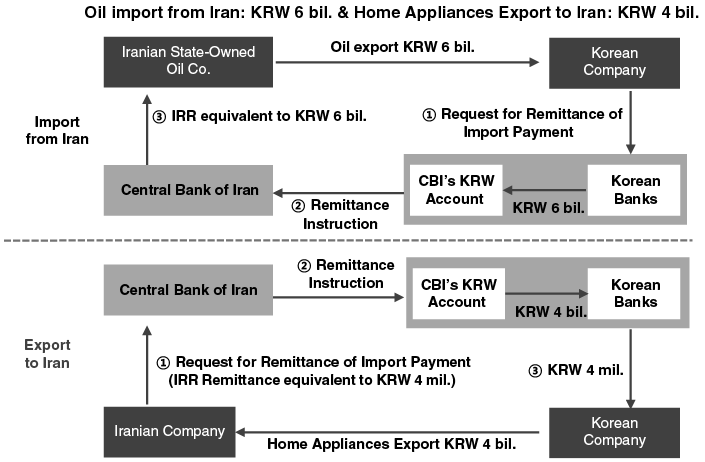


 Open access